»One" for all

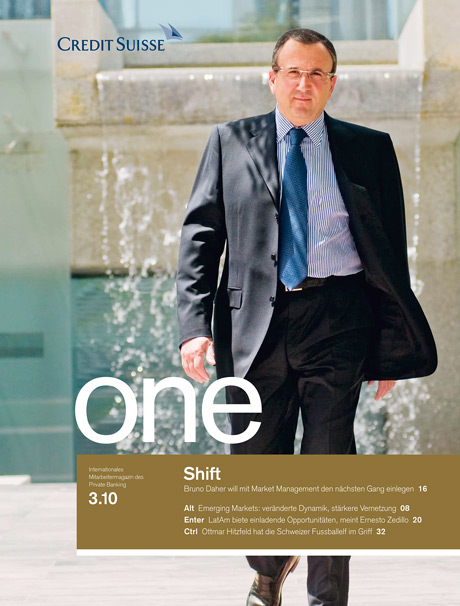
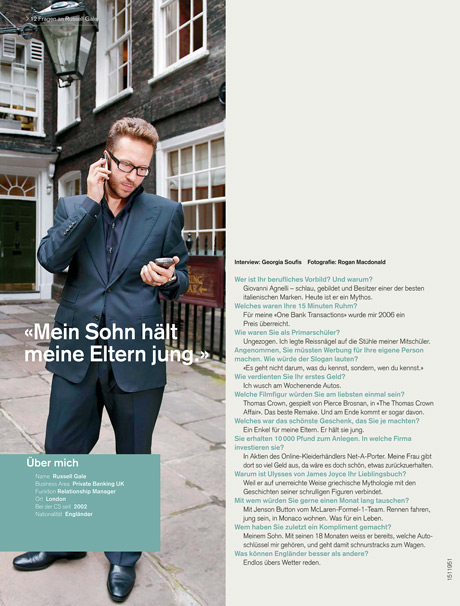
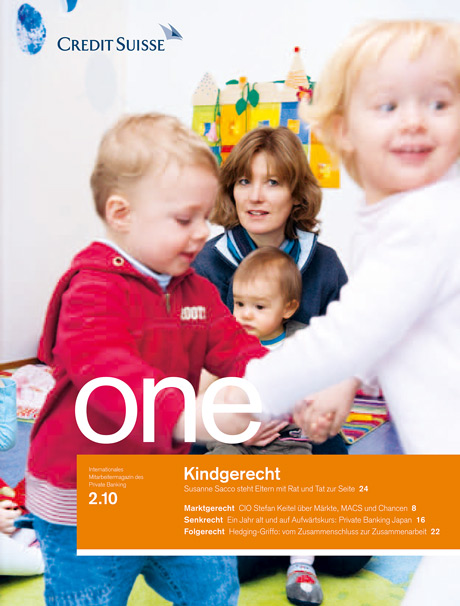
A printed employee magazine that meets the needs and expectations of employees and also appeals to corporate publishing experts. Is such a thing possible in the age of Web 2.0 and online media? Yes, it’s called «one» and is distributed from Zurich to the whole world. It is Credit Suisse’s employee magazine.

Just ten years ago, «one»—now Credit Suisse’s employee magazine—was just one of many. At that time, the major bank produced publications for various employee groups. It wasn’t even called «one» yet; its name was «more.» Since 2001, the new name has clearly signified a new approach to the employee publication. Credit Suisse opted for a single printed employee publication for all employees worldwide: a global employee magazine for a global company. The same messages, goals, values, and insights are communicated equally to everyone, whether in Zurich, Bangalore, Rio de Janeiro, or New York.
Showered with awards
Credit Suisse began this process of consolidating its employee magazines in 2001 in collaboration with the corporate design agency Process in Zurich. This partnership has proven successful over the years. Since then, the magazine has won a total of 34 national and international awards, including a «Red Dot Design Award.» Both the editorial content and the design have impressed the expert panels. Last year, BCP Best of Corporate Publishing inducted the magazine into its Hall of Fame of the best corporate publications. «»one’ consistently puts employees at the center and is state-of-the-art when it comes to in-house communication,” according to the judges’ commendation.
Information and Emotion
«The magazine provides employees with information about the company’s strategy and business goals in an easy-to-understand way,» explains Urs Schwarz, Private Banking, Staff Publication at Credit Suisse. «But it also serves to strengthen the sense of community and conveys shared values and emotions.»
The four-person editorial team led by Editor-in-Chief Urs Schwarz leverages its close ties with Credit Suisse’s communications professionals around the world to offer a mix of topics that is as engaging and representative as possible. «one» sees itself as a complementary medium to the intranet and provides a space for stories with a human touch. It is important that employees from all countries and cultures see themselves reflected in it. The magazine strives to reconcile different expectations, habits, and sensibilities—which is not always easy.
Quality Above All Else
«The editorial team is committed to the highest journalistic standards and strives to use clear, understandable language,» explains Urs Schwarz. To ensure quality, the team, for example, surveys readers and solicits reviews from prominent figures in journalism and communications. Regular participation in international corporate publishing competitions also provides a benchmark for how the magazine compares to publications from other companies and offers new insights into areas for improvement.
A picture is worth a thousand words
The magazine’s distinctive look is a key factor in its success. «Credit Suisse’s color palette also includes many earthy and warm tones, which soften the company’s otherwise rather cool image,» explains Bärbel Fritz, managing partner and head of design at Process. «The colors and vibrant visual language radiate warmth and emotion and underscore the company’s closeness to its employees.» Susana Lamas

«one» at a Glance
«one» is Credit Suisse's multi-award-winning international employee magazine.
The publication appears five times a year with a circulation of 39,390 copies in German, English, French, and Italian. It is designed by the Zurich-based corporate design agency Process.
1292852072_img101117_one1
1292852072_img101117_one2
1292852072_img101117_one3
img101117_one4

Eurobest 2010: Ikea is advertising operator of the year

The organizers of the European advertising festival Eurobest have named IKEA «Advertiser of the Year» for 2010. The Swedish furniture retailer has been awarded the title “Advertiser of the Year.”.

The award is due to those advertisers who excel in innovative marketing of their products and welcome and encourage the creative work of their agencies. Ikea, in collaboration with various advertising agencies worldwide, has succeeded in implementing its business idea: to offer and make affordable design and functional furniture accessible to the widest possible audience, Publicitas Cinecm writes in a media communiqué. The cultural differences of the various markets have always been taken into account and integrated into the campaigns, it said.
The trophy will be presented to Claudia Willvonseder, Global Marketing Manager of Ikea at the Eurobest Award Ceremony on Wednesday, December 8, 2010. Ikea has won a total of 31 Eurobest trophies in all categories to date. The furniture store also excelled in international advertising competitions, such as in 2003, when Ikea won the Grand Prix for the "Lamp" campaign in Cannes.
Publicitas Cinecom is the Swiss representative of the International Advertising Festival in Cannes and, within this framework, also a partner of the European advertising festival Eurobest. Cinecom supports the organizers and festival participants during the preparations and in the implementation. The Eurobest will take place from December 7 to 8, 2010 in Hamburg. Registrations are still available at Eurobest.com possible.

Double anniversary in the offing

Republica hat zwei Mailings der britischen Art verschickt.

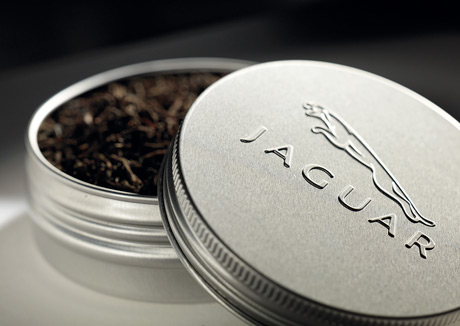
The Bern-based Republica was able to accompany a double anniversary in terms of communication. For the 75th anniversary of the Jaguar name, the team around CD Chris Morgan and CEO Bala Trachsel created a mailing "befitting" this British car classic. Together with a fine tea caddy filled with the best "afternoon tea", 12,000 potential Jaguar customers received a booklet inviting them to take the time for a real British treat and a test drive in one of the new Jaguar models. The 28-page booklet takes readers on a journey through time from 1935 to the present day and tells the story and values of the British "big cat". The protagonist of the booklet is the new Jaguar XJ.
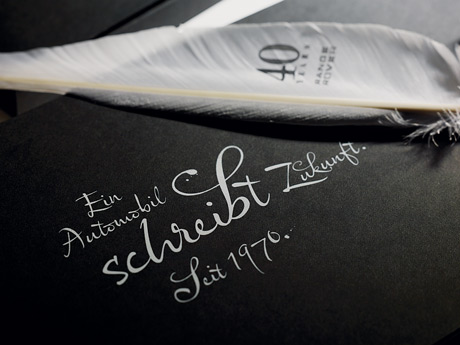
Republica beat two agencies in the summer to win the below-the-line budget from Jaguar Land Rover Switzerland. For this second brand, the aim was to celebrate "40 years of Range Rover". The first Range Rover rolled off the production line in 1970, establishing the class of luxury all-wheel drive vehicles. "Range Rover has been writing history and the future for 40 years," says Managing Director Stephan Vögeli. The mailing for 14,000 prospective customers also revolves around writing. At the center is a fine quill pen, which automatically rises up when the box is opened and presents itself to the recipient ready to hand. The customer is invited to "help write the future of Range Rover" by filling out the reply card and registering for a test drive. The enclosed anniversary booklet tells the brand's history and provides an overview of the latest models. pan
1292852071_img101117_republica1
1292852071_img101117_republica2
1292852071_img101117_republica3
img101117_republica4

Stahelpartner: Zurich buys from Zett Meyer

Categories

Uncategorized

How do I explain art?

Unusual advertising campaign by Publicis for an unusual cultural claim.

After a period of renovation, the Seedamm Cultural Center has become the Vögele Cultural Center. In the course of this, the focus has also changed. The cultural center, which is run by a private foundation, now sees itself as an actual "observation station for contemporary culture", as Foundation Board President Monica Vögele explains.
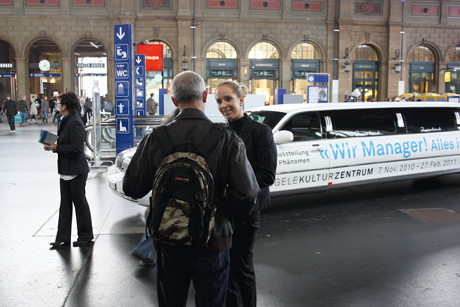
The exhibition "We Managers! Everything under control?". It will be on display until the end of February 2011.
Publicis Communications developed advertising campaigns across numerous channels to promote the exhibition and especially the opening event on November 7. The aim was not only to appeal to those interested in art, but above all to arouse the curiosity of a wide audience. The event kicked off with a stretch limo as a mobile poster, in keeping with the exhibition concept. Flyers and Post-its, which were distributed overnight by cleaning crews in offices, attracted further attention alongside advertisements. pan
1292852071_img101117_publicis1
1292852071_img101117_publicis2
img101117_publicis3

Rheintalische Volkszeitung and Der Rheintaler go together

Die Rheintalische Volkszeitung, herausgegeben von der RVA Druck und Medien AG in Altstätten, erscheint im 155. Jahrgang. Nun wird sie im nächsten Jahr mit der Zeitung Der Rheintaler zusammengelegt. Dabei gehen sechs bis acht Stellen verloren.

On Tuesday evening, the general meeting of RVA Druck und Medien AG approved the merger of the two regional newspapers 1833 votes to 111. This was reported by the Rheintalische Volkszeitung on Wednesday. This clears the way for the two regional newspapers to be published under one publishing umbrella. Structural changes in the media landscape are cited as the decisive reason. Even though the Rheintaler is economically profitable thanks to its cooperation with the St. Galler Tagblatt, the Rheintalische Volkszeitung - with a smaller circulation area - is suffering from falling advertising and subscription income.
The editorial team of the Rheintalische Volkszeitung currently produces a detailed regional section six times a week. The foreign, domestic and some of the sports pages are purchased from Südostschweiz, and the paper is printed at the Südostschweiz Partner printing center in Haag SG. The current circulation is around 6000 copies. The Rheintale, on the other hand, has a circulation of just over 11,000 copies.
It is now planned that Der Rheintaler will continue to be published as before. Rheintaler Druckerei und Verlag RDV, which prints the Rheintaler, will hold a majority stake in the newly founded Rheintal Verlag. Although the Rheintalische Volkszeitung will continue to be published as an independent title, the local text and advertising section will be identical to the text and advertising section of the Rheintaler from 2011.
The merger of the newspaper activities will also have an impact on staff. A total of seven to eight full-time positions will be lost.

A little journalism for the old days!

The new Swiss online magazines range from age-related hobbies to self-realization and service orientation. None of them have a viable business model. Guest commentary by Hans Stutz, freelance journalist.

We don't want to claim that it's already a trend! But it is worth noting that three online magazines have gone online in German-speaking Switzerland within a short space of time: Journal 21, Clack and, most recently, Neuland. They are all run by (formerly salaried) media professionals, many of them well-known journalists, from Heiner Hug and Claudia Kühner to Ralph Pöhner, Anita Hugi and Judith Stofer. A few advertising banners indicate a small income. All of them operate outside the media agenda dictated by offices, parties, organizations and companies. So far so good. But: quality journalism is always free, only Neuland, which is otherwise ad-free, offers the option of a "voluntary subscription". (If you pay, you get access to the archive. But this is not yet important, as only one issue has been published so far).
Otherwise, the free mentality is explicitly part of Neuland's business model. According to the illuminating announcement, the online magazine is "a platform for freelance media professionals who can no longer find buyers for their work in the traditional media. Or simply customers who no longer pay money for good work". If you'll pardon the pun: a surprising argument because the editorial offices are hardly awarding any more contracts and hardly paying any more fees, are the beleaguered media professionals making their quality work available for free? With respect, such offers accelerate the economic decline in the value of journalistic work.
The business model of Journal 21, a nostalgic product of journalists who had their professional roots in pre-electronic media times, is similar. The journal spreads classic political journalism with extensive foreign reporting: lots of texts, long texts, hardly any pictures, the sections are called politics, culture, economy and society. Hardly any self-researched news, but lots of up-to-date background. The claim: "We are inundated with news and short news items. But to understand the news, we need in-depth analysis, commentary and background reports." However, the texts give the impression that the writers are mourning old print titles. Or to put it another way: Journal 21 brings the comeback of the lead desert on the Internet. Nevertheless, it makes for stimulating reading. These are elderly journalists who continue to indulge in a bit of journalism in their old age. Journalism as a retirement hobby, supported by the income from AHV and pension funds. This is also not a business model for journalism, which is supposed to ensure social and political discussion in a democratic society.
The third project, Clack, is more suitable for the Internet and covers topics relating to the (daily?) battle of the sexes, characteristically entitled "When the egg cracks, the hormones crack too". The site has a conspicuous service orientation, right down to the last-minute recipes. Otherwise, Clack has the social relevance of a women's magazine, so it will attract some attention.
Conclusion. The three online portals are practising journalism out of desperation, in the hope that the creators will make some money at some point, for example by taking it over in a print product. This is also not a viable business model: in Friedrich Dürrenmatt's "An Angel Comes to Babylon", it is the beggars who provide the poets with a living. It remains to be seen who will take the place of the beggars in the 21st century!
For those who want to see for themselves, here are the relevant links: www.journal21.ch; www.neuland-mag.net; www.clack.ch.

Baz: Editors and publishers seek talks

In the turbulence surrounding the consultancy mandate of Christoph Blocher's company Robinvest for Basler Zeitung Medien, the editors and publishers are seeking a dialog. In the Basler Zeitung Baz on Wednesday, editor-in-chief Markus Somm commented on the accusations of the last few days.

Wagner now wants to respond to Tuesday's editorial demand for a withdrawal of the advisory mandate to Blocher's Robinvest. To this end, the editorial committee of the Baz editorial team and Baz publisher Martin Wagner have arranged a meeting for next Friday, said a spokesperson for the editorial committee at the request of SDA.
The mandate awarded to Christoph Blocher's Robinvest is essentially about securing the profitability of the Basler Zeitung Medien group, Somm wrote in Wednesday's Baz newspaper. There was "never any talk of a journalistic consultancy mandate and never will be". It is no secret that he knows Blocher well and agrees with him on some political issues. However, the point was that the Group had problems and understandably sought external help. The advisor was Blocher, as he had been familiar to the owners for a long time: where should the scandal be? However, he understands that a region like Basel, which - rightly - considers itself to be cosmopolitan and liberal, is uneasy about what is happening at BaZ, as Somm explained. But people are worried for the wrong reason: Blocher has never had any influence on the content of the Baz. The 'Basler Zeitung' is and will remain independent of any politician or party.
In conclusion, Somm says: "If good and critical journalists, such as those working at the Baz, question him and worry about the future of the newspaper, that speaks for the editorial team.
The editorial meeting had already agreed to talks on Tuesday
Signalized. It considers the relationship of trust with Somm to have been damaged, but will seek talks with him, it said. The main reason for the breakdown in trust is that Somm, unlike the editorial team, does not see the Blocher mandate as an image problem for the BaZ, said a spokesperson.

The most emotional Christmas Migros has ever experienced"

Wirz inszeniert crossmediale Weihnachtsvorfreude für die Migros. Mit einer eigenen Weihnachtsfamilie, einem Star-Regisseur und neun hochwertigen Spots.

Switzerland has hardly ever experienced a greater display of festive joy. "The most emotional Christmas Migros has ever experienced": That was the expectation and the associated briefing from Migros to Wirz at the beginning of the year. This was preceded by far-reaching strategic analyses by the agency of the best-selling family celebration of the year, backed up by numerous case studies on the marketing strategies of comparable companies around the world. The result was a long-standing expectation, now backed up by research: "At Christmas, people are looking for family closeness." The campaign therefore focuses on the Felix family of four: modern and open-minded in their roles and views, they are clearly committed to traditional values. Including Christmas traditions.
The Felix family takes viewers through the various phases of the festive anticipation. This includes decorating with fairy lights as well as crafting, baking, buying and wrapping presents, decorating the tree and, last but not least, planning and preparing the festive menus.
CD Hanspeter Schweizer at Wirz was aware that the campaign was only really intended to arouse pleasant anticipation and not lead to Christmas "overkill" as early as November. The creative team wanted to openly acknowledge the traditions and emotions of Christmas. Under no circumstances, however, was Migros to be "puffed up into an American kitsch company".
In this sense, the campaign develops in sync with the genuine build-up of anticipation and builds up to the climax on Christmas Eve. This idea is reflected in the advertising materials used, for example in the first magazine, "Zeit der Vorfreude". This has a circulation of 2.8 million and is distributed throughout Switzerland. It contains suggestions for planning and preparing for the festive season. A second magazine shortly before Christmas is entitled "Zeit des Geniessens" ("Time to enjoy") and contains specific suggestions, particularly on culinary matters.
However, the Christmas spirit does not end on the day of the big feast. Many people "bridge the gap" between Christmas and New Year and are particularly open to feasting and indulging during this time. That's why the traditional Advent calendar with its daily promotions has been extended until New Year's Eve. Another new feature of the Migros calendar is that you no longer have to open the doors every day. In the interests of "offer fairness", customers should be able to plan their purchases for the longer term and know which promotions are running at the POS on which day. There, the offers are clearly marked in gold with the key visual of the star tail that runs through the entire campaign. This temporary switch from the traditional orange of Migros promotions to gold is "the first time in the history" of the major distributor with this campaign, as Marc Engelhard explains at FMCG.
The cross-media interaction also surpasses anything previously seen and sets new standards in the category with a uniform appearance across all channels. This initially meant a lot of networking and persuasion work and a number of workshops, including with specialists from sales and decoration. A wide variety of disciplines, media and sales channels had to be coordinated and brought to a common denominator: various advertising measures (TV, print and outdoor advertising, dialog and direct advertising, online platform, events, internal communication), Migros media such as Saisonküche and Migros magazine, as well as the communication of the consumer and specialist stores on and around their sales areas.
Emotions are best aroused by cinematic means. In the TV commercials, which will run from November 1 until after Christmas, our Felix family experiences the crescendo from the run-up to the actual festive joy in nine episodes, told from the perspective of seven-year-old Anna, the baby of the family, and in some cases even filmed by her "herself". The commercials bear the signature of director Arne Feldhusen, who has also gained a large fan base in Germany with his Pro7 cult series "Stromberg". To select this director, the agency shortlisted five out of forty possible names and then had them pitch their stylistic concepts. "An absolute stroke of luck" for project manager Roman Reichelt from Migros was also the baby of the family. With her naturalness, Anna, who is only six years old, creates exactly the desired effect of a modern mood without any embarrassing sentimentality. The nine films were shot in an old school building with a crew of 45 specialists. Pascal Walder ("Sennentuntschi") worked on the 35 mm camera.
But the campaign is not just about spreading good vibes. Closely linked to the stories of the Felix family, a discount offer will be communicated every week as an impulse for more frequency and sales in the stores. In addition, a large-scale Christmas raffle promotion will play its part in promoting sales.
Migros is launching a completely new campaign for Switzerland on the Internet. Here you can take part in the largest online Christmas choir in Switzerland. At www.weihnachtschor.ch you can record and upload "Silent Night". You can mix your own contribution and the recordings of three friends and take part in the competition for the most beautiful choir as a mini choir. You can win 200 musical weekends in London. If you feel like it, you can also send your song contribution as an e-card. Even as a duet, for example with family members on the other side of the world. Andreas Panzeri

Gold class
The campaign works with high advertising pressure. One magazine with a circulation of 2.8 million and one with a circulation of 2.4 million, 9 films with 9 weeks of "heavy rotation". 3.8 million Advent calendars. 27.5 million raffle tickets, 6.8 million cinnamon stars for free distribution at the POS.

1292852070_img101117_top1_1
1292852070_img101117_top1_2
1292852070_img101117_top1_4

US stars tweet against Cash

In den USA breitet sich eine neue Werbeform rapide aus: Celebrity Micro Endorsement über Twitter.

Platforms such as SponsoredTweets.com or Ad.ly can be used to book celebrities to make micro endorsements (recommendations) for products or services via Twitter. In England, Range Rover recently recruited 40 celebrities to tweet about the new Range Rover Evoque 4×4.
The company Ad.Ly (http://ad.ly) has 5,000 US celebrities under contract who are willing to tweet micro endorsements for a fee. The small advertising messages are a lucrative source of extra income, earning stars such as 50cent, Snoop Dogg, Linkin Park and Lindsay Lohan up to 50,000 dollars a month. Ad.Ly's services are already being used in the USA by brands such as Microsoft, Toyota, Sony and Kia. Snoop Dogg, for example, recommends the Bing search engine to find the biography of his friend Jay-Z. Ad.Ly is now making the move to Europe and is not only signing superstars and stars in England, but also athletes and participants in casting shows. Ad.Ly offers them the opportunity to extend their brand life and make it more lucrative.
Ad.Ly makes it easy for celebrities to tweet advertising messages. They receive a message from Ad.Ly and have 24 hours to reject or publish it. The real stars earn up to 5000 USD per tweet. In the USA, the celebrity micro endorsements are marked with #ad or #spon. This allows followers to recognize that it is advertising. No corresponding regulations have yet come into force in Europe. The celebrity micro endorsement by Range Rover has triggered discussions in England as to whether Twitter can be misused for "hidden" advertising with celebrities. The discussion is incomprehensible, as celebrity endorsements are nothing new. Celebrities advertised for Lux soap in the 1950s, today they do it for LOréal. Back then they did it in a declared advertising environment, today they do it via their own communication channels such as Twitter. The only question is whether they do it openly or covertly.
For purists, Twitter should be ad-free and exclusively for communication between the user and their followers. Among other things, they fear that recommendations without advertising could shake fans' trust in their idol. Anyone who holds such an opinion does not believe in the responsible consumer. Bernhard Russi and Roger Federer would hardly shake the trust of their fans if they sold micro endorsements for Subaru or Credit Suisse. Imre Sinka

Costs due to Ticketcorner takeover slow down CTS profit

Due to high costs associated with acquisitions and legal disputes, the ticket distributor CTS Eventim saw its profits slow down. Excluding these one-time items, profits would have risen by one-fifth.

The takeover of the ticket provider Ticketcorner together with the Ringier media group resulted in extraordinary expenses. CTS Eventim also acquired "See Tickets Germany" and is in dispute with the US group Live Nation over a failed cooperation.
The operating profit EBIT increased only minimally to 44.2 million euros in the first nine months, as the German company announced on Wednesday. In the period from January to September, turnover climbed by 13 percent to 372.4 million euros. High-margin sales via the Internet increased by 30 percent to 10.7 million tickets for concerts and sporting events. CTS intends to invest further in this area. The focus will also be on international expansion.

Budget: Lesch + Frei Zurich wins over Rega

Lesch + Frei Zurich has been awarded the advertising account for the Swiss Air Rescue Service (Rega). The company prevailed over two other advertising agencies in a competitive pitch.

Rega has around 2.2 million patrons. In order to increase this figure even further, the organization put its advertising budget out to tender and invited three agencies to pitch. The winner was Lesch + Frei Zurich with an approach that focuses on positive emotions through sympathetic humor. The campaign will be on display from the end of March.

get_footer();