Top of the week: Massive growth in sports advertising volume

The sports advertising market has grown rapidly in recent years. In 2009, approximately 109 million Swiss francs were invested across various media formats, accounting for 2.7 percent of the total advertising volume in Switzerland (approximately 4 billion Swiss francs).

These are the findings of a study conducted by the socio-economic research company Rütter + Partner on behalf of the Federal Office of Sport Baspo. The largest share was realized in print media (64%). Electronic media accounted for 21% and posters for 15%. The largest categories in the sports advertising market are sporting events (CHF 40.3 million) and sports tourism/sports facilities (CHF 30.5 million). As the most important advertising outlet, sporting events use the daily, regional weekly and Sunday press as their main type of media. Almost 70 percent or CHF 28 million of media expenditure is invested in these media. According to the study, the sports advertising market has grown by 69% since 2000. This is above average compared to the market as a whole (17%).

Boxing Day: World champion with Republica

On December 26, 2010, Bernese champion Yves Studer will be boxing for a world title for the first time in his career. Republica ensures that he can let his fists do the talking on Boxing Day.

The Bern-based agency Republica organizes and markets the legendary Boxing Day. And stages the two main opponents in the promotion. The aim is to raise awareness of Boxing Day.
A Bernese champion, a Brazilian national champion, four flying fists and a concentrated load of testosterone. This explosive mixture will create a great atmosphere over twelve rounds on December 26, 2010. Yves Studer and Samir dos Santos Barbosa will box for the World Middleweight Title of the International Boxing Council IBC in the Kursaal Bern. Studer, who is unbeaten in 26 fights, is optimistic of bringing the title to Switzerland, according to a Republica press release. Three other Boxing King pros will fight in the supporting program: Mohamed Belkacem, Martino Ciano and Anyia Seki.
img101201_boxingday1

It's never too late for a good idea".

Philippe Hansen likes being his own boss. That way, he can put his ideas into action however he sees fit and take the time he needs to be creative. On August 1, 2009, Hansen co-founded the Bold agency in Bern. And the first year went pretty well.

Philippe Hansen is a musical man. He is not only the guitarist and songwriter of the Bernese band "Brothertunes", he also masters the keyboard of advertising. At Bold, he is the bandleader, the consultant and manager who sells clients the ideas and implementation proposals hatched by the team. Hansen develops sparkling ideas "in lively exchange" with the other two Bold owners, CD Lindo Ganarin and AD Tino Niederberger, as well as their first employee, Dominique Wittwer. When Hansen says "lively," he means that the four men fundamentally disagree. No wonder: Ganarin comes from classic advertising; he is Bold's copywriter and idea machine. Niederberger was head of creation at Maxomedia and combines art know-how with broad experience in new media. Wittwer supports the creation in the area of design. And Hansen is the consultant and conceptualizer, the agency's calming influence and diplomat. "We are four character barks, have very different points of view and ideas, all of which are good," says Hansen. "This creates friction, and we have to find a consensus. That's exhausting. But a healthy culture of dispute is extremely important for us, because the discussions spur us on to top performance. The idea is our capital."
At Bold, a surprising, viable concept emerges from creative exchange, dispute and mutual approach. In all discussions, the team is guided by the conviction that it is never too late for a good idea. This is how the four at Bold create advertising that, after just over a year in business, is already being relied on by clients such as Die Post, Hotellerie-suisse, the Federal Office for Professional Education and Technology BBT, Promoton and Swisscom. Most Bold customers are currently SMEs from the Bern area. "Of course, we also target large companies, nationwide, because today it doesn't matter where you are," Hansen says. "But we first have to fight for a place in the market and with good work cause that we are invited to pitches. That takes time."
The courage to stand out
Bold's core services are conception, copywriting and design for offline and online communication. Although full-service agencies have long been frowned upon, Bold still wants to be one. "Full service doesn't mean we can do everything but we can solve everything," says Hansen, explaining the agency's approach. "We understand full service to mean that we find a professional solution for all of our clients' concerns. When we take care of a project, our customer can assume that we know how to handle the task, think ahead and also get competent support when we need it. That's better and more efficient than having a team in which one person knows a bit more about text, the second a bit more about online, and the third a bit more about something or other.
understands something. With the full-service offering, we want to create security and trust."
Hansen also understands that clients don't care about every intermediate step, especially if it causes problems. "The client simply wants everything to work out in the end, and for goals to be met or exceeded," he says. "If something doesn't work, it's our job to find a solution without burdening our customer with it." At key decision points, however, Hansen seeks immediate discussion with the client, such as when he realizes that two more days would make the result three times as good. Then he tries to get a postponement, because that's also part of his job as a consultant. Hansen
has good arguments: "Customers pay money for our work and have a right to expect to get a perfect result." "Good enough" doesn't seem to exist at Bold.
With its name, the agency has given itself a credo that promises big pieces. "Bold" means daring, bold, or eye-catching, courageous. "We put the emphasis on bold above all else," Hansen says. "We opened in the middle of the crisis, in Bern, which is considered rather reserved, not only in advertising, and we try to do good work without compromise, without scissors in the head. What we do, we do right." The Bold men's cause seems to be neither blöff nor false modesty.
Free space for flashes of inspiration
All three agency owners have already gained experience with self-employment, Hansen the
first time at the age of 24, after training as a typographer and advertising assistant. Together with three like-minded people, he opened a small design and publishing studio in 1999. After three years, music gets in the way. "I had been playing music a lot on the side, and the desire to become a rock star just wouldn't let me go," Hansen recalls. He wants to make music his profession, but it doesn't really work out with his first band. So Hansen rides his second hobbyhorse again, advertising. This time he wants to do "real" advertising and joins Contexta in Bern: "I was at Contexta for just over three years, worked a lot, learned a lot, had a great team and a great time."
At the same time, Hansen devoted himself to music, and in 2002 he helped launch Brothertunes. 2005 then finally the record contract. Two Brothertunes albums are released. Hansen leaves Contexta, but works part-time at the communications agency Formeldrei, on the one hand to finance himself, and on the other to keep his foot in the door of the advertising industry, because he enjoys advertising. And: "Music is very short-lived, dreams fly high, and reality often looks less rosy. Besides, there's a lot of competition, even more than in advertising. As I got older, I had a desire for greater security."
At 30, Hansen takes stock and sets the course for his future. At Formeldrei, he lets himself be convinced to work more again. But more and more often, the now eighty percent advertiser thinks, "If I'm going to create so much, at least create it for me and according to my ideas." He talks to Lindo Ganarin about his thoughts. Ganarin, with whom Hansen had worked at Contexta, has been self-employed for several years. The two teamed up in the fall of 2008 and found the missing piece of the puzzle with Niederberger in early 2009. Together, the three are preparing to open the Bold advertising agency, which will open in
August 2009. Hansen is thus once again staying true to his resolution: "Whatever it's about, it's important to me never to have to say: I wish I'd tried!"
Today, four people work at Bold, but perhaps not for long: "We want to grow," says Hansen.
"However, everything slowly. Maybe in ten years we'll be ten people. If not, it doesn't matter. When we hire someone, we want to offer them a secure job. If it's not enough for that, we prefer to work with freelancers." In any case, the three owners have already rented enough space for new employees on Schwarztorstrasse in Bern. There is also room for a Crealounge. This will be designed and furnished in the next few weeks. Because Hansen wants to offer his people an inspiring space without telephone ringing and e-mail chirping, where crisp ideas can just bubble up. Hansen: "This is a statement to the inside: You have foolproof freedom if the output is right and deadlines are met." A retreat is also important for Hansen himself. He needs absolute quiet for the flashes of inspiration to spark. And weekends remain work-free whenever possible. "Each of us has a life outside the agency," Hansen emphasizes. "Lindo is a perfumer, Tino experiments with digital entertainment, and I make music. There has to be room for that even if it's not easy to keep it up. But that's the only way we can recharge our batteries, stay creative and have fun at work. Anything else is hard on the mind."
Journey on two continents
Hansen still plays guitar with the Brothertunes, and the band is just launching a new record in France. But since the birth of his new baby, Bold, Hansen has cut back on the strings. "Music is extremely important to me, once as a purpose in life, now as a balance to work," he says. "Next to music, none of my other hobbies can exist.
After all, I once wanted to be a rock star. Nevertheless, my attention is now focused on building up and expanding Bold. That's where I'm going full throttle, and it's huge fun." And yet the listener gets the impression that Hansen can't really be happy without either advertising or music. He needs both, in his time. In advertising, the client is the conductor; Hansen plays first fiddle for him. In songwriting, he has to find every note within himself, shape it and make it sound. Undisputed: Hansen plays on two weddings. But being a virtuoso has never been a disadvantage.
Anne-Friederike Heinrich
1292852087_img101201_kdw

Epica winner

At the Epica Awards in Paris, Swiss agencies won six gold, three silver and three bronze awards.

Epica Awards have been presented since 1987 for creative advertising from Europe, the Middle East and Africa. For almost a week, the jury met in Paris to evaluate 3154 entries from 48 countries. The jury is made up exclusively of representatives of around 30 trade journals from the international communications industry, including Lürzers Archive, Pubblicita Italia, ArabAd, The Drum from England, Advertising Ideas Russia and Werbewoche in Switzerland. The criteria are the originality of the creative idea and the perfection of the execution. Judging takes place spontaneously via radio after viewing a subject or film, with scores between 1 and 10. Around 20 percent of the works with the highest cumulative scores go into the "tie break. Only there are the ideas discussed. Of the Swiss entries, most of the winning submissions were pleasingly clear winners in one of the 44 categories. The SMS spots for Sunrise by Spillmann Felser Leo Burnett and the Obama subject by Advico Young & Rubicam for SoZ even managed to stay in the discussion for the four Grands Prix for longer periods. In film, the race was finally decided between "Orangina" and "Dot," a perfectly crafted animated film shot on a very communal camera in a Nokia cell phone. The Orangina film, which was only narrowly defeated, works with clichés from other commercials and uses animal figures to show that Orangina is a particularly fluffy way to wash laundry or that Orangina is the ideal deodorant for bears and the best hair product for ponies. Orangina is never shown as a beverage. The film only pays off on the brand concept. Lasting laughs were also provided in the jury by an Egyptian film for Panda Cheese. You can also find the completely absurd series on Youtube under these keywords.
In addition to the six gold awards, Switzerland also won silver for AY&R with the Obama film, Caritas by Jung von Matt, and Bardill Sport by Publicis. Bronze was awarded to "Lost in Val Sinestra" by Contexta, the Pralinato spots by Publicis and the WOZ ad with Marx by SFLB. Andreas Panzeri
> To the complete article with pictures (pdf)

Swiss Code of Civil Procedure

The Swiss Code of Civil Procedure takes effect on January 1, 2011. Under the new rules, a conciliation or mediation process must now be conducted before a civil action for debt collection can be filed. Here is an overview of these procedures. By Michael Krampf, lic. iur., attorney-at-law, who works as a legal counsel and editor at the Beobachter Counseling Center.

The new Code of Civil Procedure replaces the 26 cantonal procedural laws. An estimated 10,000 cantonal legal provisions will be repealed. From now on, litigation will follow the same model throughout Switzerland. Before a lawsuit can be filed with the court, a mediation procedure must first be conducted in cases involving financial disputes. The principle of «mediation first, then litigation» applies. The mediation process may be waived only if the amount in dispute is at least 100,000 Swiss francs and both parties agree to do so.
The proceedings begin with a request for conciliation, which is submitted in writing, orally, or electronically to the competent conciliation board. An oral hearing then takes place. The goal of the conciliation hearing is for the parties to reach an agreement. If they do not, the conciliator grants leave to file a lawsuit. With this authorization, the plaintiff may file the lawsuit with the court within three months. If the plaintiff fails to meet this deadline, they must file a new request for conciliation.
A proposed ruling and a decision are possible
The conciliation authority does more than just mediate. The new rules of procedure provide for two additional options. First, the conciliator may propose a ruling if the amount in dispute does not exceed 5,000 francs. This proposal then has the force of a judgment if the parties do not reject it within 20 days. Second, the conciliator may issue a judgment if the plaintiff requests it and the amount in dispute does not exceed 2,000 francs.
The proposed ruling and the option to issue a decision are discretionary provisions. It is therefore up to the conciliation authority to decide whether to issue a proposed ruling or a final ruling. Both involve a considerable amount of additional work. For this reason, there is concern that many conciliators—especially when their workload is heavy and they are also legal laypeople—will opt for the easier path and issue a certificate of authorization to sue.
Mediation as an Alternative
In addition to the conciliation procedure, mediation is another option. This is possible if both parties agree to it. The request for mediation should be filed with the conciliation authority so that any ongoing statutes of limitations are tolled. The parties then select a mediator. If mediation is successful, the parties reach an agreement, which they have approved by the conciliation authority. This agreement then has the same legal effect as a judgment. If mediation fails, the conciliation authority issues a certificate of authorization to sue. This allows the plaintiff to subsequently file a lawsuit in court.
Book tip
Book set OR and ZGB for everyday use
Annotated Case Studies from the *Beobachter* Consulting Practice
The book set «OR and ZGB for Everyday Life» contains the complete statutory provisions and all important court rulings. These “Beobachter” editions of the Swiss Code of Obligations and the Swiss Civil Code are the only ones in Switzerland to explain every section in everyday language. This makes the legal texts easy to understand even for non-lawyers.
Updated, Annotated 2010 Edition
Beobachter-Buchverlag,
ISBN 978-3-85569-431-0
2 volumes, as a set, Fr. 99.-
Do you need legal advice?
The Beobachter Consulting Center offers you and your employees expert telephone consulting on legal issues concerning your company 6 months for only Fr. 99. Order the consulting package for SMEs at
Observer.ch/kmu/ or 0800 83 0800.

Make subjects really work

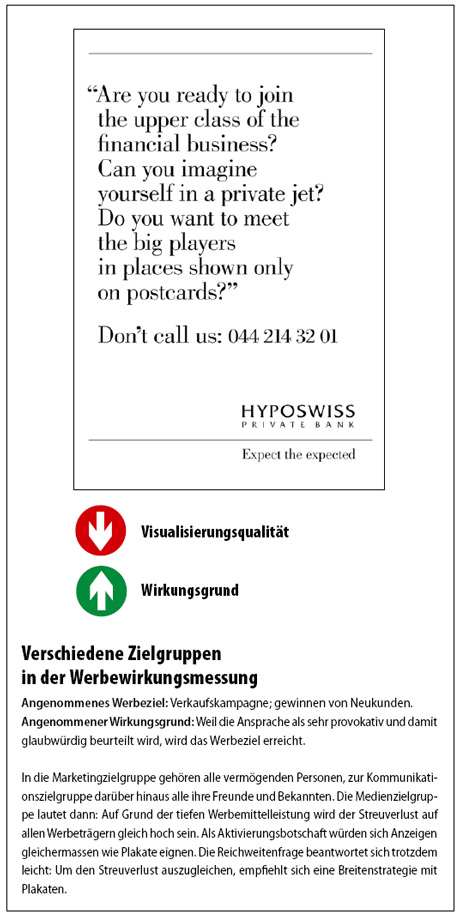
The analytical method presented here by Zurich-based BildKom GmbH measures advertising effectiveness in both the narrow and broad senses, evaluates it, and thereby enables its management. This approach differs fundamentally from the conventional method: Traditionally, an advertising spot or campaign is produced first—and only afterward does one attempt to determine whether the spot or campaign is actually effective.

Here, we’re turning the tables: We first identify the strategy with the most compelling rationale for its impact and then ensure high-quality implementation. The question of impact should be answered not by a pretest, but by the financial results.
In terms of advertising impact, the message is the cause of the effect, and the advertising objective is its effect. If the advertising objective is influenced by the message, we refer to this as advertising impact. Since we do not know the advertising objective of each of the analyzed ad campaigns, we derive it—along with the strategy—from the advertisement itself. To make this approach easier to understand, we will focus the next six installments of this analysis on quality assurance—specifically, on the quality of visualization.
In the three previous issues, we examined how messages are seen (15/2010) and understood (17/2010), and how the perception situation relates to media planning (19/2010). Next up are the special features «Integrating Messages Across Media» (1/2011) and «Measuring in a Timely Manner» (3/2011). In each case, the analysis briefly explains what the focus topic is about and then applies the underlying concepts to a specific advertisement.
Part 4: Different Target Audiences in Advertising Effectiveness Measurement
In communications, it is important to distinguish between three target audiences: one for marketing, one for communications, and one for media planning. Let’s take the example of a hearing aid manufacturer that wants to launch a waterproof device. The marketing target audience is defined by those directly affected who are willing to spend money on such a device.
When it comes to communication, however, it’s a waste to limit yourself to just the marketing target audience. After all, the reach can be multiplied if even the wife—who has good hearing—realizes that her husband could use the new hearing aid in any weather. Close relatives and friends have a very significant influence on decision-making, and often it is precisely these people who actively intervene: partners, parents, children, friends, coworkers, etc. Social networks are important groups that influence decision-making and therefore, together with those directly affected, define the communication target audience.
A particular advertising medium is selected because it is assumed to be the best way to reach a specific marketing target audience. This selection is based on proprietary usage studies conducted by the respective media providers—with the result that each medium has its own target audience profile and thus cannot be compared to others (as an extreme example, billboards do not have a target audience at all). This dilemma prevents fact-based, cross-media campaign planning and evaluation.
This unsatisfactory situation is resolved when advertising material performance—rather than the advertising medium—is used to determine reach and contact frequency. In this sense, the media target group is derived from the measurable advertising material performance, the advertising material’s function, and the communication target group. With these three target groups, it is now possible to evaluate the advertising material in relation to marketing objectives and media planning in relation to media strategy prior to publication, and to optimize them in a timely manner.
> For a detailed analysis of the topics
1292852086_img101201_werbewirkung1
1292852086_print101201_werbewirkung2

Caught Our Eye: Mirror, Mirror

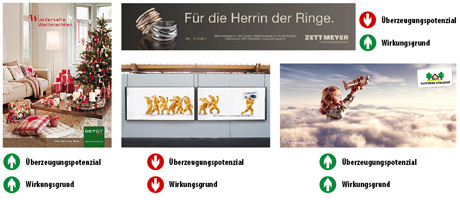
For nearly half a century, Kurz jewelry and watches have been making Swiss women even more beautiful. With its carefully selected pieces, this long-established store helps its customers accentuate their own style and highlight their personality.

The company’s advertising is also intended to continue meeting these aesthetic standards. With its multi-award-winning «I Am Beautiful» campaign, JWT + H + F has been making waves since 2005. The new campaign builds on this successful brand concept and directly involves consumers in the process. In the role of a silent observer, the consumer witnesses real people discovering their own beauty with style and elegance. This approach also gains credibility through the choice of models. Deliberately, the billboards do not feature interchangeable catalog beauties, but rather real women with their own unique, fashionable looks. The new campaign can be seen on billboards in major cities in German-speaking Switzerland, in print media relevant to the target audience, and online.
1292852088_img101201_aufgefallen1
1292852088_print101201_aufgefallen2
1292852088_img101201_aufgefallen3
img101201_aufgefallen4

For a detailed analysis of the five subjects

Time for Good Ideas

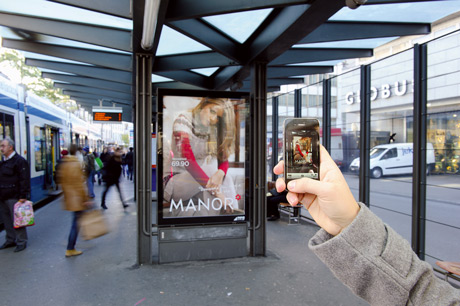
Everyone is talking about Kooaba and augmented reality. So the fact that APG is now launching its interactive posters and the accompanying PosterPlus app isn’t exactly news. But for the poster company, it’s not just about «being the first on the scene»—it’s about creating meaningful content. That’s why APG is giving its clients time to develop clever content with added value. Only then will the posters go up. The fact that APG gives you time to think is news.

The possibility of enriching paper with additional information that appears directly on your phone with a single tap sparks the imagination: Just think of all the things you could do with newspaper articles and potato mash packaging, with ads and posters! You can embed photos, videos, recipes, coupons, contests, links, ordering tools, and much more. Anything is possible. And that’s exactly the crux of the matter. Because implementing everything that’s possible has never been a good idea.
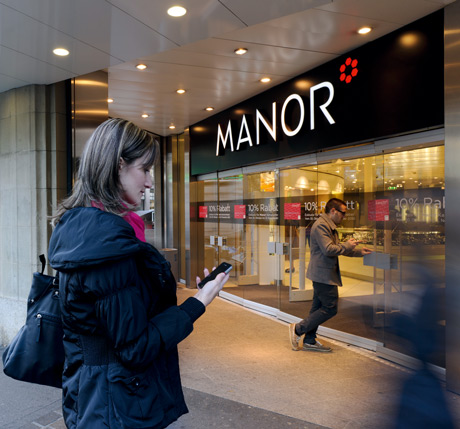
Experts such as Bruno Mettler of Vanija, Hansres Emch of LD Media, and Nicolas Adolph of APG emphasize that enriching print media with interactive content only makes sense if the additional content provides real added value to the user. In other words: Anyone who accesses the additional information behind an ad or poster on their smartphone must derive a clear benefit from it. Otherwise, they’ll take a photo of a subject exactly once—and then never use the technology again. Useful examples include a booking tool for a test drive behind an ad for the new Mini, a discount promotion behind a Coop or Migros poster, a video featuring a ski pro behind an ad for Zimtstern’s latest ski collection, a premium calculator behind an ÖKK poster, or a list of the nearest stores behind a Manor ad.
Posters with a background
«We are firmly committed to the poster as a benefit-oriented mass medium,» emphasizes Nicolas Adolph, project manager at APG. «We want to identify individual mobility target groups as precisely as possible and address them in a way that meets their needs. While our business is traditionally analog—since our posters are still made of paper and are put up with glue—we nevertheless want to take advantage of the opportunities that digitalization offers us. Increasing mobility, changing media consumption habits, smartphones, and the shift in internet usage toward out-of-home settings are a wonderful development for our medium.»
However, what’s offered behind the poster or ad must not only be enjoyable and useful to the consumer—it must also align with the advertiser’s brand. And that’s exactly where the fine-tuning comes in, so that all the cogs mesh together seamlessly. To develop additional content and clever tools that are consistent in every respect, companies and their agencies need one thing above all else, in addition to ideas: time. Rushing to throw any old material behind a campaign just to have something to back it up and jump on the hype bandwagon will most likely lead to rapid consumer fatigue. This is to the detriment of the technology, which, when used correctly, opens up a wealth of creative possibilities. «With what’s currently on offer, you can’t yet get people on the street excited,» Adolph is convinced. «Five stars for the technology. But before we go out to consumers on a large scale, we need lots of good stories. Because we want to get five stars for that, too.»
That’s why APG is currently launching its new PosterPlus offering internally and among its clients and agencies. It plans to roll it out to the general public only later. Adolph can’t say exactly when, but it certainly won’t be before the second quarter of 2011: «That depends on how our customers respond to PosterPlus. We’re not putting any pressure on them, and we don’t have a set date for a consumer launch either. What’s important to us is that there’s real content behind many of our posters as soon as we put them up. Because if a consumer takes a photo of an ad and gets a »no match«—and that happens several times in a row—they’ll lose interest in the technology. But if you do it right and meet the needs of people on the street, there are huge opportunities.» Interactive advertising campaigns enable a direct, high-quality, and lasting dialogue with the target audience. Advertisers could hardly ask for more. Whether this exchange succeeds depends entirely on the content offered. «Of course, there will be big, spectacular campaigns,» says Adolph. “But even with small, subtle stories, you can already create extremely effective campaigns.”
Back in June, Publicitas Publimedia positioned itself in the interactive advertising market with its «Smart-Ads» offering. According to the company, Publicitas has held numerous discussions with potential clients since the summer, and in early November, it finally completed its first project. «It’s a Smart-Ad for the Skoda car brand, part of the AMAG Group,» reveals Cesare Patella, Head of Media Service and Research at Publicitas. «The ad has been appearing in various daily newspapers since November 7. Specific usage figures will follow soon.»
Custom software, custom icon
Both Publicitas and APG have brought Kooaba on board as a technology partner. APG also relies on the support of the specialized agencies mitLinks and Vanija to make its posters interactive. In addition, it has launched its own app for delivering and managing the additional content, which is used alongside Kooaba Paperboy. The technology is the same as that used in Paperboy, and the APG app’s icon resembles Kooaba’s shutter icon. While Paperboy stores all offers, additional tools, and gadgets created by advertisers, the APG database stores the poster designs—both those from the current campaign and those from older campaigns. APG uses its existing ad database and links it to Kooaba’s database. This allows the Kooaba solution to retrieve the requested ads from the APG archive. «We’re in the process of retroactively compiling the designs all the way back to 2001,» says Adolph. «It’s a time-consuming but worthwhile task.» In the future, anyone who photographs an APG poster will not only receive additional content from the advertiser but also the credits for the photographed ad, as well as—upon request—additional visuals from the current campaign and ads from past campaigns. «This allows users to track the evolution of the designs, the advertising company, and the agencies responsible,» emphasizes Adolph—an option that will be of particular interest to industry professionals. In addition, consumers can tweet the photographed image, post it on Facebook, forward it via email, or vote for it in the “Poster of the Month” contest for a chance to win a prize.
Advertisers can upload their own creative assets to the database via the APG website. When it comes to providing custom supplementary content, they can rely on APG’s sales team as well as the poster company’s implementation partners, mitLinks and Vanija. The costs for PosterPlus applications are reasonable: «According to information from mitLinks and Vanija, professional solutions can be implemented starting at 12,000 Swiss francs,» says Adolph. «This includes use of the platform as well as customized implementation of the campaign. With PosterPlus, clients can increase their return on investment, generate additional sales, sell tickets, offer test drives, and more. The possibilities are endless.»
Active in Creating Added Value
Currently, the APG app is optimized for the iPhone, but the poster company’s technology partners are already working on versions for other operating systems, such as Android and Windows Mobile. For its app, APG has created its own shutter icon based on its logo so that users are always aware of the connection to the poster company. However, APG currently has no plans to mark its clients’ posters with this icon, as is customary with Kooaba Paperboy. This is because, in the future, consumers should naturally assume that there is more to most APG posters than meets the eye.
APG wants to ensure that as many consumers as possible download its app to their smartphones in the foreseeable future. But Adolph knows full well: «We can only achieve that if we present compelling use cases right from the start.» That’s why APG is now focusing first and foremost on its clients and their agencies. They need to get caught up in the interactive hype, recognize the new possibilities, and develop exciting tools for their campaigns. Adolph: «If we can persuade the majority of our major clients to provide useful additional content over the course of the next year, we’ll have a wonderful offering for passersby on the street.» Only then will APG use billboards to encourage consumers to download the APG app onto their phones. You can still download it from the APG website right now, though.
«We don’t just want to offer a new »Paperboy« story; we want to make posters truly interactive,» Adolph emphasizes. “For us, PosterPlus is an important element in the broader theme of ‘interactivity,’ which we’ve been working on for some time. This also includes hardware such as the new E-Panels from our sister company, E-Ad.” E-Panels are LCD displays that enable adhesive-free advertising in a 16:9 aspect ratio with a 82-inch screen. The displays will be installed in Switzerland’s largest train stations starting in spring 2011. APG is getting on board. Anne-Friederike Heinrich
In a nutshell
APG Affichage was founded in 1900 in Geneva, where the company’s headquarters remain to this day. APG is the market leader in Swiss outdoor advertising. Its approximately 550 employees procure, install, and maintain billboard spaces throughout Switzerland.
www.apg.ch
APG's implementation partners:
www.mitlinks.ch
www.vanija.ch
1292852085_img101201_top1
1292852085_img101201_top1_1

Maybe her next career move?

As of February 3, 2010, *Werbewoche* and the Swiss communications industry are jointly seeking a proven professional to be named Advertiser of the Year.

TBS Identity: Corporate Design for Input Revamped

Categories

Uncategorized

BSSM showcases the finest aspects of Mezger watches and jewelry

Categories

Uncategorized
get_footer();