TBS Identity: New CD realized for the University of Zurich

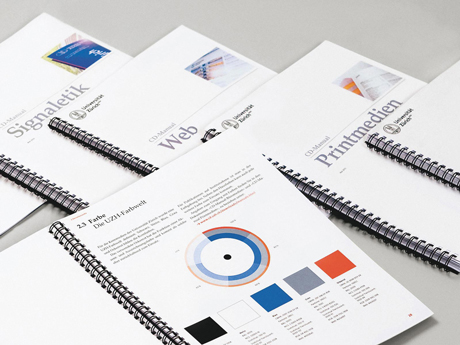
The University of Zurich has had a new corporate identity since November 1, 2010. The visual identity, developed by the Zurich-based agency TBS Identity, establishes—for the first time—a comprehensive corporate identity that is mandatory for all departments.

Today, the world's major educational institutions are not only globally networked; they also have to survive in an increasingly competitive environment. Against this backdrop, the management of the University of Zurich decided to renew its diverse and patchy corporate design and to follow the principles of a single-brand strategy. TBS Identity emerged as the winner of the project competition organized for this purpose. After around two years of preparation, the new corporate design is currently being introduced across the university institutions.
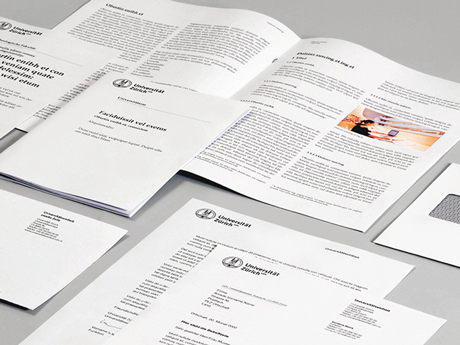
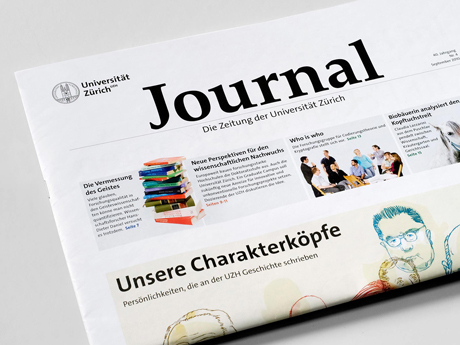
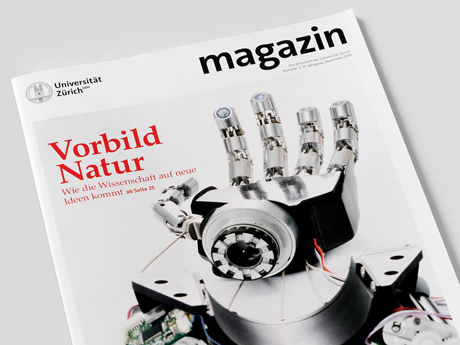
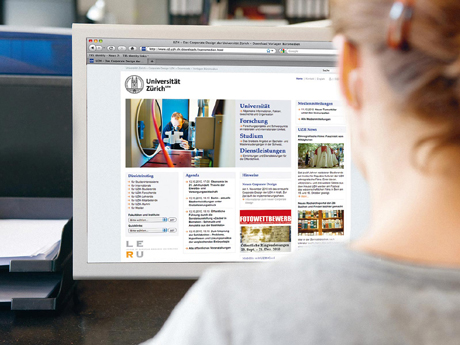
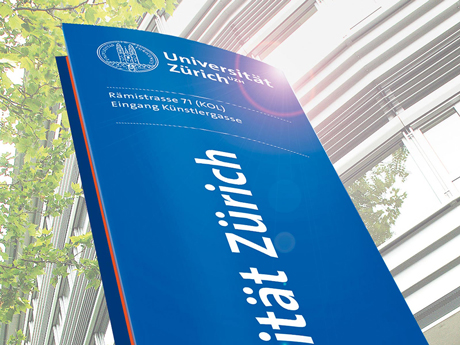
According to the press release, the University of Zurich has for the first time a comprehensive and complete corporate design that consistently includes all media areas. From stationery to building signage, from print media to consistent university websites.
On the one hand, TBS Identity acted as a design agency for the communication department in charge and developed a visually convincing image. Together with head Christina Hofmann, they also defined important procedural aspects of the complex implementation and supported the project through all hurdles and bottlenecks. From the outset, the strategy was to not only establish a complete set of rules, but also to provide welcome working aids that facilitate daily design work at all levels. At the heart of this are user-oriented design templates for both the office and the professional design sector.
Responsible at the University of Zurich: Dr. Christina Hofmann (Project Management, Delegate of the Rector for Communication). Responsible at TBS Identity: Michael Schädelin (concept and consulting), Christian Tobler, Thomas Geissberger (AD), Marco Donada (graphic design), Kathrin Treml/Daniel Erdin (web design), Katrin Zbinden (project management).

1292852094_img101208_uni1
1292852094_img101208_uni2
1292852094_img101208_uni3
1292852094_img101208_uni4
1292852094_img101208_uni5
1292852094_img101208_uni6
1292852094_img101208_uni7

Last but not least: Fitness advertising that whets the appetite

Advertising for fitness centers usually looks like this: Trained people who insanely enjoy gym activities. Alternatively: The advertising is kind of funny. Advertisers from El Salvador have opted for the second option. And the result is convincing.

The problem is obvious: most people do not decide to subscribe to a fitness center out of pure joy. It would be pointless to promise that it will be fun. It's better to do something funny, like the ads for Be Fit by the Salvador-based agency Apex BBDO. The subjects focus on the culprits and show how the delicacies in the torture chamber or the fitness center are being put to the sword. The hot dog looks cute and the chocolate bar invites you to take a bite. Cleverly done. After the hot dog and chocolate bar, the guilty conscience should be even greater and the trip to the fitness center all the more necessary.

1292852092_img101207_befit
1292852092_img101207_befit2

Novo Media markets clips from ZDF Enterprises

Novo Media is now offering exclusive video clips from ZDF Enterprises. The Zurich-based media marketing agency is targeting Swiss TV stations, publishers, and agencies with this offering.

The archive currently contains around 1,300 clips. The reports and features are between 1:30 and 4 minutes long, fully edited and self-contained. Content from countless categories, for example health, travel, sport, nature, politics, business or knowledge, is available to the producer. The pricing model is based on a unit price per clip, regardless of length and content. The necessary licenses for the worldwide use of the image and sound material, including music, are already included.

Fairness Commission: "The outdated price"

Failing to specify the duration of a special offer in a commercial communication can quickly amount to unfair business practices. This is the conclusion reached by the Swiss Fair Trading Commission in the case of a restaurant guide.

A company had offered a "daily menu" for CHF 9.90 in a brochure, but later charged around CHF 1 more for it. A consumer was offended by this and lodged a complaint with the Swiss Commission for Fair Trading. He believed that the information in the corresponding restaurant guide was unfair. The respondent, for its part, pointed out that the guide was over a year old at the time of the complaint. The price of CHF 9.90 had previously been valid, but had then been adjusted. It therefore considered a complaint to be an abuse of rights.
The First Chamber of the Fair Trading Commission disagreed. The incriminated guide did not contain any dates or other references to the validity period of the favorable offer. The fact that the guide had already been circulated a year ago was also not accepted by the Commission as justification. It wrote: "In addition to the offers, the guide also contains general information such as address details of other restaurants in the chain and therefore has a long-term purpose". In this respect, it was also irrelevant when exactly the complainant came into possession of the guide.
The respondent was responsible for the commercial communication and did not inform the addressees how long the offer was valid. Since it failed to provide this information and the offer was no longer available, it had acted unfairly pursuant to Art. 3 lit. b UCA.

National Council: No funding for headline newspapers

The National Council and the Council of States have not yet resolved all their differences regarding the Postal Services Act. They disagree on which newspapers should benefit from indirect press subsidies. On the same day, the National Council decided that book prices should once again be regulated—including in online retail.

The Council of States wants the Federal Council to regulate which newspapers are delivered at a discount. The National Council, on the other hand, wants to write a criterion into the law: It wants only those newspapers to benefit that are not part of a newspaper association with a total circulation of over 100,000 copies. On Tuesday, the National Council decided to stick to this position by 98 votes to 79 with one abstention. The SP and CVP thus prevailed. Representatives of both parliamentary groups argued that the exclusion of broadsheets would ensure that small newspapers were promoted. The opponents of this regulation doubted this.
Post and Media Minister Doris Leuthard was also skeptical. She also pointed out that Parliament would be holding a fundamental debate on press funding next year anyway, in connection with parliamentary initiatives. Her department is currently writing a report on media diversity. The councillors agree on the amount. On Tuesday, the National Council maintained its decision to support the delivery of newspapers by Swiss Post with 50 million a year. 30 million is to go to the regional and local press, 20 million to the membership and foundation press.

Fixed book prices also for online retail
In addition, the National Council decided on Monday that all book prices should be regulated again. The Book Price Fixing Act should also apply to online trade, meaning that consumers would also have to pay Swiss prices when ordering from Amazon and other foreign providers. The Council of States had proposed excluding domestic and cross-border online trade from the law as an exception.
The Comedia trade union (from January 1, 2011 Syndicom) is delighted with the approval from the National Council. If online retail were to be excluded from the Book Price Fixing Act, the existence of the brick-and-mortar book trade would be under threat, the union said in a communiqué. The fear: books would be looked at in bookshops but later bought online. Exlibris, Amazon and other providers would therefore benefit. Ex Libris has a different opinion. "For us, any legal price control is unacceptable," CEO Daniel Röthlin told 20 Minuten. Ex Libris does not want to bow to price dictates. For the time being, the Migros subsidiary is working towards at least exempting foreign online retailers. In this case, the company is considering selling from abroad.

SDV Junior Award: Looking for young creatives

The SDV Junior Award was presented for the first time as part of last year's Swiss Dialog Marketing Prize. This year, we are once again looking for up-and-coming talent. Young creatives can apply from now until January 31, 2011.

The SDV Junior Award is aimed at young creatives who want to demonstrate their skills and make their work known to a wide audience. Professionals up to the age of 28 who are either still in training, attending a creative school or have been in permanent employment for a maximum of three years can take part. Career changers who have been working in the advertising industry for no longer than three years and are no older than 32 are also eligible to take part. Teams consisting of a maximum of three members are also permitted. Participation in this year's competition is free of charge. The fee of CHF 100 per submitted competition entry will be paid by the agency at the airport.
The winner will be announced at the big Award Night on May 27, 2011 at the Kongresshaus Zurich.

More information: www.dm-preis.ch.

PwC study: Growth primarily in the digital sector

In its study «Swiss Entertainment & Media Outlook 2010–2014,» PwC examined revenues, trends, and developments in the Swiss entertainment and media industry. The auditing and consulting firm forecasts an upswing in the digital sector but also predicts stable revenues for newspapers.

According to PwC analyses, turnover in the Swiss media and entertainment industry will increase by a fifth by 2014, from CHF 10.4 billion today to CHF 12.6 billion. The lion's share will come from spending on Internet access in 2014. Turnover in the newspaper market would increase by just under 1 percent annually (2010: 2.1 billion; 2014: 2.2 billion).
The study predicts a doubling of the Swiss internet advertising market (2009: 584 million; 2014: 1.2 billion). Growth will be driven by search and display advertising. Despite the strong increase in digital advertising, print advertising will continue to account for the largest share of the newspaper market (2009: CHF 1.3 billion; 2014: CHF 1.4 billion). Annual growth of 2.7% is forecast for the outdoor advertising market (posters, public transport advertising, sports and stadium advertising, screens) up to 2014 (2009: 636 million; 2014: 726 million). Although the share of digital advertising space is growing strongly, it will remain well below 10% of the total market in 2014. According to PwC, sales in the market for TV advertising (TV advertising, websites, sponsorship and mobile TV) will increase by 4.2% (2009: 616 million; 2014: 757 million).

Further information and how to obtain the study: Pwc.ch.

Draftfcb/Lowe: Sending the smiley to the call center

Categories

Uncategorized

New Lgk: Innovations at Bernmobil announced

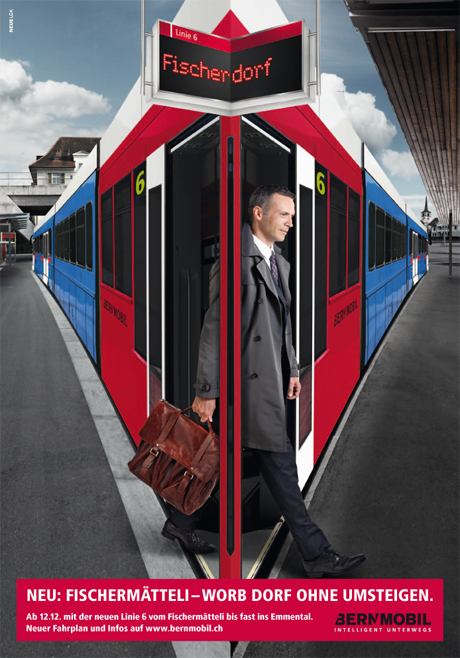
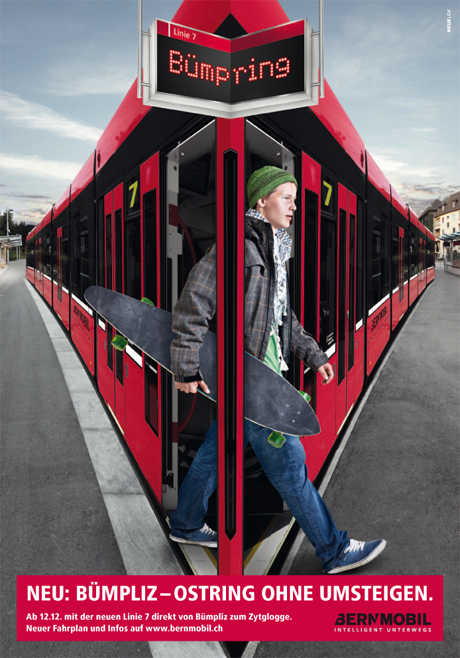
In conjunction with the Switzerland-wide schedule change on December 12, Bernmobil will be implementing various transportation-related changes. This information is being communicated by the Neue Lgk.

The aim of the campaign is to make passengers aware of the changes and provide them with all the necessary information via various channels. Six different subjects address the most important changes. At the heart of the campaign are posters that will be used along the route network. However, megaposters, advertisements, streetcar trailers, radio spots, e-boards and banners are also used as advertising media.
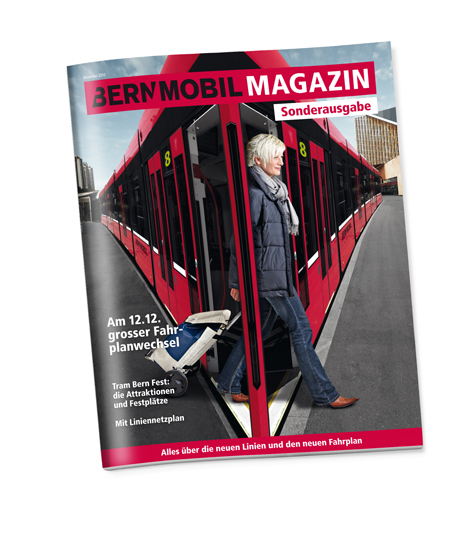
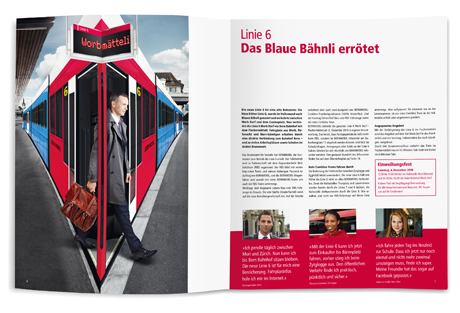
The campaign is complemented by a newly designed special edition of the Bernmobil magazine. On 16 pages, readers can find out interesting facts about the new routes and departure times and the significance of the new transport concept. The magazine was distributed to around 120,000 households in and around Bern on December 1.

1292852092_img101207_bernmobil
1292852092_img101207_bermobil2
1292852092_img101207_bernmobil3
1292852092_img101207_bernmobil4

Responsible at Bernmobil: Roman Gattlen (Head of Marketing), Monika Scheiwiller (Head of Marketing Communication), Rahel Roher (Head of Market). Responsible at the New Lgk: André Benker, Hans Tanner (CD), Lukas Schmid (text), Stephan Wittwer (AD), Simon Lattmann (polygraphy), Nicole Brunner, Alfredo Trasatti (consulting).

Ubi: "Tagesschau" reported one-sidedly in the Holenweger case

The Independent Complaints Authority (Ubi) accuses the «Tagesschau» of providing one-sided information and violating the principle of objectivity. In the case of former Zurich private banker Oskar Holenweger, the noon edition of the SF news program failed to present Holenweger’s perspective and also omitted the presumption of innocence.

The Ubi therefore approved a complaint by 5 votes to 3. The complaint came from a person who was not directly affected; it was supported by 127 co-signatories. The "Tagesschau" report in question was broadcast on December 18, 2009, after the deputy federal investigating judge had informed the media of the conclusion of the preliminary investigation against Holenweger.
The extra-parliamentary commission criticized the news programme for presenting a "one-sided picture". Only the investigating judge's point of view was expressed. In contrast, the audience was told nothing about the views of the accused. The editors had neither summarized relevant passages from the investigating judge's media release, nor had they pointed out that they had not received a statement from Holenweger by the broadcast date. There was also no explicit reference to the presumption of innocence. Overall, the public was "unable to form its own opinion", writes Ubi.
However, it rejected a complaint against the main edition of "Tagesschau", as Holenweger's position was mentioned twice there. Ubi's decisions can be appealed to the Federal Supreme Court. In the event of a legally binding decision, SF must inform Ubi within 30 days of the measures it has taken to avoid similar infringements in the future.

Econ Award for Dachcom

On November 18, the winners of the Econ Awards were announced in Berlin. The highest award (Platinum) in the category of image publications was presented to the book *Gesichterlesen*. The graphic design was created by Dachcom.

The space or ground on which the book was written is the Waldheim Foundation, which has several homes in the canton of Appenzell-Ausserrhoden. It offers people with disabilities a home with housing, employment and leisure activities. This environment was the inspiration for Christoph Pflüger, the photographer of the portraits. The graphic concept was developed at Dachcom. The textual equivalents were created by Dr. Lynn Blattmann and Dachcom.

(Image: Book Gesichterlesen, published by the Swiss book publisher Benteli.)

Econ Awards Corporate Communications 2010: The winners have been chosen

Charles Vögele: Til Schweiger becomes a testimonial

Following Penélope and Mónica Cruz, Charles Vögele has also found a male brand ambassador in Til Schweiger. Starting in 2011, the actor will be the male face of the group-wide image campaign.

The internationally renowned actor will design his own men's collection as part of his engagement under the "Biaggini Violett" brand, the fashion company writes in a press release. Til Schweiger embodies a mix of masculinity, sexiness and experience, says André Maeder, CEO of the Charles Vögele Group: "The perfect match for our brand." The collection will be launched in fall 2011 and will be presented at the Opening Night of the Charles Vögele Fashion Days 2011.

get_footer();