Nike Corporate: Fabian Fehr becomes new Marketing Manager Switzerland

The international sporting goods company NIKE has appointed Fabian Fehr as the new head of marketing for NIKE Switzerland. Fehr will take over leadership of the marketing team for Switzerland effective March 1, 2011. He succeeds Heiko Brunner.  

Until now, Fehr held the position of Brand Manager Football for Germany, Austria and Switzerland at the headquarters in Frankfurt. In his new role, he and his team are responsible for all sports categories (Football, Running, Sportswear (NSW), Women and Action Sport) and all departments of Marketing for Nike Switzerland.
 
After Fabian Fehr completed his studies in sports and economics at the ETH Zurich with a Master of Science, he joined the marketing team of Nike Switzerland in 2002. In 2003, he took over the position of Category Leader Running & Football. In this role, he managed the marketing implementations in the Swiss market for the 2006 World Cup in Germany and for the EURO 2008 in Switzerland. After the European Championship, Fabian Fehr was appointed to the region's headquarters in Frankfurt to be responsible for the three countries Germany, Austria and Switzerland as Brand Manager Football, before returning to Switzerland as Marketing Manager.
 

Advertiser of the year

Nadine Borter, owner of Bern-based Contexta, is our ambassador for 2011.  

borter_nadine

WW: What does this title mean to you?
Nadine Borter:
very much. The title is great recognition, not only for me, but also for the agency and the strong Contexta crew. And for our clients too. Only those who have the privilege of working for the most demanding and capable clients can become Advertiser of the Year. It is their trust and many years of close cooperation that make success possible. For me personally, it is a wonderful confirmation of what I do every day. I am grateful for that.

How do you explain the many sympathies shown by the vote?
It's always difficult to judge for yourself. I didn't expect to win - I'm very honored by the recognition from my colleagues. It's a nice acknowledgement of our work over the last few years. Contexta receives a lot of sympathy, which perhaps has something to do with the fact that we are in Berne and not in Zurich. And that we are going our own way.

You are a very young agency boss. How did it actually start with advertising?
After secondary school, I asked myself the question: should I continue with top-class sport? I was in the national women's swimming squad. Or should I go to university? Then I had the opportunity to get a taste of Contexta. After that week, I knew I wanted to learn this job. The agency and the people fascinated me. I then had to "pick and choose" for another nine months before I was allowed to join as a junior assistant. Contexta gave me this opportunity. That was in 1995, 16 years ago. And I've been here ever since - and have learned everything from the ground up.

Have you never felt like taking a tour of different agencies?
You always come to a point in life where you review your experiences and see where else you want to go. You look for confirmation, you want to measure yourself against others. What is it like at the other place? I was always able to develop further at Contexta. There have always been new tasks. The agency has changed, it has become bigger. This has also changed my area of responsibility. I have always found enough challenges within Contexta. At some point you shape the agency yourself, you become a part of it. Changing agencies was never an issue for me. And because I love the agency business, the client side was never an option for me either.

What do you like about Contexta?
There is a lot of passion and lifeblood in this company. Behind Contexta is a dedicated crew that I look forward to seeing every day. Or almost every day. I consider it a privilege to fulfill our clients' orders with great respect. Communication is a complex task. I personally enjoy doing advertising.

What advantages does the Bern location offer?
Because I have always been in Bern, this question is difficult for me to answer. It has a long history, a tradition, that Contexta is in Bern. Perhaps this is actually perceived as an advantage: an agency that is not in Zurich; an agency that ticks a little differently.

What were the key milestones at Contexta?
There is certainly the long-standing collaboration with Appenzeller Käse - one of Contexta's first customers. This relationship has now lasted 42 years and will probably soon be in the "Guinness Book of Records". I myself have been working for Appenzeller Käse for 16 years. It's great to take on such responsibility for a brand. And to experience the long-term trust of a customer. During this time, you have to renew yourself several times in order to renew the brand. Seeing what it takes to work well together is a success for me personally. Another milestone was taking over the agency a year ago. That also opened up a new perspective for me as an entrepreneur.

It's rare to buy an agency at such a young age. What considerations led to this?
On the one hand, I believe in the future of owner-managed agencies in Switzerland. There are many attractive brands in this country that can be successfully managed from Switzerland. I am also interested in the agency of tomorrow. The market is evolving and becoming more complex. We are facing a very exciting future. How does an agency need to be set up so that it can still operate successfully on the market in five or ten years' time? That interests me as an entrepreneur. And last but not least, I like long and good stories. Our agency is 42 years old. It appealed to me to continue writing this story.

Where would you like to take Contexta?
I want Contexta to be part of the exciting future we are facing. My agency should be an attractive place to work. A platform for all kinds of specialists and creative talents. A competence center for communication and communication issues. This is where I want to take Contexta together with our clients.

How did the desire to go from advertising assistant to entrepreneur come about?
You grow and become big together with a company. In my experience and considering the size of the agency, we have grown quite steadily. At some point in this process, entrepreneurial questions also arise and at some point you have grown to take on the responsibility of answering and acting on such questions.

Management as "learning by doing"?
I have learned a lot from working with people who have a lot of experience. I have also continued my education. During my time as a consultant, I completed the Head of Marketing Communication and many extra-occupational training courses. But I certainly learned most of it by doing. I'm doing a lot of things for the first time. Mistakes can also happen. That's the exciting thing about my new situation.

To what extent do you intervene in creative processes?
I am an advertiser at heart - I know what it takes to write success stories for strong brands. At Contexta, the boundaries between consulting, creation and strategy have always been fluid. This is precisely where our strength lies. But - and this is also the way we work - we are a team, we work together and we are present for our clients together. We grow with the work we do for our clients every day.

Do you also contribute ideas?
I am certainly more strategically active. But over the years you also develop your own creativity and get an eye for good ideas. As a result, I have a clear opinion of what works and what doesn't. And I bring that to the table. And I bring that to the table. The search for the better idea appeals to me - and that's why I'm careful not to stifle the creative process.

How is Contexta organized?
We are over sixty people. We launched the process of integrated communication early on. At the size we are, you have to be able to play in all disciplines. Today, our online skills are integrated into the teams - and with great success. First and foremost, we tell good stories. Regardless of the channel. Above all, there is a good idea that is supported by the creative and consulting teams. These teams of experts implement the idea in the various channels - together with the most talented photographers, directors, producers and programmers.

Why are you involved in the BSW as vice president?
The BSW is the industry association and stands for quality and expertise. I think it's important that the younger generation is also actively involved and committed. It's about strengthening common interests. And last but not least, it is very important to train the next generation of advertisers. Also in our own interests. The complexity of the tasks facing agencies is increasing all the time. This means that we have to invest in young people and their training.

You will soon be traveling to Berlin for the film festival: What connection do you have to it?
There are a few highlights that I cultivate every year. I like to travel to art fairs and regularly attend the Berlinale. Art and film is an exciting inspiration for me.

Do you still have time for sport today?
Those days are over. Especially at the intensity I did 15 years ago. I enjoy exercising in nature and swimming - especially in the Aare. I need this balance. But I don't go jogging before work. And you won't find me in a gym either. My private life is very important to me. Family, friends. I like to cook.

What do you want to achieve as Advertiser of the Year and thus as an ambassador for our industry?
My topic is the promotion of young talent - there is hardly a more exciting industry than ours. We are an important industry - I want to raise awareness of the importance of communication. And also the economic benefits of high-quality advertising and strong ideas. Good communication creates real added value for a company and major competitive advantages. That's the good story I like to tell everyone.

Interview: Andreas Panzeri

Shortlist Corrida Hesskisssulzersutter

Werbewoche features photos from the event.

Click here for the Photos.

At home in the world

Infel AG Publishing House is breaking new ground: with «expand,» the customer magazine of DKSH, a service provider specializing in market expansion in Asia, and «T Magazin,» the online portal of the consulting firm Ernst & Young.

All experts agree that the future of the global economy will be decided in Asia. Japan, China and India, but also Vietnam and Malaysia, are the engines of this development.

The Swiss market expansion and services group DKSH is the world's number one provider of market expansion services with a focus on Asia. Whoever wants to gain an economic foothold or develop in Asia cannot avoid this company, which achieved sales of around 8.6 billion Swiss francs in 2009 and thus ranks among the top league of the Swiss economy.

"expand": knowledge platform customer magazine
Infel AG has been producing DKSH's customer magazine "expand" since last year. "expand" is published twice a year in English with a circulation of around 30,000 copies. The magazine provides information on current developments in DKSH's business areas and goes out to partners and customers in 35 countries, mainly in Asia.

Together with DKSH, Infel develops the topics and implements them on site with proven specialist journalists. This is where Infel's dense network of native-speaking authors comes into play. Support in photo editing, ad management and the graphic realization of the magazine round off the range of services. "Reportage,

Interviews, essays, employee portraits and internal news make 'expand' a knowledge platform for anyone involved in market expansion, especially in the Asian market," says Gaston Haas, project manager at Infel AG.

"T Magazine" online: Tax issues reloaded
Also since 2010, Infel AG has been producing "T Magazine" for the international auditing and consulting firm Ernst & Young in the EMEIA region (Europe, Middle East, India and Africa). The target group is Ernst & Young's clients, primarily at C-level (CEO, COO, CFO); the circulation is 30,000 copies. Parallel to the "big" "T Magazine", Infel AG produces a "small" sister magazine (circulation 170,000 copies), which is enclosed with the English-language Financial Times (FT). The size and format correspond to the FT's specifications. The target group for this supplement is the international business community (C-level decision-makers), tax professionals, politicians and those generally interested in global tax issues. This approach is naturally linked to the high quality of the magazine's content and graphics. The third issue of the magazine was published in January this year.

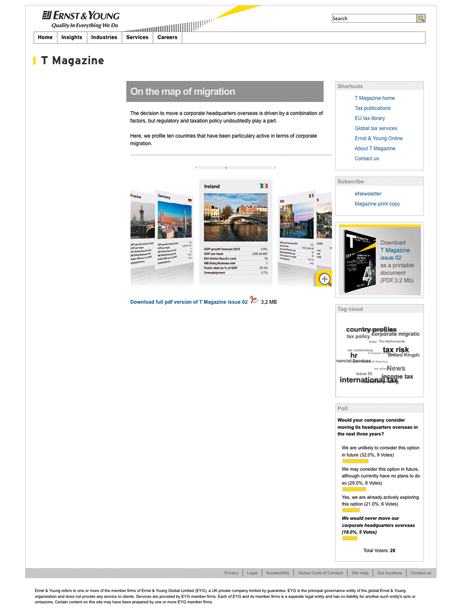
As one of Switzerland's leading full-service agencies, Infel AG also took on consulting tasks for the newly created online presence of "T Magazine" at the same time as the print product. www.ey.com/tmagazine offers additional and more in-depth content to the print magazine, interactive graphics and a wide range of tax-relevant information from around the world.

From the print magazine to the Internet
On a total of six pages, the print product describes six countries that are ideal locations for international corporations. The basic text is supplemented with key data and individual graphics. On the website, on the other hand, the topic of "corporate migration" is briefly teased out. The six countries presented in the print article are supplemented by four additional countries. The graphic implementation of the Facts&Figures as "quartet cards" brings a playful element to the tax theme; the functionality of the map view as a coverflow encourages the user to browse, a feature also offered by iTunes, Firefox and other programs. The site also offers a tag cloud with the most important terms, a shortcut box and a survey box on the topic of corporate migration. Of course, the print edition can be integrally downloaded as a PDF.

ernst
expandjpg

News curators instead of journalists?

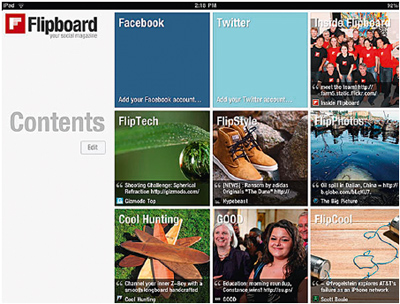
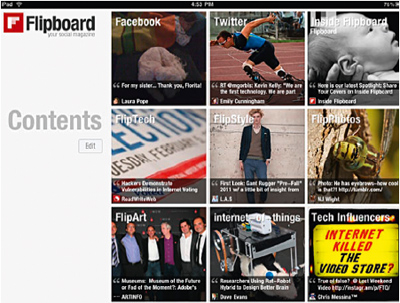
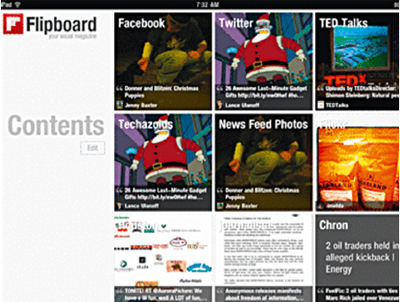
With social news apps, such as Flipboard for the iPad, consuming news becomes a fun and easy experience, as they bring together news channels from a wide variety of sources under a visually appealing interface.  

Apple has named Flipboard the App of the Year, and content curation is considered a key trend for the new year in the online industry. Content curation is intended primarily to help companies and organizations better manage their brand online. Those who curate content online do not produce content themselves, but rather continuously compile content from others in a way that is useful to a specific target audience. The curator’s unique perspective is reflected in the selection of content and any brief explanatory comments provided. This personal touch distinguishes curated content from content aggregation, in which content is compiled and published more or less efficiently with the help of sophisticated algorithms. This is by no means new in the online world, as many blog authors have long sought to build an audience by linking to information from other sources. And before powerful search engines existed, curated directories were the only way to navigate the web. The following aspects are new and crucial:

Information Overload: In the race to capture the public’s attention, every avenue is being explored: Communications departments in companies, organizations, and government agencies are expanding and constantly feeding websites, blogs, and social media channels with text, audio, and video content—which is increasingly being consumed on the go. Those who want to reach their target audience provide clarity—not just more news noise.

flipboard
 
Social media: While it was still common twenty or thirty years ago to announce news at a press conference in front of journalists, such news is now readily available online directly from the sources. Before the mainstream media picks up on it, the news has often already made the rounds via social media channels—from Twitter and Facebook to bookmarking services like Digg. The way news is disseminated in these digital realms provides insight into its relevance to specific target audiences. Whereas news agencies used to be responsible for making an initial selection to separate the important from the unimportant, this function is now performed by the networked masses.

Startups: Recently, particularly in the U.S., a number of startups have emerged that aim to support the curation process with technical solutions. Many of these services rely on social media platforms and analyze the information obtained through them. In addition, much of this information is increasingly available as structured news feeds (in RSS or Atom format), which facilitates its automatic processing. Some providers cover the entire production process—from identification to publication and feedback—while others focus on specific aspects with standalone solutions.

flipboard_0

Together, these factors have led to the hype or trend of content curation. This isn’t about individual bloggers; rather, it’s intended to help the marketing and communications departments of companies and organizations better promote their messages. A good example is IBM’s Smarter Planet marketing campaign, which aims to demonstrate how the world is becoming smarter through interconnected devices. The website http://smarterplanet.tumblr.com/ regularly features curated articles from the web on this topic, focusing on new technology products. Comments highlight how such developments contribute to the Smarter Planet vision.

Advocates of the growing trend toward content curation cite the following benefits in particular for curating content in a professional setting:

Thought Leader: Curated content helps a company’s website become the go-to resource for its customers and within the industry. By publishing original content alongside references to third-party content, a company can establish itself as a thought leader. This approach highlights the company’s own perspectives as well as important announcements from competitors.

Community: Such a website can be enhanced with social media features so that users can communicate with each other and with the curator.

Service: A well-curated website becomes the first place stakeholders turn to for information on a particular topic.

Monitoring: Those who establish curation structures can use them to easily track current developments in relevant fields. For example, they can monitor mentions of their own brand and products across numerous social media channels and websites so they can respond accordingly. Or they can use them to monitor competitors’ activities. And to efficiently maintain internal information repositories as part of knowledge management.

Cost Reduction: If the curation processes are optimized, communications staff will be able to work more easily and comprehensively.

Revenue: If the curated website is well-designed and resonates with its target audience, it will also attract sponsors and advertisers.

If content curation, as described here, gains traction, it could profoundly transform the media landscape in the long term. From a strategic perspective, this will once again significantly lower the barriers to entry for new providers looking to compete in the media market. Curation is a part of journalism that can now be easily carried out outside of publishing houses using curation tools. For newsrooms—from daily newspapers to trade publications—it will become even more difficult to achieve a sustainable competitive advantage. This is because, within their areas of expertise, institutional curators and editors can easily provide information more quickly and in greater depth than many existing media outlets. Added to this is the fact that such communication initiatives do not need to be directly financed by the (reader or advertising) market, but can be justified by indirect benefits, such as an enhanced reputation.

But curation isn’t just for the big and powerful. Even smaller players—such as NGOs, protest groups, politicians, and artists—can carve out a niche for themselves with a constantly updated news overview and make a name for themselves among their target audience. They, too, rely on social media channels and aggregators (such as Google News) and make up for the lack of specialized staff and appropriate software solutions with greater dedication.

The chances for market-changing and groundbreaking innovations are particularly high when multiple trends reinforce one another. This is exactly the case with so-called social news apps. The best example of this is Flipboard, which Apple named one of the four Apps of the Year for 2010. Flipboard aggregates content from Facebook and Twitter, as well as other sources such as Google’s RSS reader. And it doesn’t just aggregate any content—only content from sources that the user has selected in advance, including new curated news channels. But instead of simply creating a collection of links, the app features a visually appealing magazine-style layout that is optimally tailored to the reading experience on the iPad. The web service Paper.li works on the same principle and has also been operating successfully for about half a year. Here, too, information from Twitter, Facebook, and online sources such as blogs is used to generate a personalized online magazine for the web browser.

flipboard_1

With Flipboard or Paper.li, all the free content on the web—from citizen bloggers to global newspapers—looks just as polished as it would in a professionally designed magazine. Using these apps is just as simple and enjoyable. No wonder, then, that there are already quite a few imitators. Whether it’s local politics, regional soccer, or trends in fashion and music: on devices like the iPad and with apps like Flipboard, curated channels come together with other media offerings and can be consumed effortlessly and seamlessly—and, of course, for free.
These trends are revealing a new value chain for the news industry for the first time. As before, sources bear the burden of getting their messages out to the public—messages that can be disseminated without further editing. As described, news selection is based on the response on social media, combined with the expertise of curators. Here, one funding model is replacing another: whereas it was originally printers who promoted their businesses with current stories and subsequently employed journalists as publishers, in the future, influential companies and organizations will finance these tasks in the hope of enhancing their reputations. Consumers pay (as with radio and television) for the devices and connection costs, but generally not for the content on online channels.

To get back to reality: Even in the communications departments of large companies, there are still hardly any Chief Curation Officers, nor is the topic merely an online fad limited primarily to the U.S. It’s quite possible that, in the near future, driven by a classic American gold-rush mentality, there will be attempts to fill every conceivable subject area with curated content first. If the concept proves successful in the battle for attention, it remains to be seen how long it will take for the first serious content curators to emerge in the Swiss internet scene—and who they will be.

Christoph J. Walther

Journalism in China: "It happens very quickly and you're gone"

Multiple award-winning television journalist Barbara Lüthi is the China correspondent for Swiss television. She has been reporting from the land of smiles since 2006. She often has to negotiate hard with the authorities and the police in order to carry out her research. Advertising Week spoke to her on the fringes of the 9th International Alpine Symposium in Interlaken about China as an emerging global power.  

luethi

WW: You have been reporting from China since 2006 and some of your reports have won awards. Are the topics for scoop reports on the street in China?
Barbara Lüthi: Yes, absolutely. And just: On the street. I think it's important to look beyond what you see first. In Shanghai or Beijing, you see the skyline, everything is modern and beautiful, that's the economic miracle of China. But who builds these buildings? It's the migrant workers. It's all there, you just have to be open and have the courage to look at the whole picture. After all, that's the job of a journalist.

So you simply go through everyday life with your eyes open and the topics come to you. Or do you search for specific topics?
Both. My Chinese assistant also gives me a lot of ideas about which topics would be exciting and important. There are classic topics that you simply have to have as news. And then there are lots of other things that partly arise from the classic content. For example, I was researching a report on economic growth in China during the crisis and came across ghost towns where nobody lives. They were only built to boost growth. I then investigated the matter, spoke to experts and to the few people who live in these cities. This resulted in a report about ghost towns. I don't work any differently in China than I do in Switzerland. But there are actually more issues on the street in China, because everything is constantly moving and changing, nothing has a fixed form. If you are alert, it is relatively easy to find good topics. You just have to look at what is happening and why.

Why did you go to China to work as a journalist? What attracts you to this country?
On the one hand, the dynamism that you can feel in the cities and coastal regions, that's the fascinating thing about China. Everything is possible there, the Chinese have a just-do-it mentality. On the other hand, there's the tradition in the countryside. Very different people come together there: on the one hand, those who still live traditionally, but also more and more people who see that they are lagging behind and are no longer satisfied. This creates social unrest. This tense relationship is not only an extreme challenge for the Chinese government, but also very exciting to document from a journalistic perspective. The central government knows exactly where the problem lies - but try to implement it with 1.3 billion people, with one-party rule and centralized control, with a form of government that drives the economy forward but is no longer modern enough for the people. With economic growth, the government has created a class that wants to participate and demands a different form of government. That is a contradiction in terms. It will be very exciting to see what happens over the next ten years.

Sanctions, harassment, censorship - everyday life for you? Or is that a Western cliché?
That happens very often. But it depends a bit: It's quite easy to do research in the cities, but we're usually stopped in the countryside. Because the authorities have no idea about the laws. And when we go to the countryside and talk to people, they get restless. Then we have to go to the police station and are questioned about our plans, or we have to have two or three cups of tea with the party secretary. Sometimes it's quite harmless, and sometimes they take us to the airport and say: "We don't want you to report on this." These are stories that are difficult from the local authority's point of view. For example, they don't understand why a foreigner comes to their village and wants to do a report on polluted rivers and people dying of esophageal cancer. They are not used to it and have never dealt with foreign media before. But when I go to the Foreign Ministry, they don't think the story is cool either, but they give their OK. However, I have to emphasize my request. There is no freedom of opinion or freedom of the press in China, you can't sugarcoat it. Of course we feel that, and it's often difficult. Chinese journalists who dare to report on such things end up in prison. I have quite a few colleagues who are in prison. It happens very quickly and then you're simply gone.

Have you ever had to abandon a reporting project due to external pressure? Or have you managed to get every story through so far?
So far I've gotten every story through, but sometimes it took a year before we were finished with the report.

How often have you been arrested in the course of your work?
(ponders, counts) I was held down ... about ten times. I think that's still possible.

Do you sometimes set yourself limits so as not to jeopardize your reports? Or do you wait until you are stopped by the authorities or the police?
Yes, I set limits. But not so as not to endanger myself, but to protect my Chinese employees and my sources. According to a new law, foreign journalists are actually allowed to move freely around the country, they just need permission from their interview partner. Of course, this is a rubber article. Because if a local authority detains me and I say that I have permission from my interview partner, they naturally want to know who that is. And logically, I don't name the farmer I've just spoken to. That's why we often work so elaborately and drive to a village at night or early in the morning under blankets in the back of a car, conduct our interviews and then leave before anyone knows we're there. Later, we always call to find out whether everything is okay with the people involved. But sometimes there are situations in which we don't go ahead with a project because an interviewee could get into big trouble afterwards. It's simply not worth it. People always think we'll help and everything will be fine. But that's not true. And I always make that very clear and avoid letting informants run into dangerous situations.

You would never put your team or informants at risk. What would you never do yourself for a story?
It's difficult to say, I go to great lengths for a good story. But I would only do very sensitive things without my Chinese employees, because they would go to prison very quickly and for a long time if the worst came to the worst. Not much can happen to me, on the other hand. In the worst case, I get a stamp in my passport, have to hand in my journalist visa and am never allowed back into the country. That would solve the problem for the Chinese government. I don't think they would put me in prison. That would be far too much trouble for the government. Because then they would have to deal with Switzerland for months or years.

Your working conditions are obviously very different from those of your Chinese colleagues. Why does China grant foreign reporters privileges that Chinese journalists do not have?
The Chinese government has a completely different understanding of journalism than we do. The Ministry of Foreign Affairs invites foreign journalists into the country because China wants the country to be reported on. They bring us in and are then amazed that we don't just do positive stories, but also critical ones. They say: "Now they've come for the Olympics, why are they going to the farmers now?" The Chinese government is surprised that such reports are being produced at all. However, it cannot prevent foreign journalists from reporting abroad and is not particularly affected by the fact that a few Swiss people see critical reports. Chinese journalists, on the other hand, are harassed. The Chinese government controls what news is published within
China because it does not want the population to find out about the problems in China. Because that disturbs the so-called "harmonious society". And the small spark that could arise could become a wildfire. This is why the civilian population is sometimes threatened with disproportionately harsh punishments. In China, 200,000 children are abducted every year as a result of the one-child policy. The children are sold to parents who would like to have a second child but are not allowed to. The parents of the abducted children have traveled around the country with pictures of their children in order to find them again. They are now facing five years in prison for "illegal assembly" - the same sentence that the kidnappers are facing. The actions of the desperate parents have made other people realize that all is not well in China. This is what the government is most afraid of.

PricewaterhouseCoopers recently predicted that China will be the world's largest economic power by 2050. Do you share this opinion? And how is that possible with such an understanding of journalism? After all, a functioning and recognized world power also needs a strong media system.
China will certainly become the biggest economic power, I believe that too. But the question is how you define "power". China can become a world power simply by buying Africa and Europe, and certainly militarily, because all it needs is money to overtake the USA. But a world power also needs international diplomacy, a culture and a media system. And I'm not sure whether China will be able to provide all of this by 2050 under this government. HSBC Bank has said that China will also be a cultural leader by 2050. (takes a deep breath) ... today, Oasis and the Rolling Stones still can't perform in China because their lyrics allegedly undermine the government's goals. China will have to step on the gas if it wants to achieve this by 2050. It's not just about democracy, China needs an independent legal system, people must be able to complain about abuses. And an independent legal system also needs free media and journalists who fulfill the function of a regulator. Then something would start to change. But no one can say how long that will take.

By communicating openly, China could counteract the danger that things are constantly bubbling under the surface - and that the cauldron will explode uncontrollably at some point.
Exactly. And the pressure is getting stronger and stronger. I remember the anniversary of the Communist Party very well. There was a huge parade in Beijing, but no one was allowed out on the street or even on the balcony to watch. There were posters everywhere saying that you had to expect to be shot if you went onto the balcony. Snipers were lying in wait everywhere. A lot of people wondered what that was all about: "After all, it's the People's Republic of China's birthday - and we're human beings. Why do we have to hole up in our rooms now? What's wrong with that?"

How do you feel when you experience something like that? After all, you don't just work as a journalist in China, you also live there, have a family and a young daughter. Don't you sometimes have a queasy feeling?
When I look at it as a journalist, I am very critical of it. But as a person, I feel very comfortable. Especially with my daughter it's great, the Chinese love children. It's much easier with children in China than in Switzerland. When I go to the park with my daughter, I'm immediately surrounded by all the Chinese moms, who are all happy and playing with the little one. In the restaurant, the lovely waitresses come straight away and help Lara with her food, which is really very easy. In Zurich, many restaurants don't even have
a high chair.

Interview: Anne-Friederike Heinrich


In a nutshell
Barbara Lüthi (37) studied economics and languages in Zurich and Sydney and began her career as a video journalist and editor for Swiss television stations, including the political and business magazine Rundschau. In 2005, she received the CNN Journalist Award for a report on working conditions in Chinese toy factories and the Kindernothilfe Germany TV Award for a report on child trafficking on the Greek-Albanian border. In 2008, she was again presented with the CNN Journalist Award, this time for the report "Land expropriation in China". She was also named CNN Journalist of the Year. Lüthi has lived in Beijing since 2006 with her husband Tomas Etzler, who works as a China correspondent for Czech television, and their two-year-old daughter Lara Uma.


Polyconsult: Energie Wasser Bern advertises with waste

Biogas is produced from organic waste and sewage sludge. With a simple yet unconventional campaign, Energie Wasser Bern shows how valuable, carbon-neutral energy is created from what might seem like useless waste.  

With this campaign, Energie Wasser Bern illustrates its uncompromising positioning as a sustainable energy provider that focuses its public service on people and the environment. The campaign plays the entire cross-media repertoire: posters, advertisements, direct mailings, toilet postering, online content ads, Facebook, samplings.

Responsible at Energie Wasser Bern:Florian Knapp (Head of Marketing Communications). Responsible at Polyconsult:Silvio Truffer and Roger Ghezzi (CD/text), Peer Fankhauser and Karin Hirschi (graphics), Caroline Bühler (consulting), MediaPlus (media planning).

From media to content distributor

Ten years ago, TA-Media—which had since been renamed Tamedia—made its public debut with the slogan «Tamedia: Content for People.» However, it is Ringier that is now consistently putting this slogan into practice. Its strategy is no longer based on media products, but on content.  

It is obvious: Ringier has become aware that the main competence of a media company is primarily to collect, prepare and disseminate information. The path via printed paper is simply one of many distribution options. In the age of digitization, however, many other distribution channels are available. But a media company can hardly distinguish itself through distribution. Everyone can print anyway. And in the case of digital distribution channels, there are opportunities for profiling, but at best these create short-term competitive advantages. That is, if you are the first to use a technical solution that really hits home with the audience. But failure is about equally likely. The bottom line is that all media companies rely on roughly the same number of successful and unsuccessful paths.

The collection and processing of information, on the other hand, is completely different. Here, expertise is an asset that depends on people with their knowledge, experience and relationships, and thus makes it possible to stand out from the competition. In Ringier's various editorial departments, specialized knowledge is primarily represented in the topics of entertainment/people, sports, automobiles, food and drink, health, politics, and business (see overview "Ringier's topic areas and media").

Entertainment is the soul of Ringier
The topic of entertainment/people has lain dormant in Ringier's soul at least since the launch of the magazine "Ringiers Unterhaltungsblätter" (1922). Or as CEO Marc Walder put it at the Epiphany conference: "Ringier media have an affinity for entertainment in their DNA." Entertainment, or entertainment, is also now the subject area in which the consistent expansion of activities across the entire value chain has progressed furthest. What is new in this area (but also in sports) is that a media company earns money not only from reporting, but also from the management of important exponents. Stars and starlets, artists and athletes are, so to speak, passed on in-house and used from A to Z. This has already advanced in the media industry. This strategy, which has already been extensively discussed in the media industry, is fundamentally conflict-ridden. The best way to illustrate this is with an example.

What does the Blick journalist do who knows internas about the behavior of ski star Lara Gut and knows, for example, that the young woman has really behaved completely impossible towards the ski association? His journalist heart naturally wants to pillory the "bitch Lara Gut". His mind, on the other hand, as an employee of the Ringier company, which has a management contract with Lara Gut, will think twice about what he should do: Strike with the two-handed sword, write a soft-pedaled version or rather forget the story. Well understood: This has nothing whatsoever to do with any internal company directives. These are just the thoughts in a journalist's head. His effective action ultimately depends only on his strength of character. If he decides against the "heart variant," his knowledge and relationships will not be used optimally.

There is further potential for conflict in the event sector, where Ringier has held a majority of the votes in Good News Productions AG for many years and professes to want to be the leading company for live events in Switzerland. Here, too, journalists repeatedly find themselves in the position of having to criticize an event organized by this subsidiary. But those responsible in the executive suites know very well that they have to back up the editorial staff here as well. At the Epiphany meeting, for example, Ringier CEO Marc Walder drew attention to the fact that Blick had ripped the Madonna concert in Dübendorf. And he also pointed to a very old analogy in France. There, the major sports newspaper L'Equipe is the organizer of the Tour de France. At the same time, however, it also repeatedly uncovered doping scandals. Because the publisher knows very well that it would damage the credibility of the title more if another medium were to uncover such a case.

With sports, Walder mentioned precisely the subject area where Ringier still has the biggest gap. The overview of "Ringier's thematic areas and media" shows no activities in the TV topic of sports, which has a high audience share. Yet the starting position is actually ideal. With its holdings in Sat.1 (Schweiz) AG (50%) and Teleclub AG (33.3%), Ringier already has relationships with distribution channels. Years ago, Ringier also broadcast a Swiss soccer championship match on Sunday afternoons for Sat.1. Sat.1 held the rights in that case.

Click here for the overview: Ringier's subject areas and media.pdf.

Will Ringier acquire Swiss soccer and ice hockey rights?
In 2012, the broadcasting rights for the national championship games in soccer and ice hockey will expire. This naturally raises the question of whether Ringier wants to have a say in the reallocation. Head of Communications Estermann says: "Due to the diversification of our business, we are currently examining new commitments in various areas as part of Ringier's strategy. This certainly includes the area of sports broadcasting rights." The problem with this is that, until now, the costs of production and rights have been significantly higher than the potential revenues. And since the leagues have been complaining for years that the income from TV rights in Switzerland is far too low, it will take a stroke of genius to bring this calculation back into balance. At least the situation is now somewhat better than it was just a few years ago. For example, German advertising regulations would apply to Sat.1. These are much more liberal than the Swiss regulations at the time, when Sat.1 last broadcast Swiss soccer matches. Ringier could also bring ticketing into a possible deal. Ticketcorner already sells tickets for many clubs' home games.

Other opportunities could arise with the Football Champions League. ProSiebenSat.1 still holds the rights there in Germany until the end of the 2011/2012 season, and has repositioned Sat.1 as a soccer station. If the German group were to bid for the future as well, an affiliation deal for Switzerland would theoretically be conceivable. According to Ringier, however, this scenario is hardly conceivable. Ringier is already anchored in the TV business with the Blick TV apps for iPhone and iPad, for which it also charges money. The iPhone apps for soccer, ice hockey and alpine skiing, on the other hand, are free.
At the very least, there are points of contact with sports when it comes to automobiles. With Blick, Ringier has a title in its portfolio that has been cultivating automotive sports for decades. Its employee Roger Benoit is described by the Swiss journalist as the best Formula 1 expert far and wide. Given 41 years of experience in Formula 1, an easily understandable verdict. And the Swiss magazine Schweizer Illustrierte and its French sister regularly cover the subject of cars with supplements and columns. In addition, the motorshow is produced and edited in German and French and broadcast on SRG's second channels in both language regions.

Other topics with less broad offerings
The range of topics is somewhat less broad for food and drink, health, business and politics. All four topics are played on the print, online, mobile and TV channels. On the subject of health, there is also a joint website Vitagate.ch, which is operated by the online subsidiary Gate 24 together with the Swiss Druggists Association. In addition, there is the TV program Gesundheit - Sprechstunde (Health - Consultation Hour) on SF 1, including a corresponding online presence. It is in a permanent clash with Bakom, which repeatedly admonishes violations of the rather restrictive regulations for sponsoring.
The food and beverage sector is far less troublesome. Here, with the Betty Bossi brand, a presumably highly profitable joint venture with Coop has existed for a long time. Betty Bossi reported total sales of around 90 million Swiss francs for 2009. Half of this is still to be found in Ringier's books. Added to this is the production of all Betty Bossi's print products. Last but not least, more than 800,000 copies of the Betty Bossi newspaper are printed ten times a year. And from the kitchen of Ringier TV comes the new cooking show "Ab in die Küche," which SF 1 will broadcast starting in April 2011.

Since the discontinuation of the print edition of Cash, the business section has been somewhat weaker. This is because the Blick titles are not really the ideal partner in the print sector. But with www.cash.ch, iPhone apps and the TV program Cash-TV on SF zwei, this topic also has an appealing range of communication channels. The situation is similar for politics, where L'Hébdo, a publishing heavyweight, is published in the print market in western Switzerland. If the Blick titles and the Ticino Sunday newspaper Il Caffè (in which Ringier holds 45 percent) are included, politics is even present in all three language regions of Switzerland. A geographical breadth that no other Swiss media company can offer.

Ueli Custer

Future instead of cat music

Cross-media corporate publishing creates attention and acceptance. To keep time and costs in check, efficient content management is a must.

How a company interacts with its target groups influences its communication success. Image work is complex. Cross-media corporate publishing (CMCP) is particularly promising, although it adds to the complexity. Controlling not only the content but also the time invested and the costs is demanding.

CMCP aims to cleverly combine multiple channels to get the most out of each contact. The principle works. As Aristotle already knew, the whole is greater than the sum of its parts. Instead of merely adding up the benefits of the individual contacts, CMCP results in multiplier effects.

In other words, networking the tools creates added value. CMCP has the potential to communicate a message several times and to build up numerous points of contact. New customers are addressed, relevant topics are quickly identified - thanks to social media and Web 2.0 - proximity and emotions are conveyed, in short: increased attention and acceptance are created.

Avoid the cost and time trap
The positive effects of CMCP are not automatic. If you communicate mindlessly in all directions, you risk that the online and offline image are not congruent or that the target groups get bored because the same tune is played on every channel. Each instrument must meet different expectations. Carefully selecting and coordinating the channels and designing the content to suit the target group is crucial.
If everything is done correctly in this respect and the desired effect is achieved, another danger lurks: the cost and time trap. It voraciously opens its mouth and also demands that the whole be greater than the sum of its parts. Costs and time often swell dangerously with the increasing complexity of corporate publishing. How can this be prevented? The magic formula is: efficient content management.

Structured processes
Take a web-based editorial system and the will to work in a disciplined manner. An editorial system creates transparent processes, structures the timeline of a project and forces you to think in terms of the selected channels and communication levels right from the start. In images and text, in sound and moving images, in print, web, e-mail, Twitter, Facebook and the like.

Using an editorial system, content can be prepared for different channels with the same work tool. In addition, several people can work on a project in parallel and independently of location. Editorial systems are not cheap, and in order to use their advantages, the handling must first be learned. But the effort can be estimated and does not grow without a foreseeable end. This prevents many a catcall. Since an editorial system enables an efficient process, time and costs are saved in the long run.

Set the tone
In the future, editorial systems will be a central working tool for corporate publishing. In addition to the advantages mentioned above, they ensure that everyone involved can concentrate on their core competencies and still have an overview of the entire project at all times. Whether content, design, proofreading or translation, collaboration is clearly staggered and structured. As a result, quality can be checked and ensured at all times across all channels.

Setting up the process correctly and monitoring it on an ongoing basis, however, requires a great deal of commitment and expertise. For larger projects, a specialized corporate publishing agency ideally takes over the process management.

For those who prefer to think in pictures: Cross-media corporate publishing is an orchestra, the individual musicians the channels they play. Together they form a body of sound - they produce more than the sum of their notes. An editorial system can be compared to the conductor's baton, it helps with timing and effect. What is played and who the musicians are, however, cannot be decided with it. As is always the case in corporate publishing, a stringent communication strategy is essential.

Information: Michael Rütti, Business Manager Crafft Communication, [email protected].
www.crafft.ch

Read more about corporate publishing in this issue of Werbewoche:
Innovative Inflight Publishing: New Concept at Helvetic Airways

Japanese magazine: Primafila in Japan.

Corporate Films

Denon presents corporate media

Medianovis realizes Corporate Book

At home in the world

Future instead of cat music

Cheer up! Hang in there! Hooray!

Emotionalizing is easier than deepening. This is because deepening requires background knowledge and time. Both are often lacking today. That is dangerous. By Karl Lüönd, freelance journalist and author.  

Closer, my reader, to you! Supercharging texts, making them exciting, sharpening them up - some publishers and journalists see this as a survival strategy. Their situation is not exactly comfortable. Online and electronic media serve up the "breaking news". Free media make the basic supply of news a commodity. How can publishers and their journalists still manage to offer their overfed readers so much added value that they feel compelled to continue paying 350 francs a year for a subscription?

There are a few basic sports, for example localizing, personalizing and emotionalizing. The latter is achieved by consistently reducing the distance between the reporter and the subject of the report. The closer you get to the affected, exclaiming, suffering person, the more difficult it becomes to maintain clarity. Hang in there, Lara Gut! Wonderful dancing, Sarah Meier! In the end, the reporter makes common cause with his counterpart or with an idea, a thesis, an initiative. In the exuberance of emotions, the reporter even becomes an actor. Then there are petitions against fighting dogs, and the newspaper offers rewards for the capture of a fugitive perpetrator.

Variety of presentation forms is important, so not every journalistic presentation can come across as a sober report. But apart from the fact that printed emotions will always come across as a bit papery: The newspaper as a cultural system was actually created in the wake of the Enlightenment. It was set up to explain things to people, not to applaud or lament. It is true that in the 19th and early 20th centuries, some newspapers - because many of them were party platforms at the time - were also used as agitation tools. But this function has long since disappeared. The fact that it is now supposed to return in the intensified competition for attention has to do with the fallacy that volume and effect run in parallel.

The alternative would be to delve deeper. But this requires knowledge of people, things, contexts and dossiers. This knowledge is no longer widespread among today's generation of journalists - and not because their colleagues are more stupid. They simply no longer have the tools and resources to be well versed in the important dossiers and thus become interlocutors and questioners who are taken seriously by the real experts on the subject in the boardrooms, in the authorities, etc.

The average Swiss domestic or business editor today works according to the Leonardo da Vinci principle: everyone is a universal genius. Military policy in the morning, university at lunchtime, health insurance in the evening. Today a local plant closure, tomorrow the WEF in Davos (from the ticker, of course, because the expenses for the trip there have long since been canceled). Colleagues hardly get a chance to update their knowledge and contacts. As formatting functionaries, they process the work of others on a piecework basis. Secondary sources are the rule. In-depth content is only feigned. In the food industry, we would have long since been talking about declaration fraud and counterfeiting.

I have just met a colleague who, in his prime, enchanted an entire city with sensitive, high-quality photo reportages on everyday topics and later enriched renowned magazines and the NZZ weekend supplement with extraordinary reportages. He no longer wants to have anything to do with newspapers, he now makes books and is available for demanding corporate publishing projects. "Gradually, they have not only reduced the fees, but also cut the expenses. Am I the publisher's sponsor?"

It's clear: I'll be fine without these wonderful reports. The memory fades, and I don't miss what I never got to know anyway. Instead, www.newsnetz.ch and www.20min.ch are full of these stupid live updates that reflect nothing other than the hectic helplessness of the authors.
How did we mock the "Blick" poster slogan back then? "Being there is good, getting out would be better...!"

When the broken TV dictates where you look

Werbewoche editor Anne-Friederike Heinrich on the (frequent) pitfalls and (rare) joys of watching TV.  

We're going on a big trip. So last night I ironed shirts, dresses and a few shirts. In front of the TV.

- What was on? - Well, the television. -
- What movie!!! - I see. I have no idea.

That puts me right in line with the trend. More than half of TV viewers do not concentrate solely on one program, but do other things in front of the TV: 13 percent eat in front of the TV, 10 percent do their housework in front of the TV, 7 percent read or talk, 6 percent work on the computer and 1 percent look after their children (sic!) while the TV is on. This is the result of a survey conducted by TNS-Emnid on behalf of the ARD research service "Media-Perspektiven".

According to the researchers, the large number of people who do something else in front of the TV other than simply watch a program is also one of the possible explanations for the increase in TV viewing time. Above all, however, it is evidence of the modest quality of the television program: Brain-dead so-called entertainment that is so chopped up by commercial breaks that you can't get through it anyway. So you do something sensible on the side: cleaning, washing, cooking, bringing up the children.

Dementia is a matter of emotion
My husband and I are in our mid-30s and therefore no longer very young, but not yet demented either. We only watch SF, ORF or BR (well, we also listen to DRS 1 from time to time, but that's another story). ARD and ZDF are strictly forbidden here, because I come from "our northern neighboring country" and try to suppress my past as much as possible. Even my husband's cleverly diplomatic Swiss arguments don't help: "But the news is much better on ARD and ZDF." Well. Never mind.

That leaves RTL 1 and 2, Pro 7, Sat1, Kabel 1, 3 +, Vox, Rai Uno and Rai Due. But, a punto: that doesn't work at all. My connection problems between commercial breaks remind me too much of my grandmother's Alzheimer's disease. How often did we laugh at her question "Is this still the movie?" when there was one commercial break per show. Today I'm ashamed of it. Especially when, after a short stay in the wine cellar or bathroom, I ask myself what these new actors have to do with the characters and storyline that have already been introduced - only to realize five minutes later that it was just a commercial. Reminder: I'm 35. Is this starting so early?

Woman alone at home
Whenever possible, my husband and I give frustration a wide berth. So the TV is usually switched off. Unless my sweetheart isn't at home and I'm smoothing his shirts. Then, to compensate, I allow myself a little rule-breaking: I zap. From last night's program, I still remember a feature film about a comet impact (white shirt), ads for washing powder (blue shirt), stock market news (red shirt), a nasty horror movie massacre (black dress) and car commercials (yellow shirt) ... - Heavens, my suitcase is still missing sunscreen with protection factor 50, hand wash, US dollars and plasters. And I still have to take my driver's license with me! Maybe the TV program isn't so bad after all.

get_footer();