Schawinski gets talk show on Swiss television

Media entrepreneur and radio pioneer Roger Schawinski is returning to Swiss television. He will be given a weekly talk show on SF1 starting August 22, which will air on Monday evenings.  

The co-founder of the consumer show Kassensturz is thus returning to SRG after 34 years, as Swiss Radio and Television (SRF) announced on Thursday. The "Schawinski" talk show will last just under half an hour. Controversial discussions with the most important exponents from politics and business are planned.
 
For TV director Rudolf Matter, Schawinski's appointment represents the return of the prodigal son, as Matter explained to the media on Thursday. Schawinski founded Switzerland's first private radio station, Radio 24, in 1979 and the first nationwide private television station, Tele 24, in 1998. He hosted the talk show "Talk täglich" on Tele Züri, which he also created and which went on the air in 1994. From 2003 to 2006, Schawinski was managing director of the German TV station Sat1.

Plans for a new talk show with personalities from politics and business had been nurtured for some time, Matter told the media. With Schawinski, they had finally found the perfect host. So for once, the idea didn't come from the media pioneer.

For years, Schawinski criticized the SRG monopoly. The fact that he has now allowed himself to be put on the payroll of precisely this company does not represent a contradiction for him. His opposition had primarily to do with ex-SRG boss Armin Walpen, Schawinski said. Now, he said, a new leadership is at work, a leadership that thinks journalistically and will therefore do many things differently. Of course, he still doesn't like the monopoly, he added. He would therefore continue to criticize it.

Schawinski wants to do the new show alongside his main job, managing Radio1. He is used to a large workload.

To the point: We congratulate

For the 34th time, *Werbewoche* is presenting the «Advertiser of the Year» award. The selection process for nominations was slightly modified this year. In addition to the selection committee—composed of past «Advertiser of the Year» winners and the respective finalists—readers of Werbewoche also nominated two candidates via a “wild card” for the first time. Seven prominent figures from the Swiss advertising scene were nominated.  

The Advertiser of the Year 2011 is Nadine Borter from the Bernese advertising agency Contexta. Nadine Borter was able to accept the trophy named Egon, designed by Swiss artist Max Grüter, at Lake-Side in Zurich. It was a clear victory: Nadine Borter received almost 35 percent of all votes. In 2005, she became Managing Director and Managing Partner of Contexta. Since the beginning of 2010, she has also been the owner of the largest agency outside the Zurich mecca. Nadine Borter is involved as Vice President of the industry association BSW Leading Swiss Agencies.

In second place, with 16 percent each, are Alexander Jaggy and Philipp Skrabal. Alexander Jaggy, Executive Creative Director of Jung von Matt/Limmat, is not nominated for the first time. He has led the Zurich agency's creative work since 2004. He holds a bachelor's and a master's degree in creative leadership and is a member of the presidium of ADC Switzerland and also a member of ADC for Germany and a member of the English D&AD.

Philipp Skrabal started as Art Director at Matter & Partner in 1997. In 2003 he became Creative Director and GL member there, and in 2004 Skrabal moved to Publicis as CD. From 2008, Skrabal made a significant contribution to the creative success of the Y&R Group as Executive Creative Director. Since May 2010, he has strengthened the management of Wirz Werbung as Executive Creative Director. This is not the first time he has been nominated either.

By a razor-thin margin of just one percent, Markus Gut, the Chief Creative Officer of the Young & Rubicam Group, came in third. Markus Gut has been championing good advertising in Switzerland for years. For several years now, the CCO has been leading his agency to No. 1 in the creative rankings for Switzerland. This was the case several times with Publicis and for three years with Young & Rubicam. Markus Gut represented Switzerland as a juror in Cannes this year. He is one of the four ADC presidents in Switzerland.

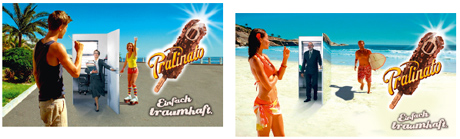
For the eleventh time, a broad jury awards the "Campaign of the Year" award. Twenty important works from twenty agencies were up for selection. In addition to the readership of Werbewoche, viewers of Star TV were also able to participate in the voting this year. The jury's verdict was clear: the SMS campaign for Sunrise by Spillmann Felser Leo Burnett was the public's favorite: with 23 percent of all votes, it came in first. In second place with 14 percent of the votes was the campaign for Pralinato by the advertising agency Publicis. With 10 percent, the SBB Trio campaign by advertising agency Contexta made it to third place.

Pierre C. Meier, Editor-in-Chief
[email protected]

Everything used to be worse

Coming up with a good advertising idea is just as difficult today as it ever was. It’s just that in the past, it was harder to bring that good idea to life. Why hasn’t advertising gotten better, even though everything else has become easier? By Theophil Butz

Theophil Butz, once a star advertiser (Ringier), now an inspiration, and from now on also a complainer. «It’s not an easy role, but it’s a necessary one that I take on here every 14 days.» Please send relevant information to [email protected].

First, I need to explain what this is all about: I get the impression that a large portion of today’s advertising is even more uninspired, even less entertaining, and certainly not surprising. This kind of advertising looks like advertising, and that’s why people ignore it. This time, I’ll use the AXA campaign as an example.


axa


My theory is this: AXA wants us policyholders to switch over to them. However, the ads explicitly show that only healthy, fit, and youthful-looking customers are wanted—in other words, those who can still easily hop over a red line. It’s not clear what advantage this would offer, though. The landscape is just as gray on both sides of the line.

There are also commercials that don’t just show people jumping—they even show the long jump. I don’t want to go into detail about the TV commercial in which thousands of healthy people dare to jump over the red line on a huge concrete expanse. Suffice it to say: it’s an oppressive, wannabe Hollywood production that cost a lot of money but lacks any real persuasiveness. A leap into an uncertain future.

Four specialists from the client side and 20 from the advertising industry were responsible for this carefully crafted campaign. Two copywriters wrote until their fingers were sore. And what was the result? «Visit our website.»

This campaign has been shoved in consumers' faces for a year now.

I maintain that the end of this kind of symbolic advertising is approaching. There’s no room for growth here. The line must always be drawn and placed on a hard surface. It also can’t be crooked, nor can it run over water or snow. The pretty, healthy models might occasionally wear different clothes or costumes. But they always have to jump and laugh. I’m glad that, in advertising, we can still enjoy George Clooney’s Nespresso capsules, the walk-in Heineken beer fridge, or the Migros chicken.

Dear Advertisers, use your time to come up with good, funny, expandable, and eye-catching ideas. Setting a headline in Futura or Garamond used to take two days and cost a lot of money. Today, finding a photo of Madame A. Meilland-Rose takes just a click. An ad layout used to have to be sent to the lithographer for a proof three weeks before publication and to the publisher one week before publication. Today, things are much better because they’re much more efficient. With the time saved, you could come up with an even better idea for us consumers. Then they’ll be more likely to take your side.

Last Tuesday, I was impressed by my fellow ADC jury members in the Posters category and by the entries—some of which were outstanding and clever.


Campaign of the year

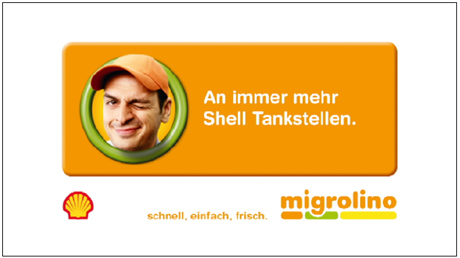
The Campaign of the Year is «Dialoge» by Spillmann Felser Leo Burnett and Ultra Images. The People’s Choice Award went to the Migrolino commercials by ViznerBorel and Manifesto Films.

01: Sunrise SMS «Dialogues»

sunrise

Spillmann Felser Leo Burnett and Ultra Images show how text messages from Sunrise can be not only funny but also affordable. They won gold from the expert jury of *Werbewoche* readers and also in the overall rankings.

02: Frisco Pralinato «Daydreamer»

pralinato

Publicis and WirzFraefelPaal are making summer dreams come true—and making a splash at the same time—with cool ice cream commercials. They won the Silver Award from the expert jury and also topped the combined overall rankings of *Werbewoche* and Star TV.

03: SBB «Leisure Tester»

sbb

Bronze in the overall rankings of Star TV and *Werbewoche* combined, as well as from the readers of *Werbewoche* for the SBB leisure testers. A campaign by Contexta featuring films by Peek.

AUDIENCE AWARD

Migrolino

migrolino

Migrolino received the most votes in the Star TV poll. The Audience Award therefore goes to ViznerBorel and Manifesto Films for their humorous commercials featuring Kaya Yanar.

Walker finds weighty argument for Pfister in bedroom

Every night in Switzerland, thousands of dreams are disrupted by a partner’s restless sleep. Walker has found the solution—at least as far as movement-related disturbances are concerned—in Suhr.  

Pfister now offers the motion-cushioning LUNA sleep systems. The award-winning director Ben Gregor, together with the Walker advertising agency, has placed the sleep system at the center of the latest Pfister TV commercial.
 
Responsible at Walker: Carlos Friedrich (Head of Marketing Communications), Gianne Holmgren (Head of Advertising)m Pius Walker (CD), Golf Nuntawat (AD), Cornelia Nünlist/Lisa Binkert (Consulting). Knucklehead: Ben Gregor, Matthew Brown.

The bag serviceman

Futurecom has developed a smart app for Toko.

Unlike the ski cracks, "normal" skiers could not previously count on a service man who always prepares the skis perfectly for the prevailing conditions. This is different from now on. Futurecom has developed a smart WaxCoach app for Toko that allows every winter sports enthusiast to choose the right Toko wax at any time. Using a simple selection mechanism, the sports equipment used, the user's own level, the snow temperature and the snow condition can be entered. And just like that, the app displays the ideal wax. There are also various step-by-step instructions that show how to apply the different types of wax. In no time at all, every skier, snowboarder or cross-country skier becomes a professional service man. The app is rounded off by an extensive weather forecast section that covers all countries with important ski resorts. pan

toko

With light and soul

Alain Schindler has been working for 19 years at the illuminated advertising and lettering company Westiform in Bern-Niederwangen, which has belonged to the founding Imfeld family since 1959. Schindler is now Head of the Westiform Group, Managing Director of the Swiss and German companies - and part of the family, like each of the approximately 400 Westiform employees.  

At Westiform, great importance is attached to the fact that the company is a family business: people look out for each other, work together, respect each other, allow different opinions to apply, do not keep quiet about problems and find a solution for everything. The company sees itself as an engine in which every cog and every little wheel is dependent on the other. Otherwise, nothing runs. "I, too, am just a cog in the wheel," says Alain Schindler (48). "True, as the head of the company group, I am in a central position in the gear train, but actually my position is no more important than that of the Westiform employees who practice their craft."

Modesty, gratitude and a positive attitude are central traits of Alain Schindler. He does not flaunt his achievements; his successes are always those of the good people in the company, the "family," in other words. And Schindler is grateful for that, as he is for his work in general, which he obviously enjoys.

schindler_alain
"Westiform" is derived from the name of the American corporation Westinghouse, from whose neon division Westiform emerged. Initially, the company was called "Westineon"; in 1984, the company received its current name.

The fact that Westiform, as an internationally active company, allows itself the luxury of an equally charismatic and reserved managing director speaks for the "family" concept: "At our company, great care is taken to ensure that employees fit in with us, feel comfortable and find good conditions at their workplace," emphasizes Schindler. Behind this is a recipe for success that is as simple as it is often disregarded: Those who enjoy their job are also creative, efficient and able to get large projects up and running within a few weeks with a small team. Westiform has already proven this competence several times. Within twelve weeks, the company designed, manufactured and installed the visitor guidance system for the Emirates Palace Hotel in Abu Dhabi: 1,000 labeling elements and 60,000 individual parts on 200,000 square meters. In just six weeks, Westiform built a walk-in model segment of the super airliner for the launch of the A380 wide-body aircraft. And for the Europe-wide introduction of Opel's new corporate identity, Westiform equipped more than ten car dealerships with illuminated lettering per working day, in some cases even in Cyrillic script. "This project was one of the most impressive for me because of its complexity," recounts Schindler. "From the contract negotiations to the financing and logistics issues to the implementation, it was absolutely fascinating."

Light - durable
Alain Schindler was born in Biel in 1962 and grew up in Düdingen near Fribourg. After high school, he completed a commercial apprenticeship and further training to become a certified controller. He also acquired management expertise. From 1984 to 1987, Schindler worked in the fiduciary sector, after which he headed the finance and accounting department of the Klopfstein Group in Laupen near Berne for five years.

When Schindler joined Westiform as Head of Finance and Accounting in 1992, the children of Westiform founder Niklaus Imfeld were not yet old enough to take on a management position in the company. In 1959, the Imfeld family had purchased the neon division of the American company Westinghouse, which produced fluorescent tubes in Switzerland, and expanded the company step by step. Today, three of the four Imfeld children work for the company, and the only nonImfeld on the management staff is Schindler. In this constellation, "the Westiform family" manages three locations in Switzerland, two in Germany and one each in Austria, France, the Czech Republic, China and Japan.

"I've been working at Westiform almost all my life," says Schindler, laughing to cover his pride. In 1995, after three years as Westiform CFO, Schindler additionally took over the controlling of the group of companies, and another two years later the deputy director in Bern-Niederwangen. "Since that time, customer projects and management tasks have been my passion," he says. "I then developed further in these segments and left finance and accounting." 19 years
Schindler is now on board. The relationship seems to have remained fresh.

In his private life, too, Schindler is a steady sort: He has lived with his wife and two grown-up daughters in Schmitten near Düdingen for almost 20 years. The family man seeks a balance to his work in nature - hiking, jogging, playing tennis or snowshoeing. In addition, Schindler can be found regularly on the slopes, for a while on a snowboard, and for the last three years on skis again. Snow is one of Schindler's elements. Until he was twenty, he raced on skis and would have loved to be on the slopes.
I would have liked to have stood on the top step of the podium," he admits. "But I just wasn't good enough." Schindler also has a great passion for handicrafts. His favorite thing to do is tinker with his house, and as soon as the winter is over, he wants to build a swimming pond. It seems unlikely that the manager will ever run out of ideas.

Westiform's business is going well. Nevertheless: "We are operating in a difficult environment," emphasizes Schindler. "We have an extremely broad portfolio, from illuminated advertising to light art and advertising logistics to digital signage, and a large number of competitors, especially internationally. That's why we have to stay ahead of the game." Above all, Westiform tries to stay on the ball with the development of new, sustainable technologies. According to the motto: "Everything must not just be beautiful, it must also have a purpose." At the beginning of 2010, the company launched the innovative ConturaLED light source. Thanks to a sensor, it always shines just slightly brighter than its surroundings. This saves up to 90 percent energy. Coop and Axa Winterthur already use ConturaLED. The company has also developed a process in which acrylic glass elements formed in a deep-drawing process can be evenly vaporized with a thin, translucent silver layer. This produces high-quality illuminated lettering for brand-conscious companies, with which Westiform would like to assert itself in particular against competition from low-wage countries. In addition, Westiform wants to be able to communicate with its lighting systems in the future: "They should not only emit light," explains Schindler, "we also want to know how long and how strong they shine, what condition they are in, and we want to be able to intervene before there is a problem with the light source. We already have the technology for this, but we still have to do extensive testing. Also, the market has to be ready for it. We estimate that will be the case in three years."

The development of intelligent products will continue to enjoy high priority at Westiform in the future. Schindler: "It is quite important for us to be able to further consolidate our technological leadership, especially in the areas of light and surface technology, with a focus on sustainability." With one caveat, to which Schindler attaches the greatest importance: "The main reason why we are successful is not technologies, but our employees. They are our capital." Westiform has always relied on creative employees. Since 1980, for example, the company has sought advice from Swiss type icon Adrian Frutiger, the developer of the Post house font and the typo that has been used for all Swiss street signs since 2003. Frutiger was a member of the Westiform Board of Directors until 2002, and he remains a close friend of the Imfeld family to this day.

People in focus
Alain Schindler likes to deal with people. He is not a desk jockey, but prefers to be on the move, in contact with employees, customers and suppliers. When large projects are handled abroad, he travels not only for the on-site negotiations, but also to be present during the implementation. "I see my strength in leadership, in dealing with the different challenges we face at our sites around the world," Schindler says. "I'm not the one who gives instructions from the boss's chair, but rather someone who masters requirements on site together with the employees. Because you can only understand a situation if you're on the spot." In this respect, Schindler has remained a controller.

Westiform wants to inspire its customers with new, clever products, professional work and a high implementation speed. This aspiration starts with the smallest screw and extends to the complex lighting installation that has to be in a specific place somewhere in the world at a specific time. The company's projects are often very complex. It goes without saying that things sometimes go wrong. But that's not a deal-breaker for Schindler. "Every situation that is negative on the surface often has something good in the depths," he says. "It depends on what time line you look at the story. In the short term, there's a problem, but in the long term, you might be doing one thing better because difficulties once surfaced were fixed."

Schindler does not measure his personal success by the success of individual projects. "I see it more as a great success that we manage to hold our own in a difficult environment with a team that relies on each other and lives a common culture." For Schindler, the other party is the measure of all actions. This is also revealed by his dream of happiness: staying healthy and active, striking a balance between work and leisure, family and friends, not getting caught up in the one-dimensional whirlpool of business life. That sounds simple. At first glance.

Anne-Friederike Heinrich

schinlder

Windows Live Messenger linked to Facebook chat

Microsoft is linking Windows Live Messenger 2011 with Facebook Chat. This connection enables direct instant messaging from Messenger to the Facebook chat function. This extension has also been available in Switzerland since Thursday.

Windows Live brings together the most important news from the social networks in one central location. This is the basic idea behind linking Windows Live with Facebook and other platforms, according to a Microsoft press release. The advantage of this is that Windows Live serves as a hub for the social web, where all updates from Facebook, YouTube, Netlog, Flickr or Xing are visible together on one interface. When logging in, the user sees status messages, photos or videos from friends at a glance. Entries from friends can also be commented on directly from Windows Live.

A new feature is the direct integration of Facebook chat into Messenger 2011. Messages are sent from Messenger and appear in the conventional chat window on Facebook. Chat contacts do not need to be connected to Windows Live for this. The Facebook connection offers basic functions such as standard emoticons, input display or notification when friends log in. The integration exists in the Messenger client, in the web application or in mobile applications. Messenger 2011 also offers video chats in HD quality and optimized mobile access: in addition to connections for Windows Phone 7, Windows Live can be accessed via almost all Internet-enabled smartphones. An app for the iPhone is available to download from the App Store.

Just a few months after the launch in the USA, the UK, Germany and ten other countries, Windows Live and Facebook users have already had over 400 million chat conversations with each other, which equates to around 3 billion minutes.

Unique subjects "Barry & Hans" to an eye test

In February, the two protagonists, «Barry & Hans,» will return in a new TV commercial to promote Swiss fruits and vegetables. This time, the focus is on the classic Swiss winter vegetable: carrots.  

The spot makes use of the popular wisdom that carrots support the eyes' vision thanks to their high vitamin A content. It is precisely this vision that Hans the goose completely lacks, however, and which Barry relentlessly exposes. This eye test was the brainchild of the Küsnacht-based creative agency Unikat, which has already produced 9 spots featuring the unequal pair. The direction and production of all these spots was done by Reto Salimbeni and his production company Manifesto Films.
 
Responsible for VSGP: Bruno Aeschbacher. Responsible at Unikat Kommunikationsagentur: Daniel Meier (Creation), Claudio Gentili(Consulting), Media Schneider(Media). Responsible at Manifesto Films: Shannon Mildon, Daniela Berther (film production), Reto Salimbeni (direction), Roman Camendzind (music).  

First issue of Medienwoche is online

Yesterday, Tuesday, the first issue of *Medienwoche* was published in print as an event publication on the occasion of Communication Summit 11 in Zurich. Starting today, *Medienwoche* is available online as a digital media magazine at Medienwoche.ch. As a new media outlet created by media journalists, *Medienwoche* will now track developments in the media world, cover its events, and provide context.  

However, Medienwoche is not just another daily news service. The authors do not focus on short-term topicality. Rather, the aim is to examine events and developments in the Swiss media in greater depth and also look at trends and tendencies from abroad that are relevant to conditions in Switzerland, according to a press release issued on Wednesday. Medienwoche.ch contains background information, analyses, interviews, opinions and debates from Switzerland as a media country that are not just served up in animalistic seriousness.
 
The publisher of Medienwoche is Thomas Paszti. The editorial team consists of Ronnie Grob, Nick Lüthi and René Worni. Guest authors also have their say on a regular basis. In the "Fresh off the press" section, a reading tip from the German-speaking world is also offered daily from 10 am. The articles are intended to stimulate discussion and initiate debate - but not in an ivory tower!

Swiss animation design agency nominated for Annie Award

Swiss David Takes on Four U.S. Goliaths: The Swiss motion design studio Kompost has been nominated for an Annie Award—the equivalent of an Oscar for the animation industry. Its commercial «Spaceman Stu» is in the running in the «Best Animated Television Commercial» category.  

The McDonald's commercial commissioned from the Swiss by Duck Studios is competing against a work by animation giant Dream Works, among others. Its Swiss creators Oliver Conrad (Creative Director) and Gian Klainguti (Executive Producer) will accompany their work to the awards ceremony in Los Angeles on February 5, 2011.
 
Kompost operates studios in Zurich and New York, but has its roots in the Engadin. The agency was founded in 2004. The studio's clients include advertising agencies, companies, TV stations, music labels, production and film studios as well as independent producers.

Transformer with new customers

Transformer starts the year with two new customers: Ergonomics and Tiara carpeting.  

The IT services company Ergonomics, headquartered in Zurich, has commissioned the Transformer advertising agency to completely relaunch its brand. The first work for the 20-year-old company will already be on display at the beginning of March. Another new addition to the portfolio is Tiara Teppichboden. The Zurich-based advertising agency will handle all communications for the international company's artificial sports turf systems under the Sportisca brand.
get_footer();