Dreifive conceives launch of Supradyn pro energy-complex in Switzerland

Dreifive is developing a concept for the relaunch of Supradyn pro energy-complex in Switzerland. The campaign was launched in late April in collaboration with Mediacom.

With Supradyn pro energy-complex, Dreifive is managing another product from Bayer Switzerland and developing a strategy for its promotion. The aim of the campaign is not only to address the new target groups but also to transfer the existing target group to the new product and ultimately to generate active demand at the POS.

After more than 60 years, Bayer Switzerland has taken Supradyn energy off the market and at the same time launched a new product with a new formulation: the dietary supplement Supradyn pro energy-complex. In addition to the name, the packaging and communication are also changing. For this launch, Dreifive worked with Mediacom to develop a communications and media strategy tailored to the various target groups. In addition to addressing the existing target groups, the focus is now also on younger women and men who lead an active lifestyle.

The strategy focused on addressing the target group appropriately. This was achieved on the one hand by selecting the appropriate channels and formats, and on the other hand by communicating at eye level. The strict advertising guidelines presented a particular challenge. To comply with these, Dreifive used carefully selected and positive wording.

From the end of April to the end of June 2021, Mediacom will roll out the advertising media developed by Dreifive on the defined channels, choosing a digital mix between Facebook, Instagram, programmatic advertising and advertorials. As a complementary measure, offline postcards will be used to send a personal message to loved ones and to invite them to the competition - there is a wellness weekend to win - can make attentive.


Responsible at Bayer (Switzerland) AG: Daniel Grob (Brand Manager - Supradyn), Oliver Kuhn (Digital Marketing and Media Manager), Alexandra Furio (Intern Marketing). Responsible at Dreifive: Jolanda Kessler (Head of Digital Marketing Consulting), Sandra Lanfranchi (Junior Digital Marketing Consultant), Simon Böhm (Digital Designer), Bibiana Schwarz (Junior Digital Designer). Responsible at Mediacom: Christian Cyruchin (Programmatic Service Consultant), Clara Santos (Programmatic Service Consultant), Jenny Ruppen (Head of Insights), Karolina Lysiak (Junior Social Media Specialist), Henriett Horvath (Senior Digital Specialist)

TikTok is becoming more and more attractive for the advertising industry

49 percent of TikTok users in the U.S. have already purchased a product or service from a brand that was advertised or rated on the platform. This is shown by a survey conducted by Adweek, a trade journal for advertising and marketing. According to the survey, some companies have also already invested in TikTok campaigns - others are planning to do so.

TikTok wird für die Werbewirtschaft immer attraktiver

According to the Adweek survey, young people between the ages of nine and 24 - the so-called Generation Z - are among the most avid users of TikTok. Of those, 71 percent said they had set up an account. However, TikTok, which is operated by the Chinese company ByteDance, still ranks far behind Facebook.

60 percent of Millennials - those aged 30 to 40 - said they had bought something from a brand that had been advertised or rated on the portal. Among 40- to 50-year-olds, Generation X, the figure was 48 percent, while baby boomers, who are among the baby boomers born between 1946 and 1964, said only 27 percent had done so.

Instagram advertising is also worthwhile

In terms of all adults, it was 41 percent who bought goods advertised on Facebook. The platform benefits above all from its even much higher acceptance among the population. 81 percent of all adults reported having a Facebook account, but only 30 percent have set one up on TikTok.

Instagram is also very popular. 88 percent of Generation Z respondents and 71 percent of Millennials have an account with this online photo and video sharing service. Half of Millennials said they had bought something from a brand after it had been promoted or reviewed on Instagram. Among Generation Z, the figure was 53 percent. The service is not as well received by Generation X. Only 23 percent were persuaded to buy something by the advertising there. (pte/swi)

CH Media's film subsidiary cooperates with Ascot Elite Entertainment

Impuls Pictures, the film industry subsidiary of CH Media, has entered into a cooperation with Ascot Elite Entertainment. As part of the joint venture, Ascot Elite will take over the marketing and distribution of Impuls Pictures' films.

Film-Tochter von CH Media kooperiert mit Ascot Elite Entertainment

As a result, Ascot Elite now has a share of over a quarter of the Swiss movie market, CH Media announced on Wednesday. The cooperation gives CH Media access to film licenses.

CH Media also intends to use these film rights for its TV channels such as 3+ and TV24 as well as for the planned streaming platform "Oneplus". In return, Ascot will benefit from access to CH Media's brands and advertising services, the statement continued. (SDA)

Zalando with new head of Switzerland

Berlin-based e-commerce and tech company Zalando is appointing Florian Jodl as its new head of Switzerland. This is what the Handelszeitung writes in its current issue.

Florian Jodl, a longtime Zalando manager, is newly signing on as general manager DACH, making him responsible for Zalando's strategy and business in Germany, Austria and Switzerland, the company told the Handelszeitung confirmed. This would give Switzerland more weight, as in the previous organization Switzerland was managed in a country cluster with Germany, Austria, Poland and the Czech Republic.

Zalando is the second-largest player in the Swiss e-commerce business behind Digitec. According to estimates, the online fashion retailer generated sales of over one billion Swiss francs in Switzerland in 2020.

Maybaum Film introduces innovation and training program

With the «Maybaum Film Lab,» the Baden-based film production company Maybaum Film aims to develop new expertise, test new tools, and foster the individual skills of its team members.

On April 27 and 28, the first official Maybaum Film Lab took place in Baden. The focus was on various post-production tools. An enormous change has been taking place in this area for several years. AI tools are finding their way into production workflows and are expected to give multimedia producers unimagined possibilities in content production. In addition, new moving image formats are constantly emerging on a wide variety of platforms. In order to be prepared for these exciting changes in the future, the Maybaum Film Lab was established.

In the absence of the management, the team was able to try out new software applications for two days. The new tools were tested under real production conditions on three fictitious customer projects. The three teams were supported by a total of six actors. The group work produced versatile content for use on a wide variety of online channels. Particularly outstanding was an AI-based color grading plug-in for DaVinci Resolve, which makes it possible to automatically color match clips - in astonishing quality. Furthermore, a consumer app was integrated into the existing workflow to create cinemagraphs in parallel to the shooting. Also a tool that allows to generate effective social media content in a simplified and fast way.

The Maybaum Film Lab will continue in November and is scheduled to take place twice a year. "We consider the promotion of new tools and workflows as a central element to be one step ahead of future trends and new developments," explains Managing Director Michel Alraun. And Rafael von Sury, the Lab's project manager, adds: "The LAB also gives the team the opportunity to test things that cannot be tried out in daily business. It forces them to break patterns, question routines and be open to changes in the market."

Adrian Stitzel is a new partner at Building Brands

Adrian Stitzel is leaving Dept and will become a new partner at Building Brands. The Zurich-based agency helps companies build and design their brands. With the addition of this new partner, the agency is now expanding its services to include digital marketing.

Stitzel was most recently employed by the agency Dept as Head of Consulting. With his many years of experience and know-how, he perfectly complements Building Brands partner Gilles Bachmann as a brand consultant and designer, the agency writes in a statement. The two partners see the fluid interplay of brand management and marketing as a central element for the success of a company.


Heidiland Tourism launches digital information platform for partners

With Partner.heidiland.com, Heidiland Tourismus now offers its partners a new digital information platform. On the website, the tourism organization provides information on current topics and projects, presents its services for regional service providers, and highlights the roles it plays for partners and guests.


The tasks of tourism organization have changed fundamentally in recent years. Today, Heidiland Tourism sees itself as a competence and service center for innovative project development and project marketing between Lake Walen, Sarganserland and the Bündner Herrschaft. As a network and service organization, it supports the service providers in the Heidiland vacation region with specific services. In order to be able to inform the partners even better about the various possibilities in the future, Heidiland Tourism has created the information platform Partner.heidiland.com launched.

Center services

On the new website for partners, a freshly produced explanatory video briefly and concisely presents the four core areas of Heidiland Tourism. Those who would like to find out more about the organization and its tasks will find further information and contacts in the company section. A central element of the website is also the "Services" section. Here, lodging establishments, adventure providers, restaurateurs and event organizers will find useful tips and numerous offers of support from Heidiland Tourism of which they can make use. According to Heidiland Tourism, this area also reflects the organization's self-image as a service provider for its partners from the region.

Tourism project development and marketing have also become increasingly important at Heidiland Tourism in recent years. The tourism organization wants to give room to new ideas and accompanies numerous tourism projects in the region. On the information platform there is therefore also a section on current projects and on general funding instruments for tourism projects.

Promote communication

"The new information platform is a central element for communication with our partners and shows very concretely what we as an organization do for them and the guests on a daily basis," explains Orlando Bergamin, Managing Director of Heidiland Tourism. Especially because inter-company cooperation and networking is becoming increasingly important in times of digitalization in tourism, the information platform is intended to promote exchange in the region even more. In the "News" section, the organization will therefore report on news from the organization and the industry on an ongoing basis in the future. Partners can also register on the information platform for the partner mailing in order to receive regular updates. The launch also means that the development of the information platform is not yet complete. It will grow according to the needs of the partners and will be enriched with additional elements and functions in the future.

Nico Rosberg becomes Julius Baer Global Brand Ambassador

On Wednesday, Julius Bär announced its partnership with former Formula 1 world champion Nico Rosberg. As an ambassador and partner, he will represent the bank’s commitments and initiatives in the areas of sustainability, sustainable investing, and future trends.

In 2016, Rosberg retired from professional racing after winning the Formula 1 World Championship as an active driver. Since then, he has been active as an entrepreneur and investor, particularly in the areas of sustainability, electromobility and green technology. He is currently involved in several companies and projects. He is also a shareholder in Formula E and one of the founders of the Greentech Festival - both of which Bank Julius Baer is also a long-standing partner.

As Julius Baer's brand ambassador, Nico Rosberg's activities will include the Formula E partnership and the Greentech Festival, as well as more generally in connection with the bank's sustainable investing activities and its Next Generation investment philosophy.

"I am very proud to be able to support Julius Baer in its sustainability strategy," said Rosberg. "For me, investments are also always investments in the future, which is why I am convinced that the financial industry must think sustainability and profit together. Banks have a special responsibility here and it makes me proud that Julius Baer is leading the way in this respect. I look forward to our joint projects."

ZPRG: Dominik Allemann takes over presidency from Christian Wick

At Tuesday’s in-person general meeting, the members of the Zurich Public Relations Association (ZPRG) re-elected the board. Pascale Lehmann and Annette Pfizenmayer are stepping down, and after many years of service, Christian Wick is handing over the presidency to Dominik Allemann.

Christian Wick (left) hands over the ZPRG presidency to Dominik Allemann.

The Zurich PR Society, with over 400 individual and collective members, offers networking and continuing education to corporate communications professionals and collective members in formats such as events, talks, workshops, or new a podcast. In the pandemic year, ZPRG responded to the restrictions with various online events. "The great commitment to the online meetings and workshops showed us the members' desire to meet and benefit from each other - regardless of the channel. It's nice that it was now possible to meet again from person to person at my 14th and last General Assembly," says President Christian Wick.

Farewell to Christian Wick

The transfer of office Christian Wick, the outgoing president, already held out the prospect at the 2020 AGM. For 14 years, he developed the association further and represented the regional society on the central board of PR Suisse. Under the leadership of Wick and his board team, well over 100 events took place. Among other things, Wick shaped the cooperation of the PR and media industry with the annual event "Communication Summit" at the ETH Zurich in cooperation with the Zurich Press Association ZPV.

The board and the members thanked his work with applause and elected Dominik Allemann as his successor. The 47-year-old is co-CEO and owner of Bernet Relations, speaker and lecturer at various universities of applied sciences, blogger and digital expert, and has been involved in the PR and communications scene for over 20 years. As a long-standing ZPRG board member and former vice president, he is very well connected in the association and the industry.

"Solid communication from well-trained professionals is becoming increasingly important - and demanding. With networking and exchange, we contribute to professionalization. That's what I want to be involved in," says a delighted Dominik Allemann. The current members of the board Marie-Françoise Ruesch, Priska Spörri, Roland Baumann, and Raphael Bühler were confirmed for the term of office of one year. In addition to Wick, board members Annette Pfizenmayer and Pascale Lehmann were also thanked. The latter was honored for her special commitment as a board member and treasurer for more than 20 years.

The ZPRG Board 2021: Priska Spörri, Raphael Bühler, Dominik Allemann (new President) Marie-Françoise Ruesch and Roland Baumann (from left to right).

No indirect Corona press subsidies for Swiss illustrated magazines

Under the COVID-19 Ordinance on Print Media, the magazine *Schweizer Illustrierte* will not receive any federal subsidy toward the costs of delivery by the Swiss Post. This was decided by the Federal Administrative Court.

According to the Covid 19 ordinance, which is no longer valid, only daily and weekly magazines that provide current news, cover a wide range of topics and are aimed at a broad audience receive this indirect press subsidy. This was stated by the Federal Administrative Court in a ruling published on Wednesday.

The regulation was intended to give state protection to those media that contributed to the democratic political discussion among the population. The focus of the Swiss Illustratedn the view of the Federal Administrative Court, however, is not to convey current information, but to entertain. This was shown by the analysis of the content.

Incorrect justification

The Federal Administrative Court has rejected the appeal of Ringier Axel Springer Schweiz - publisher of the Swiss Illustratedn - against the prior decision of the Federal Office of Communications (OFCOM) was therefore rejected.

In its ruling, Bakom also came to the conclusion that no indirect press subsidies were to be provided. However, it incorrectly justified the decision by stating that the Swiss Illustrated belonged to "extended special press".

Ringier submitted its application for indirect press funding in July 2020. The Illustrated is published weekly with a circulation of over 127,000 copies and has an average readership of just over 490,000. (SDA)

Sustainable food packaging must also be safe

The path to a circular economy is a rocky one, especially when it comes to food packaging. This is because food safety is the top priority, even when using recyclates, and direct contact between recycled material and food is effectively prohibited. So how is the packaging industry supposed to meet the European Union's requirements to only bring recycled or reusable plastic packaging onto the market from 2030? Around 100 participants learned about the food packaging of the future at the virtual SVI Annual Conference 2021 on 25 May.

Lebensmittelverpackungen

"Consumers expect sustainable packaging," explained Salome Hofer, Head of Sustainability and Economic Policy at Coop, at this year's SVI Annual Conference, providing insights into a consumer survey from 2020. Sustainability is often equated with "plastic-free" in this context. Less packaging waste or even zero waste are also at the top of the wish list.

At the same time, demand for convenience and takeaway offerings has been increasing for years. However, Hofer reported that it is only possible to a limited extent for the large retailers to offer unpackaged food. One exception is the fruit and vegetable assortment, where unpackaged goods have been common for many years. In some cases, wishes and reality diverge: For example, customers at Coop can now leave their own containers at the fresh produce counter to have cheese, sausage or meat packed, but the offer is only rarely taken up. Overall, Coop is therefore striving for optimized packaging that saves material, is recyclable and at the same time meets the product requirements.

Vincent Colard, an ecodesign engineer at the French association Citeo, pondered what would happen if there were no more packaging in 2030: Around 40 percent of food would spoil before reaching the end consumer. The Frenchman does not think a ban on plastic makes sense because plastic offers too many advantages. Instead, Colard pleaded for the expansion of collection and sorting systems. As early as 2025, PET, PE, PP and PS are to be collected and sorted in France in various types of packaging. Another approach, he said, lies in the eco-design of packaging. The entire value chain must be included in the development of recyclable packaging.

The ideas of Dr. Isabelle Chevalley, a member of the National Council for the Green Liberal Party, who advocates less incineration of waste and more recycling, also go in this direction. She explained the weaknesses of Swiss waste management to the conference participants. The main problem, she said, is that the cantons act independently of each other and do not benefit from synergies. Instead, she said, there are overcapacities that have to be compensated for by importing waste from neighboring countries. About 20 percent slag remains after incineration, which has to be landfilled and which no one wants anymore. Biowaste and plastics would have no place in waste incineration plants (MWIP). "You wouldn't think of throwing your food scraps down the chimney," Chevalley said. Plastics are too valuable to burn, he said. Chevalley believes it is up to the municipalities to create appropriate collection structures. Necessary measures, he said, include nationwide coordination of waste management, providing incentives for innovative packaging and following international guidelines.

"For me as a chemist, it is completely incomprehensible why plastics are so little appreciated," said Dr. Stefan Pirker, who works on chemical recycling processes at OMV Refining & Marketing. There are cycles for glass, paper, sheet metal and aluminum, why - apart from PET - not for plastics? With the help of chemical recycling, plastics are broken down again into their building blocks, resulting in polymers of pure quality. In principle, these polymers can also be reused for food packaging. Unlike mechanical recycling, the process is endlessly repeatable, Pirker explained. The process is energy efficient, he said, and requires temperatures similar to those used in pizza baking. Composite materials can also be recycled. Currently, the costs are high and the process is not as widely recognized as mechanical recycling, he said. In the medium term, however, Pirker sees it as a useful addition: "With the appropriate cycles, plastic would be a raw material of the future!"

Casper van den Dungen, general manager of Poly Recycling, has been active in PET recycling for 30 years. He explained that harmonization of standards is important, such as is being done through RecyClass. All players in the value chain would thus be provided with important information that is important in the production and recycling of the packaging. Standards were initially developed for PET, he said, but could gradually be applied to all other polymers. The use of digital watermarks, such as those used in HolyGrail 2.0, as well as artificial intelligence to make sorting materials easier and more precise, also offer promising prospects for plastics recycling, he said. Van den Dungen expressed confidence that all of the EU's set targets can be achieved by 2030.

"Which functions of the packaging can we do without?" is the central question for Thomas Galatik from Dow Chemical Europe. After all, the entire packaging design is based on these requirements and, if necessary, allows for a less complex packaging structure. Galatik sees an opportunity in biobased plastics on condition that agricultural waste products are used for them, the disposal of which requires energy, he says.

Long-used packaging materials are well known and well studied, explained Dr. Thomas Gude, deputy head of Swiss Quality Testing Services, in his presentation "Bioplastics: Sustainability versus Safety." Natural materials such as bamboo, which are used as an alternative to plastic, contain substances and allergens that can have undesirable consequences for food safety, he said. That's also the case with monomaterials that don't provide a sufficient barrier, he said. "What is sustainable still has to be safe," the food chemist indicated.

Fulvio Cadonau, Manager Business Development at Smurfit Kappa Hoya Papier und Karton, also advocated a sensible combination of packaging materials. Ultimately, the decisive factor is which barriers are required for optimum protection of the packaged goods. Where possible, Smurfit Kappa uses monolayer solutions that can be disposed of in the waste paper. Activated carbon is used as a barrier to filter out undesirable substances such as MOSH, MOAH or bisphenol A. Cadonau did not reject plastics: where necessary, they are used to ensure ideal product protection. This can then be in the form of a plastic bag in a carton, for example, which can be easily separated and disposed of. Cadonau also advocated looking at the entire supply chain and choosing sensible combinations for primary and secondary packaging.

Eric Pavone, Business Development Director at Bobst Mex, spoke about trends in sustainable flexible packaging solutions. Plastics are increasingly being replaced by paper with water-based dispersions of polymers. New bio-polymers are also being tested for use with paper, he said. RCF, Regenerated Cellulose Film, for example, is already widely applied to coffee bags and compostable films, while PLA - polylactic acid - is finding initial applications in compostable food trays as well as flexible packaging.

In the concluding panel discussion, moderated by Dr. Karola Krell, participants agreed that standards are needed for evaluating the recyclability of packaging. The industry, he said, is investing a lot of money in developing new sustainable solutions that also make money. Pavone suggested that Switzerland should take a pioneering role: both recycling streams, technologies and a high level of awareness among the population are given. These could be used and proactive steps could be taken. Dr. Gude agreed. As a small, agile unit, Switzerland is also in a position to develop solutions quickly and easily in matters of food safety. There will likely be a coexistence of different packaging solutions, Cadonau said, because "what works for one doesn't work for the other." The value of packaging is still not clear to most consumers, he said. This is where the food industry would have to come in and educate people about the meaning and functions of packaging.


The next SVI Annual Conference will be held on January 19, 2022, on the topic "Shooting Star Packaging?"

LSA introduces Leading Quality Audit quality label

One of Leading Swiss Agencies’ core missions is to strengthen the leadership and quality standards of its member agencies in the market. As part of its annual general meeting, the association is therefore launching the Leading Quality Audit (LQA), a quality label for the communications industry.

LSA führt Qualitätslabel Leading Quality Audit ein
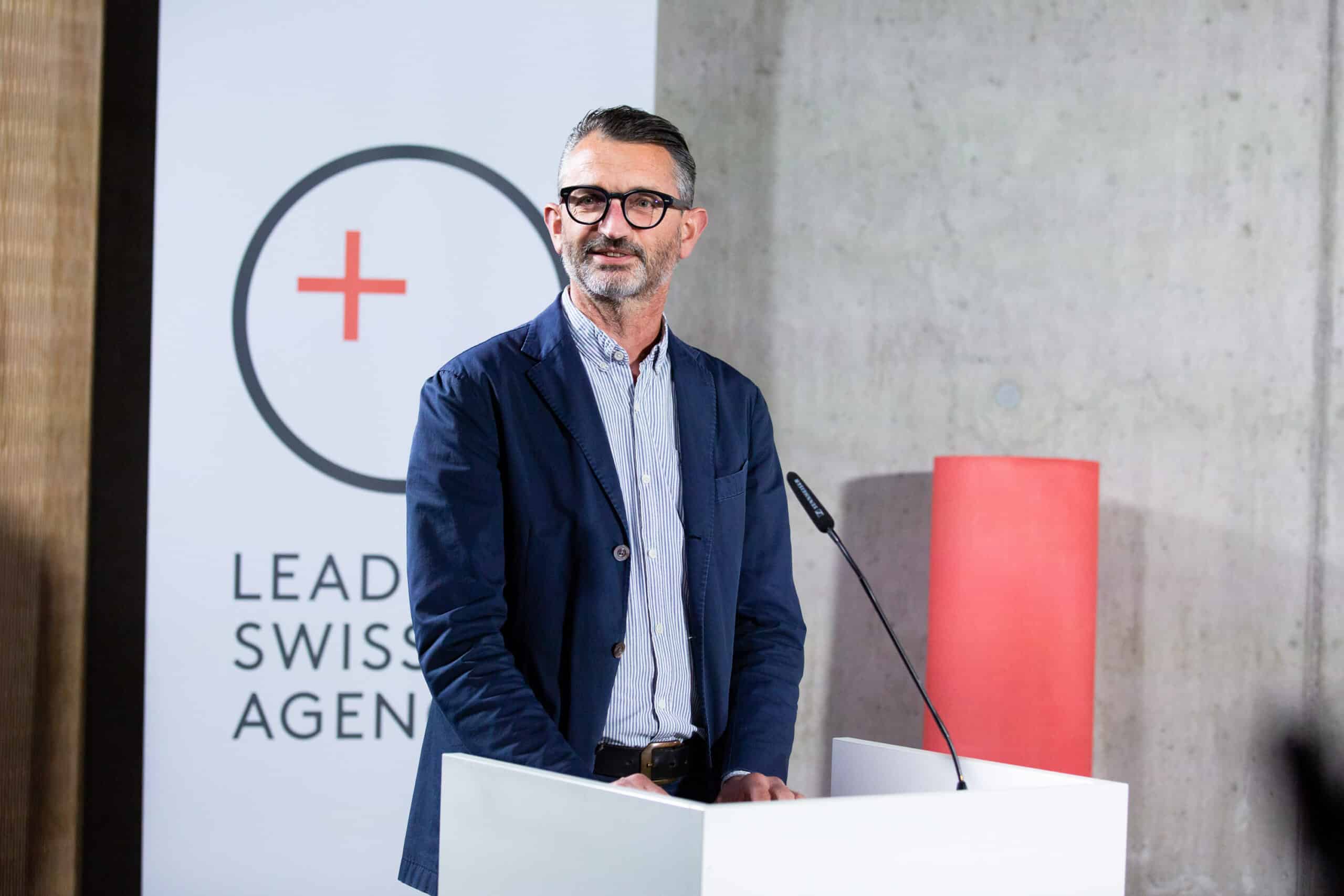
LSA President Beat Krebs speaks at the 2021 General Meeting. (Photo: Debora Eliyozeyrek)

The communications market is becoming increasingly broad, agency business models are becoming more heterogeneous, and new players are entering the market, positioning themselves as communications agencies. At the same time, the customer, job and opinion market is looking for orientation, credibility and qualified partners. With the LQA, the LSA wants to provide guidance in this regard, as LSA President Beat Krebs explains. Being an LSA member is a seal of quality that guarantees clients competence and professionalism. For this reason, the LSA tests member agencies for their Leading Qualities through a revised, multi-stage admission process - with the ambition of creating a proof of quality for the industry. The association of Switzerland's leading communications agencies made the announcement at its general meeting, which was broadcast from KOSMOS in Zurich.

The new concept provides for external experts to be consulted for the quality assessment of two examples of work. These must not be older than four years and should reflect the agency's core competencies as well as possible. The cases are judged according to their effectiveness and efficiency, which they have demonstrably achieved in the market. Both the content strengths of the work and the process management of the cases are discussed with the agencies. Furthermore, the results from the areas of corporate development and planning, financial system, personnel management and commitment to the industry are included in the independent evaluation.

The goal is quality assurance and improvement and thus continuous further development as an LSA agency. In addition, this new "Leading Quality Audit" is intended to give clients the assurance that their money is well invested when selecting an LSA agency and to strengthen the importance of membership in the LSA.

LSA conducts CMS certification in Switzerland

Another component open to LSA agencies is certification with the internationally recognized Consultancy Management Standard (CMS). The agencies of the PR agency association BPRA, which merged with LSA last year, are already CMS-certified. The process-oriented certificate attests to the agencies' compliance with the highest professional, economic and ethical standards.

In the meantime, the third version of the standard (CMS III) already exists. This is available exclusively to the member associations of the international umbrella organization ICCO. In Switzerland, this is the Leading Swiss Agencies association, which manages the certification.

Presence in Western Switzerland

Through its merger with the Federation of Public Relations Agencies of Switzerland BPRA last summer, the LSA has welcomed numerous communication agencies from French-speaking Switzerland. The association aims to further strengthen its presence in French-speaking Switzerland and support the needs of its member agencies.

For this reason, the LSA opened an office in April 2021, which will be managed by Charlène Guillaume. She is to establish the new LSA representation in Western Switzerland and help position the association and its members in the market as well as offer association services for the region and acquire new members.

Focus on the next generation

In order for the industry to survive in the competition for talent, the LSA is working on various initiatives and projects to make the variety of jobs in the communications industry visible to young talent and career changers, and to make working in a communications agency a tangible experience. With the first dialog platform for young and young-at-heart employees from LSA agencies (Young LSA), the LSA wants to integrate the concerns of young talent more strongly into the association, promote exchange, and give the next generation of agencies the opportunity to have a say and actively help shape the association's offerings.

Finally, new formats such as the Junior Agency Award were created in collaboration with universities. Students create a campaign for a real client during a semester. They are supervised by experienced LSA agency coaches and thus learn directly from the practical example how to work with customer requirements, creativity and budget.

Unchanged Executive Board

The LSA Board, composed of nine members, remains unchanged this year. Beat Krebs (President), Andreas Hugi (Vice President), Mark Burow, Petra Dreyfus, Pam Hügli, Matthias Koller, David Schärer, Walter Stulzer and Tobias Zehnder are responsible for the management of Leading Swiss Agencies.

get_footer();