
In summer 2022, the editorial teams of Radio SRF 1, SRF 3, Virus and Musikwelle will move into the new production site on the Leutschenbach campus. The workspaces in the so-called Radio Hall are designed so that the teams can collaborate more efficiently and even more across programs, according to a letter from SRF. As a result, linear radio programs can be produced with less management effort and resources can be shifted to digital production. This requires an adjustment of the management structure, in which the same or similar functions are combined today, it said.
In the future, the program management of Radio SRF 1 will also be responsible for Musikwelle, while that of Radio SRF 3 will also be responsible for Virus. Together with a team leader at Musikwelle and Virus respectively, they will ensure that the two channels continue to have an independent profile.
The management level below Head of Division Robert Ruckstuhl will also include the positions Head of SRF 2 Culture in Basel and Head of Music Programming Channels Radio, as well as the new functions Head of Planning Radio and Online and Head of Digital Audio, including Team Radio Online, in addition to the program management positions Radio SRF 1 / Musikwelle and Radio SRF 3 / Virus. According to SRF, these management positions would be advertised internally in October, with individual appointments possible.
In a next step at the beginning of 2022, the future managers will appoint their team leaders. The current cadre level of daily managers (TAV) will then no longer exist at the individual radio stations. In the future, these tasks will be assumed alternately by the program management teams at Radio SRF 1 / Musikwelle and Radio SRF 3 / Virus.
Job cuts in the management area
The reorganization will involve job cuts in the management area, SRF further writes. Linear radio programs could be produced with less management effort in the future organization, which would allow jobs to be shifted to the production of audio offerings for young target groups. SRF plans to implement these shifts with existing employees, if possible.
The new organization in Channels Radio will come into effect on April 1, 2022. The move of the teams from the Brunnenhof radio studio to the Radio Hall will be staggered in August 2022. (pd/swi)

Robert Ruckstuhl, Head of Channels Radio at SRF, answers three questions about the reorganization of the management structure. (Image: SRF)
Why does the Channels Radio division need a new management structure in light of the move to Radio Hall?
Robert Ruckstuhl: Today's management structure, as well as the premises in the Brunnenhof studio, are still strongly geared towards classic radio production - with separate teams and small workspaces for the respective radio programs. This no longer meets today's requirements for multimedia production. In the Radio Hall, with its large, interconnected workspaces, teams will work much more across programs. Where parallel management processes, such as in planning and control, can be merged well, we save on management effort. Where the specific profiling happens, we'll stick with the specific management structures for each station.
With the streamlining of the management structure, an entire management level disappears, the so-called day-to-day managers. Have there been too many bosses at the radio stations up to now?
No. Today's organization is still based on traditional radio production, with a separate management team for each radio program. In reality, we already work together much more closely and across program boundaries. But if each team is on its own floor, there are limits to collaboration. This opens up completely new possibilities for us in the Radio Hall to plan and realize radio and online content for all channels in a more uncomplicated and thus also more efficient way. Operationally, the day-to-day managers have many coordinating tasks. In future, their function will therefore be merged with that of the journalistic management. The move to the Radio Hall is the right moment for this change.
In the future, the program management of Radio SRF 1 will also be responsible for the music wave, and that of Radio SRF 3 for Virus. Will the individual stations lose importance as a result?
One of the specifications of the project was that each station should retain its own profile. That's why each program continues to have its own management, in the case of Musikwelle and Virus in the form of a team management. Their tasks include maintaining the individual station profiles. In addition, Radio SRF 1 and Musikwelle as well as Radio SRF 3 and Virus each address similar target groups. In reality, the stations often report on similar or even the same topics. That's why content planning has long been done across program boundaries. The way we are set up today requires a lot of coordination, and inevitably there are sometimes duplications. With shorter paths and under a common program management, these are eliminated. At the same time, the team leaders and especially the core teams of the stations with the presenters and producers continue to ensure that the individual stations maintain their specific profiles.




 As a representative of the interests of a target group that has been particularly hard hit by the pandemic, Pro Senectute has received a lot of attention and encouragement over the past year. However, it is often forgotten that the foundation not only deals with the problems of senior citizens, but also promotes the beautiful aspects of old age.
 Anna Kohler met with Patrick Warnking, Country Manager of Google Switzerland, for a podcast discussion. Among other things, they talked about the hybrid work model of the future, corporate and work culture at Google Zurich after the pandemic, teamwork with regard to diversity and accessibility aspects, and lifelong learning including the personnel development plan.


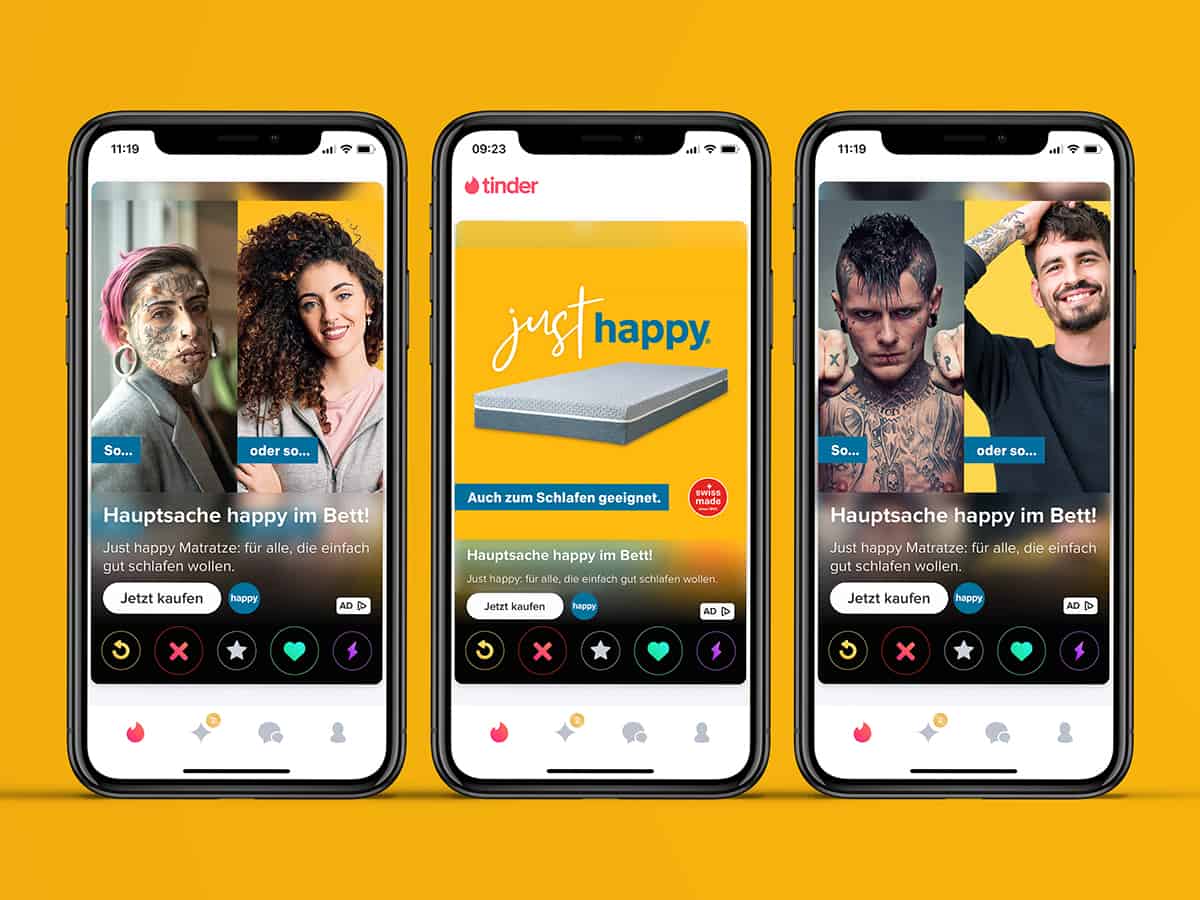
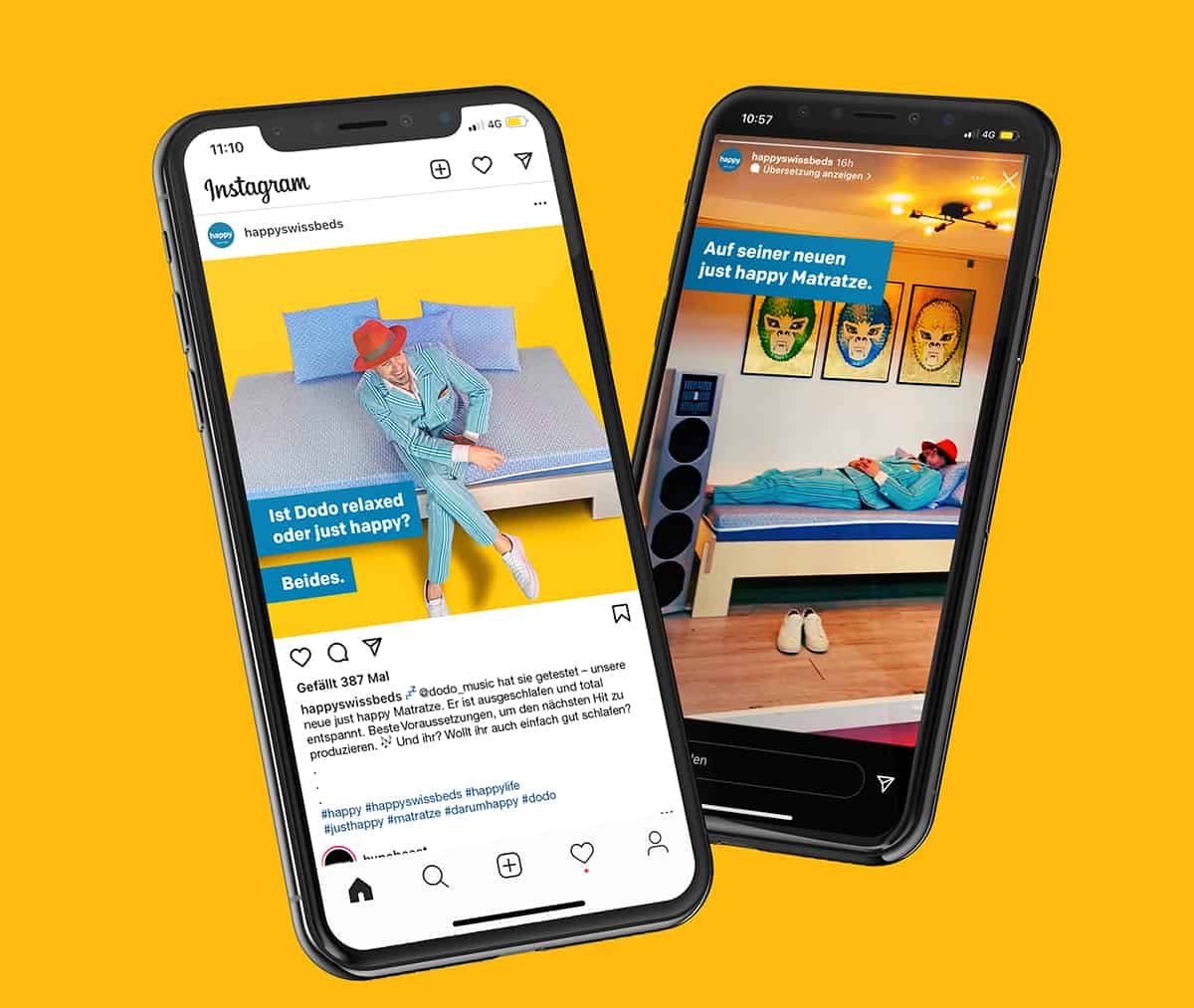
 Swiss e-commerce provider Happy, with its well-known claim "I wett i hett es happy Bett", develops, produces and sells Swiss-made mattresses for every type of sleeper - back, side and stomach sleepers. This trio is now joined by "just happy". The new mattress is designed to impress with its visual coolness, sustainability and outstanding price-performance ratio. The product promise "For everyone who simply wants to sleep well" is intended to appeal specifically to a younger target group and "sleep pragmatists.



 Arval is part of the French BNP Paribas Group and offers a modern form of car ownership that includes all car-related services. Arval is already the established market leader for business customers in Switzerland. Now, private customers can also benefit from driving a car at a package price. A campaign should make this known to the Swiss.