The future of live communication is hybrid

The desire for real meetings is getting stronger every day post-Covid. But the future of live communication is hybrid.

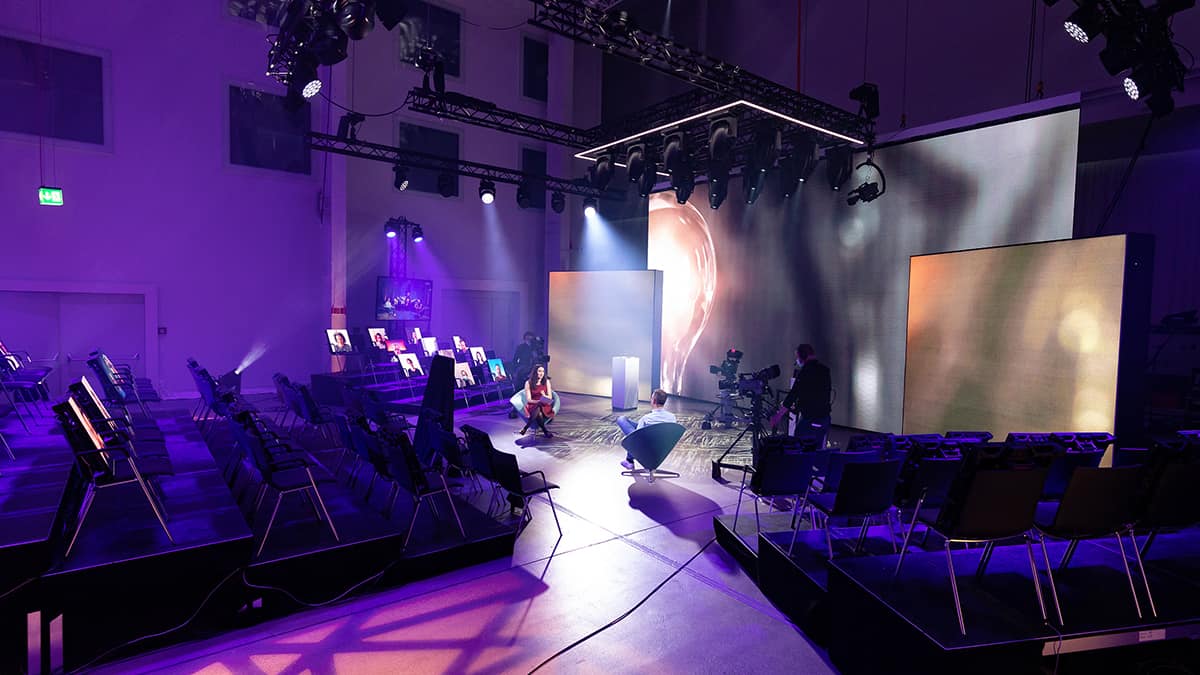
Trafo Baden: Hybrid events in an urban setting.

Many experts agree that COVID-19 has led to a long-overdue transformation of meetings, conferences, events, and trade shows—and has significantly accelerated this transformation. Contrary to the fears repeatedly expressed by event organizers, however, digital business does not replace in-person interactions between business partners. Instead, it extends the reach of marketing events. The sense of relief following the restart of the trade show and meeting industry in Switzerland was both visible and palpable at events such as Ornaris and Sindex in Bern, or MarkeDing at the Samsung Hall in Zurich.

30 percent of all events are hybrid?

But participating without actually being there has become socially acceptable since the pandemic. At a time when, for various reasons, live events cannot take place at all or only to a limited extent, online events and live streams have become a viable alternative. The live communications industry—specifically the equipment providers—has advanced technologically at lightning speed during the pandemic.

I meet Mario Huggler at the Upperdeck Restaurant at Zurich Airport. «We believe that in the future, about 30 percent of all events will remain hybrid. Customers—or consumers—must have the opportunity to participate in a conference or corporate event, even if they aren’t or can’t be there in person. Platforms and technologies are no longer the deciding factors today; it’s all about campaign thinking,» says Mario Huggler, CEO of Expoformer, part of the Messerli Group. To this end, Expoformer has built its own streaming studio at the Showcenter in Bülach.

Hybrid Needs Show Business

In the age of social media, online attendees are an important part of the community at an event. Live streams make it possible to reach additional audiences during a live event, moving us toward the concept of a 365-day event. Numerous providers developed their own studios during the COVID-19 pandemic and now offer livestreams directly at the customer’s location.

Did you know that the video assistant referees don’t work from the soccer stadium, but from NEP’s Studio A53 in Volketswil? NEP is a sort of «hidden champion» in the broadcasting of sports and marketing events. When live broadcasts of conferences, corporate events, or the soccer Champions League are streamed, Hollywood comes to life in Volketswil. AudioRent Clair in Aesch, Baselland, responded to the COVID-19 shock and the resulting ban on events by developing its Virtual Live Audience System in a record time of one month. Toni Scherrer, CEO of AudioRent Clair, explains: «From our perspective, nothing can replace personal contact between people. That’s why we thought about how a virtual event could be brought to life.»

Virtual Live Audience lets you see and be seen in near-live reality, with real people and with images of the participants visible to everyone—whether at AudioRent Clair’s Studio 111 or directly at the customer’s location.
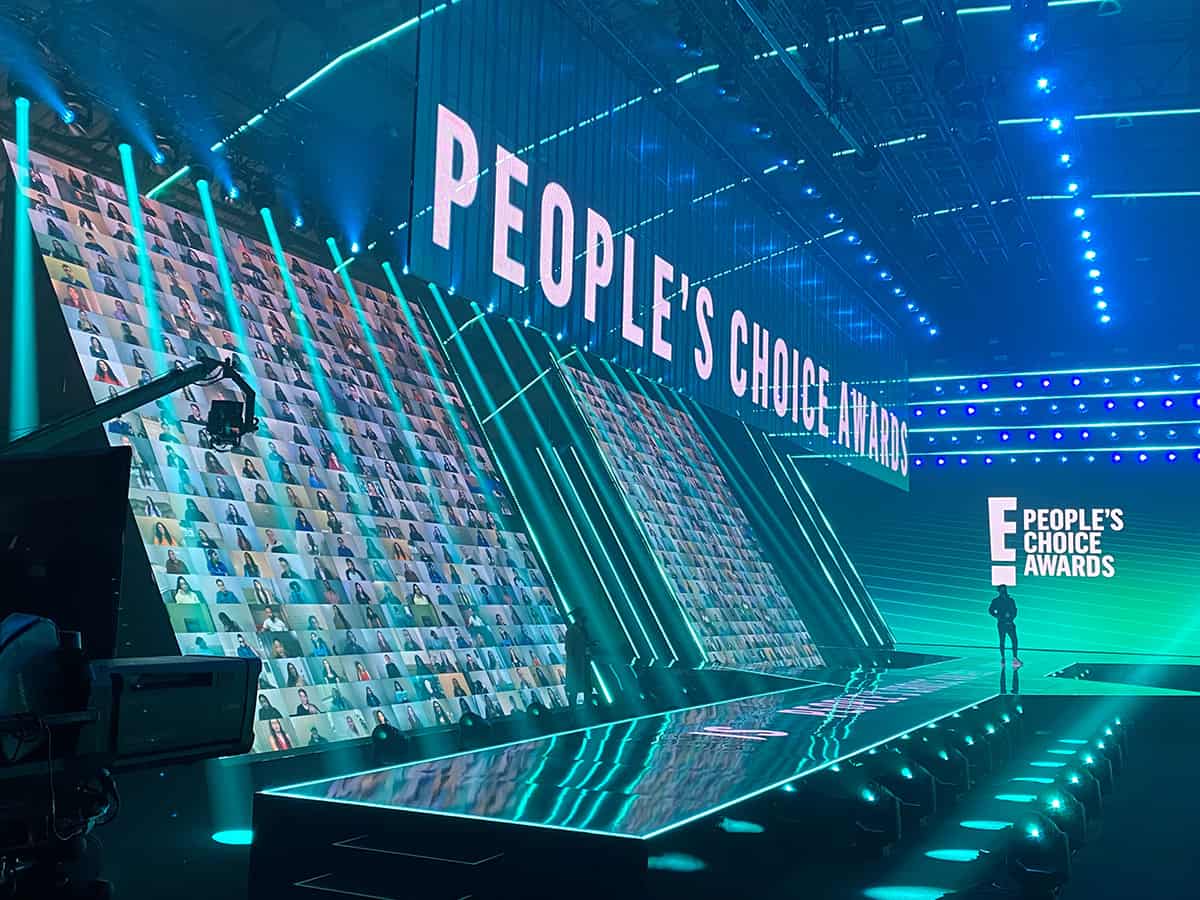
In person at the Kaufleuten in Zurich and online via a virtual lobby: Swiss Radio Day 2021, presented by Swisscom.

Hollywood at Syma, Too

The Syma Black Box is a brand-new solution for the long-overdue dematerialization of trade shows and events. The Black Box brings machines, automobiles, watches, and other products to an event virtually—without the spatial, logistical, or financial drawbacks of building temporary or permanent product display areas. The Black Box’s content can be extended to social media through multimedia, thereby reaching a global audience. Thomas Berger, Syma’s sales manager, says: «It’s all about the sense of space; the Black Box is a virtual reality system without the notorious drawbacks of VR headsets.» With the Inside Reality Browser, even those who are not physically present can participate in a presentation via their mobile phone.

For clients of Thomas Schärer’s Opera, it can make all the difference whether a livestream is produced in their own studio in Glattbrugg or at a client’s location. «When a livestream is broadcast from the production floor of a machine manufacturer, it creates entirely different, more emotional stories than when it’s produced in an external studio.»

«The Good Old Days»

Will «the good old days» return to live events after the 2021 summer break? While this uncertainty persisted during the COVID era, Habegger strengthened its collaboration with its venue partners Trafo Baden, Kursaal Bern, and Lake Side in Zurich.

Trafo Baden has brought its hybrid offerings together under the motto «Closer Together, Safely Distanced!» In the Event Village, live, digital, or hybrid conferences, seminars, employee events, product launches, meetings, exhibitions, symposia, lectures, and panel discussions can all be held safely. Trafo Baden also offers the option to design an event virtually, arrange seating, and take a virtual tour of a photorealistic model of Trafo Baden via video conference.

«Participating without actually being there has become socially acceptable since the pandemic.»

Just as the brand-new JED Events venue was being completed in the former printing center of the New Zurich Newspaper COVID struck like a bolt from the blue. Now, as the fall meeting season gets back underway, JED (Join, Explore, Dare) is practically fully booked. Since the meeting industry’s restart, conferences and events can be streamed and held in a hybrid or fully virtual format at this venue—located right on the outskirts of Zurich—in the studio set up by Winkler Livecom.

In September 2021, LiveLab managed the hybrid setup for the Zirkon Medical conference; since April 2021, the “Unplugged” podcasts from the agencies RedSpark and Ferris Bühler Communications have been streaming.

The future is hybrid

Sven Bethke, CEO of Swisscom Events & Media Solutions, says in a Swisscom blog: «The more attractive the streaming offerings are, the greater the audience’s desire to be part of them. In soccer and ice hockey, it turned out that livestreams actually led to more—not fewer—spectators flocking to the stadiums.»

«The desire for in-person meetings is growing stronger every day,» says Thomas Schärer, CEO of Opera in Glattbrugg. In-person events are for face-to-face interactions, while digital events are for people who want to participate without being there in person—for those who are unable to attend in person.

Will we even distinguish between live and digital in the future? Echoing the advertising slogan of a telecommunications provider, a trend is now emerging: The future is bright; the future is hybrid.


REQUESTED

Hybrid: Extending the Event Experience

Tobias Saurer is Head of Digital Media at Swisscom Broadcast. He has 20 years of experience in the video industry and has been deeply involved in online video and live streaming for over ten years. He speaks with Urs Seiler of m&k go! about the future of hybrid events.

Urs Seiler: What Moves Us You're currently on the topic of Which events do you like best?

Tobias Saurer: The fast-paced nature of order and planning cycles. It requires a great deal of flexibility on all sides. And the realization that these much-hyped hybrid events aren’t actually new. For example, we’ve been streaming investor relations events with an on-site audience and a live video webcast for over ten years. Many clients who were still skeptical of virtual and hybrid event formats before the pandemic have now come to appreciate them. What’s important is professional and comprehensive implementation, including bandwidth management, a content delivery network, and a video platform. There are major differences in this regard.


Streaming services have sprung up like mushrooms over the past 18 months. Will trade shows and events be held digitally or in a hybrid format even more frequently in the future?

That depends on the nature of the event. If the primary goal is to convey content, digital and hybrid formats offer many advantages, such as the ability to consume content on demand or the reduction of travel emissions and costs. If, on the other hand, the focus is on networking, the situation is different. Let’s be honest: spending hours in a virtual chat room with a glass of white wine isn’t much fun.


The biggest advantages What about hybrid events?

In the digital space and thanks to social media, events can be brought to life for a much longer period of time. Online video plays a key role in this. Moving images allow content such as interviews or keynote speeches to be presented in an engaging way tailored to specific platforms. However, this requires a clear strategy, the ability to execute it, and, of course, the right tools for easy production, management, and distribution.
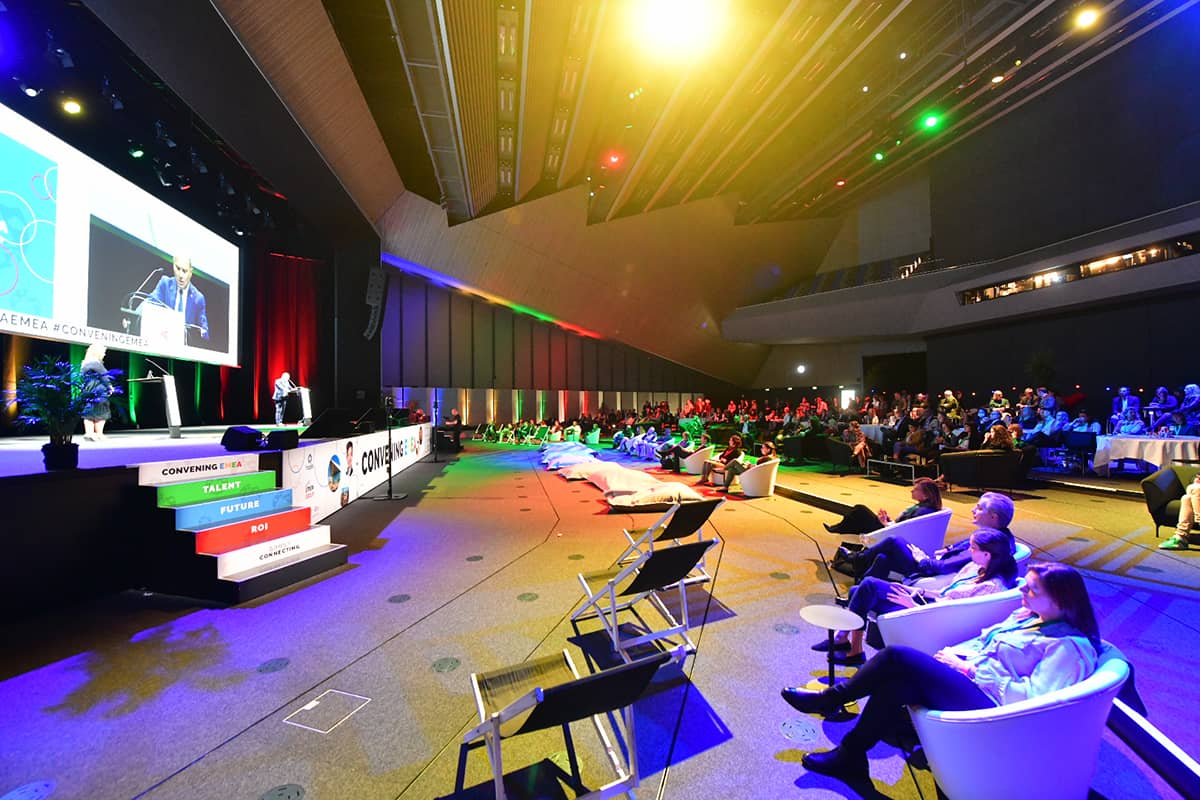
A decisive congress for the resumption of business events in Switzerland

On Tuesday, the three-day conference of the Professional Convention Management Association (PCMA), one of the leading international associations of convention organizers, came to a close. The attendance of some 300 business events professionals is a positive and decisive sign of the recovery of business and convention tourism in Switzerland.

At the PCMA conference from Sunday to Tuesday, nearly 300 participants discussed, networked and redefined the future of business event organization in a tourism segment that has been particularly hard hit by the pandemic. The conference was also one of the first international face-to-face events of this kind to have taken place in Switzerland since 2019.

The visit of these experts to the canton of Vaud is a very positive sign for the upswing of business and congress tourism in Switzerland, Switzerland Tourism writes in a statement. The meeting made it possible to present the advantages of Lausanne, the canton of Vaud and Switzerland in terms of organizing business events and congresses to the experts, who came mainly from North America and Europe. About 30 Swiss tourism service providers had also participated to market B2B offers and products.

Success of a Swiss collaboration

Switzerland Tourism (ST) through the Switzerland Convention & Incentive Bureau (SCIB), the International Olympic Committee and Lausanne Montreux Congress jointly participated in the bidding of Lausanne as the venue for this meeting. All PCMA members in attendance had the opportunity to visit the host city, the region and other locations in Switzerland individually before and after the event.

"The PCMA meeting is taking place at an important time to give a boost to the recovery of business and convention tourism in Switzerland," explained Barbra Albrecht, head of SCIB and member of the ST Executive Board. "All our Swiss partners and service providers will have an excellent opportunity here to reconnect with potential customers at a face-to-face event and show them what innovations and new products have been developed during the difficult time of the pandemic."

APG|SGA is awarded the contract by the city of Schaffhausen

APG|SGA has been awarded the exclusive right to operate billboard advertising in the city of Schaffhausen through a competitive bidding process. Starting in 2022, the out-of-home (OOH) company will manage 321 billboard spaces on public property for a period of ten years. Initially, ten spaces will be converted into digital City E-Panels, with additional projects to follow.

With the poster offer within the scope of the city contract as well as the supplementary poster spaces on private land and on public transport, APG|SGA continues to offer local and national advertisers in Schaffhausen an attractive portfolio of offers, the company writes in a statement.

In the past, APG|SGA, as a long-standing contractual partner of the city, had already continuously expanded both the space portfolio and the contacts with regional market partners.

APG|SGA's bid would have ensured the best price/performance ratio in the tender, taking into account the qualitative aspects. Financial aspects accounted for 60 percent of the award criteria, and non-monetary aspects such as the market development concept, references, and sustainability were also weighted.

APG|SGA holds more than 500 advertising spaces on public and private land in the canton of Schaffhausen. In addition, there are more than 1,100 indoor formats and around 350 outdoor formats on public transport vehicles, as well as several sampling and promotion areas on the SBB station site.

Spielkultur develops three digital games for Swiss museums

Digitalization is making its way into cultural institutions as well. That’s why the young agency Spielkultur, with support from the Migros Pioneer Fund, has developed three digital games that each museum can customize to fit its own offerings. The games will be presented to the public at Digital Days Aarau.

The digital transformation is a ubiquitous topic. Since industrialization, no new technology has influenced the economy, society and leisure so intensively.

Even cultural institutions cannot escape this change. Digital educational offerings in the form of apps or games are popular, but expensive and time-consuming to develop. Museums are considering how they can make collections accessible to future generations in a contemporary and attractive way. "The Spielkultur project uses digital technology to make museum visits more interactive and exciting. It provides Swiss museums with individual solutions for experiencing culture in a playful way," says Pablo Villars, Project Manager Migros Pioneer Fund.

As part of the pilot project "games@museums," Spielkultur has developed three configurable games with the support of the Migros Pioneer Fund - a flirt chat app, a mystery audio book, and a tablet treasure hunt. The games were developed by game design students in cooperation with museums and successfully tested in a two-year test phase.

Agency brings games to the museums

After this test phase, curator Laura Schuppli and game designer Sebastian Tobler founded the agency Spielkultur at the beginning of 2021 to finalize the prototypes. The interdisciplinary duo has now developed the game software in such a way that curators and cultural educators can develop the content of the games themselves or with different target groups. This should make the games versatile: as a fixed component of special or permanent exhibitions, as part of a participation project with school classes or other focus groups, or as a supplementary mediation format for special occasions such as children's birthday parties or family Sundays.

Into the future with gamification

"With the games, we want to get more people excited about art and culture and at the same time help museums continue to be perceived as vibrant, interactive houses," says Laura Schuppli. For the agency, the future of museum visits lies in combining digital formats with the on-site experience.

The museum games will be launched on November 4, 2021 as part of the Digital Days at the City Museum Aarau will take place. Curators, cultural mediators and the general public will be able to see the games and learn how they can be used in their own environment.

Blue launches podcast "Ehrenrunde" with Stefan Büsser and Manuel Rothmund

Swisscom Blue launches the soccer podcast "Ehrenrunde" with Stefan Büsser and Manuel Rothmund. The two football lovers talk to their guests about the state of Switzerland as a football nation.

The first "Ehrenrunde" podcast will be broadcast on Tuesday at 6 pm. Further monthly editions are to follow. In addition to the two hosts Stefan Büsser and Manuel Rothmund, a guest will also sit at the regulars' table and talk about topics that are close to the hearts of the fans of the round leather.

The guest in the first show is Marcel Koller, who has left his mark on football in Germany as a Bundesliga coach, in Austria as a national coach and in Switzerland as a two-time champion coach.

The format is around 45 minutes long and is played out on all Blue platforms - including a video version on the free TV station Blue Zoom, on the Swisscom TV box and on Blue News. In addition, the audio version is available wherever podcast listeners get their content.

Dagmara Garner new in the extended GL of Openroom

The Zurich-based agency Openroom has recently expanded its client base and workforce. As part of these developments, Dagmara Garner has been appointed Director of Strategy & Consulting. With this appointment, she joins Openroom’s expanded executive management team.

Eric Voser and Dagmara Garner from Openroom. (Image: zVg.)

"In the current year, we were able to take on many exciting tasks and great projects for new and existing clients and were able to increase staff in the social media team and in creation accordingly," Eric Voser, agency owner and creative director, was quoted as saying in a statement from Openroom.

The growth in customers and the associated development of Openroom now also has internal agency effects. Dagmara Garner becomes a member of the extended management team and now holds the position of Director Strategy & Consulting. She is responsible for strategy and development of brand goals, KPI frameworks, content planning and concepts, as well as the successful implementation and execution of omnichannel and digital campaigns.

The Zurich agency is tackling the last quarter with new work that will be on display soon: Among them is a digital campaign for Martellus Capital in the field of finance & private banking, or branding and a website for the law firm Advestra.

Migros Bank and ElleXX launch "Money is women's business" campaign

Under the slogan «Money Is a Woman’s Business,» Migros Bank is launching a campaign designed specifically to reach out to women, provide them with information, and support them in financial matters. In collaboration with the fintech platform ElleXX, the bank has launched an investment product tailored to women’s needs.

Because financial products and services are too rarely tailored to specific needs, women represent the largest underserved customer group in the financial services industry. This is shown by the study on women in the financial industry "Women in Financial Services.. There are many reasons for this. For one thing, many women do not feel that the banks' product portfolios for savings and investments appeal to them. Secondly, women have different needs and invest differently.

Female Empowerment

Migros Bank now wants to encourage women to take their financial future into their own hands. Under the hashtag #GeldIstFrauensache (#MoneyisWomen's Business), the bank publishes a wide variety of formats on its social media channels in which it allows a wide range of personalities to have their say on the subject. Among them are Stefan Büsser and Yaël Meier.

At Migros Bank, women and men alike are to receive simple instructions on how to invest, clear communication about investment products, and more support in taking their first steps in the financial markets. "Our goal is to provide convincing solutions for people who want to manage their money ideally. Together with ElleXX, we are once again one step closer to this goal," explains Rolf Knöpfel, Head of Innovation & Marketing at Migros Bank.

Cooperation with money platform ElleXX

The new money media platform for women ElleXX was recently founded by the two journalists Patrizia Laeri and Nadine Jürgensen and the creative designer Simone Züger. The platform aims to change the structurally caused financial inequality of women and at the same time empower women to financial independence and investment courage.

The financial product recently launched with Migros Bank is to be followed by other tailored products. "Unfortunately, the truth is that women have large gaps in their private financial lives: they live longer, earn less, do most of the unpaid work for the family and are usually only employed part-time. We want to encourage women to improve their financial situation," says Nadine Jürgensen.

ElleXX offers social and financial topics and focuses on equality and sustainability. A help section shows and explains the various gender financial gaps at a glance, offers checklists and explanatory videos in German and English.

Have launched ElleXX: Nadine Jürgensen, Patrizia Laeri and Simone Züger (from left to right).

WWF Germany aims to save endangered species with virtual crypto art

WWF Germany wants to capitalize on the hype surrounding virtual art and NFTs (non-fungible tokens) to raise awareness about the plight of endangered species. To that end, the conservation organization is selling works by ten artists who focus on endangered species such as mountain gorillas and vaquitas.

Non Fungible Animals: WWF Germany launches virtual crypto art. (Image: Wwf.de)

The number of works is limited in each case to the exact number of living specimens of the animal species depicted. The proceeds from the "Non-Fungible Animals" campaign will go to WWF projects for the protection of endangered species.

Technically, the campaign is based on the Non-Fungible Tokens - a kind of digital certificate of authenticity: although there can be any number of identical copies of the image and video, the WWF only issues a limited number of the NFT. These "Non-Fungible Animals" (NFA) are considered originals from the series. For example, 290 still-living giant ibises become 290 NFAs by Berlin artist Vinzent Britz.

"In this way, each artwork embodies an individual animal whose threat from NFAs is to be highlighted," says Eberhard Brandes, head of WWF Germany. "As WWF, we have a supporting role in the area of social education. We want to show how close we are to the irreversible extinction of various species on this planet." He said the NFA campaign will help support WWF's global projects for these endangered animals and help preserve them in their natural habitat.

NFTs are currently experiencing a boom in the art scene: for example, a collage by digital artist Beeple was auctioned off for a good $69.3 million. NFTs represent unique virtual collectibles that are not interchangeable.

Artists participating in the WWF campaign, which begins November 2 on the web at Wwf.de/nfa, include Anna Rupprecht, Freehand Profit, Eric Peters, Lea Fricke and Romulo Kuranyi. They deal with endangered species such as the mountain gorilla, Amur tiger, Cross River gorilla, vaquita whale, giant panda, giant ibis, Bushman hare and Baltic porpoise.

The project uses the blockchain technology Polygon, which is considered a "green", environmentally friendly blockchain because it has only a tiny fraction of the energy requirements as, for example, the validation chain of the digital currency Bitcoin. (SDA)

YouTube commercials: Denner baby was most popular in the 3rd quarter

Of Babies and CGI Badgers: The «YouTube Ads Leaderboard Switzerland Q3 2021» showcases the top 5 advertising videos on YouTube in Switzerland from July through September 2021. The campaigns were created by Thjnk Zurich, Digitec Galaxus, and Publicis.

To determine the top 5, YouTube measured the number of views on YouTube advertising videos from Switzerland in Q3 2021. For the ranking, only videos that could show a minimum share of unpaid views were considered.

Every quarter, Google publishes those YouTube advertising videos that are particularly popular with YouTube viewers. The ad ranking is determined by an algorithm that takes into account paid and organic views as well as viewer engagement.

In the third quarter of 2021, the top 5 are as follows:

1. Denner: Denner baby (Thjnk Zurich)

2. galaxus: home office on the beach (Digitec Galaxus)

3. galaxus: Jana. (Digitec Galaxus)

4. AXA Switzerland: Max the Badger: Safety on the way to school I (Publicis)

5th AXA Switzerland: Max the Badger: Safety on the way to school II (Publicis)

Switzerland is the strongest nation brand in the world

According to the «Nation Brands 2021» report, Switzerland is the world’s strongest nation brand in 2021. Last year’s winner, Germany, has slipped to fifth place, and Austria ranks 13th.

Brand Finance identifies the world's strongest and most valuable nations every year. A country's national image not only has an impact on its economy and its brands. It is also one of the most important trump cards when it comes to investment in the country, exports or tourism and skilled migration. Two metrics are important here: brand strength - the Brand Strength - and brand value, the Brand Value. Brand strength makes a non-financial or non-monetary statement about the brand effectiveness of a nation. Brand value, on the other hand, makes a monetary statement about a nation's brand.

A small country as the strongest national brand

With a Brand Strength Index of 83.3 points - a maximum of 100 is possible - Switzerland has moved to the top of the ranking of the world's strongest nation brands. Its Brand Strength Index BSI remained stable compared to the previous year. In 2020, Switzerland achieved 82.9 points out of a possible 100. In contrast to Switzerland, the BSIs of competing countries fell in 2021. "Switzerland is the best proof that a country's small size is not an obstacle to taking a solid position in national brand strength. Switzerland has held its own while other countries have faltered during the pandemic," David Haigh, CEO of Brand Finance, was quoted as saying in a statement.

The experts of the Nation Brands Report see one reason for Switzerland's winning position not least in its Corona policy: During the pandemic, the country relied on a mixture of mandatory and non-mandatory measures to contain the Covid 19 virus, which had a positive impact on Switzerland's external perception in particular. For example, while non-essential businesses had to close, the government's call to stay home always remained a request, not an obligation.

Top 10: Germany with biggest increase in brand value

Last year's winner, Germany, falls from first to fifth place in the BSI's brand strength ranking. "To blame" for this are - the Germans. They rated the performance of their government in the Corona and election year 2021 more negatively than in the previous year in almost all areas, but especially in business and trade. Abroad, on the other hand, Angela Merkel's government is praised for 16 years of strong and stable leadership.

The good news for Germany is that even though it slipped in the brand strength ranking, it was able to score points in terms of brand value. In the 2021 ranking, Germany just missed the podium and once again landed in the top ten. It recorded the biggest increase in brand value there, namely by almost 14 percent. Germany's national brand value climbed from USD 3.813 billion (as of 2020) to USD 4.335 billion (as of 2021).

Austria in 13th place

Austria has improved slightly in terms of brand strength, landing in 13th place in the 2021 ranking - compared with 15th place in the previous year. Austria also scored a success in terms of brand value: After a year in 26th place, it has once again made it into the top 25 of the national brand value ranking and thus into the top quarter of the world's most valuable nation brands. Austria's national brand value soared from 470 billion U.S. dollars in the previous year to 536 billion U.S. dollars in 2021, an increase of 14 percent.

"In the difficult pandemic environment, the nation brand Austria was able to gain momentum. To what extent the current government crisis in Austria will take the wind out of the brand sails again, we will see in our ranking next year," says Ulf-Brün Drechsel, Country Manager DACH at Brand Finance, referring to the corruption allegations against former Chancellor Sebastian Kurz and his resignation. "But Austria - just like Germany and Switzerland - has proven in recent years that it is a stable nation brand and can compensate for crises in the long run."

Global tops and flops

The biggest losers in the ranking of national brand strength in 2021 are the USA and the United Kingdom. The UK plummets from second to 14th place. The USA slides from fourth to 17th place.

In the brand value ranking, the USA and China battled it out for first and second place, as usual. In this year marked by the pandemic and the US elections, the United States is ahead.


"Nation Brands 2021" is an annual report that identifies the 100 most valuable and strongest national brands worldwide. The report is published by Brand Finance, a consulting firm for brand valuation. The report can be downloaded and further information is available at Brandirectory.com/rankings/nation-brands/.

Brand Finance determines the brand strength of a nation on the basis of three parameters: First, on the basis of a country's investments, for example in business and trade, education and science. Secondly, on the basis of outputs such as exports, labor potential and tourism. Third, on the basis of the perception of a nation at home and abroad by means of the Global Soft Power Index. This is the world's most comprehensive survey, gathering the opinions of over 75,000 people in more than 100 countries. Topics such as the economy and trade, culture, the press, and also the handling of the Corona pandemic were surveyed for this year's report.

Each metric is assigned a maximum score of 100 and together contribute to an overall Brand Strength Index (BSI) score for the national brand, which can also reach 100 points. Based on this score, each national brand is assigned a Brand Strength Rating, which is similar to a credit rating.

The monetary brand value is then calculated from the hypothetical royalty rate, taking into account the Brand Strength Index (BSI), and a country's brand-related GDP flows based on the IMF's World Economic Outlook forecasts. The calculated after-tax brand-related GDP flows are discounted to a net present value using the discount rate to determine the national brand value.

Friendly greetings speaks for Swiss Olympic about unethical behavior

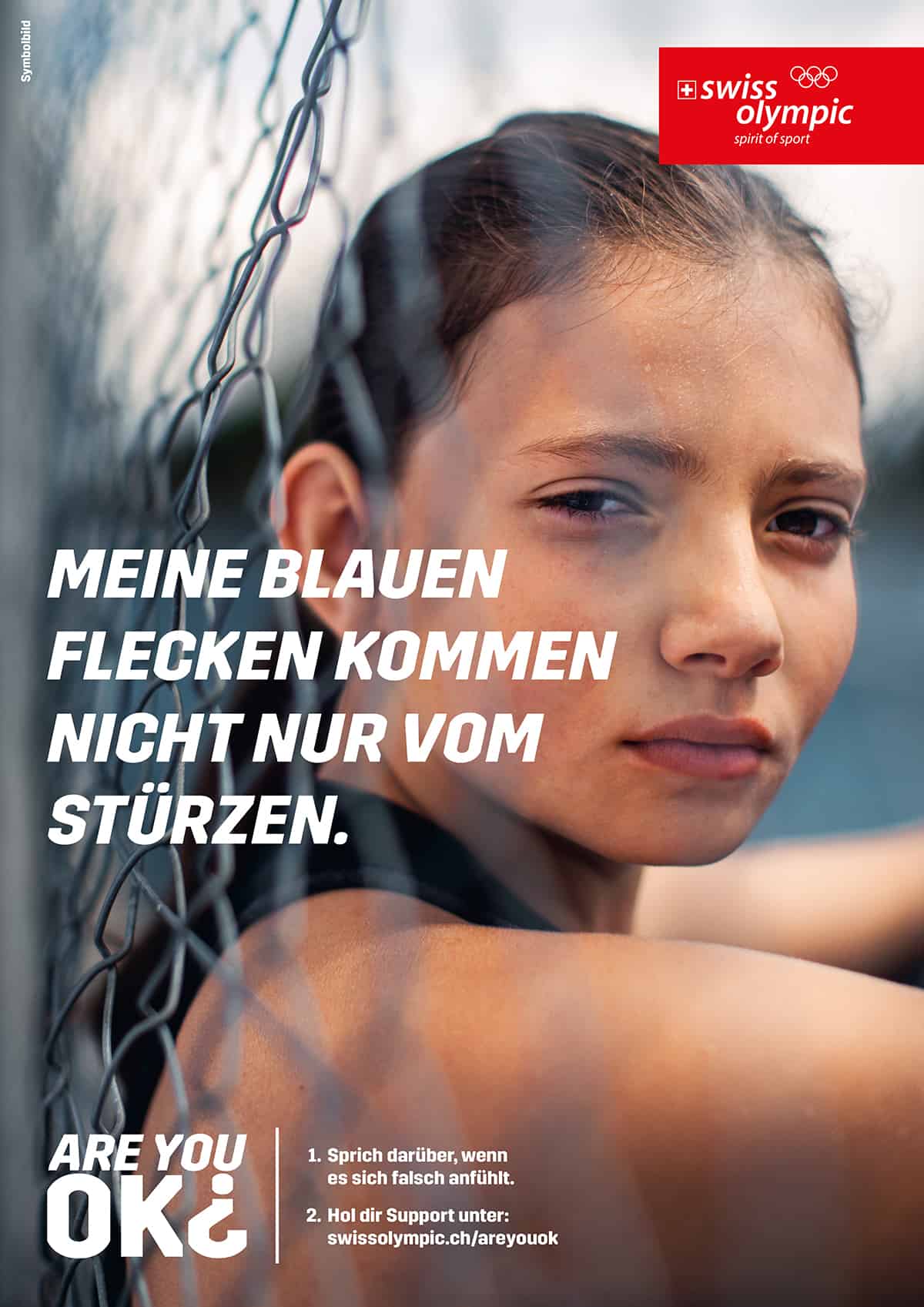
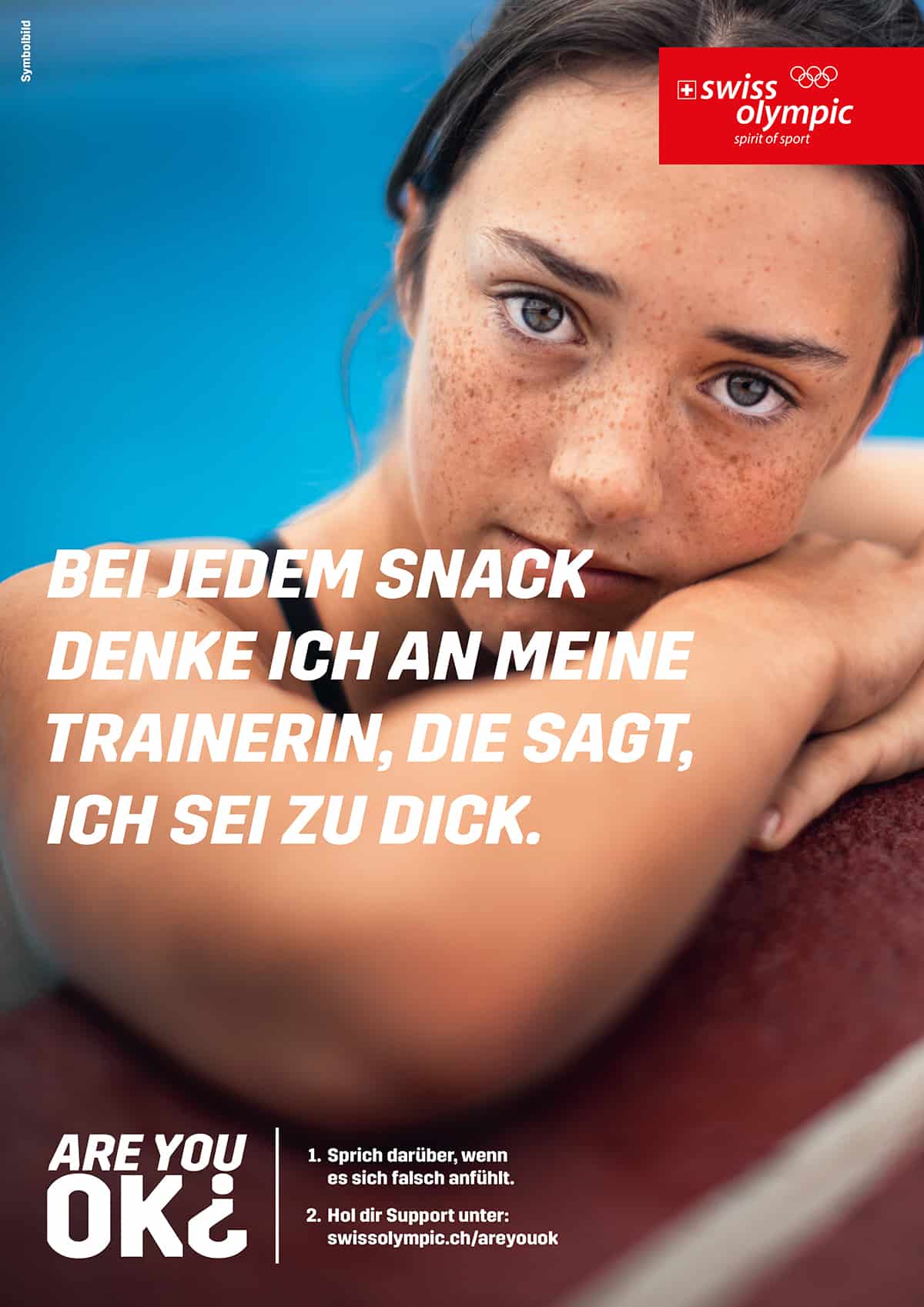
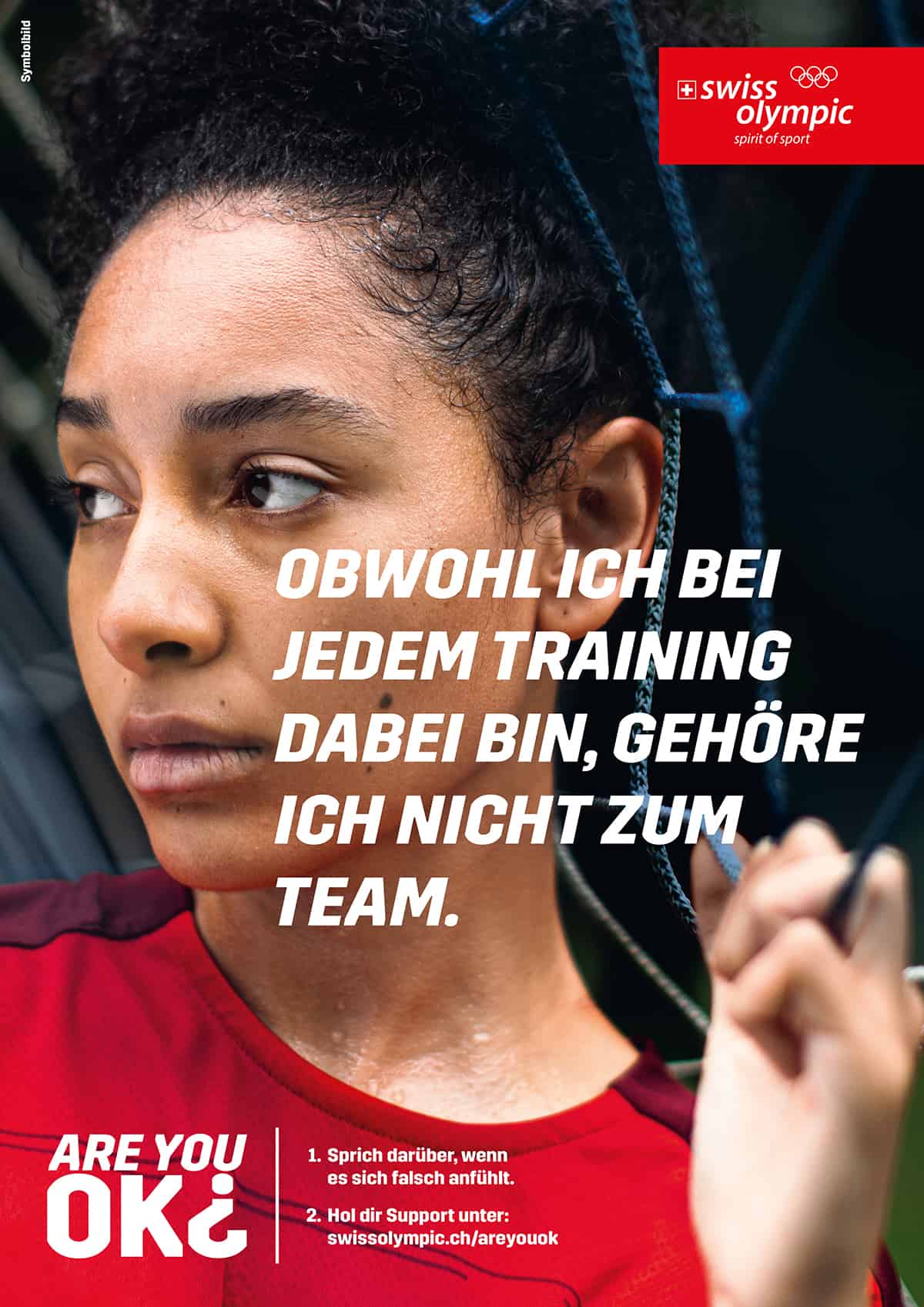
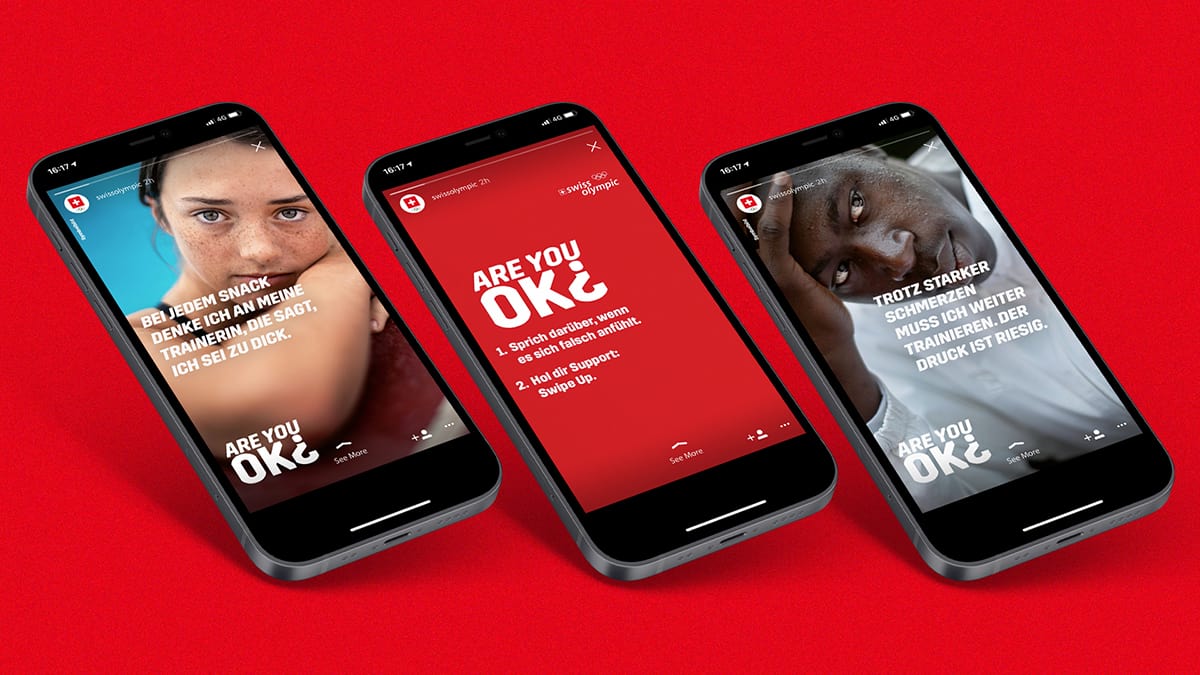
With «Are you OK?», Swiss Olympic aims to draw attention to stressful and harmful situations in sports and, in doing so, raise awareness and provide support to athletes and those around them. Freundliche Grüsse implemented the campaign.

Whether during training, at a competition, or in the locker room, different forms of psychological or physical violence can occur in any sport. Young victims in particular often tend to make topics such as bullying or sexual harassment taboo instead of actively addressing them.
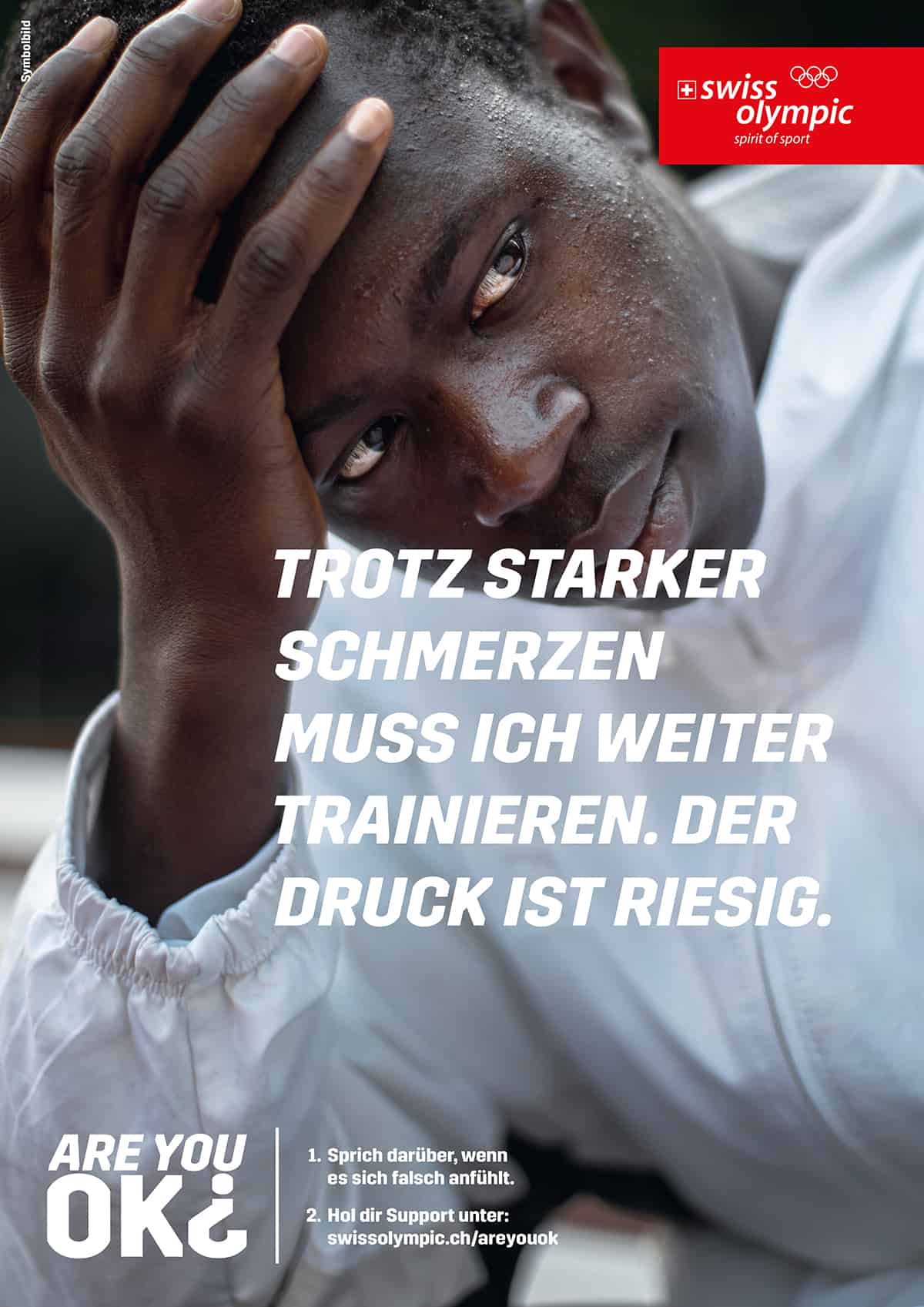
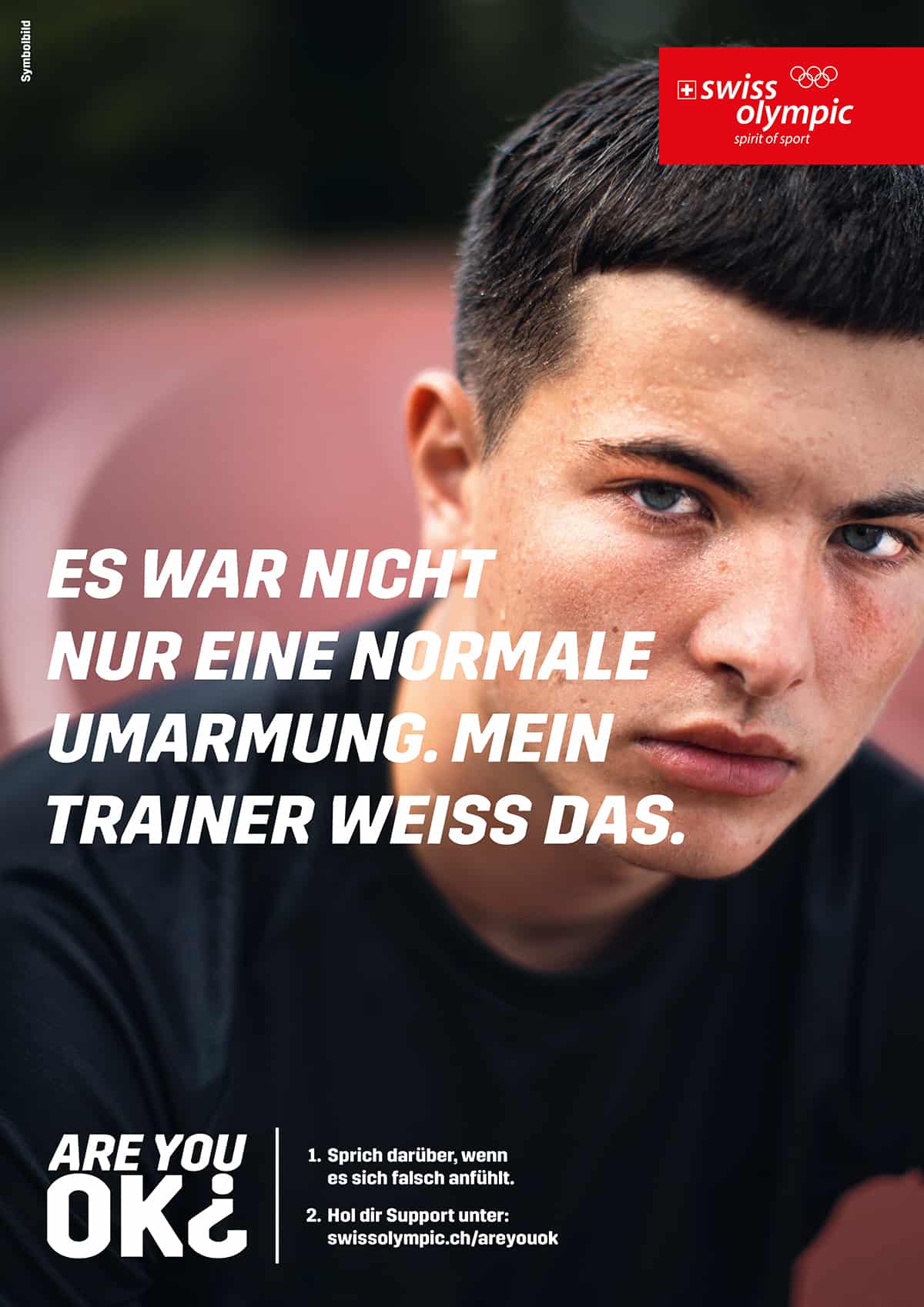
This is exactly where Swiss Olympic wants to start and encourage people to talk about it and get support. Those affected can find information on the website provided and learn where they can report these incidents.

In addition, he said, it is often not clear to those affected whether or not it is an assaultive incident. Basically, though, the following should be established: "Talk about it if it feels wrong."

Freundliche Grüsse has translated this difficult topic into an emotional and activating campaign. It is supported by expressive portrait images by the young photographer Dylan Moore. These are combined with imaginary statements that address assault.

The campaign motto "Are you OK?" asks the target group questions about their own well-being and draws calls to action in this regard. The associated content hub Swissolympic.ch/areyouok is intended to provide those affected with a pool of further information, contact options and reporting points.

The campaign has been live since the end of September 2021 and can be seen on posters as well as on social media as Instagram Stories and posts nationwide and in three languages.


Responsible at Swiss Olympic: Dunja Anken (Project Management), Marc Schumacher (Head of Marketing & Communication), Franziska Wehrle (Head of Communication), Samuel Wyttenbach (Head of Values), Andres Trautmann (Employee Values). Responsible at Friendly regards: Pascal Deville, Samuel Textor (overall responsibility), Jasmine Segginger, Sarah Winker (consulting), Philip Gloyer, Morris Lötscher (text/concept), Mara Schwegler (graphics/art direction), Janine Sonderegger (head of content), Photography: Dylan Moore, Assistant: Roble Mussa.

Anian Heierli new communications officer for Ebikon LU

The Lucerne suburb of Ebikon is getting a new communications officer. Anian Heierli will succeed Roland Beyeler on January 1, 2022; Beyeler is stepping down after three years in the position, the municipality announced on Tuesday.

Anian Heierli neuer Kommunikationsbeauftragter von Ebikon LU
(Image: Municipality of Ebikon)

The 35-year-old Heierli studied media studies and sociology and worked as a reporter for the View. Most recently, he was deputy editorial director for the three titles Uri Newspaper, Obwaldner Newspaper and Nidwald newspaper employed by CH Media. (SDA)

get_footer();