Corpmedia realizes recruiting film for Lucerne Cantonal Hospital
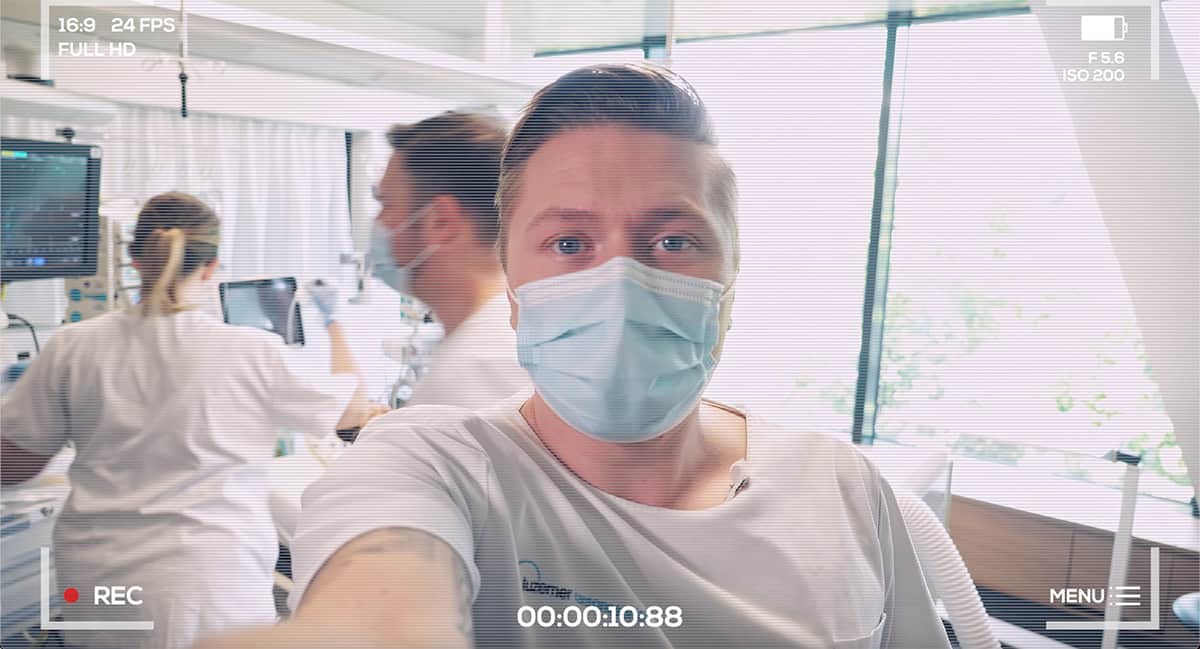
To support the Lucerne Cantonal Hospital LUKS in its employer branding, Corpmedia was commissioned with the conception and production of a recruiting film.
Editorial
-
November 2, 2021
Not only since Corona has good personnel been in high demand in the healthcare sector - and it is sometimes challenging to fill vacancies. In order to draw the attention of as many specialists as possible from Germany and abroad to the Center for Intensive Care Medicine ZIM, a film was to be produced that points out the advantages of the employer and thus makes a valuable contribution to employer branding.
"It was our goal to become close and emotionally tangible with an innovative concept as well as a fresh, new way of doing things. Corpmedia provided us with a great deal of support," says David Friesenegger, Head of HR Recruitment at the Luzerner Kantonsspital.
"Since we are constantly testing the latest technologies and trends on our own channels, such as the Youtube channel 'Storytelling Timo', to meet the changing viewing habits of existing and potential target groups, we decided to go with the style reminiscent of a vlog," explains Corpmedia's storyteller expert Timo Wäschle.
Thus, a mix of image film and vlog was created, which is made by the intermediate sequences and an employee of ZIM as if it were self-made. The film is intended to convey a dynamic and authentic insight, so that the viewer feels taken along. According to Corpmedia, the recruiting film already reached over 1200 views within 24 hours.
Responsible at the Lucerne Cantonal Hospital: Bettina Wildi (Communications and Marketing), Simon Infanger (Team Leader Communication Channels), Gaby Gürber (Head of Nursing ZIM), David Friesenegger (Head of HR Recruitment). Responsible at Corpmedia: Timo Wäschle (concept, text, production management), Tom Brunner (camera), Gian Luca Cantieni (editing), Zahra Dättwyler (make-up), Simon Gasser (sound)
Miriam Walther: From part-time job to "Media Manager of the Year
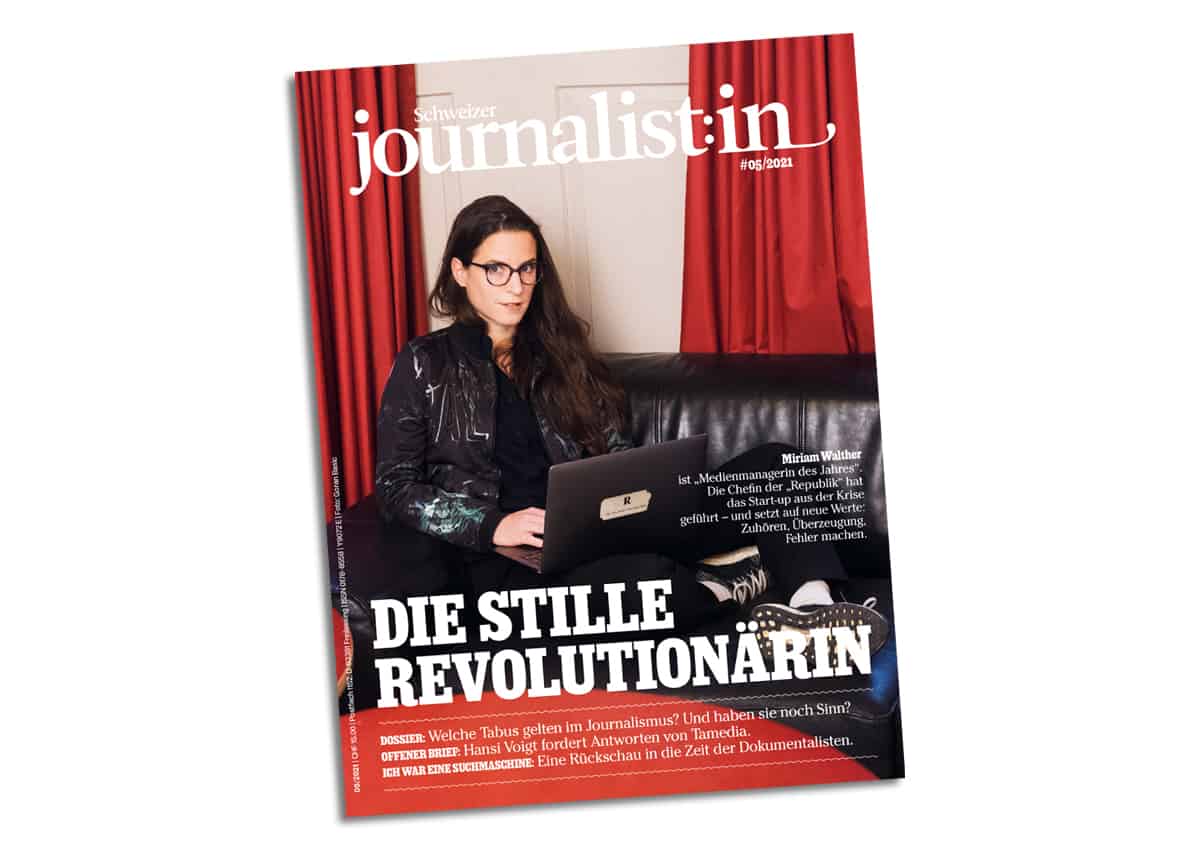
The industry magazine Schweizer Journalist:in names Miriam Walther of Republik "Media Manager of the Year 2021".
Editorial
-
November 2, 2021
This year's winner Miriam Walther at "Rothaus" on Zurich's Langstrasse, the home of Republic.
Miriam Walther has been Managing Director of the Republic. The year 2020 - the medium had to launch a survival campaign due to a lack of money - was its baptism of fire. Today, everything looks different. The Republic has almost 30,000 memberships and subscriptions in October 2021. 1.1 million Swiss francs profit recorded by the Republic this year. A moment of hope in an industry that has known mainly bad news for years. The woman behind this success? Until recently, she traveled the world as a theater director and production manager. Go to Republic she came because she wanted something quieter. A part-time job. Shortly after, she was managing director. And then went her very own way.
For their achievements along this path, the industry magazine awards Swiss journalist:in Miriam Walther as "Media Manager of the Year. This award is presented annually to an executive in Swiss media management whose work creates the economic basis for journalism. "Good journalism necessarily needs good management. We want to make that clear with this award and thus appreciate the work of exceptional media managers," explains Journalist-publisher Johann Oberauer.
The jury for the Media Manager this year included former media manager Caroline Thoma, Eva Hirschi, managing director of Investigativ.ch, media journalist Dennis Bühler, publisher Johann Oberauer, and editors-in-chief Samantha Zaugg and Charlotte Theile. Dennis Bühler, who is responsible for the Republic reported from the Federal Parliament, went on strike during the decision on Miriam Walther.
The media managers of the year in Switzerland: Hall of Fame
2006: Peter Wanner, AZ Medien
2007: Théo Bouchat, Edipresse
2008: Ralph Büchi, Springer
2009: Pietro Supino and Martin Kall, Tamedia
2010: Valérie Boagno, Le Temps
2011: Albert Polo Stäheli, NZZ Group
2012: Christoph Bauer, AZ Medien
2013: Norbert Neininger, Schaffhausen News
2014: Michael Ringier, Ringier
2015: Marcel Kohler, 20 minutes
2016: Christoph Tonini, Tamedia
2017: Dominik Kaiser, TV 3+
2018: Peter Wanner, CH Media
2019: Simonetta Sommaruga, Media Minister
2020: Nathalie Wappler, SRF
2021: Miriam Walther, Republic
Read more about Miriam Walther in the current issue of Swiss Journalist:in, which was published on Tuesday.
Kargo: Digital Branding for the Swiss Red Cross
Kargo is expanding the Swiss Red Cross’s corporate design with guidelines and templates for its digital channels, and is also conceptualizing and designing the 2019 annual report.
Editorial
-
November 2, 2021
The strong branding of the Swiss Red Cross with the cross is known all over the world. The branding guidelines are therefore also very strict - but also rather incomplete until the order to Kargo. The topic "digital" was hardly dealt with in the previous CD manual. For this reason, the SRC commissioned the agency to develop the digital branding with the aim of strengthening the brand in the future on the screen and in all online applications.
Kargo subsequently implemented a digital brand guide and, among other things, laid the foundation for the new web design. New screen-friendly fonts and colors were added to the CD manual to ensure usability.
In addition, design elements were created and a grid defined that can be applied to all online media and formats. This is intended to provide in-house graphic production with a useful toolkit so that it can efficiently create advertising materials independently in the future. The digital brand guide also includes templates for YouTube videos, banner ads, email senders, and social media posts and stories.
In addition to the purely digital media, Kargo also took on the conception and design of the 2019 annual report. The result is an A5 flyer with special folding.
Responsible at the Swiss Red Cross: Isabel Rutschmann (Project Management, Content Manager General Communication & History), Sabine Zeilinger, Head of Communication and Media Spokesperson SRC), Thomas Imboden (Head of Web Office), Natalie Stettler (Head of graphic-print). Responsible at Kargo: Christoph Balsiger (Creative Direction), Fabia Dellsperger (Art Direction, Project Management), Jorge Martinez (Graphic & Motion Design), Simon Aline Thurnheer (Graphic & UX/UI Design).
Serviceplan again recruits learners for Jaisli-Xamax on TikTok
Back in 2020, Serviceplan Suisse launched an apprenticeship campaign for the electrical company Jaisli-Xamax, focusing on TikTok. Now comes the second season of the employer branding series—also on TikTok.
Editorial
-
November 2, 2021
Together with Serviceplan Suisse, Jaisli-Xamax decided to continue the series this year with a new season of organic TikTok posts. The content team at the House of Communication created and produced the new season of three clips entirely in-house. The agency focused for even more exposure on TikTok formats that resonate particularly well with the target audience of 13- to 15-year-olds who are on the verge of choosing a career. For example, one of the popular transitions in the "Juggler" clip. Or the glitch challenge from the switchgear workshop. Or the hype around Halloween. Of course, always with a content-related or visual reference to apprenticeships in the professions of electrician, automatic fitter and assembly electrician, but also to future commercial apprentices.
Like in the past year all performers in the 2021 edition are also apprentices and employees of Jaisli-Xamax. Among them is 15-year-old Yannis Ryter, who started his apprenticeship as an EFZ assembly electrician in August and at the same time plays for FC Basel's U17 youth team. He is one of 100 apprentices being trained at Jaisli-Xamax.
The videos are live on TikTok and Instagram each at @jaislixamax.
Responsible at Jaisli-Xamax: Ilaria Leo (Head of Marketing and Communications), Nastasia Petrovic (Marketing Assistant). Responsible at Serviceplan Suisse: Livia Küpfert (Consulting), Mareike Pässler (Text & Concept), Kurt Bösiger, Dominic Shota Schweingruber (Concept, Video Production and Motion Design), Terence Fuchs (Graphics), Thomas Lüber (Creative Direction), Marcin Baba (Executive Creative Direction), Pam Hügli, Raul Serrat (Overall Responsibility).
CH Media Entertainment: Editorial trimedial management team at Zurich location is complete
Jonathan Schoeffel, Head of Online & Radio Editorial, and Claude Winet, Editor-in-Chief of TeleZüri, round out the editorial leadership team at CH Media Entertainment, led by Barbara Lanz, who will take over as head of the trimedia editorial department in Zurich-Oerlikon in February.
Editorial
-
November 2, 2021
Jonathan Schoeffel (left) and Claude Winet complete the editorial trimedial management team of CH Media Entertainment.
As Head of Editorial Online & Radio at the new location in Zurich-Oerlikon, Jonathan Schoeffel will be responsible for all information content at Radio 24 from January 1, 2022, and will lead the newly formed ZüriToday team in day-to-day operations, the fourth Today platform - after FM1Today, PilatusToday and ArgoviaToday - which will launch in spring 2022. In his new role, the Zurich native will report to the new trimedial Editor-in-Chief Barbara Lanz.
Schoeffel, 34, has worked for Radio 24 for 12 years, since last year as editorial director and previously as head of sports. Before joining the private radio station, Schoeffel gained work experience at the radio stations Kanal K and Stadtfilter, as well as at the Klotener Anzeiger.
Claude Winet has held various positions at CH Media station TeleZüri for 23 years, and has been Editor-in-Chief since 2014. According to CH Media, he has made a significant contribution to the strong audience growth of "ZüriNews" in recent years. In addition, he is also responsible for the national editorial teams such as "+41" and "CheckUp." Winet will also report to Barbara Lanz.
Before working for TeleZüri, the city native worked for Radio 24 and the SonntagsZeitung active.
Olivier Pauchard becomes Vice Director of Bakom
Federal Councilor Simonetta Sommaruga has appointed Olivier Pauchard as Deputy Director of the Federal Office of Communications (Bakom) and Head of the Radio Monitoring and Facilities Division, effective December 1, 2021.
Editorial
-
November 2, 2021
Olivier Pauchard, 53, will take over as deputy director of Bakom on December 1. The lawyer from French-speaking Switzerland joined Bakom in 1995 and has been deputy head of the Radio Monitoring and Installations Division for six years, which he will now also head.
After studying law at the University of Neuchâtel and working for one year at the public prosecutor's office of the Canton of Neuchâtel, Olivier Pauchard joined Bakom in 1995 as a research assistant in the then Market Surveillance Department.
In his further career, he first held the co-leadership of the Legal and Supervision Section Romandie and Ticino and later took over the leadership of the Supervision and Legal Section. In 2012, he was appointed Deputy Head of Division. After several internal reorganizations, he is currently performing this function in the Radio Monitoring and Installations Section, which he will head in the future.
Olivier Pauchard succeeds Gabriela Seiz, who left Bakom at the end of August 2021 to join the Office for Waste, Water, Energy and Air AWEL of the Canton of Zurich.
Sennheiser brand and design management team launches Notation agency
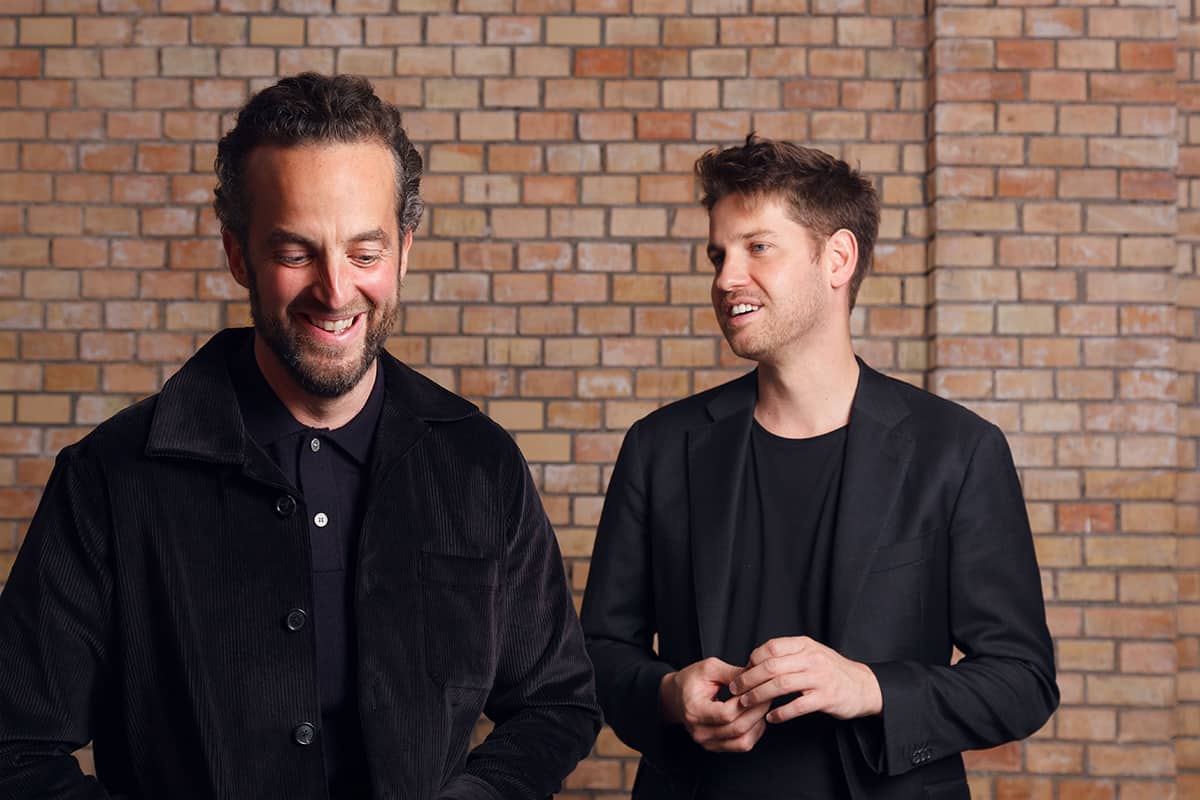
Notation is a new player in the Zurich agency landscape. The founders Iwan Hänggi and Oliver Berger were responsible for the global brand and design management of the audio brand Sennheiser for ten years. They have now separated this from the company and founded the brand and design agency Notation.
Editorial
-
November 2, 2021
Founded Notation: Managing Partners Oliver Berger (left) and Iwan Hänggi (right).
For ten years, Iwan Hänggi and Oliver Berger have given audio specialist Sennheiser and its audio products a face. As a global brand and design management team, they have helped transform the technology-driven company into an emotionally charged brand.
In the midst of the first Corona wave, the two, with the support of Sennheiser's management, took the bold decision to spin off the brand and product design management from Sennheiser in order to Notation to found.
Startup with over ten years of experience
As an independent company, Notation will continue to support the Sennheiser brand as its brand and product design partner. This expertise is quickly proving to be of interest to other companies seeking to transform into a customer-centric premium brand. As a result, the agency will be able to count new companies from the European region among its clientele as early as the go-live on November 1, 2021.
The number of employees is also growing rapidly: Notation starts with a group of ten brand and product design enthusiasts and month by month gains new employees with new skills and fresh perspectives. Currently, the agency has thirteen women and ten men from seven nations who bring a wide range of expertise to the table. "We want other organizations to benefit from the experience, skills and methods we have developed over the last ten years in building a global premium brand," says Oliver Berger.
20min.ch now also offers news in English
The free newspaper 20 Minuten now offers news in English in its electronic edition. In the app, the language can be switched to receive texts translated into English.
Editorial
-
November 2, 2021
The prerequisite for this is that one registers as a user, as the paper writes on Tuesday on its portal 20min.ch. Because the texts of the German edition are automatically transferred into English by software, the translation will not be error-free, it continued.
"We accept that," the editors wrote. Because the goal is that the entire population of Switzerland should have the opportunity to access current information. All articles are to be translated, but not polls, videos and advertising.
In the future, translations into other languages are also planned. Portuguese, Albanian, Serbian, Croatian and Spanish are mentioned. According to the Federal Statistical Office, around 480,000 people in Switzerland counted English among their main languages, 20min.ch wrote. (SDA)
Ricola: New campaign and new claim "Just take Ricola".
From mid-November 2021, the new Ricola TV commercial "Nimm einfach Ricola" can be seen across Europe, implemented by Jung von Matt Berlin and produced by Czar Film. For the creation, advertising icon Jean-Remy von Matt returned from retirement - and gave the brand a makeover.
Editorial
-
November 2, 2021
With its new Europe-wide campaign, the Swiss brand Ricola is relying on humor - and a special surprise effect. That's because the spot at the heart of the advertising campaign initially catches the audience on the wrong foot: It starts like a commercial for another, rather absurd product.
In the commercial, a real piece of Swiss herb meadow is advertised as "Mini Meadow," which stressed-out city dwellers can have delivered directly to their homes from the Alps.
The spot is then abruptly interrupted by a talking marmot. It sits cheerfully in the Swiss Alps and tells the audience that it's also much easier - with a Ricola candy. "Just take Ricola," is his simple suggestion. Just as invigorating and soothing, but much less complicated.
Strategy refinement
Ricola is launching the new advertising campaign as part of a refinement of its brand strategy. At the heart of this remain the brand's cornerstones: naturally grown alpine herbs, Swiss origin and the balance between enjoyment and functionality of Ricola products.
With the campaign, the company wants to position itself with wit and aggressiveness as a down-to-earth alternative to many a modern trend among health- and environmentally-conscious stakeholders. "What is so good in the throat and mouth must not be boring in advertising either," says Jean-Remy von Matt, owner of Jung von Matt Berlin.
The campaign is starting with a slight time delay. It was launched in Italy last week and in France this week. In Switzerland and the other European countries, the spot will be launched next week in various media. The spot was produced by the film production company Czar and directed by Ben Callner. Another Ricola commercial is scheduled to appear in spring 2022 as part of the current advertising campaign.
"Advertising has to surprise people emotionally in order to be remembered for a long time."
Thomas P. Meier, CEO of Ricola, and Jean-Remy von Matt, founder of Jung von Matt, talk to Werbewoche.ch about refreshing the strategy and the cult brand's plans for the future.
Werbewoche.ch:Thomas P. Meier, what beliefs about your brand and products guided you when you conceived the campaign with Jung von Matt?
Thomas P. Meier: With the new advertising campaign, we wanted to focus on what makes Ricola special: naturally grown alpine herbs, the Swiss origin of our company, and the balance between enjoyment and functionality of the products. These are the cornerstones of Ricola's success, and we will continue to build on them in the future. And as our commercial makes clear, a pinch of humor also plays an important role at Ricola, as it always has. We want our products to contribute to the well-being of our consumers, but we also want our new advertising campaign to put a smile on their faces. Because that's exactly what Ricola is supposed to be: an invigorating moment in everyday life that invites you to feel good.
What do you particularly like about the new spot?
The wit and a certain amount of aggressiveness that is evident in the commercial. After all, a humorous appearance has always been an important aspect of Ricola's brand management and, even after almost 30 years, the recipe for success in our advertising campaigns. With our down-to-earth sense of humor, we stage ourselves as an alternative to many a modern trend among health- and environmentally-conscious stakeholders.
Why was it time to refresh Ricola's image?
We are always looking to nurture our brand. That is why we have carefully reviewed our brand strategy in recent months and decided to refine it. It is important for us to focus more on our strengths again. Our beneficial products with fragrant alpine herbs should receive full attention in the new advertising campaign. We want as many people as possible to enjoy this invigorating piece of nature for everyday life.
What can Ricola customers look forward to in particular in the future?
We are highly motivated to respond to the specific wishes and needs of our consumers and to always come up with new, innovative flavor variations on the market. In addition, a second, equally surprising Ricola commercial will be released in the spring - so it remains exciting!
Jean-Remy von Matt, for the new Ricola commercial you are out of the (Un-)retirement. Did it take a lot of persuasion to get you to take this step?
Jean-Remy von Matt: Of course not, it was an honor! As a Swiss abroad, I am particularly proud of global brands from my home country. Besides, I have been associated with the brand for 25 years.
At the end of the 1990s, Jung von Matt developed as lead agency the legendary Slogan "Who invented it?" for Ricola. Which principles from back then have you remained true to in the current campaign? - and what has sich changed?
We have remained true to the principle that advertising must surprise people emotionally in order to be remembered in the long term. What has changed is that this principle is more decisive than ever in the voluntary nature of media consumption.
Ricola war three years at Publicis - and returned to Jung from matte back. What are your plans for the brand now?
It was important to us to give Ricola back the charm and self-deprecating wit that characterized the brand, especially with "Who Invented It?"
Will Jean-Remy von Matt also remain for further "Ricola projects" available?
Until the last breath, which will be a particularly fresh one thanks to Ricola.
Wirz repositions itself and expands its offering
To serve its clients more comprehensively and seamlessly across all areas of marketing, the Wirz agency is bringing its teams even closer together while expanding its range of services. János Heé is joining the agency as Chief Marketing & Innovation Officer and co-owner.
Editorial
-
November 1, 2021
Wirz realigns and restructures its management: Alain Eicher, Barbara Dürst, Caspar Heuss, Catrin Bewersdorff, Christoph Caviezel, Claudio Zinsli, János Heé, Kathrin Jesse, Livio Dainese, Michaela Burger, Michel Reichmuth, Petra Dreyfus and Stefan Dätwyler (from top left to right).
Solving business problems with creativity. To do this even more effectively, Wirz is changing its internal structure by linking its areas of expertise more closely. And it is expanding its offering in the areas of marketing and communication as well as digital innovations.
Heé joins the team
The proven digital expert Dr. János Heé joins Wirz as Chief Marketing & Innovation Officer and co-owner. The digital transformation specialist will contribute his expertise to solve business problems holistically with data-based marketing, technology or digital sales. Heé was previously CEO of Zimmerli of Switzerland and digitized the company across all customer touchpoints. Previous positions include The Adecco Group, Sunrise and Swiss, where he was Head of E-Commerce and responsible for the relaunch of Swiss.com.
"With the new internal structure as well as the new additions János Heé and Kathrin Jesse, who has already joined us this spring, we complement our services and offer our customers an excellently orchestrated, barrier-free offering across all disciplines. Our strategic expertise coupled with a creative approach and our proximity to the end customer are our USP," explains Livio Dainese, Co-CEO of Wirz.
Thomas Städeli and Jörg Bewersdorff go
As part of this further development, Thomas Städeli, CEO of Wirz Brand Relations, and Jörg Bewersdorff, CEO of Wirz Activation, are leaving the agency group. The Branding competence area will be co-managed ad interim by the current and long-standing members of the Executive Board Michaela Burger (Creative Director) and Michel Reichmuth (Consulting Director). The service offering in the area of direct marketing will now be led by the current Managing Director Barbara Dürst.
After almost 20 years on Uetlibergstrasse, Thomas Städeli sets off on a new adventure with Jung von Matt (Werbewoche.ch reported). Jörg Bewersdorff leaves the agency with one eye laughing and one eye crying. "As an agency group, Wirz means a lot to me. But I am very excited to do something new. I always had the plan to switch from the agency side to the corporate side by the age of 50 at the latest. I'll be 50 in November, so it's high time," says Bewersdorff.
"Thomas and Jörg have shaped the agency for years in their function as CEO and co-owner and contributed significantly to its success. We would like to thank them for their commitment and wish them all the best for the future," says Petra Dreyfus, Co-CEO.
Bern Media Day: Discussion on the upheaval in Bern's media center
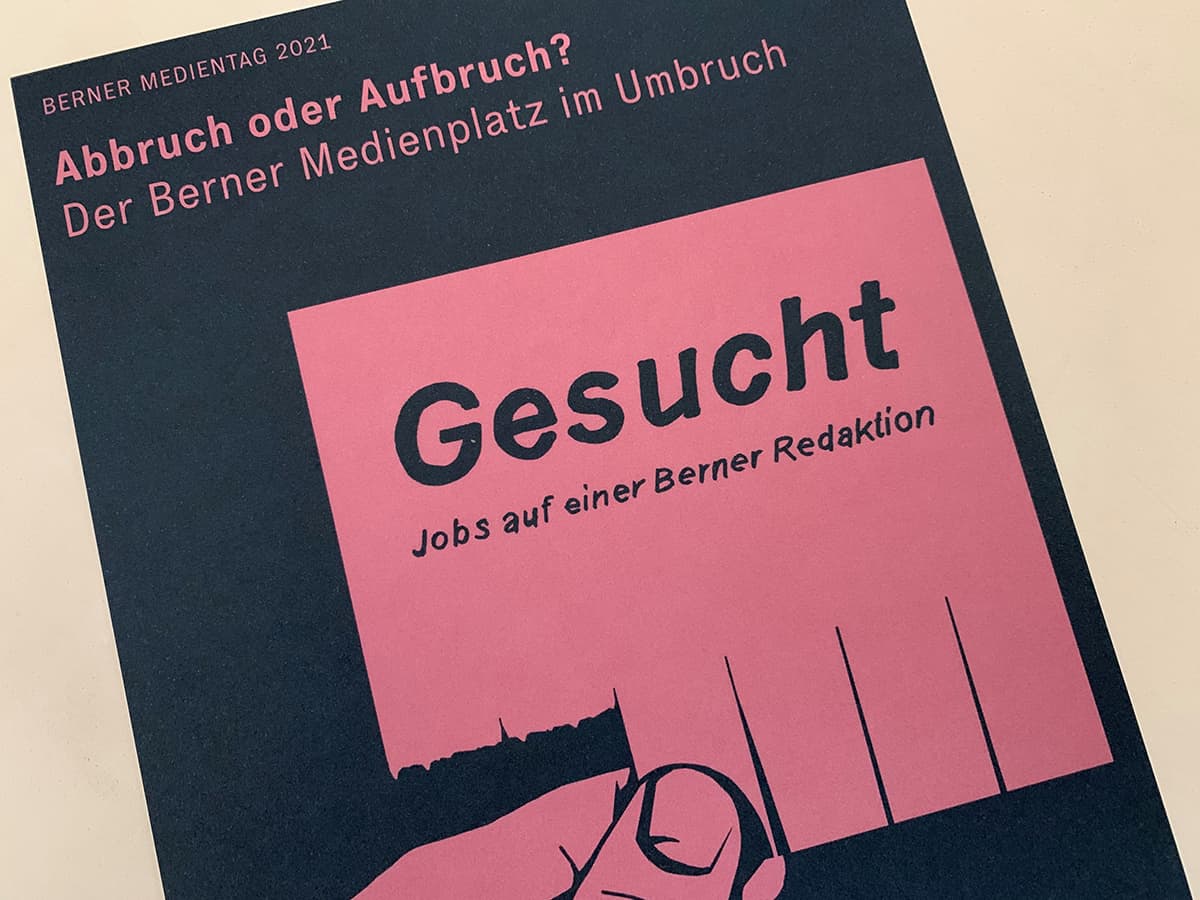
The Bernese media market is characterized by consolidation. In addition, new and existing alternative media projects want to close gaps. Where are the changes leading? Those responsible will discuss this at the Bern Media Day on November 20.
Editorial
-
November 1, 2021
The departure of SRF radio news and the SRF 4 News editorial team and the merging of the editorial teams of Bernese Newspaper and Confederation will also weaken the Bernese media center in terms of jobs. Radio Bern1, which previously belonged to Zürichsee Medien AG, was taken over by CH Media at the beginning of 2021 and is now part of the same group as TeleBärn (Werbewoche.ch reported). Gassmann Medien in Biel also changed hands at the beginning of 2021: Marc Gassmann, who was unable to find a successor within the family, sold the group to Valais entrepreneur Fredy Bayard, who already owns the Mengis Group with the Valais Messen in Visp (Werbewoche.ch reported).
However, it is not only demolition and upheaval that currently characterize the Bernese media scene, but also new beginnings. The new Capital city" media project has already far exceeded its own expectations at the start of crowdfunding in October. In addition, existing alternative media platforms want to continue to ensure more diversity in Bern.
What is the state of the established Bernese media? The heads of the major media houses will discuss this at the Bern Media Day on November 20: Simon Bärtschi (General Manager BZ/Confederation), Lis Borner (Editor-in-Chief Audio SRF), Nicola Bomio (Head of Program Radio CH Media) and Fredy Bayard (Publisher Gassmann Medien).
In a second round, Marina Bolzli (Capital), Albina Muhtari (Baba News), Samuel Kaiser (Megafon) and Mark Balsiger (Managing Director of the Courage Civil movement and initiator of the "Save the Confederation" campaign).
Five regional TV stations fail to meet information requirements
Five regional German-speaking Swiss television stations did not broadcast enough relevant regional information last year. The Federal Office of Communications (OFCOM) has opened supervisory proceedings against two of them.
Editorial
-
November 1, 2021
Commercial television stations that hold a license must broadcast at least 150 minutes of "relevant regional information" per week during prime time. And they are simultaneously obliged to offer ten minutes of "relevant regional information in news programs" during prime time on weekdays.
By this, Bakom means stories about happenings in the coverage area, about the impact of a national event on the coverage area, or with a connection to the region.
Supervisory procedure opened
Five stations in German-speaking Switzerland did not meet these requirements last year: TVO from eastern Switzerland broadcast only 138 minutes of regional information per week in prime time, and TeleBärn broadcast only 73 minutes, as Bakom announced in its newsletter on Monday. And again TeleBärn as well as Tele M1 (Aargau, Solothurn), Tele1 (Central Switzerland) and Telebasel broadcast less than ten minutes of relevant regional news per day in news programs.
Bakom opened a supervisory procedure against the two stations that did not meet the 150-minute requirement, it said in response to a request from the Keystone-SDA news agency. Those responsible could now comment before Bakom issues an order to determine whether or not the minimum requirement has been met. Financial sanctions are not foreseen in the initial procedure, it said.
For the program analysis, Bakom 2020 examined the programs of Kanal 9, TeleBärn, Telebasel, Tele 1, Tele M1, Tele Top, TVO, TV Südostschweiz, TeleBielingue, Canal 9, Canal Alpha, La Télé, Léman Bleu and TeleTicino by means of random samples during two weeks. It analyzed a total of 1050 hours of programming.
More information in French-speaking Switzerland
The average proportion of information content was 71 percent of the programs broadcast by all 14 licensed regional television stations. It was highest at Léman Bleu with 89 percent and Tele Ticino with 82 percent, and lowest at Telebasel with 62 percent. In French-speaking Switzerland, the proportion of information was ten percent higher than in German-speaking Switzerland.
For example, Léman Bleu produced 19 hours of information content in a week, four times more than Telebasel's 4 hours. And in terms of the proportion of relevant topics, the Geneva station also topped the rankings with 98 percent. On TeleBärn, only 72 percent of the information output dealt with "relevant topics".
Regional anchoring
There were also clear regional differences in the geographic focus: For example, the TV stations in French-speaking Switzerland gave significantly more space to events in their own region (88 percent) than those in German-speaking Switzerland (63 percent) and Ticino (57 percent).
Léman Bleu offers its audience 14 hours and 36 minutes of regional information per week, fourteen times more than Telebärn with one hour and three minutes, it said. And the CH media stations were also "clearly below the average" of four and a half hours per week in this respect.
In terms of advertising time, on the other hand, the German-speaking Swiss stations made it to the front: They broadcast almost twice as much advertising as their French-speaking Swiss counterparts. The CH Media stations (TeleBärn, Tele 1, Tele M1 and TVO) were particularly successful here, writes Bakom. These stations also gave "human interest or bad news" an "above-average amount of space". (SDA)



 The strong branding of the Swiss Red Cross with the cross is known all over the world. The branding guidelines are therefore also very strict - but also rather incomplete until the order to Kargo. The topic "digital" was hardly dealt with in the previous CD manual. For this reason, the SRC commissioned the agency to develop the digital branding with the aim of strengthening the brand in the future on the screen and in all online applications.

 Together with Serviceplan Suisse, Jaisli-Xamax decided to continue the series this year with a new season of organic TikTok posts. The content team at the House of Communication created and produced the new season of three clips entirely in-house. The agency focused for even more exposure on TikTok formats that resonate particularly well with the target audience of 13- to 15-year-olds who are on the verge of choosing a career. For example, one of the popular transitions in the "Juggler" clip. Or the glitch challenge from the switchgear workshop. Or the hype around Halloween. Of course, always with a content-related or visual reference to apprenticeships in the professions of electrician, automatic fitter and assembly electrician, but also to future commercial apprentices.

 Olivier Pauchard, 53, will take over as deputy director of Bakom on December 1. The lawyer from French-speaking Switzerland joined Bakom in 1995 and has been deputy head of the Radio Monitoring and Installations Division for six years, which he will now also head.
 The prerequisite for this is that one registers as a user, as the paper writes on Tuesday on its portal 20min.ch. Because the texts of the German edition are automatically transferred into English by software, the translation will not be error-free, it continued.
 With its new Europe-wide campaign, the Swiss brand Ricola is relying on humor - and a special surprise effect. That's because the spot at the heart of the advertising campaign initially catches the audience on the wrong foot: It starts like a commercial for another, rather absurd product.
 Thomas P. Meier, CEO of Ricola, and Jean-Remy von Matt, founder of Jung von Matt, talk to Werbewoche.ch about refreshing the strategy and the cult brand's plans for the future.

 The departure of SRF radio news and the SRF 4 News editorial team and the merging of the editorial teams of Bernese Newspaper and Confederation will also weaken the Bernese media center in terms of jobs. Radio Bern1, which previously belonged to Zürichsee Medien AG, was taken over by CH Media at the beginning of 2021 and is now part of the same group as TeleBärn