Where does the Metaverse music play?

Already, some «fast movers» are demonstrating what’s possible with metaverse technology—and are setting the pace for others. Here’s an overview.

(Illustration: Katarzyna Surman)

Gaming in the metaverse is already gaining significant traction among the mainstream. From a consumer perspective, use cases are expanding to include ever-new immersive experiences in retail, entertainment, sports, and education. Furthermore, the metaverse offers extensive—yet largely overlooked—applications and opportunities for businesses in the B2B sector. These can include onboarding processes for new employees, teamwork with avatars, virtual prototyping in manufacturing, and the training of specialized personnel—for example, on highly sensitive or even dangerous electrical systems, where every move must be precisely rehearsed. Not to mention the neurosurgeon in Japan performing brain surgery in the U.S. or the university professor who can visit any museum with students from any country—that, too, is the metaverse. Even government agencies could benefit from this, using immersive experiences to supplement and eventually replace in-person visits to government offices.

However, it is currently the “shaper” and “fast mover” brands that are setting the tone in the metaverse. These brands are primarily making their mark in the metaverse through the following approaches.

1. Gaming

This involves playful brand experiences in the virtual world that offer a «real-life benefit.» Some use cases from Deliveroo and Wendy’s in the U.S. show fantastic interaction metrics. Whether a discount promotion in Fortnite should be considered a true «metaverse experience,» however, remains to be seen.

2. Brand Avatars and Virtual Goods

«Brand Avatars» and «Branded Virtual Goods» are also options currently being explored. A user’s avatar—ideally combined with a digital identity that allows the user to interact with others in the virtual world—is highly customizable. For a new generation of users, old values are fading—for example, the idea that a Hermès handbag made of genuine leather must cost $10,000. The virtual version also enjoys the same status symbol effect within an avatar’s social circle. «Limited and exclusive» is the guiding principle here. So-called “token-gated communities”—that is, self-governing and exclusively accessible communities based on holding specific digital items (NFTs). This is another use case for specifically targeting certain customer segments. Here, too, one might skeptically ask: Is there any real value creation here? If brands link the virtual items to real-life benefits, then absolutely.

3. Virtual Influencers

Virtual influencers are computer-generated avatars that appear human, with likes, dislikes, and values. Influencers like Lil Miquela—a digital avatar with three million Instagram followers—have been around since 2016, and the market for these meta-influencers is growing. Brands like Calvin Klein, Balmain, and Samsung partnered with existing digital influencers some time ago, but now brands are beginning to introduce their own virtual representatives. Brands such as Prada and Yoox started doing this in 2021. Now, the worlds of brand ambassadors, influencer marketing strategies, customer loyalty programs, and customer service are suddenly overlapping. A fictional character, equipped with real AI, tailored to the target audience in appearance, appearing almost like a real person, and available to every customer 24/7.

4. Online Stores

A virtual presence within one of the many metaverse platforms can take on the roles of several existing touchpoints at once. Existing or prospective customers can conveniently access the metaverse store from home around the clock and experience the brand there—from consulting and sales support to troubleshooting and exclusive events—via automated NPC bots or real employees. This calls for creativity in helping customers connect with this new space in a meaningful and profitable way.


* Pipo Semmler is the CIO at Inhalt und Form and heads the Web3/Metaverse Unit at iundf Neo.


This article is one of a series of publications on metaverse in the m&k anniversary issue 8-9/2022.

Metaverse: The first steps to your own project

Getting started with Metaverse technology may seem challenging - but as we all know, the first steps are always the hardest. It's good if you know what to do for it.

(Illustration: Katarzyna Surman)If you've decided to implement metaverse technology for your business, you've already taken the first step: you've made a decision that many of your competitors are still putting off.

Set multidimensional goals

There are various reasons to undertake a metaverse project. It could simply be to encourage and challenge innovators on your marketing team. External goals also make perfect sense: brand positioning or tapping into new target audience segments can be key drivers behind your decision. But don’t make the mistake of setting direct revenue targets—you’ll likely be disappointed unless you’re Nike or Gucci.

Create experiences tailored to your target audience

First, figure out which of the existing platforms suits you best. Maybe you don’t even need to choose an existing one—perhaps you’d prefer, for example, your own solution through Metapolis, which offers “Metaverse as a Service,” or you could rent a space from Portals. However, in that case, your virtual space will likely remain relatively empty. So you need to create not just a place, but an experience—and while that experience usually doesn’t start in the metaverse, the metaverse is part of it. You’ll need to find the ideal balance between advertising, immersive experiences (including games, virtual stores, events, and sponsorships), and real-world activations to make your metaverse initiative a success.

Experiment with business models

Direct sales may not yet be a priority in the metaverse, but that doesn’t mean brands shouldn’t think ahead and plan to capitalize on its future potential. According to a JP Morgan/Onyx study, direct sales of virtual goods to avatars are already a $54 billion market, and some forward-thinking brands are testing various ways to generate revenue. Nike, for example, has launched its “Cryptokicks”—virtual sneakers. They developed these in collaboration with the creative studio RTFKT, which they acquired last December.

The latest feat from this company is the CloneX avatars, which were initially issued at a price of 0.01 ETH ($18) and are currently trading at a floor price of 8.8 ETH (approx. 16,000 U.S. dollars). In total, the project has already generated over 90 million dollars in revenue. RTFKT Studio receives a 5% creator’s fee on every transaction.

Form partnerships and take on your first project

As with any innovation project, you’ll need specific skills to successfully implement it. Discover what hidden talents may exist within your organization, and above all—seek out partners who, in turn, have a large network of experienced experts behind them to help you develop a solid strategy and bring it to life. Also, consider less obvious partnerships for your brand. Who would have thought a few years ago that Balenciaga and Fortnite would be a perfect match?

Rethink how you measure project success

Measuring the return on marketing spend is always crucial, but the appropriate metrics for the metaverse may not be what you expect. Digital marketing typically focuses on metrics such as the number of visitors, conversions, likes, and shares, as well as the cost of customer acquisition. In the metaverse, brands may need to define new engagement metrics that account for unique behavioral economic factors, such as «scarcity» and the associated price trends for exclusive virtual goods, «transaction volume» if your project aims to generate volume, or «community growth» if you want to reach customers through a «token-gated community.».


* Pipo Semmler is the CIO at Inhalt und Form and heads the Web3/Metaverse Unit at iundf Neo.


This article is one of a series of publications on metaverse in the m&k anniversary issue 8-9/2022.

The metaverse comes to stay

Is the metaverse just hype, fueled by digital experts eager to establish their position? Or are we at the dawn of the next stage in the evolution of the Internet? One thing is clear: We are witnessing firsthand the birth of an 800-billion market. The question is, who will participate—and who will just watch from the sidelines?.

Metaverse
(Illustrations: Katarzyna Surman)

The rebranding of «Facebook» to «Meta» in October 2021 is generally considered the starting point of the metaverse craze. But Meta is by no means the only player betting on the next iteration of the Internet.

Where does all this euphoria come from?

In January of this year, Microsoft acquired the gaming company Activision for approximately $68 billion in order to offer «building blocks for the metaverse,» thereby making a significant investment in—let’s call it—the B2C metaverse. The major game studios and software giants are also moving full steam ahead, such as Unreal, which is investing heavily in its 3D software business, cross-subsidized by the incredible success of the gaming sensation Fortnite.

Two other players from a different segment of the market—Nvidia, the leading graphics card manufacturer, and Siemens—have been collaborating since the end of June of this year with a completely different goal in mind. They aim to build cutting-edge B2B applications in the metaverse and are merging their software—Omniverse and Xcelerator—for industrial applications, which are designed to enable the construction of entire production lines and the testing of processes and workflows before even a single bag of cement is opened in real life.

Then there are the wild cards: the blockchain industry. They, too, play an important role in the development of the metaverse. They are advocates of «decentralization.» Whether it’s identity, property, or valuables, in their vision of the metaverse, there should be no powerful monopolies that «own» it. Rather, they envision an interoperable, self-regulating, infinite network of places, spaces, and experiences that belongs to no one and everyone. This is very much in the spirit of Tim Berners-Lee, whose HTML language will go down in history as a legacy of humanity. There is incredible pressure to innovate in the blockchain sector. From «Metaverse-as-a-Service» offerings for businesses to the so-called «DeSoc» concept—the “Decentralized Society”—which was first outlined in an impressive white paper this past May. The authors outline the concept of an interoperable digital identity that is unique, non-transferable, anonymous, and entirely in the hands of the users. This is a truly exciting approach, not least for personalized advertising in a cookie-free future.

The blockchain sector is also being flooded with money from international venture capital firms—$33 billion in 2021 alone. For example, the market capitalization of Decentraland, one of the most prominent blockchain-driven metaverse projects, is valued at approximately $128,000 per user. By comparison, Twitter’s market capitalization stands at $0.39 per user (as of the end of May 2022). Whether this is actually justified is another matter entirely.

All these drivers, combined with the incredible pace of development pushing the limits of what’s possible, lead us to conclude that the metaverse is here to stay. Even though it isn’t here yet—and won’t be for quite some time.

How are brands experimenting with the new Internet?

The metaverse can be characterized as an evolution of today’s Internet—it is something we immerse ourselves in, rather than something we simply view. It will be able to fulfill the promise of vast digital worlds that exist in parallel with our physical world. For brands and their marketing teams, the metaverse represents an opportunity to engage consumers in a completely new way while simultaneously steering internal capabilities and brand innovation in new directions. Nevertheless, every company would be wise to approach the topic with a certain degree of skepticism, especially regarding the timeline, as it will still take some time for the promises to catch up with the hype. And yet, here we stand—some as astute observers, others as bold, forward-thinking players who want to be at the forefront when «it» happens—on the cusp of a fundamental shift in the way people use the internet.

All of us in the industry would be remiss if we didn’t start exploring the possibilities of the metaverse right now. Now is the right time to test and learn, to be open to experimentation, to learn from failures, and to move forward quickly to capitalize on successes. Various studies show that consumers are quite enthusiastic when brands enter the metaverse. Two-thirds of respondents in a McKinsey survey
Surveys indicated that people would be happy to engage in an immersive experience with their favorite brands. More than half of the people who attend virtual lifestyle and luxury events report a positive shift in their perception of the brands. As brands experiment, there will be an explosion of creative, commercially viable ideas that will transform the way we work, play, connect, and interact. Brands will need to define their metaverse strategy—and the decision on which path to take will depend on their assessment of acceptance, opportunities, and the necessary investments. In its study, McKinsey defines various brand archetypes: «Wait-and-See,» «Fast Movers,» and «Shapers.».

Those Who Wait Fast Mover Shaper
Adaptation The metaverse is not just around the corner, and it is unclear whether brand experiences in the metaverse are valuable to consumers.


The metaverse is just around the corner and gaining momentum, but the exact path forward remains uncertain, as current platforms/ecosystems, AR, VR, and future technologies have not yet been introduced.


The metaverse is just around the corner and is gaining momentum faster than previous adoption curves, and there is clarity regarding the path of adoption and the platforms that will prevail.


Possibility The metaverse will not create stronger brand loyalty than other channels.
The opportunity cost of waiting is minimal, since over time it becomes clearer whether and how it can be used.
The immersive nature of the metaverse will foster stronger brand loyalty and offer new opportunities for engagement and interaction with consumers, thereby increasing sales potential.
"Test & Learn" will propel the brand forward.
The immersive nature of the metaverse will fundamentally change brand loyalty.
There is a first-mover advantage when it comes to securing the best assets and properties.
Investment Investments are being made in a technology that has not yet proven itself to be worth the investment. Investments in creative professionals, technical experts, and partnerships will pay off in the form of greater user engagement and the emergence of new business models. Substantial investments will open up new business models and growth opportunities.

A Word About the Metaverse

No other technological innovation has been followed, observed, and evaluated so closely and by such a broad audience during its development. As always, there are advocates and fans, skeptics and naysayers. And, of course, hundreds of projects will disappear from the scene just as quickly as they appeared. But I say: Now the conditions are in place to put your money where your mouth is. We have the computing power, broadband internet, affordable, high-quality VR/AR devices, and software solutions that enable your brand to help shape the metaverse and create virtual realities for your brand that will elicit a “Wow!” or even give them goosebumps. Do you have expensive retail space in an exclusive location? Then why not open it up to all your customers worldwide—it’s just a small gesture away! The world will grow even closer together in the metaverse; art, education, live entertainment, and brand experiences will not only be more accessible but also tangible—for billions of people over the next few years. Be bold and dare to experiment, because as they say, you learn by doing.


What the Metaverse Is—and What It Isn't

The metaverse is

Persistent

In other words, it is never „reset,“ „paused,“ or „ended“; it simply goes on forever.

Simultaneous and live

Although pre-planned, self-contained events will take place, just as they do in „real life,“ the metaverse will be a vibrant experience that exists consistently and in real time for everyone.

Without limit

There will be no upper limit on the number of concurrent users, while at the same time each user will be given a unique sense of „presence“—everyone can be a part of the metaverse and participate in a specific event, location, or activity together, at the same time, and with the ability to act independently.

Ecosystem

A fully functioning economy—individuals and businesses will be able to create, own, invest in, and sell an incredibly wide range of „work“ and be rewarded for it, work that generates „value“ recognized by others.

Connecting

an experience that encompasses both the digital and physical worlds, private and public networks and experiences, as well as open and closed platforms.

Interoperability

offer unprecedented interoperability of data, digital items/assets, content, etc., across all these experiences. For example, an avatar owned by the user that can be equipped with wearables from various brands and used anywhere, regardless of the platform. Similarly, a car designed for Rocket League (or even for the Porsche website) could also be used in Roblox. Today, the digital world essentially behaves like a shopping mall, where every store uses its own currency, requires its own ID cards, has its own units of measurement for things like shoes or calories, and enforces different dress codes, etc.

Created by many

It is populated by „content“ and „experiences“ created and maintained by an incredible variety of contributors, some of whom are independent individuals, while others may be informally organized groups or commercially oriented companies.

The metaverse is NOT

A „virtual world"“

Virtual worlds and games featuring AI-controlled characters have been around for decades, as have those populated by „real“ people in real time. This is not a „meta“ universe (Greek for „beyond“), but rather a synthetic and fictional universe developed for a single purpose (a game).

A „virtual space“

Digital content experiences such as Second Life are often regarded as „proto-metaverses“ because they (A) do not have game-like objectives or skill systems; (B) are virtual meeting places that persist over time; (C) offer near-synchronous content updates; and (D) feature real people represented by digital avatars. However, these attributes alone are not sufficient to define the metaverse.

„Virtual Reality“

VR is a way to experience a virtual world or a virtual space. The feeling of presence in a digital world does not, in and of itself, constitute a metaverse. It’s like saying you have a thriving city just because you can see it and walk around it.

A „digital and virtual economy“

These already exist as well. Individual games like World of Warcraft have long had a functioning economy in which real people trade virtual goods for real money or complete virtual tasks in exchange for real money. Furthermore, platforms such as Amazon’s Mechanical Turk and technologies such as Bitcoin are based on commissioning individuals, companies, or computing power to perform virtual and digital tasks. We are already conducting transactions on a large scale for purely digital items or purely digital activities via purely digital marketplaces.

A „Game“

Fortnite exhibits many elements of the metaverse. It (A) blends intellectual property; (B) has a consistent identity that spans multiple closed platforms; (C) serves as a gateway to a variety of experiences, some of which are purely social in nature; (D) compensates creators for producing content, etc. While the metaverse may have some game-like objectives, incorporate games, and involve gamification, it is neither a game in itself nor geared toward specific objectives.

A „virtual theme park or Disneyland“

Not only will the „attractions“ be endless, but they also won’t be centrally „designed“ or programmed like Disneyland, nor will they be solely about fun or entertainment. Furthermore, the distribution of engagement will exhibit an immense long tail.

A „new app store“

No one needs yet another way to open apps, nor would this—„in VR“ (for example)—unlock or enable the kind of value expected from a next-generation Internet. The metaverse is fundamentally different from today's Internet and mobile models, architecture, and priorities.

A „new UGC platform“

The metaverse is not simply another YouTube- or Facebook-like platform where countless individuals can „create,“ „share,“ and „monetize“ content, with the most popular content accounting for only a tiny fraction of total consumption. The metaverse will be a place where real empires are invested in and built, and where these well-capitalized companies can fully own a customer and control APIs, data, economic units, and so on. Furthermore, it is likely that, as on the Web, a dozen platforms will account for a significant share of users’ time, experiences, content, and so on.


* Pipo Semmler is the CIO at Inhalt und Form and heads the Web3/Metaverse Unit at iundf Neo. Semmler has been deeply involved in Web3, tokenization, and the metaverse for over three years. He is the founder of the digital identity and avatar startup Klon.ai and has worked on Web3 projects with international stars and brands such as Post Malone, West Coast Customs, and various NBA players. His upcoming «Meta Matters» Podcast Series», a talk show featuring internationally renowned guests from the inner circle of the Web 3 community.

The Web3/Metaverse Agency iandf Neo is an integral part of the iundf Agency Group. The iundf Agency Group offers a comprehensive and interdisciplinary range of services. This includes the creative and strategy unit Inhalt und Form, the media unit iundf Media, the marketing technology consulting firm iundf Marketing Technology, and the metaverse/Web3 unit iundf Neo.


This article is one of a series of publications on metaverse in the m&k anniversary issue 8-9/2022.

Movers & Shakers

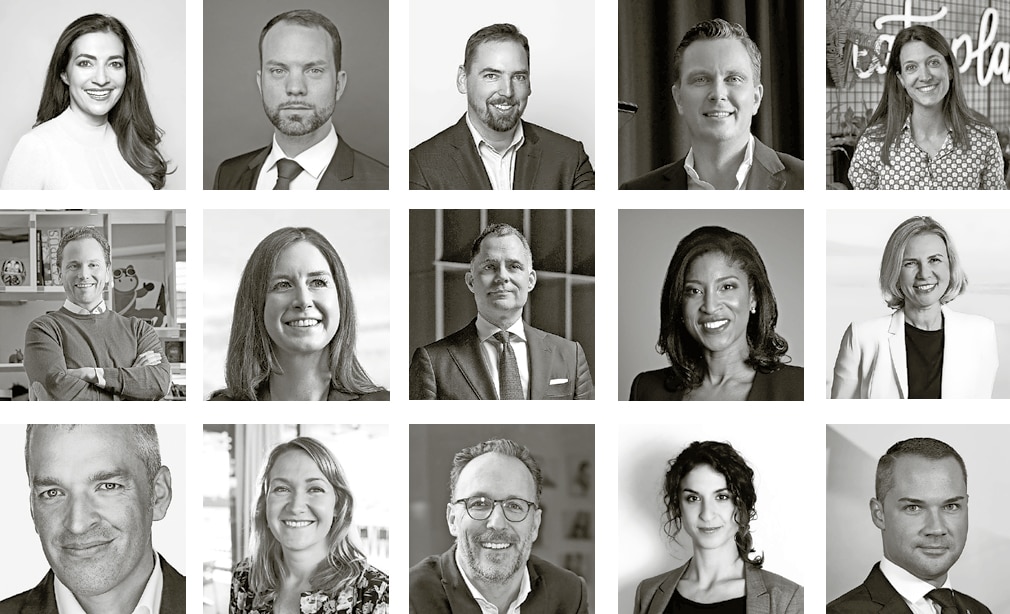
To mark our 50th anniversary, we’re honoring «Movers & Shakers»—people who are doing outstanding work in the Swiss marketing and communications world.

Movers & ShakersAwards and accolades in the marketing and communications industry are a bit of a mixed bag: there are plenty of them, and it’s not always entirely clear what criteria are used to select the winners. Some of these awards are highly coveted, while others are accepted more out of politeness—but almost always, they’re based on specific «snapshots» in time: brand relaunches, major campaigns, or the design of a new website.

But then there are people who, while they are repeatedly recognized for their work on a «case-by-case» basis, deserve—in the view of our editorial team and relevant experts—to be honored for their consistently exceptional dedication as well. People who have remained at the helm of their organizations for years; who (sometimes with more, sometimes with less public visibility) embody outstanding brand management, resilience in times of crisis, or the transformative power of marketing. They are «movers and shakers» who aren’t satisfied with the status quo—but work tirelessly to bring about change.

Stories You Need to Know

What connects the individuals featured on the following pages is the fact that their stories are «must-knows»—in more ways than one: You need to know what challenges they’ve faced in recent years and months, even when those challenges weren’t the subject of press releases or official statements. Only in this way can we transcend Switzerland’s award culture, which focuses on individual highlights, and engage in a dialogue about what actually constitutes great marketing and outstanding communication. Only in this way can we even begin to select the leaders we wish to examine more closely.

At the same time, it’s important to know the stories of the «people behind the brand» because they inspire their peers and encourage them to take on economic or creative challenges. Sometimes this means not limiting themselves to the narrow confines of their job descriptions—but rather breaking free from them and elevating marketing and communication to business divisions that are essential to the company as a whole.

A Seat at the Table

For while far too many CEOs and CFOs still believe that marketing and communications are burdensome expense items with an unclear ROI that should be cut back even further, the «Movers & Shakers» demonstrate that the opposite is true. They set the course, identify trends, revolutionize perspectives and approaches, launch purpose-driven campaigns, and implement concrete initiatives. In short: They have more than earned their place at the boardroom table.

Roman Reichelt, Global Chief Marketing Officer at Credit Suisse

Credit Suisse is undergoing a period of upheaval and currently has little good news to share. This makes it all the more remarkable that the marketing team led by Global CMO Roman Reichelt is consistently creating positive «touchpoints»—perhaps the only ones at the moment?—for the brand: The extremely successful positioning of the CSX digital offering took place under Reichelt’s leadership, as did the award-winning «Sustainability Week» and the «#ChangeTheGame» initiative, which is finally paving the way for fair pay in women’s soccer. Also, the careful brand refresh with
The fact that this was accompanied by rising business figures caught people's attention. Anyone who doesn't believe in the transformative power of marketing—even in difficult situations—will be proven wrong by Reichelt and his team.

Vanessa Gentile, Head of Marketing, Salesforce Switzerland

Among the nearly 80,000 employees at CRM giant Salesforce, there are only a handful to whom founder Marc Benioff awards the ’Golden Hoodie«—an honor recognizing exceptional contributions within and around the Salesforce ecosystem. Vanessa Gentile has been part of the illustrious circle of »Hoodie Wearers« for several months now: With sheer boundless energy, the head of marketing for Switzerland launched »Bring Women Back To Work,« an initiative that helps women (re)enter tech careers. Gentile’s model for success is already being exported to other countries. We hope, however, that she herself will remain in Switzerland for a while longer.

Jens Plath, Chief Marketing Officer at Twint

«I'll just »twint' it for you, okay?" The fact that this phrase has become part of everyday language for most people in Switzerland is also thanks to Jens Plath: For almost exactly two years, he has been driving radical customer-centricity at Switzerland’s leading payment app—and making the needs of its now more than four million active users his top priority. Plath has plenty of experience in the payments sector: Between 2011 and 2018, he built up PayPal’s P2P business, teaching the industry a lesson in scaling. Today, he’s building on those successes at Twint.

Jan-Hendrik Völker-Albert, Head of Marketing & Communications, PwC Europe

Zurich today, the world tomorrow? Jan-Hendrik Völker-Albert’s promotion to a European role—which he will carry out from Switzerland—certainly shows that his work is making an impression, and not just within PwC. There, he has realigned the market strategy and built a fully integrated, data- and AI-driven marketing and communications ecosystem; increased marketing-driven revenue in the Swiss market by 30 percent in 2021 alone and, on top of that, established and expanded the Marketing Consulting Services division for PwC clients.

Guntram Friede, Chief Marketing Officer at luca

An established position as a tech CMO, sponsorship of the Zurich Street Parade, and support for various new business ideas—none of that was enough for Guntram Friede: The former head of marketing at Salesforce returned to the startup world in early 2022 and is now responsible for the (planned Europe-wide!) growth of the «Corona app» luca into a multi-tool for the restaurant industry. Checking in, ordering, and paying at restaurants—all of this will be possible via the app in the future. At the same time, Friede is active as an «angel investor» based in Zurich, ensuring that others also have the chance to bring great ideas to life. Good luck!

Lea Klipfel, Marketing & Communications Lead, Accenture Switzerland

As a marketing and communications expert, what do you do when your company comes up with the idea of grouping numerous sub-brands under a new name? You
Do what Lea Klipfel did—roll up your sleeves. She led the rollout of the new brand for Accenture in Switzerland «Accenture Song», which brings together, supports, and helps shape the consultancy’s various subsidiaries: this includes the need to provide explanations, critical questions from the press, and a complete overhaul of communication structures—all of it, of course, while business continues as usual. A massive challenge, masterfully overcome.

Thomas Schwetje, Head of Marketing & Digital Services at Coop

The job title mentioned above for Thomas Schwetje, a passionate data-driven marketer («I want to see on Monday whether Friday’s promotion was a success!»), is actually no longer entirely accurate: Shortly before our magazine went to press, it was announced that Schwetje will join Coop’s executive board in January 2023, where he is set to lead the newly formed «Digital & Customer» division. This is both a homecoming and a well-deserved honor for the retail pro: He has been loyal to the retailer for nearly 14 years, and every customer loyalty and promotional campaign we know today has passed across his desk. Schwetje has also consistently managed his massive media budget with integrity and a sense of responsibility. With this promotion, Coop has made a smart decision—one that its competitors are likely to realize soon enough.

Najoh Tita-Reid, Global Chief Marketing Officer at Logitech

Ask three marketing professors from major Swiss universities which CMOs they’re currently keeping a particularly close eye on. They all mention different names, but there’s one person they all agree on: Najoh Tita-Reid, Global CMO of Logitech. Since Tita-Reid took the helm, the tech accessories company—founded in the small village of Apples in the canton of Vaud—has benefited not only from her international experience but also from a consistent «coolness» campaign. This strategy positioned Logitech products «top of mind» among consumers during the pandemic; pop-culture support came from artists like Lil Nas X and Lizzo—and it seems as though Najoh Tita-Reid is just getting started.

Nicolas Ziegler, Head of Brand Management at ABB

In the years following 2017, Nicolas Ziegler has earned an international reputation by fundamentally repositioning the ABB brand to place it among the world’s leading global tech companies. With its modern brand management, strong master-brand approach, and innovative platforms such as the ABB FIA Formula E World Championship, ABB has become the industry benchmark. However, resting on one’s laurels is not Ziegler’s style: With three CEOs, far-reaching portfolio changes such as the divestiture of the traditional core business, and a radically transformed and streamlined operational model—given the extensive restructuring and dynamism of the recent past, many have chosen to move on. But quite the opposite is true. Ziegler is steadfastly keeping the ABB brand on course toward market leadership, and in doing so, he is also succeeding in infusing ABB with new, contemporary, and value-creating initiatives.

André Hefti, Chief Marketing Officer, Switzerland Tourism

When Roger Federer teams up with Robert De Niro or Anne Hathaway to showcase Switzerland to an international audience, the creative mind behind it all is André Hefti: The Chief Marketing Officer of Switzerland Tourism has managed (together with his outstanding agency partners!) to pioneer a new genre of destination marketing. Infused with Hollywood glamour, (self-)irony, and exclusive testimonials—and distributed through cutting-edge media strategies—Hefti is turning Switzerland into a global star—and leaving us wanting more.

Stephanie Naegeli, Chief Marketing & Innovation Officer, SV Group

Anyone who starts a job at a hospitality-focused company three months before the onset of a global pandemic can either complain about their bad luck or make a virtue of necessity. Stephanie Naegeli chose the latter: As Chief Marketing & Innovation Officer at the mega-caterer SV Group, she had to not only market the existing product line shortly after taking the job, but also create and launch new, pandemic-tested products. It helped that she had previously worked for Nestlé at its Silicon Valley innovation lab—and that giving up isn’t in Naegeli’s optimistic nature. Some ideas during the pandemic worked better than others; today, however, the SV Group is back on solid footing—and that’s what matters in the end.

Thomas Wegmann, Head of Market Management at Allianz Suisse

«Do good, but don’t talk too much about it!» While this maxim certainly seems like a Swiss virtue, it’s actually rather unusual for the field of marketing—even in Switzerland! It’s all the more surprising, then, that since February, the head of Allianz Market Management, together with his colleagues, has been spearheading unbureaucratic aid initiatives for Ukrainian refugees (an interpreter hotline, donations, insurance extensions for aid workers, and more) without making a big fuss about it. A missed branding opportunity? No: a sincere desire to do some good. Hats off to you, Thomas Wegmann!

Sarah Antenore, Head of Communications for Switzerland at Glencore

Working for a company that is repeatedly subjected to media criticism—sometimes more, sometimes less justified—and giving that company a human, transparent face for years: That is worthy of the highest professional honor. With calm and focused consistency, Sarah Antenore demonstrates that dialogue between large corporations, the media, and society is possible even in times of polarization. Whether as a «personified touchpoint» in interviews with various media outlets or through communication initiatives—the Zurich native stands by and supports what she does. And that reflects positively on the brand she represents.

Sabrina Balestra, Head of Brand & Marketing at Planted

A Swiss panel of experts had already named her «CMO of the Year» in June—and it’s worth mentioning her again here: The way Sabrina Balestra managed to position the ETH startup Planted in the market is remarkable. She transformed what was merely a «meat substitute» into products with «self-confidence,» where enjoyment and the joy of cooking take center stage. The cheeky slogans on Planted packaging are complemented by crystal-clear, straightforward information about the ingredients and maximum transparency. All of this combined ensures that it’s hard to imagine supermarket shelves without Planted—just as it’s hard to imagine Planted without Sabrina Balestra.

Aude Gandon, Global Chief Marketing Officer at Nestlé

A portfolio of more than 2,000 brands, annual revenue of more than 84 billion Swiss francs: To operate and succeed in such an environment requires confidence in one’s own abilities—and the mental strength to know that, even as a leader, you don’t have to do everything yourself all the time. Aude Gandon, a native of France who heads global marketing at Nestlé, possesses both of these qualities. She navigates the balance between traditional «love brands» and product innovations, all while constantly emerging issues (disrupted supply chains, the war in Ukraine…) complicate day-to-day operations. And she does all this with genuine humanity and a healthy dose of humor.

Stefan Vasic, Head of Marketing at Swiss International Air Lines

There are two things in particular about Stefan Vasic that make him a truly exceptional Head of Marketing: He has personally worked his way through every (!) conceivable level of his company’s hierarchy, and he stayed the course during the greatest crisis the aviation industry has ever faced. Starting as a flight attendant in 2007, Vasic moved into administration two years later, then into communications—and finally into marketing. Because he knows his brand inside and out, he knew exactly what to do during the pandemic: cut advertising spending and ramp up consulting services. The result: he successfully navigated the turbulence!

Metaverse: The next big thing? What the industry thinks

Is the metaverse here to stay? Or is the hype just a fabrication? What impact might it have on marketing? Is the metaverse even safe? There are many questions on the table. We asked the Swiss agency scene how it is positioning itself when it comes to the metaverse.

Swiss Advertisers Association SWA

Werbewoche.ch: Are Swiss companies in the starting blocks for the Metaverse or already on their way?

Roland Ehrler: The metaverse is a part of the new Web 3.0 and all companies worldwide have to deal with it. It's a long journey and it won't happen overnight. There are numerous dependencies, especially the developments of AR, VR, AI, NFTs, cryptocurrencies and more. Switzerland is probably less of a pioneer here and is therefore still in the starting blocks from my point of view. The trendsetters here tend to come from the US and are companies like Nike, Adidas, Coca Cola, Louis Vuitton or Hyundai. Most of us are still on Web 2.0 today, and that will remain the case for some time to come. At the same time, however, it is important to keep track of developments, whether in the gaming sector, e-sports, e-casinos or e-music. I am curious to see how quickly consumers will be ready to engage with these new worlds using VR/AR glasses or other access points. This will then also determine the pace at which brands and companies have to react and be ready for the metaverse.


How can SWA help its members along the way?

The SWA has been representing the interests of its members since 1950. Thus, it is part of this that we will also accompany the advertising companies on their journey into the metaverse. At the present time, this means initial information, webinars and an exchange of experiences. Later, for example, there could be new association services to the Metaverse. Just as we offer a free legal information service today, we may set up a "Web 3.0 consulting service" tomorrow. This is still completely open and will be examined in good time as part of our strategy development.


Metaverse: Hype or the next big thing?

For me, this is clearly "the next big thing". Especially because it marks the step into Web 3.0. The Metaverse means a new dimension of the Internet, which is still hard to imagine today and offers us all still undreamt-of possibilities. Mr. Spok, the engineer from the Starship Enterprise, would probably say about the Metaverse: "fascinating!".


Leading Swiss Agencies LSA

Werbewoche.ch: How do LSA agencies master the challenges of leading clients into the metaverse, where the target groups cavort?

Cathrine Purgly: LSA agencies are leading and excel at, among other things, leading the way, being a pioneer in the market, and constantly exploring new ways of communicating with their clients. Marketing in the metaverse is a great field of experimentation. The challenge is to gather experience together with customers and to assess the potential correctly as to whether and with what content a presence in the metaverse would make sense.


How can the LSA help its members along the way?

We recently launched the LSA Live Talk Digital Business Transformation. In it, we talk about new technologies and how they are finding their way into practice and what opportunities are opening up for the communications industry. The talk takes place regularly and is designed to give digitally-minded marketers insight into groundbreaking real-world cases from LSA agencies and their clients. In the next Live Talk of September 7, we talk about a use case in the Metaverse in which a Web2/Web3 approach was combined with gamification elements and lead generation.


Metaverse: Hype or the next big thing?

Many technologies are overestimated in the short term and underestimated in the long term. In this respect, the metaverse is probably both: The hype creates curiosity and by many people and companies from a wide range of industries dealing with it, relevant and effective use cases can subsequently emerge that shape and change the future.


Content and form

Werbewoche.ch: Content and Form has undergone a transformation over the last few years. Now a new unit has emerged with iundf Neo. What does Neo do?

Dominik Stibal: In fact, Inhalt und Form has evolved into a holistic and interdisciplinary agency group. To iundf agency group include: the creation&strategy unit  Content and form, the media unit iandf Media, the marketing technology consultancy iundf Marketing Technology as well as the Metaverse/Web3 unit iandf Neo. iandf Neo plays on all the tools of Web 3.0. and does so according to the principles of Web 3.0: open, collaborative, agile, international, decentralized. iandf Neo is enthusiastic but realistic, always assesses opportunities as well as risks objectively - with focus on customer value. As a consultant, strategist and implementer of immersive brand experiences, development of products, tokenization and NFT concepts or Web 3.0 training modules. The crew of our Web 3 Unit iandf Neo has been actively involved in the blockchain environment since 2017, and has supported and implemented various international projects. iandf Neo has made "practice what you preach" its motto. Therefore iandf Neo focus on collaboration with international partners from the areas of product development, Web 3.0 development, VR/XR, DeFi and community building, and clearly stands out from other service providers thanks to its decentralized setup.


Is the metaverse another channel in the marketing mix or much more?

Definitely it is more! Because if you look at it as just another channel, you are and will remain trapped in the old way of thinking. Together with our customers, we therefore ask ourselves: How do I position my brand, product and services with the help of Web 3.0? For which of my applications and service does blockchain make sense? Are sustainable strategies possible in the area of tokenization? Where are the opportunities for my brand in the metaverse the greatest? And how do I actually deal with digital property?


Have companies already actively addressed the metaverse and are actively approaching iundf Neo, or does this require educational work?

Many companies are already working very intensively with the metaverse. Of course, we are experiencing this firsthand. Like everywhere, there are the fast movers who want to try out, test and learn quickly. We support these companies in strategy, planning and implementation. The majority of companies, however, is in the educational phase and here we actively help with inspiration roadshows and workshops so that the know-how comes quickly into the companies. This also includes our podcast Meta Matters which will go live in October. You can register now at: iundf.ch/metamatters


Kuble AG

Werbewoche.ch: Kuble has launched the Metaverse Academy. Why is this necessary and who does Kuble want to reach?

Gustavo Salami: We are convinced: You cannot learn the Metaverse, you have to experience it. That's why the Metaverse is both an unfamiliar learning object and a versatile learning tool in our courses. Our various courses, which we complete together with the VR headset in the Metaverse, address different target groups. The "Metaverse Ready" course, for example, lasts one day and is designed to make it easier to get started with the subject. The "Metaverse Strategist" course, on the other hand, includes six modules and 18 lessons, which allows for a strong immersion. There are other courses that focus, for example, on dialog marketing in the Metaverse or on Web3 or NFT. The goal is to jointly develop knowledge that the participants can then take back to their companies.


Matthew Ball writes that the Metaverse will change everything. Is that true?

In our understanding, the metaverse refers to virtual parallel worlds that make the Internet interactive and experienceable together with others. Whether it will change everything remains to be seen. What is clear is that we are at the beginning of a development comparable to the Internet of the early 1990s. There's no point in denying this development, because it's coming anyway. The sooner you are involved and understand what is emerging, the sooner you can help shape the development.


What opportunities / challenges does Kuble see for marketing?

Many technologies are overestimated in the short term and underestimated in the long term. In this respect, the metaverse is probably both: The hype creates curiosity and by many people and companies from a wide range of industries dealing with it, relevant and effective use cases can subsequently emerge that shape and change the future.


FS Parker

Werbewoche.ch: FS Parker conjured up Marc Walder as an avatar on the screen of Ringier's Anual Report. How fascinated is FS Parker by Web 3.0 and where does the agency see opportunities and challenges for the marketing and communications industry in relation to the metaverse?

Christoph Schmidt: We are fascinated by "creating worlds" and visualizing the visions of our customers; independent of the universe. We are intensively concerned with the question of what the metaverse or Web 3.0 means for our customers and with which strategies we can lead them there. It is as if a parallel world is just opening up, in which companies and brands are using a new communication playing field. In addition, it is important to learn how crossover promotions from the real to the virtual world can be used optimally. This has already begun with NFTs. At Ringier's Annual Report presentation, the focus was on the one hand on explaining to the audience what the metaverse and Web 3.0 are all about. On the other hand, it was also about concrete visualizations of visions: How might media communicate in ten to 20 years? What will apartment hunting via marketplaces look like in the future? These glimpses into the future create "wow moments" for viewers and motivate them to dive into these new worlds with curiosity.


Are FS Parker's customers rushing to show up in the metaverse or is it more the other way around, are you actively offering your expertise?

It's like with every new topic: everyone wants to be on board immediately so as not to miss the boat. In briefings, we often hear that it would be great if there was something in the metaverse in the final result. It's nice to hear that people are already thinking very digitally. We tend to be pragmatic here and show clients where the market stands today, or rather what is actually useful and achieves communication goals. Expectations are high. Then reality brings one or the other customer back down to earth. We are not a tech or programming company, but we communicate brands and create worlds. That's why we look into the future with clients, develop visions for brands, and apply resources where results are achieved. On the latter part of the journey into the metaverse, we bring tech partners on board.


How important do you think it is for companies to address the Web.3.0 issue?

It is naïve to believe that by 2022 we will already have the technically mature metaverse and Web 3.0 experience that Zuckerberg and Co. want to sell us. But we think it's enormously important to start asking the question "What could our business look like in the Metaverse?" right now. The answer is unique to each customer. Getting to grips with a topic, understanding the boundaries, asking questions and making the first "babysteps" with the new technologies seems more important to us for a company at this point in time than already having its own VR app and a complete Metaverse presence.


Dept

Werbewoche.ch: As a digital agency, Dept is in pole position when it comes to metaverse and Web3. Can you help companies find their way in this new territory?

Yann Wanner: Speed is everything, that's why we've launched Web3 and Metaverse Practices, which rapidly draws globally on hundreds of experts in blockchain, tokenomics, NFTs, Metaverse, CGI, AR/VR to solve our customers' challenges: visibility, lead gen, brand building and customer experience. Above all, we help companies connect with their customers, stakeholders - and even fans - on a more personal level. We believe that combining cutting-edge virtual technologies with proven storytelling methods achieves just that. Virtual worlds come in a variety of shapes and sizes, and it's clear to us that each company has specific needs. Currently, DEPT® works with four ready-to-use models, but we are always ready to try new things.


What are the biggest opportunities/most dangerous pitfalls for positioning in the metaverse?

The metaverse is an opportunity for us to meet customers where their attention is. In digital worlds, brands and artists can offer their fans personalized and meaningful experiences and products. The spaces created by AR and VR are experienced in a unique way by each individual user. Marketing efforts therefore appear more engaging, exciting, and less intrusive than advertising as we know it today. However, entering the metaverse is not without risk from a branding perspective. By its very nature, brand presentation in the digital space deviates from traditional, physical contexts. Well-known brands in particular may have difficulty presenting an image in the metaverse that matches customer expectations. This could, at least theoretically, weaken the brand's power of differentiation.


Would you create a scenario for us that will be reality in three years, in terms of the evolution towards Web3?

We already spend almost half of our time in digital spaces. Be it in our free time while gaming, shopping or on social media - be it in business in MS Teams rooms, in Zoom Calls or in Google Docs and Spreadsheets. Not least since Covid, we have seen that people have designed a digital twin in addition to their "physical" persona. This digital persona also has needs, e.g., for exchange, ownership, interaction, self-expression, identity, recognition, entertainment, pop culture, and so on. Thus, Web3 can be understood as a normal evolution of the "Internet" as we know it. Accordingly, no "revolution" is to be expected in the next 3 years, but rather a steady evolution towards a digital world in which our digital twin is entitled to more and more possibilities. The game industry is setting the pace here, and what is taken for granted in the gaming world today - such as the ownership and exchange of digital assets or digital identity - will have arrived in the mainstream tomorrow and find applications in the world of work or in e-commerce.


Connection

Werbewoche.ch: Konnex is actively involved with the topic of Web 3.0. Where do you see challenges and opportunities for the marketing and communications industry?

Monica Jaeggi: When we talk about Web 3.0, from a marketing and communications perspective we are primarily concerned with the metaverse. In this, the possibilities for marketing are almost limitless. This can be a great opportunity because, for example, you can come into contact with new target groups that were not interested in your own brand before, or because you have completely new ways of presenting your brand world. At the same time, however, it is also a great challenge because you can also get lost in these possibilities. Today, for example, there is still no interoperability between the different platforms. So which platform should you rely on? Which will also be relevant in the future? We will also have to say goodbye to the idea of achieving mass reach within short periods of time - as is still possible today with TV and Out of Home. That's no problem if you're marketing a niche product. But what does that mean for consumer brands? In terms of financial and human resources, one should also take into account that many things are still at a very experimental stage today. And last but not least, security and data protection are certainly one of the biggest challenges. How are these issues to be regulated in the new virtual world? How can it be ensured that brands operate in a "secure" environment?


Do companies proactively turn to Konnex to push campaigns around the metaverse, or are agencies required to explain the need to engage with the topic to their clients?

The metaverse keeps our customers busy. At the moment, however, it's more about getting more information than already planning concrete campaigns. Even though the topic is very present in our industry, there are still many unanswered questions about what this means for communication. What should also not be ignored: Outside our industry, most people look at you rather blankly when you mention the keyword "metaverse." For us, this means that you don't have to rush headlong into the next metaverse adventure and pay a lot of dues. At the same time, however, you must not miss the start. As is so often the case, there is a risk that a trend is overestimated in the short term but underestimated in the long term. Therefore: Now is the time to acquire know-how and to test and learn.


Where do you think Switzerland stands in terms of digitization? Are we pioneers in Europe and is there a sense of sluggishness?

Corona in particular has shown that Switzerland still has a lot of catching up to do when it comes to digitization. In general, I have the impression that Switzerland is more of a "follower" than an "innovator. People tend to be cautious and wait and see what comes along before getting involved in something new. In the marketing and communications industry, people are perhaps a little more open, but here, too, new developments take time. A good example of this is the topic of "Programmatic Avertising". Even though its share has increased steadily in recent years, the proportion of programmatic advertising booked in Switzerland is still significantly lower than in the rest of Europe or in the USA, regardless of the media channel.


TMI

Werbewoche.ch: TMI has positioned itself with three new expertise pillars: Shopper Activation, Transforming Retail and Inspiring Brands. Where and how does the Metaverse and the NFT-gamified Brand Experience play a role there?

Nicolas Schibler: Metaverse and NFT are currently being driven mainly in the Transforming Retail area, but the conception of the independent storyline that fits the brand is being done with the creative power of the Inspiring Brands Circle. The topics are new for many companies. It is primarily about innovation and getting to know the new possibilities. However, as with all projects, simply implementing the project technically is not enough for a great customer experience. A lot of customer understanding and creativity in design and communication is needed. To create the most holistic customer experience possible and to leverage all the activation know-how, such projects are often a co-creation of all areas.


Is Switzerland ready for the metaverse yet, are the customers?

Applications such as Pokemon Go have shown that people are ready. In Switzerland in particular, we have many early adopters who often like to try out new technologies. However, in order to make a project successful, the focus must always be on the customer benefit. If gamification and the brand experience are relevant, intuitive, and inspiring for the user, the customer will be happy to use them.


Is Web 3 the future or just a virtual gimmick? Will marketing shift to the metaverse?

Web 3.0 is an exciting and very powerful addition to the marketing mix. The fact that the big technology corporations are investing billions in the development of Web 3.0 shows that its importance should not be underestimated. However, just as online commerce has already not Web 3.0 will not completely replace traditional marketing here either. It offers new and exciting opportunities for marketers. At the same time, mastering the entire marketing keyboard is becoming more complex and demanding. Here, we are happy to help you set the right priorities with our know-how.


This article is one of a series of publications on metaverse in the m&k anniversary issue 8-9/2022.


Wies Bratby teaches women how to negotiate

As a lawyer, she knows all the negotiation techniques. Wies Bratby is now using her skills to help women who want to raise their profile and demonstrate their value in the business world.

Wies BratbyWies Bratby became a lawyer because she loves to negotiate. But in practice, she realizes that the profession offers little room for negotiation. She moves into the HR field and senses just how much her talent for successful negotiation is valued and needed there—especially by women. «Men learn to assert themselves, to be loud, and to stand up for themselves; women learn to wait patiently, to be quiet, and above all, not to rock the boat.» She finds her calling: a passion for negotiation, combined with supporting women.

«It's not about me; it's about my work.»

Wies Bratby is having a hard time getting used to being the center of attention lately. She usually focuses on other women. Ever since she won the Empowering Women Award, which honors women who empower other women, the spotlight has been on her. «I don’t have a problem being in the spotlight, but please only as a voice for the work I do,» she says. And you can tell she means it—there’s no affectation here, just understatement.

In 2015, Wies Bratby founded the company Win. She developed a framework for women who are good at their jobs but struggle to demand the recognition and pay they deserve. Over the course of ten weeks, the women are coached on how to assert their own expectations in negotiations with their employers. But that’s not all. Fifty percent of the ten-week program is dedicated to helping women discover what they’re good at—and where they truly excel. Being able to assess oneself, understand one’s own abilities, and formulate a goal are the prerequisites for a successful negotiation.

«If you're looking for a few quick tips, you've come to the wrong place.»

She calls it a «quick fix,» and her face darkens when she talks about it. She doesn’t have time for that. «Help! Do you have any advice? I have my annual review tomorrow—what can I do to get a raise?» There’s no magic formula—or is there? Wies Bratby laughs. Yes, there is, she says: “Take yourself seriously.”

«Several times a month, I receive similar messages from women asking if I can help them on an ad hoc basis—ideally RIGHT NOW. They take their careers and salaries seriously far too late, and in doing so, they prevent themselves from achieving real success.» And what’s even worse: When women achieve only modest results in their negotiations due to their late or lack of preparation, they become frustrated and depressed. This, in turn, leads to a downward spiral of unhappiness and prevents them from achieving further professional success, since they are unable to do their best work when they don’t feel valued. And so the cycle continues.

«Several times a month, I get messages from women asking if I can help them on an ad hoc basis—ideally RIGHT NOW. My answer: NO.»

Bratby's ambitions are higher—much higher

By now, the food has gone cold; we’re sitting at the «Baur au Lac.» Her blonde hair is sticking out in all directions because she keeps running her fingers through it. She means everything she says—and then some. She exudes a sense of urgency that brooks no delay. She knows the secret and wants to share it with all the women in the world. She wants to dominate the world. What? She laughs out loud, her blue eyes sparkling. «It’s not me who wants to dominate the world—it’s my work that should,» she clarifies with a laugh. Because while Wies Bratby has no problem pitching her message at TED Talks or defending her point of view before committees, she doesn’t like being the center of attention. She wants her work to take center stage—that’s what matters to her.

When Bratby received the Women Empowering Award this spring at the League of Leading Ladies conference in Bad Ragaz, she stood on the big stage in front of more than 200 female leaders. I’ll never forget her speech. Or rather, at first I thought she’d forgotten everything—that’s how still Bratby stood in front of the microphone. She seemed almost a little lost. You could have heard a pin drop in the hall, so intently were the women listening. Suddenly, Bratby smiled, ran her fingers through her hair, and said, «There are so many things I can’t do.» Pause. Silence. «But I can negotiate. And I’m putting that talent at the service of women.» Applause.


Wies Bratby, a top attorney and negotiation coach, has recently returned to her home country, the Netherlands, after working and living all over the world for nearly a decade, including six years in Switzerland. Through her coaching practice, «Women In Negotiation,» and her podcast, «Winning with Wies Bratby,» she helps women proactively manage their careers and negotiate effectively. Bratby is also a sought-after keynote speaker and workshop facilitator.

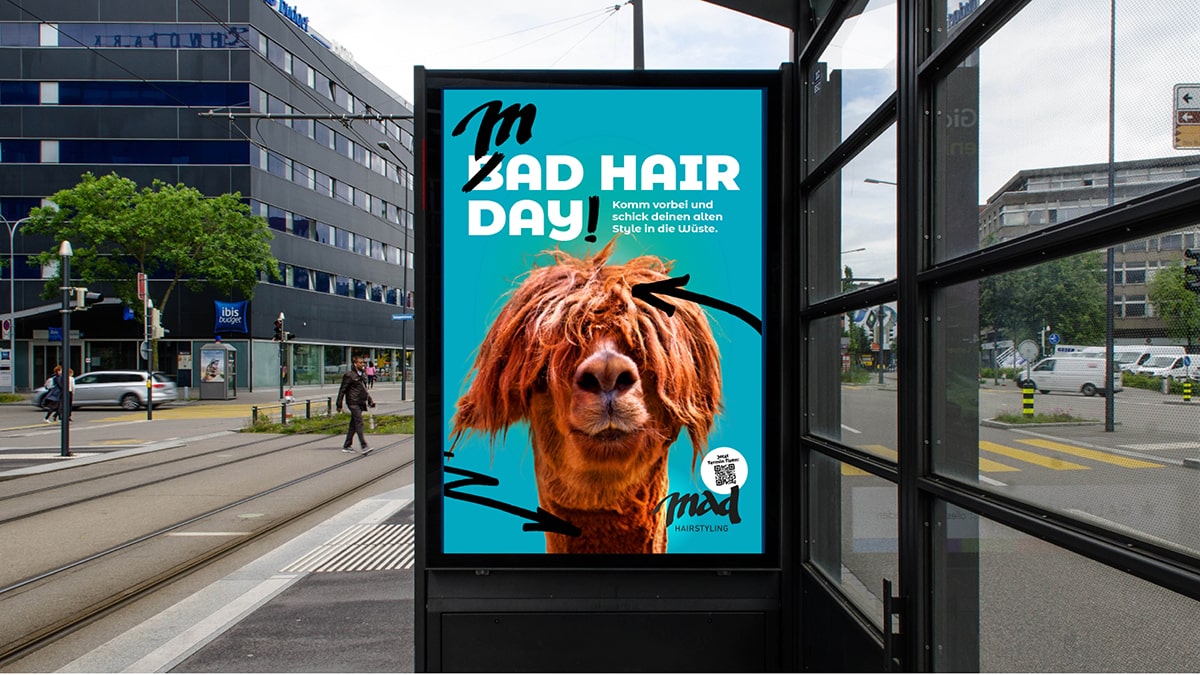
The answer launches crazy campaign for Mad Hairstyling

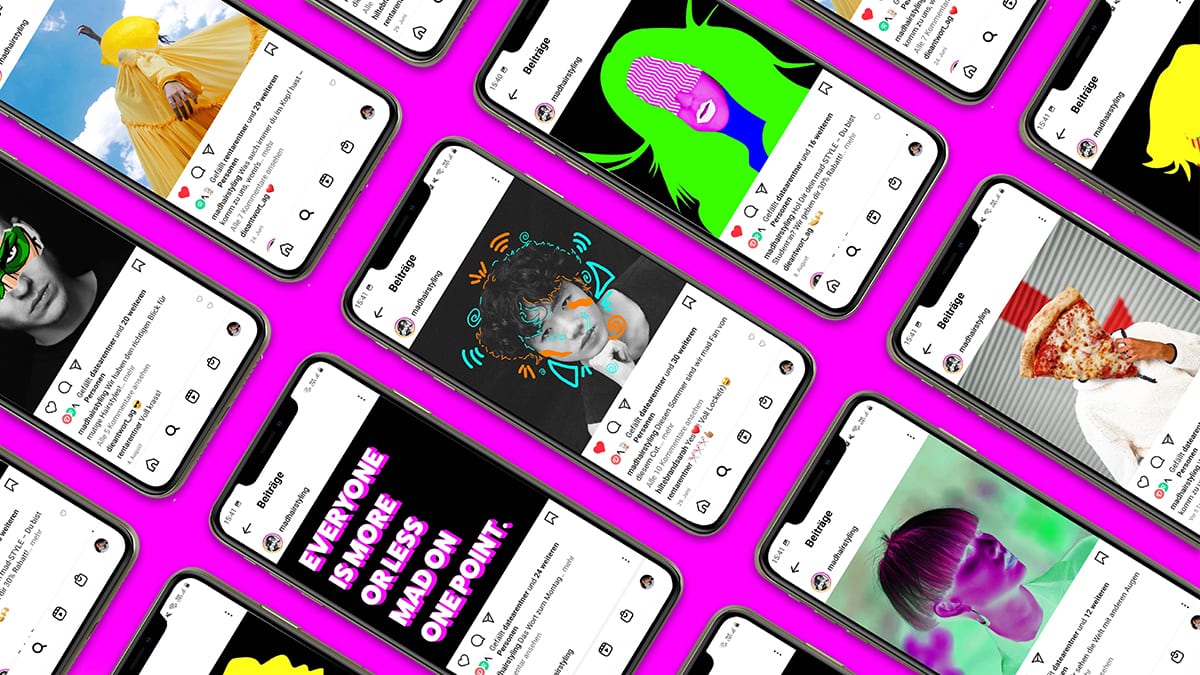
At the Zurich-based hair salon Mad Hairstyling, autonomy and spontaneity are top priorities. The current campaign was created by their new creative agency, Die Antwort.

For its four locations in Zurich, but also for its presence at events - as recently at the Zurich Openair - the hairdressing company Mad Hairstyling attaches great importance to an appearance that embodies its values.
The answer for M

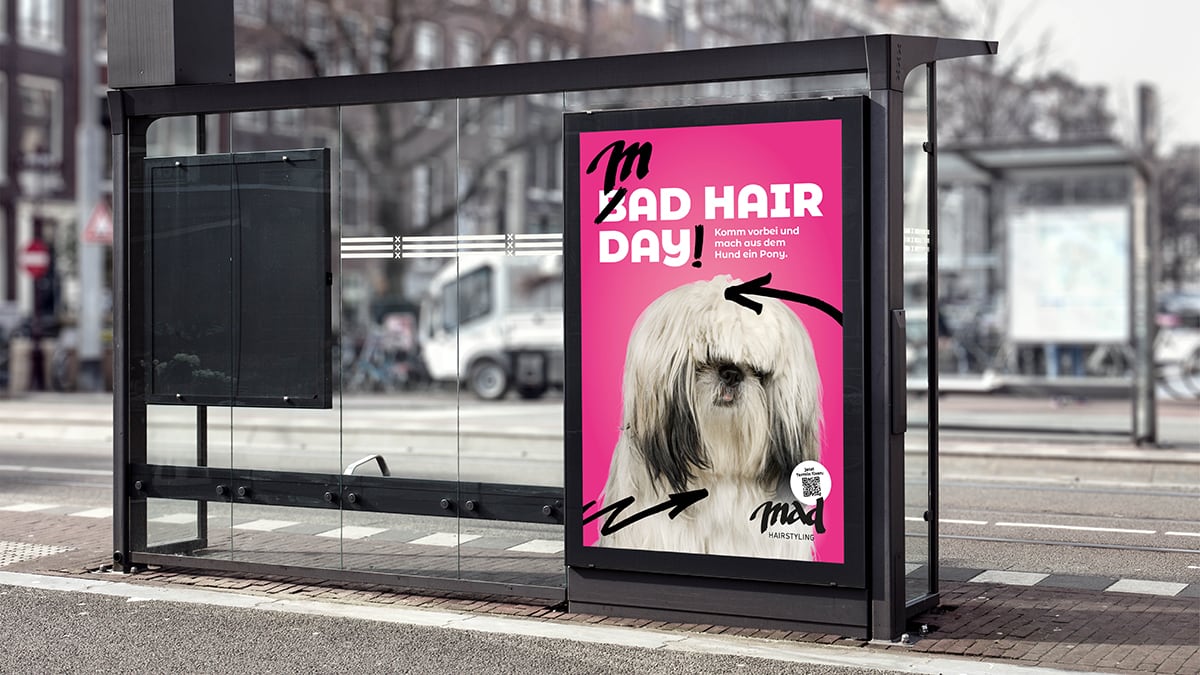
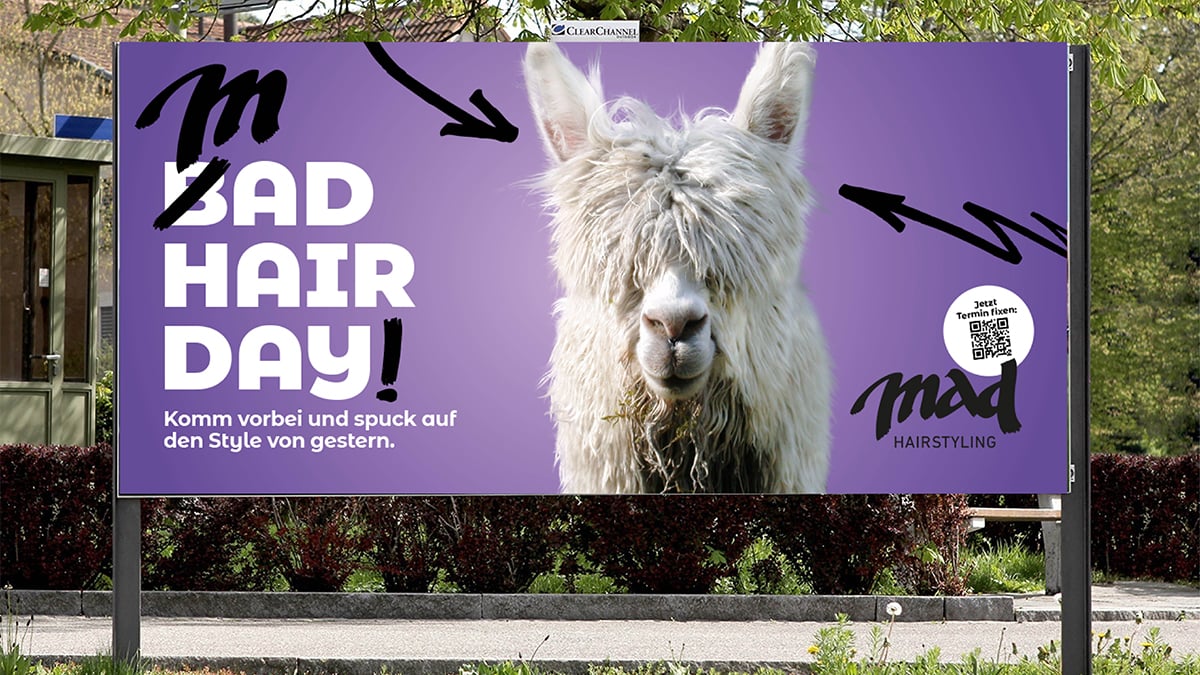
M Hairstyling has recently become part of Die Antwort's portfolio. For its new client, the Zurich-based agency has realized a digital and out-of-home campaign that should clearly stand out in the world of hairstyling and match the spirit of the client.

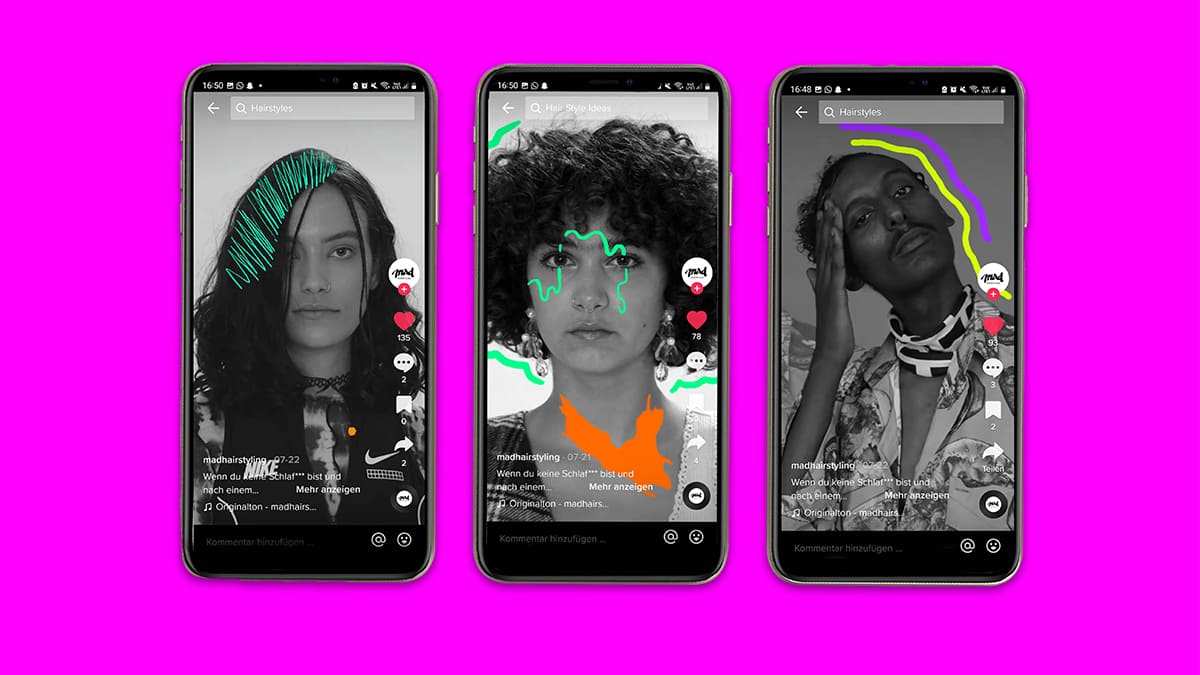
The agency additionally launched a TikTok channel for its client and developed content for both TikTok and Instagram.

Front Conference: Design meets technology

«Where Design Meets Technology»: At the Front Conference in Zurich, designers and developers present their work side by side on an equal footing. Burkhard Müller from the Hamburg-based agency Mutabor was there as a speaker—and has summarized his highlights for Werbewoche.ch.

(Pictures: zVg.)

An event with top organization at a great location, plus a speaker line-up on an international level: The visit to the Front Conference in Zurich at the end of August was definitely worth it! What were my personal highlights?

Accessibility is "the next big thing

Laura Kalbag opened the conference by showing how digital design has evolved between the 1990s and the present. From a playground with pixel fonts and websites made of spreadsheets, to the interactive movies in Flash, to today where we have user-centric services that enhance our everyday lives. Vincent J. Brathwaite explained why the future of leadership lies in communication and empathy for everyone's needs. In doing so, he showed how design as a discipline has evolved and "come of age" over the past thirty years. He advocated for designers to take responsibility: Not only for average users, but also users with weaknesses and impairments.

Designers can learn from the Allies

The exciting presentation on design decision errors by Jon Yablonski, author of "Laws of UX", took the audience back to the time of World War II. At that time, in the fight against Nazi Germany, the Allies analyzed the specific locations where their planes were being fired upon in order to reinforce them at those locations. However, since they only examined the planes that returned from combat, they used the wrong places for their optimizations: For said machines, Yablonski explained, they should have instead strengthened the areas that were not hit, because those would have caused them to crash if they were hit. The learning: By collecting incomplete data, crucial errors can occur and the actual problems can be completely overlooked.

PowerPoint is still salvageable

When you start PowerPoint, the first thing you're asked is which template you want, then you design page after page and have endless possibilities to customize each slide. And that's a problem, because PowerPoint doesn't empower users to tell a good story, but distracts from it with lots of gimmicks. At least that's the position of Oliver Reichenstein, founder of Information Architects, who developed the MS Word competitor iA Writer with his studio over ten years ago - an iPad hit from the very beginning.

At the Front Conference, Reichenstein has now presented the answer to PowerPoint as a world premiere. Like "iA Writer", the new app impresses with its simplicity: When you start the app, you write and structure the story into headings. The headings are automatically visualized by the app on slides, the rest of the text is seen by the presenter in the Notes. Optionally, images can be added. Layout and formatting are done by the app itself. The target group is not designers, of course. In the tests, professors, students and pupils in particular stood out as a user group. The app will be available in the App Store in a few weeks.

Voice interfaces still have their best time ahead of them

The problem with Siri, Alexa and the like is that, as a user, you can't see what commands you can give them. And technically, they are not yet so advanced that they understand everything you tell them. But they are developing fast, and once they can make sense of the thousand most common questions and commands, they will gain momentum. Front conference speaker Ben Sauer therefore recommended that attendees prepare now and, above all, organize their content centrally. Today, chatbots, call centers, FAQs and Alexa Skill are maintained by different teams with different content. Voice interfaces have a future, and companies should prepare for this today.

Each service has passive users

The better the needs of users are met, the more popular and successful a service is. But every service also has passive users who don't use it but are still affected by it: E-scooters running wild on the street are hindering people. AirBnB makes rental prices in metropolitan areas skyrocket for all residents:inside. And the obvious: Fast delivery services lead to more crowded streets, pressure on delivery services and more packaging waste. My contribution to the Front Conference was therefore that passive users also have needs, and in the long term they are decisive for the acceptance of a service within society.


* Burkhard Müller is Chief Digital Officer at the Hamburg-based design agency and brand consultancy Mutabor.

Marcel Koller appointed Head of Brand Partnerships at Blick Group

Effective November 1, Marcel Koller will assume the newly created position of Head of Brand Partnerships, in which he will merge his former Content Promotion team with the Media Partnerships team. At the same time, the marketing unit will report to the Commercial Management division under the leadership of Blick Chief Commercial Officer Max Buder.

Marcel Koller takes over the newly created position of Head of Brand Partnerships at the Blick Group. (Image: zVg.)

New responsibilities in the Blick Group: The current Head of Content Promotion, Marcel Koller, will be appointed Head of Brand Partnerships as of November 1. Under his leadership, the Content Promotion team and the Media Partnerships team, still headed by Ina Bauspiess (44), Head of Strategic Partnerships & Marketing, until the end of October, will be merged into one division.

The new unit will focus on the important strategic and commercial partnerships of all Blick brands as well as their optimal integration, which will enable partners to run cross-media and high-reach campaigns. In his new role, the 35-year-old Koller will continue to report to Blick Chief Commercial Officer Max Buder.

"By merging the two teams, Content Promotion and Media Partnerships, we can make the most of the synergies that have existed between the two areas and expand them," says the 30-year-old Buder.

As part of the reorganization, the marketing team will be managed as an independent division and, like the brand partnerships, will be attached to Blick CCO Max Buder in the future. The latter's area also includes advertising market development, together with Ringier Advertising, and the Verticals area. The Vertical Hub, headed by Bettina Widmer, acts as an interface between the editorial team, the customer and the users, opens up new target groups and subject areas, and creates advertising environments such as the successful "26 Summits" and "Winter Awards" campaigns.

Zimmermann lets Marcus Signer explain Emmentaler

A famous Emmentaler explains the world’s most famous cheese: Marcus Signer is the face of the new campaign for Emmentaler AOP. Zimmermann Communications is responsible for the campaign’s execution.

Marcus Signer

Emmentaler AOP is made by hand in over 100 village cheese dairies, offers nine degrees of ripeness and a corresponding variety of flavors, transparency throughout production, and each cheese can be traced back to its place of origin. So there are many good reasons to choose an original Emmentaler AOP. The current campaign focuses on precisely these reasons - or rather USPs of the brand. Unagitated, but all the more authentic and with a lot of heart, style and a certain grandeur.

After the well-known Bernese actor Marcus Signer with his compagnon Matthias Sempach this spring already accompanied the Emmentaler Schwing promotionhe now sits in front of the camera as the sole performer and cheese connoisseur. This is the first time that Marcus Signer's pithy voice has been heard and seen in the advertising world.

The footage was shot in the Schwingerstübli on Matthias Sempach's farm. All films are uncut "one-takers", supporting the style and the authentic hand-made spirit.

The campaign will air nationally on TV, on various digital platforms and on social media channels, and will lead to the comprehensive Campaign landing pagewhere you can find entertaining outtakes and funny gif links.


Responsible at Emmentaler Switzerland: Annemarie Boos (Senior Manager Brand, Marketing & Communication), Sandra Wiedmer (Marketing & Communication Manager). Responsible at Zimmermann Communications: Dominik Mätzener (GF Consulting/Strategy), Christoff Strukamp (Creative Direction), Ramon Alder (Art Direction), Sonja Zimmermann (Digital Art Director), Florian Bieniek (Project Management), Rolf Zimmermann (Strategy/Media). Film production: Markenfilm Schweiz, Stefan Künzler (director), Pierre Castillo Bernad (DoP), Michael Gloor (producer); Hurrah.ch (food styling and photography). Social media, digital advertising media and landing page: Zimmermann Communications. Technical programming landing page: Weooo.

Bernexpo launches interior trade fair Spacio

Spacio, the new national trade fair for interiors, is aimed at professionals in retail, architecture, interior design, planning, development, and design. The successor to Heimtexsuisse will take place for the first time in February 2023.

Spacio

The way we live, furnish and live is changing - the living area is becoming a place of work and vice versa. This is giving rise to new, sustainable and flexible lifestyles for living, working and living. Accordingly, good advice, reliable brands and trustworthy manufacturers are in demand.

The new trade fair Spacio takes up this request and presents all facets of furnishing from February 12 to 14, 2023 at the Bernexpo site together with exhibitors and partners.

New impulses and innovations at the center

"Spacio was born out of the industry's need for a comprehensive trade fair concept covering everything to do with the home, furnishing and living. The successor to Heimtexsuisse deals with theme worlds that have a lasting impact on our quality of life. We are looking forward to setting new impulses with Spacio and showing how innovative and imaginative the manufacturers and their brands are," explains Exhibition Director Juliette Keller.

Relevant platform for the professional audience

At a time when people are increasingly buying from specialist retailers again, a trade fair is more relevant than ever: "As the only Swiss platform, Spacio covers all areas of furnishing for indoors and outdoors. Whether bathroom, kitchen, sleeping, living, outdoor or textiles - what the exhibitors at Spacio have in common is a pronounced sense of quality and that across different price segments," emphasizes Juliette Keller.

Spacio and Ornaris

As the successor format to Heimtexsuisse, Spacio sets new accents for the home in all its diversity. It will be held in February 2023 at the same time as Ornaris, the industry meeting place for the Swiss retail trade. The broad assortment ranges from proven and innovative helpers for household, work and leisure to jewelry, accessories and beauty care. "The two trade fairs are gateways to the Swiss market and bring together what belongs together: good products for the good life," Juliette Keller concludes.

Compresso implements ETH staff festival "TogETHer 2022

Compresso comprehensively supported the Event Management department of ETH Zurich in the conception and realization of this year's staff party. About 4'000 employees of ETH Zurich and their families celebrated on Friday on the Hönggerberg campus until late at night.

For three years now, Compresso has been supporting the Event Management group of the Events and Hospitality section of ETH Zurich with professional event and project management. In accordance with the rotation, the university has again advertised the mandate this spring on SIMAP, the information system on public procurement in Switzerland, as a pitch.

In a multi-stage evaluation process, Compresso was again able to prevail and thus takes over the role of a professional external event partner for ETH Zurich for another three years. Shortly after the contract was awarded, the Compresso team was already fully challenged with the organization of a major event.

"TogETHer 2022" with 4,000 guests

On Friday, after a longer pandemic-related break, the "TogETHer"! could take place on the Hönggerberg campus. About 4'000 people participated in the traditional ETH staff party.

Compresso has further developed the party house concept adopted from the "TogETHer" event 2018 and loaded it with additional attractions. The campus was divided - analogous to a residential house - into individual rooms and zones such as kitchen, living room, children's room, hobby room, pergola, etc.. In each area, different attractions and food & beverage offers awaited the big and small guests.

The accompanying sound was provided by the Lucerne a cappella combo Vocabular, the band accoustic 4 and DJ Nameless. Presenter Rubina Meixger led through the program.

Event Full Service from Compresso

The overall management of the project on the part of ETH was in the hands of Thomas Meissner from the Services Section Events & Hospitality. Compresso organized the event as a full-service provider. Special attention was paid to waste avoidance and energy efficiency. All communication before and during the event was done electronically.

Support at other ETH events

The Compresso team will support ETH to varying degrees at other important events in the coming months, including the Latsis Symposium, the RESC Symposium, the Radiocarbon & Archaeology Conference, ETH Week, and ETH Day.

get_footer();