Stubborn since 1973: Gebana launches nationwide campaign
Gebana is committed to greater fairness in the food retail sector. To raise awareness of this and promote the sale of oranges for the winter, a nationwide campaign was launched.
Editorial
-
September 20, 2022
Gebana has been making global trade fairer and more sustainable since 1973. Through direct trade and revenue sharing, farming families worldwide receive a living wage and consumers receive seasonal food.
In recent years, the company has been able to grow strongly. To ensure that this remains the case, Gebana is now launching a nationwide campaign with two objectives. On the one hand, it is intended to further increase awareness of the company, and on the other, to generate as many advance orders as possible for oranges in winter.
Direct trade communicated directly
Gebana has never been one for marketing platitudes and empty phrases. The new campaign with the claim "Stubborn since 1973" is honest and also confronts consumers with unpleasant truths about the food industry. It manages to sell products and at the same time make Gebana's attitude clear.
The campaign can be seen on posters, e-panels and hanging boxes in streetcars and buses.
Responsible at Gebana: Philippe Schenkel (Head of Marketing), Sandra Dütschler (Head of Communication). Strategy: Simonetta Carbonaro (Realise). Text: Simon Kümin. Design: Mario Trimarchi.
Christian Huldi is the new SDV President
On September 6, 2022, the General Assembly of the Swiss Direct Marketing Association (SDV) unanimously elected direct marketing specialist Christian Huldi as its new president. He succeeds Roger Muffler.
Editorial
-
September 20, 2022
In Christian Huldi, the association has been able to recruit a profound industry expert for the office of SDV president, according to a statement. Huldi is the owner of DataCrea as well as an author of reference books, a lecturer at various institutions and (technical) colleges in Switzerland and abroad, and a speaker at national and international congresses.
With over 25 years of experience as a CRM strategy consultant and holding senior management positions in various companies, Christian Huldi has extensive, practice-oriented dialog marketing know-how.
Furthermore, Daniel Schönmann from Swiss Post was newly elected to the Board at the General Meeting on September 6, 2022. In addition to the outgoing SDV president Roger Muffler, board members Lukas Bühlmann and Jonathan Keller did not stand for re-election.
Jürg Fischer becomes head of title at 20 Minuten
Jürg Fischer, currently production manager for the K-Tipp Group’s magazines, will assume the newly created position as head of linguistic development and headline writing at 20 Minuten effective October 1, 2022.
Editorial
-
September 20, 2022
As of the beginning of October 2022, Jürg Fischer will take over the leading role at 20 Minuten in all matters of title setting as well as recipient-centered linguistics and will accordingly be responsible for the preparation of appealing titles and coherent leads. He is thus to become the most contemporary and effective language for conveying news and stories from 20 minutes contribute. In his new role, Fischer reports directly to Gaudenz Looser, Editor-in-Chief of 20 minutes.
As head of production at Konsumenteninfo, Jürg Fischer currently leads a team of 15 employees and is responsible for implementing the content of all titles in a way that is appropriate for the magazine. Jürg Fischer's earlier career took him from Facts via Swiss family up to the Solothurn daily paperwhere he served as deputy editor-in-chief.
"Language is always changing. We are delighted to have Jürg Fischer join us, a highly competent journalist who is familiar with language developments in recent years and has built up his know-how through years of working as a production manager," Gaudenz Looser was quoted as saying in a communiqué. "He will contribute with his knowledge and keen observation of trends in society and on social media to the linguistic development of 20 minutes make a valuable contribution."
Council of States opposes new rules on radio and television fees
Companies with fewer than 250 employees must continue to pay radio and television fees. The Council of States on Tuesday rejected a parliamentary initiative by Ticino's center national councilor Fabio Regazzi calling for them to be exempt.
Editorial
-
September 20, 2022
By 27 votes to 14 with four abstentions, the small chamber followed the motion of the majority of its Commission for Transport and Telecommunications (KVF-S). The parliamentary initiative is thus off the table. The National Council had approved it in the spring session.
Today, companies have to pay the media levy if they generate more than CHF 500,000 in sales per year. Regazzi saw this as an unfair double taxation of small and medium-sized companies. Their owners already paid as private individuals.
The majority of the KVF-S was of the opinion that adjustments to the tariff structure had already reduced the burden on companies. In addition, the limit of 250 employees was arbitrary and would lead to new injustices. This, for example, if one thinks of tourism businesses, where the number of employees varies greatly depending on the season.
Olivier Français (FDP/VD) said on behalf of the Commission majority that the electorate had already expressed its opinion on the issue in 2018 with the clear rejection of the "No Billag" initiative. This decision should be respected. Accepting the parliamentary initiative would also lead to an additional burden on private households.
The Commission minority objected that the current regulation could lead to hardship for smaller companies with large sales and small margins. Small and medium-sized companies are already heavily burdened by high energy prices, said Hansjörg Knecht (SVP/AG). In any case, due to population growth, the income from the levy for radio and television would increase. (SDA)
Charles Mariauzouls becomes Head of People & Culture at Apostroph Group
Apostroph’s strong growth in Switzerland requires adapted structures and targeted culture and skills management. To support this initiative, the language services provider is creating the new position of «Head of People & Culture» and bringing Charles Mariauzouls on board.
Editorial
-
September 20, 2022
(Image: zVg.)
The language services company Apostroph Group, with Swiss locations in Bern, Lausanne, Lucerne, Mendrisio and Zurich, has seen significant development in recent years. This is also reflected in growing teams at the five locations mentioned. With Charles Mariauzouls, the employees now have an experienced HR manager at their side as Head of People and Culture.
Mariauzouls is a trained businessman and holds a doctorate in psychology. He looks back on a 25-year career in human resources. His professional stations include Zurich Insurance Group, PwC Switzerland, Scor Reinsurance, Finma and EFG Group.
"We want to further expand our human resources management. The focus is on employees and their development in a growing company. In addition to perceptive HR processes, this also includes consistent knowledge management and individual employee development," explains Philipp Meier, Managing Partner & Group CEO of Apostroph. In addition, the corporate culture is to be actively cultivated and cohesion is to be further strengthened through appropriate activities.
Accompaniment and support
HR and leadership have changed dramatically in recent years. "It's all about accompanying employees and helping them to become better and develop further - in the spirit of empowerment," explains Charles Mariauzouls. "I'm very happy to be able to work in this dynamic environment with all the technological innovations and to support my professional colleagues."
Jung von Matt: A third thing for Ovaltine
Following two campaigns for Ovo Drink and Ovo Rocks, Ovomaltine and Jung von Matt Limmat are launching a third campaign under the theme «Never stop doing your thing.» This time, the focus is on Crunchy Cream—made without palm oil—and Sofia and her forest commune.
Editorial
-
September 20, 2022
In the third spot, which runs on the campaign platform "Never stop doing your thing," Ovaltine also tells the story of a person who passionately pursues an unusual project. Despite some obstacles and difficulties, Sofia convinces her friends to move into the forest with the entire flat-sharing community.
Sofia never stops doing her thing. She keeps at it - and does so in a sustainable forest environment. The topic of sustainability is also central to the palm oil-free product "Crunchy Cream": on the one hand, the Ovomaltine spread is produced in Neuenegg near Bern and completely without palm oil, and on the other hand, five centimes go to the Swiss mountain forest for every jar purchased. This is a commitment made by Ovomaltine together with the non-profit organization Mountain Forest Project Foundation. Together they are committed to the preservation of the mountain forest in Switzerland.
Sofia also tries to live more sustainably in the commercial. That's why she and her flatmate built a tree house in the forest near Lucerne. "It has everything we need," says Sofia enthusiastically. And what doesn't yet exist is simply worked out by the flatmates. Sometimes it works better, sometimes not so well.
The TV and online spots are accompanied by a social media campaign that takes Ovomaltine followers along on the shoot. The three-part series takes a close look behind the scenes - and there's a lot to see. For example, the tree house from the commercial was built in such a way that it does not harm the trees or the surrounding nature. All of the behind-the-scenes footage was shot with a smartphone and is thus intended to provide a great deal of authenticity and unvarnished insights.
The highlight of the social media campaign is the finished TVC as a post - in other words, TV even for those who don't usually watch TV. The entire campaign went live on Monday in German and French.
Responsible at Ovomaltine: Simon Schiess (Senior Brand Manager Ovomaltine), Christof Stulz (Marketing Manager), Christina Kieni Römer (Marketing & Sales Director). Responsible at Jung von Matt Limmat: Rob Hartmann (Executive Creative Director), Philipp Klink (Copywriter Professional), David Hanselmann (Senior Art Director), Philipp Siegenthaler (Strategy Director), Helena Amor (Junior Strategist), Lara Zehnder (Social Creative), Lars Näpflin (Junior Social Video Producer), Andrea Schütz (Senior Account Manager), Cyrill Hauser (Chief Client Officer). Responsible at Jung von Matt Play: Natascha Imfeld (Senior Agency Producing). Responsible at Jung von Matt Impact: Ladina Baumann (Head Media Strategy), Gabriela Oetliker (Digital Marketing Manager). Responsible at Dynamic Frame: Jones (Director), Timon Schäppi (DOP), Luzius Fischer (Executive Producer), Theresa Berres (Producer), Alina Benz (Production Coordinator), Peter Scherz (Production Design), Arianna Pianca (Styling), Julia Ritter (Hair & Make-Up), Daniel Loepfe (Post Producer), Jonas Ulrich (Editor), Yerlan Tanayev (Color), Stereotype (Sound).
Jerry Saltz: The Critic
Jerry Saltz is one of the world’s most influential art critics. Yet he was a «late bloomer»—he drove a truck until he was forty—and in the end, he just couldn’t stay away from the art world. A conversation about the healing power of Vermeer, demonic voices, and creatives who «can’t get off their butts.»
Johannes Hapig
-
September 6, 2022
m&k: Jerry Saltz, let me start by making a confession: In the days leading up to our conversation, I was quite nervous.
Jerry Saltz: (laughs) Why?
Sotheby’s calls you «the most famous art critic of our time,» Artsy lists you as one of the «sixteen thinkers who have changed the way we view art,» and The Observer names you one of the «seven most influential art critics» in the world. On top of that, you won a Pulitzer Prize in 2018. And now you’ve agreed to talk to me about creativity, which—now that you’re on the phone—makes me a little nervous.
That all sounds very charming. But to be honest: I'd love to see even just one of those lists! (laughs) What you're saying is news to me. I don't really think about things like that. I can't even look at Artsy because my coworkers won't give me a free password—I think I once wrote something supposedly negative about them, and this is my punishment now. (laughs). And as for all the other praise… I’m just working hard to be as true to myself as I possibly can. Yes, I get a lot of positive feedback. But every day I also get hundreds of messages telling me how wrong I am. And to be completely honest: With every bit of criticism I receive as a critic, I think, “Maybe. I could be wrong!”
I'll be contacting you in Connecticut, where you and your wife Roberta, your … country estate if I may put it that way Is that allowed?! Is it easier for you there to thinking and writing than in New York, where your primary residence is located is located?
First of all, our little house in Connecticut can hardly be called a country estate. We're renting it. If this place were mine, I'd leave the city and focus on learning the language of cows (laughs). But to answer your question: No, I don’t find it any easier or harder to work here—it’s just… different. It’s quieter, and there’s more parking space; in my opinion, that’s a particularly big advantage. On the other hand, when we’re in New York—my wife and I, by the way, she really is the best art critic in the world!—we visit about 25 to 35 exhibitions a week, and we get paid for it. So for our profession, it’s essential to spend most of our time in New York City.
«Whenever I receive criticism as a critic, I think: Maybe. I could be wrong!»
When you hear about your reputation, you might think you've been an art critic your entire professional life. But you didn't start writing until you were about forty—before that, you were a truck driver, right?
Yes. I certainly wasn’t destined to become an art critic. I grew up in a Chicago suburb, was never really interested in school, and didn’t care whether I went on to higher education or not. To be honest, I was too much of a jerk to bother with such «trivialities.» I thought I was smarter than everyone else, just like most twenty-year-olds do. But for some reason—one I can’t quite pinpoint in hindsight—I started getting into art. And I began hanging out with artists and visiting galleries in Chicago. Then I tried my hand at making art myself. But… I started hearing the demons speak. Back then, when I was still a young man, they told me the same thing they whispered to me last night, now that I’m seventy-one: «You’re not good at what you’re doing. You don’t even really know what you’re doing! You don’t have enough money or time to keep this up. You don’t have the right connections. It’s all a sham, a self-delusion. You’re finished.» I loved my life back then in Chicago, but I listened to the voices—and gave up my work as an artist.
And then?
I banished myself from the paradise of my own happiness and sent myself into exile. I became bitter, angry, fearful, and sluggish. When I was thirty years old, I finally moved to New York City—and became a long-haul truck driver to earn a living. I still loved art and went to exhibitions. At the same time, I could hardly be around art and artists without feeling envy, jealousy, anger, and deep sadness. I drove my truck for about a decade. I must emphasize once again: At that time, I had never written a single word professionally in my life. And I hardly read at all because I never really went to school—I didn’t even know what to read!
What led to the Change?
One day, I felt so unhappy, so miserable in my driver’s cab that I decided: Anything—absolutely anything—is better than what you’re going through right now. I’d heard of a few well-known art critics and had seen some issues of the art magazines that were popular at the time. So I jotted down a few words. I submitted my text, and—against all odds—it was published. From then on, things just kept going.
How did you learn to live with the «demonic voices» and to manage your self-doubt to the point where you were able to build such a career?
The truth is: There’s nothing negative anyone could say about me that I haven’t already said to myself—and probably in a version a hundred times more severe. That’s why rejection doesn’t scare me. And this is crucial for every creative person, for anyone in any profession: If you want to be authentic, you’ll have to make a fool of yourself from time to time. Can’t stand that? Fine. Then be generic, and you can keep your job forever and ever. Agree with the «right people,» disagree with the «wrong people»—then you’ll come out looking good in the end. But know this: That could be a terrible waste of your talent! I’m convinced that we all have a pair of hidden wings, and deep down, we want to fly. We want to feel the updraft of life. But if we don’t give ourselves the chance to do so… who, other than ourselves, is to blame?
A Critic's Perspective: Saltz found Rembrandt's painting (left) to be «somehow brown,» whereas he attributes to Vermeer (right) the «power to heal.».
Many people, whether in the art world or in business, constantly claim to have great ideas. But these ideas are rarely, if ever, put into practice. Do you have an explanation for this phenomenon?
To people like that, I say quite simply: «Get to work, you giant babies!» Everyone has ideas to begin with—but that goes for your belly button or your butt cheeks, too. That’s why I’m not at all interested in anyone telling me about their «ideas,» and I always respond with the same thing: «We can talk about your so-called »idea’ once you’ve put it into practice!” However, if you need a million dollars, a huge network, or an entire company before you can make your idea a reality… then I’m sorry. Sorry, that’s not how the world works. Get your damn butt in gear and figure out how to achieve the same goal with cardboard, mud, or a sledgehammer!
I'll make a note of this: According to Jerry Saltz, the prerequisite for creativity is to «get off your butt» and get to work. Is there anything else to add to that?
Creativity is embedded in every single cell, every gene in our bodies. It is the foundation of human evolution and is what has made us who we are. Darwin didn’t write that the strongest survive, but rather those who can adapt best! We had to be creative to learn how to feed ourselves, how to have sex with someone, how to… do anything at all. By the way: During the pandemic, it was very interesting to see how we reverted to an archaic, primitive state, don’t you think? Modern cavemen for whom the studio, the kitchen, and the house all became a single room. There, people worked as advertisers, artists, or accountants, while the smelly dog farted on the couch, Grandma yelled at them incessantly—and the kids watched cartoons. But that’s how we lived for millennia, and it didn’t harm our civilization. Speaking of the origins of our species: I’m convinced that art is the best tool we humans have ever developed for exploring our own consciousness. And I also believe, in a sense, that art uses us.
Please explain that to me now.
Art uses us to reproduce itself. So that we can imbue the material with our thoughts and consciousness; absorb the material into ourselves at the same time—and carry it forward in our own unique, inimitable way. That is the magic of individual experience… if you watch a performance of Hamlet and I watch the same performance, we have still seen two «different» plays in the end. And what’s almost even more exciting about a good idea, an outstanding work of art… is that we’re able to discover something new in it not just the first time, but time and time again. That’s why I don’t agree with people who say there are no more surprises in art. Quite the contrary! Great art is eternally surprising, eternally rewarding.
«To people who don't put their ideas into action, I have just one thing to say: »Get to work, you big babies!'"
What else do you expect from «Great art,» «great ideas»?
A truly personal perspective from the person who created the art. Or at least a somewhat interesting point of view—that’s enough to satisfy me. Eighty-five percent of the art I look at is, in my eyes, pretty much crap. And that’s not a bad thing at all—it’s like a universal law. But if I’m presented with even the slightest hint of an idea—a use of material, surface, color, texture, scale, composition, anything that strikes me as original…—then I usually never stop closely following that person’s work. That’s all it takes. Creativity is like the burning bush in the Old Testament: Whether or not there really is a god in that old bush, it gives off infinitely more energy than nature put into it. And in that sense, it’s the exact opposite of what most of our idiotically beautiful, megalomaniacal biennials offer us: they seem to generate far less energy than was invested in their creation.
How do you feel when you come across a «burning bush» at an exhibition or a performance today? Do you still feel the same excitement as you did at the beginning of your career?
In 2015, I visited an exhibition at the Guggenheim Museum in New York. And while I was looking at a painting, a child approached me. I was completely surprised—what a lovely coincidence! I started explaining the painting, and the child kept asking me questions about art, just walking down the hallway beside me. And suddenly—the child started crying, turned around, and ran away. Later I found out: That child was part of a performance by Tino Sehgal! My goodness, was that exciting! Not only had the artist caught me completely off guard, but he’d also created a situation in which, for the first time in my life, I’d made a work of art cry. Incidentally, I feel just as electrified when I look back and realize that something I thought was bad was actually pretty good—and I completely misjudged it. Because I was either too defensive or not yet ready to change my perspective; because it was «too different.» Prejudices are poison, period! But we all suffer from them. Most critics say, for example, that Jeff Koons is the Teletubby of the art world. He has, of course, also created a few great works—let’s not overlook that. Granted, he might deserve to be banished from the art world if he actually launches a sculpture onto the moon—because that’s absurd and pretentious. But that shouldn’t cloud our judgment of his work ad infinitum.
«I’ve never seen a »statue for a critic,«» composer Leonard Bernstein once quipped, presumably meaning that only artists deserve such an honor. m&k sees it differently—and presents “Dear Jerry” (Oslo 2022), created by Lydia SooJin Park specifically for this interview.
How important is intellectual Component in the formation of great art, great creativity—and How important is that, by comparison? «Feeling» that we are conveyed?
The question of the intellectual component of art and creativity is fascinating, but it is, in turn, a question that only the intellect can ask. Do you see what I mean? I put it this way because I don’t believe in a separation between mind, body, pleasure, pain, consciousness, and emotions. I believe that all these things are part of the tangled jumble we call «human existence.» Aren’t we capable of loving things without intellectually analyzing them? For example, I would never ask what Mozart «means.» And aren’t we also capable of using things we don’t understand in our daily lives? Yes, of course! Look: I have no idea how the internet really «works,» and hardly anyone else does either. But everyone uses the technology. Let’s return to art: We can intellectually grasp that the drips and splatters characteristic of Jackson Pollock’s paintings were already part of early cave art—but were never really perceived «in and of themselves» until Pollock came along. That’s the original idea we’re able to discuss. The rest, however, depends on the other ways Pollock speaks to us. Right now, we think his work is great. In five hundred years, it might be used to stoke a fire in a fireplace.
That sounds a little cynical.
Do you think so? Well. Most art has, in fact, been destroyed—in wars, in musty attics, or in the flames that engulfed cities. I estimate that ninety-nine percent of all works of art ever produced have long since disappeared. To me, it’s a miracle that there are any works of art at all that have made it from the Middle Ages to the present day. But let’s return to the intellectual component of art—and to the emotional component, which, in my view, often takes precedence. You see: What makes a good afternoon raga more enjoyable for you than a bad one? The feeling that lingers once the experience is over. Or: Why can we both listen to Dolly Parton’s «Jolene» and grasp the radical vulnerability the song expresses—yet perhaps recall entirely different things in the process? Just as Dolly enhances the song’s simple chord structure by infusing her individuality into the music, we as listeners contribute everything that makes us who we are. And in doing so—as I said earlier—we allow ourselves to be used by art just as much as we use it. Perhaps even more so. Here, the experience transcends the intellect.
«Are we not capable of loving things without analyzing them intellectually?»
Personal experience is a good Starting point for the next one A question I'd like to ask you. In In difficult times, many people are looking for People find comfort and refuge in the Art. Is it a «safe haven»?
I believe that art is a verb, not a noun—that it «does» something rather than merely «is» something. Did you know, for example, that the judge in The Hague in the 1990s, when war crimes in Bosnia were being tried there, went to the Mauritshuis every afternoon? There, he always looked at the same Vermeer paintings. Once, a reporter asked him, «You do that because the paintings are beautiful, right?» The judge replied, «No, I do it because Vermeer’s art was created to heal pain.» The solace he may have felt—the solace someone feels when viewing a work by Klimt or Monet’s Water Lilies… that is, first and foremost, a deep, inner peace—and then a bridge to another level of our consciousness. So as for the «safe haven» you asked me about: art is more than that. Through art, we don’t merely leave our world behind; it invites us to explore new worlds. It’s about more than escapism; it’s about more than just a break from reality.
«I believe that art is a verb, not a noun—that it »does' something rather than merely 'is' something."
However, you have to be willing to embrace this experience.
Yes, exactly. And that means you have to let go of your—excuse me!—goddamn fear. You have to dare to let art work its magic on you without being afraid of the silence. I had to learn that myself, too: Every time I saw a painting by Rubens, I thought I was an idiot. I just wasn’t able to get into it. To be honest, I still look at Rubens sometimes and think, «…well, I don’t know.» (laughs) With Rembrandt, for two decades all I thought was, «It’s all kind of… brown.» And that kept me from having authentic experiences. But when you finally let yourself go, when you’re ready to be open and stay that way, something changes. When you look at a Rembrandt portrait of an old man with a bulbous nose, forget the superficialities. «Why is he painting this? Is that typical of Rembrandt?» Forget all that! Go deeper and reflect on the pure, unadulterated humanity expressed here; how the painter uses color to reveal this humanity, why the painting might need to be so dark… and then go out and see more art. And more. Compare them without judging.
A comparison without judgment? In that case, criticism would be less of a «judgment» and more of an attempt to find a place for what you see within the cabinet of your collective experience.
Yes. There is no universal standard for quality in art. If you only knew Mount Everest, you couldn’t even say that it’s the highest mountain in the world, because you wouldn’t have anything else to compare it to. And, more importantly: Maybe you prefer other, lower mountains; or perhaps you don’t want to climb any mountain at all! It’s the same with art: Knowing only Rembrandt is of no use. Just as you need to know the valleys to understand the mountains, so too must you, when it comes to great paintings, also look at those that don’t «speak» to you—and, even so, remain open to them! That would be my advice to everyone reading this interview: Stay open-minded. I promise you, if you do that, you’ll be a happier person. Even if you’re unhappy, you’ll feel that openness and be able to take joy in it. At least that’s how it is for me: That’s all I have. And that’s all I can say about it.
Jerry Saltz is the chief art critic for *New York Magazine* and its entertainment site, Vulture.com. As a leading voice in the global art scene, with millions of followers on Instagram and Twitter, he is valued for his unfiltered perspective and his clear, no-nonsense style. Together with his wife, Roberta Smith, the chief art critic for The New York Times, the Pulitzer Prize winner lives in New York City and Connecticut.
The TV is trusted by most
How credible is television as a medium compared to YouTube or Facebook? And what does that mean for the ads shown there? The latest Screenforce study provides some insight.
Editorial
-
September 5, 2022
How credible is television as a medium compared to newer media channels such as YouTube or Facebook? And what about the credibility of advertising on these very channels? While the 2021 Screenforce study examined advertising during the COVID-19 crisis, the latest Screenforce Switzerland study focuses entirely on the Swiss population’s trust in various video platforms. We’ve summarized the key findings for you.
The Swiss Trust TV More Than Social Media
First, the key finding: TV is the channel that respondents consider the most credible—by a wide margin. Study participants rated TV’s credibility (72 percent) as nearly a third higher than YouTube’s (44 percent). The credibility of the three social media platforms—Instagram, Facebook, and TikTok—was already below 30 percent in each case.
The breakdown is exactly the same when it comes to advertising on the various channels: TV advertising was rated as much more credible at 67 percent than advertising on YouTube (42 percent), Instagram and Facebook (28 percent each), or TikTok (18 percent). The Zurich-based Insight Institute, which conducted the 2022 Screenforce study, not only surveyed participants regarding actual credibility but also wanted to know what they would have expected in terms of the credibility of individual channels.
Between Expectation and Perception
This resulted in a «credibility gap» for each channel—that is, the difference between expected and perceived credibility. Not surprisingly, the gap is smallest for TV, at 2 percent. Since respondents perceive the channel as very credible, their expectations are also very high. However, the picture is already different on YouTube: Here, participants expected significantly lower credibility from the outset, which was then perceived as even lower, resulting in an 11 percent gap. The gap is similarly high on Facebook (12 percent) and Instagram (10 percent). The gap is slightly smaller—6 percent—on TikTok, though this is due to the fact that the platform already has very low expected credibility.
High-Quality Content and Security
As part of the survey and in-depth interviews, the Insight Institute identified various factors that support or undermine the credibility of each advertising channel—so-called drivers or barriers. In the Detailed View It becomes clear that TV has the most drivers and the fewest barriers: Thanks to its long tradition, the medium enjoys a high level of trust; its content—such as news and documentaries—is perceived as high-quality; and viewers have few concerns about data protection. At the same time, TV advertising is regarded as professionally produced and expensive, which in turn contributes to its perceived quality.
TV: Top in Credibility
At least according to the 2022 Swiss Screenforce study, it can be said that, among moving-image media, TV is the undisputed leader in credibility and offers the best psychological setting for advertising. This is evident, for example, in the level of mental vigilance during TV viewing, which is significantly lower than when using YouTube or social media. Study participants reported that—thanks to TV’s high credibility—they reduce their mental vigilance when watching TV commercials. This means that because TV primarily features reputable advertising, respondents need to be correspondingly less vigilant in order to distinguish advertising from «non-advertising» and reputable offers from «non-reputable» ones. On Facebook, however, respondents stated that they have to be most vigilant to avoid falling for the many dubious advertisements. What this says about the effectiveness of advertising on the individual channels is also reflected in ad recall, which at 57 percent for TV is more than 10 percent higher than for second-place YouTube (44 percent). Social media platforms lag far behind (Instagram 33 percent, Facebook 28 percent, and TikTok 17 percent).
Here Click here for the latest Swiss Screenforce study.
INTERVIEW
«Most people have watched TV since they were children.»
Janina Kauz, a researcher at Insight Institute, speaks with m&k about the findings of the Screenforce study.
m&k: Janina Kauz, you work for the Insight Institute, which conducted the latest Screenforce study. This year’s topic is the Swiss public’s trust in various video platforms. What did you find out?
Janina Kauz: We have seen, both in the quantitative survey and in the in-depth interviews, that TV as a medium in itself, as well as TV advertising, has a very high
Enjoy credibility—especially when compared to other video platforms such as YouTube, TikTok, Instagram, and Facebook.
What doubts do your Participants because with regard to were these views expressed on the channels in question?
Especially when it comes to platforms like YouTube, TikTok, Instagram, or Facebook, the participants raised various concerns: For example, they noted that they don’t know exactly what happens to their usage data on these platforms; they’re skeptical about whether the algorithms really show them the «best» content—or, more importantly, the content for which advertisers have paid the most. And then, of course, there’s also a certain «flood of ads» that people notice on social media and YouTube, which makes the whole thing seem a bit less credible.
And the case for TV is …
… first and foremost, of course, a very strong sense of familiarity. We’re all familiar with the medium; we grew up with it and have been using it since we were children. We feel safe there and
It has been repealed. That lends it a great deal of credibility. There’s also no need to worry about data protection issues. And television, on top of that, has close ties to institutions that most people trust—think, for example, of the SRF’s public broadcasters. All of this adds up to a positive effect for television.
The Promoswiss Board sets new accents
Urs Germann has been president of the PromoSwiss association for just over a year. Together with the board, he is setting new accents, driving digitization forward, and explains in an interview how the turbulent times have changed the industry.
Anna Kohler
-
September 5, 2022
The PromoSwiss Board of Directors: Ralf Schmid, Liz Riwar, President Urs Germann, Beat Suter, Nadine Schneider and Tom Oester (from left to right).
m&k: Mr. Germann, you are the "new" president in office at PromoSwiss, how did you get involved and what accents do you set in of your function?
Urs Germann: I have had the opportunity to familiarize myself well over the past 16 months and to adapt and add to the structures. Every leadership has its own style; mine is: clear structures on the board as well as in the association. There were various things to solve, not only to talk about the digital age, but also to introduce and implement them. My accents are "less is more", for that to make full use of what you do. To lead not only the board into the digital age, but also the association. To do this, we need to offer members training, workshops and continuing education so that they can find their way through the flood of digital possibilities and also work with them in a meaningful way.
PromoSwiss will host the PSF on 20.9. and on 21.9. organize the Touch. Can you give us some insight about the two events?
The PSF is an event for members where suppliers can present their products to the promotional products retailer, similar to a tabletop trade show. Thus, the dealer can get the latest information, ask direct questions and prepare for the trends, so that he can then in turn present the latest products to their own customers. The goal is also that the promotional products retailer can not only get the product information through the haptics, but also get a package of arguments to be able to advise the end customer properly. Especially today, when everyone is talking about sustainability, it should also be understood what is effectively sustainable about the promotional product. Touch is an end-customer trade show. That means there are nine counters that invite their customers to be able to present the catalog of haptics to them. Many of the suppliers already exhibit at PSF, and then some join them at Touch. Thus, the counter can make a tour with its customers and present the current products to them in person. The supplier then makes an offer to the counter, so that the counter can then make a definitive offer to its customer.
How has the promotional products industry changed? What has the Corona pandemic for an influence?
Customers have become more sensitive, be it in the area of sustainability, but also in acceptance. Orders have to be placed earlier due to delivery delays; some products can no longer be delivered at all because the raw materials are not available or the manufacturer has not survived the Covid period. Final prices have also gone up. In addition, much is sold digitally; there are fewer customer visits.
How do you see the future of the industry and thus also for your association?
The industry was shaken up massively and is still biting on the aftermath and also the Ukraine war. People are unsettled and struggling. Sales figures have dropped for most and are not yet at pre-crisis levels. However, people have become more modest and can take a five. An uncertainty lies above all - "can we deliver at all", "can we also make a delivery promise to the customer?". Especially in this time, the association is all the more important to network, to have a dialog among each other and to help each other out and give tips. Sometimes it's just good to talk to other competitors in the market, to hear that we're all in the same boat and struggling with the same challenges.
What is the most useful giveaway you have personally ever received?
Hmm, that's a difficult one to answer. The most useful giveaway for me is still a good pen - I use that every day. But honestly, I use everything from a water bottle to a fork to a t-shirt.
What is the importance of promotional items in the marketing mix?
The promotional product ranks third to fourth in the marketing mix. It has become almost unthinkable to do advertising without haptic products. A marketing strategy without promotional items is not thought through to its end by the management.
How is the association positioned. Is it difficult to recruit new members?
We have over 70 members in the association and there are exits as well as additions, majority additions. We can offer members a beneficial platform, with purchasing advantages among members, strategic partners that can help smaller businesses easily and quickly in the market. We offer subsidized training, workshops, continuing education with our partner KV Business School in Zurich. These are trainings tailored to the industry. We promote dialogue among members, offer discounted attendance at PSF and Touch, and PSF can even be attended for free as a member. The PromoSwiss association will continue to grow. We move with the times and look to continue to lead the way in the future.
Media and advertising technology in transition
Advertising evolves with the latest technology. Where once it was advertising columns and flyers, today it is DOOH screens and algorithms. And the digital transformation will continue to bring about lasting change in the advertising industry.
Editorial
-
September 5, 2022
Merchants have always wanted to make their goods visible to everyone. In the beginning, everything was based on personal connections. The baker or shoemaker knew his customers personally. With industrialization and the accompanying shift to mass production, however, this direct relationship between merchants and consumers was gradually lost. Advertising, as we know it today, then had to rebuild that relationship with customers through communication. Advertising subsequently received increasing support from the media.
At first, it was newspaper ads or advertisements on advertising columns, placed between the evening news and municipal announcements. Today, we’re fed news and ads via video panels, or a video pops up on our smartphones between news segments. Advertising and the media are symbiotically linked. The media are financed through advertising, and the advertising industry is constantly adapting to the latest technology.
No matter where we are, we’re constantly bombarded with information wherever we go. Constant connectivity and the ever-increasing personalization of advertising target groups are changing the interplay between media and advertising. «Today, media outlets must offer all common advertising formats in order to remain competitive,» says Tarkan Özküp, Chief Commercial Officer at the news portal Watson.
That’s why marketing managers today would be wise to invite the media agency to the briefing for their projects, in addition to the creative team. Given the technical aspects of digital advertising formats and their complex integration with third-party and in-house websites alone, it makes sense to have these experts at the table. In today’s vast landscape of offerings, it is no longer just the creative work that makes the difference.
«Technological change—and digitalization in general—will remain one of the key drivers of innovation in advertising in the long term,» summarizes the member of the executive board at AZ Medien. Say hello to the metaverse! At the same time, according to Özküp, there are many societal and social drivers propelling advertising forward. Ultimately, advertising must provide answers to people’s needs. This, in turn, inevitably influences technology, which plays a key role in presenting solutions to these needs. «Changes in technology and changes in advertising techniques therefore continue to be mutually dependent.»
Digital advertising is decoupled from its thematic context
How has technological progress changed the interplay between media and advertising? m&k According to Martin Radelfinger, Director of Business Development & Innovation at the Goldbach Group, there’s a lot to say on this topic. The 64-year-old, however, limits his answer to the most significant changes: Digital media are generally financed by digital advertising. Whereas in the past, digital advertising was specifically placed within a thematic context that implicitly allowed inferences to be drawn about the interests of the audience, today digital advertising is targeted based on user or consumer profiles and is, in effect, decoupled from the thematic context. «This decoupling has made it increasingly difficult to recoup the costs of reach generated through expensive journalistic content through advertising.»
Advertising displayed alongside user-generated content therefore generally generates significantly lower-cost reach. Despite the success of subscription models, Radelfinger believes that media will continue to be financed by advertising in the future. Of course, the question always arises as to what exactly is meant by «media.» Does it refer to online news portals, streaming services, or social networks? But even among video streaming services, a hybrid model combining subscriptions and advertising is currently emerging.
«Today, media outlets must offer all common advertising formats in order to remain competitive.»
Advertising Automation
Let’s take a look at the ad tech industry. A lot has happened here in recent years, particularly due to the automation of advertising. As a result, ad placements have increasingly been purchased through systems, and additional algorithms have been developed. This, in turn, has made it easier to achieve and identify results and target audiences for advertisers. In the world of digital advertising, there are now countless options for ad formats and placements that can be booked through various channels and models. As a result, the complexity of the industry has increased over time.
Claudio Lumbiarres is Vice President of Sales at Teads. The company was the first provider of the «inRead» ad format, in which an ad video is integrated between the paragraphs of an article. According to Lumbiarres, among the greatest achievements in the world of digital advertising are the ongoing development of more efficient buying channels and improvements in technology, aimed at achieving even better results and tailored solutions for clients and their target audiences.
«The ability to measure digital advertising campaigns has helped us categorize and assign placements and their success, as well as make them comparable,» explains the 36-year-old. As a result, advertising providers are under greater pressure from clients to continuously improve. On the other hand, the quality of advertising campaigns and the resulting consumer attention are not measured enough, which is why the current development of the so-called «attention economy» in the market is exactly the right direction. «Digitalization is a revolution,” says Lumbiarres. But as it continues to evolve, the balance between consumers, publishers, and brands is becoming increasingly clear: “Publishers need a steady stream of revenue to deliver quality journalism, brands want responsible advertising environments to convey their messages, and consumers are demanding more control over how they interact with brands in
»Get in touch."
«If the metaverse does indeed develop the way its major players envision it, then we would essentially be interacting with advertisements on a holodeck.»
A Look into the Future
According to Martin Radelfinger, media and advertising are becoming increasingly transactive. «And if we take into account the still very vague concepts of the metaverse, then media and advertising will become immersive,» says the longtime Goldbach employee. If the metaverse does indeed develop the way some of its major players envision it, then we would essentially be interacting with advertising on a holodeck. So it will be interesting to see how this plays out. «Technology is always
»The means are the end,« emphasizes Radelfinger, who also serves as chairman of the board of directors at the digital marketing agency Dreifive. Technologies that are a bit outdated would have no future. »Only the most effective solutions will prevail."
In the past, advertising still had to seduce. But today, advertisers know individual consumers inside and out. Are the «seducing times» of advertisers therefore over? Özküp, who was responsible for Credit Suisse’s marketing here in Switzerland for seven years, shakes his head. In his very first marketing class, he learned the phrase «Action brings satisfaction.» «Advertising must still be able to do everything it used to, but today, in addition to seduction, it can reach people in their comfort zone much more quickly.”.
All experts agree that the power of algorithms will only grow in the future. «Two hours on TikTok, and anyone can answer that question for themselves,» Martin Radelfinger says with a smile. The use of artificial intelligence has expanded the possibilities of marketing automation throughout the entire customer acquisition process
extended.
Handling Personal Data
The importance of computer science will therefore grow even greater in the future. Because we leave our digital footprints everywhere online today, Tarkan Özküp recommends that all parents discuss algorithms with their children. The 52-year-old also calls on school administrators to incorporate a lesson on the «ethics of algorithms.» «It would be a useful and socially desirable way for people to overcome their self-inflicted inability to handle the disclosure of their data more consciously.»
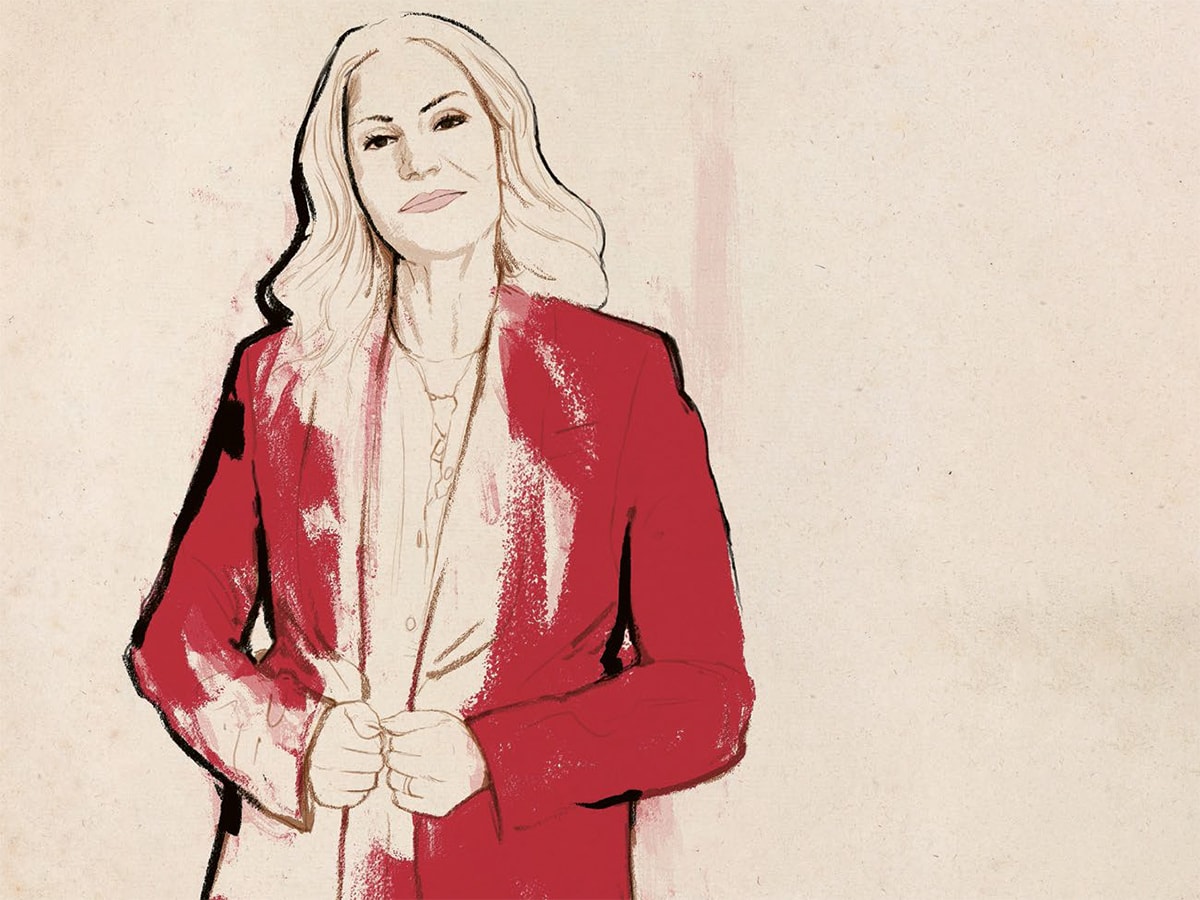
Helle Thorning-Schmidt: Passionate Pragmatic
Helle Thorning-Schmidt believes in the power of consensus and compromise. As the first woman to head the Danish government, as CEO of Save The Children, and now as director of Facebook's Oversight Board, the search for balance defines her work. An interview with a passionate pragmatist.
Editorial
-
September 5, 2022
(Illustrations: Silvan Borer)
m&k: Helle Thorning-Schmidt, you served as Prime Minister of Denmark until 2015. Based on your experience, how do you view the current global political situation?
Helle Thorning-Schmidt: I think I feel the same way as everyone else: I was absolutely shocked when I heard about Russia’s invasion of Ukraine; and of course, from a European perspective—and likely from a global perspective as well—this war marks a historic turning point; a moment that is fundamentally altering the international security architecture. What particularly worries me is that—as with many wars in the past—we risk becoming desensitized the longer this situation drags on. In recent weeks, for example, everyone has been talking about how hot it’s been in many European countries—I live in London, and there were hardly any other topics besides the weather! Sports events, perhaps, or domestic politics… but the focus on the war in Ukraine in public discourse has diminished.
What are the risks involved?
There is a danger that we will face what I call «the choice between peace and justice.» That is, politicians and their constituents will grow «tired» of the war and say: «Oh, can’t peace finally come? Couldn’t the Ukrainians cede a few territories to the Russians if that’s what they want so badly?» And even though no other European nation would ever be asked to make such concessions, I fear that the European public might soon actually start arguing for a forced peace that does not bring justice to Ukraine. When prices rise, when an energy crisis looms—then it’s difficult to stay the course. Especially when it comes to something that many people believe doesn’t directly affect them.
«The war in Ukraine is a historic turning point; a moment that is fundamentally changing the global security architecture.»
You have always been a strong advocate of broad-based, international cooperation—on a variety of issues. Is that a noble aspiration now more than ever?
Yes, unfortunately. You see, I remain convinced that none of the truly serious problems affecting our daily lives on Earth can be solved by a single country alone. Take climate change, for example. Or the famine crises on the African continent. Or the effort to bring civil wars to an end; to combat drug trafficking and cross-border crime. International cooperation would be the answer to the challenges we face today. But when something like the war in Ukraine happens, it naturally creates rifts and draws dividing lines. We’re seeing this happen on multiple fronts right now.
Would you elaborate on that?
First, we are seeing a widening gap around the world between democracies and autocracies or dictatorships: You can consult any reputable geopolitical index and will always find that democracies are in decline; that fewer and fewer people live in states governed by the rule of law. This should be a major cause for concern. Another issue is the relationship between China and the West: I believe that communication and cooperation between China, Europe, and the United States are at an all-time low. This has, of course, been further exacerbated by Russia’s invasion of Ukraine. China could have taken sides with various parties but chose not to align itself with those condemning the invasion.
Conflicting interests and the attempt to mediate between them also shape your current work: You chair Facebook’s «Oversight Board.» (see the note at the end of the interview), which is responsible for monitoring the platform externally and prompting changes. Why is this important?
Social media and the connectivity it enables have raised some of the fundamental questions of our time: What rules apply in the virtual world? How can we use social media to promote democracy and freedom, rather than as a tool to incite hatred and oppression? An important part of our work on the Oversight Board is to highlight the positive aspects of networks like Facebook. In this context, I always like to recall the time before social media: Back then, very few people were able to participate in public debate. The biggest
Part of the social discourse took place in the newsrooms of major news organizations—and there, it was mostly older white men who called the shots. I believe that social media has finally given a voice to those whose voices have gone unheard for centuries.
But there's also another side to it, as you already mentioned above have.
Of course, it’s true that large digital platforms are used by people who want to «destroy» things. But fascism and racism existed long before the internet—destructive, demagogic movements were not created by the internet or social media. Even if technology may have helped to facilitate the global networking of reactionary forces.
«When prices rise and an energy crisis looms—it's hard to stay the course.»
The Facebook Oversight Board was provided with seed funding by Meta, but was then immediately separated from the company. It is the world’s first organization of its kind. What have you and your colleagues been able to accomplish so far through your work?
Before the Board was established, it was ultimately Mark Zuckerberg alone who made decisions about content on Facebook and Instagram. Now he can no longer do that, because users can contact us directly. Meta is bound by our decisions. None of the other major social platforms has established a mechanism even remotely comparable to this one. I’ll say this explicitly: This is still an experiment, since the Board has only been around for a few years—but we’ve already made decisions that, in my opinion, underscore why we have a right to exist. And they demonstrate the vision we have for Meta.
Can you give me an example?
Essentially, we are constantly telling Meta that the company must adhere to its own internal rules externally as well—the famous «Community Standards» either apply at all times … or they become redundant. But Meta must also comply with international law, regulations, and statutes: The company must strike a balance between all users’ right to free speech and the right of all other users not to be insulted or even threatened.
«Social media has finally given a voice to those whose voices have gone unheard for far too long.»
From the perspective of someone who is very familiar with both areas: Where is Populism is the greater threat today: on social media or in the Politics?
Populism is a multifaceted concept. In principle, there’s nothing wrong with politicians trying to be popular or pursuing policies that are popular—I think that’s part of democracy. I don’t want a small elite to make decisions; I want politicians to represent the ideas and wishes of the people—even if those people, and consequently those politicians, are ones with whom I completely disagree. But representing popular interests is one thing. It’s another matter entirely when politicians start offering simple solutions to complex problems—and then try to rally people around these overly simplified solutions. That, too, is populism. And that can very quickly become very dangerous when, as is so often the case these days, deliberate division and «othering» are at play: «Those people over there don’t believe in our simple solutions? Then we won’t even discuss things with them—we’ll treat them like enemies!» Incidentally, this way of arguing isn’t reserved solely for autocrats: with Boris Johnson and Donald Trump, the democratic West has its very own proponents of this divisive rhetoric. And one can hardly overestimate how dangerous this is for the survival of our political systems.
We tend to associate populist narratives and excessive simplification primarily with politicians on the right. You’ve been a social democrat your entire political career. Can there be such a thing as left-liberal «populism for the greater good»?
At the very least, we must make an effort to keep the dialogue going. There is a tendency among liberal politicians to come across as rather condescending toward people whose opinions they disagree with. I’ve seen this time and again throughout my political career: When liberals believe that,
If they sense that the person they’re talking to isn’t as well-educated or as discerning as they are, they tend to make unfair, hasty judgments: «We can’t have a conversation with people like that—they’re not on our level!» Nonsense! Every political opinion should be allowed to have its place; it should be appropriately represented, heard, and discussed.
Which doesn't mean that Democrats—unlike the populists mentioned—have to stop adhering to certain standards?!
It is our duty to keep pointing out that things are complex—and that finger-pointing and bickering won’t get us anywhere. To be perfectly honest: When you look at European politics right now, there is even cause for hope. I know that the nationalists did very well in the French elections; that there will be elections in Italy whose outcome is unclear… But there are also many moderate politicians in Europe who are working together for the good of their respective countries. Look at Scandinavia, or at Germany.
«Together with the Oversight Board, we have made decisions that demonstrate our vision for Meta.»
Not only between countries, but also between the sexes You’ve been a champion of equality: You were the first woman ever to lead the Danish Social Democrats and the first woman to lead the Danish government. How has this career shaped you?
I think it can be difficult for any woman who wants to be the first in any position. I wrote a book about this last year, and while working on my manuscript, I recalled numerous situations in which I was confronted with misogynistic headlines, comments, or gender stereotypes. And that would certainly be the same today, at least in some respects. There isn’t a single society in the world where there is absolute equality,
Not in Denmark, not anywhere. So we need to continue addressing diversity issues and empower people from diverse social and cultural backgrounds to take on leadership roles in politics and business. I do a lot of consulting these days; I’m often in boardrooms—and I challenge every company I work with on the issue of diversity. CEOs and members of executive management need to finally see diversity as a «must» and not just a nice-to-have.
In interviews, you often say that you've been a feminist since you were eleven or twelve years old. What milestones in the fight for equality would you like to count among your Is there anything you absolutely want to see happen in your lifetime?
There is an underlying structure behind misogyny and the way some women are treated in their professional and personal lives. We must understand this structure—these remnants of patriarchal hierarchies in modern society—only then can we combat it. There are so many areas where we need to take action… And in all these areas, the situation is urgent: for example, far too many women are still victims of domestic violence, even though the home is supposed to be a «safe space»! Of course, I would also love to see the day when half of all political offices are held by women, and half of all CEOs
Women are … Wherever important decisions are made, they should be made by people with as diverse a range of backgrounds as possible.
«There is not a single society in the world where there is absolute equality.»
They recently put forward the thesis quote that companies are entirely face new challenges – in a world that is becoming increasingly confusing When people are looking for Leaders: Support and Guidance.
Yes, when you look at global trust indices, it becomes clear that while people’s general trust in governments and large, global institutions has declined, they still trust those in their immediate circle—not just family or friends, but also the people they work for. Trust has become «localized.» Added to this is geopolitics, which also poses an enormous challenge for CEOs and business leaders. How can they not only keep their organizations afloat but also maintain a successful business when markets change rapidly or supply chains are disrupted?
To me, you seem—the current Despite the crises—we remain optimistic. Would you describe yourself that way, too? describe?
On the one hand, I feel like it's a little hard to be an optimist right now. That's mainly because of climate change: We're facing a climate crisis, and we're doing
It’s still not enough to overcome this crisis. The Biden administration’s latest climate bill in the U.S. is a positive step, but we still have a long way to go before things can improve. On the other hand, there are also things that truly make me optimistic: for example, we must never forget that the world today is already a little bit better than it was yesterday.
You're saying that despite all the conflicts and crises we're going through?
Yes, and that's proven by the facts! If we had started our discussion with the children on Earth—and I think children are always a good place to start (laughs) – then I would have emphasized that, overall, they are better off today than at any time in human history. Children are better educated, better nourished, safer, and healthier than they have ever been. So, when it comes to the younger generation, optimism mixes with climate-related pessimism (laughs).
«Many more former and current politicians should see themselves as bridge-builders.»
And the Synthesis of Optimism And would pessimism then be—pragmatism?
I am a passionate pragmatist, but also a passionate advocate for pragmatism itself. There are so many politicians—both former and current—who divide people. I believe that more of us should take on the role of bridge-builders; more of us should believe in compromise and strive for the most pragmatic solutions. That can be difficult at times, but it is possible.
As the former head of a A three-party government must You know that …
(Laughs) All we’ve done is look for common ground and compromises—the whole time! Sure, that means no one can get their way completely, and everyone has to give a little … but that’s a sign of strength! There are people who try to portray the search for political compromise as a sign of weakness—and thereby make compromise impossible. I greatly admire Switzerland’s principle of «meeting in the middle.» Because it is precisely this principle that forms the basis of a functioning society where people can live well. Generally speaking, the countries with the longest tradition of political compromise are the most livable countries on the planet—it’s that simple.
So, given the Anyone who feels helpless in the current situation should It is important to remember that joint Solutions will be found —and take action ourselves?
Yes, that’s true. I believe we can do so much good. Just think back to those moments during the pandemic when we reached out to neighbors who couldn’t go shopping—supported our friends, or explained «FaceTime» to our parents so they could see their grandchildren… There were countless positive things that happened in so many countries, in so many places—we should be proud of that. We should cherish that.
Helle Thorning-Schmidt From 2011 to 2015, she was the first woman to lead a Danish government. As prime minister and chair of the Social Democratic Party, she initiated, among other things, various economic reforms for which she is still widely respected today. After her political career ended, Thorning-Schmidt—who holds a degree in European studies—became CEO of Save the Children; today, she is co-chair of Facebook’s Oversight Board and works internationally as a top consultant. Helle Thorning-Schmidt is married to British parliamentarian Stephen Kinnock and has two daughters. The family divides their time between Copenhagen, London, and Wales.
The Facebook Oversight Board is an external body that makes policy decisions regarding content moderation for the social media platforms Facebook and Instagram. Although the board’s initial funding was provided by Meta, the parent company of Facebook and Instagram, the board operates completely independently and can override Meta’s decisions at any time. Furthermore, Meta’s executive management cannot dismiss the board members.
Between TV and Reality
Fans of the series may have been reminded of the TV show «Borgen»—which is available to stream on Netflix, among other platforms—while reading this interview: The Danish surprise hit tells the story of Birgitte Nyborg, who in the series becomes the first woman to lead Denmark’s government. When asked, Helle Thorning-Schmidt explains that she herself is «a fan of the show»—but that any parallels to her own career are purely coincidental.
Carsten Maschmeyer: Running into a headwind
The world is facing multiple crises—and the European economy is beginning to falter: No reason to panic, says investor and billionaire entrepreneur Carsten Maschmeyer. It’s worth weathering the storm.
Johannes Hapig
-
September 2, 2022
Investor Carsten Maschmeyer is convinced that every crisis brings opportunities. (Illustrations: Silvan Borer)
m&k: Carsten Maschmeyer, when you look at the international situation right now—what concerns you the most?
Carsten Maschmeyer: I feel the same way as many others: The war in Ukraine worries me. And I wonder whether we’ll see something similar happen with China and Taiwan. On top of that, we’re facing massive supply chain problems. We’re experiencing historic levels of debt unlike anything we’ve ever seen before in either the private or public sectors. And we’re suffering from high inflation. Central banks ignored this for a long time—so now we face the risk that they’ll overreact, leading to a too-rapid and steep rise in interest rates, which in turn will create new problems. In the retail sector, we’re seeing the biggest drops in sales since the early 1990s. This will directly affect a great many people—they simply won’t be able to shop the way they used to. This, in turn, affects companies in terms of revenue—especially startups that want to bring consumer products or perhaps an innovative app to market—and they’ll have to face the reality that, with rising prices for olive oil and pasta, and higher costs for electricity and heating, people have more pressing needs.
Some analysts say we are in the midst of a «perfect storm.» Do you agree with this assessment?
I don’t particularly like the term «perfect storm,» because the word «perfect» implies that someone set out to make the situation as destructive as possible. But let’s stick with your metaphor: It’s a severe, ongoing storm that’s bearing down on us with thunder, hail, lightning, and rain—a storm unlike any we’ve experienced before. At the same time, I have to tell you: As an entrepreneur, I’ve weathered quite a few crises. In 2000, the dot-com bubble burst, and no one wanted to work with young companies—with tech startups—anymore. On September 11, 2001, after the attacks on the World Trade Center, we thought the world would come to a standstill. Then came the Iraq War, during which the stock markets plummeted by up to 70 percent, followed by the war in Libya and the financial crisis. The current situation is very difficult, but we will weather this crisis as well.
«It is a severe, relentless storm that is bearing down on us with thunder, hail, lightning, and rain.»
What have all these crises taught you?
I used to be a long-distance runner. And there’s a saying I always share with the startups I support: «You can still win even when the going gets tough.» Maybe not with your best times. Maybe not with a personal record. But you can still outperform the competition. And when the headwinds die down, you can probably even benefit from having stuck it out. I always see crises as opportunities, too.
A crisis as an opportunity—isn't that just a cliché?
Take a look at the facts: Following the oil crisis of the 1970s and the resulting economic upheaval, technology companies like Microsoft emerged—there was a sense of optimism in the wake of the crisis. After the Lehman collapse and the financial crisis, Airbnb and Uber were founded because many people were suddenly looking for a way to earn extra income. That income was then generated by renting out an air mattress in the living room or taking on an extra passenger in a private car. That’s why I believe that very good years—even golden years—may now be on the horizon for investors, because many companies are valued more favorably. You can get in on startups under better terms. At the same time, we’re seeing focused founders who know that they can only bring their ideas to fruition with well-thought-out plans and rapid profitability—because otherwise, no one will provide them with the necessary resources. For those who have the confidence to start a business, these will also be good years—provided they manage to follow a clear path to profitability. The order of the day now is: «From burn to earn!»
«There's a phrase I've been sharing lately with the startups I support: »You can still win even when the going gets tough.'"
You yourself have never invested in Russia or China through your companies. Was that wise foresight—or simply business instinct?
For me, this was primarily a moral issue. When I see the human rights violations, the restrictions on press freedom… and now the war in Ukraine as well, I don’t want to do business with such regimes or in their countries. But of course, I also thought about it from a business perspective, because the legal systems in Russia and China aren’t exactly reliable: we see massive copyright infringements there. There are countless examples of people in China who founded startups that were ultimately copied. Then you have to go to court in Beijing or Moscow and prove that those were your own ideas. I didn’t feel like going through that. By the way, we won’t be making any investments in those markets in the future either. That might be unfair to some young founders, but we’re sticking to our principles.
They proved it once again in a Other areas: Expected in 2010 You signed it in Germany the «Energy Policy Appeal,», who warned against nuclear power plants to take it offline too hastily. Take a look at the latest Debates in Your Warning at That Time Confirmed?
Yes, but that is a regrettable confirmation. Our government at the time carried out the nuclear phase-out with a completely misguided sense of urgency. Of course, the Fukushima disaster shocked us all. But we must acknowledge this: In Germany, just as in Switzerland, we do not experience major earthquakes or tsunamis. And we have some of the safest nuclear power plants in the world. Now, instead, we’re getting our electricity from nuclear power plants in neighboring countries that are less safe. And if those were to be damaged, we here would be just as affected as if they were our own power plants. But, defying all reason, we simply said: «That’s it—enough is enough!» Solar and wind power weren’t enough back then; they still aren’t enough today, twelve years later, to replace nuclear energy. Instead, we’ve made ourselves dependent on dictatorships. We’re paying the price for that right now. I’d like to see politicians present clear facts now. Perhaps some members of the Green Party, in particular, will reconsider the «Nuclear power? No thanks!» stickers from back then, replace them with «Russian gas? No thanks!» stickers, and restart the reactors—or at least let them run longer. If you have to pick the cleanest item out of a pile of dirty laundry, then right now it’s probably nuclear power—because we don’t want to finance Russia’s war or pump oil and lignite into the atmosphere.
Presidents Biden, Jinping, and Putin: Representatives of a global systemic conflict.
I’d like to come back to the metaphor of the runner in a storm that you mentioned earlier. It seems to me that the word «resilience» would be appropriate in this context. What does that term mean to you—personally, but also as an entrepreneur?
In your personal life, you can build resilience by finding a balance and taking care of your health and mental strength. Don’t neglect your family, friends, and hobbies, even when you’re busy. As an entrepreneur, resilience to me means being able to cope with setbacks and failures. I’ve long viewed setbacks as incentives to find a better solution—as stepping stones on the path to success. Those who work a lot make a lot of mistakes. Those who work a little make few mistakes. And those who never work never make mistakes, but they’ll never be successful either. I’ve always been able to cope well with this reality. And it helps to learn how to say «no.».
Could you explain that?
Take the female founder who asks investors if they want to invest and gets turned down. Or the founder who’s hoping to partner with a large corporation but can’t even get a meeting there. That can be frustrating, sure. But ultimately, it’s a «numbers game.» I’m friends with Toni Kroos, who’s extremely successful at Real Madrid. He and his teammates know that about one in five shots is a goal. For every goal you score, you miss four times—it’s just the way it is. Stories of successful companies are always classic «hero’s journeys»: They all faced huge problems at one point, then they ran out of money, then a competitor’s product was better, then they had some disputes with market rivals… but they persevered. By the way, there’s only one thing harder than not giving up—forgiving yourself afterward for giving up too soon.
«In Central Europe, business models that don't work are always associated with stigma: »They were too lazy, they were too stupid.'"
Anyone who starts a business may fail. In the U.S., failure seems to carry less of a stigma than in Europe. Do we need to further develop our «startup mentality»?
Without wanting to generalize too much: In the U.S., many founders approach their ventures with the mindset that they’ll either succeed—or learn something to do better next time. In Central Europe, business models that don’t work are always stigmatized: «They were too lazy; they were too stupid.» But most of the time, there are entirely different reasons for this, and the people behind the business couldn’t really do much to prevent it from failing.
For example?
Regulations come into play that you initially thought weren’t relevant to your own company. Or a prototype doesn’t work. You’re three months away from launch and read in the morning paper that a competitor has just successfully launched an identical solution. So many things can happen that are beyond your control.
«I've long viewed setbacks as incentives to find a better solution—as stepping stones on the path to success.»
Your passion for supporting startups comes through in every one of your answers. Is now a good time to start something new—or should one wait?
We mustn’t ignore the fact that it’s currently more difficult to convince investors to back a project. And we also have to face the reality that there are hardly any resources left to «just try something out.» Without genuine innovation, a startup today has no reason to exist and no chance of achieving anything. There were years when investors didn’t care about anything as long as the startup was growing—even if it earned thirty euros per customer but spent forty euros on customer acquisition. Scaling as a key criterion? You can forget about that—it’s a thing of the past.
It seems to me that a «but» is coming next …
(laughs) But if someone is convinced they can offer the world something that improves people’s lives, advances digitalization, or makes our society healthier or more sustainable, then go for it! Because that’s exactly what we need right now!
How do you actually make a decision? Specifically, whether you're investing in a startup Want to?
The most important thing is this: the person comes before the product. If I’m faced with the choice of supporting a first-rate team with a second-rate product, I would always prefer that to a second-rate team with a first-rate product. I need to be able to look the founders in the eye and see passion, enthusiasm, and determination—the willingness to work through the night and on weekends when necessary.
«If someone is convinced they can offer the world something that makes people's lives better—then go for it!»
The nature of the product is But that's important too, isn't it?
Of course. Is the product the solution to a real-world problem—or is someone trying to offer solutions to problems that don’t even exist? Is the market big enough? After all, great solutions that are used by only a tiny group of people can’t be made profitable. When I meet startup teams, I ask: «Who needs this? Who would pay for it? Would I stand in line for it if I were the consumer?»
You led a corporate group, but also have insight into numerous Start-ups. What can large Small, new businesses Learning about companies?
I am convinced that in most corporations, there are still too many self-centered individuals and too few team players. This can be particularly toxic at the executive level—because when the boss is solely focused on consolidating his power, it creates an environment in which innovation cannot thrive. Power struggles always come at the expense of creativity.
Just like hierarchical structures …
Yes. Startups have to improvise completely, be totally flexible, and always be able to react spontaneously. That’s often difficult in large corporations because there’s always someone who has to submit a proposal first. Then it goes before a committee, and only then do they consider whether to move forward with implementation. By that point, the startup has already launched the product twice. And when it comes to creativity: A company with a healthy culture of ideas doesn’t distinguish where ideas come from—it evaluates them impartially based on their quality. It doesn’t matter whether they were suggested by a working student, an intern, or the CEO.
Investors no longer have money to «give away»—but Maschmeyer is convinced that good ideas will continue to be in demand.
You said earlier, that you are female founders and founders in the Eyes want to look, that you are primarily investing in people. How Do Corporations Approach Recruiting? tending to be based on other criteria Before?
Startups pay close attention to the personalities of the people they hire, ensuring that these individuals are a good fit for the mindset and culture of the young company. In large companies, the traditional resume often matters most; what counts is which university someone attended and what grades they earned upon graduation. We work with many amazing founders who either didn’t go to college at all or didn’t finish their degree. This may sound like a cliché, but it’s true: «You are who you hire.»
And then, I suppose, you need a good mix of nonconformist, creative free thinkers and more analytical people?
Absolutely. It’s all about the mix. I need to bring someone with a spirit of creative defiance onto the executive team—someone who can contribute their wealth of ideas—otherwise, innovation will be a challenge. But I also need a structured counterpart who keeps an eye on processes and profitability—otherwise, you’ll constantly be operating on the fringes of what’s economically feasible.
In closing, I would like to—after we had a conversation, which I consider to be quite optimistic felt – ask: What makes you feel Wait a minute—hope? What gives you reason to for optimism?
You can be optimistic if you accept that the world isn’t perfect. Yes, the Russian invasion of Ukraine is an absolute disaster. But we can also say, «Thank God no other countries were attacked; thank God no nuclear weapons were used.» I always like to draw optimism from the things that didn’t happen. You know: Pessimism never helps—and optimism never hurts. I simply believe that we need to cultivate positive thinking, because anything else—at least for me—makes no discernible sense.
«You can be optimistic if you accept that the world isn't perfect.»
And crises are—as mentioned earlier As I said—opportunities, right?
Perhaps the supply chains disrupted by the pandemic and conflicts are causing us to be less harmful to the environment and our vulnerable fellow human beings: simply because not everything is being hauled off to the other side of the world anymore, only to be cobbled together there by exploited children and shipped back again. My advice is this: Try to find a positive aspect in everything—it really does work almost every time, without having to ignore reality. Don’t go to bed at night without jotting down three positive things that brought you joy during the day. Then you’ll wake up the next morning with a positive mindset, and you’ll be kinder to those around you and more successful at work. I firmly believe that we should become optimists—a little bit more each day.
Carsten Maschmeyer is a an entrepreneur active internationally, Consultant, Start-up-Founder and financial investor. He is a member of the jury for the German version of the TV show «Die Höhle der" »Lions." The one in the state of Born in Lower Saxony Maschmeyer is considered a «self-made—»Billionaire" is associated with the Actress Veronica Ferres is married and has two sons from his first marriage.


 By 27 votes to 14 with four abstentions, the small chamber followed the motion of the majority of its Commission for Transport and Telecommunications (KVF-S). The parliamentary initiative is thus off the table. The National Council had approved it in the spring session.

 In the third spot, which runs on the campaign platform "Never stop doing your thing," Ovaltine also tells the story of a person who passionately pursues an unusual project. Despite some obstacles and difficulties, Sofia convinces her friends to move into the forest with the entire flat-sharing community.
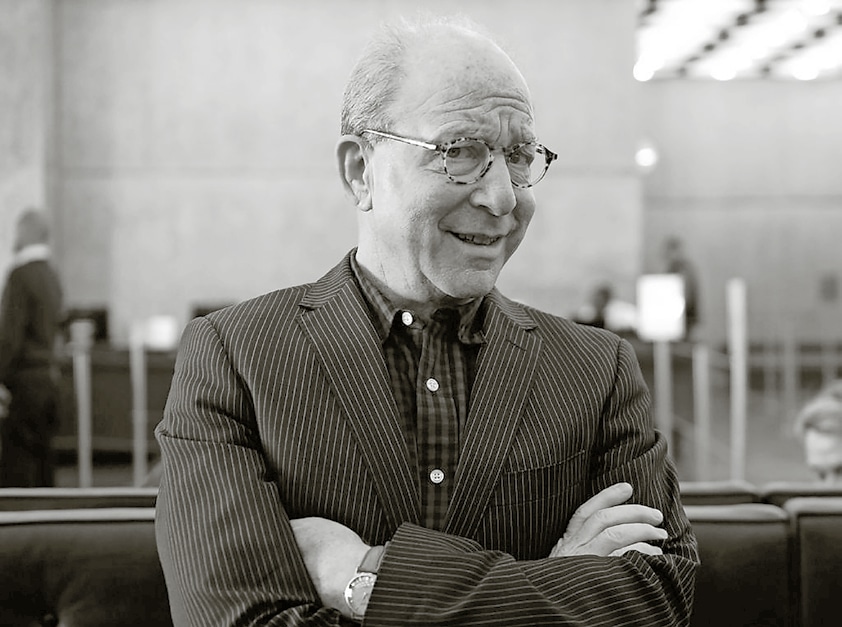 m&k: Jerry Saltz, let me start by making a confession: In the days leading up to our conversation, I was quite nervous.
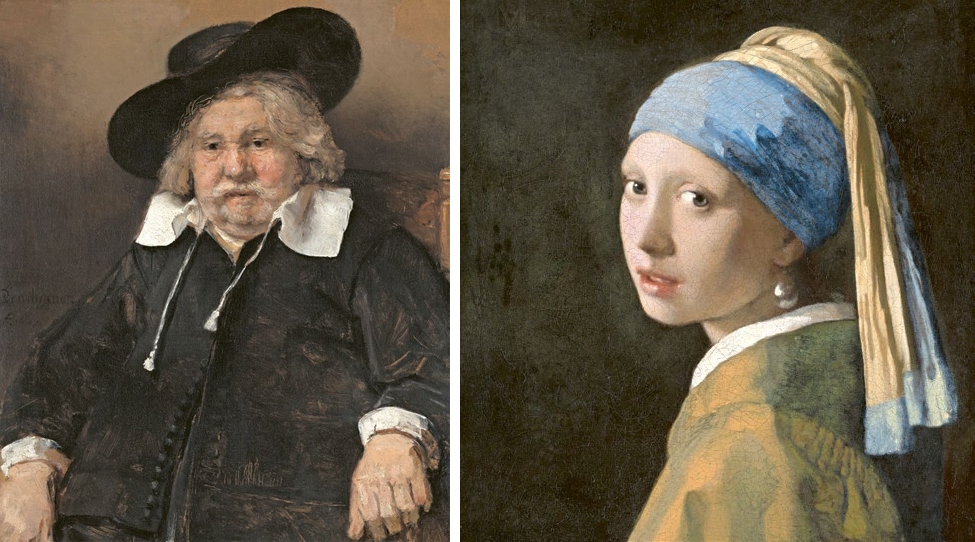
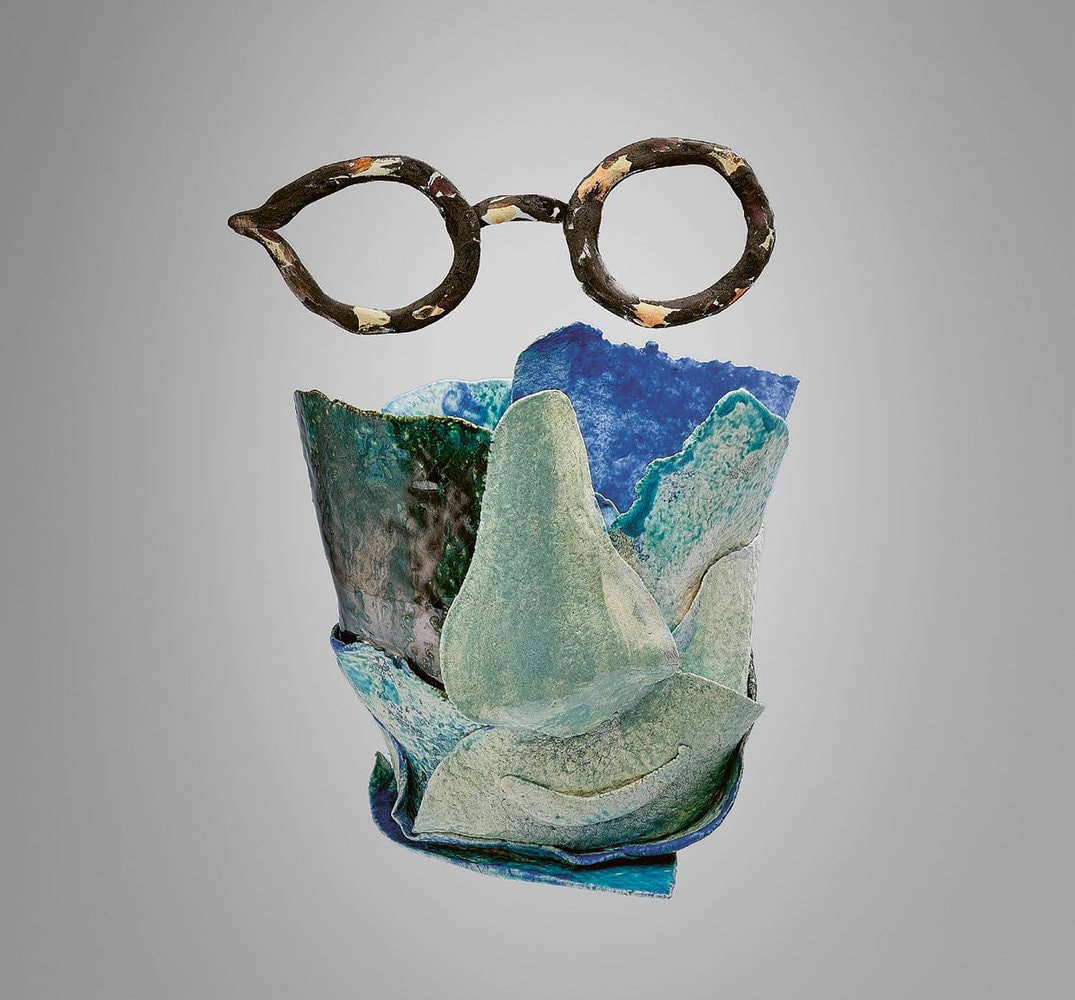
 How credible is television as a medium compared to newer media channels such as YouTube or Facebook? And what about the credibility of advertising on these very channels? While the 2021 Screenforce study examined advertising during the COVID-19 crisis, the latest Screenforce Switzerland study focuses entirely on the Swiss population’s trust in various video platforms. We’ve summarized the key findings for you.
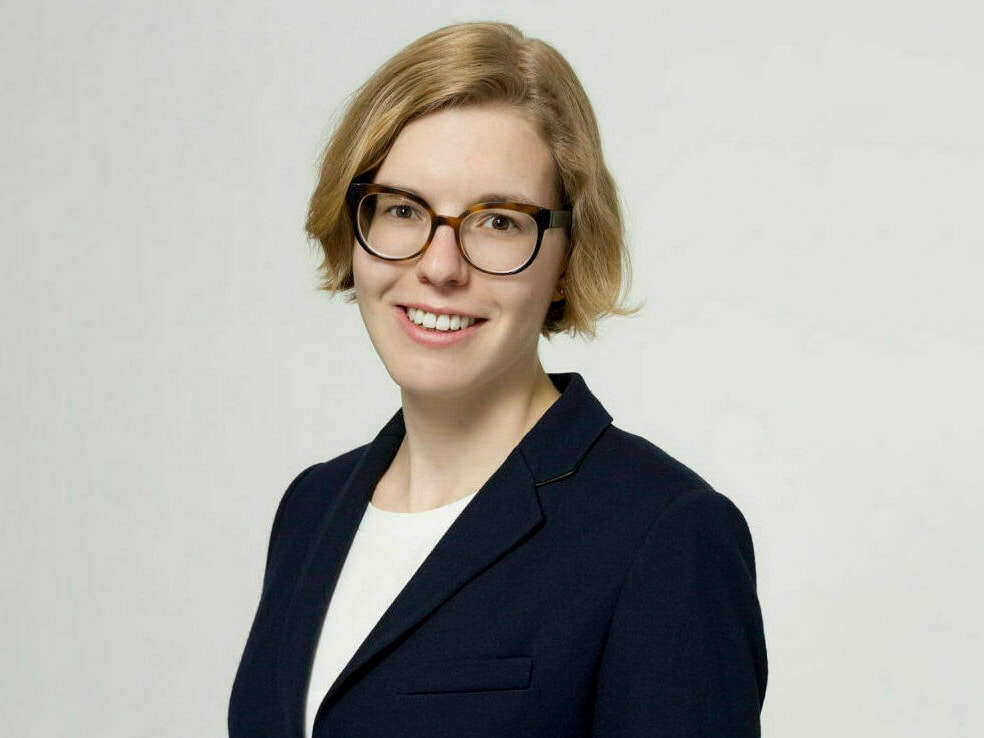

 Merchants have always wanted to make their goods visible to everyone. In the beginning, everything was based on personal connections. The baker or shoemaker knew his customers personally. With industrialization and the accompanying shift to mass production, however, this direct relationship between merchants and consumers was gradually lost. Advertising, as we know it today, then had to rebuild that relationship with customers through communication. Advertising subsequently received increasing support from the media.