Switzerland's largest companies continue to seek large numbers of staff

Large companies in Switzerland continue to search desperately for personnel. The number of jobs advertised by the 50 largest Swiss companies in September has risen again since September.

As of mid-October, a total of 11,385 jobs are advertised on company websites. This is around two percent more than a month ago, according to the regular analysis of advertisements carried out by the job portal Indeed for the news agency AWP. After the number of job advertisements had virtually skyrocketed in August, however, it apparently settled at a higher level in September and October.

By far the most jobs were advertised, as always, by the major distributors Migros and Coop as well as the cooperative Fenaco, which is active in the agricultural sector, food processing and retail trade and includes Volg and Landi, among others. However, the number of vacancies advertised at the Migros Group has been declining since August, while it still rose slightly at Coop and significantly at Fenaco. And the Manor Group has currently advertised over 50 percent more jobs than in the summer.

According to the evaluation of Indeed by keywords, the search for personnel is probably also related to the upcoming Christmas business and the related increased demand for sales staff. However, employees are not only being sought in sales: People working in logistics are also in demand. Not surprisingly, among the large companies, Swiss Post in particular is looking for personnel in this area.

By contrast, large companies have few vacancies in human resources - the number of job advertisements for HR specialists is already low, but has dropped significantly again in recent weeks. (SDA)

Base Design rejuvenates luxury brand La Prairie

For the first time in nearly 50 years, the Swiss luxury brand La Prairie has unveiled a new logo and brand identity. The redesign of the logo and typography was at the heart of the rebranding project carried out by Base Design.

"Our logo reflects the soul of La Prairie," comments Greg Prodromides, chief marketing officer of La Prairie. "It embodies the values and heritage of the company and expresses its unique identity to the world. It represents who we are and who we will be tomorrow."

Now, he says, it was time to redesign the logo: "This new logo, unchanged for almost 50 years, represents an important milestone in the history of our brand. It is a way for us to celebrate our past while looking to our future," Prodromides concludes.

La Prairie's new logo was inspired by the very first visual identity of Clinique La Prairie in the 1930s and reinterpreted as elegant, architectural typography.

In the 1970s, La Prairie's best-known logo was designed using the Helvetica font - now Helvetica Neue - created by type designer Max Miedinger in Zurich. The typeface was a symbol of simple, modern Swiss design.

The new, refreshed logo features a sharper, contemporary version of Helvetica that moves the logo from lowercase to uppercase. It will be accompanied by a new signature seal and will be applied to all La Prairie products in the coming months.


Responsible at La Prairie: Greg Prodromides (Chief Marketing Officer), David Naouri (Global Creative Director), David Conte (Global Senior Art Director). Responsible at Base Design: Anthony Franklin (Creative Director), Vincent Sauvaire (Design Lead), Thomas Marsch (Account Lead).

Insel Group launches health magazine

"Insel" is the name of the Insel Group's new magazine. It is published twice a year and is intended to provide readers with interesting information on everyday health topics that have been highlighted by Insel experts. On Friday the first expenditure appears.

The Insel Group hospitals in Aarberg, Belp, Bern, Münsingen and Riggisberg are rich in topics, contexts and stories that want to be told. The new health magazine Island is aimed at a broad public in the canton of Berne and is published twice a year as a newspaper supplement. In addition, the magazine is available in the hospitals of the Insel Group.

Educational mission of the Insel Group

As an institution that combines primary care with cutting-edge university medicine and teaching with research, the Insel Group is also committed to an educational mission. The magazine is intended to illuminate health topics from different angles and present them to readers in understandable language. Island also functions as a guidebook and, with the help of reports, interviews, and the voices of patients and experts, provides readers with concrete impetus to better understand health issues in everyday life.

Close to people 

The first issue will be published on Friday, October 21, 2022 and will be devoted to the topic of sleep. In addition to the informative aspects, however, entertainment will not be neglected. "The diversity of our company is reflected in the content of the magazine. We are pleased to present exciting columns by professional athlete and doctor Marlen Reusser, and also focus on everyday life, for example by sharing suggestions for dining or leisure activities," explains Simon Schmid, Head of Marketing Insel Group.

Cooperation with Stämpfli and Textatelier.ch

The 52-page health magazine is to stand out with a modern design and a high proportion of images in order to reach the heterogeneous target groups in the best possible way. The magazine is being produced in collaboration with Stämpfli Kommunikation, the Textatelier.ch agency and authors from the Insel Group.

The next issue of Island with the theme "Matter of the Heart" is scheduled to appear in spring 2023.

Glassworks with new "Glass Clear" episode on the Metaverse

For some, the metaverse is a gimmick, for others the next step in digital transformation. Dominik Lämmler looks after agencies in German-speaking countries for Meta. In the podcast "Glasklar," he talks about how far Metaverse has come, what opportunities are open to companies, and where he sees the greatest potential, among other things.

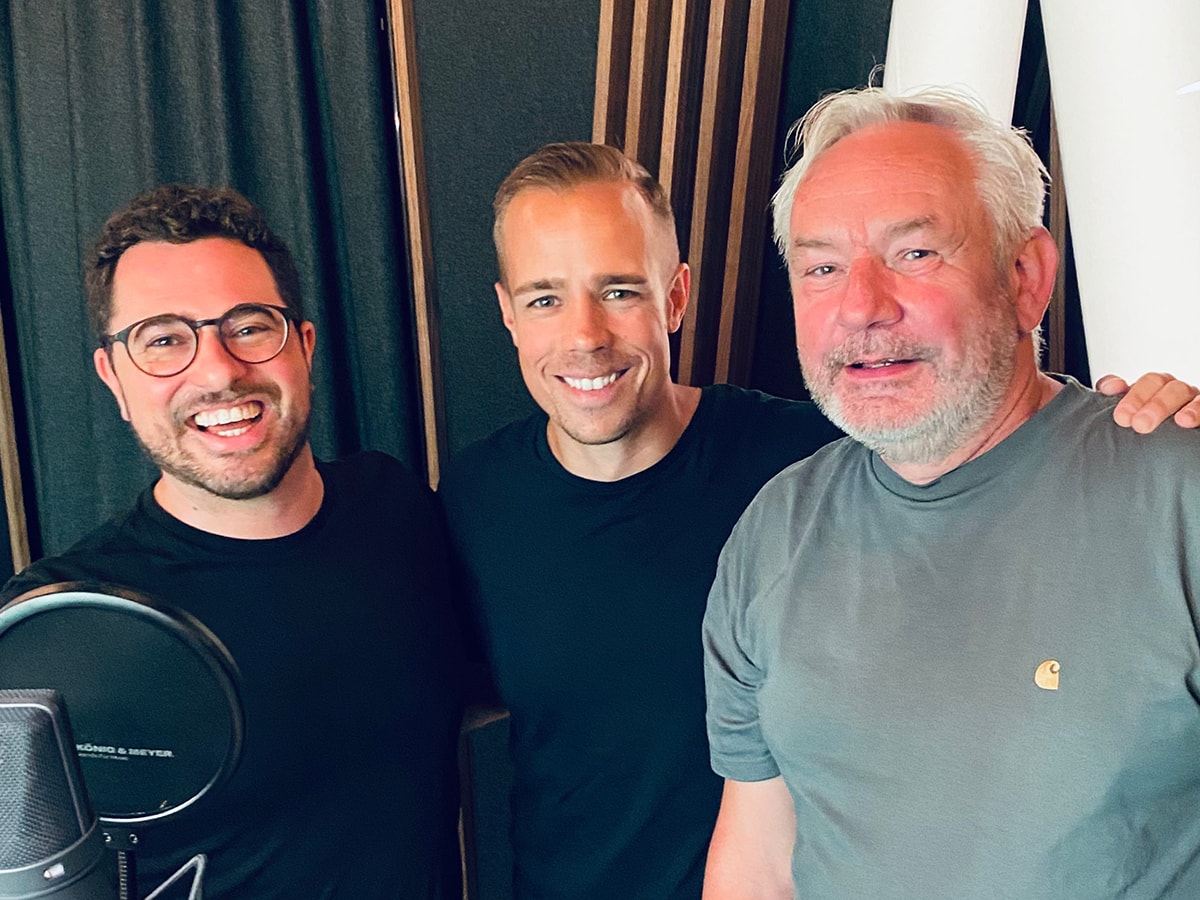
Tobias Gläser and Ralph Müller in conversation with Dominik Lämmler (center). (Image: zVg.)

The term metaverse is not new. In 1991, Neal Stephenson described the metaverse in his science fiction novel "Snow Crash" as a virtual reality in which people walk around as avatars. Three decades later, the metaverse is no longer science fiction, but fact: augmented reality and virtual reality complement physical reality and together create a reality on the Internet.

There are still few business cases with added value, and many companies have so far only used the metaverse for marketing campaigns. But the potential is great. For example, remote meetings or virtual showrooms that look deceptively real and turn every meeting or visit to the showroom into an experience. Dominik Lämmler confirms this in the latest episode of the Swiss marketing and sales podcast "Glasklar". In a conversation with Glaswerk CEO Tobias Gläser, Lämmler explains for whom and what Metaverse is suitable, presents concrete examples with customer benefits and explains why companies should definitely not miss this opportunity. The podcast episode is available now on Spotify, Apple Podcast and Google Podcast available.

First "Crystal Clear" episode with guest

The conversation with Lämmler is the first "Glasklar" podcast with a guest. In the 27 episodes of the first two seasons so far, Tobias Gläser and content specialist Ralph Müller have talked about topics that interest marketing and sales professionals. True to their motto "Deep dive in a short time," they want to offer a lot of thematic depth in 20 minutes. A third season is being planned.

Stephan Gutknecht becomes editorial director at Radio Basilisk

Stephan Gutknecht will take over as head of editorial at Radio Basilisk in November 2022. He succeeds Benjamin Bruni, who took over as program director at Basilisk in May 2022.

Gutknecht has been part of the editorial team at Radio Basilisk since 2016. In addition to his duties on the news desk, the 34-year-old from Basel-Landschaft has been able to distinguish himself in various special broadcasts such as elections to the Grand Council, the Land Council or the Government Council.

After completing his commercial training, he attended the Ringier School of Journalism and gained his first experience in the media industry at Blick.

In addition to his new management role, Gutknecht will continue to work in daily news journalism at Radio Basilisk and produce the Basilisk Penalty podcast together with Stefan Plattner. In his new role, Stephan Gutknecht will report to Benjamin Bruni, Program Director of Radio Basilisk.

Bruni describes the designated editorial director as an absolute thoroughbred journalist and gifted radio producer. "Stephan Gutknecht is very well connected in the Basilisk region. I am convinced that he will be able to give Basilisk's editorial team a new drive in his new leadership role," he is quoted as saying in a statement.

The last silver Effies are determined - second silver for Serviceplan

The Effie Awards Switzerland 2022 are just around the corner. Werbewoche.ch reports exclusively and continuously on this year's winners:inside. The last four Silver Effies this year go to Wunderman Thompson, Farner, Serviceplan and Publicis.

A total of 88 projects were submitted for the Effie Awards Switzerland 2022. A total of two jury rounds were held. First, 50 jurors selected 41 finalist projects. Then 21 jurors - each under the leadership of jury president Peter Felser - selected a total of 24 winning projects. The names of these projects will be published in the Advertisingweek.ch unveil in various stages over the coming weeks.

On November 10, 2022, this year's winners:inside will be announced at the Award show in Zurich's Kaufleuten chosen.

So far there have been silver effies for Serviceplan, Jung von Matt Limmat, Rod and Wirz as well as for MRBP, Sir Mary, MediaCom and TLGG (Werbewoche.ch reported). The last silver goes to Wunderman Thompson, Farner, Publicis and Serviceplan. For the latter agency, this is already the second case to be awarded an Effie in 2022.


Geberit Aqua Clean "Handbutts" (Category: Highlight)

The "Handbutts" campaign achieved an increase in all relevant KPIs: +355% engagement rate, +105% view-through rate, +33.9% conversion rate, and up to an incredible +1700% in the number of interactions.

What you can achieve with a bare bottom. This Handbutts activation for Geberit AquaClean impressively shows how effective a strong and, above all, surprising visual can still be in our content-saturated world.

Seeing a naked butt in an environment where nudity is otherwise rigorously censored away is a real thumbstopper - even if the butt later turns out not to be a butt at all.

To showcase the benefits of Geberit's shower toilet - cleans your butt with water - in a quick and attention-grabbing way, Wunderman Thomposn's idea breaks the rules of social.

The Handbutt videos show how to achieve great results with a bold idea.

  • Client: Geberit International
  • Lead Agency: Wunderman Thompson Switzerland
  • Other agencies / companies: Eqal Visual Productions, Mediacom

SBB HR Marketing Back to business "With offers especially for re-entry:in PR-effectively developed a new target group"" (Category: Employer Branding & Recruiting)

The SBB "Back to Business" offers have succeeded in counteracting the shortage of skilled workers and positioning SBB as a modern employer (CHF 650,000 PR value). More than 1,200 qualified applications were received.

SBB has broken new, innovative ground and has ventured to search for talent in an area that has been neglected by other brands: re-entry:ers.

The core of the initiative was formed by five part-time re-entry programs in various areas of the company, as well as the first supervised job interview in Switzerland, where candidates can take their children with them. The ETH study on the economic benefits of re-entry has also paved the way for imitators.

The initial 77 vacancies received 1,201 qualified applications, and an above-average dwell time of 5.5 minutes was measured on the landing page.

Thanks to the positive response and the novelty of childcare at the interview, the impact of the campaign went far beyond the usual "employer branding" objectives.

  • Client: SBB
  • Lead Agency: Farner Consulting

ZCS Lions "Essence of Lions: Much more than successful customer retention" (Category: Activation)

With "The Essence of Lions", the budgeted loss in season ticket sales was cushioned and all expectations were exceeded.

With "The Essence of Lions" the hearts of the fans were melted with real passion. The ice field, charged with emotion and passion as the symbolic embodiment of the missing stadium, was defrosted and sent to the season ticket holders:inside in special vials. The message behind it: "If we can't bring the fans to the ice, we must bring the ice to the fans, because the ice of the ZSC Lions is the ice of the fans."

The fans celebrated the gift, the bond between fans, club and players was further strengthened and the budgeted minus in season ticket sales did not even materialize.

  • Client: ZSC Lions ice hockey
  • Lead Agency: Serviceplan Suisse

Migros Specialty Markets "Consulting Hero" (Category: New New)

The Migros consulting hero is Top of Mind among the Swiss population. Awareness was increased by 15 percent from 59 to 68 basis points and around 4000 video consultations were carried out per week.

In February 2021, Switzerland will be in the second Corona lockdown. Migros specialty stores will therefore also have to close off large parts of their product range. However, almost everything is still available online. But who buys a bicycle or a bed without getting advice first?

Customers of the Migros stores were able to receive live advice from employees in the stores - via advice hero, i.e. live video advice. A great service that, unfortunately, only a few people knew about for the first time. This dramatically changed Publicis' communications campaign. All the targets set were exceeded and the proof was in: video consulting works and is a strong sales channel.

  • Client: Migros Specialty Markets
  • Lead Agency: Publicis Zurich
  • Other agencies / companies: Prodigious / Pumpkin Film / Sebahat Film + Photo

Secure here Your ticket for the award show on November 10!

"Banking will always exist, banks probably won't"

The startup Alpian wants to shake up the Swiss private banking market. Werbewoche.ch asked Alpian CMO Roman Balzan how the startup plans to master this task and talked to Foundry founder Sacha Moser about communications work for innovative companies.

Alpian CMO Roman Balzan (left) and Foundry founder Sacha Moser in front of a twin poster of the current Foundry campaign. (Image: zVg.)


Roman Balzan, vor two years, you - as an ex-Googler, then as Lime's first European employee, with the best prospects for a comfortable tech career - put everything on the line and became CMO of Alpian become. What made you decide to take this step?  

Roman Balzan: The steps from Google to Lime and finally to Alpian were actually smaller than can be assumed. There are definitely some similarities. Google was about simplifying access to information, Lime was about access to sustainable mobility for all. Alpian is now about providing access to the world of private banking. I see giving people access to opportunities that may have been previously unattainable as meaningful. We want to inspire and encourage people to engage with topics around finance, investing and wealth creation.


What values do you want people to associate your brand with? 

Our goal is to guide people to their own vision of wealth - what we call "Wealth Beyond Money." Everyone's idea of wealth is different. There is no one-size-fits-all solution - because, simply put, these range from everyday banking to long-term investing.


What is the exact offer of Alpian?

Through the app, customers have direct access to asset management and our financial experts, who provide personal and straightforward advice - just like at a private bank. On the other hand, you have a debit card and a multi-currency account in four currencies to carry out daily transactions and banking. I like to call this approach "personalized premium banking".


And what does Alpian do differently?

We combine the best of human and system intelligence. Our technology can consider thousands of parameters and scenarios to create a uniquely optimized investment portfolio. Combined with the expertise of experienced investment professionals who listen to the needs of each individual client because they know that there is also a very personal component to wealth creation.


What role do your customers play in this?

We encourage our clients to incorporate their own values into their personal approach to wealth creation. Whether it's impact investing, geographic preferences, or optimizing for specific goals, they should pursue their personal vision of wealth beyond money.


You want a radical realignment in the way we deal with wealth management. Why is that necessary?

We founded Alpian with one question in mind: "How can we give more people - who have some money set aside and do nothing with it - access to modern private banking and forward-looking investment services, while taking care of their everyday banking needs?" This is not to say that the pursuit of wealth is easy. But the mindset and skills needed to pursue wealth can be made more accessible. And interesting.


Which customers do you focus on?

Alpian is aimed at an up-and-coming generation of people who want to get more out of their finances. They have goals, ambitions and values that their wealth should reflect.


Sacha Moser, Foundry is known for liking to work with brands that radically challenge the "status quo". Why do such projects have such a magnetic effect on you and your team? 

Sacha Moser: Honestly, there is no magnet with which we work. Nor have we searched, but we are always found. Our direction since inception has been simple: partner with innovative companies that go much deeper than just "advertising." Of course, I understand that this may seem like a magnet to the outside world, but our mindset and approach is most successfully based on sustainable partnerships.


Banking is a highly regulated business, shaped by legislation and tradition. Has this changed in Your work for Alpian noticeable?

Banking will always exist, banks probably won't. That sounds shocking at first, and - don't get me wrong - I like good banks. But new solutions are needed and we will see banking in a very different way than we are traditionally used to. Regulations are often an overreaction, but wherever there are big challenges, innovative and new solutions will come.


Like Alpian, for example?

Alpian has a big advantage in these areas and can shape the banking of the future with a very fresh view, from the ground up. Not only rethink, but also back to the future: back to the customers, less the bank itself. In this respect, the current status quo has virtually imposed a fresh view and, I think, led to an outstanding result. The team can be very proud of that.


Tell us a bit about the idea behind the "Twin Campaign". How did you come up with it - and what do you want to express with it? 

Such ideas always emerge from a trusting collaboration, which leads to unique insights. The team quickly understood what differentiates Alpian from traditional private banks and neobanks. It's the combination of intuitive technology and experienced wealth advisors. And the key point is: each portfolio is as unique as the individual. There is no DNA twice. With that in mind, the creative team, led by Evgenia Kubas and Nitin George, came up with "No Two Alike." Since the two are basically also twins - the image (below, editor's note). is the proof - the execution was obvious.

Foundry: Alpian wins with Twins

The Foundry agency has implemented an integrated, Switzerland-wide launch campaign for the private banking startup Alpian. Part of this campaign is the already highly visited content platform I-vest.ch.

The startup Alpian was founded with the vision of demystifying and democratizing private banking. The company now holds its own Swiss banking license and aims to offer banking and personalized investment services previously reserved for the very few clients at exclusive private banks.

Early on, Foundry was brought on board as a creative and strategic partner in the early stages of the company's development almost three years ago. Everything - from positioning and alignment to visual identity and communications strategy - was developed jointly by the agency and Alpian.

First investment in the partnership

The partnership mindset led to thinking proactively for the brand. Only a few months after the start of the collaboration, the development of a content platform was tackled. With I-vest.ch an independent platform for financial content and personal values that go beyond money was developed.

Strong partnership: The Foundry and Alpian team.

Doing the same thing is far from the same thing

What sets Alpian apart from traditional banks and neobanks is the combination of intuitive technology and close, qualified wealth advisors. This, he says, allows the startup to appropriately advise clients' different personalities and nuances when putting together their portfolios. Each portfolio is put together individually for each client.

This differentiation led to the nationwide launch campaign "No Two Alike - Unique". The campaign, which focuses on identical twins, builds on Alpian's unique selling points and aims to highlight: Everyone is different when it comes to their assets. Even identical twins. This leads to the core message "Wealth, your way".

In addition to the subjects, interview-style films highlight the similarities between twins and specifically the surprising differences in opinion when it comes to money, investments and wealth.

Authenticity writ large

To give the films as authentic a flair as possible, no actors or models were cast, but ordinary people with their own interests. In addition, the film was made without a script, because it was meant to depict the twins' actual opinions and attitudes.

Working with production partner Stories, Foundry developed a strategic plan to overcome these challenges. Through the keen directorial eye of Marc Wilkins, surprising interactions between the siblings were captured to help convey the films' core message. 

The films will be targeted via digital channels, and the subjects will be placed on various media surfaces in Switzerland - including the country's largest billboard. While the launch campaign is designed to attract attention, Foundry says that announcements of new features, events and partnerships are being prepared in the background.

Werbewoche.ch spoke with Alpian CMO Roman Balzan and Foundry founder Sacha Moser.


Responsible at Alpian: Roman Balzan (Chief of Marketing & Brand), Jean-Baptiste de Vevey (Senior Marketing Manager), Gerd Afforti (Art Director), Antonio Mancini (Head of User Experience), Gianmarco Bonaita (Co-Founder, Head of Strategic Projects). Responsible at Foundry: Sacha Moser (Founder & Creative Partner), Eugenia Kubas (Creative Lead Art), Nitin George (Creative Lead Concept & Copy), Susann Kompa (Account & Project Lead), Jarin Morová (Head of Media & Performance), Gregor Wollenweber & Christian Wirz (Production), Andreas Egidi (Art Director). Partner: Marc Wilkins (director), Yves Bachmann (photography). Responsible at Stories: Michele Seligmann, Yves Bollag, Meret Früh, Marko Strihic, Edoardo Moruzzi.

Watson and Lyrics launch partnership

The online portal Watson and the magazine Lyrics are joining forces and are now looking for advertising partners for their joint project.

Starting with a print edition as a high school graduation project, Lyrics today sees itself as a unique cultural platform in the Swiss media landscape. The hip-hop platform entertains and informs its community about news and things worth knowing from the national and international urban music cosmos.

Through a cooperation with Watson are intended to give this news even more clout. As regular blog posts, they address the "social media generation" in their own language. Watson as a platform picks up users in their lifeworld, uses all facets of digital storytelling and offers a mix of news, entertainment and debate in terms of content.

"We are now looking for advertising partners for our joint project. This can be an attention-grabbing and relevant co-creation, especially for the social sector," explains Watson-CCO Tarkan Özküp. "From the combination of Watsons credible environment and LyricsAnchoring in the urban scene, an intermedia platform with impact is created over time. The desired target group is addressed in the language they understand. No artificial hype. Pure authenticity, which our clients are looking for in their messages."

From the perspective of Emanuel Ernst, Managing Director of Ese Agency and the Lyrics Magazine, be Watson It's hard to imagine the Swiss media landscape without it. But until now, one section had been missing: "The music, the scene, the lifestyle section. It quickly became clear to us that the partnership between Watson and Lyrics magazine has huge potential. In addition to a young and urban community, we bring exciting content that covers topics ranging from music to urban lifestyle. Lyrics is, so to speak, the 'missing piece' in the big Watson-puzzle," says Ernst.

Christine Graeff becomes member of the Advisory Board of EqualVoice

Ringier’s EqualVoice Initiative Advisory Board is welcoming a new member: Christine Graeff, Global Head of People and a member of the Executive Board of Credit Suisse Group and Credit Suisse AG, is joining the advisory board of the Ringier initiative.

(Image: zVg.)

The aim of Ringier's EqualVoice initiative is to ensure that women are more visible in media reporting and are included as experts in the same way as men. (Werbewoche.ch reported). Publisher Michael Ringier and CEO Marc Walder are presiding over the initiative, which was launched in November 2019 by Ringier Group CFO Annabella Bassler. Now 49-year-old Christine Graeff is joining the EqualVoice initiative.

Graeff has been Global Head of People and a member of the Credit Suisse Executive Board since the beginning of the year. In 2021, she started at Credit Suisse in a dual role as Group Head Corporate Communications and Deputy Global Head of Human Resources. Prior to joining Credit Suisse, the dual French-German citizen had been Director General of Communications at the European Central Bank since 2013. Between 2001 and 2013, she was Managing Partner at Brunswick, where she established and developed the Group's German business with a focus on the financial sector. She began her career as an investment banker at Kleinwort Benson after studying business administration at the European Partnership of Business Schools in Reims and London. In 2015, Christine Graeff was awarded an honorary doctorate from Middlesex University.

"Our society benefits as a whole when all people have the same opportunities to take on responsibility and advance in their careers - regardless of background or gender," Graeff said. "Initiatives like EqualVoice make an eminently important contribution to this, and I'm pleased that together we can better drive change."

The EqualVoice Advisory Board is made up of various representatives from different areas of business, media, politics and society:

  • Simona Scarpaleggia (Board member at EDGE Strategy, Autogrill and Hornbach)
  • David Allemann (CEO and Co-Founder On)
  • Nicole Burth (Member of the Executive Board and Head of Communication Services at Swiss Post)
  • Ingrid Deltenre (Media Manager and Board Member)
  • Christiane zu Salm (Media Entrepreneur and Advisor)
  • Franziska Tschudi Sauber (CEO Weidmann Holding AG)
  • Tanja Grandits (star chef and "Chef of the Year 2020")
  • Carolina Müller-Möhl (President of the Müller-Möhl Foundation)
  • Sabine Keller-Busse (President Personal and Corporate Banking and President UBS Switzerland)
  • Pascale Baeriswyl (Diplomat and Head of the Permanent Mission of Switzerland to the United Nations in New York)
  • Petra Ehmann (Chief Innovation Officer Ringier)

Scholz & Friends and Atupri invite you to digital consultation hours

Health insurer Atupri, in collaboration with Scholz & Friends Zurich, is launching a new campaign for its fully digital basic health insurance plan, SmartCare.

The digitization of healthcare is at the center of development in many places. With the fully digital basic insurance Atupri Smartcare, it is already a reality today with all its benefits: From the online symptom analysis to the initial medical consultation to the issuing of prescriptions and medical certificates, every step takes place via smartphone app.

The current campaign under the motto "Digital consultation hours. As personal as on-site. The campaign is designed to illustrate the advantages of video consultations via smartphone. More than 100 qualified physicians provide a direct personal consultation with well-founded recommendations for action - simply, quickly and conveniently via app from home.

The orchestrated campaign with a digital focus is now on air with posters and e-panels, radio spots as well as digital in online video, display banners, social media and native ads, landing page and accompanying direct mailings.


Responsible at Atupri: Michael Wüthrich (Head of Corporate and Marketing Communications), Joel Buri, Silvia Stauffacher (Communications Specialists), Thomas Wyss (Content Marketing Strategist). Responsible at Scholz & Friends: Joana Faria, Roger Krage, Franziska Pennington, Aster Loerli, Martin Stulz, Fabian Esslinger, David Fischer, Christian Vosshagen (creation), Freyja Hablitz, Ramon Zahnd, Elodie Caucigh, Mathias Rösch (consulting), Susi Miller (strategy). Film production: South-t. Recording studio: Jingle Jungle. Media: ZipMedia.

Study shows alternative to Rigi Bahnen tourism strategy

If tourism is to significantly reduce CO2 emissions, fewer guests will have to travel by air. Using the Rigi as an example, a study shows what influence overseas tourists have on the climate balance and how an omission could be compensated - the Rigi Bahnen are skeptical.

High traffic on the Rigi: A study shows how the flow of visitors to the Queen of the Mountains could be stemmed. (archive image)
(Image: Keystone/Urs Flüeler)

The current strategy of Rigi Bahnen is focused on growth and overseas markets. This is not climate-friendly, says the study by the University of Applied Sciences of Eastern Switzerland, which was commissioned by the petitioners "Rigi: 800,000 are enough!" and financed by them. It therefore advises both the Rigi and tourism in general to "fundamentally change course".

Tourist mobility is extremely damaging to the climate, with Asian and overseas guests contributing the most to CO2 emissions because they travel by plane. According to one estimate, Rigi tourism before the pandemic caused around 488,337 tons of CO2 annually.

The majority of this is generated by travel to and from the airport, namely around 477,229 metric tons. That is more than the total CO2 emissions of the annual passenger and freight traffic in the city of Zurich. Before the pandemic, around 40 percent of the approximately one million guests on the Rigi came from overseas.

Upper limit of 800,000 guests

If Rigi Bahnen wants to improve its carbon footprint, overseas guests would have to be replaced by those from Switzerland and neighboring countries, the study says. The authors also suggest limiting the number of guests to 800,000 annually.

To ensure that Rigi Bahnen can continue to make a living in the future, the revenue per guest must be increased. This would require, for example, multi-day flat rates. The abolition of the general season ticket should also be examined. Instead, individual tickets should be sold.

Thanks to a gradual price increase, travel revenue could reach 28.4 million Swiss francs with 700,000 guests. This corresponds to the record level before the pandemic.

However, in order to switch to this strategy, advertising in the Asian and overseas markets would have to be dispensed with in the future. At the same time, new offers in gastronomy, hotels and regional products are needed. The study lists around 120 possible projects and measures.

"Very spongy"

The study has many good inputs, said Frédéric Füssenich, head of Rigi Bahnen, in response to a question from the Keystone-SDA news agency. However, capping the number of guests would not be expedient. It is true that one strives for quality leadership and not quantity leadership. "Whether this means 700,000 or 900,000 guests on the Rigi, the future will show," Füssenich said.

The consequence of the study would be the end of intercontinental tourism. But renunciation is not the only solution. The challenge of climate change can also be solved with technical progress, for example with sustainable fuel. However, these approaches are not considered at all in the study.

According to Füssenich, it is difficult to judge whether the projections for travel revenue are realistic, as the proposals are "very vague". Basically, he puts a question mark behind higher prices and the abandonment of the GA offer, with which Rigi Bahnen would promote sustainable public transport. (SDA)

get_footer();