Sarina Langloh has been Head of Events & Operations at the marketing agency Echowerk since February 1, 2019. Fabienne Kleiner, previously a member of the executive board, will become a partner at Echowerk.
Sarina Langloh is the new Head of Events & Operations at the Zurich-based marketing agency Echowerk. The 35-year-old is a trained consultant in corporate and marketing communications; she completed her training at SAWI Polycom. After graduating, she worked for several years at Crafft Kommunikation as a consultant and project manager. In 2015, she moved to Energy Schweiz, where she served as a project manager for events and promotions for two years. Most recently, she worked at the Migros Cooperative Association as a project manager for reader marketing. «We’re delighted to have Sarina Langloh, an experienced professional, join our team. She brings a broad range of expertise in event and project management to her new role and will help us further expand our network and better serve our clients» needs,” said Manuel Schaub, CEO of Echowerk.
Fabienne Kleiner, 32, will now join the Echowerk agency as a partner, thereby playing an even greater role in the company’s expansion. She started as Head of Sales and Marketing and was a member of the executive board at Echowerk GmbH. With a BA in Communication from the HWZ and several years of experience in media and event marketing, as well as work in various marketing disciplines, Kleiner has extensive experience in this field.
Editorial
-
February 21, 2019
Media year 2019: 40 percent of all advertising revenues to Google & Co.
Advertising revenue for Swiss media companies will continue to decline in 2019, while Google and others will continue to grow. That is the finding of a new expert survey conducted by Publicom.
Editorial
-
20 February 2019
2018 was a turbulent year in the Swiss media landscape and was characterized by concentration processes, hiring and takeovers. In the first issue of 2019, DELPHInarium, Publicom's expert panel, asks: What do media experts expect from the already not-so-new year?
According to the experts surveyed, there is no foreseeable trend reversal for the "old" media in 2019: they expect advertising volumes for press, TV and radio to continue to decline. While the cumulative sales of these three categories amounted to CHF 2,214 million in 2016 and CHF 2,042 million in 2017 (figures from the Swiss Advertising Statistics Foundation), the media experts estimate the volume for 2019 at CHF 1,849 million (figure below). This corresponds to a further decline of almost 10% compared to 2017. In contrast, the volume of online advertising is developing in exactly the opposite direction: the media experts forecast online advertising sales of CHF 2,272 million for 2019 - the steady increase in the online sector in recent years is thus continuing (2016: CHF 1,983 million; 2017: CHF 2,100 million; figures from the Swiss Advertising Statistics Foundation).
About the study: Under the name DELPHInarium, Publicom, which specializes in media research and consulting, publishes the results of an expert survey twice a year. Over forty experts from leading media companies as well as representatives from advertising, media journalism, communications science and corporate communications take part in the panel.
When asked about the "winners" and "losers" in terms of advertising volume among the various media types, this picture is confirmed: according to the experts surveyed, print, television - and to a lesser extent radio - will have to contend with declining advertising income, while foreign digital offerings (search engines such as Google, social media such as Facebook or Instagram), as well as Swiss information portals on the internet, can expect increasing advertising income in 2019.
The dominance of foreign companies in the online sector is impressive: Google, Facebook, Instagram and co. are grabbing the biggest slice of the Swiss online advertising pie for themselves. The media experts surveyed in the DELPHInarium estimate that foreign companies account for an average of almost 70% of the online advertising volume in Switzerland[4].
50 percent of the media experts surveyed estimate that foreign companies can account for between 50 and 74 percent of the Swiss online advertising volume. A further 42 percent assume that Google and its ilk already account for more than 75 percent. In contrast, only 8 percent believe that foreign companies can siphon off less than 50 percent of the local online advertising volume (figure below).
In Swiss francs, this means that Google, Facebook and co. take in around CHF 1,600 million in advertising revenue in Switzerland. According to the experts surveyed, this means that almost 40 percent of all advertising revenue invested in the media goes to foreign providers. They account for a share that is almost as large as that of the entire press and TV combined.
These developments in the advertising market will also be reflected in the journalistic sector in 2019. When asked about the probability of occurrence of seven scenarios, the DELPHInarium experts rated the following three as the most likely to occur, with shares of a good 90% each for the "certain" or "likely" response categories (figure below):
The importance of cooperations for the exchange of editorial content (across group boundaries) will increase (92 percent)
There will be further discontinuation of media products (92 percent)
There will be further mergers of editorial offices (88 percent)
Increasing efficiency through digitalization will also remain an issue in 2019: the importance of artificial intelligence in journalism - for example, the use of bots for the automated creation of texts, as already tested by Keystone-SDA in the context of referendums - will increase, according to the experts.
According to the experts surveyed, media policy, on the other hand, will not move beyond its shadowy existence this year either: Media policy will not be the focus of attention in the upcoming National Council and Council of States election campaign, nor is significant impetus expected for regulating the market power of Google and Facebook. And a new media law will not be pushed forward decisively in 2019 either.
The Swiss print media can therefore expect little attention from politicians and the public. However, it remains to be seen how the 2019 media year will develop and what surprises and unforeseen events will set the agenda. The future remains uncertain - and therefore exciting.
Cases from the Fairness Commission: a partially addressed delivery is not an unaddressed delivery
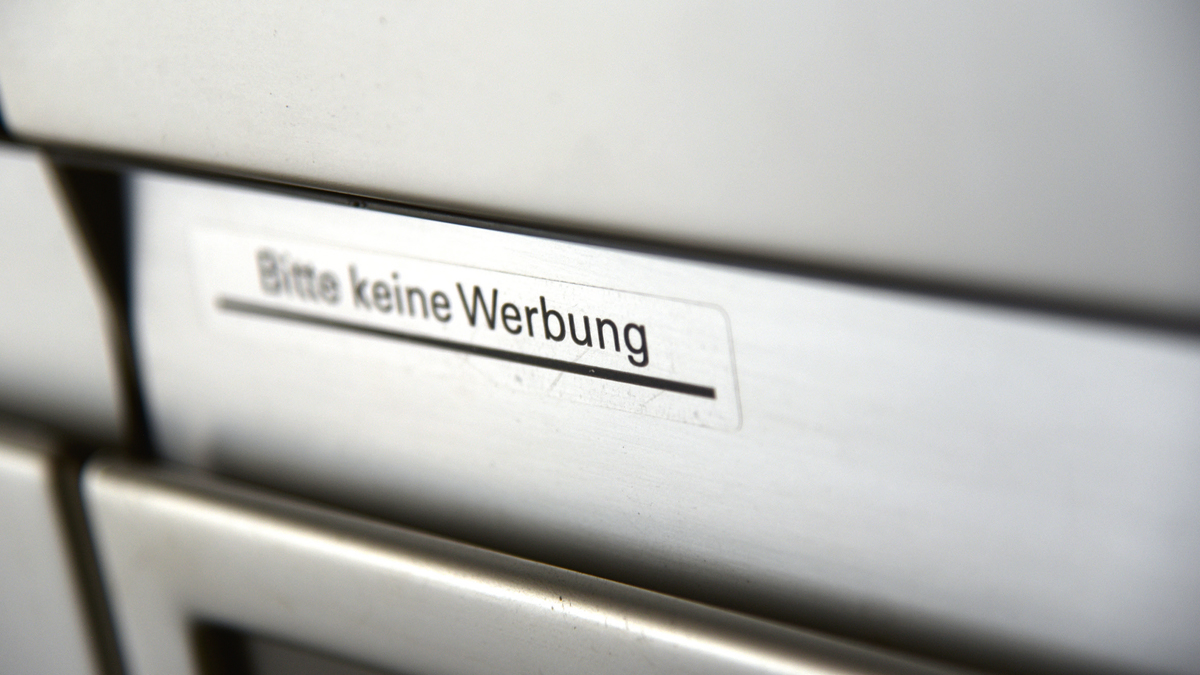
Is commercially motivated information from a telecommunications company regarding the expansion of the fiber-optic network—addressed «To all residents»—of such great public importance that “No Advertising” stickers, the Robinson list, and other individual requests to stop sending such mail may be disregarded?
Editorial
-
20 February 2019
The complainant said no and complained that the respondent had repeatedly disregarded his request not to receive any more advertising. The telecommunications company, on the other hand, took the view in its response to the complaint that partially addressed advertising mail addressed "To all residents" and distributed by the post office could not be stopped individually for individual residents. The distribution was therefore to be regarded as a permissible addressed mailing.
The Fairness Commission could not follow this argument and upheld the complaint - for the following two reasons:
Regardless of internal procedures and processes on the part of an advertiser or sales organization, commercial communication must comply with legal requirements. According to Art. 2 of the Unfair Competition Act (UCA), it does not do so if it disregards the wishes of the recipient, but instead violates good faith.
By law, every addressee of an advertising measure has the option of preventing commercial communication from being sent to them. They can make this known by means of a stop-advertising sticker, an entry in the Robinson list of the Swiss Dialog Marketing Association SDV or an individual notification. This right of objection would be nullified if the stop-advertising sticker were invalid for a partially addressed mailing, as an address "To all residents" would also not allow an entry in the Robinson list. In this sense, a partially addressed item is equivalent to an unaddressed delivery and must strictly observe the stop-advertising sticker or other individual notices.
Thomas Meier is Communications Officer of the umbrella organization KS Kommunikation Schweiz and media spokesman for the Swiss Commission on Fair Trading. He regularly reports on special cases of the Swiss Commission for Fair Trading in Advertising Week.
Strategic cooperation between Hutter Consult and StoryUp
The digital marketing consulting firm Hutter Consult and the video marketing agency StoryUp plan to collaborate closely on a strategic basis in the future. The two agencies plan to jointly develop services and seminars focused on digital communication and video marketing.
Editorial
-
20 February 2019
From strategic consulting to the creation and production of video content to paid distribution via the relevant channels such as Facebook, Instagram, YouTube, Google or LinkedIn, the two companies want to offer everything from a single source, according to the press release. Thomas Hutter, CEO Hutter Consult: "Video and content marketing is more in demand than ever, especially the high-reach social media platforms such as Facebook, Instagram and YouTube offer extreme distribution potential. A close partnership with StoryUp allows us to support and advise customers even more sustainably in this area." Stefan Huber, founder and CEO of StoryUp, adds, "Hutter Consult and StoryUp complement each other perfectly when it comes to, for example, developing a strategy, designing and producing videos, and then distributing them on the relevant channels with paid advertising. We at StoryUp come from content strategy and production, Hutter Consult is one of the leading digital marketing consultancies in German-speaking countries."
Chinese payment solutions are being introduced across the board in Tyrolean companies
Wirecard and Tirol Werbung are launching a new China Pay initiative. The goal of the project is to provide comprehensive coverage of the entire state with Wirecard’s payment solution in order to introduce the most popular Chinese mobile payment methods at numerous businesses in Tyrol.
Editorial
-
20 February 2019
Innsbruck Tourism, Kitzbühel Tourism, the Kufsteinerland Tourism Association, Ötztal Tourism, the St. Anton Tourism Association and Swarovski Crystal Worlds are on board as partners. At the start, 150 companies in the region will be equipped with the solution.
According to a Nielsen study, around 91% of Chinese tourists would be willing to spend and shop more abroad if more retailers accepted Chinese mobile payment methods. With this initiative, Wirecard and Tirol Werbung are therefore addressing the preferences of this target group. Among other things, Tirol wants to offer Alipay as a payment option in as many businesses as possible. Wirecard will handle the entire payment integration and processing process.
Total spending by Chinese tourists in Austria increased by 28% in 2018 compared to the previous year. This puts China at the top of the list of non-European shopping countries for tax-free purchases in Austria in 2018. With a share of 30 percent of all tax-free sales in Austria, China is the clear number one country of origin in the nation ranking, ahead of Russia (10 percent) and Switzerland (8 percent). While the average amount spent by non-European tourists was 508 euros, visitors from China spent an average of 616 euros on each purchase.
Holger Gassler, Head of Markets at Tirol Werbung, said in a press release: "We expect to gain a competitive advantage by being the first province in Austria to introduce Chinese mobile payment methods on a large scale. The idea of convenience in payment plays a major role for this target group in particular and can strengthen value creation both in the destinations and for the participating companies. The introduction of Wirecard's digital payment platform is also one of the first projects as part of Tyrol's digitalization offensive."
Roland Toch, Managing Director CEE at Wirecard, adds: "Experience shows that accepting Alipay as a new payment method can lead to an increase in transaction volume with travelers from China of more than 350 percent within one year. We are proud to offer our digital payment solution to hundreds of businesses together with Tirol Werbung and continue to drive the digitalization of payment processes. We look forward to expanding our partnership with Tirol and other regions in Europe in the future."
Fair offer: Comet positions EWB as the "Internetten".
After winning the competitive pitch, Komet is now handling the advertising for Energie Wasser Bern’s (EWB) website. The first campaign has now been launched.
Editorial
-
20 February 2019
EWB not only offers the people of Berne fibre-optic Internet at fair subscription prices, but also free additional services for new subscribers - from WLAN routers to free months.
Accordingly, Komet is positioning EWB as the service leader among local internet providers. And with a campaign that consistently uses the neologism "internett" and proves this claim with every poster design, every social media ad and every promotion.
While the posters advertise the various free additional services in five text variations, promotions and online communication surprise with an internal implementation idea: the attitude behind the campaign is immediately exemplified, passers-by on the street as well as Instagram and Facebook users in front of the screen are unexpectedly given internal compliments and offers.
Throughout the year, the campaign will be run or played out quarter by quarter, household by household, in parallel with the expansion of the EWB fiber optic network.
Responsible at Energie Wasser Bern: Bruno Spring (Project Manager Online Marketing), Lukas Zellweger (Product Manager Telecom). Responsible at Komet: Jeff Gerber (CD), Claudio Parente (AD), Andrea Zaugg (Creation), Daniel Müller, Luca Ferrari (Text), Corinne Hert (Head of Consulting), Claudia Shatri (Consulting), Merlin Wälti (Programming)- Online film production: Allmenfilms.
Viral film calls for psychotherapy to be included in basic health insurance coverage
In Switzerland, nearly one in two people experiences a mental illness at some point in their lives. Based on this finding, the Campaign Forum for the Federation of Swiss Psychologists (FSP) has produced a film.
Editorial
-
20 February 2019
It is used on social media to draw attention to the petition "www.huerden-abbauen.ch" to draw attention to this. In outpatient psychotherapy, there are access barriers that lead to supply bottlenecks and thus to waiting times of up to six months. The petition therefore calls for psychological psychotherapy to be included in the basic health insurance cover if it is carried out on a doctor's orders. This is a sensitive and controversial issue in terms of cost debates and rising health insurance premiums.
The campaign is going extremely well and has exceeded all expectations with almost 195,000 views for the video on the FSP Facebook page and more than 60,000 signatures for the petition so far, according to a press release.
Responsible at FSP, Federation of Swiss Psychologists: Philipp Thüler, (Communication / Marketing). Responsible at the Campaign Forum: Andreas Freimüller (Management), Philipp Lengyel (AD), Andrea Oertle (Project Manager).
The management of Dimando extends the partnership
Jörg Heynen and Peter Kohlhaas, the founders of the digital agency Dimando Marketing & Media, are welcoming 32-year-old Elias Schegg to the executive board as Chief Development Engineer and partner.
Editorial
-
20 February 2019
Dimando Marketing & Media, based in Lausanne, focuses on digital transformation and supports communication solutions for marketing and sales in industry, commerce and services. In a trio with the parent company Dimando AG (consulting) in Schaffhausen, Switzerland, and the other offshoot Dimando Projektentwicklung (in Berlin and Bad Dürrheim), Dimando Marketing & Media focuses on niche products and services for digital applications.
The expansion of the partnership was a logical step for Heynen and Kohlhaas: "If our customers are to participate in the opportunities of digitalization, consulting, concept development and technology must go hand in hand," Kohlhaas said in a statement. With Elias Schegg, they have been able to tie a graduate of the leading IT school EPFL to Dimando, who brings important know-how in the field of AI (artificial intelligence).
A special highlight for the new team: Elias Schegg manages development from Seoul (South Korea) and follows the upheavals in Asia from close quarters. Schegg comments: "More and more workplaces are virtually networked; even for many medium-sized customers, this type of management is now normal. We are well attuned, fully exploit the potential of digital communication internally as well - and of course important meetings regularly take place in person on site!"
Dimando employs eight permanent staff, plus around three times as many specialists as freelancers and several partner companies. Currently, the market launch of the Dimando Digital Workspace 2.0 is taking place, a work platform with a fluid user interface, high performance and effective security functions, which Dimando has developed for association and industry customers.
MetaDesign wins mandate for Swiss mountain aid organization
MetaDesign has been awarded the contract for Swiss Mountain Aid. The goal is to develop a brand that shows how the traditional mountain world and fresh ideas go hand in hand.
Editorial
-
20 February 2019
The aim of Swiss Mountain Aid is to counteract emigration and to keep mountain regions alive in the future. In addition to mountain and agricultural businesses, innovative minds from the gastronomy, hotel and tourism sectors are increasingly being encouraged to put their sustainable ideas into practice. In this context, Schweizer Berghilfe commissioned MetaDesign to develop a new image for the brand.
Ivo Torelli, head of fundraising and communications at Schweizer Berghilfe, praised the agency in a statement: "A good sense of our brand is important to us. With MetaDesign, we quickly got the feeling that Schweizer Berghilfe also has a high level of personal interest and that, beyond professional competence, the chemistry is right. We are looking forward to working with them."
Alexander Haldemann, CEO MetaDesign, returns the flowers: "The Swiss mountains are a unique and powerful symbol for the entire country - with radiant power throughout the world. As a cultural and living space, they deserve special attention and care. Accordingly, we are pleased to dedicate ourselves to the theme."
Basel design agency Suan receives international award
The design agency Suan Conceptual Design from Basel receives the international "Certificate of Typographic Excellence" award from the Type Directors Club New York.
Editorial
-
19 February 2019
The branding for the Wieland company receives its third award: the coveted Design Award from the Type Directors Club New York. The Certificate of Typographic Excellence is only awarded to around 12 percent of all entries. The Basel agency's design will therefore be included in the TDC's annual publication "The World's Best Typography" and shown at "The 65th Awards Exhibition" (TDC65) in New York City. The exhibition will then make the rounds in Canada, China, England, France, Germany, Indonesia, Japan, Poland, South Korea, Spain, Taiwan, Thailand and Vietnam.
This is the third time Suan has been recognized for this project this year. In addition to the TDC Award, the branding has already won the iF Design Award and the "Co&Co Selected" seal of approval from the Co&Co Magazine excellent.
Marina Bräm becomes Design Director for Tamedia's paid media
Marina Bräm, the former head of the infographics team, will assume the newly created position of Design Director for Tamedia’s digital paid media effective March 1, 2019.
Editorial
-
19 February 2019
In her new role in the team of Christoph Zimmer, Chief Product Officer for digital paid media, Marina Bräm will be responsible for the design and further development of the overall digital presence of the daily and Sunday newspapers. Bräm will initially work in a 70 percent position and will complete a part-time course in data science at Lucerne University of Applied Sciences and Arts.
The trained graphic designer worked in various advertising agencies before studying Scientific Visualization and Knowledge Visualization at the Zurich University of the Arts ZHdK from 2006 to 2011, where she graduated with a Master's degree in Design.
After working for Beobachter and Beobachter Natur and teaching at the ZHdK, she expanded her infographics expertise for NZZ am Sonntag from 2013. Alongside her role at NZZ am Sonntag, she worked for clients in the fields of media, corporate design, NGOs, internet marketing, research and science. She has headed Tamedia's infographics team since January 2016.
In recent years, she has expanded Tamedia's infographics expertise and has been involved in numerous award-winning storytelling projects with her Infographics team together with the Interactive team. In 2017, she also completed the three-month LEDE program at Columbia University in New York with a focus on data journalism and data storytelling.
Lucerne public prosecutor's office wants to arm itself against cyber criminals
The Lucerne Public Prosecutor's Office no longer wants to have to let cybercriminals go free simply because they are difficult to track down. It is calling on policymakers to provide the resources needed to equip specialists to combat this new form of crime.
Editorial
-
19 February 2019
For the first time in 2018, the Lucerne public prosecutor's office has carried out an extra statistical analysis of offenses committed with the help of information and communication technologies. It came up with 469 cases. 310 of these - exactly two thirds - were suspended because the perpetrators could not be identified. This is unsatisfactory, said Chief Public Prosecutor Daniel Burri on Tuesday at the annual media conference of the Lucerne public prosecutor's office.
Burri is convinced that cybercrime will also increase with digitalization. The development is worrying, he said. The police and public prosecutor's office must take a step forward so that Lucerne is not overrun by cybercrime. Together with the criminal investigation department, the chief public prosecutor wants to launch a corresponding project and show the Lucerne cantonal council what is needed by the fall. "We need more resources and options," said Burri. "That costs money."
Preventive effect
Burri envisages deploying specialized public prosecutors to deal with cyber criminals in future. Human resources are to be increased and cooperation with the criminal investigation department expanded. However, Burri also sees a need for action in terms of infrastructure. The specialists need offices and the necessary hardware and software.
Burri explained that there will still be cases in the future where the perpetrators cannot be identified. However, he also hopes for a preventative effect if word gets around that the Lucerne authorities are active in cybercrime.
Around 90 percent of the crimes that fall under cybercrime are crimes against property. For example, fraudsters advertise apartments or cars on the internet that do not exist and demand down payments from interested parties. Only 3 percent of cybercrime is pornography. (SDA)