Wrages agency for the promotion of creative forces

After 20 years at international advertising agencies, Folker Wrage plans to start his own consulting firm. His company, Wrage/Antwort, aims to help businesses find creative solutions to their business challenges.

wrage

In recent years, his work has largely been characterized by change management projects. Most recently, Folker Wrage spent just over a year in Istanbul until August 2013 bringing McCann Erickson there back "from almost zero to 100". Wrage's answers to change were also in demand when McCann Erickson in Zurich wanted to reposition itself better at the end of 2010. Its change management was already well underway when the headquarters in Frankfurt had to report the loss of the global budget for Opel. In Zurich, that was half of the business. As a result, the Swiss branch was closed in spring 2012. "A wrong decision," as Folker Wrage is still convinced today.

For him, it nevertheless turned out to be a good coincidence. "If it hadn't been for my subsequent transfer from Zurich to Istanbul, I doubt I would have taken up my studies again. While working for the creative minds on the Bosporus, Folker Wrage incorporated his experiences into a case at the renowned Berlin School of Creative Leadership and earned his MBA. The topic of his master's thesis was "U-Turn - How To Turn An Agency Around In 12 Months.

When the Turks were able to function independently again, the courage to become independent was also the next logical development for Folker Wrage.

His start-up Wrage/Antwort has been operating out of Zurich since December 2013 and offers companies various consulting formats. One of the core offerings is the combination of interim and change management with the aim of using management transition periods to tackle important changes in the company. However, involvement in the work process is also sought for shorter analysis mandates. "My basis for this is the conviction that after many rounds of cost savings and efficiency improvements, companies will increasingly need to better utilize and promote creative potential within the company in order to stand out from the competition. This applies not only to communications and product development, but also to all other areas of the company."

Discover creative potential

The offer is primarily aimed at companies in the creative industry, but is explicitly not limited to them. Wrage is currently in talks with his previous employer McCann and already has various projects for the Swiss branch of an international brewery in his client portfolio.

Wrage could also find possible answers if, for example, an agency or a company is weakening because the creativity that exists in that company cannot be properly transferred into the product. "We process too much and don't get anywhere with our creativity," would then be the complaint. Also, according to Wrage's assessment, there are still many agencies that are not yet able to bring the digital challenge optimally - organizationally and strategically - into their more classically oriented set-up. "That is then a question of structures and workflows. My contribution can be strategic or tactical - and always very close to the creative work," explains Wrage, who can look back on more than 20 years of experience in various agencies.

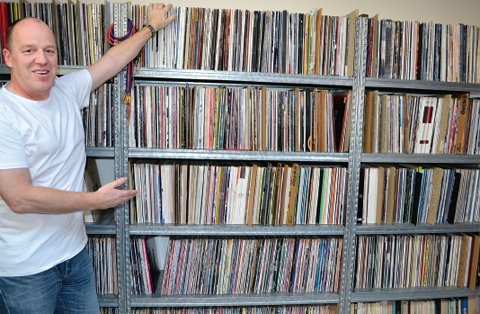
Folker Wrage began by studying psychology. Around that, he also worked as a flight attendant for five years. "But that's not a job you want to do your whole life. So the question came: how can I challenge my mind a little more?" Wrage found the answer in writing. The music connoisseur, who still regularly DJs in his spare time, became editor-in-chief for a Frankfurt scene paper. There, he mainly wrote record reviews. And because he knew a creative director at Ogilvy One, the cultural journalist was occasionally allowed to take on small jobs as a freelance copywriter. Because he liked his work, Wrage was eventually asked if he would like to go into advertising full-time. So in just ten years, the DJ progressed from junior copywriter to CD to executive creative director at Ogilvy One.

In 2003, Wrage moved to Leo Burnett in Frankfurt as CD. In 2006, the same responsibility followed in the same city at Saatchi & Saatchi. Finally, in 2008, the call to Zurich followed. At Publicis Dialog, the task of integrating Fisch. Meier.Direct in the most creative way possible.

After the fire drill at McCann Zurich, as mentioned, the troubleshooter who was no longer needed in Zurich was offered an even more difficult task within the network in Istanbul as a replacement. "I didn't know exactly what to expect there. But after a full day of talks at the agency and a Turkish dinner with the new CEO, I looked him in the eye and knew: a challenge awaits here - but also an opportunity." Three weeks later, Folker Wrage has moved to Istanbul.

McCann, at the crossroads between Europe and the Orient, "was de facto down, motivationally and business-wise." Through no fault of its own, it had lost two international clients. As a result, many employees had to be laid off. The chief creative officers left of their own accord. The chief marketing officer had also quit. "It was a shambles. But I made an effort to find the people I could motivate once again among those who remained to make a change. Then we made decisions very quickly, which on the one hand affected the structures, because the leadership was completely gone. On the other hand, I also wanted a new positioning for the agency. It quickly became clear to me that we had to create a digital offering that was creatively visible and of high quality. Otherwise, we wouldn't have a chance in the market and wouldn't be able to differentiate ourselves."

After just three months, things were back on track: the change manager was able to turn the creation "that stood there without any pride or self-confidence" into an "active, modern and cheerfully working department" again. There was also a bit of luck involved. "We won a big customer very quickly. As a result, the trust towards me also grew very quickly."

Development in different directions

In the fall of 2013, Folker Wrage returned from Istanbul to his stylishly converted farmhouse near Dübendorf. Here he was able to type the last lines for his master's thesis at the Berlin School of Creative Leadership into the computer in peace.

The idea for such additional training, however, had been dormant in his mind long before Istanbul. "At some point, when you've risen to senior positions in the creative agencies of this world, you have two options: You think it's great and you're happy with what you've achieved. Or - and that was the case with me - you want to take on more responsibility than just the creative department." Most agencies today are still organized in such a way "that even a CCO is still seen as a CD and less as a co-managing director."

But Folker Wrage was far too interested in also being able to lead and shape a company than being reduced to this classic CD position. "With an MBA, this is more recognized." With his international past in several agencies and now still this degree, Folker Wrage, as a management consultant and coach, expects that, at least in a first phase, mainly advertising agencies will be interested in his services. However, the "answers" should not only apply to pure advertisers, but to all companies where creative solutions need to be sought. "Many companies today have been trimmed and shrunk down far too much to be efficient: How are they going to improve? They're under extreme pressure. People are overworked and hardly motivated. In short, there's hardly any time left for an extra round. In such a case, I see it as my job to help this company regain a more creative view of how to work and how to be structured as well." Folker Wrage is convinced that there is more creative potential in every company than the company suspects "and I want to harness that." In which way and in which areas does not have to be defined at all in advance. "That comes out automatically in a conversation with the customer. They realize they could do more and then we go at it together and see where and how. There are always models."

ith his background in Germany, Wrage has naturally also thought about starting his own business somewhere other than Zurich. He wants to work internationally and a lengthy article "Shut Up And Play Your Guitar - Why Creativity Needs To Take Over" has just been published by him in the American magazine Forbes.

But the German feels very much at home in Switzerland, even after the decision of the last vote. "Switzerland is an international place. I can also work well from here for Germany and Eastern Europe." What's more: his wife Constantine, who "looked after" their shared apartment in Dübendorf during Wrage's Turkey stint, is also in the middle of numerous jobs here. As a freelance producer, she works for various advertising agencies and has just produced the new spot for Credit Suisse with Roger Federer and "Bonviva. "A huge box," as her husband proudly reveals. He also occasionally consults Constantine on the organization of his projects. But a joint agency is not a goal - at least for the time being.

Wrage/Answer is built primarily around the experience of its creative head and will work with an "exciting and diverse network." Wrage also relies on this network to communicate his new services. He has also developed it as a jury member at various competitions such as Cannes Lions, New York Festival, John Caples Award, Golden Drum, and as a speaker at various summits. This March, Wrage is speaking at a world printing industry congress on change management. In May, he'll be in Prague at a workshop on "How can I make my company more creative?" The agency founder is convinced, "By being present like this and communicating content and ideas, building my business develops all by itself."

When asked whether Wrage/Answer might even lead in the direction of a "real" advertising agency one day, the versatile consultant would like to "leave all options open. Many people in Zurich with whom he has worked would like to work with Folker Wrage in an agency again. But: "What will become of Wrage/Answer, I like to leave open. I think it's more exciting to put something together now that I'm convinced of. And then to see how people react to it. I compare this to prototyping, which is actually more familiar from product design. That's one of the principles I started with: with a business model that keeps adapting as the company evolves and goes through different phases and stages of change."

Andreas Panzeri
wrage2
(Photos: Andreas Panzeri)

To the point: Thank you

Newsrooms can be viewed as organized social systems. This was the view expressed by Manfred Rühl, the German social scientist, in a book published in 1969. It was in such an organized social system that Isabel Imper, a psychology major minoring in journalism, began working in September 2008.

As part-time online editor of Werbewoche, she and her two colleagues were responsible for ensuring that the website was constantly fed with new reports. Her tasks were many and varied. She had to make inquiries by phone, follow up by e-mail, request picture material, do research and request new picture material because the one she had received was not printable. She also had to keep up to date with what was going on in the industry and have a feel for what might be interesting. She had to write, struggle with image editing, and try to outsmart the content management system. She organized the messages on the daily newsletter page while putting off impatient people who missed their oh-so-urgent press release. She charmingly made it clear to the angry ones that their message "Groundbreaking innovation for the advertising industry " would be of interest to the readers of Werbewoche. She did all this dutifully, accurately and carefully. She was linguistically very gifted, interested, open to everything new and she wanted to make a career in journalism.

After Friederike Heinrich went on maternity leave, her position had to be filled. Isabel was one of the candidates. I trusted her with the new job, even though she had no actual journalistic training. She also had the confidence to take the step from part-time online editor to full-time print editor. I thought that was good. After a short break, during which she graduated as a lic. phil., she started as a full-time editor in December 2011. At the same time, she took courses at the MAZ to deepen her knowledge and learn new things. She quickly found her feet in her new job. She contributed new ideas and was interested in trying out new journalistic forms. She had a good graphic eye and she soon learned to take photographs as well. There, too, she wanted to know more, she continued her education and was never satisfied with the first picture she saw. As carefully as she formulated her texts, titles, leads and captions, she discussed the design of her articles with the graphic designer. In addition, she still found time to provide impulses to the online editorial team.

After just over five years, Isabel Imper is now leaving Werbewoche. We will miss her dedicated and charming manner. Fortunately, we are not losing her to another editorial team, because that would have been a bit upsetting. She will be joining Accelerom, a research and consulting company. I wish her all the best.

And who knows? Maybe she'll be drawn back to journalism at some point.

Pierre C. Meier, Editor-in-Chief
[email protected]
 

Werbeweischer strengthens the sales team

By hiring new sales experts, Werbeweischer is strengthening both its national and local sales activities. Adriano Fernandes is the new Director of National Sales.

The media expert has been working on the sales team at Werbeweischer since September 2012 (Werbewoche.ch reported). Christian Grass will assume the position of Senior Manager, National Sales. The 47-year-old, who holds a degree in sociology and is a communications expert, will be responsible not only for managing and expanding the client portfolio but also for strengthening the integration of traditional billboard advertising with digital touchpoints and below-the-line initiatives.

As Local Sales Manager, Claudia Kupferschmied serves clients in the cantons of Bern, Solothurn, and Basel. Kupferschmied has several years of experience in media sales, including as a client consultant at Publicitas and Espace Media.

Doppelrahm: Trailer for short film night tour created

The Doppelrahm agency produced the trailer for this year's Swiss Films Short Film Night Tour. Starring: a cat.

The Short Film Night Tour is an annual tour to promote short film in Switzerland, organized by Swiss Films. To promote the tour, Swissfilms grants a carte blanche to a Swiss production company each year to produce the trailer for the Short Film Night Tour. This year, Christoph Rahm of the up-and-coming Zurich production agency Doppelrahm was awarded the contract. Rahm, who together with his brother specializes in consulting, monitoring and producing audiovisual projects in film and print, focused on the logo bearer of the Short Film Night Tour: the cat. Following the motto "The Cat is Back", Rahm produced a short story that humorously stages the journey of the Kurzfilmnacht cat into the cinemas of Switzerland. The trailer can be seen in cinemas across Switzerland from now until the end of May and will be distributed online via the Vimeo profile of the Short Film Night Tour.

//vimeo.com/88245040

Director: Christoph Rahm
Production: Doppelrahm.ch & Petitgregoire.ch
Camera & Light: Jens Wörnle ; Petitgregoire.ch
Actor: Thomas Gerber
Horse care: Andrea Gerber
Sound design: Roman Bergamin; Studio B
Editing: Christoph Rahm
Motiongraphic: Thomas Wimmer
Grading: Roger Sommer
Runner: Veli Matkovic

The magic of paper

Alternative forms of communication are on the rise. A prime example is corporate publishing, which also appeals to a large number of new customers who previously had little or no communication. by Karl Lüönd

Statistics are available on almost everything in the Swiss media industry, provided it concerns traditional advertising media. The Swiss Advertising Statistics Foundation is the top source, but only for press, television, radio, outdoor advertising, address books, direct advertising and "other". Its approach is based on the classic understanding of "advertising". The fact that advertising turnover in Switzerland is said to have fallen from its peak (2006: CHF 5.241 billion) to CHF 4.411 billion (2012), i.e. by 16%, can probably only be explained by the outdated definition of "advertising" (www.werbestatistik.ch/Urs Wolfensberger, Head of Marketing & Sales, WEMF, 5.6.2013). If there were a way to measure the total marketing expenditure of the - let's say 1000 - strongest companies in Switzerland, we would certainly be looking at an increase of over 16% in this period.

In the background is the fundamental change in business in most industries. Closely linked to this is the emergence of alternative forms of communication - I say "alternative", not necessarily "new". While everything has been chasing after social media for years, very traditional forms of communication that have been adapted to the new marketing approach are quietly doing excellent business. My prime example is corporate publishing: the production of corporate and organizational media according to the formula of successful consumer magazines and newspapers, but also multimedia and digital channels.

I see a lot of powerful new companies emerging in this area, all of which are flying under the radar of industry statisticians but have now reached a considerable height. A small, random selection: Arnold.Kircher- Burkhardt, BaselWest, Crafft, Infel, Medianovis, Primafila, Prime, Raffinerie, Swisscontent, Wirz Corporate... I see these companies growing (I estimate by 6 to 12 % annually). Above all, I see them becoming more and more export-oriented, not least under pressure from their top customers, the large internationally active Swiss corporations. I see great, inward-looking employee magazines, such as the one from UBS (from Swisscontent) - and above all I see lots of new customers: Museums, theaters, public administrations, charities, associations...

The more explanatory and intellectual the industry, the more complex the offerings, the greater the tendency towards corporate publications. The reinsurer SwissRe is probably at the top of the list, having already needed a 170-page booklet in 2001 just for the list of its specialist publications and, according to the trade magazine Horizont, had over a hundred corporate media at the time.

In the meantime, many of these media have migrated to the Internet - for cost reasons, of course - but some have also returned to the Gutenberg galaxy, to good old paper. In a large insurance company, where the future of the printed employee magazine was in question, an employee survey showed an overwhelming majority: We want our magazine on paper. Consumers of internal media also know or sense that the value of print media is far greater than any message on a screen.

Provided you have a clever sales concept, your own media are an important alternative to traditional forms of advertising. It is a truism that you can control content and forms of presentation with CP. The more complex the content (and the market services), the more appropriate corporate publishing is, as it has long been at home in the Internet world and allows multimedia solutions at reasonable costs.

What's more, corporate publishing is free of competition, it can be precisely timed to coincide with ongoing marketing campaigns (e.g. in highly branched companies), it maintains and revitalizes the brand, and in many places it also serves as a basis for interesting multimedia presentations. Even if a lot is invested in content and design, the bottom line will be very, very reasonable.

Karl Lüönd is a freelance journalist and author
 

Swissmedic approval for advertising permitted in future

In the future, officially approved medications may be advertised with statements such as «medication approved by the authorities.» On Wednesday, the National Council, acting as the second chamber, approved a motion to that effect.

Swissmedic approval is a sign of the high quality and safety of a product, which should be permitted in advertising, wrote Councillor of States Joachim Eder (FDP/ZG) on his motion. In addition, buyers would be able to recognize more quickly whether a product is a medicine or a dietary supplement. The National Council tacitly supported the motion. The Federal Council did not oppose it. In its response to the motion, it stated that it was in favor of an official seal of quality that would indicate the quality of products in advertising. When implementing the motion, the Federal Council wants to ensure that it does not make it more difficult for patients to form an informed opinion. (SDA)

Image: Keystone
 

The Advertising Week impact check February 2014

We show how current campaigns are performing with consumers.

In terms of awareness, the Migros Club School ad by the advertising agency Metzgerlehner Worldwide came out on top, followed by the ad for Motorex by Matter Gretener Lesch and tied with the ad for Gruyère by the advertising agency Numéro 10. The Migros Bifidus ad by the advertising agency Wirz won the uniqueness criterion ahead of the Zurich Zoo ad by Advico Young & Rubicam and the ad for the National Museum Zurich by Studio Geissbühler. In the Brand Fit criterion, the Gruyère ad won ahead of the Migros Bifidus and Motorex ads. The Zurich Zoo ad won the Likeability criterion ahead of the ad for the National Museum and Migros Bifidus.

The Advertising Week Impact Check February 2014 (PDF)

Results_Report_Advertising_Week_Impact_Check_February_2014.pdf

Why WhatsApp is worth 19 billion

Yes, it can quickly make you dizzy: a staggering 19 billion dollars for a simple short message service programmed by a Ukrainian immigrant. by Manuel P. Nappo

(Fun Fact: Last year, the U.S. government allocated $18 billion for immigration enforcement.) 19 billion. A lot of money, considering that Facebook paid "only" one billion for photo-sharing app Instagram a year ago. In terms of functionalities, the app is quite simple. Users can exchange text and voice messages, photos or videos, or chat in groups via the smartphone app WhatsApp. But the social media giant still has good reasons to shell out such a high sum for WhatsApp. Let's take a closer look.

WhatsApp now has more than 450 million active users (70% of whom use the app daily). A few months ago, it had just 200 million (already more than Twitter back then). Around one million are added every day - no other online service is growing faster. The company is well on its way to reaching one billion users in the next few years. Once you have it, you can't and won't do without it. It is simple, practical and fast. WhatsApp has thus strongly established itself as an SMS alternative. "The truth is that there are very few applications that can reach a billion users," said Facebook founder and CEO Mark Zuckerberg at the world's largest mobile trade fair in Barcelona. Do you know how many employees a company with 450 million customers needs? 55. (By comparison, Amazon has 117,000 employees and "only" 224 million customers.) 55 employees (of which 32 are software engineers) handle about 50 billion messages per day. One developer per 14 million users.

But the number you should remember in connection with WhatsApp, and the reason why this transaction deserves a place in Advertising Week, is another. It is the number zero. 55 employees and not a single one in marketing or PR. Since its founding in 2009, WhatsApp says it has invested zero dollars (yes, you read that right, zero) in marketing. The app has spread through very simple word of mouth. Or how did you hear about it? "Advertising is insulting your intelligence and interrupting your train of thought," says Whats app founder Jan Koum on his blog. A critical thought that we cannot ignore. Because WhatsApp proves: Word-of-mouth is the most successful advertising of all. And nothing can stimulate global word-of-mouth like social media. Is your company ready for it?

Manuel P. Nappo, Director of Studies CAS Social Media Management HWZ Hochschule für Wirtschaft Zürich. www.fh-hwz.ch/smm
  

Customer growth and pitch wins

Several agencies have celebrated new clients and successful pitches in recent days. Among them this time: PR-KFS, Open Up, Scholtysik & Partner, and Statement.

Karl F. Schneider communicates for Coupon Plus

Kar-F-Schneider-PR-KFS

Mobile Internet use continues to be on the rise. In view of this rapidly growing market, Coupon Plus has expanded its portfolio and commissioned PR-KFS, Karl F. Schneider with the PR and communications work required for this.

Coupon Plus specializes in direct marketing on the web and on mobile devices. With mobile couponing in particular, the company has a sophisticated offering for generating leads and increasing frequency in online stores and retail stores. When it comes to Passbook implementations, Coupon Plus is one of the leading companies in Switzerland. The Passbook app, which is preinstalled on all Apple devices, makes it possible to store cinema and boarding passes as well as other virtual objects in the cell phone in addition to coupons. Each of these objects is equipped with a QR code that can be scanned on the spot. This greatly simplifies the boarding procedure at the airport with the smartphone, for example.

coupon-plus-logo


Search.ch searches and finds PR agency Open Up

open-up-logo

The PR and communications agency Open Up has been supporting the directory and service portal Search.ch in PR and media relations since the beginning of the year. Within the scope of an agency evaluation, Tamedia's company opted for the Zurich agency.
Open Up supports Search.ch in all aspects of PR and media relations. The mandate includes strategic communications consulting, copywriting as well as operational support in media relations. Jasna Smojvir, Head of Marketing at Search.ch: "I am pleased to have found a competent partner in Open Up, who will actively support us in the future with in-depth know-how and creative approaches."

search-logo


Scholtysik & Partner: Signaletik won for new Life Science Campus

scholtysik-und-partner-2

In a competitive process, the Basel-Stadt Building Authority and the University of Basel select the branding and design agency Scholtysik & Partner for the signaling concept of the new Biozentrum of the University of Basel. The Biozentrum is the first building block of the large-scale Life Science Campus, which will further strengthen Basel's reputation as a leading international research center for life sciences.

According to Mauro Pausa, project manager at the Building Department, Scholtysik & Partner convinced the client by linking classic, physical signaling with orientation using personal digital devices such as smartphones and tablets. According to Donner Trepp, project manager and user experience designer at Scholtysik & Partner, orientation in space by means of services such as Google Maps is so established and the technology so advanced that it can now also be successfully used for interior signaling.

The striking building was designed by Ilg Santer Architects. It houses several lecture halls, various seminar rooms, the new computer center for the entire university, and laboratory and work spaces for 40 research groups. Scholtysik & Partner worked closely with the architects. The goal is to achieve the best possible intuitive user guidance through the architecture itself and minimal signaling interventions that do not detract from the character of the building.

life-science-center-unibase


Statement now also supports the SBB

statement-logo


Statement is now supporting SBB with the launch of its upcoming European campaign in the area of brand and consumer activation. Alongside Contexta (ATL) and Maxomedia (online), the Zurich-based agency is responsible for all ideas and approaches around creating brand experiences and interactions with consumers on the street. "We chose Statement as additional reinforcement because the agency showed us creative, complementary ways and possibilities to the already planned classic communication," says Petra Thomann, Marketing/Communication at SBB.

sbb-logo-neu
 

Memories of Heike Findeis

Heike Findeis, the former managing director of Media Daten AG and Springer Business Media Schweiz AG, passed away on February 19 at the age of just 49.

When I received the news of Heike Findeis' death last week, I was at a loss for words. 

I still miss them today and I still can't understand that Heike is no longer here. The whole thing came as a complete surprise to me, because I knew nothing about her illness. She had to leave us far too soon. 

I got to know Heike about twelve years ago when she was setting up Springer Business Media Switzerland. I was editor-in-chief of the Media Trend Journal at the time. I liked Heike from the very first moment. Her fresh, unaffected manner quickly brought a breath of fresh air to the very dusty company. We got on well and one of my special tasks in my job was to introduce Heike to the Swiss media scene. I really enjoyed doing that. After a short time, there were changes at the publishing house and Heike asked me if I would like to take over as editor-in-chief of Werbewoche. I wasn't enthusiastic at first and turned her down. Together we looked for an editor-in-chief. We interviewed a lot of people, some of whom were shortlisted. When we were at an industry event together, I asked her who she had decided on. She beamed at me and said that none of the candidates would suit her. I was less than thrilled by this statement, as I feared that the whole interview process would start all over again. When she noticed the scowl on my face, she laughed and just said, "Don't worry, I have a candidate - you." And so it was that - after thinking it over again - I accepted the next morning. 

Why am I telling you all this? This little story says a lot about Heike Findeis. Charming but determined, she pursued her plans. A wonderful time began. She appreciated my journalistic experience, I appreciated her management skills. When she had to leave the company under undignified circumstances, we stayed in touch. We didn't see each other often, but two or three times a year was enough. But we often spoke on the phone, and countless text messages - her preferred communication channel - went back and forth. The last time we exchanged text messages was in November 2013. Today I blame myself for not taking the time to write to her during the Christmas and end-of-year rush. It's too late for that now. She lives on in my memory as the headstrong, successful and charming woman she was. I am very sad that she is no longer with us. I wish her parents much strength during this difficult time. 

Pierre C. Meier, Editor-in-Chief 

Some hum, many sleep

An initial survey on video marketing by Swiss brands on YouTube shows that while some are already successful, most are still barely active.

200 went to the start. These Swiss brand names were selected rather arbitrarily (although not randomly according to scientific criteria) from corresponding directories. Only brands of media titles were excluded, since here, unlike with the other companies, communication is quite actually the corporate purpose. That was last fall, and since then data has been collected daily (freely accessible via a program interface). Now, after a good two months or exactly 69 days, a first interim balance can be drawn: How do Swiss brands perform on YouTube?

Half missing

The first finding was that no trace of half of the selected brand names could be found on YouTube. This was after weeding out will-o'-the-wisps from the rest of the world that - for whatever reason - have a Swiss brand name in the title. It's quite possible that a company channel didn't get caught in the programmed nets - but what's the point of a brand presence without the brand name? (This question can be answered by Publisuisse, for example, which changed the name of its channel from the original "publisuisse" to "Rainer Binggeli" during the observation period - a brief web search revealed that the man there acts as "Head of E-Channel"...).

The sleepers

Of the 100 or so brand names found, the number of videos that can be viewed has remained unchanged for 27 of them (i.e. just under a third). These include companies that have embedded a few videos on their website and parked them on YouTube - which can hardly be interpreted as an indication of an elaborate video marketing strategy. The Ovomaltine Wander AG channel, for example, is at a standstill. But the reason is quickly clear: Since the career of skiing ace Didier Cuche ended, no video talent has apparently emerged as a successor among the new sponsors. Or there are companies that have apparently forgotten about their YouTube presence, such as Feldschlösschen Getränke AG. There is the 2012 barbecue spot for beer marinades in the three national languages as well as a film about the stand at the BEA of the same year. Those who maintain their own YouTube channel remove outdated videos, which can lead to a drop in the number of videos available. This is so observed on nine brand channels, with most showing good increases in views. It is also worth noting that a good third of the channels observed have changed the title of their channel, albeit often only slightly - this is also an indication of dynamism and the spirit of optimism that currently prevails in video marketing.

The high flyers

Before the top performers are shown, the question arises as to the relevant criterion and, consequently, the relevant metrics in this area. The focus here is on these metrics:

Views: When a video is started, it counts as a call, regardless of whether only one second or the whole clip was watched. This is a disadvantage. What's more, such clicks can be easily manipulated (even if it's just to sell the video to the boss). Until August 2012, views were an important criterion on YouTube, which is still useful for estimating the popularity of a video or a YouTube channel. Based on this, the Werbewoche panel produced the following ranking as of the end of February:

w1

Dwell time (watch time): The new King criterion is based on an estimate of how long a video has been viewed. Videos with good dwell time values are ranked higher by YouTube in search results and recommendation lists and thus have an easier time achieving greater reach. Dwell time data is not freely available, but can only be accessed by the respective channel owner on YouTube. Anyone who seriously pursues video marketing will continuously monitor the development of this metric and try to derive the right future procedures from it.

Subscribers: Anyone who subscribes to a channel will henceforth receive a notification as soon as a new video has been uploaded, and these will also be displayed on the personal YouTube homepage. Subscribers are the most loyal fans, so their number is an obvious core metric, especially when it comes to improving dwell time. This is because subscribers often watch videos longer than average visitors. To increase dwell time, it is therefore important to attract subscribers. Not only is the number of newly acquired subscribers important, but also the number of dropped subscribers is advantageously tracked on an ongoing basis and associated with the latest videos. In this way, it becomes clear which videos have brought additional subscribers and which have scared them away. The ratio of views to subscribers is also often taken into account. If your videos are often clicked on, but generate hardly any subscribers, this should set alarm bells ringing.

In the Werbewoche panel, the subscriber rankings are as follows:

w2

The list of channels that gained the most subscribers during the observation period is interesting, because many names from the top list with the number of subscribers reappear here, suggesting a correlation.

w3

Binding (engagement): Subscriptions are a way for the audience to interact with the videos and express their feedback. On YouTube, other metrics can be tracked: the number of likes (positive or negative), how often a video was added to one's favorites or shared with others, how many comments there were on a video, and what are the main messages. Video marketing is hardly ever done alone, but in conjunction with other channels, so keep an eye on these aspects, for example: How often was a video tweeted about, how often was it embedded on other sites (blogs, etc.), how often was one's own website accessed because of a video, and how often was a product or service sold because of it. If a product video has a four-digit number of views, but no further indications of engagement activities, it is probably advisable to rethink one's own approach.

The frequent producers

Also on the list of channels that produced the most videos (both overall and during the observation period), names from the above lists appear again. This is a strong indication that whoever produces many videos has many views and many subscribers, and thus is likely to have a successful video marketing strategy. However, this is not necessarily the only silver bullet: Roger Federer, for example, has just grown by a single video, which was easily enough for a top position (1,185,329 views, +27,574 and 21,511 subscribers, +357).

w4

Steep growth overall

The great dynamism that currently exists in video marketing becomes apparent when evaluating the added figures of all active channels in this exploratory study. If the changes from the 69 days observed are converted to a year, there is a good nine-fold growth in the number of views. The figures for uploaded videos increase by just under six times and channel subscribers by a good six times.

Christoph J. Walther

w5

Goldbach in the red, but not because of quota dispute

Although the new method of measuring TV ratings has resulted in private broadcasters seeing their market shares drop by an average of about 20 percent, this did not put a dent in Goldbach’s finances in 2013. Instead, the advertising agency struggled with other problems.

The rapidly growing company suffered setbacks in its foreign expansion: Goldbach withdrew from the unprofitable business in the Czech Republic. In Poland, Romania and Germany, it adjusted intangible goodwill downward by around CHF 20 million, as announced ad hoc in December. The launch of the Internet TV box Wilmaa, through which Goldbach intends to distribute advertising, planned for last Christmas, is also still a long time coming. Goldbach has reduced its stake in the company from 75 to 20 percent and written off its investments, depressing profits by 4.7 million francs. Below the line, Goldbach posted a loss of 16.1 million francs - after a profit of 9.2 million francs in the previous year. Adjusted for the special effects of around 25 million francs, the operating profit increased by 32.6 percent to 9.3 million francs, as the new company management with Michi Frank at the helm emphasized in Zurich on Thursday.

Take a breather

Goldbach is reviewing its strategy and wants to focus on its core competencies, Frank said. The board of directors has been chaired since last year by former Swisscom CEO Jens Alder, who wants to turn Goldbach into a growth story again, as he said at the presentation of the financial statements. A withdrawal from the still loss-making Central European business is not on the agenda. After cutting 37 jobs and withdrawing from the Czech Republic, an operating profit is also expected here in 2014. Overall, it will be a transitional year with stagnating sales and a profit in line with 2012 (CHF 9.2 million). Goldbach sees growth opportunities in particular in the online business and in the increasing merging of media genres. Sales of Internet video advertising, for example, already increased by 28.9 percent last year. The still small mobile segment even doubled its sales. However, Goldbach continued to generate two-thirds of its sales from TV advertising, much of it from the Swiss advertising windows of the German families of RTL and ProSieben Sat.1 channels. Despite the legal dispute and the associated uncertainty surrounding Swiss TV ratings, Goldbach increased its sales in the TV business by 3.9 percent to CHF 310.6 million.

Reacted to new TV ratings

Division President Alexander Duphorn explained that the increase was not only due to the five newly marketed channels (DMAX, RTLnitro, n-tv, sixx and N24). Goldbach also countered revenue losses by guaranteeing advertisers reach. In concrete terms, this means that the spots were repeated until the promised audience figures were achieved. The new TV data only became known in the second half of the year, after there were technical problems and then the 3+ station obtained a ban on publishing the data. Faced with massively lower market shares, advertising prices per viewer were raised. After all, advertising campaigns that had worked before were no less doing so only because of a new ratings measurement method, Duphorn said. In addition, more advertising time was sold during the day, where the private stations suffered lower market share losses.

According to Duphorn, the absolute prices for TV ads across all stations fell by only a single-digit percentage on average. In 2014, however, he expects a slump in the TV business with a continuing decline in reach. In addition, the Olympic Games and the World Cup will be watched primarily on public stations. (SDA)

get_footer();