Newsnet launches the "Manage your Boss" blog

Starting on Tuesday, a new blog, "Manage your Boss," will appear weekly on Newsnet. In it, Caspar Fröhlich, executive coach, deals with "leadership from the employee's point of view", i.e. topics that move dissatisfied employees.

Many of us feel unfairly treated, stressed, or underappreciated by our bosses. "But it doesn't have to be like that," says Caspar Fröhlich. That's why he gives tips along the lines of "How do I lead my boss?" or takes up topics such as "Help, my boss is a choleric." The blog author does this in a practical, true-to-life and, above all, entertaining way. The users should have a very concrete benefit: namely, to be able to derive behavioral options and courses of action for their own professional situation.

Since 2007, Caspar Fröhlich has been advising senior management executives in complex and emotionally challenging situations. He supports boards of directors and executive management in increasing team performance. The management consultant and executive coach would now like to focus on the employee for the first time on Newsnet: "There are too many dissatisfied employees in Switzerland who complain about their boss. This may have to do with the fact that their boss is rather difficult, but also with how the employee reacts to it. I give readers tips on how to deal better with their bosses - after all, everyone has the boss they deserve!" The 48-year-old himself has no shortage of experience with superiors: "Of course, I have experienced many conflict-laden situations. Most of the time, however, my reaction has tended to fuel the conflict - instead of resolving it. A better reaction could have defused the situation significantly." That's why Fröhlich wants to use the blog to inspire users to react skillfully in such situations - also so that they don't repeat his typical mistakes.

"Manage your Boss" appears weekly on Tuesdays on Tagesanzeiger.ch.

Blog.tagesanzeiger.ch/manageyourboss/

Massively increased advertising impact through in-store radio

Goldbach and Coop conducted an impact analysis of the in-store radio campaign for the Milka Snax brand on behalf of Mondelez. The results of the study clearly show that in-store radio is effective—even after the campaign has ended.

In October 2013, the Milka Snax in-store radio advertising campaign ran for one week in a total of 761 Coop sales outlets. The subsequent study determined the impact of the spot on the sales of the advertised products, comparing the indexed sales of the products in the stores in the three weeks before, the week during and the three weeks after the spot aired. Two analyses followed: a first on the sales performance of the total of four Milka Snax products (Milka Crispy Snax, Milka Popcorn Snax, Milka Pretzel Snax and Milka Daim Snax) in the 320 outlets carrying all four products, and a second for the most heavily distributed product, Milka Daim Snax, available in the 761 outlets selected for the study.

During the week of the campaign, cumulative sales of all four Milka Snax in the 320 outlets where they are listed increased by over 100 percent compared to the average of the previous three weeks. In the 761 outlets where the leader Milka Daim Snax is listed, its sales also increased by over 70 percent compared to the previous period. According to the press release, it is also worth noting that the in-store radio spot had a major after-effect: during the three weeks following the end of the campaign, sales of the advertised items were still clearly above the previous level in both analyses.

UE_Milka-Daim-Snax
UE_Total_Milka-Daim-Snax

Willi Meyer, Head of Sales DOOH at Goldbach Media: "Our Coop Instore Radio is an absolute POS hit, offering well-known brands the opportunity to place the final call-to-action where the purchase decision is made. Studies conducted by us in 2013, in particular the Milka Snax study, show an increase in sales of up to 105 percent during a campaign. Of course, the sustainability of the campaigns is also particularly pleasing. Mondelez Switzerland and Coop still benefited from increased sales in the weeks after the end of the campaign, without a spot having run."
 

Digital natives prefer commuter newspapers

A representative study by 20 Minuten shows that commuter newspapers are the most widely used source of information among digital natives.

As part of an internal representative study conducted in the online panel of the Link Institute for Market and Social Research, 20 Minuten examined media usage behavior and the image of 20 Minuten in the target group of 15- to 25-year-olds (digital natives) in German-speaking Switzerland.

The results show a high acceptance of both the commuter newspaper and the digital offering of 20 Minuten. Surprisingly, even more digital natives inform themselves about world events via commuter newspapers than via news portals.

77 percent of the 15- to 25-year-olds surveyed in German-speaking Switzerland obtain their information via commuter newspapers (20 Minuten and Blick am Abend), 61 percent via TV, 54 percent via radio and 51 percent via news sites and/or news apps (desktop or mobile devices). 34 percent say they get their information via paid daily newspapers and 33 percent via social media. Among 15- to 25-year-olds, commuter newspapers are the source most frequently cited (47 percent) as the first place to find out about important world events. In second place, at 35 percent, are news sites and/or news apps (desktop or mobile devices).

Digital natives: in bed with the 20-minute app

The target group surveyed particularly appreciates the topicality, youthful flair, clarity and entertainment factor of 20 Minuten Print. 20 Minuten Print is rated by 15 to 25-year-olds as more likeable, innovative, informative, younger, and "cooler" than its competitors, among other things. The digital offerings of 20 Minuten (website, app) are rated even better than 20 Minuten Print by the target group surveyed; the 20 Minuten app in particular is very well received by 15- to 25-year-olds. This is also the only news app among the top three apps used by 15- to 25-year-olds first thing in the morning in bed and last thing in the evening before going to sleep. Only WhatsApp and Facebook are mentioned even more frequently than the 20-minute app. The 20 Minutes app is thus clearly the most popular news app among 15- to 25-year-olds in German-speaking Switzerland.

About the study

Population:
15- to 25-year-olds in German-speaking Switzerland who use the Internet several times a week (97% of the German-speaking Swiss population aged 15 to 25, according to MA Strategy 2012)

Sample:
792 15- to 25-year-olds in German-speaking Switzerland who use the Internet several times a week

Confidence interval total sample:
+/- 3,6%

Method:
Online survey in the panel of the LINK Institute for Market and Social Research.

The data collected was weighted according to gender, age, education, employment, region, use of 20 Minuten Print and use of 20 Minuten Online (target specifications MA Strategy 2012). The sample is thus representative of regular Internet users between the ages of 15 and 25 who live in German-speaking Switzerland.

Survey Period:
The survey lasted from September 2, 2013 to September 14, 2013.

Image: Keystone


Wirz Corporate develops brand identity for OC

Tages-Anzeiger / Newsnet implement long-form stories commercially for the first time

After the Tages-Anzeiger editorial team began experimenting with long-form stories in December 2013, the Tages-Anzeiger publishing house is now using the long-form story format for the first time with an advertising client: Globus.

In December, Tages-Anzeiger Online published its first so-called long-form article, an elaborately laid-out story with multimedia functionality on the topic of "What will 2014 bring? In major interviews with Leon de Winter, Corine Mauch and Simon Ammann, the Tages-Anzeiger shed light on the year ahead. Further long-form articles were successfully published on the city council elections and the Olympic Games in Sotchi.

Now the long-form format is being used commercially for the first time. In collaboration with Globus, Tages-Anzeiger has taken the content of the print supplement for the opening of the new men's department at Globus Bahnhofstrasse Online and prepared the content for web and mobile. At Globe.tagesanzeiger.ch the long-form story can be accessed over the next two weeks. A reference in the print supplement and a QR code draw attention to the content on the web. At Tagesanzeiger.ch will be linked to the exclusive Globus Long Form story for two weeks with billboards and mobile teasers.

globus_longform_front
globus_longform_dietermeier
globus_longform_billboard
 

The youngest remember best

APG|SGA’s market research boasts an impressive collection of results from its Poster Performance Index (PPI). The recently published report «APG|SGA Market Research – Best Practice» documents the advertising impact of posters.

The average of all 962 campaigns tested to date and across all target groups is 45% for recall, 62% for brand recognition and 64% for liking. These results are unique and impressive in an intermedia comparison. The youngest test group of 15-29 year olds has the significantly highest value with 52% recall. A clear finding after thirteen years of poster research: media-appropriate artwork increases the potential for success - in other words, striking subject design that is easy for the viewer to grasp. And as the advertising pressure increases, so does the recall of the poster campaign. These and other facts about PPI can be found in the newly published brochure from the "APG|SGA Market Research - Best Practice" documented and clearly summarized.

PPI-Best-Practice-2000-2013

PPI - a classic in advertising effectiveness research

The Poster Performance Index PPI is a post test that has already become a classic, according to a press release. It measures the advertising effectiveness of poster displays according to the criteria of recall/recognition, brand recognition and liking of the campaigns. The survey areas are the conurbations of Basel, Bern, Geneva, Lausanne and Zurich. As an exclusive component of the APG|SGA service offering, the PPI provides advertisers with information on how efficiently they are investing their money and what the cost/benefit ratio of their poster campaigns is. For customers, media and advertising agencies, it is an important communication controlling tool by means of benchmarking.

Pioneering work for Swiss out-of-home advertising

In 1997, APG|SGA began testing the qualitative impact of its clients' poster campaigns as part of its research program - pioneering work for Swiss out-of-home advertising. After initial, successful trials, today's Poster Performance Index PPI emerged, which has been continuously developed and refined. In 2014, APG|SGA will again regularly survey the impact of the most important poster displays. Eight survey waves are planned in the PPI program.

From the PPI best list

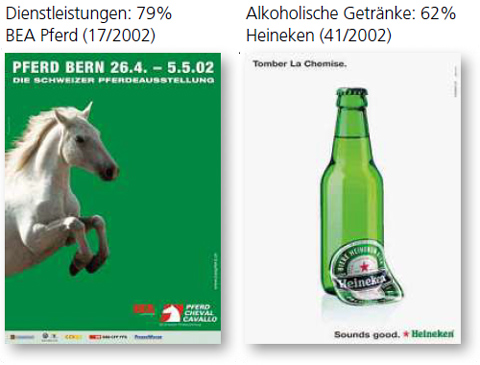
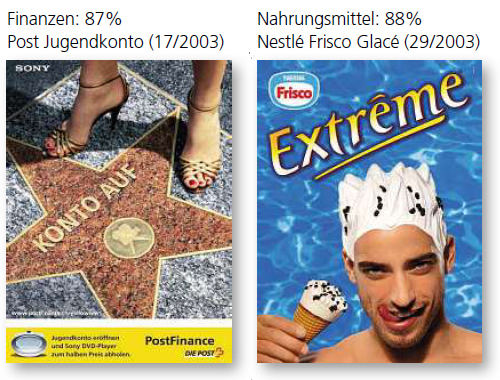
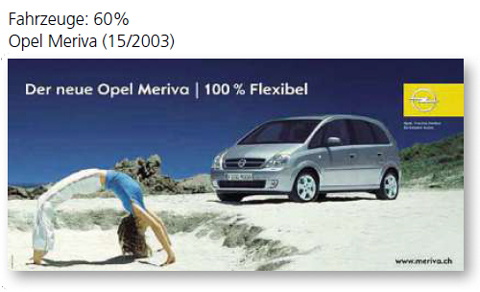
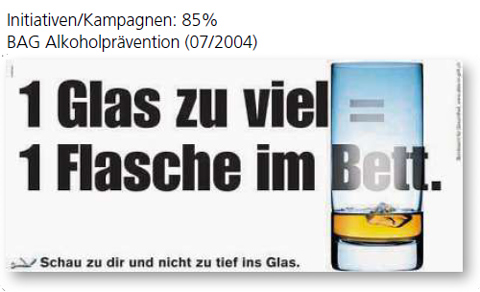
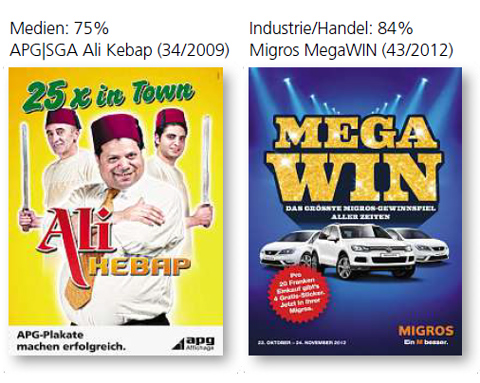
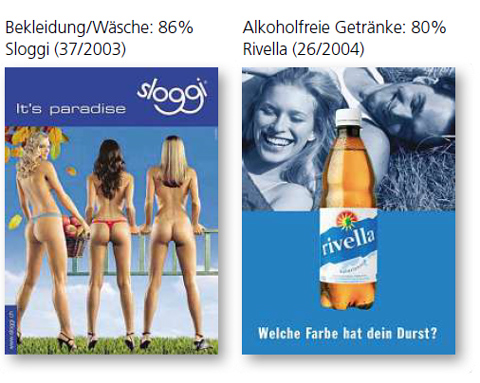
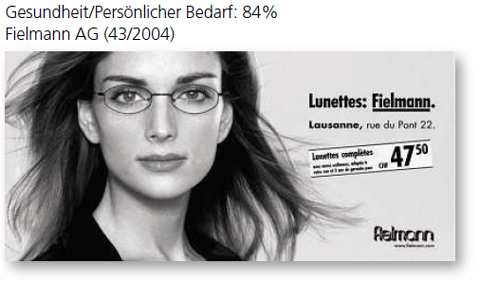
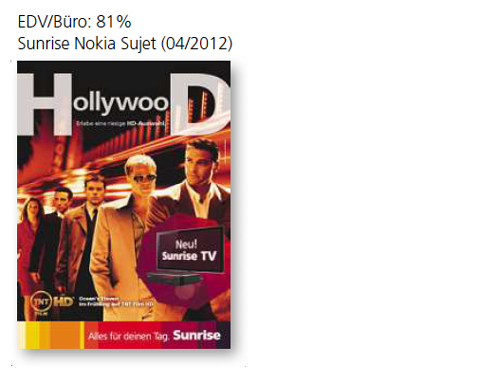
Differentiated by sector, the average PPI values measured for poster campaigns vary considerably in some cases. This is due to the varying degrees of complexity of the products and services to be advertised. However, with a clever strategy and adequate artwork that focuses on the essentials, it is possible to achieve top results with poster advertising in all sectors. This is demonstrated by the recall values of the subjects shown here. These are the current highest values achieved in twelve different sectors over the years.

er-01
er-02
er-03
er-04
er-05
er-06
er-07
er-08

13 Questions for... Reinhold Weber

Reinhold Weber, owner and director of the Reinhold Advertising Agency, reveals in our series «13 Questions for...»—among other things—when he plans to become the world champion in the 110-meter walker hurdles.

reinhold_weber_12

Weber answers not just 13, but 29 questions in the online version of the series.

1. what is it impossible for you to do without?

On sarcastic, incorrect, pitch-black humor.

2. where and how have you ever bluffed in your life?

Always in interviews.

3. you could swap your smartphone with someone else's for a day. Would you? And if so, with whom?

With Barrack Obama. Then I can listen in on what he does with my cell phone that day.

4. if you had not become an advertiser - what then?

Certainly not a sportsman, but possibly a journalist - although I always wanted to be a forester when I was a boy.

5. has your media behavior changed in the last three years?

I still read from left to right, but much more selectively, so really only the cult newspaper.

6. what do you see as the biggest challenge for advertising at the moment?

To teach all the officials and cost optimizers that advertising is actually something very simple and a great idea is worth something.

7. is the opinion true that you can't grow old in agencies, or is that a prejudice?

I know enough other examples, but tendentially that's true. Young people are probably cheaper and easier to manipulate.

8. what are you sorry for?

That I didn't buy a 1959 Gibson Les Paul 20 years ago; it would be worth around $200,000 today and I'd still never give it away.

9. what do you never want to have to hear about yourself?

"He is such a sooo nice person."

10. which advertising medium do you find abominable?

The somewhat graying wearers of polo shirts with those oversized brand logos on them. By the way, they also like to wear these bright red or frog-green pants.

11. can you tell us a little secret?

I am not gay.

12. what are you determined to achieve?

In 20 years: the world champion title in the rollator sprint over 110m hurdles.

13: Why would you advise or advise your children not to seek a career in advertising?

To: "It can be a hell of a lot of fun." Off: "There are a hell of a lot of people in the industry now who will spoil that fun for you."

14: For what would you work for free for one month (one week)?

I don't work for free. But a free week in the kitchen of Martin Surbeck or Rico Zanodella - I would gladly accept, to learn something new.

15. what does not come to the office under any circumstances?

A potted plant.

15. what would you most like to promote?

Again for a newspaper or a car would be nice.

16. which advertising should be banned?

This so-called shock "advertising" of the EU on cigarette packages. It does no good, but expropriates all those who built the brand. GDR just.

17. was there a moment in your life when you thought: Wow. This is great. And it's from me!

I have humbly thought that quite often 🙂 .

18. the best self-promotion?

Good work.

19. what was the most fun lunch partner?

Paul Gredinger, because he always looked at everything, but really everything, from a completely different angle.

20. the best testimonial ever?

The Personality campaign from Vitra. In all modesty.

21. do you tell other people how much you earn?

Yes. To the tax office.

22. what do you personally think about the effect of advertising?

That an advertising journal should not ask such imprecise questions.

23. do you fall for advertising?

Whenever something is thought of and done super well, I function and rejoice in it like a normal human being.

24: What do you think about owned media?

One instrument of many in the media orchestra, which, however, is not played coherently by many due to a lack of sheet music.

Have you ever thought about leaving the advertising industry?

Yes, on my first day working in advertising back then at Wirz.

26. a buzz word that gets on your nerves?

The buzz word "buzz word."

27. what inspired you to enter the advertising industry?

Howard Gossage as well as the ads from GGK.

What would you not promote under any circumstances?

Basically for everything, but far from all people in advertising.

29. which websites do you use regularly?

Search engines, media sites, Gruhn.com, Cult.ch, Emma.com

Reinhold Weber is the owner and director of Reinhold Werbeagentur in Zurich as well as one of Switzerland's most decorated advertisers (including two-time Advertiser of the Year, 1987 and 1991). He was inducted into the ADC Hall of Fame this year. His agency Weber Hodel Schmid W,H,S was one of the leading advertising agencies in the 1990s.

The "13 Questions" have so far been directed at:

Markus Good
Nadine Borter
Stephan Oehen
Thomas Wildberger

Spot: "Engadiner" re-staged

Spot Werbung, a full-service communications agency based in St. Moritz, has developed the new branding for the Engadin Ski Marathon. With approximately 13,000 participants, «Der Engadiner» is Switzerland’s largest cross-country skiing event.

The Engadin Skimarathon is not only one of the most important mass sporting events in the country, but also a popular meeting place for the assembled cross-country skiing world elite. The St. Moritz full-service communications agency Spot advertising won the pitch for the revision and modernization of the entire event appearance in summer 2013. In the course of this, the new marathon logo was presented on Marathon Sunday, March 9, 2014. In addition to the new corporate design, Spot will also be responsible for all print media and the digital communication of the event in the future, according to a statement. The new website of the "Engadiner" will go online in the course of April.

New logo as the basis of the new appearance

The basis of the future appearance is the new logo. This contains elements from the skating movement and at the same time symbolizes a snow crystal. The dynamics of the sport are reflected by the warm colors, the blue stands for sky and snow. The internationally renowned event shows its Swissness through the discreet Swiss cross, and its long tradition through the year. The slanted "A" in the word "Skimarathon" is a reference to the old logo. For the first time, a presenting sponsor, Helvetia, is also integrated into the logo.

Engadin_Skimarathon_neues_L_0
 

Keystone brings World Press Photo to Zurich again

For the seventh time, the Swiss photo agency Keystone is bringing the World Press Photo exhibition to Zurich. From May 9 to June 1, 2014, the award-winning photographs will be on display at the Folium in Sihlcity.

The World Press Photo of the Year 2013 was taken by the US-American John Stanmeyer. It shows a group of African migrants on the coast of Djibouti city during the night.

WORLD-PRESS-PHOTO-OF-THE-YE

Lifting their cell phones, they try to catch a favorable phone signal from the neighboring country of Somalia - a sparse connection to relatives abroad. Djibouti is a common stopover for migrants passing through from countries like Somalia, Ethiopia and Eritrea to seek a better life in Europe and the Middle East. Stanmeyer photographed for National Geographic on February 26, 2013.

The 19-member international jury awarded prizes to the best works in 9 categories from 98,671 entries submitted by 5,754 photographers from 132 countries. Jillian Edelstein, jury member from the UK/South Africa, says of the World Press Photo of the Year: "It's an image that connects to so many other stories - it opens up discussions about technology, globalization, migration, poverty, despair, alienation and humanity. It's a very subtle, powerful and nuanced image. It's so subtly and poetically done, yet full of meaning, and it conveys themes of great seriousness and concern in today's world."


New label for the creative industries in Lucerne

"made in Lucerne" is the new label for the creative industry in Lucerne. One of its aims is to unite the Lucerne industry, promote it to the outside world and encourage exchange.

Studies show the economic potential and importance of the creative industries and their pioneering role in new business processes, work design, media technologies and innovation, as detailed in a press release. The city of Lucerne also recently addressed the topic in its 2020 cultural agenda, among other things. The new "made in Lucerne" label brings together Lucerne's creative industries under one roof in order to better exploit and market this potential in the future.

Unbenannt-22_3

In the first phase, the focus will be on exchanging ideas, coordinating measures and networking. The first event to launch the new label will take place on Thursday, March 13 at 6 p.m. in the Neubad Lucerne. After that, monthly meetings with input presentations are planned.

"made in Lucerne" pursues the following goals:

- Raise awareness of Lucerne's creative industries and their value creation and economic significance in society and the economy
- Strengthen the Lucerne region as a location for the creative industries (nationally and internationally)
- Uniting players in Lucerne's creative industries, promoting them to the outside world
and market
- Promoting exchange among the creative industries in Lucerne
- Pooling resources, potential and strengths within Lucerne's creative industries
- Raising awareness of Lucerne's creative industries
- Recognizing and tackling problems at an early stage
- Creating spaces for Lucerne's creative industries

Founding members

Albi Christen, Clou creative agency
Andreas Troxler, Troxler office
Greg Zeder, Little Jig
Kathy Bajaria, KulturKopf
Lukas Fischer, Netnode
Maurus Domeisen, Mixer
Marco Sieber, Mixer
Tobi Lauber, Accomplices

More on: Madeinlucerne.ch

Fashion house Schild launches its own journal

The Schild fashion house launches the Schild Journal, which appears six times a year. Mark van Huisseling is project manager and responsible for the content.

The journalistic magazine features stories and news that interest the target group. In the first issue, for example, there is new fashion available at Schild, presented by Dominique Rinderknecht, Miss Switzerland 2013, as well as the Schild history, a piece of Swiss economic history, and a travel report on Sicily. Each issue also features well-known people writing about things close to their hearts, in number 1 for example Andreas Caminada (about his watch) or Philippe Gaydoul (first memory of fashion). Mark van Huisseling also directs, among other things, the style and fashion supplement of Weltwoche, which is published six times a year. He also writes columns and books. The magazine was designed by art director Alexis Zurflüh. The Munich-based Swiss works for the Süddeutsche Zeitung magazine, WW magazine and the Ludwig Beck department store, among others. The Zurich-based company dai 4i Publishing is responsible for the digital edition; Beni Haslimeier, a freelance graphic designer in Zurich, is the art director.

SCHILD_Journal_Cover_Nr1

The glossy magazine not only provides information on emerging fashion trends, but also offers its readership added value through articles on vacation destinations, beauty trends, or entertaining stories about the Schild fashion company. The reigning Miss Switzerland, Dominique Rinderknecht, can also be found in the Journal - and not only as a model for the presentation of her own Miss Switzerland collection and the current fashion season. In her own column, she reports on life as Miss Switzerland.

The Schild Journal is published twice a year in German and French, in spring and fall, and is available free of charge in all Schild fashion stores. The magazine is also sent by post to all registered active Membercard customers. It contains around 76 pages and has a print run of 270,000. In addition, the Schild Journal is also available to non-registered customers as an iPad app.

Last but not least: Miss Whistle

The tabloids have added a new topic to the public agenda: beautiful female referees. The Italian is very beautiful, the Swiss even more so. The readers are divided.

On March 7, Blick Online entertained readers with a story about a "Sexy referee"who inspires Italy. Elena Tambini works as a model on the side and is "a true natural talent", we are told. Her fans in Italy are now hoping that she will soon be refereeing matches in the top league, Serie A. Blick.ch expresses justified doubts: "Will the footballers be able to concentrate on the game when pretty Elena is blowing the whistle?"

That is already very explosive. But it gets even more explosive. The bombshell on Monday: Switzerland is sending a female candidate into the race for the Miss Referee crown. "Our female referee is even prettier". It was about time that Switzerland had a say in the matter, as the female match director Nicole Petignat was invented, so to speak.

Schiri-1

Unfortunately, the Zurich native, whose very name sounds like an expensive perfume (Aurélie Sarà Bollier), wants to remain at regional league level in sporting terms. In contrast to her Italian colleague, she refrains from "blowing the pros out of the water", as Blick puts it. Strangely enough, the following sentence was omitted from the article, which is why it has been added here: She whistles for the Super League! However, she could at least imagine herself as a linesman - and Blick makes the most of this steep pass: "Nobody wants to be offside with her".

No wonder, everything is getting worse

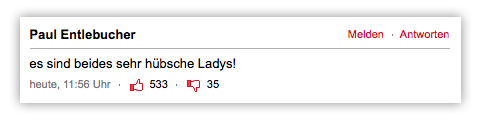
You might think that everything has been said on the subject. But, as always, the readers have the last word. Although, according to the survey, the majority like the idea of having attractive women whistle regularly in future ("Yes! Nice for the eye!"), there are also critical remarks in the comments column. Paul Entlebucher makes a diplomatic statement in the style of Vujo Gavric:

b-01

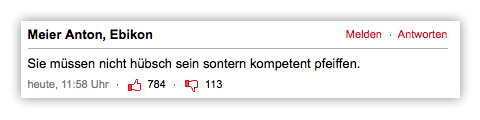
He would certainly have a rose ready for both ladies. Just that certain something. Meier Anton from Ebikon, on the other hand, calls for more objectivity:

b-03

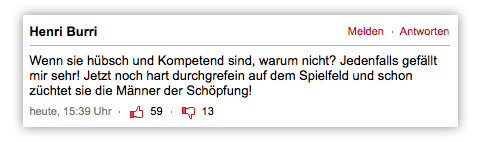
Despite the somewhat bumpy spelling, this comment gets positive thumbs en masse. The message counts - and it got through. Even with Henri Burri. Without further ado, he gives the beautiful game master a breeding order:

b-04

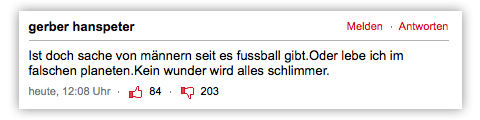
Gerber Hanspeter takes the opportunity to explain the complex interrelationships of the world using the topic of female referees:

b-02

No wonder, everything is getting worse. Women will probably be demanding the right to vote next! When the two impartial ladies signed up for their first refereeing course, were they aware that they would one day be held responsible for problems on a global scale? They probably thought they were on the wrong planet.

Thomas Häusermann

All pictures: Screenshots Blick.ch
 

get_footer();