OMS: Tips for optimal mobile usability

Based on the «OMS Mobile Usability» study, OMS has compiled ten tips on how daily newspaper websites should be structured to ensure optimal usability and marketability.

From layout and navigation to usability: in addition to high-quality content, it is the usability of a mobile daily newspaper website that determines whether users prefer to visit it, making it an attractive and high-reach advertising environment for mobile campaigns. The German premium marketer OMS shows how a mobile daily newspaper website should be structured in order to be as usable and marketable as possible in ten tips for optimal mobile usability, which are based on the latest results of the qualitative study "OMS Mobile Usability":

Keep navigation compact: Mobile users in particular need to be able to switch quickly between topics on a daily newspaper website. The navigation should therefore be compact and always available. This allows users to switch topics effortlessly at any point on the page.

Enable quick access: Quick links, for example for the top category or important topics such as traffic and weather, lead the user effortlessly and directly to the most up-to-date and popular content on the mobile site. Cross links at the bottom of the article pages are very popular.

Offer current content on the start page: Users want to get a quick and informative overview of all the latest content on the homepage. The latest content and direct links to the top content should be displayed at the top of the page to facilitate a quick news overview in between.

Ensure operability by touch: Touch input requires a cleaner and simpler web design than on the desktop. All interaction elements should be large enough to be easily operated with a finger. A physical size of at least 7×7 mm with spacing of at least 2 mm is recommended.

Make functional operating elements visible: While users usually recognize all clickable elements quickly, touchable interaction elements are still being learned by many. On mobile sites, it should therefore be made clear which elements are functional and what is behind them.

Offer swipe gestures for scroll function: The swipe gesture for the scroll function is now expected by most smartphone users. However, it is only really fun when it works intuitively and smoothly.

Keep loading times short: In general, the use of mobile daily newspaper websites is about quick access to information. Loading times should therefore be kept as short as possible. For example, it is a good idea not to display content in full immediately, but to upload it in full only when required.

Align layout for use on a smartphone: A good mix and an appropriate size of image and text are preferable for the small display of the smartphone. The images should be easily recognizable, but never take up the entire visible area.

Choose a clear typeface: To make reading the mobile site as pleasant as possible, the typeface should be as clear as possible. The font size should also be adapted to the small format of the smartphone.

Offer simple partial functions: Sharing information with friends is just as important on a smartphone as it is on a desktop. All relevant "sharing" functions should therefore also be easy to find and simple to use on mobile devices.

 

Publigroupe sells Publicitas

Publigroupe sells Publicitas to the German company Aurelius. The company intends to focus on the digital business in future and is divesting itself of traditional advertising sales.

The trend towards electronic media and away from traditional print media is also having an impact on the advertising market. The Vaud-based advertising company Publigroupe is divesting itself of its historic core business, the newspaper advertising business. It is selling its subsidiary Publicitas to the German investment company Aurelius. With this sale, Publigroupe is pulling the emergency brake after the loss-making and uncertain course of recent years. The slump in newspaper advertising had repeatedly led to high losses in recent months and years. Last year alone, the corresponding Media Sales division posted an operating loss of CHF 14.5 million. This also dragged the overall result into the red: Publigroupe recorded a bottom-line loss of CHF 5.9 million last year. The
Sales revenue from the traditional advertising business has fallen continuously in recent years, by 10 percent in 2013. In 2012 and 2011, sales in Publigroupe's previous core business shrank by 13 percent each. This also reduced the importance of the advertising business for Publigroupe. Nevertheless, this business area still accounts for a substantial share of total sales.

With the sale of Publicitas, Publigroupe is also drastically downsizing: in 2013, the company still posted net sales of CHF 267 million. For 2014, Publigroupe is still planning net sales of around 150 million francs, excluding the results of Publicitas. To achieve this, profitability is to be increased. The operating profit should reach around 20 million francs. In 2013, this was only just in positive territory across the Group.

Focus on the digital advertising market

Publigroupe CEO Arndt Groth described the sale at a media conference on Wednesday as "the consistent implementation of our strategy focused on business in the areas of digital advertising sales and electronic processing". "With the sale, we have almost completed this transformation into a digital company", said Groth. Once the sale has been completed, Publigroupe will generate 80 percent of its turnover with digital products and services. Publigroupe holds a 50 and 47.5 percent stake in the Local.ch and Zanox platforms respectively. And Group CEO Groth sees further growth potential: "Publigroupe is perfectly positioned to further expand its role in the digital advertising market in the future," he said on Wednesday. According to Groth, the trend towards digitalization in the media market is irreversible.

Publigroupe receives "low double-digit million amount"

Publigroupe is selling its subsidiary Publicitas, which was founded 124 years ago, for a "low double-digit million franc amount", said Hans-Peter Rohner, Chairman of the Board of Directors of Publigroupe. The corresponding contracts were signed on Tuesday evening (yesterday). However, the competition authorities and Publigroupe shareholders still have to approve the sale. "We need a two-thirds majority at the Annual General Meeting," said Rohner. If the sale goes through, Aurelius will take over all 860 Publicitas employees. "Not a single employee will lose their job as a result of this transaction", said Rohner. When asked whether there could be redundancies after the sale of Publicitas, Donatus Albrecht from the future owner company Aurelius was unable to provide an answer. "We are not yet the owner. We can't answer these questions today," Albrecht told the media.

Publicitas continues to operate in the print sector

However, it is clear that not only Publigroupe but also Publicitas will have to make some changes to get back on the road to success. The new strategy has already been outlined by Alain Bandle, who has been CEO of Publicitas since last year and will remain so under the new owners. "We will continue to be active in the print sector," Bandle told the media. "But as this market is declining, we need to enrich our portfolio." He referred, for example, to the advertising business for television and radio. "As a third component, we need to reduce our cost base," said Bandle. The new Publicitas CEO had already announced last summer that he wanted to put the company back on the road to success by fully automating the marketing of advertising space.

"Significant cost savings at Publicitas"

The head of Aurelius, Dirk Markus, sees significant cost savings for Publicitas - in the IT area, but also in terms of personnel in particular. He could not yet say exactly what this would mean for the number of employees. "It's still too early for that," said Markus during a conference call on Wednesday afternoon. However, cost savings do not necessarily mean job cuts. He sees a lot of potential in the outdated IT platforms. Aurelius will make significant investments in order to merge the various current systems. "The customer should be able to serve all channels with one system using automated online booking platforms and thus become significantly more efficient," said Markus, who also studied business administration at the University of St. Gallen. Aurelius will pay particular attention to the rapidly growing digital and mobile market. In some businesses, Publicitas had adopted a certain "dismissive attitude" and focused strictly on the print market.

Today, the digital area at Publicitas is much smaller than print. "But digital advertising marketing is growing and catching up," said Markus. Print will be retained, as he does not believe that print products will die out. "But in future, people will read advertising in print and online. It shouldn't matter to us where we place advertising in the future," said Dirk Markus. The company has also failed to adapt its complex organizational and fixed cost structure. For example, there is no precise analysis of profitability per sales agent or regional office. Even if the strategy does not yet appear to be fully developed, it is clear that Switzerland will be retained. "The home market will always remain Switzerland," the business economist made clear. In addition, the advertising marketer should already be back in the black operationally in the current financial year. (SDA)

Lebrument harshly criticizes Publigroupe top management

Following the sale of the advertising company Publicitas to a German holding company, Hanspeter Lebrument, President of the Swiss Media Publishers Association, is harshly critical of Publigroupe.

It had become bogged down abroad. He understands the sale of Publicitas to Germany after what has happened in recent years. "I regret this," said Lebrument in an interview with the SDA news agency on Wednesday. However, it was not only the decline in advertising that was to blame, but also the Publigroupe management. In his eyes, however, it should not have come to this. Publigroupe had invested a lot of money in America, China and India and had actually done too little for Swiss advertising sales and ad placement as the group's most important business. "We should have put all our efforts into our most important subsidiary, Publicitas, instead of running around the whole world. Not a single publishing house in Switzerland has done that," said Lebrument. Only the once richest media company had adopted this strategy. However, advertisements are a national matter in the broadest sense and not an export product. Publicitas should have changed from an advertising broker and seller for the press to an advertising broker and seller for the electronic media as well. But the attempts at TV, radio and online had not made much progress.

A lot of money burned

"The excursions abroad have cost a lot of money. This was covered up for a long time by selling the silverware, by selling the large real estate division," said Lebrument. When asked to what extent the publishers were also to blame for the decline of Publicitas by switching to managing the advertising business themselves, Lebrument said: "You actually always stay if you are satisfied." One of the sins was that Publicitas had given the NZZ Group preferential treatment when it came to the takeover of Zürichsee-Medien years ago. "The case accelerated the whole thing," said Lebrument. (SDA)

Picture Hanspeter Lebrument: Keystone

Last but not least: Small redesign

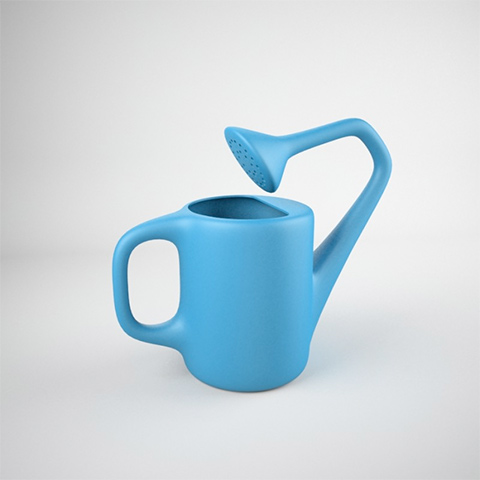
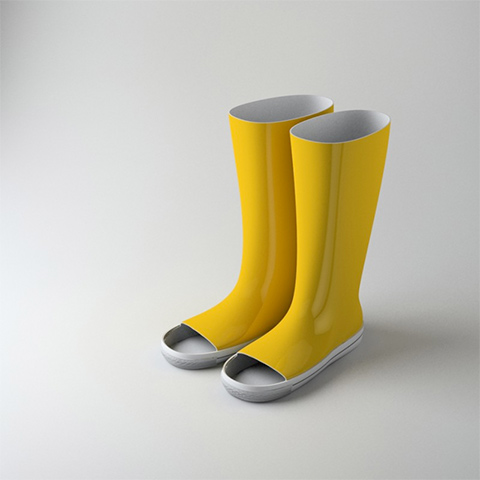
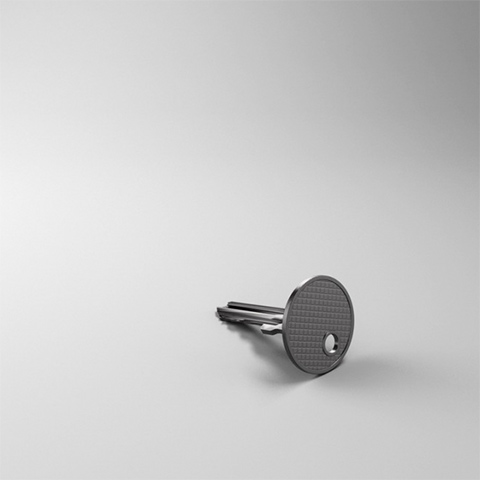
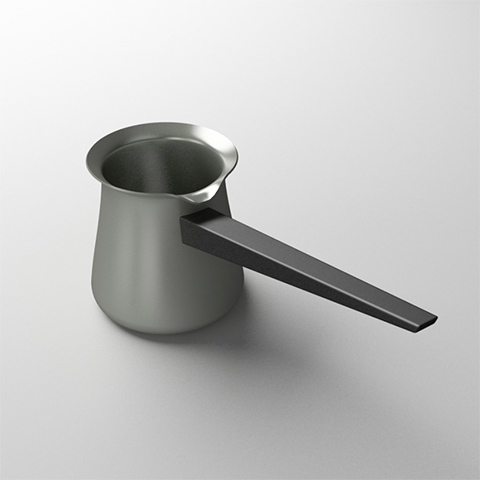
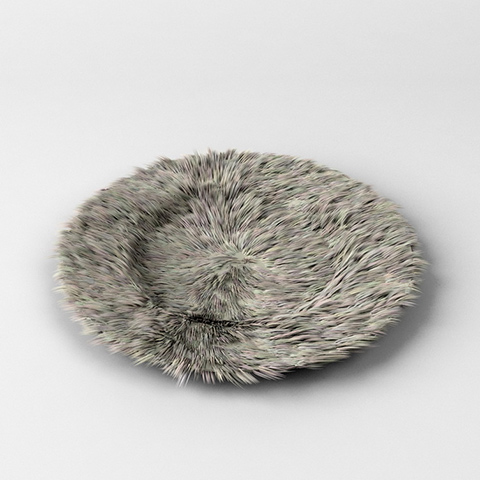
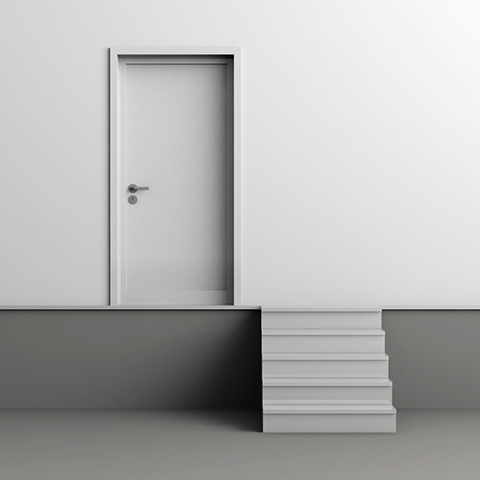
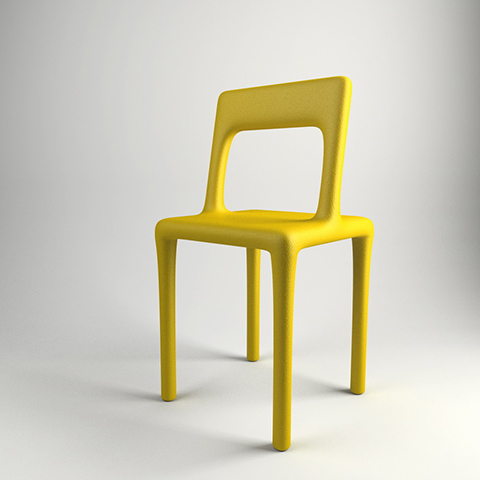
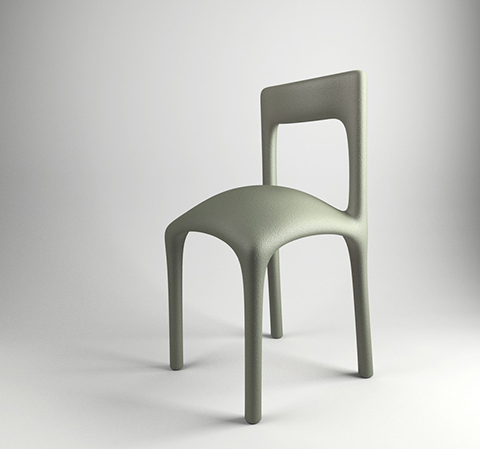
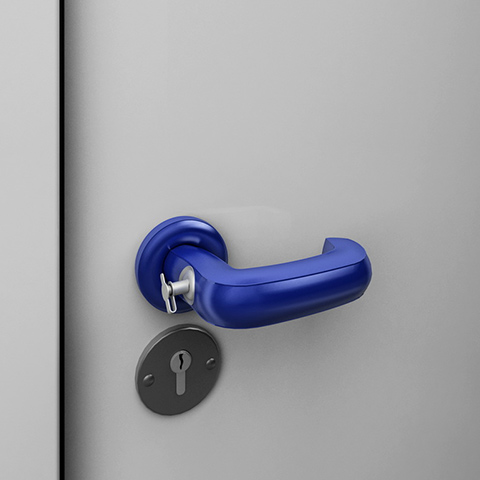
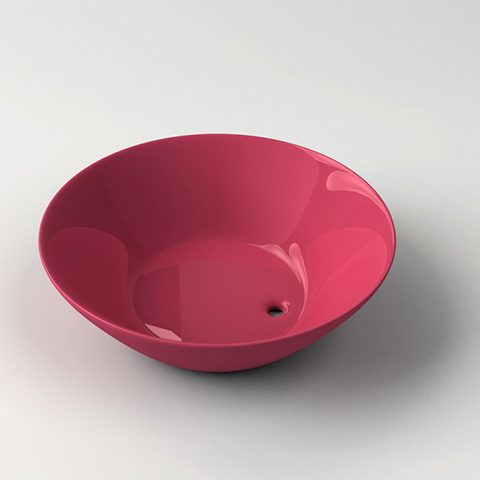
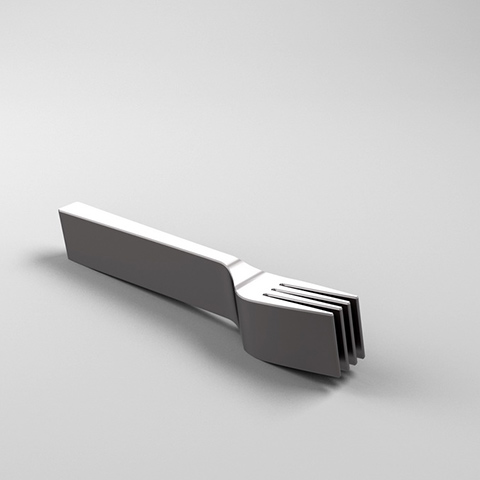
A Greek designer has modified everyday objects in such a way that they become completely unusable.

A redesign does not necessarily mean improvement. A few months ago, for example, Werbewoche critic Theophil Butz quite rightly complained about the "lousy modernization" of the Käseunion logo ("Der Motz von Butz", 19/2013). You can safely leave beautiful or well-functioning things as they are. Or you can officially move in the wrong direction. Like the designer and architect Katharina Kamprani from Athens. Under the name KK Studios she has modified classic everyday objects in such a way that even looking at them causes headaches. The painstakingly modified chairs, watering cans and plates have now conquered the Internet. Even if it has probably never been so easy not to put a good concept into practice... (hae)

Unbenannt-57
Unbenannt-56
Unbenannt-59
Unbenannt-60
Unbenannt-61
Unbenannt-62
Unbenannt-64
Bildschirmfoto-2014-04-02-um-20.15.47
Bildschirmfoto-2014-04-02-um-20.15.19
Bildschirmfoto-2014-04-02-um-20.15.05
Bildschirmfoto-2014-04-02-um-20.14.49
Bildschirmfoto-2014-04-02-um-20.14.29
Bildschirmfoto-2014-04-02-um-20.14.00
Bildschirmfoto-2014-04-02-um-20.13.37
Bildschirmfoto-2014-04-02-um-20.13.16

Spinas: At the presser for Helvetas

More people die from contaminated water than from weapons. To draw attention to this fact, Helvetas and Spinas Civil Voices are using visual analogies in the fourth year of their “Glasses” campaign—this time focusing on the theme of firearms.

The new motifs can be seen animated as TV spots and on e-boards and e-panels, as well as posters and advertisements. At a time when sufficient clean drinking water is becoming increasingly scarce, Helvetas is thus consolidating its positioning as a water expert among Swiss aid organizations.

HEL_Patronenglas_hoch_d
HEL_Roulette_hoch_d

Responsible at Helvetas: Stefan Stolle (Head of Communications and Fundraising). Responsible at Spina's Civil Voices: Lorenz Spinas (CD), Miriam Fischer (AD), Susi Kammergruber (concept/text), Sarah Bertschinger (consulting). Animation: Elephant Studios.
 

Dominique Martin joins Furrer Hugi & Partner

Dominique Martin is joining Furrer Hugi & Partner as a policy advisor, coming from Credit Suisse. Starting August 1, he will work alongside Norina Frey and Andreas Hugi to manage the agency’s financial accounts, among other responsibilities.

Dominique Martin, 47, has been Director and Head of Governmental Affairs at Credit Suisse since 2011 and was previously Head of Directorate Staff at the State Secretariat for Economic Affairs (seco). Prior to that, he was, among other things, an advisor on the staff of the then Swiss Foreign Minister and an embassy counselor at the Swiss EU mission in Brussels. With Dominique Martin, Furrer Hugi & Partner has gained another regulatory specialist with excellent contacts in politics, administration and supervision.

At the end of April, Daniel Beck will leave Furrer Hugi & Partner. He has been with our agency as a policy advisor and partner since 2010. According to the announcement, Daniel Beck will take on a new challenge as a partner at an international business consultancy group.

Wirz: New TV commercial for Pneu Egger

In a new TV commercial for Pneu Egger, Wirz offers this advice: If you can feel spring in the air, it's time to change your tires.

When you feel spring coming, you should change your tires. Several Pneu Egger films have already been created based on this realization. And this spring it's time again: the latest work by Wirz Werbung, which has been responsible for the appearance of Switzerland's largest tire dealer for ten years now, tells the story of a snowman. And we learn that even snowmen have spring fever.

"The latest film is certainly a bit daring. But with our limited budget, we simply can't afford to run boring commercials that nobody notices," says Pneu Egger Marketing Manager Simon Müller. "And if we can not only push an advertising message onto our customers, but also entertain them a little or make them smile, it's a classic win-win situation."

//www.youtube.com/watch?v=P5_EEoSbg2o

Responsible at Pneu Egger: Simon Müller (Marketing and Sales Manager); Franz Brun (Marketing and Sales Assistant); Gregor Hartmann (CEO). Responsible at Wirz: Niels Schäfer (AD); Simon Smit (text); Thomas Kurzmeyer (CD); Livia Wanner, Lucia Burtscher (consulting); Nicole Suter, Fabienne Huwyler (art buying); Serge Hoeltschi: (direction and production).
 

IP Media: Matthias M. Mattenberger becomes COO

ipmedia receives operational reinforcement. Matthias M. Mattenberger will start as COO on August 1, 2014. Mattenberger is leaving SRF after around ten years.

Since 2006, he has been responsible for editing and production at the talk show "Aeschbacher". Before that, he was project manager in the multimedia department. Before joining SRF, Mattenberger was involved in business, founded his own online music magazine "Music-News" and produced corporate films for various companies.

Matthias M. Mattenberger is looking forward to the new challenge: "After several exciting years at a public broadcaster, I am very motivated to help shape the digital future of moving images at ipmedia and to develop new web and mobile TV formats."

As COO, Mattenberger will take over the operational management of ipmedia and report directly to Marco Demont, CEO and co-owner. "With Matthias M. Mattenberger, we have gained an experienced TV professional who knows his way around the world of new media and also has a high level of expertise in terms of content and production," says Marco Demont. IP offers media content and streaming services and has offices in St.Gallen and Zurich.
 

Rod Kommunikation: TV commercial for Mobility

Choosing car sharing instead of owning a car creates living space. This is the message of the new Mobility campaign.

Density stress has the makings of the word of the year. Opinions differ as to whether there is such a thing as density stress at all. Mobility thinks so: It's not people who take up space, but things. The car-sharing company's new campaign shows how not using your own car saves existing living space and creates new one.

"Our customers don't just choose Mobility because it's cheaper and involves less effort than owning their own car. Car sharing is also a way of life for them," explains Mobility marketing manager Alain Barmettler in a statement on Tuesday. That's why the new campaign does not dramatize the practical benefits of car sharing, but focuses on its idealistic value.

Under the claim "An idea changes Switzerland", Rod Kommunikation has designed a comprehensive campaign. The centerpiece is the TV spot by English director Rob Sanders of Tuna Productions. While the spot reflects the attitude to life of Mobility customers, the tag-ons and online conversions illustrate the positive effects of car sharing in very concrete terms.

The fact that giving up one's own car is actually changing Switzerland is primarily due to the many customers, according to the statement. In the meantime, more than one hundred thousand Swiss have already opted for Mobility. According to Barmettler, this is evidence of a change in values: "The car has had its day as a status symbol. Spontaneous, round-the-clock access to mobility and the responsible use of resources are more important today than ownership."

Responsible at Mobility: Viviana Buchmann (Managing Director), Alain Barmettler (Head of Marketing & Communications), Patrick Eigenmann (Head of Communications & Media). Responsible agency: Rod Communication. Responsible for the production: Tuna Productions, Rob Sanders (director), Julien Vonier (photography).
 

//www.youtube.com/watch?v=OnKZ59PLVAE

You never know what is coming

Failure to yield the right of way is the most common cause of collisions with bicycles. Through a campaign by Contexta, Pro Velo, VCS, the Swiss Council for Accident Prevention (BFU), Suva, TCS, the police, and other partners are raising awareness of this danger.

In 2013, 790 cyclists and 114 e-bikers were involved in serious accidents, while 17 cyclists and 4 e-bikers died, according to a press release issued on Tuesday. Every second serious accident involved a collision, in most cases with a passenger car. The campaign aims to reduce the number of serious or fatal collisions. It focuses on cooperation between the various road users and is therefore supported by the Swiss bicycle, car and transport associations in a spirit of partnership.

Everyone has experienced it. You are driving towards a junction, lost in thought, thinking you have everything under control - and only realize at the very last moment that something is coming. This lack of attention often leads to a collision. It is precisely this momentum that Contexta's campaign exploits. With a surprise effect, it reminds drivers and cyclists to always expect the unexpected. Because you never know what's coming.

The campaign can be seen throughout Switzerland on TV, posters and online. All measures refer to the campaign platform Caution-first.ch.

Responsible at VCS: Michael Rytz (Campaign Manager) Responsible at Pro Velo: Daniel Bachofner (Campaign Manager). Responsible at BFU: Camilla Krebs (Campaign Manager). Responsible agency: Contexta. Production: Stories, Yves Bollag (producer), Jonas Meier (director). Music: Fabian Sturzenegger. Media: Media Plus.
 

//www.youtube.com/watch?v=Gy8qCPY2V3Q

//www.youtube.com/watch?v=52fWPjWLtKs

Last but not least: Was the chicken or the egg there first?

The agency Philipp und Keuntje has produced an Easter commercial for the Hamburg beer brand Astra. It revisits the infamous egg-and-chicken question.

Stand-up comedian Uke Bosse is the chicken, skater Cäptn Clepto is the egg. The two go head-to-head in a race through the city, which ultimately comes down to the less philosophical question: who was there first? The egg or the chicken? At the bar counter at the latest, the question becomes truly existential. (sis)
 

//www.youtube.com/watch?v=wVdYfwMmInw

Gabi Schwegler new in Blick's pool of authors

Gabi Schwegler (28) will join the Blick Group’s newly created pool of writers effective July 1, 2014. For the past four years, she has worked as an editor in the “Fokus” and “News” sections of the Sonntagszeitung.

Gabi Schwegler has earned a reputation as a high-profile reportage, portrait and interview writer, according to a statement issued by the media company on Tuesday. She is particularly interested in social, political and cultural topics.

She studied journalism at the Zurich University of Applied Sciences (ZHAW) and graduated with a Bachelor of Arts in Communication, specializing in journalism. After working as a freelance journalist for Tages-Anzeiger Zürcher Oberland and in the domestic department of 20 Minuten (print edition), she joined the Sonntagszeitung in mid-2010 in the focus and news departments.

With Jean François Tanda (40) and Adrian Meyer (27), Gabi Schwegler is the fourth member of the Blick pool of authors headed by Peter Hossli (44).

get_footer();