Spring Fever

Column by Florian Weischer, Managing Director of WerbeWeischer

For every column that I contribute to Werbewoche, I put a piece of paper on my standing desk in the office days in advance and write down topics that I think are important and that I think will be of interest to the reader. My colleagues from our office in Zurich are familiar with this procedure and also write their topics and requests on this sheet of paper when they visit me in the north. It's pretty "old school", but it still works unbeatably well despite all the conveniences of digital communication.

Incidentally, Billy Wilder also relied on paper and pencil in his search for good film material. He always had the best ideas for people, characters and plots at night. Unfortunately, he usually dreamed them, and the next morning these wonderful stories from his imagination had already disappeared into the fog of fragmentary memories. So he put the sheet of paper and pen on his bedside table, set his alarm clock to the time when he thought the most interesting dreams would occur and went to bed full of expectation. The alarm clock rang in the middle of the dream, and Billy wrote and wrote and wrote this incredible story on his piece of paper and fell back into bed exhausted, certain that he had now captured the perfect movie plot. In the morning, he took the piece of paper and looked forward to encountering this extraordinary story again. There were three words on the note: "Boy meets girl".

There should be a big paragraph at this point, because it takes a moment to grasp the deeper meaning of this (hopefully true) story. And I'm standing here in my office at the port of Hamburg in dreary, gray drizzle and temperatures in the single digits in front of my piece of paper and it says: "Spring fever - open-air cinema". At least the weather forecast promises significant improvement for the afternoon and even 20 degrees and sunshine for tomorrow. But I have promised to deliver my text today. So it's up to our imagination again, and I ask you to vividly imagine tomorrow's weather, to perceive the smells of nature, to think of wonderful hours outdoors. Wonderful. Just like in a movie.

Now my note comes into play. Why shouldn't you and I be able to enjoy open-air cinema, why shouldn't many other people in Switzerland do the same, and why shouldn't we look for the right advertising spaces and environments there for cinema advertising too? We have answered all these questions with "yes" and can now say (not without a little pride) that we market by far the largest, most beautiful and most successful open-air cinemas exclusively for advertising clients. Open-air cinema events Orange Cinema exclusively at WerbeWeischer. So we are always making progress towards our goal of being able to offer access to this wonderful medium in as many and as good places as possible in Switzerland.

This is the message from my note, and I hope I have been able to lead you there quite well via a little detour. We will see: Whether you will enjoy these fantastic nights by the lake with us and whether you are interested in bringing your large pictures to these giant screens with their very special atmosphere. If so, I'll make a little note for the next time.
 

Alexander Jaggy chooses the best TV spot of the month

Each month, a member of the ADC selects their five favorites from all the new TV commercials at Publisuisse. Alexander Jaggy, Executive Creative Director at Jung von Matt/Limmat, is responsible for shortlisting the best new entries for March.

As of now, his five favorites are available at Spotofthemonth.ch ready for voting. All monthly winners will compete for the coveted audience award at the next ADC award ceremony. The next ADC awards ceremony will take place at the beginning of 2015. Publispot is Publisuisse's spot database with all SRG SSR TV spots since 1993.

Zermatt Unplugged is spot of the month

Every month, an ADC member chooses his or her five favorites from all the new TV spots on Publisuisse. Of the five nominated newcomers, the spot with the most audience votes becomes the monthly winner. In February, Frank Bodin, President of the ADC, selected his five favorites from over 120 spots. In the subsequent online voting, the spot for the Zermatt Unplugged music festival received the most votes, followed by the commercial for the VCS Verkehrs-Club der Schweiz. Almost 50 percent of the well over 1,000 votes cast went to the TV spot for the Valais music festival.


//www.youtube.com/watch?v=ZMUvd1N41lg

The Impact Check of Werbewoche

We show how current campaigns are performing with consumers.

The Denner ad by advertising agency ViznerBorel came out on top in terms of awareness, followed by the ad for Westside/libero by advertising agency Formeldrei and the ad for PB Swiss Tools by agency Erdmannpeisker. In the uniqueness criterion, the ad for Ermatingen Tourism by Andy Hostettler came out on top, followed by the Heating with Oil ad by Ruf Lanz and the petition ad by Erdmannpeisker. The ad for Ermatingen Tourismus also came out on top in the Brand Fit criterion. It is followed by Heizen mit Öl and Denner. Ermatingen Tourismus also wins in terms of likeability, followed by Heizen mit Öl and PB Swiss Tools.

The Advertising Week Impact Check (PDF)

Detailed results (PDF)


Do not look after the rights

In Ukraine, the united opposition has toppled the government. The Swiss media don’t seem too interested in knowing exactly who was active on the Maidan. The main thing is that Ukraine is moving closer to Europe. By Hans Stutz

Oscar Freysinger, the big shot of Lower Valais and Swiss politics, has already come a long way, even on Russian television. He recently gave an interview to the state-affiliated broadcaster Pro Russia on the ousting of the government in Ukraine: "Two out of three people involved in this coup are Nazis or fascists." Freysinger, who has also appeared in front of right-wing extremist audiences, criticizes the fact that right-wing extremists are in the Ukrainian government. Shouldn't he actually be supporting them? The opportunist politician wants to get even closer to the EU, which is why he rails against "the big politicians of the EU" who make "big speeches about democracy on the main square in Kiev".

However, although Freysinger is exaggerating, he is basically right. It is gradually dawning on the German-language media that the new Ukrainian government may be aligned with Europe and the European Union, but two members of the transitional government (Right Sector and Svoboda) represent extreme right-wing positions. The "Right Sector" is a conglomerate of racist to openly neo-Nazi groups that have increasingly been acting as vigilantes or free corps since the change of government. And in December 2012, the EU Parliament was still concerned about Svoboda's election success, stating that it was an expression of a "growing nationalist mood in Ukraine" and that "racist, anti-Semitic and xenophobic views" were at odds with the EU's fundamental values. This is now irrelevant, as European politicians see an opportunity to detach Ukraine from Russia's sphere of influence.

The populist Freysinger, on the other hand, is once again exploiting a gap in the media. In the days of the Ukrainian government coup, the Swiss media ignored the presence of right-wing extremists on the Maidan. The first reports that right-wing extremists were also active among the demonstrators and revolters were followed by a reference to Russian propaganda. (Which it was.) But even from a distance, the interested observer could see signs. A Swiss television news report was revealing: the announcer reported on "radical nationalists" among the demonstrators, and the film showed a group of men marching behind a Celtic flag. This is seen as a sign of the supremacy of the white race and is often used by neo-fascist groups. This is not the first time that Swiss television journalists have failed to recognize the political message of a flag. Media representatives also had to explain the meaning of Freysinger's imperial war flag ("popular with right-wing extremists today") to the people from Leutschenbach after the broadcast.

For years, Swiss media professionals have shown a remarkable unwillingness to clearly name parties or politicians to the right of the bourgeois right, whether as radical right, right-wing radicals, neo-Nazis, fascists or right-wing extremists. They take refuge in empty phrases, especially the popular "ultra-nationalist". The NZZ, for example, wrote in recent months about "Serbia's election winner Aleksandar Vucic", who "only six years ago was the anti-Western ultra-nationalist with Greater Serbian ideas". He belonged to the party of Vojislav Seselj, "a warmonger of the worst kind" (NZZ). And another time, the NZZ mused about the "influence of ultra-nationalists" who would further restrict "Netanyahu's ability to compromise with the Palestinians". And in May 2013, the paper from Falkenplatz reported that the "ultra-nationalists" of "Ataka" were present in the Bulgarian parliament alongside two major parties and representatives of the Turkish minority. Ataka, however, is committed to marginalizing the Turkish minority and Muslims in Bulgaria. According to the NZZ, the Ukrainian "Right Sector" is also "ultra-nationalist". But so far, there is no ultranationalist party, neither a program nor an ideology nor a definition derived from a scientist. Just media and politician chatter. Not even Wikipedia knows what to do and directs searchers straight to the term "right-wing extremism".

Hans Stutz lives in Lucerne and works as a journalist specializing in racism and right-wing extremism.
 

He works and works and works

VW Commercial Vehicles ventures a look into the future with ViznerBorel. It turns out that even after many, many years, an investment in a VW Transporter will still prove to be the best.

Unbenannt-11_18

Price, premiums and discounts are a common norm in the automotive market when making a purchase decision. VW, on the other hand, wants to convince its customers with arguments. "We want to be perceived as a leader in the field of quality," explains Head of Marketing Bruno Ueltschi. Together with VW Commercial Vehicles Switzerland, the communications agency ViznerBorel has worked out the brand's future strategic orientation and communications platform with this in mind. In workshops, a sustainable differentiation of the positioning has been found, with which the defined core values are now to be transported.
 

//www.youtube.com/watch?v=B49EgYynofQ

With the claim "The best investment", VW Commercial Vehicles will in future present itself strategically both internally and externally. A positioning that, on the one hand, pays off on the reliability and economy of the vehicles and thus on the business factors. On the other hand, it is also the best investment in the employees, in a reliable partnership, in ecological commitment and thus overall as the best investment in the future.

Unbenannt-12_19

ViznerBorel, the long-standing agency of VW Commercial Vehicles Switzerland, has created a new campaign for this. It is based on the legendary campaign for the VW Beetle by DDB, where Bill Bernbach made advertising history in 1968 with the claim "It runs and runs and runs". At Vizner- Borel, this is now cleverly adapted to commercial vehicles: "It works and works and works." And because this can easily last for decades with the quality of a VW commercial vehicle, the creatives have "parked" the vehicles in their subjects in a correspondingly distant future.

The results were extremely elaborate implementations that were realized with the help of specialists: In close collaboration and under the direction of ViznerBorel, concept artists "built" individual buildings, entire sceneries, flying drones, impressive landscapes and new worlds. In the process, they succeeded: The scenes are set in the future, but still allow us to recognize our familiar Switzerland with a bit of a wink, which comes into its own especially in the TV spot with the view of Lake Zurich from Horgen in the direction of Pfäffikon.

Unbenannt-13_12

For the shooting of the four subjects as well as the filming, a female android as well as the tools and machines were built in 3-D respectively in original size and all outfits were specially designed and sewn for the models. The photographed material was integrated by the Carioca company in Bucharest with the worlds created in 3-D programs. The film scene with a dialogue between the driver and the android was first shot in the studio by Manifesto Films Zurich, then combined with the future world created in the computer. The film was directed by Reto Salimbeni.

Unbenannt-14_12

The four print subjects visualize four series in typical areas of application for the number 1 among light commercial vehicles: assembly and service, gardening, logistics and construction. The ideas were subjected to a pre-test among the target group. The customers "obviously wanted to trust VW as far as the idea of a future is concerned," says Guillaume Borel. But the CD is also convinced that such a campaign "can only be presented credibly by the number 1.
 
Andreas Panzeri

Last but not least: In bed with the Muppets

Leonardo Di Caprio's ex, Bar Refaeli, rolls around in bed with a moustachioed man who is very reminiscent of The Muppet Show. This is for an underwear commercial that can only be shown on Israeli television at night.

The commercial shows a guy called Red Orbach in bed with three top models, against whom he loses in strip poker, among other things. The commercial advertises the underwear brand Hoodies in Israel, as Susanne Hermann explains on Wuv.de writes. The work by the agency Awesome, Tel Aviv (director: Uri Shitser) may not be shown on commercial television without restrictions: Only after 10 p.m. because it contains too many sexual innuendos. At least a woman knows the sexual preferences of a Muppet after watching this commercial. (uma)


//www.youtube.com/watch?v=8r-ERs-79ow

Negative trend continues

MACH Basic 2014-1 provides the first fully comparable data based on the new survey methodology. The data show that, with one exception, all title groups have again lost contacts in all language regions.

Although the results of MACH Basic 2014-1 consist of 50 percent of the same figures as those of MACH Basic 2013-2 (see also box "The MACH Basic 2014-1"), more than 1.1 million contacts were lost overall across all titles covered by the MTJ. This corresponds to a drop of 2.6 percent.

All title groups lose

As the chart "Changes in contact totals" shows, the most striking swings are in southern Switzerland. Here, the daily press gained 4.7 percent, while the Sunday press lost 6.3 percent. However, these swings are not due to significant deviations from individual titles and are therefore rather random. This also applies to the other title groups in southern Switzerland, where not a single significant change was recorded.

Unbenannt-21_2

In western Switzerland, there are only three titles with significant changes: The weekday edition of Le Matin and two titles of the specialty press have lost reach. A total of 16 titles with significant changes can be found in German-speaking Switzerland. Two in the daily press (one positive and one negative), one in the Sunday press (negative), ten in the popular press (only one positive) and three (negative) in the special press. This results in 19 titles with significant changes throughout Switzerland. However, only two titles made gains.

Unchanged free shares

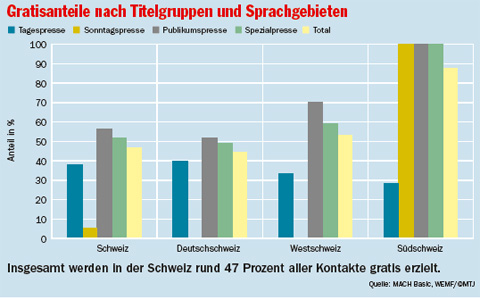
There have been rather few changes in free shares. Although free shares have declined in all title groups, they have done so at a below-average rate. Therefore, with the exception of the Sunday press, the free share has generally increased slightly. As the chart "Free shares by title group and language region" shows, only Ticino has free contacts on Sunday. For this, it is then 100 percent - exactly the same as for the general-interest and special-interest press. Overall and in the two other language regions, however, the free share is highest in the general-interest press. As a general rule, the smaller the language area, the higher the proportion of free copies. But there is no rule without exception. In the case of the daily press, the opposite is true. Not least because there are two titles in German-speaking Switzerland and the intense competition in French-speaking Switzerland at the time drove the figures up.

Unbenannt-21b

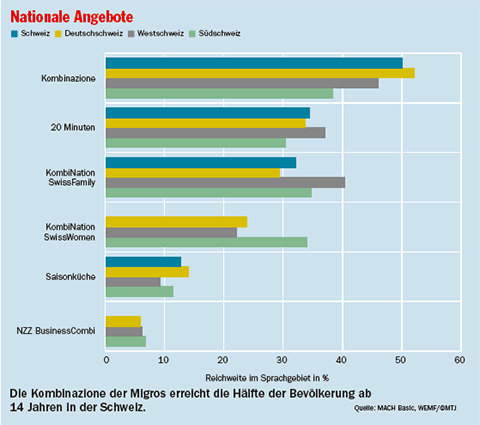
Combinazione reached 50%

In at least two language regions, six offerings each achieve at least five percent reach. They are listed in the "National Offerings" chart in order of national reach. With the exception of Ringier's KombiNation SwissWomen with Schweizer Illustrierte, Glückspost, L'Illustré and TV8, and the NZZ Business Combi from NZZ and Le Temps, all these offerings are represented in all three language regions. Ringier's third-placed CombiNation SwissFamily, with SonntagsBlick, Schweizer Illustrierte, L'Illustré, L'Hebdo, TV8 and Il Caffè della Domenica, achieved the second-highest reach in French-speaking Switzerland. The leading offer, Kombinazione, with all three Migros weeklies, shows a marked difference between the three language regions. In Switzerland as a whole, however, it still reaches half of the language-assimilated population aged 14 and over. Ringier's two CombiNation offerings are both significantly stronger in French-speaking Switzerland than in the other language areas and the Swiss average. Two of these national combinations are offered by Migros and Ringier, and one each by Tamedia and NZZ/Le Temps.

Unbenannt-19_3

Migros and Coop dominate

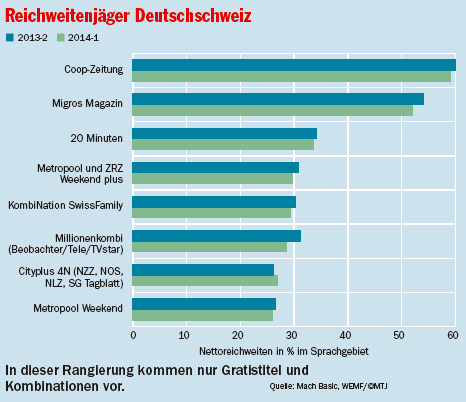
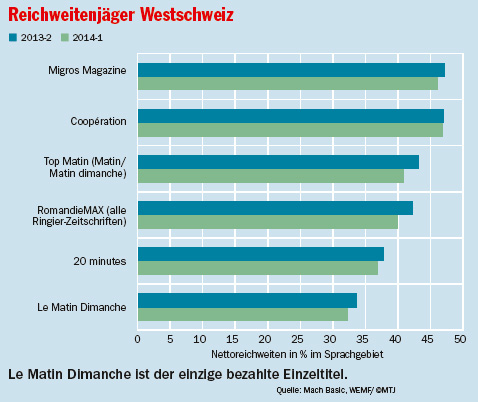
The "Reach hunters in German-speaking Switzerland" chart now lists all sites that reach at least 25 percent of the population in the language area. The minimum threshold of 30 percent set last fall is now exceeded by only four sites. In both major language regions, the titles from Migros and Coop continue to occupy the top positions. In German-speaking Switzerland, 20 Minuten follows, leaving all combinations of paid titles behind. In French-speaking Switzerland, on the other hand, the weekday/Sunday combination of Le Matin and RomandieMAX, with all Ringier magazines, move ahead of the commuter paper.

Unbenannt-21c
Unbenannt-21d

In any case, paid-for single titles have no place in the concert of the big combinations and free titles. Le Matin dimanche in French-speaking Switzerland is the exception here, confirming the rule - even if, according to the latest certification, over a quarter of the circulation is distributed free of charge or at a discount of over 50 percent.

The Sunday edition of Le Matin is still the leader in paid-for top titles (see chart). Here, the lower limit has been lowered to 15 percent, as the previous limit of 20 percent is now only exceeded by five titles. With Ktipp, Le Matin and the Beobachter, three titles with significant losses are shown in this chart. However, the order has not changed. The dominant publisher is Ringier with the four titles Illustré, SonntagsBlick, Schweizer Illustrierte and TV8. Tamedia, with the two titles of Le Matin, has the same number of titles as Konsumenteninfo with Bon à savoir and Ktipp. Finally, Axel Springer is also represented with the Beobachter.

Ueli Custer

Basic information:

The analyses are based on the tables from the report volume, which were made available by WEMF in advance with a blocking period. All daily newspapers published at least five times a week (excluding large circulation titles), all general-interest, financial, business and special-interest press titles were evaluated. Local and regional weekly titles are not included. In the case of daily newspapers, only the largest unit is included. Header pages and partial editions are not listed, regardless of ownership.

Also not included are the results of the Z newspaper supplements shown in the WEMF tables - the beautiful pages as a supplement of NZZ and NZZ am Sonntag and the Vista Zeitungskombi as a supplement of a whole series of daily newspapers. This is because their values were not surveyed separately, but only shown as a calculated combination of the carrier titles. They can therefore in no way be compared with those of separately surveyed supplements such as Das Magazin, NZZ-Folio, SonntagsBlick magazine, Télétop Matin, Femina or the Extra evening supplement of Corriere del Ticino, which was reported for the first time. As the results of these titles show, their usage is in each case significantly lower than that of the carrier titles.

The values shown in MACH Basic for Z - die schönen Seiten and the Vista newspaper combination are therefore certainly inflated. Ultimately, therefore, the question arises as to how legitimate it is to calculate the same values for tabloid supplements as for the carrier title. This is to be considered, for example, in the case of an allocation of the Züritipp of the Tages-Anzeiger or the supplements to the NZZ am Sonntag for society and style. Ultimately, then, the issue is one of federal reach. Because we know from surveys of the SonntagsZeitung that not all bundles are used by the same number and by the same people.

The most important innovations of MACH Basic:

Extrapolation basis
It is based on the statistics on the population and households of the Federal Statistical Office (STAT-POP) and the structural survey of the Federal Office. The population of MACH Basic 2014-1 is structured as follows: l German language group: 4'631'000 (+38'000 or 0.8%) l French language group: 1'493'000 (+10 000 or 0.7%) l Italian language group: 288'000 (+3000 or 1.1%) l Total population: 6'422'000 (+52'000 or 0.8%) The increase refers to the comparison with MACH Basic 2013-2.

Sampling
It includes not only registered landline numbers, but also people in households without a registered number (15 % of all households) or without a landline (5 % of all households).

Sample size
It amounts to 19'000.

Survey process
Instead of a one-time call followed by an interview, the target person is recruited in an initial call and then interviewed either by phone or online with a second call.

Survey period
The results of MACH Basic 2014-1 were surveyed between October 1, 2012 and October 6, 2013. Around half of the values are therefore identical to those of MACH Basic 2013-2, which was collected between April 11, 2012 and April 8, 2013.

Pointing material
Respondents are provided with pointing material (title logo and possible response specifications) for both the telephone interview and the online questionnaire.

Incentivization
Participants in the interview now receive a small gift worth ten francs, which has increased the willingness to participate.

Communication spaces
52 combined communication areas (zKommR) fill the gap between economic areas and counties, which often have very small caseloads.

Coverage of newspapers with a circulation of less than 20,000 copies
Since MACH Basic 2011-2, the reach of newspapers with small circulations has been carried out using the results of two consecutive study years. Due to the new generation of studies, however, this will not be possible again until 2014-2. In the 2014-1 evaluation, the values are based on the average readership over the entire 18 months collected using the new method. Further details can be found in the report volume or on Wemf.ch to find.


Expertenjobs.ch: Job exchanges join forces

The leading industry-specific job boards in Switzerland have joined forces to create a joint platform via Expertenjobs.ch.

As in communication, the cross-media approach is also becoming increasingly important in personnel recruitment, especially in areas with a pronounced shortage of skilled workers. In addition to social networks, the relevance of industry-specific job boards is therefore also steadily increasing, as has been regularly demonstrated by recruiting studies for years. Job platforms that are well-established in their specialist areas, so-called "verticals", have a wide reach in relation to their sectors, are nevertheless focused on target groups and make it possible to address experts in the various specialist areas.

To provide recruiters and marketers with an overview of the confusing job portal market, the leading industry-specific job exchanges in Switzerland have joined forces via Expertjobs.ch expertenjobs.ch brings the specialized job boards and their advertisers increased visibility and reach, even beyond their respective specialist areas. To further increase this effect, joint generic marketing measures are planned for the current year. The affiliated partners meet regularly in an ERFA group to exchange knowledge and experience in order to exploit synergies and develop as closely as possible to the needs of the market.

Despite the shared platform, the affiliated job boards remain independent. The job offers on Expertenjobs.ch come exclusively from the affiliated specialist job platforms. If a job is published with a specialist, it is automatically published on Expertenjobs.ch via database interfaces - without any additional effort or costs for the advertiser. The following "verticals" or specialist areas are included at launch: Med-jobs.ch (healthcare / doctors & nursing staff), Mathjobs.ch (mathematics & statistics), Sozialinfo-stellen.ch (social services), Medienjobs.ch (communication, marketing, media) and Ictjobs.ch (IT & telecommunications). The inclusion of further specialized job platforms is being examined in order to be able to cover a broader spectrum of professions in the future.

The Expertenjobs.ch website is "responsive" and is therefore optimized for all digital devices. The website is supplemented by a Facebook page, which is used as a service channel. In addition to a weekly notice of current job vacancies in the respective occupational groups, jobseekers and HR professionals can find recommended reading on specialist articles, guides and tips on the subject of careers and work.
 

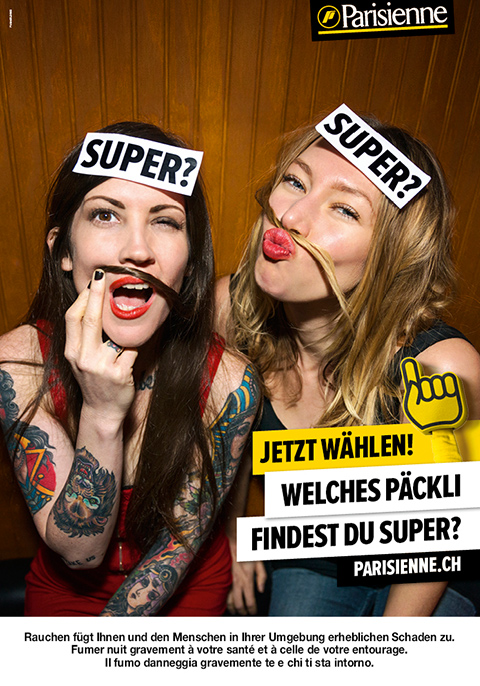
Formeldrei: New campaign for Parisienne

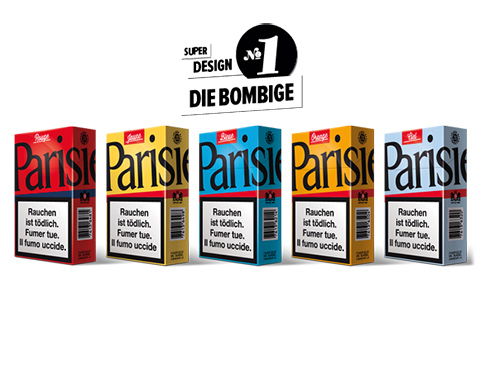
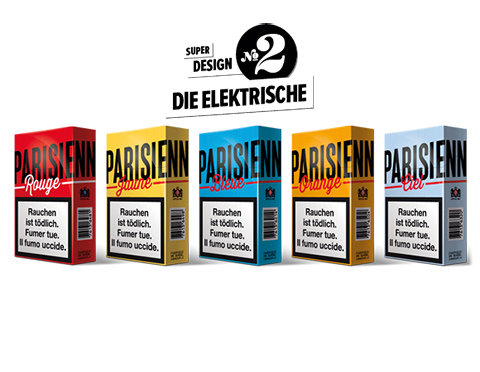
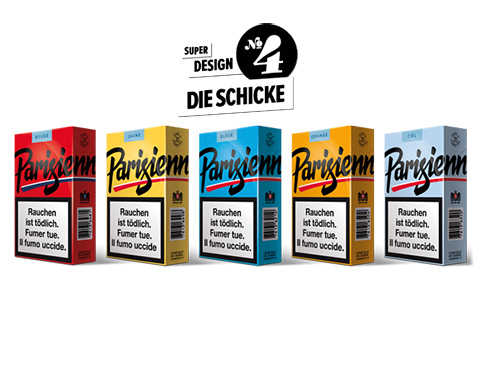
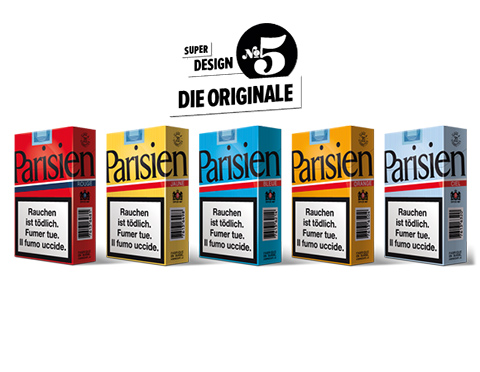
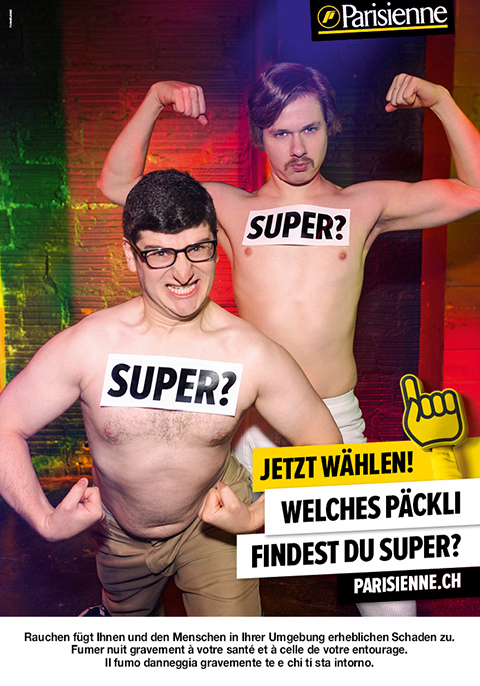
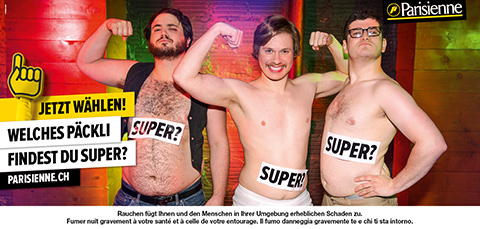
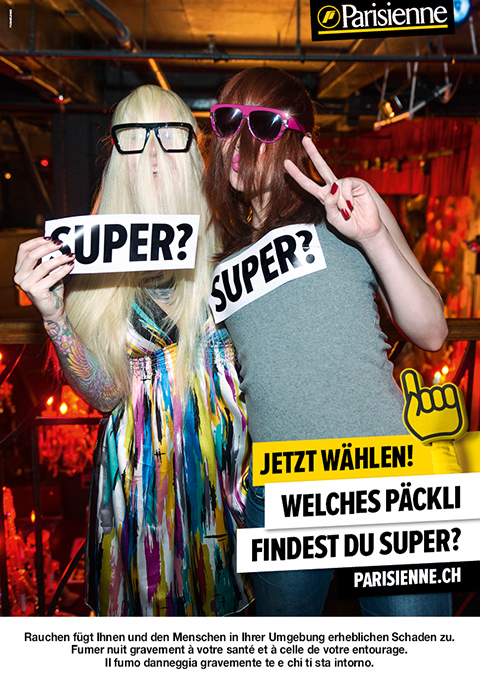
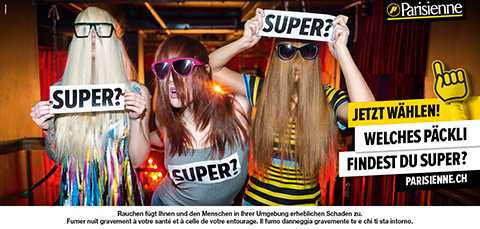
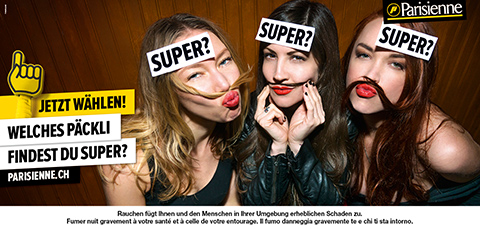
In Formeldrei's new Parisienne campaign, smokers can help shape the brand's redesign by voting.

Parisienne fans have a say in the redesign. By free SMS, e-mail and on Parisienne.ch Mr. and Mrs. Swiss can vote for their favorites until May 31, 2014. There are four new Päckli redesigns to choose from, as well as the current design for all those who think that not everything always has to change. The Bombige? The Electric? The solid one? The chic or the original? All five very different designs will be on sale, and one of the candidates is always hidden under the super foil.

Parisienne_Formeldrei_vote4me_F3Teaser_web1
Parisienne_Formeldrei_vote4me_F3Teaser_web2
Parisienne_Formeldrei_vote4me_F3Teaser_web3
Parisienne_Formeldrei_vote4me_F3Teaser_web4
Parisienne_Formeldrei_vote4me_F3Teaser_web5
Parisienne_Formeldrei_vote4me_F3Teaser_web6
P_vote4me_ATL_F200-Mutterlitho_De
P_vote4me_ATL_F12-Mutterlitho_De
P_vote4me_ATL_F200-Mutterlitho_De2
P_vote4me_ATL_F12-Mutterlitho_De2
P_vote4me_ATL_F200-Mutterlitho_De3
P_vote4me_ATL_F12-Mutterlitho_De3

Responsible at Parisienne: Robert A. Goossens (Brand Group Manager, BAT Switzerland); Angela Teucher, Mélanie Nassir and Christoph Schütz (Brand Executives). Responsible at Formeldrei: Moritz Adler (graphics/concept), Christian Wüthrich (text/concept), Marco Mesot (consulting/concept), Jeanine Hochueli (consulting). Programming online: computed by. Photo: Nate Igor Smith, Drivenbyboredom.com.

Swiss media: Dengler replaces Stäheli

The Executive Board of Schweizer Medien is welcoming a new member: The extraordinary general meeting elected 44-year-old Veit Dengler, CEO of the NZZ Media Group since October 1, 2013, to the Executive Board.

Dengler grew up in Austria, Hungary and Finland. Born in Austria, he holds academic degrees from the Kennedy School of Government at Harvard University and the Vienna University of Economics and Business. During his career, he held various management positions at McKinsey and T-Mobile after Procter & Gamble. For seven years, Veit Dengler worked for the world's leading technology provider Dell, where he was responsible for business operations in 32 countries in Eastern and Central Europe. In 2012, he worked as Senior Vice President of the international business unit for Groupon. Dengler is a co-founder and was Deputy Chairman of Neos.

He replaces Albert P. Stäheli, Dengler's predecessor at the NZZ Media Group. Stäheli represented Espace Media from 2001 to 2007 and the NZZ Group on the Board of Schweizer Medien from 2009 to the present. He initially headed the Advertising Market Department, then the External Relations Department. From the mid-1980s onwards, Stäheli would have presided over the Media Association of Independent Newspapers, which he founded, for ten years. He then transferred this association and its assets to the Publishers Association.

The Schweizer Executive Committee now consists of:

Hanspeter Lebrument, President, Publisher Somedia
Pietro SupinoVice Chairman Swiss Media, Chairman of the Board Tamedia
Gilbert A. Bühler, Director Freiburger Nachrichten
Veit Dengler, CEO, NZZ Media Group
Filippo LeuteneggerPublisher Neue-Ideen, Chairman of the Board of Basler Zeitung Medien
Norbert NeiningerPublisher and Editor-in-Chief Meier + Cie. Schaffhausen
Christof Nietlispach, Publisher Kasimir Meyer
Marc Walder, CEO Ringier
Peter WannerChairman of the Board of Directors and Publisher AZ Medien

Image: Keystone
 

Namics strengthens the Board of Directors

At the Annual General Meeting on March 25, 2014, the experienced management consultant Christian Baumgartner was newly elected to the Board of Directors of Namics. Baumgartner was co-founder of Accenture Switzerland and is now an independent management consultant.

A good year and a half after the management buy-out, Namics is further professionalizing itself, according to a statement. Christian Baumgartner, co-founder and former partner of Accenture Switzerland, will join the board as a new member. Baumgartner was instrumental in building up and establishing Accenture in Switzerland over a period of more than 20 years and was responsible for successful project work in various markets and industries.

In addition to the election of Christian Baumgartner, the current Chairman of the Board of Directors and Namics partner Roland Schönholzer as well as Dr. Ralph Wyss were confirmed in office. Dr. Ralph Wyss, who has been a member of the Board of Directors since 2008, is an independent attorney in Zurich and has extensive experience in technology and financial market law. The Board of Directors is completed by Namics partners Marco Hassler and André Schmid.

Namics-Verwaltungsrat-2014
f.l.t.r.: Marco Hassler, Christian Baumgartner, Roland Schönholzer, André Schmid, Ralph Wyss

Roland Schönholzer is pleased about this step: "Christian Baumgartner has many years of profound management experience in the international consulting environment. This expertise will support us in further expanding our services with high quality standards and in achieving our growth targets".

Publigroupe shareholders react euphorically

Publigroupe shareholders reacted euphorically to the sale of its subsidiary Publicitas. By 11 a.m., Publigroupe shares had soared by a whopping 27.2 percent.

Since the beginning of the year, the share price has risen by 17.8 percent, after diving by a total of 37.9 percent in 2013 as a whole. The overall market as measured by the Swiss Performance Index (SPI) was up 0.3 percent on Wednesday morning. For Zürcher Kantonalbank, the Publicitas sale clears the way for a higher valuation. Analysts welcome the sale and expect a strong positive share price reaction.

The German investment company Aurelius takes over Publicitas with all 39 associated companies in Germany and abroad as well as the 49 percent stake in Xentive (Werbewoche.ch reported). It is paying a low double-digit million amount, as announced on Wednesday morning. All of the approximately 860 employees and all contractual obligations, in particular to media providers, advertising clients and agencies, will transfer to the new owner. (SDA)

Teaser image: Screenshot Cash.ch

get_footer();