Seek and ye shall find

Once again this year, Google has released the most popular Swiss search queries on Google.ch. At the same time, the company is already planning to expand its office space: Google will be moving to Europaallee and has announced that it will create new jobs.

From an operation with two employees, Google Switzerland has now grown into a company with over 1,500 employees from 75 nations. Today, Google operates its largest research and development center outside the USA at its Zurich site. Google's research focus is in Zurich: research is carried out here, but also testing and analysis. Many innovations and new services are implemented accordingly from Switzerland. One focus, as Matthias Meyer emphasizes, is on the further development of search. The corresponding area on which Google Switzerland is concentrating strongly in this context is the so-called "conversational search". Meyer himself has recently started wearing a smartwatch, a wristband with a screen instead of a time display - search queries can be directed verbally to the little wristband helper. "Because there are people," says Meyer, "who pick up their smartphone up to 150 times a day. The mobile trend is unbroken: Mobile search queries more than doubled last year alone. Mobile devices, so-called wearables, are becoming increasingly important."

Google's innovation base in Switzerland is growing as it rents new office space in Europaallee near Zurich's main train station. In connection with this, the group not only wants to strengthen its location in Switzerland, but also create new jobs. However, the first office is not scheduled to be occupied until the end of 2015. But then there will be heavy investment. Patrick Warnking, Country Director of Google Switzerland, says: "Switzerland is a top location for innovation, and we are delighted to be investing further here. We are very happy with our partnerships in research, teaching and business and want to further expand our cooperation." In particular, Google intends to remain strongly committed to its existing partnerships with ETHZ/EPFL, SMEs, with the media and the export industry in the coming years. In Zurich, Google employees are working on the Google Maps map service, the Gmail e-mail service, the Google calendar, Google search and the YouTube video portal. Voice-based search for mobile devices is also to be driven forward in Zurich.

Review 2004 until 2014

The new offices in Europaallee are a follow-up step to the expansion in Zurich. The site already grew to become the largest development location outside the USA more than a year ago. The technology group opened new offices in the Hürlimann site in May 2013. The opening continued Google's successful history in Switzerland. The company started in Switzerland in 2004 - with two employees at Limmatquai in Zurich. The following year, Google moved to Freigutstrasse and in 2008 moved to the Hürlimann site, where the Swiss branch has been continuously expanded ever since. As a mark of distinction, the new building at Brandschenkestrasse 100 is adorned with 98 additional zeros: a reference to the name "Googol" after which the company was originally named.

One year after the new opening of the office premises in the Hürlimann-Areal, Google certified the first agency for Business View. This gave Cityguide the ability to create virtual tours of interiors nationwide and officially upload them to Google services. The "Google Maps Business View" service was intended as a logical complement to Google Street View. The new service allowed retailers, freelancers, restaurateurs and hoteliers to invite Google-trained photographers to create virtual tours of their interiors. The interiors were captured using special 360-degree camera technology. A few months later, in August of this year, Google started deleting links from Swiss people, because they had demanded this in the name of their right to be forgotten. As a result, the company had to delete outdated and inaccurate entries on the one hand, and on the other hand it has to comply with the public's right to information, for example when it comes to politicians. Google performed this triage on its own.

Around two months ago, Google published the largest current database on the digital Swiss. The new Consumer Barometer provides insights into Internet use, online shopping behavior, digital communication and device use in 56 countries - including Switzerland. Since October 23, 2014, Consumerbarometer.com has thus provided online-representative data on digital consumers in 56 countries. The market research institute TNS Infratest surveyed over 150,000 online users on behalf of Google in mid-2014. According to a statement issued by the Group at the time, the freely accessible market research program is primarily intended to help marketing and media decision-makers to optimally align their advertising measures with the needs of digital consumers.

Ursina mason

yt3
 

Zürichsee Medien: Beat Lauber new Managing Director

The Board of Directors of Zürichsee Medien has appointed Beat Lauber as the new Managing Director. The 58-year-old will take over from Theodor Gut on January 1, who intends to concentrate fully on the chairmanship of the Board of Directors in the coming months.

This was announced by the company on Thursday. The 66-year-old Gut intends to retire definitively in June 2015, the statement said. The new CEO Beat Lauber is then also to become chairman of the board of directors of Zürichsee Medien. Lauber held management positions in the publishing industry for 25 years. At Curti Medien Group, for example, he was publishing director and a member of the executive board. In 1996, he was responsible for the magazine division and new media at Ringier AG before being elected to the Group Executive Board in 1998.

Four years later, Lauber moved to the NZZ Media Group, where he was Managing Director of FPH Freie Presse Holding, overseeing regional newspapers, regional radio stations and television stations. In 2010, Lauber set up his own business and concentrated on various board of directors mandates. He will continue to handle these mandates after taking over the management of Zürichsee Medien AG.

Zürichsee Medien, based in Stäfa, is the parent company of the regional stations Radio Zürichsee and Radio Bern 1, as well as the advertising broker Zürichsee Werbe. In 2014, the company reported sales of CHF 32 million with 100 employees. (SDA)

Wunderman: Interactive Christmas card for Microsoft

Wunderman collaborates with the social media community to create a global Christmas album, thereby crafting an interactive Christmas card for Microsoft.

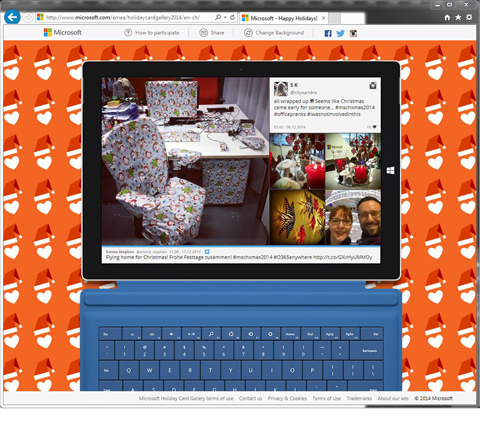
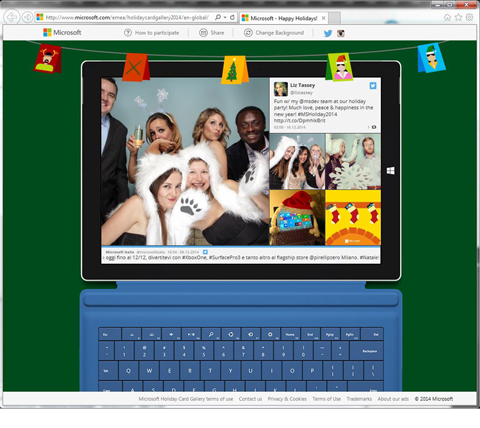
An album that contains thousands and thousands of photos from people all over the world and continuously changes its appearance - this is a novelty in the history of virtual Christmas greetings! This is made possible by Brandalizzer, a social media Windows app developed by Futurecom, which filters out the feed of various social media. But first things first: First, Microsoft employees, partners, friends and relatives were invited in a mailing to tag their very own Advent impressions with a predefined hashtag and post them on Facebook, Instagram or Twitter. Brandalizzer then accessed the hashtagged images and linked them to the Microsoft Christmas Gallery.

Microsoft_Christmas_1
Microsoft_Christmas_2_
Microsoft_Christmas_3
This is how a not-so-ordinary album with diverse cultural insights was (and is) gradually created - because the interactive Christmas gallery has now been adapted for 18 country platforms, including Switzerland. To see how else people around the world are getting in the mood for Advent, click here.

Link (Switzerland)

Link (Global)

Responsible at Microsoft: Christian Frei (Marketing Communication Lead Western Europe HQ) and Marta Sereno Oliveira (Project Manager Western Europe HQ CMO). Responsible at Wunderman (Member of Y&R Group Switzerland): Thomas Engeli (ECD), Daniel Schranz, Carl Gustav Stahl (AD), Parvez Sheik Fareed (text), Valeska Kraus, Andreas Punter (consulting), Roberto Eichin, Nicolà Krügel, Manuel Meier, Pascal Albrecht (programming).
 

Secret surcharges are in fashion

Most newspapers and magazines will not raise their advertising rates—or will raise them only moderately—as of 2015. And yet, print media is becoming significantly more expensive in many places. This is because a great many publications have lost a significant number of readers this year, yet only a few are lowering their page rates. Most are keeping them the same, and some are even raising them.

Of the more than 150 titles listed here, only a quarter are changing the rates for entire advertising pages: 31 titles - mainly newspapers - are increasing the page rate, 17 are reducing it. The 7 supplements are making no changes at all. And there are hardly any adjustments in French-speaking Switzerland: There, only four titles (Revue automobil, Coopération, La Liberté, La Gruyère) are raising their rates, while two (Vista f and La Côte) are lowering them significantly.

Gross display tariffs (PDF)
Continuation (PDF)

TagesWoche finally corrects the price

Axel Springer Switzerland's (ASS) TV guides are making the steepest price cuts: They each reduced the page price by around a quarter. This is understandable in the case of TV Star, which has lost exactly the same number of readers. Tele, on the other hand, is lowering its rate much more (-27%) than would be appropriate based on the current loss of reach (-18%). In the case of TV2 and TVvier, which do not report readership figures, the price reduction is not unreasonable, at least in view of the circulation trend. Another paper with a large price reduction is TagesWoche, which is cutting its advertising price by 22 percent. The reason: last February, the weekly newspaper was found to be giving away most of the more than 22,000 reported "subscriptions" free of charge simply as countertrade at airports. It has since stopped this, and today - with a circulation similar to that of a year ago - it still has just under 5700 paid subscriptions, with the rest being distributed largely free of charge. The advertisers will have to decide whether the price reduction is sufficient in view of this low subscription base. On the other hand, the 12 percent reduction made by La Côte is rather surprising, as its readership has remained stable.

Other titles choose the standard rate

The biggest price increases were made by the magazines Revue automobil (+28%), Plädoyer (+17%) and Automobil-Revue (+14%) - but only for the black-and-white rate, as the three titles are now introducing the standard rate. The young Ostschweiz am Sonntag is also clearly moving in this direction. It has reduced the four-color price, which is why the difference to the black-and-white side is now only 60 francs. Landliebe and Thurgauer Zeitung (TZ) are the two newspapers with the biggest increase in the four-color rate: although Landliebe increased its readership by 35 percent, it only added 13 percent, while TZ increased its price in exact proportion to its increase in reach (+10%). At 20 minuti in Ticino, readership growth (8%) and price increase also match in percentage terms.

Many hidden surcharges in 2015 too

It goes without saying that the current round of price increases is once again accompanied by hidden tariff increases - possibly more than ever before. The extent of this can be illustrated with a few figures: Of the 150 or so titles, 119 reported reach figures in MACH Basic 2014-2. 84 of them recorded a decline in readership compared to 2013, which is often significant. However, only six titles have also reduced their page price for next year - including the aforementioned TV titles from ASS as well as Vista and Beobachter Natur. Most, on the other hand, have left the price at the previous level, which of course represents a hidden price increase. Particularly brazen: although Anzeiger Thurgau has 31 percent fewer readers, it continues to charge the same price per page as before. The same applies to Kulturtipp (27% fewer readers), the French edition of Reader's Digest (-23%), Handelszeitung (-22%) and Film imnächst (-20%). But that's not all: some titles are even increasing their advertising rates, despite a sharp decline in reach. These include Schweiz am Sonntag and Tagblatt der Stadt Zürich, which have lost 20 percent and 17 percent of their reach and are still charging 0.2 and 2 percent more for their advertising pages. The Coop-Zeitung is doing comparatively moderately, losing 2 to 5 percent of its readers depending on the language region, but only raising its page price by 2 percent.

Massively higher TLP in many places

This leads us to the thousand-reader price (TLP), which is now comparable with the previous year in the second year of the MACH 3 readership study. 16 free newspapers have a higher CPR in 2015 than a year ago, with Anzeiger St. Gallen and Anzeiger Thurgau leading the way with +44% and +30% respectively. Among the magazines, 22 titles have a higher TLP than in 2014 - led by Kulturtipp with +36 percent. Among the newspapers, there are 18 papers with a higher TLP, with Handelszeitung taking the cake with an increase of 28%, followed by Schweiz am Sonntag with 26% and Il Caffé with 22%. Among the supplements and free magazines, Film imnächst stands out in particular, with a 25 percent increase in TLP. However, the reverse is also true: Titles that are massively reducing their TLP, albeit not to the same extent as in the case of supplements - and far less frequently. The Journal du Jura and Anzeiger Region Bern are likely to please advertisers the most, as their TLPs are 17 percent lower in 2015 than in 2014. That of PME Magazine is also down by 13 percent.

Millimeter prices rise here and there

Hidden rate increases also occur at another level: in newspapers that leave the page price unchanged but increase the price per millimeter. This makes small-format advertisements more expensive. In the current price round, however, this is relatively rare and moderate, for example at Liechtensteiner Vaterland, Zürcher Regionalzeitungen and Berner Zeitung: they are leaving their page price unchanged, but raising the millimeter price by 3 percent, at Metropool and Freiburger Nachrichten the millimeter price is increasing by 2 percent and at Finanz und Wirtschaft and Glarner Woche by 1 percent. Hidden price reductions only occur twice, but all the more clearly. The Olten local section of Schweiz am Sonntag is lowering its color millimeter rate by 11 percent, as is Ostschweiz am Sonntag.

The SonntagsBlick magazine is implementing a hidden price increase of a different kind: It will now be integrated into the newspaper as a third bundle and will take over the newspaper's rates, which are around CHF 4,000 higher.

Markus Knöpfli

Some tariff specialties

- The standard rate has long been the norm for magazines. But there are exceptions. For example, Migros Magazin and Touring and their
French- and Italian-language editions still have different b/w and 4c prices. From June 2015, Migros Magazine
stand alone with this specialty, because then Touring becomes a magazine.
- The Oltner Tagblatt has the highest reported newspaper TLP in German-speaking Switzerland in 2015 - CHF 220.83. On the
The Zofinger Tagblatt (CHF 209.44) and the Liechtensteiner Vaterland (CHF 205.-) follow in second and third place. In French-speaking Switzerland, La Côte
The highest CPM was CHF 296.58, followed by Le Courrier (CHF 280.84) and L'Impartial (CHF 255.88). Among the magazines, Bolero with
with a TLP of CHF 215.17, followed by Edelweiss (CHF 167.26).
- Large free magazines have the lowest reported TLP: The Coop-Presse (whole CH) costs only 16.37 francs per 1000 readers, the
Migros magazine KoMMBi (CHF 18.52) and the Drogistenstern (CHF 19.10) is in third place. The paid-for titles are also led by
high-reach titles, such as the K-Tipp (Fr. 24.16), the Gesundheits-Tipp (Fr. 27.98), the Beobachter (Fr. 28.34) and the Saisonküche (Fr. 28.53).
- The steepest page price increase since 2008 - the year before the crisis - was implemented by 20 minutes: Its page price costs 131 percent more
or a good twice as much as six years ago. The same applies to Blick am Abend, which costs 112 percent more than the former
predecessor title "heute". Among the paid titles, Metropool came out on top with 27%, Magazin with 26% and Bon à savoir with 23%.
percent the most.
- By contrast, the TV2 and TV vier program guides (-58%) saw the biggest reduction in page prices since 2008, followed by the
cinema magazine Avant Première (-45%), the German-language edition of the supplement Vista (-43%) and TV Star (-41%).


"Stolen Moments" in the ADC Gallery

After several exhibitions at home and abroad, Daniel Comte is showing his photographic works at the ADC Gallery for the first time.

The creative director and photographer is a quiet observer of everyday madness and captures astonishing and touching everyday situations with a sensitive eye. Daniel Comte was born in Bern in 1963. After studying graphic design at the School of Applied Arts in Bern, he became Creative Director and a member of the management team at Matter Leo Burnett in 1984. From 1998 to the present day, he has worked as a creative director in the largest advertising agencies in Switzerland. He has been a member of the Art Directors Club Switzerland ADC since 1995. Today he lives and works in Zurich. He has a long-standing collaboration with Richard Avedon.

newsletter

Daniel Comte has won over 300 national and international creative and Effie awards. He is also an enthusiastic photographer. Art and culture are his spiritual media, as he says. "I consider myself a silent observer of everyday madness and the coexistence of chance". As a street photographer with a sensitive eye, he wants to be perceived as a tourist and capture situations bluntly. (uma)

Comte's works can be seen at the ADC Gallery, Zentralstrasse 18, Zurich, until January 15, 2015.

Read more about Daniel Comte in the first Print edition in the New Year (publication: Friday, January 16, 2015).

Insights into the exhibition:

bundeshaus
Refreshment outside the Parliament Building in Berne

oneshot
One shot on a rainy day

beach
Life's a beach

Romansh news agency with new head

The Romansh news agency Agentura da Novitads Rumantscha (ANR) has appointed new leadership. Martin Gabriel, 52, has replaced Jon Domenic Parolini as president of the board of trustees; Parolini was elected to the cantonal government.

Martin Gabriel, previously Vice President of the Board of Trustees, works in his day job as head of the municipal chancellery in Ilanz, as ANR announced on Thursday. However, the 52-year-old is not new to the media industry. From 1988 to 2006, he worked as a radio journalist for Radiotelevisiun Svizra Rumantscha (RTR).

New Graubünden Director of Economic Affairs

Jon Domenic Parolini, BDP councillor and long-standing mayor of Scuol, is handing over the presidency because he was elected to the Graubünden government in May. From the beginning of next year, he will take office as Director of Economic Affairs. CVP National Councillor Martin Candinas was elected to the Board of Trustees to replace the outgoing Chairman. The Romansh news agency was founded in June 1996 and began operations at the beginning of 1997. It provides the Romansh print media and the electronic media with daily texts and photos. The agency, which employs 13 people, is financed by the federal government and the canton. (SDA)

Image: Rtr.ch

Stricter rules for advertising to children

Starting next year, Coop, Coca-Cola, and eleven other members of the Swiss Pledge initiative will have to comply with stricter criteria when advertising to children.

Among other things, the advertised products must not contain too much sugar. From January 2015, a new nutritional model will apply to all members of the Swiss Pledge initiative, Swiss Pledge announced on Thursday. To be suitable for advertising to children under the age of twelve, products must contain a specified amount of "components to be promoted"; at the same time, they must meet the limits for "nutritional values to be limited." Only limited amounts of sugar, saturated fatty acids and sodium may be present. These were selected because there is sufficient evidence "that they may be of concern to public health," according to Swiss Pledge. The limits vary depending on the product category.

Thanks to the uniform nutritional value model, products within the same category can be compared in the future, as Swiss Pledge writes. At the same time, this should stimulate competition for the development of balanced products.

Swiss Pledge was founded in 2010 as a voluntary initiative with the aim of adapting advertising behavior towards children under twelve. Members are currently 13 companies, including McDonald's, Nestlé, Kellogg, Danone and Coop. Together, the 13 companies were responsible for 41 percent of food and beverage advertising spending in Switzerland last year. (SDA)

On the subject:
Children watch fewer food TV commercials (April 2014)
 

Twelve in a new dress

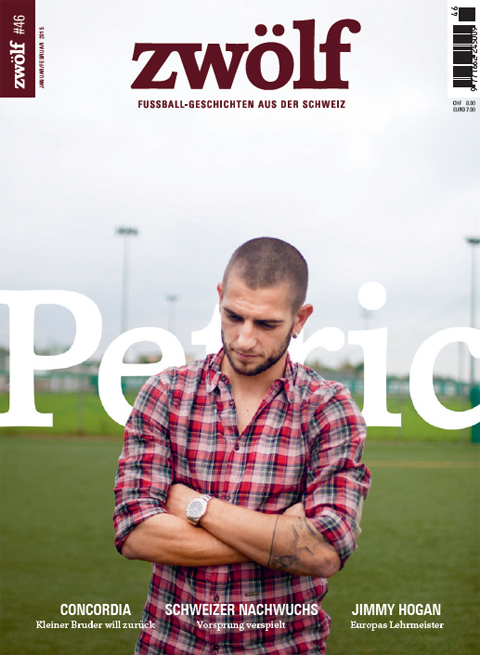
Twelve was in the locker room. Starting with issue 46, which comes out on Thursday, the Swiss soccer magazine will have a new look.

"The aim was to give the magazine a clearer structure and a tidier look. It was also important to us that we could implement our stories in a more individual way visually," says Editor-in-Chief Mämä Sykora.

zwoelf-cover-neu

Sascha Török, designer and image manager at Zwölf since June 2014, is responsible for the new look. "The most obvious change for the reader is of course the lettering. The use of new fonts and a variable design grid has created more space and at the same time made it easier to read. The newly developed color concept supports the structure of the magazine and makes sections easier to identify."

With the relaunch, new sections and authors have also found their way into the magazine: Under the heading "Abpfiff", satirist Gabriel Vetter now pays tribute to football greats who never really existed. In his column "Serial Seger", ice hockey crack Mathias Seger observes football from the perspective of a fan and team sportsman. Twelve now also has a broader international base. Alternating with our "man in London", Hanspeter Künzler, Christian Egli brings readers closer to Latin American football from Montevideo.

Otherwise, Zwölf relies on its tried and tested strengths: The magazine provides background information, specialist knowledge and, above all, good stories - all always with a lot of passion and the necessary pinch of humor.

zwoelf-alt
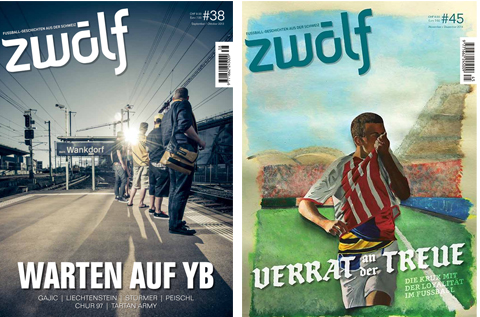
Twelve in the old dress: a must-read for football fans since 2007.
 

Recently in social media

The way people consume media is changing. This isn't limited to television, where mobile viewing is becoming more popular than stationary viewing. How can we ensure our advertising messages continue to be heard in this changing environment?

"Wetten, dass …?" was canceled last Saturday. Viewing habits are changing. Television’s dominance as the leading medium for entertainment is wavering. But what about television’s role as the leading medium for advertising? Television remains unquestionably strong and important. Nevertheless, anyone who didn’t start in 2014 will have to do so in 2015: venture into new territory. It’s almost midnight. I’ll skip the numbers, trust your powers of observation, and keep my feet on the ground. Instead of lounging comfortably on the sofa in flip-flops, we’re increasingly entertaining ourselves, staying informed, and connecting while on the go—wearing sneakers, ballerinas, or navy boots.

For us in the advertising industry, the shift from desktop to mobile is, in terms of impact, like jumping from a cozy sofa onto a noisy street. Starting today and continuing regularly in the future, we’ll be discussing how we can still make our messages heard in this changed environment. “New in Social Media” is my short-form column in *Werbewoche* covering the latest developments in social media and related fields. To get started, read the pilot post, which offers some well-intentioned guidance. We’re kicking things off with a bang.

EXPLOSIVE – Use the power of newly acquired knowledge to blaze a trail toward new solutions and perspectives. TNT stands for Techniques, Narratives, and Tools. Techniques are drivers of impact. Tried-and-true methods, such as the use of testimonials and experts, are combined with newer approaches, such as clickbaiting and newsjacking. Narratives are content that provides material for stories with the potential to go viral. Tools are all kinds of resources, such as those for networking (Facebook, etc.), publishing (blogs, microblogs, aggregators), data collection (analytics), or content creation (photo, video, and GIF apps). Unfortunately, risks are also part of the business. Anyone responsible for advertising investments in social and digital media must also familiarize themselves with these risks. A current example: bot fraud is a fraudulent computer program that automatically generates millions of fake clicks. Adweek reported that fake clicks amounted to $6.3 billion in 2015. Eleven percent of these were display clicks, and as many as 23 percent were video clicks. The equivalent on Facebook is fake «likes.» “10 vor 10” reported on this. The Interactive Advertising Bureau (IAB) has launched a task force to combat this. The situation appears serious. There is a huge need to catch up on knowledge about the new media landscape. As an immediate measure, I recommend that all advertisers subscribe to the ADWEEK Technology Today newsletter.

A more comprehensive list of sources is available in the blog post. You don't have to be on par with your top specialists. But you do need to be willing to open the budget tap for the right reasons.

FOCUSED – Organize the wide range of options into a matrix based on objectives and focus on marketing. Perhaps the shift toward marketing has fallen somewhat behind in the battle for cubes and lions. Advertising is marketing communication. We’re talking about real-time engagement marketing as an alternative to classic transactional marketing. At its core, two completely different philosophies collide. The major difference is revealed in the entirely new roles of marketing managers and creative agencies. In the old model, the tasks of both parties are limited to marketing and promoting finished products, respectively, with mass messages via interruptive advertising. In the new model of engagement marketing, marketing managers and advertisers are already on board as soon as new and improved products and services are being considered. This is because the most forward-thinking among them are already taking the pulse of product experiences today by actively initiating real-time dialogs with users via monitoring and management tools on Facebook, Twitter, newsletters, or in-app chats to actively initiate real-time dialogs with users, thereby incorporating valuable insights and sentiment into the development and design processes without delay. General Motors provides a current example. Users of the new Chevrolet Trax are encouraged to share their experiences and impressions via Facebook and Twitter using the Trax’s built-in Wi-Fi. What’s innovative about this approach is that the feedback is sent directly in real time via an Oracle data dashboard to the development department, where improvement measures are initiated immediately. Seth Godin, a globally recognized marketing expert on engagement marketing, says: «If you are serious about engaging the customer, you realize that the most valuable moments you have are when the customer is using your product, on the phone with you, actually engaged with you.» The challenge lies in giving those particularly positive reviews an extra boost by tracking them down in real time, acknowledging them, and sharing them further. After all, nothing yields better results than so-called peer-to-peer conversations, in which users share positive product experiences with one another. This isn’t exactly a new insight. But now, for the first time, we have the opportunity to put it into practice as part of real-time marketing communication campaigns!

WELL-PLANNED AND ORGANIZED – Define clearly budgetable areas of focus, and above all: get started! Facebook for the masses and Twitter for influencers—in my opinion, these are the most important drivers when it comes to expanding and deepening your network. Native mobile apps with chat features, product finders, and store locators are just as much a part of a modern marketing communications program as web-based multimedia long-form stories. New forms of communication require new forms of organization. Conversations take place simultaneously in multiple locations with different groups of people. This presents a logistical challenge: How does the right content reach the right people at the right time, and what needs to be done to ensure that the content spreads further? Outgoing NZZ Editor-in-Chief Markus Spillmann sums up the change: «When you talk about an editorial meeting, you’re still thinking entirely in terms of the old world. Today, there isn’t just a single meeting anymore, but many, spread out over the course of the day, because we also have to manage various channels and offerings.» Replace «editorial meeting» with «briefing,» and the statement applies directly to the future work of creative agencies.

Beat Hürlimann

Responses and opinions on the post can be found at www.huerlimanncc.com
Welcome! Otherwise, see you in January, when we’ll be back on social media.
 

The Asians show what it could be like

Swiss smartphone users have flocked to the WhatsApp messaging service—but brands cannot (and do not want to) get involved.

Dumb luck: Unlike in other parts of the world, WhatsApp is by far the most popular instant messaging service here. Stupid for business. Because unlike other such chat apps, WhatsApp wants nothing to do with brands. While messages on Twitter are by definition public and users on Facebook usually communicate with a circle of more or less selected "friends," WhatsApp was created in advance for one-to-one communication via smartphones. It is very similar to sending text messages, except that the text length is unlimited and videos or audio files, for example, can simply be sent as well. And all of this is virtually free. In our country, WhatsApp has spread rapidly over the last two to three years as a free alternative to paid SMS. Although there are no concrete usage figures, there are clear indications. One is our own circle of friends and acquaintances, where WhatsApp is now part of everyday life even among contemporaries who can hardly be counted among the smartphone avant-garde. And secondly, two studies. A study from last year among young people between the ages of 14 and 25, in which WhatsApp was surveyed as the most-used app by far. This observation was supported by the 2014 "Media Use Index" study, which also showed Whats-app to be the most popular smartphone app. Swisscom's largely unsuccessful efforts to compete against WhatsApp & Co. with its iO app also speak a clear language.

No Ads! No Games! No Gimmicks!

Just as Facebook is shaped by founder Mark Zuckerberg (who bought the Whats app messaging service for a whopping $19 billion in February of this year), WhatsApp is defined by its two founders. Above all, Jan Koum's life story puts its stamp on the company, its product and its behavior on the market. Now 38, he grew up in a poor Jewish environment in a small village outside the Ukrainian capital of Kiev. As a teenager, he emigrated to the United States with his mother and taught himself computer networking. He left university early in 1997 to join Yahoo as an infrastructure engineer, where he met his future co-founder Brian Acton. Ten years later, they both left Yahoo at the same time, and two years later WhatsApp was launched. In Ukraine, Koum's parents avoided making phone calls at the time because the government intercepted conversations, and advertising didn't exist in Soviet times either. Although the WhatsApp software has made a name for itself with a number of security gaps, protecting privacy is one of the company's top priorities, which is summed up in "No ads! No games! No gimmicks!" to the point. Because advertising is consistently avoided, there is no need to collect data about users in order to be able to place advertising messages as precisely as possible - and users do not have to fear that their chat conversations will be disturbed by advertising. And this is where the difficulties for WhatsApp use in a commercial environment begin. Because WhatsApp wants to have as little to do with advertising as the devil does with holy water, there is no support whatsoever for the mass distribution of messages via Whats App. The terms of use are restrictive, there are no special corporate accounts, and above all, there is no officially supported application programming interface (API). Although there are various open-source solutions for this, WhatsApp took legal action against it before the takeover by Facebook, which did anything but build trust. In addition, anyone who wants to subscribe to a distribution list, for example of a brand, has to go through several steps - there is no simple registration option. And the use of content via WhatsApp cannot be reliably measured either.

Big business in Asia

Messaging providers in Asia show the opportunities in m-commerce that such services offer. Take, for example, the Japanese Line service with its flash sales. When this was launched a year ago, 5.5 million of the 22 million Line users in Thailand signed up to benefit from exclusive offers. The offers included smartphone covers, cosmetics and kitchen products, all of which sold out within minutes. Young professionals in particular, two-thirds of whom were women, took advantage of this bargain opportunity. Line customers have long been able to buy virtual stickers and games for good money. KakaoTalk, for example, which is installed on nine out of ten smartphones in South Korea, and WeChat from China with 470 monthly active users are on the same path. Here, not only can cabs, flights and movie tickets be booked, but money can also be transferred to other users or invested in investment funds. Most importantly, it is possible to pay not only for in-app purchases, but also for purchases in stores. For many of these functions, existing services from the parent company Tencent are often integrated into WeChat. These WhatsApp counterparts offer brands their own presences, have officially supported application interfaces, and can be used not only via smartphone but also on desktop. These are all features that are not present in the two corresponding Facebook offerings, WhatsApp (with over 600 million and 500 million registered users, respectively) and Facebook Messenger (500 million). So the question arises how long Facebook, despite the personal preferences of the founders, wants to stand aside here. After all, the chat applications are not only putting pressure on the telecom companies, which are losing out on the once hefty SMS revenues, but also on heavyweights like Google, Apple and Amazon. In their app stores, they skim off margins of typically 30 percent, both on app purchases and later on purchases within the apps. As the examples from Asia show, social messaging services are rapidly establishing themselves as new platforms through which advertisements, apps, goods and services are distributed. But in markets like ours, where WhatsApp has spread, such innovative impulses for new forms of business are lacking.

No urge with Swiss brands

Werbewoche conducted a short, non-representative survey to find out how WhatsApp is viewed in professional communications in this country. Peter Erni, Web Content & Social Media Manager at Mammut Sports Group AG, reported that WhatsApp is only used for private purposes. And he puts it in a nutshell: "As long as the guidelines don't change or WhatsApp doesn't offer comparable options to WeChat, we're not considering increased use." At the Federation of Migros Cooperatives, media spokesperson Christine Gaillet also responds succinctly: "No, we don't work with WhatsApp." She said that the M-Infoline currently offers a total of around ten contact options for customers. "We consider this to be sufficient and efficient." And at Swiss International Air Lines Ltd, Nadja Waldraff from Social Media Marketing notes, "WhatsApp doesn't feature in our marketing mix, but I don't think this is based on a conscious decision either, but simply hasn't been discussed yet." The answer from the social media team at Wander AG (Ovomaltine, Isostar) mentions that WhatsApp is currently only used for internal company communication in special cases and leaves a door open: "If we find that it is a growing need among our customers, we will certainly consider it." Thomas Brühwiler, Head of Communication at Hostpoint AG, agrees: "In principle, the use of chat services in customer service is a possibility that we are observing. However, there are no concrete plans for immediate use at the moment." At online retailer Brack.ch, WhatsApp is also "not an issue at the moment," according to PR Manager Daniel Rei. However, he adds, "We have always said that we need to be where our customers are. From that point of view, we are not fundamentally averse to learning from other companies' experiences with the business application of Whats- App." He sees the main areas of use in marketing, such as sending multimedia push notifications to groups, and customer service. "When responding to customer inquiries, it's advantageous for both companies and customers that contacting them can take place without the channel public being aware of it - unlike Twitter, which is usually the case." And he adds: "Perhaps the relevance of the platform for users also decreases the more companies try to advertise via it. And then we'd be at the same point as on Facebook, where I now get more company news and sponsored posts displayed in my stream than interesting stuff from my friends."

SRF hits the brakes ...

Unlike brands, media companies are more aggressive with WhatsApp. In Switzerland, the youth TV station Joiz distributes news via Whats App to users who have signed up for it - touting "special guests, top news and show highlights ". SRF News distributed information and backgrounds via WhatsApp for the first time during the national votes on the weekend of September 28 as part of a time-limited trial. Project manager Konrad Weber, community manager SRF News, reports that in a subsequent survey, 80 percent of subscribers wanted such a service with regular news. Nevertheless, the state broadcaster is currently putting the brakes on WhatsApp. Weber explains: "If one wants to work with the official WhatsApp solutions and not contradict the general terms and conditions, the personnel costs for an interactive news distribution via WhatsApp are currently enormous." Due to the high demand, however, this decision will be regularly reviewed. While according to company spokesman Christoph Zimmer tagesanzeiger. ch is not currently planning to integrate WhatsApp, Luzi Bernet, deputy editor-in-chief and head of news at NZZ, reports a "small, short and temporary 'guerrilla experiment' with WhatsApp." This type of news distribution is interesting and this option "will certainly be examined more closely". However, they do not want to give away high-quality journalism here either. Whats-app, as well as other social channels, are part of the considerations for new products that are currently being prepared. Ringier has a similar approach. According to Chief Communications Officer Edi Estermann, the use of chat services is currently being examined, particularly in the newsroom of the Blick Group. In the test phase, this is mostly being done on a topic- or event-specific basis, and after initial experience has been gained, a decision will be made as to whether, in what form and with which provider "this new, young information channel should continue to be used.

... 20 minutes gives gas

Last fall, 20 Minuten already introduced a share button so that messages could also be shared via WhatsApp. As Peter Wälty, head of digital development and deputy editor-in-chief, explained on request, this function is now to be placed more prominently and placed over the entire text for Whats App. Because at peak times in the morning up to 95 percent of calls are made via mobile and because WhatsApp can only be used on smartphones, "we are interested in what happens if we make it more visible". This is despite the fact that all the social media hardly bring in much traffic, according to Wälty, with Facebook's share "in the mid single-digit percentage range". At 20 Minuten, they are also working on introducing a WhatsApp broadcast channel to distribute breaking news in advance, and as Wälty revealed in an interview with Werbewoche, preparations for this are already well advanced. But he is in two minds: "What do we actually gain by sending news messages to the audience via WhatsApp, because we can already do that today via our own app." With such a push message, 20 Minuten reaches 1.6 million readers today, he says. And an additional back channel from readers to 20 Minuten, as would be possible via WhatsApp, doesn't necessarily make sense either, he said. "We already receive hundreds of pictures and tips from readers every day anyway." Publishers must therefore think carefully about how dependent they are on such platforms if they use them so prominently, Wälty continues, and concludes for 20 Minuten: "With our own new app, we want to build our own brand even more clearly into a social media brand and place even more emphasis on the return channel.

Christoph J. Walther

Unbenannt-1d5

It is true that Facebook is still by far the leading social media network worldwide. But mobile chat applications, such as WhatsApp, WeChat or Line, are rapidly gaining popularity. (Source: Compiled by We Are Social based on the latest company data as of November 3, 2014).

Unbenannt-16_26
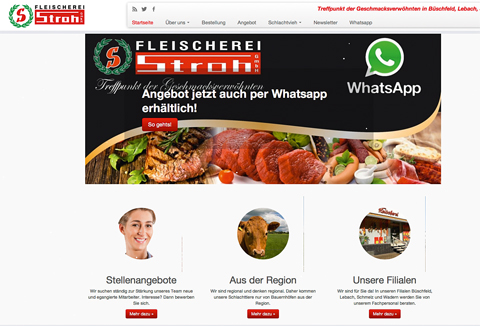
Admittedly, WhatsApp does not yet provide for use for advertising/companies, and so the dissemination of corporate messages is a legal gray area. The Stroh butchery, for example, which is active with four branches in Saarland, regularly sends a weekly menu to WhatsApp subscribers who have signed up for it.

Unbenannt-17yh
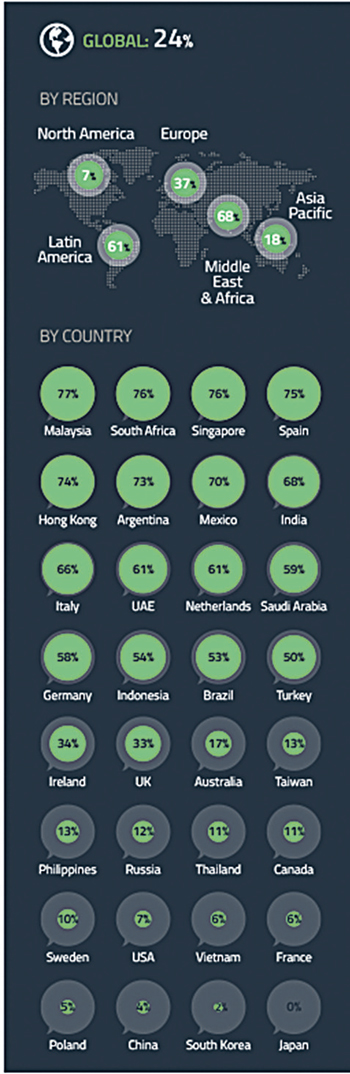
WhatsApp is by no means as widespread everywhere as it is here. In other countries, instant messaging providers are far more business-friendly. (Source: GlobalWebIndex, September 2014)

Test WhatsApp share buttons

The "share social media" buttons have long been common on websites that offer content - be it editorial offerings from publishers or content marketing from companies. Facebook and Twitter are particularly popular. Such a share button is also available for WhatsApp, allowing posts to be shared directly only with selected contacts or groups. Since the effort to install this button should be low in most cases, it is worthwhile to install this test wise. Especially since there are reports that report a several times higher conversion rate compared to Facebook. However, since WhatsApp works exclusively on smartphones, this only makes sense for websites with a relevant mobile traffic share, which should be optimized accordingly (e.g. using Responsive Design) so that this button is only displayed on suitable mobile devices. Also, some additional effort will be beneficial to additionally mark the URLs that are distributed via this button, since WhatsApp itself does not transmit any referral data for tracking.

A dazzling entrepreneur now calls the shots at Orange Switzerland

The new owner of Orange Switzerland is one of France's most colorful entrepreneurs: Xavier Niel, with his company Iliad, revolutionized the French telecommunications market in a short period of time.

233058655
Apax is selling Orange Switzerland to French telecoms entrepreneur Xavier Niel for EUR 2.8 billion. The sale is expected to be completed by the end of the first quarter of 2015. The takeover is subject to approval by the relevant authorities. (Image: Keystone)

Niel made headlines around the world with the failed takeover of the U.S. company T-Mobile. Niel earned his first money in the 1980s with the French Internet forerunner Minitel: The young entrepreneur offered chat services for adults on Minitel. Later, he focused on the fledgling Internet and co-founded one of the first French Internet providers, World-Net. He later demonstrated his flair for the telecommunications business with the provider Free, which was one of the first in France to offer telephone, TV and Internet as a package deal. Iliad, with its Free and Free Mobile brands, is now one of the largest telecommunications groups in the Republic. According to its own figures, Iliad is number three in the mobile business - even though the group only expanded into the mobile market in 2012. Free Mobile owes its rapid rise to its aggressive pricing policy.

But France is apparently not big enough for Niel: Last summer, he tried unsuccessfully with Iliad to buy a majority stake in T-Mobile US, the fourth-largest mobile carrier in the United States. His $15 billion offer was audacious, because T-Mobile is worth around 60 percent more on the stock market than Iliad. But the failed takeover attempt did not cool Niel's expansion plans, as the purchase of Orange Switzerland proves.

Co-owner of Le Monde

Thanks to his majority stake in Iliad, Niel is one of the richest men in France - according to Forbes magazine, the telecom entrepreneur is worth around 8.2 billion dollars. In France, the billionaire is also known as one of the owners of the newspaper Le Monde. Niel joined other investors in the traditional Parisian paper in 2010. (SDA)

Niel on the acquisition of Orange Switzerland: "Since Orange Switzerland was acquired by Apax funds in 2012, my team and I have followed the development of the company very closely. As such, we have witnessed the successful change process at Orange Switzerland under Apax's leadership. NJJ Capital, as the new owner of Orange Switzerland, will provide continuity to customers, employees and management. NJJ Capital is a long-term strategic investor, owned and managed by proven telecom specialists, whose goal is to share and exchange best practices with Orange Switzerland management. My top priority in the future will be to manage Orange Switzerland according to the Swiss environment and its customs."

Orange has changed hands many times

In the 16-year history of Orange Switzerland, the number three in the mobile communications market, there have been several changes of ownership. Here are the most important milestones in Orange's history:

1994: Establishment of the Orange Group in the United Kingdom as a subsidiary of Hutchison Whampoa and British Aerospace. It builds Orange Communications in Switzerland with the German Viag Group, Zurich-based Swissphone Engineering AG and Waadtländer Kantonalbank.

January 1998: Orange Communications AG is founded with headquarters in Zug. Later, the company headquarters are moved first to Lausanne, then to Renens VD.

April 20, 1998: Orange Switzerland receives a mobile communications license from the Federal Communications Commission (Comcom).

June 28, 1999: Orange becomes the third mobile communications provider to start operations in Switzerland, after Swisscom and DiAx (later Sunrise).

October 1999: The German industrial group Mannesmann acquires Orange, giving Orange Switzerland a new major shareholder. At the same time, Orange concludes an interconnection agreement with Swisscom and thus enters the fixed network.

April 2000: There is another change in the shareholder structure of Orange Switzerland, as the British company Vodafone acquires Mannesmann together with Orange. However, under pressure from the European competition authorities, Vodafone has to sell Orange.

May 30, 2000: The French state-owned telecommunications group France Télécom is buying Orange for around 74 billion francs. France Télécom thus also acquires a 42.5 percent stake in Orange Switzerland.

November 8, 2000: France Télécom acquires a majority stake in Orange Switzerland and pays CHF 2.4 billion for the 42.5 percent stake held by German conglomerate E.ON.

December 6, 2000: Orange Switzerland acquires a UMTS license for CHF 50 million.

November 25, 2009: France Télécom announces its intention to buy Sunrise and merge it with Orange Switzerland.

April 22, 2010: The Competition Commission (Weko) prohibits the planned merger to prevent a duopoly of Sunrise/Orange and Swisscom in the mobile communications market.

June 3, 2010: Orange Switzerland and Sunrise definitively drop the intended merger and withdraw their appeal against the Weko veto. Sunrise is then sold by its owner, the TDC Group, to the financial investor CVC Capital Partners for CHF 3.3 billion.

July 28, 2011: France Télécom, which is having problems on its home market, is looking for a buyer for Orange Switzerland. The Swiss subsidiary no longer fits its strategy.

December 24, 2011: Orange Switzerland is going to the British investment company Apax, which includes the fashion company Tommy Hilfiger, for around 2 billion Swiss francs.

February 15, 2013: Orange announces up to 140 job cuts in 2013.

December 18, 2014: Apax sells Orange Switzerland to French telecom entrepreneur Xavier Niel. (SDA)


get_footer();