Newspaper commentaries on the SNB decision

The Swiss National Bank (SNB) surprised even the commentators in Swiss daily newspapers with its interest rate decision. Opinions are divided on whether the SNB’s move was the right one.

"He succeeded in surprising us", comments Blick on the actions of SNB Director Thomas Jordan and speculates whether "the SNB chief knows something we don't" and was therefore looking for a quick exit - for example, about the outcome of the Russia crisis or planned government bond purchases by the European Central Bank (ECB). After all, the Swiss export industry is in such a good position today "that it no longer needs subsidies".

The SNB's move "may come as a surprise, but there are good reasons for it", writes the commentator on Watson. It has obviously come to the conclusion that "the minimum exchange rate can no longer be maintained" with the imminent purchase of government bonds by the ECB. Although the SNB now has room to maneuver again, it is uncertain whether it "will be able to weather the resulting storm on the markets".

Jordan has "lost the poker game against the financial markets", writes the Berner Zeitung. Nevertheless, it would be wrong to panic now. After all, the Swiss economy has coped surprisingly well with the crash of the euro and should prove its adaptability once again in the coming months.

The end of the minimum exchange rate primarily means that the SNB will not allow the franc to become a quasi-euro, comments the Neue Zürcher Zeitung. "It is to be hoped that it will stick to it." After all, the SNB must strive to ensure price stability and an environment that is as stable as possible: "It must not be its job to promote exports. An end with horror is better than horror without end."

There is also talk of horror and the end in the Tages-Anzeiger and the Bund - albeit in reverse. With regard to the Swiss economy, the SNB is anything but out of the woods. By increasing negative interest rates, it is relying on the principle of hope. After all, if it has to intervene in future to weaken the franc, success is less certain and the costs will be higher. "Not least because the SNB's credibility suffered as a result of the way it communicated yesterday."

It sounds similar in Northwestern Switzerland: an independent national bank like the SNB must act just as independently and surprisingly. But as "courageous and independent" as the decision was, "it is of course a capitulation - whatever the reasons for it may be." And Jordan, in whose hands the Swiss economy lies, has "inevitably damaged his reputation".

According to the Basler Zeitung, the SNB's credibility has also been "deeply dented". "It will no longer dare to announce a regime based on market confidence any time soon." At least in the short term, the economic damage will outweigh the consequences. After all, the prosperity of Switzerland is determined by the well-being of its export economy. However, there is a substantial countervalue for the high price of regime change: "It's called freedom."

Südostschweiz calls what the SNB has regained with this move "monetary policy room for maneuver". The downside: "The export industry and Swiss tourism are facing very hard times." On the other hand, without the minimum exchange rate, "the damage to the Swiss economy would have been enormous". But: "In the long term, this could not work out well" because the euro, to which the franc was pegged, "is doomed to depreciate" due to the difficult economic situation.

The Neue Luzerner Zeitung, among others, sees the SNB's move as "a sign of mistrust in the development of the eurozone". At the same time, it is now clear "that the Swiss economy is now more dependent than ever on free access to the rest of the world." Politicians are called upon to take care of "Switzerland as a workplace".

Looking beyond the national borders

The major German newspapers devoted a lot of attention to the SNB decision.
Attention. The Süddeutsche Zeitung described the move as "a capitulation to the long-term consequences of the financial crisis". Although the exchange rate gain of 30 percent within a few minutes was a historic moment, it was merely a reaction by investors "to the dilettantish attempt by the Swiss central bank to unpeg the franc and decouple it from the euro".

Switzerland now faces the curse of the luxury country, predicts the newspaper Welt. For the eurozone, the plunge triggered by the decision is not a cause for concern, writes Der Spiegel. This is because the devaluation of the euro is intentional and the "crash of the euro is likely to continue". The Frankfurter Allgemeine Zeitung calculates for its readers that Switzerland has "now become Germany's largest creditor" thanks to its large-scale purchases of foreign securities.

The Swiss decision is an interesting lesson in the strangely precarious state of the global economy. Currency specialists would search in vain for a comparable event, writes the New York Times. The biggest insight: six years of aggressive currency activism by the major central banks may have saved the global economy. "But it also had many side effects far away from the US that people around the globe will have to deal with for a long time to come."

For the Washington Post, the SNB's decision is "probably not a good one". This is because Switzerland is still suffering from deflation with falling prices, and a stronger currency will make this even worse. The business publication Bloomberg blames Europe for the "shock with the Swiss franc". The move is "a kind of capitulation" and underlines a bigger problem: Europe's inability to restore economic growth. (SDA)
 

Curtain up for Theater Winkelwiese

Once again this year, Vizner Borel is directing the new season for the Winkelwiese Theater.

This year's theater program kicks off with the play "The Disappearance of Philip S." by Ulrike Edschmid. Vizner Borel created the visuals for the posters, ads and postcards. In addition, the agency designed the season magazine "Winkel".

Responsible at Theater Winkelwiese: Stephan Roppel (overall responsibility), Andrea Schmid (dramaturgy). Responsible at Vizner Borel: Lajos Vizner, Guillaume Borel (overall responsibility), Florian Steiner (art direction), Martina Glaser (consulting). Photography: Tobias Kruse/Ostkreuz (angle), Rainer Schär (poster, ads, postcards).
 

winkel1
winkel2
winkel3
winkel4

Bidding war for Ricardo

The auction platform Ricardo.ch is currently undergoing a bidding process. In addition to various media companies, retailers and the Swiss Post have also expressed interest.

Several companies from different industries are vying for the job, according to a Article of the Tagesanzeiger about the Ricardo platform. The current owner, South Africa's Naspers, did not comment on the matter when asked. But the bidding process for the platform is in full swing, as several well-informed sources are said to have confirmed to the media company.

Retailers also interested

Apparently, it is not only online and media companies such as Ebay, Ringier and Tamedia that are interested in Ricardo, as has already been reported. Other well-known Swiss companies are also said to be courting the auction house. Retailers are also in the running. According to the Tagesanzeiger, Migros is still in the bidding process, according to several well-informed sources, while Coop has meanwhile withdrawn. Migros has not commented on possible acquisitions. Both retailers have made substantial acquisitions in the e-commerce sector in recent years: Coop with Nettoshop and Migros with Digitec.

Cars and classifieds

Tamedia and Ringier are pursuing the goal of further expanding the digital share of the company's earnings. Especially in the area of online classifieds, Ringier and Tamedia have invested a lot of money in recent years. With Ricardo, both could significantly expand their market shares in the car and free classifieds sectors. Autoricardo in particular, the strongest category by revenue, is likely to be the focus of Ringier and Tamedia. If Tamedia (which ranks third with its car4you platform) takes over Ricardo, the media company could catch up with market leader Autoscout (Ringier).

However, the focus is also on the classifieds business. Tamedia with Tutti.ch, Ringier with Anibis.ch and Ricardo with Olx.ch are vying for market share. Whoever snatches up Olx.ch will become the undisputed market leader. 

Post is also interested

In addition to the well-known media companies and retailers, the Swiss Post is apparently also interested in Ricardo. However, Swiss Post officials did not want to comment on possible negotiations with Ricardo to the Tagesanzeiger. Swiss Post would at least have had takeover aspirations in the retail sector before. It is known that Swiss Post wants to generate volume and sales with e-commerce. (Tagesanzeiger.ch/sis)
 

A life at different speeds

"Boyhood" is the name of the film that is the big winner at this year's Golden Globes and is winning many other awards. A long film that slowly tells the story of a boy growing up and in whose production a lot of time was invested, sets a counterpoint in our short-winded world.

Isn't it anachronistic that an author who takes twelve years to write a work and a film that lasts 166 minutes strike a chord? Apparently not, because Richard Linklater is winning one award after another with his film "Boyhood.

He started filming in the summer of 2002. Mason is a boy of six at this point. His father is absent, and his mother tries valiantly to provide an appropriate environment for Mason and his sister. Over the next twelve years, the crew met for a few days at a time to develop footage for episodes of about 15 minutes. The script was developed together. Everyone involved embarked on the adventure of shaping the banality of a not-so-ordinary life into an extraordinary cinematic work.

All those involved remained true to the project. The top-class actors Ethan Hawke and Patricia Arquette document their own aging in the film. The child actors Ellar Coltrane and the director's daughter Lorelei Linklater grow up in two parallel worlds, in the film and in reality. Thus the film becomes more than a depiction of the coming of age of the main character: it becomes a contemporary history of a life world in which people develop their existence and identity.

Flow of events

Development takes time. It is not a string of moments. It is a process with a dynamic, both on a horizontal and vertical level. The flow of events is reflected in the snapshots of the images of a situation. These images are always in motion. They are constantly changing with the new information, emotions, decisions and their consequences. In addition to everyday experiences, stories experienced through the media flow into our world of experience. Be it the news from Paris, Syria or Haiti, the news from politics or the economy. Fact-oriented information is an essential part of our world. However, its weighting and interpretation is shaped by all the invented stories. Fiction, for its part, is a cultural reality that plays around concrete events. Creativity frees us from the powerlessness to accept events as forces of nature. With our imagination we shape the world according to our dreams. This includes living through fears, confronting dangers and taking risks seriously. We use our life energy to repeatedly bring together the different narrative strands, to gain clarity about motives and effects, and thus to gain sovereignty over our own story.

Reduce speed occasionally

The film encourages us to examine our own pace of work. Not all projects succeed under great time pressure. If you slow down the pace occasionally, you can let ideas mature and carefully hone their implementation. Speed and slowness are not mutually exclusive. Different work processes can run in parallel with different timetables. Richard Linklater took twelve years to make Boyhood. During the same period, he produced other successful films such as "Before Sunset" and "Before Midnight". The success of the film "Boyhood" reminds us that we should always take time out from the hustle and bustle of the news ticker. Let's occasionally not be disturbed while reading a thick book, let's let the music at a concert take us away from our world of words and images, and let's dive into the world of experience of strangers for a subjective eternity in the cinema.

Josefa Haas, Media Expert/ Rector EB Zurich
 

Goldbach becomes active in Germany

The Goldbach Group is expanding its core business operations into Germany. With the newly founded company Goldbach Germany, the Group will also be active in the German market as a marketer in the rapidly growing digital business sectors.

Goldbach Group, which is listed on the SIX Swiss Exchange, is entering the German market as a marketer of all moving image segments. For this purpose, the marketing company Goldbach Germany, based in Munich Unterföhring, has been founded. Goldbach Interactive Germany, which is already successfully active in Germany, will be continued and established as a service company for Goldbach Germany, according to a statement. To build up the German business, Goldbach Group is working with experienced key partners, thus combining its professional structures with in-depth market know-how.

Shareholders with expertise and market reputation

The managing partner of Goldbach Germany is 50-year-old Peter Christmann, former CEO and head of marketing at Prosieben Sat.1, as well as founder and, until recently, managing director of Media Group One.

Peter-Christmann

Also a shareholder of Goldbach Germany is Martin Krapf, who will also accompany the company in an advisory capacity. The 54-year-old was managing director of RTL's marketing company IP Deutschland between 2002 and 2012, and most recently was an independent consultant and managing director of Wirkstoff TV Gattungsmarketing, the TV marketers' genre initiative for TV and moving images.

Martin_Krapf

Together with these shareholders, it has been possible to fill the management of Goldbach Germany with proven expertise, competence and an outstanding reputation in the market, Goldbach said in a statement.

Consistent multiscreen approach

With its new activities in Germany, the Goldbach Group is further expanding its international presence and position. As Europe's largest advertising market, Germany offers Goldbach various interesting, growing market areas in the digital sector. For the expansion in Germany, the Goldbach Group is consistently oriented towards the multiscreen approach in order to optimally network all digital touchpoints for advertising customers, as has already been successfully established in Austria and Switzerland. "Moving image marketing in the digital sector with smart TV, digital-out-of-home and in-stream advertising, but also in the classic TV segment, is our core competence, and we want to offer this in Germany as well," says Michi Frank, CEO of the Goldbach Group.

Launch with digital out-of-home and TV

Goldbach Germany starts with the digital business units digital-out-of-home and TV, for which business areas as well as the corresponding personnel resources of Silverflow Media (DOOH) as well as alea digital (TV) were taken over. The digital-out-of-home division is being built up in partnership with Winfried Karst, Managing Director of Silverflow Media. The 46-year-old digital out-of-home specialist was CEO Central Eastern Europe at AMScreen, the European provider of digital out-of-home communication, and before that at the specialist agency Kinetic as managing partner responsible for the German and Swiss markets as COO Germany and CEO Switzerland respectively.

Winfried_Karst-BW

In TV and moving image marketing, the setup is in partnership with Robert Stahl and Frank Möbius, the two founders and partners of alea digital, a successful premium content moving image marketer for pay and free TV stations.

Robert_Stahl
Robert_Stahl_0

The advertising market in Germany is growing continuously. In 2013, net advertising revenues in the TV sector totaled around EUR 4.3 billion, an increase of around EUR 0.5 billion since 2009 (source: PWC Media and Entertainment Outlook 2014-2018). Goldbach also expects further growth in the TV and moving image market for 2014 as well as for the following years. Against this backdrop, Michi Frank, CEO of the Goldbach Group, explains the market expansion in Germany: "Following the targeted portfolio streamlining in Germany and abroad, we are continuing to expand where we can combine growth with profitability."


Much new in the southeast

Starting at the end of March, the four divisions of Chur-based Somedia—print, radio, TV, and online—will operate under a single brand, Medienfamilie Südostschweiz. Externally, they will also be united under one roof: the new media center in Chur.

After seven years of hard work, a diverse media portfolio in the southeast of the country has formed a convergent media brand with daily and weekly newspapers, radio, TV and online: Südostschweiz. From January 20, the daily newspaper "Südostschweiz" will appear in a completely new layout, on February 17 "Radio Grischa" will become "Radio Südostschweiz" and on March 24 "Tele Südostschweiz" will become "TV Südostschweiz ". Online Südostschweiz" is also to be relaunched on March 17.

The new media family will also share a logo in the future: the blue "Südostschweiz " lettering with four small circles representing print, online, radio and TV. For better differentiation, each division is marked by a color. Blue stands for print, green for online, red for radio and orange for TV.

The changes at the daily newspaper "Südostschweiz" are also striking. It has been completely revamped: In the future, the focus will be even more on regional issues, ticker news will lose its central role, larger narrative sections will illuminate topics from all sides, and the layout will be equal to the text. In initial tests, the relaunched Südostschweiz was very well received: representative focus groups judged the design and content layout to be very appealing and reader-friendly.

Four media, one brand

Convergence only works if it is lived. The new media house in Chur, for example, offers the right conditions for turning five locations into one and moving closer together in terms of both space and content: The editorial teams of newspaper, radio, television and online remain independent of each other, but work together in the new media house in the common newszone and at the newsdesk. The newszone is the area where all the editorial teams of the four divisions are located. The newsdesk is the daily command and decision center, where the four service chiefs of the sub-media decide how individual topics of the day will be handled. A new spirit also prevails at the Somedia service brands: Advertising in Somedia media has been sold since spring 2014 via the cross-media sales organization "Somedia Promotion," Switzerland's only advertising sale across four media genres. The service brand "Somedia Production" for media services from printing to video solutions has been in existence for several months. And the marketing department will also work across divisions in the future. This means that customers will have just one contact for print, TV, radio and online.

Already at the end of December, some departments of Somedia moved into the new media house. These "pilots" have already settled into the new building. "Life on the construction site is fascinating," writes Silvio Lebrument, Managing Director Media at Somedia, in his blog. "For work that requires quiet, however, it is a challenge. There is drilling, hammering, screwing and vacuuming. Still, the La Quotidiana editorial team has managed to put out a good newspaper." Soon the banging will be over: The main move will take place on February 6 and 7, and the media house will then be officially opened on April 24 in the presence of Media Minister Doris Leuthard. After that, Somedia's management team still has to take care of dismantling the old sites.

Anne-Friederike Heinrich

Interview with CEO Andrea Masüger

Background: Somedia

Somedia comprises various companies active in the newspaper, printing, advertising, publishing, electronic media and Internet sectors. The main product is the daily newspaper "Südostschweiz" with regional editions in the cantons of Graubünden, Glarus, St. Gallen and Schwyz. Somedia also publishes the daily newspapers Bündner Tagblatt and La Quotidiana as well as the weekly newspapers Bündner Woche/Engadiner Woche, Glarner Woche, Obersee Nachrichten, Davoser Zeitung, Klosterser Zeitung and various local newspapers. Somedia operates Radio Grischa and Tele Südostschweiz, offers video and web productions, and unites various book publishers, a print shop, and diverse trade and consumer magazines under its roof. The media & medicine publishing house MMV with Werbewoche also belongs to Somedia.

Unbenannt-4_57
Unbenannt-5_59
 

The picture maker

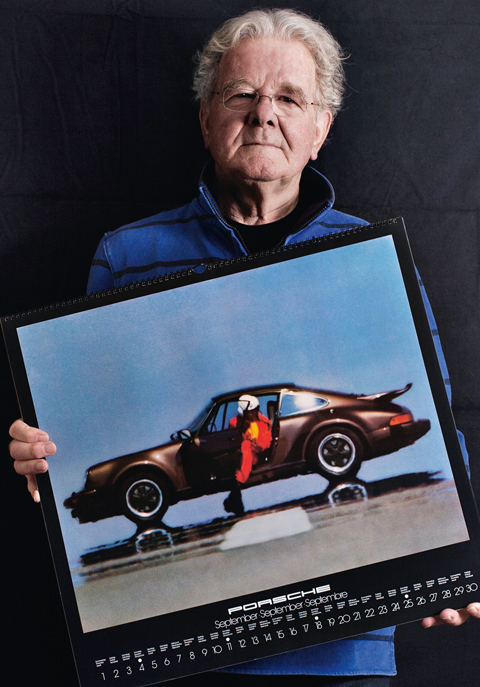
Of 248 awards, he recently consigned 200 to the dumpster. But this is not the only reason why Dietmar Henneka is considered an "enfant terrible". It is above all his views and work that have made him an icon of image design. Werbewoche met the star photographer at Photo15. 

Unbenannt-9_48

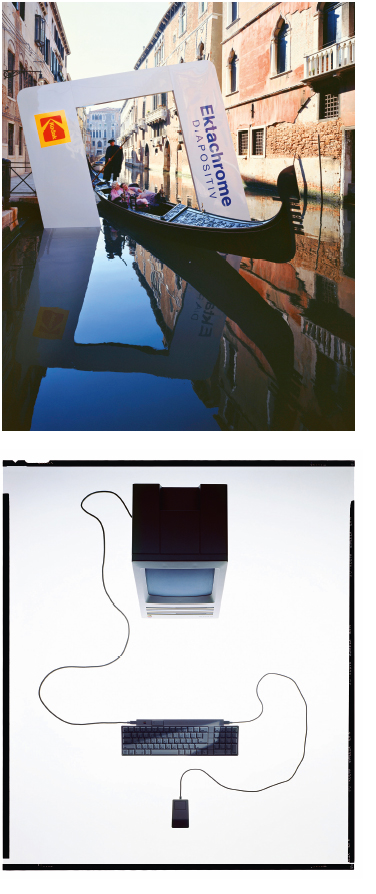
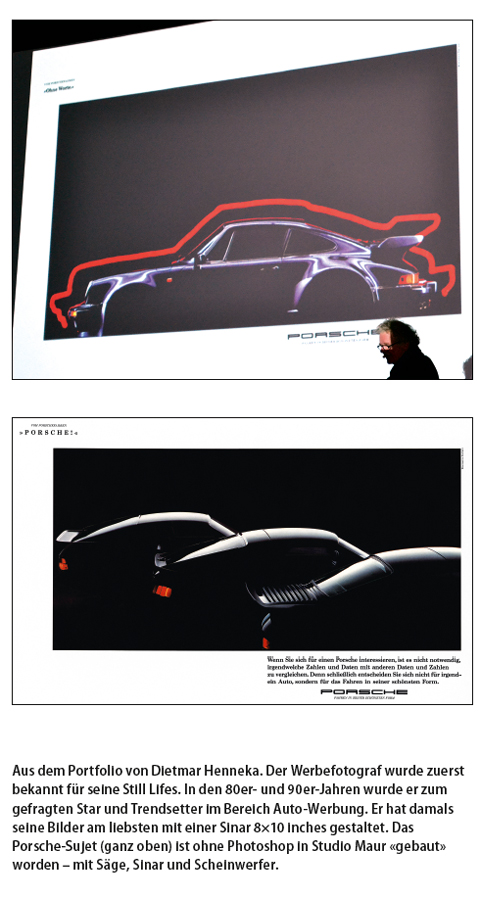
For his series ≪artCars≫ Dietmar Henneka had everything replicated on the set. ≪We had no other choice with Hopper's Nighthawks. There were no 3-D programs back then. But maybe that was also our chance, that we could create real emotions with our images with real people in a real set. And you can't get images for a big image campaign to work without the big emotions.

Unbenannt-8_49
Dietmar Henneka has photographed several calendars for the Porsche and Mercedes brands.

WW: Photography used to be a craft, but today it's an add-on function on a cell phone. What do you think about this development?
Dietmar Henneka: So you have to delete the word "art. Photography is primarily a craft. Or it was, until the cell phone came along. The development? You have to look at it much more broadly. Today, anyone can steal pictures from the Internet, change them a bit creatively, and then use them photographically. This impression is confirmed for me when I look at certain images here at Photo15. There are many "photos" among them, where the photographer has forgotten what his original picture looked like. But you wanted to know my relationship to the cell phone. The camera built into it only has a photographically creative function if the operator has learned that beforehand. Not technically, but the eye. Just stalling, that's still nix. Using it in this way will only cause the cell phone to waste away. But I can trust myself to do something clever with the cell phone. Because I know that a picture is created in the head, not on the chip.

You said in your presentation at Photo15 that you no longer use a large camera, but only the iPhone for taking photos.
Of course, I still have my equipment, but I love downsizing with the Sony RX100 pocket camera, not those heavy professional things. My credo is: It doesn't matter with which camera you take pictures. The main thing is that the picture has an idea. During my almost daily observations with the cell phone, I have also noticed that the format of the iPhone suits me much better. It's like the TV format, after all. I recently photographed an entire wine reportage for a Swiss magazine using only my cell phone.

Are you still working every day?
I'm not out yet. But I just finished a sabbatical. Nonsense. I just did nothing for a year. That could still happen to me in 2015. Although it's also possible that I'll work in the automotive sector again. I'm 73 now and have no desire for more hamster wheel years. I could do a bit of landscape art now. But I don't want to do that at all. I enjoy doing nothing. I finally want to go to Florence, like a normal Kuoni traveler, without a photo crew, layout specifications and AD supervisors. I want to visit former locations with my wife, which she only knows from my photos. I want to be free and travel now. In ten years, I might not like traveling anymore - or the bones will be gone.

You've won 248 awards in your career, and now you've thrown 200 of them into the bucket. Why?
I only did that because I have no more space on my studio walls. I didn't throw the trophies away in anger, but asked myself: what else do you want with them? So I kept only the best ones: Fame is fleeting, but namelessness is forever.

What were important drivers for your career?
Since I was in Stuttgart, rather Germany's last zipfele for top 10 advertising agencies, I did a lot of self-promotion, for example in Lürzer's Archiv. That at least made me known. It was also the grace of my name. Hennekas are very few in Germany. As Otto Müller, I would possibly never have become known in such a lasting way, quite apart from my skill.

What are the criteria for someone to become a star photographer today, when thousands are vying for such dream jobs?
I had no star mission consciousness. I could have been an optician in the same way. It was sheer coincidence. It didn't come from my parents' house. But this creative aspect was probably in me somewhere. In retrospect, I say: 50 percent is for the talent, 50 percent for the person. That's the crazy thing. And I'm sure it's especially important that I always said: Don't get caught in the frying pan or rather open a rowing boat rental shop on Lake Constance.

You talk about the relationship with the customer?
There are many art directors today who like to show up with me and then reminisce about the good old days. But back then, with an AD, they were rarely really good. In any case, I preferred to drink with other creatives than with these ego-binder boss fuzzies. In the 80s/90s I worked a lot in Zurich. In the studio Maur at the Greifensee. There I had to learn that the Swiss are consensus people. They say: You don't always have to "uusrüefe". But consensus to me means palaver. "If you're not willing, I'll need violence," was my emergency ripcord on the set. That's why I can hardly remember an art director today with whom things were only peaceful on the set. But most ADs and quite a few colleagues today are rather introverted. I'm just extro and try not to run over my client, though. But sometimes there were situations where I had to assert myself. Unfortunately, this has alienated some of my agency clients. But that's just my South Baden-Alsatian nature.

Have you turned down many jobs?
I've turned down very few jobs. The battle takes place on the set, not like in film. There, everything has to be arranged beforehand because the team is much bigger. In photography, the team is smaller and therefore more agile. I can then convince the people involved more easily that they are working in my direction.

Even the customers?
The customer is not just the CEO, but the advertising manager and the hierarchy around the advertising manager. You don't learn how to deal with them at a university. You learn that as an altar boy, head altar boy, boy scout and later as a private in the German armed forces. There I had to serve! Here I learned how a hierarchy works. I can also bring this knowledge about the mechanics of hierarchies into play when pushing through an idea.

You are considered to be the photographer who was the first to place the car in an art set for Mercedes advertising. Did that take a lot of convincing?
Normally, this is done by an advertising agency. They have the idea and then give the job to a photographer. As early as the mid-90s, I noticed how I could propose much more creative solutions when negotiating directly with the client. I said to the people at Mercedes: There's still a little corner open that you could do yourself as an advertising, marketing or sub-department manager. Here you could contribute creatively for once, without having the agency suggest everything every time. And then they liked that. That's how I was able to design many calendars for Mercedes. The departments and I simply had a more direct, common connection than with the youngsters at the agencies. At important meetings with agencies, 10 men/women would fly in at a time. Now only the Henneka came, not with the usual reinsurance-agency-speech, but loosely from the rather private stool, instead of defining restrictions for the briefing. I took the meetings to another level by challenging the client to decide for himself whether an idea was good or not. For the implementation, I was mostly given a free hand; they trusted me. The managers have studied business administration or something similar, rather than art education or training in image design. But they could decide whether they liked an idea. Unlike many art directors, who only felt obliged to follow layout guidelines on the set. So later I was able to work a lot with direct clients. But that didn't work at all with Porsche. S

ou are considered a photographer who designed early on according to today's buzzword "storytelling. How did you stage your images?
Not in the non-auto sector. A photo has to tell a story. When I'm commissioned to take a picture for a winery, the first question is: How can I implement this so that the viewer gets a dry palate? That's the message, which in today's jargon now means "storytelling". But I don't have to arrange the scene for that. I say: Have a party! And then I go through the people with my cell phone and capture the best moments. You find a similar technique in street photography. If I get it right, the quality of the cell phone with its number of pixels is technically already enough for a double-sided display today.

You designed most of the subjects without Photoshop. What do you think about image editing?
I have nothing against it at all. You can be very creative with it. I myself once Photoshopped an Audi convertible off a cliff by the sea, over the precipice into the waves, so that the rear wheels looked as if they were in the sea 20 meters below. Such an illogical creation stands out and leads to a statement. There is an idea behind it. Photoshop makes sense when it actually improves the image - not technically in the sense of retouching, I'm not even talking about that. But if a so-called new world of images is to be created by force, in many cases today it only looks artificial - but not artistic at all. Photoshop also existed in the past, it was called retouching. Today it's done digitally. The message remains the same. Because you can't bring an idea into an unimaginative picture, even with Photoshop. You have to see Photoshop as a tool. Or then I am an image director. I don't take photos anymore, I look for CGI backgrounds and frieze my image together myself. That's fine. But it's not my world.

Interview: Andreas Panzeri

Unbenannt-10_42
Unbenannt-10b_0

Déformation professionelle - Professional diseases in advertising and marketing

Axel Eckstein, Executive Creative Director at Leo Burnett Switzerland, writes in *Werbewoche* about pathological tendencies in advertising and marketing. In the first installment: Platitourette (repetitio nausea).

Platitourette (repetitio nausea)

Description Advertising that suffers from Platitourette's syndrome makes statements that occur very frequently and always in the same way. Although these so-called marketics are preceded by complex internal coordination processes, they occur without the involvement of the conscious mind.

Symptoms

Typical of the advertising material concerned is the frequent use of meaningless adjectives such as "tailor-made", "individual" and "perfect", with each product category having its own symptoms. Food packaging, for example, repeats "carefully" and "exquisite" in a pathologically exaggerated manner. In automobile advertising, "agile" and "confident" are considered prevalent. In its severe form, platitourette leads to the repetition of entire phrases such as "innovation by tradition" or "hits for kids", often in combination with grimacing (laughing and nodding at an advertising presenter).

Causes

The cause of the disease is thought to be a peripheral point in the briefing where the brand tonality is fixed. The attributes defined here are looped directly through to the advertising material, bypassing the creative cortex.

Psychosocial consequences

Outsiders generally ignore statements made by people with Platitourette's syndrome, which in turn can lead to a reinforcement of the inconspicuousness. The fact that the symptoms are largely invisible makes it difficult to remove the taboo surrounding the illness.

print_0
 

Search engine optimization - these are the rules you should follow

In discussions, different opinions on search engine optimization for websites come up time and again. This article outlines the current, general guidelines for this topic.

Since Google refers more than 50 percent of visitors to a website via the search results, it is worth taking the rules seriously.

Users want answers to questions

The aim of search engines is to provide visitors with the best possible answer. Pages that fulfill this requirement occupy the top positions in the search results. Google & Co. currently take the following criteria into account when awarding the top positions:

Quality of the content

Content is king! The text of the website must respond to the visitor's needs and present a (unique) solution for their requirements. Marketing platitudes are not relevant for Google. Detailed texts that are illustrated with photos, videos and graphics are more likely to make it to the top of the search results.

Loading time of the page

If a page does not appear on the screen five seconds after clicking on a search result, the visitor clicks on another result, which Google registers. If the loading times are continuously too long, a penalty in the ranking is certain. Information on loading times and optimization suggestions can be found in Google Analytics.

Internal linking

Everyone is happy to receive tips. Internal links in the text to other pages are tips that point the visitor to further information. Internal links should be used selectively, too many are counterproductive.

Bounce rate

If the visitor returns to Google after clicking on a search result, this is an indication that they have not found the expected information. The bounce is registered by Google and can lead to a penalty.

Click-Through-Rate (CTR)

Google checks the CTR of the results in the search results using empirical values. The number one result receives an average of 31 percent of clicks, while the number five result receives 5 percent. If a number one result achieves a CTR of 20 percent, this is a sign that the search result is not appealing to visitors and it is downgraded. If the number five generates a CTR of 15 percent, it is upgraded.

Visiting time

Google Analytics software is installed on almost all websites. Google uses it to measure how long a visitor stays on the site after a search query. A short search time is an indication that the visitor is not satisfied with the information content of the site.

Social Signals

Google pays attention to clicks on likes and share buttons, but they have no major influence on the positions in the search results.

Backlinks

If a website receives a link from another, this is a sign of appreciation. The more links a page receives, the more important it is. However, not from just any websites, but from those that already have authority. This article does not claim to be exhaustive, it merely documents the basic rules of search engine optimization. Each website must be considered individually.

Imre Sinka
 

E-paper subscriptions are 30 percent cheaper on average

In 2015, some newspaper subscriptions cost up to 40 francs more than last year. Nevertheless, the subscription increases were somewhat more moderate this time around than they were a year ago. In addition, two publishers even lowered their subscription prices, which is probably unprecedented. In the digital sector, however, publishers are still searching for an appropriate price. But digital subscriptions that cost 50 percent less than a print subscription are becoming less common.

Let's start with the scoop: the print subscription to Südostschweiz Glarus, Gaster, See now costs just CHF 339 per year instead of CHF 349 - CHF 10 or 3 percent less than before. The 7-day subscription to Schweiz am Sonntag has even been reduced by 50 francs to 349 francs. The Swiss Confederation also reduced one of its subscription prices: The e-paper subscription fell by 5% or 19 francs to 369 francs - this in connection with the introduction of the new payment barrier last fall. But these are effectively exceptions - even in a long-term comparison. And they cannot conceal the fact that the industry trend is running in exactly the opposite direction: The 50 Swiss daily newspapers surveyed here struck again this year: An average newspaper subscription now costs CHF 396, 3% more than last year. However, prices in French-speaking Switzerland are significantly higher than this level for Switzerland as a whole, where the average annual subscription costs CHF 429. The surcharges were only half as high. Subscription prices also rose for the eleven Sunday newspapers, by an average of 2.5%: a 7-day subscription therefore currently costs CHF 451. This upward trend can also be seen in the digital sector, but more on that later.

Up to 50 centimes more expensive at the kiosk

Of the around 100 titles and subscription combinations surveyed here, three quarters are charging more for a subscription this year than in 2014. With an increase of 11% for print subscriptions, Zürcher Unterländer is charging its readers the highest premium, followed by Blick, which is adding 9% or CHF 30, as well as SonntagsBlick, SonntagsZeitung (SoZ), Terre et Nature and the combined subscription of Der Bund and SoZ, which are each adding 8%. In absolute figures, the latter subscription combination will see the biggest price jump (+40 francs), followed by the Zürcher Unterländer (+39 francs) and the NZZ and NZZ am Sonntag subscription combination, which together will be 34 francs more expensive. Conversely, the smallest price increase is for Zentralschweiz am Sonntag, which is only going up by 2 francs or 1%.

The most expensive print subscription for a single title is still that of Agéfi (CHF 700), but the NZZ (CHF 675) is catching up. The most expensive combination is that of NZZ and NZZ am Sonntag, which now costs CHF 793. Publishers are much more cautious when it comes to individual sales prices: only a third of the daily newspapers and just two of the weekly titles raised their prices - by an average of 3%. In absolute figures, the increases amount to 10 to 50 centimes. The cheapest newspaper is the Bote der Urschweiz (CHF 1.80), followed by La Quotidiana (CHF 1.90). The most expensive daily newspaper at the kiosk is the Saturday NZZ, which now costs CHF 4.90, followed by the Saturday Bund at CHF 4.60 and L'Agéfi and the Saturday Tages-Anzeiger at CHF 4.50 each. The most expensive weekly newspaper is TagesWoche at CHF 6, closely followed by Finanz und Wirtschaft at CHF 5.90.

E-paper up to 54 percent cheaper

Digital subscriptions are generally significantly cheaper than print subscriptions, as paper and distribution costs are eliminated. Across Switzerland as a whole, the difference for daily newspapers is 30%, in French-speaking Switzerland even 35%. Blick and Zürichsee-Zeitung currently have the biggest price differences: Their e-paper subscriptions are respectively 54% and 50.5% cheaper than the print subscription. A further nine titles offer digital users a discount of between 43 and 46%. Among the weekly titles, SonntagsBlick (-54%) and Le Matin Dimanche (-49%) are at the top of the list. But there are also the opposite - titles that do not offer digital users any discount at all. Take Agéfi, for example. "Regardless of which channel subscribers use to read our content, the latter always costs the same," says the publisher. The same applies to Höfner Volksblatt, March-Anzeiger, Volksstimme, Bote der Urschweiz and Liechtensteiner Volksblatt. One thing is also clearly visible: extremely large differences between print and e-paper subscriptions are becoming rarer. More and more publishers are giving up their bait-and-switch offers and demanding more money from online users. For example, e-paper subscriptions to daily newspapers have increased by an average of 5%, i.e. more than print subscriptions. Such a subscription now costs an average of CHF 280. In this subscription category, the prices in French-speaking Switzerland are almost identical at CHF 281, although the publishers in French-speaking Switzerland increased their prices more sharply by CHF 8% - above all 24 Heures and Tribune de Genève, which raised their rates by CHF 26% (+59 francs) - in order to reduce the price difference between print and e-paper from the previous CHF 48% to the new CHF 38%. The Zürcher Unterländer (+17% or CHF 31) and Le Courrier (+16% or CHF 20) have also seen significant increases. The weekly title Terre et Nature is also one of the frontrunners in terms of reducing the difference, increasing its e-paper subscription by 45% or CHF 49, halving the price difference from the previous 40% to 22%.

127 francs more expensive since 2011

Digital subscriptions now cost the same as e-paper subscriptions for most publishers. But there are still some exotic publishers that handle this differently: The most interesting example is Le Temps, where the e-paper subscription costs CHF 350, while two digital subscriptions are also offered, one for CHF 324 and the other for CHF 396. The digital subscription to SonntagsBlick also costs almost 20 francs more than the e-paper subscription, while Zürcher Unterländer and Volksstimme offer it for around 30 francs less, Blick for around 75% less and La Regione and Basler Zeitung offer free access. Finally, let's take a look at the development of subscription prices over the last five years: From 2011, we have the print subscription rates of 49 of the titles and subscription combinations listed here. The average subscription to a daily newspaper cost CHF 362 back then, CHF 34 or 9% less than today. All titles except Agéfi have increased their prices since then, ranging from 2.8% (Le Quotidien Jurassien) to 28.1% (NZZ am Sonntag). In absolute terms, however, the highest increase was made by the NZZ, which now costs CHF 127 more than in 2011. In second place is the Tages-Anzeiger, which has become exactly CHF 100 more expensive. In third place is the Bund, which has added 75 francs. For comparison, let's take a look at French-speaking Switzerland: Le Temps only increased its subscription by 10% or 48 francs.

Markus Knöpfli

The tables can be found in the PDF of the article.
 

The motz of Butz: The advertising makes bad publicity for the advertising

If a city government decides to forgo 150,000 euros in revenue to avoid being burdened by bad advertising, then that advertising is also bad publicity for itself.

What this is about: my grumbling is actually almost always about the same thing. It's about the fact that advertising is perceived as extremely boring, unentertaining and annoying. I've written about this phenomenon before. Perhaps with this column I will succeed in not falling on deaf ears again.

What does Grenoble want? The green government wants to ban 326 billboards from the city center and plant trees in their place. São Paulo, a city of 11.5 million people, has gone even further. As early as 2007, it issued a ban on billboards, signs, advertising tubes on cabs and flyers. These affect the environment and the architecture. Imagine Times Square in N.Y. without advertising!
Day not only with cooking and eating.

In Switzerland, there have not yet been any concrete moves to reduce or even abolish advertising space. But if public advertising no longer offers any entertainment value, I'm not sure that the city of Zurich could do without 2.2 million in rental income.

I have often suggested, often grumbled, that stricter rules should be imposed on advertising in public spaces, for example. Anyone who rents an entire streetcar for their advertising should have to submit their advertising to a professional and leash jury. I give the Zoo streetcar an okay. The Sunrise Cobra should be covered in black. With few exceptions, the billboards are covered with miserable subjects. It is incomprehensible who pays the costs for such ineffective, because invisible, advertising and risks being seen as a polluter of the public space for the citizens.

My theory is that advertising is all about getting viewers excited about a product or at least reminding them of it in an entertaining, surprising and simple way. In column 22/2014, I tried to analyze the message of three random posters hanging next to each other. I, at least, could not figure it out after studying them for a while. Annoying. But I hope that consumers won't even look at them anymore and thus won't get upset about it. In the meantime, you advertisers could use the time to get out of the advertising angst phase and surprise mankind with creativity.

By the way, this request does not only apply to advertising in public spaces. Anyone who agrees with me and wants to take on this optimization resolution for 2015 should email me an okay: [email protected]. The stand-up of the week was the huge rally for freedom and against terrorism in Paris.

Unbenannt-16_28

Theophil Butz, graphic designer, advertising agency owner, inspirer and for more than three years now also a mothballs for the Werbewoche readers. Please send any relevant information to [email protected].

Tourist in his own country

Capturing situations bluntly, in black and white, preferably so that nobody notices. Daniel Comte has made this his mission, most recently as a photographer. Actually, he always has - even in his years as Executive Creative Director and winner of numerous international awards.

Only his narrative style is slow. Thoughtful, but not ponderous. Profound, but not profound, spiritual, but not esoteric. Just like his pictures. In an exhibition at the ADC Gallery, they came into their own particularly well, as they were hung in three rows one above the other and thus not displayed decoratively. Daniel Comte's works invite you to linger and study them. Each picture contains a part of his philosophy of life and observation. Comte photographs in black and white in order to capture the play of light as well as details of focus that would not be recognizable in color. "What is togetherness, man in the crowd, left alone, overwhelmed?": The silent observer may come up with such questions of everyday life when inspired by a place, a ray of light, an action or movement. And it is from these moments that Daniel Comte's pictures are created to stimulate these trains of thought. His studies as a graphic designer have also left their mark: At least half of the paintings play with geometric figures. But none of the works is just geometry, just action, just thought - without wanting to, the pictures say almost everything about their creator.

Unbenannt-21_10

Once around the world, please

"You can also book me as a model," says Comte, grinning mischievously. However, this statement is meant seriously. For his last assignment, he was in Ticino, where he played with dogs for some shots - on the flat stones in the Maggia valley - who doesn't know them? Comte obviously loves being in front of the camera, as long as he doesn't have to pose but is allowed to act. But what appeals to him even more is what comes out of it. The pictures are in the foreground, not him. He doesn't like to be the center of attention himself, almost shyly, but not very calculatingly, he talks about his last years in the advertising industry - albeit reluctantly: "I wouldn't choose this industry again. I wouldn't recommend it to my children either," he says. Even though two of his three children are following in their father's footsteps. Like Comte, his eldest started out as a graphic designer, while the youngest is studying at the University of the Arts in Biel. And the middle child is not quite out of line with the graphic Comte sons, he is pursuing his passion for design as a landscape gardener.

The last memories still shape his life today. The experience of being rationalized away by an agency as an experienced creative director because it was too expensive left him scarred and disappointed. And there it flashes up again and again, his farewell to working in advertising, just a hint, but always latent. Comte doesn't like to talk about it: "I've experienced a lot, I've been around the world. But now I've said goodbye to the advertising industry," is all he wants to say. Nevertheless, his departure is a pity, as he was involved in many excellent campaigns. For example, the insurance campaign for Winterthur International. World-famous personalities in their field explained what the term risk means to them personally - including Lord Attenborough, Maurice Béjart and Archbishop Desmond M. Tutu, who offered his prayers for Comte for the recording. The latter was not only present at the shoot, he still describes his collaboration with Richard Avedon at the time as very formative. At least one other campaign under Comte as Executive Creative Director will also be remembered: a work for the Multiple Sclerosis Society. It visualizes the interruption of nerve pathways caused by inflammation and its brutal consequences through the gaps between two posters, two newspaper pages or through the gaps between the door and the wall.

Street Photographer and Entertainment Artist

Daniel Comte was born in Bern in 1963. After studying graphic design at the School of Applied Arts in Bern, he became Creative Director and a member of the management team at Matter Leo Burnett in 1984. From 1998, he worked as a creative director in the largest advertising agencies in Switzerland. He has been a member of the Art Directors Club Switzerland ADC since 1995. Comte has won over 300 national and international creative and Effie awards. Today he lives and works in Zurich. As an enthusiastic photographer, art and culture are his spiritual media, as he says. "I consider myself a silent observer of everyday madness and the coexistence of coincidence." As a street photographer with a sensitive eye, he wants to be perceived as a tourist and capture situations bluntly. He has already had several photo exhibitions at home and abroad. He is currently exhibiting his pictures at the ADC Gallery at Zentralstrasse 18 in Zurich. Behind each of his pictures are not only philosophical considerations and graphic elements; each picture tells a little story of how it came about: on one of his walks across the Bundesplatz, Comte sees children frolicking under the water jets of the Bundesplatz fountain. And they are indeed there again on his next visit. So he photographed this rather un-Swiss scene: a bunch of children bathing in their underwear and enjoying the sun - in front of the Bundeshaus. His first picture of street photographer René Burri - Comte's great role model - is also on display in the exhibition. "He is unsurpassable, one of the great photographers," says Comte. He simply has a good eye. For other works, Daniel Comte stood in the rain for a long time, waiting for the right moment. But Comte is not averse to formal gimmicks either, although the focus is usually on people. He has always noticed such moments. "I can't deny it, I'm just a visual person," he explains simply. "I often see moments that people then ask me how I keep finding them," he says with a smile. But after all, he is not a fashion photographer. He has to live from the moment. "It's either in the box - or it's gone." Comte's pictures are sometimes confusing, like optical illusions. They invite the viewer to look at them several times so that they have to play the game of "get closer - get further away" in order to recognize the real situation and its connections. Just like life itself.

Ursina mason

In a nutshell

1990 - 1992 Art Director GGK Basel
1992 - 1994 Art Director Weber, Hodel, Schmid
1994 - 1998 Executive Creative Director Matter Leo Burnett
1998 - 2002 Executive Creative Director McCann Erickson
2002 - 2007 Executive Creative Director AY&R
2008 - 2011 Executive Creative Director DraftFCB/Lowe Group
2011 - April 2012 Creative Director and Partner Zürcher
Communications agency Ping Pong
April 2012 - November 2012 Executive Creative Director Blue Spirit
Communications
Since January 2013 Creative Director and Photographer,
Daniel©omte
www.danielcomte.com
[email protected]
 

get_footer();