Somedia: Profit tripled

Somedia tripled its net income in fiscal year 2014 while revenue remained constant. The year was marked by the launch of the new brand strategy and the move into the new media center in Chur.

Somedia succeeded in significantly increasing its profitability in the past financial year. With slightly higher sales and practically the same cash flow as in the previous year, the annual profit rose from CHF 1 million to CHF 3.2 million. This is all the more remarkable as the year was burdened with considerable additional tasks for many employees: in spring, the new Group brand Somedia was launched with the two service brands Somedia Promotion and Somedia Production. This was followed by extensive work to establish the Südostschweiz media family with the four sub-media of newspaper, online, radio and television. The first stage on this path was reached with the relaunch of the Südostschweiz newspaper in January 2015, followed by radio in February and online and television in March. Parts of the new media building at Sommeraustrasse 32 in Chur were already occupied in December 2014. Construction had been underway since October 2013 and, thanks to a mild winter, the work was completed on schedule over the course of 2014. However, the main move did not take place until February 2015.

Total investment in the new building, including expenditure on radio and TV studios, IT and furnishings, amounted to around CHF 30 million. Sales figures in the areas of promotion and production developed positively. The advertising and insertion market reported higher sales and profit figures than in the previous year. The printing division also increased both sales and profits. The first effects of the cross-media offerings for business customers were clearly felt here. Werbewoche is part of the Somedia media family.

Bildschirmfoto-2015-05-22-um-19.45.04
 

Controversial SBB pitch goes to Rod

Rod has won the much-discussed SBB pitch titled «Further Development of SBB’s Overarching Communication Strategy» and will thus remain the lead agency responsible for the brand’s image. The agency prevailed over four other agencies in the competitive presentation.

Rod was nominated as SBB's lead agency back in 2011. This resulted in the popular "home away from home" campaign with the hit "Welcome Home," which was sung by SBB employees Hanspeter Zweifel and Selina Beyeler and catapulted into the charts. The #sbbmääh sustainability initiative is also currently causing a stir, attracting the attention of international media.

David Schärer, partner of Rod, in a statement: "We are overjoyed that after many years of collaboration, we have once again succeeded in convincing SBB with fresh impulses. We are very proud to be working for one of Switzerland's most exposed brands and most sought-after clients." The new campaign is expected to launch in October 2015.

The SBB pitch had caused discussions in the run-up, as the association BSW Swiss Leading Agencies criticized the selection process, which did not comply with the BSW guidelines for agency validations (Werbewoche.ch reported). SBB responded and rejected the BSW allegations (Werbewoche.ch reported). In March, the two parties met for constructive talks and decided to continue the proceedings already underway (Werbewoche.ch reported). (pd/hae)

"We are not voting on the public service".

SRG President Raymond Loretan objects to the conflation of issues in the referendum campaign on the new Radio and Television Act. «We are not voting on public service broadcasting on June 14,» Loretan said in an interview with *Schweiz am Sonntag*.

The idea is to replace the old, bureaucratic fee system with a new system that is simpler, cheaper and fairer. The current device fee should be replaced by a household fee, as almost all households now have a receiver. Billag would then receive less money and the controls would be eliminated. "That is the basic idea behind the reform," said Loretan. The SRG President also emphasized that the financing system has nothing to do with the SRG's performance mandate: "Even under the new system, the public service can be redimensioned or fees can be reduced if desired." It also pains him that the SRG media are not allowed to defend themselves against "the sometimes absurd accusations" in the referendum campaign and must remain neutral, said Loretan. As a result, hardly anyone contradicted the untruths being spread in the referendum campaign. (SDA)

SRF: Total women's soccer

The 2015 FIFA Women's World Cup in Canada is the summer sports event on SRF: At least 18 games will be broadcast live on SRF zwei, including all of the Swiss women's matches, the opening game, the semifinals, and the final.

A double premiere for women's football: for the first time ever, the Swiss women have qualified for a World Cup final, and for the first time ever, SRF is reporting live from a FIFA Women's World Cup. At least 18 World Cup matches will be shown on SRF two. The opening match between hosts Canada and China will kick things off on Saturday, June 6, 2015. The match will be broadcast from 11.30 p.m. directly after the Uefa Champions League final from Berlin.

Unbenannt-2_71

The Swiss women's matches are an important cornerstone of SRF's live coverage: All three group matches can be seen on SRF two, against defending champions Japan (on Tuesday night, June 9, 03:50), against Ecuador (on Saturday night, June 13, 00:55) and against Cameroon (Tuesday, June 16, 22:35). SRF will also broadcast any Swiss matches in the knockout phase live. Another fixture in the live coverage is the match of the day. On selected match days from the group stage to the quarter-finals, a live match can usually be seen on SRF zwei at 10.00 pm. Semi-finals and finals are kicked off at 01.00 Swiss time. The opening match, the Swiss matches, both semi-finals and the final will be repeated on SRF zwei the following day.

Prominent female co-commentators for TV broadcasts

Dani Wyler, Sascha Ruefer and Patrick Schmid will be on duty as commentators at the FIFA Women's World Cup, each supported by a co-commentator. Dani Wyler will cover all of the Swiss women's matches, the opening match and the World Cup final in Vancouver on the night of Monday, July 6. He will be assisted by Kathrin Lehmann as co-commentator. The long-time Swiss national goalkeeper is a profound expert on Swiss women's football. Other co-commentators are the two-time European champion from Germany, Inka Grings, and the former Swiss national goalkeeper Marisa Brunner. Silvia Exer will conduct the post-match interviews; Olivier Borer will be close to the Swiss team as a reporter in Canada and will report regularly from the Swiss camp.

Unbenannt-3_67

Päddy Kälin leads through the program in the World Cup studio in Zurich. During the breaks and after the final whistle, he analyzes the individual matches with various guests and experts, including former national team coach Béatrice von Siebenthal.

Unbenannt-4_87

Women's World Cup on the radio and online

Radio SRF 3 starts the day with women's football: from 05.00 a.m., listeners receive up-to-date information on the night's matches. The program includes short summaries of the matches, stories, background information and interviews from the Swiss camp. Online, too, everything revolves around the Swiss team during the FIFA Women's World Cup. All of the Swiss women's matches can be followed in the live ticker with integrated live stream. Portraits of the players, background information on the Swiss opponents and all the latest news from the Swiss camp are also available online. Every morning, Srf.ch/sport also offers an update on the night's events with summaries and analyses.

The most popular Youtube videos in Switzerland

To mark its tenth anniversary, YouTube is releasing a list of Switzerland's most popular videos. One of the ten most-viewed clips is a Swiss entry.

Two very small ones are at the top: "Charlie bit my finger" is the most viewed YouTube video in Switzerland over the last ten years. A Swiss contribution also made it into the best list, namely an excerpt from the comedy program of Cabaret Divertimento.

Swiss Youtube scene takes off

The local YouTube scene is growing steadily and has more and more members. Since the launch, Swiss creators have created and uploaded countless videos. With their videos, the Youtubers reach an audience far beyond the country's borders and can monetize their videos with the partner program. Beatboxer Pepouni, beauty vlogger Julia Graf and comedian LeGrandJD, for example, have been present on YouTube with their videos since the beginning and are now among the established stars. New, up-and-coming talents join the Swiss Youtube scene almost daily. The newly married couple Alysa & Colvin, aka Mr. & Mrs. Vlogs, tell stories about everyday life as a couple and thus hit the nerve of the time. Musically on the road is Roli as Harproli . With his harmonica sounds he fascinates young and old. His success proves him right: his channel receives over 8,000 visitors a day. Worldwide, the partner program has over one million partners from 30 countries.

Successful brand positioning and interaction with customers

Swiss companies are increasingly discovering and using YouTube as an efficient advertising channel, as well as for positioning their own brand. Appenzeller cheese, a traditional brand from eastern Switzerland, positions itself with its campaign "Switzerland's spiciest secret" via Youtube with customers at home and abroad. Swisscom also uses Youtube to interact with customers through innovative campaigns such as the legendary Youtube live stream "All Eyes on S4" at Zurich HB. In addition to innovative forms of advertising such as Trueview, the reach also makes the platform attractive for advertisers, as Youtube.

The YouTube Development Center in Zurich

Numerous key functions of Youtube are developed at the Zurich site. The Zurich developers focus on technologies and innovations that are constantly improving for users, content providers and advertisers. Specifically, they are working here on Youtube Analytics, video ads such as the skippable Trueview ads, and "Content ID," a feature that ensures copyright protection on the platform. "The Youtube team at Google Switzerland develops Youtube services that are used by millions of users, creators, partners and advertisers worldwide every day," says David Erb, Engineering Director for Youtube in Zurich.

Top 10 Videos Switzerland in the last 10 years (*)

1. charlie bit my finger - by HDCYT

https://www.youtube.com/watch?v=_OBlgSz8sSM

2. wheels on the bus nursery rhymes - by LittleBabyBum

3rd Winner Stays. ft.Ronaldo, Neymar Jr., Rooney, Ibrahimović, Iniesta - by Nike Football

https://www.youtube.com/watch?v=3XviR7esUvo

4. evian baby&me - by EvianBabies

https://www.youtube.com/watch?v=pfxB5ut-KTs

5. the AnnoyingOrange - by daneboe

6 The Ultimate Fails Compilation ✔ - by FunnyvideosArchive

https://www.youtube.com/watch?v=Ujwod-vqyqA

7. integration test poll (what was not sent) - by TeddyComedy

8th DivertiMento - 8 Popstern Casting - 4 Julian Kaufmann - by uthj78

9. the sneezing baby panda - by jimvwmoss

https://www.youtube.com/watch?v=FzRH3iTQPrk

10. the evolution of dance - by judsonlaipply
 

Alpha 245: Campaign for Jumbo reopening

The Jumbo store in La Chaux-de-Fonds has been renovated and now offers nearly twice as much space and a wider selection across 4,500 square meters. To mark the reopening, Alpha 245 brought this massive retail space to life as part of a campaign.

At the reopening party, for example, all the advertising materials were set in relation to the new area of the DIY store, so that visitors could find out how big the new Jumbo had become even before they got to the sausage stand.

Becher
pappe
balloon_1

Responsible at Jumbo market: Jérôme Gilg (CEO), Daniel Hofmann (Head of Marketing Services a.i.), Sonja Opprecht (Project Manager). Responsible Alpha 245: Patrick Bucher (text), Barney Rees, Mario Moosbrugger (AD), Patrick Senn, Patrick Beeli (creative direction), Sylvia Kohler, Inma Mediola (consulting), Barbara Hähne (DTP), Pam Hügli, Diana Wick (overall responsibility).


Saatchi & Saatchi: Bear aid for SOS Children's Village

Saatchi & Saatchi Zurich has created a spring campaign for SOS Children's Villages. A TV commercial and a mailing draw attention to the plight of children in need.

SOS Children's Villages works worldwide to help children in need grow up in a loving family with a surrogate mother. Like Mouna, for example. At the age of three, she lived alone on the street. All she had was her teddy bear. Today, thanks to the support of SOS Children's Villages, Mouna lives with her SOS mother Alice, along with other orphans.

With a spring campaign, SOS Children's Villages is campaigning for children in need. Off- and online dialog measures call for children like Mouna to be spared a life on the streets. Mouna's teddy becomes a symbol for the fate of children in need: from the mailbox to the mailing to the TV spot. The Zurich office of Lovemarks agency Saatchi & Saatchi developed the implementation for SOS Children's Villages.

PR-Mailing-1
PR-Mailing-Briefkaste-2
PR-Mailing-Briefkaste-3
PR-Mailing-Briefkaste-4
PR-Mailing-Briefkaste-5

Responsible at SOS Children's Village: Philipp Scheidiger (Head of Marketing & Communications). Responsible at Saatchi & Saatchi Zurich: Pascal Schaub (Managing Director), Felix Freese, Frédéric Nogier (Creative Direction), Léonie Kelly, (Consulting), Stella Feurer (Graphics), at Filmbreeding: Alfonso Gordillo (Director).


A question of conscience for lobbyists (and advertisers)

Even more problematic than their lack of transparency is the unscrupulousness of some lobbyists. Black sheep—such as those who lobby on behalf of dictators or their companies—must be expelled from the trade association and prosecuted. But advertisers, too, need to adhere to higher ethical standards when working with clients.

Every lobbyist must be able to reconcile his mandates with his own conscience." This unnoticed key sentence in the current "Kazakhgate" debate appeared in the Handelszeitung newspaper last week. It was written by Walter Stüdeli, Managing Director of the Bern-based agency Köhler, Stüdeli & Partner and (apparently proud) member of the Swiss Public Affairs Society. Stüdeli primarily handles socio-political dossiers and has limited his mandates to Public-affairs.ch disclosed. Apparently even in full and including the start of the order, i.e. exactly as his trade association has been demanding since the middle of last year.

Ruined industry reputation

However, many other SPAG members continue to ignore this first step in the right direction - so far without any consequences. In doing so, the dark horses are ruining the very industry reputation that SPAG actually wanted to polish with this grandiose failed attempt at self-regulation.

However, a lack of transparency is just the icing on the cake of an even more fundamental problem of this ostracized guild: lobbyists have no ethical criteria when it comes to the nature and motivation of their clients. It is well known that the tobacco industry, arms companies and commodities moguls are among the major clients of these large agencies. In the meantime, however, autocrats and their entourage in Bern also prefer to be represented by lousy lobbyists rather than their diplomatic representatives.

Christa Markwalder should actually be thanked for this insight. Kazakhstan is certainly not the only dictatorship that can rely on the poor services of Swiss communication professionals. Another case is even on record, but has incomprehensibly not triggered a shitstorm: Jung von Matt's flagship advertisers have been promoting the Azerbaijani petrol station operator Socar since 2013. This is despite the fact that they know that this state-owned oil company finances one of the most repressive regimes in Europe.

From the mean to the mean

Not making common cause with the communities of this world: a service industry that claims to act in the public interest should be able to agree on such a minimum standard. And then, please, actually implement it. Transparency about current mandates would still be indispensable, but would then no longer have this political explosiveness. On the websites of Swiss public affairs market leaders such as FurrerHugi, the Dynamics Group or the consultants, however, instead of clear criteria for the acceptance of mandates, there are only more or less considerate reference lists. (The same applies to the leading advertising agencies, of course.) And when it comes to promoting in-house "values", it's always just about the bland craft, never about professional ethics. Nowadays, a "clean" client portfolio should, no: should actually be a competitive advantage worth its weight in gold. Especially in a competitive environment that is so backward in this respect.

Time for the question of conscience

"What do lobbyists need to do for their work to be appreciated by politicians, the administration, the media and the public?" This key question of the next SPAG session event shows: Spin doctors are craving social recognition more than ever. (Incidentally, they also have this in common with the notoriously profile-neurotic advertising industry).

So it's high time to ask ourselves a question of conscience. If not out of conviction, then at least to protect an already battered reputation. The next "Kazakhgate" will not be long in coming.

Oliver Classen is media spokesman for the development policy organization Berne Declaration. Previously, he worked as a media journalist.

printausgabe_7


Ogilvy puts Ford in the spotlight underground

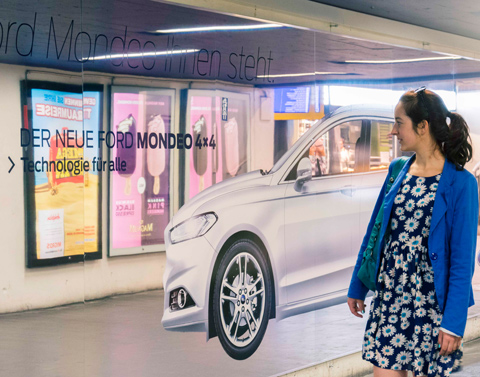
Ford Switzerland secured the billboard space in the pedestrian underpass at Zurich’s Hardbrücke station for one year. Ogilvy & Mather was commissioned to creatively design the approximately 16 by 2-meter space.

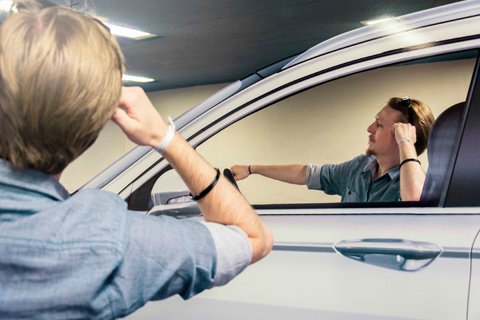
The result - a poster that simultaneously "shows" a new Ford model and the respective target group - has been on display since mid-May 2015. Ogilvy & Mather's idea for the large-scale poster in the pedestrian underpass was to showcase both the Ford models and the passers-by in equal measure. This is ensured by a 16 by 2 meter mirror surface, on which a current Ford model is depicted from different perspectives. In this way, passers-by can test how well a new Ford would suit them, so to speak, as they pass by.

Ford_1
Ford_2_0
Ford_3
Ford_4-1
 
Responsible at Ford Motor Company Switzerland: David Frey (Director Marketing), Stefanie Schaer (Communication & Event Supervisor). Responsible at Ogilvy & Mather: Thomas Bolliger (CD); Stephanie van Ophuisen, Urs Westermann (art/graphics); Marcel Elsener (text); Max Brunner (consulting); Dominik Abt (overall responsibility).

Comqed: PET anniversary campaign

It's a "success story thanks to you". This is also the title of the national "Thank you" campaign currently being launched by PET Recycling Switzerland and realized by Comqed.

We have been collecting and recycling empty PET beverage bottles in Switzerland for a generation. A unique system that has led to one of the world's highest recovery rates without a deposit scheme, solely through communication with the population, is celebrating its 25th anniversary. It's time to say thank you to the real beneficiaries: the Swiss population.

PET25_Claim_Logo

Through diligence in collecting, environmental awareness and continuity, it has been possible to implement a behavior across all strata of the population that has made the great success of the system possible in the first place. Young and old, educated citizens and office workers, Romands, German-speaking Swiss and Ticinesi - a great commitment to PET recycling is anchored everywhere. In the heterogeneous Swiss population with its different behavior patterns, this is not always a matter of course. However, it shows that a lot can be achieved with good communication and without pointing fingers. More than with all coercive measures. This is illustrated not least by the great interest shown by foreign countries in the Swiss PET recycling system.

PET25_Anzeige

It's a "success story thanks to you". This is also the title of the new national "Thank you" campaign currently being launched by PET Recycling Switzerland.

In the TV commercial, the 25 years are visualized on the basis of a recycling generation. The love story of a couple shows how natural PET recycling is. In five vignettes, an emotional story is told from school treasure to starting a family, culminating in the fact that the new generation now also recycles PET quite naturally.

The campaign will be accompanied by advertisements, online banners, social media campaigns and many side events - including free concerts with Steff la Cheffe (Bern), Marc Sway (Zurich) and Gustav (Fribourg).

Responsible at PET-Recycling Switzerland: Lukas Schumacher (Marketing Manager), Stefanie Brauchli (Communications Manager), Carla Wilhelm (Marketing Communications). Responsible at Comqed Dialog, Erlenbach: Tomas Rozas (Creative Direction), Bettina Dührkoop (Strategy/Concept), Roman Steinacher (Consulting), Janine Aebischer (Art Direction), Bruno Breitenmoser (Production/DTP). Public Relation: Communicators, Zurich; Ueli Heer, Consultant. Media: Mediatonic, Genève; Marco Rose, Pascal Werlen. Social media: Virtua, Morges; Raphael Via, Social Media Specialist. Film production: Shining Pictures, Zurich; producer: Stefan Bircher, production manager: Sophie Toth, director: Christine Wiederkehr, editor: Yves Gmür, camera/photography: Filip Zumbrunn, music: Great Garbo, Zurich; picture editing: Detail, Zurich.
 

Commercial media, financed by the state

New Zealand’s broadcasting landscape, which was deregulated 25 years ago, is often cited as a model worth emulating. *Die Werbewoche* spoke with John Drinnan, media editor at the *New Zealand Herald*, New Zealand’s largest newspaper, to learn about the pros and cons.

John Drinnan is media editor of the New Zealand Herald, New Zealand's largest newspaper. He has written about the media industry for the past 25 years and has a unique overview of the deregulation policies in this sector. In an interview with Werbewoche, he reports on how this system has revitalized the media landscape and also made global cinema successes possible - but also how the government is starving out a radio station it doesn't like.

WW: 25 years ago, New Zealand abandoned the old broadcasting regime, which was based on the model of the British BBC, and instead introduced a strongly private sector-oriented regime, particularly in the television sector. Compared with similar countries and taking into account the general changes in the TV business, is New Zealand generally better or worse off with this approach? In the eyes of the audience and in the opinion of critics and producers?
John Drinnan: I would question whether the restructuring was actually aimed at private entrepreneurship, although that was the premise at the time. Rather, it was to emphasize the market as a control mechanism in broadcasting, thus emphasizing self-regulation rather than government regulation. The new policy 25 years ago ended a long and convoluted process of granting broadcasting licenses to new applicants based on the subjective suitability of the applicant. This was outdated and resulted in new offers to consumers being delayed and limited. And it would never have been able to keep up with the pace of change in the 21st century. The positive aspect of the new policy was that - at least initially - a significant amount of local content made it to the screens. The then newly created broadcasting commission, NZ on Air, became the intermediary between producers and broadcasters and unleashed a great deal of creativity. This independent spirit has since been reined in - but the internet has once again opened up numerous new possibilities. Critics - that is, media critics - were initially harshly negative about commercial fare funded by taxpayers' money. But with the growing number of entertainment options, free-to-air television now has a lower profile anyway.

So when journalism researchers here in Europe conclude that New Zealand's media policy is associated with many disadvantages, such as the strong commercial orientation, news programs of low quality and with little diversity, that the funded productions are often broadcast outside of prime time and that there are not more national program productions: To what extent are they right or wrong?
From a New Zealand perspective, these claims are partly true and partly false. The problem is rooted in the small scale of the New Zealand market and the expectation that investors should be able to make a return from programs in one form or another. Broadcasters and NZ on Air are both only focused on content that reaches enough of an audience for advertising to contribute to production costs. Much of the production costs are paid for by NZ On Air and they have to go to extraordinary lengths to add cultural value to meet their own targets. It is true that there is an effort to put truly valuable - a subjective word, I know - content outside of prime time, but that is the only way to make money. Overall, however, there has been a significant increase in local content, without the need for a legal quota. The quality of this content, however, is an open question.

In retrospect: What could have been done better in shaping the change?
As I said, the main positive aspect is that independent producers can get funding from NZ on Air, which has put them in a better position with the stations. In the meantime, the stations are reasserting their power. All shows funded by NZ on Air must have a guarantee from a station that they will actually be broadcast. The biggest shortcoming - and this is partly due to the small size of the New Zealand market - is that NZ on Air has become a funder for the media industry rather than pursuing its original role as a cultural institution. As broadcasters have no social or cultural obligations, producers and NZ on Air focus on the commercial success of shows, often taking their cue from overseas program formats. Just as broadcasters are focused on ratings and advertising revenue, NZ on Air is focused on calculations based on audience numbers and popularity to prove its performance to the government. Niche programs or intellectual or cultural content are neglected.

What have been the most important changes in media policy since the reform and what effect have they had?
There have been various aspects of a healthy laissez-faire policy towards the media in order to protect business profits and prevent political influence on content. However, this has led to self-censorship in the media itself. For example, there has been a significant loss of satirical content in recent years. There is a continuing skepticism about the 1989 reforms among some sections of the public - usually older people and/or the left - while the right supports the laissez-faire capitalist approach to broadcasting. Critics of this policy have argued vehemently that there is a need for a non-commercial TV station that "deals with viewers as people, not consumers". And indeed, for a period of five years there was a state-funded non-commercial channel, TVNZ 7, which was abruptly abolished when state funding ran out. Politicians from the right and left were openly close to the dominant pay TV company Sky TV - formerly owned by Murdoch. Two decades without pay TV regulation slowed the arrival of new competitors. However, there has recently been an influx of SVOD (subscription video on demand) service providers and many believe this will stimulate competition.

A few years ago there was a discussion about re-establishing TV1 as a public broadcaster, arguing that a system with a broadcasting commission like NZ on Air could not replace a public broadcaster. Where did this discussion lead and what is still going on in this regard?
This comes and goes - and is a real reflection of the concern that the focus of the media - including state media - is on consumer activity and not on ideas or on 'culture'. I would argue that the notion of a non-commercial TV One is highly unlikely to be realized, although there is still the possibility of running a digital channel should there be the political will to fund it. The commercial TV system has become dependent on NZ on Air funding and is lobbying hard - along with producer lobbyists - to discourage any attempt to touch its commercial direction. The latest campaign for a non-commercial TV station coincided with concerns over the freezing of government funding for the state-owned national radio station Radio New Zealand. And as mentioned, support for public service broadcasting is perceived as a left wing concern and is given short shrift by the conservative National Party government, which was the driving force behind the deregulation movement in the 1990s.

To what extent does it seem advisable for similar countries, especially in Western Europe, to adopt the New Zealand model of broadcasting regulation?
I'm generally cautious because I don't know enough about the specifics of each case. But as I said, the system has its advantages in opening up the bureaucracy to new ideas. The weaknesses in New Zealand lie primarily in the fact that deregulation here in the late 1980s was characterized by an orientation that the state was an inefficient and apathetic institution, while the market was better able to meet the needs of the public. In this country, the hand of the state is very light and one can argue that this is a good thing. But it has led to an ideological bias in all media. The concept of media regulation may now be irrelevant as the internet has led to extraordinary fragmentation and access to information is becoming greater and greater. In this case, it can be argued that the public funding system should promote minority values and cultural values and content that would not survive under a commercial system, rather than nurturing the commercial system itself.

Broadcasting legislation in Switzerland attaches great importance to ensuring that minorities receive the same level of programming as the German-speaking majority. New Zealand faces a similar challenge with its indigenous Maori minority. How has this been dealt with and how satisfactory has the experience been in this respect?
This was achieved through the determination of the Maori themselves, who are relatively well provided for. Twenty-five years ago, they fought the Crown Council in London to ensure that the state had a duty to keep the Maori language on television, for which a dedicated taxpayer-funded channel was set up. The funding and facilities for Maori are acceptable, if not lavish. And Maori tribal groups are increasingly able to run Maori TV autonomously. The station reflects the conflict between the traditional, conservative tribal authorities and the younger, liberal urban groups and fulfills an important role in this sense.

A crucial part of New Zealand's broadcasting regulation is the independent broadcasting commission, NZ on Air, which is funded by the government and whose role is to fund media productions that are deemed valuable to the country and that the private sector cannot or will not fund on its own, such as Radio New Zealand, the national radio station. How well does this body work?
The small size of New Zealand leads to the assumption that there are only a limited number of production companies capable of producing a television series. So the fact that many of the major productions are made by foreign-dominated production companies set alarm bells ringing. Eligible projects are selected on the basis of an unusual formula, whereby NZ On Air is not allowed to interfere with editorial or content aspects. As stations come under increasing pressure due to fragmentation, NZ on Air is becoming increasingly generous in funding expensive commercial projects, including overseas formats such as X-Factor [analogous to Musicstar on SRF], New Zealand's Greatest Talent and Let's Dance, on the basis that 'without our support they wouldn't be made'. In that sense, we are paying for New Zealanders to be turned into fodder for the advertising industry.

In 1999, the broadcasting license fee was abolished and NZ on Air has since been funded by the Ministry of Culture and Heritage. In discussions about such a concept, there is often a fear that politicians might take disciplinary measures against unpopular TV programs, for example by reducing the budget. Has anything like this happened in New Zealand? Or are there also voices that want a broadcasting fee again?
Too much of the licence fee has been wasted in the collection processes. In most cases you would say New Zealand's authorities are not corrupt, but the non-commercial Radio New Zealand has been financially starved because it is associated with the left. The state-owned non-commercial radio station has had its funding frozen for seven years and is now desperately hoping to have its budget released in May. There is a valid argument that state funding has paralyzed the entrepreneurial spirit and until two years ago the ongoing funding crisis led to a bunker mentality. Former bosses perceived the current government as the enemy and the government viewed RNZ as part of the left. RNZ is also hampered by the fact that it is based in the capital Wellington, while all commercial media are based in Auckland, the largest city. There have been allegations of interference in state TV over the years - but there have also been similar allegations that private sector companies have been treated more favorably.

To what extent has a deregulated broadcasting system encouraged innovation in the media sector? Are there links to the global successes such as the Lord of the Rings trilogy, Hobbit or Avatar, which are flagships for the performance of the New Zealand film industry?
Deregulation has created a production industry that first had to renew itself in order to provide high-quality content at low cost. As a result, film and TV skills became part of this infrastructure. But this should also be seen in the context of the neo-liberal changes in New Zealand with the rapid decline and waning influence of the unions that kept labor costs high. Peter Jackson [director and producer of the Lord of the Rings and Hobbit trilogies] and company are clearly very skilled, but they were backed by a strong government that locked out unions to keep costs down. There is a concern that New Zealand is now becoming less attractive to American productions because of the rising exchange rate, despite these continuing advantages, so the industry is under increased pressure to get more subsidies.

The public broadcaster [SRF] is criticized here for spending horrendous amounts on broadcasting rights, for example for Formula 1 races, which are financed by broadcasting fees. How is this aspect dealt with in New Zealand, for example when broadcasting the America's Cup or matches of the national rugby team?
Apart from rights for specialty sports, NZ on Air does not participate in this genre and in fact New Zealanders are often forced to pay for pay TV channels to watch the national sports teams play. While some games are shown on the free-to-air channels and coverage of the America's Cup has always been free-to-air, rugby matches are not. This is seen as one of the biggest failures of the system, along with the fact that successive governments have not done anything about it as they have supported the pay-TV broadcaster Sky TV, which holds the pay-TV monopoly, above all else. The issue is becoming increasingly complex with the growth of new video-on-demand services for individual sporting events.

In Switzerland, great emphasis is placed on the need for citizens to be informed about political issues so that they can decide at the ballot box. How do these types of programs thrive in New Zealand's deregulated broadcasting environment?
There is new media enthusiasm for politics in an election year and the impression is created that politics is being discussed, but the commercial broadcast media largely focus on the election campaign between the parties. There are superficial panel discussions where the party bosses debate. But the coverage of politics is Boulvardesque and focuses on the trivial.

How is it possible that New Zealand, which is roughly the same size as the German-speaking part of Switzerland, can finance major TV productions such as dramas or documentaries with advertising revenue?
The aim was to enable producers to sell their productions abroad and use the proceeds to make the production viable here. For both TV and independent films, the focus has increasingly shifted to co-productions abroad, where incentives and government investors can be approached. New Zealand's advantage lies in its lower costs, especially compared to the USA or the UK.

How happy is the advertising industry with an environment that can be described as an Eldorado?
It's a kind of El Dorado. Advertisers are trying to cope with the rapid fragmentation of the media market by booking non-traditional media. Overseas franchises such as X-Factor and New Zealand's Biggest Talents have been the most obvious cases of widespread product placement and joint trading with advertisers. Sports sponsorship is also still very important and there are many opportunities for this, but I have the impression that this is no longer as lucrative as it was.

Interview: Christoph J. Walther

New Zealand at a glance

Land: two islands in the South Pacific with mountains like Switzerland, but also volcanoes and beaches

Population: 4.5 million, of which 74 % European, 15% Māori Aboriginal, 12% Asian, 7% Pacific Islander

Government: independent parliamentary monarchy based on the British model, but without a House of Lords. Two very large parties: the National Party, a center-right, conservative people's party and the Labour Party, a center-left, social democratic people's party. There are also a number of other smaller parties, six of which are represented in parliament and can sometimes be decisive in decisions.

Television:

1. free-to-air

Public broadcaster: Television New Zealand, TVNZ, with mainly two channels: TV One and TV2. Dominant market position; financed by advertising, pays dividends to the state.

Māori Television: A separate TV station is operated to revive the culture and language of the Māori indigenous people.

private: TV3, FOUR, owned by MediaWorks New Zealand, which in turn is owned by an Australian investment company.

2. pay television (pay TV):

Sky-TV (independent of the TV channel of the same name in the UK): Started in 1990 with a range of three channels and today offers a basic package with numerous additional packages (films, sport, music, etc.), which are transmitted digitally terrestrially and via satellite. It is therefore comparable to the offerings of local cable TV operators.

Radio: Radio New Zealand is a public service station funded by the state. There are also private radio stations, which are often grouped together in networks. Residents of New Zealand are allowed to operate their own radio stations with a free license, but these may only have a low transmission power (less than 1 watt), which is often used for community radios.

Freeview: A non-profit joint venture for the digital transmission of radio and TV programs operated by the main free-to-air stations.

NZ on Air: A government-independent authority for the financing of content for radio, television and new media. Since the abolition of the license fee in 1999, the authority has been funded by the Ministry of Culture. The annual budget is currently NZ126 million$, of which 82 million is spent on national TV productions amounting to 877 hours and 32 million on public radio.

Series of articles on media policy

Media policy is increasingly becoming the focus of political attention, particularly in view of the foreseeable public service debate in the Swiss parliament. This debate must also be initiated and supported by the media industry in the broadest sense. With this series of articles, Werbewoche aims to contribute to a well-founded discussion.

These articles have been published in this series so far:

- "No help without a foundation", Werbewoche 05 | 13.03.2015, page 24f
- "From leading medium to stopgap?", Werbewoche 06 | 27.03.2015, page 22

Website for the article series: www.medienwende.ch


New Managing Director of Grupa Onet.pl

Effective August 1, 2015, Aleksander Kutela (43) will assume the position of CEO of Grupa Onet.pl. Kutela will succeed interim CEO Jonny Crowe (44) and will become a member of the Group Executive Board in Poland.

Mark Dekan, CEO of Ringier Axel Springer Media and Group CEO Poland: "I am very pleased to welcome Aleksander Kutela as the new CEO of Grupa Onet.pl. In his previous role, Alek successfully built digital offerings and paid models and developed HBO into one of the most important media brands in Poland. His start at Onet underlines our commitment to content, brands and our focus on strong partnerships. I would like to thank Jonny Crowe for his outstanding achievements as interim Managing Director of Onet and wish Aleksander Kutela a successful start."

Aleksander Kutela was appointed Senior Vice President of HBO Europe in 2007 and President of HBO Poland in 2000. Since 1997, he has worked for the company as Marketing and Sales Director, General Manager and Vice President HBO Central Europe with responsibility for Brand Management and Original Production, as well as in other management positions. He has been a member of the Board of Directors of ING Bank Slaski since 2014. He holds a degree in International Economic and Political Relations from the Cracow University of Economics and completed the General Manager Program (TGMP) at Harvard Business School.
 

get_footer();