Customer, what do you think?

Companies would like to know exactly what their customers want and expect. That’s why they collect data and use it to formulate hypotheses about their purchasing behavior. It would be easier to simply ask customers directly what makes them tick, according to researchers at the ISG Institute in St. Gallen.

You call in the evening or at the weekend: "Hello, what do you think of ...?" Market and opinion research is not particularly popular. However, companies need to know what is important and valuable to their customers and potential buyers of their products. After all, a person's values are their own personal guide, including when making consumer decisions: A customer will buy a product if they rate its perceived value higher than its price. This is especially true in times of crisis. If companies know what an investment is worth to their customers, they can supplement or adjust their product portfolio accordingly, rethink their pricing policy, optimize their service and target consumers directly with powerful advertising campaigns. Customers reward such a focus on their needs with satisfaction and loyalty. But in times of individualization, buyers can no longer be assigned to clear segments. And who would voluntarily disclose their value potpourri?
Values are relative
Oliver Fiechter and Holger Haedrich from the ISG Institute St. Gallen can find out for companies what their customers value and what they are willing to spend money on. The two scientists have developed an online tool that makes it possible to measure and visualize the subjective values of individual customers. The survey tool that Fiechter and Haedrich use for their research was presented last week by Holger Haedrich, Head of Application Development at the ISG Institute, at the invitation of Ogilvy & Mather in Zurich. "If you want to understand your customers, you have to see them as individuals and not as sales drivers," emphasized Haedrich. "And you have to be able to measure the actual benefit of your products or services for your customers." What sounds complex and difficult is relatively straightforward with the ISG tool. This is because the survey and evaluation are carried out online, ideally with existing customers.
> ISG tool
And this is how it works: the customer logs into the survey and - surprise - is asked questions. For example, they have to decide what is more important to them: the service offered by the company or the characteristics of the product, the support provided by the supplier or the supplier's image, the support provided by the supplier or the characteristics of the product. Weighing up the factors against each other provides the evaluators with information about the customer's hierarchy of values. The respondent can also make statements on the price of the products and on competitor companies. "The nature of our survey leads to very precise results," emphasizes Haedrich. "The survey is conducted online, so there is no influence from interviewers. We also use visual elements such as sliders to measure emotions and can incorporate media, images and films into the survey."
Tool is adaptable
The evaluation options are also varied: for example, the company can view individual customer profiles, which show consumers' praise and criticism in detail. The company can also display overview charts on overall customer satisfaction, loyalty, commitment, involvement or competitive strength. It is also possible to link data from different sources, for example combining customer opinions with financial values and knowledge from the sales department. The online tool is adapted to the company's individual requirements. "Our tool could also be used to check the satisfaction of employees or shareholders," adds Holger Haedrich. It's all a question of programming.
Satisfaction is everything
Sounds good, except for the eternal sticking point: who takes part in the surveys? "B2B customers are usually very willing to answer the questions if a company asks them to," reports Haedrich. "After all, they know that it benefits them if a company wants to improve their satisfaction. By and large, this also applies to existing private customers." However, anyone who wants to use the online tool to collect information about potential new customers is likely to find it just as difficult to acquire participants as if they were conducting a written or telephone survey. At best, the small scope of the survey (or a prize) could encourage Internet surfers to give their opinion to a third-party company.
When developing the survey tool, Haedrich also thought more about existing customers: "Exploiting the potential of existing customers and maintaining customer relationships is more beneficial than constantly tapping into new segments," he says. "In addition, companies can also use our online tool to identify market niches or new segments among their existing customers." A survey of 2,000 existing customers costs around CHF 50,000 excluding development costs.
Anne-Friederike Wilhelm
1290582051_img090204_holger_haedrich
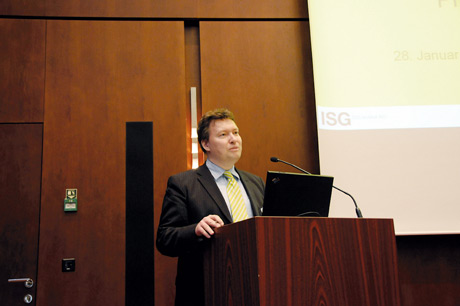
Holger Haedrich knows the importance of individual values for marketing and advertising.
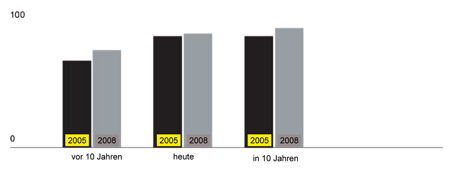
1290582051_img090204_tabelle1
The relevance of values as a personal decision-making aid has increased significantly over the last ten years. This was the result of a survey conducted by Swiss Spirit on behalf of the ISG Institute.

SF subtitles all programs in prime time

In the course of 2009, Swiss Television plans to provide subtitles for the hearing impaired for all programs between 7 and 10 p.m.. In addition, more films will be broadcast with audio description for the visually impaired. SF is thus following the new regulations laid down in the Radio and Television Ordinance of 2007.

In the course of 2009, Swiss Television plans to provide subtitles for the hearing impaired for all programs between 7 and 10 p.m.. In addition, more films will be broadcast with audio description for the visually impaired. SF is thus following the new regulations laid down in the Radio and Television Ordinance of 2007.
In 2008, around 4371 hours of programs broadcast on SF 1 and SF 2 were shown with subtitles, SRG wrote in a press release on Wednesday. This corresponds to a share of almost 20 percent and an increase of more than half compared to 2007. The increase was possible thanks to additional employees. Automatic speech recognition also made it possible to subtitle live broadcasts for the first time in 2008. Regular subtitling of programs on SF Info is planned from March 2009.
Across all SRG television channels, 9618 hours of television were subtitled in 2008. This corresponds to a share of 18.6% and an increase of 75.6% compared to the previous year.
As on the television stations in German-speaking Switzerland, all prime-time programs in French-speaking Switzerland and Ticino will be subtitled between 7 p.m. and 10 p.m. during 2009. The broadcasting of individual information programs with sign language will be maintained.
SRG also wants to broadcast more feature films with audio description. This involves an off-screen voice describing what is happening on the screen.

YouTube soon on the TV screen?

YouTube boss Chad Hurley wants the video platform to be available on every screen. In future, users should have the freedom to access YouTube via their computer, cell phone, games console or television.

YouTube boss Chad Hurley wants the video platform to be available on every screen. In future, users should have the freedom to access YouTube via their computer, cell phone, games console or television, Hurley told the German news magazine Focus. The portal is already negotiating with companies such as Sony and Panasonic. In January, the major TV set manufacturers presented prototypes with an Internet connection.
With the leap to television, the Internet video platform is set to become more profitable. According to estimates, less than 200 million dollars flowed into the company's coffers in 2008 - and this with around 300 million users. The reason for this is the immense cost of hardware and Internet connection, as Focus writes. Advertising is found in only three percent of all videos. According to Hurley, the initial aim was to increase user numbers. YouTube is now experimenting with different forms of advertising.
The 31-year-old does not see any conflicts with traditional television. YouTube removes content from TV stations on request. However, broadcasters can also make their programs better known if they leave them on YouTube. Hurley also held out the prospect of giving TV stations a share of his own advertising revenue if their content appears on his video platform.

Striking

This week, *Werbewoche* took notice of a campaign featuring knitwear fluttering in the wind and a new overall brand identity for Villa Visconti’s fine wines.

The next winter is sure to come
Ragman is already launching next year’s winter fashion collection in the textile trade press. Under the tagline «I’m free,» the By Heart agency is now in its third season of developing an emotional brand identity, this time featuring huskies and knitwear fluttering in the wind. In addition to the image campaigns, the agency produces a wide variety of promotional materials, ranging from an extensive collection catalog to point-of-sale (POS) materials and shopping bags. The Ragman brand stands for high-quality, comfort-focused casual fashion for men and women.
1290582049_img090204_aufgefallen1

High Voltage on the Roof
Radio 24«s tram posters are a true Zurich classic. The new concept, launched in early 2009, was developed by the creative team at the Hochspannung advertising agency. The campaign uses headlines to promote the programming highlights of Switzerland’s oldest private radio station, with taglines such as: »I Will Survive and news on the state of our economy« or »West End Girls and everything about the new western bypass.” In other words: music paired with hot news.

Swedish Delicacies
For its client Grosspeter’s Swedish car brand Saab, the Oswald Siegfried advertising agency has created a mailing that invites customers to a tire change of a rather unusual kind: the highlight is a Swedish buffet. The yellow stripes of the Swedish national flag are depicted on the invitation as tire tracks.

1290582049_img090204_aufgefallen2

New Wine Brand
Villa Visconti’s fine wines are designed to convey the Italian way of life and take the palate on a journey of indulgence to Italy. Villa Visconti is strongly focused on the international market. Accordingly, Vizner Borel designed the brand’s overall identity to be locally authentic. From the corporate identity (CI/CD) and packaging to the key visuals and website.

1290582049_img090204_aufgefallen3

Flop of the week: SRG soon with "Swiss Arte"?

Bernard Cathomas, the director of Rhaeto-Romanic radio and television, who is leaving in the spring, is proposing the creation of a four-language national television channel for culture.

Bernard Cathomas, the director of Rhaeto-Romanic radio and television, who is leaving in the spring, is proposing the creation of a four-language national television channel for culture. This was reported by the NZZ am Sonntag. The "Helvetic Arte" is intended to further exploit the existing cultural programming offered by the SRG chains and make it accessible to a wider audience. The idea, which is to be discussed at a conference in Bern on February 13, is highly controversial at a time when the public is fiercely opposed to a fee increase and the SRG is complaining about pressure to cut costs. SRG spokesperson Daniel Steiner was tight-lipped and defensive about the idea in an interview with the NZZ am Sonntag. The fact is that there is no SRG cultural channel project and no corresponding plans in terms of time and finances. Director General Armin Walpen will present his personal opinion and the SRG's position on a "Swiss Arte" at the conference in February.

Superspot: Nothing is more rock'n'roll than a Punch and Judy show

Anyone who thought that the rapidly declining sales of music recordings would spell the end of the music video as an art form was, fortunately, wrong. The British band Coldplay is once again leading by example with the video for «Life In Technicolor II.».

Anyone who thought that the rapidly declining sales figures for recorded music and the fact that the programs of former music channels are hardly focused on music anymore would lead to the death of the video clip as an art form was fortunately wrong. The British band Coldplay are once again setting a good example and presenting the Music movie to her piece "Life In Technicolor II" Four and a half minutes of the most elaborate and at the same time most loving self-promotion. Just this much in advance: a rock'n'roll concert recording with all the trimmings - in a completely unexpected place. Watch, enjoy and catch the drumsticks.

img090204_coldplay

Top of the week: Wirz Group increases sales by 16 percent

Revenue for the independent Swiss communications group rose by nearly 16 percent in 2008 to 24.9 million Swiss francs in gross operating revenue (BBE), with all three core companies—Wirz Werbung, Wirz Corporate, and Assai Dialog+Digital—contributing to the positive result.

Sales at the independent Swiss communications group rose by almost 16 percent in 2008 to CHF 24.9 million (gross operating income), with all three core companies Wirz Werbung, Wirz Corporate and Assai Dialog+Digital contributing to the positive result. The agency was also satisfied in terms of new business. It won a total of 18 competitor presentations and thus landed 23 new clients, including Alstom, Bank Sarasin, Bilanz, DSM Nutritional, Emmi, Heks, Kaba, Nespresso, Partners Group, Riderspalace, Roche, SBB, Schoolnet.ch, Swisscard, Unique and Würth Financial Services.
Geri Aebi, Chairman of the Wirz Group Management Board, sees the reasons for the good business performance not least in the special constellation of the Group. With the three companies operating under one roof, Wirz offers a wide range of communication services, and customers are increasingly looking for the "communicative general contractor" as a business partner.

Geigy's advertising in the Museum of Design

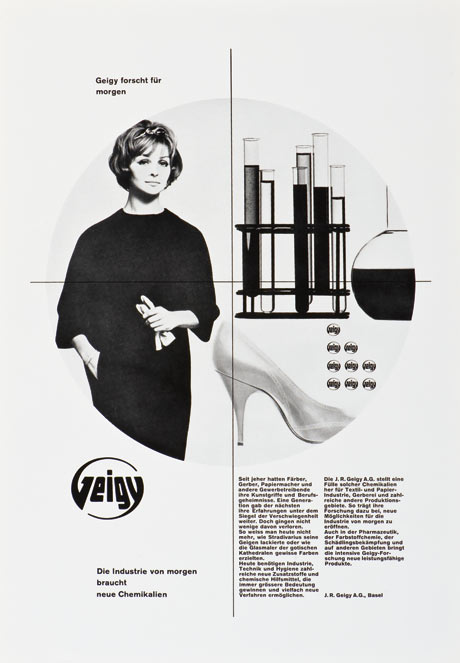
The Museum für Gestaltung Zürich is showcasing product and corporate advertising from the former Basel-based chemical company Geigy. The exhibition «Good Design, Good Business» features more than 300 exhibits created by the design studio at the company’s Basel headquarters between 1940 and 1970. We’re sharing more photos.

The Museum für Gestaltung Zürich is showing product and company advertising from the former Basel-based chemical company Geigy. The exhibition "Good Design, Good Business" contains Swiss graphics and advertising produced by the advertising department of J.R. Geigy between 1940 and 1970. The creations contributed to the worldwide spread of the "Swiss style" in graphic design.
The exhibition features more than 300 exhibits from the studio at the company headquarters in Basel. On display are posters, advertisements, advertising cards, brochures, magazines and books, as well as records, promotional gifts and packaging. These include items from the studios of the subsidiaries in the USA and the UK.
Studio as a talent factory
The advertising department of the chemical company, which was considered one of the most important talent factories in Swiss graphic design at the time, combined product and company advertising and became famous for its "Geigy style". The factual, poster-like designs of the 1950s increasingly gave way to more diverse forms of expression in the 1960s. The company's own studio also had good contacts with the Basel General Vocational School and links with the Association of Swiss Graphic Designers (VSG) and the Swiss Advertising Association.
During the fifties and sixties, Roland Aeschlimann, Steff Geissbuhler, Karl Gerstner, Jörg Hamburger, Toshihiro Katayama and Nelly Rudin, among others, worked in the studio under Max Schmid's direction. Selected commissions went to freelance designers such as George Giusti, Gottfried Honegger, Armin Hofmann, Herbert Leupin, Warja Lavater, Josef Müller-Brockmann, Victor Vasarely and Niklaus Stoecklin. In addition to René Groebli and Peter Hemann, Jakob Tuggener and René Burri also worked as photographers for the studio, as did the architectural photographer Ezra Stoller in the USA.

Events
The Swiss contributions to design history can be seen in the gallery of the Museum für Gestaltung Zürich from February 4 to May 24, 2009. Two panel discussions will also be held as part of the exhibition:
On Thursday, March 5, 2009, Jean Etienne Aebi, Ruedi Baur and Stefan Haas will discuss "Good Design = Good Business? - Design as an advertising factor" The discussion will be moderated by Renate Menzi.
On Tuesday, May 5, 2009, Richard Hollis, Manuel Krebs and Lars Müller will debate "Swiss Style forever? - Swiss graphics today". Andres Janser will be the moderator. Further information on the events is available at here to find.

1290582054_img090204_kik_geigy
Anonymous, Kik keeps insects away, shop window poster, CH 1960s, Novartis AG, Basel

1290582054_img090203_geigy03
Max Schmid / Peter Heman (photo), Geigy - A company and its products, book, CH 1955, Museum für Gestaltung Zürich, graphics collection

1290582054_img090203_geigy04
Nelly Rudin, Geigy researches for tomorrow, advertisement, CH 1960-62, Nelly Rudin, Uitikon Waldegg

1290582054_img090203_geigy06
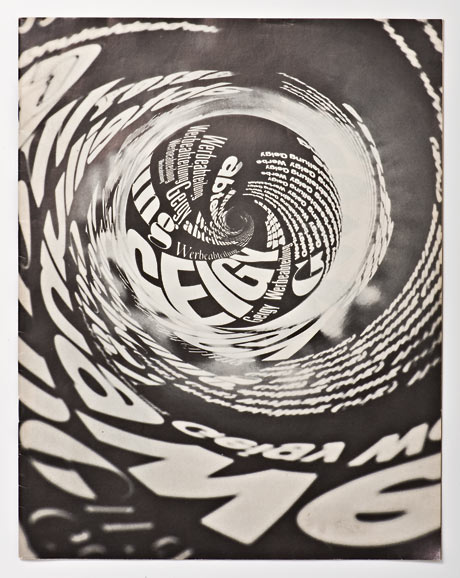
Jörg Hamburger, Propaganda Geigy, document folder, CH ca. 1957, Museum für Gestaltung Zürich, graphics collection

1290582054_img090203_geigy07
Stephan Geissbühler / Hans Weyermann (photo), Geigy advertising department, brochure, CH 1966, Museum für Gestaltung Zürich, graphics collection

1290582054_img090203_geigy08
Karl Gerstner, Neocid - a barrier to the house vermin!, advertising leaflet. DE ca. 1953, Armin Hofmann, Lucerne

1290582054_img090203_geigy09
Herbert Leupin, Trix ... no moth holes, poster, CH 1952, Museum für Gestaltung
Zurich, poster collection

1290582054_img090203_geigy10
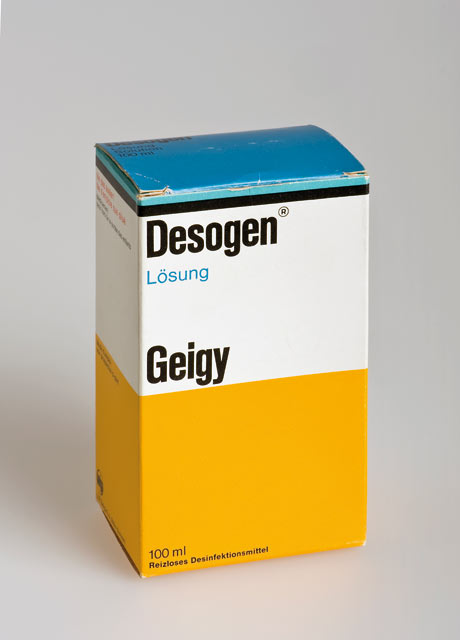
Max Schmid, sales package with product identification strip, CH after 1962, Novartis AG, Basel

1290582055_img090203_geigy11
Roland Aeschlimann, Butazolidin - Delta-Butazolidin - Irgapyrin, advertising card,
CH before 1963, Museum für Gestaltung Zürich, Graphics Collection

1290582055_img090203_geigy12
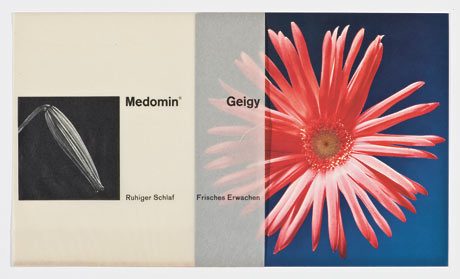
Gottfried Honegger, Medomin Geigy - Calm Sleep - Fresh Awakening, advertising card, DE 1954-58, Museum für Gestaltung Zürich, Graphic Arts Collection

1290582055_img090203_geigy13
Fred Troller, Ring Geigy for Service - Geigy Dyestuffs, advertisement, US ca. 1964, Museum für Gestaltung Zürich, graphics collection

A comprehensive publication entitled "Corporate Diversity - Swiss Graphics and Advertising for Geigy 1940-1970" has been published on the subject of the exhibition with texts by Karin Gimmi, Andres Janser, Barbara Junod, R. Roger Remington and Yvonne Zimmermann.

The Hatschi from Whistler Mountain

Ogilvy & Mather Zurich, in collaboration with Manifesto Films, has produced an action-packed commercial for Panadol Extra and Antigrippine.

Just in time for the peak of the flu epidemic, Panadol goes on air with a commercial for Antigrippine. And in the truest sense of the word. The origins of this commercial date back some time, because even when advertising for pharmaceuticals, it is important to observe the package insert with the side effects, particularly with regard to the legal requirements. A number of conceptual and organizational obstacles had to be overcome. After pre-testing an international commercial, Ogilvy & Mather and its client Glaxo Smith Kline decided to look for an implementation that was more specifically geared towards the Swiss brand environment. The aim was to create a female identification figure for the commercial who would be "credible, close to everyday life and yet still exciting for the target group", as CD Thomas Bolliger explains. After testing three concepts, the idea with a female helicopter pilot came out on top - even before Melanie Winiger took off on her helicopter flight across Swiss screens.
The idea behind the concept was to shoot several commercials for different Panadol products at the same time. All these products were filmed in the same environment, each with a different short story. This approach made it possible to plan for significantly reduced costs.
Additional costs could be saved by shooting in Canada. Zurich-based Manifesto Films has an offshoot there. The foreign shoot also made sense because filming for advertising is not necessarily a top priority for the rescue services in Switzerland. The rescue and abseiling operations were subsequently filmed in the Whistler Mountains with a Canadian leading actress. The red and white helicopters from a private rescue company didn't even have to be changed much. Only a few logos had to be pasted over.
A bigger challenge for director Reto Salimbeni was coordinating two helicopters in the air. The camera was in one and the action took place in the other. "Safety was particularly important with such fast and extremely close maneuvers in the air. My directing instructions were only followed as a third priority," reveals Salimbeni.
Nevertheless, the commercial is convincing with lots of action. Although a "directors cut" looks even more spectacular, it was no longer an option for a pharmaceutical product. The Swissmedic guidelines for pharmaceutical advertising had to be observed here. In addition, the impression must never be created that a pilot was piloting a helicopter under the influence of medication. With clear time indications and correctly timed animations on the effects of Panadol, Swissmedic was convinced and Ogilvy was ultimately able to deliver an entertaining commercial.

> To the spot

With 100,000 employees in 160 countries, Glaxo Smith Kline is one of the world's largest manufacturers of prescription medicines.

Andreas Panzeri

Last but not least: The Internet - your friend and helper

If you’ve ever gotten frustrated with your computer at work and cursed it because it just wouldn’t work the way you wanted it to, that same electronic device turns out to be a lifesaver when you’re unemployed.

If you were annoyed with your computer at work and cursed it because it just didn't work the way you wanted it to, the electronic device turns out to be a savior in times of unemployment. What else could you do with the free time that has become involuntarily available? The internet with its online games, blogs and social networks comes in handy.
First, release the worst of your aggression while playing. Then go to the next blog, where you can rant and rave about your former boss and uncomfortable work colleagues. If you still have a bad feeling, you can set up an I'm-unemployed-and-I'm-bored group on Facebook and share your misery with like-minded people - after all, a sorrow shared is a sorrow halved.
The correlation between the unemployment rate and the influx in social internet networks has not yet been scientifically proven, but the interplay between the two variables is certainly causing a stir in the press. "Unemployed storm blogs and social networks" was the headline of the Pressetext news service on Wednesday, for example. What were we doing when the internet didn't exist?

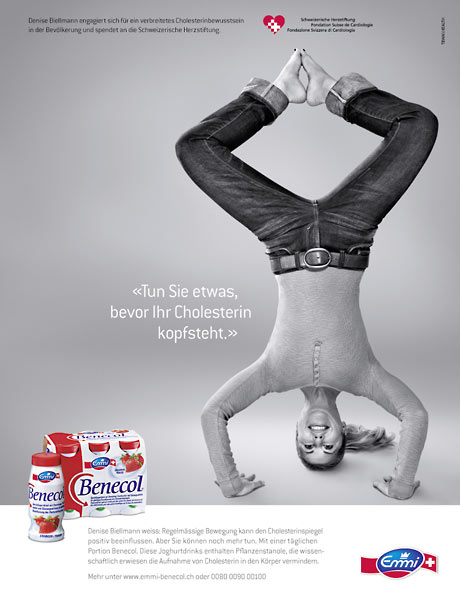
Emmi Benecol and TBWA\Health continue to fight cholesterol together

The product-specific collaboration between food manufacturer Emmi and agency TBWA continues. The Zurich-based advertising agency continues to handle the cholesterol drink Benecol.

The product-specific collaboration between food manufacturer Emmi and agency TBWA continues. The Zurich-based advertising agency continues to handle the cholesterol drink Benecol.
According to a press release on Wednesday, the challenge and the communication goal in 2009 are above all to continue the cholesterol sensitization and to establish Benecol as a possible solution for elevated cholesterol, combined with the exercise and nutrition topic. The core message to be conveyed: Benecol is the yogurt drink that tastes good and helps to favorably influence cholesterol levels. 30 percent of the population suffer from elevated cholesterol.
In addition to the classic print campaign, this year's advertising activities around Benecol will focus primarily on pharmacies. According to TBWA, target group-specific incentives (such as 4-week trial package, cholesterol tester discounts, proof of efficacy, etc.) will serve as door openers for the product.
Beat Schlatter and Denise Biellmann remain the product's advertising ambassadors. The current print subjects are to be followed by others in the second half of 2009.

Responsible at Emmi Switzerland: David Jäger (Head of Marketing Services, Adrian Bucher (Advertising Management), Petra Hotstegs (Product Management), Liz Lämmler (Project Management). Responsible at TBWA\Health: Frederik Rossmann (CD), Werner Schellenberg (AD), Peter Bietenholz (text), Matthias Kiess (strategy and consulting), Isabel Brodersen (consulting). Photography: Dan Cermak, Image Editing: Felix Schregenberger, Web: .Pulse Web Agency, Media: Zip Media.

1290582051_img090204_emmi1
1290582051_img090204_emmi2

Regional TV stations hold their own in a difficult market environment

TV viewers continue to appreciate the good work done by regional TV stations.

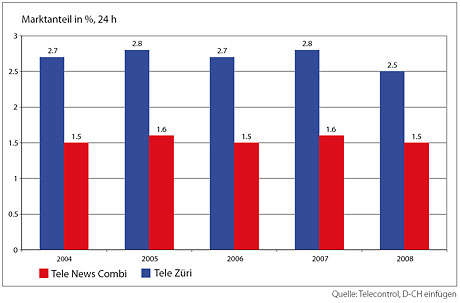
An article in the last issue of Werbewoche entitled "Local TVs are losing reach" could give readers the impression that regional TV stations are the big losers in the audience market. However, this conclusion would be wrong, as this report unfortunately did not take the overall context into account. Basically, it can be stated that the reach in the overall market is declining and that the market share of Tele News Combi (merger of Tele Züri, Tele Bärn, Tele Ostschweiz, Tele Top, Tele Südostschweiz, Tele M1, Tele Tell) in German-speaking Switzerland has been surprisingly stable for years. This applies equally to Tele Züri. If the focus is on 2008, it should not be concealed that the major sporting events with the Euro 2008 in Switzerland and the Olympic Games in Beijing have created anything but an advantageous starting position for the programs of the regional TV stations. During these extreme events, a large proportion of viewers focus on precisely this content.
The increasing number of media and usage channels is leading to a fragmentation of recipients. An ever-increasing supply of information and entertainment contrasts with only a slight increase in user demand. In particular, the introduction of digital set-top boxes (Cablecom and Bluewin) has massively increased the range of TV channels on offer. It goes without saying that, against this backdrop, the reach of an individual channel is increasingly and inevitably stagnating or even declining slightly if only analog broadcasting is considered. The fact that time-shifted use (keyword PVR) and numerous digital distribution vectors (Zattoo, Pod-Cast, online archive) cannot be taken into account in the Telecontrol figures further complicates the initial situation.
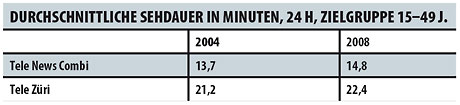
The regional TV stations continue to fulfill their information and entertainment function with great commitment and correspondingly good quality. The audience rewards this performance with high and stable viewing figures and an increasing average viewing time. With the fee money that most licensed broadcasters will soon receive, the programs should become even more attractive. Tele Züri will expand its broadcasting area by around half of its potential by the spring. This will enable the regional TV landscape to successfully assert itself in a difficult market environment in 2009.

Andrea Haemmerli, Managing Director of TNC and Belcom

1290582050_img090204_tvsender_marktanteil
1290582050_img090204_tvsender_tab
get_footer();