"We have a new cooperation with almost all newspapers"

Hanspeter Rohner, President and CEO of PubliGroupe, explains in an interview with *Werbewoche* how far the new business model has progressed.

p

Two years ago, PubliGroupe CEO Hanspeter Rohner announced a new Publicitas business model with the following key points: 1. Publicitas (P) charges cost-covering prices for (small) advertisements. 2) P offers services "à la carte", publishers choose what they want. 3) P stops universal placement: publishers only receive from P what they pay it a commission for. 4) P sets up a digital settlement platform.

WW: Mr. Rohner, how much of the announced business model have you been able to implement to date?
Hanspeter Rohner: The goals we set ourselves in this regard for 2010 have all been achieved. Around 95 percent of the plan has now been implemented. What the new Publicitas crew under CEO Beat Roeschlin has achieved since May 1, 2010 is impressive: they were able to conclude cooperation agreements with all major publishers on the new commercial basis.

What exactly has changed?
There have been fundamental changes. The main point is a new pricing model. Our commission now consists of a so-called base amount per advertisement, plus, as before, a volume- or turnover-dependent share. The base amount is, for example, 60 francs per advertisement - regardless of its size - which is of course a huge amount for a small advertisement of 200 francs, but almost nothing for an advertisement of 10,000 francs. In short: from the publishers' point of view, small advertisements have become massively more expensive in percentage terms, while large advertisements have become cheaper. Previously we had the same or similar commission rates for both types of advertisement, but now they are far apart.

How do you justify this basic amount?
With our business realities. If a professional advertiser in Sion provides us with a ready-made PDF for a full-page advertisement in the NZZ that we can send with a click, we actually have less to do than if a private individual comes to us with a hand-knitted small advertisement for the Tages-Anzeiger, which we may still have to translate and layout.

Do the small ads now cover your costs more than before?
They are now just as attractive as other advertisements across the entire P-Net, across all titles and media categories - newspapers, magazines, online. This was not the case before.

Do all publishers in Switzerland pay a uniform basic amount?
We use the same calculation principles everywhere (including a transaction fee), but then of course apply these to the individual negotiation situation. Depending on the order volume, sales mix of advertising types, etc., our offer differs from publisher to publisher. We also calculate on this basis for the still numerous directing contracts.

What does this mean for local newspapers, for example, where a single-column small ad might only cost 50 francs?
In individual cases, our commission is actually higher than the insertion price. We no longer do it for less. However, as local papers only have relatively few small ads, this is not a significant factor for us. More important to us are the 20 or so large daily newspapers, which absorb around 95 percent of the small ads market.

Read more about this in the current print edition of Werbewoche.

Concentrated power

Art & Work, Event Schweiz, and Publicum pmi have merged to form FBM Communications. The new integrated communications agency is wholly owned by the Freddy Burger Management Group. Carmen Schiltknecht is the managing director of the new unit, which has twelve employees.

kdw

Make one out of three is the concept for more power instead of dispersal at Freddy Burger. Since November 2010, all the disciplines of integrated communications that were previously handled individually have been offered under one roof in his diversified empire. The services Corporate Identity, Corporate Events and Public Relations are combined under FBM Communications. The services offered range from the conception of a creative communications strategy to effective implementation and efficient success monitoring.

The managing director of the new company is Carmen Schiltknecht, previous owner of Art & Work. "The merger of the three agencies meets the needs of the market," she is convinced. Today's customers want an address that competently offers 360-degree communication and a partner who knows what makes today's customers and their target groups tick. Due to the immediate proximity to the Freddy Burger Management Group with its products in the entertainment industry and gastronomy, especially live communication, which is increasingly desired today, is to gain in importance. Full integration into the FBM Group with the FBM-Entertainment and FBM-Gastronomy divisions should bring further synergies for customers.

Event Schweiz was experienced as a general contractor in the realization of events of any size. The previous managing director Michel Loris-Melikoff will remain with the group as director of the St. Jakob Hall in Basel, which will also be managed by FBM. The other Event Schweiz specialists will all be taken over by Schiltknecht's new merger agency. This also applies to the employees of Publicum pmi. The latter has built up a valuable network over the past 17 years and knows how to work with public relations. After his sale to Freddy Burger, the long-time managing director Thomas Weber will continue to look after the many tasks related to the promotion of Udo Jürgens as a freelancer.

Art & Work, the already very diversified agency of the three merged partners, has been a creative team of women for 16 years, which has already successfully brought communication to the point in the most diverse areas - from brand consulting to corporate identity to coaching. The versatile range of services also reflects the rich experience of Carmen Schiltknecht.

The career of the founder of Art & Work began with a business degree in Stuttgart. Because her mother thought that a "proper education" would bring more, Carmen Schiltknecht also added an apprenticeship as a merchant in wholesale and foreign trade. "Even then, I felt inside that I wanted to achieve more professionally. Whether employed or self-employed, my attitude in all phases was: go forward passionately, realize concepts with a doer's spirit and inspire people with ideas." This attitude was rewarded first with more responsibility, then more pay, and finally with a reduction in teaching hours. "I thought that was great, that you can even change training concepts."

Carmen Schiltknecht came to Switzerland in 1980, following a man for love. But the successful businessman had other ideas for life, for which she was not yet ready at that time. The young woman was still full of professional dreams. So the marriage did not last long.

Back on her own, Carmen Schilt¬knecht applied for a job as a presenter at the newly founded Radio Z. But with her Stuttgart accent, she was only laughed at. With her Stuttgart accent, however, she was only laughed at. But the bosses Hans-Peter Meng and Alfred Fetscherin listened with interest to Schiltknecht's visions of why a radio station also needs listener loyalty - with offers, competitions and events. Thus, a tailor-made position was created for the young German for sponsoring, which was hardly known at the time. Parallel to the job, Schiltknecht did further training as a PR assistant. After a request from a Z client, she spent three years building up the Migros Zurich studio, creating a new type of editorial radio spot two minutes long, and also became deputy PR manager by overseeing an in-house newspaper.

Once again poached - "I was lucky that the right people always approached me" - she later headed the PR department at Adia Interim with first-time professional advertising on the radio as well as a client magazine. During this time, she also earned her diploma as a certified PR consultant.

Carmen Schiltknecht got into business with Beat Curti through the editor-in-chief of the customer magazine Confetti for Phillips. The publisher offered her the continuation of his PR agency Extrablatt after the sponsored youth magazine was discontinued for financial reasons. "An adventure in which I still had to learn a lot until a gray mouse within the Curti Grup¬pe became an important business model."

Schiltknecht won the Good News magazine in a pitch and developed the small format into a real magazine. As more and more large customers were acquired over the course of 16 years, the boss wanted to take a financial stake in the Extrablatt agency. But the offer of a partnership was so expensive that Carmen Schilt¬knecht preferred to do the math: "I built the whole thing up. And what I can do for others, I can do for myself."

So she founded Art & Work in 1995. "We functioned as a niche agency with four employees, but at times were able to employ twelve." As the name suggests, Art & Work has become a program when it comes to the agency's style. "Content is as important to us as design. Conversely, we also have very high aesthetic standards in everything we do."

Five years ago, Art & Work entered into its first partnership with Freddy Burger's group. At the same time, the team moved from Freigutstrasse to Carmenstrasse, into the same building as Publicum and Event Switzerland. Through an increasingly close collaboration, it eventually became apparent how the three agencies could work together to create an even stronger presence. "Freddy Burger knows very well what he has bought with us," Carmen Schiltknecht is convinced. "We are very committed, have a relatively high tempo, an alert mind - and as women have the ability to empathize with others: Where is what needed?" In times when communication is constantly becoming more overarching, "you can no longer think of PR as just PR, nor can you think of brand consul¬ting on its own. In the end, the only question is: What do I do with this brand? What can I fill it with? What impact does such communication have on all employees?" In this overall radius, FBM Communications today wants to "think holistically and offer solutions across all disciplines."

The young agency has just designed and implemented a kick-off event to motivate 800 employees at Helsana. The entire CI was relaunched for the Volketswil furniture center. Many budgets also come from the B2B sector. Carmen Schiltknecht has been working for Fifa for more than five years, most recently with the Freddy Burger Management Group, where she was responsible for the organization, realization and decoration of the entire event surrounding the "Ballon d'Or" in the Kongresshaus. In this job, FBM Communications also worked with external partners such as Aroma.

Only about one third of the orders are to be generated from Freddy Burger's group. This group employs 350 people. Most of them are affiliated to the Gastro division with the Zurich restaurants Sonnenberg, Theater 11, Schifflände, Trattoria and Soul, and Aqua. In addition, there are the Adagio clubs in Zurich and Berlin, as well as Mascotte. "In this division, there is not a large budget available for advertising and communication. A restaurant has to speak for itself with its quality and correspondingly satisfied customers."

More opportunities for creative implementation are offered by the FBM Entertainment division. This includes shows at Theater 11, Musical Theater Basel, and tours and events in rented venues. Carmen Schiltknecht and her team can already contribute their ideas in the planning phase. In preparation is a new edition of "Cats" in the tent or the Zurich premiere of the musical by Udo Jürgens "Ich war noch niemals in New York".

Carmen Schiltknecht sees it as an advantage that, thanks to her proximity to Freddy Burger's activities, she can put together "interesting packages for potential sponsors" for such projects much earlier than other agencies. But she also knows that she has to seek the necessary distance in her private life as well. After all, you work in a leisure industry.

For the past two years, the impresario and his communicator have also been linked as a couple. "That's when it becomes quite important to understand how to put on the most diverse hats." Carmen Schiltknecht likes the fact that she worked intensively with Freddy Burger for three years before they became friends. "For Freddy, it's clear that in me he has someone who is very dedicated, loves the profession and is committed to a cause with all his heart and therefore also with hard conviction." However, this respect works in exactly the same way the other way around. And that's why the power couple doesn't just have endless discussions about upcoming projects, but also space for the necessary leisure.

Andreas Panzeri


New LGK: Summer furniture for staying at home

Going on summer vacation is nice. But sometimes it's even nicer to stay at home. The Neue LGK shows this with a wink in its new summer living campaign.

Some of the motifs also hang as giant posters on the facades of Interio furniture stores. The communication is complemented by a summer living catalog and a presence at the summer furniture exhibition in the Glattzentrum.

The advertisements (double, half and quarter pages) can now be seen throughout Switzerland.

Responsible at Interio: Reto Waidacher, Werner Jakob, Eveline Jakob. Responsible at the New LGK: André Benker, Hans Tanner (creative direction), Antonio Lopez (text), Fabian Esslinger (art direction), Andrea Bachofner (graphics) Petra Zehnder, Jasmina Fischer (consulting), Christoph Kern, Annette Fischer (furniture photography), Ansichtsache (image processing).
 

New presenter on science show "Einstein

The SF science magazine show «Einstein» has a new host. Starting July 1, Tobias Müller from Mels (SG) will co-host the show with Nicole Ulrich.

Tobias Müller replaces Mario Torriani, who is moving entirely to radio station DRS3.Müller began his journalistic career nine years ago at Radio Ri in Buchs, which is now called Radio FM1. He has been studio manager and editor there for a good three years. Müller gained television experience as a presenter and producer of a discussion program at the eastern Swiss station TVO.
 

Affinity-Primemedia takes over ad sales for "The Must In"

As of March 1, 2011, Affinity-Primemedia is the new official advertising sales representative for Switzerland and Liechtenstein for "The Must In". The magazine has been in existence for 2 years and was first published as "The Must In" Genève.

This is published twice a year - in winter in Russian, English and French and in summer in Arabic, Chinese, English and French. MustIN Zurich will also be published for the first time at the end of June, with a further issue planned for the end of the year. The target group is a discerning, international clientele with very high purchasing power, according to an Affinity press release. As a "weekend destination", "The Must In" Zurich treats St. Moritz as a "must" for the international jet set.

Also from 1.1.11, the company based near Lausanne will be responsible for advertising sales for the magazine "L'Hommes Officiel Deutschland". The magazine informs men aged between 28 and 50 about the most important trends in fashion, beauty and culture, with artistic photo spreads, according to the press release. The glossy magazine is now published four times a year with a circulation of 60,000 copies.
 

Facebook with a view instead of Street View

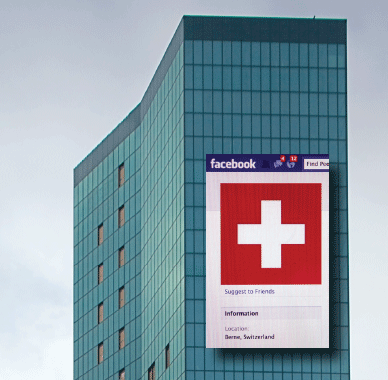
Following Google, another top company has chosen Zurich as its new location. Facebook plans to open an office in the Prime Tower to house 170 employees from its marketing division.

This office will hardly cause Google Street View any trouble with data protection. The search engine giant's biggest competitor will open its new offices around 100 meters above the ground. Out of reach of the cameras. But noticed by experts all over the world. After Palo Alto, Seattle, New York, Singapore, São Paulo and London, Facebook plans to open an important office in Zurich in the fall of 2011. Initially, 170 employees will set up a new marketing department on two floors in the Prime Tower, from where they will centrally manage the still underdeveloped Internet markets in the Eastern Europe, Middle East and Africa regions. Geri Saltfield, the designated CEO for Facebook Switzerland, finds the address in the Prime Tower "perfect for the prime social media website".

The duel of the giants

The competition between Facebook and Google is in full swing. Almost one billion people worldwide visited the Google homepage in February. Nevertheless, there are signs of nervousness at the search engine giant - not least due to a surprising change at the top of the company, which has been announced for the beginning of April. One possible background: compared to the same month last year, the number of Facebook users worldwide rose by 47 percent in the year to January 2011. For Google, the increase was only 7 percent. If growth remains the same, Facebook will overtake Google in the middle of next year. Critics want to identify a few flops at Google, particularly in the development of social networks. Wave, a fusion of e-mail and chat, was discontinued after just one year. Little is also heard about the new Google service Buzz. In various blog posts, experts are therefore predicting a slump in Google's growth "if the company is not able to gain a foothold with its own Facebook-style service soon".

However, Google's Zurich headquarters are not afraid of Facebook when it comes to staff. This company also wants to hire 300 new people in Zurich soon and has rented another building on the Hürlimann site for this purpose. "However, Google Zurich is mainly looking for engineers, while Facebook in the Prime Tower is looking for marketing specialists," says Matthias Meyer, who is unimpressed by the new competition. On the contrary, the company spokesman for Google Switzerland believes that having both leaders in such a small space makes Zurich a "new center" for Internet experts from all over the world. Of course, the authorities are also happy about Facebook's choice of location. With the major international banks repeatedly and discreetly threatening to pull out of Zurich, Facebook's investment is doubly appreciated. After all, the company is worth over a billion and is flirting with an IPO. But even if it is about social media: "There will be no tax giveaways for Facebook like there are for the non-profit organization Fifa," explains cantonal finance director Ursula Gut-Winterberger.

A piquant detail in passing: "Coincidentally", the Canton of Zurich has also been represented on Facebook since these very days. Information such as media releases and event announcements should reach a wide audience quickly thanks to Facebook and Twitter. The cantonal government has commissioned its communications department with a one-year pilot project. "As a forward-looking and modern canton, it wants to take advantage of the opportunities offered by social media," reads one of the first communications from the cantonal government to be disseminated in this way. However, nothing has yet been tweeted about Saltfield's plans to open an office in Zurich with 170 employees.

Andreas Panzeri

facebook
facebook2

In a nutshell

Facebook is facing a
tremendous growth and
must therefore
organize. In the
last year, the
worldwide use by
47 percent. And
The
Future markets in Africa,
Eastern Europe and
Middle East only on
Start of the Internet
age. This potential
thanks to a strategic
ideally located new
Facebook Office from
Zurich from
become. Here from
next year around
10 percent of the total
over 1700 Facebook
Employees stationed
be. There are further offices
already in Seattle, Palo
Alto and New York and
Singapore, São Paulo and
London.
 

Microsoft lawsuit: Google allegedly abusing dominant position

Microsoft filed a competition complaint against competitor Google before the EU Commission in Brussels on Thursday. The software group accuses Google of doing everything it can to consolidate its dominance in the online search and search engine advertising markets at the expense of European consumers.

Microsoft, for its part, operates the Bing search engine, which competes with Google. The EU Commission had already opened proceedings against Google in November 2010. The EU competition authorities are investigating indications that the company - possibly intentionally - displayed the offers of other search services too far down the list of results for product queries. Instead, Google had placed its own services in a prominent position below the search results. The IT giant may also have driven up prices for online advertising.

A Google spokesman said in a first reaction according to SDA in Hamburg, one is not surprised by this step of Microsoft. The company had already been among the complainants in Brussels with its subsidiary, the consumer portal Ciao.de.
 

Top of the week 2: Swiss prove themselves as a film nation

The Switzerland-bashing critics of the past few days can shut up again. While our soccer players are stuck at a big fat zero, the Swiss national advertising film team is on a scoring spree at the “Die Klappe” moving-image competition in Hamburg.

After the steep pass with 12 entries on the shortlist, eight films went straight into the jury's net. This corresponds to a Swiss share of almost 20 percent of the entire competition, where 274 entries from Germany, Austria and Switzerland battled it out for 45 keys. A detailed match report will be available after the awards ceremony on April 7. During the two-day judging last Friday and Saturday in Hamburg, entries from only four Swiss agencies were discovered. Two shared the eight flaps, including gold. The "Steinbrocken" for Switzerland Tourism by Spillmann Felser Leo Burnett and the Sunrise and Migros Klubschule spots by the same agency made it onto the shortlist. Pius Walker is still in the running with the "Zonenplan" for Greenpeace as well as Möbel Pfister and Rega. Seed Audio-Visual Communication beguiled the jury with a "Kiss" for Ricola.

The Impact Check of Werbewoche

We show how current campaigns are performing with consumers.

In the “Awareness” category, the Migros Nanomania ad by the advertising agency Wirz took first place, followed by the Raiffeisen ad by Metzgerlehner and the natural gas ad by Rod. The Migros Nanomania ad also takes first place in the “Uniqueness” category, ahead of the Max Shoes ad by Jung von Matt and the biogas ad by Polyconsult. In the “Brand Fit” category, the Migros Nanomania ad again takes the top spot, ahead of Max Shoes and Raiffeisen. In terms of likeability, the Max Shoes ad takes first place, followed by the natural gas ad in second place and the biogas ad in third.

> To the results at a glance
> To the detailed results

Question and methodology

Method: Computer Assisted Web Interviews (CAWI).
Instrument: Online interviews via the Marketagent.com reSEARCH platform.
Target group: Internet users in German-speaking Switzerland between the ages of 14 and 59.
Sample size: n = 500 net interviews, random selection according to quotas.
Survey Period: 17. 03. 2011 – 23. 03. 2011.

Questions:
- We introduced you to some ads at the beginning of today's survey. Which of these ads do you remember? Please name the advertising companies or the brands advertised. (Awareness)
- In your opinion, to what extent do these ads stand out from other advertising in newspapers, magazines and journals? Please rate each from 1 (= does not stand out at all) to 6 (= stands out very much). (Uniqueness)
- To what extent do these ads fit the image you have of the respective brands/companies? Please rate each from 1 (= does not fit my image of this brand at all) to 6 (= fits my image of this brand very well). (Brand Fit)
- To what extent do you like the following ads? Please rate each from 1 (= I don't like them at all) to 6 (= I like them very much). (Likeability)
The values printed are in each case the top box ratings "stands out very strongly", "fits very well with my image of the brand", "I like it very much".

The author of the representative study «Switzerland’s Favorite Advertisements» is Marketagent.com Switzerland, a company specializing in online market research that has a registered panel of 20,000 respondents in German-speaking and French-speaking Switzerland. Marketagent.com Switzerland is a subsidiary of the leading Austrian market research company Marketagent.com online reSEARCH and the Swiss communications agency Contract Media.
 

Art on the catalog

The Toy Museum presents a playful history of advertising.

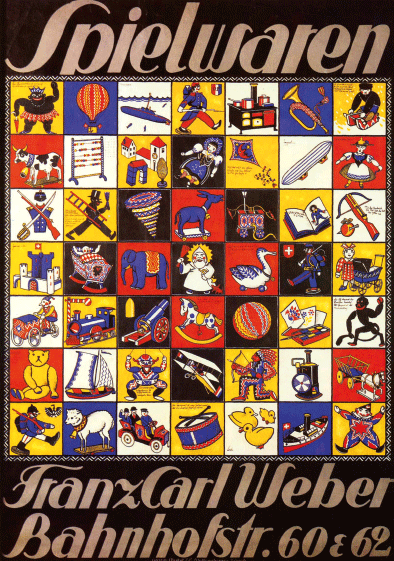
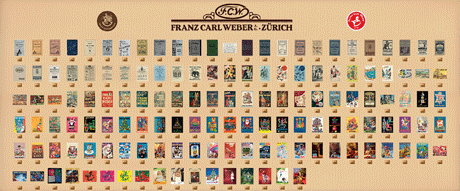
In the heart of the old town on Fortunagasse, the Zurich Toy Museum houses a unique collection of European toys from the 18th to 20th centuries that reflect the life of the respective era "en miniature". To mark its 30th anniversary, the Toy Museum is presenting the special exhibition "Franz Carl Weber catalogs - a long-standing tradition", which shows toys from Franz Carl Weber's 130-year history alongside the legendary catalogs. The toy catalogs published by Franz Carl Weber since 1891 are particularly striking for their unique covers, which were often designed by renowned artists such as Alois Carigiet, Niklaus Stöcklin, Celeste Piatti, Herbert Leupin, Moritz Pieper and Hermann Pieper. Pan

spielzeug1
spielzeug2

The SRG should be set limits online

On the Issues Surrounding SRG's Online Strategy.

At a media conference last week, the Swiss Media Association called for a restriction on SRG online offerings and advertising. It referred to a legal opinion by Professor Urs Saxer. SRG must show consideration for the private media, especially the press. Its activities in the online sector are contrary to the constitution and the law.

The association stated in a press release on Friday that it accepts that SRG uses the internet as a further distribution channel and clearly develops program-related activities. However, under no circumstances should SRG establish a new medium and feed it with advertising. Online is not a public service.

Based on the expert report "Possibilities and limits of SRG's online offerings", which Saxer prepared on behalf of the association, publisher president Hanspeter Lebrument derives three main demands for the association:

Advertising revenue in the print media has fallen by 12% in the last two years. In contrast, SRG reported a 12% increase in TV advertising and an 11% increase in sponsorship for 2010. In addition, the Federal Council has agreed to increase advertising from 8% to 15% from 2011, which will also be at the expense of the print media. A new study by the Institute of Mass Communication and Media Research at the University of Zurich (IPMZ) also predicts a further decline for print products, while an increase is forecast for radio advertising. SRG must continue to be prohibited from advertising on radio and online, as a lack of advertising would massively increase the price of print products.

Online is absolutely central to the future of private media. Online is fundamentally private business, not a public service. The sale of advertising and content must therefore also be possible online. However, there are only financing options for private online offerings if the SRG provides online offerings that are not financed by fees free of charge. According to Albert P. Stäheli, CEO of the NZZ Media Group and member of the Executive Committee of Schweizer Medien, an expanded SRG online offering would make it more difficult to introduce payment models for quality information.

Finally, the association is calling for politicians to finally clearly define the public service for broadcasting. The license must be adapted accordingly. Only with a clear demarcation between the public broadcasting mandate on the one hand and private media creation on the other can lasting clarity be created for both sides. This would prevent market-distorting offers.

SRG defends itself against the accusation that its online activities are contrary to the constitution and the law, and refers in a statement to studies by the Federal Office of Communications (Bakom). All studies show that SRG complies with the law and the concession with its online offering.


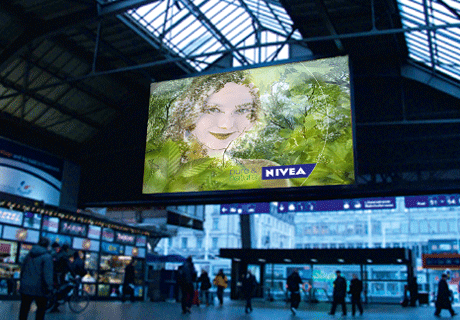
Nivea obtained from nature

TBWA Zurich has developed a comprehensive campaign featuring a new strategic approach for Nivea's new Pure & Natural skincare line.

In a wide-ranging campaign, TBWA Zurich produced a whole series of ATL and BTL communication media for Nivea's Pure & Natural product category. Pure & Natural is Nivea's most important launch in 2011. The new skincare line combines mild formulas with the effectiveness of organic ingredients. When creating the campaign, it was important to break away from previous conventions and find new approaches within the framework of the strategy. At the center of the campaign is now a key visual that fully recreates the facial contours from a natural, atmospheric forest scene. The approach that Nivea brings nature to people in its products and thus brings people closer to nature was implemented in various communication media in an eye-catching way. For example, the agency realized a full-page lenticular advertisement in Annabelle, in which the nature scene alternates with the face of a real model when the magazine is moved. The same alternating principle was also used on the banners. Other advertising media included brochures, supplements, fanfolds, counter displays, posters and film animations that were used on e-boards.

nivea
get_footer();