Why social media is becoming increasingly important

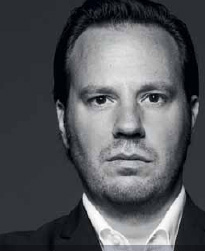
In January 2012, HWZ Zurich University of Applied Sciences will establish Switzerland’s first center for social media management. The center will be headed by Manuel P. Nappo, lic. oec. HSG, who has previously served as program director of the CAS Social Media Management certificate program.

WW: You head the first specialist office for social media management in Switzerland. What exactly do you mean by this?
Manuel P. Nappo: The specialist center in this form is something new for Switzerland. So far, there is no center or institute that is exclusively dedicated to social media in this way. The primary aim is to make knowledge about the new media widely accessible. For example, we offer customized training courses and participate in research projects. There will also be further training events and studies to make knowledge about social media more available to Swiss companies and other organizations. True to the motto "sharing is caring".

What changes does this new role mean for you in terms of your position as Director of Studies for the CAS Social Media Management certificate course?
Quite simply, I will also head up the specialist unit, which we are gradually expanding in terms of staff. This will certainly have a positive impact on teaching, as teaching, practice and research can be optimally combined. It has become clear that there is considerable demand in this area. It is true that young people are very adept at using social media because they have grown into it, so to speak. On the other hand, we have people who are probably very experienced when it comes to strategies and concepts and have now been literally overrun by these new media. We need to bring these two worlds together and provide both with the best possible know-how.

What fascinates you personally about social media and your work at the specialist unit and the social media management course?
What fascinates me is the combination of practice, research and teaching. I can live out my diverse interests and skills. I'm not just interested in how to write a tweet, but also what happens with it and what it can trigger. I'm interested in how social media works. One example: I have around 2,500 Facebook friends, many of whom are not Swiss, but Asian, Australian or American. I'm interested in how this develops, why do certain things work and others don't? When will something arrive on the other side of the globe? From a historical perspective, this is the first time that something has hit the world at practically the same time. Take Coca-Cola, for example. It took decades for this brand to achieve global coverage. Facebook was non-existent two years ago, and now it's suddenly omnipresent. I also like the dialog with the people behind it. The fact that you can simply talk to interesting people that you would never come into contact with in any other way. It creates new networks and new opportunities.

Isn't it therefore difficult to offer a course that has to constantly adapt to rapid developments?
The big challenge with this course is that it always has to keep up with the latest social media forms and functions. Let's take crowdsourcing as an example, i.e. the idea that users themselves generate innovations for companies, such as Migros' "strawberry mouth" jam. If I teach about crowdsourcing, should I teach less about the blog? Hardly. One advantage of social media is that Facebook, Twitter and LinkedIn actually work on the same principle: You need an email and a password, you can network with friends, you can write messages and so on. It is therefore important to understand the functionality of the networks and find out people's motivations.

Defining the term social media always proves to be somewhat problematic. How would you personally define social media?
I created my own definition for our course: "Social media is people talking with people about things they care about." So it's people - not machines - talking to other people about the things they care about. That's exactly the point, because the things they care about are as different as the people themselves. The great thing is that there is a platform for everyone to exchange ideas. Facebook is perhaps more suitable for Robert Pattinson Twilight fans or for photos from the last party, Xing for career planning and Twitter for quick tech news. It's important to remember that it's always people I'm talking to. When I tweet with Swisscom and ask a question, it's not just Customer Service that gives me an answer. It's the person with the abbreviation DG who gives me a specific answer to my problem.

Is the influence and impact of social media really so enormous that companies need a social media manager?
Of course, this cannot be said across the board. For large companies such as ABB or Novartis, a social media manager is probably the best solution, even if only as an internal know-how aggregator. In SMEs, where the CEO is also responsible for marketing and sales, he or she will also cover social media. So there will be different stages of implementation. My understanding is that in the end, all employees must have knowledge of social media anyway. Just as you would hardly hire an employee today without knowledge of PowerPoint, in two to three years you will no longer hire an employee who does not know how to use Facebook. For us, social media has become a matter of course. Life is more spontaneous, we are becoming increasingly mobile and are actually online all the time. If a company is not present, it runs the risk of being forgotten. Companies need to be aware that social media will bring about lasting change.

What impact does this new form of communication have on traditional advertising such as print, television or billboard advertising?
I don't believe that social media will simply replace traditional forms of advertising, as we know from previous technological leaps. On the contrary, I believe that social media will bring with it many new opportunities, as it enables an exchange and spreads content virally. Take a good, classic advertising campaign, for example. If it's really good, it will be shared and posted and discussed.

Discussions about data protection and privacy have cast an increasingly negative light on various social media platforms over the past year. Couldn't this have negative consequences for a company?
Where there are advantages, there are always disadvantages. If you want to take advantage of the benefits that social media brings in the form of new customer relationships or know-how sharing, then there are also risks. In my opinion, the issue of data protection has been somewhat exaggerated. It is clear that you have to expect and deal with risks. But I believe that the benefits for a company are greater than the risks. People are talking about my company anyway, whether I'm involved or not. But if I am involved, then at least I can comment on it.

Which social media platforms are best suited for companies to connect with their customers?
Just as cultures are different, so are the goals or needs of companies. However, there is one platform - Facebook - that can cover many aspects thanks to its enormous reach. With other platforms, the question is what a company wants to achieve. Twitter is fast and immediate and is suitable for customer service, media companies or event reporting, for example. Xing, on the other hand, is suitable for business networking. YouTube is good for image purposes, as you can distribute promotional videos. Different platforms are used depending on what you want to communicate and who you want to reach. Monica Danuser
nappo

In a nutshell
The next CAS Social Media Management courses start on February 17 and August 17, 2012. Further information can be found at
www.fh-hwz.ch/fsmm
www.facebook.com/fhhwz
www.twitter.com/fhhwz
www.twitter.com/manuelnappo
 

Creative wishes for Christmas and the year 2012

Christmas isn't just a time for reflection, but also a great opportunity for creative ideas. By sending personalized greetings, you can make a lasting impression on old friends and new customers alike.

The House Agency: Created a "Seasons Greetings" e-card for Swiss.

The House Agency was commissioned to design and produce the Christmas card and e-card for Swiss International Air Lines.

A partner version and a customer version of the e-card were programmed in HTML5. The central feature was that visitors to the microsite could enter their wish for 2012, which was displayed as a shining star in the sky. For every wish submitted on the partner page, Swiss donated five francs to SOS Children’s Villages.

For the customer option, a round-trip flight in Swiss Business Class for two people was raffled off among all participants. A total of approximately 14,000 customers submitted their preferences. The customer option was promoted in the Swiss newsletter, on Swiss.com, and on Facebook via a special tab.

Responsible at Swiss: Marcel Benz, Head of Marketing Communications; Parand Rohani, Online Marketing Manager; Alexander Strehler, Online Marketing Project Manager. Programming: Vanija GmbH.
 

The new APG SGA

The new APG SGA brand will be launched on January 19. All business operations in Switzerland will now be conducted under a single corporate brand, supplemented by four segment brands.

The new brand identity is part of a strategic and operational realignment of Affichage Holding, which is focusing primarily on the Swiss domestic market. With the rebranding, APG (Allgemeine Plakatgesellschaft), which was previously active in the Swiss market, is also taking a visual step into the future of dynamic outdoor advertising. The triangle of the old logo has evolved into a triangle of dots, which stands for the increasing digitalization, but also for the diversity of APG SGA's offerings, networks and diverse partnerships. The rich red symbolizes "Swissness" and thus the foundation of the brand, which has had a firm place in the Swiss economy for over a hundred years.

The "new" APG SGA, and with it the segment brands, remains true to its roots: printed posters in all formats and designs at the best locations continue to be APG SGA's core business. However, the future of out-of-home media also lies in digital spaces and interactive forms of advertising. APG SGA is strengthening its position as market leader in Switzerland by increasingly focusing on innovative and cross-segment offerings. It continues to develop in the direction of a company that offers all elements of out-of-home advertising and public space management from a single source.

APG SGA offers a comprehensive range of posters on streets, squares and railroad stations as well as at POS and POI and replaces the APG brand in German-speaking Switzerland and the SGA brand in French-speaking Switzerland and Ticino. The APG SGA corporate brand will now be used uniformly in all language regions. The segment brands previously present on the market will be integrated under the new corporate brand umbrella with a uniform naming concept, but will continue to operate independently on the market as APG SGA Airport (ex-Bercher Publicité), APG SGA Mega Poster (ex-Paron), APG SGA Mountain (ex-APGMontagne) and APG SGA Traffic (as before). The APG profit center eAd/e-Advertising with the successful digital offerings ePanel and eBoard will be integrated into APG SGA's core business and further expanded. There will be no changes in brand management for Affichage Holding and its subsidiaries Ecofer and Impacta in Switzerland or for the companies abroad. The names of the legal entities of all brands will also remain unchanged.
 

Publi Groupe entrusts IT workstations to Swisscom IT Services

Swisscom IT Services will take over the IT workstations of Publi Groupe's Media Sales division and headquarters at 59 Swiss locations. The contract will initially run for four years.

Xentive, a subsidiary and IT service provider of Publi Groupe, is outsourcing the workstations of 59 sites in Switzerland to Swisscom IT Services. More than a thousand devices are being replaced and standardized. Publi Groupe benefits from modern, high-performance workstations, optimizing its processes and reducing its costs. Swisscom IT Services is helping Xentive to migrate its applications and software environment to Windows 7. The IT provider is also making a service desk available to users and providing on-site support. The project is already underway and is expected to be completed by spring 2012.

Publi Groupe relied on the extensive experience of Swisscom IT Services in its choice of IT outsourcing partner, according to a press release. "Their great expertise and their modern, high-performance workplace offering - together with their solid services in the areas of hardware and software - convinced us," said Thierry Magnenat, Head of Infrastructure & Operations Services at Xentive. For Christian Rohrbach, CEO of Xentive, it is important that Swisscom IT Services can provide the services at its numerous locations. "This is the only way we can concentrate on other, value-creating activities and optimize costs in the process," he emphasizes.
 

Schaffhausen conquers Geneva with aircraft carrier

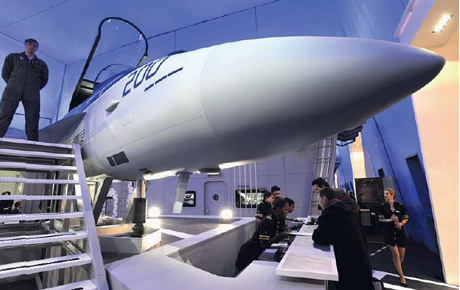
IWC Schaffhausen is making an impressive start to its 2012 pilot's watch year, with the "Top Gun" collection establishing itself as an independent formation within the IWC pilot's watch family with five new models. The collection was unveiled this week at the watch show in Geneva on a replica aircraft carrier.

WW: An aircraft carrier was built for the IWC stand at the Watch Salon in Geneva. Was it built especially for this exhibition or will it be used later?
Chris Grainger: No, that's the interesting thing about us: we create a complete theme world every year. In other words, we spend a year building and developing a theme to bring it to life. The aircraft carrier is exclusive for five days and will not be used again. Of course, it will not be destroyed afterwards. It was built in such a way that we can reuse most of the substructure. Only the decorative layer on top is unique.

What can be said about the budget used?
Of course, we can't give you exact figures here. But let's put it this way: it is a significant investment that IWC is making here to ensure that the most important week of the year for us is a success.

Has it long been part of IWC's style to appear with such buildings?
Yes, but it gets a little more complex every year. I think this year we've surpassed everything we've realized so far. It was by far the most complex thing ever. I mean, we needed four timber construction companies working in parallel just to build the timber structure here. And the fact that over 50 individual suppliers were involved, plus the very complex graphics and metal installations. Many different companies came together for this.

How is the trade fair in Geneva positioned compared to the watch and jewelry fair in Basel?
The trade fair in Geneva is a much more exclusive affair. The difference is that the fair here is for invited guests only, i.e. our customers, retailers and journalists are invited. It is not a public trade fair like in Basel. This results in a much more reduced and exclusive atmosphere. There are fewer people, a different audience and the crème de la crème of the people we actually want to see. The concept is that the trade fair is presented in a uniform way from the outside with cafés and catering in the middle and then the brands can present themselves individually within their area.

What will visitors be able to experience for themselves at IWC?
We differ from many brands in that we have a very open structure at our trade fair stands. This means that everyone is welcome to come and have a drink or something to eat. In the middle is the flight simulator, where you can play through take-off, landing and flights. Here we have recreated a US Navy jet. We tried to design it with great attention to detail, and we succeeded. This is also confirmed by the feedback we have received from top gun instructors and pilots. Everything has been researched in great detail and we have used many original US Navy suppliers for lighting, technical equipment, life rafts and ejection seats. So it's not just a freestyle interpretation. People can sit in a very authentic jet cockpit and really experience what it's like to be a pilot of a naval aircraft. At the end, they receive a Top Gun certificate from us, as a certified IWC pilot, so to speak. I think this is a powerful way of giving people a sense of what naval aviation means and what it feels like in the context of the trade fair.

What can be said about the concept of flying clocks?
I think the fun of IWC is the mechanical complexity and the engineering. And the aircraft carrier is one of the most complex engineering objects there is. A 332-meter-long floating city with 5500 personnel and 100 aircraft on board. This serves wonderfully as an analog symbol for the complexity of a mechanical watch. What is important for us in this topic is not only the engineering, but also the interaction between man and machine, which is part of being a pilot. We also want to demonstrate this here on this aircraft carrier. Visitors can experience this in the flight simulator.

Who is responsible for this creative idea?
This year it was my concept. I developed the entire design and implemented the idea with the help of a team in Schaffhausen and an external team. We have stand builders, architects, rendering agencies and merchandising agencies who help us to turn the details into reality in the end.

To what extent is the Jung von Matt/Limmat agency involved in this exhibition?
Jung von Matt/Limmat wrote the press presentation. They developed and produced the presentation film and the media presentation that we show in our press room.

Will the appearance in Geneva result in further advertising materials such as posters?
At IWC, the advertising campaign is always a complete package that encompasses all media. It starts with the Internet presence, website, social media, catalogs, literature, press releases, advertising materials, product campaigns and so on. That's all part of it. We have also developed a complete series of promotional gifts that we have designed especially for IWC, such as pilot bags or pilot jackets. We always try to use all channels because it's about pilot watches and the central point is marine aviation.

What are the impressions that people take away from the IWC stand?
It's incredibly impressive and the feedback is overwhelming. You should see the looks on visitors' faces when they walk past and see the flight simulator. I've been doing this show for seven years and I've never seen anything like it myself. Unbelievable! You have to know that watch brands are often very sober in their presentation. This is a completely different way of selling a topic than if we just talk about mechanics and engineering and show some watch models. The visitors all become big play children and have fun. Seeing how much fascination this arouses in people has also totally overwhelmed me. You think about it for nine or ten months and it only exists in your head and in the end it all comes together. That is also very impressive for me.
Interview: Monica Danuser

flugi_0


Tender for the graphic12

Graphic design is becoming a creative mass phenomenon due to the increasing digitalization and popularity of online media. 100 selected graphic designers and illustrators present their favorite works from 2011 at Grafik12.

"Switzerland has an excellent international reputation in the field of graphic design and typography with an interface to art. This is partly thanks to the Swiss education system in the creative industries sector. Even before we sent out the invitation to over 8,000 potential exhibitors, there were already a number of interested parties. We are expecting a large number of applications," says Harun Dogan, Artistic Director of Grafik12, explaining why the Swiss graphics scene has been an international leader for decades. Interested graphic artists and illustrators - professionals, amateurs or students - are invited to submit their portfolios via www.grafik12.ch to apply. It is up to the exhibitors themselves whether the works are two- or three-dimensional. The only limit is a polystyrene cube on which the works are presented and which is the same size for all exhibitors. The registration deadline is January 21, 2012, but will be extended until February 5, 2012.

Grafik12 will take place from March 2-4, 2012 in the Maag Halle.

To the point: Absurdistan

In my opinion, the best analysis of the Hildebrand case was made by Peer Teuwsen in Die Zeit. Unfortunately, he forgot to question the role of the media. This was just as pitoyable as that of the economy.

Because the whole thing was initiated from the right-wing mud corner, the anti-Blocher reflex took hold at first. Understandable, but unfortunately also unprofessional. Instead of trying to get closer to the truth by doing their own research, they first defended Hildebrand, who had been shot, and thus left the field to the self-appointed moral guardians of the SVP. Critical journalism should always remain neutral, even if the sympathies lie with the suspect.

It was to be expected that the anti-Blocher reflex would cause further media embarrassment. Then, last Sunday, the time had come. In the SonntagsZeitung, the presidents of all the major parties except the SVP demanded that Weltwoche disclose its ownership structure. In the Hildebrand affair, Weltwoche had obviously "run a campaign influenced by the SVP", which was also directed against state institutions. For this reason, it must now be clarified who is behind Weltwoche and what role Christoph Blocher may be playing there. But it gets even better: GLP leader Bäumle believes that "all media must explain who exerts influence on them. The public needs to know who the big shareholders, financial backers and donors are, as well as the big advertisers, he says. "Ultimately, we need new media law provisions that create transparency at publishing houses," says SP man Christian Levrat. A "Lex Weltwoche" is supposed to do the trick.

Was there an outcry in the media? Not at all. Only very isolated voices objected to such a "Lex Weltwoche. A monstrosity, because after all, practically all party leaders have demanded nothing less than a new law that would control and harness the media. At the same time, they have degraded all their members into dumb media consumers who cannot judge for themselves which party-political or economic interests an article or a medium is pursuing.

Pro memoria: After World War II, publishers had to apply for a license from the occupying powers in Germany in order to make a newspaper. Since this could be withdrawn at any time, there were possibilities for disciplining and controlling the licensed newspapers. Perhaps there will be a similar procedure in Switzerland in the future. Somewhere there is certainly room for a corresponding federal office of media watchdogs. Welcome to the past!

Pierre C. Meier, Editor-in-Chief
[email protected]
 

The Daily David appears and fights Goliath

Greenpeace Switzerland's «Become David Now» campaign is already entering its third phase. The main promotional tool in this phase is a newspaper designed specifically for Greenpeace called *Daily David*, which is being used as a mailing to new and existing members.

The highlight of this newspaper is illustrations by the internationally renowned artist Anatolij Pickmann. Pickmann's motifs take up the David versus Goliath battle and transfer it into a context relevant to Greenpeace. Thus, four different Goliaths appear in the newspaper to symbolically address issues such as the brutal raw materials struggle in the Arctic, overfishing of the world's oceans, deforestation of virgin forests and the dangers of the nuclear industry.

The special newspaper Daily David is sent to 260,000 Greenpeace supporters and serves as a long-term communication tool to provide the necessary space for all important Greenpeace topics. From the legendary Declaration of Independence by Greenpeace's founders to global issues such as the Detox campaign, the protection of the oceans or the upcoming resource extraction in the Arctic to the current Energy Academy workshops for Switzerland, the entire spectrum is presented using the Daily David.

Responsible at Greenpeace Switzerland: Dan Schaefler (Head of Fundraising), Katja Schaffner (Fundraising) and Steff Kerkhof (New Media, Fundraising). Responsible at Draftfcb/Lowe Group: Dennis Lück (ECD), Tizian Walti (text), Christoff Strukamp, Cinthia Stettler, Denise Frech, Cristian Neuenschwander (graphics), Marie-Theres Ott (Client Service Director), Sandra Kopplin (Senior Account Director), Yvonne Friedli (Account Director), Anatolij Pickmann (illustration) and Jakob Kohlmayer (Illunet GmbH).

Flowcube: Piega and Artweger new in the portfolio

Flowcube Communications starts 2012 with two new clients. The agency has been commissioned with the communication activities for Piega and Artweger. Flowcube is also celebrating its 10th anniversary.

Piega was founded in 1986 in Horgen on Lake Zurich by Leo Greiner and Kurt D. Scheuch. For more than 25 years, the company has been manufacturing loudspeakers with meticulous craftsmanship. Artweger is one of Europe's leading companies for shower enclosures and multifunctional showers. The family-run company is based in Bad Ischl in Austria and employs 250 people.

The PR agency Flowcube Communications, which was founded ten years ago, operates internationally and advises clients from the lifestyle, fashion, jewelry, design, architecture, real estate, tourism, hotel, retail and health sectors. Headquartered in Zurich, Flowcube has a branch office in Milan and a partner agency in Munich. It offers a comprehensive full service that includes consulting, conception and implementation of communication measures as well as external support for press offices. The owners and managing partners are Maja Amrein and Alfredo Schilirò.
 

Spiked: Carpe Diem

Simone Fankhauser, freelancer for Werbewoche, on the beginning of the end.

Frost lies on meadows and fields like powdered sugar. Crows in black feather coats strut up and down, cawing. Despite the veil of mist, the sun's rays are enough to lure the first primroses out of the ground. They are harbingers of spring in the middle of January. While nature is just waiting to be kissed awake and mobilize all its juices for a new life cycle, people are in an end-time mood. The pretty scenery outside our windows cannot hide the fact that the world will end in around 336 days. Even if you don't believe in the ominous end of the Mayan calendar, the harbingers of doom are here. The World Bank warns of a "global crash on both sides of the Atlantic". Words that bring back memories of Emmerich's city-devouring moat. The global economy is plunging into nirvana and Switzerland, of all countries, is without a National Bank president. Is Christoph Blocher an apocalyptic horseman? But the decline of the civilized world is not only evident in the economy in the first month of the year. The International Ski Federation has to deal with the nature of women's underwear and RTL shows for the umpteenth time the struggle for survival of C-list celebrities in the Australian jungle. There really isn't much hope left for people.

Final marketing

So what should we do with the rest of our time? I'm in favor of the Unilever strategy: "Let's make the best of it." Let's try to make some money before the end. Here's how it works: Take an existing brand, create a new fragrance, give the mixture the resounding name "2012 Final Edition", produce a commercial and it's gone, the end-time depression. There is hardly a consumer good that could not be marketed with the end of the world: A pair of jeans called "Final Cut", a new food line called "Final Food", a bar called "Final Destination". The drinks would then have names such as "Sweet Death", "Slow Death" or, for the very brave, "Agonizing Death". But you could actually go one step further. Every company only plans and budgets up to December 21, 2012 - no provisions, no savings. We can't take anything with us when we leave this world anyway - except for the followers of Fiat Lux who have ordered a spaceship in good time. For everyone else, the near end offers a huge opportunity. After all, the tree outside our window isn't thinking about cutting back its flower production this year because the Muotatal weatherman has predicted a cold snap for the beginning of May. Just like that. Carpe diem. And if someone had already invented the smartphone in the year 600, 2012 would have been a year like any other. Good luck!


get_footer();