Last but not least: Italian newspaper won't let itself be "vaticanized"

Once again, secret letters from the Vatican have been leaked to an Italian newspaper. This time, they are excerpts from several letters that make it clear that members of the supervisory board of the Vatican Bank pushed for the resignation of their chief, Ettore Gotti Tedeschi.

Il Fatto Quotidiano printed excerpts from the letters on Saturday. According to this, Tedeschi's then deputy Ronaldo Schmitz threatened to resign in a letter to the influential Cardinal Secretary of State Tarcisio Bertone if his boss had not been recalled by the end of May. This was reported by the SDA on Sunday. Gotti Tedeschi resigned on May 24 following a vote of no confidence by the Supervisory Board. He is being investigated on suspicion of money laundering. Among other things, the newspaper also quoted a letter from a psychiatrist. The letter attested to Gotti Tedeschi's "traits of egocentricity, narcissism and partial detachment from reality".

Internal Vatican documents have been repeatedly leaked to the Italian media in recent months. Among other things, these documents deal with corruption, money laundering and child abuse within the Catholic Church. However, the Vatican is already in the process of plugging the leak: a former valet de chambre, Paolo Gabriele, is suspected of being one of the leaks in the Papal States, according to SDA. The man, who was arrested just over two weeks ago, is now facing a prison sentence.

Partial acquittal for Zurich press photographer Klaus Ròzsa

The Zurich District Court has sentenced press photographer Klaus Ròzsa to a conditional fine. On Friday, it found him guilty of violence against public officials.

Ròsza was accused of using violence and threats to prevent two police officers from carrying out an official act during an occupation of the old Hardturm Stadium by an alternative group on July 4, 2008. According to the indictment, he resisted an identity check and allegedly kicked the police officers and spat at one of them. The single judge found Ròsza guilty on these counts and sentenced him to a conditional fine of 50 daily rates of CHF 30 each, with a probationary period of 2 years. At the same time, Klaus Ròzsa was awarded CHF 1,500 in compensation for the proceedings, with partial payment of the court fees. The private claims of the two police officers were dismissed.

Klaus Ròzsa, who over the past forty years or so has almost inevitably specialized in documenting police assaults at demonstrations, emphasized in a personal statement that the numerous lawsuits, almost always decided in his favour in the last instance, prevented him - and with him other media professionals who report on police operations - from practicing his profession and in fact represented a threat to the much-vaunted freedom of the media in Switzerland. Syndicom writes this in a press release. The probationary period of two years means a de facto ban on his profession, Ròzsa is quoted as saying in the union's press release. The ruling is therefore also directed against the freedom of the press.

The single judge acquitted Ròzsa on other charges. It could not be proven that Klaus Ròzsa obstructed visual contact between a police officer standing behind him and his colleagues while he was photographing them, according to the Syndicom press release. Similarly, his cries for help while he was being held down, pushed to the ground and handcuffed by the police officers cannot be demonstrably interpreted as an "incitement to violence" - especially as no one rushed to his aid. On these two points, the press photographer was acquitted of the charges of "violence and threats against officers" and "obstructing an official act". However, the court ruled that the fact that Klaus Ròzsa had moved away from the scene was an attempt to evade arrest. And the fact that he had ultimately complicated the arrest by dropping the case was "possible" and made him guilty of "resisting an official act". The judge took just as seriously the "true-to-life" descriptions of the police officers that Klaus Ròzsa had spat on a uniformed leg and kicked his feet in such a way that he could have kicked a police officer in the leg. Both points are classified by the single judge as "violence and threats against officers".

The judgment is not yet final.
 

Weko reviews Cinetrade

Cinetrade holds a 49% stake in Swisscom and awards the majority of Swisscom's football broadcasting rights. The Competition Commission is now interested in the market conditions.

The same is now emerging for ice hockey. Cinetrade is to secure live exclusivity during the qualifiers in the German-speaking part of Switzerland, as the NZZ writes on Sunday. SRG could then also broadcast live matches. And the cable network operators would in turn not have access to all matches.

But now the Competition Commission is also said to be interested in the market conditions for pay-TV. This is revealed by research carried out by NZZ am Sontag. The Secretariat of the Competition Commission has informed the market participants in a letter that it has opened a preliminary investigation "in the matter of Cinetrade": "We have indications of a possible unlawful restriction of competition within the meaning of Article 7 of the Cartel Act," confirmed Carole Söhner, Deputy Director of the Competition Commission, according to NZZ am Sontag. Article 7 of the Cartel Act deals with unlawful conduct by dominant companies.

Swisscom is relaxed about the Weko initiative; after all, this is only a preliminary investigation. According to NZZ am Sontag, Swisscom spokesman Sepp Huber says that there are no accusations or suspicions as yet. And: "The competition for sports broadcasting rights is on". As a distributor of such content, Swisscom has committed itself to Cinetrade. Broadcasting rights for football or ice hockey are awarded exclusively and for a limited period of time, Huber continued according to NZZ am Sontag. This means that there is open competition in every tender round.
 

Media-Work strengthens team

Hannes Tscherrig joined the Lucerne-based communications agency Media Work on May 1 of this year. A German studies graduate, he supports the agency as an editor and concept developer.

The copywriter and concept developer, who hails from the Valais, already earned an extra income with writing as a student. Over the years, he has worked as a copywriter for Hypothekenzentrum.ch, Scholz & Friends Zurich and Supertext.ch. After graduating with a master's degree in German and English, the 28-year-old earned his first spurs in journalism at the Upper Valais media house Mengis Druck und Verlag. In 2012, he earned a Master of Science in cognitive neurolinguistics. Hannes Tscherrig will be employed as an editor in all of the agency's subject areas, Media Work said in a statement. As a thinker, he will critically question concepts, identify weak points and find alternative solutions.
 

SFLB: Potential to discover

Spillmann/Felser/Leo Burnett has created a campaign for structured products. The campaign is designed to help potential investors understand the benefits of the complex world of structured products in a tangible way.

The first wave of the campaign is now running in the form of banners and advertisements in the NZZ and Finanz und Wirtschaft, among others. The new website of the Swiss Structured Products Association also has the look of the campaign.

Responsible at the Swiss Structured Products Association: Jürg Stähelin (Managing Director SSPA), Daniel Sandmeier (President SSPA), Peter Keller (Head of Operations & Satandards SSPA). Responsible at Spillmann/Felser/Leo Burnett: Oli Kreienbühl, Marco Donada, Patrick Suter, Reto Vogler, Peter Brönnimann (creation), Andy Stäheli (strategy), Isabelle Meier, Corinna Schwonke (consulting), Erasmo Palomba (art buying), Patrik Fuchs (photography), Update (banner), Deimos (website programming).


Neue Zürcher Zeitung: Personnel changes

Luzi Bernet has been appointed the new deputy editor-in-chief of the Neue Zürcher Zeitung. Tobias Wolff will be the future head of video.

Luzi Bernet was previously Head of News and a member of the Editorial Board. He has been with the NZZ since 2010 and was previously with the NZZ am Sonntag. According to NZZ spokeswoman Bettina Schibli, the previous deputy editor-in-chief René Zeller will also remain in office, as SDA writes. He and Bernet will share the tasks. Bernet is responsible for the online and print newsrooms as well as the team of reporters. Zeller is primarily the head of the Swiss department and page editor.
 
Tobias Wolff will be responsible for all NZZ TV activities, both linear and online, as of July 1, the NZZ writes on Friday. Until now, he has been responsible for production at NZZ Film und Fernsehen.


To the point: chirping

Last week, I attended the Swiss Media Forum in Lucerne. At this event, held at the KKL Lucerne, there was—as it should be—free Wi-Fi access for everyone, with a personal access code.

That was great, because I still haven't figured out why you have WLAN access via Swisscom in practically every major hotel or conference center in Switzerland, but have to log in again every estimated two minutes after receiving a new SMS with the code. This is annoying. I have never had this problem abroad.

What the heck, there was permanent access at the Mediaforum and it was also heavily used. In front and behind, on the left and right, smartphone and iPad screens were lit up and hundreds of fingers were busy pressing real or virtual keys. In between, every now and then a pling or other sound could be heard, even creative ringtones à la Mozart's "Little Night Music". That's understandable, because with so many participants, not all people can know how to set their cell phones or iPads to silent.

For the Twitterers among the participants, there was a so-called hashtag for the event. (If you don't know what that is, ask a digital native or look it up yourself on the Internet). So there was a lot of tweeting. The quality of the individual tweets was naturally very different. There was everything from funny to stupid sayings to lighten things up, from key sentences that someone liked to links to further information.

You could not only read the individual tweets privately on your own device, so to speak, but also publicly, because there was a Twitterwall on stage where you could follow the ongoing twittering. This is a double-edged issue. On the one hand, there's the danger of distraction because you're staring at the big screen. On the other hand, it can also provide clear proof of what social media can effectively do today.

The Swiss CEO on stage was certainly prepared in the most precise way by his PR professionals. But this preparation is becoming increasingly difficult today. And so the misfortune took its course. In response to a question from the floor regarding future WLAN on Swiss aircraft, he gave an answer that seemed plausible at first glance, but which was immediately nullified by a corresponding tweet on the Wall. But it got worse, because after his statement that Swiss would be ready in five years at the earliest, a link to an article appeared on the screen that pretty much put his statement into perspective. So collective twittering can very well contribute to transparency.

Pierre C. Meier, Editor-in-Chief
[email protected]
 

Peter Schmidt Suisse: Reinforcement in project management

Peter Schmidt Suisse has strengthened its team with two new employees. Seda Sirin and Jennifer Walter are now working in project management at the agency.

Seda Sirin studied Marketing, Brand Management and Corporate Identity at the University of Mannheim and holds a Master of Arts in Brand Communication. Before joining Peter Schmidt Suisse, Seda Sirin worked for Hugo Boss, Effectiveworld and Extrablack, among others.

Seda_Sirin_160x120

Jennifer Walter is a trained polygraphist as well as a sociology, journalism and communication scientist and studied at the University of Zurich and at University College Cork (Ireland), where she completed her Master of Sociology in National and Cultural Identity and Place Branding. Previous positions include Patrick Rohr Communications and Petranix Corporate and Financial Communications.

Jennifer_Walter_160x120

SRG member company with new president

SRG's largest member company has a new president. Barbara Meili succeeds Evi Rigg.

Rigg is stepping down after 16 years on the board and 8 years as president. Barbara Meili was elected by the General Assembly of SRG Zurich Schaffhausen (formerly the Zurich Radio and Television Cooperative) on Thursday, according to a press release issued on Friday. She works as a freelance communications consultant. She is particularly interested in promoting the media skills of SRG members.
 

ADC Europe: Amir Kassaei becomes new president

Chief Creative Officer DDB Worldwide, Amir Kassaei, has been elected as the new president of the Art Directors Club of Europe ADC*E, the association of European creative clubs, by its board of directors.

Amir Kassaei has worked for brands such as Mercedes-Benz, Smart, Coca Cola, Allianz, Apple, Adidas, Reebok, Nike, Bosch, Volkswagen and McDonald's. He has won more than 4,000 national and international awards, including more than 60 Cannes Lions, which he picked up at the Cannes Lions International Advertising Festival. According to the New York industry bible "The Big Won," Amir Kassaei has been among the top three creative directors in the world in recent years and was declared the best creative director in the world in 2009. With him, ADC*E is bringing one of the most renowned advertisers to its helm, according to an ADC release.
Amir Kassaei has big plans: He wants to make the club an active, driving force in the European creative business. First measure: Not only clubs can join the club, but actual creatives. "I want to gather the best of the best," Kassaei says. "Without ridiculous agency, category or border barriers." Also on Kassaei's agenda are the value of ideas and that creatives should see eye-to-eye with their clients. The goal is to create an influential club of creatives for creatives in Europe that brings real benefits to its members as an advocacy group as well as a platform for exchange and inspiration.

Kassaei's strategic approach is based on three pillars:
1. ADC*E as a club of champions: The best of the best in Europe's creative scene are to be united under the umbrella of ADC*E.

2. ADC*E as the qualitative benchmark: ADC*E should be a role model with the selection of award-winning works, with the selection of members, but also through its initiatives.

3. ADC*E as an innovative enabler: ADC*E should take its role as an enabler seriously and, on the one hand, advance the quality of creative communication with targeted programs, and on the other hand, as a representative of the interests of creative professionals in Europe, ensure more sustainable acceptance, but also constructive exchange, both with political and industrial institutions.

The Executive Committee of the Art Directors Club for Germany ADC is delighted with Kassaie's election as European Chief. "Having one of the world's creative stars at the helm is a great sign," said Hans-Peter Albrecht, ADC board member. He added that the initiative came from the Austrian ADC as well as the Swiss, the Italian and, of course, the German ADC. Kassei is a head that gives a face to the European club, Albrecht continued. The value of the idea, the value of the creative, the eye level with the clients - these are the topics that Amir has on his European agenda. Topics that he also already represented during his short term as board spokesman of the Art Directors Club for Germany ADC.

His term of office in Germany came to an abrupt end due to clearly differing views on the economic structure of ADC, as Albrecht continues to write. Whether the current reorientation of ADC - a presidium instead of a board of directors, a full-time board of directors, a personnel rochade - is ultimately also a result of this discussion is a matter for the attentive observer to draw his or her own conclusions. In any case, it is a great sign for creatives and customers alike that the ADC of Europe has one of the world's best at its helm in Amir Kassaei, who is actively helping to shape the direction of the European creative clubs.

Amir Kassaei, Chief Creative Officer DDB Worldwide
"Impossible is not a fact. Itʼs an opinion." - is Kassaie's motto. About the advertising industry, he says, "It is not just about advertising. Our business is to market products, companies and services - and one of our tools is advertising." Kassaei was born in Iran, grew up in Austria and studied in France. In 1997, he came to Germany to gain experience in various positions. Initially, he worked as an account manager, strategic planner, art director and designer at agencies such as TBWA, Barci & Partner and Springer & Jacoby. At Springer & Jacoby he was first Copywriter, then Creative Director and finally Executive Creative Director for the worldwide accounts of Mercedes-Benz and Smart.

From 2003, Amir Kassaei was Chief Creative Officer and Managing Partner of the DDB Group in Germany. When he joined, he was the youngest DDB Chief Creative Officer in Europe, the ADC release says. Under his leadership, DDB Germany ranked as the most awarded German agency in the Gunn Report. During his time at DDB Germany, Kassaei Tribal established DDB Germany as a multichannel agency.
Amir Kassaei is a member of ADC Germany, ADC New York, CCA and D&AD, was board spokesman of the Art Directors Club in Germany. He was jury chairman at Eurobest and Meribel in 2007 and juried the Dubai Lynx 2010. Kassaei has taught at universities such as the Miami Ad School, lectured at the Berlin School of Creative Leadership and held a professorship at the Salzburg University of Applied Sciences. His best-known lectures include "Digital Thinking" and the "Manifesto of Successful Marketing.
 

Onflow puts the TCS in the spotlight

Onflow, a communications agency based in Siebnen, has developed three web-based platforms for the Touring Club Switzerland on Zurich’s Obersee: the new website, the brand portal, and the intranet.

The kick-off for the new TCS website was on May 6, 2012, with the new branding, content structure, and broad interaction and communication with dialog groups being the central elements. The aim of the new website is to strengthen the branding, acquire new customers and target groups, increase loyalty to existing customers, increase online sales, and shift from offline communication to online communication.

Almost in parallel, the TCS intranet was completely relaunched in German and French, in line with the updated brand presence. Among other things, Onflow designed the job portal and the entire social media application. Namics developed the design for the Internet presence, based on the newly created branding guidelines. In the context of an additional agency evaluation, the implementation area including the conception of individual modules then went to Oonflow, the agency said in a statement on Friday. The technical implementation of the website is CMS-based.

Responsible at Onflow: Manuel Schärer (overall responsibility/project management), Ralph von Fellenberg (creative direction and conception), Matthias Röthlisberger (art direction).
 

Löwenbräukunst invites you to the preview

The art scene is returning to the Löwenbräu. Although Zurich’s new cultural center won’t officially open until August 21, a preview for the international press took place today at the new venue on Limmatstrasse.

And in the coming days, the public is also invited.

It was the biggest media conference since the opening of the European Football Championship in Zurich four years ago. More than 70 media people from Switzerland as well as China, Italy, Germany and England took part in a first tour of the new cultural center on Friday. And they were able to see: Zurich has a new "museum quarter" that no longer needs to fear comparison with the international scene in Vienna, London or Berlin.

The former Löwenbräu site has been converted by star architects Gigon / Guyer at a cost of 65 million Swiss francs. The new center is now owned in equal parts by the city of Zurich, Migros and the Kunsthalle Foundation.

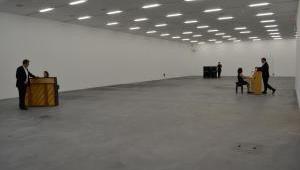
The disused brewery between Limmatplatz and Escherwyssplatz has been used by the art scene since the mid-1990s. This had to move out in the meantime during the reconstruction and now returns with flying colors. This coming Sunday and the following week, the Migros Museum für Gegenwartskunst, which has been expanded over two floors, will celebrate its reopening with various performances. On Sunday, for example, from 11 a.m. to 5 p.m., there will be "To the Music" by Ragnar Kjartansson.

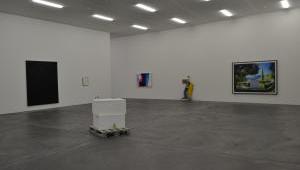
In the equally massively expanded Kunsthalle Zürich, there will be a preview exhibition from June 10 to 17. The numerous private galleries, such as Hauser & Wirth, Bob van Orsouw or Freymond-Guth Fine Arts, are also partly already open for a first look. Afterwards, the Löwenbräukunst will be closed for a short time so that everything can finally be put in its proper place for the grand opening on August 21.

Andreas Panzeri

DSC_0176_0_300x170
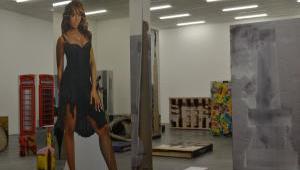
Performance in the new Migros Museum for
Contemporary Art.

DSC_0036_300x170
DSC_0068_300x170
DSC_0052_300x170
DSC_0029_300x170
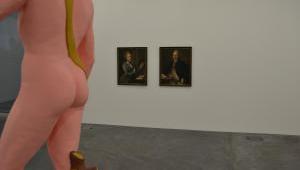
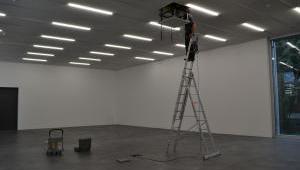
Impressions on the day of the preview in the
Art Gallery.


get_footer();