Media Focus Trend Report: "Zalando Virus

The market research firm Media Focus regularly publishes a trend report on developments in search engine marketing. This month’s report includes a special analysis titled «The Zalando Virus.».

The Trend Report shows how budget spending on search engine advertising is developing by industry and which industries are affected by brand bidding and ad hijacking to what extent. The Trend Report is supplemented by a special analysis, each of which examines a current topic in the context of SEA and SEO. This month with the special analysis: "Zalando virus".

Read the report in PDF format!

FBM Communications: New Vice Managing Director

Remo Burkart will take over the role of Vice Managing Director of FBM Communications from September.

Originally trained as a banker, he has been with the Zurich agency for a year and has been responsible for numerous client mandates. He trained at the Swiss Hotel Management School in Lucerne and studied business administration at Lucerne University of Applied Sciences and Arts, specializing in communication and marketing. "As Vice Managing Director, I am taking on additional tasks alongside the daily business - a challenge that fascinates and excites me," Remo Burkart explains in a press release.
 

Valencia: Coop wine magazines with a new look

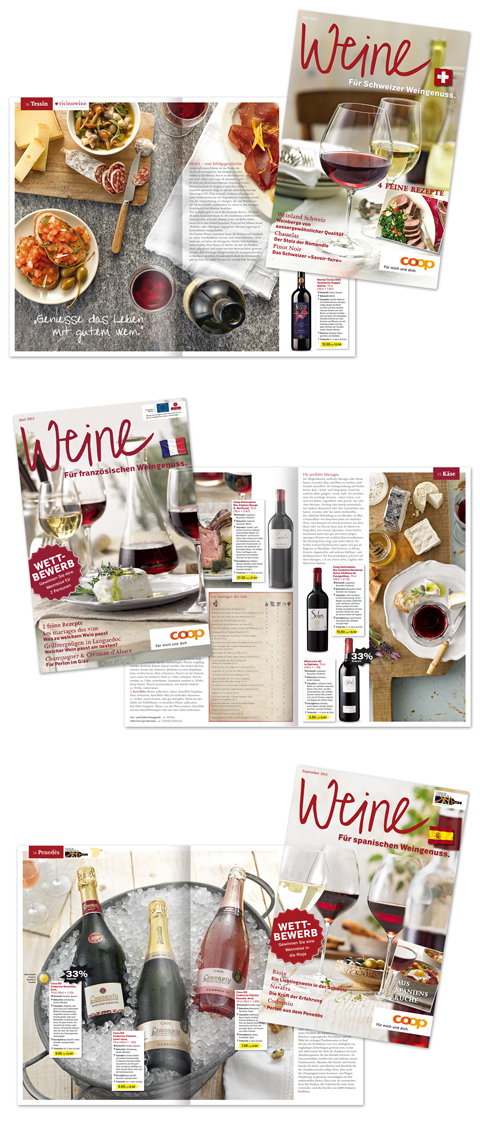
Valencia Kommunikation has been conceptualizing and designing the Coop wine magazines for years. Now, the agency has revamped the layout of the Coop Zeitung supplement.

The magazines realized annually by Coop include the three wine magazines Switzerland, France and Spain. Two of the three issues have already been published, the wine magazine Spain will appear on Tuesday, September 11, 2012 as a supplement to the Coop newspaper. The new format and the revised layout are striking. A generous picture world alternates with editorial articles, recipes as well as special and normal price offers, according to a press release.

Responsible at Coop: Philipp Schenker (Head of CCM Staple Foods/Beverages), Thomas Schwetje (Head of Marketing/Services), Sylvia Berger (Category Manager Wines/Foam Wines), Sacha Zuberbühler (Head of Advertising), Maryline Hermann (Project Manager Advertising). Responsible at Valencia Communication: Marco Rosenberg (Head of Consulting), Claudia Ferrari, Daniela Fernández (Consulting), Tommy Schilling (Creative Director), Anett Oldenburg (Art Director), Guillermo Garcia, Paul Imhof (Copywriter), Marco Fritz, Özge Altin (Desktop).
Photo: Martin Graf.

WEINMAGANZINE
 

Wemf: Free Newspapers Top, Reading Behavior Stable

The new Wemf study shows: Free newspapers remain the most widely read print titles in the daily press in German-speaking Switzerland, while titles in Latin-speaking Switzerland are losing ground. The reading behavior of the Swiss is stable.

As the Wemf study Mach Basic 2012-2 published on Tuesday, September 11, 2012 shows, the new digital media do not appear to be displacing print titles, according to a statement. Over the years, the readership figures for newspapers and magazines remain stable. 89.3 percent of Swiss people over the age of 14 regularly read at least one of the newspapers surveyed in the study, and 89.0 percent read a magazine (see table).

wemf_1

Difference frequent and infrequent readers

The average respondent said they regularly read eight different titles of the 394 newspapers and magazines surveyed. This value has remained stable over the last 10 years. It can be seen that people who regularly read at least 13 print titles often have an above-average average school education. This group is increasingly female and generally has a higher household income than the group that reads a maximum of three titles and the majority of whom have only completed compulsory schooling. 

Free newspapers continue to lead the field

The free commuter newspaper 20 Minuten continues to lead the list of the most widely read German-language Swiss dailies by a wide margin and extended its lead (1.4 million/+21'000). The paid edition of Blick again had to concede second place to the free newspaper Blick am Abend. In the last survey, Blick was still just ahead, but this time it suffered the greatest loss of readers of all daily newspapers (-19'000). Both titles have a readership that is less than half that of 20 Minuten. The Tages-Anzeiger (514'000/+6000), the Zurich regional newspapers (251'000/+4000) and the Basler Zeitung (163'000/+2000) saw increases. While the NZZ (283'000/-5000) and the Neue Luzerner Zeitung (258'000/-11'000) suffered losses, the Südostschweiz newspaper maintained its readership at the level of the last survey (237'000). 

Sonntags Blick leads, NZZ am Sonntag makes gains

Sonntags Blick remains the most popular Sunday press title in German-speaking Switzerland (805,000/+7000). By contrast, the strong growth in readership of NZZ am Sonntag is striking: the title increased its readership by 33,000 to 529,000, thus closing the gap on the second-place Sonntags Zeitung, which recorded a decline in readership (-6,000). 

Readership growth in consumer magazines

The list of Swiss-German magazines and journals is still dominated by the publications of the major distributors Coop and Migros: The Coop Zeitung (2.7 million/+55'000) can extend its lead even more than the Migros magazine (2.4 million/+30'000). The two free magazines are followed by the paid consumer magazines Beobachter (1.0 million/+24'000) and K-Tipp (994,000/+14'000), which also made strong gains. Other winners in German-speaking Switzerland were Schweizer Familie (732'000/+8000) and Weltwoche (314,000/+10'000). Also gaining readers were Das Magazin (769'000/+3000), NZZ Folio (651'000/+1000) and Gesundheitstipp (610'000/+4000). By contrast, titles such as Geo, Schweizer Illustrierte, Drogistenstern, Annabelle and Automobil Revue lost up to 14'000 readers.

Latin Switzerland: Readership decline

In French-speaking Switzerland and Ticino, readership losses predominated. Only 20 Minutes (507,000/+33'000) and La Liberté (98,000/+4000) increased their readership in French-speaking Switzerland. According to the SDA news agency, most other titles lost between 16'000 and 1000 readers. The Ticino press products are also confronted with a decline in readership. 

The following Table shows the readership figures for selected newspapers and magazines compared with the last Mach Basic study. 2012-2: April 2011 to March 2012, 2012-1: October 2010 to September 2011.


Daily newspapers (German-speaking Switzerland) 2012-2 2012-1 +/-
20 minutes 1'397'000 1'376'000 +21'000
Evening view 633'000 629'000 +4000
View 613'000 632'000 -19'000
Tages-Anzeiger 514'000 508'000 +6000
Berner Z. & The Confederation 364'000 353'000 nvgl
Aargauer Z. (common edition) 359'000 384'000 nvgl
New Zurich Newspaper 283'000 288'000 -5000
New Lucerne Newspaper 258'000 269'000 -11'000 
St. Galler Tagblatt      250'000 261'000 nvgl
Zurich regional newspapers 251'000 247'000 +4000
Südostschweiz 237'000 237'000 -
Basel Newspaper 163'000 161'000 +2000
       
Sonntagspresse (German-speaking Switzerland):      
Sunday view 805'000 798'000 +7000
Sunday newspaper 738'000 744'000 -6000
NZZ on Sunday 529'000 496'000 +33'000 
Sunday 331'000 332'000 -1000
Central Switzerland on Sunday 182'000 179'000 +3000
Südostschweiz am Sonntag         107'000 108'000 -1000
       
Magazines & Periodicals      
Coop Newspaper 2'679'000 2'624'000 +55'000
Migros Magazine 2'384'000 2'354'000 +30'000
Observer 1'011'000 987'000 +24'000
K-Tip 994'000 980'000 +14'000
Swiss Illustrated 878'000 886'000 -8000
Druggist star 800'000 814'000 -14'000
Geo 774'000 775'000 -1000
The magazine 769'000 766'000 +3000
Swiss family 732'000 724'000 +8000
NZZ Folio 651'000 650'000 +1000
Health tip 610'000 606'000 +4000
Tele 508'000 519'000 -11'000
Lucky mail 414'000 426'000 -12'000
Annabelle 315'000 318'000 -3000
Weltwoche 314'000 304'000 +10'000 
Automobile Revue 169'000 177'000 -8000
The Weekly (Woz) 105'000 108'000 -3000
       
Business Newspapers      
Balance 196'000 181'000 +15'000
Handelszeitung 113'000 116'000 -3000
Finance and economy 100'000 96'000 +4000
       
Daily newspapers (French-speaking Switzerland)      
20 Minutes 507'000 474'000 +33'000 
Le Matin 245'000 260'000 -15'000 
24 Heures 233'000 241'000 -8000
La Tribune de Genève 136'000 136'000 -
Le Nouvelliste 117'000 120'000 -3000
Le Temps 115'000 116'000 -1000
La Liberté 98'000 94'000 +4000
L'Express 54'000 59'000 -5000
       
Sunday newspapers in French-speaking Switzerland      
Le Matin Dimanche 502'000 518'000 -16'000
       
Ticino daily newspapers:      
Corriere del Ticino 122'000 129'000 -7000
La Regione Ticino 107'000 112'000 -5000
Giornale del Popolo 49'000 50'000 -1000

nvgl: title not comparable with Mach Basic 2012-1 for methodological reasons

Table: SDA

Angelink: Refreshing guerrilla action in Zurich

To launch the new Profresh candy brand from Fisherman’s Friend, the agency created a water-spouting advertising poster that, in a fun and playful way, delivers on the ad’s promise: «Longlasting Freshness.»

For once, the refreshing advertising message should not only be read, but felt, according to a press release. To this end, Angelink had nozzles installed in the poster frame, which suddenly sprayed unsuspecting passers-by with water as soon as they strolled past the poster site. The reactions of the stunned "advertising victims" and amused observers were captured on hidden cameras and uploaded to YouTube in a viral video.

Responsible at Dabso: Jean-Yves Cuendet (idea, concept). Responsible at Angelink: Markus Gabriel. Production: Guave Studios (Sergio Herencias).


http://www.youtube.com/watch?v=cXc7uwBD0E0

Susanne Borer launches new photo representation

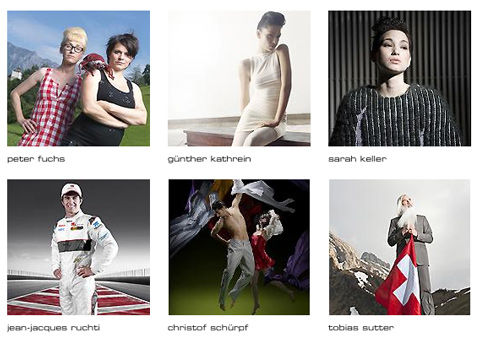
At the newly founded agency Borerfotografen, Susanne Borer represents six photographers. Borerfotografen.com is intended to serve as an interface between photographers, companies, and advertising agencies.

Launched by art buyer Susanne Borer, the agency aims to combine many years of experience in image procurement with the creative process of the individual photographers, according to a press release. Peter Fuchs, Günther Kathrein, Sarah Keller, Jean-Jacques Ruchti, Christof Schürpf and Tobias Sutter are now represented by Borer photographers.

bohrerfotografen-gr
Image: Screenshot Borerfotografen.com


Mainland: Image campaign for Waldheim Foundation

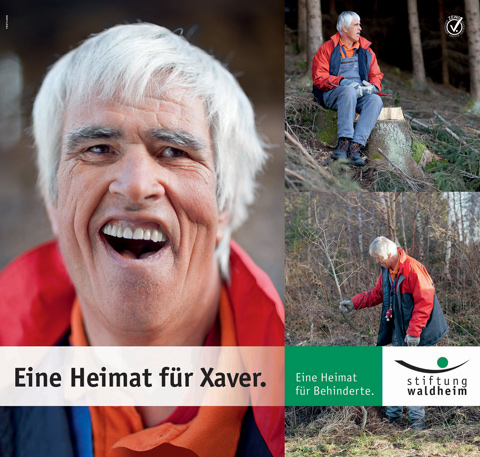
The Festland agency turns residents into ambassadors for the Waldheim Foundation.

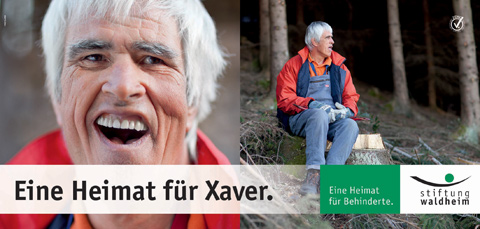
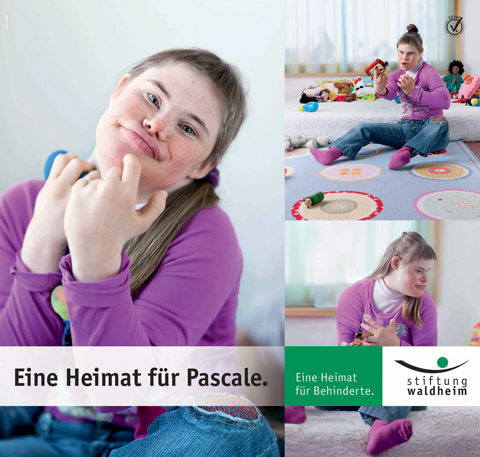
The Waldheim Foundation offers places in residential homes to people with severe mental, physical and psychological disabilities. As the agency writes in a press release, the foundation invests in its own publicity every year with posters.

For the current image campaign, Festland focuses on people with disabilities: during leisure activities, at work or simply while lingering. The portraits photographed by Désirée Good show Xaver, Pascale and Edith - representing all those who find a home at the Waldheim Foundation. The posters can be seen from Altstätten to Zurich in the formats F24, F12 and F200.

Responsible at the Waldheim Foundation: Dorji Tsering (Managing Director), Jürgen Schöbel (Donations), Carmen Angehrn (Marketing). Responsible at Mainland: Othmar Geser (Creative Director), Romea Williams (Consultant).

F200_Xaver
F200_Pascale
F200_Edith
F12_Pascale
F12_Xaver
F24_Pascale
F24_Xaver


Blu: Campaign for the protection of nature and heritage in Uri

The Uri Canton Nature and Heritage Conservation Agency is raising awareness of its work through a poster campaign. The agency Blu Design and Communication is responsible for the campaign's design and implementation.

From September 9 to October 5, 2012, mobile posters will be placed at twenty locations in the canton of Uri. They are located next to historic buildings or in landscapes and habitats that are maintained and cared for by the cantonal nature and heritage protection authorities. The posters have a typographic design with a question that relates to the respective location, for example: "How is it that William Tell emerges so vividly from the frescoes here?". Answers can be found on the website How does it work.chwhich provides further information and offers opportunities for interaction, including in the form of a vote or competition. The aim of the campaign is to raise awareness of nature and heritage protection issues among the population of Uri. As the agency writes in a press release, the modern, typographic design and the unusual poster questions are also intended to appeal to younger target groups in particular and arouse their interest in natural and cultural values.

Responsible at the canton of Uri: Georges Eich, Eduard Müller (Department of Justice of the Canton of Uri, Office for the Protection of Nature and Cultural Heritage). Responsible at Blu Design and Communication: Thomas Meyer (text/concept), Felix Blum, Claudia Denier (graphics), Irene Denzler, Carole Lehmann (consulting).

wiekommtes
nhs_kampagne_f4_plakat
wke01
wke02
nhs_kampagne_f12-3
nhs_kampagne_f12-4
nhs_kampagne_f12-5
nhs_kampagne_f12-6
nhs_kampagne_f12-7
nhs_kampagne_f12-8
nhs_kampagne_f12-9
nhs_kampagne_f12-10
 

Miraculous increase in readers at the Basler Zeitung

Despite all expectations, the Basler Zeitung shows more readers than before, according to Mach Basic 2012-2. However, this increase is not real, but merely the result of a legal "trick" with which the Baz managers cleverly exploited the Wemf system.

Mach Basic 2012-2, which shows unexpectedly clear developments for some titles, also has a surprise in store that is not significant and therefore hardly noticeable at first: The Basler Zeitung (Baz) now reaches 163,000 readers, an increase of 2,000 readers over the previous year. This gentle growth, which lies within the statistical blur, is so surprising because it indicates an upward trend, when everyone expects a loss in view of the media turbulence on the Rhine bend.

Subscription cancellations after sale to Tettamanti & Co.

As a reminder: In 2010, shortly after the sale of Basler Zeitung Medien (BZM) to Tito Tettamanti and Martin Wagner, BaZ reported 175,000 readers. After Tettamanti and Wagner canceled numerous free subscriptions for retired BZM employees, brought in Christoph Blocher's consulting firm, installed Markus Somm as editor-in-chief, and finally "handed over" BZM to Moritz Suter, there was an initial wave of protests in Basel with subscription cancellations. Accordingly, the Baz's reach fell to 161,000 readers (-8 percent) a year ago. Shortly thereafter, Tettamanti and Blocher officially took the helm again at BZM, which again triggered subscription cancellations. At the same time, the newspaper market in northwestern Switzerland was on the move: Tageswoche was launched, and AZ Medien vigorously expanded Basellandschaftliche Zeitung and Sonntag in Basel. Based on all these events, a further erosion of readership at the Baz would have been only logical. But what a miracle: it actually increased by 1.2 percent.

Cleverly threaded

The Wemf documents show how this was possible: According to them, the Baz does not report its new Sunday edition as an independent title like other publishers, but only considers it as a seventh edition. This has consequences for the calculation of the number of readers per issue.

But first things first: The survey period for Mach Basic 2012-2 lasted from April 6, 2011 to March 25, 2012. In the last quarter of this period, specifically on January 8, 2012, the Baz launched its Sunday edition, which it distributed free of charge with a circulation of 240,000 copies for three months, i.e. until the end of the survey. Thanks to this huge initial circulation, the Baz generated an estimated 480,000 readers each Sunday (two readers per copy), around three times more than with the weekday edition.

Because the Baz now considers the Sunday edition to be only the seventh issue, Wemf adds the many Sunday readers to the weekday readers, which pushes the average per issue up. In other words, the Sunday editions could even slightly overcompensate for the weekday losses.

But how much weekday loss could the Sunday editions absorb? Model calculations by Werbewoche show: 480,000 readers per Sunday edition can compensate for a loss of up to 19,000 readers per weekday edition. In this case, the Baz without a Sunday edition would still have 142,000 readers per edition (-12 percent). But even if one calculates more cautiously and assumes only one reader per Sunday edition, there would still be a loss of about 9,000 readers per edition during the week (-6 percent). So the truth is probably somewhere in between.

Downward trend, but rather no significant loss

To be fair, the current loss is probably closer to 9000 readers. Several indications point to this. One of them is that the Sunday edition of the Baz, although distributed free of charge, met with relatively little response from the population of northwestern Switzerland and was rejected in many places. And in places where it was distributed, it was left lying around in large numbers. It is also clear that the circulation of the Sunday edition, to which subscribers subscribed, dropped significantly after the expiration of the three-month promotional period and was lower than the circulation of the weekday Baz. In short, the Sunday edition was probably more likely to get one reader per copy in the start-up phase than two, which reduces its compensation potential in the Wemf study. Thus, the loss of the weekday Baz is unlikely to have been significant, but contrary to what the Wemf figures lead us to believe, a further downward movement can be assumed.

Wemf confirms loss

It should also be noted that the WW model calculation contains several unknown variables and is therefore based on various assumptions. For a more precise calculation, additional information from Wemf would be necessary, but is not available there. Roland Gauglhofer, responsible for Mach Basic, merely confirms the basic assumption: "Without a Sunday edition, a loss of readers could be expected for the weekday Baz," he says. Gauglhofer goes on to confirm that the Baz is the only Swiss title to offset its Sunday readers against its weekday reach. However, he says this is perfectly in line with the rules of the Mach study.

Just a "pleasant side effect"?

And what do they say at Baz? CEO Roland Steffen, who has since stepped down, denies having "tricked" in any way. It was never the intention to push up the weekday reach of the Baz by means of the Sunday edition and to present it better than it is. The fact that it has now turned out this way "is at best a pleasant side effect," says Steffen. Incidentally, the Sunday edition had always been referred to as the seventh edition of the Basler Zeitung, never as an independent Sunday title. "Moreover, we only launched the Sunday edition because of the attack by AZ Medien and because it seemed to us to be the last reasonably realistic growth opportunity for the Baz."

The "trick" is useful for a year

What reach figures can we expect from the Baz in the future? None in the short term, because Wemf will not be publishing any readership figures for a while next spring due to the switch to the new Mach 3 reach study. This means that the Baz can operate with the current figure for a year. Wemf will not publish the new Mach 3 reach figures until fall 2013, but they will then no longer be comparable with today's figures due to the currency break. So BZM is doubly lucky. Or it chose a super timing for its "trick". Only the circulation figures, which will be published in a few weeks, could still cloud the picture somewhat, since they provide more information about the real situation of the Baz and its Sunday edition.

By the way: Since July 1, 2012, BZM has automatically delivered the Sunday edition to all Baz subscribers and since then also charges more for the subscription. Originally, you could subscribe to the Sunday edition separately (or do without it). The new compulsory subscription will probably result in a few more cancellations at the end of the year, but in the longer term it will help the Sunday edition to achieve a more stable circulation.

Markus Knöpfli
 

NZZ optimizes use of space at Zurich site

With a view to optimizing the use of space at its Zurich location, NZZ is reorganizing its publishing, publishing and management activities by the end of 2014.

In the future, the editorial offices of Neue Zürcher Zeitung and NZZ am Sonntag will work at the NZZ headquarters at Falkenstrasse 11, while the publishing house and NZZ Media as well as IT will work at Seehofstrasse 16, according to a statement. Group management and the Executive Board will be located in the building at Falkenstrasse 12. The premises previously rented by NZZ am Sonntag at Mühlebachstrasse 52/54 will be given up, and the building, which belongs to the Pension Foundation, is to be sold.

The spatial consolidation in content, publishing and service buildings will shorten information paths and optimize existing processes and organizations. The move is scheduled for completion by the end of 2014.

Pool position also takes over communication from Lara Gut

Pool Position Switzerland is now responsible for managing communications for ski racer Lara Gut.

The Zurich management agency from Infront Ringier is thus expanding its services, which Pool position for Lara Gut takes over. Cyclist Fabian Cancellara and footballer Yann Sommer are already under contract with Pool Position.

Teaser image: Screenshot Pool-position.ch

Last but not least: I see starry skies

One website makes it possible: Finally, you can write with galaxies! Try it out for yourself.

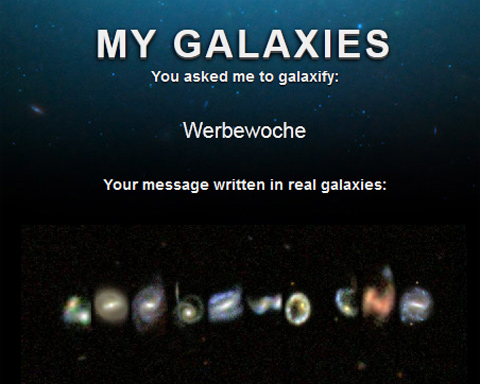
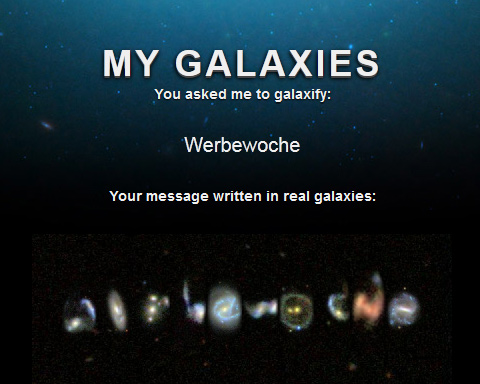
The gadget magazine Gizmodo.com has today added to the website Writing.galaxyzoo.org has attracted attention. Since 2007, more than 250,000 users have been helping to classify galaxies. Steven Bamford, one of the team members, has now used the huge image database to create a font. Each visitor can type in words, which are displayed seconds later as a galaxy salad. Sometimes legible, sometimes less so. Failed attempts (image 1) can be repeated at the touch of a button until they fit (image 2).

mygalaxies2
mygalaxies3
get_footer();