Trend conference: AI and understanding will shape the specialist media

More than 70 people from the Swiss professional publishing industry gathered on Tuesday at this year's Trend Conference on Professional and Specialized Media at the Folium Sihlcity in Zurich.

The retiring VSM President Stefan Wabel (center) in conversation with Matthias Zehnder (left) and Johannes Hapig from m&k. (Pictures: zVg.)

VSM Managing Director Stefan Wabel, who is stepping down at the end of the year, welcomed the attendees with an overview of the current political discussions that will have a decisive impact on the future of the entire media industry. In addition to the urgent expansion of indirect press funding, the focus was on artificial intelligence. According to Wabel, the applications do not comply with copyright law and jeopardize democracy-relevant journalism. Better and functioning protection of journalistic content on the internet is needed.

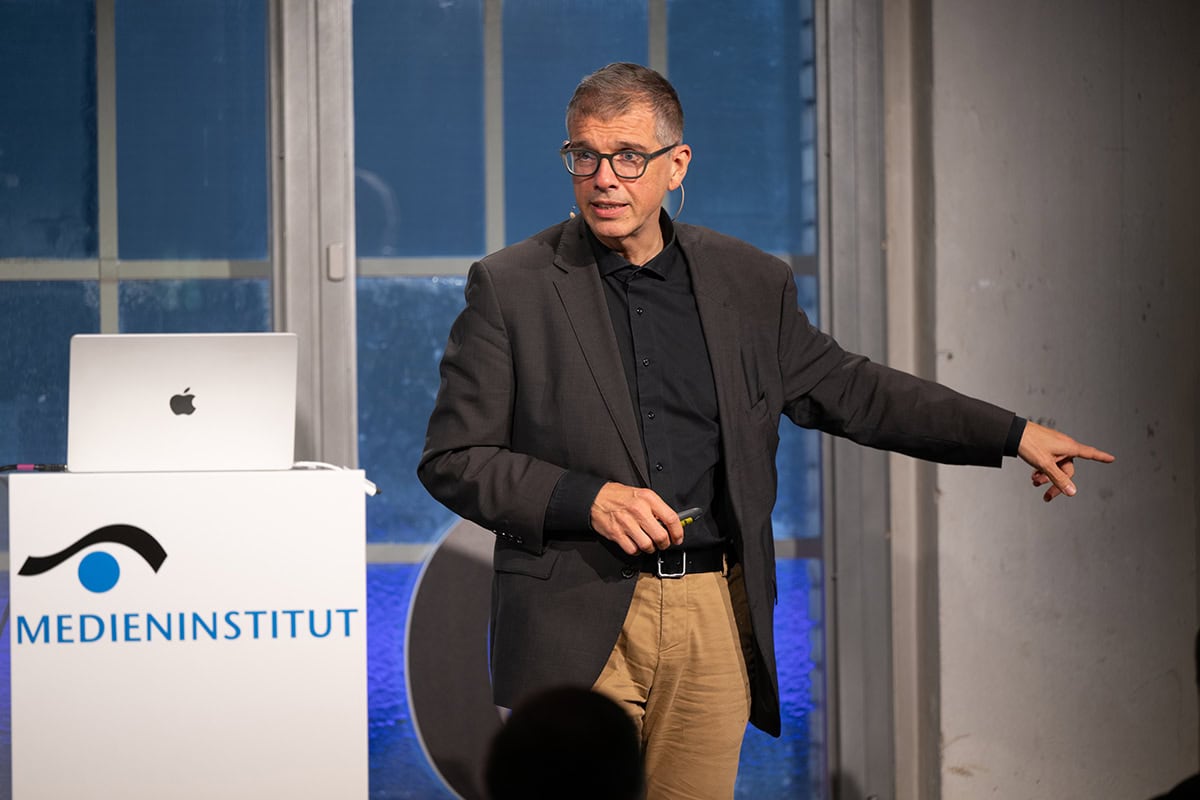
Publicist and publisher Matthias Zehnder picked up on the topic of AI and used very vivid and intuitive examples to show why people are always needed when using artificial intelligence. For example, AI works according to probability, but humans are needed to represent the truth. However, artificial and human intelligence complement each other well: humans know the meaning of things, while AI can describe things eloquently. It takes a lot of expertise to be able to use AI responsibly in the media world. Zehnder also weighs up the risks heavily: AI could mean the death of the media. The key to preventing this scenario from becoming reality is trust. The relationship with users and identification with the media brands will be the decisive success factor for the media.
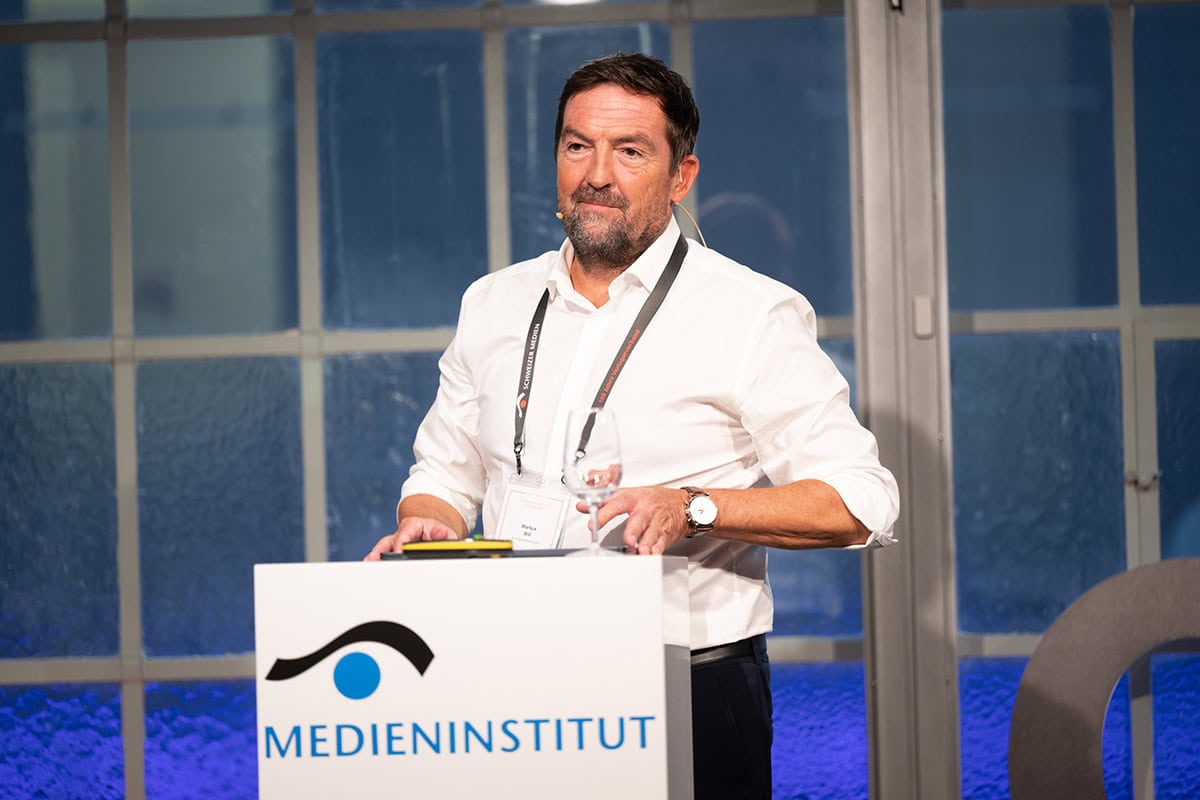
Markus Will from Rosenqvist Media advises companies on how they can use AI to optimize the customer experience. AI applications can be implemented in a highly customized way and give specialist publishers in particular the opportunity to address readers in a specialized way. Will sees a clear strategic benefit. He used very specific examples to show how AI is being used in the healthcare sector, for example.
Alongside the relaunch and expansion of m&k Co-editor-in-chief Johannes Hapig showed how the company proceeded strategically. The process began with harsh criticism of the magazine from readers. As a result, an art director was hired, new topics were set ("more personalities!") and a completely new aesthetic was developed. Infotainment and specialist topics are mixed and - according to Hapig - the team has fun doing it! The most important takeaway from his very practical presentation, however, is loosely based on Steve Jobs and Henry Ford: "The customer doesn't know what he wants until you show it to him.

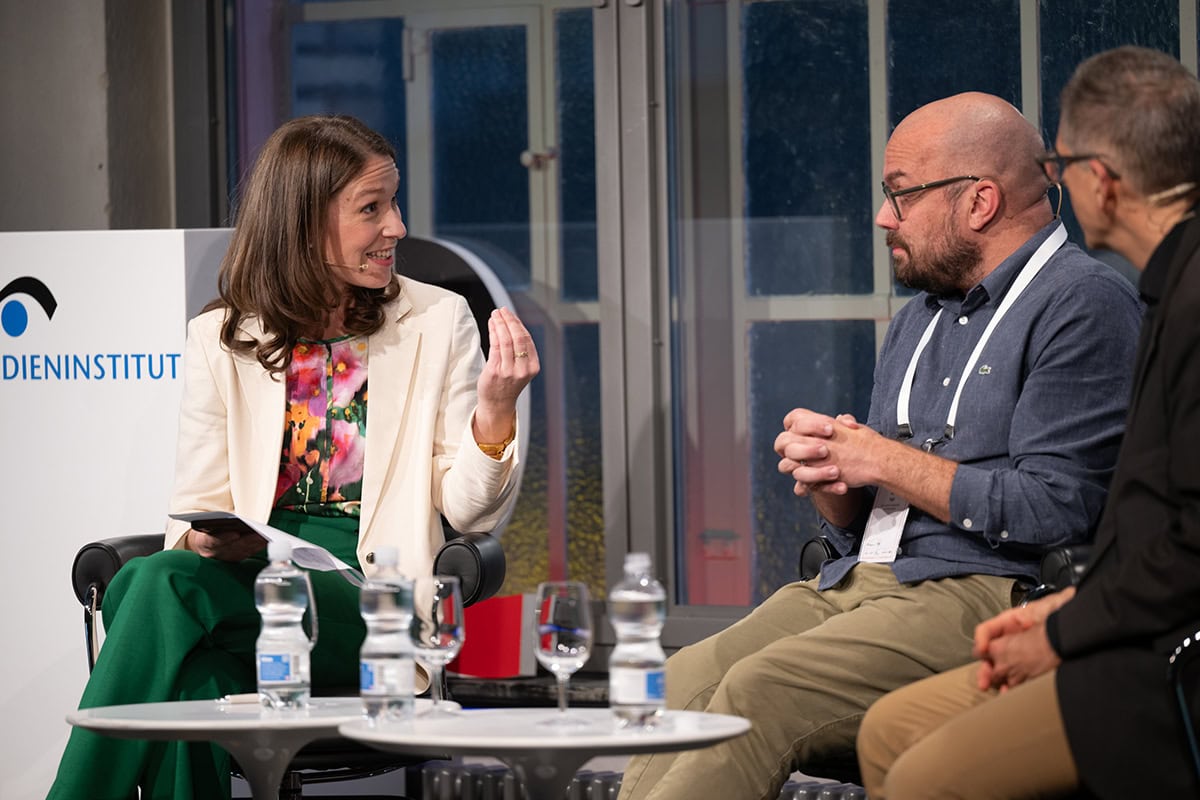
Finally, a panel also addressed the issue of strategy for specialist publishers. Edith Hollenstein, business editor at the Tages-Anzeiger, moderated the discussion with Reto Vogt, Head of Digital Studies at Maz, and Matthias Zehnder, both of whom "don't mince their words". Vogt has spent the last three years running the online magazine InsideIT and quadrupled the number of users in the process. However, the understanding of the benefits of specialist magazines for advertising customers has decreased so much that this could hardly be monetized. Technology companies in particular rely on direct leads instead of clean branding. Zehnder sees the problem in the lack of a sense of responsibility among digital players: these companies in particular should also make a contribution to the media ecosystem and take on more of a social "enabler" role.
Finally, Maz lecturer Sandro Bucher answered the question of why specialist media should use social media. Social media has become the most important source of news for young people, mostly consumed via smartphone. Facebook is becoming less and less relevant; the focus should be on Whatsapp, LinkedIn, Instagram and Tiktok. Bucher explained how the platforms are used with ten commandments ranging from the identification of a niche target group to interaction and ongoing analysis.

The concluding drinks reception offered participants the opportunity to continue the day's discussions in a relaxed atmosphere and make new contacts. The trend conference showed that a combination of technological innovation - namely AI applications - and a deep understanding of the needs of the target groups will have a lasting impact on the specialist publishing industry. Those who are open to change and at the same time focus on the core values of the industry should be able to look to the challenging future with optimism.

Swiss population neglects cyber protection

According to the 2024 Cyber Study, 24,000 Swiss SMEs have fallen victim to a cyberattack over the past three years. The public perceives cybercrime as a threat—but neglects to take protective measures.

(Iconic image: Unsplash.com)

In the past three years, one in twenty people in Switzerland has been the victim of a cyberattack. This is revealed in the latest edition of the Cyber Study 2024, which sheds light on the digital security awareness of SMEs, the population and IT service providers in Switzerland.

The study was commissioned by Digitalswitzerland together with Mobiliar, the Swiss Digital Security Alliance (ADSS), the University of Applied Sciences Northwestern Switzerland (FHNW), the Swiss Academy of Engineering Sciences (SATW) and the Swiss Internet Security Alliance (SISA). It was carried out by YouGov. The organizations presented the results of the study in a video conference.

The risk assessment of SMEs, IT service providers and private individuals. (Image: zVg.)

Despite the growing threat of cybercrime, many of those surveyed take insufficient protective measures, as the study shows. Four percent of the SMEs surveyed had fallen victim to a cyberattack in the past three years. This equates to around 24,000 companies in Switzerland. Of these companies, 73 percent suffered considerable financial damage. Nevertheless, more than half of SMEs consider the risk of a serious attack to be low. Among IT service providers, this figure is 68% of those surveyed.

Lack of emergency plans and safety concepts

It is worrying that four out of ten companies do not have an emergency plan in the event of a serious cyberattack. In addition, many SMEs are hesitant when it comes to using digital tools such as password managers or biometrics. There is also a need to catch up when it comes to implementing security concepts and staff training.

SMEs often lack an idea of the skills attackers have and what their motives are, explained Simon Seebeck, Head of the Cyber Risk Competence Center at Mobiliar, during the press conference. "There is a lack of understanding of what it can mean to find yourself in the clutches of cyber criminals and what damage you can suffer." This is because the topic is complex and difficult to grasp.

How do companies protect themselves against this? According to Seebeck, there is still a greater need for action when it comes to organizational measures than technical ones. These are often outsourced to an IT service provider. Andreas Kaelin, co-founder and Managing Director of ADSS, addressed this topic.

"Less than half of SMEs can confirm that their IT service providers are cyber-certified. So in principle, more than half of SMEs trust their IT service providers blindly," said Kaelin. He then went back to promoting the Cyberseal. This is a seal of approval from the ADSS that demonstrates expertise in the area of cybersecurity. In contrast to the ISO 27001 certificate, for example, it would focus on technical and less on organizational aspects.

The advantages of cybersealing according to Kaelin. (Image: zVg.)

False sense of security among private individuals

Private individuals often rate their cyber security higher than it actually is. Five percent of respondents have been affected by a cyberattack in the past three years. However, the majority believe that they have a good to very good knowledge of how to protect themselves against cyber attacks. However, according to the study, this assessment is at odds with the actual behavior of the respondents. For example, over a third of them would use the same password for different services and wait with updates.

"We all risk falling victim to a cyber attack every day," said Seebeck. "The risk of being damaged by a fire or a weather risk is much lower." Despite this significant threat, respondents felt fairly safe. "According to the Mobiliar Digital Barometer, however, around 30 percent of the population lack basic digital skills, which means they lack the basis for safe behavior in the digital space," said Seebeck.

Awareness-raising and training are crucial to improving cyber security. 62 percent of those surveyed stated that they were interested in improving their skills. "It remains to be seen whether this interest will be actively implemented," said Seebeck. However, there would be no lack of information formats. "The gap between the threat situation and ignorance regarding cyber threats is problematic."

When it comes to online shopping, 72% of respondents rarely or never worry. 13 percent of those surveyed stated that they had actually experienced paying for something they did not receive in the past five years. Almost two thirds of respondents would like to be better informed about how they can protect themselves online. However, there is a lack of willingness or ability to take action, they say.

AI on both sides

During the press conference, the companies also addressed the topic of artificial intelligence. This is used on both sides of the fronts. "AI is used by cyber criminals to scale attacks. This means that the attackers' business case also works for attacks on small targets and they earn money," said Seebeck.

Nicole Wettstein, Head of Tech Intelligence and Cybersecurity Program Manager at SATW and Vice President of ITsec4KMU, showed the other side of AI. "IT service providers in particular, but also parts of the population, have used AI so far, at least on a trial basis," she said. Among IT service providers, the proportion is just under 70 percent, compared to just under 40 percent of the population. SMEs are much more reticent, with a share of 20 percent.

According to Wettstein, SMEs and IT service providers use AI primarily for text generation, information procurement and software development. However, AI is also an important tool for cyber security. "It helps to identify threats, prevent them and respond to them quickly. However, this tool is still only being used by a minority of IT service providers and SMEs." Just 6 percent of SMEs would use AI in this way. "There is therefore still room for improvement in the use of AI to improve cyber security." (Coen Kaat/NetzKI Bot)

The use of AI according to the study. (Image: zVg.)

The study was conducted throughout Switzerland from July 4 to August 5, 2024. The SME sample comprised 526 interviews, the population sample 1247 interviews and the sample of IT service providers 401 interviews.

This article first appeared in Netzwoche.

Tamedia appoints head of all titles in French-speaking Switzerland

Tamedia, a media company belonging to the TX Group, is moving forward with the repositioning of its media outlets in French-speaking Switzerland under a new CEO and a new editor-in-chief. Starting in 2025, Chantal de Senger will lead all French-speaking Switzerland titles as head and brand manager. Eric Lecluyse will become editor-in-chief of 24 Heures and the French-speaking Switzerland editorial team.

(Image: Raisa Durandi)

The newly created position of brand manager and top management as well as the appointment of a new editor-in-chief are intended to realignment announced in August and digitization of Tamedia's newspapers in French-speaking Switzerland, as the publisher announced on Wednesday.

The editorial offices of 24 Heures, Tribune de Genève, Le Matin Dimanche and Femina will therefore be merged into one editorial team. This will be headed by Lecluyse, who is also editor-in-chief of 24 Heures will be. Emmanuel Borloz will be in charge of the digital desk for the distribution of content.

Lecluyse moves from the Neuchâtel online platform Arcinfo to Tamedia. He is editor-in-chief there. He also worked as deputy editor-in-chief at the French magazine L'Express.

Responsible for the development

As brand manager, Chantal de Senger will be responsible for the development of the French-speaking Swiss titles, as Tamedia also announced. She will also be responsible for their finances and strategy. As Head of Western Switzerland, she will report directly to Tamedia CEO Jessica Peppel-Schulz.

De Senger has reportedly worked in journalism for over 20 years. She worked on the editorial team of the French-speaking Swiss business magazine Bilan and currently for the luxury magazine Prestige.

Departures and reshuffles

Claude Ansermoz and Frédéric Julliard, the former editors-in-chief of 24 Heures and Tribune de Genèveare leaving the company. Ansermoz and Tamedia are reportedly parting ways by mutual agreement, with Juillard accepting a new challenge outside the publishing house. Juillard's previous deputy, Olivier Bot, will fill the position of editor-in-chief in Geneva ad interim.

At Le Matin Dimanche Patrick Monay becomes editor-in-chief. The editorial team of Bilan is now headed by the former vice president Frédéric Thomasset. Géraldine Savary retains the journalistic management of Femina. All changes come into force on January 1, 2025.

In a joint communiqué this evening, the editorial teams of Tamedia's titles in French-speaking Switzerland expressed their "shock" at the departure of Ansermoz and Juillard, "two personalities who are committed to quality journalism". They also expressed concern about the new organization chart, which contains "no promise for more efficiency or for the maintenance of quality journalism". (SDA/swi)

DeepL introduces live translations

DeepL has focused on translating written texts so far. Now, a solution for spoken language is also intended to help the startup hold its own against the competition.

(Iconic image: Unsplash.com)

The Cologne-based AI start-up DeepL has presented a system for translating spoken language in real time. "DeepL Voice" will be available in two versions, announced the company's CEO and founder, Jaroslaw Kutylowski, at the company event "DeepL Dialogues" in Berlin.

On the one hand, the system will be able to ensure that translation can take place live in video conferences. This would allow virtual meetings in applications such as Zoom to be held in several languages. Secondly, there will be an app for mobile devices that can be used to translate face-to-face conversations in real time.

Live translations work differently

DeepL is already a leader in the translation of written content, said Kutylowski. However, the live translation of spoken content is a completely different matter. "Sentences are sometimes not completed, pronunciation is often unclear and the latency (delay) must not be too high." These limitations could lead to mistranslations and a poor user experience.

"These are the same challenges that can lead to misunderstandings in face-to-face interactions," said Kutylowski. The "DeepL Voice" solution is specifically designed for spoken language and helps companies to ensure smooth communication in multiple languages and thus overcome language barriers, explained Kutylowski.

Great competition

DeepL has to hold its own against strong competition. Google, for example, has a large AI solution in its range, Gemini, which also supports real-time translations. Microsoft also offers live translations for its Teams video conferencing application. However, the Cologne-based company has also managed to keep up with Google Translate and other offerings from major US providers in the past.

Following a financing round in May, DeepL is valued at two billion US dollars (1.85 billion euros). Germany's most valuable AI start-up recently expanded its product portfolio to include a writing assistant with artificial intelligence (DeepL Write Pro). In July, DeepL launched a new generation of its language model in order to measurably increase the quality of its machine translations. The company referred to blind tests with language experts, which showed that DeepL translations based on the new "Large Language Model" (LLM) were rated better than the results of systems from large internet companies in the USA. (SDA/swi)

Advertising slump depresses RTL figures

The sluggish German advertising market and a lack of revenue from the production of video content are weighing on sentiment at RTL Group.

RTL Group

The video group no longer expects revenue of 6.6 billion euros for the full year 2024, but now around 6.3 billion euros. In the previous year, RTL generated revenues of around 6.2 billion euros. RTL Group CEO Thomas Rabe also only considers earnings before interest, taxes, depreciation and amortization (EBITDA) adjusted for special effects at the lower end of the range of 700 to 800 million euros to be realistic.

This means that operating profit is likely to fall in the current year. In 2023, the figure was 782 million euros. Revenue already slumped noticeably in the third quarter.

Group-wide sales from continuing operations fell by around 5.5% to 1.3 billion euros. In addition to lower advertising sales, there was a lack of revenue from the production subsidiary Fremantle - since the beginning of the year, the global market has grown significantly slower than previously expected.

The company produces content in the areas of entertainment, drama and film as well as documentaries. The MDax group traditionally does not communicate key earnings figures for the third quarter.

Significant increase in streaming subscriptions

Meanwhile, RTL Group continues to score with its streaming services. At the end of September, it had almost 6.5 million paying subscribers - 22.8% more than in the previous year.

RTL Group is part of the portfolio of the Bertelsmann Group in Gütersloh. Its total consolidated revenues amounted to 13.4 billion euros after nine months. In the same period last year, the figure was 14.6 billion euros.

Bertelsmann attributes the decline to the sale of the service provider Majorel. Organic growth improved by 3.1 percent. Bertelsmann highlighted its book publishing divisions Penguin Random House, the music business BMG, the services division Arvato Group, the education business and the investment business.

CFO Rolf Hellermann commented on the outlook for the year: "Due to the positive development in most of our businesses, we expect an improved earnings situation with slightly lower sales expectations." (SDA)

TrueStory manages Swype's social media platforms

Since early 2024, the Zurich-based agency TrueStory has been responsible for the social media strategy for the Meta and TikTok accounts of the telecommunications provider Swype.

The measures include content creation, community management, a visual framework, and monitoring and reporting. In addition, TrueStory designed and produced a VBZ tram branding campaign and a promotional video for Swype.

@swype.ch

#5G : So you can scroll faster than your mother can say 'Ok, bye'📱💨 #gottagofast #swype # Telekom #abo #internet #handy #comedy #switzerland

♬ original sound – Swype

Following an initial phase of strategy development and the creation of a visual framework, TrueStory is now responsible for the monthly planning and implementation of social media content plans. «Our main focus is on conveying Swype’s brand values in a way that’s tailored to each platform—Facebook, Instagram, and TikTok—whether through video, animations, or still images. Especially for TikTok content, we can also draw on young video creators from our team,» explains Tobias Platter, Social Media Project Manager at TrueStory.

«Of course, our marketing efforts are primarily aimed at increasing customer conversions. But that’s not all. Since our main target audience ranges from 25 to 50 years old, it’s important to us to reach them where they are online with content tailored to their needs. Ultimately, our goal is to communicate our values and offerings in a way that resonates with our audience. And looking back on 2024, we can say with satisfaction: It’s working very well,» says Tibor Simon, Head of Swype.


Contact at Swype: Tibor Simon (Head of Swype), Bettina Walder (Marketing & Brand Manager). Responsible at TrueStory: Tobias Platter (Social Media Project Manager), Sofia Blanck, Nishant Dixit, Konstantin Schmidt (Creators).

New management for Compresso

The Zurich-based agency Compresso is moving forward with new leadership and three female managing partners. Fridolin Stauffacher, who previously served as managing partner, will become chairman of the board of directors.

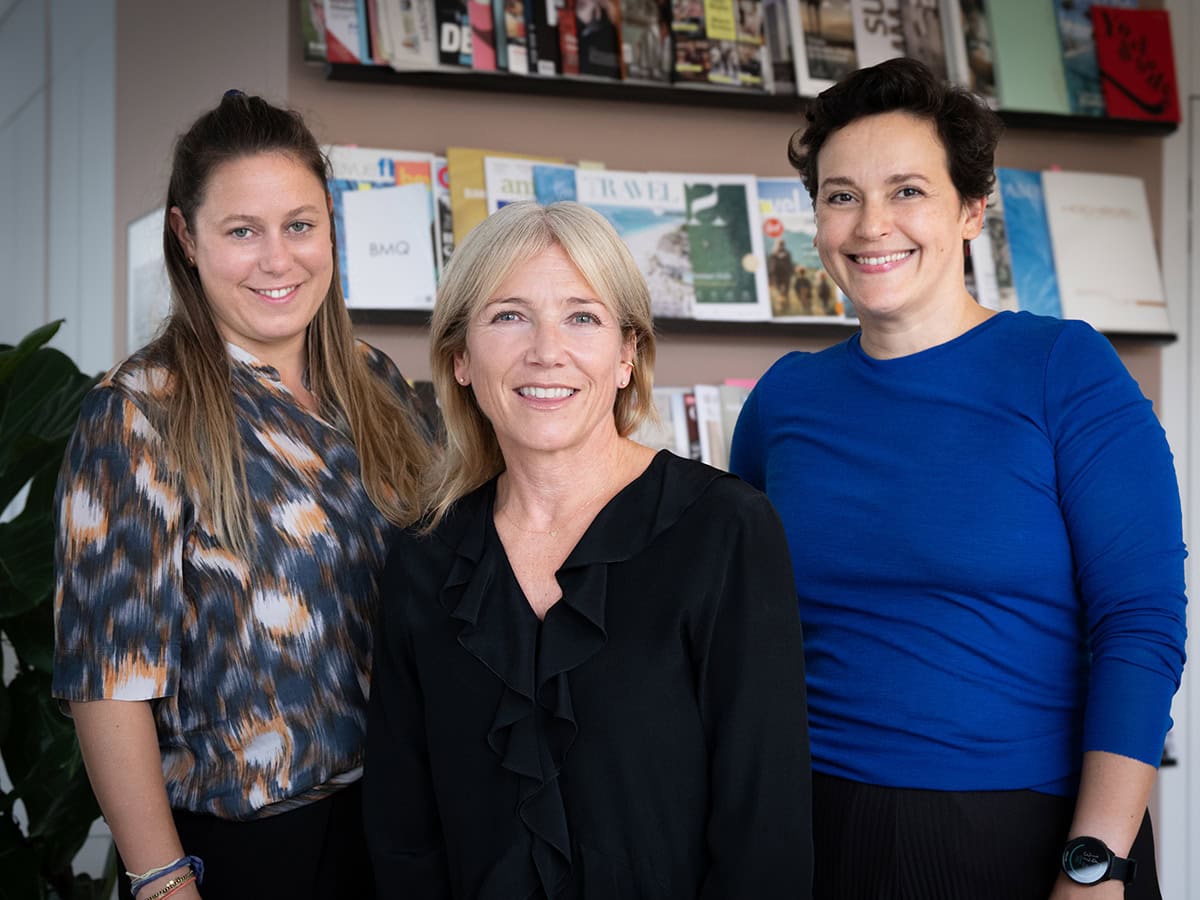
The new Compresso management team (from left to right): Nina Kehl, Suzanne Nievergelt and Sascha Nadtochiy. (Image: zVg.)

The new management team has formulated ambitious goals and wants to be the favorite agency of its clients and all employees. The experienced Managing Partners Nina Kehl, Sascha Nadtochiy and Suzanne Nievergelt are now jointly responsible for operational management.

Each partner is responsible for a management area. Sascha Nadtochiy takes the lead for corporate strategy, development and operations. Nina Kehl is responsible for Compresso's finances and monitoring profitability. Suzanne Nievergelt is responsible for internal and external communications and acts as Compresso spokesperson.

Fridolin Stauffacher is handing over operational management as Managing Partner and is now acting as Chairman of the Board of Directors of Compresso. He will remain operationally active as a partner and play a key role in shaping the company's development and innovation. Joko Vogel, co-founder and co-owner of Compresso, will remain on the Board of Directors together with André Parsic and Corina Atzli.

Yellow pours the wine festival Basel

The MCH Group wants to make the communication for the Basel Wine Festival more focused and has engaged Yellow to do so. The agency has enhanced the Basel event’s branding with a concise message that emphasizes the dialogue between experts and wine lovers.

The Basel Wine Festival is one of the most visited wine events in Switzerland. The logo and the characteristic image with the wine glass are firmly anchored in the communication. In order to position the 2024 edition even more clearly, the MCH Group commissioned Yellow to further develop the campaign appearance. The aim was to supplement the tried-and-tested elements with a clearer and more offensive message. With this realignment, the MCH Group aims to further strengthen the position of the Basel Wine Festival beyond the region.

Yellow has taken up the special position of the Basel Wine Festival as a meeting place for professionals and consumers. In its headlines, the new campaign playfully links the world of wine with the people who meet and exchange ideas at the festival. The messages were placed in trade and consumer magazines in the wine and gastronomy sector as well as in traditional consumer media. At the same time, the campaign ran on the MCH Group's social media channels and in a broad-based online campaign. The creations were also used as outdoor advertising in the Basel region.


Responsible at Messe Basel: Alexander Däppen (Marketing & Communications Manager). Responsible agency: Yellow.

Lukas Gresch-Brunner becomes a partner at Hirzel.Neef.Schmid.Konsulenten

Lukas Gresch-Brunner, former Secretary General of the Federal Department of Home Affairs (EDI), will become a co-owner and partner at the strategic communications and business consulting firm Hirzel.Neef.Schmid.Konsulenten.

(Image: zVg.)

Lukas Gresch-Brunner will join the partnership of Hirzel.Neef.Schmid.Konsulenten on January 1, 2025. The 52-year-old was Secretary General of the Federal Department of Home Affairs (FDHA) from 2020 to the beginning of 2024, before which he was State Secretary of the Canton of Lucerne for eight years. Other positions he has held include Deputy Head of the Federal Department of European Affairs (FDFA/EPERF) and advisor to Federal Councillor Joseph Deiss and Federal Councillor Doris Leuthard. Gresch-Brunner studied International Relations at the IUHEID Geneva and European Politics at the College of Europe in Bruges.

As Secretary General of the FDHA, Lukas Gresch-Brunner gained valuable experience in crisis management and communication, particularly during the Covid-19 crisis, and expanded his knowledge of administrative processes and his network of relevant players in Switzerland. As a former State Secretary and thus Chief of Staff of the Lucerne Government Council and Secretary General of the Cantonal Council, he also knows his way around at cantonal level. As a result of this and his studies, Lukas Gresch-Brunner has a close-knit network of contacts, particularly in Central Switzerland, but also in Western Switzerland.

Thanks to his training and many years of experience in relations between Switzerland and the EU, he also strengthens Hirzel.Neef.Schmid.Konsulenten in all EU-relevant issues. Against the background of the current clarification of the bilateral relationship between Switzerland and the EU, Lukas Gresch-Brunner offers added value for the clients of Hirzel.Neef.Schmid.Konsulenten as a former negotiator in the FDFA/WBF, particularly in the areas of the free movement of persons, economic, financial and tax issues, foreign trade, infrastructure and transport, education, research and technology, health, energy and the environment.

EqualVoice Summit sheds light on the gender visibility gap in media & AI

For the third time, speakers and executives from international companies gathered in Zurich on Tuesday for the EqualVoice Summit to work together to advance gender equality. The main focus was on the role of diversity in AI. Among others, former Finnish Prime Minister Sanna Marin and Hollywood director Marc Forster advocated for gender equality in the media, the digital world, and beyond.

Marc Walder, Dr. Annabella Bassler

Out of old role models, into a fairer future. The 3rd EqualVoice Summit under the motto "Gender Visibility Gap in Media & AI" was all about visibility and gender diversity in the context of artificial intelligence. Around 250 top executives from the international business, film and media world came together for the summit.

At the invitation of Ringier CEO Marc Walder and Annabella Bassler, CFO of the Ringier Group and initiator of the EqualVoice initiative, the executives discussed presence and gender diversity in conjunction with artificial intelligence at the Aura in Zurich.

"The EqualVoice Summit theme 'Gender Visibility Gap in Media & AI' is timely and essential. AI learns from the data we feed it, which means that the stories, images and perspectives highlighted in our media today will influence the AI-driven systems of tomorrow," said Walder at the Summit opening. "At EqualVoice, we are determined to tackle this challenge with a data-driven approach: By capturing and promoting balanced representation in our content, we're working to ensure that AI reflects a world where all voices - regardless of gender, race and socioeconomic background - are equally important."

Hollywood director Marc Forster emphasized the seriousness of the multifaceted topic: "AI systems can reflect or reinforce existing gender prejudices in the data with which they are trained."

Hollywood director Marc Forster with Renée Wolfe

And for Carolina Müller-Möhl, Founder and President of the Müller-Möhl Group & Müller-Möhl Foundation, a digital future without women is not only a "missed opportunity", but also an economic risk: "It is high time to break down barriers and develop solutions together to integrate women into the world of technology and enable them to be visible and successful."

Sanna Marin, the former Prime Minister of Finland, spoke at the EqualVoice Summit 2024 about the importance of equality and the technological future of Europe. She emphasized that Europe must strengthen its strategic autonomy and drive technological developments independently in order not to be dependent on external players. Marin emphasized that education, research and innovation are key to not lagging behind the US and China. She also spoke about gender equality issues and the challenges, particularly in relation to violence against women in Finland. She concluded by calling for the hard-won progress and values of equality to be fought for.

Sanna Marin, former Prime Minister of Finland and leader of the Finnish Social Democratic Party

In her speech, the former Finnish Prime Minister also called for: "The rights of women and girls should be at the heart of our digital transformation. If artificial intelligence is to serve society as a whole, it must reflect all of us."

Steffi Buchli, Chief Content Officer Blick in conversation with Sanna Marin, former Prime Minister of Finland

New EqualVoice Assistant

The EqualVoice assistant was developed to address the nuances of diversity bias in real-time in articles from Ringier's media brands. The AI solution scans content as it is created, identifies gender imbalances and stereotypes and offers concrete suggestions for improvement. The tool not only tracks mentions of gender, but also understands context and tone, correcting and flagging wording that could subtly reinforce stereotypes. By using this tool, Ringier aims to create a framework for AI-driven editorial processes that prioritize equity and representation. Once fully implemented, the EqualVoice Assistant will be rolled out across Ringier's media brands.

"This tool is not just about recognizing inequalities; it's about fostering a media environment that reflects the true diversity of voices and experiences," explains Annalena Bassler. "We want to empower female storytellers and increase balanced, authentic representation."

Expansion of the EqualVoice factor

The expanded EqualVoice Factor now measures text, images, video and audio and provides a comprehensive view of gender representation across all media formats. 32 national and international media brands in seven countries use the EqualVoice Factor in their daily work to ensure a balanced gender representation in their publications and to improve it where necessary. Non-media companies such as the mobile phone provider Sunrise also use the EqualVoice Factor to analyze their social media channels to ensure a balanced gender presence.

Bias and stereotypes in advertising: challenges and responsibilities of the industry

At the EqualVoice Summit 2024, Dr. Peter Figge, CEO & Co-Owner of the Jung von Matt Group, Sara Spännar, Vice President Marketing at Zalando, and Marc Walder, CEO of Ringier, also discussed how to deal with stereotypes and bias in advertising - a topic that poses new challenges for both companies and agencies.

Sara Spännar from Zalando explained that diversity and inclusion are crucial in Zalando's brand communication. One goal is to be perceived as "welcoming", which is reflected in the selection of diverse influencers and campaigns that include different body sizes, shapes and ethnic backgrounds. This is to ensure that Zalando's broad customer base feels addressed.

Panel discussion with Dr. Peter Figge, Sara Spännar and Marc Walder

Dr. Peter Figge from Jung von Matt reflected on the responsibility of the advertising industry with regard to bias and the influence on social values. He made it clear that advertising often has an aspirational character and sometimes distorts reality in order to make products attractive. Jung von Matt is actively working to promote diversity in the agencies and minimize bias. One example of this is the use of its own AI models, which are developed for clients such as BMW and can be adapted in a controlled manner with regard to bias.

Both representatives emphasized that marketing and advertising should reflect and influence society's expectations of diversity and equality.

Partnership with Microsoft Switzerland and IMD

A white paper on diversity bias through AI, developed by the EqualVoice initiative in collaboration with Microsoft Switzerland and the International Institute for Management Development IMD in Lausanne, was presented at the EqualVoice Summit and met with great interest. The white paper contains new findings on how AI unintentionally reinforces gender and diversity bias.

Cooperation with the HSG

EqualVoice's new partnership with the University of St. Gallen and its Competence Center for Diversity and Inclusion was also presented at the EqualVoice Summit. In collaboration with the HSG Competence Center for Diversity & Inclusion, EqualVoice offers interested companies the EqualVoice Factor as an analysis tool for social media posts and media releases.

Canton of Bern wants to take action against hate crime

The Bern Cantonal Police has launched an initiative to combat hate crimes. Its aim is to address, in particular, the rising number of crimes committed for anti-Semitic and anti-Muslim motives.

"Wars and conflicts are shaping the world view, and we are also feeling this in the canton of Bern," said FDP Security Director Philippe Müller to the media on Tuesday. Anti-Semitic incidents and related inquiries have increased since the Hamas terrorist attack on Israel and the flare-up of the Middle East conflict. There have also been incidents against Muslims in recent months.

The cantonal police did not provide specific figures, but a sharp increase has been noticeable since October 7, 2023. Reports have since stagnated "at a high level", said Michael Fichter, Head of Prevention at the cantonal police.

Schools receive support

To counteract this development, the cantonal police have stepped up their existing prevention work and launched a campaign called "Together against hate". Around 30 religious communities, authorities, educational institutions and other organizations are taking part.

In this context, schools would also be provided with additional teaching materials. The aim is for them to increasingly discuss measures against hate with pupils.

The Bern cantonal police have been recording hate crimes statistically since last year. In 2023, a total of 55 reports were received, primarily involving verbal abuse, threats, assault and simple bodily harm. Hate crimes are criminal offenses in which people are attacked because they belong to a social group. (SDA/swi)

Less personalized advertising on Facebook and Insta in the EU

Users of the social media platforms Facebook and Instagram in the EU will soon have the option to receive less personalized ads. According to Meta, the parent company, ads will then use only a limited amount of data—such as age, location, and gender—among other things.

Influencer Marketing
(Symbol image: Unsplash)

However, those who opt for the option with less personalized advertising will then also be shown ads that run for a few seconds and cannot be skipped. According to Meta, significantly more data has been used for personalized advertising to date.

The EU Commission had previously criticized the fact that users of Facebook and Instagram have to choose between a monthly fee for an ad-free version and a free version with personalized advertising.

Ad-free use becomes cheaper

In addition, the price for ad-free use of the platforms is to be reduced by 40 percent. In future, it will cost 5.99 euros in the browser version and 7.99 euros as an app. People who use one or both services free of charge will also be given more options. Meta defended the choice between a paid subscription and personalized advertising as a proven business model and legally permissible.

New EU legislation

Meta and other digital companies are currently under investigation due to a new EU law. The Digital Markets Act regulates large platform operators more strictly so that they cannot take too much advantage of their market position. It was partly because of this law that Meta introduced the subscription models for ad-free use of Facebook and Instagram.

Anyone who does not comply with the law can be fined up to ten percent of the total worldwide turnover. Repeat offenders can be fined 20 percent. (SDA)

get_footer();