Fachmedien takes over advertising marketing for Applica
Fachmedien, which is part of the Galledia media group, took over the advertising marketing of the specialist magazine Applica at the beginning of November 2024.
Editorial
-
November 14, 2024
The trade magazine of the Swiss painting and plastering trade Applica is now in its 131st year and has a Wemf-certified circulation of 3533 copies. Published ten times a year, the magazine provides information about the trade, the industry and other people and companies active in the finishing sector. It is published by the Swiss Association of Painting and Plastering Contractors SMGV.
Switzerland is becoming more digitally competitive
Switzerland climbed three places in the IMD ranking of the most digitally competitive countries, moving up to second place. It made progress in the areas of cyber security, e-participation and high-tech exports.
Web Week
-
November 14, 2024
(Images: Unsplash.com/Collage: swi)
It was enough for a promotion, but not for the top spot. In this year's World Digital Competitiveness Ranking published by the Lausanne-based management institute IMD, Switzerland took second place, just behind Singapore. This is Switzerland's best ever position in the ranking - last year it was in fifth place, behind Denmark, Singapore, the Netherlands and the USA, which was still in first place at the time.
This year, Denmark moves up one place to third. The USA slips down to fourth place and Sweden moves up from seventh to fifth place.
The top ten of this year's IMD ranking of the most digitally competitive countries. (Image: IMD World Digital Competitiveness Ranking 2024 / Imd.org)
Improvement in exports, e-participation and cybersecurity
Switzerland made progress in terms of high-tech exports (9th place), e-participation (moving up 11 positions to 27th place) and cybersecurity (11th place), according to a joint press release from IMD and Digitalswitzerland. "By further improving cybersecurity measures and promoting citizen engagement in digital spaces, Switzerland can expand its leading role in the digital age," says Christos Cabolis, Chief Economist at IMD's World Competitiveness Center (WCC).
The authors of the ranking divide the results into the factors "knowledge", "technology" and "future viability" and these in turn into sub-factors. Switzerland remains at the top in the "knowledge" factor and improved in both the "technology" (fourth place) and "future viability" (fifth place) factors. According to the press release, Switzerland continues to perform very well in the sub-factors "skilled workers" (third place), "legal framework" (second place) and "business flexibility" (seventh place), and shows notable improvements in the sub-factors "research location" (second place) and "technological framework" (seventh place).
Malus in terms of training and further education and IT integration
On the other hand, Switzerland's position has deteriorated in the areas of "education and training" (8th place) and "IT integration" (7th place) - in each case by one place compared to the previous year. Switzerland performs particularly poorly in comparison with the other 66 countries in terms of the speed of wireless broadband connections. In this respect, it only achieved 52nd place.
"Switzerland still has room for improvement," Franziska Barmettler, CEO of Digitalswitzerland, is quoted as saying in the press release. "Digital identity is already a reality in other countries and the electronic patient file is still a long way off." Such projects require not only investment, but also trust in technologies, data security and institutions. "The focus must be on building trust so that Switzerland can remain competitive."
The private business school IMD has been compiling the World Digital Competitiveness Ranking annually since 2017 and, according to its own information, is based on various statistics and opinion polls - with the aim of determining the digital competitiveness of 67 countries on a comparable basis. Selected results for Switzerland are presented by IMD online (PDF) ready (Joël Orzet/rja)
Head of Foreign Affairs Rásonyi to drive internationalization of NZZ
Peter Rásonyi, previously head of foreign affairs at the Neue Zürcher Zeitung, is taking over the project to develop the NZZ beyond the German-speaking world. The focus will be on global geopolitics. In addition to his new role, he will remain active as an author and commentator. He will relinquish his position as head of the foreign desk on March 1, 2025.
Editorial
-
November 14, 2024
(Image: zVg.)
"Peter Rásonyi has an outstanding track record in international political and economic reporting. He also made an important contribution to the implementation of the Digital First strategy and to growth in Germany. With over 25 years of experience in various functions at NZZ, he is the ideal person to drive forward the development of an international NZZ product," says Eric Gujer, Editor-in-Chief of NZZ.
According to CEO Felix Graf, NZZ is successful in Switzerland and in the growth market of Germany: "In order to grow further, we are aiming to open up additional markets outside the German-speaking world." To this end, a new, internationally oriented NZZ title with a focus on geopolitics is to be developed. "I am delighted that we have been able to recruit Peter Rásonyi to manage this strategically important project," Graf continued.
Rásonyi joined the company as business editor in 1997. NZZ and has since held various positions within the company. He has headed the foreign editorial team in Zurich since 2015. He also led the foreign editorial team through the digital transformation and systematically geared it towards online reporting. Rásonyi was also involved in the founding of the German editorial team in Berlin, which was gradually expanded from 2017 onwards, and helped lead its editorial development in the first four years. In addition to leading the foreign editorial team, he also managed various editorial projects.
Peter Rásonyi's successor as head of the foreign desk has been announced, according to NZZ not yet fixed.
Interactive Paper brings Helsana+ to life in 3D
Interactive Paper created an augmented reality mailing to raise awareness of the Helsana health insurance bonus program among policyholders.
Editorial
-
November 14, 2024
The bonus program Helsana+ rewards users for a healthy lifestyle, prevention and loyalty to Helsana. App users collect Plus points, which they can pay out in cash or exchange for a voucher. To encourage downloads of the app, Helsana launched a month-long promotion: double Plus points for registering or recommending the app.
In collaboration with Interactive Paper from Vienna, Helsana developed a direct mailing campaign with an immersive 3D experience based on NFC technology. By tilting the smartphone towards the paper, users activate a three-part augmented reality experience: a short video about the benefits of the app, a 3D animation of plus points and finally a call-to-action with a jump to the app store or to recommend the app to friends.
The mailing reportedly achieved a usage rate of 32%. A click rate of 12% illustrates the interest of customers. In the A/B/C test, the NFC technology performed better than a traditional letter and a card with a QR code: The QR code achieved a usage rate of 17 percent and a click rate of 7 percent, while with the letter only 5 percent scanned the QR code to download the app.
Helsana draws a positive conclusion: innovative measures such as augmented reality mailings can convey messages interactively and bridge the gap between print and digital offers, according to the insurance company.
Schroten for Pro Juventute: Fighting bullying with hip hop
When rap stars attack each other: The Zurich agency Schroten explains bullying for Pro Juventute using an analogy to hip-hop culture.
Editorial
-
November 14, 2024
Hate comments online, an exposing picture on social media or a nasty message in a class chat: cyberbullying is on the rise in Switzerland. Around a third of young people in this country have already been bullied online. At the "147" counseling service for children and young people, inquiries about bullying increased by 65% between 2019 and 2023.
The current campaign by the youth organization Pro Juventute aims to draw attention to this. At the same time, it shows that the spiral of defamation will only stop if the silence is broken.
Two films featuring L Loko & Drini are at the heart of the advertising measures developed by Schroten, implemented by Image Noir and supported by the Henkel brand. The campaign featuring the two rappers will run for several weeks on various social media channels.
The first video clip shows a rap battle of a different kind: in front of a club, the otherwise fraternally united artists suddenly meet as opponents. But while Drini receives support for his rap lines from his crew, L Loko remains alone. When the seasoned rappers suddenly turn into teenagers, the message becomes clear: all against one is never fair - neither in battle rap nor on the playground or in group chats. The message: "Help prevent bullying!".
L Loko's response, which was released just under a week after the first clip, underlines the message once again: the loner rises to become an eloquent battle rapper and relentlessly exposes the unfair conditions in his rhymes.
The two clips reached more than 1.4 million views cumulatively on TikTok, Snapchat and Instagram and were supplemented with picture posts and behind-the-scenes material. From calendar week 46, the commercials can also be seen in cinemas in German-speaking Switzerland.
Responsible at Pro Juventute: Maria Balmer, Daniel Betschart (Project Manager), Nil Günes (Social Media Manager), Naomi Ross (Camera & Editing), Lulzana Musliu, Anja Meier (Media German-speaking Switzerland). Responsible for grist: Adrian Schräder (overall responsibility & concept), Sophia-Maria Kramer (text & concept), Valdrin Hasani, Rafael Luna (text). Film: Image Noir, Tristan Fontanive (Director), Jonas Blatter (DOP), Pedro Rahm (PA).
Normal stages the small, essential things for Rolf Hänggi
The Grenchen-based company Rolf Hänggi is celebrating its 30th anniversary. As part of an international B2B campaign, the Normal agency has captured the company's history in a corporate film.
Editorial
-
November 14, 2024
The internationally active company Rolf Hänggi produces high-precision parts with an accuracy of a thousandth of a millimeter. The company relies on its own specially developed stamping processes. We encounter these particles in a wide variety of places in everyday life, for example in computers, luxury watches, on public transport information screens or in car headlights.
The corporate film by Normal, produced by Tasty Pictures, begins with a question that concerns everyone: "How to make things better?" The answer is the extraordinary story of the company that Rolf Hänggi founded in 1994 as a one-man business. In the end, the story comes full circle: the particles contribute to making things work so well that we take them for granted.
A voiceover narrates the dynamically edited film, which is peppered with surprising vignettes and involves all 30 of the company's employees. The only professional actor is the young Rolf Hänggi.
The campaign also marks the launch of the new claim "reengineering precision", which Normal developed for Rolf Hänggi.
Responsible at Rolf Hänggi: Pascal Hänggi (CEO), Andreas Hänggi (Head of Tool Design), Rolf Hänggi (Founder) responsible at Normal: Martin Arnold (Script/CD), Sven Loskill (Digital Director). Responsible at Tasty Pictures: Lea Fee (Exec. Producer), Pascal Duschletta (Producer), Giosch Netzer (Junior Producer), Spencer McDonald (Director), Fabian Kimoto (DOP), Gabi Morales, Lea Hättenschwiler (Set Designer), (Set Design), Julija Herbert (Styling), Mike Enichtmayer (Sound) Wolfgang Weigel/Jonas Baumgaertel (Editor) DubDub: Gregor Rosenberger, Palomba (Sounddesign & Mix), Unsere Farben (Coloring), Altes Lager (VFX).
Family expands its range with the "FaMe" media unit
Family hires Mareike Hofer as Head of Media. With the newly created media unit «FaMe», short for Family Media, the Ustermer agency is expanding its offering.
Editorial
-
November 14, 2024
Claudio Catambrone and Mareike Hofer. (Image: zVg.)
With the new media unit, the agency aims to position itself as an agile partner for faster, more flexible and more effective campaigns. "The establishment of an internal media unit was the next logical step in our sustainable expansion strategy," explains Claudio Catrambone, founder and CEO of Family. "With FaMe, we are now harnessing the power of interlinking media and creation, all from a single source. Mareike has a sensational feel for strategy and media - she is exactly the creative energy we were looking for in this key position."
The new unit will develop "innovative and customized media strategies" that reflect the zeitgeist and are future-oriented. By closely and actively involving the media unit in the creative process, the agency will ensure that each strategy addresses the dynamics and needs of today's media landscape and implements them in a targeted manner. The result is a holistic approach that combines creativity and strategy to create unique and impactful media experiences.
Mareike Hofer, who has been appointed Head of Media, has more than 18 years of experience in the media industry. She has worked for companies such as OMD Switzerland, Adverserve Digital Advertising Services and most recently for Heineken Switzerland. The media expert has expertise in concept development, strategic planning and the implementation of creative, data-driven and future-oriented campaigns.
" Media and creation inevitably belong together because they are closely linked and mutually stimulate each other. It is no longer enough to just develop creative ideas or plan media," Hofer is convinced. "The real power comes where these two worlds come together - in a holistic, integrated approach that combines both creative excellence and precise, targeted media strategies."
Monami and Swisscom talk about sharenting and pedophilia on Instagram
In an investigative report produced by Monami, Swisscom shows how Instagram is used by people with pedophilic tendencies. The report is intended to raise awareness among parents who carelessly share pictures of their children online. Experts will also discuss the topic live on TV on November 19 at an online parents' evening.
Editorial
-
November 14, 2024
More than half of all parents in Switzerland post videos and pictures of their children online. They are often unaware that their content can also be consumed by people with paedophilic tendencies or fall into the hands of people who trade in children's content.
Swisscom presenter Soraya immersed herself in the platform for several weeks and, together with various experts, shows how large the mass of problematic content on Instagram is, how easy it is to find, how the trade works and what can be done about it.
Responsible at Swisscom: Niara Sakho, Marcel Curien, Michael In Albon, JeXrey Gabriel. Responsible at Monami (conception and production): Stefan Erdin, Meret Kaufmann, Anna Lena Delli Santi, Max Mottas, Matthias Lahoda, Luis Balzer, Doro Antunovic, Tarek El Sayed, Tonya Rupp, Saskia Marty.
Studio Geissbühler sharpens the brand image of Zermatt Unplugged
The «Zermat Unplugged» acoustic festival is launching a new brand image for the April 2025 edition. Following an agency selection process, Studio Geissbühler was commissioned with the concept and central implementation.
Editorial
-
November 14, 2024
Zermatt Unplugged reaches up to 33,000 visitors a year with a wide range of music formats for a broad audience. To further sharpen the brand image, the focus is on the core and USP of the brand: the style and unique environment of Zermatt meet natural, authentic and intimate experiences.
The brand experience focuses on this combination in a consistent and flexible concept with a strong signal effect. The elements include a rocky-edged font for the name and logo as well as the brand color yellow, which stages the sunlight around the Matterhorn.
The new imagery is intended to convey the feeling of being right in the middle of the festival: Village world meets visitor world meets music world.
In addition to the concept and templates for the digital and analog brand presence, the rebranding process includes central implementations through to on-site signage in a collaboration lasting several years.
Responsible at Zermatt Unplugged: Thomas Sterchi (Festival President), Rolf Furrer (Managing Director), Katja Hackl (Head of Marketing & Communication), Deborah Schmidlin (Content), Luisa Murbach (Communication), Carina Schörgenhofer & Fiona Isler (Production Shooting). Responsible at Studio Geissbühler: Nadine Geissbühler (Creative Lead), Pascal Geissbühler (Strategy Lead); Boris Müller (Photography).
TBS creates a new look for Neugass cinemas
Neugass Kino AG wants a clearer, more concise and more uniform brand image for its Riffraff, Houdini and Bourbaki cinemas. At the same time, the implementation of the various means of communication is to be simplified and synergies in marketing achieved. TBS is responsible for the implementation.
Editorial
-
November 14, 2024
The Neugass cinemas include the Riffraff and the Houdini in Zurich as well as the Bourbaki
in Lucerne. The company's own cinema streaming portal Cinu.ch has recently been added to this. Since Neugass Kino AG has grown organically over the years, the three cinema centers have also been managed and advertised very independently - and have developed a certain life of their own.
The defined goal of the rebranding was to create a fresh, consistent appearance across the entire Neugass range and thereby achieve more synergy effects and greater presence. On the one hand, the appearance was to be simplified and systematized. At the same time, the distinct character of the three cinemas was to be retained. A uniform logo was out of the question, so that the cinemas could continue to clearly distinguish themselves from more commercial cinema chains.
Unity without uniformity
The new appearance was to define all overarching applications for all channels in a standardized way. At the same time, a wide variety of special cases had to be taken into account -
for example, special formats and themed specials for different film offerings and target groups or the on-site gastronomic offerings. The logos and labels of the cinemas
should remain in place, and a strong common bracket should be developed in parallel,
that works for everyone and everything: independent and concise, but with enough leeway
for the various contents.
Yellow, striped, generous
Some elements of the Neugass cinemas, such as the striking color combination of black and bright yellow as well as the striking lettering and stripes on the back of the tickets, have been reinterpreted. The new design takes a bolder and more progressive approach to the stripes and applies them consistently. This evolution is intended to retain the charm of the cinemas, but at the same time bring fresh momentum and a clear system to the appearance. This creates more recognition and differentiation - and is practical and easy to use.
The newly defined corner is also the space for the sender. They also create space and order for various labels or act as distractors. The stripes thus work on all formats and in harmony with a wide variety of visuals. The updated DIN Pro font is now used consistently for all texts, and the colors are reduced to the striking combination of black, yellow and white. The layout thus becomes the passe-partout for all centers and for all communicative tasks. It serves as a visual bracket and generous stage for the content, without pushing itself too much into the foreground.
Jointly defined and implemented
Once the brand architecture, core applications and channels had been jointly defined, the way they were used in the digital space also had to be determined and - where appropriate - reduced. This required fundamental considerations regarding design and sender behavior. The central question: How will the various Neugass brands communicate in future? And which content with which sender?
The designs and templates were created and realized for all central applications: Program advertisements and posters, cinema slides to promote films and specials as well as short moving image spots. At the same time, layouts were developed for all central digital applications in the new branding - website, newsletter, banners and social media formats. In addition, the ticket in print and digital form as well as vouchers and catering applications, postcards and POS materials were also redesigned. The implementation of the individual elements is continuous due to the large number of elements. Most of them can now be seen in cinemas.
Dynamite with a fresh campaign for Lo!
The Zug-based agency Dynamite has developed a (D)OOH poster campaign for the Asian restaurant Lo!.
Editorial
-
November 14, 2024
Lo! operates restaurants and take-away services in Baden, Rapperswil, Cham and Wiedikon. The menu is based on culinary trends and traditional dishes from all over Asia. The restaurant combines originality with local products and emphasizes authenticity and sustainable practices.
The campaign developed by Dynamite includes posters for OOH and DOOH. The key visuals focus on the freshness of the varied menus.
Responsible at Lo! Corinne Bosshard (Head of Marketing); Lino Fusco (Senior Marketing Manager). Responsible forDynamite: Roger Bosshart (consulting and text); Ralitsa Ruseva (art direction); Aleksandra Wolkow (graphics).
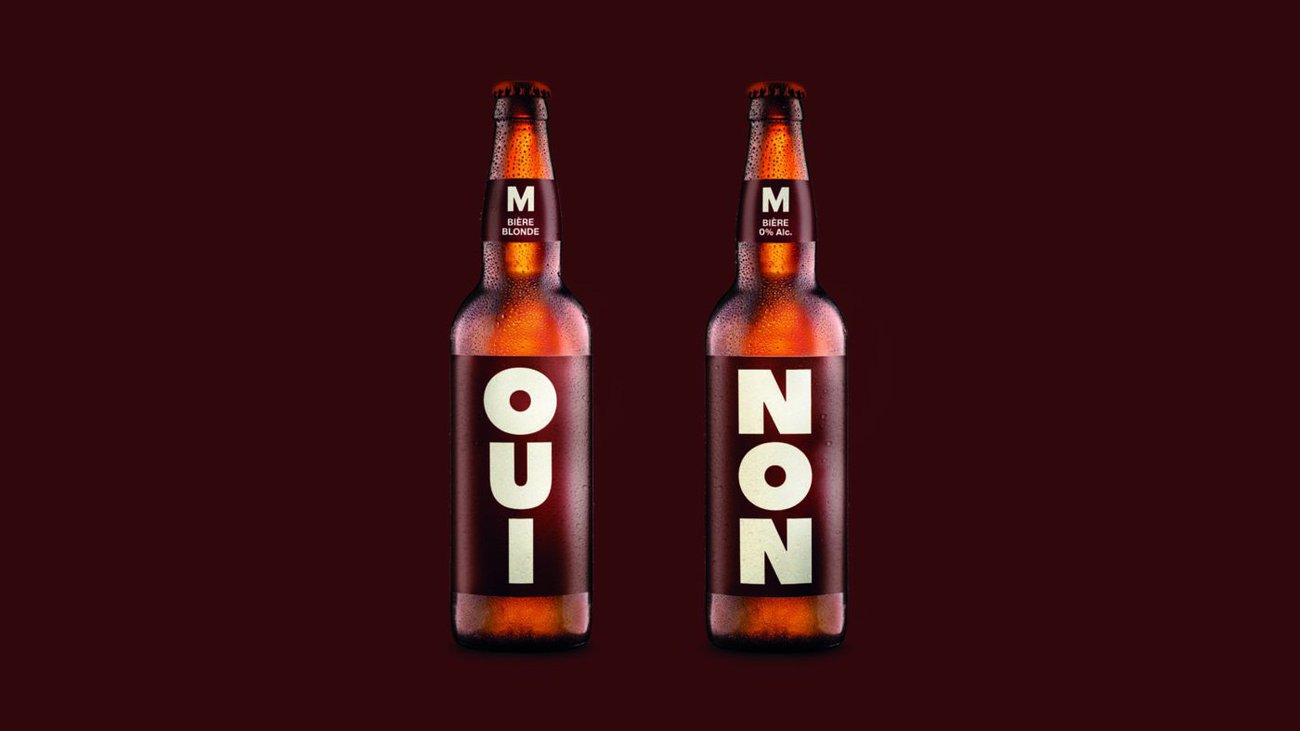
Grand Effie for Migros campaign "Oui zum Non" by Wirz
On Wednesday evening at Soho Zurich, the Effie Awards Switzerland honored the best and most effective marketing and communication campaigns in Switzerland for the 20th time. The FMC and Wirz won the Grand Effie for the campaign «Oui zum Non: Ein Prost auf die Migros-Demokratie».
Editorial
-
November 13, 2024
The Wirz-Migros team at the Effie Award 2024.
The Grand Jury, consisting of industry experts, selected the "Oui zum Non" campaign as the winner of the Grand Effie from the six Gold Effies. Martin Baumüller, Head Division Marketing & Brands / Group Executive Board of Geberit International and member of the Grand Jury, gave the laudatory speech and emphasized how Migros mastered an emotional topic with creative and strategic excellence while strengthening brand integrity.
In addition to the Grand Effie, eleven Bronze, seven Silver and six Gold Effies were awarded for outstanding campaigns. Audrey Arnold, Managing Director of Leading Swiss Agencies LSA, the sponsoring association of the Effie Awards in Switzerland, hosted the evening together with her co-host Danijel Sljivo, CEO of Ammarkt.
m&k is the media partner of the Effie Awards Switzerland 2024. The award was supported by the Premium Partners UBS and Post Advertising, Gold Partner TikTok, Silver Partner APG|SGA, as well as the Bronze Partners Teambox, VSM , IAB Switzerland and Media Focus. The guest management tool was provided by Evenito.