Bumblebee Hanna can fly because she believes in herself
Need some motivation? This Christmas season, Erste Group Bank and Jung von Matt/Donau are launching an animated film starring Hanna the bumblebee, who learns to fly despite the bumblebee paradox.
Editorial
-
December 5, 2019
Hanna's story takes place in a world inhabited only by bumblebees. At school, everyone is taught that bumblebees can't fly. Bumblebee Hanna, however, is not satisfied with this and tries in various ways, with the active support of Max. Time passes, the seasons slide by, and Hanna slowly loses hope. At Christmas, Max shows her with a gift that she should not give up. As a result, the two finally take to the skies.
The spot is meant to convey a message of love and show that anything is possible as long as you believe in yourself. And if bumblebees can fly, then Erste Group Bank customers can also achieve what they set out to do.
The CGI film will be broadcast in eleven countries where Erste Group is represented, on Facebook. Twitter and YouTube. The song "Another Way" by the Tender Trees can be streamed on the music platforms.
Customer: Erste Group Bank. Agency: Jung von Matt/Donau. Production: Passion Animation Studios London; Kyra & Constantin (director). Postproduction: Unit Creative Studio & Sound Design London. Music & Sound: Mcasso Music London.
All I Want For Christmas Is Mariah Carey - Abundant
For 25 years now, Mariah Carey’s «All I Want For Christmas Is You» has been delighting us every year during the holiday season, on what feels like an endless loop. Spotify is marking this significant anniversary by launching a commercial featuring the grande dame herself, who doesn’t take herself too seriously.
Everyone knows that the Christmas season begins when "All I Want For Christmas Is You" is blaring from everywhere - usually in early October. It's hardly surprising that Mariah Carey's song is one of the "best-selling modern day Christmas songs" according to Wikipedia.
But until now, no one knew that Mariah Carey was also pulling all the Christmas strings behind the scenes. In a one-minute video for Spotify, the American singer parodies herself. In the "Christmas Control Center" at the North Pole, she presses the green start button, which starts the transmission of her now 25-year-old song all over the world and thus officially heralds the Christmas season.
Poorly chosen advertising environments have a negative impact on digital ads
Caution advised: Integral Ad Science's "Ripple Effect" study shows a negative impact of poor quality ad environments on digital ads. 83 percent of German consumers penalize brands for digital ads in inappropriate advertising environments.
How people react to ads depends largely on their context - and bad company very quickly has a negative effect here. According to the study, 83 percent of German consumers perceive a brand more negatively if its digital ads appear in low-quality advertising environments. The consequences can be drastic: Almost two-thirds (65 percent) would even no longer buy the products of such a brand.
It turns out that the advertising environment of a digital ad is even more important to consumers than the personal relevance of the ad. Almost two-thirds (65 percent) of German consumers value tailored ad content, and for 70 percent the serious context of the ad is important.
This is also reflected in the interaction rate: In a high-quality advertising environment, engagement is significantly higher (plus 50 percent) than when the ad appears in a context perceived as inappropriate for the brand.
Advertisers must take responsibility
Almost two-thirds (65 percent) of German consumers hold brands directly responsible for the environment of a digital ad. For marketers, this is a clear call to action - but ensuring a suitable advertising environment is a real challenge.
Because within the last ten years, the amount of content has increased more than twentyfold. A good starting point for a successful context strategy are brand safety and risk metrics to measure the quality of content.
A distinction must be made here between brand suitability and legal brand safety and the individual setting of this category. Legal safety refers to those advertising environments in which brands should not appear under any circumstances because they violate applicable law and do not comply with advertising guidelines. Brand Suitability, on the other hand, is highly brand-specific. Whether an advertising environment is perceived as negative depends largely on the target group: Advertising for an exquisite wine assortment is an excellent fit for recipe blogs, but should not be played out in the context of reporting on alcohol addiction or even on a website for children.
"The quality of the advertising environment of a digital ad has a significant impact on how people perceive the ad - this has already been shown by our 'Halo Effect' study and is confirmed by our current 'Ripple Effect' study," explains Oliver Hülse, CEE and Managing Director at Integral Ad Science. "But to truly address the issue of brand suitability, all stakeholders in the industry need to get on board: Advertisers need to transparently communicate what their brand suitability requirements are, publishers, for their part, should work closely with brands to meet those requirements."
For the "Ripple Effect" study by Integral Ad Science a general population sample was collected from a total of seven markets, including Germany, the USA, the UK and France. Women and men aged 18 and over were surveyed.
In doing so, IAS determined how consumers perceive ad relevance and content quality and how brand perception is influenced by the context in which a digital ad is placed. The criteria for an inferior advertising environment were determined by an IAS proprietary risk assessment.
The current Media Price-Performance Index comes for the first time with OOH
As it does every year, the Swiss Advertisers Association (SWA) and Leading Swiss Agencies (LSA) publish the latest Swiss Media Price-Performance Index during the planning phase for new campaigns. The index shows how prices relate to services.
Editorial
-
November 7, 2019
This year, the poster medium is included in the survey for the first time. Since 2017, the SWA and LSA associations have been collecting and publishing the index for media contacts, thus contributing to transparency in price development.
Advertising Print Stable - Trend Still Towards Digital
Advertising pressure has been stable overall so far in 2019, and no major changes are on the horizon. In terms of media spendings, the trend continues to move toward digital, which is leading to a decline in many classic media. This situation has not yet led to any adjustments, at least in the gross prices of Swiss media.
Press inflation
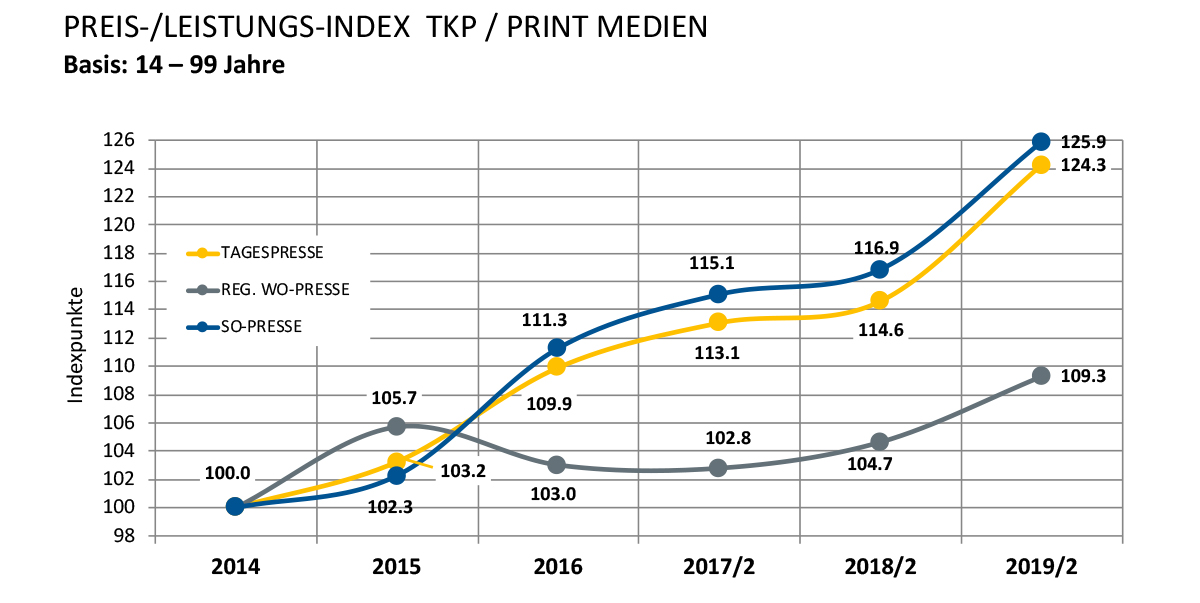
In print, the decline in the number of readers again led to an increase in prices in individual categories compared with the previous year: The price of the daily press rose by a whopping 7.7 percent and the regional/weekly press by 8.5 percent. The Sunday press saw an increase of 4.4 percent. Only magazines and women's magazines saw a drop in the index. Another conspicuous feature can be seen in the business press: In both target groups, the CPM values have risen again, whereas they fell sharply in the last survey.
Extract from the price and performance index. (Source: MPLI DB Print, Mach Basic Wemf)
Declining reach for TV
TV has recently also had to contend with declining reach. Marketers have not yet reflected this in their prices. However, the index calculation is based on the stations' "planned values" and not on the results actually achieved. In the 15-59 target group, planned contact costs rose by only 0.5 percent over the previous year. In the popular 15-49 target group, on the other hand, inflation rose by 4.6 percent. Clients and agencies can only calculate the effective TV price development individually in the follow-up with corresponding success controls.
Slight increase in the price of posters
This year, the poster medium can now be reported by means of the inflation index. The first survey shows a slight inflation of around 2 percent compared with the previous year. While prices in German-speaking Switzerland have hardly risen at all, the indices in French-speaking Switzerland and Ticino have increased by around 2 to 3 percentage points.
In radio, new listener research was introduced at the beginning of 2018. For this reason, the index will be recalculated from scratch and not published again until next year. In the medium of cinema, the price/performance index has remained close to 100 points since 2014 and moved primarily within the language regions.
With the media mix shifts to digital, transparency in this area is also becoming increasingly important. LSA and SWA are therefore striving to be able to offer a price/performance index for digital as well in the future.
Online Advertising Day 2019 - Trends and Challenges in Digital Marketing
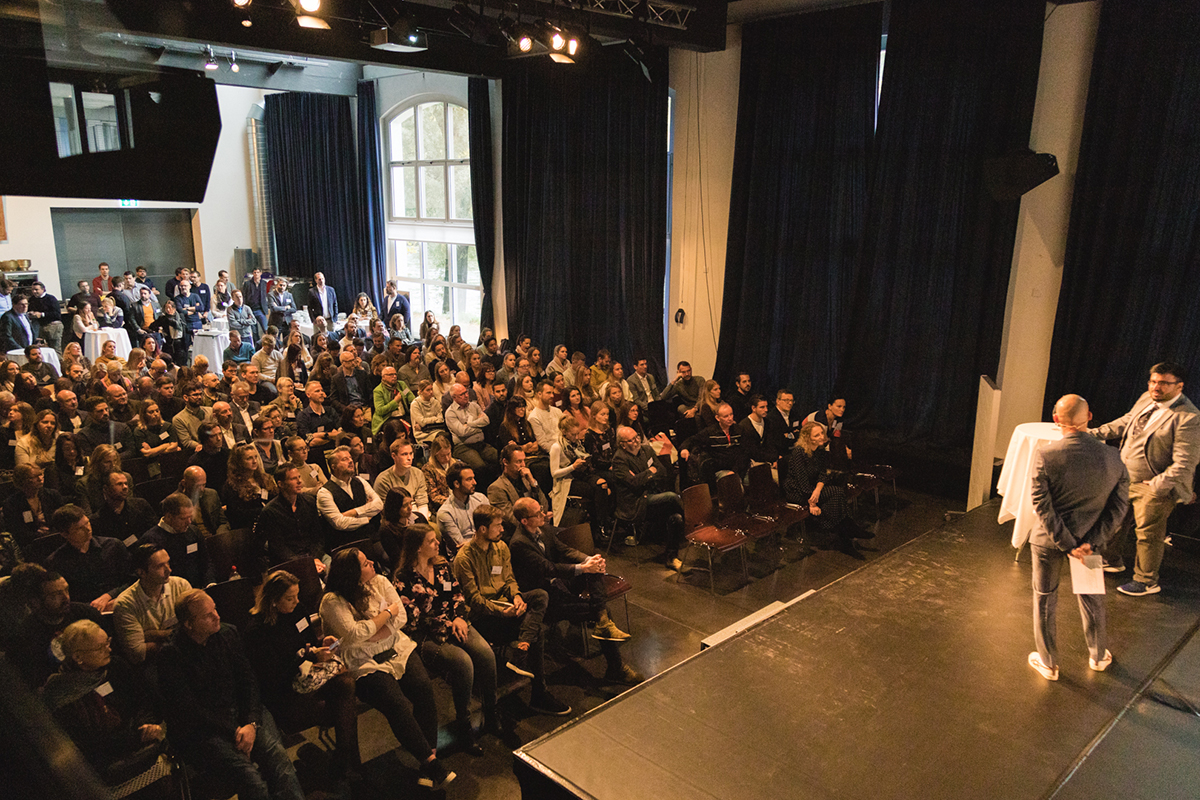
For the 15th time, the Online Advertising Day took place on Thursday morning. Around 230 representatives of agencies, advertisers and publishers accepted Goldbach Audience's invitation to Zurich's Limmat Hall. Werbewoche.ch was also on site.
Editorial
-
October 31, 2019
Stefan Wagner, Managing Director of Goldbach Audience, Roman Hirsbrunner, CEO and co-owner of Jung von Matt/Limmat, Alexander Horrolt, Managing Director Digital Ad Services at Goldbach, Ronny Nenniger, Head of Editorial Venty, Miriam Thome, Director Marketplace Management at Xandr and Amir Malik, Digital Marketing Expert at Accenture (from left to right).
A joint breakfast kicked off the Online Advertising Day. Alexander Horrolt, Managing Director Digital Ad Services, welcomed the guests and guided them through the event.
Amir Malik, Digital Marketing Expert at Accenture Interactive, opened the series of presentations with the latest trends in data-driven marketing, addressing the importance of artificial intelligence and algorithms. In a digital world where needs are changing rapidly, personalized customer targeting is at the center. "We live in times where you can reach people as individuals," Amir Malik emphasized, showing what this means and the new issues facing advertisers.
Under the title "Diversity in Tech", Miriam Thome, Director Marketplace Management at Xandr, explained the opportunities and challenges that arise from diversity in companies and the tech industry in particular. Central factors for the emergence of a diverse corporate culture are open dialog between all reference groups as well as support from the management.
The editorial team of 20 Minuten's youth format Venty, Emel Erikci and Ronny Nenniger, together presented to the audience how to score with a young target group with new, timely storytelling on TikTok and Instagram. Erikci, who also has experience in accompanying children, also pointed out the volatility of today's youth and that you have to follow the fleeting trends and hypes.
"Online advertising has been with me for half my life" - with this statement Roman Hirsbrunner opened his contribution and thus the last presentation of this year's Online Advertising Day. The CEO and co-owner of Jung von Matt/Limmat used the example of his own agency to convey to the audience how important and timeless creativity is and where the journey is leading. He also provided insights into the newly developed, agency-internal app "Q", which made it onto the "Best of Swiss Apps 2019" shortlist. (Werbewoche.ch reported). Find out more about "Q" in the exclusive interview with René Schwarz, Chief Experience Officer at Jung von Matt/Limmat, in the upcoming Advertising week 10/2019.
The event ended with a subsequent networking lunch. Stefan Wagner, Managing Director at Goldbach Audience, is pleased: "With today's event, we were able to share our enthusiasm for online advertising with the audience through inspiring presentations and show the diverse range of topics that digital marketing has to offer."
Getty Images presents the "Disrupt Aging Collection"
With its «Disrupt Aging Collection,» Getty Images is introducing a collection of images designed to combat age-related stereotypes and promote a different portrayal of aging in the media and advertising.
Editorial
-
October 30, 2019
Picture: Kohei Hara / Getty Images
The collection, which comprises a total of 1,400 images, is part of a broader commitment by Getty Images and the American Association of Retired Persons (AARP). The aim is to change the way older people are portrayed in advertising and marketing. The collection therefore offers an authentic insight into the lives of people over 50.
"The images we perceive are extremely relevant," says Rebecca Swift, Global Head of Creative Insights at Getty Images. "And yet every day we are bombarded with negative stereotypes about ageing that don't represent our reality. They have a huge impact on how we think, act and whether we develop emotional connections with brands. That's why we needed images of older people leading fulfilling lives."
"The collection counters stereotypes and reflects the reality of aging today," says Martha Boudreau, Director of Communications and Marketing at AARP. "The collection shows people over 50 at work, traveling or in their free time - living an active, healthy life. This is an important step in helping brands authentically represent this huge demographic."
The "Disrupt Aging Collection" is the latest example of Getty Images' efforts to provide authentic and diverse images. The collection fills a gap by showing real people in everyday settings and reflecting modern realities: People are working longer hours, starting families later in life, raising children and grandchildren, and acting as caregivers for multiple generations.
In recent years, Getty Images has taken steps to diversify creative content in terms of gender, ethnicity and disability. In May 2019, for example, the "Disability Collection" celebrated its first anniversary (Werbewoche.ch reported). According to Swift, age is the "fourth pillar" that will increasingly become the focus of discussion.
Image: Hinterhaus Productions / Getty Images
Rising demand
Demand for this content is also on the rise. Getty Images recorded a significant increase in customer searches for people of retirement age worldwide. In Germany, searches for "seniors / seniors" increased by 158 percent year-on-year from June 2018 to June 2019.
The biggest and perhaps most notable changes relate to the emotional health of older people. Searches for images depicting fun with friends and family, happy and celebratory moments have increased by a factor of five to 47 compared to the previous year.
Swift urges brands across all industries to take note: "Everyone who plays a role in the creation, distribution and selection of images at every level and in every industry has the ability - and the responsibility - to more authentically represent the diverse audiences they are speaking to."
The real issues
The Danish agency Hjaltelin Stahl has also launched a special edition to coincide with Sports Illustrated's annual swimsuit issue—and is using it to draw attention to plastic pollution in the world's oceans.
Editorial
-
October 30, 2019
On June 8, 2019, World Ocean Day, the NGO Plastic Change launched "The Plastic Issue," shortly after Sports Illustrated published the "Swimsuit Issue."
Visually borrowing heavily from the original, "The Plastic Issue" features former Sports Illustrated cover model Solveig Mørk, an avowed environmentalist. Mørk poses on a polluted beach and thus brings the plastic problem - "the real issue" - into focus.
The campaign generated a lot of attention for the Landing pagewhich gives tips on how to reduce daily plastic use to a minimum. In addition, a calendar with further tips and facts on plastic pollution was launched.
The issue has also been taken up by other major players. Pornhub, for example, launched "The Dirtiest Porn Ever" in August to draw attention to the problem. (Werbewoche.ch reported).
The cover of the "Plastic Issue" also made it into the official competition for a place in next year's Sports Illustrated. Thus, the original magazine ultimately became a means to an end itself.
The NGO Plastic Change had already drawn attention to marine pollution this year with the dystopian short film (Werbewoche.ch reported).
What do llamas and bad weather have in common?
The Hamburg agency Jung von Matt/Next Alster shows the dark side of llamas in their commercial for Bosch - with an unexpected outcome.
Editorial
-
October 28, 2019
If the Internet is anything to go by, llamas - along with cats, alpacas and raccoons - are among the most popular animals. If you enter the word "llama" in a Google search, you'll soon be presented with a wide variety of funny llama compilation videos. No wonder: they're fluffy, look funny - and spit for all they're worth.
Jung von Matt/Next Alster took advantage of this fact and used a llama as the main character in their commercial. However, in this campaign, it portrays a villain and terrorizes a bank employee with its spitting attacks.
The first encounter takes place at his workplace. After that, the llama follows the bank employee everywhere - to the bakery, to the subway and finally all the way home. Filled with fear, he flees to his car, where the llama is already blocking his exit and spitting on the windshield.
At this point, the big appearance of the conqueror follows in the form of a windshield wiper, which unceremoniously wipes away the spit of the mobber llama. The bank employee triumphs over the visibly irritated llama. The film ends with triumphant music and the words, "When you're being chased by a llama or driving through bad weather, powerful Bosch windshield wipers are all you need."
The film is the centerpiece of the international campaign. The llama is also used as a life-size display, as a postcard motif and on giveaways. The claim "Haunted by a Llama?" is intended as a reminder of the film.
Jung von Matt/Next Alster realized the film in collaboration with Markenfilm Hamburg and director Matthew Swanson.
Responsible at Bosch: Ulrich Thiele (Senior Vice President Product Area Automotive Aftermarket); Olaf Schuette (Director Marketing); Simone Hensler (Communications Manager Business Unit); Maren Kästle (Communications Manager). Responsible at Jung von Matt/Next Alster: Andreas Ernst (Managing Director); Max Lederer, Thim Wagner (Executive CDs); David Leinweber (Group CD); Jan Anderssen (Head of Client Services); Anahita Ghanizadeh, Natascha Kuehn (Text); Max Kuntscher (Junior AD); Tim Kuphaldt (Senior Project Manager); Felix Mindermann (Junior Project Manager); Johannes Haverkamp (Filmproducer).
Experiencing the consequences of marine pollution firsthand
In Plastic Change’s dystopian awareness campaign, for once it is people—not animals—who get trapped in the plastic waste dumped into the ocean.
Editorial
-
October 25, 2019
The NGO Plastic Change from Copenhagen presents in its film a dystopian reality that starts with an idyllic atmosphere, musically underpinned by a song reminiscent of "The End of the World" by Skeeter Davis.
The falseness of the idyll is revealed as soon as it is visualized what the consequences would be if the waste in the oceans had as strong an impact on us humans as on the marine life that effectively suffers from it. We would no longer be able to move forward.
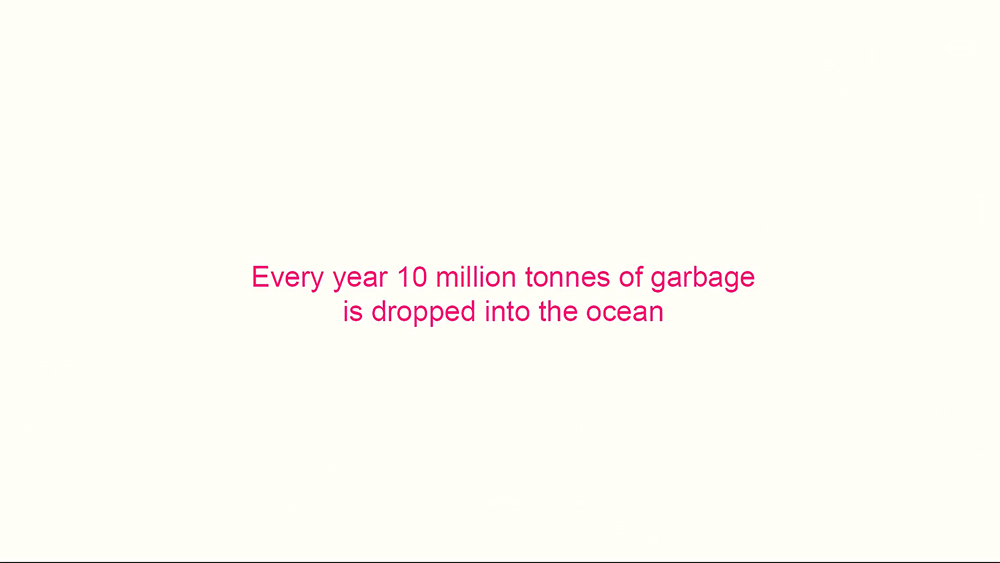
With the film, Plastic Change wants to point out exactly this aspect and call on society to change this culture of convenience and doing nothing with regard to plastic. Because nowadays around 10 million tons of plastic waste are thrown into the oceans every year.
The film was realized by the Copenhagen production company Bacon. Ida Andreasen is responsible for the direction.
Suspected Internet surveillance leads to self-censorship
More than half of Internet users in Switzerland are deterred from freely searching for information or expressing their opinions online because they suspect they are being monitored. This is shown by a representative survey conducted by the University of Zurich on Internet use in Switzerland.
Editorial
-
October 24, 2019
Anyone who does research using search engines or expresses their opinions on Facebook and WhatsApp leaves behind numerous digital traces. Internet users have the feeling that these traces are used for surveillance purposes.
According to the study by the University of Zurich UZH, 43 percent of the 1,122 people surveyed believe that online surveillance harms society. In addition, a large proportion of Swiss Internet users (45 percent) are concerned that companies like Facebook violate their privacy online.
One consequence of this is that Internet users restrict themselves online: more than half say that possible surveillance deters them from freely seeking information (59 percent) - such as researching sensitive political content - or from expressing opinions, interests or feelings (56 percent).
"Deterrent effects based on a sense of surveillance are questionable in terms of democratic policy," emphasizes Michael Latzer, Professor of Media Change & Innovation at the University of Zurich. "They threaten the exercise of fundamental rights and social participation via the Internet."
Eight out of ten Swiss use the Internet on the move
Dhe survey, conducted for the fifth time by Michael Latzer and his team, shows that even more Swiss people will be online in 2019 than in 2017. 92 percent of the Swiss population use the Internet today, and among those under 50, the figure is almost 100 percent. 80 percent of the total population are also online on the move.
Average usage time has doubled since 2011 and is now 25 hours per week. However, 40 percent of offliners benefit indirectly from the Internet by letting others do research or tasks for them. The number of non-users has been more than halved in the last eight years.
The number of absolute non-users (excluding proxy users) in Switzerland is therefore around 340,000. On average, people's Internet skills have been rated relatively equally since 2011. Women rate their Internet skills worse than men.
Internet most important media source of information and entertainment
The internet is the most important source of media information in Switzerland in 2019, followed by newspapers and television. It is now also in first place for entertainment purposes, ahead of television. One exception is the 70+ age group, for whom newspapers and radio are still more important.
Digital overconsumption and pressure of expectations
Digital overconsumption manifests itself, among other things, in the fact that around a quarter (26 percent) of Internet users believe they lose time for more important things through Internet use. 24 percent report spending more time online than they would actually like. 38 percent of Internet users in Switzerland feel that their private environment expects them to respond quickly to messages. In the professional environment, around three quarters of users (73 percent) feel this way.
The digital pressure of expectations in terms of availability and skills is perceived as stronger specifically by the young and highly educated. "With an overall high level of digital well-being in Switzerland, the young feel significantly more frequently affected by overconsumption and pressure of expectations," Michael Latzer sums up. "However, the young also take countermeasures most frequently, such as specifically switching off notifications on the smartphone, which is not least related to digital literacy." 59 percent of users feel integrated into the information society, compared with only 22 percent of non-users.
One in three Swiss sells online
87 percent of Swiss Internet users search online for product information. 82 percent make purchases online, with travel bookings (71 percent) being particularly popular. More than a third (36 percent) also sell online themselves. Sharing economy services such as Uber and Airbnb have grown significantly compared to 2017 and are used by 28 percent; 16 percent also actively offer such services themselves. The use of online social networks has increased sharply since 2011 (53 percent) (2019: 71 percent). Currently, the majority (69 percent) use them daily or several times a day.
Younger people in particular make very heavy use of such networks: 99 percent of 14- to 19-year-olds and 87 percent of 20- to 29-year-olds are on social networks. Around 7 out of 10 Internet users (72 percent) download music from the Internet or listen to music online. Services such as YouTube (51 percent) and Spotify (35 percent) are used most frequently for this purpose. Two-thirds of Swiss Internet users (66 percent) say they watch or download videos online. The most frequently used services here are YouTube (63 percent) and Netflix (42 percent).
Trust in content decreases - A lot of fact-checking
Around 6 out of 10 Swiss Internet users (63 percent) consider at least half of all Internet content to be credible. A year-on-year comparison shows a clear decline in the assessment of the trustworthiness of Internet content since 2013. Websites of the government and authorities, the SRG and paid newspapers are assessed as predominantly trustworthy. Less trust is placed in the pages of free newspapers and content on social networks. The proportion of people who check facts on the internet rose sharply between 2013 and 2017 and is 71 percent this year.
Skepticism about digital democratization and e-voting
Overall, the Swiss population does not believe that the Internet will further improve the democratic quality of the Swiss political system. Only a minority in each case believe that citizens can have more say (21 percent) and more power (27 percent) as a result of Internet use, that they understand politics better (39 percent), or that administration and politics take what they think more seriously (27 percent).
Nevertheless, a year-on-year comparison shows a trend toward increasing confidence in digital democratization. Half of the Swiss population (51 percent) would welcome an electronic election or voting option, although people aged 70 and over are significantly more skeptical about e-voting than younger people. "The much-discussed security shortcomings of previous e-voting systems are having an impact, but there is potential here to increase the low voter turnout among the young," says Michael Latzer. (pd)
The World Internet Project (WIP) is a comparative long-term study. It records the spread and use of the Internet in 30 countries in an international comparison and analyzes the social, political and economic implications of network development.
The WIP-CH project has been conducted by the Media Change & Innovation department of the Institute of Communication Studies and Media Research (IKMZ) at the University of Zurich under the direction of Professor Michael Latzer since 2011. It is based on a representative telephone survey of 1,122 people aged 14 and older conducted by Demoscope in May/June 2019. Members of the 2019 project team are Moritz Büchi and Noemi Festic.
Climate election was not yet a social media election
Editorial coverage was a decisive factor in the electoral success of candidates and parties on October 20. While print advertising—on posters and in newspapers—is losing importance, social media is set to gain ground in the future. These are the findings of a new expert survey conducted by Publicom.
Editorial
-
October 24, 2019
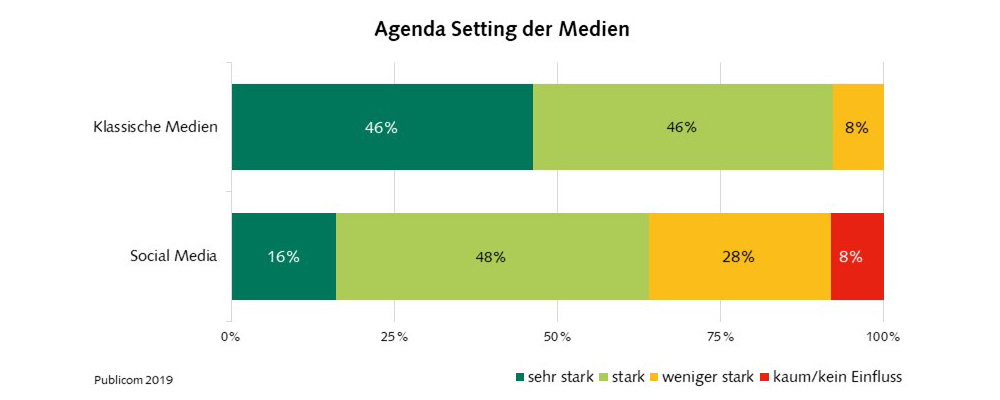
The journalistic performance of traditional media is eminently important for the democratic process and in the run-up to elections. From the experts' point of view, it is primarily the traditional media (radio, TV and print) that shape the political agenda (46 percent "very strongly"). By comparison, social media are (still) significantly less influential (16 percent "very strongly").
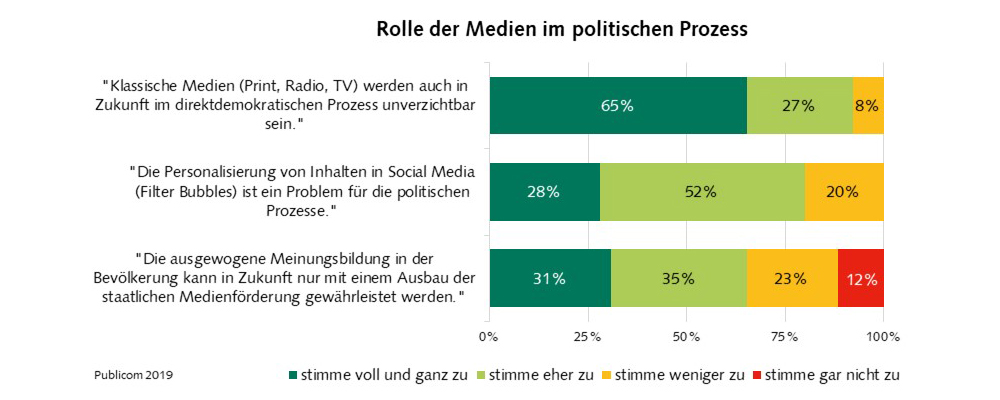
An impressive majority of the experts see the traditional media as indispensable for political processes in the future as well. This underscores the important function of the media as the "fourth estate. However, 80 percent consider the personalization of social media content ("filter bubbles") to be a problem. To ensure the balanced formation of opinion in the future, two-thirds of the experts are in favor of expanding state media funding.
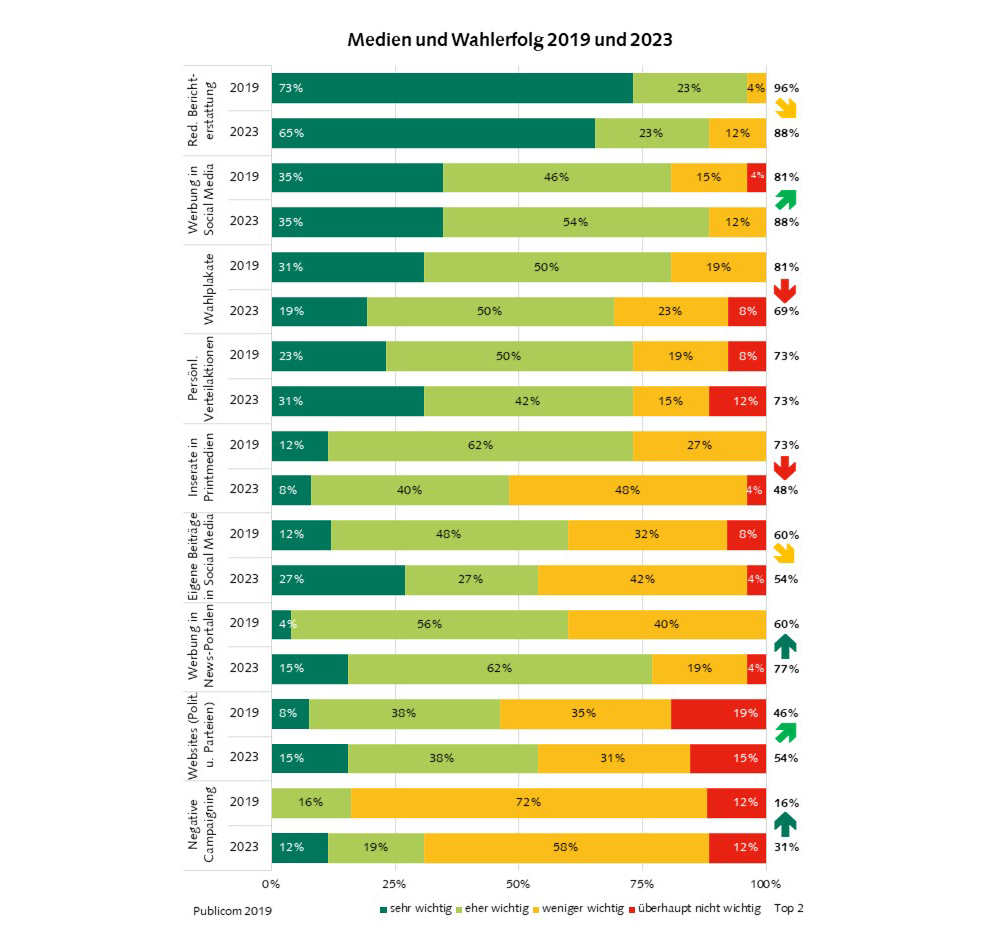
In the view of the panel of experts, editorial coverage was also the decisive factor for electoral success in the parliamentary elections on October 20 (73 percent). Other important drivers for the 2019 elections are considered to be the time-honored election posters, personal distribution campaigns and advertisements in print media (all at least "rather important" with over 70 percent of the mentions).
The fact that the climate election was not a social media election is also clear from the experts' further assessment: Although advertising in social media achieves roughly the same influence as election posters (81 percent at least "rather important"), own contributions in social media were clearly less important for election success. The same applies to the websites of candidates and parties and to advertising on news portals.
With a view to the national elections in four years' time, traditional advertising media (election posters and newspaper ads) and the online channel will undergo a contrasting development: In the future, advertising on social media and news portals will gain in importance, while newspaper ads will lose importance (from 73 percent to 48 percent at least "somewhat important"). And the printing press will also be used much less for election posters in the future (from 81 percent to 69 percent).
Candidate and party websites and "negative campaigning" are viewed ambivalently: Although they are gaining in importance, they are currently and will remain in the lower ranks in the future. The situation is quite different for editorial reporting, which the experts believe will lose some of its importance, but will also be decisive in the 2023 elections.
Under the term DELPHInarium, Publicom, which specializes in media research and consulting, publishes the results of a survey of experts twice a year. The panel includes more than forty experts from leading media companies as well as representatives from advertising, media journalism, communications science and corporate communications.
Dominic Baumann new Head of Communications at McKinsey & Company Switzerland
McKinsey & Company Switzerland has appointed Dominic Baumann as Head of Communications, effective October 7, 2019. He succeeds Johannes Berchtold, who left the company at the end of August to join the NZZ Media Group as Head of Brand Strategy.
Editorial
-
October 18, 2019
Baumann was previously Chief of Staff to the Head of Corporate Communications at ABB. In this role, he gained extensive experience in external and internal corporate communications.
Prior to this, Baumann was Chief Operating Officer at the St. Gallen Foundation for International Studies, where he was responsible for communications as well as theme and program planning for the St. Gallen Symposium. He studied Business Administration and International Management at the Universities of St. Gallen, Rotterdam and Singapore.
At McKinsey & Company Switzerland, Dominic Baumann will be responsible for all internal and external communications activities.