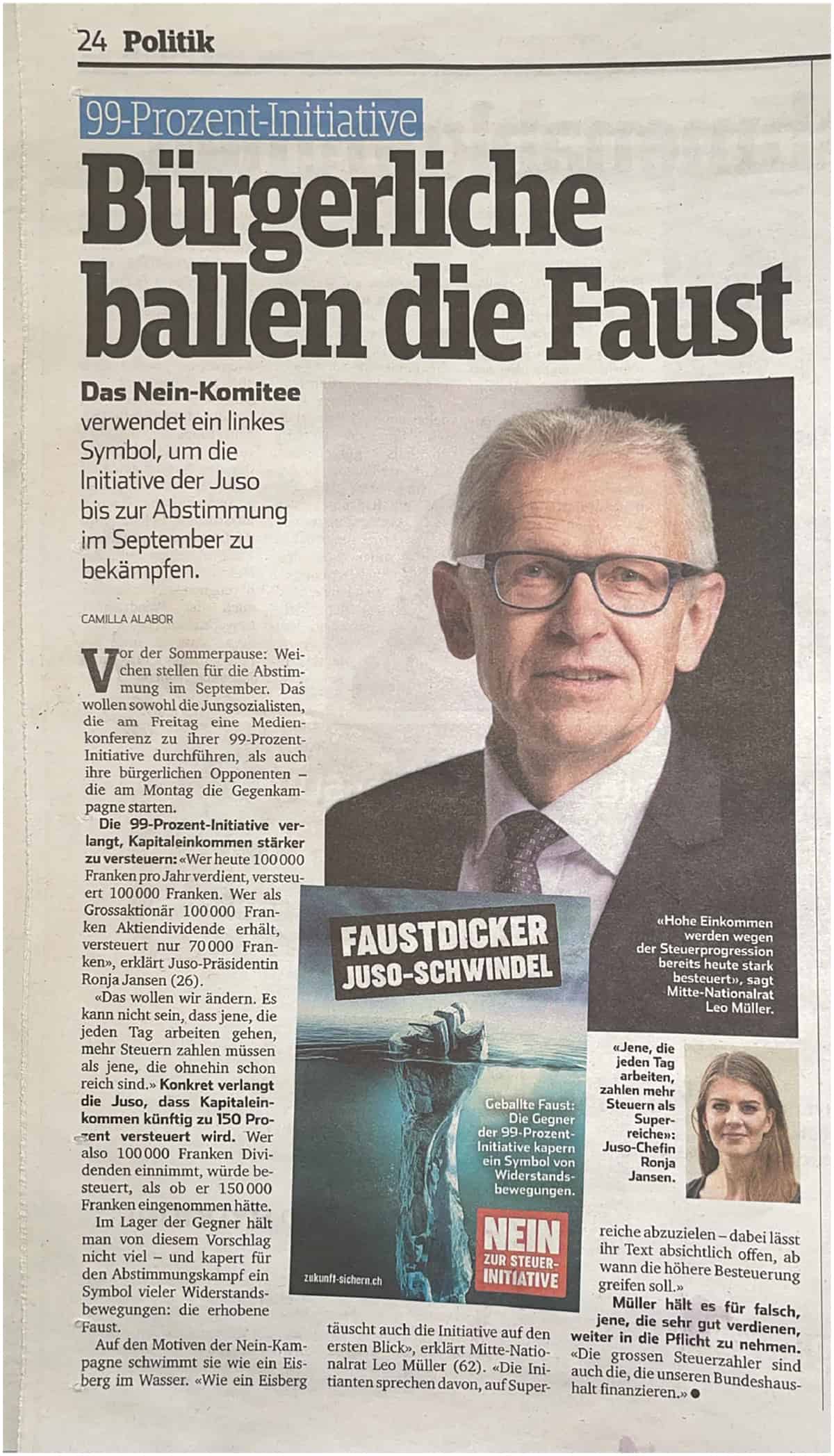
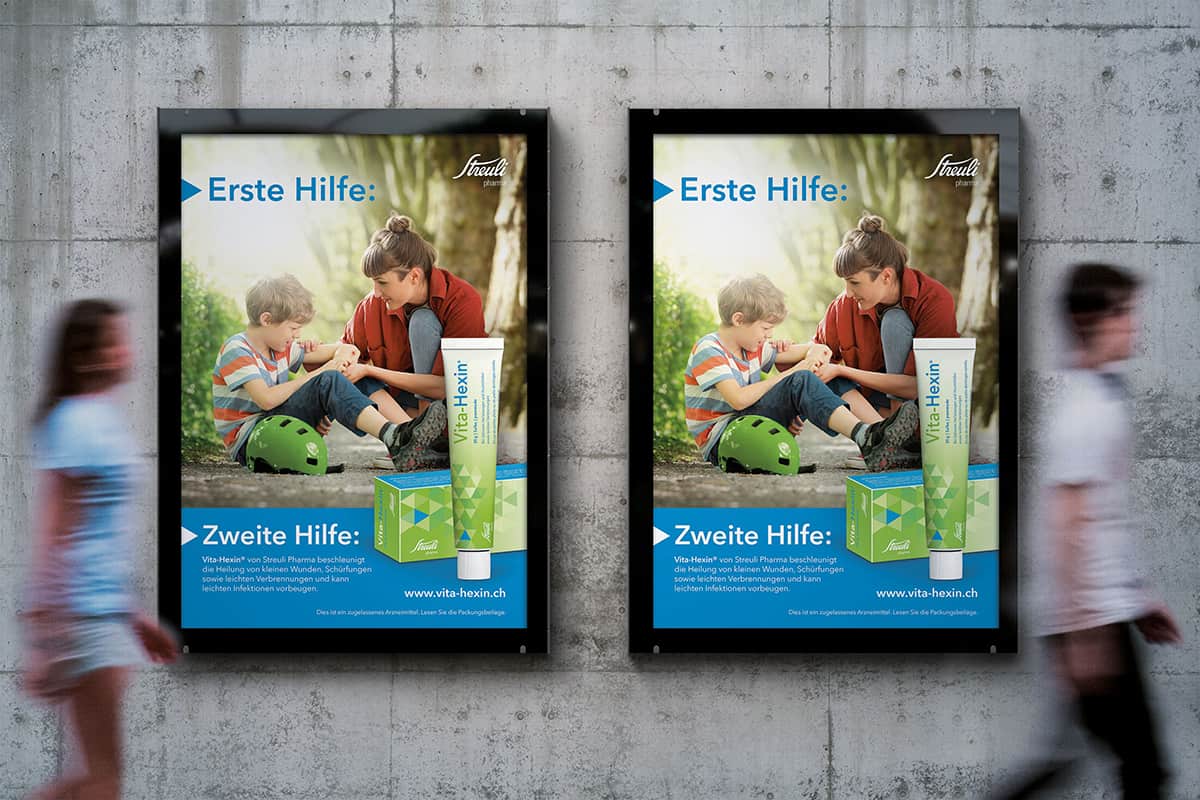
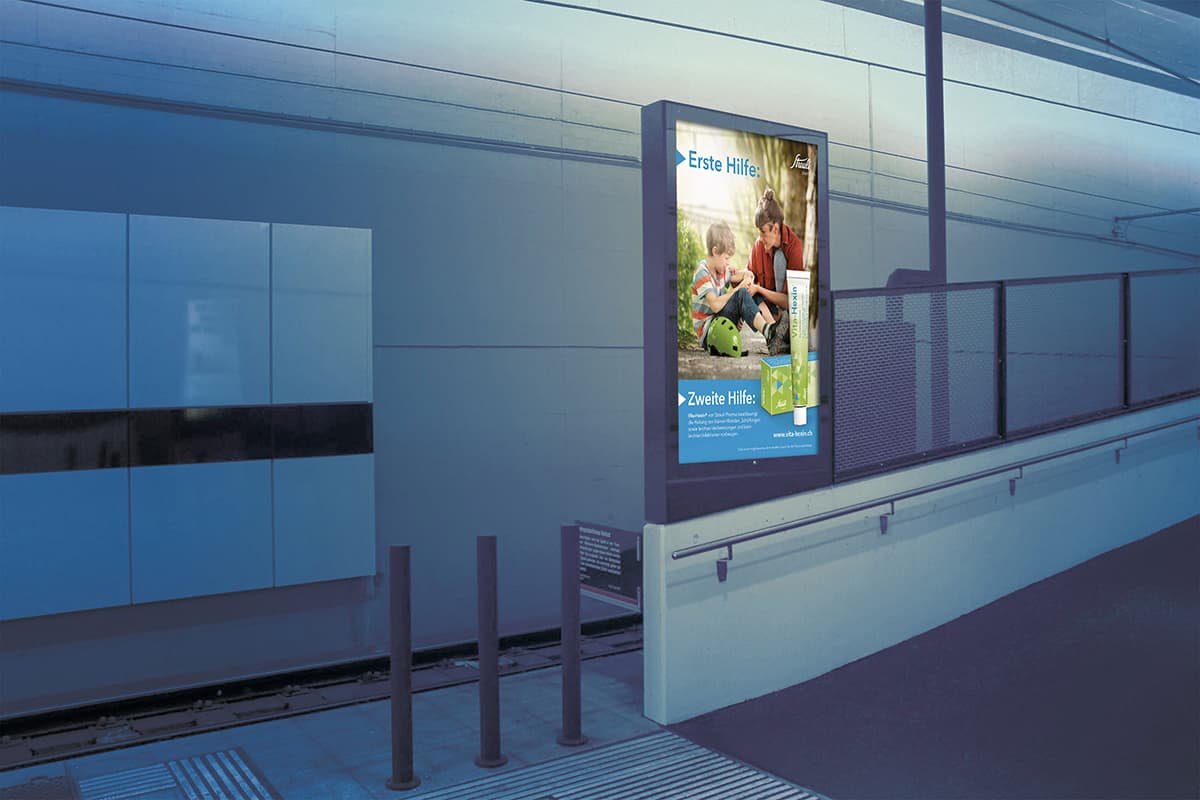
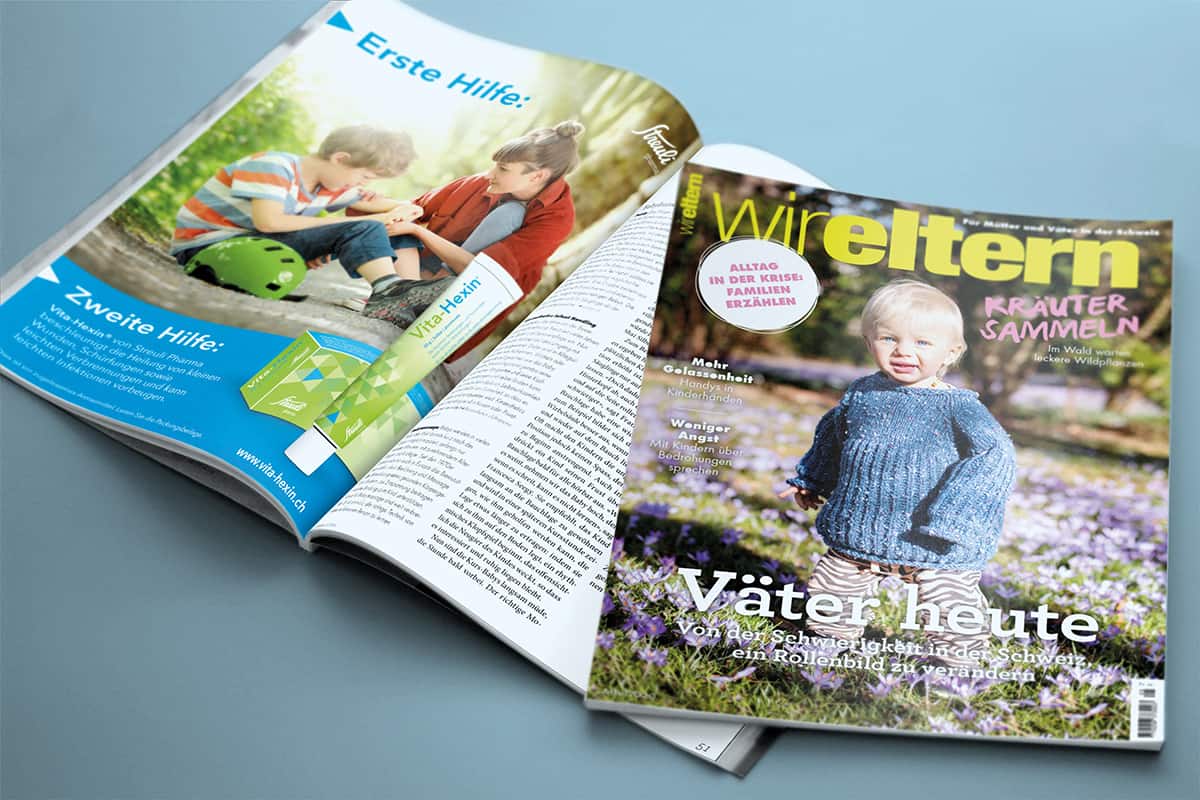
In its advertising campaign for Vita-Hexin wound ointment, the Zurich-based agency Madonna focuses on the parent-child relationship and highlights what the second important step is after first aid.
Editorial
-
June 30, 2021
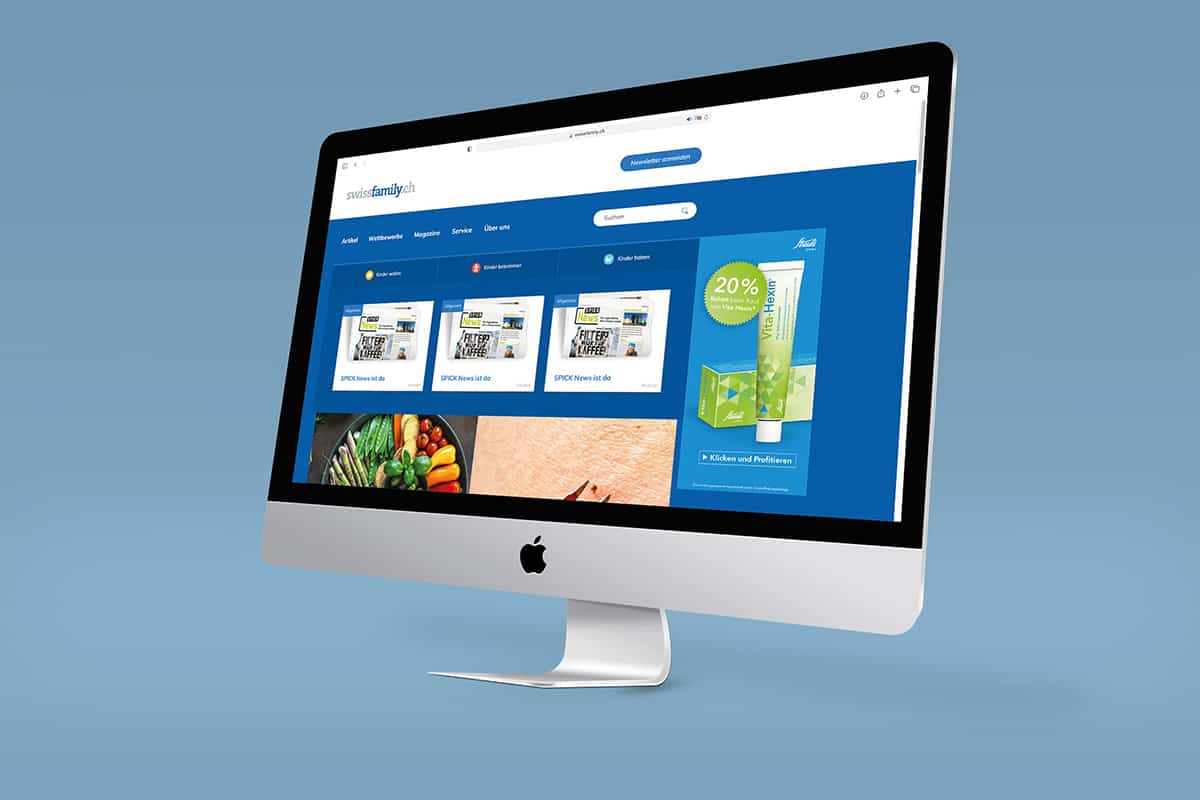
Vita-Hexin is a wound ointment that accelerates the healing of minor wounds and can prevent or fight minor infections. As part of the current campaign for the wound ointment, Madonna has developed various measures. The campaign focuses on comforting the mother or father in the event of an accident, followed in a second step by the application of Vita-Hexin. With this sequence, the Vitahexin campaign focuses on the parent-child relationship and is intended to create closeness and sympathy in the process.
Responsible at Streuli Pharma: Jürg Vogel (Sales Manager), Nadja Lilienfeld (Project Manager Marketing). Responsible at Madonna: Massimiliano Madonna (Strategy/Consulting), Sigi Simader (Art Direction), Urs Zwyssig (Text). Photography: Hans Schürmann. Media agency: JBW Media.
Admire now manages Schulverlag plus for Tiptopf
Tiptopf is getting a fresh start. The Admire agency prevailed over the competition in the pitch. By taking a digital approach focused on customer value, they were able to demonstrate the added benefits of a long-term community strategy.
Editorial
-
June 30, 2021
The cookbook takes on new freshness and finesse. The basic recipe remains the same: The Tiptopf is intended to inspire joy in cooking with basic recipes that are sure to succeed. During the next two years or so until the launch, a community with an affinity for cooking will be built up and interest in the cookbook will be gradually increased through various channels.
The agency convinced the jury with its digital approach and creative implementation, according to a statement from Admire. In order to do justice to the ever-widening gap between an emotional customer experience and digital convenience, customers need added values that are easy to understand and presented in a pointed manner. Equally important is the handling of data and the insights that can be gained from data analysis. This overall package convinced the customer and formed the cornerstone of the collaboration.
The SDV expands its board
The Swiss Dialogue Marketing Association (SDV) is kicking off the second half of 2021 with renewed vigor and welcomes five new members to its board of directors.
Editorial
-
June 30, 2021
In the New Year's letter, the SDV announced that it was looking for reinforcements for the board. In the meantime, five additional colleagues have joined the board, as the association writes in a statement. The SDV board is now composed of:
Alexandra Brunner (Federation of Migros Cooperatives, new)
A first virtual kick-off was already held in June, according to the statement. A live workshop is planned for July 22, at which the important focus topics will be jointly developed, responsibilities determined and new projects launched.
Farner makes pixels shine for the St.Galler Rheintal association
With an image film, social media campaign and a revamped website, Farner is positioning the St.Gallen Rhine Valley with a twinkle in its eye.
Editorial
-
June 30, 2021
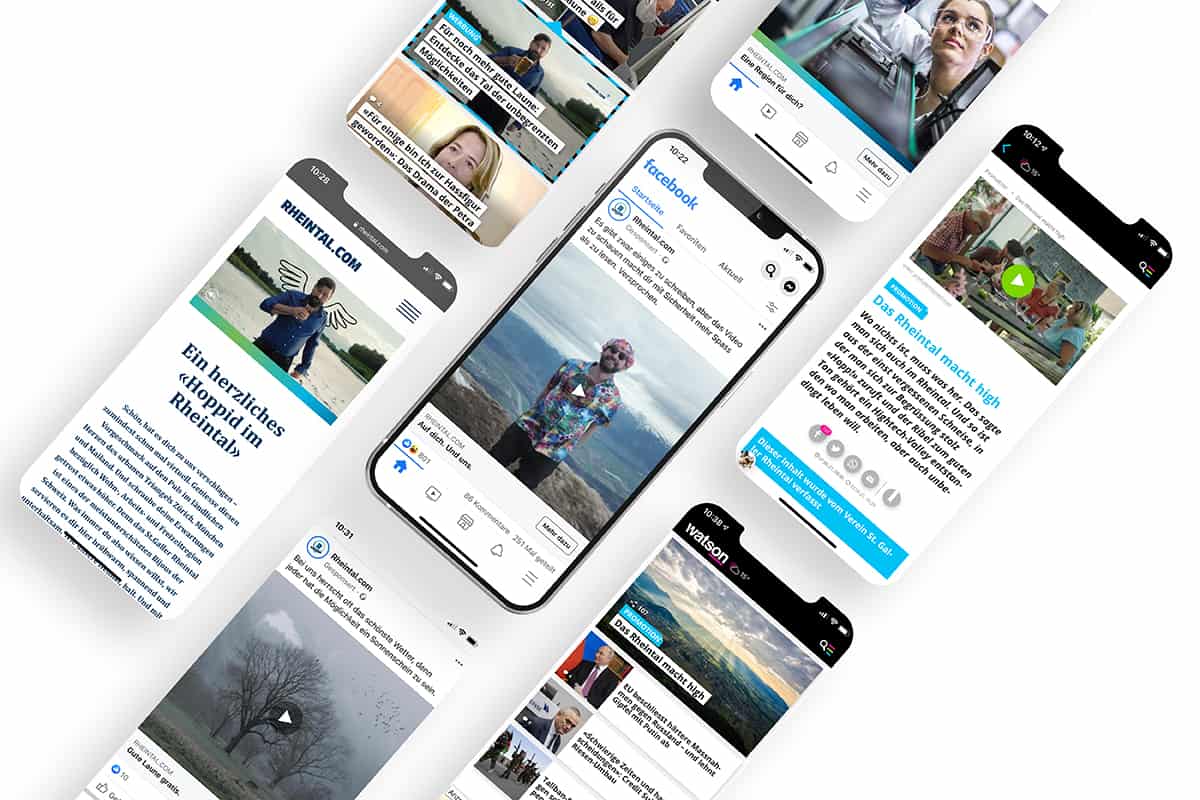
The St. Gallen Rhine Valley is positioning itself as an efficient business location and attractive residential region. With the new image film, the St.Galler Rheintal association aims to arouse interest in the region in an independent and humorous way. The Rheintal comedian Nico Arn guides the viewer through the film with his rhymes, musically supported by rhythm artist Enrico Lenzin, who is also from the region.
Farner St.Gallen produced the two-minute film and the accompanying social media clips in close collaboration with Seed, director Ari Zehnder and the St.Galler Rheintal association.
Also completely new is the website of Rheintal.com. The "Hub for all those interested in the Rhine Valley", designed with great attention to detail and written by Christoph Hess, was realized by Kliqs.
The film and website were launched with a social media campaign, a content bridge and two promotions on Watson.
Responsible at the St. Gallen Rhine Valley Association: Sabina Saggioro, Corinna Rohner. Responsible at Farner St.Gallen: Petra Moser (consulting), Jan Walser (creative direction, web design), Christoph Hess (text web), Nico Arn (text film). Responsible at Seed Audio-Visual Communication AG: Ari Zehnder (writer, director, editor), Rafael Kistler (cinematographer), Enrico Lenzin (music), Claudio Garovi (production manager), Felix Courvoisier (producer). Responsible at Kliqs: Philipp Sutter.
Ruf Lanz makes it into Lürzer's Archive with three more campaigns
With campaigns for Tier im Recht, Museum Haus Konstruktiv and Suva, Ruf Lanz once again makes it into the international selection of Lürzer's Archive's most creative advertising.
Editorial
-
June 30, 2021
Lürzer's Archive publishes the advertising world's most creative campaigns and works every two months. The rigorously curated magazine is published in 68 countries and enjoys a high reputation in the creative industry. For the just published Volume 1 + 2/2021, three campaigns have been selected by Ruf Lanz.
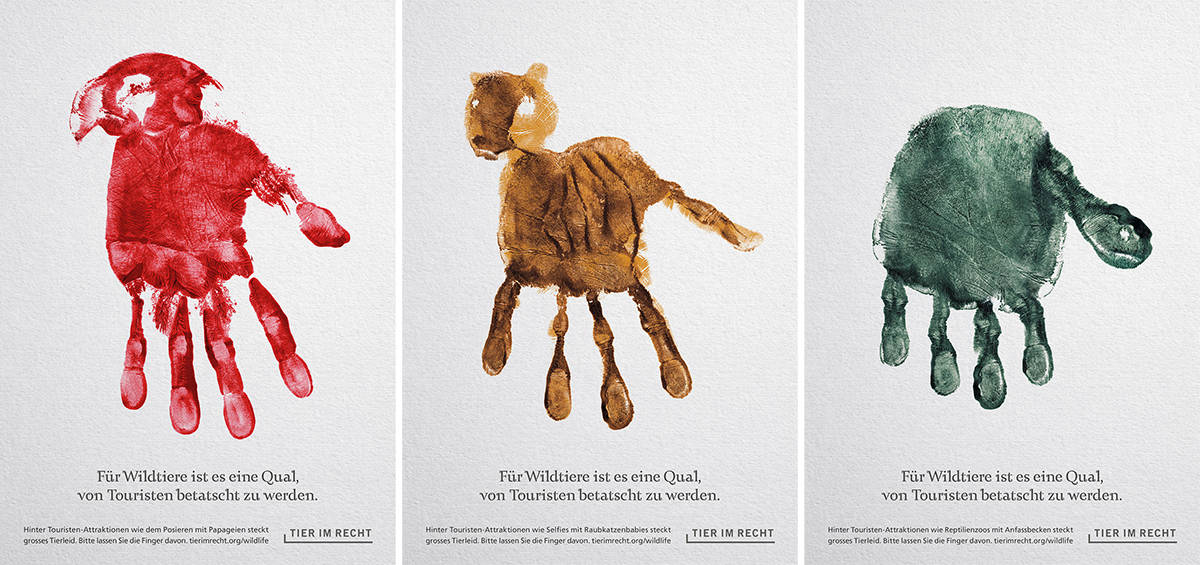
First, the current "Hands off tourist attractions with wild animals" campaign for the Animal in Law Foundation. (Werbewoche.ch reported). The unnatural proximity to humans and the constant pawing means permanent stress for wild animals. That's why Ruf Lanz uses striking handprints to illustrate the sad traces tourists leave behind during "hands on encounters" with wild animals.
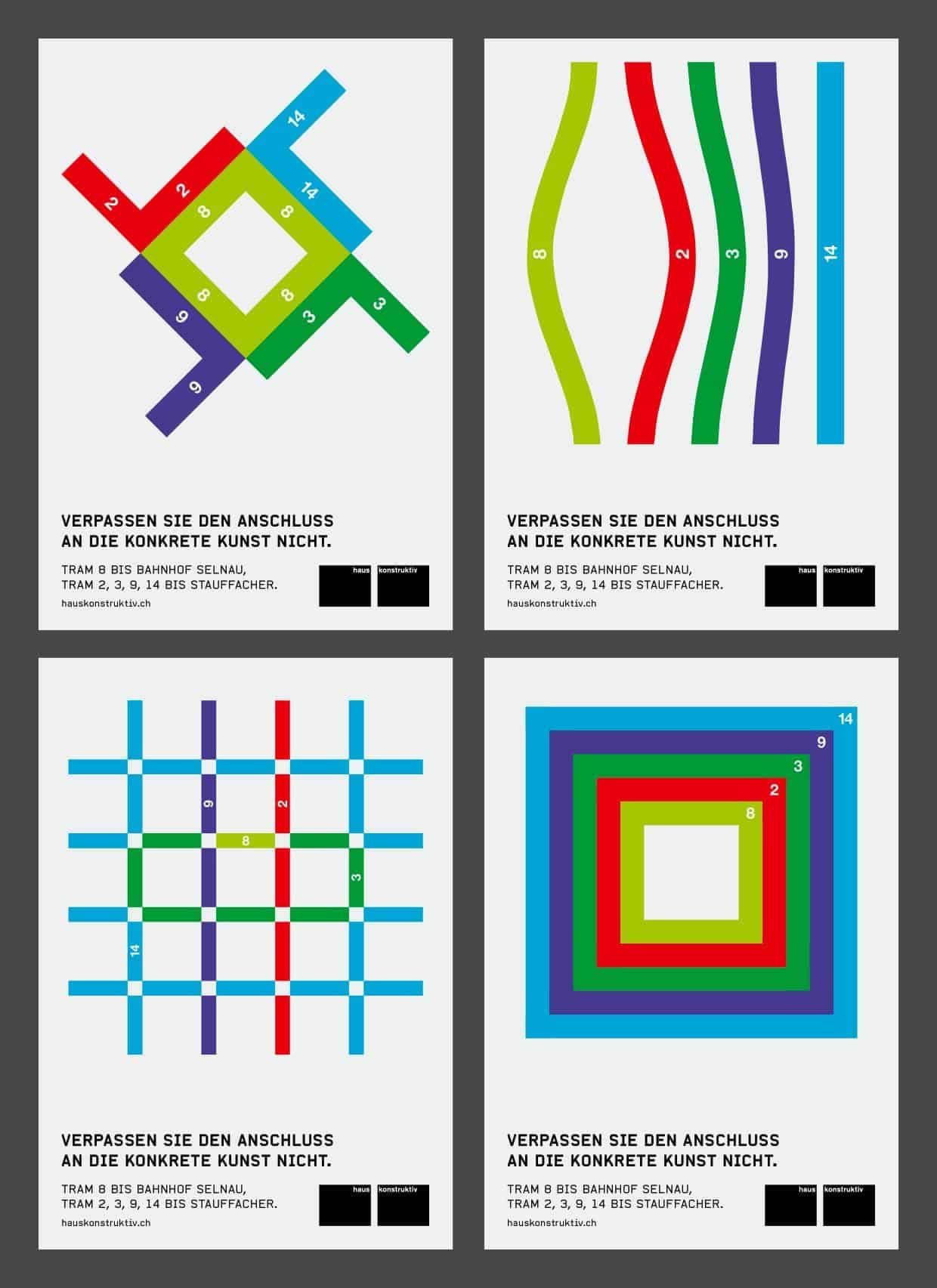
Second, the current campaign for the Museum Haus Konstruktiv (Werbewoche.ch reported). In cooperation with the VBZ, the museum invites the public not to miss the art connection. In concrete terms: with art from those streetcar lines that lead to the museum.
Thirdly, the current appearance for Suva. Ruf Lanz uses a special menu card to show which body parts ticks particularly like(Werbewoche.ch reported). To spoil the appetite of the nasty bloodsuckers, you can find the appropriate prevention tips on the Suva website.
Do you speak LinkedIn yet?
The social business network LinkedIn is widely used. In his guest article, Roger L. Basler de Roca talks about mistakes made on LinkedIn and what kind of change is taking place on the social network.
Guest author *
-
June 29, 2021
Launched back in 2003, the former career network LinkedIn is celebrating its 18th birthday and enjoys national and international renown. The number of users is constantly increasing, and the trend is clear in Switzerland as well, where there will soon be 3.2 million users: networking, digital selling and recruiting take place online every day thanks to LinkedIn. Despite the high success potential of the social media network, there are still a lot of mistakes, especially in behavior, but there are also opportunities that can be exploited.
What is LinkedIn anyway?
LinkedIn is a social media platform, bought by Microsoft in 2016, that is specifically designed for business. Contrary to other platforms, LinkedIn is not intended to share anything too personal, such as dinners or vacation pictures - even though many people now do this in the same way as on Facebook. This is probably a natural development when the likes and comments on Facebook and Instagram fail to materialize and you can quickly gain many contacts via LinkedIn.
However, it would be much better to view and use the platform as a networking platform with social media functionality. This way, jobs can be found via LinkedIn, you can stay in touch with colleagues and partners, and you can further expand your network online.
But that's not all: with LinkedIn Learning, the platform also has a continuing education character, and specific solutions such as Recruiter Light or the Sales Navigator are popular in human resources and sales, respectively. LinkedIn is thus a business-to-business medium on the web where everyone shows their best side - after all, it's all about business.
Why LinkedIn is being used incorrectly
LinkedIn, like all other platforms, has three elements for presenting your own professional brand:
Stories (mobile only)
Profiles (for the person)
and pages (for companies or schools or NGO)
In the case of company pages, it is also possible to attach focus pages, for example for subareas, additional brands or departments. Since 2021, it has also been possible to attach products to LinkedIn pages, and LinkedIn is working on a service marketplace in the background via Linkedin.com/services.
Of course, the LinkedIn profile is important first, but LinkedIn is also a social network that should be maintained. Thus, the real relationship and contact are only created through interaction. Meaning: Create a clean profile, but then be sure to create posts. Because currently only 4 percent of all users on LinkedIn - 756 million worldwide, 16 million in the roof space - are actually real content creators.
Today, we know that interaction leads to conversations, conversations lead to relationships, and relationships lead to opportunities - for example, a sale or a recommendation.
So a profile or page that is never touched after it is created will not lead to job opportunities, network expansion, or sales success. The basic principle is to help and network. Far too often, individuals and companies are still in self-promotion mode. Yet it is on LinkedIn that you can show that you are present and engaged. If there are several people within a company, all the better. Because this directly improves the company image, and at the same time it also increases your own visibility of the professional brand: among the people and the company in general.
The value of the network is behind the network
In the business context, networking is key. Therefore, it is also highly relevant to network on LinkedIn with business partners, acquaintances and perhaps even new, potential customers and partners. But should you accept every person for this? Or should you just make wild inquiries?
Twice clearly no. Because only a genuine, organically grown network also leads to real interaction and conversations. First of all, this requires a contact request on LinkedIn, and many things can go wrong with this. The first mistake: not attaching a message to the contact request. Would you sit down at a table with a person without being asked? Probably not. But that's exactly what happens when you send "blank" contact requests. Then the content: is it personal or does it sound copy-pasted? Can I make a relevant connection? Don't sell is the motto: it's about building relationships. And that takes time, and above all decency.
What about the contacts on company websites? These are called followers, and all too often the preconception prevails: many contacts or followers also mean a lot of reach. Unfortunately far from it. You can invite up to 100 people per month to follow your company page, but is the content really exciting enough? If we know that only 4 percent of people on LinkedIn create content, then we also have to soberingly realize that often only 2 to 3 percent of people interact on LinkedIn. Still far too few and thus a great opportunity.
What change is taking place on LinkedIn?
LinkedIn is increasingly taking on the characteristics of Instagram and Facebook. The fact that the platform is intended for business purposes can hardly be guessed from some profiles on the business network. Instead of professional portrait photos, more and more people are using selfies, group photos or their own photo shoots as profile pictures. The photos may be nice, but they are more than inappropriate in a business context. You have to think of LinkedIn like a job application portfolio. A selfie does not belong in a cover letter, and neither does it belong on LinkedIn.
Social interactions are essential on LinkedIn. As already mentioned, posting and commenting is also highly relevant to push your own network. However, you should not overdo it. You should remain professional and only post something if you have something to announce. Does it help someone? Does it show my competence or a commitment? Or is it just advertising? More and more people are wasting LinkedIn as a marketing tool, or posting every single little thing. That's simply not what LinkedIn is for. It is a network for exchanging professional questions and opinions. But it is by no means a network for marketing one's own business, let alone one's own person. On LinkedIn, only one's own expertise counts in the end, and that is recognizable even without many words. And for those who do want to use a lot of words: LinkedIn has a blog function called Article, where you can write pages of text, as well as links and videos. In addition, there is the Live function and soon a Clubhouse variant - so LinkedIn is also developing further.
Why digital selling ideally complements and partially replaces classic sales
The fact is that classic sales measures often no longer work as they used to. Especially in times of home offices, LinkedIn offers exciting opportunities. But be careful: people don't like cold calling on social media. The chances of being successful are quite small. Statistical figures from Germany and the U.S., as well as our own research in the DACH region, show that around 90 percent of all decision-makers say they ignore cold calls, but are on LinkedIn every day - up to four times a day.
A proven measure in digital selling is the tactic of social selling. Here, the aim is to use social media to build up and strengthen customer loyalty during the sales process and to prepare it to a large extent - despite all the digital aspects, people still buy from people. But prospects become aware through social media. Today we know that the relationship with the customer can be maintained until the sale is closed via LinkedIn and supplementary channels such as blog, YouTube or TikTok.
Examples of social selling techniques include:
the exchange of relevant content
direct interaction with potential buyers and customers
the personal branding and social listening
But before the start, the people involved have to be trained. Social selling is a matter of attitude and a lot of routine. It doesn't matter what product or service wants to be sold, but whether it is understood, in this new digital reality and with contemporary tools like the LinkedIn Sales Navigator, added value is created and people are brought together.
Roger Basler
Roger Basler, why is a current Profile on LinkedIn so important?
Roger Basler: It is the business card and the first touchpoint when it comes to building trust and getting the relationship started.
What should the user personally disclose on the LinkedIn profile?
Personal never means private! For me, personal means everything that you would say at an aperitif. This includes voluntary commitments or topics that have helped me professionally, or even education. Topics related to politics or religion should be avoided.
How do I get clients without pandering on LinkedIn?
With comments. One should not forget the power of comments, because it creates the initiation of a relationship. Only the interaction brings the dialogue, the dialogue brings the relationship and then the relationship brings success.
Why do you propagate recommendations so strongly on LinkedIn?
Because I believe that you should give more than you take. On LinkedIn in particular, you can actively give people a recommendation - in my case, there are now over 100 people I know and trust. So I wrote a recommendation to these people and that helps them and of course indirectly helps me, because my network has a network value.
*Roger L. Basler de Roca is a business economist FH and digital entrepreneur. His specialties include building digital business and growth models in digital marketing with analytics.
TrueStory shows the breadth of Alnatura's product range
TrueStory is continuing Alnatura’s brand campaign, which launched in 2020, and is releasing three more stories that feature different consumers and showcase the organic supermarket’s extensive product range.
Editorial
-
June 29, 2021
In the spots, various protagonists discover with amazement the many organic offerings from Alnatura and other organic labels. From a point-of-view perspective, they are accompanied through the shelves of Alnatura. At the same time, they interact with their friends, family or work colleagues via cell phone and other common means of communication such as voice messages, chat and video call. After all, they also want to benefit from Alnatura's wide range of products, although they have their own needs for organic products. The three videos will be played on Alnatura's social media platforms as well as on a Landing page.
Responsible at Alnatura: Sven Guggenheim (overall responsibility), Anja Brühlmann (project management). Responsible at TrueStory: Norbert Rieger, Marco Egger (project management), Elie Kerbage (text). Production: Luca Steiner, Marco Egger.
Wills besser isch: Family and Farmy raise awareness for more conscious eating
For Family for Farmy's first image campaign, the Ustermer agency raises awareness for more conscious eating and asks viewers if they know where their food comes from.
Editorial
-
June 29, 2021
Fresh, sustainable and delivered directly from the farm is Farmy's concept. "Bewusster Essen" is designed to get to the heart of this USP with a simple question and real images from the region. The campaign can be seen in the focus regions on digital OOH sites, on all social media channels and in the cinema.
Responsible at Farmy: Florian Laudahn, (CMO), Laura Kreis (Campaign Management). Responsible at Family: Claudio Catrambone, Svenja Hässig, Corinne Schneider, Marc Ambühl, Matthias Rüegg, Marion Gwerder. Production: Bubbles&Sons.
Yellow leads Kestenholz to the K2
Kestenholz Automotive Holding has defined specific performance goals in its 2025 Mission Statement. To ensure these goals don’t remain mere words on paper and to enable employees to make an active contribution, the auto repair group sought support from Yellow. Together with Epoint, the agency has developed an online application designed to help employees achieve the 5-year goals in a fun, game-like way, structured as an expedition.
Editorial
-
June 29, 2021
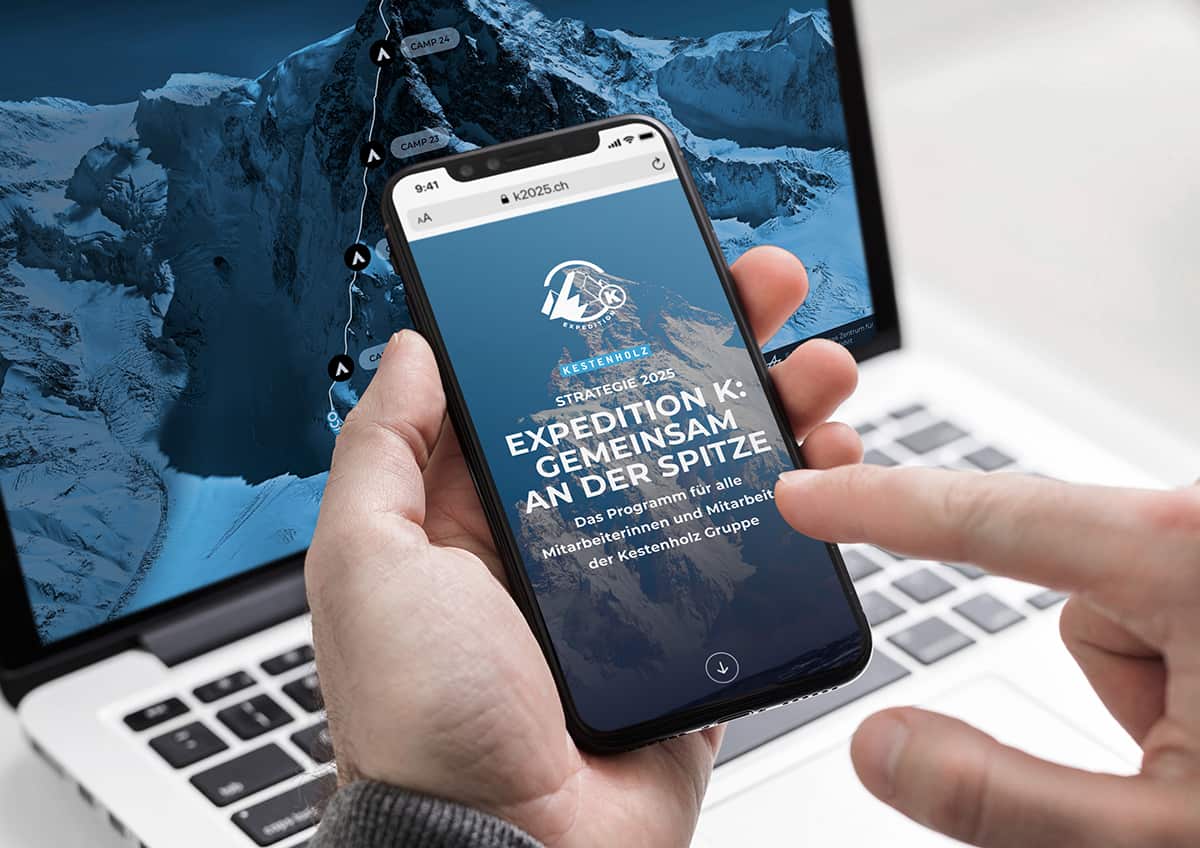
Like many companies, the management of the Kestenholz Group uses a mission statement with concrete KPIs to steer the company's development. Aware that the goals can only be achieved with the active support of the approximately 650 employees at the twelve locations, the garage group turned to Yellow. The agency is to find a way to ensure that the transfer of the mission statement into the employees' everyday work succeeds.
Expedition to the summit
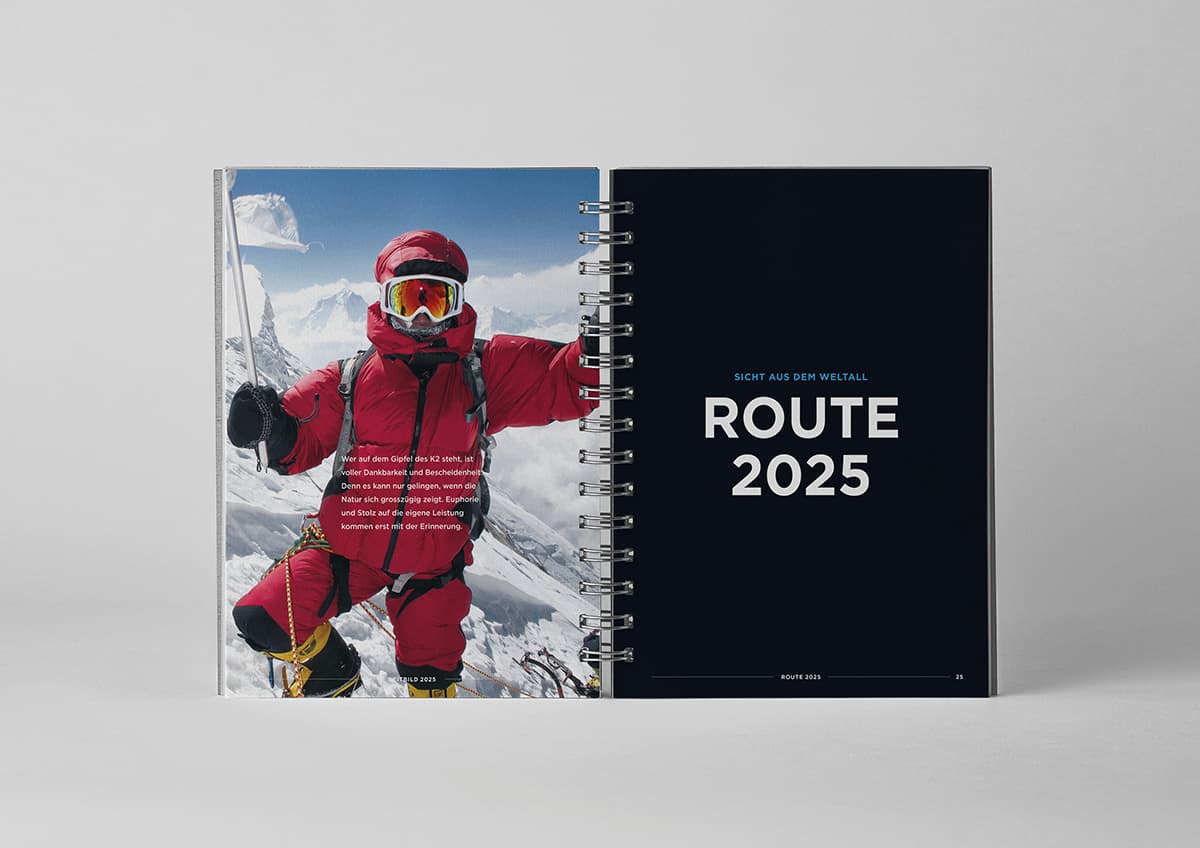
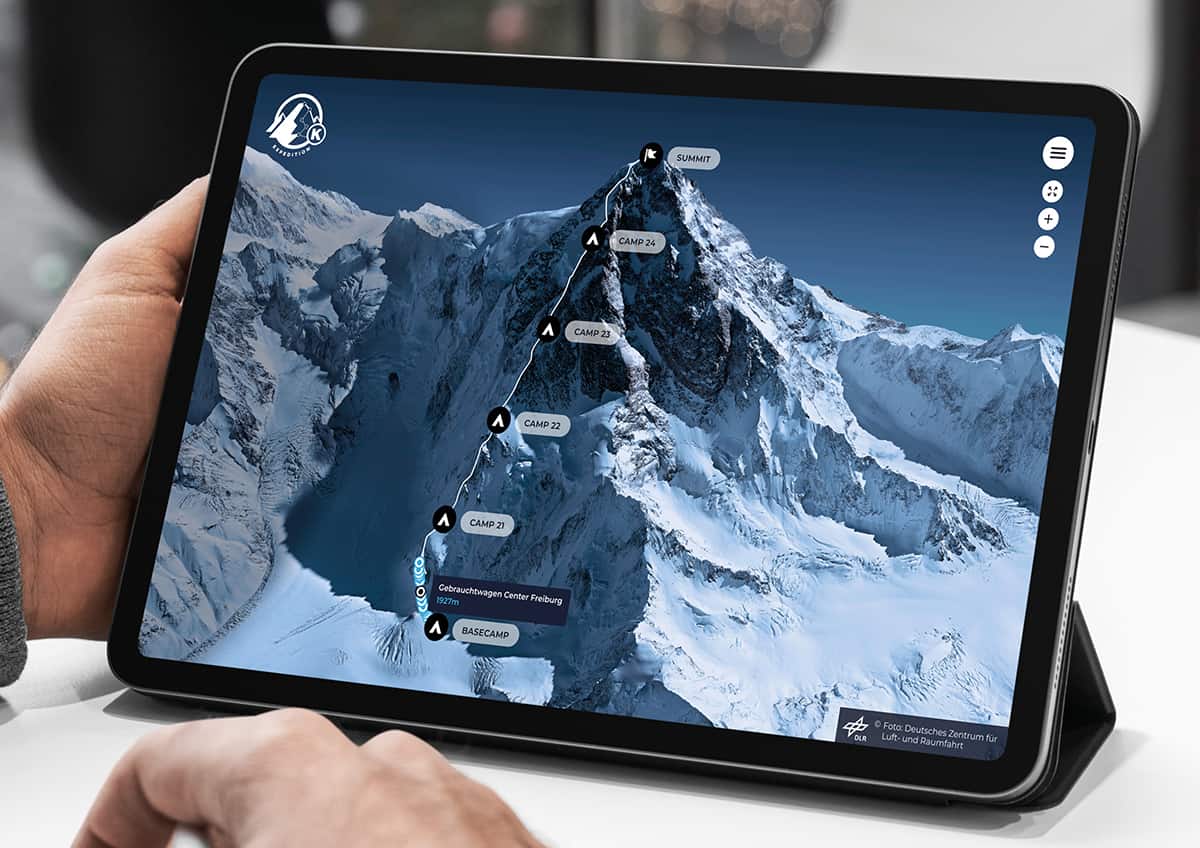
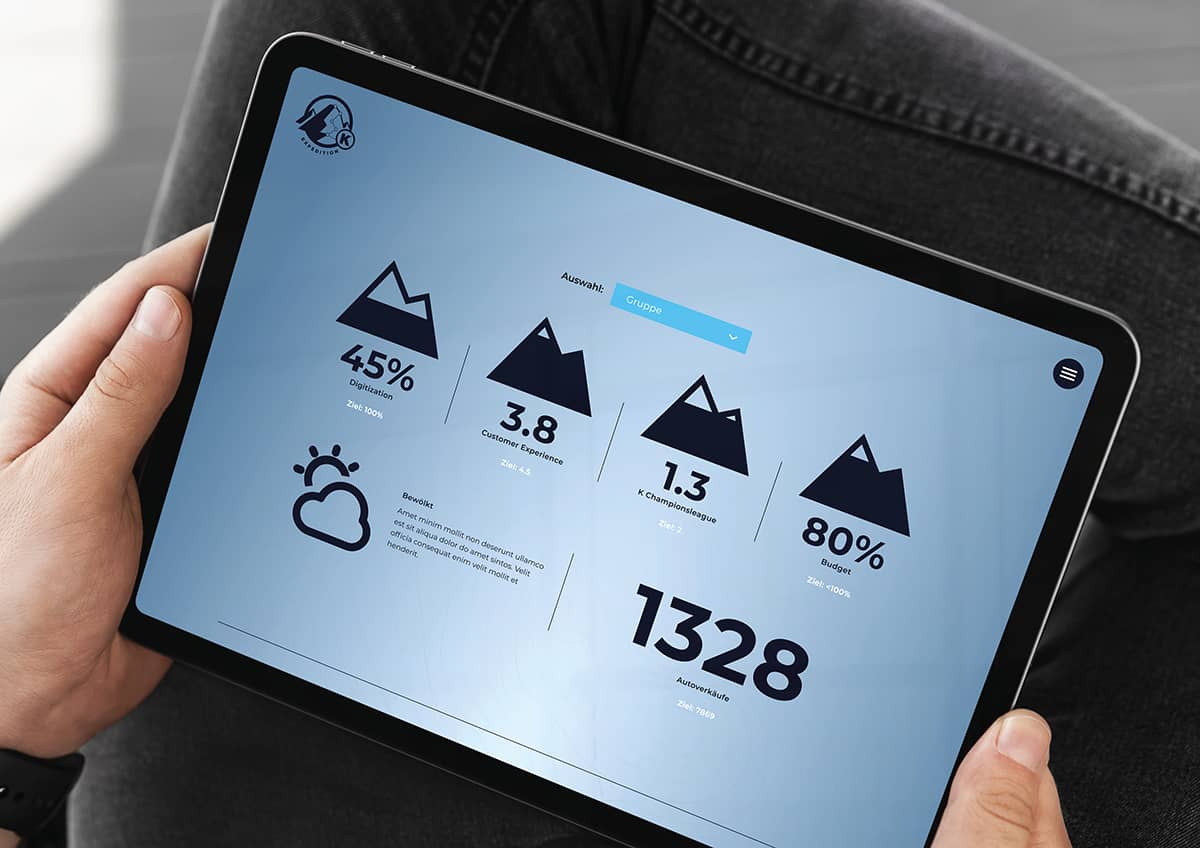
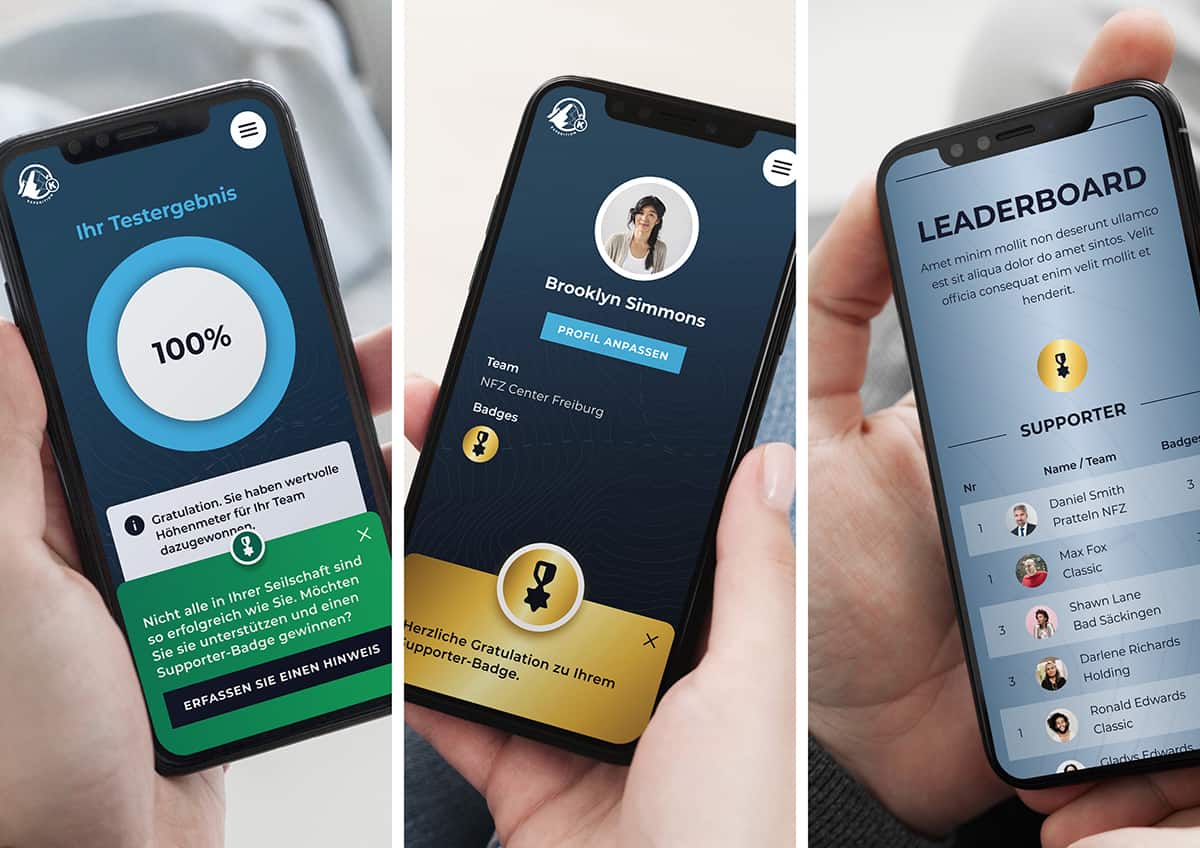
The result is Expedition K, a practical and role-based online program that turns the path to the corporate goals 2025 into a symbolic ascent to K2. At the beginning, it supports employees in familiarizing themselves with the content of the mission statement and its instructions for action. Afterwards, the teams compete as they climb to the summit. Whoever passes their stage test, which is tailored to their function in the company, wins altitude meters. Live tracking allows progress on the mountain to be followed at any time. Employees who support colleagues are rewarded.
The development program uses the Group's existing app to communicate with employees. During the five-year term of the program, a management cockpit provides information on performance "on the mountain" and the status of performance.
Responsible at Kestenholz Automotive Holding: Thomas Kestenholz (CEO), Stephan Kestenholz (Chairman of the Board). Responsible at Yellow: Reto Meyer (Ambassador), Mira Ewert (Planner/Treasurer), Pascal Rehmann (Concept Designer/Designer), Hannes Müller (Strategist/Concept Designer), Daniel Bard (Digizepter/Designer); Epoint (Development and Programming).
In Flagranti accompanies 1899 architects into a new era
The Thun-based architecture firm Lanzrein+Partner is now called 1899 Architekten. In keeping with the change of name, In Flagranti Communication developed the architecture firm's rounded appearance, which honors its tradition and leaves room for future generations.
Editorial
-
June 29, 2021
The work of 1899 Architekten is based on the continuous exploration of structures, constructions and materials. With the founding year in its name, the newly developed website honors this tradition and reflects the cycle of each project in type and form.
In Flagranti Communication has developed the new logo and corporate design for 1899 Architekten. A characteristic pattern of circles and the "Round" font - developed by Bureau Brut - set the new era of the oldest architectural firm in Thun in motion.
Farner brings all-round protection from TCS to life with stories
Farner's latest TCS campaign showcases everything the mobility club offers to help its members travel with greater peace of mind.
Editorial
-
June 29, 2021
The Touring Club Switzerland TCS offers its members advice, protection & assistance from a single source. Whether they are traveling by car, bicycle or public transport. The TCS actively takes care of its members: Here in Switzerland and abroad.
The current club campaign, developed by TCS together with Farner Consulting, picks up on this. The campaign, which went live last week, builds on the tried-and-tested slogan "Even at.... TCS helps", but has been strategically developed along three axes.
Moving storytelling
The campaign shows the full range of the eventful life of families. The fun of being on the road, but also how quickly this can turn into worry and damage when Murphy's Law strikes. With several short videos, which tell stories from the eventful life, it is to be conveyed simply and emotionally how the TCS helps, advises and protects in the most diverse situations. The stories function both as short films and as poster and still implementations.
New look & feel
To make this kind of storytelling possible, a new look and feel was developed. In close collaboration between TCS, Farner and animation designer Neil Stubbings, the Turrini family was brought to life.
End-to-end customer journey experience
New formats and assets were developed for the campaign along the entire customer journey, so that the "journey" to TCS membership also becomes a more coherent experience for the addressed TCS target groups through the entire campaign journey: from posters to bumper, story & testimonial ads to several landing pages and behavior design optimized conversion ads.
Responsible at TCS: Dierk Schehrer (Head of Marketing Communications), Alain Götschi (Marketing Project Manager), Matthias Kienast (Online Marketing Manager SEM/Data). Responsible at Farner: Daniel Jörg (Practice Head Marketing Communications), Philipp Skrabal (Chief Creative Officer), Hanja Heuss (Creative Director), Jonas Brändli (Senior Consultant), Nicolas Glauser (Senior Consultant & Head of Performance Marketing), Aleksandar Sofranac (Senior Art Director), Ennio Cadau (Senior Copywriter), Nadja Gysin (Senior Consultant), Lukas Günter (Associate Consultant Content Marketing), Tjabrina Penazzi (Polygrafin), Daphne Abderhalen (Motion Designer). Other partners: Neil Stubbings (direction, design, animation), Netzeffekt (concept, design and implementation of landing pages), Jingle Jungle Tonstudios (music and sound design), Ansichtssache (litho).
The response realized No campaign to the tax initiative of the Juso
The agency Die Antwort won a pitch for the nationwide "No" campaign against the tax initiative.
Editorial
-
June 29, 2021
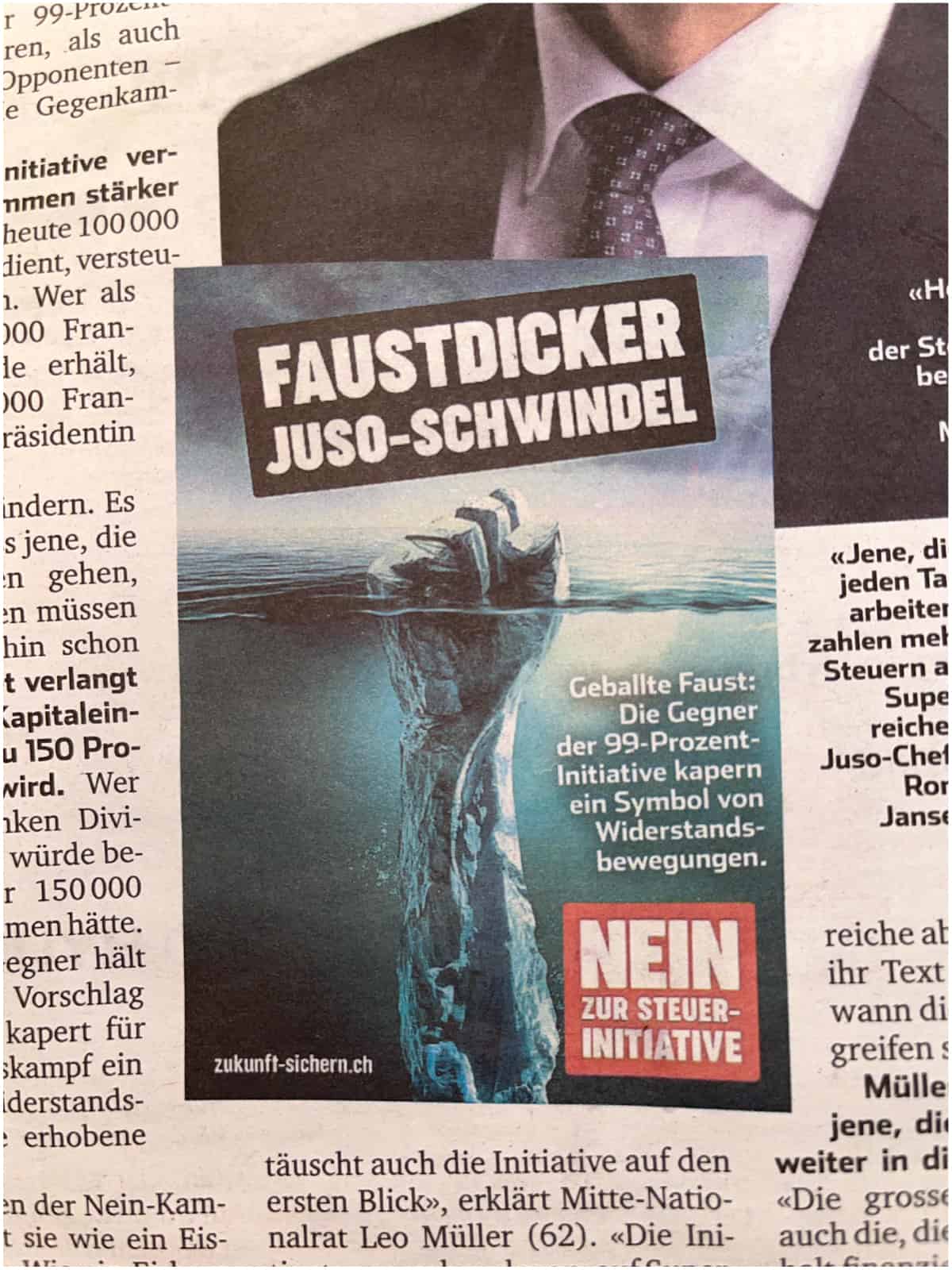
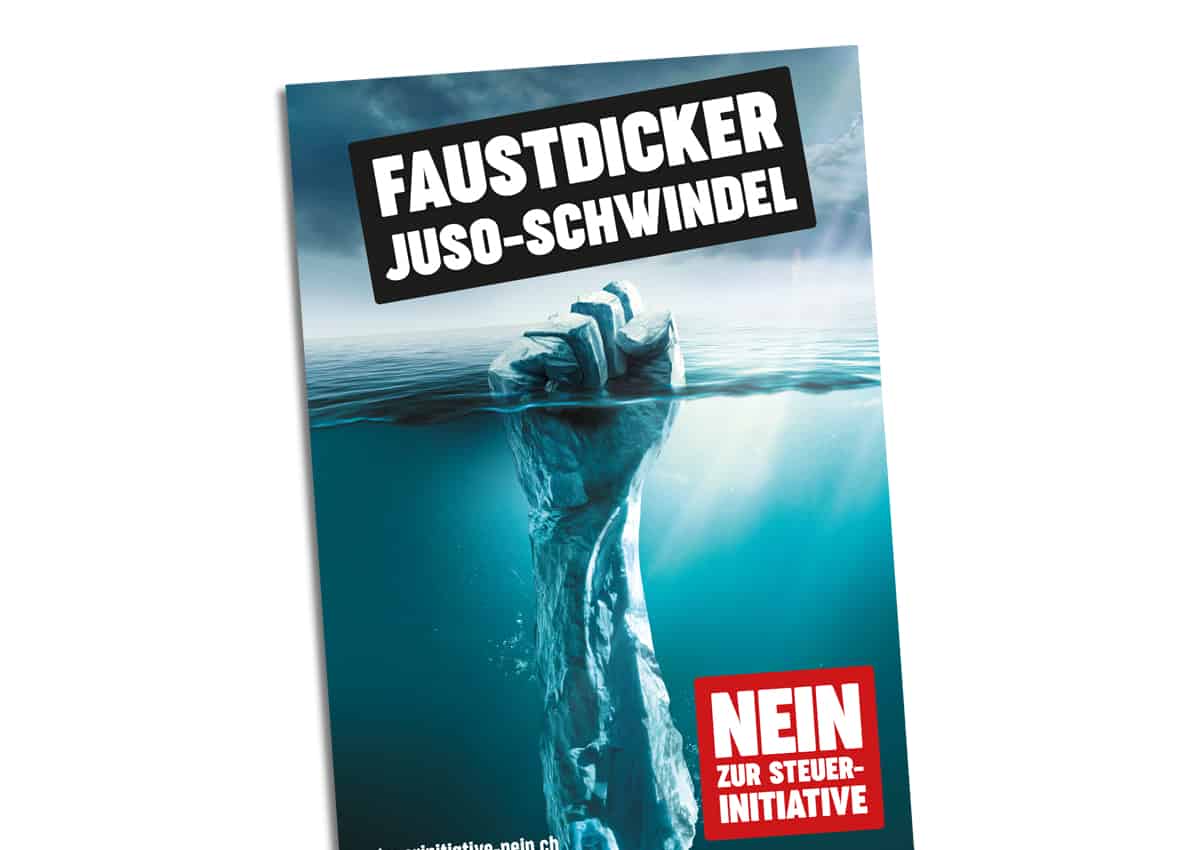
Together with an alliance of politicians and businesses, Economiesuisse launched the "No" campaign for the Juso tax initiative, better known as the "99%" initiative, in the media on Sunday. The vote will take place in September 2021.
Die Antwort has chosen a left-wing symbolic image used for resistance movements as its campaign subject.


 Vita-Hexin is a wound ointment that accelerates the healing of minor wounds and can prevent or fight minor infections. As part of the current campaign for the wound ointment, Madonna has developed various measures. The campaign focuses on comforting the mother or father in the event of an accident, followed in a second step by the application of Vita-Hexin. With this sequence, the Vitahexin campaign focuses on the parent-child relationship and is intended to create closeness and sympathy in the process.
 The cookbook takes on new freshness and finesse. The basic recipe remains the same: The Tiptopf is intended to inspire joy in cooking with basic recipes that are sure to succeed. During the next two years or so until the launch, a community with an affinity for cooking will be built up and interest in the cookbook will be gradually increased through various channels.


 Lürzer's Archive publishes the advertising world's most creative campaigns and works every two months. The rigorously curated magazine is published in 68 countries and enjoys a high reputation in the creative industry. For the just published Volume 1 + 2/2021, three campaigns have been selected by Ruf Lanz.


 Fresh, sustainable and delivered directly from the farm is Farmy's concept. "Bewusster Essen" is designed to get to the heart of this USP with a simple question and real images from the region. The campaign can be seen in the focus regions on digital OOH sites, on all social media channels and in the cinema.
 Like many companies, the management of the Kestenholz Group uses a mission statement with concrete KPIs to steer the company's development. Aware that the goals can only be achieved with the active support of the approximately 650 employees at the twelve locations, the garage group turned to Yellow. The agency is to find a way to ensure that the transfer of the mission statement into the employees' everyday work succeeds.
 The work of 1899 Architekten is based on the continuous exploration of structures, constructions and materials. With the founding year in its name, the newly developed website honors this tradition and reflects the cycle of each project in type and form.


 The Touring Club Switzerland TCS offers its members advice, protection & assistance from a single source. Whether they are traveling by car, bicycle or public transport. The TCS actively takes care of its members: Here in Switzerland and abroad.


 Together with an alliance of politicians and businesses, Economiesuisse launched the "No" campaign for the Juso tax initiative, better known as the "99%" initiative, in the media on Sunday. The vote will take place in September 2021.