Kurt Pelda joins Weltwoche

Swiss journalist and author Kurt Pelda will join Weltwoche's editorial team in February 2022 on a 100-percent stint.

WeltwocheAfter stations among others at the NZZ, Financial Times and the Tages-Anzeiger Pelda will use his international experience as a war reporter and researcher again for the Weltwoche contribute. He was already a freelance writer for the magazine until 2016.

Pelda will be responsible for both the print edition, which was relaunched last year, and for the new and expanded World Wednesdays-Digital platform effect. (pd)

Wirz launches many more Robin for Migros for Christmas

The compassionate delivery drone Robin was just the start of this year's Migros Christmas campaign. The film will now be followed by many more measures from Wirz's creative kitchen - with even more Robin, more inspiration and more social interaction.

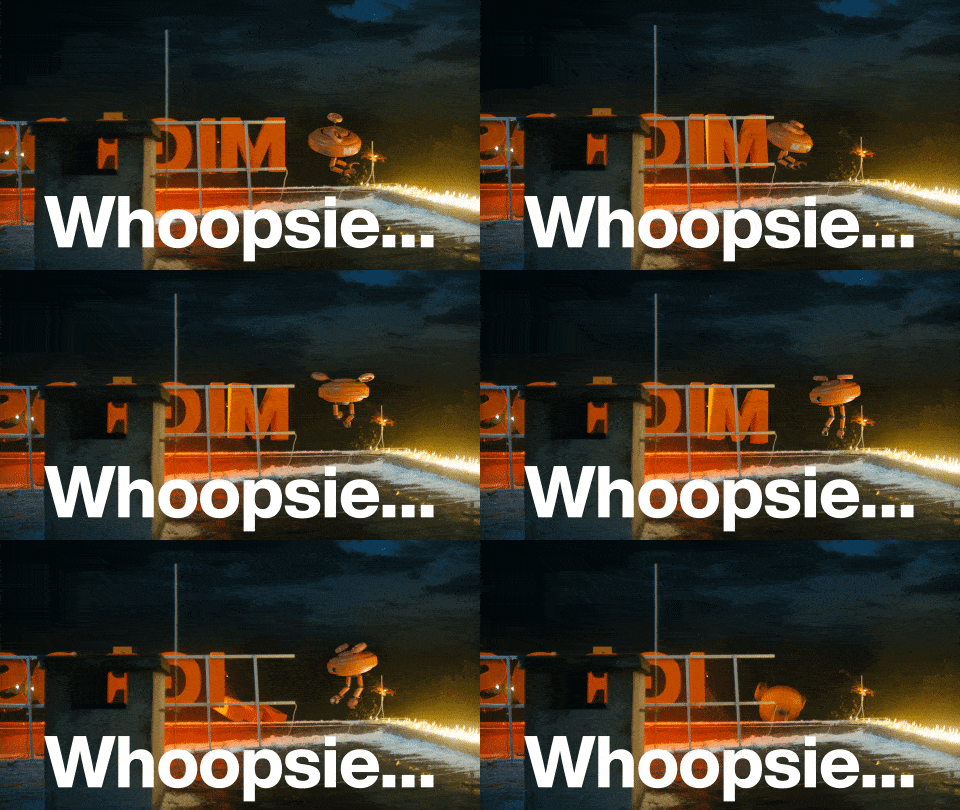
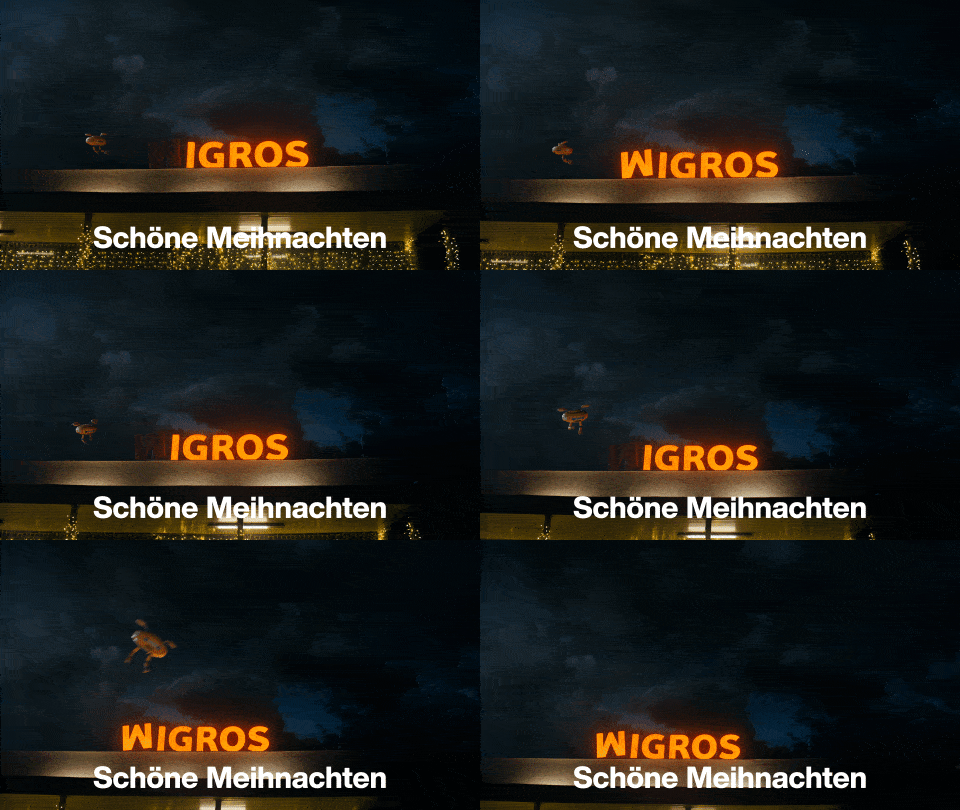
WeihnachtenIn four online films, the orange drone flies through more Christmas adventures: in a Guetzli kitchen, at night in the store with a lonely robot, with a growling dog and during an unexpected encounter with a Migros facade sign. The short films lead to the online Christmas hub Christmas.migros.chwhere you can find inspiration and ideas around Christmas. For example, there are decoration tips, gift ideas, recipes and special offers to discover.

Migros puts its money where its mouth is

In the Christmas movie Robin with a small gesture helps an elderly woman, who has no one left, to an unexpected joy (Werbewoche.ch reported). Migros wants to ensure a stronger togetherness with its year-round commitment. Now, for the Christmas season, a Migros commitment project is being launched in collaboration with Spitex Switzerland: the Migros Christmas Post" initiative.

With the help of the specially developed postcard generator, Christmas greetings can be created online in the form of a postcard. The cards are printed by Swiss Post and sent to Spitex organizations throughout Switzerland. Spitex employees then deliver the Christmas greetings to affected people in the hope of giving them a smile, especially at Christmas.

With each postcard, a contribution can be made for a stronger togetherness. There is also the possibility to indicate the sender, so that acquaintances or even friendships can develop beyond the Christmas season.

Wirz has developed a visual bracket for all communicative measures. This ensures a consistent presence on all channels and at all touchpoints. The campaign runs on TV, in cinemas, online, with DOOH, in Migros' own digital media, in the Migros magazine and at POP.


Responsible at the Federation of Migros Cooperatives: Désirée Strassmann, Michel Noverraz (Campaigning), Christian Keller (Media), Marta Mielcarek, Anna Eberle, Tanja Krause, Céline Jagisch, Markus Sollberger (Sales Promotions Campaigning), Beatrice Lütjens, Raphael Jung, (Digital Campaigning & Promotions), Nicole di Natale (Communication and Media). Responsible at Wirz: Livio Dainese, Lorenz Clormann, Jan Kempter, Florian Siegrist, Yannick Schaller, Artur Faria, Björn Bippus, Nicole Vizcardo, Evelyn Schellenberg, Adrian Busse, Zara Velchev, Sutthikit Tuti (Creation); Cosima Lang, Laura Saner, Claudia Landolt, Francesca Kleinstück (Storyline); Nico Keramaris, Florian Joller, Anina Eugster (xLab); Erasmo Palomba, Ruwanie Hayoz (Agency Producing); Petra Dreyfus, Catrin Bewersdorff, Ella Papadakis, Katharina Erdrich, Valeria Vuckovic, Carolina Jiménez (Consulting); Marleen Diener, Julia Ewers, Anna Maierski (strategy); Giovanni Bucca, Thomas Peller, Yussef Serrat, Sonja Jegen, Corinne Räber, Oliver Fäs, Karin Gartmann, Rahel Signer, Tanja Höhn, Flurina Egli, Elena Braun (WMR); Pumpkin Film (film production); Kasper Wedendahl, Matthias Kappeler (Director); Matthias Kappeler (Director of Photography); Stefanie Brand (Executive Producer); Maciej Kozlowski, Wolfgang Weigl (Editors); Steffi Beck (Postproduction Producer Pumpkin Film); BaconX (Postproduction CGI): Jan Tvilling (Creative Director BaconX); Louise Bejerholm (VFX Producer BaconX); Hannibal Lang (Colorist BaconX); Jorrit Kleijnen (Music Composer); Südlich-t (Postproduction Versioning); Jingle Jungle AG (Audio Postproduction); Matthias Auer (Photographer Sélection); Marlise Isler (Styling Sélection), Peter Marty (Styling Food Sélection); Claudia Linsi (Photographer Theme Ads, Online Content); Feride Dogum (Styling Theme Ads, Online Content); Anita Oeschger (Styling Online Content). Media: Samia Montaque, Gisela Kübler, Barbara Rizzo, Laetitia Furegati, Romana Thoma, Janina Seidl (Dynamo Team from Dentsu Switzerland). Digital conversion: Isabell Hannemann, Hoang-Vu Luu, Sebastian Locke, Lisa Marie Maier, Ann Kristin Delplanque (Mutabor Technologies); Roman Hofer, Barbara Sollmann, Matthias Tschanz, Piotr Bochniak, Tomasz Sobczak, Wojciech Najman, Patrick von Arx, Vlad Frolov (Apps with love).

697 THz promotes cinema with statements

Under the slogan «Movies Need Space,» arthouse theaters are highlighting the benefits and unique aspects of going to the movies in their current campaign. The campaign was created by the Zurich-based design studio 697 THz.

In a playful way, the campaign combines current arthouse film stills with catchy statements - and shows with headlines such as "Close your mouth, open your eyes" or "Screen diagnostics versus screen" that the cinéastic genius of quality films can only unfold one hundred percent in the right setting. Zurich's cinemas, which focus on independent film hits from around the world, offer the ideal platform for precisely this unfolding.

"Our goal with the campaign was to highlight the benefits of going to the movies in a bold and witty way," says Stephanie Candinas, co-managing director of Arthouse Cinemas.

Tania Cambeiro, Project Manager Sponsoring at ZKB, is also convinced by the subjects: "The new arthouse subjects get to the heart of the film experience in terms of content and visuals. We are pleased to be able to make our contribution as the main partner of the Arthouse cinemas."

In addition to digital and analog OOH subjects, Insta posts complement the campaign.

Responsible at Arthouse Cinemas: Stephanie Candinas (Co-Managing Director), Stephan Henz (Programmer). Responsible at Zürcher Kantonalbank: Tania Cambeiro (Project Manager Sponsorship). Design studio: 697 THz.

DOOH advertising from Neo Advertising provides fresh air in Küsnacht

Climate-friendly and sustainable advertising: The OOH company Neo Advertising plans to market «CityBreeze» in Switzerland. The new product combines air purification using natural moss filters with a digital advertising space.

Neo Advertising

The first CityBreeze screen is located in front of the headquarters of the advertising marketing company Goldbach in Küsnacht. The digital advertising space with the 75-inch screen may seem like an ordinary DOOH screen at first glance, but it has an interesting - and climate-friendly - feature: The CityBreeze combines the digital advertising space with living moss and a filter technology from the Brandenburg-based startup Green City Solutions.

OOH marketer Neo Advertising, majority owned by Goldbach, plans to market the CityBreeze screens in Switzerland. A CityBreeze can clean, cool and humidify up to 1,400 cubic meters of air per hour. This is equivalent to the air breathed by 2,800 people per hour. The active moss filters can remove up to 82 percent of fine dust from the air, improving the air in the immediate vicinity.

Moss has an enormous absorption area due to its many fine, thin leaflets. The approximately two square meters of moss that grow in a CityTree correspond to an active moss area of 60 square meters, through which fine dust from the air is bound and metabolized. Moss can also bind moisture and release it in the form of evaporative cooling. This creates a refreshing effect of around 4 degrees, which is generated by the evaporation of water. This natural wonder is actively ventilated and optimally supplied by smart technology. According to Neo Advertising, the CityBreeze is thus the first digital out-of-home solution that cools its surroundings instead of heating them up.

The combination of digital outdoor advertising and fine dust filters makes sense, Neo Advertising thinks. Both information and advertising, as well as the selective increase in air quality, are placed where as many people as possible react to and benefit from them. Existing advertising locations can thus be used and sustainably upgraded by the technology with smart multiple benefits.

Thjnk Zurich lets Cursor Cars drive through Zurich

Buying a car through the Car For You platform is quick and easy. With just a few clicks, users can find their perfect car. To raise awareness of the young brand, Thjnk Zurich highlighted this benefit with an eye-catching promotion.

Cars durch Zürich

For the promotion, e-cars of different brands were converted into cursor cars. To do this, an oversized mouse pointer was attached to the rear of them and the matching campaign slogan was written directly on the car: "Your perfect car. Just a click away."

A week before the start, the campaign was announced with several teasers and a film on the Car For You social media channels. On the following weekend, the Cursor Cars were on the road all over Zurich and parked at highly frequented locations. There, Zurich residents could take a photo of the e-cars and win one of them for 1 year. To do so, they had to share their photo on Instagram with the hashtag #cursorcars. Tips on the location of the cars were communicated on the Instagram channel of Car For You.

The entire promotion was accompanied by film. The winner of the photo contest was announced shortly afterwards.


Responsible at Car For You: Artur Zazo (Head of Communications). Responsible at Thjnk Zurich: Alexander Jaggy, Pablo Schencke (GF Creation), Johannes Gorsboth (Text), Raymi Mendoza (Art Direction), Andrea Bison (GF Consulting), Claudia Ziltener (Customer Experience Director), Alexandra Niggeler (Agency Producing) Gordon Nemitz (GF Strategy). External partners: TXMarkets (media), Compresso (social media), Jens Derler (film production), Valentin Bärlocher (direction), Wolfgang Weigl (editing), südlich-t (postproduction), Delighted (equipment), Auto Kunz (sponsor e-cars).

Copywriter Simon Kümin gives away a second opinion

In 2020, Simon Kümin raffled off a Christmas dinner without a boss to support the catering industry after a difficult year. Now the self-employed copywriter is launching a raffle again - and wants to give the Swiss media industry a helping hand.

WeihnachtsessenSince the Raffle last year was very well received, the copywriter has decided to implement another one this year. This time, too, Kümin wants to support an industry in difficulty - this time it's the media.

Because advertising money is migrating from local publishers to the big tech companies, it's not just the publishers who are suffering. The political discussion is also becoming visibly rougher as people become radicalized in their filter bubble, says Kümin.

That's why the copywriter is giving away a second opinion. A subscription to two newspapers with different political profiles is being raffled. But even people who do not consume media on principle can enjoy one of the prizes. The raffle is on the website Simonkuemin.ch to find.

PXP Ventures sweats for startups

Startups need a helping hand to get off the ground. That’s because, while the product idea is often great, they lack the practical knowledge, business expertise, or resources to bring it to life. This is where so-called accelerators and facilitators can help—including PXP Ventures, the sister company of the Winterthur-based agency Partner & Partner.

PXP Ventures

There are more reasons why startups fail than why they should succeed. Support from third parties is therefore often a key success factor: whether to fill knowledge or resource gaps, to avoid the most common mistakes - or to ensure liquidity.

Support is now also offered by Winterthur-based start-up accelerator and facilitator PXP Ventures. "We offer start-ups, but also start-up-like constructs, various performance models - for example, sweat for equity," says Luc Holzach, one of the company's founders. "This allows us to take part in the risk - and at the same time minimize it through our broad know-how. It also makes us fundable for startups."

The accelerator's expertise lies primarily in the areas of business models, go-to-market strategies, scaling and marketing. In addition, PXP Ventures can draw on the resources of its sister agency Partner & Partner: "Our breath is long, and we draw on decades of our own experience," says Benno Maggi, co-founder of PXP Ventures and CEO at Partner & Partner.

But how can interested start-ups or start-up-like constructs benefit from the services? "It's very simple: You seek a conversation with us and apply to us. We are an eight-member committee that decides on any collaboration and the scope of the investment," Holzach explains. "In this committee, different competencies and perspectives come together, so we can cover relatively many topics in terms of content - but also have no fear of new things."

Two current mandates from PXP Ventures illustrate the breadth of its involvement: The first mandate involves the global go-to-market support of a complex and sustainable mobility product. Everything from strategy to storytelling and design to investor relations is included in PXP Ventures' services. Another mandate involves building and marketing a platform from a university spin-off for data-driven customer centricity.

Bernese government slows down on media funding due to tight finances

The Bern cantonal government has passed the new Bern Information and Media Promotion Act and submitted it to the Grand Council. It has decided not to request funding from the Grand Council for indirect media promotion and is also scaling back direct media promotion in the French-speaking part of the canton.

Medienförderung
Whether French-language Bernese media such as the Journal du Jura can receive direct funding is no longer so clear to the Bernese government. (Archive photo: Keystone/Georgios Kefalas)

So far, the government has said that in this area, the canton of Berne wants to extend the current direct media support of radio stations to all media. In this way, the government wanted to secure local reporting in this geographically limited market area in the long term.

In a statement on Monday, the Bernese government now writes that "if the corresponding funds are available one day", direct media promotion could take place in the French-speaking area of the canton.

The cantonal government is proceeding cautiously with regard to indirect media support throughout the canton: "At the moment", the difficult financial situation of the canton of Berne does not permit indirect support, the statement says.

The cantonal government believes that now is the time to present this draft law to the cantonal parliament, Christoph Auer, Bern's state secretary, said in response to a question. For 2022, however, the government had not budgeted any contributions. For 2023, contributions are to be examined as part of the financial planning process.

Informing alone is no longer enough

Today, the canton of Berne provides information on the basis of the Information Act from 1993. Now, the cantonal government wants to develop this law into an Information and Media Promotion Act. This is the new name.

This is because information and communication technologies have changed and demands have also changed. The government council wants to create the conditions for stronger media promotion because it sees media diversity at risk due to the increasing concentration in the Bern media center.

So far, the government has cited financial support for news agencies and financial assistance for digital media infrastructures as examples of indirect media support.

Funds for institutions that in turn support the media, for example through discounted training and continuing education programs for journalists, were also mentioned. The cantonal government has always emphasized that the financial situation of the canton must also be taken into account when determining specific support funds.

In the French-speaking area of the canton, the canton of Berne has so far provided direct support for radio stations. Now this direct media promotion is to be extended to all media. It also aims to strengthen media skills and political education, especially among young people.

In addition, the law serves as the formal legal basis for financing the Käfigturm political forum. The Bernese Grand Council will discuss it in the first reading in the spring session of the coming year.

Consultation is over

In the consultation process, which was carried out in the summer, the draft law was basically well received by the Bernese parties. No one had anything against stronger direct media promotion in the French-speaking area of the canton.

The parties disagreed on how far the canton of Bern should go in the German-speaking area of the canton: some parties would welcome direct media support, others would not. Support for news agencies, specifically Keystone-SDA, was not questioned by any party. (SDA)

The House launches the second image campaign for WWZ

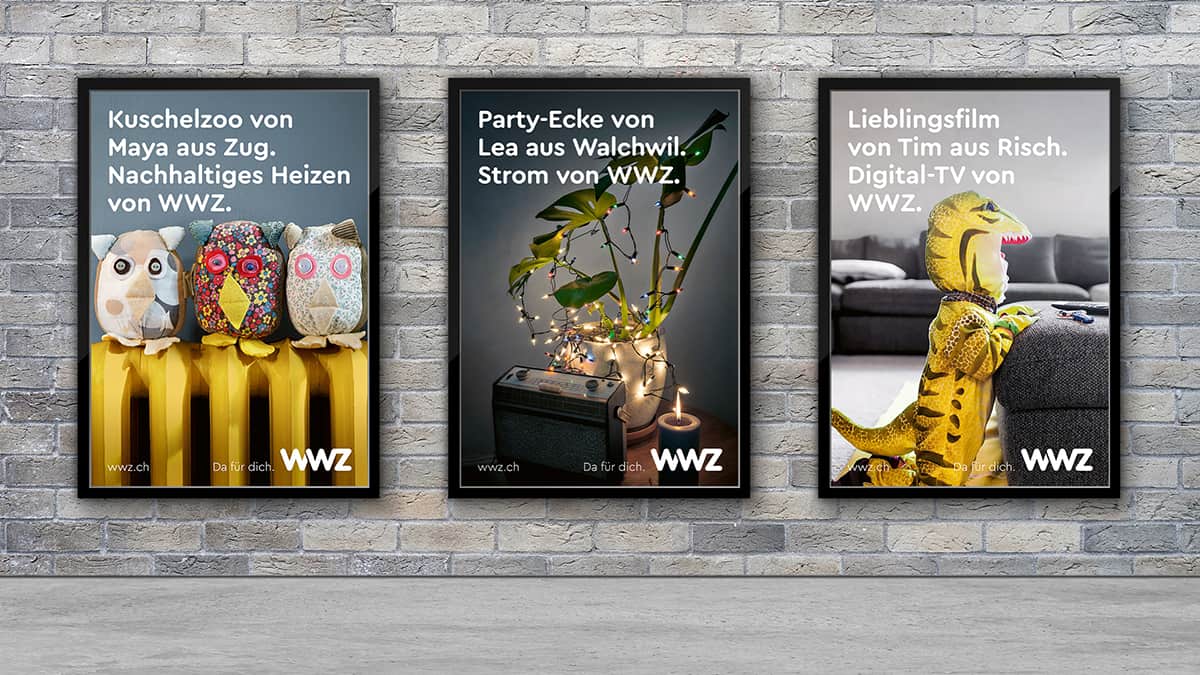
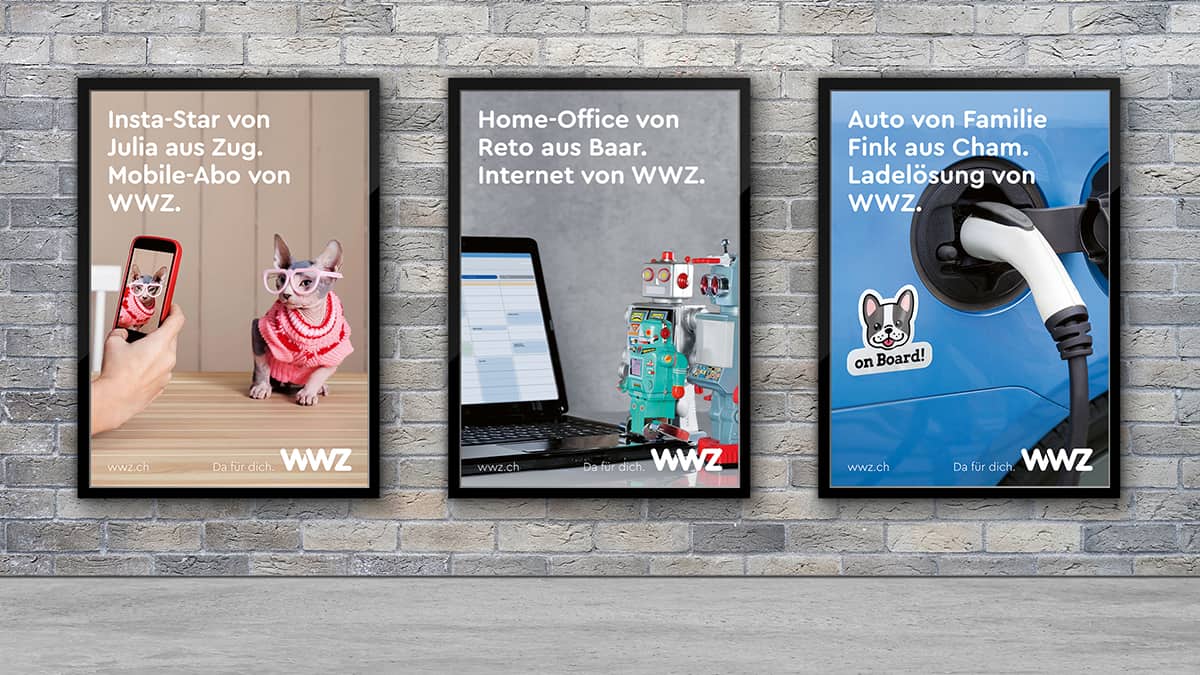
The Zurich-based agency has launched WWZ’s second image campaign. Through various themes, the campaign highlights how WWZ’s different products are used by the public.

Image-KampagneThe launch of the new branding in 2020 marked the start of the first Image campaign for WWZ, in which the target groups were able to get to know WWZ's broad range of services and products in a very personal way. With storytelling in pure typo subjects.

The new image campaign will now use words and images to tell how the products and services are used once they have reached the region's customers. The communicative guiding idea of partnership, a broad product range and regional roots is thus to become even more emotional.

Customers are addressed according to target group segments and via the product categories electricity, e-mobility, heat, digital TV, mobile and high-speed Internet - over 40 localities and customer names are part of the headlines. This is intended to emphasize customer proximity, as well as the aspect that WWZ is firmly anchored in the region. All the posters were placed geographically accordingly.

The House is responsible for creation and media. The campaign started in mid-October with display and social ads, measures on public transport as well as print ads and OHH.


Responsible at WWZ:  Andreas Fürling (Head of Marketing & Product Management), Flavia Marty (Marketing Coordinator), Julia Thalmann (Head of Digital & Performance Marketing). Responsible agency & media: The House. Litho and image processing: Detail.

Travel industry invests more and more in advertising

Spending on tourism advertising will grow two to six times faster than the overall advertising market between 2021 and 2023. Tourism brands will increase their spending on digital advertising from 63 percent of their budgets in 2020 to 70 percent in 2023, according to an advertising market forecast by Zenith.

TourismuswerbungInvestment in tourism advertising is soaring as travel suppliers look to restore the confidence of those willing to travel. That's the finding of the travel industry advertising market forecast released today by Zenith. In thirteen key markets, advertising spending by travel suppliers will grow 24 percent this year - twice as fast as the advertising market as a whole. Next year, they will rise by another 36 percent and by a further 19 percent in 2023.

As global travel begins to recover, travel suppliers must rebuild their relationships with consumers and adapt to the realities of Covid-19 travel. In the future, companies will reduce business travel in favor of remote meetings and favor sustainable, low-carbon travel - in no small part due to public pressure. Accordingly, the tourism industry will have to change its communication and focus on other target groups.

The travel industry advertising market was among the hardest hit by Covid-19. In 2020, it fell by almost half its value (46 percent), while the global advertising market as a whole shrank by only 4 percent. Zenith estimates that travel advertising spend fell from $18.0 billion in 2019 to $9.7 billion in 2020.

"Even in this country, travel industry ad spend is down a dramatic 22 percent in 2020," said Maria Brinkmann (pictured), managing director of Zenith in Switzerland. "This year, spending will increase by 9.3 percent, next year by 16.5 percent and in 2023 by another 8.1 percent. This means that next year we will already be almost back at the level of 2019."

Pent-up demand for travel will lead to rapid growth in travel ad spending in the coming years, but it will be a long road back to pre-pandemic levels in key markets. This year, travel advertising investment will still be 33 percent below 2019 levels, although the overall advertising market will grow 7 percent. It won't be until 2023 that the travel advertising market will exceed 2019 levels, reaching $19.6 billion.

The advertising market of the Swiss travel industry will also exceed the pre-pandemic level by an estimated CHF 20 million in 2023. It will then total 301 million Swiss francs.

Travel becomes a digital experience - and so does advertising

Advertisers in the travel industry are spending more on digital advertising than the average for all brands, 63 percent in 2020 compared to 58 percent on average. This is not surprising for a category that is way ahead of the market in digital transformation, with 32 percent of sales coming from e-commerce this year, compared to 20 percent for retail overall.

Digital travel advertising aims to target consumers in the early stages of research, such as through search engine advertising or display and video ads within relevant content. As travel planning becomes more digital, digital advertising will become even more important for both brand building and conversion. This includes integrating travel apps with vaccination certificates and using them to navigate local Corona rules, as well as offering digital concierge services.

Zenith forecasts that digital advertising spend by travel brands will increase 6 percent annually between 2019 and 2023. By 2023, travel brands will spend 70 percent of their budgets on digital advertising, an increase from 63 percent in 2020.

"The travel industry was one of the first sectors to embrace digitalization with the introduction of online booking," explains Brinkmann. "Corona accelerated this trend - even in 2020, advertising spend in the travel industry in Switzerland continued to grow by almost 18 percent in digital, while it slumped in all other media genres. This made digital advertising the most important communication channel for this industry last year, and this will not change in the coming years."

Travel providers look for new travelers in Asia and Eastern Europe

Zenith projects that the fastest growth in travel advertising will come from India and Russia, where travel ad spending will be 31 percent and 21 percent higher than the 2019 baseline, respectively, by 2023. Here, rising disposable incomes mean more people are traveling and previous travelers are traveling more frequently. The same applies to China and Poland, where advertising spend will increase by 16 percent and 14 percent respectively between 2019 and 2023.

The robust U.S. advertising market is driving up media prices, which is the main reason travel ad spending there will be 13 percent higher in 2023 than in 2019. Other saturated markets will range from +9 percent to -9 percent over that period, depending on consumer demand, media inflation, digital technology adoption and a variety of other reasons. In all markets, however, travel advertising's recovery from the 2020 slump will lag well behind overall market growth.

"As the travel industry begins to recover from the unprecedented decline in demand in 2020, brands are rebuilding their relationships with consumers and using digital technologies to guide them through every stage," said Jonathan Barnard, Head of Forecasting at Zenith. "Online video in particular will play a key role in connecting emotionally with consumers and inviting them to take the first step on their digital journey."


The 13 markets included in Zenith's report are Australia, Canada, China, France, Germany, India, Italy, Poland, Russia, Spain, Switzerland, the United Kingdom and the United States, which together account for 74 percent of total global advertising spend. The report covers domestic and international travel for business and leisure purposes.

30th ADC*E Awards: 901 works from 24 European countries to be judged

As part of the 30th edition of the ADC*E Awards, the jury is currently reviewing the best creative work from across Europe. Through their participation in the «Greatness Challenge,» 13 young creatives from seven countries also qualified as junior jurors, including ADC Switzerland Young Professionals Yannick Lippuner and Davide Schenker.

ADC*E Awards
The two creatives Yannick Lippuner (left) and Davide Schenker are taking part in the 30th ADC*E Awards as up-and-coming jurors.

A total of 53 leading creatives from 19 European countries were selected as jurors. From Switzerland, Julia Staub, Marcin Baba and Manuel Wenzel will contribute their expertise in the categories "Film & Audio", "Interactive & Mobile" and "Brand Experience".

Through the "Greatness Challenge", ADC Young Professionals Yannick Lippuner and Davide Schenker are also allowed to participate as part of the international jury of the renowned ADC*E Awards and sit on the "Film & Audio" jury. This experience gives the young jurors an insight into the evaluation criteria and processes of the international jury members.

The jury has been meeting since Friday and online until Wednesday to debate the best creative work from across Europe and award the Gold, Silver and Bronze awards as well as the Grand Prix, the European Star-Johannes Newrkla Award, the Genius Loci and the new Green Star.

ADC*E winners will be announced and streamed online on Thursday, December 2, 2021, during the ADCE* Festival. Access to festival is free and open to all.

Retailers expect peak sales on Black Friday

Black Friday, which takes place at the end of the week, has become one of the most important days for Swiss retailers in just a few years. For many companies, it is even the day with the highest sales in the entire financial year. It is now almost unthinkable that a retailer does not take part.

Black Friday SpitzenumsätzeFor Digitec Galaxus, for example, Black Friday is enormously important, as a company spokesman said in response to an inquiry from the AWP news agency. "Black Friday is likely to be the strongest sales day again this year." He does not give exact sales figures, but last year visits to the website increased fourfold compared to an ordinary day. At Melectronics, which like Digitec Galaxus is part of the Migros Group, Black Friday is also the week with the highest sales in the year.

It sounds similar with the competition: A spokeswoman for Coop subsidiary Microspot states that "on Black Friday weekend, sales multiply by 10 to 15 times compared to a normal weekend". And at electronics specialist Fust, "sales are far higher than on the best Christmas days.

Overall, Swiss retailers are likely to achieve sales of around CHF 500 million in the non-food sector on Black Friday, estimates Patrick Kessler, Managing Director of the Swiss Retail Association. This is somewhat less than last year, but at that time purchases were postponed due to the Corona measures and therefore particularly high on Black Friday. "However, I assume that we will hardly see more growth compared to last year, as we have a "consumption wave" behind us and some retailers are already consciously turning away from Black Friday or trying to set counter-trends," says Kessler.

Bait offers attract new customers

Some retailers say that online business in particular does very well on Bargain Day. But sales in stores also increase markedly compared to a normal day, because thanks to special offers they can attract new customers to the retail stores. "Some go specifically to stores on this day that they wouldn't have gone to otherwise, and make purchases that they wouldn't have made without the stimulus," says Ralf Wölfle, a retail trade expert from the University of Applied Sciences Northwestern Switzerland.

And although bargain hunters are primarily attracted to Black Friday by the hope of good deals, they are not stingy with their budgets. According to a survey of almost 7,000 users conducted by the Profital app, most of them plan to spend between 200 and 299 francs on Black Friday. One in five even plans to shop for over 500 francs (Werbewoche.ch reported).

Dissenting voices grow louder

In the meantime, however, there has also been some criticism of the discount battle. Solidar Suisse, for example, has launched a petition calling on retailers to stop Black Friday. (Werbewoche.ch reported). Because under "the absurd consumer orgy" the climate, the environment and millions of workers would suffer, the organization said.

As of Sunday, over 14,000 people have already signed the petition. Consumers who don't think much of the bargain day can, of course, simply refrain from shopping on Black Friday. But could retailers also ignore the day? According to retail expert Wölfle, it's possible. "For suppliers who do without promotional sales altogether, that's also obvious," he says.

There is no such thing as not participating

The retailers themselves, however, consider a waiver to be difficult for the most part - and do not want to waive it at all. They justify this with the fact that customers demand Black Friday and expect special offers. They are also afraid of losing customers to the competition. "From today's perspective, it wouldn't make sense for Christ Watches & Jewelry, since its competitors participate very actively in Black Friday," says the manager of the Christ jewelry store, which belongs to Coop.

Manor also considers it "virtually unthinkable" to do without Black Friday activities. A few years ago, the company was one of the first to hold the discount day in Switzerland.

For retail expert Wölfle, it's understandable that stores are using the day to their advantage. "For suppliers who don't generally forego promotional offers for brand considerations, for example, there's no reason to do without them," he says. At well-known Swiss retailers such as the Migros and Coop groups, as well as Aldi, Lidl and Manor, refusing Black Friday is not an issue. They all use the day in some way, even if it's just for a marketing stunt.

Like the third-largest Swiss retailer Denner, which belongs to the Migros Group. No Black Friday discounts are offered there. But Denner is using the day for its advertising campaign, which makes it clear that Denner has promotions on offer not just on Black Friday, but all year round. The campaign is well received, says a spokesman, especially as a contrast to the Black Friday advertising flood. (AWP/Tabea von Ow)

get_footer();