The *Winterthurer Landbote*, published by Tamedia, has received a bill from the city of Winterthur: 450 francs for redacted sections in an investigative report. The report dealt with misconduct within the city police department.
Editorial
-
September 22, 2023
he Landbote receives a bill of 450 francs for redactions in an investigation report on the city police. (Symbol image: Keystone: Michael Buholzer)
Last fall, the Winterthur city council had presented an investigation report that dealt with the reasons for two suicides within the police corps. The city council presented the report to the media, but did not want to release it.
The Country Messenger demanded to see the 95-page report on the basis of the Public Information Act and was granted access. The district council ordered the city council to release the report on hierarchical management culture and mobbing.
The Country Messenger was then handed the report. It contained numerous blacked out passages to protect people. For these anonymizations, the city now charged the newspaper 450 francs, as the latter wrote on Friday in its article on the report.
In principle, access to information should be free of charge, according to the Public Information Act. Only if the processing of the request involves "considerable effort" and is "out of reasonable proportion to the public interest" can the authority demand a "reasonable fee". (SDA)
Swisscom shows where the greenest mine in the world is located
The latest circular economy campaign by Andy Lusti and Susen Gehle for Swisscom highlights that many components for new smartphones can be found in our homes.
Editorial
-
September 22, 2023
The mining of raw materials causes 75% of all CO2 emissions generated in the manufacture of new smartphones. Yet the metals needed for this, such as copper, silver and gold, are already available in sufficient quantities. And they are available in over eight million old cell phones lying around unused in Swiss drawers, basements and attics.
"With our new circular economy campaign, we are calling on the public to return their old devices in order to bring valuable raw materials back into the cycle and avoid unnecessary CO2 emissions," says Swisscom project manager Stefanie König, explaining the campaign's mission.
Every cellar is a mine
The raw materials in all unused cell phones together form an urban mine. This is the basic idea of the 360-degree campaign, which was conceived by the two creative directors Susen Gehle and Andy Lusti and implemented in close collaboration with Swisscom and Mcqueen Films.
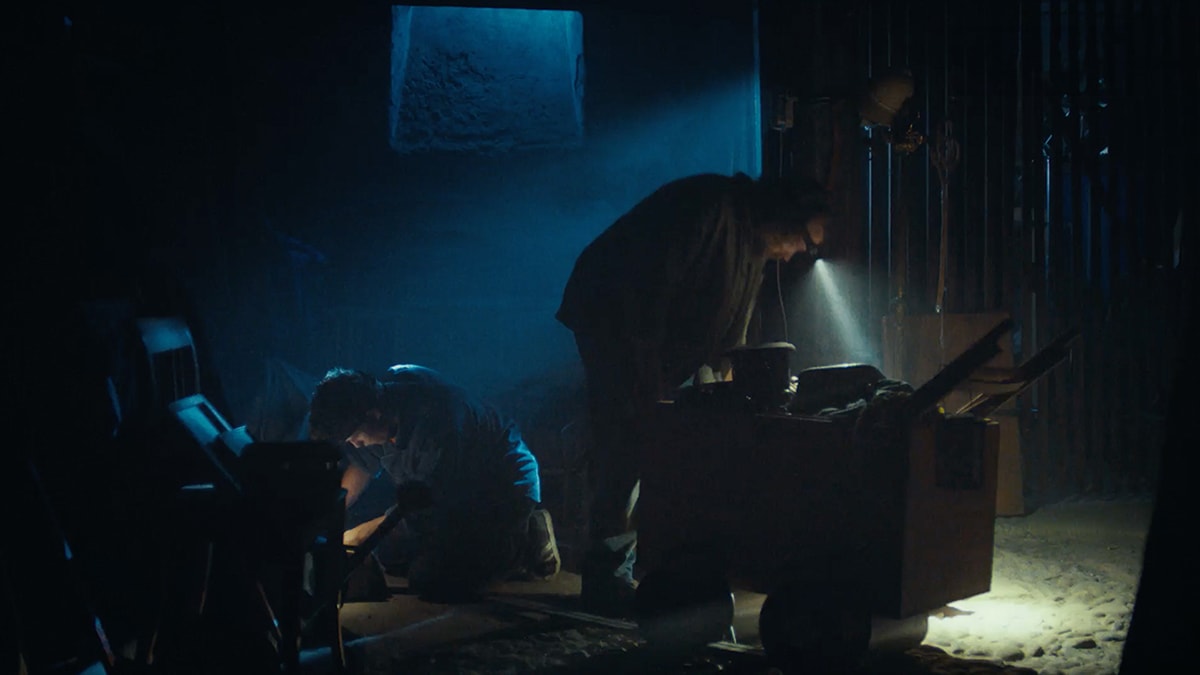
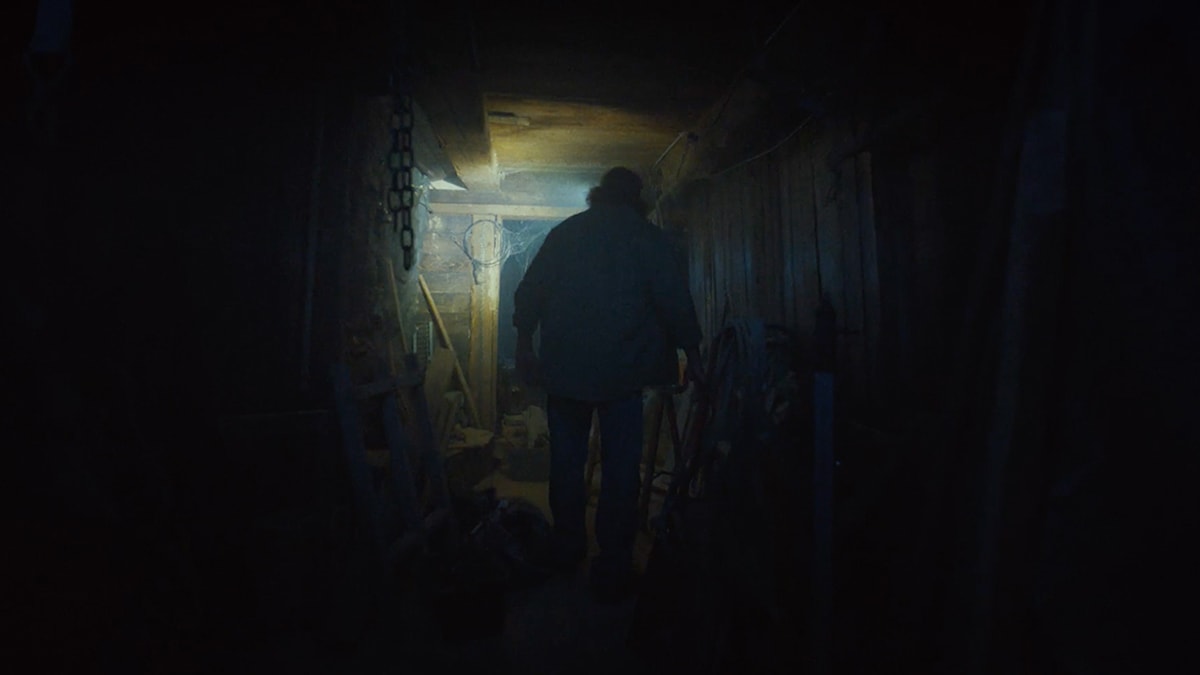
In the opening spot, a teenager and his father search for valuable metals in a dark mine. Suddenly they find themselves in a normal cellar and the audience is humorously shown the treasures that are hidden in their home.
"Many people don't even realize how valuable the raw materials in their old cell phones are for the environment," says creative director Susen Gehle, who is responsible for the project. "Although the amount of metals in a single device is small, all unused devices together, form a huge raw material deposit."
Sustainability set in scene
Swisscom has been committed to sustainable business and the responsible use of resources for years. Accordingly, the images of the spot, which deliberately comes across like a cinema trailer in order to create a maximum element of surprise, are also staged on a large scale. "After the unexpected twist, a light goes on for everyone and they realize how small the contribution is for each individual to achieve great things together," explains Creative Director Andy Lusti about the cinematic appearance.
One of the big challenges was to authentically combine the two worlds of "mine" and "basement" and thus to implement the urban mine in a surprising way. "The team from Mcqueen Films and director Samuel Morris succeeded brilliantly in this," sums up Jürg Brauchli, Creative Director at Swisscom.
The current "Green Mine" campaign can be seen throughout Switzerland. The spot and the three key visuals are played out in various media formats on TV, in cinemas, online, on social media and at POS.
Client: Swisscom Switzerland. Creation & Conception: Andy Lusti, Susen Gehle. Film production: Mcqueen Films. Directed by: Samuel Morris. Sound Design: Remote Sound. Photography: John Diboky. Media: Mediaschneider.
Bern City Council has advertising ban for air travel and cars examined
The Bern City Council is looking into whether advertising posters for air travel and cars should be banned on public property. On Thursday, it approved a postulate submitted by the Young Alternative by a vote of 45 to 27.
Editorial
-
September 22, 2023
The Bern City Council is considering whether to ban advertising posters for air travel and cars on public property. Pictured: Car advertising in Geneva in 2008. (Archive photo: Keystone/Martial Trezzini)
Flying and driving should "under no circumstances be promoted" because of climate change, the motion says. Advertisements - for example, for vacations in faraway countries - should also carry a warning that flying causes serious damage to the environment and thus also to the health of this and future generations.
Opposition came from the center-right. Erich Hess (SVP), for example, said that freedom of trade and industry prevails in Switzerland. The proposal therefore contradicted federal law.
Tom Berger (FDP) wondered if he had stumbled into a satirical event: products that could be freely advertised throughout Switzerland should come with a warning label in the city of Bern.
The city government showed itself ready to examine the request. Councillor Marieke Kruit (SP) pointed out that private spaces would not be affected by a ban - such as train stations and shopping centers. The municipal council must submit the review report by the end of 2025. (SDA)
UBS starts image polishing in its home market
The major bank UBS is investing heavily in its reputation in Switzerland. A nationwide advertising campaign is set to launch on Monday, according to the AWP news agency, which learned this from several sources involved in the campaign.
Editorial
-
September 21, 2023
(Image: Ubs.com)
The timing of a major marketing campaign after the forced takeover of CS is probably no coincidence. All the more, UBS wants to make clear in a broad-based campaign on television, in the cinema, in newspapers, online, and with posters in particular: UBS "acts responsibly" and "is rational, conservative and thoughtful." In other words: UBS is not CS.
Since the emergency takeover was announced in March, UBS had already made a conspicuous effort in its communications to distance itself from CS - for example, with regard to the abuses in risk management that prevailed there. UBS President Colm Kelleher, for example, spoke about a "cultural filter" through which CS employees from investment banking had to pass in order to work at UBS.
Great commitment
The UBS management under the new CEO Sergio Ermotti disappointed many a Swiss at the end of August with its decision to fully integrate CS Switzerland. Many had hoped until the end that the traditional Credit Suisse brand would survive in some form, at least here in Switzerland.
According to the information available, the motto of the campaign is also appropriate: "A bank like Switzerland. Meaning: UBS is a Swiss bank with its roots in Switzerland. It is regionally anchored in Swiss society in the communities and also wants to promote young talent.
After the decision to integrate CS Switzerland, UBS immediately announced that it would continue to sponsor Credit Suisse at least until the end of 2025. This involves the promotion of sports, culture and society.
"A bank like Switzerland"
The campaign will initially be launched digitally next week: on YouTube, social media and in UBS's own channels such as the website and branches. It will then go live on TV and in cinemas in the week beginning October 9. The campaign will be visible until December. When asked, UBS itself only confirmed that a campaign for Switzerland was planned.
According to information from the film production environment, there will be commercials in various lengths, in all four national languages and in English. The production company Solid & Haller Film from Zurich is apparently involved; the film was directed by Eduardo Vieitez.
How does UBS want to get its message across? The video clips are intended to create an analogy between UBS and the country and Swiss society. According to reports, there are several scenes with a wide variety of people: for example, at a cocktail party, in a restaurant.
No prominent advocates
People in Switzerland should recognize themselves. So no celebrities are shown and no one from bank management. But Ermotti would be a suitable advertising figure. The 63-year-old from Ticino has an excellent reputation in the banking world. He did many things right during his first CEO tenure at UBS from 2011 to 2020.
UBS has also run major image campaigns in the past, such as the one now underway. In 2015, a global campaign ran with a very emotional commercial: to the well-known song "Hero" by Family of the Year, questions were displayed one after the other that accompany a life from birth to death. The core message of the ad was that, together with UBS, one could find an answer to these life questions.
Advertising alone will not be enough
Unlike the commercial that now appears, it was a clip based purely on text at the time. Then there was the international UBS commercial from 2010 - after the financial crisis and the near-death of Switzerland's largest bank in 2008, as well as the rescue by the state. Under the slogan "We will not rest," the tattered image was to be improved by associating the brand with historical celebrities: Astronaut Neil Armstrong, boxer Muhammad Ali, cellist Yo Yo Ma, opera singer Maria Callas.
But advertising alone - without subsequent action - is not enough. And in the case of the integration of CS, with the restructuring of the problematic areas and the necessary reduction of costs, UBS still has a long rocky road ahead of it that will drag on for several years. So a reassurance pill for the Swiss with regard to what is now the only major bank in Switzerland - i.e. an even bigger cluster risk in the financial center than before - is not a bad thing at all. (AWP/Young-Sim Song)
The House of Communication has moved
House of Communication Zurich has moved from District 5 to Kanzleistrasse. All employees from the three agencies now work together under one roof.
Editorial
-
September 21, 2023
(Pictures: zVg.)
After an intensive renovation phase, employees were finally able to move into the new premises at Kanzleistrasse 57 in the summer, according to a statement. The offices were renovated and brought up to the latest standards. Because the House of Communication has been climate-neutral for the past three years, a great deal of importance was attached to sustainability, the statement continues. For example, the heating system was replaced, the insulation was improved and the windows were chosen to keep out heat and thus ensure a pleasantly cool climate without energy consumption.
In the House of Communication, the employees of the three agency brands Serviceplan, Plan.Net and Mediaplus work on three floors. Two eye-catching spiral staircases connect the floors. The interior design was kept simple to match the building. Black and white, shades of gray and shades of green define the interior color scheme.
In the House of Communication, there is a free choice of seats, which means that the various professionals automatically mix to form new groups every day. This is intended to promote cross-disciplinary collaboration and thus the integration of creation, technology, content, media and production, according to the statement. "Our client:s are served by agile teams, assembled from all three agency brands. This allows us to meet the exact needs of the task, regardless of complexity, budget size or duration," Pam Hügli, CEO and partner, is quoted as saying. "Groundbreaking brand management is created and a high impact on all channels is guaranteed. Ultimately, this is a great added value for our customers."
SRG: Stephanie Jutzi appointed Head of Public Affairs
The Public Affairs Department of the SRG General Directorate in Bern is getting a new head: Stephanie Jutzi was elected on Wednesday by the SRG Board of Directors. She will succeed Martina Vieli, who is leaving the company, effective February 1, 2024.
Editorial
-
September 21, 2023
(Image:SRG SSR/Florian Spring)
The 36-year-old Stephanie Jutzi studied media and communication sciences with a bachelor's degree at the University of Fribourg, obtained her master's degree in political science at the University of Geneva and continued her education with a CAS in public administration.
She started her professional career at the Federal Department of Foreign Affairs FDFA in Bern. In 2013, she worked for SRF's "Tagesschau", then worked as a project coordinator at Helvetas and joined Swiss Post in Bern in 2015. Currently, Jutzi is head of national politics at Swiss Post. In this role, she played a key role in anchoring the new "Post of tomorrow" strategy in direct exchange with parliament and was responsible for the public affairs process.
She will take up her new position as Head of Public Affairs SRG on February 1, 2024, succeeding Martina Vieli, who will leave SRG at the end of October 2023 after more than seven years to pursue new professional projects in the future. (Werbewoche.ch reported).
"Imagique" aims to bring Swiss film closer to the public
Swiss film industry associations are launching a new online news portal dedicated to Swiss film and television production. «Imagique» aims to build a close relationship with the local audience by covering both new and classic films, as well as television series, while focusing on the people behind them and their professions.
Editorial
-
September 21, 2023
Imagique aims to bring audiences closer to Swiss film and series creation and to involve them directly. To build this relationship, Imagique provides regular news, reports and interviews about local films and series newly launched in cinemas, on TV or on a streaming service.
Imagique is on location when filming starts, tells background stories about the people involved in these projects and lets the audience participate in the creation process early on. In the process, the online news portal also takes a look behind the curtain by presenting film professions, putting people at the center. The public is offered the opportunity to be there in person on film sets, to vote on film poster variants or to win festival passes and tickets to walk the red carpet themselves.
A feasibility study conducted in 2020 in collaboration with the Lucerne University of Applied Sciences and Arts had already shown that the audience of all age groups surveyed would like to see more presence of Swiss film. As a specialized news platform, Imagique aims to address this need and strengthen the perception of Swiss film. As a cooperation partner, Cinergy has launched the new Website implemented on its existing platform Cineman.ch.
However, Imagique operates under its own name and as an independent brand. It operates its own editorial team and curates its content independently. The portal was created with the support of the Federal Office of Culture and the Canton of Zurich's Office of Culture as part of the "Transformation Projects" program of the Covid grants and is supported by the Swiss film and audiovisual associations. The website has been online for a few days, and in addition a Instagram channel led. According to information, news is published several times a week.
Foundation President of the Museum of Communication Werner Nuber steps down
For 22 years, Werner Nuber has been at the helm of the Museum of Communication in Bern. He will now step down at the end of September. A succession plan has been initiated.
Editorial
-
September 21, 2023
(Image: zVg.)
Until the foundation's presidium is filled again, the two vice presidents Alexander Fleischer and Klaus Rapp will take over the interim leadership, as the museum announced on Thursday.
Werner Nuber played a key role in shaping the institution and continuously helped to develop it into an extremely popular and internationally renowned museum. Thanks to haptic and interactive exhibition design and topical themes, the museum is now a popular destination for the younger generation and those interested in communication, the statement continues.
Visitor numbers have risen over the past 20 years from just under 40,000 people to almost 120,000 in 2019. The Museum of Communication in Bern is supported by Swiss Post and Swisscom and receives a substantial annual contribution. (SDA)
Sponsoring Excellence Award enters fifth round
Sponsoring Switzerland is launching the fifth edition of the Sponsoring Excellence Award. Sponsors and event organizers have until November 30, 2023, to submit their projects. The winners will be honored on Thursday, March 14, 2024, during the Night of Sponsorship at the Kunsthaus Zürich.
Editorial
-
September 21, 2023
For the fifth time, the Sponsoring Switzerland industry association is honoring relevant, innovative and professionally implemented sponsoring projects with the Sponsoring Excellence Award. Once again, non-members of the industry association also have the opportunity to submit their projects and convince the jury.
In addition to the main prize, the committee around President Urs Wyss also honors the outstanding quality of individual projects with a special prize in each of the four categories "Responsibility", "Activation", "Pioneer" and "Surprise/Jury Prize". In addition, this year for the first time an audience award will be presented at the awards ceremony by means of online voting on site.
Following the record number of projects submitted in the last competition, Urs Wyss is once again hoping for many exciting and innovative entries from sponsorship specialists: "The award makes an important contribution to the status of sponsorship as an effective marketing and communication tool. We are looking forward to numerous outstanding projects!"
For more information on the project entries and the Sponsoring Excellence Award, please visit the Website of Sponsoring Switzerland.
Tamedia cuts up to 20 jobs in German-speaking Switzerland
As part of a cost-cutting program, Tamedia announced on Thursday that it would be cutting jobs at its media outlets in German-speaking Switzerland. Up to 20 positions are to be eliminated. The elimination of 28 positions in French-speaking Switzerland had already been announced on Wednesday.
Editorial
-
September 21, 2023
(Image: Raisa Durandi)
Tamedia informed employees about the plans on Thursday morning. Exactly where and how many jobs are to be cut will be announced by Tamedia in the coming weeks. The consultation phase will run until the end of October.
A total of 48 jobs will be cut in the editorial departments. Further jobs are to be cut at the associated publishing houses.
The job cuts in German-speaking Switzerland are part of a total savings package of CHF 6 million. 3.5 million Swiss francs of this will go to French-speaking Switzerland (Werbewoche.ch reported). The remaining CHF 2.5 million is attributable to Tamedia media titles in German-speaking Switzerland.
The media company justified the cost-cutting measures with the continuing decline in sales, especially of print products. The Imprint and Syndicom unions criticized the cost-cutting program in their statements.
The latest cost-cutting measures follow a comprehensive savings package of the past few years. In the past three years, the editorial teams of Tamedia titles have already had to save CHF 70 million. (SDA/swi)
AI increases work productivity and creativity according to study
More than half of all German employees surveyed use ChatGPT in their daily work—according to an AI study by Macaw. AI tools are seen as boosters in everyday work that lead to higher productivity, improve work processes, and foster a more creative work environment.
Editorial
-
September 21, 2023
(Graphics: Macaw)
The results of the study show that the majority of respondents in companies and institutions have a positive attitude toward the topic of AI. Two-thirds of the respondents agreed with the statement that they are aware of the possible uses of AI tools. In addition, the majority of respondents confirmed that their employer allows the professional use of AI tools (64 percent), informs the workforce about them (55 percent) and has established guidelines for their use (50 percent).
AI is already part of everyday working life
The most commonly used tools include translation services such as Google Translate (77 percent), chatbots such as ChatGPT (56 percent), and grammar checking solutions such as Grammerly (30 percent). Less common are tools for content creation, images and videos, and 3D modeling, used by only one in four respondents.
Gender differences within the respondent group are minimal, with only the image generation tool Midjourney (12 percentage point difference) and ChatGPT (9 percentage point difference) being used more frequently by males than females and diverse professionals.
As company size increases, so does the use of AI tools. The proportion of employees who do not use AI tools is highest across all tools in very small companies (fewer than 10 employees and annual revenue of no more than 2 million euros). For example, ChatGPT is used more than twice as often by employees of small and medium-sized companies than by micro companies (64 percent versus 25 percent).
AI is a generational issue
There are clear age differences in the use of AI tools. The younger the respondents are, the more frequently they state that they use AI tools in their everyday work. This is particularly significant among 22- to 29-year-olds, who are on average more than three times as likely to use AI tools as those over 50 (for example, Bard: 32 percent to 10 percent and Grammerly: 55 percent to 4 percent). The 22- to 29-year-olds are the leading age group in the survey for tool use.
It also shows that the shorter the tools have been on the market, the more pronounced the age effects. While established tools such as Google Translate are used intensively in all age groups, new tools for content, image and video generation as well as 3D modeling are used significantly more frequently by younger employees and have not yet become part of everyday working life for those over 50 (around 80 percent deny use).
AI as a booster for labor productivity
According to the study, when employees use AI tools in their daily work, it improves work output, work processes and the work environment. Respondents confirmed that using AI tools has changed the quantity (54 percent), quality (51 percent) and time (62 percent) spent on work output. Only one-fifth of respondents said AI tools have had no impact on how they handle (20 percent), collect (17 percent) and use information. For the majority of respondents, AI also improves the creative potential of the work environment.
However, the accuracy and transparency of the output are often doubted. For example, 47 percent see it as a disadvantage that the quality of the information cannot be reliably assessed and 46 percent that the sources are not known. Only 9 percent state that they always believe information from chatbots to be the truth. 45 percent see the problem with AI models that the answers generated depend on the input data. Almost one in three expressed ethical concerns and are unsure whether AI systems comply with the law.
"AI has become part of everyday business life, enabling real improvements in work processes and productivity," explains David Hefendehl, Business Consultant at Macaw. "However, it is also becoming apparent that there are doubts about the quality and transparency of the information generated by AI. These doubts can be removed if companies use chatbots that have been developed for their purposes and trained with internal company data."
In the study carried out in Germany Macaw study 212 people from IT, finance, science, logistics and the public sector participated.
New management team for the Blick newsroom
Since the end of August, Steffi Buchli, as Chief Content Officer, and Sandro Inguscio, as Chief Digital & Distribution Officer, have been jointly leading the Blick newsroom. As part of the reorganization, the newsroom’s structures are also being adjusted and a new management level is being established.
Editorial
-
September 21, 2023
As part of its digital transformation, the Blick Group is realigning its newsroom. The development includes the "Content" area, which is headed by Steffi Buchli, and the "Distribution" area, which is under the responsibility of Sandro Inguscio. As part of this modified structure, a new management team for the Blick newsroom will also be put in place.
Reza Rafi, Editor-in-Chief SonntagsBlick, Andreas Dietrich, who, in addition to his function as editor-in-chief of the View-will also serve as "Head of Newsroom Coordination," and Michel Jeanneret, Editor in Chief View Romandiereport journalistically to Chief Content Officer Steffi Buchli. In addition, all department heads are managed directly by Buchli.
Emanuel Gisi wird new head of sports
Emanuel Gisi, until now head of the sports reporter team, will become the new "Head of Sports" of the Blick Group and thus part of the management team. Gisi has been working for the Blick Group since 2013 and has also been covering the National League as a live commentator on MySports since 2018.
Before joining Ringier, Gisi worked for the Oltner Tagblatt and the Basel Newspaper active. Sandra Fröhlich will head the newly created audiovisual Production Center. The newly created position "Head of Storytelling" is to be filled in the near future.
In Distribution, under the leadership of Sandro Inguscio, Daniel Egli will join the management team of the Blick newsroom as "Head of Newsroom Coordination" and will be responsible for the thematic priorities on the Distribution side.
Christian Bischoff will Leader Online
Christian Bischoff will take over the online management of the Blick Group as "Head of Blick.ch". He started as an online editor in 2004, was then team leader news at Blick.ch, then took over as desk leader before becoming co-head of the news department. Most recently, he worked as Blattmacher Online and Teamlead Digital.
Reporting to Bischoff are Jessica von Duehren and Stefan Meier, who co-head the newly created Desk department. The VOD Desk, headed by Stephanie Seliner, and the digital team with folder managers and day managers are also affiliated with the Head of Blick.ch.
Raffael Aebli, as "Head of Product & Innovation Newsroom", will be the interface to the product team, optimize processes and drive innovation. As Head of Product/Quality, Conny Tovar will be responsible for quality assurance. Thomas Deléchat will lead the distribution and digital development of Blick Romandie as Directeur de la rédaction. The Blick Group plans to announce who will take over as head of Growth Management - New Audiences, Social and Data - in the near future.
For Steffi Buchli, this move lays a "foundation for telling the best multimedia stories and elevating our content to an even higher level." She is also pleased to be putting the sports editorial team in Emanuel Gisi's hands. "We have worked very closely together over the past three years. Emanuel is a high-profile, tenacious journalist, has a great network and is a strong team player. He will successfully lead the sports department into the future."
"With Christian Bischoff, our strongest channel is in the best hands," says Sandro Inguscio about the new Head of Blick.ch. "Having been on board for almost two decades, he knows the brand, the users and the mechanics of the newsroom in every detail. I'm very pleased to be able to place responsibility in his hands."