Does Programmatic Buying set the wrong incentives?


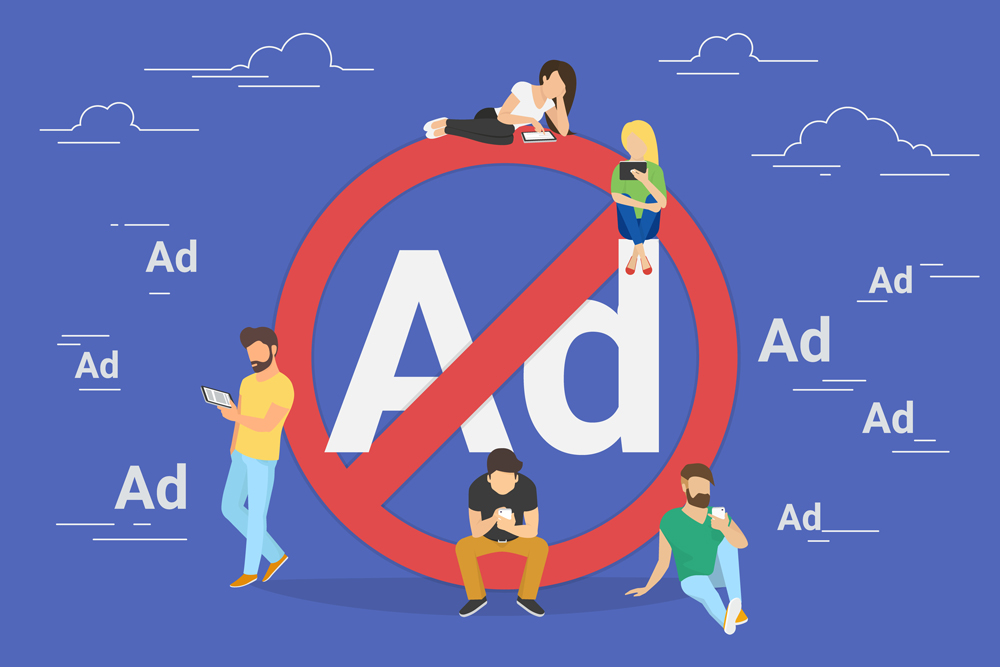
More and more people feel annoyed by banner advertising. As a result, adblockers are being used more and more frequently.What happened to the communication at eye level that was propagated up and down the country? The monologue of the brands still dominates. There are classic commercials on TV - just like on YouTube. And now banner advertising is also making a comeback. Wherever you surf, you are followed by products that you were previously interested in on Amazon and the like. After 15 years of digital transformation, all we have managed to do is get the pushy rose sellers and greengrocers off the street and onto the internet. According to Frank Bachér from Rubicon Project (MK 5/16 page 39), standard graphic formats are growing by 16 percent annually. The fact that the number of installed adblockers is skyrocketing at the same time should give us pause for thought. In the Swiss media announced on Junethat the number of adblockers installed on desktop and mobile devices in Europe has risen by 35 percent in one year. Loud barkers here, annoyed customers there: Nobody wins in the long term.Technology with an archaic view of marketingThe gap between sender and recipient is not even the main concern when dealing with programmatic buying. According to a study by the TBS Group, around 53% of all marketers in German-speaking Switzerland are concerned about inventory quality. In contrast, only around 15 percent are worried that campaigns will not achieve the planned objectives. The study shows: Marketers are worrying in the wrong place - and that should be worrying.Nothing against the automated sale of advertising space. But we have to ask ourselves at what point in the customer journey this type of aggressive penetration advertising works. Programmatic buying tempts us to delve even deeper into the maze of monologue instead of engaging with real digital brand experiences. The new sales technology does not work with a view of marketing that dates back to the last century.Timing of Christian Meyer's digital criticism not coincidentalThe Digital review by Christian MeyerTheo Müller Group's Head of Digital ("Müller Milch") is making waves that reach as far as Switzerland. In an all-round attack, he settles accounts with the digital hype and demands that agency fees become dependent on the success of their online campaigns.the timing of his criticism is no coincidence. In today's digital advertising world, everything is measurable. And that's a good thing, because advertising should never be an end in itself. Despite all the love for clicks, impressions and likes, the question of quality must not be ignored. Unfortunately, this is increasingly the case. Google has also recognized that the user experience of online advertising has recently suffered. The parent company of AdWords marketing wants to take action against this and has announced the Foundation of a "Coalition for better ads"Successful digital transformations begin and end with a brand experience - and this is where new technologies come into play. The first iPhone amazed people because it made it possible to experience content in a completely new way - haptically, visually and acoustically. What will remain if we simply produce videos for YouTube instead of television? Nothing.Where is the journey heading?Marketing experts are just as excited about virtual reality as advertising experts and gamers. The technology will enable a whole new level of immersion and interaction. There is still a lack of in-depth concepts that demonstrate how virtual reality can be used for marketing purposes, and initial best-practice examples show that products can be experienced in a new way or designed virtually in a virtual showroom. Further impetus will come from agencies specializing in virtual reality, which are currently using technologies to create digital brand experiences that have already penetrated the market. A best-practice example from the Maxomedia kitchen shows that a lot can be achieved with very little.The rose seller becomes a rose cavalierA special advertisement was used to visualize how easy it is to switch to Swissquote's new eTrading platform. The ad included a card with a removable red foil. If you stuck the foil over the camera lens of your cell phone and then scanned the dollar bill in the ad, the world of finance literally appeared in a new light. Instead of Benjamin Franklin, Mark Zuckerberg suddenly adorned the greenback. This approach involved the recipients and conveyed the message subtly. No trace of aggressive penetration advertising. This is how the rose seller becomes the rose cavalier.https://www.youtube.com/watch?v=GjTrHnQJVe8From analog to digital: Swissquote's special ad turns the classic print ad into a digital brand experience.