Publishers collect more and more money from subscribers

As of 2014, some publications imposed steep price hikes on their subscribers and newsstand customers: One newspaper is charging 77 francs more for an annual subscription, another has increased its newsstand price by one franc, and a third publication has raised the price of its e-paper by 74 francs. This shows that, due to declining advertising revenue, newspaper readers are being asked to foot the bill more and more.

The NZZ Media Group's 2012 annual report contained the following remarkable sentence: "Despite a continued slight decline in print circulation, the reader market (subscription and single copy sales) continues to generate stable revenues thanks to price increases and rising income from digital subscriptions." In fact, the NZZ and NZZ am Sonntag increased their subscription rates by 9 percent and 12 percent respectively in 2012 and their retail rates by 8 percent and 5 percent. No wonder, even with declining subscription sales. By the way: In the same year, NZZ income from advertising sales fell by 11 percent.
 
In its report on the first half of 2013, Tamedia also pointed out that circulation revenues for regional newspapers remained stable, while advertising revenues declined. This is not surprising given that Tamedia had increased both subscription and newsstand rates for almost all newspapers in 2013. What the two major publishers openly admit is a trend in the industry: because advertising revenues are falling, publishers are taking more money from subscribers. This was also the case in 2014: of the more than 100 titles and title combinations listed here, three-fifths increased their print subscription prices, but only 20 of these 60 also increased their advertising rates in 2014 (see WW 21/13). This discrepancy is most clearly visible at Südostschweiz: it increased its subscription price by 7 or 24 percent depending on the edition, but reduced its advertising price. Similarly, Le Temps lowered its price for advertising customers by 3 percent, but added 4.8 percent to its print subscription.

Record-breaking subscription surcharges

Apart from Südostschweiz, the following titles saw the highest percentage increase in subscriptions in 2014: Schweiz am Sonntag, Südostschweiz edition (+18.7%), La Quotidiana (+15.3%), Basler Zeitung (+10.5%), Tages-Anzeiger (+9.5%) and Rheintalische Volkszeitung, which is now cooperating with St. Galler Tagblatt (+9%). Südostschweiz, Glarus, Gaster See edition, also saw the steepest rate increase in francs: Its subscribers have had to pay a whopping 77 francs more for an annual subscription since the New Year. Whether they will appreciate this remains to be seen. The Tages-Anzeiger follows in second place with an increase of CHF 42 and the Basler Zeitung with an increase of CHF 41. Zentralschweiz am Sonntag has the lowest increase, charging CHF 2 more - but only from April 1.The most expensive annual subscription (six days a week) is still the French-speaking Swiss daily Agéfi (CHF 700), followed by the NZZ (now CHF 649) and Le Temps (now CHF 528).

The price change for the Bund's 7-day subscription is interesting: from 2013, its subscribers only had to pay an additional CHF 20 for a subscription to the SonntagsZeitung (SoZ). However, this bait-and-switch has now come to an end: Tamedia increased the combined subscription even more than the Bund subscription as of 2014, so that the additional bonus for the combined subscription has almost doubled to CHF 35. The situation is different at Basler Zeitung, where the combined subscription with SoZ was also increased, but the difference to the standard subscription was reduced slightly.

 
Up to one franc more expensive at the kiosk

Publishers were more cautious this time with newsstand prices than with subscription prices: Only 26 of the titles listed here made increases: As a rule, these are increases of 10 to 20 centimes. But there are also bigger jumps: the Bieler Tagblatt is now charging one franc more than before for a single copy (+40%). The weekly newspaper La Broye is charging 25 percent more (+50 centimes). The Journal du Jura (+20%) and the NZZ am Sonntag (+11%) are also charging 50 centimes more. However, the latter had already realized the surcharge on the occasion of its relaunch in September. Finally, the titles of Südostschweiz and its Schweiz-am-Sonntag edition added 30 centimes.

The highest newsstand prices continue to be paid for the WoZ (CHF 6), Finanz & Wirtschaft (now CHF 5.80) and NZZ am Sonntag and TagesWoche (CHF 5 each). Other top prices can be found for the Handelszeitung (CHF 4.80) and the Saturday editions of the NZZ (CHF 4.70) and the Bund (now CHF 4.60). In French-speaking Switzerland, Agéfi, Matin Dimanche and now Terre et Nature currently cost the most, namely CHF 4.50.

E-paper up to 50 percent cheaper

Publishers are now also daring to charge more for e-paper subscriptions (so-called replicas). Almost 40 titles increased their rates here. The Südostschweiz titles once again raised their rates sharply, charging up to CHF 69 (+30%) more since the new year. The frontrunner, however, is Werdenberger & Obertoggenburger, which has joined the St. Galler Tagblatt and now has to charge CHF 74 (+33.3%) more for its e-paper. The price adjustments at La Liberté are exciting: a year ago, the Replica subscription was reduced by almost 50 percent to CHF 199, and now it is being increased again by 13 percent to CHF 225. This shows that some titles are still looking for the "right" price in the digital sector. The Ticino newspaper is the only title to reduce its e-paper subscription by 13.7 percent to CHF 120, whereas it previously charged the same price as its print subscription.

Incidentally, of the titles listed, only eight still charge the same price for the print and e-paper subscriptions. For all others, the replica is cheaper. However, the discount range is still very wide: while the Rheintalische Volkszeitung, for example, is offering its e-paper subscription at just 9 percent less, the reduction at Blick, SonntagsBlick and TagesWoche is exactly 50 percent. The majority of titles have opted for a price reduction of between 20 and 40 percent. This shows once again how differently publishers weigh up the costs of paper, printing and distribution on the one hand and investments in digital forms of publication on the other.

Largely readable on all devices

There are also major differences when it comes to paywalls. 22 titles did not provide any information at all. In general, however, the classic form is the most widespread: In other words, the titles offer no or almost no editorial content on the Internet free of charge. Those who want to access it usually need a print or e-paper subscription. However, as many as eight titles state that they intend to switch to a (different) form of payment barrier in the current year. Most publishers have hardly any other digital subscription offers beyond their e-paper. For example, non-replicas, i.e. websites whose editorial content is continuously updated, are rare. Compared to last year, however, many publishers have invested in technology: Their digital content is no longer only readable on PCs, but also on mobile devices - regardless of whether they are equipped with iOS or Android operating systems.

Table (PDF)

Markus Knöpfli

* also applies to Solothurner Zeitung and Grenchner Tagblatt
** also applies to all NLZ headers
*** also applies to the SGT headers except Rheintaler, RV, W&O
**** All issues can be downloaded free of charge from Tageswoche.ch, but not the latest issue.
Source: Werbewoche survey

Top-class photography united

Lürzer's Archive has published the sixth edition of "200 Best Ad Photographers Worldwide". With Michel Jaussi, Jonathan Heyer and Urs Bigler, three photographers from Switzerland have made it into the publication.

793 photographers from 55 different countries submitted their work to the trade magazine Lürzer's Archive for the latest edition of "200 Best Ad Photographers Worldwide". An eight-member jury headed by editor-in-chief Michael Weinzettl selected the best motifs from the 8629 images. The result is a 420-page volume with 516 images from a wide variety of fields - animals, architecture, automobiles, fashion, landscapes, portraits, sports, and more.

Three photographers from Switzerland are also represented.

Michel Jaussi made it into the book with a self-advertisement as well as a work for Renault in which the vehicle's cornering lights are staged in a gloomy mountain landscape.

200-Best-Ad-Photographers_M
(Image editing: Patrick Salonen, Agency: Publicis Zurich, CD: Ralph Halder, AD: Swen Morath)

Jonathan Heyer managed to shoot with a motif for small-world language stays, in which unused words gather dust.

heyer
)


And Urs Bigler let his model grow curls from wood shavings.

bigler
(Image editing: Urs Bigler, Agency: Kobalt Lucerne, CD/AD: Norbert Brunner)

Self-advertising: Free from the corset of customer wishes

It is striking that many of the works are self-advertisements. We asked Weinzettl why. Does commissioned photography offer too little scope? Yes, says the editor-in-chief. With commissioned photography, so many wishes have to be taken into account. "Many photographers are booked because of a certain photo they took at some point, and then they are required to reproduce that over and over again. I know some cases of photographers for whom certain work became a curse because it became so popular that the clients didn't want anything else from them."

However, self-advertisements had only been published by photographers who were already frequently represented in the magazine with the photos they had taken for advertising purposes and were therefore included in the Photographers ranking on Luerzersarchive.com occupy a correspondingly high place. "We wanted to give these proven advertising photographers the opportunity to show work in which they operate virtually liberated from the corset of client requirements."

Images in which digital image processing was in the foreground or pushed itself to the forefront of the viewer's mind were sorted out in advance. They will be given the chance to be published in the anthology "200 Best Digital Artists Worldwide," a publication that the publisher also issues every two years. (imp)

cover_n

Further information and reference: Luerzersarchive.com.
 

Social media analysis: listen, analyze, act

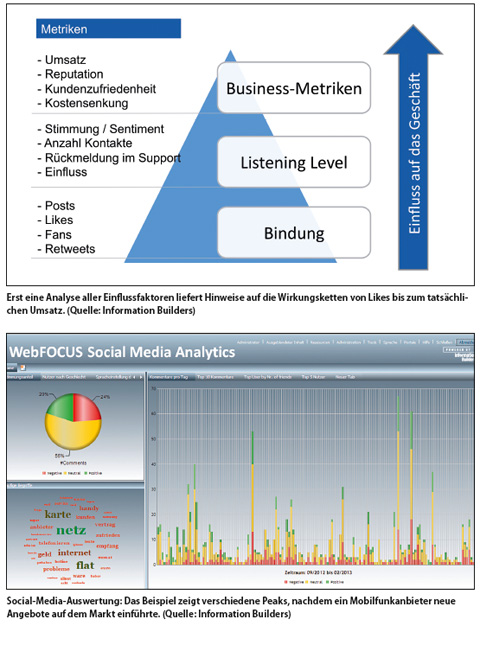
Mit Social-Media-Analyse-Tools erfahren Unternehmen, was Kunden über das eigene und über marktbegleitende Unternehmen denken. Die Mehrheit dieser Tools stellt jedoch keine Verbindung zu den betriebswirtschaftlichen Kern-Applikationen her. Erst durch eine Kombination von Daten aus internen CRM- sowie ERP-Applikationen mit Daten von Social-Media-Plattformen erhalten Unternehmen ein vollständiges Bild.

Social media platforms from Facebook and Google+ to LinkedIn and Twitter are not one-way communication - or at least should not be used that way. Sometimes, however, this impression can arise when companies are only guided by the number of comments on their presence, the number of likes or followers. The Olympic motto does not apply here: "Being there is everything, someone will get in touch with sales." Those who only use the new communication channels in this way are missing out on the real potential.
 
Comments and posts on social media platforms are one of the most important ways for customers to express their opinions on company products and services. And these opportunities can be used extensively. Companies are gradually discovering the wealth of data in social media. However, they quickly realize that they are dealing with an incredible flood of data produced by customers and interested parties on an almost daily basis - from blogs and comments to likes and tweets with important information about the behaviour, opinions, wishes and needs of users. Marketing managers and those responsible for CRM, customer service and product development have their hands full filtering out what is really important for their own company.
 
Which areas of marketing, customer service or sales benefit most from social media analyses? Do customer comments provide suggestions for product improvements? Can indications of consumer trends be derived from them? Does customer feedback provide ideas for new products? Is damage to your image slowly becoming apparent? Social media analyses offer revealing insights into customer satisfaction that cannot be obtained through conventional methods such as market research or focus groups. Social media analysis provides more context to customer behavior because customers explain their behavior in their own words - and sometimes very emotionally.

Here are a few examples of how important context is:
 
- A newly launched product is selling very well: Is it also proving itself in use by customers? Is it recommended or criticized?
- A call center meets its performance targets in terms of waiting times, call duration, etc.: Do customers feel that they are treated well and professionally or do they have the impression that they are just being put off?
- The customer churn rate has reached an all-time low: is this because customers are genuinely satisfied, or are there just no better alternatives on the market? Given the influence of those who use social media channels, knowing how to positively influence customer satisfaction plays a huge role. To put it in a simple formula: A handful of satisfied or dissatisfied customers is enough to convince a large number of people. And if a shit storm is brewing, you have to react very quickly to avoid permanent damage to your image.
 
Campaign planning and management, for example, are attractive areas of application for social media analysis. When companies launch a campaign on Facebook - such as discount codes that can be obtained by simply "liking" a page - it is important to measure the success of the campaign. Conventional tools for social media analysis record how many likes an advertising campaign has generated. This information is important for the campaign manager. However, the number says nothing about how high the sales actually were, how many likes turned into a real order and which products were purchased with the discount code. Such information is only available when social media analyses are linked to consistent, company-wide business analytics.

 
Social media analyses alone are not enough

Social media feedback alone does not provide a complete picture. Important supplementary information is also available in other internal systems that record customer interactions. For example, information on lost alerts from sales information systems can reveal product deficiencies. When customers complain about faulty or defective products, the information is often stored in helpdesk or call center applications. Ideas for product improvements may be contained in the results of surveys or focus group analyses conducted by external market research companies. Such data cannot be accessed by traditional or home-made social media analysis tools - and this is a key reason why it is so important to combine social media analysis with existing business intelligence and CRM/ERP systems to achieve optimal results.
 
The first step is to correctly record the variety of entries, posts and comments from the various social media channels. One solution for this is provided by functions for analyzing sentiment and opinions (sentiment analysis), such as those offered by WebFocus Social Media Analytics from Information Builders. The technical basis for this is the Wand Taxonomy Server (www.wandinc.com), which provides a multilingual vocabulary for the automatic text analysis of opinions and attitudes. The aim is to determine the tonality of the contributions (positive, negative, neutral). Manufacturers of consumer goods, for example, are interested in the opinions and attitudes of interested parties and customers towards their own products as well as those of their competitors.

Networking with business analytics

The second step is to process this unstructured data in such a way that it can be correlated with existing internal data - which is usually customer data. This makes it possible, for example, to determine which products and services a (dissatisfied) customer has previously purchased. The real value of social media analyses only comes from linking external and internal data, i.e. from analyzing how the comments and opinions of interested parties and customers in the social media channels affect the company: For example, is an increased number of comments or tweets the direct result of a particular sales campaign or promotion? What impact do positive and negative sentiments have on sales? Does Facebook support help to reduce customer service and support costs? Are customers who post frequently more loyal? Are there differences between the opinions and emotions of customers on social media channels and those that reach a company via call center or email?
 
The crucial point is that data from social media channels should not be analyzed in isolation from the information available internally. It must be part of a broad-based business analytics strategy that combines, correlates and compares social media data with customer data from a variety of other sources. Social media content alone does not provide a complete picture of customer attitudes and opinions. Social media data adds a new dimension to business analytics that, when combined with other sources, provides a more accurate picture of customer desires, opinions and behaviors and how these actions and sentiments impact business success. Achieving this goal requires powerful BI platforms that enable the efficient collection, processing, consolidation and analysis of these large volumes of data - regardless of where it is located, what format it is in and how extensive it is.

Giuseppe Scattarreggia

Unbenannt-6_23
Unbenannt-6.bjpg_
 

Golden goose or fashion fad?

Although not clearly defined, "native advertising" is currently ubiquitous as a fashionable term - an attempt at an approximation together with the question of whether and how such things will ever exist in our country.

Until the summer of 2012, Google recorded no search queries for the term "native advertising," but from then on the trend curve shot upwards. In the English-speaking world, well-known titles such as Forbes, The Atlantic, and The Economist (cf. Werbewoche 21/2012, November 23, 2012, p. 31) have now jumped on this bandwagon. And when the New York Times unveiled its redesigned website on January 8, complete with Responsive Design and Native Advertising, the trend probably achieved its breakthrough, albeit with controversial commentary. In Switzerland, Ringier is relying on native advertising with the web portal for Blickamabend.ch, which went live last December.

Subscribers to Werbewoche read the article by Christoph J. Walther under this link or in the Advertising Week 01/2014.

jetzt-Abonnent-werden_8

Radio Top applies for change of license

Aus finanziellen Gründen hat Radio Top beim Bund ein Gesuch zur Konzessionsänderung eingereicht. Geplant sind technische Einsparungen. Am Leistungsauftrag will das Radio dagegen festhalten.

Radio Top was awarded the license for the Eastern Switzerland West region in 2008. This includes the cantons of Zurich, Schaffhausen, Thurgau and St. Gallen. The contract includes daily regional program windows. Five years after the concession was granted, Radio Top is "drawing a largely positive interim balance", according to the concession amendment application. However, income from advertising and sponsorship does not cover expenditure.

According to the application, Radio Top reported an annual loss of just under CHF 753,000 at the end of 2012. A "further substantial annual loss" is also expected for 2013, meaning that the balance sheet loss is likely to exceed CHF 5 million, it continues. Talks with shareholders and other potential investors have indicated a fundamental willingness to succeed in restructuring the company. However, Radio Top writes that it is not possible to cover costs with the current license conditions. On the other hand, the radio wants to stick to its performance mandate, as Managing Director Günter Heuberger told the SDA news agency on Thursday.

Radio Top operates a total of 20 transmitters in its coverage area, six of which are duplicated. "We could reduce the number here," said Heuberger. The media entrepreneur is also hoping for a more accurate representation of listener numbers. According to Heuberger, this could save a total of around CHF 500,000. Specifically, the current program windows for the regions served are to be "fundamentally eliminated" according to the application. The proportion of programs that relate directly to the coverage area in terms of content should be 40 percent. (SDA)
 

Infel Corporate Media hires Claudia Sebald

Claudia Sebald joined the Infel Corporate Media team as Senior Corporate Publisher at the beginning of the year.

Claudia Sebald has held senior positions in various PR, advertising and trade marketing agencies for many years. With her experience in managing national and international mandates and her strategic and conceptual know-how, Infel is expanding its competencies in the consumer goods and retail sector, according to a statement issued by the agency on Thursday. Claudia Sebald holds a CAS in Digital Publisher and is a marketing specialist with a Swiss Federal Diploma.


Knackeboul as hospital ambassador

Auf einer interaktiven Plattform zeigt das Luzerner Kantonsspital Luks Ausbildungssuchenden ihre beruflichen Chancen auf. Botschafter der Kampagne ist der Rapper und Moderator Knackeboul.

Die Kampagne zeige differenziert die Chancen und Herausforderungen der einzelnen Berufe in der Pflege auf, um junge Menschen in der Berufswahl zu unterstützen, wird Benno Fuchs, Direktor des Luks, in einer Mitteilung des Spitals vom Donnerstag zitiert.

Das Herzstück der Kampagne ist auf Packdisglueck.ch zu finden. Acht Berufsportraits werden darauf vorgestellt, moderiert durch Knackeboul. Lernende und Studierende des Luks werben in kurzen Videosequenzen für ihre Ausbildung. Von der Assistentin Gesundheit, Soziales über den diplomierten Pflegefachmann bis zur spezialisierten Pflege auf dem Notfall zeigt sich Ausbildungssuchenden eine vielfältige Berufswelt.


Affiliate marketing conference program announced

On March 24, 2014, the affiliate marketing industry will once again gather at the Volkshaus in Zurich. The program for the second Affiliate Marketing Conference has now been finalized.

Organizer Kurt Schwendener, CEO of Adresult, put together the program: Tradedoubler, Affilinet, and Zanox represent the network side, while Trial Pay, Ve Interactive, and Webmiles represent the publisher side.

Expert Knowledge

Dein Deal presents the latest developments from the customers« perspective, while Matthias Knauer, Head of Account Management at Adresult, will speak about trends and current insights in the industry. Wolfhart Fröhlich, Managing Director of Intelli Ad, will address the topic of technology in his presentation »Tracking, Transparency, Transaction Attribution: Measuring Success and Budget Allocation in Affiliate Marketing.« And Martin Schneider, CEO and founder of App Sher, will discuss »Mobile Marketing with a Focus on Performance and Technology.”.

The neighboring German market will also be a topic at the conference. It is considered more advanced than the Swiss market, not only in affiliate marketing but in digital marketing in general. Affiliate marketing expert Markus Kellermann, who has over ten years of experience in this field, will speak on this topic.

Networking

Participants can now take part in «speed networking» sessions during two breaks—an excellent way to meet many people and potential customers in a short amount of time.

Those interested can find the detailed program, including a list of all speakers, at Affiliate-konferenz.ch. There are still a few tickets available for 149 francs.
 

Your social media goals

Die digitale Medienlandschaft verändert sich ständig. Täglich gibt es neue Werbemöglichkeiten. Das heisst aber auch, dass die ursprünglich definierten Ziele und Massnahmen einer Kampagne ständig hinterfragt werden müssen.

Sie haben Ihre Social-Media-Pläne gemacht, Ihre Ziele gesetzt und Sie freuen sich auf Spitzenergebnisse. Aber wir leben in einer vielfältigen und dynamischen Medienlandschaft mit täglich neu sich bietenden Werbemöglichkeiten. Das fortlaufende Überprüfen von Zielen und Massnahmen mit präzisen Fragen ist eine wichtige Aufgabe. Löchern Sie jene damit, von denen Sie Antworten erwarten. Es folgt ein 4-Fragen-Leitfaden mit den notwendigen Hintergrundinfos:

Schaffen wir es ins Sichtfeld der Konsumenten?

Es ist das wichtigste und zugleich umfangreichste Unterfangen: im herrschenden Informationsüberfluss ins Sichtfeld der Userinnen und User zu gelangen. Denn ohne Sichtbarkeit gibt’s keine Folgewerte. Erster Erfolgsfaktor ist das sorgfältige Messen. Wir erinnern uns an das TV-Quotenmessdebakel. Aber auch bei Facebook zweifeln aktuell Experten in Foren an der Verlässlichkeit ausgewiesener Kontaktwerte. Es ist wichtig, dass Sie Kontaktzahlen erheben, diese aber kritisch hinterfragen. Halten Sie eigene Beobachtungen akribisch genau fest und haken Sie bei Veränderungen nach. Zweiter Erfolgsfaktor ist die sorgfältige Auswahl der Medien. Diese Erkenntnis ist nicht neu, aber die Anforderungen sind mit der Vielfalt und Dynamik sprunghaft angestiegen. Durchgesetzt hat sich die Gliederung in Earned, Paid und Owned Media.

Earned Media: Hierunter fallen allerlei Aktionen (u.a. Likes, Kommentare, Reviews), die User von sich aus auf Basis Ihrer Inhalte vorwiegend in Social-Media-Netzwerkplattformen, vereinzelt auch in Blogs, vornehmen. Die Inhalte erlangen dadurch – theoretisch gesehen – zusätzliche Sichtbarkeit in den Newsfeeds derer Fans, Freunden und Follower. Der alleinige Fokus auf Earned Media ist verlockend, aber längst nicht mehr alleine zielführend. Ihre Facebook-Fans, Twitter- Follower, LinkedIn-Kontakte oder Googleplus- Personen sind nämlich in erster Linie registrierte Benutzer des jeweiligen Netzwerks. Das heisst, das entsprechende Netzwerk alleine bestimmt, wer, wann, was und wie oft zu Gesicht bekommt. Dasselbe gilt für alle anderen Social-Media-Netzwerke.

Paid Media: Hierunter fallen alle Werberäume, die Sie bei Drittanbietern einkaufen. Ihr Einsatz ist unerlässlich, weil auch die anfänglich werbefreien Social-Media-Netzwerke inzwischen ihre besten Platzierungen nur noch gegen Bares hergeben. Während Sie bei den Offline-Klassikern Print, Plakat und TV nach wie vor mit vordefinierten Tarifen und Kontaktwerten Ihre Ziele und Budgets exakt planen können, bestimmen bei den Online- Medien Angebot und Nachfrage den Preis. Bei Werbeflächen in den Online-Portalen setzt sich allmählich die Vergabe nach dem Bietverfahren (Real-Time- Bidding) durch. Dabei gehen Platzierungen in Echtzeit an den jeweils Meistbietenden. Preistreiber ist die prognostizierte Wirkung, die man sich aus der User-Werbeort-Kombination verspricht. Wenn beispielsweise ein Beitrag (Werbeort) vorgängig bereits zahlreiche Besucher mit ähnlichen Datenprofilen verzeichnen konnte, so wird sich dies in einem höheren Preis niederschlagen. Sie ahnen es: Die Rede ist von Big Data, im Mediafachjargon heisst die Disziplin Programmatic Buying. Bei den Social-Media-Anzeigen scheint sich das gegensätzliche Google-Prinzip durchzusetzen: Wenn Sie eine Werbung haben, die viel geklickt wird und die den User zu weiterführenden Aktionen verleitet, beispielsweise zu einem ausgiebigen Besuch auf Ihrer Webseite, dann ist das für Google ein Indiz, dass die entsprechende Anzeige für den User zielführend war. Und das ist die Philosophie eines Suchmaschinen-Konzerns – liefern, wonach gesucht wird. Woran Google gar keine Freude hat und wofür man dann auch rasch sehr viel bezahlt, sind Adword- Anzeigen, die nicht geklickt werden. Werbung, die wirkt, ist in diesem Sinne doppelt effizient: Zur besseren Wirkung kommt der günstigere Preis. Problematisch hinsichtlich Zielsetzung sind zwei Faktoren: Verfügbarkeit und Budgetierung. Sie kommen nicht drum rum, zum Start zügig ins Blaue loszulegen, um eigene Ziel- und Budgeterfahrung zu sammeln. Denn jede Konstellation ist einzigartig. Erst mit der Zeit erkennen Sie bei sorgfältiger Prüfung verlässliche Wirkungsmuster.

Owned Media: Hierunter fallen alle Kontaktorte (Webseiten, Blogs), die Sie selber unterhalten, exklusiv kontrollieren und die sich in Ihrem Besitze befinden. Optimalerweise befinden sich die Daten auf einem Server-Platz in der Schweiz. Owned Media spielt bei der Erreichung von Sichtbarkeit keine ganz so wichtige Rolle, weil in der Regel im Vorfeld bereits anderswo ein Erstkontakt stattgefunden hat.

Generieren wir Leads?

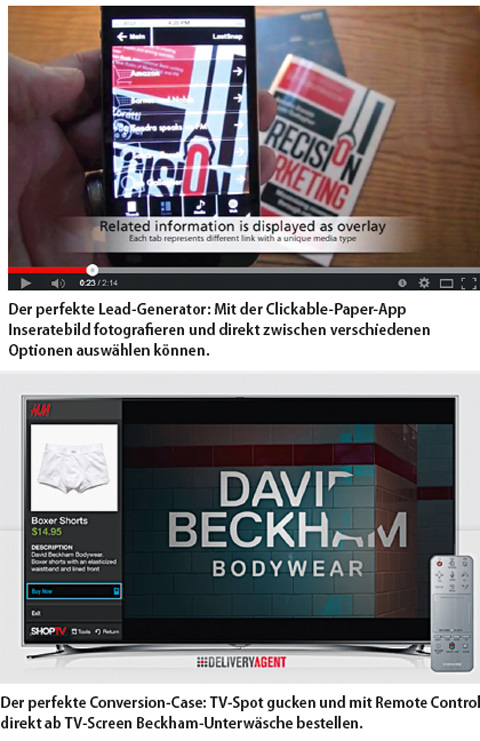
Ein Lead ist ein identifizierter Kontakt, und Ausgangspunkt eines Leads ist eine Handlung, die nachweislich auf einem spezifischen Werbemittel erfolgt. Wir kennen das als User. Wir klicken auf einen Link in einem Facebook- oder LinkedIn-Post, einem Tweet oder in einer Mobile-Ad oder fotografieren einen QR-Code aus einer Anzeige oder einem Plakat und gelangen auf eine Zwischenseite, wo wir aufgefordert werden, unsere Mailadresse anzugeben für einen Newsletter (häufig bei B2B-Portalen) oder uns über Facebook einzuloggen, um an einem Wettbewerb teil zunehmen oder sich zu einer Probefahrt anzumelden (wie in der aktuellen Ecoist-Kampagne von BMW). Leads scheitern, weil die Pfade technisch umständlich sind oder weil das Angebot inhaltlich am User-Interesse vorbeischiesst. Wir reden dann vom Medienbruch. Denn User mögen zwei Dinge nicht: Umständliches und Unpässliches. Kennen Sie «Clickable Paper»? Es ist die sehnlichst erwartete Weiterentwicklung der QRCode- Technologie. Die Mobile- App funktioniert nach dem Prinzip der Bilderkennung. Nach dem Klick auf das Bild erscheinen auf dem Bildschirm direkt verschiedene Optionen für weiterführende Aktionen. Darunter ein Amazon-Link, ein YouTube-Video, ein Weblink und vor allem auch die Möglichkeit, den Inhalt direkt über Facebook oder Twitter zu teilen.

Erreichen wir Conversion?

Bei einer Conversion handelt es sich gemäss Google Analytics um den Abschluss einer Aktivität auf einer Website, die für den Unternehmenserfolg von Bedeutung ist. Das Mass aller Conversion-Dinge ist der geldwerte Geschäftsabschluss, wobei dieser systembedingt nur dann messbar ist, wenn er in einem E-Shop erfolgt. Von Ziel-Conversion ist die Rede, wenn jemand beispielsweise einen Newsletter abonniert, einen E-Book-Download vornimmt, an einem Wettbewerb teilnimmt oder ein Gratis-Gadget bestellt. Es ist wichtig, Kampagnen mit Conversion-Anreizen auszustatten. Nur so werden sie messbar. Empfehlenswert ist der Einsatz unterschiedlicher Conversion-Elemente. Man kann so die Performances vergleichen und Schlüsse für die nächsten Kampagnen ziehen. Google setzt bei jedem User, der einen Anzeige-Banner klickt, ein Cookie. Dieses Cookie identifiziert den User bei jeder weiteren Handlung über einen Zeitraum von mehreren Wochen. Dies macht die Performance von Google- Kampagnen extrem transparent. Das Konzept hat längst das gesamte Web erfasst. Ein werberischer Leckerbissen nach bester Conversion- Art erwartet die amerikanische Smart-TV-Fernsehgemeinde während des bevorstehenden Super Bowl. Während des geplanten H&M-Spots öffnet sich auf den Bildschirmen aller Samsung-Smart-TV automatisch ein Fenster, über das die Viewer direkt Produkte aus der David Beckham Bodywear Collection kaufen können. Mit dieser App ist erstmals die direkte Conversion von «Viewers into Customers» möglich.

Schaffen wir Loyalität?

Die Hauptursachen für Loyalität sind Zufriedenheit und Vertrauen. Loyale Kunden sind im Social-Web-Zeitalter in doppelter Hinsicht bedeutend. Sie sind Wiederkäufer und tragen so zum Umsatz bei. Und sie lassen sich als Markenbotschafter einspannen. Was braucht es, damit man diese mit Abstand wichtigste Gruppe in Schwung hält? Perfekte Produkt-, Service- und Markenerlebnisse. Sie sind das Salz in jeder New-Media-Suppe. Dazu braucht es rasche und wohlwollende Reaktionen, sobald eine loyale Person etwas über ein positives Erlebnis postet, kommentiert oder teilt. Wertschätzung zeigen ist das A und O! Loyalitätsprogramme müssen auch die Aktivitäten im Social Web honorieren. In der Form exklusiver Angebote und Einladungen zur Zusammenarbeit – etwa im Kontext von Entwicklungsprozessen. Dunkin Donuts praktiziert ein aktives Zusammenarbeitsmodell. Fans werden beigezogen, wenn es um Produkte- und Kampagnenentwicklungen geht. Beispielsweise wird gefragt, welcher Summerhit-Song am besten zu welchem Taste passt. Das schafft ein «Wir-Gefühl».

Beat Hürliman

Auf www.Huerlimanncc.com warten vertiefende Links und weitere Cases zum Thema. Haben Sie Ihre Ziele schon formuliert?

Unbenannt-7_22
 

Photo 14 and the "Föteli

Die «photo», die grösste Werkschau der Schweiz, zeigte neben altbewährten Fotografen vielversprechende Newcomer. Die Aussteller gingen das Wagnis ein, kalendertaugliche Motive mit Avantgarde zu konfrontieren, und zeigten sich dabei spielerisch und frei von jeglicher Bewertung. Die Werbewoche sprach mit Andreas Wilhelm, einem der drei Kuratoren der «photo14».

Unbenannt-1_16

WW: Andreas Wilhelm, wie fühlen Sie sich jetzt als Kurator, wo die «photo» wieder zu Ende ist?
Andreas Wilhelm: Dieses Mal bin ich ganz entspannt, weil ich das «photoForum» abgegeben habe und mich nur um die Kuratierung kümmern musste. Ausserdem haben wir aus dem letzten Jahr gelernt und den Ausstellern engere Rahmenbedingungen gegeben, wie sie ihren Ausstellungskubus gestalten können. Erst im August fange ich dann wieder an, Portfolio-Reviews zu organisieren.
 
Sie haben beschlossen, neben Ihrer Agentur «13 Photo» mit einer Gruppe einen Zusammenschluss freier Bildredakteure zu gründen. Warum?
Im Moment sehe ich die Tendenz, dass immer weniger Manpower immer mehr leisten muss. Bildredakteure werden gesucht ohne Ende – aber nicht fest angestellte. Es gibt zu wenig Mentoren für Bildredakteure. Da wird einfach einer hingesetzt, der soll mal Bilder suchen. That’s it. Ein Land, in dem «Föte- li» das Wort für Bilder ist, kann kein Land sein, das fotografisch nachhaltig ist. Gleichzeitig liebe ich die Schweizer Fotografie: dieses Unprätentiöse, Exakte, die Ideen hinter den Fotos!
 
2005 hat es die erste «photo» gegeben. Können Sie sich daran erinnern?
Da waren 50 bis 60 Aussteller hier in der Halle – das war eine Katastrophe! Ich bin damals gar nicht hingegangen … Aber die Leute von Blofeld, die die «photo » organisieren, haben von Anfang an daran geglaubt, obwohl sie gar nicht genau wussten, wohin das Ganze eigentlich gehen soll. 2009 haben sie mich dann angefragt, um die «photo» weiterzuentwickeln. Die Hallen standen im Januar immer leer und so konnten wir sie die ersten Jahre relativ günstig mieten – das ist natürlich nicht mehr so.
 
Ihr habt mittlerweile auch internationale Grössen für Vorträge und Ausstellungen gewinnen können. An der Vernissage lässt man sich gerne blicken. Setzt ihr verstärkt auf den «Promi-Faktor»?
Ja, wir setzen schon auch auf die Stars. Die guten Kontakte zu James Nachtwey, Jürgen Teller, Bruce Gilden und anderen Fotografen aus dieser Liga machten sich hier für uns bezahlt.
 
Gibt es verschiedene Bereiche, nach denen ihr sortiert?
Wir wollen jede Kategorisierung vermeiden. Hier liegt Modefotografie neben Architektur, Amateurfoto neben Profifoto. Jeder, der hier durchgeht, soll selbst für sich entscheiden, was ihn interessiert. Gerade gestern habe ich wieder mit einem Fotografen diskutiert, weil er die Qualität der Ausstellung infrage gestellt hat. Mitmachen will er trotzdem nicht. Ich finde, sie sollen sich ruhig der Herausforderung stellen und ihre Arbeiten neben die der Amateure legen und schauen, ob sie bestehen. Ehrlich, wo hat man schon die Chance, seine Arbeit 20 000 Leuten zu präsentieren?
 
Als ich mir die Websites der ausgestellten Fotografen durchgesehen habe, hatte ich zum Teil den Eindruck, ihr habt auch richtiggehend Kalenderfotografen dabei.
Wir müssen 125 Fotografen ausstellen, da kommen wir nicht drum herum. Wir nehmen das beste von dem, was da ist. Ich freue mich über die jungen, neuen, frischen, die auch hier sind. Leider sind nicht sehr viele Editorials eingereicht worden, sondern vielmehr diese kleinen Bildwelten, die die Fotografen mehr oder weniger für sich machen können. Kommerziell kommen sie damit nirgends hin. Vier oder fünf Fotografen sind hier ausgestellt, die würde ich sofort buchen, wenn ich ein Magazin machen würde.
 
Mögen Sie mir ein Beispiel geben?
Sandro Bäbler hat vor vier Jahren das erste Mal an der «photo» ausgestellt. Er hat danach einen riesen Sprung gemacht. Er hat verstanden, was die «photo» für ihn bedeuten kann. Mit einem Kollegen hat er jetzt auch noch den Film gemacht, der hier ausgestellt ist. Das hat Zukunft. Dann Maros Kostas, ein ganz junger «BaZ»-Fotograf. Die Bilder stimmen alle: die Tonalität, die Momente, das Spiel von Schärfe und Unschärfe. Die hinterlassen einen Eindruck. Oder dann ist da Lorenz Walter mit seiner aufwendigen Arbeit. Wahnsinn, was da dahintersteckt – so viel Zeit und Energie, bis das alles sitzt! Erst 23 und dann haut der so eine Inszenierung hin!
 
Ein paar Fotografen sind mit Motiven aus Afrika oder anderen exotischen Ländern vertreten. Ist hier das Sujet schon die «halbe Miete»?
Darüber diskutiere ich auch oft. Ich sag dann immer: bring mir mal eine Serie aus der Schweiz, die so aussieht wie die, dann bist du top! In Afrika, Indien oder Asien sieht alles anders aus, da ist das Setting schon vorhanden. Es gibt einen Unterschied zwischen Folklore und Reportage.
 
Manche Bilder sind hart an der Grenze zum Kitsch. Wie stehen Sie dazu?
Es ist nichts verboten, wenn etwas gut gemacht ist. Ich will nichts in eine Form pressen. Vieles ist langweilig, wenn es nur schön ist. Für manche Arbeiten, die hier gezeigt werden, ist in der Schweiz nicht das geeignete Magazin vorhanden. Früher wären solche Bildserien in der Vogue über 15 Seiten inszeniert worden. Es gibt keinen Platz mehr für Wahnsinn.

Interview: Doris Oberneder

Article in PDF format (images)

The competition continues

While Publicitas Cinecom was long the only cinema marketing agency in Switzerland, a second player—WerbeWeischer—has entered the market since last year. What has changed since then? Who has gained ground, and where? And what does 2014 hold? The two competitors answered our questions in an email exchange.

Unbenannt-12_16

WW: For a year now, Publicitas Cinecom has had a competitor in Swiss cinema marketing in the form of WerbeWeischer. Publicitas Cinecom started with a market share MA of 71 percent (all of Switzerland), 56 percent in German-speaking Switzerland, WerbeWeischer with an MA of 44 percent (German-speaking Switzerland), 29 percent (all of Switzerland) (see tab.). Is there a change at the start of 2014?
Christian Wittmer CW: We do not expect any significant changes in market shares. Due to the renewals of important partnerships, e.g., in the Zurich area with Arena Cinemas and Neugass Kino, we will market a total of 13 new screens in Zurich in 2014. With these and other partnerships throughout Switzerland, Publicitas Cinecom remains the market leader in all language regions.
Nils Schilling NS: The fact is: there have been significant changes in market shares since WerbeWeischer entered the Swiss market. In German-speaking Switzerland, we now have a market share of 47 percent. In terms of MACH Cinema pools, WerbeWeischer has a 77 percent share in Lucerne, 48 percent in Berne, 80 percent in St. Gallen/Schaffhausen and 56 percent in Zurich - not least thanks to our collaboration with Arthouse - while Publicitas Cinecom only has a 44 percent market share here. We are by far the market leader in the key cities of German-speaking Switzerland - and the development for 2014 is not yet complete, so that overall there will be further shifts in favor of WerbeWeischer.
CW: Including the closures and new openings of cinemas in 2014, which do not yet seem to have been taken into account in Nils Schilling's calculation, we arrive at the previously mentioned market shares according to our projections (based on MACH Cinema's 2013 market shares). We assume the following market shares in 2014: Basel (88%), Bern (52%), Geneva (100%), Zurich (52%, excluding Winterthur 58%), Lausanne (100%) and Lugano (100%). We are thus the only marketer able to continue offering our advertising customers a nationwide cinema portfolio. The new movie theaters of our partners already announced for 2014 are essential components of a realistic forecast of market shares in 2014.
NS: We find it misleading that Publicitas Cinecom argues with market shares for Zurich that are based on cinemas that have not yet opened and thus on visitors that do not yet exist.

WerbeWeischer has so far been active exclusively in German-speaking Switzerland. This is probably related to the division of the two largest cinema operators. WerbeWeischer has the second-largest cinema operator, Kitag, on board, but it is not present in French-speaking Switzerland. The number one, Pathé, which operates throughout Switzerland, is marketed by Publicitas Cinecom. Nils Schilling, you wrote that further shifts are to be expected in 2014. Is this also about western Switzerland?
NS: Our market entry was aimed at the whole of Switzerland from the outset, and of course we will also be active in French-speaking Switzerland.

In 2014, however, you will not yet be able to market any halls in western Switzerland, right?
NS: That is correct.

Christian Wittmer, when was the last time the contracts with Pathé were extended? And: When do they expire?
CW: We have long-term contracts with both Pathé and our second-largest partner Arena Cinemas - exclusive marketing mandates.

Does that mean that Pathé and Arena will remain with Publicitas Cinecom for the next two to three years?
CW: We do not provide information on the content of our contractual agreements with partners.

Publicitas Cinecom and WerbeWeischer differ in their pricing and billing models. Will there be any adjustments in 2014? Will the CPM change, for example? (Publicitas Cinecom: CPM at least CHF 12; WerbeWeischer: CPM at least CHF 11.50).
CW: Publicitas Cinecom will not be changing its price level in 2013/2014. In 2014, we will launch new packages that further simplify access to the medium of cinema and make it more transparent.
NS: Since entering the market, WerbeWeischer has been billing every single visitor for every single cinema performance. More transparency and precision is not possible. Publicitas Cinecom, on the other hand, still calculates using a projection based on a city pool and has no access to this level of detail. Our cost-per-visit billing method at Weischer-Kinopark is the hardest currency in the cinema market. We receive up-to-date data from the box offices on a daily basis. Traceability, transparency and performance-based billing are part of our mission, and cinema operators and advertising clients benefit from this in equal measure. On the question of price development: Overall, there will be a moderate price increase of around five percent across all our products next year, as there is high demand for film-specific bookings and special forms of advertising in cinemas.
CW: With a portfolio of more than 100 partners throughout Switzerland, access to all box office systems is more complex than with a comparatively much smaller partner environment. For this reason, we currently bill on the basis of ticket sales from ProCinema. As an industry association, ProCinema provides a reliable and valid basis. We are also working on an efficient solution that enables billing directly via the box office systems and does justice to the high level of coverage that we offer our customers throughout Switzerland. For the customer, the same applies in both cases: Cinema is the medium with the hardest and therefore most transparent currency.
NS: For clarification, I would like to add: The procedure established by Cinecom merely represents an inaccurate extrapolation of weekly visitor data from the largest cities to the respective campaign. This procedure is not comparable with the billing system introduced by WerbeWeischer at the market launch, which uses the daily attendance figures of each cinema performance from the box office - and thus offers the highest precision and complete transparency for advertising customers.
CW: It seems daring to me to speak of inaccurate projections. We receive figures down to the level of individual movie theaters from the Swiss Association for Cinema and Film Distribution in order to prepare our accounts.

How do things look in the area of cross-media offerings?
CW: We are further expanding our cross-media offerings in 2014. In addition to Star-TV, other TV stations will be included in the offering. Cineman. ch and Kinowetter.ch will be followed by further online portals.
NS: In the online sector, we will also be cooperating with 20 Minuten in future, in addition to our existing cinema web offering, and will market cinema in the entertainment sector exclusively for Tillate.com. Here, our partners will also benefit from the high level of experience we have gained in Germany in online dialog with cinema target groups. Other cross-media offerings include ad screens, our monitor system for foyer advertising, and numerous touchpoints in cinemas that we use to showcase our brands.

Cross-media offers may lead to an increase in revenue for cinema operators. However, it is unattractive for cinema marketers that it is not recorded in the advertising statistics. Agreed?
NS: Of course, we have a great interest in ensuring that each advertising medium provides proof of its performance - in this respect, we are positively disposed toward possible developments for recording cross-media offerings. But in general, I would like to emphasize: We cannot strengthen the medium of cinema by means of advertising statistics.
CW: Publicitas relies heavily on cross-channel media solutions. Individual measures can already be measured in one way or another. Due to different currencies, the need for explanation on the part of the customer may increase, but advantages such as the increased effectiveness of a cross-media campaign outweigh this. For example, a study commissioned by Publicitas Cinecom from the research company Brand Science showed that cinema in the media mix both generates additional revenue and strengthens the overall campaign.

WW: How high is the "non-cinematic" share (i.e. everything except cinema screen) in cross-media campaigns?
CW: That depends very much on the campaign. Within the Publicitas portfolio, cinema can be only a small part of a cross-media campaign on the one hand, while on the other hand there are clients who use cinema as their main medium and complement it with other offers. NS: On average, we record a "non-cinematic" share of around ten percent for cross-media campaigns. For individual campaigns, however, this share can sometimes exceed 50 percent of the total campaign budget. We definitely see potential for growth in this area.

Digitization has opened up the possibility of cooperation with private national TV stations, regional broadcasters or even Publisuisse. Are there any plans in this area?
NS: We see our task as marketing cinema - and we are one hundred percent passionate about this task. Cinema has a unique contact quality, and if the medium of cinema is to be networked with other media in terms of campaigns, this is primarily the task of media agencies to develop efficient solutions here. And one more thing: Our cinema partners also expect us to ensure that our marketing activities do not move outside the cinema-affinity radius.
CW: As a marketer of TV stations as well, Publicitas is focusing strongly on an increasingly intensive exchange between TV and cinema. Cross-media campaigns are increasingly in demand among our agency and direct customers.

Final question: Cinema advertising is a niche medium due to its low reach. When WerbeWeischer entered the market, the motto was: competition stimulates the market. How successful were you in this respect, and was cinema advertising able to gain additional shares of the advertising pie overall?
NS: In our view, the decline in cinema advertising of around 40 percent between 2003 and 2012 (gross advertising print advertising market statistics Media Focus) was caused by marketing of cinema that was no longer in line with the times. There has been no further development of the medium during this time - in this respect, there was a high need for reform when we launched in the Swiss market at the beginning of last year. Not least through the cinema advertising model "Cinema Reloaded," WerbeWeischer is providing the urgently needed innovative impetus here. Against this background, we see even more potential for cinema in the media mix - also because of the extraordinary impact of this wonderful medium.
CW: The gross figures for advertising pressure calculated in Media Focus are the wrong figures for determining the share of the advertising pie. With regard to market development, the advertising statistics with their recording of net sales are decisive across all sectors, not advertising print. According to the Stiftung Werbestatistik Schweiz (Swiss Advertising Statistics Foundation), the cinema market has been at a stable level since 2008, while in 2011 to 2012 net sales even increased by 25 percent - the downward trend was thus already absorbed before the competitive situation arose (net sales 2009: CHF 26 million, 2010: CHF 28 million, 2011: CHF 24 million, 2012: CHF 30 million). Another aspect is the share of cinema advertising in total advertising expenditure, and here we cannot complain: With a share of around 0.7 percent, Switzerland is relatively high in an international comparison and shows a higher value than, for example, Germany with a share of cinema advertising of around 0.5 percent (source: SAWA). We see this as reinforcing our strategy of continuous further development of the medium, which we are pursuing on a sustained basis with the expertise of the long-standing market leader in Switzerland.

Moderation: Isabel Imper

Unbenannt-16_5
Unbenannt-14_9
Unbenannt-15_8

The Five Golden Rules of Banque CIC

With its current branding campaign, Banque CIC is making a splash in the advertising sections of the Swiss financial and business press.

Five golden symbols represent Banque CIC’s golden rules regarding its customer-focused services. The ad campaign begins with the number «Five,» which is intended to encourage a call to action. Under Cic.ch/5 According to a press release issued by the company on Thursday, interested parties will learn the best reasons why they are in exactly the right place at this private bank among universal banks.

The gold symbols will be featured in advertisements, online, in store windows at the point of sale, and in video clips through the end of 2014.

Contact at Banque CIC: Sebastian Comment (Head of Marketing & Communications), Fabiana Rotundo (Project Manager, Marketing & Communications). Contact at Brainheart: Mirjam Pierig. 3-D illustration: Pictura, Lukas Gloor.

1.cic_.1
1.cic_.2
1.cic_.3
1.cic_.4
1.cic_.5
1.cic_.6
get_footer();