Losses increase

Even the redesigned MACH Basic does nothing to halt the ongoing decline in the reach of print publications. Compared to the previous year, no fewer than 53 publications have seen a significant decline in reach, 43 of which are German-language publications.

With MACH Basic 2014-2, comparative figures from two completely independent surveys are now available for the first time. After all, the results of MACH Basic 2014-1 still consisted of 50 percent of the same figures as those of MACH Basic 2013-2 (see also box "The MACH Basic 2014-1"). And in exactly the same way, around half of the data in the latest study is already represented in the 2014-1 evaluation. For this reason, the emphasis in this number is on the previous year's comparisons. And these now show that a total of more than 2.5 million contacts have been lost across all titles covered by Media Trend Journal during this period. That corresponds to a drop of 5.9 percent.

All title groups lose

As the chart "Changes in contact totals" shows, the most striking swings are in southern Switzerland. Here, the daily press gained 5.0 percent, while the Sunday press lost 13.6 percent. However, the increase in the daily press is not due to significant deviations from individual titles and is therefore rather random. Underlying the loss of the Sunday press, however, is a significant drop in the reach of Caffè della Domenica. However, this is the only title in Ticino with a significant change. In French-speaking Switzerland, there are nine titles with significant and all negative changes: two dailies, the only Sunday newspaper, five titles in the general-interest press and one in the special-interest press. In German-speaking Switzerland, on the other hand, no fewer than 43 publications have lost significant ground. 7 in the daily press, 3 in the Sunday press, 23 in the general-interest press and 12 in the special-interest press. In contrast, only two titles made significant gains: the St. Galler Tagblatt, due to the "bought-in" readers of head papers, and the high-flyer Landliebe from Ringier.

kontaktsummen

Unchanged free shares

The contact totals of free titles have declined in all title groups, but less sharply than for paid publications. Therefore, with the exception of the Sunday press, the free share has generally increased slightly and now stands at 47.2 percent across all language areas and title groups.

As the chart "Free shares by title group and language region" shows, only Ticino has free contacts on Sunday. In this case, it is 100 percent - exactly the same as for the general-interest and special-interest press. Overall and in the two other language regions, however, the free share is still highest in the general-interest press. As a general rule, the smaller the language area, the higher the proportion of free copies. However, there are also major differences depending on the title segment. For example, in the "national topics" segment with the illustrated magazines, consumer topics and large-scale distributors in French-speaking Switzerland, it is almost 90 percent, which comes exclusively from the two cooperative titles of Coop and Migros.

Gratisanteile

Combinazione reaches 50 percent

In at least two language regions, six offerings each achieve at least five percent reach. They are listed in the "National Offerings" chart in order of national reach. With the exception of Ringier's KombiNation SwissWomen with Schweizer Illustrierte, Glückspost, L'Illustré and TV8, and the NZZ Business Combi from NZZ and Le Temps, all these offerings are represented in all three language regions. Ringier's third-place CombiNation Swiss- Family, with SonntagsBlick, Schweizer Illustrierte, L'Illustré, L'Hebdo, TV8 and Il Caffè della Domenica, achieved the second-highest reach in French-speaking Switzerland. The leading offer, Kombinazione, with all three Migros weeklies, shows a marked difference between the three language regions. In Switzerland as a whole, however, it still reaches just under half of the language-assimilated population aged 14 and over. Ringier's two CombiNation offerings are both significantly stronger in French-speaking Switzerland than in the other language areas and the Swiss average. Two of the national combinations are offered by Migros and Ringier, and one each by Tamedia and NZZ/Ringier.

nationale-angebote

Migros and Coop dominate

The "Reach hunter German-speaking Switzerland" chart now lists all sites that reach at least 25 percent of the population in the language area. The minimum threshold of 30 percent set a year ago is now exceeded by only three publications. In both major language regions, the titles from Migros and Coop continue to occupy the top positions. This is followed in German-speaking Switzerland by 20 Minuten, which leaves all combinations of paid titles behind and is also the only offering whose reach is currently not significantly lower than a year ago. In French-speaking Switzerland, where the minimum threshold for inclusion is 30 percent, the weekday/Sunday combination of Le Matin and RomandieMAX with the same Ringier magazines as the CombiNation SwissFamily are ahead of the commuter paper, but must be occupied across all language regions. Here, all offerings with the exception of 20 minutes and Coopération have lost significant reach compared to the previous year.

Reichweitenjaeger
reichweitenjaeger-westschweiz

Ringier dominates paid

In any case, paid-for single titles have no place in the concert of the big combinations and free titles. Le Matin Dimanche in French-speaking Switzerland is the exception here, confirming the rule - even though, according to the latest certification, over a quarter of the circulation is distributed free of charge or at a discount of over 50 percent. The Sunday edition of Le Matin is still the leader among paid-for top titles (see chart). Here, the lower limit had to be lowered to 15 percent, as the previous limit of 20 percent is now only exceeded by four titles. The order has not changed. The dominant publisher is Ringier with the four titles L'Illustré, SonntagsBlick, Schweizer Illustrierte and TV8. Tamedia, with the two Le Matin titles, has the same number of publications in this ranking as Konsumenteninfo with Bon à savoir and K-Tipp. Finally, Axel Springer is also represented with the Beobachter. Only the French titles Bon à savoir, L'Illustré and TV8 have not lost any significant ground compared with the previous year.

toptitel-bezahlt

Ueli Custer

Basic information

The analyses are based on the tables from the report volume, which were made available by WEMF in advance with a blocking period. All daily newspapers published at least five times a week (excluding large circulation titles), all general-interest, financial, business and special-interest press titles were evaluated. Local and regional weekly titles are not included. In the case of daily newspapers, only the largest unit is included. Header pages and partial editions are not listed, regardless of ownership.
 
Also not included in the WEMF tables are the results of newspaper supplements Z - the beautiful pages as a supplement to NZZ and NZZ on Sunday and the Vista-The figures for the newspaper combination were calculated as a supplement to a whole series of daily newspapers. This is because their values were not surveyed separately, but only shown as a calculated combination of the carrier titles. They can therefore in no way be compared with those of separately surveyed supplements such as Das Magazin, NZZ Folio, Télétop Matin, Femina or the evening supplement Extra of Corriere del Ticino. As the results of these titles show, their usage is significantly lower than that of the carrier titles in each case. The values reported in MACH Basic for Z - die schönen Seiten and Vista-Zeitungombi are therefore certainly inflated.

Extrapolation basis

It is based on the statistics on population and households of the Swiss Federal Statistical Office (STAT-POP) and the structural survey of the Swiss Federal Office. The population of MACH Basic 2014-2 is identical to that of MACH Basic 2014-1 and is structured as follows:

- German language group: 4,631,000 (+38,000 or 0.8%)
- French language group: 1 503 000 (+10 000 or 0.7%)
- Italian language group: 288 000 (+3000 or 1.1%)
- Total population: 6 422 000 (+52 000 or 0.8%)

The increase relates to the comparison with MACH Basic 2013-2.

Sampling

It includes not only registered landline numbers, but also people in households without a registered number (15 % of all households) or without a landline (5 % of all households).

Sample size

It is 19,276. Survey Procedure In a first call, the target person is recruited and then interviewed either by telephone or online with a second call.

Survey period

The results of the MACH Basic 2014-2 were surveyed between April 10, 2013 and April 5, 2014. Around half of the values are identical to those of MACH Basic 2014-1, which was collected between October 1, 2012 and October 6, 2013.

Pointing material

Respondents are provided with pointing material (title logo and possible response specifications) for both the telephone interview and the online questionnaire.

Incentivization

Participants in the interview receive a small gift worth ten francs, which increases the willingness to participate.

Communication spaces

52 combined communication areas (zKommR) fill the gap between economic areas and counties, which often have very small caseloads.

Coverage of newspapers with a circulation of less than 20,000 copies
In the 2014-2 evaluation, the values are based on the average readership over the entire 24 months, which were collected using the new method. This increases the data basis and reduces the fluctuation range. Further details can be found in the report volume or at www.wemf.ch.


Aggressive advertising for small loans to be banned

Parliament wants to ban aggressive advertising for small loans in order to protect young people in particular from falling into debt. Following the National Council, the Council of States has also approved the corresponding amendments to the law.

The Council of States approved the amendments to the Consumer Credit Act on Thursday by 24 votes to 11 with 5 abstentions. It spoke out in favor of stricter rules than the National Council. It is already clear that Parliament will initially rely on self-regulation: The credit industry itself can define what advertising is considered aggressive. The law requires them to regulate this in an agreement.

The National Council and the Council of States still disagree on the question of when the Federal Council should intervene and determine what falls under the ban. According to the National Council, this should only happen if no agreement can be reached in the credit sector within a reasonable period of time.

More powers for the Federal Council

The Council of States also wants to give the Federal Council the authority to issue a regulation if it considers the industry agreement to be insufficient. It voted in favor of this version by 29 votes to 12 with one abstention. If the industry is completely free in terms of the content of the convention, the Council could just as well do without regulation, according to the majority.

In contrast to the National Council, the Council of States also said yes to tightening express loans that have to be repaid quickly. However, state intervention was also controversial in the small chamber. Some of the conservative members of the Council of States were completely opposed to regulation.

Taking young people seriously

Thomas Hefti (FDP/GL) called for young people to be taken seriously. Otherwise, the question arises as to whether the age of consent should not be raised. After all, you can drive a car, get married or vote at the age of 18. It is hard to see why young citizens are trusted to do this, but not to take out a consumer loan.

Peter Föhn (SVP/SZ) noted that it was sad how carelessly many people, young and old, get into debt. But: "Must a law be made immediately for every case of misconduct?" The responsibility lies with the industry and the borrower. The industry has recognized this and has already submitted a draft for a convention. A change in the law is unnecessary.

The general public pays

The proponents of regulation disagreed. It is in the public interest to prevent over-indebtedness, said Justice Minister Simonetta Sommaruga. People who are over-indebted are the first to stop paying their taxes and health insurance premiums.

Later on, those affected are often dependent on social welfare. "The costs of over-indebtedness are paid by the general public," Sommaruga noted. And advertising certainly plays a role, otherwise money would not be spent on it.

Request proof of wages

In addition to the ban on aggressive advertising, the councils have also decided to tighten up the creditworthiness check. Under the current law, the credit company only has to check the accuracy of the consumer's details if there are doubts about their accuracy. It will now generally be able to request documents such as an extract from the debt collection register or proof of salary.

A complete ban on advertising for consumer credit that specifically targets teenagers and young adults is off the table. After the National Council, the Council of States has also spoken out against it.

No forms on the street

The bill now goes back to the National Council. It is based on a parliamentary initiative by Josiane Aubert (SP/VD). In recent years, however, there have been numerous other initiatives on the subject, including standing initiatives.

The credit industry has now submitted a draft for a convention on self-regulation. According to this, it intends to refrain from distributing credit application coupons on the street in future, for example.

According to the Federal Statistical Office, 19% of young adults between the ages of 18 and 29 lived in a household that had taken out at least one consumer loan in 2008. Among 30 to 49-year-olds, the figure was 18.2 percent. In both age groups, around 9 percent lived in a household with a critical volume of overdrafts or arrears. (SDA)

Another app?

Many companies are still failing to tap into the potential of smartphones to reach young audiences. This is the conclusion reached by the «European Communication Monitor (ECM)» study. Digital experts nevertheless advise taking a thoughtful approach to app development, as many apps end up sitting unused in the app store. *Werbewoche* asked: Do apps still make sense for corporate communications?

Unbenannt-13_22
 
Responsive instead of app

 
A hasty project planning of apps and social media channels is not advisable. In mobile communication, companies should first concentrate on another area instead of designing an elaborate app and being present on all social media channels. For example, there are still extremely few corporate websites that are also responsive. In this respect, mobile communication in Switzerland is still very much lagging behind. That's why in most cases it's much more worthwhile to optimize the company's own website for mobile communication, to make it responsive, so that the problem of the different devices is also eliminated. This way, the website runs ideally at all times, even when new devices come on the market. In most cases, that makes the most sense. And there is still a lot of potential in this area, especially since mobile usage in Switzerland is enormously high. In concrete terms, however, optimization does not just mean that the website is suitable for all screens. Above all, the content is important. Often mobile websites are extremely reduced in content. However, this is precisely how a company blocks the user. Instead, one should definitely retain all functionalities, but present them differently. For example, certain topics could be brought more into focus on mobile, such as the location or news. These should be visible first, while other topics are central on the standard website. The user simply wants to see other data first, depending on the device.

App trend is already on the decline again

Many customers are now keen to do something in the app area. However, this trend is slowly declining again, especially internationally. But most of the time, the customer hasn't really thought about what the benefits would be for the company. An app is also associated with relatively high costs. However, since the project planning and implementation of an app is very time-consuming, it often doesn't make much sense.

Apps are not used often

Consumers have to download an app first, which is a big hurdle, especially for end customers. Before someone installs an app, it must actually be of interest. You can also see this in the app store: There are tons of apps from companies floating around, but nobody uses them. Because the effort is simply too great for the user.

Do apps still make sense at all?

There are certainly apps that make perfect sense, says Feurer. For example, the SBB app. It also has a very clear benefit and functions that would not be possible on a mobile website. For example, the connection to the store or the option to buy tickets*. In addition, these functions are needed very often and nationally. It also makes sense if you can access the camera with the app, for example. For these reasons, users are then also willing to install such an app. However, the introduction of a new app often fails due to poor implementation. If an app is not user-friendly, simple and easy to use, it will immediately be discontinued. The user experience is essential here. Internationally, the standard of apps is relatively high. Measured against the standard of Facebook apps or WhatsApp, apps that are less well designed quickly fall out of sight. Good implementation must not be underestimated under any circumstances.
 
* How exactly SBB integrates its mobile communication into the overall communication strategy and how it plans to make even better use of the possibilities of mobile communication in the future, is what the SBB media office wanted to say in detail. However, despite more than 3 weeks lead time, there was no concrete response to the questionnaire.
 
The digital agency Y7K is still in its infancy - it was founded about a month ago. Nevertheless, the young entrepreneurs Yves Sinka, Ruben Feurer, Samuel Alder and Joris Noordermeer are digitally up to date. They develop web apps and websites of the latest generation. They also bring experience to the newly founded agency: Ruben Feurer (Art Director) most recently helped build a design team in London at the digital production company UNIT9 and managed projects for companies such as Google, Nike and Salvatore Ferragamo. Yves Sinka (Business Development) has implemented advertising for clients such as Adidas, L'Oréal and Tabasco as an account manager and worked as a producer on the relaunch of the Ministry of Sound website. Samuel Alder (Interaction Design, Development) gained his practical experience as a developer and designer in Zurich-based digital agencies such as Hinderling Volkart. Joris Noordermeer (Technology) worked in Tokyo at the media production agency Augment5, where he was involved in projects for Google.

Y7K: Digital projects

In addition to commissioned work, Y7K also develops its own products. For example, a digital style guide. This offers templates for the design and construction of responsive websites and apps. The digital style guide should contain all the building blocks for this. For example, all updates can run through the same instrument and then have the same effect for the entire responsive website. "The digital style guide is actually the same thing that the corporate design template is in the print sector," says Feurer. Y7K is currently developing such a template for a client. Another major project is "NeverlandSpace.com." Digital art is exhibited on this site. The aim is to appeal to the Net Art movement, which is developing online, explains Feurer. When Yves Sinka was working as a curator for a pop art gallery in Zurich, for example, he noticed that this type of art wasn't really being curated yet. It could be found on Tumblr and blogs, he says, but there it was actually in the wrong context - between cat pictures and selfies. Neverland-Space now has various monthly exhibitions with different artists from all over the world. This way, he says, digital art can be presented and curated united in one place. "It goes from moving images to interactive stuff," Feurer tells us. As a result, they already have relatively well-known artists, such as Yves Netzhammer, who represented Switzerland at the Biennale. The whole thing is a kind of gallery, but digital, Feurer explains. This project will certainly be developed further.

Y7K's third major project is a tool that companies can use to make corporate design more flexible. These then no longer have to be so static, says Feurer. He is referring to Swisscom's CD, which has a moving appearance. However, this has been taken one step further, with a kind of generative design. This allows companies to generate their own corporate identity, eliminating manual processes. A letterhead, for example, is generated with this tool and always looks a little different without having to do anything. A simple example would be a square that rotates, with a certain color gradient and three different structures.

Unbenannt-14_24

Do apps still make sense at all?

Instead of approaching the new possibilities of mobile communication in a considered and cautious manner, PRfact prefers to go its own way. Nevertheless, it would be the wrong strategy to simply project an app because you have to have an app today. Instead, the focus is always on the story. First, the client must define the goals of the measure and, above all, the content - in other words, the story. This can be seen very well in Migros' 'MiniMania' collection campaign. Here, too, the story was first in the foreground: 'Migros is opening 100,000 new stores.' This story struck a chord. An app is simply the logical consequence of this story. Because every app downloaded is a new store. Nevertheless, I am convinced that companies should definitely make their data available on mobile first - preferably in responsive design.

Unbenannt-15_18

Integrated communication

Digital measures only make sense in mobile communication if they are also consistently integrated into the company's communication strategy and at the same time offer additional value. According to 65 percent of the ECM respondents, the introduction of mobile communication is also the greatest challenge. Good solution approaches are in demand. In Switzerland, only two out of three organizations have optimized their websites for mobile devices. And only just one in four Swiss organizations has a mobile press area for journalists."

This is also the view of Swiss Post: "It has never been more important for companies to coordinate their communication measures and thus maximize the impact," it says on its website. Swiss Post was unable to respond to specific inquiries about leveraging the potential of mobile communications, apps and an integrated communications strategy by press time - despite a lead time of three weeks. It is not clear whether there is still no definitive strategy in place to answer ten questions on mobile communication or whether Swiss Post is coming up with a major restructuring of mobile and integrated communication and is still silent on this. When asked about this, Swiss Post's Head of Communications, Marco Imboden, was told by telephone that unfortunately he had not found the time to answer the questionnaire.

Ursina mason

PRfact: Digital projects

A technically well-implemented app that is integrated into the entire corporate communication is not only complex, but also expensive. Therefore, PRfact has developed an app that integrates the entire intranet of SMEs. The in-house newspaper, the bulletin board or even the entire intranet: SMEs can unite their entire internal communication in one app. This means internal information, news, but also search functions as well as the entire functions of the SME website are behind the app as a hybrid CMS. In this way, every employee has access to the latest messages, even in their free time, without having to open their e-mails. This eliminates the problem of expensive app development as well as the further development and updates of the app.
 
Another mobile communication project of PRfact is the "mobile newsroom". This is a platform that makes large amounts of mobile data available responsively on any device in all networks and integrates social networks. In the individually created customer newsroom, for example, all digital content of an online media corner (documents, photos, videos) is compactly combined under one online umbrella. This is for the most diverse reference groups, from media professionals to interested consumers. Thus, not only press reports are united on the website, but also videos, social media and end customers. "In this way, journalists can find a story on Twitter, for example, which would not have been enough as a media release," explains Marc Schlittler. This cloud-based social media platform for content and user management was implemented with video conversion software from Pixel.


New editor-in-chief at Le Temps

Stéphane Benoit-Godet will take over as editor-in-chief of the French-Swiss daily newspaper effective April 1, 2015. Ringier also plans to establish a newsroom in Lausanne for this long-established quality newspaper that meets the latest international standards.

The new editor-in-chief of Le Temps is Stéphane Benoit-Godet (44). The current editor-in-chief of Bilan will take over as of April 1, 2015. Benoit-Godet had already worked for Le Temps in 1998 as head of the economics department before taking over as editor-in-chief of Bilan in 2006.

Ringier is also planning a joint newsroom for its titles L'Hebdo, Le Temps and Edelweiss in Lausanne. Ringier announced on Wednesday that the three quality titles will benefit from each other in terms of content, but will remain independent in terms of publishing. The digital offering is also to be significantly expanded.

Today, the majority of Le Temps' editorial team is based in Geneva. The presence in Geneva is to be maintained in the form of an editorial office with around ten employees.

The current management duo of the newspaper Le Temps has decided to leave the company. Both editor-in-chief Pierre Veya and managing director Valérie Boagno are stepping down. Le Temps SA will be temporarily managed by Daniel Pillard, Managing Director of Ringier Romandie.


Bernd de Wall returns to Allianz Suisse

The new media spokesperson for Allianz Suisse is an old acquaintance: Bernd de Wall (44) has returned to his old workplace and has once again taken on the role of Senior Spokesperson.

In this role, de Wall reports to Hans-Peter Nehmer, Head of Corporate Communications at Allianz Suisse. De Wall already worked for the insurance company from 2008 to 2013. He succeeds Harry H. Meier, who has left Allianz Suisse.

Bernd de Wall moves from Zurich Insurance Group, where as Senior Media Relations Manager he was responsible, among other things, for the media relations of the global life business. The communications specialist started his career as a news presenter and freelance journalist at Norddeutscher Rundfunk (NDR). After a period abroad in France, de Wall served as communications manager for the Southern Upper Rhine Chamber of Industry and Commerce in Freiburg im Breisgau from 1999 before joining leading ticketing provider Ticketcorner in Switzerland as PR & Communications Manager in 2006.

A native of northern Germany, he studied political science and history at the universities of Osnabrück and Angers (France) and is a certified PR consultant of the German Academy for Public Relations (DAPR).  

Concrete floor poetry for truck tarpaulin handbag

Because 25 frames per second say more than 1000 bullet points, each Freitag model is explained with its very own stop-motion movie.

Each of the 99 how-to movies to date was shot frame by frame by Yves Gutjahr and Claudia Röthlin together with the Freitag crew at the F-abrik warehouse in Zurich, and each manages to surprise with absurd and charming micro-stories in addition to seamless product education, the company wrote in a statement Wednesday.

The just released 100th film for R120 Austen not only explains the functions and carrying modes, but also sets the real-existing target audience on the concrete floor of the F-factory to prove the product advantage of the new irresistible and durable handbag with a lot of poetry.

//vimeo.com/104282742

For more joie de vivre

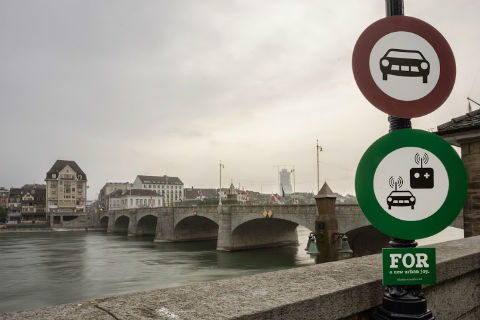
In recent days, numerous green signs have appeared in Zurich, Basel, and Lausanne, turning “No” signs into “Yes” signs. The message from carmaker Smart: Why be against something when you can be for something? 

In order to rediscover the joy of one's own city, Smart has spiced up dull prohibition signs with creative green signs. They turn the city into a fun-loving and inviting environment in which there should be room for individuality, diversity of ideas and color for all residents and visitors, according to a press release issued by the company on Wednesday.  

urbanjoy1
urbanjoy2
urbanjoy3
urbanjoy4


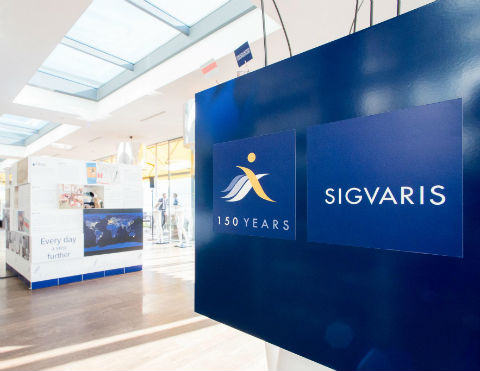
International anniversary campaign for Sigvaris

The entire communication was holistically implemented with an anniversary logo specially designed by Brandsoul, as well as the core message "One step further every day".

Brandsoul designed and coordinated a 150th anniversary show and exhibition. The celebrations took place in Switzerland, France, USA and Canada.

The core business of the Swiss manufacturer of medical compression textiles is the prevention and pain relief of impaired blood circulation and venous disorders. The company wanted to properly celebrate this important milestone with a worldwide campaign.

3000 guests, consisting of senior management, employees, guests of honor, family members and representatives from politics and society, gathered at various events. Throughout the anniversary year, events were implemented in Montreux (CH), Huningue (FR), Atlanta (US), Montreal (CA), St.Gallen (CH). This was communicated via various touchpoints such as an anniversary exhibition, a show act and company letters (CEO). 

brandsoul

Image spot for building technicians

On behalf of the Swiss-Liechtenstein Building Services Association, Hochspannung produced a commercial designed to highlight the vital role that building services engineers play in today’s residential construction.

The spot builds on the previously launched quality label "Wir, die Gebäudetechniker. It is intended to illustrate that people can control the forces of nature for their own benefit - thanks to the building technicians who install plumbing, ventilation and heating systems, among other things. Finally, the commercial refers to the newly launched website Wir-die-gebäudetechniker.ch.

Produced in three national languages, it is broadcast throughout Switzerland on television and online. Placed in the appropriate advertising windows, it reaches all target groups such as tenants, property managers, and residential and home owners.

Responsible at Suissetec: Hans-Peter Kaufmann (Director), Annina Keller (Head of Communications), Natalie Aeschbacher (Web Manager/Project Manager), Marisa De Genua
(Advertising/Communications Officer). Responsible at Hochspannung: Matthew Katumba (Creative Direction), Alexander Taiganidis (Creative Direction), Bettina Righetto (Consulting), Nathalie Funke (Art Direction). 


//vimeo.com/105555950

Fundraising campaign for Cerebral Foundation

The Cerebral Foundation, which supports people with cerebral palsy and their families, relies on donations. Once again this year, In Flagranti is organizing a fundraising campaign.

The story developed by the agency is intended to show how important donations are for people with cerebral movement disabilities: Financial support allows them more mobility and independence and thus more carefree moments.

The campaign will run for two weeks from mid-September 2014 with a TV commercial, posters, radio spots, advertisements and a fundraising mailing.

Responsible at Stiftung Cerebral: Michael Harr (Managing Director), Ursula Diethelm (Head of Individual Assistance). Responsible agency: In Flagranti (strategy, concept and realization).

MM_cerebral_plakat
MM_cerebral_inserat

Last but not least: smoking zone

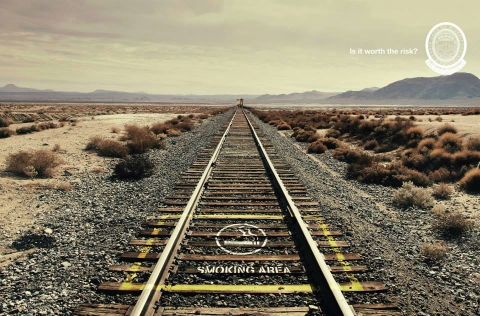
Smokers are being banished to increasingly uncomfortable places. But that's not what this campaign is about.

Smokers are on thin ice when it comes to their health. A campaign by Y&R in São Paulo has put this into visual form, using various poster sujets to show what all smoking areas have in common: they are risky. (sis) 

smoker1
smoker2
 

Two customers, one poster

The Zurich Zoo congratulates the Tonhalle Orchestra on its new conductor. The poster was designed by Matter Gretener Lesch.

Matter Gretener Lesch works for a considerable number of well-known Zurich institutions and companies. That's why it sometimes happens that the agency makes one Zurich client the subject of another Zurich client. For example, in the current poster for the Zurich Zoo, which congratulates the Tonhalle Orchestra on its new chief conductor Lionel Bringuier. From Zurich classic to Zurich classic, so to speak. And from Matter Gretener Lesch customer to Matter Gretener Lesch customer.

Zoo_Dirigent
get_footer();