Crisp seduction awakens the greed

Cosmic has created a unique world for Intersnack's Chio chips, featuring groove, lifestyle, and humor.

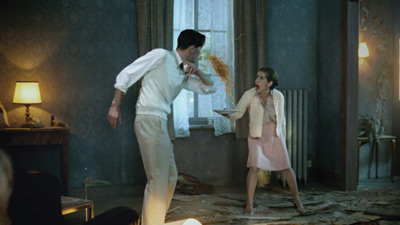
There's no doubt about it: a young brand has taken on the competition at full steam ahead. Following a relaunch based on consumer insights, the four packs of Chio Chips were initially designed much more dynamically and with clearer color coding than before. Now Intersnack Switzerland is launching a broad communication offensive with the new potato chips. Bern-based Cosmic won the design and implementation of the campaign in a pitch against three other agencies.
The agency's task is to "build awareness" for Chio Chips, which were only launched on the Swiss market three years ago. In addition to POS measures at the main distributor Coop, Cosmic wants to focus on three TV commercials. "It was important to create a Chio world with a special visual aesthetic," explains CD Tom Pfister. Two young and attractive protagonists should guarantee a high impact as identification figures for the target group.
In order to implement the main message "Awaken the greed in you" in an exciting way, different but very surprising special effects were used in all three commercials. The images mix a young world with retro aesthetics.
The budget is the first major collaboration between Cosmic Bern and Cosmic Romandie by Suzanne Scherer, who has overall responsibility for the project.
Andreas Panzeri
> Spot Grill
> Spot Lift
> Spot Basketball

Lowe attracts first-time car drivers to the Mini

To ensure that the Mini brand can continue to hold its own in the first-time car buyer segment, Autoverkehr Aarberg and Mini have launched the «Your 24-Hour Mini» promotional campaign. Lowe, an advertising agency belonging to the Draftfcb/Lowe Group, designed an advertising concept for this campaign.

To ensure that the Mini brand can continue to claim its place in the first-time car driver segment, the companies Autoverkehr Aarberg and Mini have launched the activation offer "Your 24-hour Mini". The Lowe advertising agency, which is part of the Draftfcb/Lowe Group, designed an advertising subject for this campaign. The offer is a Mini donated for one day by the Aarberg small car representative for all those who take their driving license at the regional driving school Driving School Richard.
The advertising subject shows that the small car is used by the young as a lure and seducer to get the maximum fun out of it in the given 24 hours, the agency said in a statement. Thus, the subject expresses what a Mini means to an 18-year-old.
In a first step, the offer "Your 24-hour mini" will be advertised with direct mailings and other below-the-line measures.
Responsible at Mini Switzerland: Patrick Cupelin (Head of Mini Switzerland), Jonas Theiler (Head of Communications MINI), Miriam Flückiger (Head of Administration Autoverkehr AG Aarberg). Responsible at Draftfcb/Lowe Group: Florian Birkner (Creative Director), Frédéric Nogier (Art Direction), Ivan Madeo (Text/Concept), Matteo Lonati, Laura Müller (Consulting).
img081119_mini_sujet_lowe

Buzzilla makes for Wybomania

With Buzzilla, Numéro 10 has served up a little Polish water.

Jean Claude has a dream: he wants to obtain Polish citizenship. And he is prepared to do anything to achieve this. Even a change of identity or external changes to his personality don't stop him. In the end, Jean-Claude succeeds: he becomes Jankludowisz Wyborowski, alias Mister Wybo.
Over the past few weeks, the guerrilla advertising agency Buzzilla from Numéro 10 in Bern has been causing creative confusion in selected bars and, above all, on the Internet.
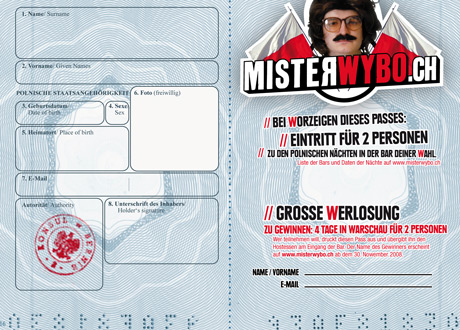
The campaign was launched with a teasing campaign: Jean-Claude wants to mutate into a Pole. To get the word out, Buzzilla used stickers and flyers in five bars each in Zurich and Lausanne to publicize Jean-Claude's cause. Anyone who was curious could click through a funny test form at www.misterwybo.ch. You also had to be 18 years old. Participants in the competition were then able to print out a PDF of what looked like a real Polish passport. The pass opened the doors to a series of "Polish nights" in bars such as Casa Loca in Kilchberg or Zic Zac in Zurich's Niederdorf district.
The "real" Mr. Wybo could also be found in ten such locations at certain times. He was styled with a character similar to the movie comedian Borat. The only difference is that Mr. Wybo does not come from Kazakhstan - just as Wyborowa vodka is not distilled in Russia. So anyone who could sing the Polish national anthem with Wybo or do other weird things without laughing - because Poles never laugh, as the cliché goes - could take part in the prize draw for a trip to Warsaw. Those who didn't win could at least look forward to a few funny souvenir photos on Tilllate. And a shot of vodka as consolation.
Alcohol advertising despite restrictions
With this "trick" of luring the target audience into a bar to stage an advertisement for vodka, Buzzilla was looking for a way to get alcohol advertising out to the people, even though the media are becoming increasingly restrictive. For example, it is well known that it is not permitted to show images of people enjoying alcohol. In the 10 bars as POS, Buzzilla has been able to exploit a lot more freedom. The parties are said to have been very popular, and not just among homesick people.
The Polish vodka Wyborowa is distributed in Switzerland by Pernod Ricard Swiss. This company has around 40 international brands in its portfolio. The project with Mister Wybo did not have a high-percentage budget. Nevertheless, thanks to the guerrilla character, a lot of money flowed in. A fan group had already formed on Facebook during the teasing phase. Numerous journalists became aware of the campaign through this group. Of the visitors who clicked on the Mister Wybo website, 30% wanted to order a Polish passport. On average, visitors stayed on the website for five minutes.
Andreas Panzeri

Virus alert in Lausanne
The billboards were actually reserved for Barack Obama,
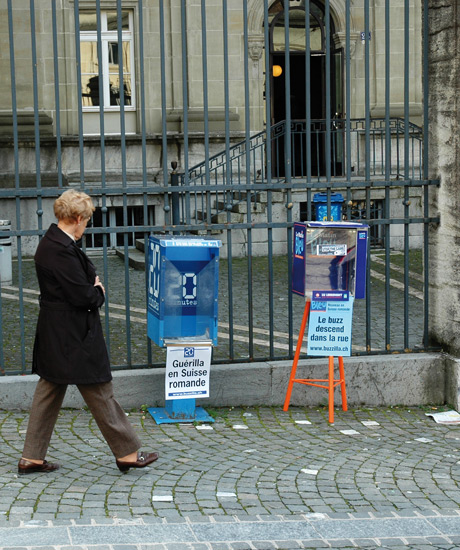
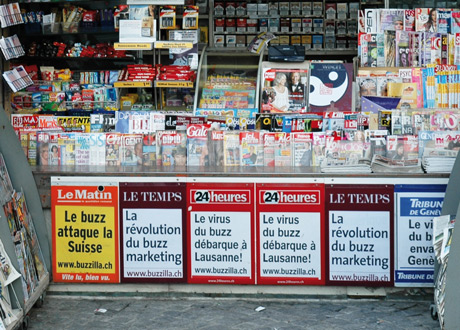
who had just been elected President of the United States. But Buzzilla threw a spanner in the works of global politics. On the day that around 300 marketing experts, media specialists and journalists gathered in Lausanne for Allmedia.09, the guerrilla specialist from the Bern-based agency Numéro 10 replaced the Obama headlines with a message about Buzzilla on countless newspaper boxes and newsstand displays in the vicinity of the conference. "Le virus du buzz attaque la Suisse" could be read on the posters of 20 minutes, Le Temps, 24 Heures, Tribune de Genève and Blick. "This has led to lively discussions," says Buzzilla boss Gilles Aeby.

1290582303_img081119_numero10_1
1290582303_umg081119_numero10_2
1290582303_img081119_numero10_3
1290582303_img081119_numero10_4
1290582303_img081119_numero10_5

Maybe Julia Onken has thought

Job cuts and cost pressures in newsrooms are driving editors to rely on all sorts of free expert advice when extraordinary events occur—which often results in expert opinions that are about as meaningful as a street survey. Op-ed by Hans Stutz, freelance journalist.

We know it: editorial teams have been thinned out, jobs reduced to the max and budgets cut to below the poverty line for freelancers. The cuts have been made gradually over the years and each time the publisher and the editor-in-chief have promised that journalistic quality is not at risk, no, no, rather the opposite is true. Whoever believes this can call themselves a manager or consultant.
But the normal madness prevails in the editorial offices every day: politicians resign or put their foot in their mouths. Companies merge or collapse, managers increase their bonuses and don't want to talk about it. Wage earners go on strike. People kill people, often as soldiers, but sometimes out of jealousy or need for money. People cheat people in good faith or themselves. People fall from the sky in airplanes or from cliffs in sportswear. Sometimes the wind whistles until rooftops fly off. So the extraordinary happens every day, and the editor hardly knows where his head is. But he has internalized the cost pressure of the publishers and therefore quite naturally calls up outsourced knowledge, often from state-paid university professors, but sometimes also from interest groups, such as those of the Avénir Suisse employer foundation.
This industry of experts has its familiar faces. The sociologist Kurt Imhof is an expert on everyone and everything, but especially on what he likes to call "media hounding". Psychiatrist Frank Urbaniok is an expert on the tough guys with a good view of decades of barred air. Forensic psychiatrist Josef Sachs regularly provides spontaneous explanations of murder and manslaughter without personal knowledge of the perpetrator. Journalist Sepp Moser is the expert on airplane and airline crashes, psychologist Julia Onken is responsible for separation pain and menopause and Klaus Herr for couples and mating. The writer also belongs to this circle, receiving calls when some Nazi thugs have struck again somewhere. Requests that have their own particular economic appeal: As an expert, the freelance journalist is supposed to provide content free of charge.
Experience has shown that the smaller the editorial budget, the more often professional colleagues call. So private radio stations and free newspapers call first, then private TV stations, and only later do colleagues from daily newspapers or the SRG call, but they are then better prepared. But everything always has to happen very quickly: The editor summarizes a current agency or police report in a maximum of two sentences and then immediately wants a statement. ("Excuse me, may I put you in the studio right away?") If the expert points out that he doesn't know enough about the specific case, the editor replies that he can make a general statement on the topic. An invitation to pretend to have inaccurate facts. There are always "experts" who even take up such an offer. This results in journalistic articles that don't even reach the level of party gossip.
Let's take a current example. The news: German billionaire Susanne Klatten, whose name was previously only known to interested readers of business news, has been in love with an inconspicuous Swiss ex-banker for a few weeks. He apparently found it easy to win the affection and money of rich women. The "Newsnetz" portal then asks psychologist Julia Onken, who of course doesn't know the recently infatuated billionaire any better. Onken begins by speculating in general terms about "perhaps a little underserved", then escalates to "Ms. Klatten is of course a poor pig" and then rambles on: "Perhaps Klatten has never had such good sex." One thing is certain: if things go on like this, editors will soon need an expert to advise them on how to deal with experts. This expert will then explain to them that statements that contain the word "perhaps" are always correct, as they also contain the assertion of the opposite, but are therefore meaningless. Or to put it another way: you don't need an expert for this, a street survey will suffice.

Weltwoche celebrates its 75th anniversary

Weltwoche has an anniversary to celebrate. The weekly newspaper has now been in existence for 75 years. In interviews, portraits, commentaries and anecdotes, Weltwoche reviews its history and great minds in an anniversary issue to be published on November 20.

Weltwoche has an anniversary to celebrate. The weekly newspaper has now been in existence for 75 years. Founded by Karl von Schumacher and Manuel Gasser during a train journey to Paris, Weltwoche was first published in November 1933. In an anniversary issue published on November 20, Weltwoche reviews its history and great minds in interviews, portraits, commentaries and anecdotes.
To mark its 75th birthday, the weekly magazine has also launched a new website. In future, digitized content from previous years will also be available on the website. Around one newspaper volume is digitally accessible for each decade.
Former editors-in-chief Jürg Ramspeck and Rudolf Bächtold, former features editors Hugo Lötscher, Peter Rüedi and Wolfram Knorr, and correspondents Peter Hartmann and Hanspeter Born all have their say in the anniversary edition of Weltwoche, which will be published on Thursday. The founder of the Society section in Switzerland, Margrit Sprecher, and people journalist Hildegard Schwaninger also bring 75 years of world history to life.
Three quarters of a century of "contentiousness and disrespect", as the publisher described Weltwoche in a press release, earned it a few refusals of congratulations. Zurich's mayor Elmar Ledergerber saw no reason to congratulate her. Likewise Doris Leuthard and Pascal Couchepin. Federal Councillors Hans Rudolf Merz and Moritz Leuenberger had at least signed off, as Weltwoche also reported.
img081119_jubilaeumscover_weltwoche

Wunderman kneads for Microsoft

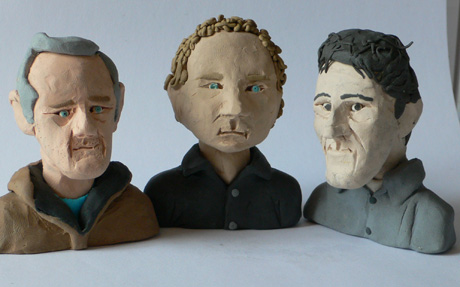
Wunderman has designed an extensive international campaign for Microsoft's Technical Audience division. The star of the campaign: original creations made from plasticine.

A ball of plasticine is an inanimate mass. It is like a football waiting for its Brazilian. Only in the hands of a creative person does it become something unique. It is the same with software: the products of the world's largest manufacturer, Microsoft, are only brought to life by their users. This is the message of a new campaign developed by Zurich agency Wunderman for the Zurich-based technical audience department of the American software company. "You shape it" is the title of the campaign, with plasticine as the main symbol.
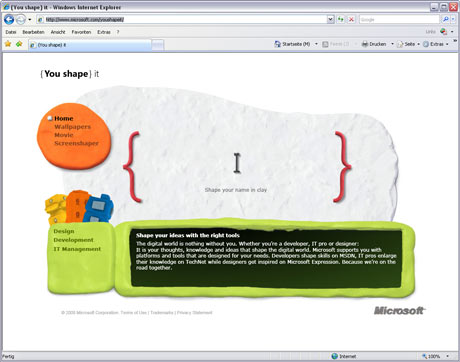
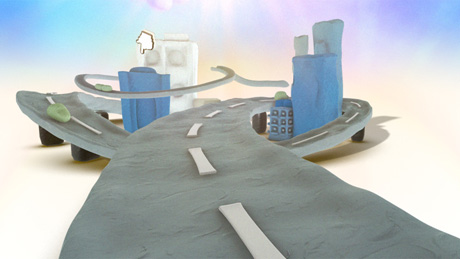
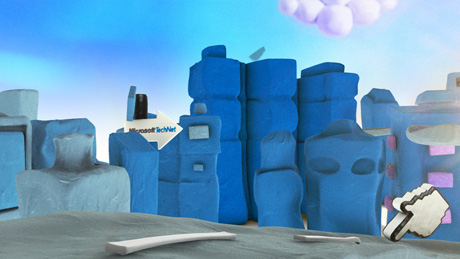
A movie welcomes visitors to the website Microsoft.com/youshapeit. "Your ideas transform the digital world", says a speaker after the viewer has been guided by a cursor through a plasticine world that has just been created. At the end of the short intro strip, the user lands on a text field where they can get started right away: their text entries appear in plasticine and the creative process has begun. This website is aimed at IT specialists, developers and designers - professionals who use Microsoft software to change the digital world on a daily basis.
The website forms the umbrella for various topic pages where professionals can find new product tips, editorial content and information on specialist events. "Microsoft wanted to summarize three important target groups and explain to them that they are changing the world with their tools. They have a blank sheet of paper or a new ball of plasticine in front of them every day," explains Christian Erni, Creative Director of Wunderman. "We wanted to create a campaign that works with playful elements and conveys joy." An idea that demanded a great deal of flexibility from the 15 Wunderman employees involved. "There were many challenges where we couldn't fall back on existing experience. New solutions had to be found again and again," says Samuel Textor, who accompanied the project as copywriter together with Art Director Daniel Schranz until the end.
But in addition to them, an artist was needed: "We didn't need a final artist, we needed a final kneader!" says Erni with a laugh. This was found in the form of freelancer Marco Wyss. In addition to the website and the film, Wyss also helped to design additional advertising banners, beautiful wallpapers and screensavers. Advertising measures that are now being discussed on software blogs all over the world and are being used by Microsoft in over 60 countries. "It was a great, big, intensive job," says Christian Erni at the end. Then everyone has to get going again. New ideas need to be formed.
Adrian Schräder
Responsible at Microsoft Switzerland: Christian Frei (Senior Marketing Director), Urs Müller (Developer Marketing Manager). Responsible at Wunderman, Y&R Group Switzerland: Christian Erni (CD), Claus Bornholt (Head of Consulting), Daniel Schranz (AD), Samuel Textor (Copywriter), Simon Gerber (Consulting), Isabelle Bischoff (Screen Design), Philippe Gassmann, Patrick Schwegler (Programming).

1290582298_img081120_wunderman
1290582298_img081119_knet6
(Image: Kneaded poster of the "You shape it" campaign)

1290582298_081119_knet5
1290582299_img081119_knet4
(Pictures: Excerpts from the opener of the website www.microsoft.com/youshapeit)

1290582299_img081119_knet3
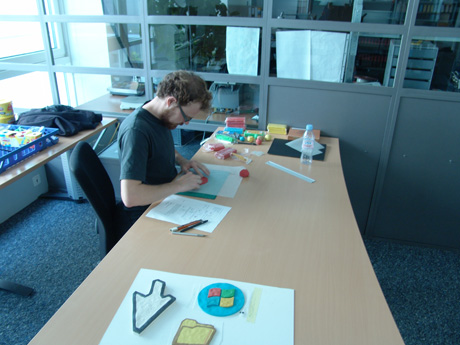
(Image: The creative minds behind the Microsoft campaign: AD Daniel Schranz with copywriter Samuel Textor and consultant Simon Gerber (from left) from Wunderman)

1290582299_img081119_knet1
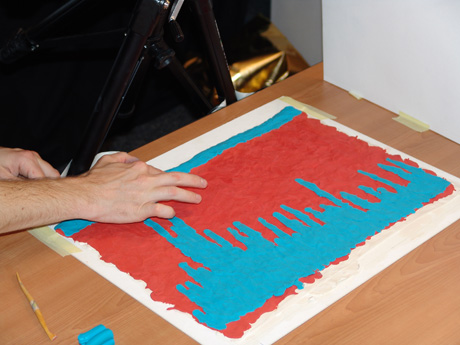
(Image: The artist at work: master kneader Marco Wyss (([email protected])) creating the Microsoft logos)

1290582299_img081119_knet2

Christophe Giovannini new Swissinfo Editor-in-Chief

Christophe Giovannini will become the new editor-in-chief at Swissinfo. The 43-year-old will succeed Peter Schibli at the SRG's international news and information platform; Schibli was elected as the new director in October.

Christophe Giovannini is to become the new editor-in-chief at Swissinfo. The 43-year-old succeeds Peter Schibli, who was elected as the new director of SRG's international news and information platform in October. Giovannini will take up his new post on December 1, 2008.
As Swissinfo announced on Wednesday, Giovannini was elected the day before by Swissinfo's Special Committee. Giovannini has been head of the English Department at Swissinfo since February 2007. In the summer of 2008, he gained cross-editorial coordination and management experience as daily head of the news team, according to a media release.
Before 2007, he worked in various positions at the news agency SDA, most recently as Zurich correspondent and for several years as head of service at the headquarters in Bern. Before that, he had studied philosophy and journalism at the University of Neuchâtel.
Another personnel change is announced: Eva Herrmann will become head of news at Swissinfo on March 1, 2009. She has been with SDA since mid-2004 and is currently working as a correspondent in Brussels. She succeeds Christian Schmid, who is leaving Swissinfo.
Also as of December 1, 2008, the Committee elected Pascal Dreer as the new Vice Director. The head of Swissinfo's Information Technology department will deputize for the director in his absence. Dreer has been a member of Swissinfo's Executive Board since 2002.

Life posts ten million photos on the Internet

Ten million photos from the U.S. magazine *Life* are being made freely available online. The Time media group announced this on Tuesday in New York.

Ten million photos from the US magazine Life will be made freely accessible on the Internet. This was announced by the Time media group in New York on Tuesday. All of Life's archives will be accessible for personal use, but Time will retain the copyright.
Access to the ten million photos is to be successively guaranteed in the coming weeks. According to Time, 97 percent of the images have never been presented to the public. Abraham Zapruder's amateur film of the assassination of US President John F. Kennedy is also part of the collection. Among the well-known photographers who worked for Life are Alfred Eisenstaedt, Margaret Bourke-White, Gordon Parks and W. Eugene Smith.

The bigger the bolder

They say print is expensive. Unfortunately, that’s not entirely unfounded. There are many reasons for this, including some of our own making. It certainly gives pause to consider that major publishers, in particular, are charging ever-higher prices while offering fewer and fewer services. Commentary by Werbewoche staff member Markus Knöpfli.

Print is expensive, they say. Unfortunately, not without good reason. There are many reasons for this, including self-inflicted ones. The fact that large publishers in particular are charging ever higher prices but offering less and less service must give pause for thought. The current round of print tariffs demonstrates this once again. Want some examples? Please. Since 2005 alone, the Tages-Anzeiger has lost 80,000 readers or 14 percent of its reach. But has Tamedia also lowered the Tagi page rate since then? No, the Group even increased it by 10 percent in 2006. The situation is similar at Blick and NZZ: their readership has fallen by 10 and 16 percent respectively since 2006, but both publishers have left their prices unchanged - which amounts to a hidden increase.
Smaller publishers are usually more modest and customer-conscious. If their reach decreases, they often also reduce the price. They pass on small gains in readership as a supplement. Or they add just half a percent to two percent - due to inflation.
However, too much restraint can quickly become dangerous for small titles, see Impartial and Express: in line with their reach, they also left their tariffs unchanged for at least six years (!). Now there are no reserves and drastic cost-cutting measures are required. In this respect, the two are the opposite extreme to the cheeky and price-driving big titles.
However, this does not change the fact that large publishers in particular should set their rates more fairly and more performance-oriented. This would certainly be good for the reputation of print as a medium.

Markus Knöpfli

Advertising expenditure also declining in the regional newspaper market

Advertising spending in the Swiss daily press declined again in October. For the first time, the regional and local market—which had remained stable until now—is also showing a downward trend.

Advertising expenditure in the Swiss daily press fell again in October. For the first time, the regional and local market, which had previously remained stable, also showed a negative trend. This is an extension of the general trend that has been ongoing since the summer. The slowdown in economic momentum continues to affect the advertising market. Accordingly, the Publicitas Index fell by 1.5 points to 92.5 points in October.
According to Publicitas, commercial advertising is losing ground "in a sustainable manner". This is mainly because fewer advertisements are being placed in key sectors such as major distributors and car importers. As there are no parliamentary elections this year, political advertisements have also declined, Publicitas writes in the press release. However, the slump in political advertisements should be partially offset by the upcoming referendums in November.
The decline in real estate listings is hardly surprising. The corresponding sub-index fell by 1.9 points to 71.6 points. Job advertisements are also continuing to lose momentum in light of the noticeable economic slowdown: the sub-index fell for the second time in a row in October, dropping significantly by 2.4 points to 195.2 points.

Emotions without movement

Together with Condor, TBWA realized a "fun project" for the Zurich Schauspielhaus.

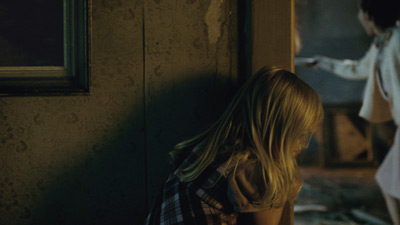
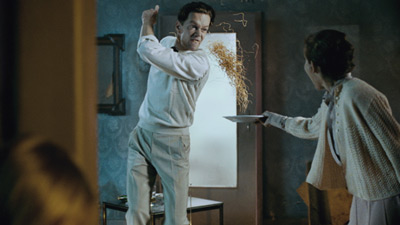
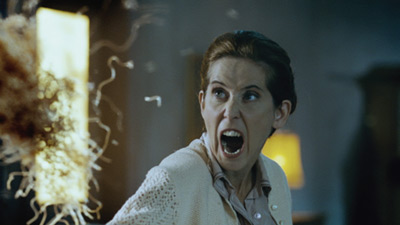
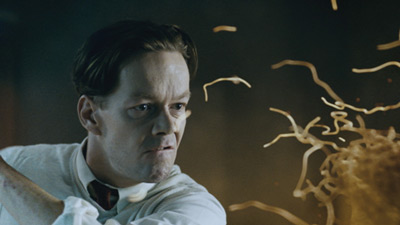
Advertising for culture is not the butter on the bread for many creative people, but perhaps a little salt in the soup of everyday life. Or where else can you simply have a plate of spaghetti thrown in the face of a well-known actor - to stay in the world of luxury foods - and the creative experiment is then shown in the Kulturkino Xenix and in all arthouse cinemas in the city of Zurich. "It was great fun for everyone involved to invent and realize this spot for the Schauspielhaus together," says CD Urs Schrepfer at TBWA Zurich. With few resources but many ideas, a film had to be produced for the renowned Zurich theater's subscription advertising.
> To the spot
The concept matured from a photo campaign. The set had already been built for this. Now members of the Schauspielhaus ensemble have spontaneously acted out a fight - very emotional, but without movement. It may have been "creative disobedience", but it had a lot of potential, says Markus Sulzer, Head of Marketing at the Schauspielhaus. The scene was filmed with a high-speed camera at 150 frames per second. A scientific definition from physics serves as the text. The film was directed by Patrick Senn. Executive producer was Philipp Petersson for Condor and the tricks were post-produced at Elefant.
Andreas Panzeri
1290582304_img081119_tbwa1
1290582304_img081119_tbwa2
1290582304_img081119_tbwa3
1290582304_img081119_tbwa4
1290582304_img081119_tbwa5
1290582304_img081119_tbwa6
1290582304_img081119_tbwa7
1290582304_img081119_tbwa8

Barbara Meier joins communications agency Klar

Barbara Meier is joining the Bern-based communications agency Klar. The former head of information at the Federal Office of Sport (Baspo) and head of communications for the federal government’s Euro 08 campaign will take up her new position in early 2009.

Barbara Meier, the former Head of Information at the Federal Office of Sport (Baspo) and Head of Communications for Euro 08, is moving to the Bern-based communications agency Klar. Meier will take up her new position at the beginning of 2009. She will mainly be responsible for mandates in the sports sector, Klar told SDA on Tuesday.

get_footer();