Create something unique

Wunderman is developing a comprehensive international campaign for Microsoft's Technical Audience division.

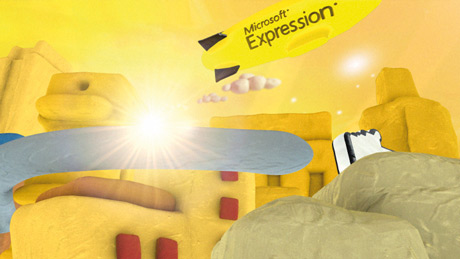
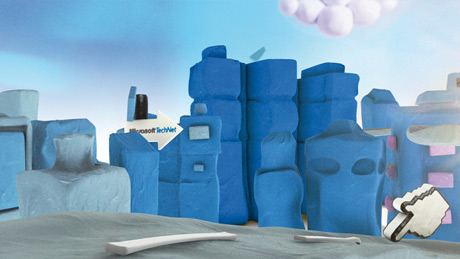
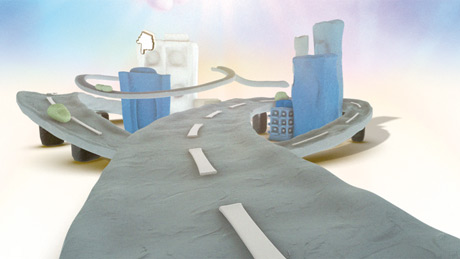
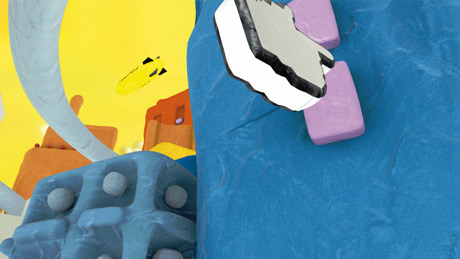
A ball of plasticine is an inanimate mass. It is like a football waiting for its Brazilian. Only in the hands of a creative person does it become something unique. It is the same with software: the products of the world's largest manufacturer, Microsoft, are only brought to life by their users. This is the message of a new campaign developed by Zurich agency Wunderman for the Zurich-based technical audience department of the American software company. "You shape it" is the title of the campaign, with plasticine as the main symbol.
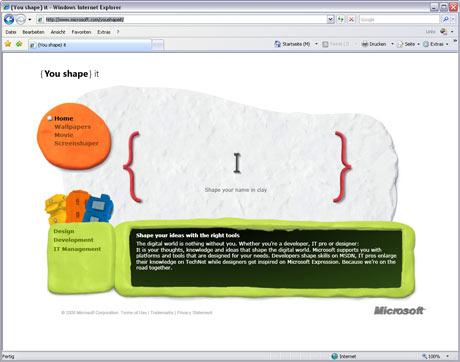
A movie welcomes visitors to the website Microsoft.com/youshapeit. "Your ideas transform the digital world", says a speaker after the viewer has been guided by a cursor through a plasticine world that has just been created. At the end of the short intro strip, the user lands on a text field where they can get started right away: their text entries appear in plasticine and the creative process has begun. This website is aimed at IT specialists, developers and designers - professionals who use Microsoft software to change the digital world on a daily basis.
The website forms the umbrella for various topic pages where professionals can find new product tips, editorial content and information on specialist events. "Microsoft wanted to summarize three important target groups and explain to them that they are changing the world with their tools. They have a blank sheet of paper or a new ball of plasticine in front of them every day," explains Christian Erni, Creative Director of Wunderman. "We wanted to create a campaign that works with playful elements and conveys joy." An idea that demanded a great deal of flexibility from the 15 Wunderman employees involved. "There were many challenges where we couldn't fall back on existing experience. New solutions had to be found again and again," says Samuel Textor, who accompanied the project as copywriter together with Art Director Daniel Schranz until the end. But they also needed an artist: "We didn't need a final artist, we needed a final kneader!" says Erni with a laugh. This was found in the form of freelancer Marco Wyss. In addition to the website and the film, Wyss also helped to design additional advertising banners, beautiful wallpapers and screensavers. Advertising measures that are now being discussed on software blogs all over the world and are being used by Microsoft in over 60 countries. "It was a great, big, intensive job," says Christian Erni at the end. Then everyone has to get going again. New ideas need to be formed.

"What we do here on Hardtturmstrasse is exported all over the world."
Claus Bornholt, Head of Consulting at Wunderman, on the Knet campaign and the collaboration with one of his agency's most important clients.
Mr. Bornholt, you have a very prominent and exciting customer in Microsoft. When did the collaboration begin?
Claus Bornholt: That was four years ago. Microsoft realigned its entire marketing at that time.
Can you characterize the customer a little?
As a very technically oriented customer, Microsoft needs a lot of marketing and communication expertise. Typically, such customers often have product developers with a technical background who are given a lot of responsibility. Although they know a lot about their product, they are not very familiar with marketing. This is why Microsoft created so-called audience marketing departments a while ago. These are really experts who look at the needs of the target groups. We work for the Technical Audience department based in Zurich. It specifically looks after IT specialists, developers and designers.
This also gives them the opportunity to operate worldwide.
Exactly, another point is internationality. Some of our developments are later exported to over 100 countries and adapted into over 50 languages. This sometimes leads to funny problems: The Hebrew browsers, for example, have the scrollbar on the other side. That drives you crazy when you test a page like that.
What are the other sticking points?
Well, Microsoft is a large American corporation with many special rules. The regulations on political correctness and data security are very strict.
What does this mean for your agency?
You have to be very familiar with the company's internal rules and regulations. In 2004, we were at a different point than we are today. Today, we sometimes know better than our contacts at Microsoft.
How did this particular campaign develop?
We held our first talks with Microsoft back in February. The very first workshop with them took place in March. The basic idea of the campaign was formulated there. It was simply about communicating that Microsoft supports its technical audience with the right programs. That was not so easy to implement. It was a bit of a vacuum. In the end, the following initial perspective was developed: Without the users, the software that Microsoft makes is really just raw material.
Raw material symbolized by plasticine.
Exactly. This idea was then developed further by our creative department. We have been working on the implementation since August and the "You shape it" website has recently gone live. We had a very ambitious timetable, which we then had to adjust slightly due to some technical problems. Now we are working on internationalization. It's great when the German market comes to Switzerland and says: We need something from you.
The result is a feast for the eyes. You really feel like reaching for the modeling clay or software yourself. Did you enjoy working on the project as much as I did?
(smiles) The fun factor was of course different. As with every project, there are highs and lows. But basically, of course, it's very, very exciting when you can shape a project on such a broad scale. It's also a bit strange: you develop for a very long time and in the end you "only" see a website and a short film. At first you ask yourself: what, is that all? But slowly you start to realize the size of the project. Now other measures such as mailings, banners and giveaways are also being added.
Were there any specific problems with this campaign?
Yes, of course there were. The main hurdles this time were mainly of a technical nature. We did pioneering work with the latest version of the Microsoft animation program Silverlight. That wasn't always easy.
What would it be like if Apple came knocking and soon ordered an entire universe made of clay?
Not a chance. We are highly loyal in this respect.
How important is the customer Microsoft for Wunderman?
Microsoft is a very exciting and substantial customer for us. We have also enjoyed an excellent working relationship with the main project managers - Urs Müller and Christian Frei from Microsoft - for many years. In total, up to 15 employees worked on the project. What is particularly interesting for us is the international nature of the project. What we do here on Hardtturmstrasse is exported all over the world. I was recently at the Mircosoft headquarters in Seattle and while walking around in the corridors I happened to discover some posters that we created here in Zurich. It was a great feeling.
Do you already know how the collaboration will continue?
As I said, the next step is the internationalization of the "You shape it" campaign. We are already working on that. We have a list of 25 languages in around 60 countries. We are also putting together a "communication toolbox" with all the basic material for the countries and managing the content of the individual websites.
Interview: Adrian Schräder

Responsible at Microsoft Switzerland: Christian Frei (Senior Marketing Director), Urs Müller (Developer Marketing Manager). Responsible at Wunderman, Y&R Group Switzerland: Christian Erni (CD), Claus Bornholt (Head of Consulting), Daniel Schranz (AD), Samuel Textor (Copywriter), Simon Gerber (Consulting), Isabelle Bischoff (Screen Design), Philippe Gassmann, Patrick Schwegler (Programming).
1290582304_img081120_wunderman
1290582304_img081119_wunderman1
1290582304_img081119_wunderman2
1290582304_img081119_wunderman3
1290582304_img081119_wunderman4

Encryption of set-top boxes: Commission heads for compromise

Television viewers should be free to choose their own decoder for digital cable television under reasonable terms. The National Council's Telecommunications Commission (KVF) has spoken out in favor of this.

Television consumers should be able to freely choose the encryption device for digital cable television under reasonable conditions. The National Council's Telecommunications Commission (KVF) has spoken out in favor of this and instructed the Federal Council to create the legal basis for this. However, the principle of free choice should not disproportionately restrict the legitimate economic interests of providers. In addition, competition between the various technologies should not be made unnecessarily difficult. This applies to the IPTV sector, for example.
Simonetta Sommaruga, member of the Council of States, had called in a motion for all free digital television channels to be broadcast unencrypted on cable networks. This was after Cablecom had also encrypted those channels that it received free of charge. The Council of States approved the motion and the committee is now trying to find a compromise between the motion and the interests of the cable network operators, who have spoken out against the motion. The National Council is expected to vote on Sommaruga's motion in spring 2009, with the law not expected to come into force until 2011 at the earliest.

News also shifts down a gear

One year after its launch, the free newspaper News must thoroughly revise its overly optimistic expectations—just as its competitor .ch did before it.

According to the publishers, the free newspaper News has distributed 334,000 copies since its launch, including 42,000 in Basel, 60,000 in Berne, 100,000 in Zurich and 132,000 in the Mittelland region. The publishers involved, Tamedia and Basler Zeitung Medien, assumed that their paper would reach two readers per copy (LpE) in the medium term, i.e. a total of 668,000 readers. This figure has now been revised downwards. "Based on a readership study, News reached 283,000 readers from May to July," says André Hardmeier, Head of Advertising Market at News Print. That makes around 1.0 LpE. News has therefore already reduced its main rate as of November 1: A 1/1 page vf in the entire issue now costs CHF 13,600 instead of CHF 22,000, a reduction of 38.1 percent.
A conceptual optimization is also on the agenda: The Mittelland edition will be discontinued at the beginning of December, while the three other splits will expand their area. News Zürich, for example, will now be distributed as far as Aarau and Baden, News Basel in the northern part of Aargau and News Bern in Solothurn. Accordingly, the circulation of News Basel will be increased to 55,000 copies and that of News Zürich to 185,000 copies, while the circulation of News Bern will also extend to Solothurn. The total circulation is now 300,000 copies. The Mittelland can no longer be booked separately, but News Zürich now also includes copies in Aarau and Baden - at the same price as before. The same applies to News Basel and News Bern. The reason, according to Hardmeier: News is to be linked more closely to the three parent titles Tages-Anzeiger, Berner Zeitung and Basler Zeitung, and News and the online portal Newsnetz are to be linked more closely. Up to now, brand management and a combined offering were hardly possible without the parent title.
Markus Knöpfli

Free newspapers consider summer break

For financial reasons, Le Matin Bleu is considering taking a break next summer during the vacation season. .ch is also considering a summer break.

For economic reasons, Le Matin Bleu is considering taking a break next summer during the vacation period. Publication of the commuter newspaper has already ceased between Christmas and New Year for two years. It is very possible that there will now also be a break in the summer. However, this has not yet been definitively decided, Théo Bouchat, Director of Edipresse Switzerland, told the news agency SDA.
Due to the many vacation absences and ecological considerations, it makes little sense to flood the boxes with newspapers that nobody reads. However, Bouchat emphasized that a possible break would not be the first step towards the complete discontinuation of the title.
A summer break is also being considered in German-speaking Switzerland. The summer months are always difficult in terms of advertising, said Caroline Thoma, Managing Director of .ch. A break may therefore be an option. A decision will be made by the end of the year as to whether the .ch editorial team will also take a break.
The free newspapers are suffering less from the summer slump than the subscription press because they have fewer job advertisements, as Publicitas employee Georges von Csernatony explained when asked by SDA. However, a slowdown in the economy is likely to hit them harder because they are completely dependent on advertising.
There is no question of an interruption at the 20-Minuten and News parent company Tamedia, although the summer has left its mark on advertising and readership figures, said Tamedia spokesman Christoph Zimmer. However, the decline is not significant enough to justify discontinuing the publication. In contrast to other European countries, Switzerland does not go on vacation "en bloc", said Zimmer. The situation is different in Luxembourg: Tamedia's local title L'Essentiel, also a free newspaper, is not published during the summer vacation.

Ringier: at least 10 percent more sales in 2008

Ringier's turnover at Group level will be 10 to 15 percent higher in 2008 than in the previous year, but the result will be lower than in 2007. In addition, the Zurich-based media group is still confident that Radio Energy can still be rescued. Ringier CEO Martin Werfeli said this on Wednesday at the traditional fall media talk.

Ringier's turnover at Group level will be 10 to 15 percent higher in 2008 than in the previous year, but the result will be lower than in 2007. In addition, the Zurich-based media group is still confident that Radio Energy can still be rescued. Ringier CEO Martin Werfeli said this on Wednesday at the traditional fall media talk.
For the publishing business in Switzerland, Werfeli is still expecting an increase in turnover of around 5 percent. This is despite the fact that the TV magazine sales are no longer included in the calculation. However, profits will also decline in Switzerland, said the CEO, who vehemently denied that Ringier was about to embark on a cost-cutting program. The 50 million savings plan, which recently became public, is a "cost efficiency program" that is reviewing all processes throughout the company, in all countries and also at the Swiss headquarters to ensure they are fit for purpose. "At this point in time, however, it has not yet been decided whether and how many jobs will be cut," said Werfeli, who promised to be very "cautious" in this regard.
However, neither he nor publisher Michael Ringier made any secret of the fact that they are expecting difficult times and a drop in sales of at least 15 percent. However, as they both assume that advertising sales in the online sector will continue to grow in the future and even compensate for the losses in the print sector, they were quite confident. For example, the Media Swiss Group, which operates Scout24's online marketplaces and in which Ringier holds a majority stake, will soon be expanding into Serbia.
When it comes to Radio Energy Zurich, which came away empty-handed in the Uvek's license allocation, Ringier is still full of hope. The company's own lawyers had "found a number of things that could be contested in the Uvek decision", said Werfeli, without divulging any details. There is a lot at stake for Ringier, as the Group bought the channel from Goldbach Media a year and a half ago for around CHF 12 million.
No cannibalization effect
By contrast, the experiment with Ringier's free evening paper, which was launched as Heute and renamed Blick am Abend shortly before Euro 08, is going more positively. "We are currently selling 270,000 copies a day and the number of pick-ups is constantly increasing," said Marc Walder, Head of Ringier Switzerland. The Blick brand is thus also being accepted by a young, urban audience, without any cannibalization effect on the subscribed Blick.
The number of subscriptions is rising slightly (probably thanks to the introduction of early delivery) and single copy sales are stable. "With Blick and Blick am Abend, we are now reaching two target audiences that hardly overlap. It is important for us that we have been able to establish the Blick brand with a new audience," said Walder. Even those people who used both titles would not see the free paper as a substitute, but as a supplement. Because of this success and also because the Blick brand is regional in terms of language, the company is now looking into expanding into the canton of Zug and Lucerne as well as eastern Switzerland with Blick am Abend.
Blick am Abend is also a success in the advertising market. It is massively ahead of the previous year and also above budget, said Walder. However, the paper is not yet profitable.
Markus Knöpfli

Almost a zero round

Newspapers have probably never been as close to a zero wage increase as they are now, while some magazines, on the other hand, are becoming significantly more expensive.

From the advertisers' point of view, the 2009 round of wage increases is more positive than ever before, at least for newspapers. This time, for example, only two Ringier titles - Blick and SonntagsBlick - are suggesting a zero round, but are actually becoming massively more expensive because their reach has deteriorated significantly compared to the previous year (-5.7 percent and -10.3 percent). Edipresse, on the other hand, is acting in an exemplary manner: Le Matin semaine and Tribune de Genève, which have also lost significant readership (-10.7 percent each), are also reducing their rates by a good 10 percent.
Axel Springer Schweiz's HandelsZeitung is also very customer-friendly: although it has a 14.6 percent higher reach thanks to its cash subscriber base, it is not charging more in 2009 than this year, which significantly reduces the thousand-reader price (TLP). The same applies to Terre et Nature: Although this Edipresse title is increasing its rate by two percent, this is disproportionate to the 22 percent increase in reach.
Of course, there are once again titles that are raising their rates this year despite a downward trend in reach, such as the Zofinger Tagblatt, Südostschweiz, Schaffhauser Nachrichten and Oltner Tagblatt. In most cases, however, they are doing so moderately and are more or less in line with those titles that have increased their readership slightly but have kept their prices the same as before (Zürcher LandZeitung, L'Impartial, L'Express, La Liberté).
Somewhat strange round of collective bargaining
The free newspapers are facing a somewhat strange round of wage negotiations: News has already reduced its rate by 38 percent at the beginning of November - because "optimizations" are pending there, as Tamedia says (see p. 23). A .ch page costs a hefty 68 percent less, and has done so since mid-October, reflecting the new distribution in boxes instead of to households. In contrast, 20 Minuten, 20 minutes and Matin Bleu are increasing their rates by 6.7 to 56 percent, which roughly corresponds to the gains in reach of these titles. In line with the readership figures, 20 minutes is likely to increase by as much as 70 percent, but because its TLP is already somewhat higher than that of Matin Bleu, Tamedia apparently prefers not to overload the cart.
The 10 percent price increase at Tagblatt der Stadt Zürich, which has lost readers slightly, seems somewhat brazen. And the 9.2 percent rate increase at Cash seems downright cheeky. Ringier has never really been able to demonstrate that Cash actually reaches the 140,000 print and live paper users it claims. On the contrary: Cash, to which Ringier has long attributed 127,000 print readers, only reported 85,000 in Mach Basic 2008-2, a significant 33 percent less. This does not justify a rate increase.
This year's round of rates for magazines is also causing head-scratching, as NZZ Folio, K-Tipp, Beobachter, Bolero, Glückspost, Gesundheitstipp, Migros-Magazin, CoopZeitung, Avant Première and TVtäglich, all of which have lost significant readership, are keeping their advertising rates at today's level and thus significantly increasing the TLP. Only Axel Spinger Schweiz's TV magazines are lowering their rates, incidentally as of October 1, as Werbewoche already reported (see WW 34/08). Another ray of hope: Tout Compte fait, which is also leaving its price unchanged despite a 23 percent increase in reach.
Markus Knöpfli

Some big ones missing
Not all publishers have published their rates yet. For example, the new prices of Basler Zeitung, Baslerstab, Finanz und Wirtschaft and Il caffè and Berner Bär had not been published by the editorial deadline.
On the other hand, the newspapers that have not yet switched to the rate system introduced four years ago with an integrated color millimeter rate and fixed formats can be counted on one hand. These include WochenZeitung and Solothurner Zeitung - primarily for technical printing reasons. (mk)

Striking...

The Scheufelen wall calendar has already won numerous design awards in the past. For 2009, the Scheufelen paper mill in Lenningen is featuring 12 unique designs based on the themes of fire, water, earth, air, and love. What’s unusual is the story behind their creation. A print campaign by TBWA Zurich has also drawn attention. The posters are intended to highlight that McDonald’s is taking its responsibility in the area of food production seriously and acting in a way that is consumer-friendly.

The golden star from Basel
Läckerli-Huus, with its sweet specialties, is shining with a renewed image just in time for Christmas: Contexta has developed a comprehensive communication campaign for the traditional company with two TV commercials and various print applications. The Läckerli-Huus brand has thus been modernized, revitalized and clearly positioned as a premium label. The two new TV commercials with the message: Only the original Läckerli sweetens your life and brings special moments of pleasure. In a high-quality aesthetic in black and white, the golden-brown Läckerli stand out as the true stars of the respective occasion. Bene Abegglen appeared as a CD in these films by Ernst Wirz.
1290582301_img081119_tanz_contexta
1290582301_img081119_tanz2_contexta
Good things from Switzerland
McDonald's is "more Swiss than you think" and relies entirely on Swiss products in its restaurants. To this end, the company works with quality seals such as Suisse Garantie and IP-Suisse. To communicate this, TBWA Zurich and its CD Urs Schrepfer and AD Martin Friedlin developed a print campaign with four subjects. The posters are intended to draw attention to the fact that McDonald's takes its responsibility in the area of food production seriously and acts in a consumer-friendly manner.
1290582301_img081119_mcdonalds
img081119_mcdo
Miraculous rescue for a cult object
It is not often that a printed work originally planned as an advertising medium becomes a cult object. In the past, the Scheufelen wall calendar has already received numerous design awards worldwide and thus won the recognition of the graphic arts industry. For 2009, the Scheufelen paper mill in Lenningen is focusing on 12 unique pieces on the themes of fire, water, earth, air and love. The history of their creation is unusual. The insolvency of the paper mill in July 2008 called the calendar into question. Thanks to the great commitment of the long-standing partners, the project could nevertheless be realized. These include Strichpunkt, the Eberl and Hermann Schmidt graphic design companies.
1290582301_img081119_scheufelen
img081119_scheufelen2

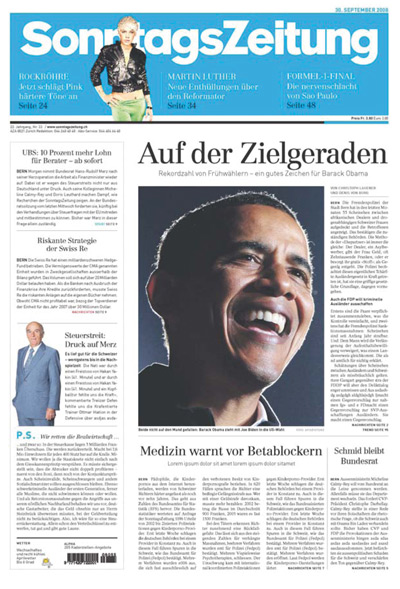
The new SoZ appearance will be "s Zäni

On November 23, the SonntagsZeitung will be published with a new masthead and a standardized layout for its supplements.

Will the readers of the SonntagsZeitung notice next Sunday that their paper has changed? Probably not all of them. Although the changes themselves are obvious, they don't catch the eye. But that's fine with the SoZ makers. "The redesign doesn't have to stand out, but should primarily improve reader guidance," says Editor-in-Chief Andreas Durisch. It should also bring some freshness and new dynamism to the paper.
The newspaper header is the most striking change. Although it is not really new: the lettering is the same as before and also appears again as white lettering in a wide blue color field. Yes, again, because with the newspaper title in negative font, the SoZ is harking back to its early days - in its first years it had a similar appearance. Nevertheless, the new logo is by no means nostalgic, because the font is more curved than back then and the blue is also different today. The bar concept on the front is also used on the opening pages of the waistband, naturally in the corresponding colors. "This gives these pages a more powerful expression and helps with orientation," says Durisch.
The number of columns has also changed: previously the pages contained five columns each, now there are six. This will allow for more design variety in future. News columns, for example, now run across two columns. This not only makes them more airy, it also makes them stand out better from the articles. They can also be enriched with photos. "We're making the short stories more attractive for all those who only browse through the newspaper quickly," says Durisch. The amazing thing: Although hardly any two pages have the same layout, the paper still looks clear and tidy.
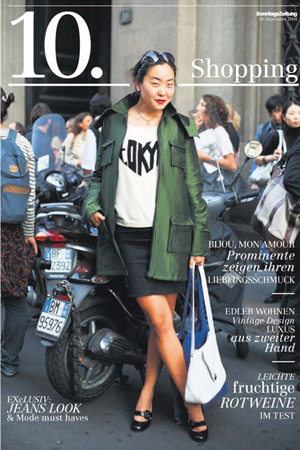
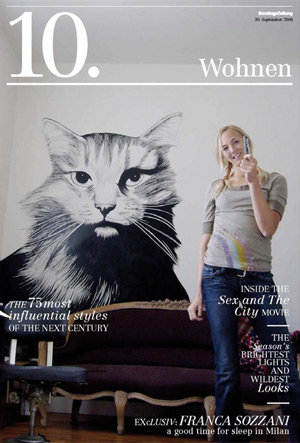
Of course, other things are also changing: subtitles are no longer in italics. And the Medicine page in the Knowledge section is now called Health - and the content is also less academic. Essentially, however, the SoZ, which was gently redesigned by Hamburg newspaper designer Dirk Linke and the SoZ's own art director Andrea Müller, remains true to itself: It continues to adhere to nine volumes and their order, and it retains the title and basic fonts, as well as colors and department names. Nevertheless, readers will occasionally see another striking change: the seasonal specials. As in the past, these will be published in newspaper format and, more rarely, as a SoZ magazine, but one way or another they will all have a uniform, recognizable appearance: a large 10 with a dot on the front page. This stands for the tenth bundle, called "s Zäni" in Swiss German, which means "good quality". Next to the 10 is the title of the special: shopping, job & career, money, real estate, golf or garden. The aim was to turn the "general store of regular supplements into a clear product line", says SoZ publishing director Diego Quintarelli. "Thanks to the uniform brand, it is possible to launch another extra bundle at any time without having to invent a layout." As was necessary for the Bond extra.
Markus Knöpfli
1290582302_img081119_sonntagszeitung1
1290582302_img081119_sonntagszeitung2
1290582302_img081119_sonntagszeitung3

To the point: Bernese fair weather model

So what’s the latest on the Bern Model? In an interview with Werbewoche in January of this year, Polo Stäheli, then a member of Tamedia’s executive board and responsible for the Media Espace Bern division, said: «I still stand by my statement that it will be maintained as long as it proves its worth on the market.”.

So what is the situation with the Bern model? In an interview with Werbewoche in January of this year, Polo Stäheli, then a member of Tamedia's management board and responsible for the Espace Bern media division, said: "I still stand by the statement that it will be maintained as long as it proves itself on the market. But the fact that we would burden other media in favor of just one in terms of subsidies is beyond discussion. The sustainability of the Bern model will become apparent in the next economic downturn."
Tamedia Chairman Pietro Suppino and Espace Chairman Charles von Graffenried also expressed optimism about the takeover of Espace Media. They said that the Confederation would continue to exist as long as it was in the black and represented an independent publishing voice. The so-called Berner model has always been based on the fact that the Berner Zeitung (BZ) and the Bund are clearly different. The BZ is considered a local newspaper, while the Bund wants to position itself as a quality paper with background information.
The economic downturn is here, a media crisis seems to be on the horizon and thus the discussions about the Berner model are becoming topical again. According to an article in Sonntag, there are increasing signs that Tamedia does not want to continue with the existing Berner model. Apparently, people at Zurich's Werdstrasse are thinking about how to proceed. Company spokesman Christoph Zimmer told Sonntag: "A project group made up of representatives from all editorial offices and publishers has been at work since June. The project group is analyzing journalistic concepts as well as cost and revenue structures. An open and constructive discussion can only take place in a confidential setting. We therefore do not provide ongoing public information on the content of the project. However, we will provide information on an interim status in the coming months."
The continued existence of the 160-year-old federation thus seems once again to be acutely endangered. The Bern model was purely a fair-weather model. Everyone knew that, but no one really wanted to admit it. The profits were not exhilarating, but they were there. The company was in the black.
Today, everything is different. The economic outlook for the coming year is mixed to poor (depending on the experts). Saving money is the order of the day, so what could be more obvious than doing without a second daily newspaper in Bern? From a business point of view, this is understandable, but it is regrettable for media diversity.

Pierre C. Meier, Editor-in-Chief
[email protected]

New website for Publisuisse

Publisuisse has a new website. The site, which has been redesigned in terms of both content and layout, offers advertising professionals additional tools in German, Italian, and French and is intended to make their day-to-day work with Publisuisse easier.

Publisuisse has a new website. The website, which has been redesigned in terms of content and design, offers advertising professionals additional gadgets in German, Italian and French and makes their daily work with Publisuisse easier, according to a press release. The entire content is divided into five sections: Offers, Research, Publications, Service and Publisuisse. The graphic design with a high proportion of images and improved reader guidance is intended to make searching and finding easier.
Publisuisse has a database of over 75,000 TV commercials that have been broadcast on SRG SSR idée suisse TV channels since 1992. The commercials can be viewed directly on screen and saved as a file in the fee-based services for professionals.

Eye catching design

This weekend, the Kongresshaus is hosting the "Blickfang" exhibition, followed by the Design Mile a week later.

Design is primarily perceived in fashion and furniture, in architecture or the automotive industry. However, we are less aware of the fact that everyday objects such as a mountaineering helmet, a pocket knife or a bicycle lamp are also designed. The Design Mile trade event, now in its eighth year, aims to shed light on this. What ideas are behind a design? What needs to be considered when designing? For manufacturers, it has long been a truism that products are difficult to sell on purely qualitative features. What is needed is design and aesthetics in harmony with functionality.
In nine participating Zurich studios and ateliers, interested parties can come into direct contact with designers, their materials and their working world on Saturday, November 29, from 1 to 7 pm. In a personal setting, industrial, product and communication designers offer an insight into their complex processes. They show which steps precede a finished product and allow you to look over their shoulders as they work with shapes, colors and functions. Brands and Minds, Christophe Marchand Design, Formpol, Greutmann Bolzern Designstudio, Nose Design Intelligence, Produkt Design Zürich, Stauffacher Benz, Swiss Design Association and Tribecraft are taking part in the Design Mile.
The VBZ will take visitors from one office to another on Saturday afternoon. A map with the individual stores and further information can be found at www.designmeile.ch.
The Design Mile was launched by the organizers of the Blickfang design fair in 2001. Blickfang started in Stuttgart and is now also organized from there in Vienna and Tokyo. In Zurich, the fair will take place from Friday to Sunday at the Kongresshaus. On show will be "innovative design, unusual shapes and unusual ideas". In contrast to normal trade fairs, most of the designers at Blickfang will be there themselves, seeking contact with the public. This year, designers from French-speaking Switzerland will be presenting themselves in a special show at the Blickfang fashion show entitled "Espace Romandie". Guest designers from Portugal can be met in a "Lisbon Corner". Blickfang is regarded as the largest design fair in our region, designed for both trade visitors and the general public.
Andreas Panzeri
1290582304_img081119_blickfang1
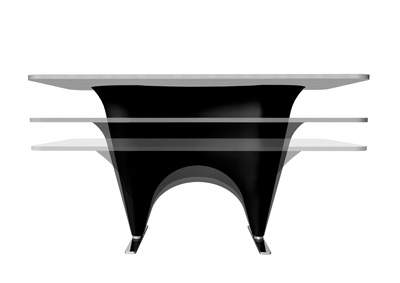
Table by Christophe Marchand Design.
1290582304_img081119_blickfang2
Armchair, Team by Wellis, design by Formpol.
1290582304_img081119_blickfang3
Rough installation by Greutmann Bolzern Designstudio.
1290582304_img081119_blickfang4
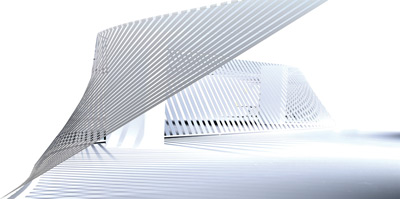
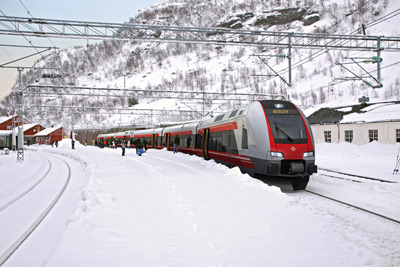
Nose Design Intelligence for Stadlerrail and Norway.

Pinx wins budget from Zamba

The Zolliker advertising agency Pinx has a new client in its portfolio: The company Zamba, which had previously concentrated its activities on the production of fresh juices and teas and on the development and expansion of the sales and distribution network. The aim now is to address consumers and communicate new products at the same time.

The Zolliker advertising agency Pinx has a new client in its portfolio: The company Zamba, which had previously concentrated its activities on the production of fresh juices and teas and on the development and expansion of the sales and distribution network. The aim now is to address consumers and communicate new products at the same time.
As part of an agency evaluation, the Pinx advertising agency was awarded the contract for future offline and online communication measures. The collaboration has already begun. Following a winter campaign, the strategy and basic imagery for Zamba's consumer advertising are to be developed.
The first results are planned for spring 2009.
get_footer();