Best of Swiss Web jury nominates 9 projects for the master vote

The Best of Swiss Web jury, consisting of more than 90 members, has convened. Of the 151 projects submitted, 76 made it onto the shortlist.

The jury awarded precious metal to 60 projects and 9 projects were nominated for the Master of Swiss Web award. Best of Swiss Web is celebrating its 10th anniversary with record participation in terms of the number of projects submitted. Which project has won which prize will be announced on March 25 at the awards ceremony in the Kongresshaus Zurich. The Master of Swiss Web will also be chosen at this event, after the readers of the Netzticker have also voted for their favorite.

Last but not least: Twitter continues to boom, and the Dalai Lama is on board

Around 50 million short messages are currently sent via Twitter every day. The Dalai Lama is one of them and already has over 56,000 followers.

The microblogging service Twitter is becoming increasingly popular. Recently, a statistic was published on the official blog showing that 50 million tweets are sent every day. According to 20 Minuten, this figure was just 5000 in 2007.
The religious leader of the Tibetans, the Dalai Lama, is now also addressing the world via Twitter. As the short message service officially confirmed, the 14th Dalai Lama Tendzin Gyatsho is indeed behind the Twitter.com/dalailama profile. This is according to the IT blog Pluggd.in. Having started tweeting on February 21, the Dalai Lama already has a good chance of making it into the top ten most successful Twitter profiles. As of Wednesday, he already has 56,000 followers. However, the bar is set high: Barack Obama's tweets are already followed by over 3.3 million people. But the Nobel Prize winner is also out-tweeted by Ashton Kutcher with over 4.5 million followers and Britney Spears with 4.4 million.

The brand doctor

Heusser Communicates has been conceiving and designing corporate and marketing communications for 19 years. With the new, specialized unit Healthexplained, the agency underlines its special expertise in health communication. In both business units, owner Thomas Heusser is concerned with building companies as brands.

Knowledge is power, could be the motto of Thomas Heusser (50). Heusser is the founder and owner of the design and communications agency Heusser Communicates as well as the new business unit for health communication Healthexplained. For Heusser, it is clear that knowledge transfer is an effective marketing tool in many industries. Companies can share their knowledge in a way that positively resonates with their brand and is always associated with it. Heusser also knows how to achieve such an effect: "People decide within seconds whether an offer appeals to them or not. Seemingly insignificant signals are enough to bring about a decision. Non-verbal codes such as images, symbols, colors or shapes have a particularly strong signaling effect. We develop these brand-specific codes and use them specifically in the right environment."
Heusser regards each of his clients as a brand. And for each of these "brands" he defines an individual communication style that correlates with the client's corporate culture. Because the recipient should recognize at first glance where a publication comes from and the attitude of its author - and establish a positive connection with the sender of the information. Heusser refers to this customer-specific style of language and images as knowledge rhetoric. "Knowledge rhetoric that is precisely aligned with the brand guarantees that the brand always resonates when knowledge is conveyed," explains Heusser. "In this way, the target group always associates the provider with the same values. This strengthens its image and anchors it with the target group. Knowledge rhetoric is thus part of the brand architecture."
What sounds abstract seems to work: Heusser reports on a client who tried for years to acquire certain customers. He was not perceived on the market, he outlined his problem. "We defined how the company should appear on the market, built a website, created basic communication tools such as image brochures and sales documents, and a trade show booth," Heusser reports. "After a few weeks, this client gave us feedback: the customers he had previously tried unsuccessfully to win over for years had suddenly approached him on their own. A great compliment for us."
Unmistakable handwriting
Heusser Communicates has been around since 1991, initially under the name "Studio Heusser Kommunikation Design". Heusser, his team of nine and additional freelance specialists develop branding concepts and communication strategies, logos, word marks and complete customer magazines, design websites, annual reports, brochures, company portraits as well as training and sales documents. Among the companies that have had their image refined by Heusser Communicates are Barry Callebaut, SRG SSR idée suisse, Nestlé, Künstlerhaus Boswil, Berner Kantonalbank and various SMEs. An important part of the agency's clientele is also recruited from the healthcare sector: Among others, the Hirslanden private hospital group, the Hirslanden Clinic, the "Im Park" Clinic, the Hirslanden Heart Center, the Swiss Tumor Institute, Nestlé Professional, Astra-Zeneca and the Swiss Heart Foundation have relied on Heusser's flair for the essential.
Over the past 19 years, Heusser Communicates has developed unique expertise in preparing health topics for experts and laypersons. The agency is particularly strong in the development of communication
concepts, in the expressive illustration of publications and in the creation of illustrations. "We have worked out our own illustration technique," says Heusser. "On the computer, we combine anatomical illustrations with photos. For example, we show a photo of a leg, but we depict the knee joint as drawn." The illustrations serve a dual purpose: They make diseases and complicated treatments understandable to laypeople. And they look attractive. The agency also conceives and designs e-magazines. The reader of the e-magazine of the Hirslanden private hospital group (http://emagazine.hirslanden.ch/eMagazine_1_09/) can not only browse through the entire magazine online and call up contact addresses and glossaries at the click of a mouse. They can also view animations in the magazine that accompany individual illustrations. The perfect symbiosis of print and online.
Special operation for health
Because more and more medical service providers were commissioning Heusser Communicates, Thomas Heusser came up with the idea of spinning off healthcare communications into a separate business unit. He launched Healthexplained at the end of last year. "By combining our conceptual and design expertise in the healthcare sector under the label Healthexplained, we responded to our clients' needs," explains Heusser. "The label is intended to emphasize our expertise in this segment more strongly. We have almost twenty years of experience in health communication. But it's nowhere near as well known as it should be." Healthexplained offers full service: the agency develops content, devises strategies for design and text, and creates concepts for marketing and image measures, strategic brand building, and integral brand management. And anyone who simply wants to use one of Healthexplained's medical illustrations can download it from the agency's website. With this offer, the unit is targeting hospitals and foundations, physicians and physician networks, pharmaceutical companies, medical technology companies, as well as manufacturers of functional food or other health-related products.
Healthexplained is part of Heusser Communicates. Heusser's employees, who were previously responsible for health communication, also remain the same. However, Health¬explained is staffed by experts specializing in medicine and health. In addition, the new unit is backed by a Scientific Board of doctors and scientists, who provide the agency with specialist advice as required.
Take patients seriously
Thomas Heusser is enthusiastic about working with medical topics: "Health is highly exciting and affects us all," he says. "We conducted a study* with our customers in 2009, which revealed that 99 percent of respondents are interested in health. They are concerned with nutrition and fitness, or even specific medical treatments." Lay people quench their thirst for information by looking through magazines, reading books and brochures, or going online to learn about products and treatments. Of course, they also ask doctors, pharmacists or other professionals for advice. But the trend toward gathering information on one's own is clear. This means that medical information such as clinic websites, patient magazines or brochures must be of high scientific quality and at the same time easy to understand so that they provide reliable orientation for laypersons in the information jungle. "Both patients and medical companies have a strong need for well-prepared medical data," says Heusser. "To achieve high quality in such information, you have to be a specialist. This consideration was the trigger for the founding of Healthexplained."
Apparently, Heusser's approach is well received. Many patients collect the "Mittelpunkt" customer magazine of the Hirslanden Clinic and the "Im Park" Clinic, for which the agency is responsible for the design. "I was amazed when I heard that," Heusser admits. "There aren't many corporate publishing magazines that readers wait for. With most, you're lucky if the post office forgets to deliver them. But our magazines are taken seriously and kept." Which proves: When a publication is well done and adds value to its readers, it enjoys support from the readership. Just like its publisher.
"For any company, honest and competent communication pays off," Heusser is convinced. "In Web 2.0, it is not unlikely that medical offers and products will soon be rated by patients. At the latest then it is important that they have established their knowledge rhetoric with patients and built trust with them." If a patient has to decide between two equally qualified clinics or doctors, sympathy and trust can tip the scales. Or as Heusser says, "The right combination of knowledge and image lead patients to make a confident decision. That's why health information should always be branded. After all, the reader benefits from the company's knowledge. So he should also associate this knowledge with the company." From light cosmetics to complicated surgery, Healthexplained knows which interventions companies can use to build a positive brand image in the healthcare market.
Passion for design
As a boy, Thomas Heusser was fascinated by architecture. Nevertheless, he decided to train as a sign painter. However, the profession did not fill him up. Heusser began working as a freelancer in various design agencies. "During this time, I realized that I didn't have the right basic training," he says. Heusser went to New York to study communication design, advertising and illustration at Pratt Institute. After a year and a half, he returned to Switzerland, took a job and realized that his education still wasn't enough. He graduated as a "visual designer" from the Hochschule für Gestaltung (College of Design) and, after working for a few more years, added a "corporate design manager" degree at the Fachhochschule Nordwestschweiz (University of Applied Sciences Northwestern Switzerland). "I have always been interested in communication topics," Heusser emphasizes. "I'm particularly moved by the question of whether our work actually makes a difference - or rather, how to go about making it make a difference." He seems to have found the answer by now.
Heusser has been self-employed since 1991. Right from the start, Heusser Communicates received orders from medical service providers. "A PR office brought me on board for the corporate design of a hospital magazine," Heusser says. "That was my start in this industry." The initial contact turned into passion: "It fascinates me to look behind doors that I wouldn't normally be allowed to look behind. It's not unusual for a doctor to say, 'Why should I explain everything to you? Come by and watch.' Two hours later, I'm in the operating room wearing a cap and mask." You can't get any closer than that.
Anne-Friederike Wilhelm
1290581059_img100224_heusser_tabelle

The new city gate in the west of Bern is a gateway to modernity

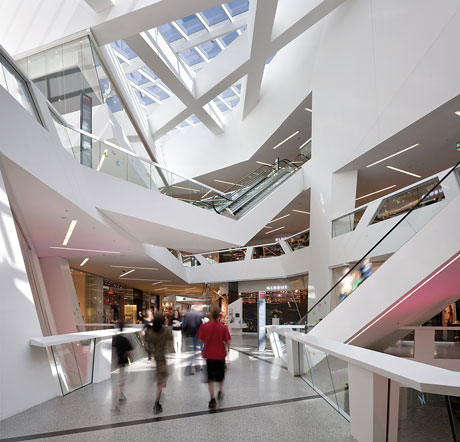
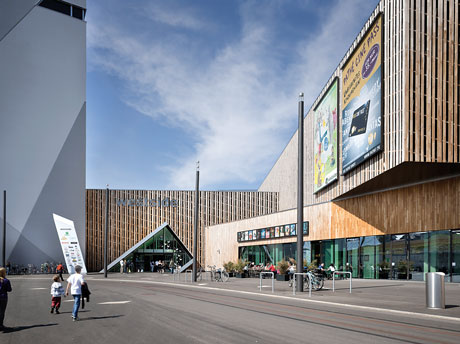
The Westside in Bern is a naturally developed neighborhood featuring a shopping center, recreational facilities, a hotel, and a retirement community. It was built by Migros based on plans by Daniel Libeskind.

Since October 2008, Switzerland's most beautiful shopping center to the west of Bern has been inviting shoppers to go shopping, exercise, enjoy culture and experience leisure time. The 550 million franc attraction was built by Migros.
The communication for the Westside leisure and shopping center has been created, planned and maintained by the Bern agency Republica for over a year. "Create experiences, make them tangible and convey them" is the credo that determines all communication measures relating to Westside: The aim is to create a link between shopping and leisure. This is also entirely in the spirit of architect Daniel Libeskind, whose designs and implementations have had a decisive influence on this lifestyle. Republica was already able to work on a strategic level for those responsible for Westside during the pre-opening phase. The agency from Bern's Mattequartier now manages the entire budget at all levels, working closely with Biel-based orange8 interactive in the online area. "They wanted an agency that could play the entire keyboard and also sing a new song," says Roger Keller, Senior Consultant and member of the management board at Republica, who looks after Westside.
In addition to in-depth expertise and creativity, proximity is of course also a home advantage for the Bernese. They maintain a very lively and inspiring exchange with Westside Marketing, are often on site and can therefore "really soak up the experience factors". In total, Republica has an average of four to five employees permanently working for Westside. "We have to and want to be able to react quickly, offer solutions quickly and always maintain the basic communicative aura of the entire shopping and experience center," explains Republica CD Re Wilk.
The rhythm for the overarching campaigns is basically determined by the four seasons. "Discover" will soon be the theme for spring. Republica provides the basic idea for all seasonal campaigns as well as their design with advertisements, posters, online adaptations and other means. The managers of all 55 stores as well as the cinemas, restaurants and other service providers in the Westside are also contacted on an interdisciplinary basis. What synergies are there for joint events? What is suitable for adapting the overarching campaign? What can the individual stores contribute to the theme? Which design ideas from the campaign can be used in-house or as ambient campaigns?
In concrete terms, the combination of measures can result in a cinema premiere with large-scale projection in the indoor pool, a casting show for a fashion house in the mall or a beach party with live concerts and DJs on the forecourt in summer. True to the motto "Creating experiences", events play a central role in Westside communication at any time of year.
One of the many challenges in promoting an adventure center is the incredible variety of offers. "You have a lot to tell. And combining shopping with leisure activities is a very nice and exciting challenge. But as always, you can't get bogged down," says Re Wilk. More than 55 clients must be able to recognize their messages behind the subjects of a particular umbrella campaign - from children's bathrooms to Migros and luxury car dealers. On the other hand, it must also be possible to serve a very heterogeneous clientele. Stylistically, Republica wants to address this unusual breadth of consumers with all its ideas. "Clear statements with a high experiential appeal in a nutshell" is the concept. In order to be able to go into more detail, the messages are then passed on to a wide variety of channels - from radio and small advertisements to the Westside magazine. In four issues per year, the magazine communicates a wide range of background information, sales promotions and events.
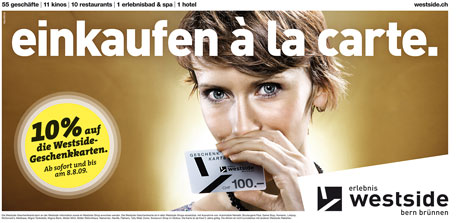
Republica has defined binding design rules for all the various print products associated with the Westside. It is striking how a white border in all applications takes up the idea of a shell from the architectural design. "The white frame reflects the building, inside it's full of joie de vivre, colorful and approachable," says Re Wilk, explaining the parallels to the concept of architect Daniel Libeskind. "In any case, we like to work with colors." As a clear message, all print products are preceded by the complete offer in the top line: "55 stores, 11 cinemas, 10 restaurants, 1 adventure pool & spa, 1 hotel."
Republica also in Thun
The success of Westside has not been without consequences for Rebublica. Just as the architect Libeskind is now building several shopping centers, including one in Las Vegas, thanks to his recommendation from Bern, Republica has now also won another contract up the Aare after Westside. The brand was developed for the Panorama-Center shopping center. This is being built next to the Thun Süd football stadium. The Bernese communications experts are responsible for the design of the brand, among other things, and are now providing communications support during the construction phase. The Panorama-Center shopping center will open in September 2011.

Andreas Panzeri

1290581062_img100224_westside1
1290581062_img100224_westside2
1290581062_img100224_westside3
1290581062_img100224_westside4
1290581062_img100224_westside5
1290581063_img100224_westside6
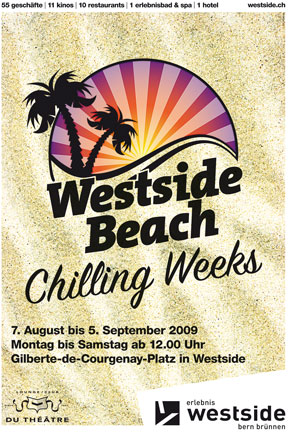
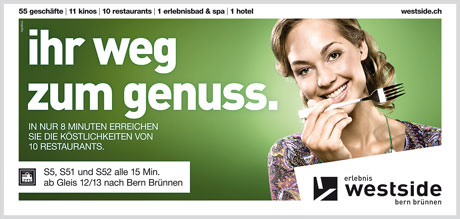
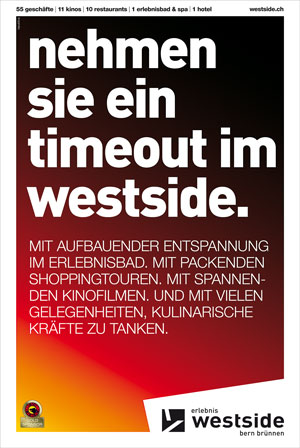
All Republica print products have a uniform white border. The graphic element is symbolically based on the shell of the building designed by star architect Daniel Libeskind. Then the frame, like the center, is filled with life. Regular events are a particularly important element for advertising at Westside. At these, synergies are sought between the various stores and service providers.

The glass network

The association of Swiss cable network companies is ready for the future and is demonstrating this for the first time in an image campaign by Euro RSCG Zurich - with national and local subjects.

You press the button and the picture is there. In almost all households, the Swiss cable network service is a matter of course. As a result, very few people have bothered to find out who actually delivers these high-quality TV pictures to our living rooms. However, the new technical possibilities are bringing some movement to the scene. The battle for market share is intensifying. Swisscom TV, for example, doubled its subscribers last year to 230,000. In addition, various electricity companies are planning to build fiber optic networks. Against this backdrop, the industry association of cable network operators in Switzerland has now launched a broad-based image campaign for the first time in its history.
240 private and municipal cable network operators from Switzerland and Liechtenstein are organized in the industry association Swisscable. They provide the catchment area with TV and radio, telephony and broadband Internet. The cable network of these members is the most efficient network in Switzerland with 85% coverage. The supply guarantees reliable technology and a fair price structure for 2.8 million households. Last year, the number of digital TV connections was increased from 510,000 to 600,000. As the majority of cable networks already consist of fiber optics, the association sees itself in pole position for the race into the future. The providers can gain the most in the eyes of customers if they act in unison. "The 240 cable network companies should be perceived as a strong unit. The concept is therefore brand building instead of association advertising," explains Roman Emunds, the responsible planner at Euro RSCG.
In August 2009, the agency won the pitch for this budget. The first priority of the campaign is to confirm the public's trust in Swiss cable network companies and demonstrate the technical possibilities. The second priority is to support local networks in acquiring corporate customers and to address private homeowners as decision-makers. The third focus is "solidarizing" the various stakeholders, from political authorities to content providers, as Group Account Director Niklaus Huwyler points out.
For the creation, the team around CD Axel Eckstein deliberately focuses on the technology and not on possible content that can be conveyed via this infrastructure. "The Swiss cable network is as fascinating as the human nervous system," is the basic idea. The network not only has a structural and functional similarity, it also impresses with its incredible performance. This is impressively visualized with a futuristically designed TV commercial. The campaign is complemented by print and online subjects. The advertising material is also available to the cable network companies for local applications.
Andreas Panzeri
1290581062_img100224_kabelnetz1
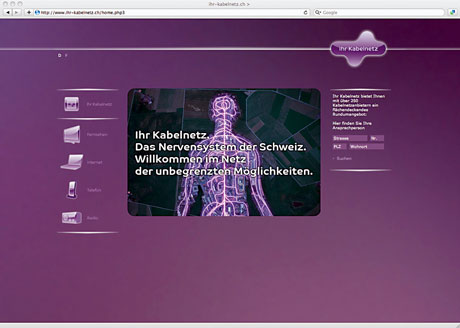
The main subject of the national campaign can be adapted individually for each region with the respective logo of the network provider.
1290581062_img100224_kabelnetz2
All further information can be found on a newly launched website (www.ihr-kabelnetz.ch).

Initiative: Nothing is like a Mentos kiss

Initiative Media and Statement are collaborating to create a new platform for Mentos with the Kiss Cam.

The Mentos brand, which belongs to the Perfetti van Melle Group, has started the new year with an advertising offensive. Mentos advertised in the 1980s with the "Freshmaker" commercial. To reinforce the current campaign "there's nothing like a mentos kiss", Initiative Media launched the Mentos Kiss Cam in Switzerland in collaboration with Statement. During the Axpo Super League matches, the Kiss Cam will provide great entertainment at St. Jakob Park in Basel, at FC St. Gallen and at the Bernese Young Boys. In the current ice hockey season, the Kiss Cam is being supported by the Kloten Flyers, the Rapperswil-Jona Lakers, Fribourg-Gottéron, Lugano and EHC Biel.
The campaign across various media and channels advertises with the claim "there's nothing like a mentos kiss". Whether in Swiss cinemas, on relevant online portals, leading Internet TV stations, with an online game predicate "more more more!", or even the aforementioned Kiss Cam.
Responsible at van Melle, Bironico: Chantal Ramel-Stampfli (Sales and Marketing Manager Swiss Market), Pascal Koehli (Product Manager Mentos & Frisk and Trade Marketer Swiss Market). Responsible at Initiative, Wallisellen: Nathalie Bösiger (Managing Director), Delia Bär (Account Manager). Responsible at Statement, Zurich: Philipp Brunner (implementation).
To the spot

Let's go to Marketing Day!

March 9 is the big day: The 2010 Swiss Marketing Day will take place at the KKL Culture and Congress Center in Lucerne. This major event promises insights, state-of-the-art technology, excitement, and stylish networking.

Some people may have rubbed their eyes when they recently wanted to watch the TV program "Eco" on Monday evening on SF. A commercial for the Swiss Marketing Day 2010 was shown at prime time before the must-see event for business enthusiasts. This has never happened before. Which shows three things at once: The Swiss Marketing Day 2010 is to be positioned even higher. The communication for this is aimed precisely at the target group. And the event on March 9 at the KKL Lucerne is breaking new ground.
Marketing drum beaten
Two months before the magical date, Swiss Marketing unleashed a veritable avalanche of advertising. According to Swiss Marketing President Uwe Tännler, a total of 100,000 invitation letters were sent out. Always included: the logos of the sponsors. After all, they play a key role in ensuring that the Swiss Marketing Day 2010 can take place at this high level. The news that a veritable firework display of ideas will be ignited on March 9, 2010 has also been repeatedly spread via Xing. The event has thus already shown itself and its supporters how to skilfully beat the marketing drum. Incidentally, this year there will also be a new radio commercial.
Marketing Trophy
What makes the event a must for Swiss marketers is probably the unique mix of top keynote speakers, the stylish networking opportunities and the holistic view that is cultivated at the KKL on that day. Marketing is not just about how some Dow Jones or SMI company can easily invest tens of millions in marketing, but it also means that SMEs can make clever use of their marketing funds. This is where the Marketing Trophy comes in, with a jury that uses a level playing field and compares the marketing achievements of small, medium-sized and large companies as well as non-profit organizations. For the participants, this means that everyone can take home lessons learned, because their collar size is absolutely an issue on the podium above.
Strong names
Because people are not as interested in anything as they are in other people, the line-up has to be just right. This is also guaranteed: Susanne Wille, one of the two anchor ladies of "10vor10", is a face with high ratings. And the keynote speeches by GDI CEO David Bosshart, Simonetta Caronaro and James H. Gilmore will ensure that it is clear what this means in the midst of the new stage design: "The main thing is emotion? The perceived marketing". This is the slogan for the Swiss Marketing Day 2010, the day that will make the magic of marketing tangible.

When women step on the gas

The "weaker sex" my ass. For years, women have achieved higher pass rates than men in vocational and higher professional examinations. A mystery. Or is it not? Examination and training professionals discuss the phenomenon.

It is as much a part of the ritual of a graduation ceremony as the Cüpli before dinner and the exam chairman's handshake: The announcement of the results with the success rate of male and female candidates. This was the case for marketing managers in 2009: 74 percent of the male candidates passed. Among women, 88 percent passed. Among marketing specialists, 57 percent of women passed last year, but only 43 percent of men. In the sales manager category, an extremely male-dominated field, 200 men took part and 154 passed. Success rate: 77 percent. 26 women competed, 23 passed. Success rate: 88 percent. 2009 - a coincidental year that saw Swiss marketing evas soar? No. The facts from Swiss Marketing (see also box) make it clear: the trend can be traced back over the years. Women always have a higher success rate than men. The word may be worn out, but it deserves to be used here once again: Women power. What is it that makes women such exam winners?
Softer factors ...
It should be made clear that this is not a general bashing of men. Rather, it is an attempt to track down the causes and methods of women's success in examinations. Claude Dubois, Head of Examinations at Swiss Marketing, can confirm the figures on the predominance of women in examinations. His thoughts on the dominance of women: "I have the impression that women are more serious about what they do. When they take the plunge into training, they are more determined. And I think that women are better networked." An astonishing statement. After all, it is always criticized that one of the reasons why women are less likely than men to make the leap to the top of a company is because they lack the right networks. Dubois talks about the connections that women make with each other in order to make the exam a joint success: "At graduation ceremonies, I always notice how women are happy about their success in groups, actual learning groups that have formed during the course of the training and towards the exam." And then succeed.
Mireille Saucy, President of MarKom, head of the higher professional examination for PR consultants and the professional examination for PR specialists, puts it succinctly: "When women continue their professional training, they do it right. That's just the way women are wired. And because marketing and PR are female-specific professions, they are even more motivated to make the exam a personal success." In addition, women are obviously more willing to learn and iron out mistakes: "I notice that the majority of candidates who fail their professional exams are women who come to me to look at their exam results and want to learn something from them. I rarely see men." Jürg Kaltenrieder, a lecturer in communication subjects for marketing and sales specialists and operator of Fiorma Marketingfox, which helps marketing professionals prepare for their exams, takes up this topic: "After the lessons, it's more likely to be women who come back to me and ask questions." Or to put it more simply: she asks for help, he doesn't want to make a fool of himself. Kaltenrieder believes that women have a fundamental advantage when it comes to marketing: "Women are better and more adept at communication topics, have more creative flair and have a more comprehensive and networked way of thinking than men. However, they have a harder time with rational topics such as statistics and accounting. In terms of emotional intelligence, women can integrate and empathize more, which gives them a head start when it comes to developing communication concepts, for example."
... and harder ones
More eagerness to learn, female intuition, a more serious approach, forming networks where it benefits everyone and individual interests are not promoted - up to this point, one could say that once again the proverbial female empathy and therefore the soft factor prevails in this topic. A characteristic that is often cited, but which is difficult to measure. However, there is also a harder factor: "It is possible that women pay more often than men for their further training. They are determined to pass and don't want to waste any time. Men are more likely to be asked to do further training by the company and may be less motivated," Mireille Saucy has long suspected. Recently, there has also been official proof of this. The "Education Report 2010", which has just been published, shows that 60 percent of working women in Switzerland finance their further education themselves. Men, on the other hand, only pay for a third of the costs on average. The education report comes from the Swiss Coordination Office for Education Research (SKBF), a joint institution of the Swiss Confederation and the Swiss Conference of Cantonal Ministers of Education (EDK). Anyone who puts their own money into something, as anyone who has ever considered the difference between entrepreneurs and managers knows, will always take better care of the sustainability of the investment. This is probably why Marketingfox boss Kaltenrieder says: "Women want to assert themselves, they are more ambitious, they take things more seriously. They want to prove something: To themselves, to society, to the company."
A phenomenon beyond marketing
The dominance of women in exam success is also known at schools. Nicole Eugster, Head of Education and Knowledge and member of the Executive Board of the MKS Competence Center for Management and Marketing in Sargans, says: "The higher success rate of women is a fact - and this goes beyond marketing and PR professional examinations, it is also evident in HR and finance." For her, whether or not employers pay for training is of secondary importance. Feminist approaches as to whether and how women should generally make more of an effort are equally important. Eugster's basic explanation: "Continuing your education is a matter of hard work. What is required is an investment of time, that you go into detail - women probably have greater discipline here, more detail orientation."
The topic is probably no less complex than the interaction between women and men in general. Nicole Eugster, at any rate, believes that we need to take a much broader and deeper approach: "We should consult our colleagues in brain research to clarify this.
The fact that the female brain differs from the male brain - i.e. the thought structures - probably has an influence on the results," says the Sargans executive. And spins the thread back a few thousand years: "Perhaps we can also see a reason for female diligence in the history of cavemen: The men wandered off, the women tended to work quietly at home. An early phase of hard work that led women to success." The extent to which the foundations for the examination success of today's generations were already laid in Neanderthal times is a completely different story. Just like this one: how can it be that women are still in short supply on management boards today, despite their proven superiority in terms of numbers?

Eva has got the hang of it
Swiss Marketing has analyzed the examinations of the last three years. The result is clear: women have always achieved a better pass rate than men. The percentages refer to the pass rate for both men and women
Marketing planner 2007
Women: 78.5 percent. Men: 68.8 percent
Marketing planner 2008
Women: 73.9 percent. Men: 65.2 percent
Marketing experts 2009
Women: 56.8 percent. Men: 43.2 percent
Sales coordinators 2007
Women: 67.2 percent. Men: 55.5 percent
Sales coordinators 2008
Women: 61.4 percent. Men: 60.6 percent
Sales coordinators and specialists 2009
Women: 74.7 percent. Men: 61.2 percent
Sales Manager 2007
Women: 83.3 percent. Men: 70.2 percent
Sales Manager 2008
Women: 70.1 percent. Men: 67.8 percent
Sales Manager 2009
Women: 88.5 percent. Men: 77 percent
Marketing Manager 2007
Women: 69.4 percent. Men: 68 percent
Marketing Manager 2009
Women: 88.4 percent. Men: 74 percent

US broadcaster ABC plans to cut hundreds of jobs

At ABC's news division, 300 to 400 of the approximately 1,400 positions are expected to be cut.

The employees affected are to be paid severance payments, but redundancies are also planned if necessary. As the New York Times reported on Tuesday, the job cuts had been feared for weeks and were a sign of the ever-increasing financial difficulties of the television stations' news departments. The president of ABC News, David Westin, wrote in a memo to employees that the transformation would result in a leaner, smaller news department. In future, the broadcaster wants to rely more on digital journalists who produce, record and edit most of their material themselves.

Film: Advertiser of the Year

On Star TV, Werbewoche presents three films about the female advertiser of the year.

It is a tradition at the Advertiser of the Year that the nominees are presented with a funny film portrait during the evening gala. This year, these clips were created in collaboration with Star TV. Jean-Claude Bruhin, COO at Switzerland's oldest and youngest private broadcaster, made the production possible. The clips featuring the nominees as well as a "shortlist" report from the event were broadcast in the newly launched "Werbewoche" program on Star TV, which shows new moving images on backgrounds from the industry every Thursday at 7:30 pm.
For the clip with the nominees, realizer Andreas Panzeri mixed old spots of the candidates with a new commentary in addition to interviews. You can watch the clip in the archive of www.startv.ch under the heading "broadcasts", then click on "advertising week" and the contributions from February 4 and 11.

> Broadcast from February 4
> Broadcast from February 11

The spouse as free labor?

Spouses who work in their spouse’s business may be entitled to compensation under certain circumstances. Depending on the extent of their work and the business’s financial performance, it is advisable to enter into an employment contract. By Cornelia Döbeli, attorney, consultant, and editor at *Der Beobachter*, specializing in inheritance law, family law, and guardianship law.

Rita Meier (name changed) does her husband's bookkeeping and a large part of the office work for him since he set up his own business as an advertising consultant seven years ago. She does this free of charge, in addition to running the household and looking after the children. There are around 300,000 SMEs in Switzerland and most of them could not survive without the help of a family member - usually the wife. A friend recently advised Rita Meier to ask her husband for an employment contract - "then at least she'll have something in her hands if things don't go well in the business or even in the marriage". Is that true?
Spouses are legally obliged to safeguard the welfare of the community and to provide jointly for the proper maintenance of the family. They are also obliged to support each other in word and deed, as well as financially. If one spouse works in the other's business, this can be done as part of this marital duty of support. No remuneration is then owed.
However, if a spouse works considerably more than their contribution to family maintenance would require, they are entitled by law to special compensation. This is the case, for example, if the spouse would otherwise have to be replaced by another worker. Rita Meier, for example, who does secretarial work and bookkeeping for her husband in addition to housework and childcare, would clearly be entitled to such special compensation.
How much she could charge depends not only on the type and scope of the work performed, but also on the profitability of the business and the couple's standard of living. If a couple cannot agree on the amount, a budget advice center can help. Compensation can also be claimed in court. It does not expire during the marriage and can be claimed at any time, but at the latest when the marriage ends, for example through divorce.
If one spouse makes a substantial contribution to the spouse's company and there is economic scope for a (partial) second income, it is even advisable to draw up a written employment contract with a salary agreement and all the rights and obligations of an employee. The salary is then subject to tax. But apart from that, the employment contract offers significant advantages, in particular the improved position of the spouse in old age, as well as in the event of illness, accident and unemployment. Rita Meier would therefore do well to follow her friend's advice, even if her husband may find this "bureaucratic effort" completely unnecessary at the moment.
As a minimum, this should be included in the employment contract:
- Date of commencement of employment
- Wage (monthly or hourly wage, 13th monthly wage)
- Workload with working hours
- Area of responsibility and position in the company

Do you need legal advice?
The Beobachter Consulting Center offers you and your employees expert advice by telephone on legal issues concerning your company - 6 months for only Fr. 99.-. Order the consulting package for SMEs at
www.beobachter.ch/kmu or 0800 83 0800.
Book tip
Irmtraud Bräunlich Cellar
"Labor law. From contract to termination"
272 pages, Fr. 36.-.
10th, expanded and updated edition, 2009
Beobachter-Buchverlag.
ISBN 978 3 85569 412 9

JWT+H+F advertises Mazda Leasing with Li & Sing

The agency JWT+H+F has developed a national campaign for Mazda to publicize its leasing offer to a young, male audience aged between 20 and 35.

From now on, the leasing options will be presented through the Li & Sing campaign. Posters with various motifs will be displayed throughout Switzerland from this week. The campaign will also appear in various print media throughout the country. In addition, several BTL advertising materials will be used.
Responsible at JWT+H+F: Remy Fabrikant (overall responsibility), Enrico Bachmann, Grischa Rubinick (creative direction), Grischa Rubinick (art direction), Mathias Bart (text), Vanessa Lehmann-Spalleck, Christine Krause (consulting), Rainer Bühler (strategy), Jonathan Heyer (photography), Rohner Retouche (image processing). Responsible at Mazda Switzerland: Marc Ulmann (Advertising Manager), Nathalie Gantner (Marketing Assistant).
1290581058_img100224_lising1
img100224_lising2
get_footer();