Serranetga creates creation unit

The digital agency Serranetga is launching a creative unit and now offers creative, media, and technology services all under one roof. To support its strategic expansion into a full-service digital agency, the company has hired seven employees.

The new creative unit is now headed by 34-year-old copywriter/conceptual designer Samuel Textor and 35-year-old art director Pascal Deville. The creative team has known each other since their earlier days at Futurecom Interactive. To celebrate the occasion, Serranetga is also undergoing a comprehensive rebranding and will be appearing in a new look with immediate effect.

To give potential customers a vivid impression of Serranetga's core business, the new creative unit has come up with a marketing campaign to mark its debut: All visitors to the new Serranetga website, which went live on Friday Website are greeted by Serranetga employees on advertising banners when they later surf well-known news and specialist media sites such as 20minuten.ch, Blick.ch, Nzz.ch, Werbewoche.ch or Persoenlich.com: a spot-on demonstration of competence in the interplay of creation, media and technology in the form of a surprising retargeting campaign, according to the agency.

Serranetga was founded in the fall of 2008 by partners Martin Widmer, Remo Prinz and Raphael Oppenheim. The three founders previously worked for the Swiss-American IPTV start-up Zattoo, where they were responsible for advertising marketing and the development of new advertising products and formats, among other things.

> Read more in the current print edition of Werbewoche

textor
Samuel Textor.

Unbenannt-8
Pascal Deville.

Serranetga_Logo
 

Agency guides dialect album into the charts

The Chur agency 08Eins has been looking after the Zurich Oberland dialect combo "Dabu Fantastic" led by multi-instrumentalist Dabu Bucher for two years - with success.

In addition to being named "DRS 3 Best Talent", the album "Disco Titanic", which was released on November 4, entered the charts at number 77 - a remarkable success for an artist without the support of a major label, the agency said in a press release. Dabu Fantastic are currently producing a video message on behalf of 08Eins to thank their fans for their support. 08Eins are advising Dabu Fantastic on marketing communication issues, launching a message in a bottle campaign as part of the album launch on 9 December in Bubikon and coordinating booking inquiries.

Responsible at Dabu Fantastic: Dabu Bucher, Andi Christen. Responsible at 08Eins: Haempa Maissen (overall responsibility), Anita Willi (consulting), Romano Zoppi (booking), Claudio Candinas (text).


24 heures celebrates 250th birthday

Next year, the Vaud daily newspaper *24 heures* will celebrate 250 years of publishing history. It was first published on June 29, 1762—at that time as a weekly newspaper and under the name «Feuille d’avis de Lausanne,» which translates to “Lausanne Opinion Sheet.”.

24 heures is the second oldest newspaper in Switzerland that is still published, the newspaper wrote in a communiqué on Thursday. In 1872, the newspaper was no longer published only once a week, but daily. Its definitive name 24 heures finally received in 1972.

In the coming year, 24 heures will devote an entire page to its anniversary from Monday to Friday. It also plans to celebrate its birthday with a musical spectacle on September 21 and 22, 2012. A 23-meter high and 27-meter wide screen will be erected. In its center there will be room for 300 singers and about 15 musicians. The whole spectacle will last about an hour. Fireworks are to round off the evening.

Around 140 employees work regularly for 24 heures. The newspaper, published by Edipresse, has a circulation of 79'000 copies and is read by around 223'000 people. (SDA)
 

SRF: Change in the Italy correspondent position

For family reasons, Franziska Ingold has decided to give up her position as a correspondent in Rome and take on a new challenge.

SRF is currently negotiating with Franziska Ingold about a return to Swiss radio and television, according to a statement Friday. Her successor in Rome will be advertised internally. Editor-in-chief Diego Yanez: "We thank Franziska Ingold for her extraordinary commitment and hope that we can welcome her back in a position at SRF after her return."
 

Freicom for Plaston: "At best an isolated case".

Freicom created a campaign for Plaston Industrial Plastic Systems (IPS) based on the central idea of «crime scene» or «Something happened here that could actually have been prevented.».

The crime scene is intended to draw attention to the outstanding product features of strength, protection and quality, and to dramatize the benefits in a way that is easy to understand but unusual for the industry, the agency said in a statement.

Responsible at Plaston: Egon Hämmerle (Managing Director Business Unit IPS), Frank Ulsamer (Manager Business Development), Vera Treichl (Customer Service). Responsible at Freicom: Christian Ruppanner (overall responsibility), Cornel Speich (consulting), Mark Herrera (art director), Stefan Rechsteiner (graphics), Christian Jauslin (text), Klaus Andorfer (photography).

plaston1
plaston2
plaston3
plaston4

Kögel restructures Radio Basel

Radio Basel is being restructured: The new sole owner Karlheinz Kögel confirmed this on Friday, according to the online newspaper Tageswoche. He did not provide any specific details about the impact on the workforce.

He was forced to restructure Radio Basel, Kögel told the news agency SDA on request. In the past, a journalistic program had been produced at great expense, which was intended to cover all areas, from life advice to feature articles. The mission of a public service and fee-financed radio station had been confused with the lightness that belongs to a private radio station. In a multimedia world, however, radio can no longer afford this effort: today's listeners get what they want to know where they want it.

Local reporting as a core mission

Radio Basel has the demanding core task of reporting locally from the two Basel regions, the statement continues. The program is now being reduced to this, and in this context it is unavoidable to adapt the structure. As a matter of principle, however, the radio does not communicate personnel decisions publicly. More can be said about the new concept in mid-December at the earliest. Kögel launched Radio Basel together with Christian Heeb two years ago. The station made a capital cut in 2010. Heeb left in October and Kögel took over all the shares, including those of the last small shareholders and the French radio station Nostalgie.
 

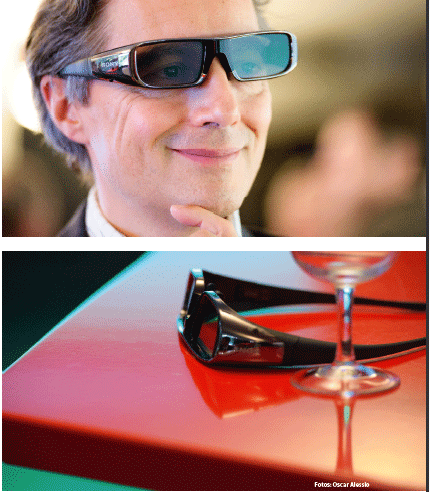
Three-dimensional television is the trend

The second IGEMTechno update provided a relatively clear answer to the question of whether 3-D TV is a trend, hype, or flop: 3-D TV is no longer just hype and, given ongoing technological developments, is unlikely to become a flop either. It is currently trending, though it remains to be seen how quickly this trend will develop.

With the Techno-Updates, the Interessengemeinschaft elektronische Medien (IGEM) aims to provide its members with knowledge about important technical developments in the field of electronic media and the Internet. This knowledge is intended to help them recognize new business areas as early as possible and assess the consequences for existing business areas.

3-D is an artificially created illusion

Three-dimensional images are nothing new. The first three-dimensional or more correctly stereoscopically produced silent film, "The Power of Love", was shown in cinemas as early as 1922. In television, the first stereoscopic images appeared with the introduction of color television in Europe in 1972. But unlike the switch from black and white to color, 3-D TV is not simply the flip of a switch and everything that was previously monochrome is now multicolored. This is because 3D TV only conveys the illusion of three dimensions. Thanks to the stereoscopic recording process and suitable decoding, the illusion of three-dimensional vision is created in the viewer's brain.

In his presentation, Peter Biber, responsible for strategic developments at TPC (Technology and Production Center Switzerland AG), mentioned the fact that three-dimensional vision only works if both eyes have the same visual acuity. In Germany, it is estimated that 8 to 12 million people do not meet this requirement. That is 10 to 15 percent of the population. Even color-blind people are not able to decode what they see correctly in their brains. This is because three-dimensional images are nothing more than acrobatics for the brain. This is why many people experience disturbances associated with headaches or nausea when viewing them. This is particularly the case if the image is poorly implemented.

3D productions have different requirements

Realization is very important in three-dimensional TV productions. This also gives rise to a new profession, that of the stereographer. And this must be involved from the very beginning. As Nick Sieber, owner of Kamerawerk, a company specializing in 3D productions, explained, stereographic production requires completely different storytelling. It is also necessary to define much more precisely which person or object should be placed where in the room. An actual spatial logic has to be established - both during filming and in post-production. That costs money. Today, it is estimated that the additional costs are around a third. And only as much 3D can be used as is really necessary. If the 3-D elements are pushed too hard, the viewer simply feels uncomfortable. Of course, these conditions are not met, especially in the case of films shot in two dimensions and subsequently converted to 3D. As a result, the experience is limited in these productions.

Large screens can't do without glasses

In order to be able to see in three dimensions, glasses are an essential requirement for large screens (including in cinemas), at least for the time being. This is because only glasses allow the brain to experience the sense of space from different positions. On smaller screens (such as cell phones, laptops, tablets), three-dimensional vision is also possible without glasses, as the viewing angle can easily be individually adjusted until the 3D illusion is perfect. With a TV screen that several people want to view from different angles, this is much more difficult. It requires the display of six to eight different images. However, this reduces the resolution for each image by a sixth or eighth. In other words, the improved picture quality thanks to HD technology is reduced again. For this reason, the industry is currently working on a massive improvement in the quality of HD technology towards so-called Ultra High Definition. The time horizon for this development is currently around 2020. And in any case: sitting upright in front of the device is a prerequisite. The whole thing no longer works in a lying position - with or without glasses.

3D TV commercials make no sense for the time being

But even with these developments, the problems have not really been solved. This is because a picture broadcast in 3D is only acceptable for viewers with the appropriate prerequisites. There is no compatibility for everyone else. This is in contrast to a color picture, which also works in black and white, and an HD production, which also works on analog devices. In Peter Biber's opinion, this circumstance is likely to mean that 3D productions will become established primarily via media libraries and less via linear television. For the time being, 3D productions are only likely to be of interest to advertisers in exceptional cases if they are broadcast as an advertising island within a 3D production. Otherwise, firstly, the commercial will be over before the viewer has found their glasses, and everyone who saw it without glasses will think they really need glasses now - because they only saw the commercial in a blur. Ueli Custer

Unbenannt-11_3

Swiss Marketing

Studying comes before practice: This is especially true for case studies, the pièce de résistance of every exam. How case studies come about, what hurdles they must overcome, and how to prepare for them—the Case Study Report. And: Less than four months to go until the next Swiss Marketing Day! A sneak peek hints at what’s to come: The event at the KKL Luzern is set to gain even more energy and appeal.

"Advertising is one of the most conservative industries imaginable"

What does the distant future of television look like? The first TV 2.0 Summit in Zurich addressed this question. In the ballroom of the Kaufleuten, experts from the media, advertising, and agency sectors shared their insights. There were exciting and promising presentations to be heard.

The event opened with a forward-looking review by Helmut Thoma. "I have already seen various futures in the past," TV veteran Helmut Thoma introduced himself to the audience. The founder of RTL estimated that he had probably already appeared as an expert in over a thousand such discussion panels on the future of television since 1984. "I could portray every panel member myself." On the subject of "technical development", Thoma remained matter-of-fact: "The biggest technical revolution was the switch from black and white to color in 1967. The rest are technical enhancements". But some of them were definitely worthwhile: "Radio RTL is a kind of license to print money, simply without using paper."

Later, television was also able to take a slice of the advertising money pie. However, this required a rethink: "We discovered a completely new target group: the viewers. Before, we only knew fee payers." However, Thoma doubts that they now want a completely different kind of television: "Turning a couch potato into an active employee is expecting too much." Apart from the fact that interactive television is nothing new: "We've had interactive television for a long time with the button to switch it on and off."

Thoma also exaggerates the hype surrounding digital television: "If I push a pallet of yogurt into the supermarket on an electric scooter, that's not electric yogurt either." For the private TV pioneer, every technology reaches a point where development comes to an end. "Quadrophony has failed because we only have two ears. The very high frequencies only interest the dog anyway." And when it comes to content, the former head of broadcasting at "Tutti Frutti" has little hope: "Since the first Greek comedy or tragedy in antiquity, they've always shown the same thing, people are just dressed differently."

Thoma also expects little new in terms of news: "It's no longer possible to report closer to the event than you can today live from a tsunami or war. That would be in the realm of clairvoyance." And Helmut Thoma had even less faith in the future when it came to advertising: "Advertising is one of the most conservative areas imaginable." Nevertheless, he offered a small glimmer of hope: "Once advertisers get moving, much more will be possible with the moving image." (Summary: Andreas Panzeri)
 

To the point: tabloid idiots

The story isn't exactly fresh off the press, but even after ten days, it's still sparking countless opinions, spiteful blog posts, and comments—ranging from borderline to downright idiotic—for and against those posts, as well as gasping for breath among those who are alwaysget annoyed by the tabloids anyway. Once again, it’s all about a typical tabloid campaign.

The "Petarden-Trottel". That's what Blick called him. They are talking about a young man who either picked up a petard at the FCZA away game or set one off himself. Which is true, one does not know exactly. He was injured, three fingers were blown off. A feast for the tabloids. One can now discuss for a long time whether the expression "petard fool" is appropriate or not, opinions differ. Peter Studer, the former president of the Press Council, told the Basel daily Tageswoche about the term "Petarden-Trottel": "After reading it, I have to say: The unnamed young man is indeed a fool." He is right.

But a tabloid campaign has to be continued, every day something new has to be brought. One finds a photo where he shows five fingers (probably from Facebook). Every non-Blick reader can imagine a snappy caption, you find his father, who - what a happy tabloid coincidence - is a school psychologist, and you also interview his work colleagues.

Now it's no longer about the jerk, but about the pillory. Because finding out the young man's name and where his parents live doesn't require any sophisticated research. Anyone can do it. The vice president of the Press Council, Esther Diener-Morscher, commented (also in Tageswoche): "I find the pillorying function of Blick questionable. The court is responsible for punishing this man, the additional punishment by the media is unnecessary." And Peter Studer also believes that reporting is only unobjectionable under media law as long as the young man and his relatives cannot be identified. Which is certainly not the case in this specific instance. The matter escalates, the other side strikes and defames and threatens Blick journalists with posters, handbills and text messages. Absolutely reprehensible and also not excusable by the series of petards.

But it becomes embarrassing when Blick titles a commentary on the subject thus: "We are afraid for football".

Pierre C. Meier, Editor-in-Chief [email protected]
 

How do agencies and customers find each other?

Cherrypicker helps advertising companies and institutions find the right communications agencies and work successfully with them. With Cherrypicker in Hamburg, Oliver Klein represents the only consulting firm of its kind in the German-speaking world.

Unbenannt-4_6

WW: What is the basic concept of Cherrypicker?
Oliver Klein: The concept is relatively simple: we help companies work better with their agencies. Either because they're looking for a new agency. Then we research: Who is the best agency for this topic. Others employ many agencies and ask themselves: How many do I actually need? Or a company has a number of agencies and wants to know how to better coordinate and synchronize them. So we help answer all the questions a marketing manager or spokesperson might have. We are a pure consulting company in a very small niche and we call it agency management.

Cherrypicker was founded ten years ago. Were there any role models?
There was a representative of an international agency consultant from England in Germany at that time. They are still active. But they have a different model. "Dear agency, give me some money and I'll see what I can do for you." These consultants operate on the principle of brokers. This always gives conflicts of interest and cannot work. As a professionally set up consultancy with several employees, we are the first. The market also gives us that back.

How has demand developed?
I started out alone as a start-up ten years ago. However, the first colleagues joined us relatively quickly. Today, we have eight permanent employees in the team and another seven specialists for specific tasks. We can't complain about a lack of orders, but compared to other countries, the proportion of selection processes handled by external consultants is still very low in this country. In the USA, for example, 60 to 80 percent of agency selection processes are handled by agency consultants. In England, the figure is an estimated 50 percent, and in Germany, well under 10 percent. In Germany and Switzerland, people expect someone who does marketing or PR to be able to do it all themselves. Realistically, however, that is no longer possible. That's why a rethinking is increasingly taking place. Internationally, more than 40 consulting firms are already active in the field of agency management.

What do consultants do better than a corporate marketing executive?
I don't think we do it better. We have different knowledge. A head of marketing deals - hopefully - with the topic of agency selection every three years, better yet every four years, and not every week. We deal with it all the time. With ever-changing requirements. We simply know the market much better. We know many more agencies, we see much more than others what's going on in the market, how the chemistry works. We measure the quality of the collaboration between customers and agencies. And we get to see a lot of things. A normal marketing manager can't see them at all. We offer them to add this knowledge to the knowledge of their team. We don't say: We know exactly which agency fits the bill. Rather, we say: We minimize the risk of wrong decisions.

That's where high credibility is very important.
Absolutely. It makes no sense not to be really fair to all participants in selection processes and treat them equally. Anything else would be frivolous. Of course you have agencies that you know better than others, of course you like one more than another. There are also many private friendships. But these should not play any role at all in a selection process. The principle of equal treatment is very important here.

You are giving a presentation today at a meeting of the BPRA. How widely is the Cherrypicker service already used in Switzerland?
Business is still relatively slow for us, and I have not noticed that other consulting services of this kind are gaining a foothold in Switzerland. In other words, our topic has not yet taken off in Switzerland. However, we have provided consulting services for Novartis, Unilever and Swarovski. We often work for the overall market of Germany, Austria and Switzerland. Our mission is to find the best service provider who can support us in the DACH region. If possible, the service provider should also be located in the DACH region - and we have selection processes that also extend to Switzerland. We are not specialized in any particular country. Our criteria are the framework conditions of the customer. Someone needs an agency that "ticks very internationally" - that's when we ask: Where is a melting pot for international cooperation? There's not only London - they often have an island mentality. Amsterdam is currently very cosmopolitan, as is Copenhagen. In Denmark, there are a number of agencies that think very internationally and are not oriented to their own market, but follow what is happening all over the world. Where do impulses come from? It's the same in Amsterdam, because many people from many nations work together there under one roof. This immediately gives them an international spirit in the way they work. That's where you come up with different solutions - and that's why we take a closer look at these agencies depending on the assignment, especially for global advertising.

What is the reputation of Swiss agencies?
Swiss agencies have a very good reputation. There are very creative agencies here. I have to be critical of our German media and say that Swiss agencies are always a bit neglected in media monitoring. I regularly see exciting things from Switzerland. With very creative agencies, you simply have to take into account: How compatible are they with certain companies? Swiss agencies are often smaller, but very fine and very level-headed. I also think they don't make so much "fuss" about their own thing. Which is more than you can say about some German agencies.

How do they get an overview in detail? Grid or also gut feeling?
Gut feeling doesn't help much in our job. We sit down with a customer, usually for half a day. In a joint workshop, we develop a needs analysis. What does he need? What communication challenges does he have? What is the nut to crack? Where can communication help? What does he do in-house, what does he outsource to a new agency? Then we discuss with the advertising client: What should the ideal agency look like? What experience has the client already had? Some no longer want to work with a network agency. Others have experience with a very large or very small agency and have learned something from it. It is also important to know: How is the marketing department set up in the company? How much power and possibilities does it have? How many good ideas can be pushed through internally? How far does an agency have to be able to go through various committees and persuade them? Finally, what are the people like? That is the most important factor. Not: What is the agency like? It's just a form of organization that provides certain opportunities and perhaps also cultivates certain cultures. But the real competence is in the people who are in the agency at that particular time, and especially in those who would also work for the client. We try to inspect that as best we can. To what extent does a true sparring partner have to be at eye level, to what extent does he have to be capable of suffering somewhere, or does a client perhaps rather just need a service provider?

What tools are available for research?
No one in the industry currently has a more up-to-date knowledge base . We have documents from over 5000 agencies. I also exchange information with my colleagues. The scope is unique worldwide. Perhaps we are typically German in this respect. But so much information must of course be kept available. We have an elaborately structured database for the archive. But this information is only one source. Other sources are the rankings, depending on the topic, creative rankings, sales rankings. What does the trade press provide? Where are new agencies? What do other clients say? We also often call clients and ask them about their experiences. Clients who know us well are happy to give us confidential information, unless it's for a competitive presentation. We also make sure that everyone involved in the selection process on the customer side has proper evaluation forms and that a clear evaluation system is used. This includes questions relating to creativity, team, strategy and also commercial aspects.

Then you give grades?
We do not divide into good or bad agencies, but look: Who fits this task? We sometimes start the selection process with 100 to over 200 agencies in the first phase. That's not difficult. Then it condenses relatively quickly. Some have competitor exclusions, others belong to a network that the client doesn't want, or even geographic criteria play a role. Then we do a short interview with the agencies, ask them about their desire for the topic as well as free capacities in the time. In the meantime, we may already call the customer confidentially. So we can ask specifically for special skills. We also research whether the agency is already involved in other perhaps comparable pitches.

When those approached finally feel like it, we send a questionnaire and ask for arguments in the form of cases, people, suitability. We want arguments why an agency is "the best in the world" for this particular task and this particular client. We evaluate the answers and discuss it with our client. The client decides which agencies he likes best. That is usually ten agencies. Then there is a second workshop with the client and we discuss the documents and also have an opinion on them. This results in a composition from which the customer can make a decision. But we have not yet determined one important point: The person and the chemistry. For this purpose, we organize a "Chemistry Meeting". At this meeting, the agency team designated for the job can present itself and discuss its topics with the client. That's where you get a good impression: Who's really got it, who knows the subject, who's up for it? Surprisingly, you often see agencies coming in and presenting the same standard. Immediately afterwards, another agency comes along and you can immediately feel the heart and soul.

That seems more sensible than pitches that just burn money with ideas that don't even get implemented?
Yes, absolutely. That is the preselection for us. Often the customer then wants to go into a test phase with a sub-project with an agency. Then there is no need for a pitch. In other situations, there are three agencies in the shortlist. Then the strategy or the creation can be tested in a pitch. There are also companies or institutions that explicitly require a competition in their statutes. In this case, however, the participants are very carefully selected - not on the basis of "hearsay" of any agency names, but on the basis of a clear and clean process. You often wonder why you appear on an agency's pitch list and then find out afterwards that you didn't stand a chance from the start. That's totally unfair.

Can a pitch already provide viable ideas?
If a client thinks a pitch delivers deployable results, then they haven't really understood the method of pitching. Unfortunately, it's still the case that many clients say, "I'll brief and then I'll go into market research to test the results of the pitch. If the consumer pitches back to me that this idea is best received, then I'll pitch it. That can't work. The issue is finite. With the complexities of communication, it's going to work less and less. A marketing manager would have to know for himself: Which idea do I believe in? How do I have to improve the idea to make it even better? A really good idea doesn't come about in a pitch, but when a client team and an agency team - that can also be from several agencies - join forces, bring together their joint competencies and then develop them step by step. You can't do that in a pitch.

How often does it work without a pitch?
Half of the selection processes end in a pitch. I'm proud to say that it's only half and not all. I don't think a pitch is the best solution for many problems. If it needs it, we do briefing support for the client and look for possible test tasks. We set tasks that don't just come down to deciding "social media," "classic," or "other channels," but finding a driving idea.

And the pitch fee?
We have been campaigning for pitch fees quite massively for ten years. In the well over 300 selection processes we have had, there has only been one pitch that was free. That was for a social institution where no one got paid. A year ago, we launched a large survey of German-speaking agencies, which is representative of the industry. From this, we published pitch fee recommendations for the first time. The associations did not do this for various reasons. We had 108 agencies respond, and that's how we came up with our list of sensible pitch fee sizes. There are five different price categories. For a small pitch task, the agencies surveyed expect 3'000 to 5'000 euros. For a medium task 7'000. An extensive pitch is worth 10000 to 15000 euros. For very complex or international tasks, the recommendation calculates 20'000 to 30 000 euros.

Cherrypicker has also launched the Credential Award for best self-promotion. How about that?
Most agencies find it extremely difficult to market themselves. They don't consider their own recommendations. A typical agency recommends to the client: Be different, have a clear profile, your profile must be highly relevant to the target audience and differentiate yourself in the marketplace so that your product resonates well with the target audience. That's not what the advertising agency does. On the subject of positioning, a massive number still say: We are a full-service agency, we do integrated communication and we are 360 degrees. These are just buzz words that can't be filled with life in terms of content. It's not great positioning if 50 percent of the agencies say: I do exactly the same as all the other agencies.

Interview: Andreas Panzeri

In a nutshell
The agency management specialist Cherrypicker in Hamburg celebrates its tenth anniversary. The independent consulting firm, which was founded in 2001 by Oliver Klein as a one-man company, now has eight employees and seven specialists. Cherrypicker is considered the market leader in its segment in Germany and is increasingly working across borders. In its agency selection processes, Cherrypicker draws on credentials, presentations and self-representations from more than 5'000 agencies. Since its founding, the consulting firm has managed more than 300 selection processes.
 

How do agencies and customers find each other?

Cherrypicker helps advertising companies find the right communications agencies and collaborate with them. With Cherrypicker in Hamburg, Oliver Klein represents the only consulting firm of its kind in the German-speaking world.

WW: What is the basic concept of Cherrypicker?
Oliver Klein: The concept is relatively simple: We help companies work better with their agencies. Either because they are looking for a new agency. Then we research: Who is the best agency for this topic. Others employ many agencies and ask themselves: How many do I actually need? Or a company has a number of agencies and wants to know how to better coordinate and synchronize them. So we help answer all the questions a marketing manager or spokesperson might have. We are a pure consulting company in a very small niche and we call it agency management.

Cherrypicker was founded ten years ago. Were there any role models?
There was a representative of an international agency consultant from England in Germany at that time. They are still active. But they have a different model. "Dear agency, give me some money and I'll see what I can do for you." These consultants operate on the principle of brokers. This always gives conflicts of interest and cannot work. As a professionally set up consultancy with several employees, we are the first. The market also gives us that back.

Read more in the current print edition of Werbewoche
 

get_footer();