Climate election was not yet a social media election
Editorial coverage was a decisive factor in the electoral success of candidates and parties on October 20. While print advertising—on posters and in newspapers—is losing importance, social media is set to gain ground in the future. These are the findings of a new expert survey conducted by Publicom.


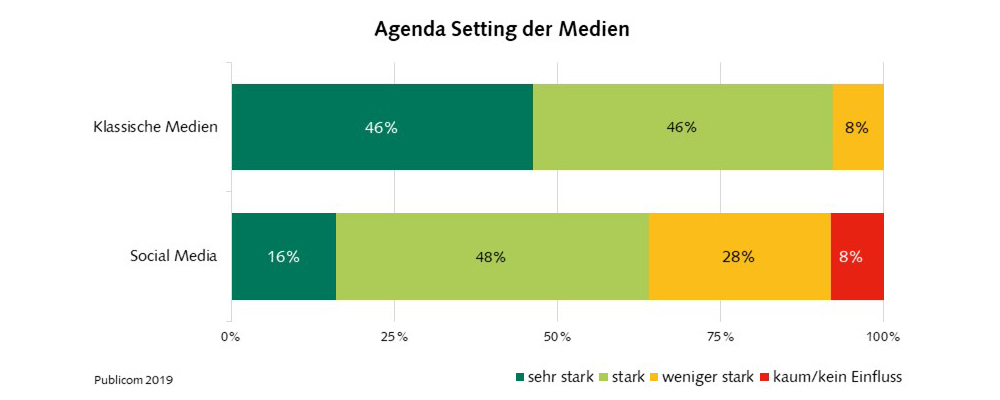
The journalistic performance of traditional media is eminently important for the democratic process and in the run-up to elections. From the experts' point of view, it is primarily the traditional media (radio, TV and print) that shape the political agenda (46 percent "very strongly"). By comparison, social media are (still) significantly less influential (16 percent "very strongly").
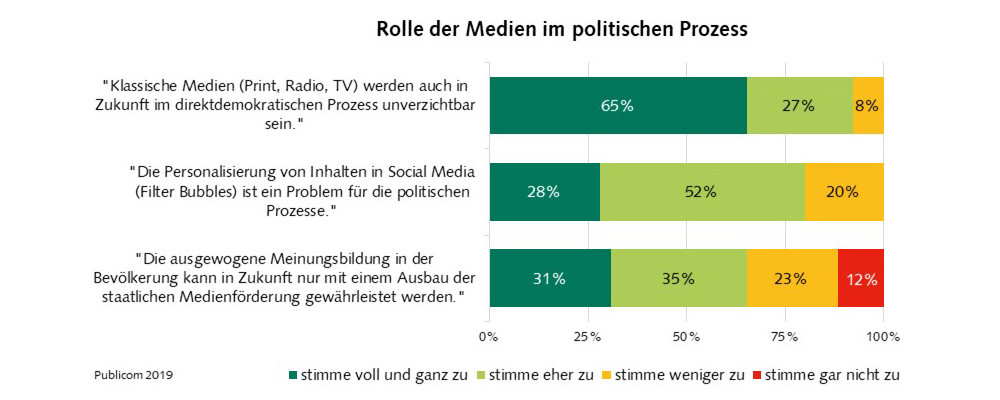
An impressive majority of the experts see the traditional media as indispensable for political processes in the future as well. This underscores the important function of the media as the "fourth estate. However, 80 percent consider the personalization of social media content ("filter bubbles") to be a problem. To ensure the balanced formation of opinion in the future, two-thirds of the experts are in favor of expanding state media funding.
In the view of the panel of experts, editorial coverage was also the decisive factor for electoral success in the parliamentary elections on October 20 (73 percent). Other important drivers for the 2019 elections are considered to be the time-honored election posters, personal distribution campaigns and advertisements in print media (all at least "rather important" with over 70 percent of the mentions).
The fact that the climate election was not a social media election is also clear from the experts' further assessment: Although advertising in social media achieves roughly the same influence as election posters (81 percent at least "rather important"), own contributions in social media were clearly less important for election success. The same applies to the websites of candidates and parties and to advertising on news portals.
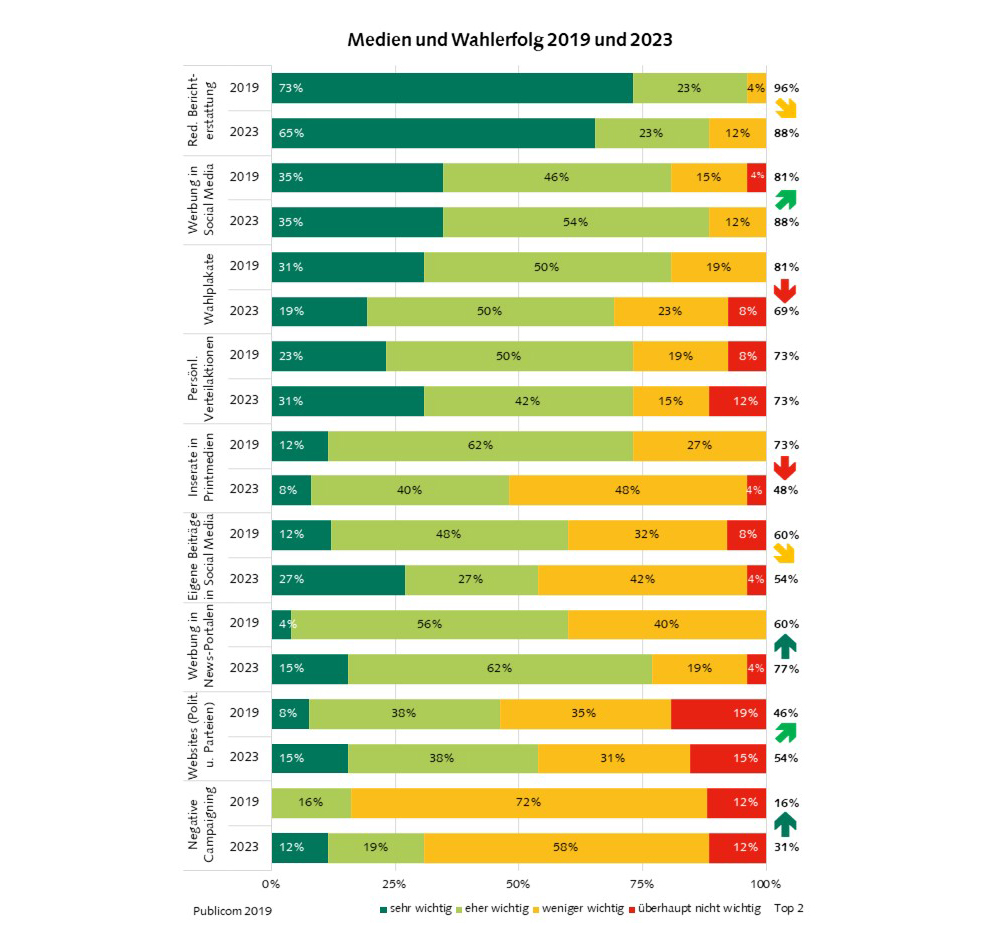
With a view to the national elections in four years' time, traditional advertising media (election posters and newspaper ads) and the online channel will undergo a contrasting development: In the future, advertising on social media and news portals will gain in importance, while newspaper ads will lose importance (from 73 percent to 48 percent at least "somewhat important"). And the printing press will also be used much less for election posters in the future (from 81 percent to 69 percent).
Candidate and party websites and "negative campaigning" are viewed ambivalently: Although they are gaining in importance, they are currently and will remain in the lower ranks in the future. The situation is quite different for editorial reporting, which the experts believe will lose some of its importance, but will also be decisive in the 2023 elections.
Under the term DELPHInarium, Publicom, which specializes in media research and consulting, publishes the results of a survey of experts twice a year. The panel includes more than forty experts from leading media companies as well as representatives from advertising, media journalism, communications science and corporate communications.