FH Graubünden and Switzerland Travel Centre start cooperation

The partnership between Switzerland Travel Centre and the University of Applied Sciences of Graubünden is intended to promote innovation in the travel industry and the exchange of knowledge between the university and the tour operator.

Students of the UAS Graubünden in the Design Thinking Workshop. (Image: Fhgr.ch)

Individual travel requests or package deals, chat bot or personal travel advice - these are just two of countless questions the travel industry is currently asking itself. In addition, current developments, such as the Covid crisis, digitalization and the unstoppable importance of sustainability, are challenging the entire industry. Tomorrow's travel providers must be able to develop and continuously improve their services in a customer- and market-oriented manner.

The Institute for Tourism and Leisure at the University of Applied Sciences Graubünden deals with the question of how such services can be developed in the travel industry and successfully positioned in the market. Service design is a promising method for creating services that are tailored to the needs of customers.

With Service Innovation and Design, the UAS Graubünden offers a suitable bachelor's program in tourism. "Testing ideas quickly and easily with users in focus is an essential component of service design," emphasizes Thorsten Merkle, Head of Studies Service Innovation and Design at the University of Applied Sciences Graubünden. "That's why we are extremely proud to partner with STC, the largest travel provider for Switzerland, and look forward to tackling joint projects."

The broad portfolio as well as the worldwide presence of STC allows to conceptualize and implement ideas for the most diverse guest segments together with the students of the University of Applied Sciences Graubünden. "The constant and unstoppable change driven by, among others, technology, trends, new forms of mobility, changing customer needs makes travel an incredibly exciting business," explains Michael Maeder, CEO of STC. "The collaboration with UAS Graubünden will help us discuss and establish new concepts." In addition to close collaboration on new services and products, students at FH Graubünden will gain simplified access to STC's global locations and knowledge sharing will be encouraged.

Online vs. offline: How the Swiss population shops

The online comparison service Moneyland.ch conducted a representative survey to determine which shopping channels the Swiss population uses. The results show that, depending on the product, there are huge differences in the choice of preferred shopping channels.

The Corona crisis has given shopping on the Internet another boost. This year, Moneyland.ch asked 1503 people in a representative online survey which channels they use most often for shopping.

The purchase channels available were Internet via desktop computer, mobile Internet via smartphone, mobile Internet via tablet, store or branch, broker or telephone. No information was also possible - for example, if the respondents never buy a particular product at all. Multiple channel selection was also possible, as many consumers buy certain products on different channels.

It was calculated for each product how many percent of the respondents who buy a product use the different purchasing channels. The sum of the percentages of all purchasing channels per product is more than 100 percent in each case due to the possibility of multiple selection.

Despite Corona continues to store in the store

Despite the acceleration of digitization, there are still many products in the Corona Crisis that are predominantly purchased in stores rather than online. These include groceries, which 96 percent of the population buys in stores. This is followed by eyeglasses (94% in-store), furniture (91%), cars (90%), bicycles (90%), motorcycles (87%), cosmetics (87%), shoes (86%), gifts (84%), electrical appliances (80%) and clothes (80%).

Nevertheless: "The trend of digitalization in shopping will continue in Switzerland," Benjamin Manz, CEO of Moneyland.ch, is certain.

Digitization will also prevail in shopping

Many products, such as flights, travel, train tickets, music and software, are already being bought on the Internet rather than in offline stores as they used to be. For other products, the Internet will soon replace the store as the most popular purchasing channel in Switzerland, according to Moneyland.ch estimates. These include bank accounts, computers and electrical appliances.

"It is also a question of time before the smartphone replaces the desktop computer at home as the most important Internet shopping device," says Manz. This can also be seen from the fact that cell phones are already significantly more popular as a purchasing channel among the youngest respondents than among older consumers.

Online shopping most popular for flights and travel

Flights and travel are purchased online in Switzerland to a greater extent than any other of the products surveyed. The Internet is the dominant purchasing channel for flights: 88 percent use the Internet in general: 73 percent buy flights via desktop computer, 24 percent via smartphone and 19 percent via tablet.

The picture is similar for travel, with 86 percent using the Internet in general: 72 percent buy travel via desktop computer, 25 percent via smartphone and 18 percent via tablet.

Cell phone most popular for train tickets

By far the most important purchasing channel for train tickets is the Internet, with 82 percent. The composition of the individual Internet channels is interesting. 36 percent buy train tickets via desktop computer, 55 percent via smartphone and 12 percent via tablet.

"This means that train tickets are the only products surveyed that the Swiss population prefers to buy on a cell phone rather than on a desktop screen. The reason is probably primarily the SBB app, which is used very frequently," explains Noé Stemmer, analyst at Moneyland.ch.

Food: offline shopping dominates in Switzerland

For groceries, the offline store is stronger as a purchasing channel than for any other of the products surveyed. Despite Corona, 96 percent of respondents still store in stores.

Nevertheless, almost one-fifth of the population (18%) have already discovered the Internet as a purchasing channel. 13 percent use the Internet via desktop computer, 7 percent the smartphone and 4 percent the tablet as a purchasing channel.

Cars, motorcycles and bicycles are purchased offline

Cars, motorcycles and bicycles continue to be purchased offline. By far the most dominant purchasing channel for cars is the store/branch - or the garage - with 90 percent. Only 15 percent cite the Internet as a purchasing channel. The figures are virtually the same for motorcycles.

For bicycles, too, the Internet still plays a subordinate role as a purchasing channel at 15 percent: offline business continues to lead the way at 90 percent.

Computers, software and electrical appliances

Thanks to Brack, Digitec & Co., Swiss people already buy electrical appliances and computers online quite frequently. Nevertheless, the offline channel is still more important: 80 percent buy electrical appliances in stores, but only 56 percent on the Internet. It's a similar story with computers: 69 percent still buy in stores, while 52 percent also already buy computers on the Internet.

In the case of software, on the other hand, the Internet channel has finally won out: 75 percent now buy software on the Internet and only 38 percent in stores.

Clothes, shoes, glasses and cosmetics

For clothes, offline shopping remains the most important: 80 percent say they buy clothes in stores. However, 59 percent of respondents also already buy their clothes online (44% of respondents on desktop computer, 25% on mobile and 14% on tablet).

For shoes, the Internet as a shopping channel is still somewhat less widespread than for clothing, at 45 percent. 86 percent continue to buy shoes (also) in stores. The situation is similar for cosmetics, which are (also) purchased on the Internet by only 35 percent.

In Switzerland, the Internet revolution has almost completely bypassed eyeglasses, although there are already some online eyeglass retailers. 94 percent still buy glasses in stores, only 8 percent also buy them online.

Furniture, gifts and books

The Swiss still prefer to buy furniture directly in stores. 91 percent cite the store as their purchasing channel, while only 35 percent also buy furniture on the Internet.

It's a different story for gifts. Offline shopping is still by far the most important: 84 percent say they buy gifts in stores. However, 66 percent of respondents also buy their gifts online (52% on desktop computers, 28 percent on cell phones and 17 percent on tablets).

Books are interesting: 69 percent say they buy books offline in stores. The Internet is on a par - not least because of Amazon: 69 percent buy books (also) via the Internet.

Banks: Majority of credit cards purchased online, mortgages in the branch

The majority of the Swiss population continues to open a bank account most frequently in the branch - namely 63 percent of those surveyed. 33 percent use the internet via desktop computer, 13 percent via smartphone, 7 percent via tablet. Regardless of the individual devices, 41 percent use the internet to open a bank account.

For credit cards, the Internet has already overtaken the branch - albeit only just: 55 percent apply for credit cards most frequently on the Internet (43% via desktop computer, 14% on smartphone, 9% on tablet). At the branch, the figure is only 45 percent.

In the case of mortgages, the branch continues to dominate, with 57 percent of respondents taking out their mortgage there. Brokers follow with 35 percent. Only 18 percent take out a mortgage on the Internet.

In the case of less complex personal loans, 33 percent of respondents already take out loans online, a significantly higher proportion than for mortgages. 50 percent take out the loan in a branch, 28 percent with a credit broker.

Health insurance most frequently concluded online

In the case of insurance, interestingly enough, there are also greater differences depending on the type of insurance. For health insurance, the Internet is the purchasing channel with the highest value: 50 percent of respondents say they use the Internet to purchase health insurance (41% via desktop computer, 9% via smartphone, 9% via tablet). Twenty-four percent go to a branch office, 27 percent go to a broker, and 20 percent purchase health insurance over the phone.

For property insurance, brokers top the list at 43 percent, followed by the Internet at 35 percent, the branch office at 28 percent, and the telephone at 16 percent.

Life insurance is also most often purchased from a broker (53%), followed by the branch (33%), the Internet (24%), and the telephone (11%).

Where to buy cell phone subscriptions and Internet subscriptions

The Internet channel is already the most popular for buying cell phone subscriptions and Internet subscriptions. 55 percent of respondents say they buy cell phone subscriptions on the Internet (42% via desktop computer, 19% via cell phone and 10% via tablet). However, 51 percent still buy their cell phone subscription in a store.

The online channel is already more dominant for Internet subscriptions. 66 percent of respondents say they buy Internet subscriptions on the Internet (52% via desktop computer, 18% via cell phone and 12% via tablet). Only 37 percent still buy their Internet subscription in a store.

Young people store particularly often with their cell phones

There are generational differences in the choice of shopping channels. This is most evident in smartphone purchases. For the youngest age group between 18 and 25, the cell phone is significantly more important as a purchasing channel than for older consumers.

Take flights, for example: 77 percent of the age group surveyed between 18 and 25 buy flights via desktop computer, 36 percent via smartphone. Among 26- to 49-year-olds, 73 percent buy flights via desktop computer and 31 percent via smartphone. Among 50- to 74-year-olds, 72 percent buy their flights via desktop computer and only 11 percent via smartphone.

Differences depending on the region

In the countryside, the Internet is somewhat less popular as a purchasing channel than in Swiss cities. The differences between German-speaking and French-speaking Switzerland are also interesting. In German-speaking Switzerland, the smartphone is already more important as a purchasing channel than in French-speaking Switzerland.

Swiss judgment in dispute over Austrian "Kronen Zeitung"

Germany's Funke Medien has been rebuffed by the Federal Court in its battle for control of Austria's Kronen Zeitung against the Dichand founding family. The judges in Lausanne dismissed Funke Medien's objections to an arbitration award.

According to the Federal Court's ruling published on Wednesday, Funke Medien terminated two agreements dating back to the 1980s that set out the legal relationship between the parties. Funke Medien's goal for years has been to acquire a majority stake in the influential Kronen Zeitung.

An arbitration court in Zurich concluded in May last year that the two contracts were still valid. If Funke Medien were to terminate the contracts, this would also result in the dissolution of the actual company. Funke Medien would then have to transfer its shares in Kronen Zeitung to the widow of newspaper founder Hans Dichand and his three children at a favorable book value.

Before the Federal Supreme Court, the losing media company complained that the arbitration tribunal had not been correctly composed and that its right to be heard had been violated. The Federal Supreme Court rejected both points of criticism. (SDA)

New online platform for Bolero

The fashion and culture magazine Bolero is expanding its offerings and, starting today, is launching a fresh new website. The new website aims to bring together culture, style, and trends and create a digital home for the beautiful aspects of life—now also available in French.

The new online portal launched on Wednesday Boleromagazin.ch complements the existing print edition and focuses on a sophisticated mix of topics without blinkers, writes Ringier Axel Springer Switzerland in a statement. The portal features beauty tips as well as industrial lofts and travel reports, streaming tips or home office hacks. The realigned webpage is no longer published exclusively in German, but now also serves readers in French-speaking Switzerland with a French-language version. In this way Bolero create an offer that is unique in the Swiss luxury segment, the statement continues.

Implemented by Vertical Hub

The online presence is designed and operated by Bolero by the Vertical Hub of the Blick Group under the direction of Bettina Widmer, Head of Vertical Hub & New Audiences. As a supplement to the business publications Handelszeitung and Balance reached Bolero According to Ringier Axel Springer Switzerland with the print edition already has an audience that appreciates high-quality content and is enthusiastic about the finer things in life. This recipe for success is to be developed further in the digital realm, with in-depth coverage in the three basic sections "Culture," "Style," and "Trend. In addition to the new online presence, a newsletter will be published on the publication date of the print edition, providing an overview and selected highlights.

The new webpage is now available at Boleromagazin.ch (German) respectively Boleromagazine.ch (French); plus social accounts on Instagram and Facebook. The print edition of Bolero is published six times a year and reaches around 257,000 potential readers.

Internet advertising: Google's advertising business grows in all segments

Google's advertising business is booming during the COVID-19 pandemic. Revenue at parent company Alphabet rose 34 percent year-over-year to $55.3 billion in the last quarter.

Google Zurich. (Image: Google)

According to Chief Financial Officer Ruth Porat, the boost reflects the increased online activity of consumers.

Profits jumped from 6.8 to 17.9 billion dollars, as Alphabet announced after the close of the U.S. stock market on Tuesday. Investors rewarded the figures with a price increase of at times around four percent in after-hours trading.

At Google, where virtually all of Alphabet's business still runs, revenues from the search engine business rose by 30 percent to just under 32 billion dollars. The video platform YouTube contributed a good six billion dollars - around 50 percent more than a year earlier. In the cloud business, revenue rose by 46 percent to a good four billion dollars.

Alphabet's "other bets" - promising business ideas such as self-driving cars or delivery drones - saw revenues rise about 47 percent to $198 million. At the same time, its operating losses also increased from $1.12 billion to $1.14 billion. (SDA)

Equipe speaks plain language for Smile customers

The online insurance company Smile focuses its communication on its claim to be a challenger. The cross-media campaign was created by the Zurich agency Equipe.

Smile is the insurance without blah-blah. The direct insurer is thus committed to uncompromising simplicity and flexibility for its 150,000 customers. Mobile first instead of paperwork, fast instead of slow, understandable instead of complicated. What applies to the offer and service is now to apply in the latest advertising materials. The new campaign combats what annoys many customers of other insurance companies: a lot of blah-blah.

For its latest communication, Equipe has now developed a language that uses as little of this as possible. "With the new campaign, Equipe has managed not only to position us as a likeable digital brand, but also to strike a chord with our potential customers," says Joséphine Chamoulaud, Head of Marketing and E-Commerce at Smile.

In addition to megaposters at high-traffic locations and online spots, the campaign includes display ads developed specifically for the respective insurance line, including remarketing, which are placed on comparison portals as well as the most relevant advertising networks.

The new subjects are now in use along the entire funnel in German- and French-speaking Switzerland.


Responsible at Smile: Pierangelo Campopiano (CEO), Joséphine Chamoulaud (Head Marketing and E-Commerce), Ivana Gonzalez (Digital Marketing Project Manager), Jonathan Barreiro (Lead Business Development), Lucrezia Mazzola (Customer Experience Manager). Responsible agency: Equipe. Media: Equipe.

Stuiq checks for Allianz Partners and SBB if something is missing

Zurich-based agency Stuiq has created four spots on travel insurance for Allianz Partners and SBB. The campaign, in which both companies appear together, is currently running on social media and at the POS.

Everyone knows that "Missing something?" moment - when you realize that a mishap has happened. Stuiq puts exactly this situation on film for social spots and thus promotes the joint insurance offer of Allianz Partners and SBB. With complete protection packages, customers should be well covered and arrive at their destination without worries, even if their luggage is stolen, for example.

With a deliberately cheerful, light-hearted tone, the Zurich agency conveys the "annoying" topic and thus ensures attention and product awareness - for carefree travel.

Four spots for different scenarios and target groups are used seasonally on social media and run simultaneously on screens in ticket halls at train stations throughout Switzerland.


Responsible at Allianz Partners: Nico Koch (Head of Market Management), Larissa Janka (Marketing Specialist), Verena Trau (Key Account Manager). Responsible at SBB: Angela Habegger (Marketing Third Party Business), Marcel Schneider (Product Manager Third Party Business). Responsible at Stuiq: Stefan Moeschlin (Creative Direction), Benjamin Kocher (Digital Direction, Consulting), Michi Döös (Direction, DOP), Sam Ribeiro do Couto (Camera, Post Production, Image Editing). Cast: Nico Ehl.

"Bring!": Significant sales growth and additions to the management team

The shopping app «Bring!» is on a growth trajectory: In 2020, the company increased its revenue by more than two-thirds. In addition, the app is seeing significant growth in its advertising business and has added two new members to its leadership team.

The growth course of Bring! seems to continue in the current year 2021. In the first quarter alone, revenue was around 240 percent higher than in the first three months of 2020, according to a statement. The total number of app downloads broke the 10 million mark for the first time last year and currently stands at over 12 million - with over half a million added in the first quarter of 2021 alone. In the meantime, Bring! has become a regular companion for many people when shopping for groceries and household items: Users made more than 125 million purchases with the app in 2020 alone.

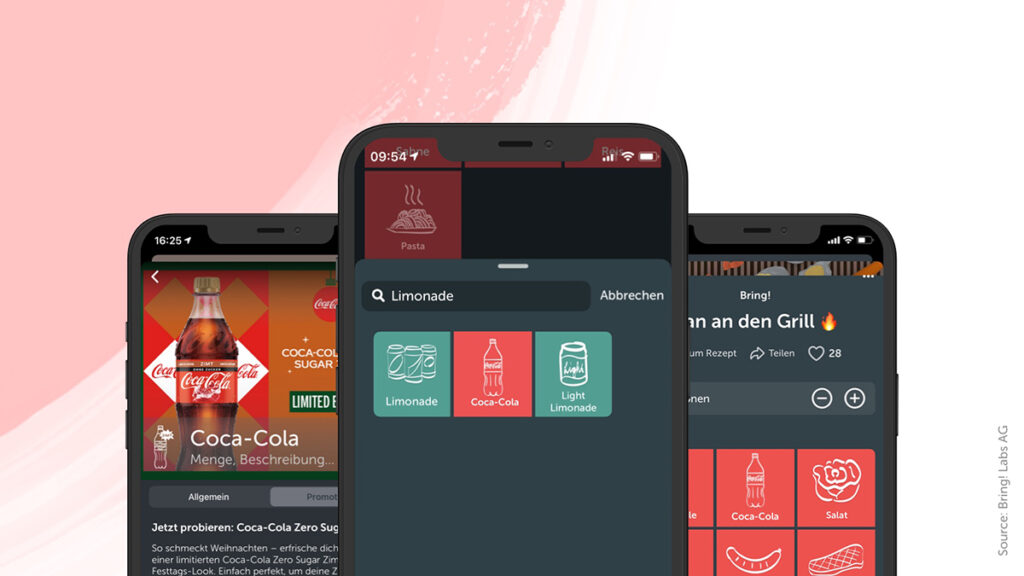
Bring! offers branded goods and retail companies a specialized mobile advertising platform. Using various advertising formats - from sponsored products on the shopping list, to local retailer offers, to recipe recommendations in the inspiration section - which are integrated directly into the user experience of the app, advertisers can help their target groups plan and carry out their shopping. This apparently with success. According to the release, Bring! has been able to implement numerous campaigns in 2020 with manufacturers such as Procter & Gamble, Nestlé, Dr. Oetker, Danone, Barilla and Coca-Cola, as well as retail chains such as Edeka, Lidl and Migros.

Management team strengthened

As sales grow, so does the company. According to the statement, Bring! plans to double its headcount by the end of the year compared to the end of 2019. The first new additions have already been made. Nadine Müller is now responsible for all sales activities in Switzerland as Head of Sales Switzerland. The 37-year-old comes from Mediaschneider, where she was most recently Managing Director. With more than 15 years of agency, media and marketing experience, she will be responsible for building up and expanding customer and agency relationships in Switzerland and further developing advertising products.

Davide Falzone has already been with the company for some time: As Country Manager, he built up the Bring! business in Germany. As Commercial Director, the 32-year-old is now also responsible for global sales targets, the advertising business, and the development and implementation of the company's business strategies.

New Bring! version still in spring

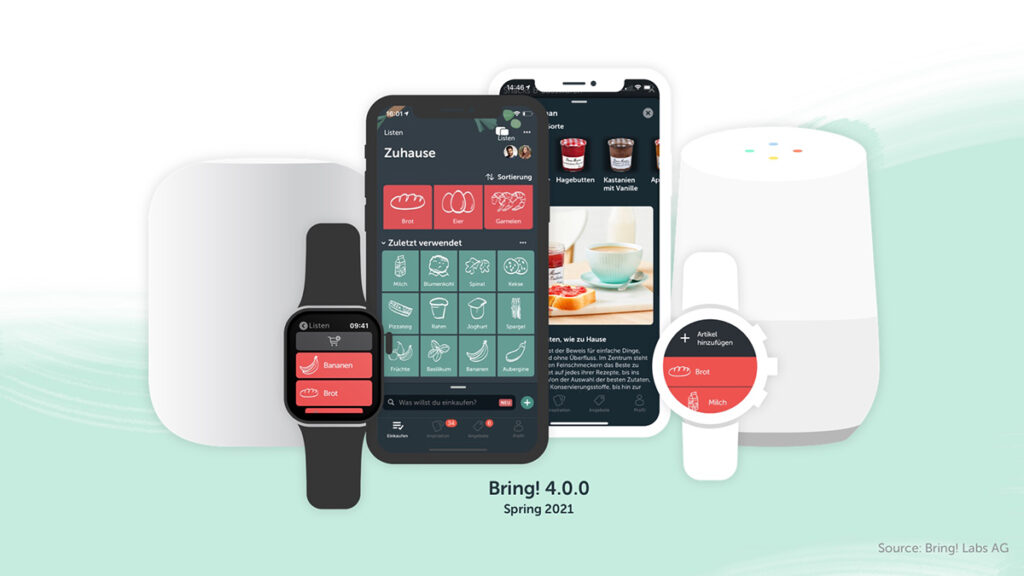
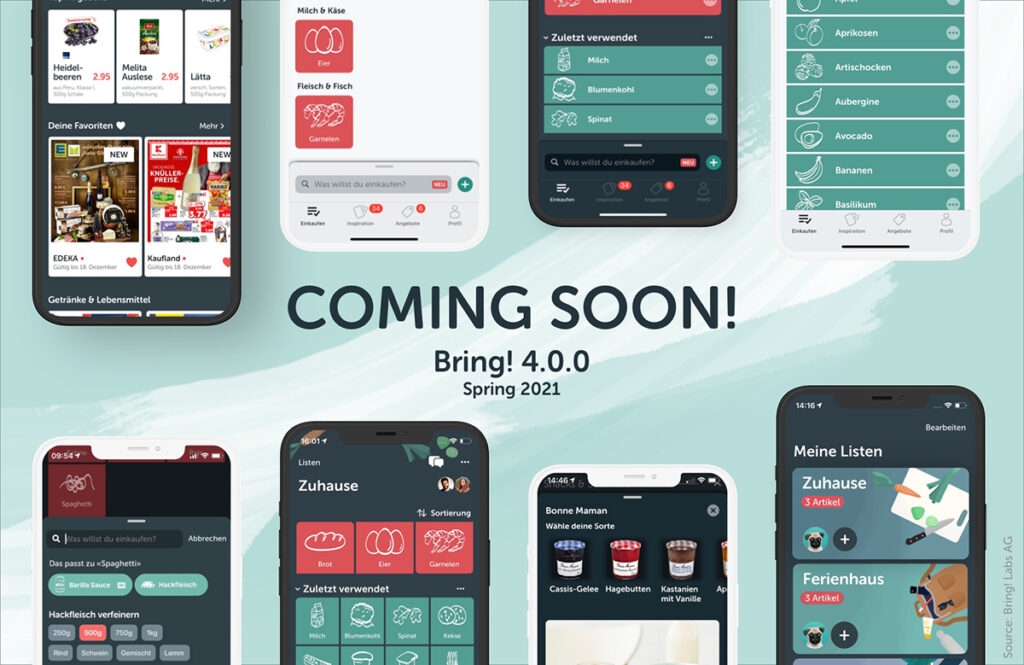
Bring! plans to continue its growth in 2021. To this end, the app and the advertising platform will also be developed further. An expanded Bring! version is scheduled for release in the spring and will offer additional functions, more personalization, and additional advertising formats, among other things.

"Serviceplan is a homecoming for me".

Peter Schäfer has been the new Chief Strategy Officer at Serviceplan Suisse since March. What challenges does he see for the agency—and what does he plan to do to address them?

Werbewoche.ch: Peter Schäfer, congratulations on your new job at Serviceplan. You are well known in the Swiss advertising industry, but would you tell those who don't yet know you about your career?

Peter Schäfer: I was born in South Africa and left home when I was seventeen - I have to be honest about that. Not only because of apartheid, but also because of the problems with my parents, with whom I get along very well today. I first went to London and started studying psychology there; then I received a research grant for Switzerland. At some point I had had enough of life as a scientist; I was worried that I would go crazy myself if I continued to deal with these topics. (laughs) ... and then I switched to the advertising industry.


You joined Advico, Young & Rubicam, Peter Felser became your planning mentor. Then Frank Bodin brought you to Havas, where you stayed for fourteen years. Finally, you spent two more years at Wunderman - and now you're moving to Serviceplan. No change at all for a long time, but this time it had to happen all the faster?

Some colleagues actually asked me if I was "crazy" - because I left Wunderman after only two years. But I really had a great time there! I was able to learn an incredible amount about technology in a very international setup, both in theory and in practical implementation. But Serviceplan is like a homecoming for me - not only have I known Pam Hügli and many other colleagues for ages; I also think the concept behind the agency group is fantastic.


One of your core topics is the use of empirical data for advertising. Is that where the trained psychologist comes in?

I think the data you collect about consumers today has a lot to do with psychology. Many people have no trouble articulating, "This is what I want, this is what I like, and this is my attitude. So I'm buying this way or that way." But then when you look at the data that those people generate ... it often paints a completely different picture. And that's what really interests me. You can go much deeper than the level that people themselves are aware of.


It's not for nothing that "data-based creativity" is also on everyone's lips, at least as a buzzword. Do you still see colleagues from creation resisting it at all?

Basically, once creatives have seen how to use data profitably in a project or campaign, they believe in it and will be happy to work with it. This is true for "classic" creatives as well as for newer, modern digital creatives. However, I don't think data or analytics replace intuition or gut feeling leading to an idea. I still believe: We will need creativity. And we will need ideas. The big platforms of this world with their sometimes ingenious technological innovations will never be able to achieve that. They come from a completely different world. We still need creativity, and we still need creative people who, in their genius, come up with unconventional ideas.


What is the best way to combine creativity and data?

Data leads to insights, which in turn become a springboard for creation. But they do not replace the springboard, and that is very important. As I said, I still believe in the sovereignty of creation. And that's why clients come to creative agencies. They don't come to collect data, because they can now do that themselves via CMS systems. But data is also enormously important for strategy, in addition to creation. Once we have an idea, we have to develop a channel strategy. To do this, we need to know where customers move via which touchpoints. In the past, that wasn't necessary - you went to the customer with an idea and then presented it on cardboard or later on a projector. And that's what customers liked. Today it's completely different. We have the insights, we have the idea, and now we have to implement it down to the last detail - that's what the clients expect.


What does this mean for the future of the agencies?

This means that forecasting the customer journey has become an essential part of our business. If we want to continue to position ourselves as full-service agencies in the market, then we must also be able to fulfill this part quite reliably and naturally. In my opinion, it is primarily the role of strategy to drive this forward.


So you and your colleagues are increasingly challenged when it comes to making an agency like Serviceplan fit for the future?

Absolutely. I'll try to explain this from a holistic perspective: On the one hand, in the area of customer insights, customer experience management, we are competing with the big management consultants these days. They try to poach people from us and sometimes succeed in doing so; above all, however, they force their way into pitches that our industry used to settle "among themselves". On the other hand we creativity. Consultants can't really do that; we can position ourselves there. It's about things like brand definition. It's about communication strategies, really good ones. It's about transformation topics that directly affect the customer experience. Creative competence alone is simply no longer enough to win comprehensive mandates. We have to do the part of the work that the consultants would otherwise do.


Another big concern for you, you told me in advance, is promoting diversity within the agency. Why is that important to you?

I am convinced that living diversity strengthens the openness of employees to one another and thus creates room for particularly high levels of creativity. Encouraging different opinions forces people to think beyond their own horizons, and that is precisely what often leads to great ideas. At Serviceplan Suisse, we have a female chairman of the board of directors, we have Pam Hügli as CEO, we have an executive board that is fifty percent female. In other words, we are already much further ahead than other companies when it comes to promoting women. And I think that's a very important signal in the market. But we haven't reached our goal yet! The entire LGBTQ+ issue is enormously important, equality is finally also welcomed by customers, yes: demanded ... the world is so far. In general: the world is becoming more female and the world is becoming younger. This will change the insights on which we base our campaigns.

Blick and Ochsner Sport continue "26 Summits" hiking campaign

The hiking campaign "26 Summits" by Blick and Ochsner Sport starts its second round on Tuesday. The cross-media campaign once again encourages Swiss people to explore the mountain world in their own country - now with additional summits and routes, a ranking on the website and a special "26 Summits Day".

Blick and Ochsner Sport want to send the Swiss* to the mountains in a playful way again this year with the "26 Summits" campaign. Since Tuesday, interested parties can register at 26summits.ch register and start the challenge of climbing 26 Swiss peaks. The hiking offer is enriched with new mountain peaks and additional trail running and family routes. 

"We are very excited to continue on this path with Ochsner Sport," says Minara Mathys, Head of New Business & Sport at Blick Group. "With '26 Summits', we moved Switzerland in the first execution: a large community formed on Instagram under the hashtag #26Summits, over 40,000 codes on summit signs were scanned, and all participants together hiked from the earth to the moon! We want to build on this success and keep it going".

The centerpieces of the cross-media campaign continue to be the website, the special magazine and the QR codes on the panels located on Swiss mountain peaks. "Precisely because hiking is so popular and small Switzerland offers such great opportunities, it can be covered endlessly. It's fun and broadens the horizon," says Marcel Zulauf, Team Leader Publishing at Ringier Brand Studio, which is responsible for the content. By scanning the codes, the summits climbed are digitally collected in the hikers' profiles and they get the chance to win prizes.

Additional typical game elements have been added: In the login area, participants can conquer a virtual mountain and compare their ranking with the rankings of other community members. In order to serve all of the country's language regions, "26 Summits" is now available in German, French and Italian - with some elements on the website and on the boards also appearing in Romansh.

On August 1, a special "26 Summits Day" will be held for the first time. This will be presented together with Imbach Reisen: 26 hiking guides will lead the respective groups of participants to one of the Swiss summits. The aim is to reach the mountain peaks at the same time.

A 72-page magazine with stories and reports about hiking in Switzerland will be SonntagsBlick May 2, L'illustré on May 5 and il Caffè on May 16 to kick off "26 Summits". In addition, the Blick Group, in cooperation with Ochsner Sport, will play a variety of content in different formats on the subject of hiking on all channels until the end of fall.

Monami realizes another content campaign for UBS with Topsy

For the third time, UBS and Monami are launching a multi-part content campaign centered on Topsy, the red UBS fox.

How do you get children excited about the world of science? By letting them experiment themselves. In 2021, the red UBS fox Topsy will once again be at the center of the action. For decades, Topsy has not only helped children save money, but also aroused their curiosity with educational content.

And so, after the 2020 launch, the new campaign by content agency Monami is once again all about the fascinating world of Topsy and his tinkering journeymen. With Experiments is sensitized to major scientific topics in a playful way. Young protagonists between the ages of 3 and 8 convey science at eye level in a variety of videos and text instructions.

The basis for this was formed by experiments for the whole family developed by the SimplyScience foundation, which can be carried out at home with the most common household materials. The result is a multimedia content series that will be expanded at regular intervals until the end of the year on the Topsy content hub and consists primarily of various videos and text and image instructions.

The campaign focuses on customer loyalty, awareness and consideration among parents, and the acquisition of new newsletter subscribers. It is rounded off by activating social media advertising, a competition, measures at the POS, and further online content from Topsy on the subject of tinkering and experimenting.


Responsible at UBS: Daniel Fischer (Head of Marketing Switzerland Region), Alessandro Monsurrò (Head of Marketing Personal Banking and Wealth Management CH), Simone Leuchtmann (Project Manager Marketing Personal Banking), Oliver Vedolin (Head Digital Marketing & Communication), Joël Frey (Head Digital Communication), Dania Vogel (Brand Management), Rafaela Kalbermatten (Brand Mangement), Caroline Raba (Digital Marketing Specialist); Marcin Bobrowski (Digital Communication). Scientific Support: SimplyScience Foundation. Responsible at Monami: David Cappellini (overall responsibility), Stefan Erdin (concept, campaign management), Fathima Ifthikar (concept, operational management), Valentin Mattes (production), Nathalie Krebser (creation), Gregory Hedrich (creation, animation), Raphael Föhn (post-production, editing), Tony Prati (coordination).

Jung von Matt Limmat and Stress launch #LikeABosch campaign in Switzerland

Bosch, the household appliance manufacturer, launches the #LikeABosch campaign in Switzerland. Accompanying this, the collaboration with Stress goes into the next round. The Swiss adaptation was implemented by Jung von Matt Limmat.

After last year's "Fresh up your life" campaign realized together with Stress Bosch continues to rely on its collaboration with the Swiss artist for this year's marketing campaign. Rapper and Bosch brand ambassador Stress has re-scored the videos of the global home appliance campaign for the Swiss market in Swiss German and French.

Together with other content and advertising materials, the campaign will run in several waves until the end of the year and show customers throughout Switzerland how the technologies of Bosch household appliances can contribute to sustainable and healthy living in their own homes.

The campaign centers on the two video clips "Healthy living #LikeABosch" and "Sustainable living #LikeABosch". The two clips are intended to convey in a humorous way the contribution that "technology for life" can make to health, hygiene and greater sustainability in one's own four walls.

The two video clips, as well as other content from the campaign including the new song lyrics, plus an interview with Stress and the opportunity to create a personalized #LikeABosch signature, can be found on Likeabosch.ch.


Swiss adaptation

Responsible at BSH Switzerland: André Franz (Head of Marketing), Regine Schoeller (Brand Communication Manager). Responsible at Jung von Matt Limmat: Sebastian Kaps (Project Management), Valérie Gantenbein (Content), Sebastian Danielsson (Art Direction), Philipp Klink (Text). Media: MediaCom Switzerland. Social media: Fire point.

Initial version, Europe region 

Responsible at BSH Region Europe: Jonas Ekloef (Head of Bosch Regional Communications), Daniela Reuter (Brand Manager Bosch, Region Europe). Responsible at JvM/Alster: Max Lederer (Managing Creative Director), David Leinweber (Group Creative Director), Jörg Meyer (Creative Director), Simon Schröder (Client Service Director), Toni Gabel (Senior Project Manager), Anahita Ghanizadeh (Copywriter), Natascha Kuehn (Copywriter), Dennis Cicioglu (Copywriter), David Voss (Senior Producer). Responsible at Czar Film: Bey-Bey Chen-Rönz (Executive Producer), Philip Lony (Producer).

get_footer();