ADC Young Creatives Award 2023: Young creatives tinker with concept for Credit Suisse

The Credit Suisse briefing on the 16th edition of the ADC Young Talent Competition is now available for download.

The briefing for the ADC Young Creatives Award 2023 took place on Wednesday evening via Zoom.

This year's briefing event of the ADC Young Creatives Awards took place on Wednesday evening. ADC project manager Hanna Jackl explained to the 120 or so youngsters what to expect if they win an award: There are four of the coveted ADC Young Creatives Awards to be won in the categories Film, Outdoor, Direct and Cyber. The winners of the Young Creatives Awards can also become members of the "Young ADC" and thus part of ADC Switzerland and receive a "ticket" to participate in the next ADC judging.

"Dear young creatives, yes it's true: your briefing giver this year is a bank," David Schätti, Head Marketing Initiatives & Advertising Switzerland at Credit Suisse, then continued with the briefing.

This year's Challenge: "Take the #ChangeTheGame initiative to the next level. Use the power of the women's soccer team to draw attention to the topic of women and finance and position Credit Suisse as a solution-oriented bank. And the most important thing: Forget what you might think is boring about banks, be curious in your brainstorming and courageous in your implementation. We want and explicitly look for that."

Afterwards, Urs Krucker, ADC member and marketing strategist, supported with a strategy wrap-up on this year's task.


The ADC website contains both the briefing and all entry regulations in German and French. The deadline for the 16th ADC Young Creatives Award is February 22, 2023.

Department of Noise is always one step ahead for NeoVac

Department of Noise has created a new sound identity for NeoVac that will underscore the company's ambition to stay one step ahead.

NeoVac, the Swiss full-service provider of intelligent solutions for energy and water, has revised its brand identity and the associated brand experience in 2022. The new claim "Making Energy Smarter" is intended to summarize the company's doer mentality as well as its ambition to meet the energy future with forward-thinking solutions.

To make this attitude not only visible, but also audible and thus tangible, NeoVac has developed a sound identity together with the Zurich-based audio branding agency Department of Noise: for a coherent and consistent brand experience across all touchpoints.

"A living brand must also be audible - whether B2B or B2C," says Michael Eugster, Head of Marketing at NeoVac. "DoN recognized the potential of sound in a branding context early on and is therefore the clear leader in the field in Switzerland - which made the decision easy for us. Internally, employees almost snatched the assets out of our hands during the process."

The sound identity is intended to make NeoVac's spirit of innovation tangible, while establishing the "doer" in the sense of a forward-looking market leader. In the process, a "digital buffalo" served symbolically as a model that stands for the brand and at the same time incorporates the history as well as the heterogeneous workforce of NeoVac.

"The numerous sound assets, which also include the Brand Voice, help us to communicate precisely and efficiently in everyday life while broadly supporting our identity: just always one step ahead," adds Michael Eugster.

The new sound identity can now be heard on all communication channels.


Responsible at NeoVac: Michael Eugster (Head of Marketing), Lena Pfister (Marketing Manager), Sven Büchel (Digital Marketing Manager). Responsible at Department of Noise: Florian Goetze, Ph!L!pp Schweidler (Strategy & Creative Direction), Meng Tian (Consultant), Yves Gerber (Creative Producer).

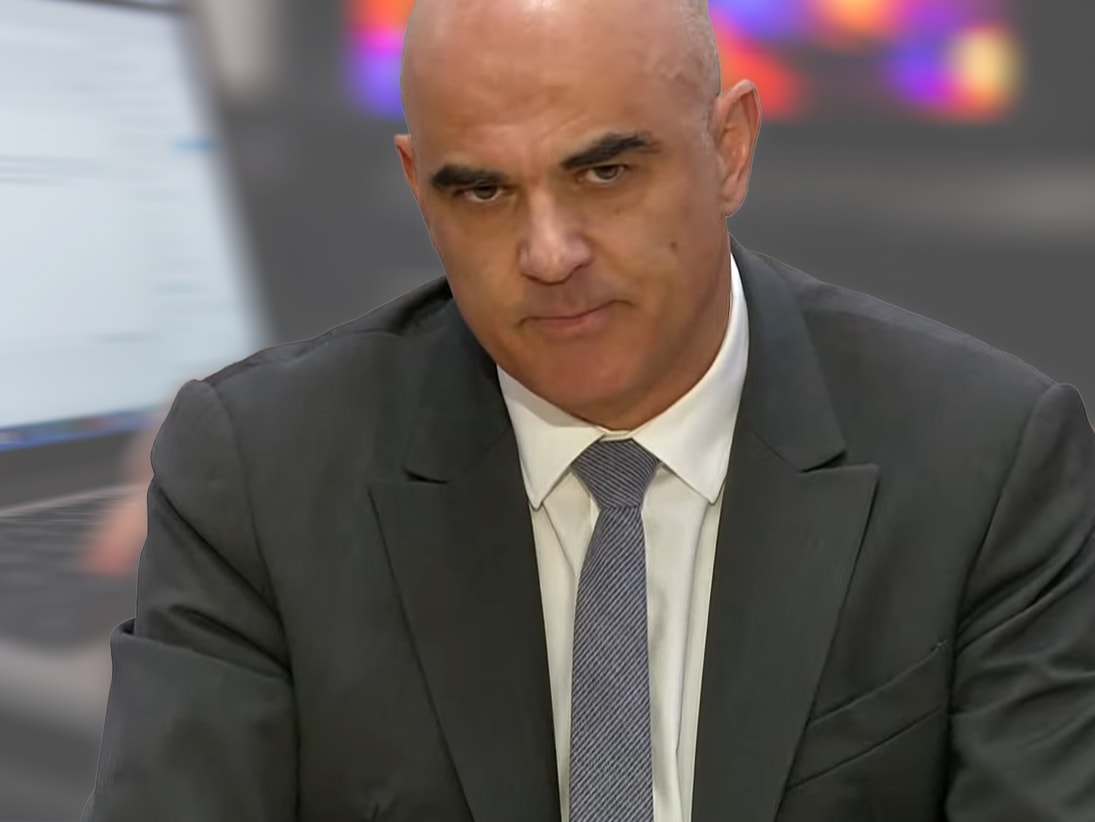
The limits of indiscretion: how close is too close?

The alleged widespread disclosure of internal information from the Ministry of the Interior to Ringier CEO Marc Walder during the COVID-19 pandemic raises questions. Did Federal Councilor Berset go too far? What was Walder hoping to achieve? A one-time incident as part of the “courant normal.”.

A few alleys around the Federal Palace in Bern mark the core of a web of politics, administration, lobby and media. This is also where part of the Berset/Walder affair is taking place. From the Interior Department at Inselgasse 1, former Berset communications chief Peter Lauener is said to have regularly informed Ringier boss Marc Walder in Zurich about internal details of Covid policy. In individual cases, this information was found the following day on the View-Title page.

The process itself is banal and commonplace in federal government. A large part of the reporting is based on information that would not actually be intended for the public. Or if, then later, as in the case of the information about the contract for the vaccine doses with Pfizer, the View could disseminate one day before the official communication by the Federal Council.

Publisher Michael Ringier and the former president of the Swiss media group Berset tell us how Walder and Berset - and Lauener respectively - found each other. Sunday ViewEditor-in-Chief Peter Rothenbühler made an identical statement; Rothenbühler commented on this in "Arena" and Ringier raised the issue at an internal plenary meeting.

When things got going with Corona in early 2020, Walder quickly and consistently retreated to his home office. There, he informed himself intensively about Covid and what could be done about it. He really knew everything about the subject, Ringier employees recall. Walder probably also thought he knew what the federal government should do and wanted to find out promptly how the authorities planned to deal with the pandemic. He therefore contacted Federal Councillor Berset, whom he knows personally (but is not on friendly terms with). Communication then took place mainly between Berset's chief information officer Lauener and Walder. Whether and to what extent the head of the Interior Department and his spokesman had violated official secrecy by supplying Walder will now be investigated by special investigator Peter Marti, provided a court allows him access to the data that Lauener and Walder had exchanged.

It is not without a certain irony that the discussion about the Corona leak in the Berset department can only be held because of another leak. Investigator Marti had discovered the Lauener-Walder communication in a trial about the so-called crypto leaks and tapped them as by-catch. By some route, they then found their way to the editorial office of CH Media, which began reporting in mid-January. set off a wave has.

Even if the dimension of the affair surrounding the overly trusting dealings between Berset's spokesman and Ringier's CEO is now considered unprecedented and unique, measured in terms of the intensity of the exchange and the actors involved, the events are more commonplace than they might appear - despite all the media excitement. The media and politics have a close structural relationship.

But: When is close too close?

Too much information is currently missing for a clean classification of the present case. The whole discussion so far takes place on the basis of the reporting of the articles in the Switzerland at the weekend takes place. But what does 180 communication processes mean? Does every mail response count, even if it's just a thank you or an acknowledgement of receipt? Is 180 a lot? Are there any comparative figures?

And on the receiving end, at Ringier, the insinuated passing on of Walder's information to the View against the statement of the editorial team, which denies instrumentalization. They had done their own research and did not let themselves be fed by the CEO, the View-Christian Dorer and Ladina Heimgartner.

For a better understanding of what is going on, let's go back to the perimeter around the Federal Palace in Bern. Anyone who spends more time in this microcosm develops confidential acquaintances with politicians over the years, and vice versa with media representatives. The "dedicated line" through which Covid information is said to have flowed from Berset's office directly to Walder's office is part of a system: complex networks of such communication channels stretch through Bern, even if they are usually narrower in diameter than the line in the present case.

If 30 people know about an explosive Federal Council decision in advance, which is a realistic figure, then that's 30 people who also know that there are 29 others with the same information. Disclosure seems justifiable under these circumstances. Others could have done it - and do it.

Now here we come to the answer to the question of when close is too close.

The problem with the Berset/Lauener-Walder contact lies, on the one hand, in the systematic way in which information is passed on and, on the other hand - and almost more importantly - in the personnel of the addressee. Would a simple federal house editor of View or Tages-Anzeiger had maintained a dedicated line with Lauener, it would have been a different constellation, even if the end result would have been the same reporting. As a former editor-in-chief at several Ringier titles, Walder still considers himself close to journalism even as CEO and sometimes intervenes in the editorial business himself. For example, with his own guest contributions or when he urges the editorial team to publish a Covid appeal.

A heart for journalism at the top usually proves to be a stroke of luck for editorial teams. At Ringier, it is a disadvantage.

Walder has apologized for his statement in a video that became public, which was declared confidential, that he had instructed his editorial offices to support the governments in coping with the pandemic with their reporting. He has yet to apologize for his captious e-mail exchange with Lauener, although his behavior (as far as it is known) exposed the editorial offices to the outrageous suspicion that they had served as Corona mouthpieces for the government.

Even if the SVP now tries to make political capital out of the affair with accusations and demands for the resignation of SP Federal Councillor Berset, interest is likely to wane at some point. At the same time, the legal clarification of the events will be protracted, since they are taking place in three interwoven arenas.

The collusion of an influential head of the media with a federal councilor during a sensitive phase of state policy was just as expected as its later revelation in competing media. Seen in this light, the case also stands for functioning self-regulation.

For Marc Walder, the renewed exposure of internal information that puts his company in a bad light should be a lesson: either don't get caught - or just let it go.

CH online media reach around five million people per month

Mediapulse's semester data on Swiss online research, published for the first time, show among other things that the measured offerings are used by around five million people per month, which corresponds to a monthly reach of 61 percent.

(Graphics: Mediapulse Online Content Audience Data)

Since July 2022, Mediapulse has been calculating online content audience data, which provides information on the online usage of the Swiss. This means that, for the first time, half-yearly data on the use of the offerings involved in the research is also available for online use, in addition to the semester figures for radio and TV.

On a monthly average, more than 5 million users visited the online platforms surveyed, which corresponds to 61 percent of the population. The survey refers to people over the age of three who live in Switzerland.

Within a week, half of the Swiss population was on one of the platforms studied at least once. The participating online media reached an average of 4.2 million users per week (51 percent net reach). The daily figure was 2.9 million, or 35 percent of the population.

Data of high utility value

Online Content Audience Data provides a daily measurement of online usage that shows the people behind the machines. This provides the market with highly useful data. For example, structural characteristics can be determined for online brands or usage patterns can be shown down to the hourly level.

This shows that Swiss online media are used throughout the day. In addition, peaks in usage occur in the morning and at midday. The highest values are achieved in the evening.

On Saturdays and Sundays, the picture is similar, albeit with a time lag. Here, usage increases somewhat later and then runs slightly higher during the day, especially on Sundays, than on weekdays. The peak over midday does not occur on weekends.

SRF, 20 Minuten and Blick reached the most people

SRF achieved the highest reach in Switzerland, 20 minutes and View. SRF was the only online platform that was visited by more than one million people every day. 20 minutes came to a daily average value of 862,680, View to 754,010 persons. Other brands in the top 10 were Blue News, 20 Minutes, Local.ch, Search.ch, Watson, RTS and the Tages-Anzeiger.

Among the networks surveyed, the Goldbach Display Network, the Goldbach
Video Network and the Ringier Digital Network have the greatest reach.


Mediapulse publishes for the first time semester data of the new Swiss Online research. The Mediapulse Online Content Audience Data provides information on the use of websites and apps of the online media participating in the study for the second semester of 2022.

The methodological cornerstones are the Media Panel operated by Kantar and the tagging technology from Comscore. The measurement system records the usage of around 5,000 people on over 10,000 devices every day.

According to Simonazzi, Berset had no knowledge of the indiscretions

According to statements in the Federal Council, President Alain Berset had no knowledge of any indiscretions between his former communications chief and the media. This was announced by Federal Council spokesman André Simonazzi.

"Based on the information provided by the president of the Confederation, who has given assurances that he had no knowledge of such indiscretions, the Federal Council will continue to conduct business on the basis of restored confidence," Simonazzi said in a statement to the media in Bern on Wednesday after the Federal Council meeting.

The Federal Council has taken note of the opening of an investigation by the parliament's business audit commissions GPK and wishes that this be carried out quickly in the interest of the necessary confidence in the institutions, it was further stated.

Federal Council: Indiscretions harm

The Federal Council also said that a climate of trust, both internally and externally, was necessary for the quality of its decisions. "Indiscretions damage the work in the body, the credibility of the college and the interests of the country." The Federal Council does not tolerate them and condemns them.

Berset repeated, in addition, that he was ready to testify before the GPK. This investigation must be carried out within the framework of the institutions, he said. It should be clarified "all at once", he said.

Berset and Simonazzi did not answer further questions from journalists - for example about the climate in the Federal Council, whether Berset had resigned of his own accord, and about Berset's contacts with Ringier.

Berset indirectly takes a stand

Until now, Berset had also not said in public that he had not known about the indiscretions. This was now heard indirectly for the first time via the Federal Council spokesman.

At its meeting, the Federal Council discussed potential indiscretions reported by the media. Simonazzi said that Berset had taken a break for part of the discussion. Vice President Viola Amherd then informed him about the content of the discussion before it continued.

A working group of the GPK is now to clarify which indiscretions occurred in connection with Covid 19 transactions of the Federal Council. It is also to find out who triggered these and who was the recipient of these indiscretions. It will also examine whether the Federal Council as a whole has taken sufficient steps to ensure that indiscretions are prevented.

The Switzerland at the weekend had revealed that Berset's former head of communications Peter Lauener had given the View-Ringier, or rather its boss Marc Walder, had repeatedly passed on confidential information about the Federal Council's planned Covid measures. According to the newspaper, this was based on e-mails and interview protocols that were available to the editorial team. In particular, the requests from the Federal Department of Home Affairs (FDHA) were reported. (SDA)

Family: Reading Watson is not a must, but a will

Watson wants to offer users who want to inform themselves objectively about socially relevant topics a media home. Because only those who are in the know can show their stance. This core message is at the heart of Family's cross-channel campaign for the news portal.

In an age of Fast and Fake News, in which society is splintering into individual interest and identity groups - fueled by filter bubbles - Watson has an important journalistic mission: The news portal aims to provide the raw material for democratic debates with fact-based reporting and comprehensive information, thus counteracting the drifting apart. It does this on all digital channels and devices, emotionally, closely, and emphatically.

On this basis, Family developed a comprehensive communications campaign in close collaboration with the client and the media agency. Its goal is to establish Watson as a news portal for all those who are looking for a media home. A home where they can inform themselves objectively and acquire the tools to participate in social discourse and show attitude.

The claim to be the leading medium of a generation that no longer consumes classic linear media requires addressing the broadest possible user base. For this reason, the communicative focus was placed on four different main topics: Sustainability, Voting/Politics, Sports and Sexism.

"The journalistic product exemplified by the topics of sustainability, voting, sports and sexism, and the user testimonials accusingly state, 'I don't need to know, I want to!'" explains Tarkan Özküp of Watson. "Strong reach scores and a clear differentiation strategy were our requirement to additionally push the advertising and marketing goals, awareness and app downloads. During the campaign period, usage on Watson.ch and Watson.ch/fr pages will be supported using UX and all topic clusters with a selection of journalistic copy for conversion."

Misdirection and change of perspective

The campaign runs from mid-January to the end of March and consists of a TV spot, DOOH, OOH, and various online implementations. The centerpiece is the 40-second TV spot in which the lead actress misleads viewers. At the end of the film, this misdirection is supposed to be followed by the main message "I don't have to. I want to. Only those who know can show attitude".

In the OOH and DOOH implementations, a change of perspective is made from the informative news portal to the user. With the headlines "I don't need to know, I want to! Watson-The focus of communication is on the user. At the same time, an appeal is made to personal responsibility in society.

"The campaign deliberately avoids scandalization and negativity," says Family's Claudio Catrambone. "It cleverly points to Watson's product. A journalism committed to enlightenment, which creates the conditions for networking and dialogue. Because when different positions clash, they should not harden, but release new energies."


Responsible at Watson: Tarkan Özküp, Thomas Müller (overall responsibility), Davide Machado (project management marketing), Julia Neukomm (advertising management), Megan Silberbauer (UX). Responsible for Family: Claudio Catrambone, Svenja Hässig, Jan Walser, Tabea Mader, Torsten Maas, Marc Ambühl, Severin Binkert. Photography: J. Konrad Schmidt. Film production: Stories. Director: Samuel Morris. Music: 86 Tales.Media: Mediaschneider.

IPRA publishes communication guidelines on climate change

On January 12, 2023, the International Public Relations Association (IPRA) published guidelines during a panel discussion on ethical and professional communication regarding climate change, intended to provide guidance to members on this topic.

Dr. Henk van Liempt, Scientists for Future, Dr. Anne-Gret Iturriaga Abarzua, IPRA President 2023 and Head of Corporate Communications at Ineos in Cologne, Philip Sheppard, IPRA Secretary General, Daniel Silberhorn, IPRA Board Member and initiator of the IPRA Climate Change Chapter and Svetlana Stavreva, IPRA Board Member and IPRA President 2019-2020 at the panel on January 12, 2023 (l.t.r.). (Image: zVg.)

"As a global PR umbrella organization with UN consultative status, we are committed to the Sustainable Development Goals of the United Nations and thus have a responsibility to set standards for adequate communication around climate change. We support our members in this," explains Anne-Gret Iturriaga Abarzua, IPRA President 2023 and Head of Corporate Communications at Ineos in Cologne. "Organizations are facing unprecedented challenges to achieve greenhouse gas neutrality. This requires public acceptance. Ethical and transparent communication is essential in this regard. With the IPRA guidelines, we offer a practical guide."

The IPRA Communication Guidelines apply IPRA's Code of Conduct, which is binding for all members, to climate change. For example, they call on PR professionals to prevent greenwashing to the best of their knowledge and belief. Likewise, the guidelines oblige all PR professionals to translate scientifically recognized findings on climate change into truthful communication that is understandable to the public.

"The scientific evidence on climate change is clear and swift action is absolutely necessary," said Daniel Silberhorn, initiator of the IPRA Climate Change Chapter. "PR officers play an important role for society and organizations: We connect organizations with their target groups and create dialogue. Sustainable change and long-term business success are only possible through ethical and responsible communication."

The guidelines, which are based on the IPRA website in English [and at the end of this article in German, editor's note]. were presented as part of a panel.

IPRA Communication Guidelines

Martina Hollenstein Stadler becomes Sustainability Officer at GRF

Martina Hollenstein Stadler will be head of the new sustainability project position at Graubünden Ferien GRF. The former director of Tourism Engadin Scuol Samnaun Val Müstair will take up her post at GRF in the middle of the year.

(Image: Dominik Täuber)

Graubünden Ferien wants to take a leading role in more sustainable tourism development, complementing the efforts of the destinations and service providers. The canton's tourism marketing organization sees itself as a coordinator, mediator and communicator for Graubünden tourism. With the newly created project position sustainability at GRF as of 2023, the existing efforts in tourism are to be strengthened and the services jointly developed further. Sustainable projects are implemented in cooperation with partners.

GRF was able to recruit Martina Hollenstein Stadler to fill the staff position, which is located directly under the CEO. The former director of Tourism Engadin Scuol Samnaun Val Müstair has in the recent past strongly supported sustainability efforts in Graubünden tourism, including the TourCert certification of Engadin Samnaun Val Müstair as a sustainable destination. The publication of the handbook "Sustainability in Swiss Tourism Destinations" in cooperation with the ZHAW also took place during her term of office as tourism director. 

The 35-year-old with a Bachelor of Science in Tourism will start work at the GRF office in Chur in July 2023. "I am a tourism expert with heart and soul and enthusiastic about the diverse natural and cultural landscape of the mountain regions," says Martina Hollenstein Stadler. In her new role, she will be able to help secure resources and tourism value creation for the whole of Graubünden in the long term.

As Senior Manager Sustainability at GRF, she will support and coordinate the sustainability efforts of tourism stakeholders in the canton. It is also important to leverage current efforts at the national level for Graubünden tourism. New sustainable experiences in Graubünden are to be developed and existing offers made even more visible to guests. Until Martina Hollenstein Stadler takes up her position, an internal GRF working group headed by the CEO will continue the development.

Glaswerk Consulting realizes new website for HEV Zürich

In 1886, the «Association of Homeowners of Zurich and Outlying Municipalities» was founded in Zurich. 137 years later, the HEV is launching a new website. Glaswerk Consulting designed the new website for Switzerland’s largest homeowners’ association and implemented it in collaboration with external partners.

After more than five years, the previous website was a bit outdated, so to speak. Renovate - or demolish and build a new one? HEV Zurich decided in favor of a new replacement building and engaged Glaswerk Consulting as a strategy consultant and process facilitator. for the "new building project.

Glaswerk Consulting developed the structure and content, coordinated the deployment of the craftsmen on the site and coordinated the work. The new website now has a clear structure and a well thought-out overview and navigation of all services. There is also content to support homeowners:inside, as well as an online store for brochures, books, seminars and events. A chatbot integrated into the website answers questions and is intended to relieve staff.

The new website was developed with HubSpot and, according to Glaswerk, is a "milestone in the long-standing customer relationship that paves the way for further performance-based development."


Strategy concept, project management and content management: Glassworks Consulting. Visual design and programming: Etrex. Text Editing: Re_creation. Brand Design: Becker - Office for Brand Identity.

Brinkertlück and BLKB show what really counts when investing

When it comes to investing, bank customers have many different needs and wishes. That's why BLKB focuses on dialog - both in business and in the new campaign, in which customers have their say and tell us what really matters to them when it comes to investing.

BLKB positions itself as a specialist for sustainable investment and now wants to underline its pioneering role with the current campaign around the topic. In doing so, it relies on humor with sympathetically direct answers, without leaving out the seriousness of the topic.

"We are noticing an ever-increasing demand for future-oriented investment opportunities. Direct dialog with our customers is central to this and one of our great strengths," explains Anja Kapust, Campaign Manager at BLKB. "We prove this on various levels: In direct customer contact, in advertising materials and with an event." At the event, interested parties can ask their questions directly to the BLKB team of experts.

In future BLKB campaigns, too, the focus should be on dialog, always providing the creative framework.


Responsible at BLKB: Jutta Langlotz, Anja Kapust, Yves Ekmann (main responsibility). Responsible agency: Brinkertlück Switzerland.

Further competition lawsuit by the US government against Google

For a long time, online giants in the USA had an easy time with competition control. But a different wind is now blowing in Washington. Google is now increasingly feeling the effects.

The U.S. government's competition watchdogs are stepping up the pressure on Google with a second lawsuit. This time they are accusing the Internet giant of unfair competition in the online advertising market. In the statement of claim published on Tuesday, the U.S. Department of Justice demands, among other things, a breakup of Google's business unit, in which advertising technology is bundled.

Google has resorted to anti-competitive and illegal methods to eliminate any threat to its own dominance of the online advertising market, it said. Among other things, the Internet company bought up potential rivals at an early stage, according to the accusation. As a result of Google's actions, website operators earn less and advertising customers have to pay more, criticized the Ministry of Justice. In the end, this hurts everyone.

Google countered that with its lawsuit, the Justice Department was trying to "pick winners and losers in the highly competitive advertising technology sector." It relies on flawed reasoning that would slow innovation, increase advertising fees and make it harder for thousands of small businesses to grow, the group criticized.

The lawsuit focuses on the so-called "ad tech" market - primarily the technologies for auctions, in which ad space is auctioned off in the shortest possible time before a web page is displayed to the user.

Intervention by the U.S. government had been on the horizon for some time. The Wall Street Journal reported last summer that Google had offered the Justice Department a concession to spin off its "ad tech" division into a separate company. According to the report, however, it was to remain a Google sister company under the umbrella of the group's holding company Alphabet - and thus the government's concession did not go far enough.

In the first lawsuit in the fall of 2020, the U.S. government accused Google of violating competition rules in the online search business during the time of President Donald Trump. It was said that the company was making deals with smartphone providers and network operators to give its search engine a special position. Google rejects the accusations. The trial in the case is scheduled to begin this year. (SDA)

Andy Was Right Electrifies Winter For Clyde

For the winter campaign of car subscription provider Clyde, Andy Was Right developed a future-oriented message and produced several dozen digital advertising materials. New TikTok formats and YouTube shorts were also used.

Under the newly conceived communication umbrella "Because the future doesn't just last a winter," a multi-stage digital campaign was implemented that positions Clyde's offering as a future-oriented mobility solution.

In close collaboration with Clyde's design and content team, Andy Was Right produced advertising material for social media, programmatic advertising, advertorials and YouTube. The content team was responsible for the entire production process - from shooting in the Grisons mountains to the Super Like Ad on TikTok. The central element: the content had to fit seamlessly into Clyde's current visual language and content strategy.

"With the campaign claim, we wanted to bring Clyde's pioneering role even more into focus. It reflects their aspiration that you have to stand up for values and ideas," explains Roger Hämmerli, Managing Director of Andy Was Right.

Renato Späni, Head of Marketing at Clyde, is convinced: "With Andy Was Right, we have implemented a lot of new content in a very short time, which docks seamlessly with our always-on communication. Thanks to their high understanding of social formats, we were able to test new channels such as TikTok in the campaign and are ready to take off there in the future."

Synergies for best possible results

In cooperation with the media agencies Drop8, Dept and BlueGlass, Andy Was Right was able to efficiently and agilely adapt the content to new media insights and thus get the maximum out of the short campaign duration.


Responsible at Clyde Mobility: Renato Späni (Head of Marketing), Andreas Leuzinger (Campaign & Project Manager), Christopher-Andre Dörschel (Brand Design), Laura Strukamp (Texts & Communication), Raphael Schöni (Photography), Fabian Huber (Performance Marketing), Nico Kunz (Social Media).

get_footer();