Jung von Matt Limmat and Burger King start the taste duel

Is Switzerland more Team Spicy or Team Classic? That’s the question Burger King is asking in its first campaign, created in collaboration with Jung von Matt Limmat. The flavor showdown is taking place across Switzerland and across a wide variety of channels.

As we all know, burgers are a matter of taste. With its new "Supreme Spicy" and "Supreme Classic" burgers, Burger King now wants to conquer the hearts and tastes of the Swiss. To do so, the fast food chain is pitting the two burgers against each other.

The battle between the Supreme Spicy and the Supreme Classic is being waged as part of a multichannel campaign in a TVC, with OOH assets, on social media and digital placements. At the center of the TVC are two women with very different tastes and clear opinions. While one is looking for a kick, the other likes it more traditional. The TVC was directed by Viviane Andereggen, with music by Supreme Music from Berlin.

OOH, the flavor duel is fought with different headlines. While the Supreme Spicy is the new one that's kind of hot, the Supreme Classic is the new one that's already a classic. Or, quite simply, two burgers, one of which is better - but both of which are most definitely made from Swiss chicken breast.

The first joint campaign by Burger King and Jung von Matt Limmat launched in mid-September as TVC in German and French, OOH also in Italian and digital.


Responsible at Jung von Matt LimmatCansu Sezer (Creative Direction) Elif Soysal, Sophia Kramer, Frederik Dreier (Text), Samantha Nutt (Art Direction), Pia Chlumetzky (Strategy) Andrea Schütz (Account Direction), Carsten Jamrow, (Executive Creative Director), Cyrill Hauser (Managing Partner), Luitgard Hagl (Managing Creative Director and Agency Lead). External partners:inside: Mark Rota (Agency Producer); Pumpkin Film (Production ); Viviane Andereggen (Director); Jan Mettler (Cinematographer); Supreme Musik (Music); Südlich-t (Postproduction/Picture); Bacon X, Copenhagen (Grading); Jingle-Jungle (Postproduction/Sound).

Swiss Press: Trust in democracy is cracked

The Swiss press has described the Federal Statistical Office’s (FSO) calculation error as an embarrassment, a debacle, and a fiasco. Trust in democracy is at stake when it comes to tallying election results, according to commentaries published on Thursday.

A glance at the front page of Thursday's edition shows: Blick finds clear words on the calculation errors of the FSO.

"Embarrassing!" is written on the View-Thursday's front page. All in View-style, the newspaper summarized the calculation error of the FSO in one word. Other newspapers also found clear words.

"Democracy lives on trust in those who count," Tamedia wrote. The ridicule from abroad is less bad than the mistrust that such errors feed among those prone to conspiracy theories, he added. "The model country of democracy should actually be able to calculate such results correctly," Tamedia wrote.

According to Tamedia, the cause of the error is typical for federalist Switzerland. Both Appenzell and Glarus supplied their data in a different format than the other cantons.

Late communication

The FSO discovered the error on Tuesday and communicated it on Wednesday, CH Media wrote. "This is unacceptable," the corresponding commentary said. The post-control of the election results only took place on Tuesday, CH Media wrote. The justification that this was done because of the many media inquiries is a pretextual argument that exposes the priorities in the FSO. Such an error should not happen at the outset. The election results would have to be checked for plausibility.

The explanation for the breakdown evaluates the New Zurich Newspaper as the worst thing about the matter. According to the report, the program in the background made multiple counts. "Apparently entirely without thorough plausibility checks," wrote the NZZ.

Digitalization showcase project

According to the newspaper, there were first indications of incorrect election data already on election Sunday. Various editorial offices quickly drew the attention of the FSO to the errors. The cantons were to blame, the FSO said. The errors were being corrected.

The problem continues according to the NZZ deeper than the evaluation of the individual cantonal data. The processing of election data had long been considered a showcase project for digitization and data culture at the federal level. Switzerland can consider itself lucky that the advocates of electronic voting have not yet prevailed, comments the NZZ. Then it would no longer be possible to look at the ballots again. "If such a technical error happens with e-voting, where this is often no longer possible, the trust in democracy would be gone for good," wrote the NZZ. (SDA)

Zug Cantonal Bank and Siegfried & Roi celebrate yodeling

Zuger Kantonalbank served as the main sponsor of the 31st Swiss Yodeling Festival in Zug. To raise awareness of this commitment, Siegfried & Roi developed #jooloo, a campaign platform that brings Swiss folklore to life through a combination of tradition, gamification, and a distinctive visual style.

A spot with a surprising plot twist and colorful key visuals that play with jodellauts in reduced Swiss Graphic Design generated cross-media traffic for the campaign site Jooloo.ch. Even after the event, interested parties can find out everything they need to know about Zuger Kantonalbank's sponsorship commitment on the website and discover the personal ambitions of the employees involved.

As an eye-catcher, the headquarters of the Zug Cantonal Bank on Postplatz was also transformed into the world's largest yodel note, and numerous regional and national media outlets integrated it into their coverage.

Digital activation was provided at the Zuger Kantonalbank festival stand by the "Jump'n'Yodel" Gamewhich was developed with the support of "Heimweh" yodeling star Bernhard Betschart and acted as an effective entertainment and sweepstakes format for digital ticket raffles on the campaign site before the event. Over 1,500 festival-goers put their yodeling talent to the test over the festival weekend, dancing around the high score one after the other to snatch up Jooloo merchandise.

"As a modern bank with a long history, we are proud of a campaign that combines Swiss tradition with innovative and entertaining activation. The positive response from the population was overwhelming and makes us even prouder of this special commitment," sums up project manager Janine Margiotta from Zuger Kantonalbank.


Responsible at Zuger Kantonalbank: Tobias Fries (Head of Communication), Janine Margiotta (Consultant Communication Sponsoring), Vanessa Odermatt (Project Manager Communication), Christian Panzuto (Consultant Communication). Responsible at Siegfried & Roi: Milan Pavic (Creative Direction, Game Design), Moritz Solleder (Strategy, Consulting), Nastasia Pavic (Art Direction, Photography, Post Production), Adisa Dauti (Design), Stefan Wallimann (Digital, UX-Design, Content). Production partner: UKO (sound design, mix), Bernhard Betschart (creative direction vocals), Jonas Schürmann (DOP).

Monami and stress "Bathing in happiness

TVC, OOH and more - together with Lausanne rapper Stress, the Monami agency has launched an extensive campaign for the Grand Casino Baden. The claim «Baden im Glück» remains, but the visuals are completely new. Events with Stress are also to take place.

The Grand Casino Baden slogan "Baden im Glück" is familiar to many, which is why it was reused for the current campaign featuring rapper Stress. Everything else, however, comes in a new guise - and will be played over several months.

Among other things, the agency Monami has initiated a TV spot with the Lausanne rapper, in which the duct "bathing in happiness" is taken quite literally: The word acrobat dreams of his night at the casino in a villa pool between gambling chips.

In addition to various visuals, short clips and social media pieces, Stress will also host several events as part of the collaboration with the Grand Casino Baden. For example, there will be a showcase, a talk show or even a charity poker tournament with the rapper.

The occasion for the large-scale campaign is, among other things, Stress' 20th stage anniversary, which will culminate in an MTV Unplugged in 2023. The event will soon be broadcast on SRF, and will also appear on the market as an album. The accompanying tour, meanwhile, will start in early 2024.


Responsible at Monami: Tim Schaerer (project lead), Kim Krieg (project lead), Lars Näpflin (production lead), Raphael Föhn (production), Luis Balzer (production), Alexandra Sutter (art direction), Saskia Marty (art direction). Production: Ella Mettler (Photography & Creative Direction), Tobias Stampfli (Gaffer & Assistance), Naomi Bachofen (Runner & Assistance). Responsible stress: Gadget Abc Entertainment.

Voice messaging is not so popular in the DACH region

Voice messages are dividing Europe—according to a study by Digitec Galaxus. While one in two people in Italy and France enjoys sending and receiving them, they are less popular in the DACH region. The reasons: they’re too long, lack transparency, and are an invasion of privacy when eavesdropped on.

(Symbol image: Freepik/Storyset)

In May published the Galaxus editorial team an article on the subject of voice messageswhich was hotly debated in the comments column. Many users gave free rein to their frustration about the unloved audio messages in the comments column.

To get to the bottom of the matter, Digitec Galaxus had the Link market research institute survey a total of 2,500 people in Germany, Austria, France, Italy and Switzerland about their own communication behavior, including voice messages.

Please text, do not call

According to the study results, text messages are by far the most popular means of communicating with friends in all five countries.

It also shows that 77 percent of Swiss people most frequently contact their friends via text message. In Italy and France, text messages are also the most popular communication medium, but at a significantly lower level.

By contrast, respondents from Austria and France prefer to pick up the phone: just under a third prefer to call their friends. In Switzerland, people don't like to talk on the phone: Only 15 percent of Swiss people call their friends most often.

In France, picture and video messages are also sent comparatively frequently. Video telephony is least popular in Switzerland, and mail is relatively popular among Germans.

Italy: The land of voice messages

The active and passive communication preferences are similar. There are differences above all when it comes to making phone calls: Basically, the respondents prefer to take calls rather than call someone themselves - especially in Italy, Austria and Switzerland.

The most active senders of voice messages live in Italy. 13 percent of those surveyed report most frequently via voice message. In Switzerland, on the other hand, people are least happy to receive them.

"Superfluous" voice messages

Generally speaking, voice messages are unpopular in the DACH region. More than a third of respondents find voice messages superfluous. In Switzerland, the rejection rate is highest at 46 percent.

The survey also shows that people prefer to receive voice messages rather than send them. This preference can be observed in all five countries surveyed.

The gap is largest in Switzerland: 21 percent of respondents like to receive voice messages, only 3 percent like to send them. In Germany, this difference is eight percentage points, in Italy only six.

What's annoying about voice messages

In the DACH region, the thing that annoys people most is that voice messages are not transparent. It is not immediately apparent what the message is about - unlike text messages. In Switzerland, 56 percent of respondents are also bothered by the fact that they cannot listen to the message discreetly - for example, while at work.

Italians find it tedious that voice messages are often very long. People in France seem to think very time-efficiently: They are particularly annoyed by the fact that they have to listen to voice messages again at a later time - unless they reply immediately. However, 33 percent of respondents from France say they listen to received voice messages immediately - the highest percentage in the comparison.

Italy is in second place in terms of "listening speed". 24 percent of Italians listen to voice messages subito. In Austria and Switzerland, it could take longer to receive a reply. Strikingly, not a single respondent in Italy says they listen to messages the next day or later.

Most survey participants act in a very self-determined manner: They listen to the voice message as soon as they have time. In Austria and Switzerland, two-thirds of respondents do not allow themselves to be stressed when listening and responding.

Voice messages are usually listened to at normal speed. The French have it more pressingly: Every fourth person increases the speed when playing back.


The market research institute Link has recently started conducting studies for Digitec Galaxus - no longer GfK as before. As part of the representative survey in the DACH countries, France and Italy, 2,600 people were questioned in September 2023.

DMC restructuring: 400 western Swiss delivery staff affected by advertising mailings

Nearly 400 people in French-speaking Switzerland could lose their jobs due to the restructuring of the Swiss Post subsidiary Direct Mail Company (DMC). This was stated by union representative Diego Frieden, who is responsible for labor-management relations with DMC.

(Symbol image: Post.ch)

The Vaud commune of Bussigny is the most affected in western Switzerland, with 200 employees, Frieden said Thursday in an interview with the Fribourg newspaper La Liberté said. The Transfair unionist expects 60 people in Fribourg and 150 people in Grand-Lancy GE to lose their jobs.

Swiss Post announced Wednesday that it will discontinue DMC in 2024. This means that 3,855 delivery staff with part-time jobs will be put on the street.

Swiss Post has launched a consultation process with employees. It will last until November 13. The unions demanded an extension of this deadline. They also demanded that the yellow giant make all those affected a job offer within the Group. (SDA)

Inputs for more advertising impact at Direct Day 2023

About 500 marketing and advertising professionals accepted PostAdvertising’s invitation to the Kongresshaus Zürich and gained insights into successful marketing communication at DirectDay 2023. The central theme was advertising effectiveness.


DirectDay 2023 took a new approach thematically. Instead of focusing on a single topic, the trade event provided answers to various questions from the advertising industry: What does artificial intelligence (AI) bring us? Is the power of diversity and storytelling reality, nonsense or trend? And how can the Internet be freed from the domination of digital corporations?

Moderator Andrea Vetsch in conversation with host Dr. Oliver Egger, Managing Director Media and Advertising Market Post CH AG


Speakers and panelists from Germany and abroad addressed these and other topical issues relating to advertising impact and presented their theses on the subject. Statements such as "There is no reason to be afraid of AI, because it offers enormous opportunities", "AI helps as a creativity tool to avoid the fear of the white sheet", "In an ever faster turning advertising world, creativity is more important than ever" and "The free media no longer exist, pluralism and diversity are lost. Big Tech must go!" provided plenty to talk about.

Moderator Andrea Vetsch (far left) in conversation with Sophie Toth (film producer and partner Shining Film AG), David Constantin (director, author and actor) and Sabrina Wettschein (Head of Sales Media and Advertising Market at Swiss Post)

Among the speakers were advertising icon Sir John Hegarty, digital and media expert Dr. Martin Andree, scientist Prof. Dr. Thilo Stadelmann, film producer Sophie Toth, director, screenwriter and actor David Constantin, and former cycling champion Fabian Cancellara. The satirical and humorous summary of the day was provided by word artist Peter Schneider.

Sir John Hegarty, advertising icon


This year's edition of DirectDay attracted over 500 visitors.


Stöckli Swiss Sports wins Gfm Marketing Award 2023

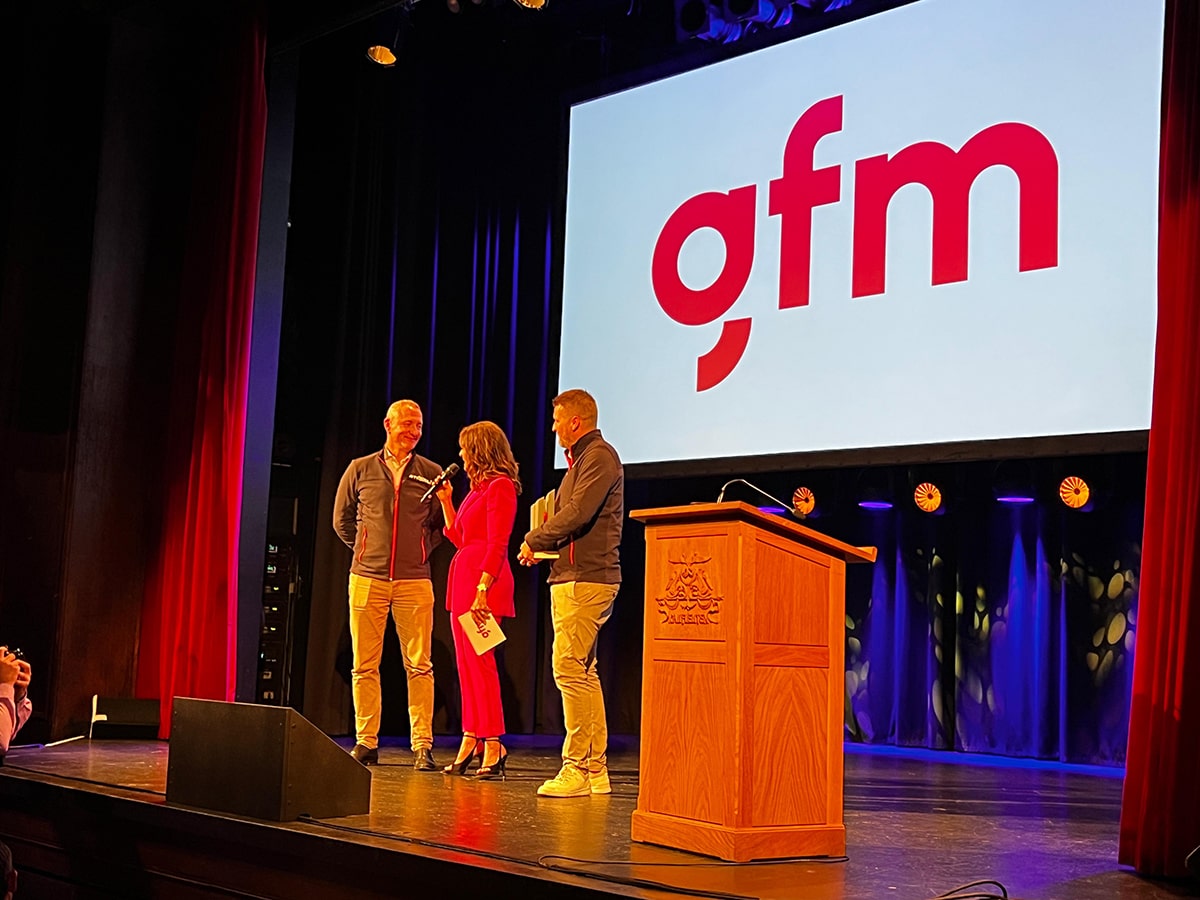
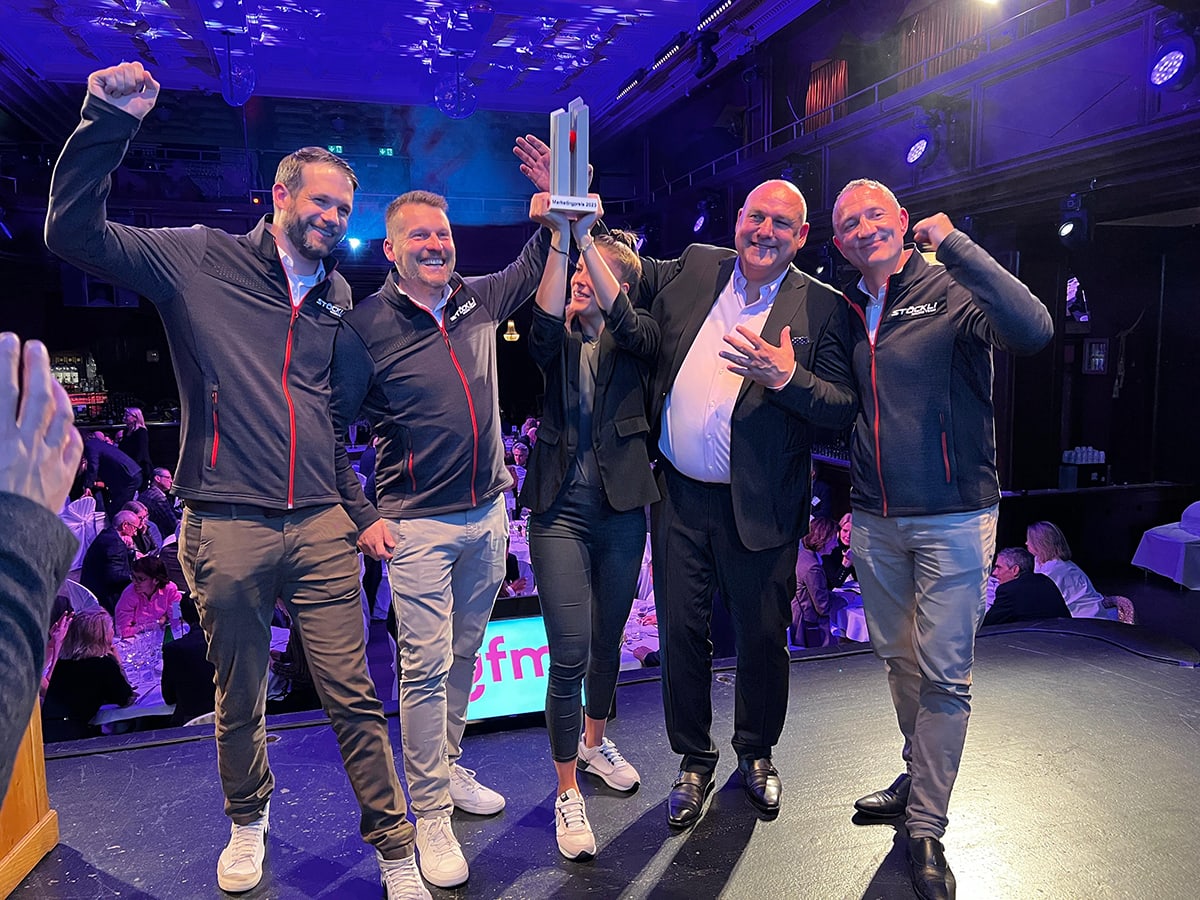
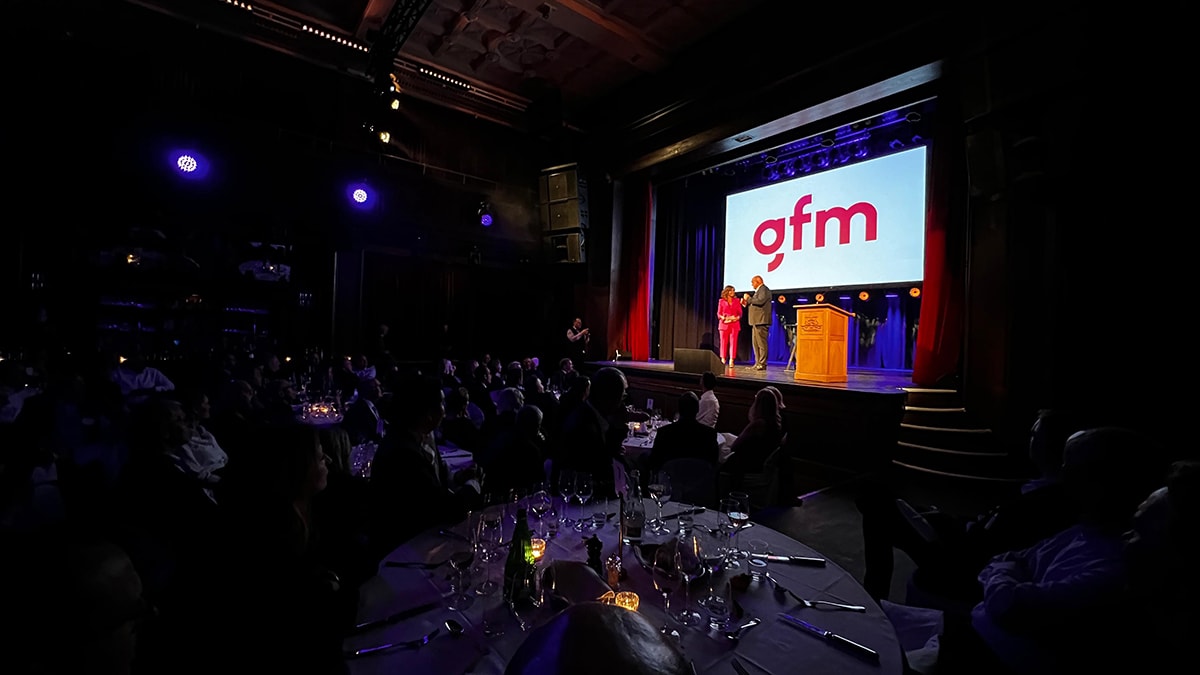
On Tuesday evening, Gfm presented its 2023 Marketing Award. This year’s winner is Stöckli Swiss Sports. CEO Marc Gläser and Chief Consumer Officer Christian Gut accepted the prestigious award at the Kaufleuten in Zurich.

(Images: m&k Werbewoche.ch/Beat Hürlimann)

Stöckli was able to convince the Gfm jury with its clear positioning and innovative products. in addition, Stöckli had always succeeded over the years in adapting to changing conditions and adapting the "go-to-market" strategy from direct-to-consumer D2C to B2B2C.

The winning Stöckli team with Marcus Schögel (second from right)

With the "Annual Award of the Foundation for Marketing in Corporate Management", Gfm annually honors a company that distinguishes itself through outstanding marketing achievements. For the Gfm Marketing Award, successful entrepreneurial results are evaluated, which can be attributed to a high degree to innovative marketing strategies and effective measures.

According to Marcus Schögel, President of the Board of Trustees, various points were decisive in Stöckli's selection as the 2023 Marketing Award winner. These included the unique (premium) positioning of the brand in an intensely competitive environment, the focus on performance benefits (technology to offer quality), the innovative services (ski subscriptions, etc.), and the adaptation of the "go-to-market" from D2C to B2B2C to changing conditions (post-Covid).

The jury also believes that Stöckli deserves this award because of its generally successful focus on market-oriented business management. Stöckli's international presence is particularly impressive, with 60 percent of its business abroad and 900 specialist dealers. This dynamic in channel management and the channel mixer is remarkable, Schögel emphasized in his laudatory speech.

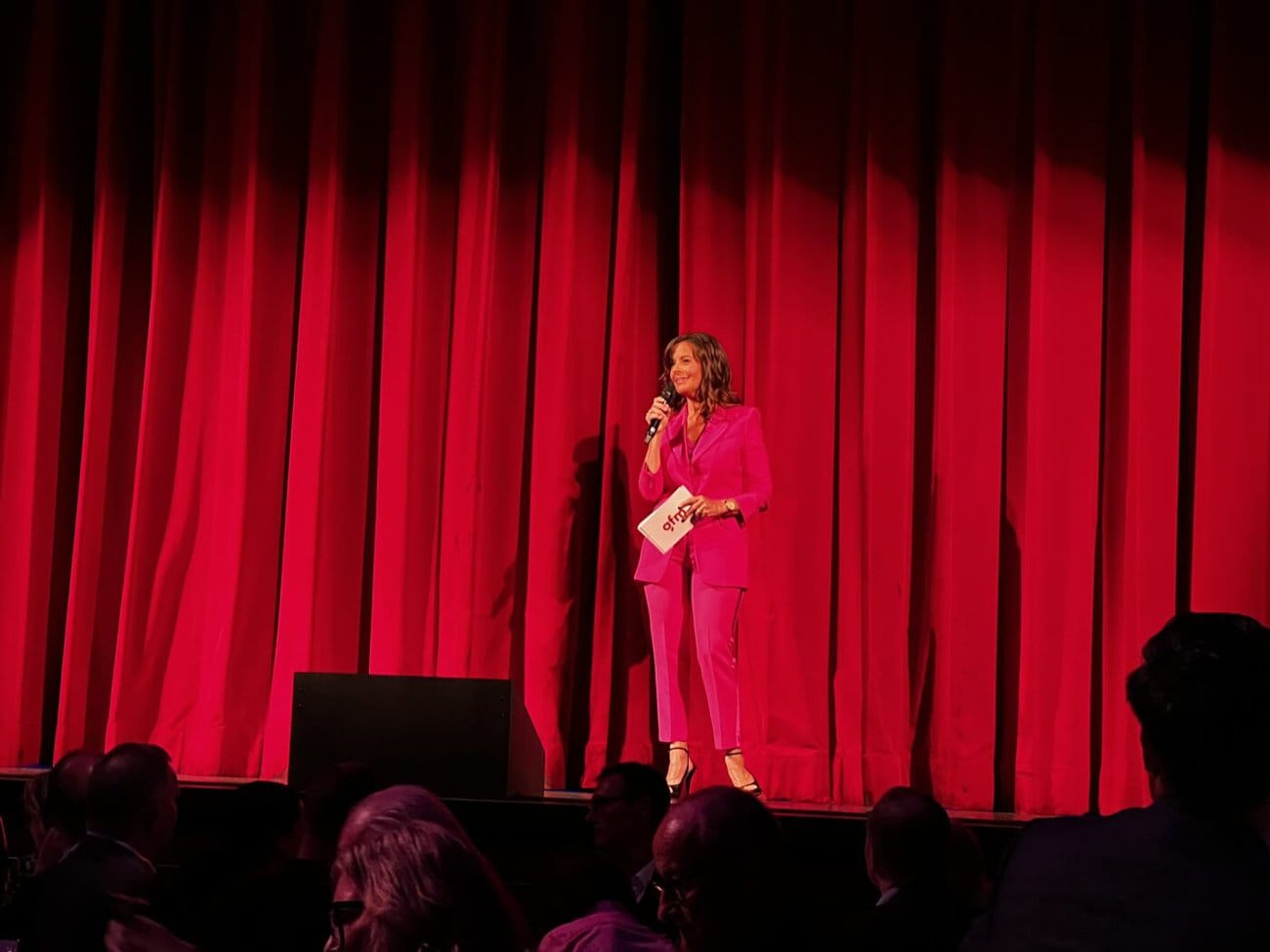
Moderated confidently and sympathetically through the evening: Sandra Studer

Stöckli also dared to experiment, such as entering the bicycle market, even if they sometimes failed. This willingness to try new things is seen as necessary today.

During the pandemic, the company adapted its distribution strategy and reached out to specialist distributors. This adaptability and the high quality and innovation in the products have impressed.

The laudatory speech goes on to emphasize that Switzerland and its companies, like Stöckli, can sustainably differentiate themselves by focusing on innovation, product quality, customer orientation and added value. Marketing also means understanding and responding to customer demand. This is the way to stay ahead in the markets and to stay one step ahead of the competition. Schögel in the original wording:

"Marketing doesn't just mean doing something good for the customer; above all, marketing is about tapping into the willingness to pay. We can generate added value from our access to Switzerland, quality, customer orientation, whereas others have to stretch themselves a long way to achieve this. And if we don't get involved and say, let's go further up into the markets, then at some point we'll have the problem that others will say, we can do that too."

Altitude millionaire promotes his heart destination Engelberg-Titlis

Engelberg’s most famous retired ski instructor, «Snowflake,» is officially promoting the Engelberg-Titlis destination this winter as part of the current winter campaign. Through charming short videos, he’s getting guests from all over the world excited about 2,000 meters of downhill skiing and an extra-long ski season.

When a 77-year-old with a waving neck hair, a white ski suit and a broad grin on his face bounces through the powder snow, everyone in Engelberg knows: that's Snowflake. "Skiing is like flying, it simply makes you happy" - anyone who watches and listens to Heinrich Giesker can't help but smile and would love to strap his skis under his feet right away.

But not only the emotions, also the facts speak for the protagonist of the current winter campaign of Engelberg-Titlis. The 77-year-old spends more than 150 days per winter season on average on the slopes and on the world-famous freeride runs of Engelberg. And because the destination offers one of the longest runs in the world, with 2,000 meters of altitude from the glacier to the valley, Snowflake has thus become an "altitude meter millionaire".

"With our campaign, we invite guests to spend the longest winter ski season in the Swiss Alps together with Snowflake," says Andres Lietha, director of Engelberg-Titlis Tourism. Five different video episodes will be broadcast on various online channels from the first ski days in October to the end of the season in May, as well as shown on the landing page. Each episode represents a different moment of happiness in the ski season. Ski star Marco Odermatt, ambassador of Titlis Bergbahnen, is also part of the campaign.

"Worry less - ski more - be happy" is the motto of Snowflake and the campaign, which also includes a raffle. Participants can become lucky millionaires themselves and win skiing vacations in Engelberg-Titlis. The planned start of the season in Engelberg-Titlis is November 4, 2023.


Responsible at Engelberg-Titlis Tourism: André Wolfensberger (idea & concept), Jana Fuchs, André Wolfensberger (creative direction), Jana Fuchs (graphics and animation). Camera, editing & sound: Henrik Andersson (Vast). Paid output on Youtube and Meta: Webrepublic.

"Your job like no other": Farner/Rod for Kapo Basel-Stadt

In a competitive job market, employers are vying for young talent by offering flexible work hours, remote work, and professional development opportunities, among other perks. In the recruitment campaign by Farner and Rod, the Basel-Stadt Cantonal Police shows that the police profession also has a lot to offer in terms of modern working conditions—and yet is not a job like any other.

In their varied daily work, police officers ensure that Basel is the livable city we all love. To do this, however, they urgently need reinforcements: the current recruitment campaign of the Basel-Stadt Cantonal Police aims to show young people the meaningfulness and attractiveness of the police profession and its role for the city.

At the same time, the campaign makes no secret of the obvious challenges of the profession, but addresses them openly with a wink: With scenes from everyday life on Basel's streets, the lively subjects put familiar buzzwords from everyday working life in the shade. For example, police officers also work 9-to-5 - simply at night. And they only know the daily grind from hearsay anyway.

The campaign was developed and implemented together with Rod Kommunikation under the direction of Farner Basel. It starts on Wednesday and can be seen and heard as DOOH, OOH, bus and streetcar advertising, on social media as well as Spotify and in-game ads in Basel-Stadt and the surrounding area.


Responsible at the cantonal police Basel-Stadt: Kim Feldmann (Head of Recruitment), Nu Thien Truc Ton (Human Resources Marketing), Charlotte Kabay Flück (Head of Human Resources and Organizational Development), Sandra Eberhard (Recruitment Specialist), Adrian Plachesi (Head of Communications). Conception, creation and realization: Farner Basel, Rod Communication. Photography: Noë Flum. Media: Freaky Swep. Recording studio: Oslo Studios.

Ewz: green heat is in our hands

Heating can be greener than you might think. As the colder days set in, Ewz would like to point out that Zurich’s eco-friendly heating networks are being continuously expanded.

The time for oil, coal and gas is definitely running out. Today, the energy future of tomorrow is being built so that the city of Zurich can heat without CO2 emissions. The new heating networks use lake water, wastewater and sewage water for this purpose. To do this, a few degrees of temperature are extracted and the water is returned intact. Using heat exchangers, entire neighborhoods can be heated in an environmentally friendly way.

The poster campaign designed by Ruf Lanz is intended to show that we have to take these generational projects into our own hands - and do it now. Photographer Mirjam Kluka implemented the concept for the fall wave with models Andreas and Katherina, who were the most liked in the spring wave. "The market research showed over 80 percent likeability. We are pleased about that and it speaks for the fact that this is well received by 200,000 households in the city of Zurich," says Katrin Rüesch from Ewz.

Alongside this, a quiz with fun questions conveys the topic of green warmth in a playful way. The quiz is activated on hanging boxes in buses and streetcars, on Facebook and Instagram. It was developed with Brame's tool and brings an average of over 300 QR code scanners per week to join in and smile along.


Responsible at Ewz: Katrin Rüesch (Project Management), Pascal Schaub (Head of Marketing). Responsible at Visualeyes: Mirjam Kluka (photography), Katrin Lohmann (production). Responsible at Detail AG: Natalie Näpflin, Sarah Ochsner (composing, DTP), Eva Stocker, Phil Fuerst (production management).

Process makes the Switch brand fit for the future

The new brand identity is intended to bring the foundation’s refined positioning to life and, in the long term, strengthen Switch’s role as a digital pioneer for Swiss universities on the path to a secure digital future.

Switch was established in 1987 as a foundation under private law by the federal government and the then eight university cantons. The common goal: to ensure the "effective use of modern methods of teleinformatics in the service of teaching and research in Switzerland". In addition to building a network infrastructure for teaching and research, Switch has also been responsible for allocating domains in Switzerland and Liechtenstein since the early days of the Internet.

Today, around one million people and organizations throughout Switzerland use Switch's digital services. The user base includes all universities, their employees, students and alumni. It also includes university-related organizations and Switzerland as a business location.

In recent years, the requirements for the brand have changed significantly. For example, not only does security in the digital space play an increasingly important role, but also digital identities or the development of cloud services for the special needs of universities.

In order to meet all requirements, the brand was defined in a more approachable, fresh and activating way. The basis is a lively brand design that can be easily and specifically expanded with images and other graphic elements. A comprehensive brand portal enables Switch to publish content easily and in line with the brand. For the entire rebranding, Switch relied on the Zurich agency Process.

In the course of the rebranding, the entire product portfolio was also restructured and a new nomenclature introduced. This is intended to provide potential customers with faster and more effective access to the range of services.

"Due to increasing digitalization, our world is changing faster and faster. As a pioneer, Switch wants to actively lead Swiss universities into a secure digital future. We must also live up to this aspiration with our new brand at all levels," says Tereza Karagülle, Head of Digital Communication and Events at Switch.


Responsible at Switch: Tereza Karagülle (Head of Digital Communication and Events), Yves Ettounsi (Product Owner), Claudia Lienert (Leads Community Management, Member of the Executive Board), Tom Kleiber (Managing Director). Responsible at Process: Markus Hammer (Creative Director, overall responsibility), Antonia Frind, Simon Wüthrich (Consulting), Bruno Manser (Digital Director), Clau Isenring (Text), Pascal Hegemann, Thomas Rütti, Timon Gschwind (Design) and Wanda Honegger (Digital Design).

get_footer();