MetaDesign creates a brand for the future of gastronomy

Although the gastronomic offer in Zurich is diverse and convincing, the number of applications for training in the kitchen or service is constantly decreasing. Gastro Stadt Zürich has responded by launching a new, certified training model. MetaDesign has developed the brand experience for this.

Gastro Stadt Zürich is turning the classic recipe for an apprenticeship in cooking or service on its head: aspiring chefs and hosts now take a two- or three-year journey through the gastronomy industry, stopping off at various renowned restaurants. They discover the many facets of life in the kitchen or in service, meet kitchen gods, chefs de service, baristas and sommeliers and learn important skills. From day one, they are part of a community that continues to grow during their training. At the same time, the apprentices lay the foundations for a national or international career with further training opportunities at specialist schools in the catering and hotel industry.

MetaDesign developed the entire brand for this model within six weeks - from the name to the visual identity to the website. The name "Roast & Host" is intended to convey the versatile and unifying character of the training program. The multi-colored visual concept reflects the flexible, modular nature of the training, which the students can help to determine to a certain extent. The intuitive look and feel of the website and the easily digestible communication are intended to symbolize the training. The associated social media campaign for Roast & Host is being developed by Bagels of Berkeley and is due to be launched in the summer. A teaser movie is already available to see on Instagram.

Suan for Sens eRecycling: Be a Vape Recycler

Disposable vapes are often carelessly thrown away, even though valuable raw materials could be recovered through recycling. Suan’s «Be a Vape Recycler» campaign for the Sens eRecycling Foundation aims to educate the public and encourage people to dispose of empty e-cigarettes properly.

The cross-media campaign by Sens eRecycling and Suan aims to raise awareness for the environmentally friendly disposal of e-cigarettes, thereby making an active contribution to environmental protection.

The environmental problem of disposable vapes

"E-cigarettes contain lithium batteries, which contain both valuable raw materials and harmful substances. To ensure that the raw materials can be recovered and no harmful substances are released into the environment, empty e-cigarettes should be recycled. Importers and retailers in Switzerland are legally obliged to take back all types of used e-cigarettes," says the website Vape-recycler.ch.

A Study from Great Britain suggests that disposable vapes are also a significant environmental problem in this country: In the UK, 50 percent of vapes end up in the trash and are not recycled. This could be used to produce 1,200 electric car engines a year, and such a return rate would even be desirable for Switzerland, because according to Sabrina Bjöörn from Sens eRecycling, almost no vapes ended up in recycling here as of 2023. The assumption was a negligible 5 percent.

As an initial communication measure, Sens eRecycling and Suan 2023 developed a recycling box for retail outlets and the website Vape-recycler.ch. This provides comprehensive information to make the topic tangible. These initial measures have reportedly increased the collection rate to 20 percent. The long-term goal is to achieve at least 50 percent.

Campaign expanded this year

To achieve this goal, the campaign for 2024 was scaled up and a cross-media design concept was developed to appeal to the target group of 18- to 30-year-old vape smokers at their leisure activities or in stores.
Sens eRecycling provides vape recycling bags and boxes designed by Suan at points of sale of e-cigarettes, making it easy to collect and return used vapes. The full bags can be deposited in the letterbox. There they are collected by the post office and sent for recycling.

A newly developed collection concept includes the placement of the cardboard boxes at festivals, bars and clubs, where they are prominently displayed on the counters.

A large sculptural recycling box in the shape of a vape as an eye-catcher was developed by the company Layercake, the surface was designed by Suan. It is currently in the test phase at points of sale.

With brightly colored stickers, stores and kiosks can actively declare themselves as vape recyclers and thus further raise awareness of environmentally friendly behavior. A comprehensive media kit will be made available to recycling collection points, vRB partners, recyclers and other interested parties to effectively support the implementation and dissemination of the campaign content. In a next step, eye-catching stickers will also be placed on public waste garbage cans to remind people that e-cigarettes do not belong in the bin.

Animated key visuals convey facts

The social media campaign developed by Suan spreads the animated key visual in collaboration with Dreifive. Selected facts from the website are used to illustrate the urgency of the problem in a playful way. The communication also refers to the Vape Recycling Bag and the website.

DOOH measures at highly frequented locations in Switzerland are intended to provide additional visibility and spread the message far and wide. In mid-July, the e-boards and e-panels at Zurich main station lit up in green. According to Suan, the key visuals reached numerous commuters and travelers, and SRF reported on the campaign.

ChatGPT & Co. are less adaptive than previously assumed

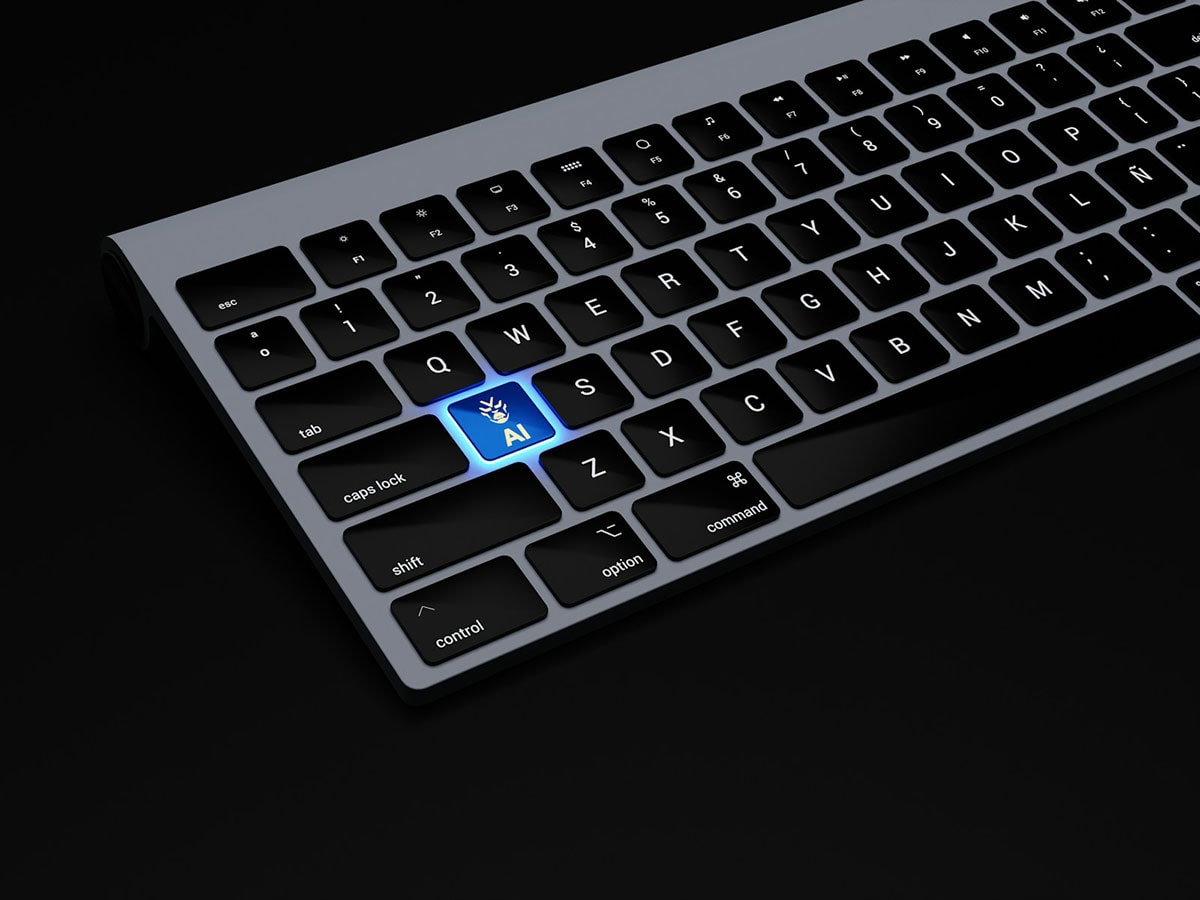
AI models are less capable of learning on their own than previously thought, according to a study by the Technical University of Darmstadt. The study also found no evidence that large language models develop «intelligent» behavior or the ability to think complexly.

(Iconic image: Unsplash.com)

AI models such as ChatGPT, Gemini and Co. are less capable of learning independently than previously assumed. This is the conclusion of a study led by the Technical University (TU) of Darmstadt. As the TU writes, no evidence was found that large language models (LLMs) were beginning to develop general "intelligent" behavior

The research focuses on unforeseen and sudden leaps in the performance of language models, so-called "emergent capabilities". The models studied became more powerful with increasing size and the amount of training data, as the TU writes. The models can solve more language-based tasks such as recognizing fake news or drawing logical conclusions as they scale up.

This circumstance raised hopes and concerns, it is said. On the one hand, it was hoped that further scaling would make the models even better; on the other hand, there was concern that these capabilities could become dangerous. This led to the introduction of AI laws around the world.

LLMs still a long way from human skills

However, the study states that there is no evidence for this presumed development of differentiated thinking in the models. The LLMs can follow "relatively simple instructions", but they are still a long way from the skills of humans.

"However, our results do not mean that AI is not a threat at all," emphasizes Iryna Gurevych, professor at TU Darmstadt and co-leader of the study. "Rather, we show that the alleged emergence of complex thinking abilities associated with certain threats is not supported by evidence and that we can control the learning process of LLMs well after all. Therefore, future research should focus on other risks posed by the models, such as their potential to be used to generate fake news."

It is probably a mistake to rely on an AI model to interpret and execute complex tasks without help, says Gurevych. Users should explicitly state what the systems should do and, if possible, give examples. Confabulation, the tendency of these models to produce plausible-sounding but incorrect results, is likely to persist. (Alexandra Hüsler/jor)


This article first appeared in Netzwoche.

Musk's AI chatbot gets the reins

Elon Musk's AI chatbot «Grok» is being reined in after it initially generated shocking images of well-known figures. As a result, as of Friday, it was suddenly no longer possible to use text commands to have Grok generate images showing people using drugs or handling weapons.

(Image: Unsplash.com)

Until then, there seemed to be hardly any restrictions in terms of content. Other offers for generating images from text specifications, such as Dall-E from ChatGPT inventor OpenAI or Imagen from Google, have guard rails that are designed to prevent this.

Musk, on the other hand, is known for his aversion to restrictions, which he describes as censorship. People should be able to have "a bit of fun" with the software, he wrote on Thursday. There have been no further comments from xAI so far.

Technology from German start-up

The actual technology used to generate the images does not come from xAI, but from the German start-up Black Forrest Labs. Musk's company relies on its "Flux.1" AI model. Musk wrote that his own software for generating images is being developed and will take a few more months.

The images generated by Grok sometimes have a photorealistic quality, but are often exaggerated like caricatures. Particularly ahead of the presidential election in the USA in November, there is great fear of AI forgeries that could influence public opinion. Many programs therefore avoid generating images with real people.

Companies fear for their reputation on X

The same applies to copyrighted characters such as Disney's Mickey Mouse, whose appearance in AI-generated images could have legal consequences. This could also increase the skepticism of major advertising customers towards the platform. Many of them already fear for the reputation of their brands and have withdrawn ads from X.

Musk recently sued several companies and an industry organization over this. He accuses them of a coordinated campaign to keep advertising dollars away from his platform. (SDA/swi)

Fresh design and new features for "NZZ Bellevue"

The NZZ’s lifestyle portal, «NZZ Bellevue,» has a new look. With the tagline «Read about the good life,» it aims to appeal to a style-conscious audience interested in food, fashion, and travel.

(Mockup: NZZ)

Eight years ago, the lifestyle portal NZZ Bellevue launched. The original design was developed by the agency Edenspiekermann, which is now also responsible for the refresh. "The new design remains true to our classic look while optimizing the user experience, the information architecture and the use of images," says Kerstin Netsch, Editor-in-Chief of NZZ Bellevue and "Z".

The visually refreshed design is accompanied by new features that are intended to improve the user experience and are particularly evident in the recipe columns. In the "Cooking and enjoyment" section, there are now Recipes with nutritional information and a quantity calculator. Recipes can also be rated and collected in a watch list. In the "Style and design", "Beauty and wellness" and "Travel and discovery" sections, readers can find suggestions, recommendations and insights into trends and their backgrounds. The homepage and selected pieces can now be designed in even more versatile ways, with highlight colors, theme clusters, sliders and generous image galleries.

In addition, the Newsletter "Concierge" which provides tips for excursions, restaurants and other things to enrich everyday life. The first issue will be published on Wednesday.

Nikoletta Tamas becomes Chief People Officer of Zattoo

The TV streaming provider Zattoo has appointed Dr. Nikoletta Tamas as its new Chief People Officer (CPO). She brings extensive expertise in human resources to the role.

(Image: Zattoo/Nadine Stenzel)

Nikoletta Tamas has many years of experience in leading positions at international companies, including as VP People & Culture at Patient21 and as Chief People Officer at DCMN, Zattoo writes in a press release. Her areas of expertise include change management, talent management, learning & development, organizational development and employment law.

In her new role as CPO and member of the management team at Zattoo, Tamas will assume responsibility for the development and implementation of the entire HR strategy. She will lead a 20-strong team divided into five areas: Talent Acquisition, People Operations, Learning & Development, Agile Practice and Workplace & Onsite IT.

Livesystems increases awareness of BKW among the young target group

The energy and infrastructure company BKW aims to specifically promote the next generation of professionals in system-critical occupations and is relying on DOOH advertising with Livesystems to do so. Together, they implemented a successful «Energy Transition Careers» campaign.

Because BKW is still little known among 14 to 25-year-olds, the company needed to be positioned as an attractive employer among this target group. A DOOH campaign was therefore implemented in German-speaking and French-speaking Switzerland, which used appealing imagery and modern, concise commercials to lead people to the website and generate enthusiasm for the company.

The "Energiewendeberufe" campaign ran over a period of 28 days in Public Transport and City On Air. According to the information provided, over 33 million gross contacts and 2.6 million net contacts were generated. This corresponds to a net reach of 38 percent. BKW's attractiveness as an employer was also increased by 8 percent in German-speaking Switzerland and 5 percent in French-speaking Switzerland.

"Livesystems implemented our very first DOOH campaign in the area of BKW apprenticeships perfectly," says Mariel Nussbaum, responsible for Employer Branding at BKW. "The campaign and the subsequent market research showed the high impact of the channels and the advertising receptiveness of our target groups. The goal of creating broad awareness exceeded our expectations."

Bitkom study: German economy can't do metaverse

According to a survey by the digital industry association Bitkom, German companies believe the domestic economy is lagging behind when it comes to the metaverse.

(Symbol image: Pixabay.com)

According to a survey by the digital association Bitkom, Germany's companies see the domestic economy as lagging behind when it comes to metaverse. 61% consider it to be lagging behind in international comparison, 29% among the stragglers and only 1% at least in the middle of the field, according to the survey. And practically no company considers Germany to be in the top group or a global leader.

"Many interesting applications"

"The metaverse is still at a very early stage. This makes it all the more important that Germany and Europe keep up with the development and application of the technology. The metaverse is not a parallel world, but a virtual extension of the real world. There are many interesting practical applications, especially in the commercial and industrial sectors," Bitkom President Ralf Wintergerst is convinced.

German companies consider the USA to be the leading nation (33%). This is followed by China (13 percent), South Korea (seven percent) and Japan (five percent). Around a fifth (21%) do not yet consider any nation to be the leader, while 14% do not want to or cannot specify, according to the latest Bitkom survey. (pte/swi)

Sales promotion and gamification: Nueva launches "Promologic"

The Zurich-based agency Nueva has launched «Promologic.» The software and service solution is aimed at marketers who want to explore new avenues in point-of-sale (POS) promotions, sweepstakes, or gamification.

Developed in Zurich, the Promologic" solution is designed to help companies in the retail sector optimize their sales promotion strategies. According to information provided, various on-pack promotions, competitions and even live events have already been successfully implemented with the solution.

Behind the idea is the team at Zurich-based digital agency Nueva, which has been running successful promotions for various companies for years and has now condensed this expertise into a comprehensive technical solution. Promologic is intended to reduce financial and personnel costs many times over. The software also enables the creation and administration of code promotions and prize portals in individual corporate design. In addition, performance can be monitored through automated profit calculations and data analyses.

Psychological effect at the POS

Digital promotions and competitions on products use various psychological principles to encourage target groups to participate. The feeling of exclusivity and the chance to win something motivates active participation. In addition, interaction with the brand creates an emotional bond and strengthens brand loyalty. The use of prize codes or other entry mechanisms on products also increases the visibility of the product and can help to positively influence the purchase decision at the POS. To this end, Promologic creates customized promotions such as lotteries or collection campaigns, competitions or games of chance and also uses existing partners such as printers and CRM systems where necessary.

Triggered by attractive competition, customers are often willing to provide their data to advertisers. With this information, companies can better respond to their needs and preferences and create personalized offers. This is where Promologic relies on automated communication: personalized emails can be used to quickly and efficiently send offers and information directly to individual customers.

Use cases from Feldschlösschen and Focuswater

The current campaign "Collect & Win " from Focuswater was implemented with Promologic and was reportedly able to motivate one percent of the Swiss population to take part in the competition within just a few weeks.

And Feldschlösschen uses the software for the Current "Durstwehr" campaign and has used it to implement the successful "Grill & Win" campaigns in the past.

"Operation Libero" celebrates ten years of existence

Young academics once founded Operation Libero with the goal of fending off attacks on liberal democracy. Initially dismissed as a «flash in the pan,» the online movement is celebrating its tenth anniversary on Wednesday.

(Pictures: zVg. Operation Libero)

"Many people thought it wouldn't work, that it was a flash in the pan and would disappear after the initial hype," said Silvan Gisler, board and founding member, at a media conference in Bern. Since then, the campaign organization, which is financed by small donations, has made a name for itself in referendum campaigns and even elections.

The non-partisan movement last had 1175 members. It has had over 30,000 donors since it was founded in 2014, as an Operation Libero spokesperson told the Keystone-SDA news agency on request.

The movement was founded after the SVP's immigration initiative was rejected, when around fifty like-minded people, many of them academics and members of the think tank Foraus, came together. In its self-portrayal, the organization aims to support progressive forces for an open and liberal Switzerland.

Commitment to "marriage for all"

For example, it successfully fought against the SVP enforcement initiative and a reduction in public services through the failed "No Billag" initiative. She helped to bring about the breakthrough of "marriage for all" and easier naturalization.

The Liberas and Liberos are more convinced than ever of the necessity of their existence. "If Operation Libero didn't exist, it would have to be invented today," Co-President Stefan Manser-Egli was quoted as saying. It has been a long time since so many strong forces in Switzerland and Europe have been shaking up liberal democracy.

"Sometimes we want to annoy"

The movement cited examples of this, such as the SVP's isolationist initiatives, the initiative to halve broadcasting fees and the repeated criticism of the European Convention on Human Rights (ECHR) from the right.

Operation Libero is currently seeking to counteract this with two popular initiatives: the Europe Initiative for a strong Switzerland in Europe and the further development of Swiss-EU relations, and the Democracy Initiative for a looser naturalization law.

"We want to remain unpleasant, step on the toes of established political forces and sometimes even annoy them," the movement announced. "Wherever liberal achievements are being put at risk and wherever right-wing populists are being drunk." On Saturday, there will be a celebration at Ballenberg BE "so that Switzerland does not become an open-air museum."

To mark the anniversary, the political movement presented a large birthday cake on the Bundesplatz and ten theses on Switzerland, including "Neutrality is a myth", "Switzerland of 11 million will be fine" and "Switzerland still has its best days ahead of it". "In 10 years' time, we'll see if we were right," it said. (SDA/swi)

SRG extends cooperation agreement with Presse TV and Alphavision until 2026

SRG has extended its cooperation agreement with Presse TV and Alphavision through the end of 2026. This will allow programs to continue to be broadcast during SRF’s programming slots. The DETEC has approved this agreement.

(Image: zVg. SRG SSR)

Launched in 1995, the private television project Presse TV AG enables media companies to broadcast their own formats in SRF program windows. The current shareholders include the media companies Neue Zürcher Zeitung, Ringier Medien Schweiz, Tamedia and Somedia. Programs are offered in the areas of information, culture and business. Responsibility for the content of programs such as "Standpunkte" or "NZZ Format" lies with the respective media companies.

In addition to Presse TV, SRG is also extending its collaboration with Alphavision, a TV and video production company based in Wangen bei Olten. It has editorial and corporate responsibility for the program "Fenster zum Sonntag", which will now be in SRF's program windows for another two years. ERF Medien in Pfäffikon ZH is co-producer of "Fenster zum Sonntag".

SRG is pleased about the extension of the cooperation agreement with the private media, as stated in a press release. This will contribute to "strengthening Switzerland as a media center".

Thorsten Haeser becomes Chief Business Officer of Sunrise

Thorsten Haeser will join Sunrise on September 1 as Chief Business Officer and will become a member of the Executive Board. The previous holder of the position, Robert Redeleanu, is moving to the parent company, Liberty Global.

(Image: zVg. Sunrise)

Thorsten Haeser will take over the role of Chief Business Officer at Sunrise on September 1 from Robert Redeleanu, who is moving to Sunrise's parent company Liberty Global as Managing Director Digital Infrastructures. In his new role, Haeser will also become a member of the Sunrise Executive Board, as detailed in a press release. He brings with him extensive experience in the development and expansion of an enterprise customer business. Most recently, he was Chief Commercial Officer at the FinTech company Nets/Concardis, and before that at Hapag-Lloyd and Versatel.

"Thorsten Haeser knows the needs of companies of all sizes when it comes to digitizing their processes and introducing new technology products and is also very familiar with the general conditions of the Swiss economy. I am convinced that he is the right person to further expand our expertise in the ICT segment and also to further strengthen our market position in the entire B2B segment," says André Krause, CEO of Sunrise, about the new appointment.

In the press release, Krause also acknowledges the achievements of Robert Redeleanu. He only joined Sunrise as Chief Business Officer in April 2022. Even before Redeleanu joined Sunrise, he managed various Eastern European subsidiaries and the entire Eastern Europe region of the Liberty Global Group for almost ten years. He is now climbing the career ladder within the Group. (Marc Landis/NetzKI Bot/yzu)


This article first appeared in Netzwoche.

get_footer();