European Football Championship: How the Swiss perceived the sponsorship

During the European Championship, even many people who aren’t usually very interested in soccer caught the soccer fever. In Switzerland, around 1.2 million people watched the European Championship final—which, naturally, makes it a popular advertising platform. Yougov Switzerland’s ongoing brand tracking shows just how strongly the advertising campaigns were noticed.

Excerpt from the SRF broadcast: As the match between Croatia and Italy goes into extra time, the sponsors in the background, such as Engelbert Strauss, Lidl and AliExpress, also receive additional attention. (Image: SRF)

Numerous companies and brands supported the European Championship in Germany. For example, Engelbert Strauss, BYD, Adidas, Coca-Cola Zero Sugar, Lidl and AliExpress were among the official sponsors of UEFA Euro 2024, including brands that are measured in YouGov Switzerland's continuous brand tracking, the Swiss Brand Observer.

Every week, YouGov surveys a sample of around 250 people who are representative of the Swiss population aged 15-79. Since April 2024, interviewees have also been asked whether they have noticed sponsorship activities by various brands in the past seven days. This continuous measurement covers the time before (zero measurement), after (post measurement) and during the European Championship (interim measurement) perfectly.

National team main sponsor UBS most strongly perceived

The analysis from the Swiss Brand Observer includes official UEFA sponsors such as AliExpress, Lidl, Coca Cola Zero and Swissquote, as well as other national team and TV sponsors such as UBS and Ochsner Sport. Even though UBS was not visible on the banners on the sidelines, the sponsorship awareness of UBS was greater than that of other brands. Lidl, Swissquote, AliExpress and Coca Cola Zero were among the official advertising partners - but were all less visible. UBS was less present on the match days themselves - but the big bank was depicted twice on the training jerseys - clearly legible above the chest, not to mention as the only sponsor. Of course, the European Football Championship was not the only event at which the corresponding brands were visible during the same period. UBS also sponsored the Kids Cup in Lucerne at the end of June during the European Championships.

Figure 2 As the new main sponsor of the Swiss national team from July 2024, UBS will have a prominent place on the jerseys - at least on the training jerseys - and twice on the chest. (Image: Nau.ch)

AliExpress with strong increase in sponsorship awareness

Even though UBS recorded the strongest absolute sponsorship perception in Switzerland, there were other brands that had an even stronger effect in terms of the relative difference in brand perception during this period. The average sponsorship awareness of Chinese online retailer AliExpress between April and mid-June 2024 averaged 0.2% - practically zero. During the European Championships, sponsorship awareness of the brand then averaged 6%, which corresponds to a 30-fold increase. AliExpress reached its peak in calendar weeks 26 and 27 - in the middle of the European Championships. During the European Championships, supported awareness amounted to around 60% and was therefore not significantly different from before the tournament. This means that people who were already familiar with the brand suddenly became aware of the sponsorship. Although awareness of AliExpress at the end of July reached its highest level since measurements began in September 2021, it remains to be seen whether an actual change in awareness has occurred. According to YouGov, the proportion of current customers has not yet changed significantly.

Four times greater brand awareness for Lidl

However, brands that are still better known in this country also showed a significant and clear increase in brand awareness. This applies in particular to Lidl. In the run-up to the tournament, just under 3% registered the discounter's sponsorship. In the last two weeks of the tournament, this figure rose to 10%. The peak value was thus four times higher than the average sponsorship perception between April and mid-June.


This is how the sponsorship of various brands around the European Championships was perceived. (Graphic: YouGov Switzerland)

However, Lidl's telecommunications brand did not benefit from a spill-over effect. The sponsorship perception of Lidl Connect remained at a maximum noise level of 2% during the European Championships.

No effect on image facets

According to YouGov, the increased perception of sponsorship among the brands observed did not lead to any significant changes in image. This also applies to image facets such as corporate social responsibility, in which the efforts of sponsorship or brand appearances at events and other occasions are likely to manifest themselves the most. According to YouGov, sponsorship was simply too short-lived for this. Because the image of brands is constant, it takes patience and a lot of time to change it - especially for positive changes in terms of image shaping.

However, even negative influences in the form of negative reporting, for example, do not necessarily lead directly to a change in image. Repeated scandals that stick and jeopardize trust in the brand's performance are particularly dangerous. YouGov cites Volkswagen's emissions scandal in 2015 as an example: this was not quite as problematic for the brand itself, as ecology is not a core brand value of VW or is not something that people associate with VW per se.

Sponsoring as a drop in the ocean?

The data from the Swiss Brand Observer shows that one-off or stand-alone sponsorships only have a short-term impact on brand perception. It is important that brands know what they stand for and what their core brand values are - and then communicate these confidently and actively to the outside world. Feedback from the target group is also important in order to control perception. The success and strength of a campaign's impact on brand perception depends on this and the appropriate fit of the sponsorship.

In order to bring about long-term changes, sponsorships of major events such as the European Championship should be embedded in campaigns lasting several months and their success should be continuously tracked in order to consolidate and strengthen effects and enable targeted follow-up. This helps to ensure that the success of the sponsorship and the momentum generated for the European Championship sponsors does not simply fizzle out afterwards and that the commitment pays off for the brand in the medium and long term.


Information on the Swiss Brand Observer

  • Type of study: continuous brand tracking (365 days per year)
  • Survey excerpt/time for this article: April 1 to July 28, 2024
  • Population: Swiss resident population aged 15 to 79 years
  • Sample size: approx. n = 4,000
  • Research method: online interviews
  • Quotation/weighting: interlocked by age, gender and language region
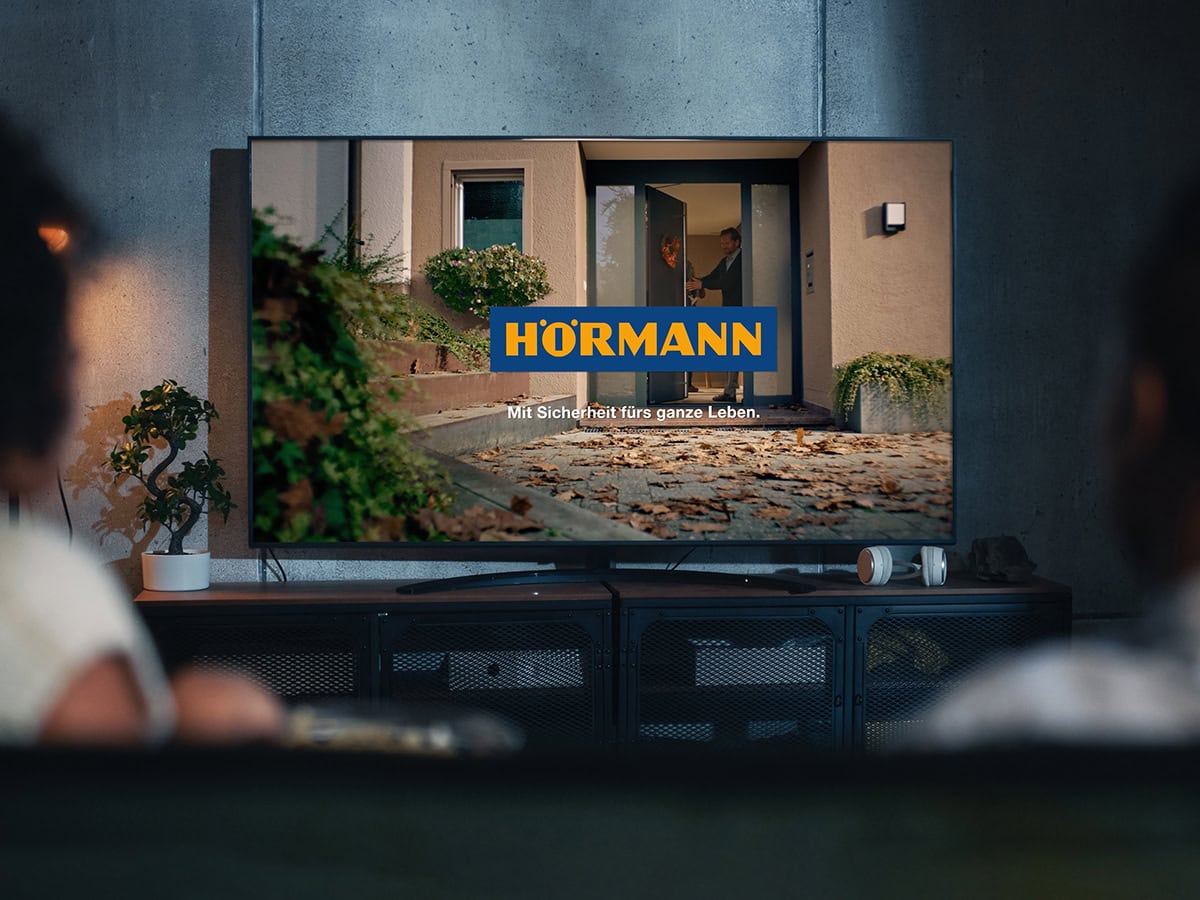
Hörmann Switzerland and Fachwerk bring security into the living room

The TV campaign by Fachwerk Advertising for Hörmann Switzerland focuses on emotional moments involving front doors and garage doors, presenting them as reliable companions in everyday life.

With the current TV campaign, Hörmann Switzerland wants to bring the topic of security directly into the living rooms of Swiss homeowners. In emotional everyday situations, the reliability and durability of Hörmann products are presented in an appealing way to anchor the brand deep in the hearts of the target group.

The TV commercials show scenes of a protagonist over the years around his front door and garage door - Hörmann's central product categories. These sequences emphasize the importance of security and reliability in everyday life and position Hörmann as the trustworthy partner for the protection of one's own home. There is a strong focus on the visibility of the products in the commercials.

The campaign has been running since Monday until October 13 on various SRF channels throughout Switzerland and is supported by a broad cross-media online presence. A targeted ten-second placement directly before the Tagesschau on SRF1 in September further increases the impact.


Responsible at Hörmann: Andreas Breschan (CEO). Responsible at Fachwerk Advertising: Nektarios Thanasis (CEO & Owner), Damian Wolfisberg (COO & Senior Consultant), Tino Heuter (Creative Director), Beat Egger (Text), Kalid Ahbri (Motion Design). Responsible for Soha Film (production): Benjamin Kempf-Siemens (Director), Jan Mettler (DoP), Monika Schmid (Styling), Reto Trösch (Set Design), Anja Siemens (Editor), Fabian Kimoto (Grading), DubDub (Sound Studio), Rudi Haller (Executive Producer).

TBWA\Zurich and Emmi push to continue

TBWA\Zurich is repositioning Emmi Energy Milk High Protein as a beverage for those who get more out of exercise than just muscle.

There are many reasons why people exercise—physical fitness is just one of them. Exercise is an outlet for emotions, promotes a sense of balance, and boosts strength and endurance in everyday life.

As part of the current campaign, TBWA\Zurich is therefore deliberately positioning the protein drink outside the gym as well: for everyone who uses exercise to stay healthy, balanced, and happy. The ads are designed to convey that Emmi Energy Milk provides the perfect protein boost—no matter why the target audience is active—and to encourage them to keep going.

Together with director Ivan Boljat, TBWA\Zurich developed a 25-second TV commercial aimed at both casual athletes and professionals, showing that sports are much more than just exercise. Innovative transitions and exciting shifts in pace are designed to captivate viewers as they move from scene to scene.

Short versions of the TV commercial were also adapted for use in digital out-of-home (DOOH), online, and social media. Key visuals and product shots for social media, print, and point-of-sale (POS) placements round out the campaign.


Contact at Emmi Switzerland: Andrea Banz (Head of Marketing, Switzerland), Oliver Müller (Brand Management Lead, Fresh), Luisa Odermatt (Senior Brand Manager). Contact at TBWA\Zurich: Manuel Wenzel, Angelo Sciullo, Sarah Rüegger, Stéphanie Seematter (Creative Team); Claudia Sigg, Sina Gelin (Consultants); Toni Rubera (Image Editing and DTP); Fabrice Studer (Motion Design). Person in charge at Markenfilm Switzerland (Production): Florian Studer, Joel Scheidegger (Executive Producer), Ivan Boljat (Director), Lukas Mäder (Photographer), Salome Raynal (Production Coordinator), Aleksandar Kosutić (DOP), Olaf Gardeler (VFX).

Forward wins media pitch from Eastern Switzerland University of Applied Sciences OST

Forward secured the media account for OST. The tender covered services in the areas of media consulting, planning, and buying for both online and offline campaigns.

The mandate required comprehensive skills in strategic media planning, technological expertise, innovative ability and a high level of process reliability from the University of Applied Sciences of Eastern Switzerland. The Forward agency impressed the OST assessment committee with its well-founded approach and structured, innovative implementation proposals.

"With Forward, we have chosen a partner that not only meets our high standards of media expertise, but also impresses us with its data-driven and innovative approach," says OST Head of Marketing Carlos Friedrich.

Forward will take over the planning and implementation of all OST's media activities from September 2024. The focus will be on increasing the effectiveness and efficiency of media investments.

Health insurance companies should continue to be able to use premiums for advertising

Swiss health insurance companies should continue to be able to use premium funds for advertising. That is the position of the relevant Council of States committee.

(Symbolic image: Keystone/Christian Beutler)

As the parliamentary services announced on Tuesday, the Council of States' Social Security and Health Committee (SGK-S) believes that advertising is also necessary in a system of regulated competition and offers added value. The committee also emphasizes that advertising costs would only amount to around 0.2 percent of premiums.

By 7 votes to 4 with one abstention, the Council of States Committee rejected the decision of the National Council's sister committee to follow up on a parliamentary initiative. It was put forward by former National Councillor Baptiste Hurni (SP/NE), who wants to prevent the use of premium money for health insurance advertising.

Following the decision of the SGK-S, the proposal will now return to the responsible National Council committee. The National Council's Social Security and Health Committee (SGK-N) approved it by a wafer-thin margin in February. The decision was made with 12 votes to 12 and a casting vote by committee president Barbara Gysi (SP/SG).

In February, the majority of the SGK-N pointed out that basic insurance is compulsory and that advertising serves neither prevention nor health promotion and therefore brings no added value. Therefore, the corresponding expenditure should not be financed by premiums. The current practice is "no longer acceptable" in view of the continuous rise in premiums.

Today, advertising for compulsory health insurance can also be booked by insurers as an administrative expense and is therefore financed via the premiums of the insured persons. In 2022, these advertising costs amounted to just under CHF 73 million, as the SGK-N wrote at the beginning of the year. (SDA)

Digitalization exacerbates uncertainties for cultural professionals

Digitalization could further worsen the legal and social situation of cultural workers. According to a new report, copyright law, protection of personal rights, and social insurance in Switzerland are not sufficiently adapted to these changes.

Artists have to assert themselves in an increasingly international environment, as the Foundation for Technology Assessment (TA-Swiss) noted in its report presented on Tuesday.

Hardly any art or its dissemination today can do without digital means, as the foundation emphasized in its 500-page report. As a result, digitalization is creating new means of expression and new opportunities to make works accessible to a global audience.

However, the advantages of digital technologies are only available with additional time and financial investment, often borne by the cultural practitioners themselves. For example, social media such as Instagram or Tiktok would create a new platform for artists and cultural practitioners, enabling them to reach a low-threshold and targeted audience.

"To do this, however, they have to constantly provide social media with content," said Nicolai Ruh from the Lucerne University of Applied Sciences and Arts at the presentation of the report. This is also a psychological burden. The researchers wrote in the report that artists who do not use this stage risk being excluded from the cultural market.

Digitalization exacerbates precarity

In addition, more and more cultural professionals are working in so-called atypical employment relationships, with frequently changing clients or multiple jobs with small workloads. Social insurance is inadequately equipped for this sometimes very international work in projects and on social platforms.

A third of self-employed people in the cultural sector have no pension provision, TA-Swiss emphasized in the report. Under the conditions of digitalization, the situation of artists is likely to deteriorate further.

Artificial intelligence not legally clarified

In commissioned art in particular, technologies such as artificial intelligence (AI) also call into question the market value of the human factor, as the TA-Swiss report shows. This was demonstrated by the months-long strike by actors in Hollywood in 2023, in which they campaigned not only for fair wages but also to avoid being replaced by digital doppelgangers in film productions.

In Switzerland, too, such issues have not been fully clarified. However, artists have the option of taking civil action against the exploitation of their work. "However, this is far too expensive for most artists," said Christoph Hauser from the Lucerne University of Applied Sciences and Arts.

More training and faster adaptation of legislation

According to TA-Swiss, political decision-makers, cultural organizations and artists must actively support the development of digital technologies in order to take advantage of the opportunities they offer. This requires investment in the training of artists, for example. In addition to mastering certain tools, this also includes marketing and legal skills. Furthermore, according to the study, legal principles should be adapted more quickly and, above all, more regularly. In music, the streaming issue in particular needs to be resolved.

It is up to the artists to play with the new technologies and up to the politicians to create the framework conditions in which this pays off in favor of art, said Martine von Arx from TA-Swiss.

In addition to the Lucerne University of Applied Sciences and Arts, the Swiss Music Council and the Dezentrum think tank were also involved in the study. TA-Swiss has the legal mandate to assess the consequences of new technologies. The aim is to provide parliament, the Federal Council and the general public with a basis for decision-making. (SDA/swi)

PAM Advertising: 30 years of smiles in emojis

PAM Advertising has created additional new ad concepts for Smile Insurance’s current anniversary year. In the latest campaign, a special mega-poster is among the elements promoting the insurance offerings.

In the pedestrian underpass at Zurich Hardbrücke station, a mega poster with a timeline documents various insurance references from the past, present and future. The stolen sex tape of Pamela Anderson and Tommy Lee, the run-over unicorn, aliens with severe weather problems and other damage references draw attention to Smile.

Various subjects on posters, digital outdoor screens and social ads communicate the insurance offer throughout Switzerland. Among other things, they make reference to events that are frequently discussed in society. For example, the self-proclaimed chief advertising officer who likes to fine parking offenders. The bicycle lobby was outraged by this subject, which in turn caused a headline-grabbing Blick reporting provided.


Responsible at Smile: Joséphine Chamoulaud (CEO), Luca Michas (CMO), Chris Benros (Lead Media & Communications), Ivana Gonzalez (Marketing Strategist Europe), Fabienne Braunschweiler (Brand & Communication Manager Europe). Responsible at PAM Advertising: Parvez Sheik Fareed, Miro Pfister (overall responsibility and creative direction). Responsible at Nova Impact (media agency): Sandra Fehr (Managing Partner), Marcel Bieri (Senior Media Consultant), Anna Gösling (Digital Media Consultant).

Film producer wins the buyer competition for Paramount

Reports of a potential bidding war for Hollywood veteran Paramount have kept the industry on the edge of its seat—but it won't come to that after all. Billionaire film producer David Ellison has secured the deal, the media conglomerate announced on Monday.

Media manager Edgar Bronfman Jr. has withdrawn his counter-offer. The deal with Ellison's production company Skydance is expected to be concluded in the first half of 2025.

According to media reports, Bronfman submitted an offer for Paramount last week worth around six billion dollars. Ellison and his partners are putting up more than eight billion dollars for the takeover.

At first glance, Paramount's share structure makes it easy to gain control of the Group. More than three quarters of the shares with voting rights belonged to the previous owner Shari Redstone.

In theory, it would have been enough just to take over their share. But then the many owners of non-voting shares would have been threatened with legal action if they felt disadvantaged.

Complex deal

That is why there is a complex deal: Redstone is to receive 2.4 billion dollars for its shares. At the same time, Paramount will merge with Ellison's Skydance Media.

In addition, Ellison, his family and participating investors will raise a further 4.5 billion dollars to buy out the owners of non-voting shares. Finally, they will pay another 1.5 billion dollars to reduce Paramount's debt.

The 41-year-old Ellison is set to become the new Paramount CEO once the deal is completed. His father is Larry Ellison, the billionaire founder of the software company Oracle. Bronfman is part of the family behind the spirits company Seagram and was, among other things, head of the Warner Music Group. (SDA/swi)

Cavalcade shows the simplified brand identity of Batmaid

Batmaid, a cleaning services platform, unveiled its new visual identity on Tuesday. The campaign, created by Cavalcade, focuses on simplifying everyday life.

The new visual identity of Batmaid is intended to emphasize that the company is focused on a seamless and personalized user experience. The intuitive design and the new claim "Batmaid - Simply brilliant" are intended to reflect the simplicity of a Batmaid booking.

"The new campaign highlights the key benefits of Batmaid," explains Laura Schollin-Borg, Marketing and Communications Manager at Batmaid. The new branding also gives the company a dynamic appearance: "The color scheme of the website and app is now more modern and vibrant."

The campaign, realized by Cavalcade, starts this week and includes posters, social networks and videos with well-known influencers. It presents the Batmaid app as an indispensable tool for uncomplicated cleaning at home.

Scholtysik develops brand strategy for the largest Swiss rehabilitation clinic group

The merger of Valens Clinics and the Zurich Rehabilitation Centers will create the largest provider of medical rehabilitation in Switzerland. The agency Scholtysik has been commissioned to develop the brand strategy for the merged clinic group.

The need for medical rehabilitation in Switzerland is increasing sharply, as the growing population is ageing steadily and the proportion of chronically ill people is rising. In August 2023, the Zurich rehabilitation centers and the Valens clinics decided to join forces. The merger will create the largest full-service provider for medical rehabilitation in Switzerland with twelve inpatient and outpatient clinics and over 2,200 employees. The new clinic group will treat around 10,000 patients a year.

Positioning, naming and brand portfolio strategy

As part of the multi-year integration process, one of the tasks is to define the brand strategy for the new clinic group. Scholtysik wins the mandate in a multi-stage evaluation process. The agency impressed those responsible with its structured approach and many years of experience in strategic branding. Scholtysik will first analyze the positioning of the new clinic group as well as the individual locations and offerings. Based on this, the future brand portfolio, the naming and the new overall brand identity will be developed together with the client.

Tamedia makes massive job cuts and closes printing plants

Tamedia is cutting 290 full-time positions. Of these, 90 are in editorial departments and 200 are in printing operations. As a result, the printing centers in Bussigny, VD, and Zurich will be closed. Professional associations reacted with outrage and demanded that the company revise its strategy.

Tamedia announced job cuts on Tuesday morning. Ursula Nötzli, Jessica Peppel-Schulz, Simon Bärtschi and Marc Isler (from left to right) spoke to the media. (Picture & Video: Beat Hürlimann)

CEO Jessica Peppel-Schulz did not yet reveal to the media in Zurich on Tuesday how many jobs will be cut at which editorial offices. Tamedia is first waiting for the consultation process. This is due to start in the second half of September.

According to the plan, Tamedia will have 1200 employees in the future. According to the half-year report, this amounts to 1225 full-time positions. Around 120 employees from the advertising market are to join Tamedia from Goldbach because Tamedia wants to organize advertising marketing internally from the beginning of 2025. Goldbach supports this development. For Christoph Marty, the fact that marketing is moving closer to the product is understandable and correct: "For Goldbach, this means 'back to the roots' in the areas of TV, radio and digital. OOH has been added as a new, important pillar. The collaboration with Tamedia and also with 20 Minuten will be continued where it makes sense. This sharpens our focus and also makes us more independent," the Goldbach CEO told m&k.

In the following video interview, Marc Isler, Chief Revenue Officer and Member of the Management Board at Tamedia, talks about the company's strategic decision to take the sale of advertising back into its own hands and found Tamedia Advertising.

Still printed newspapers

While Tamedia plans to close the printing plants in Bussigny and Zurich in 2025 and 2026 respectively, there is "no time horizon" for Bern, as Peppel-Schulz said. External titles will also be printed there. All Tamedia titles will also continue to be published as printed newspapers. The printing plants are currently operating at between 30 and over 50 percent capacity, it was reported on Tuesday.

In future, Tamedia will focus on the four "strongest brands" online. These are Tages-Anzeiger, Bernese Newspaper, Basel Newspaper and 24 Heures. It remains to be seen how exactly Confederation and Tribune de Genève will continue, as Simon Bärtschi, Head of Journalism, said. The other titles such as Country Messenger, Zurichsee-Zeitung or Thuner Tagblatt will no longer have their own online presence.

Western Switzerland reacts strongly

There were strong reactions to the redundancy plans from French-speaking Switzerland on Tuesday. The editorial offices sent a message in the afternoon describing the plans as "intolerable". The "radical plan" must be reconsidered. The editorial team of Tribune de Genève even accuses Tamedia in a separate press release of wanting to kill the newspaper.

The reactions of the cantonal governments of Zurich and Vaud differ. When asked by Keystone-SDA, the Zurich Department of Economic Affairs only stated that it regretted any job cuts in the canton.

The Vaud State Council, on the other hand, wants to seek talks with those responsible in view of the print shop closure. The State Council views the recurring rounds of cost-cutting at Tamedia in recent years with great concern. According to a press release, the Intergovernmental Conference of Western Switzerland is also concerned about the "further weakening of the media landscape".

"Self-destructive plans"

For the Impressum professional association, the redundancy plans are "self-destructive". In a press release, the Syndicom trade union spoke of a downsizing policy with no consideration for employees. Both organizations were particularly bothered by the fact that the listed parent company TX Group paid out dividends despite various waves of redundancies.

The media union SSM is deeply concerned and considers the cuts in the printing sector to be particularly serious. Western Switzerland is also likely to be disproportionately affected due to the large loss of advertising, writes the SSM. Tamedia is being asked to "take social and regional obligations seriously".

The Swiss Media Publishers Association responded to the plans for cuts by calling for an increase in indirect press subsidies. It is calling on the National Council to increase existing press subsidies to CHF 45 million in the fall session.

Positive result

The TX Group published its half-year figures this morning. It reported a profit of CHF 24.5 million, compared to CHF 13.7 million in the same period of the previous year. Turnover amounted to CHF 461 million. Advertising revenues at Tamedia and 20 Minuten and the printing business were down.

The online marketplaces combined in the Swiss Marketplace Group (SMG) were extremely profitable and increased their margins once again. The margin at 20 Minuten improved, albeit at a low level. Goldbach managed to return to a positive adjusted operating result. (SDA/swi/bh)

Viva takes over AutoSprintCH from Galledia

Galledia is transferring the publication «AutoSprintCH» and its online offerings to Viva AG für Kommunikation effective immediately. With this change in ownership, Galledia is streamlining its portfolio of trade publications, while Viva is strengthening its expertise in the strategically important mobility sector.

The publication AutoSprintCH was founded in 2013 by Stefan Donat, one of the pioneers of car reporting in Switzerland, and provides its readers with car news, tests and trends relating to motorized private transport. The print edition is published in tabloid format every two months in German and French and is available to customers free of charge in numerous garages, vehicle workshops and car-related businesses. The editorial offering is supplemented with the latest online news.

Galledia took over the publication from its founder Stefan Donat in 2017. He continued to set the pace until his death in May 2024. Due to his passing, the publishing house has been reviewing the future position of AutoSprintCH in the portfolio of its trade media, including m&k and came to the conclusion to look for a new owner for the automotive publication due to a lack of internal synergies in the market.

"Good follow-up solution" and "convincing future potential"

"With Viva, we have found a good follow-up solution for AutoSprintCH which is certainly also in the spirit of its founder," emphasizes Stefan Zimmermann, member of the Galledia Executive Board. "Viva has a proven high level of expertise and a good network in the automotive industry and is therefore the right publisher for this publication."

"We are convinced of the potential of AutoSprintCH and are doing our best to successfully continue the medium in the spirit of its founder," adds Georg Gasser, owner and Chairman of the Board of Directors of Viva. "The publication should offer readers and market partners real added value. In the interest of a serious review, we will carry out various clarifications and hold discussions with industry players by the end of the year. At the same time, we want to ensure that the publication reappears in print and online as soon as possible."

According to Gasser, the next print edition of AutoSprintCH The magazine will be published at the beginning of October 2024 in the run-up to Auto Zürich and with a corresponding thematic focus.

get_footer();