Last but not least: Zeitgeist

Leo Burnett created the first user-generated watch face. Does that mean anything to you?

uhr

It's not quite that wild. But clever. You can load any watch faces onto smartwatches. This makes the watch look like this or that. Leo Burnett Frankfurt came up with a charming idea for the launch of the Samsung Gear S2 smartwatch: The agency called the users via various channels to upload creatively designed pictures of every time of day. In the end, 1440 were selected from the thousands of submissions - one picture for each minute. The result was a unique clock face on which every minute was presented in a completely different and completely individual way. User-generated content can not only be useful, it can also be fun. (hae)

Smartphone market grows more slowly

The smartphone markets in North America, Western Europe, and parts of Asia are saturated. This is holding back growth. The situation isn't any better in the other markets. Purchasing power is too low.

The days of double-digit growth on the smartphone market are over, according to Gartner. This year, sales are only expected to increase by seven percent to 1.5 billion devices sold. According to the market researcher, growth in 2015 was still over 14%, with growth peaking at over 70% in 2010.

One reason for the stagnating growth is the approximately 90% market penetration in saturated markets, as Gartner writes. These are North America, Western Europe, Japan and parts of the Asia-Pacific region.

India as a beacon of hope

On the other hand, lower purchasing power is hampering growth in the emerging markets. However, as Gartner writes, sales prices are gradually falling - especially for simpler smartphone models. The emerging markets would therefore hold great potential for growth.

In India, for example, Gartner expects sales to rise by almost 30 percent this year to 139 million devices sold. (Web Week)
 

netzwoche

Numéro 10 further decorates the Manor Center campaign

For the third year in a row, the bilingual communications and advertising agency Numéro 10 in Bern is handling the branding campaign for Manor Center.

The new subjects "style", "fresh" and "inspiring", which were realized on the basis of a composing, represent the wide range of services offered by the centers.

MC_STYLE_Plakat_F12-t

"Style" stands for the variety of fashion and the latest lifestyle trends. The subject is renewed annually and displayed to match the seasons. Inspired by the materials, shapes and bright colors of spring 2016, the subject is depicted in a timeless and current elegance.

MC_FRISCH_Plakat_F12-t

"Fresh" represents the food subject. The lightness of the fruit and its variation stand for the rich and varied assortment of the Manor Center.

MC_BEGEISTERND_Plakat_F12-t

"Inspiring" puts the focus on the totality of the center's activities and offerings. The style of the subject here is more masculine and technical. The campaign is presented in two waves. It can be seen in spring and fall on posters, in the press, digitally and on POS.
 

Ammarkt: Swica in any case

Ammarkt has created a new umbrella campaign for the health care organization Swica.

Swica has the most satisfied customers of all health insurers and is therefore recommended more often than any other competitor, say Comparis, K-Tipp and AmPuls. This high level of customer satisfaction is the result of a corporate culture that is consistently practiced and that reaches out tangibly and successfully to the company's own customers. Based on this culture, a new strategic brand identity was developed in collaboration with the Institute for Consumer Insight at the University of St. Gallen and Ammarkt, which will lead Swica even more consistently from a health insurance company to a modern healthcare organization.

In a broad umbrella campaign on all key channels, this new brand identity is now being communicated to the outside world with a simple and relevant message: Swica has the right solution for its customers in every case - regardless of activity, location, time and life situation.

https://www.youtube.com/watch?v=MqCLC4Rkpo4

The new claim "Because health is everything" rounds off the campaign and clearly communicates the motivation of Swica and its employees to go the extra mile.

01_SWICA_KEY_VISUAL_Family
02_SWICA_Baby
03_SWICA_Joggen
04_SWICA_Schwanger

Responsible at Swica: Walter Lutz (Head of Market Department), Michael Schneider (Head of Marketing & Advertising), Helena Gubernale (Head of Online Marketing), Isabelle Wachter (Marketing & Advertising Specialist). Responsible at ICI:Torsten Tomczak, Dennis Vogt, Josef Frischeisen.Responsible at Ammarkt: Heinz Frischknecht, Nick Schoberth (strategy, overall responsibility), Ralf Kostgeld, Aron Herz, Jan Walser, Petra Koller (creation), Esther Tabirri, Melanie Grass (consulting), Adrian Schiess, Thomas Krüger, Gianluca Palmisano (digital), Pumpkin Film (film production) Alain Gsponer (direction), Great Garbo (sound design), Rodrigo Diaz Wichmann (photography), Patrick Rohner (retouching).
 

Beatrice Egli's show is canceled

«The Show of Dreams,» a co-production by ARD and SRF, has been canceled after two episodes. Viewer interest was particularly low in Germany—though the show was well received in Switzerland.

As the news portal Fm1today.ch reports, production partner ARD has pulled the emergency brake: The second show only achieved a market share of 9.6 percent, which is too low for the makers. On German television, 2.57 million people watched on Saturday - only minimally less than the first edition (2.59 million viewers, market share 11.3 percent).

Unbenannt-38_4

Beatrice Egli, who made her breakthrough in the RTL casting show "Deutschland sucht den Superstar", scored points with her show in her home country. The "Show der Träume" was well received by the SRF audience. With 422,000 viewers, the second edition showed a considerable increase of 133,000 compared to the first show. SRF's Head of Entertainment Christoph Gebel therefore has nothing but praise for the show - Egli has "done an excellent job" and they are "definitely staying in touch for further collaborations and projects", the portal quotes him as saying. In a co-production, however, it has to be right for both partners.

"Show of Dreams" was announced in February 2015 (Werbewoche.ch reported) and recorded for the first time in June 2015. (hae)

The Future of Native Ads

In his guest article, Robert Wildner, VP of Media Operations at Glispa Global Group, explores the question of when programmatic mobile native will experience its breakthrough.

In the early days of mobile & co., app developers usually only focused on attracting new users in order to gain an international foothold. This resulted in intrusive mobile advertising, which in turn led to low dwell times and forced the market to rethink.

The result of this rethink was the rapid use of native ads, which have the ability to be both effective and less intrusive for the user. Impressive figures, such as those from Facebook with improvements in the engagement rate of up to 60 percent and a threefold increase in retention rates, increased interest in native ads. The limited screen space, which is actually a disadvantage of mobile devices, also helped to push through native advertising in the mobile sector: With so little room to place banners, ads have to integrate better into the given format, which was previously occupied by editorial content. In fact, according to Business Intelligence, native ads show higher engagement rates in the mobile sector than in desktop-based applications.

However, despite their increasing popularity, programmatic mobile native ads have yet to see rapid growth like other mobile ad formats such as video or interstitial ads. This raises the question: why is this the case and when can we expect programmatic delivery on a large scale?

The long road from time-consuming "native" to "programmatic native"

Even though native ads are very effective, there is a catch: they have to be placed in a conventional, non-programmatic way. To make a native ad truly "native", the ad must adapt to the format of the respective medium - and of course each platform presents its content in a different way. As a result, native advertising is a very time-consuming process that has to be set up anew for each platform. At the same time, this has also meant that channels with a particularly large reach and strong targeting options, such as Facebook and Twitter, have taken a large share of the market.

The compulsion to work in this way restricted the growth of the native advertising industry enormously. For other formats, such as banners and interstitials, programmatic media trading opened up the market to a larger number of publishers and advertisers by making ad placement in the mobile sector more cost-effective and transparent. The next logical step is to offer and buy native ad bookings programmatically. But what is stopping advertisers and publishers?

The future of mobile native advertising

Mobile native ads face two fundamental challenges in 2016:

1. no uniform standard formats available to date

The confusing number of competitors in the mobile advertising sector as well as the different platforms, systems and advertisers make it difficult to define uniform standards for various reasons. "Native" is a very broad term with a wide variety of definitions - most publishers have their own versions of native ad formats and correspondingly different views on how and whether standard formats should exist at all.

2 Facebook and Google are enthroned on their "ivory tower"

With its enormous reach and highly developed targeting options, Facebook is hard to beat. As a result, the majority of advertising capital flows directly to Facebook and its subsidiaries such as Instagram. Facebook's dominance makes it difficult for many competitors to enter this market and to create any kind of standards at all, as the market is heavily skewed in a certain direction.

In summary, these two challenges mean that while the standardization of mobile native advertising is only a matter of time, publishers still need to learn how to market to their audience outside of Facebook and Google.

Slow process until standardization

Even though the Interactive Advertising Bureau (IAB) has already published a "Native Advertising Playbook", it is unlikely that the market will see significant changes this year that are far-reaching enough to introduce general standards for native advertising. Most likely, the native ad formats introduced by Facebook and Google will become the quasi-standard for native in-app ads due to their dominance of the market in terms of app monetization (on the supply side) and ad spend (on the demand side). As a result, smaller providers are following suit and copying the format - which is already happening, both at the ad platform and app developer level.

While the IAB is already working with industry players to standardize native advertising, it is an ongoing process. One of the things that will come with a standardization of common practice is that advertisers will know exactly what the end product is (what it looks like, how it works). Once these standards are established and publishers understand their audience, there is nothing to stop mobile native programmatic from being offered at scale. However, before a proven method is established in practice, native programmatic faces the challenge of realizing its full potential, as standardization is the cornerstone of programmatic buying and selling.

About the author

As Vice President of Media Relations, Robert Wildner is responsible for the Glispa Global Group responsible for the development and management of glispa's app monetization solutions, Ampiri and gNative. Wildner has over ten years of experience in mobile advertising, ranging from account management and client relations to business development and operational management. He was also glispa's first full-time employee at the Berlin headquarters in 2008 and played a key role in building the company from a digital startup to its current status as a full-service mobile advertising solution.

Jung von Matt: A telephone puts a mountain village in a state of emergency

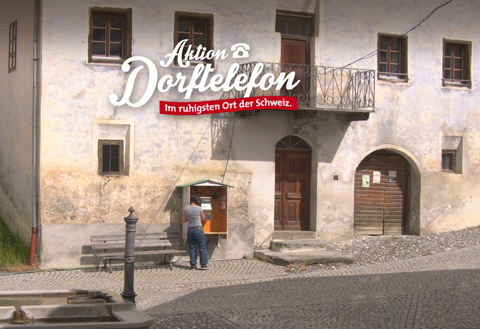
Tschlin proves that it is the quietest place in Switzerland with the "Village Telephone" campaign, which starts on Monday. The campaign was developed by Jung von Matt/Limmat.

In the high-altitude mountain villages of Graubünden, silence reigns around the clock. In the mountain village of Tschlin, it is even so quiet that the village square telephone can be heard everywhere. With this telephone, the villagers start a competition. Their promise: If you manage to call without anyone hearing you, you win a vacation. You can call 081 860 10 90 from 10:00 a.m. to 8:00 p.m., after that it's quiet at night.

Unbenannt-5_161

The village community announces the action with a launch film. So that everyone can also see that the villagers are not simply sitting next to the phone, the website broadcasts Village phone.ch a current picture of the village square and shows in each case the Tschliner who picks up the phone. The action starts on Monday, June 6 and lasts until June 11, 2016.

Bildschirmfoto-2016-06-06-um-10.13.53

More on the campaign in the upcoming print issue.

Responsible at Graubünden Ferien: Myriam Keller (CEO a.i.); Nicole Derungs (Project Manager). Responsible at Jung von Matt: Samuel Christ (Executive Creative Direction) ; Johannes Raggio, Marco Zimmerli (Creative Direction); Alain Eicher (Text) ; Lukas Frischknecht, Andrea Klainguti (Art Direction) ; Joelle Hauser (Graphics); Marco Dettling, Monika Arnold, Roman Mösli, Roman Meister (Consulting); Sarida Bossoni (Art Buying) ; Ralf Brändli (Technical Direction); Matthias Wobrock, Dominik Habermacher (Online Marketing) Christoph Kinsperger (Public Relations). External partners: Luc Kämpfen (film production: Ferrari.Kämpfen); Jingle Jungle (sound) ; Nicolas Henri Sieber (technology: Kamerawerk); Valentin Altorfer (technology: Simple Mechanik).


Acquittal of editor-in-chief Arthur Rutishauser overturned

Arthur Rutishauser was found guilty of publishing official confidential documents. In 2012, he had quoted excerpts from the confidential PUK report on the BVK affair. The Federal Supreme Court overturned the acquittal handed down by the Zurich High Court.

Rutishauser, now editor-in-chief of the Tages-Anzeiger and Sonntagszeitung, published two articles in the Tages-Anzeiger on August 28, 2012 and September 10, 2012 about the corruption case at the Zurich pension fund BVK. It quoted around a dozen passages from the draft final report of the Parliamentary Investigation Commission (PUK) of the Zurich Cantonal Council, which is still being kept under lock and key. The governor's office of the district of Zurich sentenced him to a fine of 800 francs. Rutishauser was subsequently acquitted by both the district court and the Zurich High Court. The High Court came to the conclusion that the public had a legitimate interest in being informed before the publication of the report, which was announced for the beginning of October 2012.

Contribution to the debate

The Federal Supreme Court has now overturned the corresponding decision in a ruling published on Monday. The decisive factor for the publication of a secret official document is whether or not the information makes a contribution to the public debate on the topic. This was not the case. According to the judges in Lausanne, the public debate could also have taken place following the official publication of the PUK's final report. The opinion-forming process within the PUK had not yet been completed at the time of publication of the first newspaper article. The work of the PUK could therefore have been disrupted. However, according to the Federal Supreme Court, there is a great state interest in keeping the activities of a PUK secret.

Tamedia: "Strange understanding of the media"

In the opinion of Rutishauser's employer Tamedia, the argument that the media could have waited until the official publication of the report before reporting is evidence of a "strange understanding of the media" by the Federal Supreme Court. A research stop during the work of a PUK is "out of the question", as Tamedia spokesman Christoph Zimmer told the news agency SDA when asked. With its reporting, the Tages-Anzeiger had made an important contribution to clearing up the BVK affair, one of the biggest corruption scandals in Zurich's history with damages of up to CHF 1.5 billion, said Zimmer. Convicting journalists for publishing official documents was "a devastating signal for media freedom in our country". Zimmer also explicitly pointed out that there is still no legally binding judgment against Arthur Rutishauser. If the new ruling by the Zurich High Court ordered by the Federal Supreme Court is negative, Tamedia will "of course examine all legal remedies". It is therefore quite possible that the Federal Supreme Court will also have to deal with the case again. (SDA)

Last but not least: Staring forbidden

BBDO New York has equipped a Marilyn Monroe poster with facial recognition for Snickers. If you stare, you get the receipt.

candvas

Marilyn Monroe would have turned 90 last Wednesday. However, as we all know, she died on August 5, 1962. Nevertheless, she is immortal and the fascination with what is probably the most famous American actress of all time remains unbroken. Snickers and BBDO New York presented a Marilyn commercial for the Superbowl in February and incorporated her into the "You're not you when you're hungry" campaign. Actor Willem Dafoe played the legendary air shaft scene from "Year 7" as a hungry Monroe. The commercial has since been viewed almost twelve million times on YouTube.

https://www.youtube.com/watch?v=WhfntLl6xx0

Now the agency has taken up the idea again and packaged it in a technically sophisticated way: An interactive poster shows Marilyn - but uses facial recognition to notice when someone is staring at her. And switches to Willem Dafoe, who comments moodily on the whole thing. Hunger turns "America's Sweetheart" into "America's Not-So-Sweetheart". (hae)

https://www.youtube.com/watch?v=JjCVR6XDn1E

Maxomedia: A relaunch that awakens living dreams

The architectural firm Ramseier und Stucki Architekten has a new corporate website. A timeless design and high usability invite customers to discover their ideal living space. The website was created by Maxomedia.

In reality, the stylish and idyllically located condominiums of Ramseier and Stucki Architekten have long captivated customers. Now they are also falling for the high-quality residential properties online.

s_r-st_www_Desktop

Relaunch Corporate Website

Maxomedia is responsible for the new website and, beyond that, the channel-independent redesign, which positions the architecture firm more strongly among competitors. Reduced to the essentials, the imagery already promises a unique brand experience: large-scale reference and sales objects are effectively staged. A balanced staging of brand values such as service, competence, innovation, quality and tradition underline the image and reputation of Ramseier und Stucki Architekten. Background information about the company as well as factually prepared references create trust.

s_r-st_www_Mobile

The subsidiary Atelier für Concept & Immobilien helps with the sale of existing residential property. In line with the relaunch of Ramseier und Stucki Architekten, their online presence has also been optimized.

Focus on customer relationships

The consistent focus on the customer is reflected in various CRM features: The object search subscription informs the customer as soon as suitable residential properties are available. The newsletter provides information about current events. In addition, the personal consultation strengthens the customer relationship process. In addition to the SEO-optimized content of the corporate website, image- and project-specific AdWords, advertising banners, advertisements and posters in the catchment area flank the new online presence of the architecture firm.

s_r-st_www_Tablet

Ramseier und Stucki Architekten have been planning, building and selling residential dreams around Bern since 1963. The objects of the traditional company convince with modern architecture and high functionality. After the relaunch, the new corporate website meets the latest standards in terms of design, usability and technology.

s_r-st_offline_OfH

Responsible at Ramseier and Stucki Architects: Beat Zaugg (Chairman of the Board and Managing Director), Rosario De Paola (Head of Finance and Human Resources), Stefan Hählen (Project Manager Marketing). Responsible at Maxomedia: Bernhard Herzig (overall responsibility), Frank Salathé (digital management), Tatjana Meichtry (project responsibility), Stefan Cecere (digital conception), Philipp Gfeller, Kilian Sonnentrücker, Jessica Odermatt, Julien Villiger (development), Laura Kistler (text/content).

Contexta: With team spirit into the second barbecue round

Just a few days before the start of the European Football Championship, Coop and the Bern agency Contexta are raising anticipation for the European Championship barbecue season. Spots celebrating team spirit encourage sociable barbecuing.

After a successful start to the summer, the retailer is now officially kicking off the European Championship barbecue season. Coop is thus entering the second phase of its barbecue campaign. The campaign "Jetzt chame grilliere" kicked off with flying garden grills in a TV commercial that charmingly showcased the joy of the start of the season.

Header-Bild-PM

Now the grill and the fun of barbecuing are being fired up again. Three commercials, print and online activities, and a new motto are designed to spark the joy of football and motivate sports enthusiasts to enjoy a barbecue.

Since both barbecuing and the summer football spectacle are most enjoyable when you're in the company of like-minded people, the spots' spotlight is on being together in a happy way. The new motto "Do it for the team" aptly sums up the team spirit. "Jetzt chame grilliere" continues in parallel to promote the barbecue specials.

The first spot shows girlfriends enjoying a leisurely evening of football and barbecue at home, passionately cheering on the Swiss national team. How the rest of football-loving Switzerland and even Xherdan Shaqiri join in the cheering is amusingly demonstrated in two other spots. Coca-Cola Switzerland is a partner of Coop and sponsor of Shaqiri during the European Championship phase. For sports and barbecue fans who are already looking forward to the soccer and barbecue festivities at home, there are online Product offerings, barbecue recipes and much more.

https://www.youtube.com/watch?v=lMD0yhU5ao4

https://www.youtube.com/watch?v=oHOALpqi80c

Responsible at Coop: Thomas Schwetje (Head of Marketing/Services), Sacha Zuberbühler (Head of Advertising), Roland Frefel (Head of Category Management Fresh Products), Marc Weber (Overall Project Management), Oliver Johnson (Head of Digital Marketing), Anja Kapust (Project Management Digital Marketing); Karin Heliopoulos (Head of Media), Vanessa Finzer (Head of Culinary). Responsible at Coca-Cola Switzerland: Christoph Reitmeir. Responsible Lead Agency: Contexta. Responsible for music/composition: Roman Camenzind (Executive Producer), Georg Schlunegger (Composer & Producer), Fred Herrmann (Mixing Engineer), Noemi Mathis (Project Management Hitmill); responsible at YJOO: Nina Krucker (Conception), Olivia Guler (Conception/Consulting); TWmedia: Stephan Küng (Managing Director). Responsible for TV production at Stories: JJ Keith (Director); Yves Bollag (Executive Producer). Photography People: Photography: Hanspeter Schneider/ Visualeyes International: Nathalie Furrer Photography Culinary: Photography: Klaus Einwanger / KME-Studios, Foodstyling: Sven Dittmann.
 

Zug start-up offers privacy app

The startup Sasera aims to offer companies tap-proof communication through its app. At the very least, the servers are secure: they are located in Siag’s Swiss Fort Knox colocation center.

The start-up Sasera has launched an app for tap-proof communication. According to the company, the application encrypts all communication via the smartphone. Users can define a user group. No one outside of this group should be able to decrypt the communication.

According to Sasera, the app is primarily aimed at internationally active companies whose competitive advantage is based on intellectual property. They are particularly interested in protecting their intellectual property from unauthorized parties.

Founded in 2016, the start-up Sasera launched the app for iOS, Android and Blackberry operating systems. The software can be adapted to a company's specific needs. The servers are located at Swiss Fort Knox, a data center in the Swiss Alps. Alternatively, the server infrastructure required for the app can also be installed in the IT environment of corporate customers. (Web Week)
 

netzwoche
get_footer();