In the pub or at the doctor's

Swisscom plans to switch entirely to Internet telephony by 2017. This marks the end of an era in Switzerland's communications history.

The director of the telephone museum in Islikon TG sees Swisscom's decision to completely abandon the old analog technology for telephony as a historic step. "This marks the end of the era of classic switching technology," Roger Pfister told the SDA news agency. This technology began in the 19th century. "The first major change for society came with the invention of telegraphy," Pfister continued. Telegraphy was invented in the 1830s, arrived in Switzerland in 1852 and quickly became a global network. It meant that messages could suddenly be exchanged within a very short space of time. The telephone was another important step towards today's communication society. Now subscribers could communicate directly with each other.

First Zurich, then Basel

Zurich was the first Swiss city to have a telephone network. This was set up in 1880 by the private "Zürcher Telephongesellschaft", as Roger Pfister, director of the telephone museum in Islikon TG, explains. The network was a purely local network with 141 connections. According to the Historical Dictionary of Switzerland, the federal government took over the construction and operation of further telephone networks from 1881, first in Basel and Bern, then in Geneva. By 1891, around 100 local networks had been created, which grew together to form a national network. The telephone then spread throughout Switzerland. For a long time, long-distance calls were switched manually by a telephone operator, popularly known as the "Fräulein von Amt". From the very beginning, only unmarried women were employed for this work in Switzerland.

In 1923, automation of the switchboards gradually began. This allowed callers to dial the number of the person they were calling themselves. The postal, telephone and telegraph companies (PTT) divided Switzerland into 52 network groups for this purpose. According to the Historical Dictionary, the last manually operated telephone exchange switched to an automatic system in 1959. Switzerland was thus the first country with a fully automated telephone network.

In the pub or at the doctor's

Initially, the telephone was mainly used for business transactions, not least for cost reasons. Anyone who wanted to make a phone call but did not yet have their own connection had to do so on a public line or, for a fee, with private individuals who owned a telephone. Private telephone owners often let other people use their phones for a fee, as the director of the Telephone Museum explains. This created a kind of private telephone office. "That was a reason for certain families not to buy a telephone," said Pfister.
"The telephone was not an everyday thing," says Juri Jaquemet, who is responsible for the information technology collection at the Bern Communications Museum. In the villages and small towns, there was often only a telephone at the doctor's, the judge's or in the village pub. "A phone call was something out of the ordinary that caused a stir."

After the end of the Second World War, the telephone finally found its way into more and more private households. Whereas in 1920 there were 3.3 telephones per 100 inhabitants in Switzerland, by 1980 there were over 70, according to the Historical Dictionary of Switzerland. The 1980s saw the digitalization of telecommunications with the introduction of ISDN - and the beginning of a new era. At the same time, the cell phone, launched in Switzerland in 1978, became increasingly important. In 2002, the number of mobile phone connections exceeded the number of landline connections for the first time.

Value of the invention not immediately recognized

Several people were involved in the development of the telephone. In 1853, the French telegraph official Charles Bourseul outlined the idea of transmitting human speech electronically in an essay. However, he did not put the idea into practice. In 1861, the German physicist Johann Philipp Reis succeeded in developing the first functioning telephone set. However, the value of his invention was not recognized, as the director of the telephone museum in Islikon explains. Even when the American Alexander Graham Bell developed a telephone to market maturity in 1876 and had it patented, the importance of the invention was not recognized at first. He almost went bankrupt. According to Pfister, the telephone finally became marketable in 1878 thanks to the invention of the inexpensive carbon microphone. (Larissa Tschudi/SDA)

Image: Keystone

Contexta: Living values for Valiant

Under the slogan «We’re Simply a Bank,» the Bern-based agency Contexta is supporting Valiant Bank in its reorientation and, with the new campaign, is focusing on fundamental banking needs.

Against the backdrop of the global loss of confidence in the financial world, the aim of the campaign, according to the statement, is to position Valiant as the bank that recalls the original competencies of Swiss banking. The new brand promise developed by the agency also serves this purpose: "Values that take you further". It is aimed at everyone who expects sustainable value creation and value preservation from their bank - as well as behavior that is geared towards long-term relationship management and offers customers orientation and an overview.

The result is a campaign that deliberately breaks with the usual communication conventions in the financial industry. Instead of big words, Valiant has lived values and people who live out their profession in the best possible sense for their customers: "We are simply a bank". A memorable story has been formed around this brand promise. Says Stephan Michel, Head of Marketing and Corporate Communications at Valiant Bank: "We focus on our core competencies and on meeting expectations in a positive way. Our work is to maintain simple, straightforward and honest relationships with our clients. We want to be a bank that does what is expected of it - in the highest quality."

The campaign includes TV, billboards, as well as ads that showcase the campaign motto "We are simply bank" in real life, promoting the most important product a bank has to offer in times of uncertainty: trust and meeting customer needs.

//www.youtube.com/watch?v=t7ZiJ3RRDTs

VAL_PL_Image_2014_F12_d_150ppi_1
VAL_PL_Image_2014_F12_d_150ppi_2
VAL_PL_Image_2014_F12_d_150ppi_3
VAL_PL_Image_2014_F12_d_150ppi_4
VAL_PL_Image_2014_F12_d_150ppi_5
VAL_PL_Image_2014_F12_d_150ppi_6

Responsible at Valiant Bank: Stephan Michel (Head of Marketing and Corporate Communications), Dina Bienz (Head of Marketing), Martina Schmid (Project Manager Marketing). Responsible agency: Contexta advertising agency BSW, Bern. Production: Stories, Zurich. Directed by: Johan Kramer. Music: Gian Dolder/Adrian Frutiger. Photo: Pierluigi Macor (photographer), Süsstrunk & Jericke (image processing). Media: Mediaplus, Bern.
 

SRF sends 17 people back to the year 1914

In January, SRF called for auditions for the summer project "anno 1914 - Leben wie vor 100 Jahren". From over 750 applications, a family of five and a further twelve people have now been selected for the scripted living history production.

Next summer, SRF will look back on life 100 years ago with the thematic focus "anno 1914". At the heart of the thematic focus is the scripted living history production "anno 1914 - Leben wie vor 100 Jahren". It tells exciting stories from the everyday life of a working-class family and a wealthy factory owner's family. The characters are played by actors and amateurs. SRF called for auditions in January to cast the non-professional actors. Over 750 interested people responded; around 60 were invited to the casting. The final cast has now been chosen.

anno-1914

The Büchi family from Wila ZH in the role of a working-class family

Bruno Lüscher, 45, and Jacqueline, 47, Milena, 20, Merlin, 14, and Alenka, 10, Büchi from Wila ZH move into the boarding house next to the Grünthal textile factory in Bauma ZH as a working-class family. Lisa-Maria D'Ercole, 14, from Subingen SO takes on the role of maid. "Schweiz aktuell" presents these protagonists in more detail on Tuesday and Wednesday, March 18 and 19, 2014, at 7 p.m. on SRF 1.

buechi

In other roles:

- Elias Züst, 16, as Commis

- Christian Thalmann, 40, as an accountant

- Rosemarie Jenni-Dietsche, 60, as a housekeeper

- Vera Knecht, 25, as a waitress's daughter

- Mirjam Schnedl, 17, and Pia Kammermann, 20, as the factory owner's daughters

- Jennifer Bosshard, 29, as weaver, Adriano Geiger, 63, and Hans Ineichen, 55, as weaver

- Greti Müller-Wehren, 67, and Marianne Müller, 34, as seamstresses

anno-1914-cast
Greti Müller-Wehren and Lisa-Maria D'Ercole
 

Newspapers and magazines continue to lose readers

Almost all Swiss daily newspapers lost readers in 2013—some of them a great many. Declines are also evident among periodicals and magazines. 20 Minuten remains the most widely read publication.

The four largest daily newspapers in German-speaking Switzerland are all reaching fewer readers. This is the result of the latest Wemf survey. With a reach of 1.57 million, the commuter newspaper 20 Minuten is still the most-read daily newspaper in the country - a slight drop of 4,000 readers compared to the last survey. Its counterpart Blick am Abend is still read by 747,000 people. This is 32,000 fewer than in the last survey. The most widely read paid newspaper, Blick, lost 15,000 readers and now has 705,000, while the Tages-Anzeiger still reaches 490,000 people (-14,000). For the most recent study, Wemf surveyed around 19,000 people from all parts of the country about their media usage between October 1, 2012 and October 6, 2013. The comparative figures were collected between April 2012 and April 2013.

Profits thanks to new composition

The Neue Luzerner Zeitung and the St. Galler Tagblatt have gained readers. However, the composition of these two titles has changed compared to the last study. The Neue Luzerner Zeitung now includes the Bote der Urschweiz, while the Werdenberger&Obertoggenburger, the Rheintalische Volkszeitung and the Liechtensteiner Vaterland are now also part of the St. Galler Tagblatt network. These three were previously part of the Südostschweiz newspaper group. This also puts their loss of 81,000 readers into perspective, which corresponds to a third of the previous readership.

Significant declines for magazines

With the exception of the Sonntagszeitung (+4000 to 655,000), the Swiss-German Sunday papers also lost ground. Schweiz am Sonntag recorded a particularly significant drop in readership. Compared to the last study, the newspaper lost around 15 percent of its readership (-72,000). Wemf states that it is not possible to compare Schweiz am Sonntag with the last study. However, only the name of the publication has changed. The circulation has not changed significantly as a result of the relaunch, AZ Medien said on request.

In French-speaking Switzerland, the figures for publishers are not exactly encouraging either: here, too, the number of readers has shrunk for most of the major titles - most noticeably for Le Matin with a drop of 26,000 (-8.2 percent). Of the ten most-read daily newspapers, only La Liberté (+2000) and Le Nouvelliste (+1000) were able to increase their readership. With the exception of Le Matin, Wemf does not consider the changes in reach to be significant for any of the newspaper titles listed. This is not the case for journals and magazines. Here, the Beobachter (-64,000), Schweizer Familie (-37,000) and Das Magazin (-46,000), for example, lost readers significantly.

Landliebe success story

Among the journals and magazines, only the Ringier publication Landliebe stands out from the widespread gloom. The magazine, which is dedicated to recipes from the country kitchen as well as home and decoration ideas, among other things, gained 82,000 readers compared to the last MACH study and now reaches 482,000 people. The publication is particularly popular with women: three quarters of readers are female. Ringier wants to transfer the success story of its Landliebe to other channels. LandLiebe Radio went on air in December and Landliebe TV was launched at the beginning of March.

20 Minuten readers are young and male

Wemf has also broken down reading habits by age and gender. Unsurprisingly, commuter newspapers are very popular with young people. The 14 to 34-year-olds make up 41 percent and 46 percent of the readership of 20 Minuten and Blick am Abend respectively, while their share of traditional daily newspapers only fluctuates between 17 and 30 percent. For most newspapers, the over 55s form the most important reader group. The readers of commuter newspapers are also predominantly male. 57 percent of 20 Minuten readers are men, while the figure for Blick am Abend is 55 percent. The readership of Blick (61 percent), Tages-Anzeiger (57 percent) and Neue Zürcher Zeitung (62 percent) is also predominantly male. (SDA)

Swisscom buries analog telephony

Nearly 160 years after Johann Philipp Reis invented it, Swisscom plans to phase out traditional analog voice telephony. The service will be discontinued at the end of 2017. From then on, the rotary-dial phone will be a thing of the past.

The old analog telephony is no longer up to date, said Swisscom Network Manager Heinz Herren to the media in Zurich on Tuesday. Today, practically all services offered already run on Internet technology, such as e-mail, television and surfing the web. Only voice telephony still largely works with the old analog technology. Herren said that there are still around 2 million customers who still use analog telephony: "We are taking our time until 2017 to convert these customers to VOIP (Voice over IP) as smoothly as possible." When customers order a new subscription or change their existing subscription, they will automatically be switched to Internet telephony. 260,000 customers have already been switched.

Swisscom: No obligation to switch

"We are not forcing customers to switch," said Guido Tranel, Marketing and Product Manager for Telephony and Internet: "Any customer who uses analog telephony can continue to do so." However, customers would then not be able to purchase bundled offers comprising telephony, TV and Internet. The new products that Swisscom will launch on the market in the future will also exclude analog telephone users who are not willing to switch. "Almost all customers also want Internet," said Tranel. Swisscom already has almost 1.6 million private Internet customers. We will see how many customers will switch to Internet telephony in the "natural" way in the remaining four years until the end of analog telephony at the end of 2017. "We will definitely come up with a solution for the remaining customers," said Herren.

No telephone connection in the event of a power failure

From then on, customers who only want to make calls with Swisscom will need a router to connect their telephone. The good old dial telephone will definitely be obsolete, said Herren. ISDN telephony would also no longer work. The disadvantage of Internet telephony is that it is no longer possible to make calls if the router or power fails. The old analog telephone, on the other hand, works independently of the power supply at home. Even today, however, most customers would reach for their cell phone in the event of a power failure, said Herren.

Getting rid of advertising calls

However, the technology switch to Internet protocol also has advantages for customers, said Tranel: The display no longer shows just the caller's number, but their full name, unless the caller has blocked it, and customers can block numbers in the customer center on the Swisscom homepage. This can be used, for example, to ward off annoying advertising calls, said Tranel. In addition, the voice quality is significantly better when both parties speak to each other via new Internet telephones, and it is also much easier to take the telephone connection with you when you move house. After entering the new home address on the homepage, you can simply plug in the router that identifies the customer and start surfing straight away. The physical switching of lines will no longer be necessary in future, said Tranel. If all services were based on Internet technology, innovations would also be possible. For example, it would be conceivable for a message to appear on the TV when a call is made while watching television, said Tranel. But that is still a long way off.

Savings still unclear

Herren said that it is not yet clear how much Swisscom will be able to save by switching off analog telephony. We will see when the situation has settled down. The biggest savings would result from simpler processes. Swisscom is not alone in switching off analog telephony. In Germany, Deutsche Telekom has announced that it will be phased out by the end of 2018. In Macedonia, Deutsche Telekom has already switched over all customers, said
Tranel. (SDA)

Image: Keystone
December and July: New website created for KV Zurich Business School

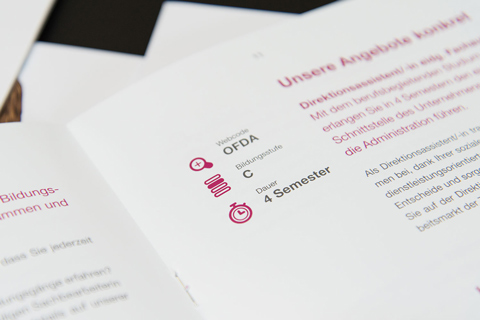
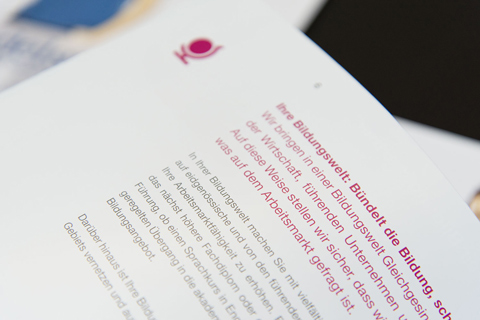
December and July created the new KV Zurich Business School website. The new website is now the centerpiece of the new marketing strategy for the Zurich educational institution's continuing education division. Accompanied by a new advertising campaign and print advertising material.

"Right from the start, we were impressed by the enthusiasm with which the management of the continuing education division backed three aspects of their marketing concept: Firstly, the focus on educational topics and not on educational brands. Secondly, the focus on the needs of those seeking education. Thirdly, the self-image as an educational institution of wanting to enter into partnerships with those seeking education and the economy in equal measure," says Patrick Jauch, co-owner of the agency responsible, Dezember und Juli from Wernetshausen in the Zurich Oberland, in a press release.

KV Zurich Business School formulated these three strategic aspects en passant in the marketing concept as "My educational world" and "My educational partner". The agency's achievement was to recognize the brand potential and turn it into two brands and two URLs, which are now of immense importance in the overall communication strategy. The agency calls them "Sidekick Brands", they are sidekick brands of the KV Zurich Business School's continuing education division.

What made the project complex was the claim that the "KV Zurich Business School - Continuing Education" brand no longer necessarily has to be at the forefront of an educational world. Many brands and cooperation partners can - but do not have to - make up an educational world. It was therefore not possible to simply build an image around an existing brand, as is usually the case. A brand had to grow from the image itself. So strong that a wide variety of provider brands could be integrated into it. After all, "Meine Bildungswelt" is not brand-oriented but interest-oriented.

The agency Dezember und Julie established a metaphor for this challenge: the movie poster. A content-oriented, fascinating visual - underneath: tons of small print, x-different logos. The visual for the educational worlds of KV Zurich Business School had to work in exactly the same way.

The visual, which was to establish itself as the actual brand, naturally had to be correspondingly concise. That is why it is supported by an extraordinary image concept. It is made recognizable and thus liable by the implementation in a unique image look: The illustrator Bruno Muff immediately understood the image concept and was able to illustrate photographic templates in a kind of retro style.

The advertising campaign remains very classic. However, for the first time in a long time, a significant amount of budget was taken from the "Google Adwords" bidding market. In favor of a clever online display campaign with millions of impressions. Why? "The market competitors and the bids are so darn similar that they are all constantly driving themselves up with the same 20 keywords and, in the end, prospective customers see nothing other than linguistically crippled Google ads without heart and soul. It's just no fun," says Patrick Jauch, head of the new campaign. Well, the display strategy is of course predestined for a branding campaign such as the one required here. Nevertheless, the management of the KV Zurich Business School's continuing education department has shown courage in diverting so much budget away from Google when all its competitors are doing the opposite.

Kvz-further-education.ch

ED-2014-03-05-EZ-105131-Ver
ED-2014-03-05-EZ-105147-Ver
ED-2014-03-05-EZ-105159-Ver
ED-2014-03-05-EZ-105225-Ver
ED-2014-03-05-EZ-105559-Ver
ED-2014-03-05-EZ-105618-Ver
ED-2014-03-05-EZ-105629-Ver
ED-2014-03-05-EZ-105645-Ver
ED-2014-03-05-EZ-105656-Ver
ED-2014-03-05-EZ-105709-Ver
ED-2014-03-05-EZ-105718-Ver
ED-2014-03-05-EZ-105731-Ver

Client: Continuing education at KV Zurich Business School. Agency: December and July. Illustration: Bruno Muff. Website project management: Dimando. Technology Website: B-Connect. Print production: Sihldruck. Media: Ad.X.

TV program guides score with young and old

Depending on the stage of life a person is in, different topics become the focus of their attention. Their reading habits change accordingly. This theory is confirmed by data from the Mach Basic 2014-1 study, which was published on Tuesday.

The so-called "special interest titles" pick up people specifically at their respective interests. Depending on the focus of the topic, a publication thus reaches other age groups. The financial and business press typically belongs to the reading of the working part of the population. This genre is read most frequently by the 50-59 age group. In contrast, people who have already reached the age of 70 are significantly less likely to be readers of the financial and business press. By contrast, the readership of the financial press is particularly strong among young people up to 20 years of age and among the over-60s.

Consumer topics and celebrities are perennial favorites

The consumer magazines of the major Swiss distributors are generally very popular. This popularity increases with age. While 66 percent of 30-39-year-olds say they read these publications, the figure is as high as 89 percent for the over-70s. Fashion, cosmetics, social relationships and celebrities seem to interest people at all stages of life. For example, the number of readers of women's and people magazines is relatively evenly distributed across all age categories.

Graphic: Net reach of selected title groups in age categories

wemf-mach-basic-1-2014

Source: Mach Basic 2014-1; Wemf AG für Werbemedienforschung

Data basis: Mach Basic 2014-1

The data was collected as part of the Mach Basic 2014-1 study by Wemf AG für Werbemedienforschung. As a so-called "currency study," the National Readership Study of the Press Media provides the market with the official title reach data for around 350 Swiss and Liechtenstein newspapers, magazines, and title combinations.
 

Last but not least: Land of the Rising Cat

The world needs more big cats! This Japanese TV commercial is at least a start.

How could you advertise a chewing gum more aptly than with a cat? With a giant cat, exactly. To understand the message behind it - if there is one - you'd have to speak Japanese. Fortunately, advertising from the Land of the Rising Sun has one important advantage: it's fun even if you don't understand it down to the last detail. We've known that at least since Yee! Yeee! Yii!. Said giant cat also leaves nothing to be desired in this regard. Almost no wishes. Because who doesn't feel like a Fit's Link chewing gum after the 16 seconds of brainwashing? (hae)

//www.youtube.com/watch?v=2LoTdQqMwLk

via KFMW

SLK: High acceptance in the communications industry

As can be seen from the recently published activity report, the Swiss Fair Trading Commission (SLK) dealt with almost one hundred complaints last year and issued 82 decisions.

In a good two-thirds of the cases, it approved the application. If Parliament approves, the SLK will also act as an arbitration tribunal for the consumer credit and leasing associations as part of the planned self-regulation in the Federal Consumer Credit Act (KKG).

In its 2013 activity report, the Swiss Fairness Commission for the first time reported separately on preliminary, complaint and recruitment proceedings. Of the 98 complaints actually dealt with, two out of three were approved, just under 29 percent were rejected and just under 5 percent were not dealt with at all. Only two appeals were received. "Marc Schwenninger, the legal secretary of the SLK, is convinced: "This speaks for the high acceptance of the Fairness Commission in the communications industry. As before, the vast majority of complaints are filed by private individuals. However, the number of competition complaints has risen steadily since 2010 to just under seven percent. "The ratio is a little deceptive, though," Schwenninger explains. "Competition complaints are generally much more time-consuming than consumer complaints. We therefore need much more time to assess them than the low percentage indicates."

Aggressive sales methods

Looking at the type of complaints (Activity Report, page 22), the high proportion of aggressive sales methods is striking, accounting for almost 43 percent of all cases. This is also reflected in the distribution of media channels used to disseminate the advertising messages complained of. Clearly in the lead are telephone and fax with a combined 32 percent of all complaints, followed by Internet/e-mail and other direct mail with half as many complaints each. In terms of sectors, the highest percentage of complaints were received against advertising by banks and insurance companies. The doubling of complaints in just two years to over 14 percent is largely due to overly aggressive telephone calls from health insurance companies.

Referee in self-regulation

In response to the "No advertising of small loans" initiative, the Economic Commission of the National Council (WAK-NR) proposed self-regulation of the industry in 2013. In it, the Fairness Commission was proposed as a court of arbitration to watch over compliance. "The SLK already has a lot of experience with this role," explains Marc Schwenninger. "We have already had a corresponding agreement with the cigarette and alcohol industries since 2005 and 2006 respectively, and with the Swiss Dialog Marketing Association SDV since 2009. This is going very well. This relieves the burden on the courts, which would otherwise have to deal with corresponding violations of the UWG (Unfair Competition Act). This saves the economy from lengthy and costly court proceedings."

Legally certified independence

The Fairness Commission impressively demonstrated its independence in a complaint filed by PS Publicité Suisse. The sister association of SW Schweizer Werbung claimed that statements such as "La publicité tue" in a prevention campaign against smoking were incorrect, misleading and disparaging. The First Chamber did not share this view, since "the statements complained of would contain an exaggeration recognizable to the average addressee." Among other things, this independence makes the Fairness Commission the only extrajudicial institution in Switzerland in the field of consumer law that meets the conditions of an ADR procedure (Alternative Dispute Resolution; alternative dispute resolution methods) under EU law.

Better perception at the federal level

CVP National Councilor Christine Bulliard-Marbach, who completed her first full year in office as president of the Fairness Commission in 2013, has set herself the goal of raising awareness of the SLK primarily in parliament and in commissions, but also among other important reference groups such as companies and advertising agencies. "My initial experience has shown that many parliamentarians are not even aware of the SLK," explains Christine Bulliard-Marbach. "It is therefore a great concern of mine to make the Lauterkeitskommission and its activities better known at the federal level." In this context, the SLK president sought talks last year with the Press Council and the independent complaints authority of radio and television UBI, which to some extent have comparable legitimacy problems. "The exchange was very positive," adds the National Councilor. "We will try to use synergies more in the future."

The SLK activity report 2013 can be downloaded at Fair-advertising.ch can be downloaded.
 

Republica drives Bea & Lea wild

Bea's motto for 2014 is "Wilder is not possible". Republica is continuing last year's campaign with Bea and Lea. The centerpiece is a TV commercial that will be broadcast nationally.

With more than 950 exhibitors and over 300,000 guests, Bea/Pferd is the largest visitor fair in Switzerland and has been combining tradition and innovation, customs and current events for many years. And yet this year everything is different: after numerous guest regions such as the Emmental, the Bernese Oberland and most recently the city of Bern, this year for the first time a motto is taking center stage. In keeping with the motto "It couldn't be wilder", Bea 2014 offers many other exciting attractions for young and old from April 25 to May 4, including hot rhythms and a coffee lounge in the jungle. In addition, 950 exhibitors form the largest marketplace in Switzerland and many other attractions and special shows ensure the perfect Bea experience of enjoyment, shopping and variety.

A year ago, Republica sent the girl Bea and her cow Lea to the fair for the first time (Werbewoche.ch reported). Bea 2014 marks the start of the next adventure chapter for the two friends. True to this year's motto, Bea turns her Lea into a wild Leo. The story of "Bea & Lea: Wilder geht's nicht" will be told for the first time in the history of the Bern Spring Fair as part of a national TV commercial. In addition, Bea & Lea can be seen not only on the campaign posters, but also on advertisements, visitor flyers, postcards and much more. Radio spots and social media activities also attract visitors.

//www.youtube.com/watch?v=rMD85VtohPc

BEA_LEA_wild_F200_d

Responsible at Republica: Mike Krüll, Chris Morgan (Creative Direction), Daniela Zehr (Senior Consulting), Rea Christ (Art Direction), Thorsten Hainke (Text), Raphaela Brühlmeier (Consulting), Stories (Film Production), Oliver Nanzig (Photography), Bala Trachsel (Overall Responsibility). Responsible at Bernexpo: André Caradonna (Head of Communications), Martin Michel (Exhibition Director).
 

Koch Communication: The great astonishment

Koch Kommunikation has created a new key visual for the Frauenfeld Auto-Spektakel.

You see a car model and wonder what the vehicle looks like from the inside. What happens? You press your nose against the window to catch a glimpse of the interior. This all-too-human behavior was implemented by Koch Kommunikation as the new key visual for the Frauenfeld Auto-Spektakel. A young family makes the start, the "gwundrig" standing at the window. The series will be continued with further subjects over the next three years. F12 posters, advertisements and various POS measures will be used.

a-s-f

Subject large

Responsible at Frauenfelder Fachgaragen: Marcel Thomi (President). Responsible at Koch Communication: Urte Zambelli (consulting), Jean-Marc Demeulemeester, Monika Beerli (creation). Photography: Caspar Martig.
 

Ogilvy: Wrapped on and off for Ford Transit

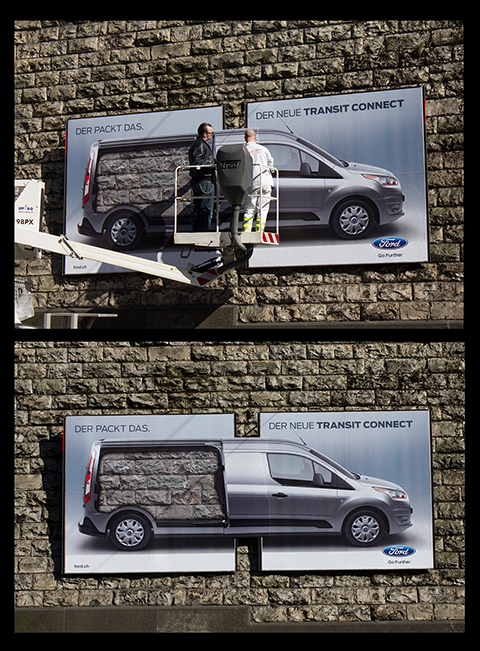
The new Ford Transit Connect is part of Ford's updated commercial vehicle lineup. Ogilvy & Mather showcases its cargo capacity on a billboard in Zurich.

The Transit Connect is a compact van with a maximized load volume concept. This means that there is more space in its load compartment than you would expect at first glance. And the agency Ogilvy & Mather dramatized this surprisingly large loading capacity with a media idea on a billboard on Weinbergstrasse by filling the Transit with the stone blocks that make up the wall behind it.

Weinbergstrasse_klein

Responsible at Ford Motor Company Switzerland: Marc Brunner (Manager Sales & Marketing CV), Marcello Varallo (Marketing Communications Manager). Responsible at Ogilvy & Mather: Jonathan Schipper (overall responsibility); Thomas Bolliger (CD); Priska Meyer (AD); Marcel Elsener (text); Marcel Kohler (production); Sascha Isenschmid (graphics/DTP); Michela Girola (consulting); Liliane Borer (Mindshare/Media).
 

get_footer();