Change in the management of Cinergy

After almost two years, CEO Roman H. Schmid is leaving Cinergy at his own request. Walter Zollinger will take over the management of the entire Cinergy Group with immediate effect.

Zollinger is now Managing Director of the Teleboy business unit and a member of the Board of Directors of Cinergy. During his tenure, Roman H. Schmid has been responsible for decisive steps in the organization, processes and direction of Cinergy, according to the press release. In particular, the consistent orientation of the premium publisher Cinergy in the advertising market, the expansion of cooperation with film distributors, but also the introduction of new transaction-based business models such as the new "cinema on demand" online portal Gokino.ch and the upcoming launch of the ticketing functionality on the market-leading online portal Cineman.ch are among his achievements during his time as Managing Director.
 

VgT files suit against meat association

The latest development in the controversy surrounding the VgT ad aired on SRF over the holidays: Erwin Kessler has filed a lawsuit against the Swiss Meat Association (SFF). Kessler accuses the association of defamation—and is already planning the next ad.

The reason for the lawsuit is a Media releasewhich the SFF published at the end of December. In it, the VgT spot broadcast over the holidays is described as "maliciously misleading, unfair and completely out of place". The "missionary-like praising of veganism" is a disregard for SRF guidelines, as it is political advertising. The "tendentious, one-sided and reputation-damaging" images would also completely hide the efforts that Switzerland has made in recent years to raise animal welfare standards.

VgT head Erwin Kessler does not want to put up with the accusations: "Now legal proceedings are underway against the meat trade association SFF because it reacted to the commercial with a defamatory statement," he tells Werbewoche.ch (Request for mediation, PDF).

The TV spot, which aired 18 times on SRF 1 between December 19 and 31, 2014, shows various scenes of Swiss farm animal husbandry. In doing so, Kessler emphasizes that all the footage comes from Switzerland and that "much worse" images could have been shown. On the one hand, Kessler says, he didn't want to give SRF an excuse to reject the spot as "unacceptable," and on the other hand, he didn't feel the need to work with particularly extreme examples. "The quite normal madness is bad enough," says the animal rights activist.

vgt-spot
Screenshots of the VgT spot broadcast in December

The "restraint" has paid off: According to Kessler, the commercial criticized by the meat association is the first to be accepted by SRF/Publisuisse without legal proceedings. In 2013, Kessler won an airing via the Federal Court (Werbewoche.ch reported). This time Publisuisse had announced that SRG had no legal basis to ban the spot. This, although the SFF as a "good customer" - the meat association is sponsor of "Giaccobo/Müller" - was outraged. For Kessler, it is clear: "There are no more questions left open as to why SRF so stubbornly rejected our spots and why it took two condemnations of Switzerland by the European Court of Human Rights before the Federal Supreme Court finally looked into this matter."

This is an accusation that SFF President Rolf Büttiker resolutely and unequivocally rejects in an interview with Werbewoche.ch: "Such an approach would be out of the question; my fundamental liberal stance would forbid it. We work with arguments, not with blackmail!" It is therefore not up for discussion that the meat association changes something in the SRF sponsoring due to the discrepancies concerning VgT-Spot. The complaint on the part of VgT is taken note of "with great composure". "We were already aware in advance that disputes with Mr. Kessler usually end up in court." The association's legal clarifications are still underway. For former Council of States member Büttiker, however, the political dimension of the controversial spot is beyond question. The dimension that would prohibit Swiss television from broadcasting a commercial.

What is certain: Erwin Kessler and the VgT will continue to make headlines with commercials. Even outside the courtrooms. As Werbewoche exclusively knows, the next commercial is already in preparation. It will direct itself this time not against the meat economy, but against the egg industry and punctually before Easter be platziert. (hae)
 

Pink: Spot for Blick Bingo with Beat Schlatter

After a ten-year hiatus, Blick-Bingo is back. To promote the game, Rosarot was commissioned to create a TV and movie theater commercial that draws attention to the game and explains it at the same time.

A task that is tailor-made for Beat Schlatter with his creative bingo performances, as it says in a press release. Schlatter's familiar face was combined with amazing moments that force the audience to look closely. A game with wit and perception - and of course with big prizes.

Blick bingo will be played for four weeks from January 19 to February 14, 2015. Two million Blick bingo cards will be distributed as early as mid-January as inserts in Blick, Sonntagsblick and various newspapers and magazines, in mailboxes and free of charge via newsstands and Press & Books. The current bingo numbers will be published daily in the print edition of Blick.

//www.youtube.com/watch?v=DzX8awLFtD8

Responsible at Ringier: Nicolas Pernet (Head of Marketing Blick Group), Vera Baltensperger (Project Manager Marketing Blick Group). Responsible at Rosarot: René Karrer (creative director), Andreas Steiner (concept, text, consulting), Yolanda Lopez (art direction), Stephanie Steimer (graphics, layout), Chantal Jenny (project management); stylist: Michelle Oberholzer; producer: René Da Rold Pictures.
 

Last but not least: Pampering under Attack

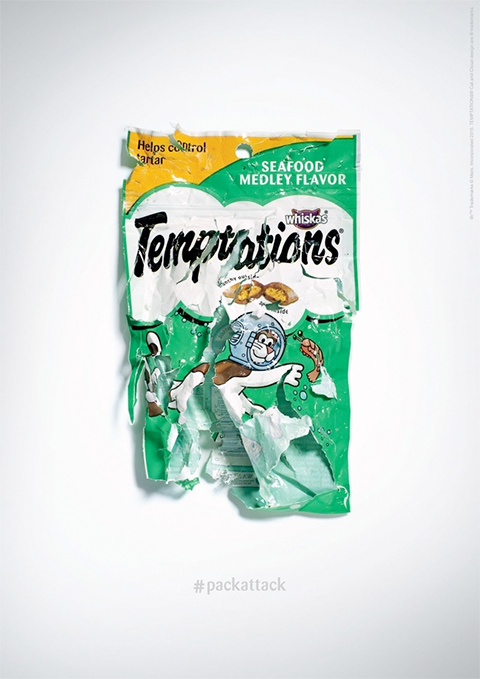
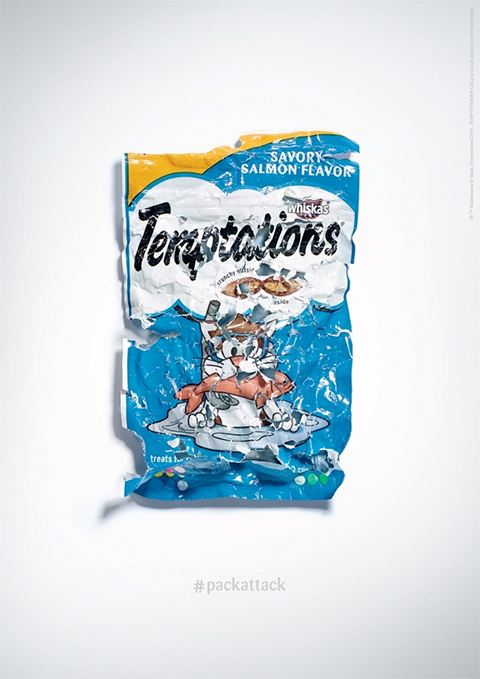
Cats wouldn't just buy Whiskas—they'd also help design Whiskas ads. If you let them, that is. That's exactly what happened in England.

"Temptations" is the name of a cat snack line from Whiskas. The name says it all: cats can't seem to resist this temptation. Presumably she calls Qualipet that's why "Verwöhnerlis" - a word creation that even non-cat owners should have heard once. The outside-crunchy-inside-soft principle also seems to go down extremely well with house cats. So well, in fact, that cats are more than happy to eat the packaging bags instead of waiting for humans to hand over the pampered treats in a well-rationed manner. Not an advertising promise, but reality - as advertising shows us. The London agency Adam&Eve DBB let hungry cats loose on Temptations bags and used the results for a poster campaign. The result is a rather expressive subject matter that leaves no questions unanswered. And if they do, they are answered in the accompanying making-of film, which is accompanied by remarkable music. (hae)

Unbenannt-16_27
Unbenannt-17_25
Unbenannt-18_22

//vimeo.com/112291264

New Managing Director for Content&Form

Invitation for the big mouth and the mouth of the big ones

At the end of March, another Klappe film festival will take place in Hamburg. Films can be submitted until March 9. The submission deadline for the «Die Grosse Klappe 2015» competition for emerging filmmakers has been extended to January 16.

The Klappe is considered one of the most important competitions for commissioned films in the region of Germany, Switzerland and Austria. Agencies or film productions can submit entries in five categories. These are Theflap.com described in detail. The films can also be uploaded there. The jury is made up of clients, agencies and other experts (media, directing, film production, post production). This year, four jurors from Switzerland are again involved: Martin Spillmann (Serviceplan Suisse), Sonja Brand (Pumpkin Film), Thomas Wildberger (Publicis Communications) and Andreas Panzeri (Werbewoche).

The submission deadline for the young talent competition "Die Grosse Klappe" has just been extended until January 16. Here, too, young creatives from Switzerland can take part. The competition is not yet looking for finished films, but for the best ideas for a project for the Deichmann, Deutsche Bahn and Media Markt brands. A connection to the briefings is a prerequisite for participation! Download the briefings here.

The best idea for each brand will then be realized by professionals and the best of the three films will be awarded the Big Flap - the winners will go to New York!

Unbenannt-4_56
 

Last but not least: Jackpot

On the TV show «Antiques Roadshow,» experts appraise viewers’ treasures. An elderly woman’s baseball cards turned out to be quite valuable.

"Antiques Roadshow" is the name of the show that originated in England, in which teams of experts travel around the country and assess what the local population presents to them. It has been broadcast on BBC One since 1979 and the successful concept has since spread to countless countries around the world. In Germany, the show has been broadcast on BR since 1985 under the name "Kunst und Krempel". In an expanded form, the idea is currently enjoying ratings success on ZDF in the show "Bares gegen Rares".

In many cases, the candidates present supposed treasures to the experts and are disappointed because the current value is higher than the original purchase price. Paintings by great artists turn out to be fakes, the fine porcelain is a reject from the manufactory and nobody really wants the expensive gold-plated bathroom fittings they bought in the 1970s. Many things that were touted as high-yield investments in the past are now worthless. Or are you interested in a limited-edition commemorative coin for the wedding of Diana and Prince Charles?

The other case - a feel-good experience for the viewer - is when the candidates are pleasantly surprised. Attic finds turn out to be a goldmine, the next vacation is financed out of the blue. With pocket money.

A surprised elderly lady in America was confronted with a little more wealth. The show is also broadcast there under the name "Antiques Roadshow" on the PBS channel and hosted by actor Mark Walberg. The expert estimated the value of the few old baseball cards of the Boston Red Stockings from the 1870s: One million dollars. You don't treat yourself to anything else. The cards are among the first ever and the collection also includes some letters from the players.
 

//www.youtube.com/watch?v=wACD_Nl8o4E

If you suddenly remember an old Panini album in your attic or cellar, it's unfortunately not that valuable. However, depending on the year, condition and completeness, a sale could at least finance your next ski vacation. Even if perhaps only in hospitable Austria. (hae)

Wunderman: Break open glass in a beauty emergency

Wunderman developed a guerrilla marketing campaign for Marionnaud targeting women who are conscious of their skincare.

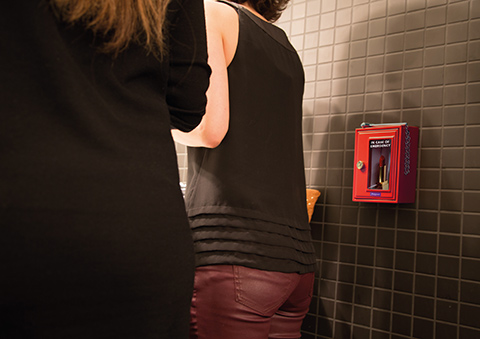
Just imagine, dear ladies: You're getting dressed up for the first date or the glittering evening with friends. The dress fits like a glove, the hair: at least as flowing as that of the Kardashians. You enter the restaurant, quickly excuse yourself, go for little girls (last check), look in the mirror and...forgot to put mascara on! Does this sound familiar?

That was a rhetorical question. Marionnaud is of course aware of the small and large beauty mishaps of its customers and has teamed up with Wunderman to come up with a very clever solution: the Emergency Box especially for ladies in distress. In addition to the classic emergency "missing mascara," women can find emergency boxes in selected Zurich establishments, each containing a perfume or a lipstick. Here are the safety instructions: remove the hammer, lunge hard and break open the jar. But watch out: Unauthorized action will be punished...

MAR_EmergencyBox_1
MAR_EmergencyBox_2
MAR_EmergencyBox_3
MAR_EmergencyBox_4

Responsible at Marionnaud Switzerland: Martina Müller (Marketing Manager). Responsible at Wunderman (Member of Y&R Group Switzerland): Markus Gut (CCO), Thomas Engeli (CD), Sonja Gross, Laureen Zanotti (creation), Sonja Bernardi (consulting).
 

RTVG referendum: industry divided

Because the new media tax relieves the burden on many companies in practice, not all tradespeople are happy with the referendum that the trade association is submitting on Monday.

It took the association eight weeks to collect over 100,000 signatures against the new radio and TV fee. By the beginning of December, the decided in October referendum was held (Werbewoche.ch reported). However, as the NZZ am Sonntag writes in its current edition, the industry is anything but united behind the idea of fighting the new device-independent media levy. Both the restaurant association Gastrosuisse and many bakeries would not support the referendum.

The reason: 75 percent of all companies would no longer have to pay a fee at all, as they have a turnover of less than CHF 500,000. For a further nine percent, the amount would fall from CHF 612 to CHF 400. According to Gastrosuisse boss Casimir Platzer (photo), around 80 percent of the businesses affiliated to his association would pay less or nothing at all. CVP National Councillor Alois Gmür also points out that many businesses are busy consuming radio and TV. The trade association argues purely ideologically and ignores this reality.

Trade association director Hans-Ulrich Bigler, on the other hand, stands by the referendum. It is rare for the association to stand united and the great success of the collection shows the great anger about the media tax. He also fears that the fees would rise rapidly after the introduction and that Gastrosuisse's calculation would not work out. (hae/NZZaS)

Image: Gastrosuisse


New issue of Charlie Hebdo published in several countries

The new issue of the French satirical magazine Charlie Hebdo is set to be published not only in France but also in several other countries. According to reports from press circles on Friday, the magazine will definitely be distributed in Spain and Switzerland.

However, the distributor MLP is also negotiating with partners in other countries such as Canada. The issue to be published next Wednesday is the first since the bloody attack on the editorial office in Paris on Wednesday, in which two Islamists killed twelve people, including four illustrators. The "survivors' edition" is to be printed with a print run of one million copies instead of the usual 60,000. According to the information provided, countries that normally only buy a handful of copies are also planning to request several thousand this time. The magazine's new editor-in-chief, Gérard Biard, announced on Friday that the issue would contain drawings by the entire editorial team, including the four cartoonists who were killed.

Bildschirmfoto-2015-01-10-um-22.37.02
Screenshot Charliehebdo.fr

The edition is published with the support of other newspapers and press distributors who do not want to take any money for the new edition. Charlie Hebdo was already suffering from serious financial problems before the attack. On Friday, the English newspaper Guardian pledged a donation of 100,000 pounds for the satirical magazine, while Google is contributing 300,000 dollars to the upkeep of Charlie Hebdo. After the attack, the surviving employees were forced to leave their editorial offices and seek refuge at the newspaper Libération. Charlie Hebdo is known for caricatures critical of Islam. The attackers themselves claimed to have "avenged" the Prophet Mohammed with their attack. (SDA/hae)
 

Argovia logo: Schawinski considers legal action

Roger Schawinski thinks the new Radio Argovia logo is too reminiscent of that of his station Planet 105. The agency responsible takes the accusations in stride.

"Embarrassing and unimaginative" - this is how Roger Schawinski commented on Thursday on the new Argovia logo presented at the beginning of January to 20 minutes. "Obviously they wanted to copy the good idea of our new logo". The reason for the annoyance: in Schawinski's eyes, one of the presentation options presented - a white logo on a black circle - is reminiscent of the Planet Radio logo. The station, which was called Radio 105 until mid-2014 and was saved from closure by Schawinski at the last second. saved was. In August, listeners were able to vote for the new Planet Radio logo, and the two finalists were selected in a design competition (Werbewoche.ch reported). The winning proposal was submitted by the Zurich agency Resign.

Unbenannt-13_33

Schawinski has now announced that Planet 105 is considering legal action. Lawyers are to clarify "whether this is legal". The media pioneer sees a possible risk of confusion, particularly in connection with media partnerships - namely when the logos are shown on posters or flyers.

radio-argovia-2_0

The agency responsible, Schaerer und Partner, considers Schawinski's accusations to be "absolutely unfounded", as owner Andy Schaerer explained to Werbewoche.ch. The new logo is based on the previous elements of star and lettering, black on white, without a circle. The black circle is only used for marketing visualization - and then always together with the colored elements, which take up the "old" colors of the Argovia logo.

Unbenannt-14_35
Image: ZVG

radio-argovia_0

And like Argovia Managing Director Roland Baumgartner, Schaerer also emphasizes that the logo process was already started at the beginning of 2014 and that the new design had been in place long before the relaunch of Planet 105. As Baumgartner told 20 Minuten, the campaign was only launched now because the company had previously been involved in a legal dispute over radio licenses. With Roger Schawinski, who announced in June that he would not accept the ruling of the Federal Administrative Court and would file a complaint with the European Court of Human Rights. In October 2013, Schawinski had the Confirmation of the concession by the Uvek as the "next chapter in the Aargau radio license farce". In the dispute over radio licenses, Schawinski and his partners claimed that they wanted to crack the media monopolies in Graubünden (Somedia) and Aargau (AZ Medien).

In Baden, where the full-service agency Schaerer und Partner is based, the current discussion about the logos is taken with humor: "We thank Roger Schawinski for this PR wave," says Schaerer. "The logo would not have achieved so much publicity on its own. With or without the circle." (hae)
 

Sports reporter legend Sepp Renggli dead

Sports reporter legend Sepp Renggli died of old age on Friday morning at the age of 90.

The Kriens native was, among other things, head of sports at Radio DRS and head of the DRS radio studio, as SRF writes. Renggli experienced 16 Olympic Games and 45 editions of the Tour de Suisse as a reporter. He was the author of more than 30 sports books and invented the successful radio programs "Sport und Musik" and "Grand Prix Brunnenhof".

21302020
Sepp Renggli, left, comments on a sports event together with TV and radio presenter Maeni Weber (undated photo/Keystone)

Renggli had started his media career at the newspaper Sport, where he quickly rose from secretary to assistant editor. According to Sportinformation, however, his first article appeared in the Luzerner Tagblatt on May 11, 1946: During a language study trip to the south coast of England, Renggli wrote an unsolicited match report on the England-Switzerland international soccer match and sent it to the newspaper - pointing out that his father was a loyal subscriber.

12214674
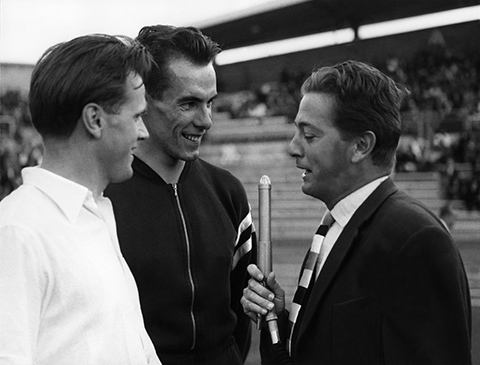
Sepp Renggli interviews the two record runners Sepp Steger and Christian Waegli at the Swiss Championships on August 3-4, 1958 at the Letzigrund in Zurich. (Keystone/Walter Scheiwiller)

In April 2014, the father of two sons who also worked in sports journalism celebrated his 90th birthday. After a short stay in hospital, he died of old age on Friday - and with him one of the greatest sports journalists in Swiss media history. (hae)

26621297
Former sports journalists Karl Erb, left, and Sepp Renggli, right, at a media conference on the route of the 70th Tour de Suisse, Thursday, Dec. 15, 2005, in Baden. (Keystone/Alessandro Della Bella)


get_footer();