The creative agency Thjnk has once again claimed the top spot in the m&k Creative Ranking for 2022. It is followed by Team Farner, which held the number one spot last year. Third place goes to Sir Mary.
Anna Kohler
-
February 20, 2026
The employees of Thjnk Zurich pose for the 10-year anniversary. Picture: Thjnk
A lot has come together for the creative agency Thjnk this year. 10th anniversary, first place in the creative ranking, Pablo Schencke, the ECD of Thjnk, is nominated for the title "Advertiser of the Year". With 288 points, the agency is now at the top of the ranking. 2025 was a good year for Thjnk overall. The agency has grown strongly and has continuously driven forward the development of AI and new tools. Pablo Schencke finds the right words to put the award in the right context. "We are incredibly proud of our first place in the creative ranking, especially because it reflects the breadth of our work for so many different clients. For us, this award is the best proof that we create outstanding creative work from briefs and real client needs. We owe this to our strong teamwork and the trust our clients place in us." Thjnk's goal for 2026, and the claim for the agency's flight to new heights, is fittingly: "Stay on the carpet".
Team Farner follows in 2nd place
Team Farner took second place with 275 points, close behind Thjnk. Last year, the order was reversed, so the two agencies alternated on the podium. Philipp Skrabal, Chief Creative Officer and Partner at Team Farner, speaks for the agency when he says: "We are very pleased with this top result. It's close between first and second place and we've been on the podium for three years in a row." 2025 was a challenging and successful year for Team Farner. They moved from Löwenstrasse to the "House of Impact" in Sihlcity; all agencies are now united under the same roof and benefit from the new proximity. Team Farner will be celebrating its 75th anniversary in 2026 and will be doing things differently. "We have decided to invest our own marketing budget in the future of the industry in 2026. Something like this inevitably comes at the expense of existing activities, such as awards. We will of course remain loyal to the ADC this year."
Sir Mary rounds off the podium places
Sir Mary is one of the top 3 agencies in Switzerland. With 179 points, they ranked third. "For us, this ranking is not a snapshot, but the result of continuous work - as a team, with our clients and on relevant brands." This is how Adrian Merz, ECD of Sir Mary, describes the success. The agency is looking to 2026 with clarity and confidence and will continue to invest in creativity, strategic depth and relevant digital ideas.
4th place for Ogilvy Ingo Group
The Ogilvy Ingo Group took fourth place with 174 points. They see this as an incentive to climb the podium next year. 2025 was a year of change. Swen Morath sums it up as follows: "With Ogilvy as a global network on the one hand and Ingo as a creative boutique agency on the other, we are ideally positioned as a group.
Must not be missing from the top 5: TBWA
TBWA rounds off the top 5 with 159 points. The agency has been among the top five for years, which shows quality and continuity in creative success. Manuel Wenzel has clear words: "Once again, there were an estimated 10 different pieces of work for our major clients that won prizes in many different categories and competitions. Yes, also in AI-Craft." In 2026, the CCO of TBWA wants to remain true to himself on the one hand, but also continuously reinvent himself on the other.
Rank 6 to 10
Freundliche Grüsse also achieved a top result with 6th place and 98 points. "We submitted on a low budget and ended up in the middle of the top agencies. As a full-blooded creative agency, we focus on ideas and feel we are in exactly the right place," says Samuel Textor, Founder and Creative Director of the agency. He adds: "If you only look at the independent, owner-managed agencies in the creative rankings, we are number 1. We are particularly proud of this because it is how we measure ourselves."
Dept took 7th place with 82 points. Just being on this list makes you proud and motivates you to go one better next year, says Philipp Griesser, VP of Growth, Creative & Media Dept DACH. They are already working on many exciting projects for 2026.
Neu Creative Agency came in 8th place with 55 points. We are delighted, says Nico Ammann, Partner at the agency. And they are really looking forward to 2026, adds Simon Rehsche, also a Partner at Neu. "A lot of things are happening fast right now and the air for old ways of thinking is getting thinner. It's becoming increasingly difficult for creativity that has been scraped together, but truly creative thinking and behavior is all the more rewarding," he adds.
Bühler & Bühler made it to 9th place with 38 points. "Year after year, our team achieves extraordinary things with great dedication. We are grateful for this every day," says Raphael Bühler, CEO and Partner. "2025 was an excellent year for us - in terms of creativity, but also economically. We don't take this for granted in the current environment and owe it not least to our confidence in our strengths," he adds.
Publicis came 10th with 35 points. "2025 was dominated by national and international, impact-oriented work. Not all of this work is award-worthy - for some of our clients, awards are simply not relevant. We see 2026 as a year of further transformation: with the growing influence of AI, the focus will continue to shift from visibility within the marketing community to impact on the customer. This is exactly where we are positioning ourselves," says Pascal Winkler, CSO Publicis Group Switzerland.
"Transparency, quality and efficiency remain our guiding principles"
Teads Executive Claudio Lumbiarres on the dynamics of the Swiss advertising market, the merger with Outbrain, and why trust and technology are not mutually exclusive.
Editorial
-
December 4, 2025
Image: unsplash.com Point Normal
2025 was an eventful year in the digital advertising world - also for Teads. The merger with Outbrain strengthens the company's international position and opens up new prospects for advertising clients in Switzerland. m&k spoke to Claudio Lumbiarres about the first few months after the merger, the role of Switzerland and current industry topics such as AI and the open web.
m&k Mr. Lumbiarres, you have been observing the Swiss advertising market closely for many years. Looking back over the past twelve months, what do you think has changed the most?
Claudio Lumbiarres: It was a very intense year. The market environment was turbulent and characterized by economic and geopolitical uncertainty, even outside of Switzerland. We are seeing clear consolidation in the market, for example through mergers between major players such as Teads and Outbrain or OMG and IPG. At the same time, the Swiss advertising market is challenging and, according to Media Focus, was in decline in the first half of 2025. Nevertheless, topics such as efficiency, quality and measurable results are becoming more important again. Many companies are focusing on concrete results rather than pure visibility.
Teads has merged with Outbrain - a merger that has attracted a lot of international attention. How has this step affected your work in Switzerland and how have clients and agencies reacted?
The feedback was consistently positive. Teads and Outbrain complement each other perfectly - the result is a full-funnel offering that combines branding and performance. We can deliver campaigns even more efficiently and in a more targeted manner. It is particularly appreciated that we are also maintaining Teads' quality standards in the lower-funnel area. This makes the new offering significantly more relevant.
What role does Switzerland play in the new setup of Teads and Outbrain? Are there any special features that you take into account more in this market than in other countries?
Switzerland has a special starting position here because Outbrain was not really represented on the market until now. This opens up enormous potential for us to launch the new performance product on a "greenfield site" - with the quality that the Swiss market expects and that is deeply rooted in Teads' DNA. We are already testing various local approaches that are very promising.
Switzerland is a market with high quality standards and a special understanding of trust between brands, media and consumers. What role does this trust play for you in your daily business - and how does Teads manage to make transparency and reliability measurable?
Trust is a core value for me and also a basic principle of our work. I attach particular importance to quality, good products and employees who take responsibility. We have a very low fluctuation rate at Teads in Switzerland, which says a lot about our corporate culture and the trust within the team. We create transparency through neutral measurements and tools such as TAM, which offers full transparency about reach and impact. We think long-term and focus on sustainable relationships and results.
Around 70 percent of digital advertising money ends up in walled gardens. What do you think is needed to bring the open web back into focus?
Especially at a time when a large proportion of digital budgets are flowing to international platforms, the open web offers decisive added value. Brands can consciously position themselves here in high-quality, journalistic environments and thus sustainably strengthen trust, visibility and impact. Quality and context are the basis of any strong brand perception. Quality, transparency and efficiency must work together to bring the open web back into focus. Premium publishers offer outstanding content and reach; what advertisers need is simple, standardized access and clear proof of added value via comparable KPIs.
At the same time, publishers are currently experiencing a massive drop in traffic - partly due to AI-supported search and response systems. How do you assess the long-term impact on publishers and advertisers? And what opportunities might arise from this?
The change is clearly noticeable. AI-supported systems are changing how people consume information. For publishers, this means that they need to develop their business model further and focus more on quality and differentiation. Advertisers, in turn, should reassess the value of trustworthy environments. At the same time, new opportunities are opening up, for example through innovative content formats.
Another major topic is the role of artificial intelligence in programmatic buying. Teads has been using its own AI solutions for years. How do these tools change your campaign management and where do they perhaps reach their limits?
Our AI automatically optimizes campaign playouts according to the defined KPIs. This makes purchasing much more efficient and allows us to use budgets very precisely. Nevertheless, people remain central: strategic thinking, creativity and contextual understanding are not done by a machine.
CTV is seen as the next growth driver in the digital advertising market. What significance does Connected TV have for Teads in Switzerland, and how well prepared is the market for this next development step?
CTV is currently one of the most exciting topics in the digital advertising market. Reach is growing continuously, and the opportunities to digitally target and measure advertising on the big screen are enormous. In Switzerland, we still see a strong connection to linear television - but at the same time, usage is increasingly moving to digital. This allows us to utilize and combine a lot of know-how and technological approaches from our existing models. The potential is huge, especially because we can orchestrate campaigns across all screens.
Finally, let's take a look ahead: Which topics will particularly shape Teads Switzerland and the market in 2026? And what can your customers look forward to?
We will continue to clearly pursue our priorities: Transparency, quality and efficiency remain the guiding principles. We will continue to focus on our Teads Ad Manager. Exciting new application possibilities are emerging here that will help us to evaluate campaigns even more precisely and to think and target across genres. At the same time, we are investing heavily in the lower-funnel area in order to support customers even better with performance targets without losing sight of brand impact. And, of course, connected TV will continue to gain in importance and remains a key area for us. Our customers can look forward to a Teads that continues to grow technologically and maintains its quality standards.
Claudio Lumbiarres, Managing Director Teads Switzerland
"I want to shape"
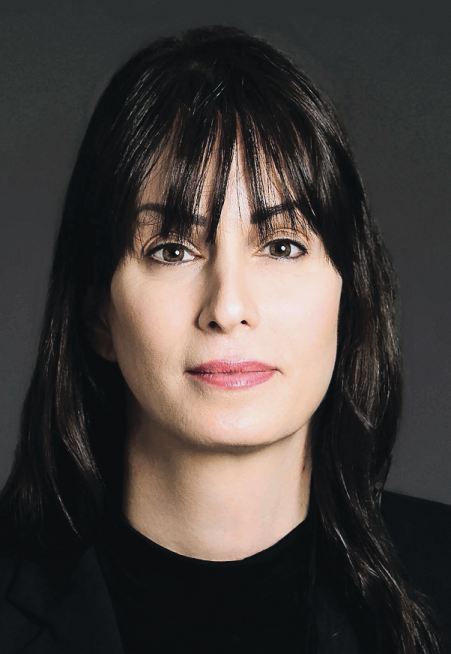
Today, Barbara Castegnaro heads the Promarca association. Previously, she helped elevate the premium segment at Miele, LVMH, and Lindt & Sprüngli. She got her start at Wander and Swatch. Her career is built on precision, curiosity, and integrity.
Anna Kohler
-
December 4, 2025
Pictures: Promarca
When Barbara Castegnaro from Promarca speaks, her eyes shine a little brighter. Not glaring, not staged - more as if she were nodding inwardly.
For her, Promarca is not an association, but a mission: to preserve the strength and radiance of brands in an age that all too often focuses on short-term attention. It wants to lead the committed voice of brands into the future - with the same precision with which it has always worked and with the fire that characterizes it. Promarca will be one hundred years old in 2029. Castegnaro is planning beyond the anniversary: Promarca is to become stronger, more contemporary and more relevant than ever. Barbara Castegnaro knows that transformation is rarely linear. That - as she says - sometimes you have to take the stairs instead of the elevator. And perhaps that is precisely her secret: she has never taken shortcuts. Not in Thun, where she grew up, not in Paris, not at Miele, not today.
Between lake and mountains
In Thun, between the lake and the mountains, she learns freedom and control at the same time. She skis, ice skates and dances. Sport became her rhythm, movement her way of thinking. And somewhere in between the disciplines, a hunch matures: she wants to create something of her own, something that works. At first she thinks it will be medicine. In the end, it became marketing, brand management and communication.
Her professional life begins unspectacularly - and becomes special early on. First job at Swatch, then Wander. In her mid-twenties, she was a sales manager in the catering field - in a team of men almost twice her age. Barbara Castegnaro remembers those years with a smile that is both proud and tough in equal measure. "I was young, ambitious and was probably often not taken seriously," she says. But she stayed. Learned. Observed. And understood that leadership is less about volume than listening and directing.
She knows what it feels like to be a woman in a room full of men - and yet to assert her place. Not through elbows, but through clarity, substance and presence. Today she talks about this time as if it was a kind of lesson. One that prepared her for later appearing at Lindt & Sprüngli, LVMH and Miele with the same consistency and attitude - but more differentiated, more refined, more feminine perhaps.
Luxury, precision, quality - these terms accompany her career like milestones. In Zurich, Paris, Varese, Gütersloh. Four countries, four cultures, four versions of success. Life abroad shapes her: suddenly being a stranger, no network, no security. Water connection, internet, key service - everything becomes a small test. "You get to know yourself abroad," she says, "and you realize how much initiative you really have."
Castegnaro knows that she was lucky. And she knows that luck is no coincidence. Her path has been shaped by mentors - mostly men, never official, always decisive. People who give her space to prove herself. Perhaps because they see something in her that goes beyond the routine. She herself says: "I have learned that competence becomes visible when you live it - not when you exhibit it."
What stands out is that her speech remains concrete. No phrases, no exaggeration. When she talks about brands, she means attitude. When she talks about people, she means responsibility. And when she talks about success, it never sounds like glamor, but like work. "I'm a perfectionist," she says. "I'm working on letting go of that." A sentence that says more about her than many others.
"She knows what it feels like to be a woman in a room full of men - and yet to stand her ground."
Perfection is her tool - and her downer. She recognizes that she often gets in her own way. "In the world of premium and luxury goods, perfection makes all the difference," she says. "But it can also drain you." Anyone who talks to her senses the ambivalence: between Italian temperament and Swiss structure, between emotion and control. Perhaps it is this tension that defines her.
"Feelings are wonderful messengers"
Castegnaro believes in emotions - but she has learned to manage them. "Emotions are wonderful messengers," she says, "if you use them consciously." She laughs as she says this, almost apologetically. As if she knows that this sentence is her trademark.
And now Promarca. A change that was less planned than planned. Three board members, one conversation, one spark. It was a yes to Promarca, not a no to Miele. She came because she loves brands and believes in them - as a cultural and economic constant. Her goal: to give brands more visibility and space in organizations, with authorities, in the media and to create a strong brand community. Competent, respected, integrated, modern and agile "Promarca should still be relevant in a hundred years' time," she says.
You believe her. Because she doesn't speak in the future tense, but lives in the present tense. Because she senses that transformation is not just technology, but attitude. Because she knows that brands need people who understand them - and are committed to them.
When Barbara Castegnaro talks about teams, it doesn't sound like a leadership manual, but rather like trust. She loves mixed teams - women, men, different perspectives. "Social intelligence is not a question of gender," she says, "it's a question of type." And she adds: "I like people who want to move mountains."
And then there is this calm
In her private life, she retires to Zermatt. She has had an apartment there for over twenty years - her sports ground, as she says. On skis in winter, on the golf course in summer. "Golf is my mirror," she says, "I play against myself." It is this mixture of ambition and introspection that also characterizes her professionally. Her favorite city? Many. Her favorite people? Family, partner, son, close friends. Her favorite movie? Three Hazelnuts for Cinderella - every year, at Christmas. It's little confessions like that that make her approachable.
"Castegnaro knows that she was lucky. And she knows that luck is no coincidence."
She laughs often, but never superficially. Her humor has depth, sometimes self-irony. When she talks about fears, she remains pragmatic: "I don't like birds," she says, "that's irrational, I know." It's one of those sentences that makes the reader breathe a sigh of relief - because it shows that behind the controlled professionalism lies a woman with rough edges and reflection.
And then there is this calm. It arises when she talks about what really moves her: meaning, impact, authenticity. "I love making a difference, meeting people, achieving goals together." Perhaps that is her motto in life: creating movement - while remaining genuine. When asked what makes her happy, she answers: "Freedom, health, family and friends, good conversations, sport - living life and enjoying it." And what makes her sad? "Unnecessary misery, wars." These are clear, unpretentious answers - and yet they have a lasting effect.
If she could tell her 20-year-old self something today, it would be: "More serenity. Trust that things can develop." A sentence that matures like good wine.
Barbara Castegnaro has learned that success is not a state. It is movement, change, attitude. And that there is a bit of doubt in every ambition - not understood as a weakness, but as a drive. Perhaps this is her most beautiful contradiction: that on the one hand she wants to control everything and at the same time trusts life enough to fix it herself.
At the end of this conversation, somewhere between brands, mountains and people, the impression remains of a woman who never stands still, but knows where she belongs. And so the circle closes: just like at the beginning, she stands there again - clear, calm, focused - in the midst of her task at Promarca. Step by step. Stairs instead of an elevator.
Promarca was founded in 1929 and represents the interests of 104 brand companies in the consumer goods sector in Switzerland
Live communication: reality and appearance
Technology is increasingly becoming a jack-of-all-trades at events as well: multimedia tools bring people near and far together, and three-dimensional projections blur the lines between reality and illusion.
Irmela Schwab
-
December 3, 2025
Image:unsplash.com
It's that moment when thousands of wristbands light up simultaneously, move to the beat of the music and the entire stadium seems to pulsate. On New Year's Eve in 2025, FC Bayern Munich's basketball arena was transformed into a glowing universe of LEDs, lasers and augmented reality - a pop spectacle that shows what will shape event marketing and live communication in the future: Technology that not only impresses with special effects, but also connects emotionally.
Several elements were used for the "Schlagerboom" concert last December: a monumental LED stage, projections, light and laser choreographies and augmented reality effects that seamlessly connect the stage and the room.
The boundaries between reality and appearance become blurred. Jürgens TV produced the event for Bayerischer Rundfunk and commissioned the content production studio Luppix to create the video elements. The visuals were designed to accompany each song, visually expand the stage and create a sense of depth. The video effects and AR elements came via modern media servers. The audience became part of the production - every wrist, every glance, every beat was embedded in the experience.
Faber Creative Services is also involved with such high-impact concepts. On its Instagram channel, the event technology service provider presents the full range of its skills, including the example of Dell. At its annual "Dell Technologies Forum" congress in Frankfurt am Main, the technical event service provider created a special show effect: at the beginning of the "Opening Session", Tim van Wasen was not on stage - at least not in the flesh. Whoever stood there and spoke like the Managing Director of Dell Technologies in Germany was his virtual alter ego. The digital image, which looked amazingly similar to the real Tim van Wasen, spoke to the presenter, responded to questions in real time and addressed current events in the room. A great show effect.
What is a metahuman?
The idea came from van Wasen himself. The Managing Director didn't just want to talk about innovation, he also wanted the audience to experience it first-hand. Customers and partners should see and experience what is possible with their own eyes. Together with Faber Creative Services, the Dell Technologies team developed a concept that aimed to set new standards both technologically and creatively. Modern technology made it possible: the 3D avatar was created using a full-body scan by Tim van Wasen, which captured tens of thousands of data points and coordinates. This data was used to create a "metahuman", which was able to reproduce movements, facial expressions and gestures on stage in real time. "This is a new way of using technology to create art," explains Matt Finke, CEO and Managing Director of Faber Creative Services.
SmartVillage also works with digital twins - albeit in a different context. The provider of event spaces in Munich, Cologne and Berlin allows companies to virtually inspect the event spaces and plan their events directly in them. "Thanks to photorealistic 3D visualization, all rooms can be explored virtually," says Markus Semmler, Head of Event and Project Management at SmartVillage. "This allows you to customize the floor plan, design the furnishings or try out different set-ups as if you were there yourself. Especially when several decision-makers are involved, you can tinker with the layout together in real time."
The end result is a clear, coordinated concept that SmartVillage then implements one-to-one with its customers. So if you want to make your event as perfect as possible, the event manager advises you not only to look for the most beautiful room - but also for the innovative technologies behind it.
Invisible backbone
Once the event has been planned, HubSpot comes into play - like an "invisible backbone in the background", as Semmler describes it. The CRM system transfers inquiries on the website directly to the customer database via an intelligent form. "This saves our customers time because they immediately receive accurate information. It helps us to process each inquiry in a targeted and personal way," says the SmartVillage manager. He and his team use the tool to manage the entire lead and sales funnel: From the initial contact to the final booking, the event location providers accompany their prospective customers through individually tailored email follow-ups and automated information routes. "HubSpot also evaluates the interest profile so that our event staff know exactly which topics the customers are interested in - and can respond to them in a targeted manner." This process enables the team to make a seamless transition from the online inquiry to the actual meeting at the event. "Without any frictional losses or unnecessary coordination," says Semmler happily.
During the event on site, guests are usually surrounded by digital content as soon as they enter the rooms. Semmler and his team use the PosterBooking digital signage software to control all displays in the event locations centrally from the headquarters. "Whether welcome messages, individual daily programs or last-minute schedule changes: The content can be time-controlled and displayed live on all screens," he says.
This has proved particularly useful for larger events. Changing sessions, breakouts or time-critical updates appear on all screens in a matter of seconds or only in the relevant rooms. "Our team doesn't have to be physically on site to ensure maximum information presence," explains Semmler, who puts the efficiency gains from the individual tools at between 60 and 90 percent. Digital networking makes it possible.
André Sutter agrees that high-quality technology is now standard and is also expected by visitors. The Head of Marketing at the event management company Habegger in Regensdorf in the canton of Zurich notes that the shared experience is once again taking center stage, which was not possible during the coronavirus pandemic. Even the hyped social media could not replace such an emotional, personal live experience. However, it is also important to offer events not only on site, but also remotely.
In view of tight budgets, it is important today to get the most out of limited resources - and to prove it. Habegger has developed a solution to determine whether an event achieves the content objectives that the organizer has set itself: With knw.net, event organizers can record participant reactions live and gain valuable insights into topic interest and format effectiveness on an ongoing basis. Using a combination of cameras, sensors and AI-based analysis software, the tool collects anonymized movement and mood data. It can be used to precisely measure the length of stay, attention and emotional reactions of visitor groups. A user-friendly dashboard displays the results so that event organizers can optimize both the security situation and the effectiveness of content and placements in real time. In addition to large public events, we also use knw.net for corporate events, trade fair appearances and roadshows, for example to analyse visitor flows and interests and to optimize programme structures in a data-driven manner. "Our real-time analysis allows us to flexibly adapt the content to the current mood at the event," explains the Head of Marketing, comparing it to a weather radar in the cockpit. "This allows us to react during the event and not just retrospectively."
"In view of tight budgets, it is important today to get the maximum out of limited resources - and to prove it."
"The play instinct is deeply rooted and can be easily triggered"
Juri Camagni, CMO of Andreas Messerli AG, discusses digital experiences at trade shows and events and «Vision 2035» in an interview.
Irmela Schwab
-
December 3, 2025
Picture: Getty Image
m&k What is currently "state of the art" at trade fairs and events?
Yuri Camagni Today, concepts are clearly moving in the direction of worlds of experience. Trade fair presentations are no longer just static stands, but multi-sensory spaces that make brand stories tangible and convey values. Successful event design combines aesthetic design, light, materials, digital experiences and sound to reach visitors emotionally. At the same time, modular systems and sustainable material concepts are becoming increasingly important so that stands can be quickly adapted to different formats and reused. At Messerli, we combine both trends: as a live experience specialist, we design experience concepts at trade fairs, events and at the point of sale that are sustainable and effective. Our "Vision 2035" sustainability concept, on the other hand, envisages that we will implement this in a completely climate-neutral way in ten years' time.
How do you manage to get the audience more active?
As is well known, activation is created through interaction. At a trade fair, visitors are exposed to numerous stimuli. They want to experience, touch and try things out. Around seven years ago, we created Digital Experience by messerli, a business unit that specializes in digital experiences and customer activation. Here, digital solutions are created specifically for customer requirements that serve to convey content and storytelling. These can be simple gamification solutions that involve and reward the audience with fun and games. For more complex tasks, on the other hand, we develop customized digital customer journeys where visitors can immerse themselves in certain roles as protagonists and thus experience the added value of a product or service. The aim is to increase awareness, convey defined information and connect the brand with an emotional experience.
How do digital technologies come into play here?
Digital technologies expand and activate the experience dimension. Touchscreens, augmented reality (AR) and interactive projections enable immersive content. They create access to information that goes beyond traditional communication. At the same time, they facilitate data collection: customers can collect data, find out who interacts with them, for how long and which content is particularly interesting - these insights are very valuable for marketing and sales.
Do they tend to be used for B2B or B2C events?
We have found that their use is equally in demand at trade fairs (B2B) and public exhibitions (B2C). At B2C events, playful interaction such as competitions or quizzes often serve to build brand loyalty and emotionalization. At trade fairs, on the other hand, digital tools are more focused on providing information, demonstrating complex products and generating leads. Interestingly, we are increasingly seeing overlaps: Trade visitors today also expect similarly exciting digital experiences as B2C participants. The play instinct is deeply rooted in everyone and can be easily triggered.
Which technologies are particularly popular with the public?
Interactive competitions that are easy to solve but at the same time offer informative added value. This creates a win-win situation for both sides: the exhibitor learns something specific about the participants and, with a bit of luck, they can win something in return. Immersive technologies are popular with trade visitors. So are interactive installations that visitors can personalize and that allow them to enter a world of experience as protagonists themselves. Hybrid features such as live polls or interactive content walls that generate attention and conversation are also popular.
How can digital twins be used at trade fairs and events?
Digital twins are perfect for enhancing the presentation experience and explaining complex mechanisms at a trade fair. Our solution is called Expotwin and is aimed specifically at machine and plant manufacturers. It combines the physical presence of one or more exhibits with the interactive presentation options of a digital twin. This means that even very large machines or systems can be presented effectively in a small space. Digital twins can also be used for training courses, product presentations to customers, internal events or roadshows. They enable simulations of processes, training for sales teams or customer presentations in 3D environments. They are also interesting in terms of sustainability: less material consumption, reusability and global reach without travel costs contribute to the sustainability balance.
The Swiss exhibition and event construction service provider based in Wetzikon (ZH) is one of the most innovative providers of live experience solutions in Europe. Around 120 employees design creative and activating presentations at trade fairs, events, showrooms and at the point of sale. The offering is complemented by digital experiences. In the Digital Lab in Wetzikon, you can experience on 350 m2 of showroom space how innovative digital technologies and solutions take brands and companies further.
Juri Camagni, CMO of Andreas Messerli AGPicture:Messerli
"Efficiency alone is not enough"
British economist Tim Jackson challenges the dogma of growth: Efficiency alone is not enough, he says—what matters most is how we bring humanity and health back into our economy.
Irmela Schwab
-
December 3, 2025
Illustration: Silvan Borer.
m&k Achieving more with less - that sounds good. What could be so bad about efficiency?
Tim Jackson In itself, efficiency is a good thing. Since the Enlightenment, but also fueled by the period after the Second World War, we have measured economic performance in our society in terms of efficiency parameters. The more, the better has become a kind of religious mantra for us, as well as a political goal par excellence. This productivity is, so to speak, the foundation of our economies. However, producing many products with fewer costs and less human labor does not always mean that the bottom line is better. What's more, when we produce less, we also use fewer material resources, which in turn has a reduced impact on the environment. So you could ask critically: does the traditional way of productivity still correspond to our ideas of progress today? What are we actually looking for? And what is our ultimate goal?
Since when has this definition of progress been put to the test?
In the past, the ultimate goal on earth was to do good so that you could later go to heaven. If that were still our goal today, we would measure productivity very differently. But after secularization, we interpret progress in material terms: we want to have more, do more, own more, be more. And that determines our idea of productivity. But is that really a good thing? If we lived in a society where most people were hungry, had nowhere to live and nothing to wear, then yes. Economic growth to achieve prosperity and well-being makes sense today, even in the world's poorest countries. After all, life expectancy doubles when you go from nothing to an annual per capita income of around 10,000 dollars. But things are different in our society: Continuing to grow means not only a problem for the planet, but also for us. Because we are overwhelmed with material things, we often miss out on areas of life that are really important - such as relationships, a sense of purpose, identity and belonging. Such social non-material factors are difficult to measure, so they do not appear in the performance measurement of our efficiency.
So we need to move away from efficiency towards more humanity?
So far, we have always tested efficiency precisely and relatively directly. As a rule, we measure by money, materials, clicks or access - and we want as many of these as possible for as little effort as possible. With the help of technologies such as artificial intelligence, people, who also cost money, can be almost completely removed from many production processes. This means that production can become more and more efficient so that more things can be produced with less effort. This is preferred in capitalism because it allows you to increase your income, reduce your costs and increase your profit margins. These activities therefore tend to be favored in a society driven by the pursuit of profit. On the other hand, activities that take time are disadvantaged in the same society because time costs more. Capitalism therefore divides the economy into a sector that can produce ever faster and ever more, and a slower sector in which it is actually time that gives quality to services. Think of services that people provide to each other, such as health and social care, education, renovation and refurbishment. Such services take a lot of time. It is the nurse's time with the patient, the teacher's time with the student, the craftsman's time creating something lasting, the musician's time teaching how to practice the symphony. All of this is eliminated by capitalism because it costs time. But with short-term efficiency goals, we are distancing ourselves from our well-being in the long term.
Picture: Linda Gessner. Illustration: Silvan Borer.
How could a rethink succeed?
Efficiency is still a good thing. But it is also important to care for each other, to have meaning and purpose, to have fulfilling work, even if it comes at a cost. In fact, being able to work in society is fundamental to our well-being, but this kind of slow economy, and with it the things that are important to us, is being penalized. We also need to realize where efficiency leads to absurdity - for example in the food sector: the industry does not sell good food, but ultra-processed food that contains no fiber, not enough nutrients and instead contains a lot of sugar and saturated fats. As nasty and unhealthy as this is, it is also productivity and efficiency. Over time, however, it creates an almost unaffordable health burden, which I wrote about in my last book "The Care Economy". One part of the economy strives for efficiency and more material production, which weakens the integrity of the other parts of our economy that rely on care, that rely on our health, that rely on our ability to do things a little more in terms of conventional wisdom and are actually better for us in the long run.
So do we need a measure for the human aspect and parameters for sustainable management?
There really are things that we should measure. We live in a growth-dependent society: our tax system depends on growth, as does our pension system. But we also need to look at health, which has a very different dynamic to property growth. Health is never about always having more - sometimes we just need a little more of it. But sometimes we also need a little less growth in possessions in order to be healthy. We need to pay attention to this balance. The indicators we want to have for this are therefore complex: they should measure whether the health of our economic system is in balance. Financial crises such as the one in 2008 also throw it off balance. It's about looking at society from a different perspective and accepting that we as individuals, as a society, as countries and ultimately as a planet are to some extent striving to be healthy. The parameters that could be used to measure the feeling of well-being could range from GDP to the feeling of being lonely in society.
Who should control this balance - politicians? The managers in companies?
Ultimately, everyone should do this. However, it is certainly up to the government to create the framework for this, as it also creates many of the conditions for economic growth. They use financial laws to determine what people are taxed for and what they receive incentives for. Overall, this regulates people's lives and society as a whole.
In the UK, the government has imposed a higher tax on sugary drinks, with resounding success.
Yes, that's great. That's something that governments can do to intervene in areas that are efficient but actually make us unhealthy. Businesses should also do something, but unfortunately they are probably the most dependent on economic growth. So it's about changing the rules of this system and making it easier for companies to be less dependent on growth. On the other hand, there are also some very good companies that are focusing on sustainability right now, as well as many start-ups that are focusing on sustainability, purpose-driven organizations and benefit corporations like in the United States. These are mutual companies that are not focused on the endless pursuit of profit, but have broader societal goals.
"Continuous growth is not only a problem for the planet, but also for us."
Higher, faster, further: Really?
The idea of efficiency—achieving more with fewer and fewer resources—sounds appealing—and is certainly feasible in the age of AI. But does the path to success really lie solely in increased productivity?
Irmela Schwab
-
December 3, 2025
Illustrations: Silvan Borer.
This evening is all about people, what makes them human and what they have over artificial intelligence. For Peter Martin, this human core consists of actively listening to others, "perceiving them with all our senses, grasping them cognitively, feeling them in our hearts", explains the CEO of creative agency Martin et Karczinsky. Then he takes a break, not wanting to overwhelm his audience. But the sentence is already written on the stage wall for all to see: "Align with the soul".
It's quiet in the Experience Center demonstration room at design lighting company Occhio in Munich. Martin's presentation at the invited event "The Human Side of Business" seems to have struck a chord. The visitors, including marketers, communicators and creatives, listen to his words with rapt attention. Some hold a half-full glass of wine in their hands. The soirée "The Human Side of Business - Growth in the Light of Attitude and Empathy" began with a networking drink and snacks. First the pleasure, then the work. This is no longer quite normal today, in an era in which the cost-benefit factor underlies everything.
The call for efficiency is getting louder
Generative AI has turned things upside down - not just for visitors to the Occhio event, but for everyone. Writing a speech? You don't have to do it yourself anymore, ChatGPT can do it much better, and in no time at all. Finding arguments for the pitch? Gemini certainly has more powerful ones. Realign your sales strategy? Why not ask Claude? It's always quicker, and the time you spend fighting for ever tighter budgets is ultimately valuable. The call for efficiency is getting louder and louder. And its metrics, the so-called KPIs, are spreading like a spider's web across all sectors. The aim is to achieve the greatest possible profit or benefit with the available resources such as capital, labor and time. But does this actually lead to the desired success?
"The speed of efficiency can do more harm than good in the long term."
The situation is tricky. Ever since the outbreak of the AI hype, the question on everyone's lips has been: who will manage to get the most out of the resources? While AI makes many tasks easier and faster on the one hand, it also brings with it more pressure to be even better than the global competition. The efficiency wheel is turning faster and faster. Many start-ups are currently entering the market with new solutions. One of these is AppliedAI, Europe's largest initiative for the application of AI. The joint venture between the Munich innovation center UnternehmerTUM and the Innovation Park Artificial Intelligence (IPAI) in Heilbronn aims to strengthen European innovative power and build global AI champions. Europe should not be left behind in the competition against the USA and China.
Illustrations: Silvan Borer.
This is why the big conferences are paying homage to AI. During the Medientage München in October, speakers talked about how much AI is at people's side, as a friend, even as a lover. CEO Andreas Liebl described how AI agents work for companies in front of 5,000 visitors from the DACH region. "AI is dramatically accelerating productivity in various areas - from recruitment and finance to purchasing and sales," explained Liebl. Where many things are automated, the "extremely tedious tasks" in particular are eliminated, which does not always cost jobs, but sometimes does.
Artificial colleagues are faster
At the world's largest CRM provider Salesforce, for example, CEO Marc Benioff recently announced a hiring freeze on software developers, who were once in such high demand. AI can take over programming work that was previously carried out by developers. The company also laid off 4,000 employees, mainly in customer service, who were replaced by AI agents. Artificial colleagues are fast, humans are slow - and that costs market share. That's the efficiency 101.
By contrast, studies show that AI in customer service, for example in call centers, does provide efficiency benefits, but customers ultimately prefer to speak to people made of flesh and blood. For example, 51% of respondents in a recent Gfk study miss the personal support provided by AI applications. There are also data protection concerns. And so, despite fast processing by AI agents, only 24% explicitly want AI-supported service. In contrast, 48 percent prefer the classic service of a human assistant.
"Artificial intelligence optimizes the expected, not the unmistakable."
Matthias Horx also shakes his head when customer contacts are outsourced to bots. "Firstly, people don't want to talk to bots because they would like to have human contact; secondly, bots can't answer all questions. Thirdly, there are complaints and objections, as AI is always learning during its use, and learning is naturally also associated with misunderstandings," explains the futurologist with offices in Frankfurt and Vienna. There can therefore be no question of time or financial savings. "Employees who have helped callers so far may cost more than AI agents, but at the moment their job is to maintain the snagging AI interfaces."
The futurologist advises reconsidering how the economy works at its core - not in a linear economic sense, but systemically, he explains: "From a systemic point of view, efficiency is compression and acceleration. This has a heating effect: everything happens faster, i.e. more efficiently, not necessarily more effectively."
Efficiency versus effectiveness
For Horx, the crux of the matter is that efficiency does not equal effectiveness. According to him, effectiveness is created through sustainable interaction between employees via routines. The trend researcher describes the agreements between marketing and sales that have developed over time. "People meet for coffee in the canteen, for example, and exchange ideas there. This informal cooperation has organized itself and works," he says. "If you now take a department and make it highly efficient, there will be breaks in the overall organization. Routines fall apart, leading to inconsistencies and different perceptions. Companies then have to readjust. Leaps in efficiency may bring short-term growth, but they are disappointing in the long term," says Horx.
Horx uses nature, which moves at a certain speed, as a comparison. "If you accelerate a brain via an implant, it would suddenly work incredibly fast. The body would probably burn up because it would be constantly fidgeting. Even if the heart were to beat very fast or the liver were to become overproductive, there would no longer be any balance in the overall system. This speed also exists in the context of markets and people. Such connections are overlooked in the whole AI debate.
There are false targets
This imbalance can be seen in many areas - including advertising marketing. The trend towards programmatic ad targeting based on cookies and NetIDs has been leaving people out of the equation for years. Contrary to the promises made by ad tech providers and media agencies, it is often not possible to target the right person at the right time. The industry has been discussing this for years. One problem is that tracking technology is usually based on the IP address of a device, but not on real people. If, for example, several people in a family use the same computer or browser, this can easily lead to incorrect targeting. The technology may therefore be more efficient in that many forms of advertising are played out more quickly via complex user targeting, but because they do not reach people directly, they are not more effective.
"Whether intern or CEO - everyone wants to be seen and heard. Empathy is crucial, especially in leadership."
In addition, the timing is often not right either. Thomas Lohr, founder of the Berlin-based advertising platform Spoods, gives an example. "A woman searching online for vegan recipes is hardly interested in SUV advertising at the moment she reads an article about it in a food magazine," says Lohr. Even if she had researched a car beforehand, she would not be in the mood for it at that moment. In contrast, she would pay more attention to a Lidl advertisement with suitable recipe ideas at this time. The content environment must therefore be right. Lohr therefore also recommends contextual targeting for programmatic advertising purchases. A principle on which Google Ad Search is based and which generates around 75 percent of Google's total advertising revenue. Lohr's appeal: "Media must once again become points of contact for specific content. Advertising should serve the interests of users - not disturb them."
Illustrations: Silvan Borer.
The situation is all the more urgent because publishers and companies are losing visibility in the AI era. Users who want to find out more about certain topics are increasingly being presented with their answers directly in Google AI Overviews or they search directly via ChatGPT & Co. where the original sources are also no longer visible but have already been processed in the answers. This means that the user receives relevant answers and, in the future, if such forms of advertising are permitted, also relevant advertising if contextual ads are placed in the chats. In this scenario, AI technology, of all things, which is causing a collapse in efficiency in other areas, puts people back at the center.
Creative performance remains central
Even at the prestigious "Effie" awards, where everything revolves around measuring, people and their very own creative achievements are not to be ignored. Even in times when creatives could sit back and relax. Kathrin Leder observes the trend towards a "tech-driven efficiency society" with skepticism. As project manager at the professional association Leading Swiss Agencies, she has been organizing the Marketing Effectiveness Award in Switzerland for over ten years, which recognizes ambitious marketing goals and their cost-benefit ratio. For Leder, however, good marketing is about more than just KPIs, she explains: "It is and remains essential to know your target group and choose the right messages and channels to reach them and persuade them to take the desired action. This judgment is not only based on the numbers, but also on the common sense and intuition for people, brands and markets of the Effie jury committees."
"Efficiency does not always mean that effectiveness is also achieved."
The Effie team is not yet aware of any AI cases that have produced award-winning creative achievements. Leder believes that technology-driven companies like Meta only need two pieces of information - the target and the bank details - to implement a campaign and that AI does the rest. She refers to an interview with Fabian Bertschinger, Executive Creative Director at Farner Switzerland in Zurich, which appeared in m&k in the summer. The creative criticizes the fact that in future, Meta will only need two things to implement a campaign: "Companies will only need to name their target and link their bank details. The AI will do the rest," the creative explains. For him, such a campaign without creation, targeting, strategies and without questions is above all one thing: "content without creativity." What sounds like efficiency is actually a rejection of the creative principle. "Because what results is neither surprising nor original. Generative AI optimizes for what is statistically expected, not for what is unique. It delivers what works, not what fascinates. This creates an aesthetic of flawless harmlessness, but also of insignificance," criticizes Bertschinger. However, good marketing needs profile and edges.
Clever inclusion of AI
However, there are also tech providers who clearly understand that humans and AI can only gradually become a team. "AI agents let people do what they do best - interact with people," says Patrick Heinen. As Vice President Solution Engineering at Salesforce Germany, he finds it highly inefficient when employees copy data from one system to another. To stop this happening, Salesforce has now launched the AI agent platform "Agentforce". The smart bots work autonomously by retrieving data, creating action plans and executing them within the company's guidelines without human intervention.
"The human core lies in active listening and the ability to perceive with all the senses."
"While people burn out from many repetitive tasks, AI helps people to focus on more exciting things again." To find these exciting areas of activity, Heinen advises first defining the goals and then considering whether humans or machines could be better deployed there. For a call center, this means that answering the same questions over and over again is not very creative for humans; an AI agent can also do this in natural language. If it reaches a dead end, it can hand over to a human.
"AI delivers what works statistically, but not what is unique or fascinating."
However, according to the Salesforce manager, the mistake that many companies are currently making lies in implementation. Sometimes there is a lack of communication and a lack of strategy. "Managers need to get their employees on board," he recommends. Andreas Liebl from AppliedAI also advises this. He admits that it will not be easy to shape this change. But it has to be, because it won't work without AI. The CEO has printed the following sentence on the bags and brochures: "Advancing Europe's industry to compete in the age of AI, shaping a future that we desire to live in." In other words: It's about helping to shape the future of AI - if not, others will do it.
On this evening in Munich, Peter Martin has taken a seat on the stage in a deep cream-colored armchair. The agency boss is talking to Susann Meise, who is responsible for employee management at the luxury lamp manufacturer. Why active listening brings real corporate success? "Whether intern, manager or executive - everyone wants one thing above all else: to be seen, heard and noticed. And that's exactly what empathy is needed for - especially in leadership," says Meise. When people are able to develop their personality and are given the opportunity to follow their own destiny, they lead a fulfilled life - that is efficiency par excellence. But such developments don't happen overnight, no matter how hard AI tries. Above all, they take time. The rediscovery of slowness - it has only just begun.
Writing letters is a mental exercise
An advertising campaign almost always begins with a briefing. But what if briefings themselves are the problem? An attempt to bring some structure to this tricky matter.
Parvez Sheik Fareed
-
December 3, 2025
Instead of advertising the driving pleasure, Jeep thematizes the spaciousness of the vehicle with "The best car to have sex in." Pictures: zVg
The British advertising strategist Richard Huntington once aptly said: "There is nothing better than a great briefing. But no briefing is still better than a bad briefing." An example of the latter is Mick Jagger's letter to Andy Warhol for the Rolling Stones album cover. Mick Jagger writes that he leaves it to Andy Warhol's competence to do whatever he wants to do. An absolute vote of confidence in Andy Warhol's creative talent and expertise.
Illustration: Jagger Warhol Letter zVg.
Fast, fast, fast
The Jagger/Warhol case is the exception. Usually, briefings are the indispensable starting point, which is understandable from the client's point of view. After all, the agency should be provided with the necessary information to be able to take targeted action. The problem is that the client too often says: "We need to do a quick briefing." The briefing is treated like a credit card application: quickly write down the USP, target groups and other keywords and send them to the agency. Such a briefing may be short, but it does not contain any in-depth considerations.
The other extreme: the briefing mutates into a major event on paper that contains all kinds of information. Abundance instead of focus. This is due to the fear of forgetting something. The agency then has to ask questions in a time-consuming sorting process to find out what was actually intended. And in the end, it is often still unclear which specific challenge needs to be solved creatively.
This makes it all the more important that the briefing is based on a constructive consensus between client and agency. It forces the client and agency to take responsibility and minimizes the risk of downstream idle time, adjustments and coordination.
Co-creation? No, thank you
The term co-creation is cropping up more and more often. It is the process of collaborative idea generation between agency and client. Personally, I don't believe in actively involving clients in thinking up and generating communication ideas. On the one hand, because creative ideas are the result of talent, experience and expertise and not something that is "worked out" in workshops. Another reason is that there must be room and space for absolute garbage and garbage ideas on the agency side during the idea generation phase. Because you often only come across the really good ideas when you have a lot of stupid ideas. I know it's a terrible analogy, but: a truffle pig first has to go through the dirt to find the truffles. In the presence of clients, many a creative person is wary of saying a stupid idea out loud. After all, they don't want to offend anyone or cast doubt on their own intellectual competence. This safe haven for risky thinking must be guaranteed and is usually only possible through isolation.
Co-briefing? Absolutely
The client should be involved at an earlier stage, namely when the brief is being drawn up, in order to identify the problems as accurately as possible. Here it is advantageous if the client brings the inside view to the table and the agency the outside view. This process is an investigative, explorative exchange in the form of an open discourse. The aim is not to fill out a paper together that deals with questions about target groups, USP, etc. Rather, it is a consideration of the overall situation by both parties. In my opinion, the following areas are the most important for this exchange.
Inconvenient truths
A brand can basically be viewed from three angles: the brand itself, the product, the people (who may or may not use the product) and the category.
In all these areas, there are so-called truths that have become established over time. There are both comfortable and uncomfortable truths. What is meant by inconvenient truths? Inconvenient truths are those that are spoken behind closed doors and are rarely made public. These uncomfortable truths offer an enormous pool of opportunities to derive creative communication ideas from them. The primary aim is not to dramatize these uncomfortable truths per se. Rather, the aim is to be able to draw further thoughts from uncomfortable truths, with a positive twist that forms the foundation for a creative central idea in the conclusion. Together, client and agency can collect such uncomfortable truths. The agency should generate key ideas based on uncomfortable truths on its own and then present the results to the client.
"It has advantages when the agency and client are open about
to seek out as many uncomfortable truths as possible."
When we conceived the BDP's guiding principle "BDP. Boring, but good.", it was based on the uncomfortable truth that although good political ideas solve a specific problem, they are often unspectacular. This is a dry fact and makes politics appear boring to the outside world. However, the consequence of this is positive, because good political solutions require objectivity and objectivity. This basic idea gave rise to over 20 different motifs that form the campaign slogan "BDP. Boring, but good." were repeatedly dramatized.
Without openly addressing this uncomfortable truth, this idea would not have come about. Therefore, it only has advantages if the agency and client openly search for as many uncomfortable truths as possible.
Category Entry Points
Another area that should be discussed in the co-briefing is category entry points (CEPs). These CEPs are the reasons, motivations, triggers and occasions for someone to consider buying a product from the respective category. The focus here is on the category, not on the brand itself. From the buyer's point of view, brands are often alternatives, not competing products. The easier a brand comes to mind in a particular purchasing situation, the more dominant it is in this category. There are a number of questions within a category. Why am I buying this product? Where do I use this product? When do I use this product? etc. This approach takes into account the buyer's perspective and behavior when using the product.
An excellent example is the Jeep Grand Wagoneer commercial. Instead of advertising the pleasure of driving - which the majority of car commercials do - Jeep addresses the spaciousness of the vehicle with an unconventional usage suggestion: "The best car to have sex in." This, in turn, can also be seen as an uncomfortable truth: Cars are not only used for road transportation, but also for sexual intercourse. Jeep succeeds in creating a very entertaining product demonstration with this commercial without appearing indecent.
Those who consistently focus their co-briefings on "inconvenient truths and category entry points" are already doing much better than most. This focus lays the foundation for better campaigns.
The author
Parvez Sheik Fareed is a British-Swiss advertiser and co-founder of the advertising agency PAM Advertising.
Image: zVg.
"Swissness is an attitude"
In an interview with m&k, Andy Böckli, CEO of the Nüssli Group, discusses his company’s international successes, the importance of sustainability, and how to achieve fast, efficient construction while maintaining high quality. With his vision for 2026, he is focusing on a sound economic foundation and a culture of innovation.
Irmela Schwab
-
December 3, 2025
Andy Böckli, CEO Nüssli Group. Picture: Nüssli
m&k Nüssli has expanded internationally in recent years. Which markets or segments will you be focusing on in 2026?
Andy Böckli Our growth is based on the conviction that people are enriched by shared emotions. With our Logistics 4.0, we are in a position to realize major events worldwide. We see further potential in the areas of sport, culture and business in particular. In Germany, the demand for interim venues is growing, especially during renovations. This is where our modular solutions come into their own. Within the Nüssli Group, our subsidiary Ruba Objektbau in Switzerland is strong in the catering and interior fit-out sectors.
Sustainability is part of the business model. How far do you want to expand the principle of the circular economy by 2026?
Sustainability is a core component of our work. We recently won the IOC IAKS architecture prize for the temporary stadium extension in Budapest. Our projects focus on the reuse of materials and the integration of existing infrastructures. This allows us to reduce waste and conserve valuable resources at the same time. Digitalization plays a key role here in managing logistics and the use of materials even more efficiently.
Which technological or organizational innovations will shape the path in the coming years?
The use of BIM (Building Information Modeling) in particular is an important step for us. It facilitates collaboration on international projects and enables more efficient planning. We are making targeted investments in the digitalization of project management and are continuously optimizing our modular systems in order to be faster and more efficient. We see technology as a tool for mastering complexity and measuring quality.
How do you manage to complete challenging buildings within a few months without compromising on quality?
Our strength lies in the work of experienced teams that divide complex projects into structured parallel processes. This allows us to carry out several steps simultaneously - from planning to installation. It's not just speed that counts, but also preparation and precise monitoring of the entire process. This enables us to identify potential bottlenecks at an early stage and take countermeasures in good time.
Temporary buildings are considered "transient". However, your projects win international awards. How do you manage to ensure that temporary architecture has a lasting effect?
For us, temporary architecture is anything but provisional. It is a precise response to a temporary need and an exciting field for innovation. World exhibitions in particular often experiment with new materials and construction methods. Our projects are one-offs - they are unique in the moment, but have a lasting effect through the emotions they evoke in people.
You have received numerous awards for your pavilions at the Expo. What do prizes mean for positioning?
It is a great recognition of teamwork. We work closely with architects and partners to implement every project to the highest technical and design standards. For us, these awards are proof that we can successfully realize our partners' visions - with Swiss precision and a strong international network.
What role does Nüssli play in the collaboration with architects and creative offices?
We see ourselves as partners at eye level - as enablers. Our task is to implement our partners' visions with technical expertise and creative openness. The earlier we are involved in the process, the more we can get out of a project together, both technically, economically and creatively. Trust and respect are crucial to the success of a project.
Nüssli stands for Swiss values, but operates globally. What does "Swissness" mean to you today?
Swissness stands for reliability, integrity and maximum precision. It is more than just an origin - it is an attitude. Our customers know that they can rely on us, whether it's F1 in Las Vegas, Expo in Osaka or ESAF in Mollis. This demand for quality runs through every detail of our work.
Your projects are created under great time pressure. How do you maintain the corporate culture and spirit?
The Nüssli spirit thrives on team spirit and trust. Our values - Performing, Multinational, Interactive, Sustainable and Reliable - are the foundation of our corporate culture. For us, "Interactive" in particular means that we are well networked in all areas, both internally and externally. This close cooperation makes us strong and contributes significantly to our success.
Where do you see Nüssli in 2026?
Economically, we want to achieve solid and healthy growth. Culturally, success means leading an organization that promotes innovation and supports talent. Personally, it would be a success if we could continue to enrich people's lives in the coming years and turn our promise of "Connecting You" into a reality.
"The Nüssli spirit thrives on team spirit and trust."
Emotion triggers relationship
Today, brands, institutions, and organizations no longer engage their audiences through messages, but through atmospheres that people can feel. Every event—whether it’s a trade show, symposium, or festival—is also a social experiment in which brands, people, and space come into resonance with one another.
It is about connections, about those moments in which the audience feels seen, understood and emotionally touched. Events thus function as resonance spaces in which architecture, light, sound, movement and digital interfaces interact, transforming emotion into tangible experiences and thus choreographing the collective event momentum.
Emotion technologies are creating a new cultural paradigm - one in which emotion is not only accompanied, but also built and shaped. However, the more emotion can be generated and evoked with technical stimuli, the greater the need for something that feels real, unmediated and not technologically controlled. Especially in the age of digitalization and AI, the value of human meaning and the longing for moments that feel real is growing. Live experiences are therefore becoming places of connection and cultural counter-spaces in which belonging and authentic resonance remain possible.
Authenticity of the emotion
The question of authenticity accompanies every form of social representation. Since Dean MacCannell formulated "staged authenticity", authenticity has changed from a moral to an aesthetic-social concept: What appears genuine is what appears coherent within its staging. Tourists are not looking for the real thing, but for a hint of it - the promise of a glimpse behind the scenes, knowing full well that staging also takes place there. Live marketing is also based on this tension between the so-called "front stage" and "back stage", between closeness and distance. The boundary between audience and actor, between authenticity and staging, is constantly being renegotiated. The audience experiences itself both as part of the production and as an observer - and it is precisely this multidimensional perspective that creates a new mode of authenticity.
How does the audience encounter the event? John Urry described the "tourist gaze" as a socio-cultural visual order that follows cultural patterns, expectations and desires. Where the tourist seeks the so-called "exotic other", the audience focuses with the so-called "event gaze" on the extraordinary event momentum that can be shared with others. It is this condensed, intense "now" that stands out from the everyday and the familiar. This gaze is also performative, because it produces the event that it observes - in the spirit of: Without a gaze there is no event, without an event there is no collective gaze. The "event gaze" is therefore not only visual, but also affective. When light, sound, silence, movement, rhythm and temperature affect the body, perception and emotion merge into a sensory dramaturgy. The audience not only sees, it also feels. And in the simultaneity of observation and resonance, a new form of reflexivity emerges as an experience that is reflected and aesthetically condensed in real time.
Authenticity appears here as a dynamic socio-cultural process with a constant balancing act between experience, representation and resonance. What appears emotionally coherent is credible and authentic. This is the logic of staged authenticity: authenticity is a mood that is created when the message, brand and its atmospheric perception resonate with people's senses.
Architecture of emotions
The space also becomes an actor and speaks in atmospheres that not only frame but also carry meaning. The fusion of architecture and mediality gives rise to a new spatial composition, the so-called "mediatecture". Stages, exhibition stands and immersive installations become places where brand and body resonate between narrative and sensation. Attitude can be experienced at the events through specifically composed atmospheres - whoever enters such spaces also enters an attitude.
Neon lights, raw surfaces, playful installations and industrial materials lend startup formats such as the St.Gallen START Summit an aura of energy, new beginnings and creative restlessness. The attitude conveyed is one of openness, courage and experimentation. The St.Gallen Symposium creates an atmosphere of trust, stability and cultivated exclusivity with its clear, internationally coded aesthetics, calm light axes, high-quality, solid materials and balanced proportions. It uses the formal language of large forums for global encounters and combines social relevance and international attention to create a concentrated moment of shared significance.
Authenticity can also unfold on a small scale and in intimate, interpersonal moments that may take place in front of a large audience, but which showcase the personal and interpersonal. For example, when professors take a seat on stage in an improvised shared kitchen at a kick-off day for new students - with a table lamp, teacup and casual closeness. In this setting, the stage becomes a place of personal moments. Such scenes are touching because they make the emotion of closeness tangible. Mediatecture thus becomes the emotional grammar of a brand: it translates attitude into experience and opens up a state that is experienced and reflected upon at the same time.
Technologies of emotion
Emotion is the central currency of attention. Where it is triggered, information is anchored more deeply - this applies to learning research as well as to experiential marketing. Events that touch us leave emotional traces in our memory and become points of reference for individual and collective recollection. The emotional architecture of an event can be described as a dramaturgically guided affect curve, the essential building blocks of which are excitement, relaxation, resonance and memory. When this curve is synchronized with the semantic identity of a brand, an affective coherence is created in which authenticity is not only claimed, but can actually be experienced.
Anticipation, wonder and belonging - a triad that supports meaningful experiences - can be used to compose emotions in a targeted manner. Anticipation opens up perception, amazement expands the moment, belonging strengthens the bond. Technologies such as sensory systems, immersive light and sound spaces or extended reality create an infrastructural level of feeling, and emotion becomes the central criterion of credibility. In addition to semantic coherence, the narrative dimension is also important. The use of metaphorical storytelling picks up on universal patterns that give us orientation. In this way, abstract brand values are transformed into emotionally tangible roles that resonate in the collective unconscious and with which we can intuitively identify.
Authenticity in live marketing is a social event, it happens in the social interaction of the participants. It arises when many people feel at the same time, when goosebumps, amazement, jubilation or silence are shared. The synchronization of affective experience creates community, and the narrative structures this experience as an emotional grid. This creates coherence on several levels: semantically, when disparate elements are connected narratively; affectively, when symbols activate emotions; and socially, when participants confirm authenticity through their collective participation.
Finally, technological systems not only open up new possibilities for design, but also for capturing and controlling emotional dynamics. Through sensor technology, data feedback and real-time control, affective states can be analyzed and specifically modulated. Emotion is thus transformed from an accompanying effect into a directing element - into a conscious component of an emotional dramaturgy that not only creates credibility but also continuously adjusts it.
Aura of momentum
How affective dynamics unfold in concrete terms can be observed particularly clearly in productions that make the uniqueness of a moment tangible to the senses. For example, when a painting is created on stage during a series of keynote speeches (seemingly detached from the action on stage), the situation is transformed into an aesthetic experiment. The artist becomes an actor who - like the audience - tries to distil an essence from the lectures. Thoughts and emotions become visible, materializing in color, form and movement. The resulting work, born in the moment and yet reaching beyond it, becomes a symbol of the shared experience - authentic because it is rooted in the here and now.
"The ability to categorize emotions culturally and place them in a context of meaning is reserved for humans."
Technological forms of emotional communication of the momentum do not have to be based on high-tech. Their effectiveness often unfolds through deliberate reduction or the use of unexpected forms of expression. The usual digital stopwatch of a start-up pitch could be replaced by a "timestop", which, for example, coupled to the rhythm of a historical embroidery machine, makes the progression of the pitch duration - in minutes - visible in real time. The steady embroidery process, projected onto walls, becomes both a timer and a symbol. Stitch by stitch, a textile is created that translates thoughts into threads, turning the act of embroidery into a metaphor for productive movement. At the START Summit in St.Gallen, Europe's largest student-organized conference for entrepreneurship and technology, this would still have a link back to the regional tradition of craftsmanship that meets the spirit of innovation. This connection creates emotional density - authentic because it surprises, touches and integrates the location itself into the narrative.
A digital representation or extension can frame the intensity, but cannot replace it - because it is precisely the fleeting nature of the moment that gives it its greatest value. It is the unrepeatability that gives the event its aura. The more consciously the audience experiences the unrepeatability of the momentum, the greater its affective intensity.
Paradox of staged emotion
This is precisely the challenge of live marketing. Credibility is created by embedding it in a narrative and social logic. If technology becomes the basis on which emotions are created, then the attitude of its use determines whether it generates resonance or alienation. The paradox of staged emotion is that authenticity manifests itself in the delicate balance between calculation and resonance and requires a human horizon of meaning that lends it weight.
Affective computing systems can recognize, reflect and amplify emotions. They modulate perception, create atmospheres and thus become a new affective dispositive - an invisible infrastructure of feeling. When these systems intervene in our emotional economies, it becomes clear that they can simulate closeness, but cannot create meaning. The ability to categorize emotion culturally and place it within a horizon of meaning remains reserved for humans.
This marks a fundamental change in event and communication practice. The event no longer functions as a singular experience, but as an integral part of an ongoing emotional process in which physical presence, digital expansion and algorithmic control intertwine. The market demands formats that combine emotionality, interaction and scalability in equal measure. Relevance is created where technology merges with cultural meaning - where strategic staging not only aims to attract attention, but also makes attitudes visible and develops a brand-creating effect.
"It is the unrepeatability that gives the event its aura.
About the author
Dr. Gulnaz Partschefeld completed her doctorate at the University of St.Gallen in the field of tourism and marketing research with a focus on authenticity and brand experience. As Head of Events Office, she has been shaping the strategic and creative development of the university's event management since 2019. In this role, she is responsible for the positioning of a consistent brand message, the external impact and the campus experience as a living resonance space for brand, architecture and community. With an interdisciplinary approach at the interface between marketing, cultural and communication sciences, she provides impetus for a forward-looking, authentic and sustainable design and presentation of educational and experiential spaces.
She also teaches courses on cultural aspects of tourism and Eastern European cultural history at the University of St.Gallen; her areas of specialization include brand authenticity, event management, media and disinformation. She appears in the media as an expert on Eastern Europe and Russia and comments on geopolitical developments.
Dr. Gulnaz Partschefeld.
Switzerland can also make commissioned films
At the end of October, the best commissioned films were honored at the Schiffbau in Zurich. Once again, it became clear that Switzerland produces films at an international level. Nevertheless, the number of productions outsourced abroad has risen sharply in recent years. This is detrimental to the Swiss film and animation industry, the economy, and the image of the clients themselves.
Yvonne Graf, Illustration: Vaudeville Studios
-
December 3, 2025
By the time the lights went out in the Schiffbau on October 30, it was clear that the 26th Edi. Film Prize was not only a glamorous event, it was also impressive proof that Swiss commissioned film production is internationally competitive. A new set of rules was applied at this year's event. At least 50 % of the added value of the submitted film productions - and 100 % in the "Animation" category - had to have been generated in Switzerland. The stricter guidelines allowed a number of Swiss talents to shine in the spotlight. It became apparent that the productions that had passed through this funnel were of a high standard.
Swissness is the order of the day. When it comes to foods such as cheese and chocolate, watches and industrial products, it is automatically associated with high quality. In the TV commercials for Switzerland Tourism with Roger Federer, Switzerland is portrayed as a unique country with a high quality of life - a stroke of luck for the Swissness message and the commissioned film. Yes, Switzerland can also do commissioned films really well.
Swissfilm Association, the association of Swiss commissioned film producers, which organizes the Edi. under the patronage of the Federal Department of Home Affairs, promotes Swissness in all phases of film and animation production with the new entry requirements.
This is important and is intended to counteract a negative trend. In recent years, there has been a sharp increase in productions that are outsourced abroad. Large Swiss companies and agencies have their commissioned films realized by foreign film production companies. Often not only the shooting, but all areas, including pre- and post-production. The reasons for this development are, on the one hand, the lower prices of foreign production, which is even more significant due to the strong Swiss franc. On the other hand, many agencies use their contacts to production companies abroad or prefer foreign directors and actors.
Actively promoting Switzerland as a business location
How can Swissness counter this? "Made in Switzerland" is also a promise of quality and reliability in commissioned films - but also of innovation. "But for Swissness to be more than just a promise, we need to actively promote Switzerland as a location," emphasizes Muriel Droz, Managing Director of the Swissfilm Association. The association is involved on many levels and has drawn up a new policy paper in which it sets out how Swiss talent and locally based creativity, technology and production capacities should be supported. One focus is on promoting young talent. The association is working on a new professional examination for multimedia content creators with a federal certificate, which will further enhance the "Made in Switzerland" quality promise. It is also committed to fair working conditions and wages, as it not only wants to train young talent - it also wants to keep them in Switzerland. "Our commitment to the training and further education of young talent only makes sense if they can subsequently gain professional experience here - which is precisely why it is important that productions are realized in Switzerland," explains Muriel Droz.
Thin ice
Producing commissioned films abroad for cost reasons can be tempting for companies in the short term. In the long term, however, they are putting their image and credibility at risk. Among the companies and organizations that award contracts abroad are also those whose products and services have a strong connection to Switzerland. Companies that focus on Switzerland but produce their advertising abroad are treading on thin ice - for reasons of both Swissness and sustainability.
There is a lot to be said for Swissness in commissioned film production: the high quality, the available talent and, last but not least, the diverse locations. In what other country can you find such a diversity of landscape and culture in such a small area? Shifting film production abroad is a disadvantage for everyone: for the creative industry, young people, jobs and the Swiss economy. Switzerland is undoubtedly a small country. And when something is small, it tends to be underestimated. At the Edi. Award ceremony showed that Switzerland also plays in the big leagues when it comes to commissioned films.
"In what other country can you find such a small
area such a diversity of landscape and culture?"
"Swissness is also the order of the day in commissioned films."
Trust is the anchor
Reputation management in the franchise business promises stability, continuity, and opportunity in a multi-crisis environment.
Giulia Griffin
-
December 3, 2025
Image. depositphotos.com
In times when uncertainty dominates, trust is an anchor, if not THE anchor. This is one of the reasons why prioritizing the reputation of companies and their brands in consumer and collaboration decisions has experienced a true renaissance in the last three years.
BANI (brittle, anxious, non-linear, incomprehensible) and VUCA (volatile, uncertain, complex, ambiguous) aptly describe the state of our current world order, and not just in a social context. We are also confronted with unstable and volatile conditions in an economic context. Consumers and business partners are becoming more cautious in their selection of seemingly interchangeable options and increasingly favor the assessable, the known, the familiar.
But what is the status of reputation management in companies, what priority is given to it and why are franchise systems special cases to a certain extent?
Reputation-What?
Reputation management refers to the strategic and operational process by which a company or brand actively shapes, protects and strengthens the trust, credibility and emotional ties of its reference groups. The aim is to build a resilient reputation that provides stability and maintains scope for action even in times of crisis and change.
In contrast to marketing, which is primarily aimed at sales and brand preference, and public relations, which focuses on conveying information and building relationships, reputation management encompasses a holistic perspective: it links external perception with internal values, decisions and behavioral patterns.
Special case of franchise systems
Due to the nature of the system, licensors cede partial control over their intact reputation to their licensees. In normal situations, this is a manageable risk, not least due to contractual arrangements with the licensees and the licensor's selective operational influence. In the increasingly dynamic, volatile and complex socio-economic environment, however, exceptional situations quickly arise as the threshold value decreases, in which the licensor's reputation hangs by a thread on the actions and communication of the licensee. Empirically, only a minority of licensors are aware of this situation and even fewer take the potential risks into account. In addition, they notoriously overestimate the degree to which they can exercise control and their own competencies in the event of a crisis and underestimate the risks of reputational damage with a false sense of pragmatism: "We are not the only ones to whom this happens. It happens all the time at the moment. We're in good company." Unfortunately, the sad reality is that reputational damage - aside from obvious symptoms such as a shitstorm - is not always immediately noticeable, but only makes itself felt indirectly in a cascade of negative developments. However, this is reliable.
Spot on: BANI & VUCA as a stroke of luck?
So when a company steps on one of the many mines in the minefield of social and political instability or conventions, a certain spotlight inevitably shines on its own reputation. This attention, away from the usual marketing and PR campaigns, offers the company concerned the potential to give its reputation a higher profile or to shape its profile with well-orchestrated and cleverly composed messages - provided it has an established reputation management system in place.
Licensors should therefore be aware of the situation that they are handing over a certain amount of control over their reputation to their licensees. At the same time, licensors should prepare for exceptional situations in which their reputation is challenged. On the one hand to protect it, on the other to recognize and exploit unique opportunities.
Why always be smarter afterwards?
The word "prepare" contains the prefix "pre-", yet many companies are tempted in their daily struggle with everyday challenges to develop solutions for situations only after they have already occurred. The politically inflationary phrase "We will come out of the crisis stronger than we went in" does contain a spark of truth. However, the results of the so-called crisis balance sheet are often ignored in this context. And these are usually negative in the end, regardless of the actual knowledge gained.
But you really don't have to be smarter afterwards, because preparation and the subsequent, continuous, incremental improvement of your own reputation management skills can be quite simple. With a stress test. There are now a number of specialized service providers who plan, carry out and evaluate tailor-made simulations of realistic reputation risks. All competencies, structures and processes of the internal microcosm and the external macrocosm that have an impact on reputation management are tested for response times, quality, efficiency and resilience. In franchise systems, this happens holistically on the licensor side, as well as on the licensee side and the respective external partners and service providers, such as agencies and law firms.
Such preparation is a time and financial investment in securing previous achievements and growth plans, as well as in a well-founded, self-confident approach to the market, the cost of which is only a fraction of the cost of reputational damage or a PR campaign.
The author
Giulia Griffin is Managing Partner & Co-Founder of the toughcom Group, a multi-entrepreneur, author, lecturer and communication psychologist with international mandates in business, politics and education.


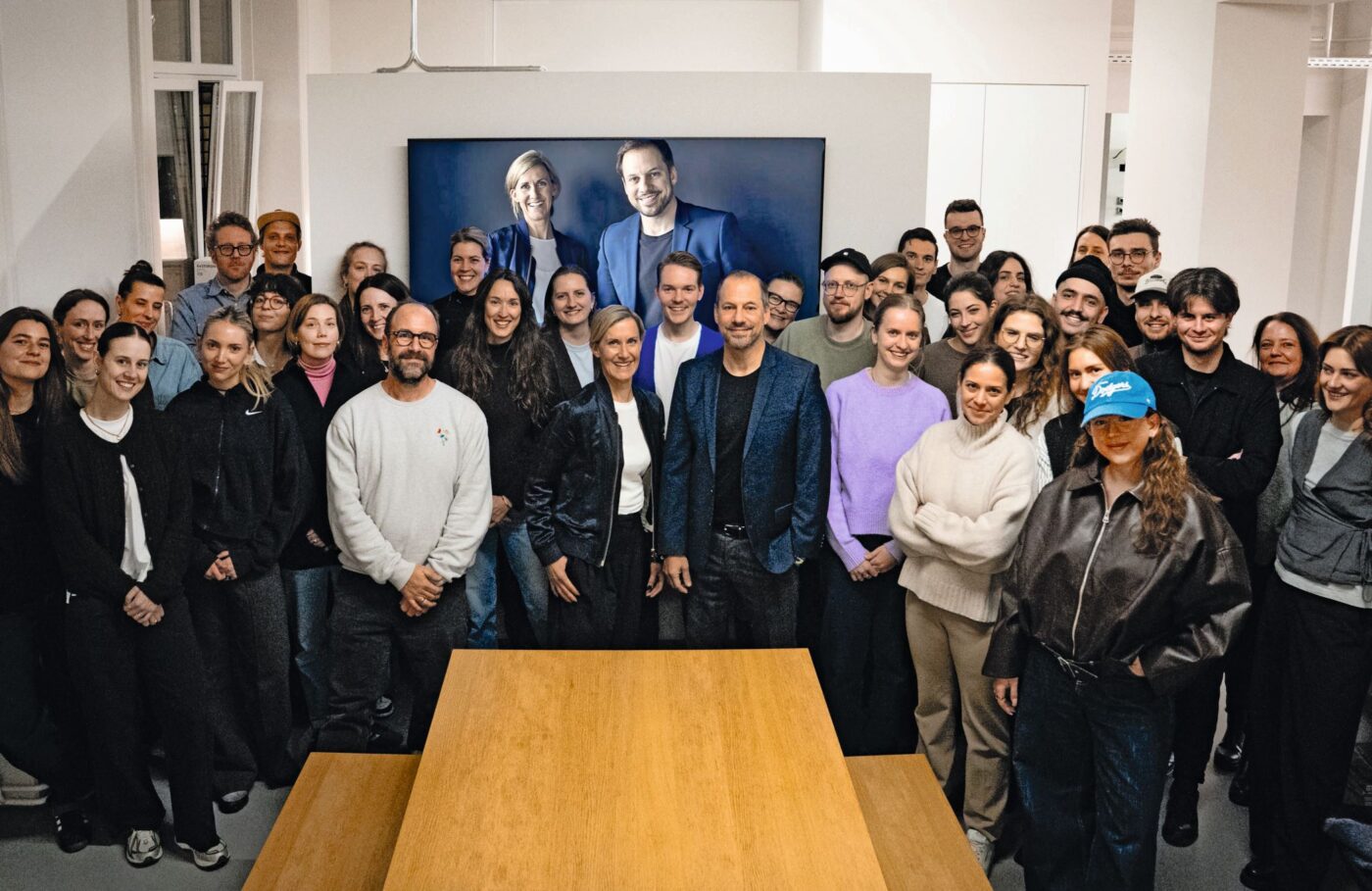


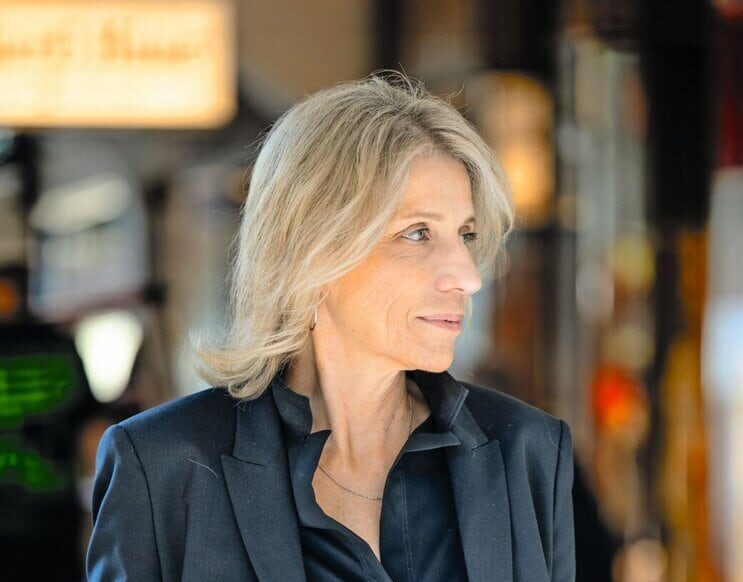




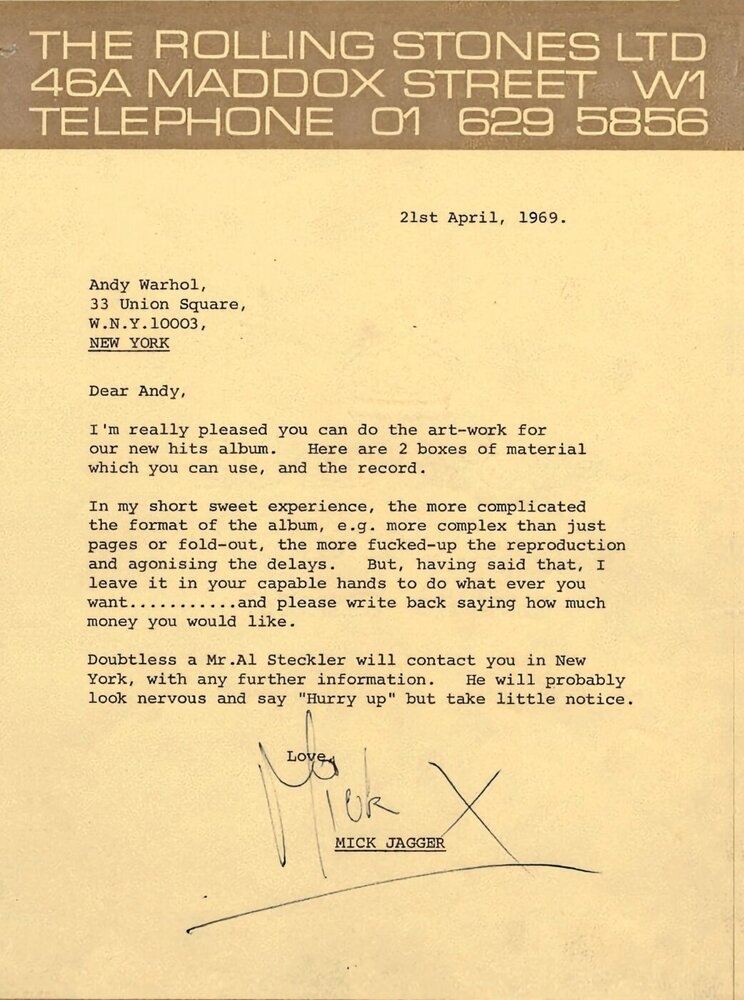




 By the time the lights went out in the Schiffbau on October 30, it was clear that the 26th Edi. Film Prize was not only a glamorous event, it was also impressive proof that Swiss commissioned film production is internationally competitive. A new set of rules was applied at this year's event. At least 50 % of the added value of the submitted film productions - and 100 % in the "Animation" category - had to have been generated in Switzerland. The stricter guidelines allowed a number of Swiss talents to shine in the spotlight. It became apparent that the productions that had passed through this funnel were of a high standard.