Author: admin
Wolfgang Kunz and Thomas Brossmann new at Publicitas Web2com
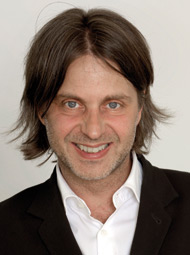
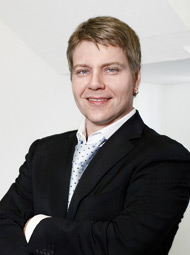
Publicitas Web2com announces new hires. Wolfgang Kunz, 38, will now head the Site Relations team. The Technology department is also expanding: Thomas Brossmann, 38, will serve as International Campaign Manager and be responsible for the technical execution of advertising campaigns both domestically and abroad.
In addition to the Siterelations division, the Technology department is also being strengthened. As Campaign Manager International, 38-year-old Thomas Brossmann will be responsible for the technical handling of advertising campaigns in Germany and abroad. The online specialist acquired his knowledge at Yahoo Search Marketing and Microsoft Advertising, among others.

Matter & Gretener now communicates for Swissinvest
Matter & Gretener is pleased to welcome a new client: Swissinvest, a Swiss real estate fund listed on the Six Swiss Exchange, has commissioned the Zurich-based agency to develop a communications strategy.
Assai Dialog + Digital and Wirz Corporate launch quality label for DSM
The Wirz Group’s agencies, Assai Dialog + Digital and Wirz Corporate, were commissioned to implement the «Quality for Life» quality seal for DSM, a manufacturer of vitamins and dietary supplements.
The two agencies Assai Dialog + Digital and Wirz Corporate were commissioned with the implementation. Together they developed the communication strategy for "Quality for Life". Wirz Corporate developed the quality label, designed adaptations of the label for other DSM brands and defined the guidelines for using the seal.
Assai Dialog + Digital launched the seal with a range of communication tools. The agency designed and implemented brochures, flyers, give-aways and a presentation for the presentation of the seal at a trade fair.
The "Quality for Life" concept is explained on the website Qualityforlife.com. In addition, an online campaign focused on specialist circles will further publicize the seal to the target group.

New Impact: Targeting Santa's luggage with Secret Santa
Under the slogan «Save Christmas,» the Bern-based internet communications agency New Impact has developed an online game for its clients and other interested parties in which players are tasked with helping Santa Claus.
Baz turns Reinacher Zeitung into a purely online format
The Reinacher Zeitung will soon no longer be published in printed form. As the company Basler Zeitung Medien announced on Wednesday, the official publication organ of the municipality of Reinach will in future only be published as an online newspaper.
The Reinacher Zeitung was previously distributed to households every 14 days with a circulation of 9,800 copies. The last print edition will now be published on December 12.
The Reinacher Zeitung was taken over by Basler Zeitung Medien in 2001 and has since belonged to LV Lokalzeitungen Verlags AG alongside three other local papers. When asked, its managing director Patrick Wehrli justified the discontinuation of the print edition with the excessive costs of production and distribution of the loss-making paper, which also faces competition from another free newspaper.
Following the success of the online newspaper to date, the company is now fully committed to the Internet.
Wehrli said that the funds freed up by dispensing with the printed edition will be invested in the editorial section. Instead of fortnightly, there will be regular reports about Reinach in future.
When asked about the decision by Basler Zeitung Medien, Reinach municipal administrator Thomas Sauter expressed his surprise. Sauter said on Wednesday that the municipality had only been informed on Tuesday that the printed Reinach newspaper was being discontinued and had been presented with a fait accompli.
Explaining nature and showing its beauty
Financial crisis or not, *Der Beobachter* is expanding: with a completely new website, a refreshed layout, and the *Beobachter Natur* product line extension.
Hosang initiated and designed Beobachter Natur together with Roland Wahrenberger, Managing Director of the publishing house, and Remo Leupin, Head of Projects responsible for Line Extensions. A 76-page magazine is now planned, which will initially be published four times. "Everything else depends on how the economy develops and the volume of advertisements," says Balz Hosang. Things are looking good at the moment with the advertisements. He won't say any more. The magazine is produced by the Beobachter team under the direction of Leupin, with specialists from the in-house consulting center under the direction of Toni Wirz as well as freelancers, depending on the topic. The magazine starts with a main topic, followed by smaller articles, tips and guide sections.
Large image share with line extension
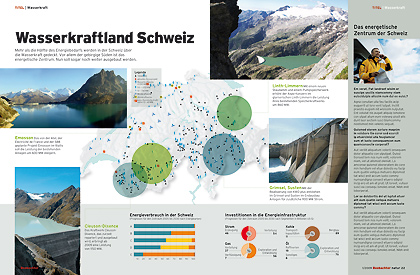
Beobachter Natur's designs surprise with long, large-format photo spreads and a very high proportion of images overall. "If you write about nature, you have to show it in all its beauty," says Remo Leupin. At the same time, he also wants the publication to satisfy the readers' thirst for knowledge and highlight complex relationships and discoveries in the areas of nature, energy, sustainable living and technology. "The test readers were virtually immersed in the booklet during the passages in which something was explained to them. In this respect, we have planned a double-page infographic on a specific topic, for example." These could also be unusual ideas. For example, how much energy is consumed in a stadium during a football match. "Such graphics are very time-consuming, but we think it's worth it."
Remo Leupin distances himself from the idea that the Beobachter is simply making yet another sustainability lifestyle magazine, as they are very fashionable at the moment. "We have high information standards. I don't think a green lifestyle magazine with the motto 'We consume and save the world' is very sustainable." However, Beobachter Natur will not be a "morally leavened" magazine. Green lifestyle is also a topic, "but our work is primarily information and utility-oriented, and we want to show how sustainable living is possible". The designs give the impression that a geo in Beo format is in the offing.
New expanded website
The fact that ecoLife, Verde and SI Grün were already three "green" publications on the Swiss market in 2008 does not bother the makers of Beobachter Natur. "Of course we were a little annoyed that the others were earlier than us, but there was no other way," says Balz Hosang. Other things had to be done first. He is referring, for example, to the Beobachter's new website, which was launched at the beginning of December. In addition to a complete redesign and all magazine content, it offers HelpOnline, an optimized self-help tool that allows people seeking advice to find all articles and books published by the Beobachter on a particular topic, as well as further addresses and in-house advisors. Under the direction of Monica Muijsers, a separate online editorial team has also been created to moderate the site in line with current developments and with recourse to the resources of the Beobachter's overall offering.
Developing the Beobachter brand as a whole
Beobachter, the flagship of the Beobachter publishing house under Editor-in-Chief Andres Büchi, is also currently being redesigned. According to Hosang, the main aim is to refresh the look of the title to bring it in line with the new Beobachter Natur magazine, but also with the monothematic issues previously published under the title "Kompakt". "In this way, we want to further develop the Beobachter brand as a whole," says Hosang. However, Hosang and Leupin have no concrete information on whether and which expansion plans will be pursued at Beobachter. "There are projects for further line extensions, but they are not yet ready for discussion," says Hosang.
Expansion thanks to crisis-resistant business model
For Hosang and Leupin, the fact that the Beobachter is expanding while other publishing houses are cutting jobs is due to the fact that the Beobachter, together with the consulting center, is a fairly crisis-resistant business model. "But it also has to do with the high status that the Beobachter has held in the publishing house since its sale to Axel Springer two years ago. People believe in what the Beobachter stands for. In addition, Axel Springer CEO Mathias Döpfner is a real Beo fan," said Hosang. The two have nothing but good words for the publishing house. "The fears of being remote-controlled from Berlin, which were rife before the sale, were quickly dispelled. We are now in a much more professional environment than before." Job cuts are currently not an issue at Beo. The gala of the annual "Prix Courage" was recently canceled, "but it's better to cancel galas than cut jobs," says Hosang. (elk)


Beobachter launches new website and new print product
Financial crisis or not, *Der Beobachter* is expanding: with a completely new website, a refreshed layout, and the *Beobachter Natur* product line extension.
Hosang initiated and designed Beobachter Natur together with Roland Wahrenberger, Managing Director of the publishing house, and Remo Leupin, Head of Projects responsible for Line Extensions. A 76-page magazine is now planned, which will initially be published four times. "Everything else depends on how the economy develops and the volume of advertisements," says Balz Hosang. Things are looking good at the moment with the advertisements. He won't say any more. The magazine is produced by the Beobachter team under the direction of Leupin, with specialists from the in-house consulting center under the direction of Toni Wirz as well as freelancers, depending on the topic. The magazine starts with a main topic, followed by smaller articles, tips and guide sections.
Large image share with line extension
Beobachter Natur's designs surprise with long, large-format photo spreads and a very high proportion of images overall. "If you write about nature, you have to show it in all its beauty," says Remo Leupin. At the same time, he also wants the publication to satisfy the readers' thirst for knowledge and highlight complex relationships and discoveries in the areas of nature, energy, sustainable living and technology. "The test readers were virtually immersed in the booklet during the passages in which something was explained to them. In this respect, we have planned a double-page infographic on a specific topic, for example." These could also be unusual ideas. For example, how much energy is consumed in a stadium during a football match. "Such graphics are very time-consuming, but we think it's worth it."
Remo Leupin distances himself from the idea that the Beobachter is simply making yet another sustainability lifestyle magazine, as they are very fashionable at the moment. "We have high information standards. I don't think a green lifestyle magazine with the motto 'We consume and save the world' is very sustainable." However, Beobachter Natur will not be a "morally leavened" magazine. Green lifestyle is also a topic, "but our work is primarily information and utility-oriented, and we want to show how sustainable living is possible". The designs give the impression that a geo in Beo format is in the offing.
New expanded website
The fact that ecoLife, Verde and SI Grün were already three "green" publications on the Swiss market in 2008 does not bother the makers of Beobachter Natur. "Of course we were a little annoyed that the others were earlier than us, but there was no other way," says Balz Hosang. Other things had to be done first. He is referring, for example, to the Beobachter's new website, which was launched at the beginning of December. In addition to a complete redesign and all magazine content, it offers HelpOnline, an optimized self-help tool that allows people seeking advice to find all articles and books published by the Beobachter on a particular topic, as well as further addresses and in-house advisors. Under the direction of Monica Muijsers, a separate online editorial team has also been created to moderate the site in line with current developments and with recourse to the resources of the Beobachter's overall offering.
Developing the Beobachter brand as a whole
Beobachter, the flagship of the Beobachter publishing house under Editor-in-Chief Andres Büchi, is also currently being redesigned. According to Hosang, the main aim is to refresh the look of the title to bring it in line with the new Beobachter Natur magazine, but also with the monothematic issues previously published under the title "Kompakt". "In this way, we want to further develop the Beobachter brand as a whole," says Hosang. However, Hosang and Leupin have no concrete information on whether and which expansion plans will be pursued at Beobachter. "There are projects for further line extensions, but they are not yet ready for discussion," says Hosang.
Expansion thanks to crisis-resistant business model
For Hosang and Leupin, the fact that the Beobachter is expanding while other publishing houses are cutting jobs is due to the fact that the Beobachter, together with the consulting center, is a fairly crisis-resistant business model. "But it also has to do with the high status that the Beobachter has held in the publishing house since its sale to Axel Springer two years ago. People believe in what the Beobachter stands for. In addition, Axel Springer CEO Mathias Döpfner is a real Beo fan," said Hosang. The two have nothing but good words for the publishing house. "The fears of being remote-controlled from Berlin, which were rife before the sale, were quickly dispelled. We are now in a much more professional environment than before." Job cuts are currently not an issue at Beo. The gala of the annual "Prix Courage" was recently canceled, "but it's better to cancel galas than cut jobs," says Hosang. (elk)
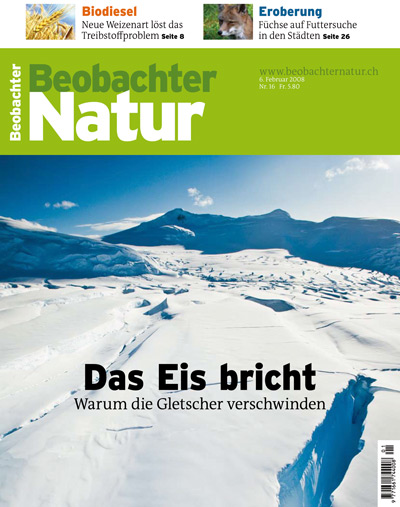
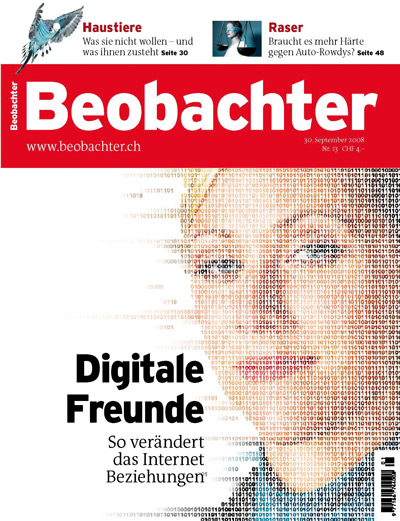
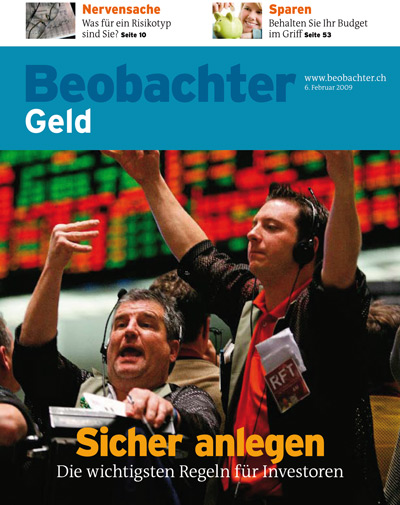
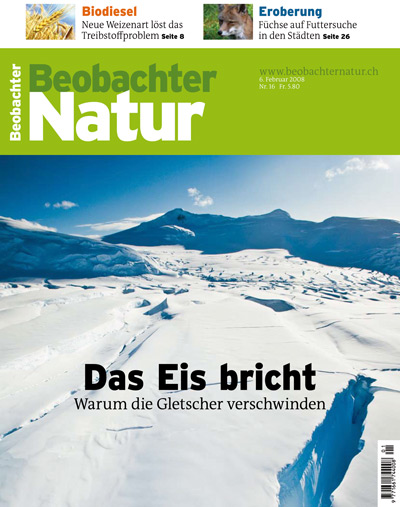
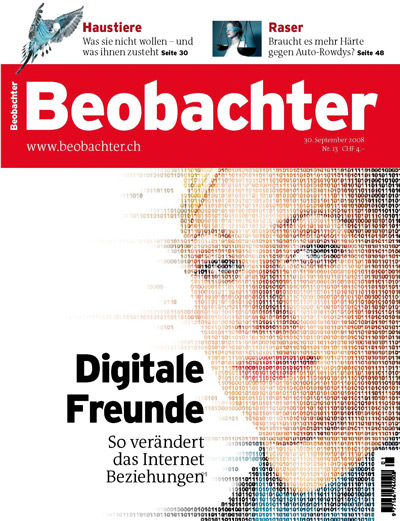
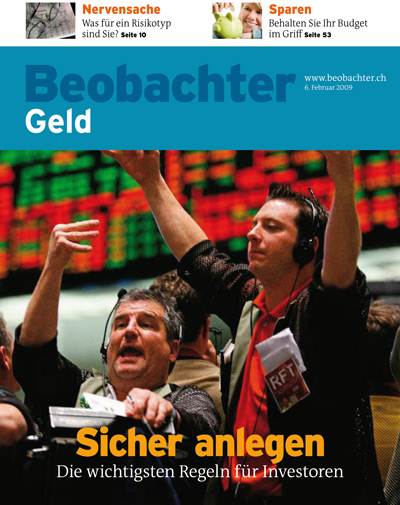
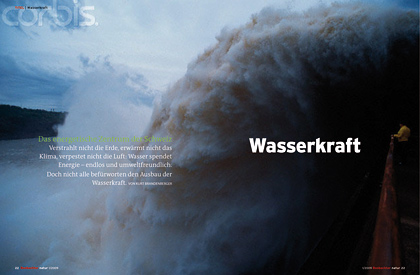
Front sides


Content pages Observer Nature


Self-fulfilling Prophecy
The longer the financial crisis lasts, the clearer it becomes: Instead of soberly assessing the situation, the media are topping each other with doomsday scenarios and thus becoming additional fire accelerators of the economic situation - and their own. Guest commentary by Stephan Russ-Mohl, head of the European Journalism Observatory at the University of Lugano.
Journalism, which some researchers hastily proclaimed to be society's early warning system, has been watching from close range for years. Certainly, there were cries of doom - but they were drowned in the torrent of PR messages that are now transformed into "journalism" in many editorial offices at the click of a mouse. For far too long and again and again, it was proclaimed that all the investment bankers and financial jugglers had earned their dream returns and bonuses through performance and productivity increases instead of through high-risk bets. Worse still, "critical business journalism" has consisted of literally goading UBS and other financial institutions into taking even greater risks - at least that's how media consultant Kurt W. Zimmermann, formerly a member of Tamedia's executive board, recently held up a mirror to Swiss business journalists in Weltwoche, with quotes to back it up.
Have journalists and media managers learned anything in the meantime? It is to be feared that with their lust for "bad news," which is hardly less immoderate than the greed of many stock market players and bankers for quick profits, they are in the process of writing the really big crisis and thus their own downfall. The media not only report on the economic climate, they also foolishly create it.
In a thorough review of the penultimate crisis, when the New Economy Bubble burst, the trade journal American Journalism Review (AJR) had already certified in 2003 that the U.S. business press had tended to be procyclical instead of fulfilling its role as a watchdog. On the other hand, the journal also pointed out that there had been some critical individual voices. However, they were lost in the collective frenzy(s). Using the example of the Wall Street Journal and Business Week, but also the Washington Post, AJR showed that there were always "wake-up calls" during the boom years. Long before the Enron and Tyco scandals, there were warnings about fraud and dirty accounting tricks - but "nobody woke up. In the editorial offices, such warnings were lost in a cacophony of naive reporting about how "healthy" the system was, that financial analysts and accountants could be trusted in principle, and that the boom would last forever and ever.
It can be assumed that media researchers will come to very similar conclusions when they analyze current business and financial reporting. It is amazing how "memoryless" journalism works - and how little apparently even highly respected business titles use their own research findings, despite sophisticated electronic archives.
On the other hand, it is exciting to see who is fueling the crisis in the editorial departments: At Germany's No. 1 intellectual newspaper, the Frankfurter Allgemeine Zeitung, it is not the editor responsible for economics and finance, but the head of the arts section, Frank Schirrmacher, who prophetically "explains" the course of the world to us - as it were as an expert on banks and monetary matters and apparently the last universal scholar. The same experience that economic and financial journalism is now having to make has already been made by colleagues in the science department in the past: When a topic - be it BSE, Sars or now the subprime and banking crisis - really boils up, the specialist editors lose their power of interpretation to the hierarchies in the political and cultural editorial departments.
But things can get even worse, as can be seen at Germany's finest address for quality journalism, the Nobel publishing house Gruner + Jahr: There, the business and finance journalists are being completely rationalized away by having four business titles produced by one editorial team in the future. A topsy-turvy world! This is exactly the kind of increase in journalistic expertise that we urgently need to overcome the crisis...
.ch produces a special edition to put under the tree
The Pendlerzeitung .ch has announced a special Christmas edition. On December 23–24, 2008, the paper will be published as a double issue. After that, the newspaper will take a break until January 5.
The holiday edition is printed on higher-quality paper and is more extensive. It is actively distributed by newspaper vendors in various Swiss city centers.
The newspaper will not be published between Christmas and New Year's Eve. It will not resume its regular publication schedule until Monday, January 5, when the flow of commuters has picked up again.
Who will be Advertiser of the Year?
Subscribers to *Werbewoche* are invited to vote on who will be named Pius Walker’s successor on January 14, 2009, during an elegant gala dinner at the Kaufleuten.
Frank Bodin
The CEO of Euro RSCG already has many successes to his credit. When Frank Bodin moved to Lake Geneva to join McCann Erickson as CD in 1996, the agency was one of the most creative and successful three years later. The same spectacle repeated itself in 2001, when the creative had to set the Euro-RSCG Group on a new course, this time as Chairman and CEO. Within a very short time, he managed the turnaround. Since then, "Love Advertising" has been the name of the successful concept of the agency with the star. This has been incorporated, for example, in the repositioning of AIDS prevention with the claim "Love Live". His work has now earned Frank Bodin a nomination as "Advertiser of the Year" for the ninth time. In addition, he has received more than 500 awards from practically all festivals worldwide. Bodin has been a jury member from Cannes to Clio and was even president of the Golden Drums in 2004. Bodin's role in Swiss advertising is also reflected in his involvement as President of BSW Leading Swiss Agencies. Before playing this whole keyboard of advertising, Frank Bodin lived as a classical pianist and until 1992 as an assistant at the Hamburg State Opera. Bodin has also written several books.

Markus Good
One year now, Markus Gut has been Chief Creative Officer and a member of the Board of Directors of Advico Young & Rubicam. In that time, the group has not only outgrown itself creatively with over a dozen major pitching wins. The Y&R Group has also visibly grown together externally, with four agencies now operating under one roof. It will be interesting to see what happens next at Hardturmstrasse 133 after Markus Gut, as the former Chief Creative Officer of the Publicis Group, was able to give the company a regular top place in the creative rankings for over eight years. Almost half a thousand creative awards have reliably earned Markus Gut a nomination for "Advertiser of the Year" every year since 2003 until now. He is also a regular juror at international festivals such as ADC of Europe and NY Festivals. Important is his work as a lecturer at Sawi, the creative school of the ADC/BSW or at the HSG St. Gallen. He is a member of the Design Network Switzerland. The creative artist is also proud of his award-winning grappa from the family vineyard in Ticino and his single malt from a distillery in Scotland, where he is co-owner, as well as Jean Nouvel's restaurant "La Boite" in Uster.

Alexander Jaggy
The Executive CD was pleased to receive a particularly valuable award last year. Jung von Matt/Limmat was recently voted not only the "most popular advertising agency" in a survey by the Handelszeitung newspaper, but also received the title of "best advertising agency in Switzerland" by a wide margin from 500 clients and customers. Since 2003, JvM/Limmat has also regularly been the agency most frequently recommended by its clients. Since 2004, Alexander Jaggy has been Executive Creative Director at the highly acclaimed company. In January 2006, he also became a partner. Alexander Jaggy started his career in 1990 as a copywriter at BBDO in Zurich. Further stations were GGK Zurich, Jung von Matt in Hamburg and Springer & Jacoby International in London. After seven years abroad, Jaggy returned to Zurich in 2001 for the launch of Jung von Matt/Limmat. In addition to Switzerland, Jaggy is also a member of ADC for Germany and a member of the English D&AD. Among his well over 200 national and international awards is a Gold Lion from Cannes for the guerrilla campaign "Size" for Mini. This year, Jaggy has attracted creative attention several times for Smart or Health Promotion Switzerland.

Daniel war
On April 1, 2004, Daniel Krieg (43) founded the two-man agency Krieg, Schlupp, Springer & Jacoby (KSSJ) together with Uwe Schlupp. Without clients and without outside capital. The two creatives won mandate after mandate. In 2005, Christoph Bürge joined them, and since then the agency has been called Krieg, Schlupp, Bürge/Springer & Jacoby (KSB/SJ). Today, the Zurich-based company employs over 50 people. KSB/SJ made advertising history with Coop and the slogan "Für mich und dich" ("For me and you"). Krieg and consorts also created well-known campaigns for AXA Winterthur, VW, Bucherer, ZVV and many other clients. KSB/SJ's success has a lot to do with attitude: "What we think, we also say. What we say, we do. What we do, we do quickly," Krieg says. He has a special interest in strategic corporate management as well as in "green communication" or ecology and ethics. Krieg studied economics at the University of St. Gallen. Before founding KSB/SJ, he was a copywriter, concept developer and creative director at Publicis, Weber, Hodel, Schmid, Farner Publicis and GGK Zurich. He also worked in investment banking at Credit Suisse, in the consumer goods industry at Philips, in publishing at Cash and independently as a fashion importer. Daniel Krieg has two children and will soon marry for the second time.

Philipp Skrabal
Philipp Skrabal (39) began his professional career in 1985 at the Zurich School of Design. He earned his first money and his apprenticeship as a graphic designer as a graffiti sprayer. After positions as Junior Art Director, Art Director and a six-month job exchange at Euro RSCG Ball Partnership in Sydney, he started as Art Director at Matter & Partner in 1997. In 2003, he became Creative Director and a member of the management team - and helped the small agency reach fifth place in the creative rankings. In 2004, Skrabal moved to Publicis as Creative Director and deputy to Markus Gut. He achieved 2nd and 1st place in the creative rankings and in 2007 was awarded the ADC title "Agency of the Year" alongside Markus Gut. "In the future, the knowledge or genius of an individual will no longer be enough to develop groundbreaking solutions," Skrabal is convinced. "The agency of the future will consist of a team of top people from all disciplines." Since January 2008, Skrabal and the Y&R team led by Andreas Widmer and Markus Gut have been building new structures and processes focused on integrated thinking. Exemplary for this is the "Free Internet" case, recently awarded twice bronze and four times shortlisted by Eurobest. As Executive Creative Director of Advico Young & Rubicam and member of the Executive Board of the Young & Rubicam Group, he contributed significantly to the recent budget gains. New clients include Swisscom, Basler Versicherungen, Cash and Axpo. Skrabal has won around 250 national and international awards. He has been a member of the Art Director Club Switzerland since 2001 and was a juror at the ADC of Europe in 2005 and 2007. Philipp Skrabal is the father of two children and a passionate racing cyclist.

Andreas Widmer
In the dream team at Hardturmstrasse 133, Andreas Widmer of Wunderman and Futurecom has been CEO of the Y&R Group since January 2008. After spending a lot of free time around the creative world as a child at his father Bruno Widmer's Advico, Andreas Widmer later studied sociology and marketing. For two years he worked in market research. In 1993, he joined WCJ Zurich as Account Manager and IT Director. Here, after a short time, Andreas Widmer began to build up the company's first interactive unit. His efforts laid the foundation for Futurecom interactive, the joint venture between Advico Young & Rubicam and WCJ that was launched in 1996. What began with four employees and a modest studio soon developed into one of Switzerland's leading online marketing companies. In the Wunderman network, the much-vaunted model of a cross-media agency is actually lived. As Managing Director, who also performs consulting tasks, Andreas Widmer successfully brought demanding clients such as Swisscom, UBS, Jaguar, Ford and Ericsson onto the World Wide Web. And he is still involved in the management of many key accounts today. Andreas Widmer is also a board member of BSW and Simsa.

Free newspapers eat up subscriptions
In conflict and crisis zones, publishers invest heavily in their publications—but so far, nothing has provided a lasting solution to the decline in subscriptions.
> Overview of fully paid and discounted subscriptions (see notes in the corrigendum below)
The upcoming subscription renewal phase will therefore be decisive for the future fate of the Bund, which is mainly read in the city of Bern. If subscription cancellations increase again, a merger with the Berner Zeitung (BZ) is as good as certain, otherwise a cooperation with the Tages-Anzeiger is more likely.
Its sister title Berner Zeitung, on the other hand, is doing surprisingly well in terms of subscriptions, having gained 1,314 new subscribers (+1.2 percent) over the course of the year. The BZ primarily gained in Solothurn (585 subscriptions), Thun (534 subscriptions) and Emmental (211 subscriptions), while it also lost in the city of Berne (the various free newspapers send their regards). Nevertheless, the increase in subscriptions is a remarkable achievement, at least at first glance. However, if you take into account the considerable investments that the BZ is making in the Solothurner Tagblatt (ST) split (early delivery, free death notices, extremely generous trial subscriptions), it is questionable whether the increase in subscriptions is paying off - and how sustainable it is. In any case, the ST has seen better times: in 2005 it reported 4667 subscriptions, but then abruptly lost 1000 subscribers and is still 400 subscriptions below its previous peak.
It is unclear to what extent the competitor Solothurner Zeitung is feeling the effects of the BZ split, but the potential damage appears to be small. It is true that Solothurner Zeitung's subscriptions have also been falling continuously, by a full 13.2 percent since 2005. However, the biggest decline was recorded during the period in which the ST also lost 1,000 subscribers, a parallel development that was probably linked to the expansion of the free newspaper 20 Minuten.
Zurich region also loses subscribers
The situation is similar in the battleground region of Zurich, where the Tages-Anzeiger has launched four splits in order to better anchor itself in the region. However, the investment does not seem to have done the Tagi much good, as its subscriptions continued to fall in all regions - by 1.4 to 3 percent. However, the Zürcher Landzeitung fared no better, with the Zürcher Oberländer and Zürcher Unterländer losing even more at minus 4.2 and minus 5.3 percent respectively. The Zürichsee-Zeitung, which is less plagued by free newspapers, is more stable in terms of subscriptions (with the exception of the Sihltal/Thalwil edition, which is close to the city).
The situation also remained fairly stable in the Northwestern Switzerland region. Although a slight increase in subscriptions had been expected for the Basler Zeitung last spring, this was not confirmed by June. Nevertheless, BaZ is doing comparatively well with a decrease of 400 subscriptions or 0.5 percent. The competitor Basellandschaftliche Zeitung had also miscalculated: Due to the launch of Sonntag, they had hoped for at least a stabilization, but in fact the number of subscriptions fell by 340.
The situation with the Sunday titles is also interesting: NZZ am Sonntag, SonntagsZeitung and SonntagsBlick are still growing in terms of subscriptions, SoBli even by 3.7 percent, although only NZZaS is also growing in terms of total paid circulation, while SoBli and SoZ are experiencing declining circulation.
At Blick, the early delivery introduced in March has not yet been reflected in additional subscriptions. The number of subscriptions fell by a further 2.2 percent.
Markus Knöpfli
CORRIGENDUM
Unfortunately, we made a mistake in the table. The Zofinger Tagblatt (ZT) is listed there with 12,702 subscriptions in 2008 and a decrease of 10.9 percent compared to the previous year. Both are incorrect. The fact that the ZT has been publishing the part of its circulation that extends into the canton of Lucerne as the split edition "Luzerner Nachrichten" (LN) since September 2007 and reporting it separately was not taken into account. The 1,310 LN subscriptions should therefore be correctly added to those of the ZT, resulting in a total of 14,012 ZT subscriptions. The year-on-year decline in subscriptions to the Zofinger Tagblatt is therefore only 1.7 percent. We apologize for the oversight.