"Quality and Swiss expertise remain"

For the past two years, the market and social research institute Link has been part of the international YouGov Group. The next step is the official rebranding, which will see Link become YouGov Switzerland. m&k spoke with CEO Lukas Theiler and Stefan Reiser, Managing Director of Marketing Research, about the opportunities and challenges of the integration.

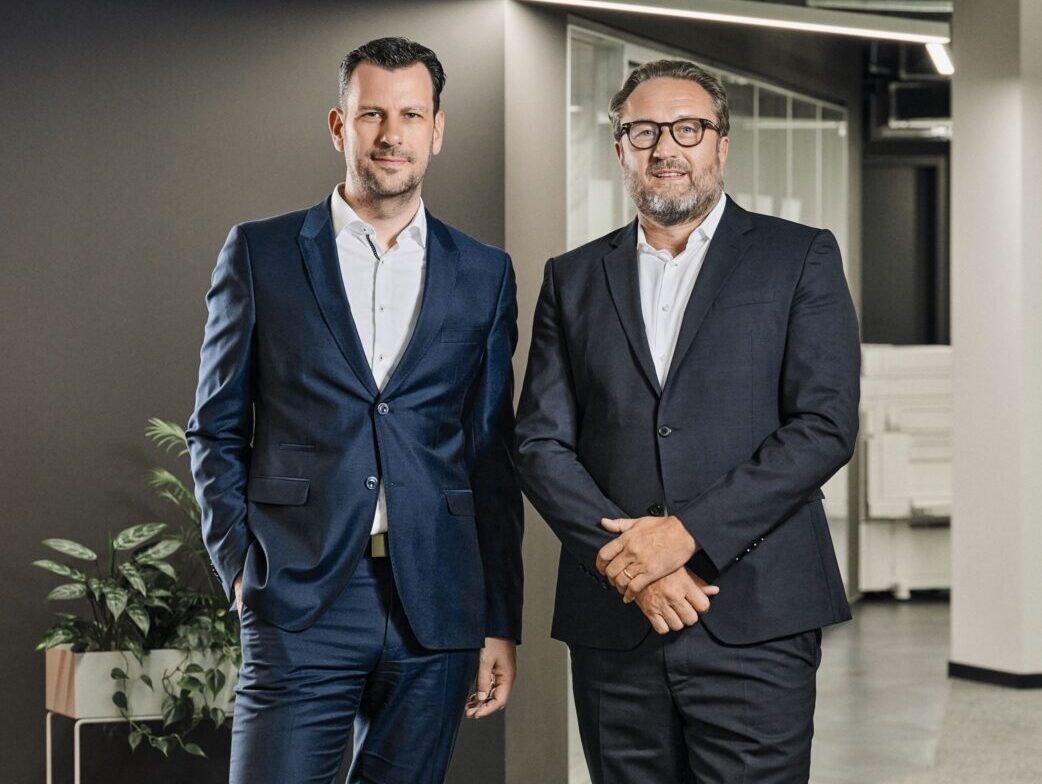
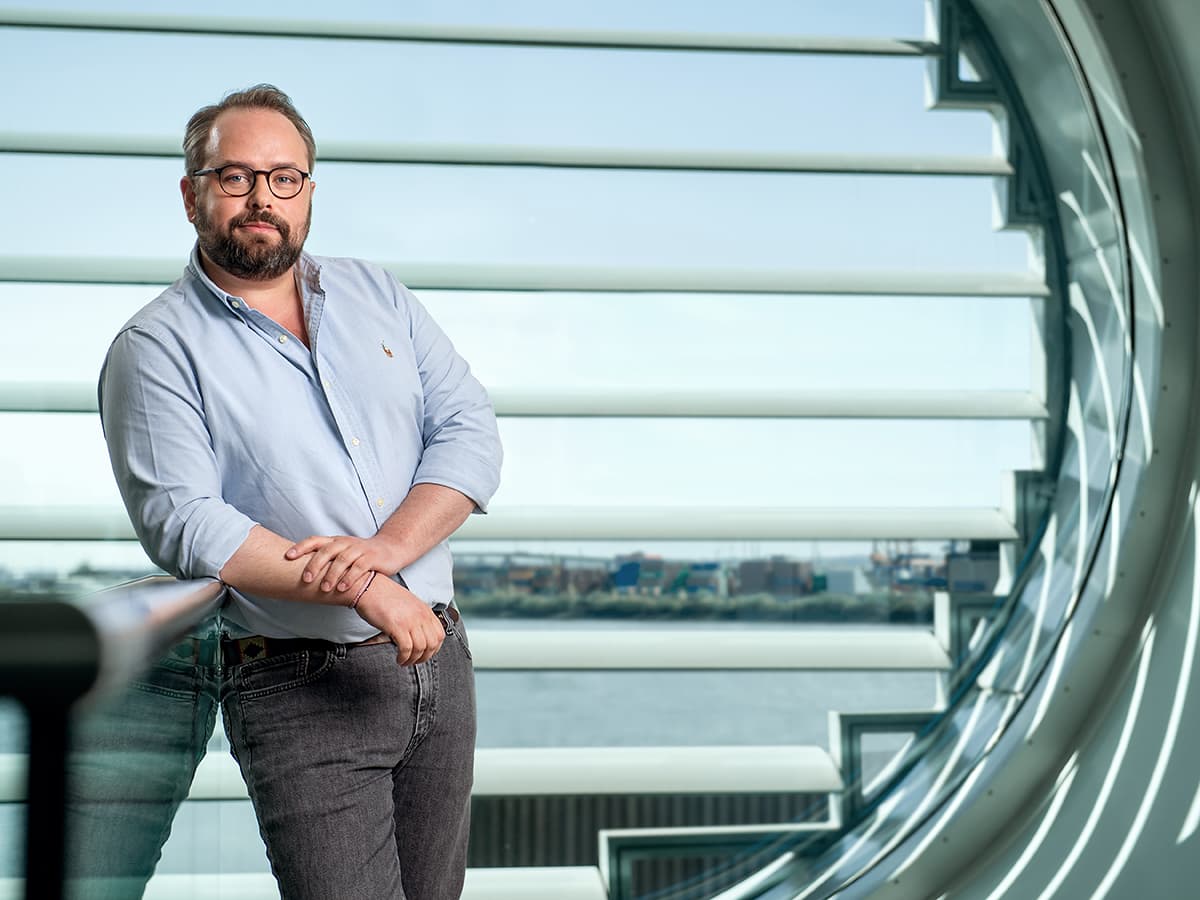
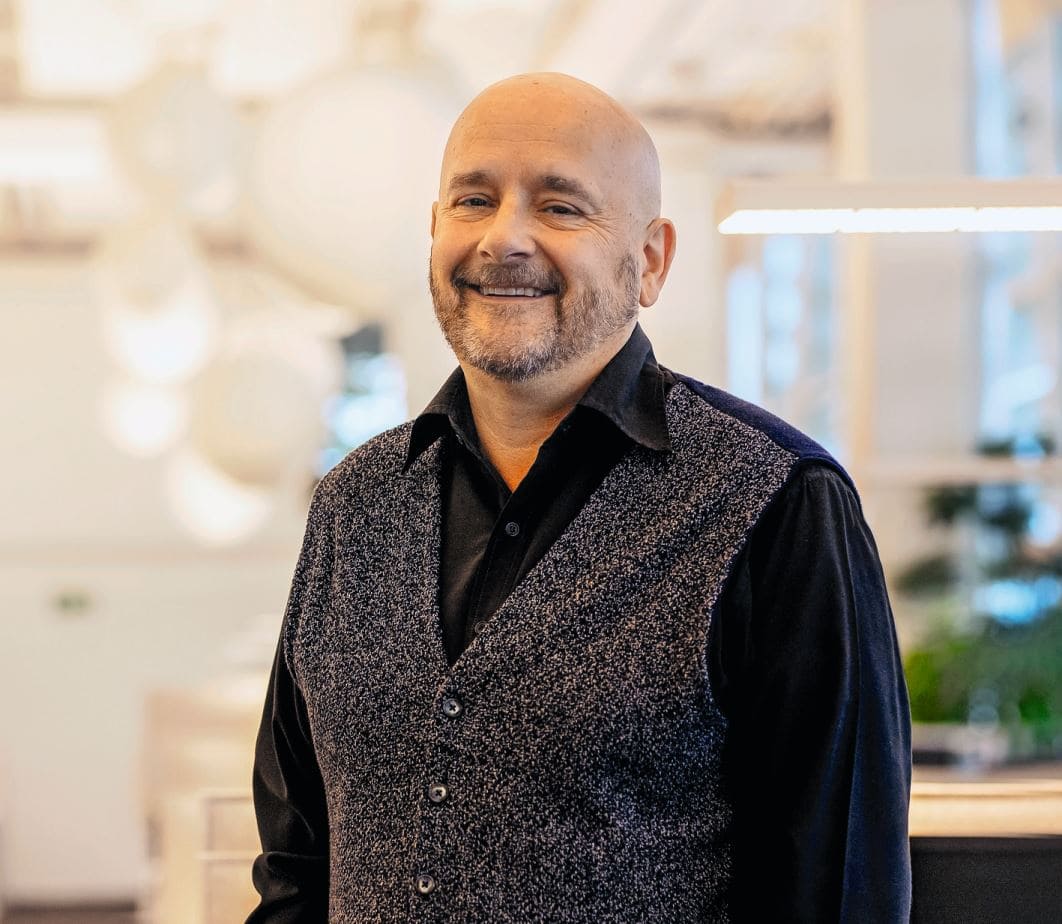
Stefan Reiser, Managing Director der Marketingforschung (links), und Lukas Theiler, CEO von Link.
Stefan Reiser, Managing Director of Marketing Research (left), and Lukas Theiler, CEO of Link. (Photos: Chris Reist)

m&k: Lukas Theiler, Link is now part of YouGov. Who is the YouGov Group?

Lukas Theiler: YouGov is an international market and social research company and is one of the largest market research networks in the world. Originally founded by Stephan Shakespeare in 2000, Steve Hatch has been leading the company since August of this year. YouGov now has more than 30 offices worldwide. Link has been part of the YouGov Group since December 2021, and next we’ll take the final step and align our branding and name as well. We’ll become YouGov Switzerland.


What advantages and opportunities does this offer?

Stefan Reiser: The benefits are most clearly evident in the additional services and products we offer, as well as in the range of countries where we can now conduct surveys using our in-house panels. At the same time, we retain our Swiss identity and expertise: project management and consulting, data storage, interview administration, and corporate management all remain in Switzerland as usual.

Lukas Theiler: Until now, Link has been heavily focused on the local market in Switzerland. Over the years, we have set methodological and qualitative benchmarks in market research here. As part of the YouGov Group—which is internationally renowned in the industry for innovation and data quality—we are even more in tune with current trends, which also benefits our clients. Our Swiss quality will clearly remain our most important asset in the future as well.


How exactly does this added value for customers work?

Reiser: We can offer our clients a much broader reach in market research—in addition to covering more countries, this also includes an expanded portfolio of solutions and complementary expertise. Since joining the group, YouGov clients have also had the opportunity to conduct surveys through our valuable panel community and gain comprehensive expertise on the Swiss market. International companies in particular—those headquartered in Switzerland but with international locations—benefit from our global research capabilities and the ability to receive results from a single source through their usual points of contact.

«Our Swiss quality will clearly remain our most important asset in the future as well.»


How many panelists does Link—or, in the future, YouGov Switzerland—currently have access to?

Theiler: Our panel currently comprises 115,000 panelists in Switzerland, who will become part of a market research network comprising more than 24 million panelists.


Will the transition from Link to YouGov Switzerland result in any changes to the offerings, services, or data quality?

Reiser: Our offerings are naturally expanding, but the quality of our service remains just as high as before. Going forward, our clients will also benefit from the fact that we collaborate and learn from one another across more than 30 locations worldwide. At the same time, our clients can rest assured that the value created remains in Switzerland, as does the data. Link is valued for the high quality of its data, its comprehensive consulting services, and its expertise in the Swiss market—and the name change to YouGov Switzerland does nothing to alter that. We remain a Swiss company—and the new name clearly reflects that.


Will all Link employees remain with the company even after the YouGov integration?

Reiser: Link stands out as an employer due to its low employee turnover. Our customers also appreciate this, and we intend to keep it that way. No job cuts are planned as part of the integration and rebranding process. All existing positions in this country will remain intact.


Let's talk about Link/YouGov Switzerland's goals for 2024. What's on the agenda?

Theiler: We’ve established several pillars for 2024—we have overarching goals for the Group, for marketing research, and for social research. In addition to strategic and financial goals, we also want to evolve from being “Linkians” to “YouGoverians” (laughs). This integration process requires a great deal of tact; we’re taking all our employees along on this journey. That’s an important issue. Added to this is the rebranding of the company. And, of course, we’ll continue to support our marketing and social research clients with our usual high quality and strong service as they address their research questions, providing insights to help them achieve their business goals.

How does Link’s sector and methodological expertise fare in the Swiss market following the rebrand, and what developments can Link’s national and international clients expect? And how can Link bring these strengths to the YouGov Group?

Reiser: Our guiding principle is to always look to the future with an innovative mindset. That’s why we never stand still; instead, we are constantly working to further develop the sector-specific and methodological expertise that sets us apart in the market. We benefit greatly from the large international YouGov network, particularly in terms of subject-matter expertise. The products available worldwide through the YouGov Group also create added value. Finally, a large, international group has far greater opportunities to invest in new technologies and solutions. This opens new doors for us, and our Swiss clients will also benefit enormously from this.


Does YouGov also benefit from Link and his expertise?

Theiler: Yes, of course—enormously so, in fact. Stefan and his team have been strongly driving the thought leadership approach for a long time. We’re constantly testing new approaches, methods, and solutions, always at the cutting edge and in close contact with our clients. Stefan Reiser According to figures from the Esomar association, Switzerland ranks among the countries worldwide that invest the most, relative to their size, in market and social research. At the same time, Swiss companies have extremely high expectations of market research. We actively bring high-quality standards and innovative solutions to the group. Naturally, this also benefits the other countries.


Could you elaborate on that a little more?

Reiser: I'm thinking, among other things, of the expertise of our researchers in the areas of advanced analytics, agile market research, and customer experience. On the technology side, we are also leaders within the group in the practical application of machine learning algorithms and AI applications.


What challenges does a rebranding entail?

Reiser: Link has been in existence for over 40 years—and is a strong brand firmly established in Switzerland. As we transition to the name YouGov Switzerland, a key priority is to reassure our clients that we will maintain our Swiss service offerings and our high quality standards. We are working very hard on this, and we are very grateful to all our employees for actively supporting us through this transition phase.

Lukas Theiler: We are very transparent and keep our entire team informed at regular intervals about the transition—including any potential sticking points. YouGov is growing very quickly, and that’s exactly where the opportunities lie: Our employees bring a wealth of expertise to the table, which naturally falls on receptive ears at YouGov. And our transparency extends not only internally but also externally—we want to take everyone along on this journey, including our clients.
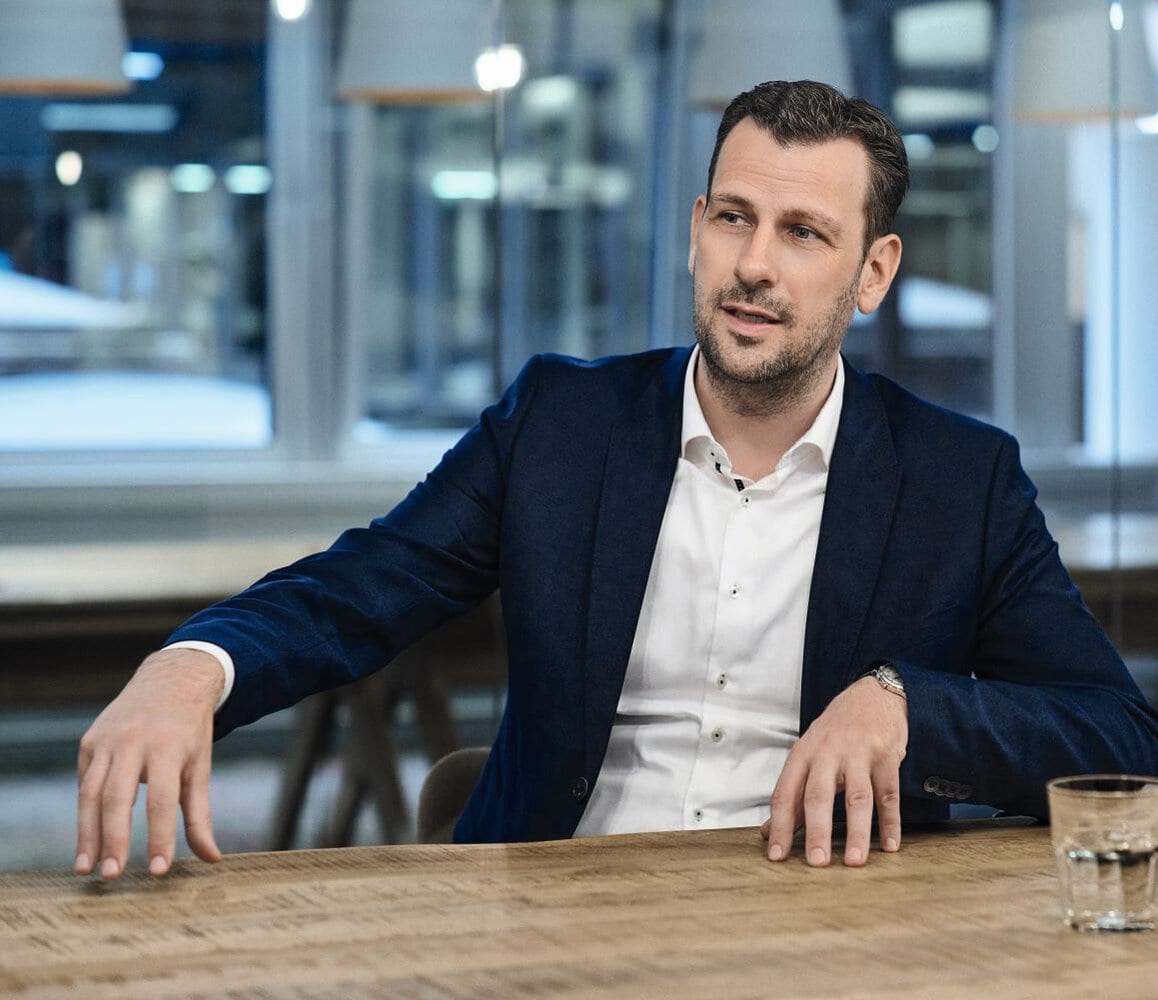
YouGov has experienced tremendous growth over the past ten years and continues to grow strongly—how will the company and its customers benefit from this?

Reiser: New products, new technologies—YouGov follows the «Living Data» approach: The global research network generates a continuous stream of data that clients can access at any time, and all collected data points can be linked and analyzed together. This approach is unique in its kind and is now being expanded in Switzerland as well. YouGov is also a stable, well-established company with very strong financial results and steady growth, which provides a solid foundation for our Swiss business. As part of the group, we plan to expand our workforce in Switzerland in the future.


Link is the market leader today—how does YouGov help you further expand this lead in Switzerland?

Theiler: Because YouGov operates worldwide, trends can be identified more quickly. Of course, we here in Switzerland also benefit from this. With the help of all the new opportunities provided by YouGov as our parent company, we will be able to further expand our local market leadership—we are very much looking forward to this exciting next chapter in our history.

"What a year": media and agencies look back on 2023 and make predictions for 2024

The year 2023 is drawing to a close. m&k asked media companies and media agencies how they viewed the year in retrospect and what their priorities are for 2024.

Samia Montaque, Managing Director Havas Media.Alle Illustrationen: fiverr.com / Art Cofam
Samia Montaque, Managing Director of Havas Media. (All illustrations: Art Cofam)

What a year! This is especially true for me, as I took the plunge in January and moved to Havas Media Switzerland after more than ten years with another agency network. It’s been a particularly exciting time, as Havas is undergoing a significant cultural transformation this year. After nearly eleven months at Havas, I’m grateful and proud to be part of a highly motivated team that develops and executes campaigns for our valued clients with great enthusiasm.

The digital transformation continues to advance, with users’ preference for interactive content on the rise and changing the way advertising is presented. Interactive advertising campaigns—whether in the form of games or augmented reality applications—are growing in popularity. As a result, we have already strengthened our collaboration with innovative partners in this area this year and will continue to expand it in 2024.

«Starting in 2024, Havas will offer its clients the »Havas Carbon Impact Calculator,' which will allow us to calculate and optimize the carbon footprint of their campaigns."

While digital and innovative advertising strategies are thriving, demand for traditional advertising formats is seeing a noticeable decline. Nevertheless, these media still have their place, and although it was a challenge for agencies a few years ago to recruit digital specialists, we are now committed to not neglecting those with experience in traditional media. Projects such as Streaming Data and OTV from Mediapulse are creating an increasingly solid foundation for the consistent measurement of traditional and digital channels, which will ultimately bring these specialists closer together. In this context, we began rolling out a tool this year designed to further advance automation in the planning of all media channels, thereby using artificial intelligence to boost efficiency in our work. This complex topic is another that has occupied me as Head of Havas Media in 2023 and will continue to do so. Last but not least, I’m also focused on the issue of sustainability in advertising. Companies are increasingly aligning their messages and advertising campaigns with environmentally friendly practices to raise awareness of social responsibility. I am particularly pleased that, starting in 2024, Havas will be able to offer its clients the browser-based «Havas Carbon Impact Calculator,» a tool that allows us to calculate and optimize the carbon footprint of their campaigns.

Overall, 2023 was an exciting journey for me, marked by professional challenges and thrilling developments in the media landscape. The move to Havas Media Switzerland was a decision that proved to be extremely rewarding.

– Samia Montaque, Managing Director of Havas Media


Moritz Schneider, CEO Mediaschneider.
Moritz Schneider, CEO of Mediaschneider.

The year 2023 was all about artificial intelligence. The metaverse specialists who emerged only recently have transformed into so-called “prompters” in a very short time. As impressive as the possibilities and potential of generative AI may be, fundamental legal and societal questions arise in reality: Can images generated by artificial intelligence be used commercially? Who owns the rights to these images? Who is liable for misinformation generated by artificial intelligence? Can artificially generated content be distinguished from human-created content?

«The year 2023 was all about artificial intelligence. In addition to this macro trend, the issue of privacy was omnipresent in the media industry.»

In addition to this macro trend, the issue of privacy was omnipresent in the media industry. Increasing technical restrictions and legal requirements regarding privacy and data protection make comprehensive campaign measurement impossible. As long as a person does not give explicit consent to the use of their data, the options are limited. Big Tech companies benefit from this the most, as they have generally already obtained the necessary consent through the terms of service of platforms such as YouTube or Instagram. Against this backdrop, it is hardly surprising that Google’s share of Swiss net advertising spending has risen to just under 30 percent (source: Swiss Advertising Statistics Foundation). Without government regulation of Google’s monopoly position, this trend is likely to continue in the coming years.

In 2023, the Swiss video market also saw some movement. Replay ads in time-shifted television can finally be measured, and with Disney+, the first streaming provider launched an ad-supported service—with more to follow. In terms of TV marketing, Admeira is once again exactly where Publisuisse, its predecessor, left off seven years ago: exclusively marketing public broadcasters. The commercial broadcasters, led by TF1, will be marketed by Goldbach starting in 2024. But it’s not just TV where familiar patterns are returning; in the outdoor advertising sector, too, Goldbach Neo’s acquisition of Clear Channel is reviving the familiar duopoly with APG on the other side.

An eventful year in the Swiss media scene is drawing to a close, and we're excited to see what the new year will bring.

– Moritz Schneider, CEO of Mediaschneider


Juliane Merz, Director of Sales, Weischer. Cinema Schweiz.
Juliane Merz, Director of Sales at Weischer. Cinema Switzerland.

»Does anyone even go to the movies anymore?" It’s a question that haunts me—that haunts all of us—as movie marketers. Looking back, this question was definitively answered this year, if not sooner. This is thanks to three international phenomena in 2023:

First up is «Avatar: The Way of Water.» The film was released in 2022 and climbed to third place this year among the highest-grossing films of all time worldwide. In Switzerland, this blockbuster secured tenth place, drawing well over a million viewers in our country. And let’s not forget its impressive runtime of 192 minutes.
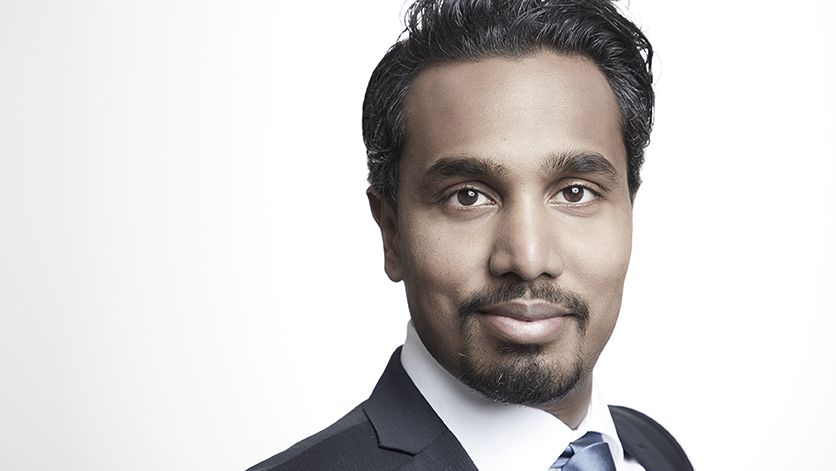
«I'm looking forward to whatever the future holds, and I wish all of us one thing above all else for 2024: great cinema.»

In March, another headline made the news: Apple and Amazon are setting their sights on the movie theater—with investments in the billions. «Cinema First» for their in-house productions. They are thus following in the footsteps of other film distributors and streaming providers who have already embraced this successful model or, in some cases, have returned to it.

Related to the opening question: «Does anyone even go to the movies in ‚summer‘?»—the answer is the quintessential summer fairy tale of 2023: «Barbenheimer.» “Barbie” and “Oppenheimer” went viral worldwide and drew nearly 1.2 million moviegoers into comfortable theater seats in Switzerland alone.

«Barbie and Oppenheimer went viral worldwide and drew nearly 1.2 million moviegoers into comfortable theater seats in Switzerland alone.»

Who would have guessed? Looking back, this gives us strength and reaffirms that cinema is alive and well and offers an excellent environment for advertising. And it’s fully in «flow,» too. This year, for the first time, «flow» was scientifically researched in the context of advertising and its impact, in a study conducted by the University of St. Gallen (HSG). «Flow» is a moment of intense happiness, and cinema thus sets unique and above-average standards in advertising effectiveness.

And so, in the truest sense of the word, a year that was nothing short of a blockbuster for me is coming to an end. The movie-going experience remains vibrant and full of surprises. As the «mother» of moving-image media who’s young at heart, our—and therefore my—goal is to be and remain innovative. For example, advertising on the digital screens in the lobby can now also be booked on a programmatic basis. I’m looking forward to everything the future holds, and I wish all of us one thing above all else for 2024: great cinema.

– Juliane Merz, Director of Sales at Weischer. Cinema Switzerland


Tarkan Özküp, Chief Commercial Officer, CH Media
Tarkan Özküp, Chief Commercial Officer at CH Media.

National presence with regional strength. A tagline—and that’s exactly why it’s so memorable. But for me, it means even more: the very essence of CH Media. So many positive stories have been overshadowed by this year’s terrible upheavals or simply haven’t received enough attention. We celebrated major anniversaries, including 100 years of «Wir Eltern» and 20 years of Swissmom.ch, and we’re currently preparing for the 30th anniversary of TeleZüri and the 10th anniversary of Watson next year. With our TV network, we’re enjoying the highest market share in entertainment and, for the first time, reaching over 1 million readers with «Schweiz am Wochenende,» which offers quality journalism for all of German-speaking Switzerland through its 29 regional editions. Our news portal watson.ch/fr posted the strongest relative growth in September alone and stands out clearly from its competitors in French-speaking Switzerland.

What a year! At a time when traditional print media is under immense pressure, digital news portals and social media have gained in importance. This transformation also presents us with the challenge of further developing our innovative business models and strengthening our digital presence. But there is much more at stake: the integrity of journalism and its role in shaping public opinion, as well as the fight against the spread of misinformation and manipulated content on social media and other channels. Reliable brands, such as those owned by CH Media, are becoming more important again; their credibility presents an opportunity for us. What strategies are we developing to combat disinformation and promote media literacy?

«At a time when traditional print media are under immense pressure, digital news portals and social media have gained in importance.»

We feel a sense of duty. To fulfill our responsibilities, we need solid funding models. That is why financial sustainability is our top priority, as it ensures independent journalism. Advertising revenue is declining, though with low volatility, making it easier to plan for. I see growth in all-media approaches and, consequently, in the development of trust-building concepts for marketing goals and promotional sales challenges. This year, we have once again invested in experts and will continue to provide targeted training in the coming year. This is where customer interaction begins on a qualitative level—not purely a sales-oriented one—and this is the only way to build customer trust in our employees. With this approach, we bring to life the strength of CH Media—a media company that has always defined journalism as the foundation of its success. To that end, we are currently working on a broad and impactful branding campaign for our newspapers and news portals for the coming year.

– Tarkan Özküp, Chief Commercial Officer at CH Media


Ladina Heimgartner, Head Ringier Media & CEO Ringier Medien Schweiz
Ladina Heimgartner, Head of Ringier Media and CEO of Ringier Medien Schweiz.

For the Blick Group, 2023 was a year of new beginnings. With the launch of our digital subscription model, Blick+, we took the plunge into paid content this summer. Our expectations were met—and in some cases even exceeded. Today, we’re pleased to report a five-figure number of subscriptions (about 25% of which are annual subscriptions) and countless lessons we’ve learned since the launch. What sets our offering apart: in-depth analysis, concrete value, and robust research—all packaged in modern storytelling and supported by our Blick-specific approach to highlighting the benefits of a subscription. Another plus: For Blick+, virtually all units within the Blick Group must work closely together and coordinate with one another. Silos are gradually being broken down—«Cooperation is King.» And last but not least: At the same time, we’re also working intensively to steadily increase logged-in usage. The lessons learned from Blick+ are fueling our efforts to increase logged-in usage, and vice versa.

«»Embrace change!’ I think that fits us well for 2024, too.”

«Cooperation is King» also applies to our approach to artificial intelligence. It’s a wave that continues to build and is far from breaking, but one that carries the risk of washing away old business models. After our initial moments of realization, we kicked things off in April with our own AI Week. At this hackathon, we deliberately focused on collaboration between developers and journalists. In May, we became one of the very first media companies to adopt AI guidelines. As part of the AI Boost project, we are incrementally and systematically refining our existing business processes with the goal of becoming more efficient and constantly improving. In the Blick newsroom, we created a dedicated AI position, and today we’re already working very concretely with AI tools such as the interview transcription tool Blisper, AI summaries from news agencies, and the toxicity score for reader comments. These are all tools that our journalists have embraced with great curiosity and enthusiasm. They’re like a new coworker who might still have a few quirks here and there—but at the end of the day, makes the job a lot easier.

Speaking of new colleagues: With the merger of the Blick Group and the media titles of Ringier Axel Springer Switzerland, 2024 will also be a year of collaboration. We’re strengthening Blick.ch with new content, expanding our portfolio with exciting material, and thereby boosting the visibility of our magazines and publications in the digital space.

When it comes to my New Year’s resolution, I like to quote soccer coach Ted Lasso, my current streaming hero. He likes to tell his team: «Most of the time, change is a good thing. Now, I think that’s what it’s all about. Embracing change»—in other words, «Embrace change!» I think that fits us well for 2024, too!

– Ladina Heimgartner, Head of Ringier Media and CEO of Ringier Medien Schweiz


Lars Holtschmit, Director Marketing & Product Management SRG
Lars Holtschmit, Director of Marketing & Product Management at SRG.

In 2023, we were once again able to be part of an exciting year in the media industry, in which, it seems, nothing is the way it used to be. Topics such as measurement techniques, collaborations, and the increased use of video content via streaming platforms—in addition to linear TV viewing—are dominating the conversation. I particularly remember the wide-ranging conversations with numerous colleagues both at home and abroad, which demonstrate that the global media market is in a state of intense flux and that the enormous expansion of media content offerings requires an increasingly complex approach. It’s great to see that quality continues to be a top priority. Here, we were once again able to offer attractive advertising placements, including through SRG’s top news and information programs as well as its vast live sports coverage. And next year promises more great highlights on the big screen and beyond, with the UEFA European Championship in Germany and the Summer Olympics in Paris.

«AI is a field that will offer us many opportunities in the coming years.»

By hosting Screen-up in September, we were once again able to demonstrate that the TV market continues to generate a great deal of interest. It’s important to me to keep emphasizing that we must strive for clear and reliable comparability across media. Especially in the moving-image and video sectors, we clearly still have a great deal of work ahead of us to convince people of this, as apples are all too often compared with oranges in these areas. Of course, sustainability was also a key focus for us this year, and it was equally exciting to support the initial positive experiences with projects in the field of artificial intelligence related to program scheduling. We are now applying the lessons learned to future projects. AI is a field that will offer us many more opportunities in the coming years.

«Topics such as measurement techniques, collaborations, and the increased use of video content via streaming platforms—in addition to linear TV viewing—are dominating the discussions.»

«As the year comes to a close, I'm looking forward to such outstanding productions as »Davos» on SRF, where the impressive scenery, costumes, and story promise a fantastic viewing experience."

– Lars Holtschmit, Director of Marketing & Product Management at SRG

"Many people know too little about money"

Olga Miler worked at UBS for over ten years in various roles, where she developed the women’s segment strategy and launched the UBS Gender ETF. Through her company, SmartPurse, she is active in the field of financial education in both the B2B and B2C markets.

Bild: Olga Miler
(Photo: Olga Miler)

What on earth does Olga Miler have to do with Pokémon? She grins. «My family is crazy about Pokémon. They collect the cards, play online—my older son even has a Pokémon shop—and my younger son plays at a world-class level.» Okay… So, just a normal family? «Nobody in our family is normal—that’s the beauty of it,» she says with a laugh. But what is normal, anyway? Olga Miler’s career path certainly isn’t.

The Apprenticeship Years

Olga was born in Prague, moved to the Black Forest with her mother at the age of seven, and when she was twelve, the family immigrated to Switzerland. Olga attended the cantonal school in Baden and then studied business administration at the HSG. Of course, there’s a story behind that, too. «My great-grandfather had already studied at the HSG, which seemed like a good omen to me.» He had transferred from the Czech Republic to the University of St. Gallen for one semester.

«My great-grandfather studied at the HSG, so that seemed like a good omen to me.»

In her fifth semester, Olga began an internship at PwC, where she impressed the executive team. With her unconventional, direct, and competent approach, she secured a job offer from PwC even before graduating. She always seems to be in the right place at the right time. She moves to Vevey to work for Nestlé; at first, there are just three of them, but a few years later, the team has grown to over 400. She describes this time as «the golden years of consulting.» From PwC, she moves to Nestlé in Brazil, where she works for over two years. She was one of the few women on the team and learned Portuguese. When she was offered a position in the U.S. or Canada as her next assignment, she turned it down; she wanted to be closer to her partner, who was in the process of founding a startup in Zurich. She commuted between Milan, Zurich, and Frankfurt for a year. But she felt lonely. Eventually, she resigned and started as a consultant at UBS, which then hired her full-time. Over the next ten years, she held a wide variety of roles at the financial services firm; among other things, she established the UBS Gender ETF and, together with Mara Harvey, developed the women’s advancement program, which was successfully launched in 2017 and remains part of Wealth Management to this day. «I hadn’t really paid much attention to women’s issues before. Since I grew up in an emancipated household, I never felt the urge to focus on them.» But together with her colleague Mara Harvey, she noticed that women were not being addressed in Wealth Management. Over the course of many years, Olga built the program. That is also her official title: Managing Director, Global Program Architect, UBS Unique.

The startup founder

When she decided to leave UBS in 2019, she knew exactly what her next step would be. After all: «Over the years, I’ve realized that most people know far too little about money.» She wants to change that. Independent financial education is at the heart of SmartPurse, the startup she founded in 2019. «I’d noticed that people who manage their own finances like to get independent advice,» says Olga Miler, gazing into the distance for a moment as she formulates her next sentences in her head, then she continues. «In a way, everything else is just marketing,» she muses. Of course, every financial institution strives to promote its own wealth management offerings. But those aren’t always the best solutions. That’s exactly why Olga Miler founded SmartPurse—to empower people to make their own financial decisions.

«I've noticed that people who are managing their assets like to get independent advice.»

She founded the startup with a friend. Her friend is from London, and the seed capital also came from their circle of friends in the UK. Just as everything was «ready to go,» the pandemic hit. And then came an offer to orchestrate a bank’s rebranding. She took the job, put SmartPurse on hold, and didn’t relaunch her business venture until 2021. This time, it was based in Switzerland. Olga started by «teaching people about money.» In other words, she holds workshops and webinars via Zoom, thereby building a client base that’s steadily growing. Initially, the focus was on women. But in the meantime, the educational offerings have broadened to include financial literacy for everyone. «Money is omnipresent throughout society.»

Vintages

The startup has now successfully completed its next round of funding, raising 700,000 Swiss francs to continue its growth. Most of its clients are in the B2B sector. «We provide financial education for companies that want to better advise their customers,» she summarizes. Its first partner was the Zurich Women’s Center; since then, several others have joined, including Advance Switzerland and Swiss Life Wealth Managers. SmartPurse has also developed a concept for Alpian, in collaboration with Marion Fogli, who, as Alpian’s Deputy CEO, is driving forward women’s advancement. «Every company has a changemaker or a sort of Pippi Longstocking who tackles things head-on and drives change. I’m one of those people, too—we recognize each other.» In Olga’s opinion, financial service providers are in a crisis. Studies confirm that customers are withdrawing their funds and switching to online providers, and the crypto scene is also putting pressure on the market. It is therefore important to spark an interest in financial education among young people in particular, as they are the investors of the future.

What do finance and humor have in common?

Olga Miler is thorough in everything she does. It’s important to her to reach people through many channels and to never lose touch with her customers. That’s why both B2B and B2C business are important to her. Olga Miler has been writing a finance blog for Watson for nearly four years. For the first year, it was called «Women and Money,» but then so many men wrote in to say how interesting the blog was for them as well. In 2021, it will be renamed «Moneytalks.» Every other Thursday, she tackles a topic from the world of finance and examines it from various perspectives. The blog is very successful and is also translated for French-speaking Switzerland. Which topics get the most clicks? «Tips and tricks—in other words, how-to topics—get a ton of clicks,» she says.

You’d think this woman has enough on her plate. There are 24 hours in a day, and she has two kids, a household, a marriage, and a business. Now she’s writing a book—a finance book for everyone, as Olga calls it. With a touch of humor, of course. Pippi Longstocking style. The book explains the 30 most important concepts about money that we all should have learned in school. It’s peppered with humorous cartoons. «This will help a lot of people, because things stick better when you add a touch of humor.» Her dream would be for all teenagers aged 14 and older to read this book as required reading in school. At 140 pages and with so many cartoons, it’s a quick read. Beobachter-Verlag will publish the book in March.

Pause

Olga Miler comes from a family of strong women. She learned early on that financial independence is important not only for well-being but also for equality in relationships. She forged her own path, and when she met her husband at the Street Parade at age 24, a journey began that she had never planned in any way. «I’d never given marriage a second thought; I didn’t know if I wanted children. The good things—Olga Miler is certain of this—happen along the way. What’s important is that she’s always listened carefully and paid close attention. That’s how you can understand a lot. And luck plays a role, too. Being in the right place at the right time. Her story seems like a series of opportunities she seized. Does she see it that way, too? No, says Olga, and once again she pauses for a moment, reflecting in her mind’s eye. There would have been many opportunities she didn’t seize; she doesn’t know where she’d be if she had. But the thing is, life happens here and now and wants to be lived. Olga smiles: «But if someone would just pick up the Pokémon cards off the floor of our apartment, I wouldn’t be mad.»

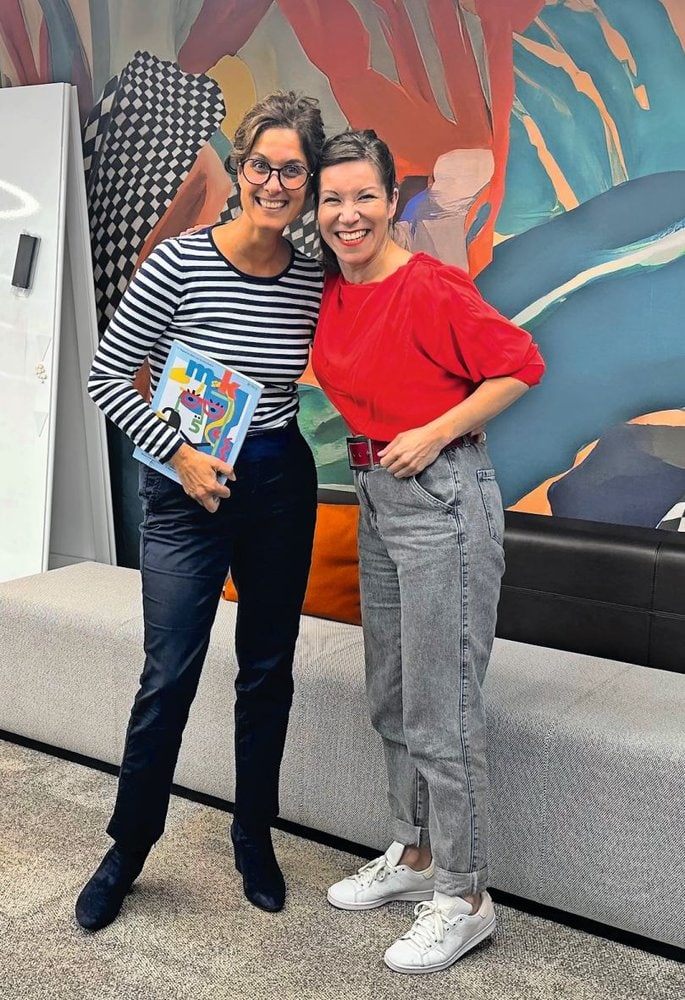
Olga Miler und Co-Chefredaktorin von m&k, Anna Kohler, nach dem Interview. Illustrationen: Silvan Borer
Olga Miler and Anna Kohler, co-editor-in-chief of m&k, after the interview.

Miler's Tips: Top 5

1. Regular financial cleanup

Every three months, review your budget and credit card statements to eliminate unwanted expenses, such as unused subscriptions. This can save you thousands of francs a year.

2. Talking About Money

It's one of the most efficient ways to gain knowledge, discover new providers, and get practical tips. Plus, you get to know the other person in a whole new way.

3. Automate wherever possible

Set up recurring payments to automatically set aside funds for major purchases, retirement savings, and investments. Once set up, it runs on autopilot.

4. Keep an eye on costs

Comparing costs when it comes to finances is one of the most tedious tasks, but it’s worth the effort because the costs can be significant. Review your providers once a year and don’t be afraid to switch.

5. Even small amounts can be useful

Consistency and a long-term perspective are key to building wealth. Find a broadly diversified, low-cost investment, get started, and set it on autopilot with a standing order.

Well done, lion

Why is a festival in its prime more appealing than ever before? What makes the Cannes Lions the driving force behind the entire industry? Southern France, expensive villas, large yachts, and maybe oysters?

Bild::Cannes Lions Press Center
(Photo: Cannes Lions Press Center)

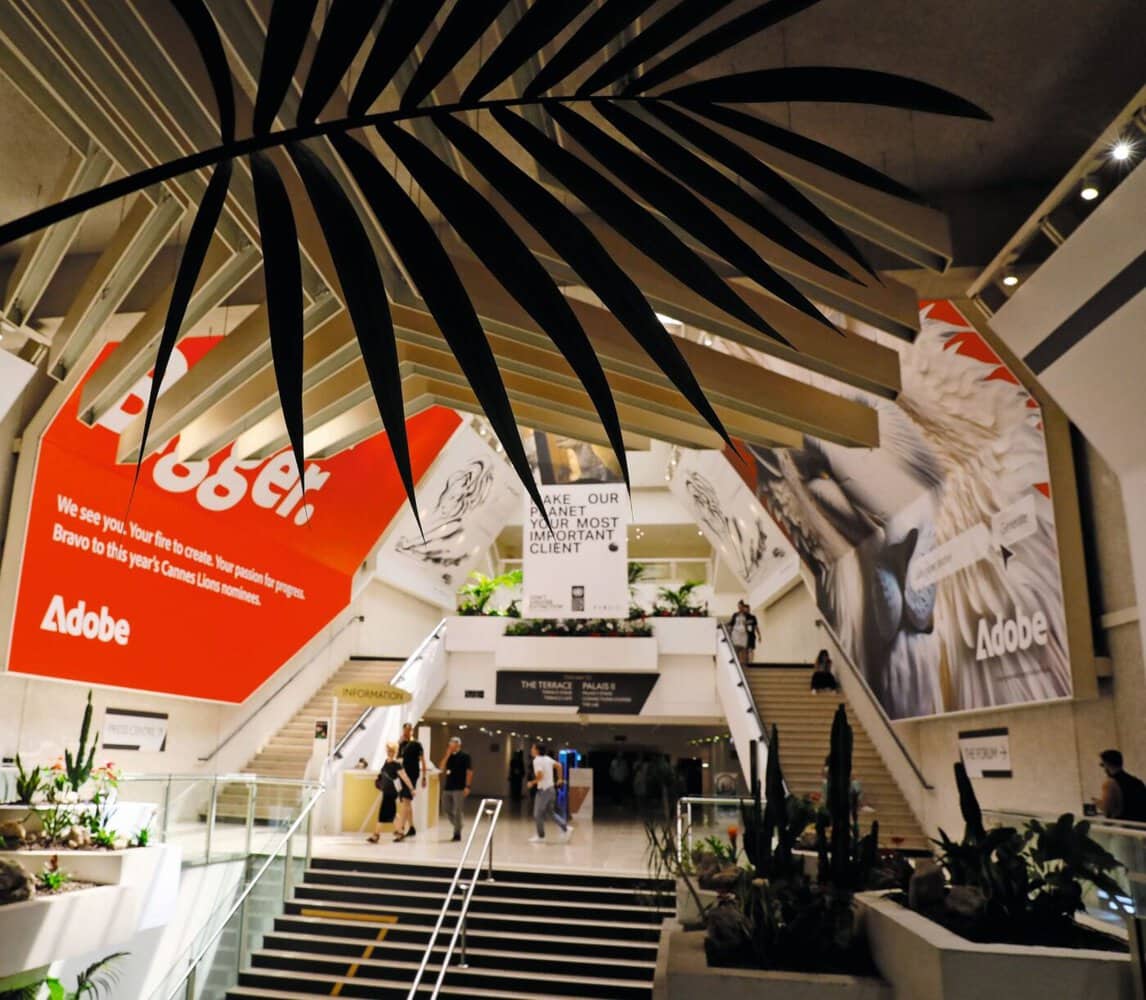
The International Festival of Creativity, or Cannes Lions for short, is arguably the most important event for the international creative industry. Every year, the best advertising professionals are honored on the Croisette. The most creative works win the highly coveted Lions—the «Oscars of advertising.» Unlike the Oscars, however, the awards come in gold, silver, or bronze. Grand Prix Lions are awarded for the most outstanding achievements by creatives from around 100 countries. Those who win in Cannes can count themselves among the global advertising elite.

The Cannes Lions Festival is also one of the oldest festivals in the industry. It celebrated its 70th anniversary this year. For its anniversary, the festival was one thing above all else: packed. Virtually every beach was lined with exhibitors, networking events were held everywhere, and the Palais was bursting at the seams—it was more crowded than ever. But that had nothing to do with the anniversary.

Learning from the Trends at Cannes

The Cannes Lions Festival provides us with fresh inspiration for our work. That’s because the trends we see in Cannes represent the cumulative lessons learned from inspiring campaigns around the world. This year, four trends have emerged that will continue to shape our work at least until the start of the 2024 festival—and from which we should definitely learn.

1. The New Tool Kit

It was to be expected: This year, AI was right at the forefront on the Croisette.

Unlike our neighbors in Germany, however, there was a strong consensus in Cannes: AI is the creative community’s new tool, and it’s up to us to learn how to use it. AI is the solution to one of creatives« greatest fears: the blank page. Finally, initial ideas can be put down on paper quickly and easily. This way, the vision in your head quickly becomes reality. But AI wasn’t the only topic of discussion. Diversity remains a top priority. The best example here is the Direct Grand Prix winner, Adidas, with its »Runner 321« campaign. The number 321 represents the chromosome that causes Down syndrome. Going beyond brand boundaries, the sportswear manufacturer collaborated globally with marathon associations to make the runner’s number »321« a symbol for people with Down syndrome. This helped raise visibility for the group and improve access to sports. Heartwarming, honest, and diverse—that’s how it should be. Sustainability also continues to play a major role in the submissions at Cannes. Renault, for example, demonstrated with its »Plug-Inn” project—a sort of Airbnb for electric vehicles—how smart and sustainable ideas can overcome barriers to electric mobility. The result was not only two innovations but also the Grand Prix for Creative Strategy. We must view these themes as tools. Combined with our talents, they help us become an integral part of the project. They make our work more sustainable, more efficient, and faster. And they also demonstrate that new opportunities are emerging for people and technologies that make the final product even better.

2. You look younger than ever

«Best Ager» as the target demographic of the moment: They stand out for their high purchasing power and steady growth.

The tension has never been greater, the range of topics has never been broader, and the channels have never been so diverse. Until recently, it seemed as though no target group other than Gen Z existed; today, a senior citizens« representative is just as in demand, and »Best Agers« are the trendy target group. Yet they were always unfairly neglected because, as a target group, they didn’t seem »sexy enough.” Yet they stand out with high purchasing power and steady growth. After all, what we’re seeing in times of demographic change is that our fellow citizens are getting older and older, creating new markets for the issues facing this rapidly growing group. Topics that no longer need to be addressed with a younger target audience are becoming relevant again in this demographic. While some are just learning to accept their own appearance, others are exploring sexuality with a newfound sense of self-assurance. Exciting new markets are emerging for brands that must reinvent themselves in this world. Often, assets from the past can be reanchored in the current zeitgeist. For brands and agencies, this is both a major challenge and a huge opportunity. Hidden potential lies here, and those who manage to serve both sides equally will definitely be among the winners.

3. The Rise of the CMO

Identifying Gaps and New Opportunities

We all have a certain idea of what the job of a Chief Marketing Officer (CMO) entails. But in Cannes—and in a post-COVID world—a new definition of this role began to emerge:

«The biggest change for CMOs is the shift away from creativity and a central focus on marketing toward serving as the CEO’s Chief Growth Officer and identifying untapped areas and new opportunities to grow the business and the company.» Remi Kent, CMO, Progressive Insurance.

In times when marketing was the first thing to be cut to save money, CMOs have devised an entirely new strategy. Their measures are a response to the turbulent times most industries are currently facing, allowing them to remain highly flexible in the market. More than ever before, CMOs need close collaboration between the CEO and their former arch-rival: the CFO. To achieve this, all parties first had to learn to understand the new role of CMOs and recognize what marketers have always focused on: creating campaigns and initiatives that bring the product into the buyers’ spotlight. Once it became clear that marketing, too, delivers a return on investment (ROI), the role of CMOs was redefined. Today, they operate across the various functions of a company to succeed in times of economic uncertainty, drive innovation, and generate growth. To solidify this new position, they must focus on long-term market share rather than quarterly profits—and the entire company must do the same.

Bild: Cannes Lions Press Center
(Photo: Cannes Lions Press Center)

4. L.M.F.A.O

Laughter Leads to Optimized Financial Success

Da Vinci was very curious; he loved to question things, search for better answers, articulate his ideas and images, and suggest new possibilities.

One trend that emerged right from the start at the Palais was humor. It’s back in high demand among the entries submitted in Cannes and earned applause and several Lions. Andrew Robertson, President and CEO of BBDO Worldwide, demonstrated in his talk this year on the Debussy Stage at the Palais that «unhappiness» is on the rise globally. At the same time—or perhaps precisely because of this—humor is still the form of communication that sells best. In that sense, it’s no surprise that laughter is back in Cannes. Once again, a particularly large number of campaigns that made us laugh were honored—even when dealing with serious topics. It became clear to everyone at the very latest when «The Last Performance» by the New Zealand insurance company Partners Life took home a Grand Prix. After all, this campaign is about life insurance and the victims of a murder mystery series. Those who implement these four trends into their planning now will be more successful in the market in the long run.

Where the Heart of the Industry Beats

Let’s now return to the question posed at the beginning. What makes Cannes the beating heart of the entire industry? Let’s draw a brief biological analogy: There is only one thing that sets the pulse in an organism—the heart. And the heart of the creative industry beats at the Palais. There, creativity, ingenuity, individuality, and collaboration are evaluated, analyzed, and discussed. The festival brings together people whose work has caused a stir and left us in awe. And everyone who returns home from Cannes carries the messages and inspiration from there with them. They transmit the heartbeat from the Palais to our markets. In that sense, one could say: The Cannes Lions Festival is the heart of the creative industry and sets our pulse.

«Humor is a big hit among the entries submitted in Cannes, earning applause and various Lions.»

Cannes is also the place where the trends that shape the global creative industry are born. They influence the work of creatives and pave the way for new developments, technologies, and much more. And so we build creative bridges to new ideas, marketing strategies, and product developments. That’s why Cannes is still so appealing—perhaps even more so than ever before.

And if you listen very closely, you can now hear the heartbeat of the festival.


* Moritz Weischer is a grandson of Hans Weischer, who founded the cinema marketing agency WerbeWeischer in Hamburg in 1954. He has been working for Weischer since March 2019. While Moritz Weischer initially worked in the Corporate Innovation division, he took on the newly created position of CMO in April. He gained experience in the advertising industry during his time as an account manager at the agencies BBDO Proximity and Thjnk. Moritz Weischer holds a bachelor’s degree (BA) from HS Fresenius and earned his master’s degree in International Marketing from Hult International Business School. He also earned a Master of Innovation and Entrepreneurship from the Antwerp Management School.

(Image: zVg.)

A marriage at eye level

BlueGlass | Team Farner has been part of the Farner family since January. m&k visited Helvetiaplatz, where the digital marketing agency, with 45 employees, operates on two floors. Independent yet connected—this creates a win-win situation. Above all, the clients benefit.

Die Geschäftsleitung von BlueGlass | Team Farner (v.l.n.r.): Nicole Treipl, Anna-Lena Wohlschlag und Christoph Emch.
The management of BlueGlass | Team Farner: Nicole Treipl, Anna-Lena Wohlschlag and Christoph Emch (from left to right).

BlueGlass | Team Farner didn't actually plan to get married. But as life sometimes goes, the digital marketing agency tied the knot this year.

Over the last 15 years, BlueGlass | Team Farner has grown organically, apart from two acquisitions that the agency has made. Anna-Lena Wohlschlag and Nicole Treipl have been with the agency for a long time, having started out as interns. Anna-Lena joined eight years ago and is now Managing Director. Nicole joined the agency eleven years ago, her role is Director SEO & Content Marketing. "When I started, there were five of us," says Nicole Treipl. BlueGlass | Team Farner now has 45 employees. Together with former CEO Raphael Bienz, the two women have formed the management team in recent years. He is now a member of Team Farner's Executive Board and, as Chief Digital Officer, is a link in the day-to-day business. This also applies to the other three digital agencies that Team Farner has merged: Jim &Jim, SEMSEA and Yoveo. Anna-Lena Wohlschlag, Nicole Treipl and now Christoph Emch are now the trio at the helm of BlueGlass | Team Farner.

"We took three months to really get to know each other and see if we were a good fit."

Christoph Emch worked at Farner for eight years before moving to the management of BlueGlass. "We took three months to really get to know each other and see if we were a good fit," says Anna-Lena. The chemistry was right, as were the values. It has been official since April. Emch is seen as a valuable new member of the management team. He knows Farner from the inside out, so he can also contribute his spouse's perspective to discussions.

Anna-Lena Wohlschlag, Managing Director und Teil der Geschäftsleitung von BlueGlass | Team Farner.
Anna-Lena Wohlschlag, Managing Director and part of the management team at BlueGlass | Team Farner.

"This wedding is good for everyone"

The topics discussed by the management are diverse. It is about market development, personnel development, marketing investments. But also about employer branding. The shortage of skilled workers is an issue at BlueGlass | Team Farner - at least for some profiles. The team tends to be young and therefore has a lot of digital native expertise. People treat each other as equals and the agency maintains flat hierarchies. Everyone on board is motivated to help shape things. And what about the gender gap, which is often still pronounced in digital agencies? Wohlschlag laughs. "We have more women than men, but we don't claim that." This has been the case since the very beginning; we don't hire according to gender, but according to qualifications. And if that's the result, then of course it's good and in line with the zeitgeist.

"This wedding should benefit everyone," says Christoph Emch. Team Farner is honing its expertise in the digital sector, while BlueGlass | Team Farner can draw on broad communication skills and specific industry expertise. But what is very important to everyone in the room is that BlueGlass | Team Farner employees can continue to develop. And that in the entire Farner universe. "We are a large and international team. So much inspiration comes together that you have to worry that you won't get everything. We have our finger on the pulse," summarizes Emch. In Daniel Jörg, Team Farner has a Chief Innovation Officer who ensures that everyone in the team is always one step ahead. "We can't afford to stand still," says Wohlschlag.

Team Farner now has a broad base. While Farner was already the largest communications agency in Switzerland, it is now a real heavyweight. Farner International has just acquired Lansons, a reputation management company from the UK. However, Team Farner does not want to be seen as a network group. "We are a collaborative alliance, which is very different from a network; the connection between us is deeper and closer," summarizes Christoph Emch.

Christoph Emch, Director Client Success und Teil der Geschäftsleitung von BlueGlass | Team Farner.
Christoph Emch, Director Client Success and part of the management team at BlueGlass | Team Farner.

Independence, despite marriage

And yet the team members are independent in themselves, still have their own clients, can act quickly and are like speedboats in sheltered seas. In addition to working with existing clients, BlueGlass | Team Farner is now also part of new projects to which the agency previously had no access; the employees have access to a pool of knowledge and can offer more integrated services. Clients now have the opportunity to have the expertise of all units at one table from the very beginning of their communication project. All three see this as a major advantage. "We solve complex challenges for companies in an interdisciplinary way, that's the vision," says Nicole Treipl. And Anna-Lena Wohlschlag adds: "We have no interest in keeping things to ourselves. If Jim & Jim | Team Farner can create more targeted content for a project, we're happy to hand it over; if Yoveo | Team Farner can contribute a video campaign, absolutely, they all belong at the table."

Nicole Treipl, Director SEO & Content Marketing und Teil der Geschäftsleitung von BlueGlass | Team Farner.
Nicole Treipl, Director SEO & Content Marketing and part of the management of BlueGlass | Team Farner.

Future plans

The marriage to Team Farner is still in the honeymoon phase, but all three are of course thinking ahead. They are thinking about the times when this alliance has to prove itself in everyday life, when the first difficulties arise and the relationship may even be put to the test. For Anna-Lena Wohlschlag, Nicole Treipl and Christoph Emch, the employees always come first. The work-life balance is a big issue. Christoph Emch hopes that he can help to bring the agency landscape closer to a balance between family and job. There are many parents at BlueGlass | Team Farner, and this potential should not be lost, he says.

"In addition to working with existing clients, BlueGlass is now also part of new projects that the agency previously had no access to."

It is important to Anna-Lena Wohlschlag that the work is fun for everyone, that everyone enjoys coming, feels seen and can express themselves. She seizes opportunities and drives things forward wherever she sees potential.

For Nicole Treipl, change always brings opportunities. In addition to satisfied customers, the most important thing is the team and the strong team spirit, so she is delighted when the seeds that were planted together ripen and bear fruit.

And if there are challenges, the three of them will certainly discuss them constructively and get through them together with the team. As befits a good marriage.


"Team Farner's mix of expertise is unique"

Interview with Raphael Bienz, Partner and Chief Digital Officer at Farner | Team Farner. 

Anna Kohler: What strategy is the management pursuing with Team Farner?

Raphael Bienz: Companies and organizations are facing huge challenges today - and many of them can be solved with communication strategies, for example in the areas of digitalization, ESG, inclusion, data protection or stakeholder engagement. We have rounded off our services in such a way that we can support our clients in all relevant areas thanks to our unique mix of expertise.


Creation, PR and data. How well do they fit together?

It is precisely these strategic links that are necessary in order to be able to act in a holistic and integrated manner for our clients. However, we go one step further and can supplement these core competencies with the specialized knowledge of our industry experts and special topics such as ESG, behavioral science or employer branding.


Farner International has bought Lansons in the UK, a reputation management agency. Is this the future? Using SEO/SEA to straighten out reputations on the web?

Before joining Team Farner, I spent 13 years building up the agency BlueGlass | Team Farner. The DNA of BlueGlass has always been to create organic visibility for companies. And that doesn't work by straightening out reviews, building up a few likes or placing a few search ads. We have always made it our mission to help our customers build a strong digital reputation for their brand and the services they offer. We see reputation management as an active, formative discipline. Building a credible, sustainable reputation is the starting point and epitome of every brand. What better fit for our range of services - from branding to SEO/SEA - than entering the UK market through such a renowned strategic reputation house?

20 years of the Crossmedia Award

In 2024, the Goldbach Crossmedia Award will be presented for the 20th time. What makes a good cross-media campaign, and what does it take to ultimately win this prestigious award? We look back at the past and ahead to the future with the leading figures in the field.

Illustration: pexels.com
(Illustration: Pexels.com)

For 20 years, the Küsnacht-based advertising agency has believed in the success of cross-media communication and, to promote it, launched the Goldbach Crossmedia Award (CMA). Year after year, the most outstanding cross-media campaigns are honored. An independent, high-caliber jury focuses primarily on a creative central concept. However, to receive the golden cube on April 11, 2024, a campaign must also feature a sophisticated strategy for deploying it across various media. Innovation is also a key criterion, such as through the use of new media, formats, and technologies. Only those who can demonstrate a campaign with exceptional creative execution and a presentation and brand language tailored to the media and target audience stand a chance of winning. «You need a message, a consistent visual identity, and multiple channels,» says CMA jury member Christina Jaldón. Compared to the past, she notes, companies today must be much closer to their target audience. This means accompanying them throughout the entire customer journey: in the right place at the right time and through the right channel. It’s also important to communicate what’s relevant. «And to tell a consistent story so that, in the end, prospects or consumers have a lasting, positive brand experience—and, of course, a sale can be generated,» says Jaldón, who serves as Head of Marketing at Opel.

«The Goldbach Crossmedia Award is the award that evaluates not only creativity but also measurability.»

According to Matthew Katumba, the CMA stands out from other awards. «The Goldbach Crossmedia Award is the award that truly evaluates not only creativity but also measurability.» That’s what sets the award apart and is ultimately what makes it so exciting for clients. «That’s why, I believe, it’s an award that’s absolutely exciting and unique—not only for creatives, but also for clients and media agencies.» Jury member Lara Jelinski points out another factor: «You can have your own campaign evaluated not just by one or maybe two agencies, but by a very large jury made up of experts from various fields.» This, of course, adds a whole new dimension to the whole process, says the CEO of dentsu Media Switzerland.

Who invented it?

When Klaus Kappeler, the co-founder of Goldbach, was in training, the magic word was «multimedia.» «More than 40 years ago, if you didn’t just place an ad in the newspaper but also advertised with posters at the same time, you were already using multimedia,» laughs the 70-year-old. Then, as things moved on to radio, television, and later the internet, «cross-media» was suddenly on everyone’s lips and seen as something of a savior for the industry. «If everyone’s talking about it, you have to do something,» Kappeler told himself back then, and in 2005, he and his team launched the first edition of the Goldbach Crossmedia Award. «As a marketing organization, you always have to deliver the best results while also promoting the industry,» was KK’s (as everyone called Klaus Kappeler) strategy. As early as the 1990s, he also founded Radio Day and screen-up. «»As organizers of industry events centered on new media—as they were called back then—we wanted to facilitate the transfer of know-how and position Goldbach as a leader.” The biggest challenge, he said, was forming a neutral and professional jury. To achieve the necessary credibility, the entire industry had to be represented on the jury.

«As a marketing organization, you always have to perform at your best while also promoting the industry.»

The goal was absolute perfection. And the first CMA at the Hürlimann Areal went off without a hitch. «Professional expertise is the most important thing,» says Goldbach’s former CEO and Chairman of the Board of Directors. And a big party was a must, because the advertising industry loved such events then just as it does now, Klaus Kappeler explains to m&k. Marco Taborelli was brought on board as jury president back in 2009 by KK and his then-CMO, Paul Riesen. Now 62 years old, Taborelli was working on the client side at the time, where he had personally built and managed major brands. Taborelli’s main responsibility as president is, above all, to oversee and moderate the judging process. In addition, over the past 15 years, he has worked with representatives of the Goldbach Group to continuously refine the application process and evaluation criteria and to determine the jury’s composition. At the Award Night, the jury president, together with Goldbach CEO Michi Frank, presents the prizes to the winners. Twenty years ago, people still needed to be told what cross-media thinking and development meant. «Today, that’s a given,» he says with a smile. Most campaigns are currently designed with a cross-media approach. «That makes it all the more exciting—and also challenging—to collectively assess which elements make one campaign more successful, more innovative, and ultimately more efficient than another,» explains the multi-board member, who founded his own coaching firm 17 years ago and now also serves as chairman of the board on the agency side.

Judging as a Platform for Exchange

Is there even a need for such an award when everything is done across multiple media platforms these days anyway? «Because advertising isn’t a science, it’s important that we regularly exchange ideas about successful advertising.» The time spent together, during which the jury discusses ideas and reaches a consensus, is always a valuable experience for the individual jury members. In addition, the consortium explains its decisions to the audience at the Award Night. This means that a kind of exchange takes place there as well. «When putting together the jury, we work with our jury president, Marco Taborelli, to ensure a good mix of media and creative agencies,» says Simone Schulz, who heads the Brand & Content Marketing division at Goldbach. «But advertising clients must also be included.» Another important factor for the award is a balanced representation of women and men.

«When putting together the jury, we—along with our jury president, Marco Taborelli—make sure to strike a good balance between media and creative agencies.»

The main criteria that the CMA jury pays particular attention to in the submissions are cross-media integration, innovation, creativity, the campaign’s track record to date, and the overall impression. According to the Zurich native, who lives in Wollerau, the most important criteria have remained the same over the years. However, each of these five criteria is weighted differently: for example, cross-media integration counts twice as much as innovation or creativity. The weightings have shifted over the years, though. For instance, the weighting for track records has become increasingly significant in recent years. As a result, entries must now provide details on strategy, objectives, integration, resource allocation, and achieved or measured results. What, for Marco Taborelli personally, constitutes a good cross-media campaign? «In a successful cross-media campaign, the individual media are not only intelligently linked with one another, but also benefit from one another.»

No off-the-shelf solutions

In recent years, Philipp Skrabal has won four gold awards at the Goldbach Crossmedia Awards, in addition to various silver and bronze awards (2012: IKEA/Wirz, 2014: Mobiliar/Wirz, 2018: TCS/Farner, 2021: Autoschweiz/Farner). «You can’t do it alone,» says the current Chief Creative Officer at Farner. Everything has to come together just right. The client, the briefing, the idea, the team, and the ambition—all of these are crucial. «For a brilliant cross-media campaign, you need top specialists who are all committed to a single overarching idea and bring it to life in all its ramifications.» Today, the CMA no longer offers a cash prize; for the current Farner partner, the greatest benefit of all his victories has always been the pride his clients take in the award. «For me, that’s the greatest benefit, because the award builds trust and lays the foundation for our next joint success.» Today, Philipp Skrabal himself sits on the CMA jury. The 51-year-old doesn’t have a formula for winning a Goldbach Crossmedia Award, but he does have one piece of advice: «Work with people who understand your campaign idea and don’t just give you run-of-the-mill, off-the-shelf proposals.»

«The main criteria the CMA jury considers are cross-media use, innovation, creativity, the campaign's track record to date, and the overall impression.»

All campaigns conceived and developed in Switzerland are eligible. For international projects, results relevant to the Swiss market must be demonstrated. According to award project manager Monika Heiniger, there are an increasing number of international campaigns that are simply adapted for use in various countries. «However, the majority of projects are conceived and implemented exclusively for Switzerland because this allows for a better response to market conditions and the target audience,» the 34-year-old explains to m&k. We asked Heiniger what the biggest challenge is in planning and executing the entire event. «The biggest challenge is probably the ongoing optimization of the Awards to keep pace with developments in the advertising industry, in order to maintain the relevance of this award at all times.» However, she adds, this is what makes the entire project and every edition of the awards so special.


INTERVIEW

«There were many happy, smiling, and sometimes even surprised faces at the dice presentation.»

Michi Frank, CEO der Goldbach Group AG.Bild: Goldbach

m&k spoke with Michi Frank, CEO of the Goldbach Group, about the Crossmedia Award. (Photo: Goldbach)

m&k: How does the Goldbach Crossmedia Award today differ from the first award presented 20 years ago?

Michi Frank: The award was originally designed to be much simpler. However, based on feedback from participants and jury members, we have continuously refined it, taking into account changes in the advertising and media industries. Because we’ve stayed on top of things, the Goldbach Crossmedia Award has gained both relevance and recognition in the market.


Which campaigns have left a lasting impression on you personally?

So many outstanding campaigns were submitted that I can't make a decision. I'm impressed all over again every year, and I'm incredibly happy that we can honor the best examples of cross-media communication with the Goldbach Crossmedia Award.


How often do people tell you that everything is already cross-media these days anyway, and that your award is therefore no longer necessary?

Of course, cross-media campaigns have changed significantly over the years. With the rapid development of digital technologies, new channels have emerged that have become an indispensable part of any media mix. Today, modern cross-media campaigns feature personalized content, are interactive, and encourage the target audience to participate. Furthermore, the brand’s message must come across as authentic, which poses a major challenge for advertisers seeking to achieve their goals effectively and successfully. This fact demonstrates that the smart integration of various media is more important today than ever before for reaching the right target audience at the right time and in the right place.


What are the main reasons for holding the Crossmedia Award?

With this award, we aim to recognize the best cross-media campaigns in Switzerland. Through our award, we can promote innovation and creativity and help drive the further development of the advertising industry.


What have the winners' reactions been over the past 20 years?

The first thing that comes to mind are the many happy, smiling, and sometimes even surprised faces at the dice presentation. The joy of the winners and their teams is truly unique.

«With this award, we would like to recognize the best cross-media campaigns in Switzerland.»


What makes a good cross-media campaign in your opinion?

For me, the most important thing is that the idea is coherent, creative, and tailored to the specific media channel—such as TV, audio, print, OOH, online, or social media. If the message speaks to me specifically, I can develop a deeper connection to the brand. The winning campaigns from recent years are great examples of how cross-media communication works.


What's absolutely off-limits in campaigns these days?

A campaign that attempts to implement the idea in a generic way across all channels. These days, messages must be tailored to the specific needs and preferences of the target audiences.


Will the Goldbach Crossmedia Award still exist in 2044?

(laughs) I certainly hope so.


And then with you as the jury president?

Why not? We'll see.


Tips & Tricks: How to Make Sure Everything Goes Smoothly When You Submit Your Work

1: Good Preparation

Involvement of all relevant parties, such as the client or media agency.

2: Compliance with all submission criteria

All five jury criteria must be met.

3: High intelligibility

Even with highly complex ideas, the campaign should be immediately understood by the jury.

4: Focus on the essentials

Even with large-scale campaigns, it's important not to get lost in the details.

5: Clean visual presentation

Anyone who uploads additional visualizations for all questions will score points for their presentation.

6: The Grandma Test at the End

It's a good idea to have a layperson review your submission to check that it's easy to understand.

You can find all the details on how to participate at Crossmediaaward.ch. Submissions will be accepted until February 1, 2024.

From aviation to My Blue Planet

As a pilot, Daniel Lüscher spent 26 years looking down on Earth from above. He witnessed the drastic changes—and decided to take action. Through the organization My Blue Planet, he aims to help preserve the beauty of the Earth.

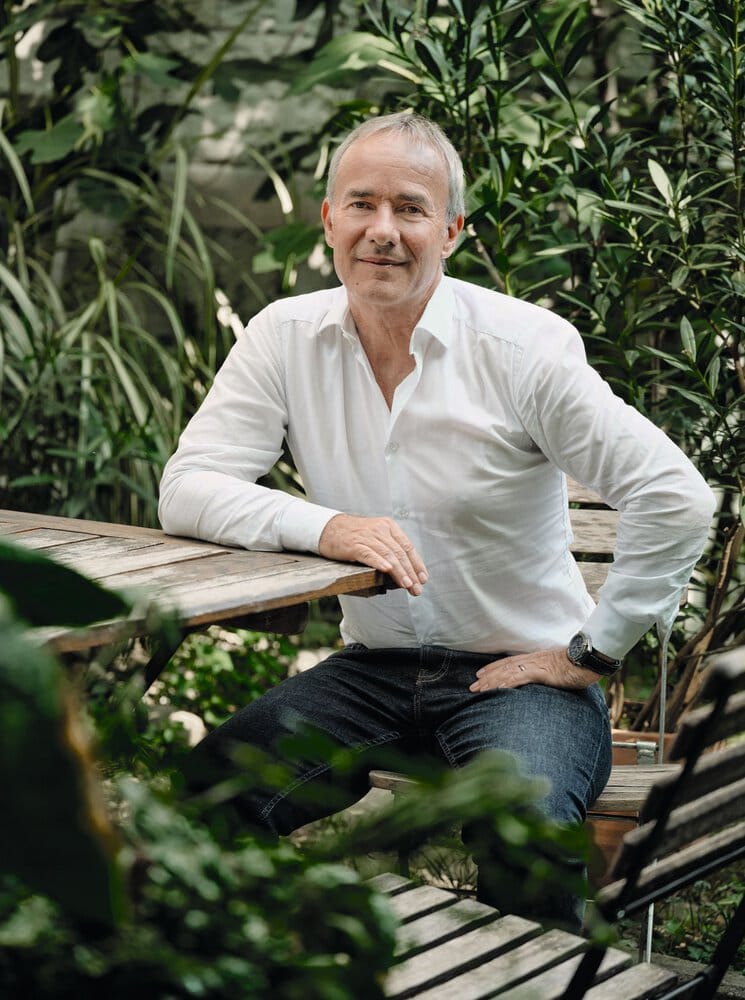
Daniel Lüscher, hier in Winterthur im Gartencafé des Volkart- Hauses, wo My Blue Planet sein Büro hat.
Daniel Lüscher at the garden café of the Volkart-Haus in Winterthur, where My Blue Planet has its office. (Photos: Chris Reist)

Being a pilot had always been Daniel Lüscher’s dream job. And he made that dream come true. For 26 years, he viewed the blue planet from above, flew to a wide variety of countries, cities, and cultures, and returned the same way—through the skies—back to Switzerland, his home.

Daniel Lüscher is no longer a pilot. He has devoted himself entirely to the Earth, his beloved blue planet. In 2007, he founded the My Blue Planet association together with like-minded individuals. They had actually intended to start a movement, but in 2007, climate protection wasn’t yet a mainstream issue in Switzerland, so they launched the association instead. The association’s goal and mission: to bring society along on the path to net-zero. Who is this fascinating man who stepped out of the cockpit, hung up his uniform, and has since been knocking on doors for the sake of his beloved planet?

The Boy from Appenzell

Little Daniel grows up in a sheltered environment in the village of Speicher in the canton of Appenzell Ausserrhoden. The children spend a lot of time outdoors in nature; hot summers and white winters are a given. Swimming and skiing define each season. His love of nature shapes him. One day, when his father takes him to the airport to visit his uncle, who is a pilot, the boy knows what he wants to be when he grows up: a pilot. But of course, only if he can wear that magnificent uniform his uncle wears. His uncle works for Swissair. With nature in his heart and his dream in sight, he begins studying to become an electrical engineer—a requirement for registering for the pilot’s license exam. His time in the shared apartment in St. Gallen is deeply rooted in his heart; his roommate Gabi is now his wife, and many years later, his other roommate would go on to co-found My Blue Planet with Daniel. The third member of the shared apartment group—a colorful character with incredible creative potential—remains a source of inspiration to this day.

Master of the Skies

Out of 800 applicants, 80 make it into the pilot training program. Daniel Lüscher is one of them. At 25, he has fulfilled his dream. He is a pilot, wearing the uniform he’s always wanted, and ready for the cockpit. He recalls a phrase an instructor shared with him during training: «Take a good look out the window—the longer you fly, the less snow there is.» The view from the cockpit fascinates him—seeing the Earth from above, so beautiful and yet so fragile. «The changes are drastic,» he concludes after years of flying.

«What began as a club over a glass of beer has since grown into a climate movement with 22 employees.»

The next defining moment occurs, one that finally convinces him that he must do something for the environment. Federal President Moritz Leuenberger is on board a flight from Zurich to New York. Daniel Lüscher invites him into the cockpit, and instead of marveling at everything a pilot does, Leuenberger explains that he is on his way to the UN Climate Conference. It’s a conversation that leaves a lasting impression on Lüscher. In New York, he and his crew watch Al Gore’s film, *An Inconvenient Truth*. This marks the beginning of Daniel Lüscher’s second dream: to bring people along on the journey toward net-zero.

Servants of the Earth

Back in Switzerland, Daniel is sitting with friends over a beer and telling them about his «aha» moment while watching Al Gore’s film. His former roommate advises him to screen the film for free at a movie theater in Winterthur. No sooner said than done. The film ran for a week, drawing well over 15,000 interested viewers. Many of them reached out afterward, wanting to help and make a contribution. But how? “We didn’t have anything to offer—no platform.” So they took the next step and founded My Blue Planet.

Still employed full-time as a pilot, his workload on behalf of the organization is becoming increasingly intense. After a conversation with the airline’s CEO, he is granted one week off per month to manage My Blue Planet and move its projects forward. At full pay. He’s still thrilled about this today. It gives him the freedom to pursue both of his dreams. This continues for seven years, until Lüscher decides to hang up his uniform for good and devote himself 100 percent to the Earth. What began as an organization conceived over a glass of beer has since grown into a climate movement with 22 employees. My Blue Planet wouldn’t be able to operate in its current form without financial support from people who believe in the movement. There seems to be a light surrounding Daniel Lüscher that, like a lantern, illuminates the path leading him straight to like-minded people. Or could you also call it networking? «Yes,» laughs Daniel Lüscher; networking is important, but you also have to do your homework. Lüscher does just that. My Blue Planet finds a supporter in the Volkart Foundation, but the foundation wants a clear structure and a business plan complete with a budget proposal. Once everything is submitted, the funds start flowing. Lüscher is able to rent an office in the Volkart House and, together with his staff, drive his project forward from there.

What exactly does the job entail?

"My Blue Planet"—that sounds like a lofty ambition. How exactly does that name translate into action? A lot has changed from 2007 to the present. The idea of bringing people along on the journey toward net-zero has spread across the country like pollen in the wind. Collaborations have emerged with the Zurich University of Applied Sciences (ZHAW), culminating in a partnership with the Swiss Green Economy Symposium. The Klimalandsgemeinde was founded in 2012 as an initiative of My Blue Planet, the Club of Rome, ZHAW, and the City of Winterthur; from this initiative emerged Give&Take, RestEssbar, Wiederverwerkle, and bare Ware.

«He gets one week off each month to take care of My Blue Planet. With full pay.»

Countless projects have been launched and successfully implemented since then. As the organization begins to scale up its projects, it becomes clear that more staff are needed, and Daniel Lüscher also feels that he wants to take the next step to lay the groundwork for taking his dream to the next level. He earned an MBA. «I wrote my thesis under the theme ‚Climate Actions for Companies,‘ with the goal of bringing as many people as possible along on the journey toward net-zero, starting from where they are,» says Lüscher. And what did those actions look like? The key, he explains, is small and medium-sized enterprises (SMEs). Employer engagement. With a core team of participating companies, he conducted preliminary analyses, developed milestones, established plans and implementation strategies within the teams, and then put them into action. This worked so well that the concept is now being scaled up. «According to the Paris Climate Agreement, companies must move toward net-zero; if they get their employees on board, this can succeed,” Lüscher is certain. Most recently, SECO’s Innotour has also come on board and is supporting My Blue Planet’s project work.

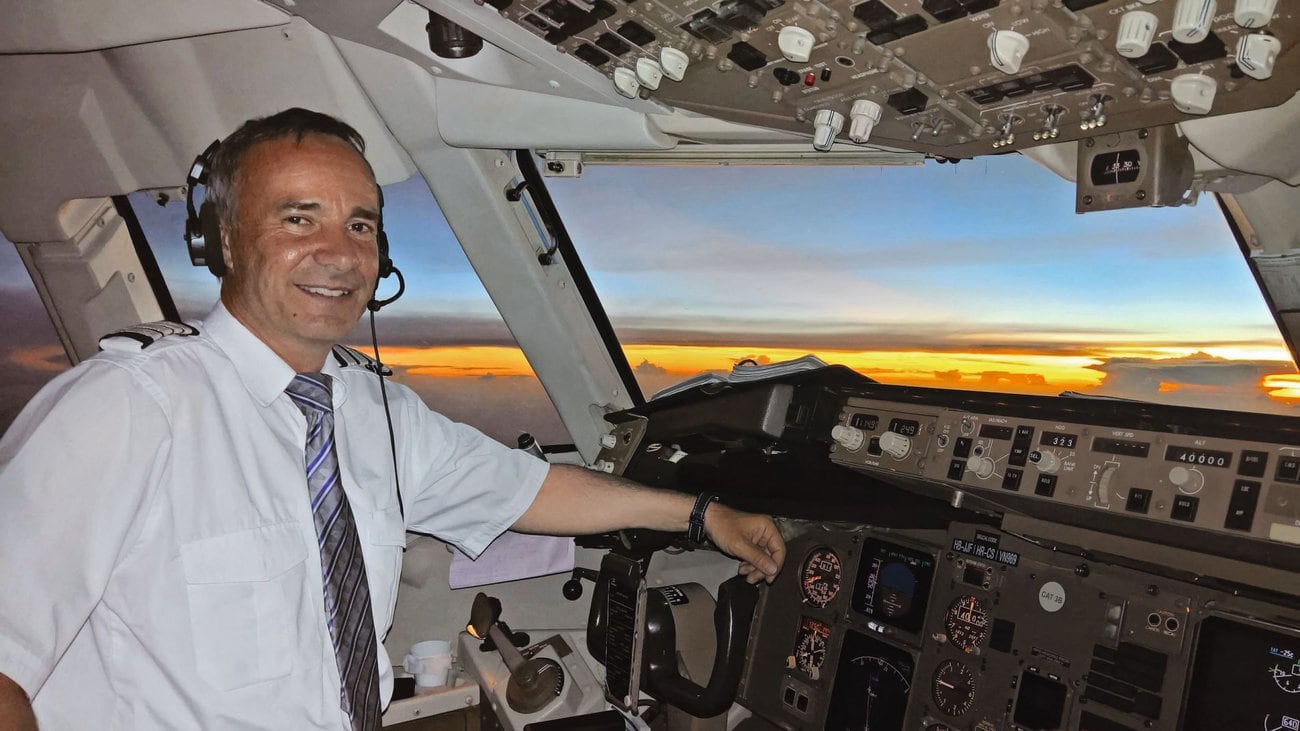
Daniel Lüscher war 26 Jahre lang Pilot. Erst bei der Swissair, Swiss, dann wechselte er zur PrivatAir nach Genf. Bild im Cockpit: zVg
Daniel Lüscher was a pilot for 26 years. He worked first for Swissair, then for Swiss, before finally moving to PrivatAir in Geneva. (Photo: Courtesy of the publisher.)

The second pillar for getting the public on board is schools. My Blue Planet works with students on projects they can easily take to the streets. This way, they achieve success and bring their knowledge and enthusiasm back to their families, who—in the best-case scenario—get swept up in the excitement. A smart scaling strategy. Does he have a specific example? On «Impact Days,» students develop projects that they then carry out with the help of teachers and parents alike, and they use the proceeds from these successful projects to fund new ones. My Blue Planet has now worked with more than 12,000 students in this way. The third pillar is social media. Together with influencers, the organization’s reach on platforms like Instagram and TikTok has skyrocketed to heights Daniel Lüscher could never have dreamed of. More and more young, talented, and enthusiastic people are offering their help and wanting to get involved.

Next Level

That requires coordination, strategy, and money. Daniel Lüscher can coordinate and develop strategies with his core team of 22 people, but the funds needed to scale up are lacking. «We’re like a startup that needs a new round of funding. What’s needed? «Half a million would be good,» says Lüscher. But it’s not just money that’s needed. Lüscher also wants to move from schools and workshops to companies. What does he hope for next? He doesn’t have to think long about that. «Companies could provide the best talent in their respective fields and give them the space and time they need. They could create a creative hub—a «permanent hands-on workshop»—that allows anyone who wants to work toward net-zero to do so there. Just as he himself once had the opportunity to devote one week a month to his plan. «We won’t be able to bring back the snow in Speicher, but we can prevent the entire slope from sliding down,» says Daniel Lüscher—and here, too, it becomes clear how he’s scaling up from the small to the large.”.

Daniel Lüscher, Gründer von My Blue Planet, im Gespräch mit Co-Chefredaktorin Anna Kohler.
Daniel Lüscher, founder of My Blue Planet, in conversation with Anna Kohler, co-editor-in-chief of m&k Werbewoche.ch.

The My Blue Planet Climate Action Movement was founded in 2007 by Daniel Lüscher. Today, 22 employees work around the clock on projects that help raise awareness about living in a climate-friendly way.

"They don't give a shit"

Since people aren’t really interested in brands, all communications professionals should put sticky notes on their desks with a pithy phrase: «Consumers don’t give a shit.» Sarah Carter once said that—and in doing so, she also implied how to make advertising effective.

Bild: unsplash.com / Annie PM.
(Image: Unsplash.com / Annie PM)

Advertising executive Sarah Carter once said that people’s indifference toward brands and advertising should be the starting point for all communication efforts—and that’s why there should be sticky notes on desks in our industry that sum it up succinctly: «Consumers don’t give a shit.» What’s refreshing about this statement is that it sums up the reality surrounding advertising and brands.

The most important thing about an advertisement is that it catches the eye in the first place. If an advertisement doesn’t catch the eye, everything else is irrelevant. After all, there’s simply no chance that the advertised brand will be remembered and considered as an option in any future purchasing situations.

«Advertising isn't meant to trigger sales per se; that's a completely wrong way of thinking.»

This function of advertising—the act of «drawing attention» itself—is the most fundamental purpose of advertising. As is well known, the English term for advertising is «advertising.» The term has its origins in the Latin verb «advertere,» which means «to turn toward» or “to direct toward something.” Advertising directs attention toward something or turns attention toward something. While the function of advertising is described by the English term “advertising,” the German term “Werbung” describes the activity of advertising itself without any functional requirement.

What stands out—and what doesn't?

The question now is: What criteria determine whether an advertisement stands out? There are two criteria here: standing out based on the content of the advertisement—that is, the message itself—and standing out through media presence with a wide reach, which conveys the message and ensures visibility.

Anyone with a decent media budget compared to their competitors can, in theory, afford to come across as boring and uninteresting. The sheer reach of their campaign, which ensures visibility, increases the likelihood that the ad will catch people’s attention.

«If an ad doesn't catch people's attention, nothing else matters.»

The key point, of course, is that very few companies can afford to be uninteresting. It’s usually market-leading companies that can afford to stand out with dull communication, since their wide-reaching visibility ensures they get noticed. However, companies that aren’t market leaders usually have much smaller media budgets compared to market leaders. To compensate for this disadvantage, they must stand out with the content of their advertising communications in order to achieve greater visibility.

Rationality? A total illusion

Standing out in terms of content—or rather, the opportunity to stand out in terms of content—basically depends on two elements: entertainment and controversy, which are sometimes linked. Both have the potential to spark conversation.

«The ad was discussed; the goal was achieved.» Reader comments like this can be found every now and then in the comments sections when a newspaper reports on an ad that has sparked discussion in some way. Such comments from readers demonstrate a better understanding of advertising than some debates within the advertising industry. There, the industry has long since strayed into irrelevant tangents, moving away from meaningful brand purposes and saving the world.

Everything but Entertainment

When advertising became big business around 1900, agencies sought to elevate their reputation and professional status to that of lawyers and doctors. As a result, agencies increasingly distanced themselves from the entertainment aspect of advertising in order to appear more professional and scientific to clients. They shifted to rational, factual reasons for advertising messages, which they believed were necessary to convince people. And so they bid farewell to entertainment.

Since marketing departments love to indulge in theories that are out of touch with reality and view consumer behavior as a single causal chain, the idea of rational, persuasive communication still sounds wonderful today in PowerPoint presentations and meeting rooms. However, in people’s living rooms, mayflies have a much better chance of survival than rational advertising messages. Or how else can we explain the fact that people cheerfully keep puffing away, even though it’s well known that smoking is not only harmful but can even be deadly?

Advertising works through publicity

In 2002, the Australian Ehrenberg-Bass Institute published a very interesting paper titled «Brand Advertising as Creative Publicity.» In my opinion, it is one of the best resources for clients to use in having an objective discussion about how advertising works.

In it, the Ehrenberg-Bass Institute demonstrates that advertising exerts its influence primarily through publicity—that is, through high-profile appearances. In other words, it is enough for a brand to stand out through its advertising alone. The fact of «communicating something» is more important than the fact of «why one is communicating it.» This does not mean that rational arguments should be completely ruled out, but they should at least be communicated in an entertaining and thought-provoking way—otherwise, the impact will fizzle out.

Forget-Me-Not

«The only thing all successful brands have in common is a kind of fame,» wrote advertising executive Jeremy Bullmore. Publicity generates fame. And fame generates publicity. A positive vicious cycle. Fame builds trust and reinforces brand recall. Everyone knows very well-known or famous brands, but they don’t buy them (and may never buy them) because they have no need for the product or service in question.

However, if the need arises one day, the brands that usually come to mind are precisely those that are very well-known, famous, or prominent in some way. And not those brands that appear at the top of Google’s search results but that you’ve never heard of before. Advertising that generates fame for a brand is a sensible, forward-looking financial safeguard. After all, it ensures that brands don’t fade into obscurity. When an ad is displayed, people are rarely in the immediate process of making a purchase. Unless, of course, they’re strolling through a store («Ground beef 40 percent off!») or clicking through an online store («These pants go great with those shoes!»). Advertising isn’t meant to trigger a sale per se—that’s a completely mistaken notion. Advertising is meant to support sales. This sales-promoting support begins long before an immediate sale, with public appearances that make their way into people’s memories. Advertising can achieve this by focusing on entertainment and controversy in its messaging. After all, at the end of the day, fame and publicity in the context of advertising bring nothing but benefits to a brand.


Parvez Sheik Fareed is a British-Swiss advertising executive and co-founder of the Pam Advertising Agency.

Parvez Sheik Fareed

Chris Hadfield: "The stars are calling us"

As commander of the International Space Station, Chris Hadfield spent months observing the world «from above»—and gained a new perspective not only on human conflicts but also on interplanetary sustainability. An interview.

(Illustration: Silvan Borer)

m&k: Commander Hadfield, when you look at Earth from space—does that change your perspective on our crises and conflicts?

Chris Hadfield: I think that if you orbit the Earth for weeks on end in 92-minute cycles—just as astronauts on the International Space Station do—you gain a different perspective on the gravity of the crises we’re facing. We tend to view current events as unprecedented, but that’s also because we’re simply the current generation of adults who have to cope with the crises of our time. Is everything really that bad? Should we be pessimistic, should we be afraid? I certainly don’t want to downplay the horrific events in the Middle East or Ukraine, but when you’re flying thousands of kilometers above conflict zones like Gaza or Kyiv and, minutes later, over completely peaceful regions, you’re reminded that most of the eight billion people on Earth live in harmony and strive for community. This perspective is often lost amid the noise of the news and social media, which mostly focus on the negative.


So «zooming out» can help you maintain a positive attitude?

Let me back up a bit to answer that: When I was on the International Space Station, I used social media to connect with people on Earth. I asked them on Twitter what I should photograph from our vantage point, and the most common answer was: «My hometown!»« People are proud of where they’re from, but they also want to see themselves as part of a larger, bigger picture. It helps to look at Earth without media filters—simply »to see what is.” And… that applies not only to current events but also to Earth’s history: The planet has existed for a good four and a half billion years, a number so enormous that it’s hard to grasp. From space, however, you can see the geological connections between the continents, at least get a sense of the planet’s age, and—most importantly!—recognize the resilience of life. If you will, yes: that helps me stay positive. And it helps me ask different questions. I think less about temporary conflicts, because they will pass—I focus on how to permanently improve the quality of life for as many people as possible. For me, that is the real challenge of our time, and it’s a shift in perspective that, in my case, is largely attributable to my experiences in spaceflight.

«From space, you get a different perspective on the gravity of the crises we're facing.»


The photos you took during your time in space seem like a call to preserve the beauty of Earth. At the same time, you’re working—with the support of King Charles III, for example—on a sustainability plan for space. Forgive me if this question sounds a bit naive, but: What does such a plan entail?

Sustainability—whether on Earth or in space—is about adapting our behavioral strategies to changing environmental conditions and circumstances. Let’s take Zurich as an example. Thousands of years ago, the site where your editorial office stands today was nothing more than a landscape with a river, inhabited by a few early settlers. As the population eventually grew, city leaders had to consider sustainable living—from waste management to the provision of clean drinking water. In other words, the development of a small settlement into a large city required meticulous, long-term planning. A similar principle applies to population growth on Earth. In a remarkably short period of time, we’ve grown from fewer than one billion to nine billion people. This rapid growth calls for innovative, sustainable solutions. We can’t rely on old methods; instead, we must think creatively about our resources and the impact of our actions.


So history teaches us that we should plan carefully when settling in new places. And now you're applying that principle to space?!

Yes. I see certain parallels between space and Antarctica: 100 years ago, the region was nothing but untouched wilderness. Today, thousands of researchers and workers live there. In settling Antarctica, we’ve focused on sustainability and learned from the mistakes of the past … Mistakes such as those made by the first settlers in New Zealand centuries ago, which nearly destroyed the entire ecosystem. The further we venture into space, the more important the lessons from our history become. But of course, we must also realize: In space, the challenges surrounding sustainability take on an entirely new scale. It’s not just about managing resources on a planet X, but also about what we «dump into its orbit.» Space debris in Earth’s orbit is already causing experts headaches; it would simply be foolish to repeat that elsewhere. For these reasons, my work with the «Open Lunar Foundation» focuses on developing strategies for lunar settlements that prioritize sustainability. When I advise space companies, I constantly remind them of the importance of sustainability. And the collaboration with King Charles III and his «Sustainable Markets Initiative,» which you just mentioned, is also part of these very efforts. The «Terra Carta,» which His Majesty launched several years ago, sets out guidelines for sustainable living on Earth—the new «Astra Carta,» in which I am involved, aims to define such guidelines for space as well. That won’t be easy… and it will require international efforts to bring the project to fruition. But I’m confident that we can make it happen.

«In space, the challenges surrounding sustainability take on an entirely new dimension.»


The public debate right now tends to focus on when space travel will become commercially viable. You’re thinking further ahead—I think that’s very wise; but it’s a rather rare perspective in the discourse, isn’t it?

That may be true, but now is a crucial moment. If we act wisely, we can explore space—and, at some point, colonize it—without destroying what we find there. Imagine if a wise leader in New Zealand had advocated for sustainable practices regarding the native flora and fauna 800 years ago—a single visionary could have changed the course of history! Most people are too caught up in their daily lives to delve deeply into the questions that my colleagues and I are addressing. But that’s where we need support from policymakers, opinion leaders… Have you ever looked into the Montgolfier brothers’ first balloon flight in 1785?


As an aside, in history class, I think.

It was a monumental event in Paris, attended by internationally renowned figures. Yet just 30 kilometers from the city, the balloon was attacked by rural residents who had no idea what that strange flying object was. (laughs) This gap between visionary thinking and everyday understanding still exists today—you can see it reflected, or even catalyzed, on social media. So my work can’t just be about creating technologies and frameworks for sustainable space exploration—it’s also important to explain to people why this is significant and why they should care about it.


If someone reading this interview is inspired by your vision—what can he or she do to help make it a success?

Oh, there are various ways to get involved. First, individuals or companies can support local or national initiatives—such as research at universities, the work of science museums, or startups. For those who want to make a difference on an international level, there are opportunities in the fields of politics and governance—provided they have the necessary leverage, of course. Participating in discussions at the United Nations Committee on the Peaceful Uses of Outer Space or signing the «Astra Carta» would be possible options here. Another path lies in technology: incubators like the «Creative Destruction Lab» have proven extremely successful in fostering new, space-focused companies. The impact is sometimes almost unbelievable. Such incubators need financial resources—and they need top-notch mentoring. Finally, organizations like the aforementioned «Open Lunar Foundation» offer the opportunity to shape the future of space colonization. I must emphasize this once again, even at the risk of your readers finding it a bit repetitive (laughs): We have reached a pivotal moment in the history of space exploration. The decisions made today will have a decisive impact on when and how we colonize the Moon and—later—other planets as well. We need to consider what social norms and laws we will establish there, rather than simply replicating our current geopolitical system in space. This isn’t science fiction—it’s comparable to the time when the steam engine was invented. The momentum that is building will one day break through. What if we’re not prepared by then?


You are a visionary—not only when it comes to space exploration, but also when it comes to leadership. In your book *An Astronaut’s Guide to Life on Earth*, you offer insights into leadership from a very practical perspective. You describe challenges that only a handful of people have ever experienced—or dared to face. And you explain what you’ve learned from them. How do you cope with the immense pressure of being the commander and «leader» of the International Space Station?

A leadership position in such a demanding environment requires a high degree of experience, technological expertise, and strength of character. I’m grateful that I wasn’t put in charge of the ISS when I was in my mid-twenties. (laughs) Of course, I would have lacked the necessary knowledge and expertise back then. But in my late forties, when I took on the mission, I was in the best shape of my life: I was healthy, confident in my abilities, and mentally sharp. Incidentally, the reluctance you mentioned to take on such a task often stems from the sheer technical complexity. The ISS is an incredibly finely tuned machine that runs nonstop; all maintenance and repair work must be carried out while it’s actively in operation …


… and any mistake could be fatal.

Yes, the International Space Station is a «life-support bubble» for its crew; any mistake can have serious consequences. Unlike a submarine, which can surface in an emergency, there is no way out on the ISS. That’s why, back on the ground, you have to practice performing key procedures over and over again until you’ve mastered them perfectly. In my opinion, this applies to every area of life, whether in your personal life or in business: The first step is always to keep learning until everything «clicks» perfectly. Next comes defining success: What do you want to achieve, and what does a perfect outcome look like? As a leader, how can you help ensure that this outcome is achieved? Communication is just as important—genuine communication, not just the mere passing on of information. Leaders must be able to listen and understand. Due to cultural and personal differences, each team member speaks a slightly different «language.» Effective communication ensures that you can harness your team’s collective intelligence and creativity. Finally, it is essential to foster a sense of unity. Just like in surfing, when you catch a perfect wave, there’s a moment in every project when individual efforts synchronize and come together to form something greater—these are the successes that you should definitely celebrate. This keeps team members motivated.

«Those who adopt an »emergency mindset' don't become paranoid; instead, their quality of life improves significantly."


In your book, you mention that astronauts are naturally competitive—that’s part and parcel of their rigorous training. But as commander of the ISS, you had to mold a group of extremely competitive individuals into a highly cooperative team—without anyone being able to go home after an argument to «cool off.» How do you do that?

You're right, astronauts are inherently competitive. But when you're part of a space mission, the stakes are incredibly high; the environment is unforgiving. You can’t choose your crew, but you still have to work together efficiently. When I joined NASA in 1992, I immediately realized how important it is to build close relationships with my fellow astronauts. You sit in a training room, look at the people around you, and think, «Wow… some of us might find ourselves in life-threatening situations together one day.» (laughs) We’ve just been talking about communication, and my advice to everyone, no matter the context, is this: Address problems before they escalate into arguments. In all my time in space, I haven’t experienced a single emotional outburst. Of course, we’ve had discussions and disagreements, but they’ve always been constructive. Anything else would have been highly problematic, because in such a confined space and with so many tasks to handle, you simply can’t afford to have two or three people not speaking to each other for a few days. Arguments jeopardize the entire mission.

In your Astronaut’s Guide, you also write about how you dealt with fear. You say you were afraid only once on the ISS—namely, when an object nearly collided with the space station—and although you witnessed it, there was nothing you could do. In all other situations, you note, an «emergency mindset» has helped you to this day. What does that mean?

A thorough, open examination of fear is crucial. A few years ago, I was invited to give a TED Talk and decided to speak about fear—simply because it influences our lives in so many ways. How we deal with it shapes our daily lives and our opportunities. Let’s say someone is afraid of getting on an airplane… then they can only explore parts of the world with great difficulty—or not at all. In my TED Talk, I therefore emphasize that danger and fear are not the same thing, even though people often assume they are. A rocket launch, for example, isn’t necessarily dangerous, but it can trigger intense fear in people. The best remedy for fear is therefore knowledge: If you understand how a rocket works—or know that a passenger plane won’t crash during turbulence—that significantly reduces the impact of fear. I invite your readers to look within themselves: What are you afraid of? And could it be that many anxiety-inducing scenarios are simply ones for which you feel ill-prepared or unprepared, or about which you have too little information?


So does having an «emergency mindset» mean always being well prepared?

You could put it that way. The goal is to understand the greatest risks facing a company, a family, or an individual at a given point in time and then take proactive steps to minimize those risks.


Excuse me, but doesn't that make you… a little paranoid?

On the contrary, your quality of life improves significantly! Whether it’s a potential meteorite impact on the ISS or a more everyday risk here on Earth, understanding and preparing for dangers reduces fear and stress. Do your «homework,» get prepared—and then focus on how wonderful life is, instead of letting vague worries «eat away» at you.


You’ve found success in a variety of fields—as an astronaut, a fighter pilot, a singer, and now as a bestselling author of both nonfiction and fiction. We’ve already mentioned your book *An Astronaut’s Guide to Life on Earth*, but your thrillers *The Apollo Murders* and *The Defector* have also been very well received. How did you discover creative writing for yourself?

Everyone needs a hobby, right? (laughs) Honestly, I’m convinced that you have to do something that keeps you engaged and brings you joy—and that involves using your creativity. And at first, it doesn’t matter at all what others think of it. During my mission on the ISS, I had a conversation with Neil Young. He gave me some good advice: «Never judge a creative process before it’s finished.» I like to put it a bit more simply: «Just do it, without constantly looking over your own shoulder.» (laughs) I’ve always enjoyed writing, even back in school, so it was kind of a natural fit. While I still viewed *An Astronaut’s Guide to Life on Earth* as a sort of… obligation to share my experiences in space, *The Apollo Murders* was also an experiment for me. My publisher had suggested I try my hand at fiction—I had absolutely no experience with the genre! Reading Stephen King’s *On Writing* multiple times, studying dozens of thrillers, and—last but not least—the tremendous work of my excellent editorial team ultimately brought *The Apollo Murders* to life. This was followed by *The Defector*, which, by the way, will be published in German in March 2024. And I’m already working on a third book in the series. It may sound paradoxical, but fiction helps me paint a more realistic picture of aerospace than Hollywood does. (laughs) I feel like this is both useful and entertaining for my readers… and I really enjoy it. So why stop?


Book Recommendation: «The Defector»

Before becoming an astronaut and commander of the ISS, Chris Hadfield was a test pilot for the U.S. Air Force and a fighter pilot for the Canadian Air Force. His unique experiences are woven into his new thriller: «The Defector» is already available in English throughout Switzerland and will be available in German starting in March 2024.


Chris Austin Hadfield OC, OOnt, MSC, CD is a Canadian astronaut, engineer, fighter pilot, musician, and writer. In addition to successfully completing two Space Shuttle missions, he served as commander of the International Space Station (ISS). Hadfield was not only the first Canadian in the history of spaceflight to perform a «spacewalk»—he also gained further fame by becoming the first person to shoot a music video aboard the ISS (a cover of David Bowie’s «Space Oddity»).


This article first appeared in the m&k print edition 11-12/2023.

Profit or purpose?

… ideally, both. But sometimes, brands with strong opinions don’t please all their customers. Why it’s still worth taking a stand.

Bild: unsplash.com / Ave Calvar
(Image: Unsplash.com / Ave Calvar)

The soft drink Coca-Cola is available with and without sugar, with cherry and vanilla, with caffeine, with lemon, with orange, with guarana - and sometimes also with a political message: "We are committed to a colorful and non-discriminatory society," was the message on the front page of a large advertisement that the beverage company placed in various Swiss media in 2020. "For a Switzerland of #mitenand." The timing was no coincidence. Because a few weeks later, the country voted on expanding the anti-racism penal code to include sexual orientation. However, the rainbow-colored message was not to everyone's taste: just one day after the ad appeared, the Young SVP stated: "I don't like the taste of Coca-Cola anymore! Luckily there is still Pepsi or the Swiss competitor Vivi Kola."

If you have an opinion, you have to expect dissenting voices

Anyone who has an opinion and expresses it has to expect dissenting voices. It's not just Coca-Cola that knows this; other companies are also repeatedly punished by customers for their clear statements. This spring, Bud Light not only had to cope with a significant drop in sales and a fall in share value, but also lost its place as the most popular beer brand among Americans. The reason for the slump: the cooperation with a transgender model who had informed her 1.8 million Instagram followers about a competition organized by the brand. This was far too "woke" for the conservatives among the beer-swilling clientele, with Kid Rock in particular voicing his displeasure. "Grandpa's a bit boisterous today," the rock singer whispered in a video - and shot down several Bud beer cans with a machine gun. "I'll never touch this beer again," agreed one YouTube user, "get woke go broke."

"Selling products alone is no longer enough, you need identity and meaning."

Nike also divided the public when the sports brand presented its new advertising face in 2018: football player Colin Kaepernick, who protested against police violence and racism. The critics, above all Donald Trump, didn't like this at all, calling for a boycott, publicly destroying Nike products and sharing short films of it on social media: #justburnit instead of Just do it.

Brands in a quandary

The dilemma for brands: a clear position, a purpose, is almost a prerequisite for consumers today. Selling products alone is no longer enough, identity and purpose are needed. This is also shown by a study by the marketing association Ad Alliance: according to the study, successful brand communication for purpose topics has a positive effect on the brand's likeability and attractiveness, even increasing the willingness to buy. 65% of respondents stated that tolerance and non-discrimination on the basis of sexual orientation were important to them. Having an opinion is therefore a prerequisite for communication - but not everyone likes it. What can companies do to please everyone?

They don't have to, says Diana Brasey. The Zurich-based reputation expert knows: "The market demands a good reputation." The problem is that you want to maintain a good reputation with all customers and not destroy it with too much wokeness. Nevertheless, Brasey is certain that it is better to position yourself than not to do so - on one condition: The purpose must not just consist of a rainbow-colored logo, there must be more to it. A company must really live what it stands for in its communication, both externally and internally. Products are interchangeable, the next brand is just a stone's throw away. If you have a strong presence, are credible and stand up for something good, you will stand out from the competition and retain customers in the long term, especially those who share your values.

Kampagnen, die für Kontroversen sorgten: Nike-Werbung mit American-Football-Spieler Colin Kaepernick und Bud-Light-Clips mit Transgender-Influencerin Dylan Mulvaney.Collage: Bud Light Instagram / Nike Wieden+Kennedy
Campaigns that caused controversy: Nike advertising with American football player Colin Kaepernick...
Kampagnen, die für Kontroversen sorgten: Nike-Werbung mit American-Football-Spieler Colin Kaepernick und Bud-Light-Clips mit Transgender-Influencerin Dylan Mulvaney.Collage: Bud Light Instagram / Nike Wieden+Kennedy
... and Bud Light clips with transgender influencer Dylan Mulvaney. (Image: Nike Wieden+Kennedy / Collage: Bud Light Instagram)

Purpose as a matter for the boss

And: "Purpose is a matter for the boss," says the reputation expert. There is an urgent need for an interface that involves marketing, human resources, production and all departments in the process of holistically anchoring the company's purpose. "Only when everyone is pulling in the same direction internally and the purpose is anchored here can it be communicated to the outside world," explains the expert. There was probably no such interface at Bud Light, and Diana Brasey thinks: "It was well-intentioned, but the step with the transgender model was far too big." The marketing fail could have been avoided if the campaign had been thought through to the end.

"Having an opinion is a prerequisite for communication - but not everyone likes it. What can companies do to please everyone?"

Maison Blanche and Jung von Matt Limmat recently showed how it can be done better at Fashion Week in New York: with the "Tags Against Crime" awareness campaign, the Swiss fashion label is taking a strong stand against sexualized violence by placing an important message on the washing labels of its garments: "Do not wash if you've just been sexually assaulted". Because if clothing is cleaned after an assault, valuable DNA evidence is lost. The campaign is not only intended to educate people, but also to further the discourse on how society deals with sexualized violence, said founder Yannik Zamboni. A clear statement that fits the brand's DNA like a glove. In an interview with "20 Minuten", the designer explained that he himself had experienced sexual assault - this is not about "wokewashing". It's about real values.

The most important thing is to know what a company or the CEO wants to stand for and which values fit in with this, explains Diana Brasey. If this key message is not lived out in the company, there is no need to follow every trend. "The rule is: less is more."

Purpose-Marketing ohne «Shitstorm»: Maison Blanche und Meßmer-Tee.Bild: Maison Blanche / Jung von Matt / Messmer
Purpose marketing without a "shitstorm": Maison Blanche...
Purpose-Marketing ohne «Shitstorm»: Maison Blanche und Meßmer-Tee.Bild: Maison Blanche / Jung von Matt / Messmer
... and Messmer tea. (Pictures: Maison Blanche / Jung von Matt / Messmer)

Traditional companies can also be open

Traditional companies can also communicate openness, as "Messmer Tee" shows. The brand has been around since 1852 and has repeatedly featured same-sex love and various models in its commercials and campaigns for a number of years. Sometimes two women kiss, sometimes men hug, sometimes a child is shown with two mothers - according to the motto: "Serenity is when everything is completely natural." And of course not everyone finds this type of advertising so natural, negative comments are inevitable. "Disqualified", Facebook users complain about the commercials and ads, "great, another company to boycott!" But the tea brand remains calm and sticks to its colorful couples.

The new commercial for chewing gum brand Wrigley's Extra also shows two women kissing in a good mood in a car. The message: "Do your thing!" So far, so normal - but this ad is also causing a stir. On YouTube, the conservative chewing gum faction is ranting loudly and threatening never to buy Wrigley's Extra again. Oh well. Then don't.

Is disruption still disruptive?

Matthias Kiess, CEO of TBWASwitzerland, engages m&k in a discussion about disruption. He poses questions, opens up new perspectives, and examines the breaking or dismantling of structures as a means of reorganization.

Bild: unsplash.com / Ezekiel Elin
(Image: Unsplash.com / Ezekiel Elin)

Jean-Marie Dru, then Chairman of TBWAWorldwide, first postulated the potential of creative disruption in marketing in 1992. He was referring to a radical change in a market that is brought about by overturning existing conventions. He introduced the concept of disruption as a marketing tool by publishing a full-page advertisement with the headline "Disruption" in the "Wall Street Journal", the "Frankfurter Allgemeine" and "Le Figaro" simultaneously. It explained the disruptive methodology of BDDP (now TBWA). Jean-Marie Dru was the first to use the word in the business world and soon had the term trademarked. It was the first time that disruption was given a positive meaning. Since then, the word has been gradually adopted by the business world and mentioned in countless press articles, in publications such as "Forbes", "Fast Company" and "AdAge".

But how do we understand disruption? Let's look at innovations that changed our world. In the spring of 1973, Motorola engineer Martin Cooper demonstrated a cell phone on the street for the first time: The device was clunky and 25 centimeters long - but still a sensation. On August 6, 1991, the first website by British computer scientist Berners-Lee went live, and on January 9, 2007, the first iPhone was presented by Steve Jobs. Since then, technical achievements have been chasing each other at a rapid pace, breaking through norms, creating new markets and generating new types of value. Bitcoins, blockchain, NFTs and metaverse soon followed. We are currently being moved by artificial intelligence - what will come next? Society is being shaken up and can hardly escape the whirlwind of ongoing change.

"Unconventional thinking not only harbors risks, but also many opportunities."

This change, often referred to as disruption, is often described as the process in which existing business models, products or services are fundamentally changed or displaced by innovative technologies, approaches or ideas. This can result in established companies and markets being challenged by new players or innovations, which can lead to far-reaching changes in the economy and society. Disruption can have both positive and negative effects, as it offers opportunities for growth and progress, but can also jeopardize existing structures and jobs.

The term "disruption" is derived from the English word "disrupt" (meaning "to destroy", "to interrupt"). It is of Latin origin (the concept of disruption has its origins in the Latin word "disruptio") and is a word that the French introduced into the English language but which later disappeared from French. It means "break" or rather the act of "creating a break" to the point of smashing or destroying. Disruption is often associated with a negative connotation, but this does not necessarily have to be the case.

Disruption creates space for something new

At TBWA, we define disruption as a break with the status quo (i.e. breaking the rules) combined with the search for unexpected solutions. We are not talking about gradual change or marginal development. We believe that the best way to help brands grow is usually through strategies that require disruption. In this context, I would like to take the liberty of making an excursion into evolutionary biology. Because disruption is also a form of selection (loosely based on Wikipedia): In disruptive (splitting) selection, the most common forms are pushed back, for example due to parasites, predators or infectious diseases. Individuals with rare traits then have an advantage - for example, the particularly small or particularly large individuals. These individuals can occupy so-called ecological niches due to their specific characteristics, which can give them an evolutionary advantage. They are favored by selection. Selection pressure ensures a lower frequency of animals with "average" characteristics; those with extreme phenotypes are favored by selection.

"Are we really still setting the right priorities today? Instead of constantly speeding things up, could disruption not also be used to slow things down? Even to disrupt current growth?"

The topic of selection is also essential in the context of the communications industry. Starting with an increasingly selective perception, induced by over 3,000 advertising messages per person per day. And ultimately, the selection or choice of a brand, service or product by consumers is derived from this.

Unconventional thinking as an opportunity

So, disruption is clearly an opportunity for survival and further development. Nature should be a role model for us when it comes to questioning ourselves. Progress is only possible through continuous optimization or the incessant search for a deliberate break with convention. This creates something new, which in turn allows for something new - as described in the examples above in the field of technology. It is therefore not just a question of survival to follow the pattern of breaking with conventions and to keep motivating oneself to confront supposed resistance, but also to tap into potential that needs to be discovered.

This is also the case in the corporate world. This has been proven by various managers, some of whom still come from the old business world, but who have also become part of the new business world. They have all left their mark beyond their own industry and developed truly disruptive business philosophies. Corporate leaders such as Steve Jobs, Jeff Bezos, Herb Kelleher, Bernard Arnault, Zhang Rimin, Elon Musk and Jack Ma have shown that unconventional thinking not only harbors risks, but also many opportunities. They have all refused to conform to rigid ways of thinking and acting. They have proven to be free spirits who do not allow themselves to be restricted by conventional patterns and do not tolerate any obstacles on the way to their goals. They all possess(ed) the essential qualities of great leaders: a clear vision, technical expertise and the ability to make quick decisions. And the ability to succeed.

#ChangeTheBrief Alliance

We are all called upon to open up, allow new things to happen or even demand them. In England, for example, an alliance has been founded with the aim of steering marketing thinking in new directions. The #Change TheBrief Alliance is a partnership between agencies of different sizes and types (media, creative, design and PR agencies) and their clients, who learn and act together to tackle the challenge of the climate crisis head on by promoting sustainability through all the means and channels available to them. The Alliance offers all its members an on-demand and in-person learning program and community that provides insights and expert advice on how we can adapt our actions to promote more sustainable choices and behaviors in line with a low-carbon world. So-called Purpose Disruptors have helped turn an individual initiative from the Mindshare agency into a movement that unites the collective power of the industry to achieve more.

"The driving force of change keeps us in its wake, so why shouldn't we try to control it ourselves?"

You may think what you like about such an approach, but it shows that we should not only question our attitudes and insights out of a sense of self-preservation, but also out of pure conviction as to whether we are doing the right thing and achieving the best results.

Are we setting the right priorities?

Our entire economic system and we ourselves are geared towards growth. Everything we do is largely subordinated to the continuation of our prosperity and well-being. We are constantly pushing ourselves to get ahead. Technical progress, medical progress, etc., etc. But the question is whether we are really getting better? Catastrophe follows catastrophe without us being able to prevent it. Are we really still setting the right priorities today? Couldn't disruption also be used to slow things down instead of constantly speeding them up? Even to disrupt ongoing growth?

As we have already learned above, disruptive selection is based on the fact that the survival of the species ("survival of the fittest") is to be sought in change or otherness. What if we were to use this thinking to use our energy in the future to reprioritize and, instead of striving for optimized growth, strive to do more for sustainable structural development? The driving force of change keeps us in its wake, so why shouldn't we try to steer it ourselves? Because we have a choice: "Disrupt or die."


* Matthias Kiess is CEO of TBWASwitzerland and President of the International Advertising Association (IAA).

TBWA

Out Of Home: The talk of the town with a wow effect

To attract attention, advertisers often make use of high-impact displays in public spaces. Posters are well-suited for this purpose, as are digital OOH channels—ranging from dynamic ads to 3D animations.

(Image: Unsplash.com)

The outcry was a success. Because a foundation called Hamasil had blocked its construction project in Zurich, the logistics company Welti-Furrer promptly put up an oversized poster on a nearby parking garage. In bright red letters on a yellow background, the developers vented their outrage: «Hamasil is preventing apartments here for 1,000 francs.» The accusation is now public: Since last summer, the conflict over the Prime123 project has no longer been limited to the two opposing parties. The entire Zurich public is weighing in on the debate.

For Nadja Mühlemann, managing director of the umbrella organization Aussenwerbung Schweiz (AWS), Welti-Furrer’s large-scale campaign highlights the role that out-of-home advertising plays today. «The ongoing fragmentation of media channels—including social media and streaming platforms—as well as changing media consumption patterns make outdoor advertising the last mass medium with broad reach,» the expert states. True: With its provocative message, the transportation company Welti-Furrer primarily reached people in the vicinity of the mega-billboard. However, the creative concept—developed by the agency Ruf Lanz—ensured that the debate continued in the media and on social media. And as a result, it gained many times the reach and impact.

«No wonder the industry, buoyed by its current boom, is celebrating itself even more.»

Outdoor Advertising Scores Points for Sustainability

Mühlemann attributes the continuing trend toward high-impact outdoor advertising to advertisers« growing need to communicate in a sustainable manner. »Outdoor advertising, which has the lowest CO2 emissions per 1,000 impressions of any advertising medium, has a strong case here,« says the AWS managing director. No wonder, then, that the industry—buoyed by its current boom—is celebrating itself even more enthusiastically: The new »Woohw« creative competition, held for the first time this fall, honored the best OOH campaigns. The winning campaign: »Heavily Discounted« by retailer Denner and the agency Thjnk Zurich. Posters in various formats and sizes featuring the grocery retailer’s »heavily discounted products” were displayed in all 26 cantons of Switzerland in the respective national languages. Because the items were also heavily discounted in their depiction on the posters, viewers had to pause and guess what they were. This automatically extended the viewing time.

«Three-dimensional installations are considered the latest trend among digital formats.»

For Mühlemann, the full power of OOH becomes evident in this kind of engagement with target audiences. Traditional poster advertising is her top priority. «The poster is and remains the supreme discipline in terms of creativity and design. Concise messages are the most effective.» On the other hand, digital formats are also playing an increasingly important role. Because they bring a breath of fresh air, animated advertising formats are making a noticeable contribution to the continued growth of the out-of-home advertising sector: According to Statista Market Insights, the market volume of out-of-home advertising in Switzerland is expected to rise from the current 417.80 million to 472.30 million euros by 2027. This corresponds to an annual revenue increase of more than three percent. While traditional OOH remains at a steady level, the share of DOOH continues to climb.

New Trend: The Third Dimension

Three-dimensional installations are considered the latest craze among digital formats and are set to take the German-speaking world by storm soon. For now, 3D advertising formats are still found primarily in major cities abroad. In Times Square, for example, Samsung had a tiger leap out of a billboard to promote its Galaxy phone, much to the amazement of many passersby. Looking strikingly similar, 3D campaigns that don’t actually exist in reality—known in industry jargon as «Fake Out of Home,» or FOOH for short—are also becoming increasingly common. The most recent example: British sports apparel retailer JD Sports, which carries brands like Adidas and Nike, “wrapped” Big Ben in London in a down jacket from The North Face. Only the tower’s clock was just barely visible above the yellow-and-black jacket. In reality, however, the famous clock tower at Westminster Palace wasn’t actually covered—it was a digital illusion that the campaign organizers circulated via a video. Numerous media outlets from around the world picked up on it, and many users shared it on their social media channels. Colin Fernando is certain that we’ll be seeing more of these kinds of guerrilla marketing tactics in the future. As a partner at the brand consulting firm Brand Trust, he has a few tips for pulling off such special campaigns (see "Further Questions" below).

«Large-scale installations stand out. But they only leave a lasting impression if they surprise or entertain.»

Programmatic creations are also increasingly generating «wow» effects. For Caroline Nünlist, co-managing director at ZipMedia, the fact that messages can be adapted to current events means greater advertising impact. For the Zurich chapter of the Touring Club Switzerland (TCS), her media agency fully leveraged the potential of programmatic buying and ran the «Made Visible» campaign exclusively at dusk—in line with the message. This is because the campaign highlights clothing and accessories that make cyclists or pedestrians on the street more visible. “It’s an eye-catcher,” says Nünlist. The media expert predicts: “As the digitization of existing analog advertising spaces continues, programmatic DOOH will gain in relevance.”

Diego Quintarelli shares this view. The Chief Sales & Marketing Officer at Goldbach Neo anticipates more programmatic ad inventory, as well as a «more mature» approach to this form of advertising. «Whereas much of what has been done so far has been for technical reasons alone, the actual strengths of programmatic buying will be better showcased in the future,» he believes, pointing to dynamic ad creatives designed to present viewers with even more relevant messages. «The use of DCO always makes sense when it comes to communicating current events.» As examples, Quintarelli cites real-time weather data, live game scores, or betting odds for sporting events. Last summer, for example, 92 portrait-format screens in Geneva displayed live scores from the 2023 Gonet Geneva Open tennis matches in high-traffic locations such as shopping centers, fitness centers, on the streets, and at the airport.

Location plays an important role

Location—as demonstrated by Times Square in New York, Piccadilly Circus in London, and Milan Cathedral—is ultimately everything when it comes to making an impact. In Switzerland, Ariane Piccino cites, above all, large city squares, shopping centers, main train stations, and ski resorts. Piccino is in charge of communications and marketing at Richnerstutz in Villmergen, a company known for its striking large-scale projects. One of the firm’s specialties is transforming construction sites and renovation projects into eye-catching attractions. They recently achieved this at the Globus department store in Basel. To make the three-year renovation of the historic building more pleasant while also building brand awareness, the retailer partnered with the Fondation Beyeler art museum to launch the «Globus Public Art Project,» in which artists are invited to engage with the building and its façade. Swiss artist Claudia Comte made her debut last summer with «Waves, Cacti and Sunsets.» Motifs such as desert landscapes and crashing waves now adorn the construction site. For Piccino, who, along with her team from Richnerstutz, applied the artwork to the facade, this was a «personal highlight,» as she puts it.

CGI-Ads für JD Sports und Maybelline, ein Megaplakat in Zürich: Für Brands gibt es diverse Wege, um im Stadtbild aufzufallen. Bilder: Screenshot TikTok JD Sports / Screenshot TikTok Maybelline / zVg.
CGI ads for JD Sports and Maybelline…
CGI-Ads für JD Sports und Maybelline, ein Megaplakat in Zürich: Für Brands gibt es diverse Wege, um im Stadtbild aufzufallen. Bilder: Screenshot TikTok JD Sports / Screenshot TikTok Maybelline / zVg.
… or a giant billboard in Zurich: There are various ways for brands to stand out in the cityscape. (Images: Screenshot from TikTok Maybelline / Courtesy of the publisher.)

Large-scale installations naturally stand out simply because of their size. However, as Piccino knows, the motif will only be remembered if it surprises and entertains «through creativity, beauty, wit, or interactivity.» For the advertising expert, this is the key to staging a visually striking, radiant presentation. The good news is that, according to the Richnerstutz manager, it doesn’t always have to be an expensive production to become the talk of the town—a good idea is enough. «In the field of lettering and vehicle wraps, there’s a lot of potential to expand your reach even on a smaller budget.» How about, for example, a crazy storefront window wrap or an eye-catching wrap on company vehicles? That could—as with the Big Ben wrap or the Welti-Furrer campaign—lead to lots of photos and comments on social media.


REQUESTED

«Computer-animated performances are all the rage»

We spoke with Colin Fernando. He is a partner at Brand Trust.

Irmela Schwab: Bigger, Higher, Further: Will this motto still apply to outdoor advertising in 2024?

Colin Fernando: A resounding yes—especially since more and more exciting technologies are setting new trends. Computer-animated ads that play with 3D effects are currently all the rage. The beauty brand Maybelline, for example, decorated a London double-decker bus and a subway car with oversized eyelashes on the front of the vehicles. As the vehicles moved, the XXL eyelashes brushed against giant mascara wands. However, this eye-catching OOH campaign doesn’t actually exist; rather, it consists of computer-animated images, known as CGI ads. They were designed by 3D artist Ian Padgham.


Are such campaigns suitable for every brand?

Brands that rely on large-scale public advertising campaigns must, above all, consider how those campaigns align with their own identity. Simply seeking attention for its own sake doesn’t work—the brand must first be firmly established in people’s minds and stand for something there. Oatly shows how this can be done: The Swedish manufacturer of oat-based beverages consistently manages to become the talk of the town with large-scale yet bold messages. Recently, Oatly promised dairy producers via an OOH campaign that it would give media placements worth 140,000 euros to anyone who disclosed their climate impact. To spread such a provocative message, a certain level of brand loyalty must come first. Then the campaign can also go viral on social media.


What options are available for companies on a tighter budget?

Guerrilla marketing—which, incidentally, also includes computer-animated advertising installations—is really taking off here. A great example is Continental’s “Best Drive” campaign, which spray-painted the company’s logos all over downtown Aarau to promote winter tire changes. Strictly speaking, of course, such advertising would first have to be approved by the authorities—which, in most cases, it isn’t.


Key Trends Explained in a Nutshell

1: 3D billboards

A 3D billboard uses modern technology to create an optical illusion for viewers: an image on a digital screen appears to pop out or «come toward passersby.».

2: Facade Art

In collaboration with artists or museums, construction sites, building facades, and other unused spaces are transformed with works of art—this is particularly appealing because the spaces are usually only available for a very limited time. So if you want to see this facade art, you’ll have to hurry.

3: CGI Advertising

Social media videos blur the line between reality and fiction. London’s Big Ben is wearing a down jacket, and subway trains are «made up» with XXL mascara. Users have to look very closely to spot the illusion.

get_footer();